
Security Robots Market Size, Share, Trends and Forecast by Component, Type, Application, End User, and Region, 2026-2034
Security Robots Market Size, Share, Trends & Forecast (2026-2034)
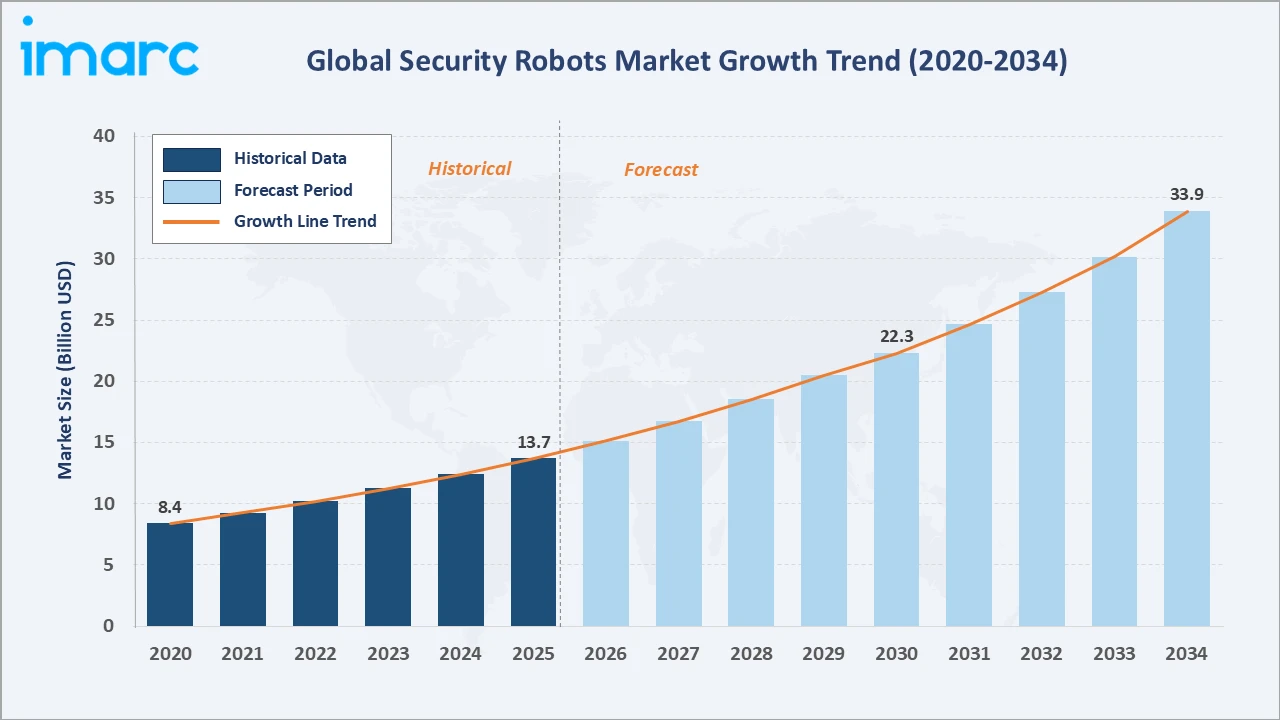
The security robots market was valued at USD 13.7 Billion in 2025 and is projected to reach USD 33.9 Billion by 2034, exhibiting a CAGR of 10.27% during 2026-2034. Rising geopolitical tensions and escalating security threats across public infrastructure, critical facilities, and border regions are the primary catalysts shaping market growth.
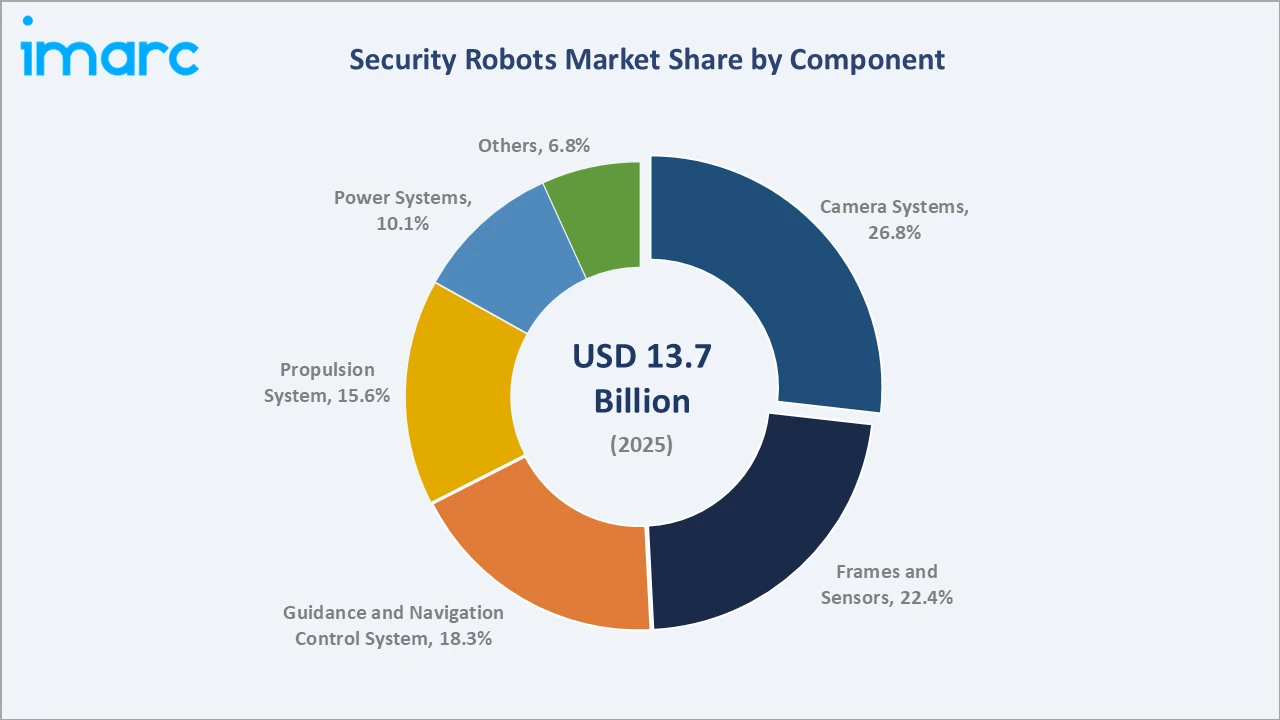
Camera systems lead the component segment at 26.8%, patrolling dominates the application segment at 34.6%, and North America commands a 38.7% regional share.
Market Snapshot
|
Metric |
Value |
|
Market Size (2025) |
USD 13.7 Billion |
|
Forecast Market Size (2034) |
USD 33.9 Billion |
|
CAGR (2026-2034) |
10.27% |
|
Base Year |
2025 |
|
Historical Period |
2020-2025 |
|
Forecast Period |
2026-2034 |
|
Largest Region |
North America (38.7%, 2025) |
|
Second Largest Region |
Asia-Pacific (29.6%, 2025) |
|
Leading Component |
Camera Systems (26.8%, 2025) |
|
Leading Application |
Patrolling (34.6%, 2025) |
The security robots market expanded from USD 8.4 Billion in 2020 to USD 13.7 Billion in 2025, supported by widespread deployment in airports, border surveillance, military installations, and smart city projects. Anchored at USD 22.3 Billion in 2030, the forecast to USD 33.9 Billion by 2034 is underpinned by rapid advancements in AI, ML-driven threat detection, and expanding government defense budgets worldwide.
To get more information on this market, Request Sample
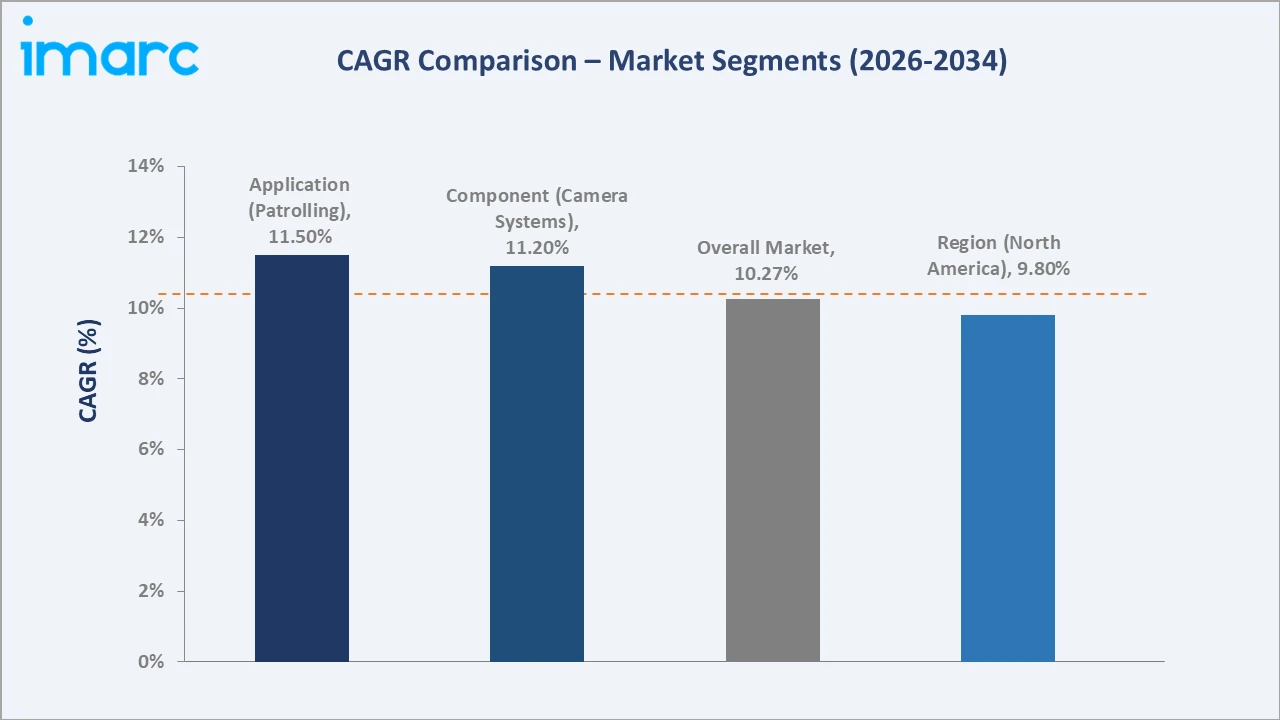
CAGR trajecories across component and application sub-segments show guidance and navigation control system and explosive detection expanding faster than the overall 10.27% market CAGR, driven by heightened demand for precision autonomous patrol and counter-terrorism capabilities across government and defense end-use sectors.
Executive Summary
The security robots market is on a robust growth trajectory, expanding from USD 8.4 Billion in 2020 to USD 33.9 Billion by 2034. The sector has evolved from isolated prototype deployments to large-scale, operationally integrated autonomous systems serving military establishments, critical infrastructure operators, and commercial security providers worldwide. Advanced sensor fusion, AI-driven behavioral analytics, and multi-terrain mobility are elevating the operational effectiveness of modern security platforms.
Camera systems lead the component segment at 26.8% in 2025, underpinned by high-resolution imaging, thermal sensing, and real-time video analytics enabling proactive threat identification. Patrolling dominates the application segment at 34.6%, reflecting the broad adoption of mobile ground robots for continuous perimeter monitoring across airports, seaports, logistics hubs, and smart city campuses. North America commands a 38.7% regional share, anchored by significant United States Department of Defense allocations, advanced domestic robotics manufacturing, and a mature regulatory environment for autonomous security systems.
Key Market Insights
|
Insight |
Data |
|
Largest Component |
Camera Systems – 26.8% share (2025) |
|
Second Largest Component |
Frames and Sensors – 22.4% share (2025) |
|
Leading Application |
Patrolling – 34.6% share (2025) |
|
Second Largest Application |
Spying – 25.3% share (2025) |
|
Leading Region |
North America – 38.7% share (2025) |
|
Second Largest Region |
Asia-Pacific – 29.6% share (2025) |
|
Top Companies |
Knightscope, Inc., SMP Robotics, Turing AI |
Key Analytical Observations Supporting the Above Data:
- Camera systems dominance at 26.8% reflects rapid advancement in high-resolution optics, low-light thermal imaging, and integrated AI-based video analytics.
- Frames and sensors at 22.4% are critical structural and sensory components that determine robot durability, mobility, and environmental adaptability. Lightweight composite materials and multi-modal sensor arrays including LiDAR, radar, and acoustic sensors are progressively enhancing operational range and reliability.
- Patrolling leadership at 34.6% underscores the widespread adoption of autonomous mobile robots for continuous, fatigue-free perimeter monitoring across airports, critical infrastructure, and logistics facilities.
- Spying at 25.3% highlights the growing use of security robots for covert surveillance, intelligence gathering, and discreet monitoring in sensitive environments. Advanced cameras, thermal imaging, and autonomous navigation capabilities enable these robots to observe areas continuously while reducing the need for direct human intervention.
- North America at 38.7% maintains market leadership through consistent defense appropriations, advanced domestic robotics ecosystems, and a regulatory framework that facilitates rapid commercial and governmental deployment of autonomous security systems.
Security Robots Market Overview
Security robots are autonomous or semi-autonomous mobile machines equipped with sensors, cameras, communication systems, and AI-driven software platforms designed to perform surveillance, patrolling, threat detection, explosive identification, and emergency response functions across military, governmental, and commercial environments.
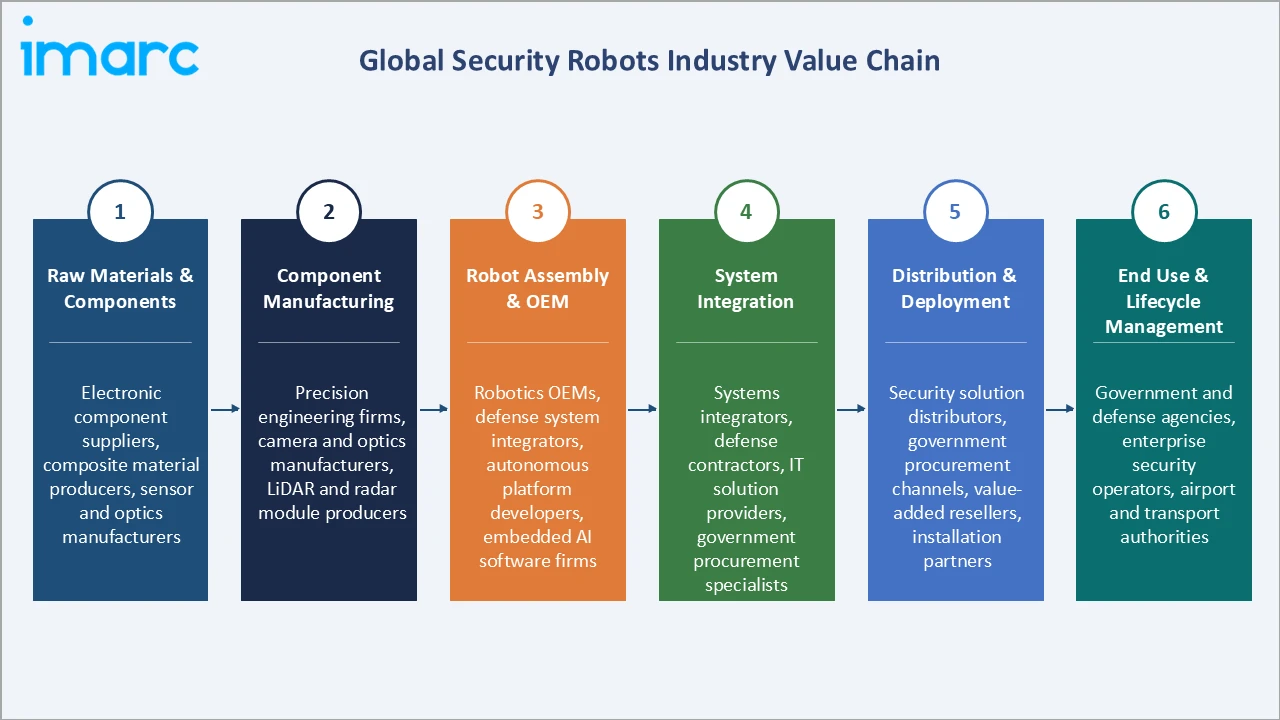
The market ecosystem integrates raw material and component suppliers, advanced manufacturing and assembly firms, AI and software developers, system integrators, government and defense procurement agencies, and end-use security operators. Macro-level drivers include intensifying geopolitical conflicts, rising terrorism threats, increased government defense budgets, and the accelerating adoption of smart city infrastructure globally.
Market Dynamics
To evaluate market opportunities, Request Sample
Market Drivers
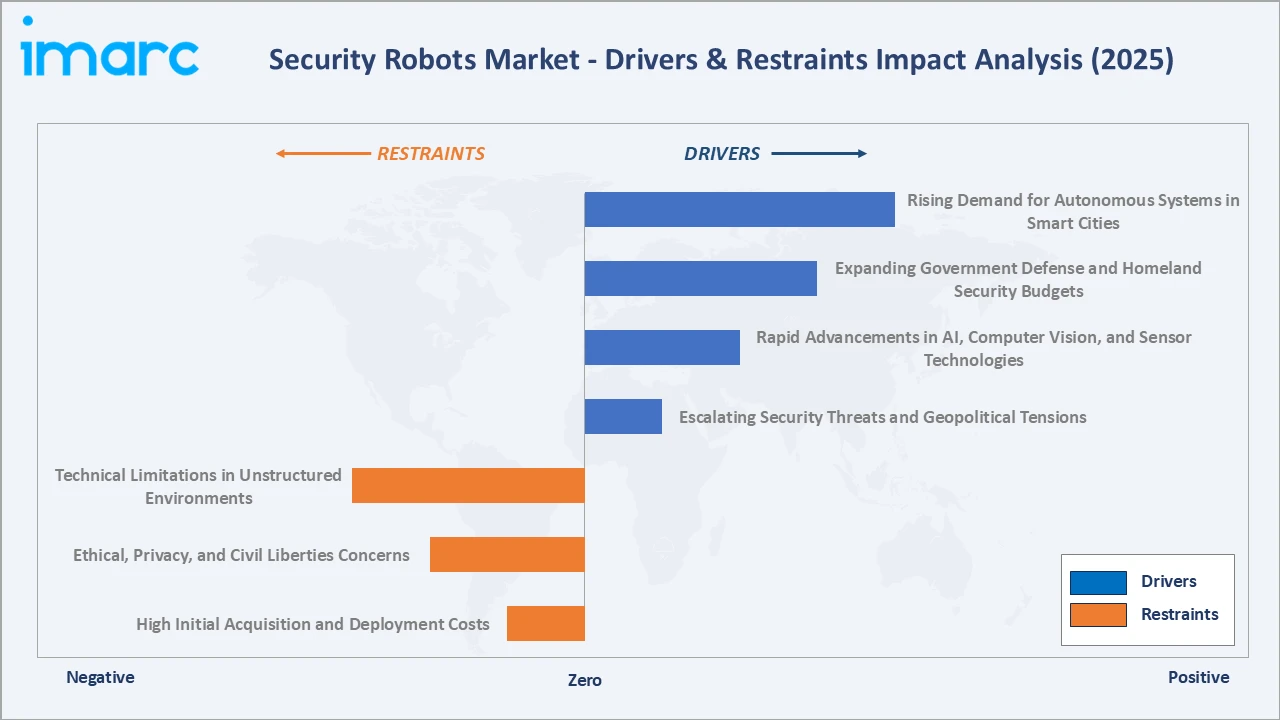
- Escalating Security Threats and Geopolitical Tensions: Rising terrorism incidents, border conflicts, and increasing vulnerabilities in critical infrastructure globally are compelling governments and enterprises to invest in automated, persistent security solutions. The number of countries documenting a terrorist attack rose from 58 to 66, as stated in the 12th annual Global Terrorism Index (GTI) published in March 2025.
- Rapid Advancements in AI, Computer Vision, and Sensor Technologies: Breakthroughs in ML-based threat recognition, LiDAR mapping, thermal imaging, and real-time behavioral analytics are significantly enhancing security robot capabilities. These technologies enable faster, more accurate threat identification and autonomous response, expanding the operational value proposition beyond traditional surveillance systems.
- Expanding Government Defense and Homeland Security Budgets: Growing defense appropriations across the United States, European NATO members, and Asia-Pacific nations are directly funding procurement and deployment of robotic security systems. Governments are increasingly classifying autonomous security platforms as force multipliers, supporting large-scale institutional adoption.
- Rising Demand for Autonomous Systems in Smart Cities: Large-scale smart city development programs in Asia, the Middle East, and Europe are driving integration of autonomous security robots into traffic management, public safety, and facility monitoring ecosystems. Critical infrastructure operators in energy, transport, and data sectors are increasingly mandating automated, 24/7 perimeter security solutions.
Market Restraints
- High Initial Acquisition and Deployment Costs: The substantial capital investment required for procuring, deploying, and maintaining advanced security robot systems presents a significant barrier, particularly for small and medium-sized enterprises and public sector organizations operating under constrained budgets. Integration costs with existing security infrastructure further compound total ownership expenses.
- Ethical, Privacy, and Civil Liberties Concerns: The widespread deployment of autonomous surveillance and security robots in public spaces is generating significant legal, ethical, and privacy challenges across multiple jurisdictions. Regulatory uncertainty around data collection, facial recognition, and autonomous decision-making is creating compliance complexity and delaying large-scale deployments in several markets.
- Technical Limitations in Unstructured Environments: Current security robots face persistent operational constraints in complex, unstructured terrains including adverse weather conditions, highly dynamic crowd environments, and low-visibility scenarios. These limitations restrict deployment scope and necessitate continued human oversight, reducing the full autonomy benefits that drive market adoption.
Market Opportunities
- Integration with IoT-Enabled Smart Security Ecosystems: The convergence of security robots with IoT-connected surveillance networks, smart access control systems, and centralized command platforms is creating opportunities for comprehensive, data-integrated physical security solutions. This convergence enables seamless information sharing and coordinated response across large facility footprints.
- Growing Adoption in Commercial and Industrial Verticals: Beyond traditional defense and government applications, security robots are increasingly being adopted across warehousing, healthcare campuses, airports, retail complexes, and financial institutions. This commercial market expansion is opening new revenue streams for manufacturers and system integrators.
Market Challenges
- Regulatory and Standardization Gaps: The absence of internationally harmonized standards governing autonomous security robot operations, particularly around liability for autonomous decisions, cross-border deployment, and data sovereignty, is creating significant implementation uncertainty for both vendors and buyers.
- Cybersecurity Vulnerabilities in Connected Platforms: As security robots become increasingly networked and cloud-connected, they present potential cybersecurity attack vectors that adversaries could exploit to disable systems, intercept surveillance data, or manipulate robot behavior. Addressing these vulnerabilities requires continuous software updates, robust encryption, and cybersecurity-by-design principles.
Emerging Market Trends
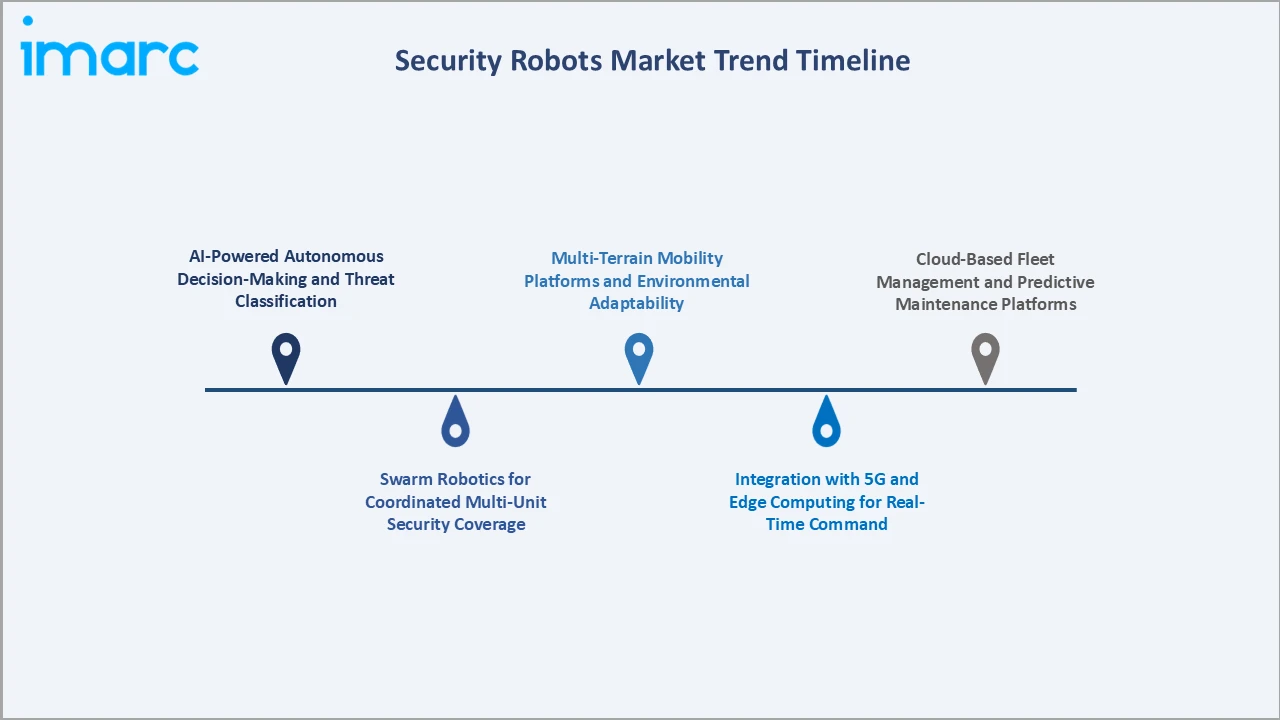
1. AI-Powered Autonomous Decision-Making and Threat Classification
Security robot manufacturers are embedding advanced deep learning models capable of real-time behavioral analysis, object classification, and autonomous threat escalation workflows. These systems can independently distinguish between routine movements and suspicious activities, significantly reducing false alarm rates and human intervention requirements.
2. Swarm Robotics for Coordinated Multi-Unit Security Coverage
Swarm robotics architectures enabling coordinated deployment of multiple autonomous security units are gaining traction in large-scale perimeter protection and disaster response scenarios.
3. Integration with 5G and Edge Computing for Real-Time Command
The rollout of 5G networks and edge computing infrastructure is enabling ultra-low-latency communication between security robots and centralized command platforms. Real-time high-definition video streaming, instant telemetry sharing, and remote autonomous control are becoming feasible at scale, supporting more responsive security operations across distributed, large-area deployment scenarios.
4. Multi-Terrain Mobility Platforms and Environmental Adaptability
Next-generation security robots are incorporating advanced locomotion systems including legged, wheeled, and hybrid mobility architectures designed to navigate stairs, uneven terrain, and extreme weather conditions. This expanded mobility envelope is enabling deployments in previously inaccessible environments including offshore installations, industrial plants, and remote border regions.
5. Cloud-Based Fleet Management and Predictive Maintenance Platforms
Security robot operators are increasingly deploying cloud-connected fleet management software that provides centralized mission control, real-time health monitoring, over-the-air software updates, and predictive maintenance scheduling. These platforms reduce operational downtime, optimize deployment efficiency, and enable continuous performance improvement across large robot fleets.
Industry Value Chain Analysis
The security robots value chain encompasses six integrated stages from raw material procurement through end-user deployment and lifecycle management. System integration, AI software development, and distribution and services capture the highest value-added margins, while component manufacturing and raw material supply form the foundational cost base of the ecosystem.
|
Stage |
Key Players / Examples |
|
Raw Materials & Components |
Electronic component suppliers, composite material producers, sensor and optics manufacturers, battery and power system providers |
|
Component Manufacturing |
Precision engineering firms, camera and optics manufacturers, LiDAR and radar module producers, propulsion and drive system specialists |
|
Robot Assembly & OEM |
Robotics OEMs, defense system integrators, autonomous platform developers, embedded AI software firms |
|
System Integration |
Systems integrators, defense contractors, IT solution providers, government procurement and deployment specialists |
|
Distribution & Deployment |
Security solution distributors, government procurement channels, value-added resellers, on-site installation and commissioning partners |
|
End Use & Lifecycle Management |
Government and defense agencies, enterprise security operators, airport and transport authorities, fleet management and maintenance service providers |
Vertically integrated players that own proprietary AI software, advanced sensor manufacturing, and direct government procurement relationships command superior value capture compared to pure-play hardware assemblers reliant on third-party technology stacks.
Technology Landscape in the Security Robots Industry
AI and Computer Vision
Deep learning frameworks and convolutional neural networks are enabling real-time object detection, facial recognition, behavioral pattern analysis, and autonomous threat classification within security robots. AI models trained on large-scale surveillance datasets are progressively reducing false positive rates while enhancing detection accuracy across diverse lighting and environmental conditions.
Advanced Sensor Fusion and LiDAR Navigation
Modern security robots integrate multi-modal sensor arrays combining LiDAR, radar, ultrasonic sensors, thermal cameras, and high-definition optical cameras into unified situational awareness platforms. Sensor fusion algorithms synthesize inputs from these diverse sources to generate accurate, real-time 3D environmental maps enabling reliable autonomous navigation in complex, dynamic spaces.
Autonomous Navigation and SLAM Technology
SLAM algorithms are enabling security robots to autonomously construct and continuously update maps of unfamiliar environments while precisely tracking their own position. Advanced SLAM implementations are supporting deployment in GPS-denied environments including underground facilities, large indoor complexes, and electronically contested border zones.
Communication Systems and Cybersecurity Infrastructure
Secure, encrypted communication architectures supporting real-time data transmission between security robot units and command centers are increasingly deployed on dedicated 5G private networks and hardened edge computing nodes. Cybersecurity-by-design principles are being integrated at the hardware and software levels to protect autonomous security platforms from adversarial interference and remote compromise.
Market Segmentation Analysis
The report covers the following segments:
|
Segment Category |
Leading Segment |
Market Share |
Year |
|
Component |
Camera Systems |
26.8% |
2025 |
|
Type |
Unmanned Aerial Vehicle |
🔒 |
2025 |
|
Application |
Patrolling |
34.6% |
2025 |
|
End User |
Defense and Military |
🔒 |
2025 |
|
Region |
North America |
38.7% |
2025 |

By Component
Camera systems command a 26.8% share in 2025, driven by their central role in enabling real-time visual surveillance, thermal detection, and AI-powered video analytics across all security robot platforms. Advances in high-resolution, low-light, and panoramic imaging are expanding the operational effectiveness of camera-equipped security robots across indoor and outdoor environments.
To access detailed market analysis, Request Sample
Frames and sensors at 22.4% form the structural and sensory backbone of security robot platforms, determining durability, mobility, and multi-environment operational capability.
By Application
Patrolling dominates the application segment with a 34.6% share in 2025, underpinned by broad institutional adoption of autonomous mobile robots for continuous, uninterrupted perimeter monitoring at airports, logistics facilities, military bases, and corporate campuses.
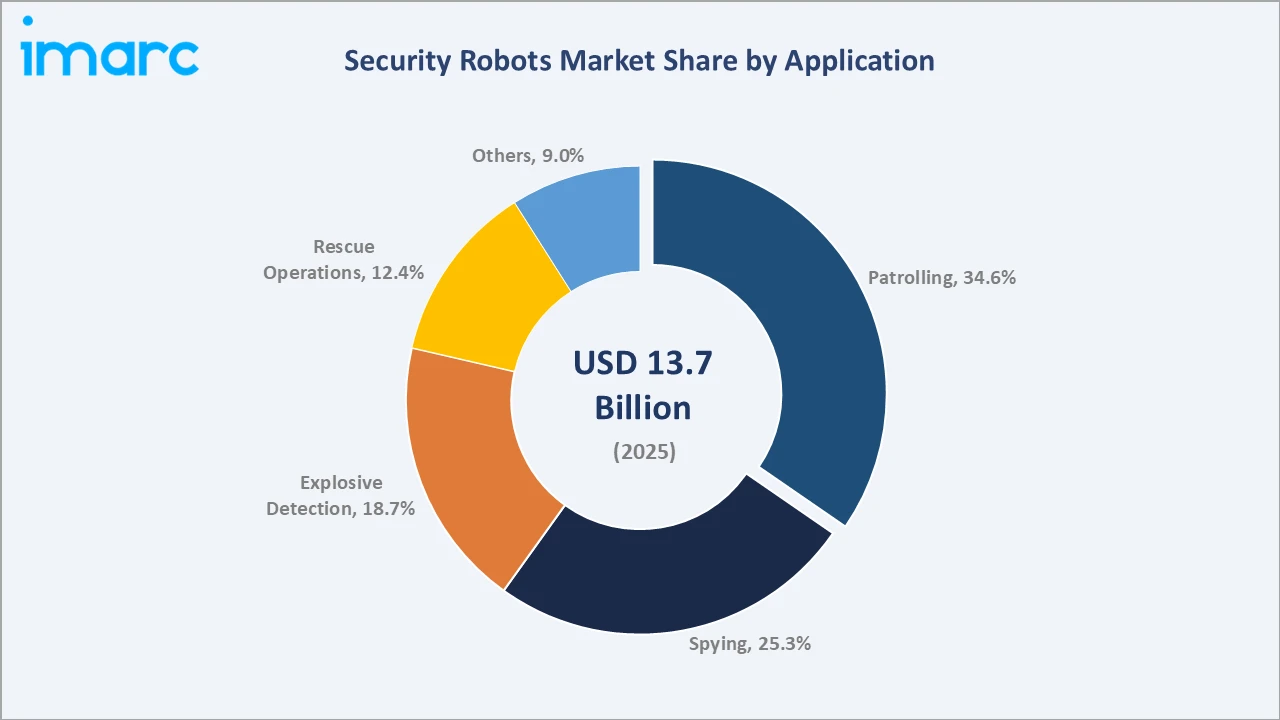
Spying accounts for 25.3% of the application segment, driven by defense and intelligence agency procurement of covert surveillance platforms for use in hostile or contested environments.
Regional Market Insights
|
Region |
Share (2025) |
Key Growth Drivers |
|
North America |
38.7% |
Advanced defense procurement programs, large domestic robotics manufacturing base, government homeland security investments, and strong commercial security adoption in airports and critical infrastructure |
|
Asia-Pacific |
29.6% |
Rapid smart city development in China, South Korea, Japan, and Singapore, rising defense budgets, growing border security requirements, and expanding private sector security automation |
|
Europe |
20.8% |
NATO-aligned defense modernization programs, stringent critical infrastructure protection mandates, growing adoption in industrial and commercial security, and government investment in autonomous border surveillance |
|
Latin America |
6.2% |
Rising security challenges in urban centers, growing adoption in commercial facilities, government investment in public safety technology, and expanding private security automation |
|
Middle East and Africa |
4.7% |
Significant government security spending in Gulf states, growing demand for autonomous border patrol systems, smart city security integration, and military modernization programs |
North America at 38.7% in 2025 leads the security robots market, anchored by the United States Department of Defense’s extensive robotic systems procurement programs and a highly developed commercial security services industry.
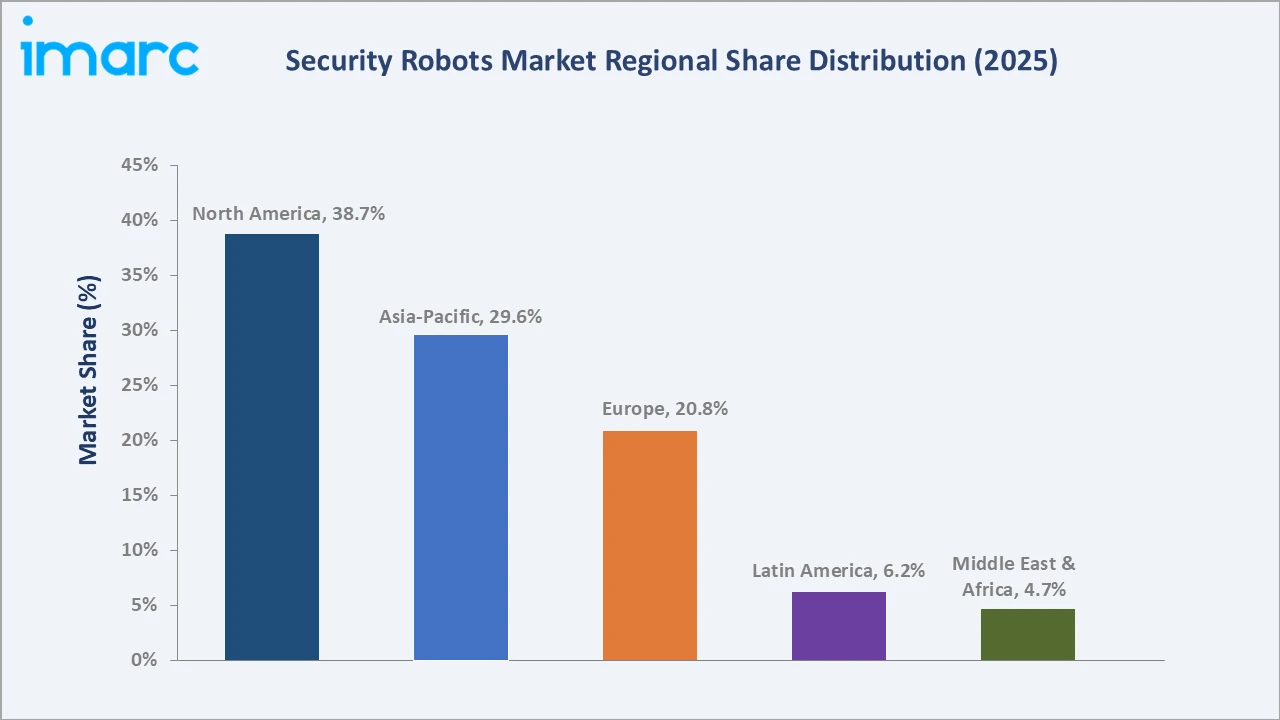
Asia-Pacific at 29.6% is the second largest regional market, supported by increasing investments in security infrastructure, rising adoption of autonomous surveillance technologies, and growing demand for robotic solutions across industrial, commercial, and public-sector applications.
Competitive Landscape
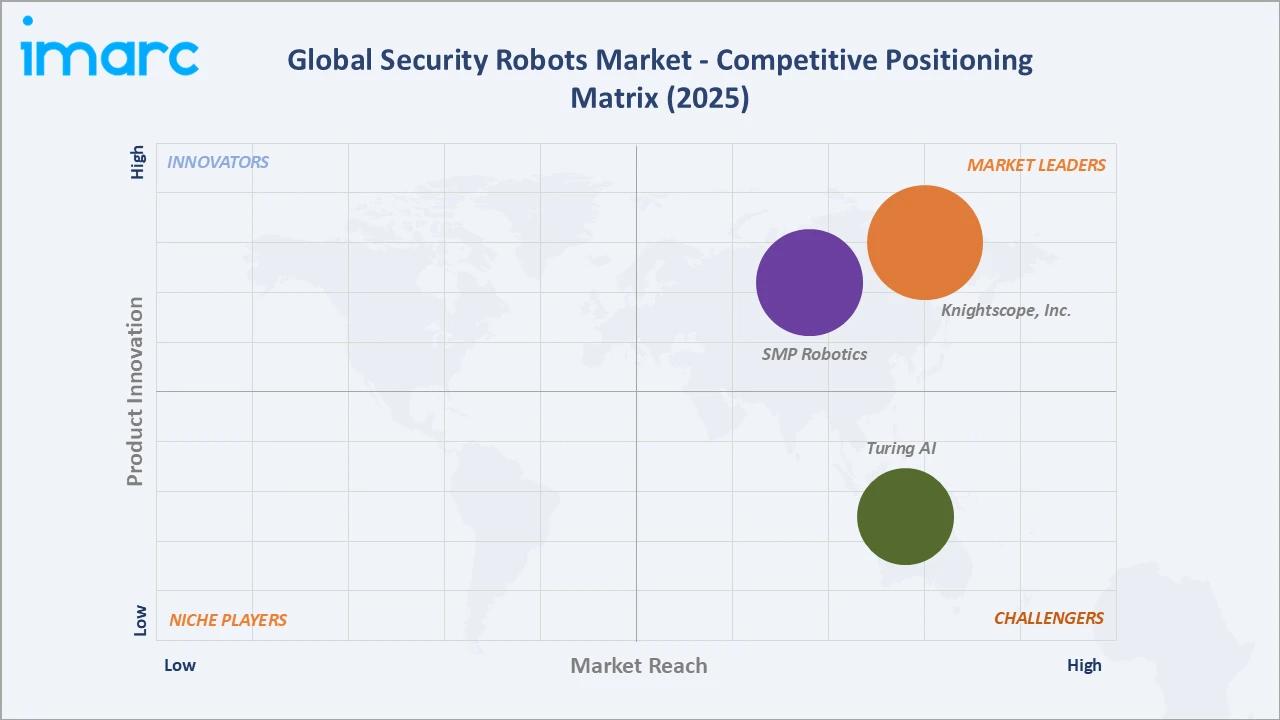
The security robots market exhibits moderate fragmentation, with established autonomous systems specialists and defense technology conglomerates competing alongside specialized start-ups and AI-driven platform providers. Competitive differentiation is increasingly driven by proprietary AI and ML software stacks, advanced sensor integration capabilities, fleet management platforms, and the breadth of government procurement relationships.
|
Company Name |
Brand / Key Product |
Position |
Strategic Focus |
|
Knightscope, Inc. |
K5 v5 / K3 / K7 Security Robots |
Leader |
Autonomous security robot deployment and fleet management for commercial and public sector clients |
|
SMP Robotics |
Argus S5.3 Patrol Robot |
Leader |
Multi-terrain autonomous patrol platforms for outdoor perimeter security and critical infrastructure |
|
Turing AI |
Turing Vision |
Challenger |
AI-integrated security platform combining video analytics and autonomous patrol capabilities for enterprise environments |
Key players include Knightscope, Inc., SMP Robotics, and Turing AI, among others.
Key Company Profiles
Knightscope, Inc.
Knightscope, Inc. is a United States-based security technology company headquartered in Sunnyvale, California. The company specializes in the design, development, and deployment of autonomous security robots for commercial, government, and public sector environments, operating a cloud-connected robot-as-a-service model under which clients pay a recurring service fee rather than purchasing hardware outright.
- Product Portfolio: Knightscope’s active product range includes the K5 v5, K3, and K7 Security Robots.
- Recent Developments: The firm has continued to expand its deployment footprint across commercial, government, and public sector environments, growing its robot-as-a-service subscriber base across multiple industry verticals.
- Strategic Focus: Focusing on expanding autonomous security solutions, strengthening AI-enabled monitoring capabilities, and increasing adoption across commercial, government, and public-sector applications.
SMP Robotics
SMP Robotics is an international autonomous robot manufacturer legally headquartered in Sausalito, California, United States, with research, development, assembly, and support operations spanning North America, Europe, and Asia
- Product Portfolio: SMP Robotics’ flagship product is the Argus S5.3 Patrol Robot, designed for continuous perimeter and site surveillance across demanding outdoor environments.
- Recent Developments: SMP Robotics has continued to expand its commercial deployments across energy facilities, logistics centers, and data centers, serving clients across multiple industry verticals.
- Strategic Focus: Advancing rugged multi-terrain robotic autonomy for outdoor industrial and critical infrastructure security, expanding its global partner and distributor network, and growing robot-as-a-service adoption across energy, logistics, manufacturing, and campus security sectors worldwide.
Turing AI
Turing AI is a United States-based AI and security technology company headquartered California. The company develops ML models integrated with video surveillance systems and autonomous robotic platforms to deliver AI-powered security and operational intelligence solutions for enterprise environments across retail, real estate, gaming, and data center sectors.
- Product Portfolio: Turing AI’s key product is Turing Vision, a cloud-based AI video security platform that provides intelligent video search, real-time alerts, pattern detection, and video sharing across distributed camera networks.
- Recent Developments: Turing AI has expanded its Turing Vision platform deployments across enterprise retail, commercial real estate, and data center clients, integrating AI-powered analytics with existing security infrastructure to deliver enhanced operational intelligence and security insights.
- Strategic Focus: Delivering AI-powered video security intelligence through the Turing Vision platform and expanding deployments across retail, real estate, gaming, and corporate data center security markets.
Market Concentration Analysis
The security robots market exhibits moderate concentration, with the top two players, Knightscope, Inc. and SMP Robotics, collectively accounting for a significant portion of deployed autonomous security robot units, particularly across North American and European markets.
Barriers to entry include the capital-intensive development of autonomous navigation and AI software stacks, the need for rigorous regulatory compliance and government security certifications, extensive field testing requirements, and the high customer acquisition costs associated with security-sensitive institutional procurement processes. These dynamics favor established players with proven track records and existing government relationships.
Market consolidation is accelerating as venture-backed start-ups with differentiated AI capabilities attract acquisition interest from larger defense electronics and security technology conglomerates. Strategic partnerships between autonomous systems developers and traditional security services firms are further reshaping competitive boundaries across the market.
Investment & Growth Opportunities
Fastest-Growing Segments
Guidance and navigation control system is the fastest-growing component segment, driven by rising demand for GPS-independent autonomous navigation in complex, contested environments. Explosive detection is expanding rapidly due to accelerating counter-terrorism mandates and improvised explosive device threat mitigation requirements across transportation infrastructure and public venues globally.
Emerging Markets
Asia-Pacific represents the most dynamic emerging market opportunity, driven by China’s large-scale smart city programs, Japan’s advanced robotics ecosystem, South Korea’s government-backed autonomous systems investments, and growing border security demands across Southeast Asian nations.
Venture & Investment Trends
Investment activity in the security robotics sector is concentrated in AI software platforms enabling multi-sensor fusion and autonomous decision-making and cloud-based fleet management and monitoring solutions. Defense technology funds, government innovation programs, and strategic corporate venture arms are increasingly participating in growth-stage security robotics companies with differentiated autonomous systems capabilities.
Future Market Outlook (2026-2034)
The security robots market is forecast to expand from USD 13.7 Billion in 2025 to USD 33.9 Billion by 2034 at a CAGR of 10.27%, adding approximately USD 20.2 Billion in incremental market value over the forecast period.
Four primary forces will shape the market through 2034: continued expansion of AI-powered autonomous threat detection capabilities; progressive integration of security robots within IoT-connected smart city and critical infrastructure ecosystems; growing government procurement of autonomous border and perimeter security systems; and the accelerating shift toward robot-as-a-service subscription commercial models reducing capital expenditure barriers for adopters.
By 2034, the security robots market is expected to be defined by highly networked, AI-embedded autonomous platforms operating within integrated physical security ecosystems. Guidance and navigation control systems and explosive detection applications are projected to capture higher market shares as autonomous decision-making capabilities mature.
Research Methodology
Primary Research
Primary research for this report involved structured interviews and consultations with senior executives at security robot manufacturers, defense procurement specialists, government security agency representatives, system integrators, and institutional end users. Primary engagements validated market sizing, regional demand dynamics, competitive positioning assessments, and emerging technology adoption trajectories.
Secondary Research
Secondary research sources included government defense budget publications, regulatory filings, patent databases, industry association reports from bodies such as the International Federation of Robotics, academic research papers, company annual reports, investor presentations, press releases, and trade publication databases covering autonomous systems and physical security.
Forecasting Models
Market forecasts were developed using combined top-down and bottom-up modeling methodologies, incorporating deployment unit count projections, average selling price trajectories by segment and region, technology adoption curves, regulatory approval timelines, and macroeconomic indicators. Scenario analysis assessed the impact of varying levels of government defense spending, AI technology maturation pace, and regulatory framework evolution on market growth trajectories through 2034.
Report Coverage:
| Report Features | Details |
|---|---|
| Base Year of the Analysis | 2025 |
| Historical Period | 2020-2025 |
| Forecast Period | 2026-2034 |
| Units | Billion USD |
| Scope of the Report |
Exploration of Historical Trends and Market Outlook, Industry Catalysts and Challenges, Segment-Wise Historical and Future Market Assessment:
|
| Components Covered | Propulsion System, Frames and Sensors, Camera Systems, Guidance and Navigation Control System, Power Systems, Others |
| Types Covered | Unmanned Ground Vehicle, Unmanned Aerial Vehicle, Autonomous Underwater Vehicle |
| Applications Covered | Spying, Patrolling, Explosive Detection, Rescue Operations, Others |
| End Users Covered | Defense and Military, Residential, Commercial |
| Regions Covered | Asia Pacific, Europe, North America, Latin America, Middle East and Africa |
| Countries Covered | United States, Canada, Germany, France, United Kingdom, Italy, Spain, Russia, China, Japan, India, South Korea, Australia, Indonesia, Brazil, Mexico |
| Companies Covered | Knightscope, Inc., SMP Robotics, Turing AI, etc. |
| Customization Scope | 10% Free Customization |
| Post-Sale Analyst Support | 10-12 Weeks |
| Delivery Format | PDF and Excel through Email (We can also provide the editable version of the report in PPT/Word format on special request) |
Frequently Asked Questions About the Security Robots Market Report
The security robots market was valued at USD 13.7 Billion in 2025, driven by rising security threats, AI advancements, and increasing government defense spending worldwide.
The market is projected to grow at a CAGR of 10.27% from 2026-2034, reaching USD 33.9 Billion, supported by expanding autonomous system deployments and smart city security integration.
Camera systems hold a 26.8% share in 2025. Their dominance is driven by high-resolution imaging, thermal sensing, and AI-powered video analytics that are central to all security robot platforms.
Patrolling commands a 34.6% share in 2025. Its leadership reflects the widespread institutional adoption of autonomous mobile robots for continuous, fatigue-free perimeter monitoring across airports, logistics hubs, and military installations.
North America commands 38.7% share in 2025, led by United States defense procurement programs, advanced domestic robotics manufacturing, and a mature commercial security market.
Asia-Pacific holds a 29.6% share in 2025 as the second largest region, driven by China’s smart city programs, rising defense budgets across the region, and expanding autonomous border security requirements.
Leading players include Knightscope, Inc., SMP Robotics, and Turing AI, among others.
Primary drivers include escalating security threats, rapid AI and sensor technology advancements, increasing government defense budgets, and growing smart city security integration demands.
Key technology trends include AI-powered autonomous threat detection, swarm robotics coordination, 5G-enabled real-time command systems, and advanced LiDAR sensor fusion for autonomous navigation.
Need more help?
- Speak to our experienced analysts for insights on the current market scenarios.
- Include additional segments and countries to customize the report as per your requirement.
- Gain an unparalleled competitive advantage in your domain by understanding how to utilize the report and positively impacting your operations and revenue.
- For further assistance, please connect with our analysts.
 Request Customization
 Speak to an Analyst
 Request Brochure
 Inquire Before Buying
Benefits of Customization
- Personalize this research
- Triangulate with your data
- Get data as per your format and definition
- Gain a deeper dive into a specific application, geography, customer, or competitor
- Any level of personalization
Get in Touch With Us
UNITED STATES
Phone: +1-201-971-6302
INDIA
Phone: +91-120-433-0800
UNITED KINGDOM
Phone: +44-753-714-6104
Email: [email protected]
Client Testimonials




.webp)




.webp)













Related Reports

Choose your plan
*Please note that the prices mentioned below are starting prices for each bundle type. Kindly contact our team for further details.*
Single User License
- 1 User License, Access on 2 Devices
- PDF Report + Excel Dataset (Password Protected)
- Lifetime Access
- No Printing Rights
- 10% Free Report Customization
- 10–12 Weeks of Analyst Support
Five User License
- Access for 5 Users, 2 Devices per User
- PDF Report + Excel Dataset (Password Protected)
- Lifetime Access
- Dedicated Account Manager
- 12–14 Weeks of Analyst Support
- No Printing Rights
- 15% Free Report Customization
- 25% Discount on Your Next Purchase
Corporate User License
- Unlimited User Access (Within Your Organization)
- PDF Report + Excel Dataset
- Lifetime Access
- Dedicated Account Manager
- 14–20 Weeks of Analyst Support
- No Printing Rights
- 20% Free Report Customization
- 30% Discount on Your Next Purchase
Essential Insights
What's included:
3 reports
- Lifetime Access
- PDF Reports
- Excel Datasets
- 2 Weeks of Free Analyst Support
- 2 User Licenses
- Access on 2 Devices
- Printing Rights
- Complimentary PowerPoint (PPT) Version
- Complimentary License Upgrade
Professional Access
What's included:
5 reports
- Lifetime Access
- PDF Reports
- Excel Datasets
- 8 Weeks of Free Analyst Support
- 2 User Licenses
- Access on 2 Devices
- Printing Rights
- Complimentary PowerPoint (PPT) Version
- Complimentary License Upgrade
Business Advantage
What's included:
8 reports
- Lifetime Access
- PDF Reports
- Excel Datasets
- 14 Weeks of Free Analyst Support
- 2 User Licenses
- Access on 2 Devices
- Printing Rights
- Complimentary PowerPoint (PPT) Version
- Complimentary License Upgrade
Enterprise Intelligence
What's included:
10 reports
- Lifetime Access
- PDF Reports
- Excel Datasets
- 20 Weeks of Free Analyst Support
- 2 User Licenses
- Access on 2 Devices
- Printing Rights
- Complimentary PowerPoint (PPT) Version
- Complimentary License Upgrade