
Sodium Tetraborate Prices, Trend, Chart, Demand, Market Analysis, News, Historical and Forecast Data Report 2026 Edition
Sodium Tetraborate Price Trend, Index and Forecast
Track the latest insights on sodium tetraborate price trend and forecast with detailed analysis of regional fluctuations and market dynamics across North America, Latin America, Central Europe, Western Europe, Eastern Europe, Middle East, North Africa, West Africa, Central and Southern Africa, Central Asia, Southeast Asia, South Asia, East Asia, and Oceania.
Sodium Tetraborate Prices Outlook Q2 2026
- USA: USD 1039/MT
- China: USD 694/MT
- Germany: USD 812/MT
- France: USD 797/MT
- Canada: USD 1094/MT
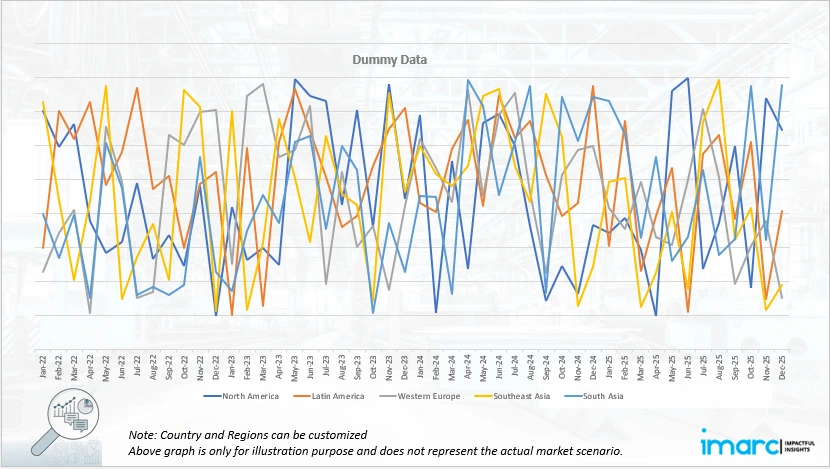
Sodium Tetraborate Price Chart
Get real-time access to monthly/quarterly/yearly prices Request Sample
During the second quarter of 2026, the sodium tetraborate prices in the USA reached 1039 USD/MT in June. Prices increased as tighter import availability supported firmer replacement costs during the earlier part of the period. Buyers serving detergent, fiberglass, insulation, and agricultural applications maintained routine purchasing, which helped suppliers preserve stronger offers. Reduced export allocations from major overseas producers also encouraged distributors to rebuild inventories before summer demand.
During the second quarter of 2026, the sodium tetraborate prices in China reached 694 USD/MT in June. Prices advanced as tight feedstock availability raised producer replacement costs and supported firmer offers. Earlier environmental compliance activity limited output from smaller processing units, which reduced readily available spot volumes. Import related freight and insurance expenses also strengthened the cost base for refiners using overseas borate minerals.
During the second quarter of 2026, the sodium tetraborate prices in Germany reached 812 USD/MT in June. The market recorded a strong quarterly increase as imported material became more expensive and prompt availability tightened. Currency weakness raised the cost of purchases settled in USD, while higher soda ash, energy, storage, and port handling expenses increased delivered replacement values. Export allocations remained restricted, encouraging German distributors to maintain cautious inventories and secure additional coverage.
During the second quarter of 2026, the sodium tetraborate prices in France reached 797 USD/MT in June. Prices moved upward as French buyers faced higher replacement costs for material sourced from major overseas borate suppliers. Increased freight, marine insurance, storage, and handling expenses raised delivered offers, while currency pressure made USD based imports more costly. Tighter export allocations reduced prompt cargo availability across European distribution channels and encouraged precautionary purchasing.
During the second quarter of 2026, the sodium tetraborate prices in Canada reached 1094 USD/MT in June. Canadian prices increased modestly as cross border supply conditions tightened during the earlier part of the quarter. Firmer replacement costs in the USA influenced distributor offers, while limited export allocations from overseas producers reduced flexibility for alternative procurement. Demand from fiberglass insulation, detergents, wood treatment, agriculture, and specialty chemical users remained stable and supported routine inventory replenishment.
Sodium Tetraborate Prices Outlook Q1 2026
- USA: USD 981/MT
- China: USD 635/MT
- Germany: USD 737/MT
- France: USD 757/MT
- Canada: USD 1060/MT
During the first quarter of 2026, the sodium tetraborate prices in the USA reached 981 USD/MT in March. Prices declined as downstream glass, ceramics, and detergent demand remained cautious. Buyers limited fresh procurement and relied on contracted volumes, which reduced spot market activity. Supply availability remained sufficient, and distributors adjusted offers to protect sales amid slow offtake. Import competition also weighed on local quotations, especially where buyers had access to lower priced overseas material.
During the first quarter of 2026, the sodium tetraborate prices in China reached 635 USD/MT in March. Prices increased as domestic demand improved from the glass, enamel, and chemical processing sectors. Producers received steady inquiries, while market participants reported firmer negotiations due to improved downstream operating rates. Export interest also supported sentiment, particularly from buyers seeking competitive Asian supply. Raw material cost pressure and disciplined supplier offers helped maintain upward pricing momentum.
During the first quarter of 2026, the sodium tetraborate prices in Germany reached 737 USD/MT in March. Prices rose as demand from glass fiber, borosilicate glass, and specialty chemical users improved gradually. Buyers returned to the market after earlier inventory control, supporting firmer spot discussions. Import costs and logistics expenses also encouraged sellers to raise offers. Supply remained adequate, but producers avoided deep discounts due to stable contract demand.
During the first quarter of 2026, the sodium tetraborate prices in France reached 757 USD/MT in March. Prices moved upward as downstream demand from detergents, glass, and ceramic applications showed improvement. Buyers increased procurement to cover production needs, while suppliers held firm offers due to steady order flow. Import availability remained balanced, but freight and handling costs supported higher delivered prices.
During the first quarter of 2026, the sodium tetraborate prices in Canada reached 1060 USD/MT in March. Prices declined as buying activity from industrial consumers remained moderate. The market faced pressure from adequate inventories and cautious procurement by glass and cleaning product manufacturers. Import availability supported supply comfort, reducing urgency among buyers. Sellers adjusted offers to encourage movement, especially in the spot market.
Regional Coverage
The report provides a detailed analysis of the market across different regions, each with unique pricing dynamics influenced by localized market conditions, supply chain intricacies, and geopolitical factors. This includes price trends, price forecast and supply and demand trends for each region, along with spot prices by major ports. The report also provides coverage of FOB and CIF prices, as well as the key factors influencing sodium tetraborate prices.
Europe Sodium Tetraborate Price Trend
Q2 2026:
The sodium tetraborate price index in Europe moved upward as landed import costs increased and availability tightened. Currency weakness raised the expense of USD denominated purchases, particularly for buyers dependent on Turkish and overseas supply. Higher soda ash, energy, port handling, storage, and reprocessing costs strengthened replacement values across distribution channels. Export allocations remained constrained during much of the quarter, prompting precautionary restocking among buyers in detergents, fiberglass insulation, ceramics, enamels, and specialty glass. Marine insurance charges and seaborne disruptions added pressure, while rail congestion reduced delivery flexibility within the region.
Q1 2026:
In Europe, the sodium tetraborate price index strengthened as demand improved from glass, ceramics, and detergent applications. Germany and France reflected firmer market activity, supported by steady downstream procurement and better production planning among industrial users. Buyers returned to the market after earlier inventory control, which improved spot demand. Suppliers maintained firm offers due to balanced availability and higher delivered cost pressure. Import flows remained stable, but sellers avoided aggressive discounts as order intake improved.
This analysis can be extended to include detailed sodium tetraborate price information for a comprehensive list of countries.
| Region | Countries Covered |
|---|---|
| Europe | Germany, France, United Kingdom, Italy, Spain, Russia, Turkey, Netherlands, Poland, Sweden, Belgium, Austria, Ireland, Switzerland, Norway, Denmark, Romania, Finland, Czech Republic, Portugal, and Greece, among other European countries. |
North America Sodium Tetraborate Price Trend
Q2 2026:
The sodium tetraborate price index in North America increased as tighter import availability and inventory rebuilding supported supplier offers. Distributors secured material after reduced allocations from major overseas producers limited replacement choices. Demand from detergents, fiberglass, insulation, agriculture, wood treatment, and specialty chemical applications remained steady, helping the market absorb volumes. Mining, terminal, warehousing, and inland transportation expenses supported delivered costs, while cross border trade reinforced price transmission between the USA and Canada. The regional increase was strongest earlier in the quarter when buyers sought coverage ahead of seasonal consumption. Conditions softened near June as arrivals from Turkey and Argentina improved, reducing concern over prompt supply.
Q1 2026:
In North America, the sodium tetraborate price index showed bearish movement. USA prices declined due to weak spot buying, while Canadian prices also softened amid cautious procurement. Demand from glass, cleaning products, and industrial chemical users remained moderate. Buyers preferred limited purchases and relied on existing inventories. Supply availability stayed comfortable, reducing urgency across the market. Competitive import options also pressured domestic offers. Sellers adjusted prices to protect sales, keeping the regional tone weak.
Specific sodium tetraborate historical data within the United States and Canada can also be provided.
| Region | Countries Covered |
|---|---|
| North America | United States and Canada |
Middle East and Africa Sodium Tetraborate Price Trend
Q2 2026:
The study includes sodium tetraborate price trends and charts in the Middle East and Africa, taking into consideration elements that have a direct impact on market prices, such as regional industrial expansion, natural resource availability, and geopolitical conflicts.
Q1 2026:
According to the price chart for sodium tetraborate, supply chain interruptions, seasonal changes in demand, and geopolitical influences were the main causes of the price fluctuations in the Middle East and Africa.
In addition to region-wise data, information on sodium tetraborate prices for countries can also be provided.
| Region | Countries Covered |
|---|---|
| Middle East & Africa | Saudi Arabia, UAE, Israel, Iran, South Africa, Nigeria, Oman, Kuwait, Qatar, Iraq, Egypt, Algeria, and Morocco, among other Middle Eastern and African countries. |
Asia Pacific Sodium Tetraborate Price Trend
Q2 2026:
The sodium tetraborate prices in Asia Pacific increased as tight feedstock availability, import costs, and earlier supply controls strengthened producer offers. Environmental compliance activity reduced output from smaller Chinese processing units, limiting spot availability during the early part of the period. Freight, insurance, and overseas mineral costs raised the replacement base for refiners dependent on imported borate feedstocks. Export restocking from buyers supported shipments, while demand from glass, detergents, ceramics, agriculture, and specialty chemicals absorbed available material. The rise was reinforced by cautious inventories and stronger procurement before seasonal production schedules. Conditions weakened near June as buyers completed quarterly coverage and reduced spot activity.
Q1 2026:
In the Asia Pacific, sodium tetraborate prices improved in some markets, supported by stronger Chinese demand and firmer supplier sentiment. Consumption from glass, ceramics, enamel, and chemical processing sectors improved as manufacturing activity picked up. Producers maintained stable offers due to manageable inventories and better order flow. Export inquiries also helped support regional pricing. Some buyers increased procurement to secure near term requirements. The overall tone turned firmer, especially where downstream plants lifted operating rates.
This sodium tetraborate price analysis can be expanded to include a comprehensive list of countries within the region.
| Region | Countries Covered |
|---|---|
| Asia Pacific | China, India, Indonesia, Pakistan, Bangladesh, Japan, Philippines, Vietnam, Thailand, South Korea, Malaysia, Nepal, Taiwan, Sri Lanka, Hongkong, Singapore, Australia, and New Zealand, among other Asian countries. |
Latin America Sodium Tetraborate Price Trend
Q2 2026:
The market for sodium tetraborate in Latin America is primarily driven by the region's vast natural resources, particularly in Chile and Brazil. However, pricing for sodium tetraborate may change dramatically due to political uncertainty and varying regulatory frameworks.
Q1 2026:
A thorough overview is given by the analysis of sodium tetraborate prices in Latin America, which reflects the distinct market dynamics in the area impacted by trade frameworks, industrial expansion, and economic policies.
This comprehensive review can be extended to include specific countries within the region.
| Region | Countries Covered |
|---|---|
| Latin America | Brazil, Mexico, Argentina, Columbia, Chile, Ecuador, and Peru, among other Latin American countries. |
Sodium Tetraborate Pricing Report, Market Analysis, and News
IMARC's latest publication, “Sodium Tetraborate Prices, Trend, Chart, Demand, Market Analysis, News, Historical and Forecast Data Report 2026 Edition,” presents a detailed examination of the sodium tetraborate market, providing insights into both global and regional trends that are shaping prices. This report delves into the spot price of sodium tetraborate at major ports and analyzes the composition of prices, including FOB and CIF terms. It also presents detailed sodium tetraborate prices trend analysis by region, covering North America, Europe, Asia Pacific, Latin America, and Middle East and Africa. The factors affecting sodium tetraborate pricing, such as the dynamics of supply and demand, geopolitical influences, and sector specific developments, are thoroughly explored. This comprehensive report helps stakeholders stay informed with the latest market news, regulatory updates, and technological progress, facilitating informed strategic decision-making and forecasting.
Sodium Tetraborate Industry Analysis
The global sodium tetraborate market size reached 1,818.7 Thousand Tonnes in 2025. By 2034, IMARC Group expects the market to reach 2,761.0 Thousand Tonnes, at a projected CAGR of 4.61% during 2026-2034. The market is primarily driven by the demand from glass and ceramics manufacturing, detergent and cleaning product applications, and chemical processing use.
Latest News and Developments:
- 2024: Turkish ETI MADEN I.G.M plans to execute 14 projects valued at 350 million Turkish liras by 2022, funded by the state budget. In total, 130 energy projects are set for completion by year-end, with 23.8 billion Turkish liras allocated, including foreign loans. Last year, 125 energy projects were completed.
- 2024: Rio Tinto's US Borax operation in Boron, California, is seeking to increase local procurement by offering a unique opportunity for businesses and governmental agencies to tour the mine and learn about potential partnerships. The mine, which is one of the largest borate mining operations globally, supplies 30% of the world's demand for boron and its products. Rio Tinto is focusing on sustainability, converting its haul truck fleet and other operations on-site to renewable diesel and aiming to localize procurement.
Product Description
Sodium tetraborate, commonly known as borax or disodium tetraborate, is an inorganic boron compound composed of sodium, boron, and oxygen. Its anhydrous formula is Na₂B₄O₇, though commercial material is frequently supplied as pentahydrate or decahydrate crystals containing bound water. The product generally appears as a white crystalline powder or granule and forms a mildly alkaline solution when dissolved in water. It functions as a buffer, flux, cleaning aid, water softener, corrosion inhibitor, and source of boron. Sodium tetraborate is widely used in glass, textile fiberglass, ceramics, enamels, glazes, detergents, flame retardants, metal processing, adhesives, oilfield chemicals, and agricultural micronutrient formulations. In glass and ceramics, it lowers processing temperatures and supports thermal and chemical durability. In cleaning products, it improves alkalinity, assists stain removal, and enhances formulation stability.
Report Coverage
| Key Attributes | Details |
|---|---|
| Product Name | Sodium Tetraborate |
| Report Features | Exploration of Historical Trends and Market Outlook, Industry Demand, Industry Supply, Gap Analysis, Challenges, Sodium Tetraborate Price Analysis, and Segment-Wise Assessment. |
| Currency/Units | US$ (Data can also be provided in local currency) or Metric Tons |
| Region/Countries Covered | The current coverage includes analysis at the global and regional levels only. Based on your requirements, we can also customize the report and provide specific information for the following countries: Asia Pacific: China, India, Indonesia, Pakistan, Bangladesh, Japan, Philippines, Vietnam, Thailand, South Korea, Malaysia, Nepal, Taiwan, Sri Lanka, Hongkong, Singapore, Australia, and New Zealand Europe: Germany, France, United Kingdom, Italy, Spain, Russia, Turkey, Netherlands, Poland, Sweden, Belgium, Austria, Ireland, Switzerland, Norway, Denmark, Romania, Finland, Czech Republic, Portugal and Greece North America: United States and Canada Latin America: Brazil, Mexico, Argentina, Columbia, Chile, Ecuador, and Peru Middle East & Africa: Saudi Arabia, UAE, Israel, Iran, South Africa, Nigeria, Oman, Kuwait, Qatar, Iraq, Egypt, Algeria, and Morocco The list of countries presented is not exhaustive. Information on additional countries can be provided if required by the client. |
| Information Covered for Key Suppliers |
|
| Customization Scope | The report can be customized as per the requirements of the customer |
| Report Price and Purchase Option |
Plan A: Monthly Updates - Annual Subscription
Plan B: Quarterly Updates - Annual Subscription
Plan C: Biannually Updates - Annual Subscription
|
| Post-Sale Analyst Support | 360-degree analyst support after report delivery |
| Delivery Format | PDF and Excel through email (We can also provide the editable version of the report in PPT/Word format on special request) |
Key Benefits for Stakeholders:
- IMARC’s report presents a detailed analysis of sodium tetraborate pricing, covering global and regional trends, spot prices at key ports, and a breakdown of Ex Works, FOB, and CIF prices.
- The study examines factors affecting sodium tetraborate price trend, including raw material costs, supply-demand shifts, geopolitical impacts, and industry developments, offering insights for informed decision-making.
- The competitive landscape review equips stakeholders with crucial insights into the latest market news, regulatory changes, and technological advancements, ensuring a well-rounded, strategic overview for forecasting and planning.
- IMARC offers various subscription options, including monthly, quarterly, and biannual updates, allowing clients to stay informed with the latest market trends, ongoing developments, and comprehensive market insights. The sodium tetraborate price charts ensure our clients remain at the forefront of the industry.
Need more help?
- Speak to our experienced analysts for insights on the current market scenarios.
- Include additional segments and countries to customize the report as per your requirement.
- Gain an unparalleled competitive advantage in your domain by understanding how to utilize the report and positively impacting your operations and revenue.
- For further assistance, please connect with our analysts.
 Request Customization
 Inquire Before Buying
 Speak to an Analyst
 Request Brochure
Benefits of Customization
- Personalize this research
- Triangulate with your data
- Get data as per your format and definition
- Gain a deeper dive into a specific application, geography, customer, or competitor
- Any level of personalization
Get in Touch With Us
UNITED STATES
Phone: +1-201-971-6302
INDIA
Phone: +91-120-433-0800
UNITED KINGDOM
Phone: +44-753-714-6104
Email: [email protected]
Client Testimonials




.webp)




.webp)













Related Reports

Why Choose Us
IMARC offers trustworthy, data-centric insights into commodity pricing and evolving market trends, enabling businesses to make well-informed decisions in areas such as procurement, strategic planning, and investments. With in-depth knowledge spanning more than 1000 commodities and a vast global presence in over 150 countries, we provide tailored, actionable intelligence designed to meet the specific needs of diverse industries and markets.
1000
+Commodities
150
+Countries Covered
3000
+Clients
20
+Industry

Robust Methodologies & Extensive Resources
IMARC delivers precise commodity pricing insights using proven methodologies and a wealth of data to support strategic decision-making.

Subscription-Based Databases
Our extensive databases provide detailed commodity pricing, import-export trade statistics, and shipment-level tracking for comprehensive market analysis.

Primary Research-Driven Insights
Through direct supplier surveys and expert interviews, we gather real-time market data to enhance pricing accuracy and trend forecasting.

Extensive Secondary Research
We analyze industry reports, trade publications, and market studies to offer tailored intelligence and actionable commodity market insights.
Trusted by 3000+ industry leaders worldwide to drive data-backed decisions. From global manufacturers to government agencies, our clients rely on us for accurate pricing, deep market intelligence, and forward-looking insights.