
South East Asia Diaper Market Size, Share, Trends and Forecast by Product Type, Distribution Channel, and Country, 2026-2034
South East Asia Diaper Market Summary:
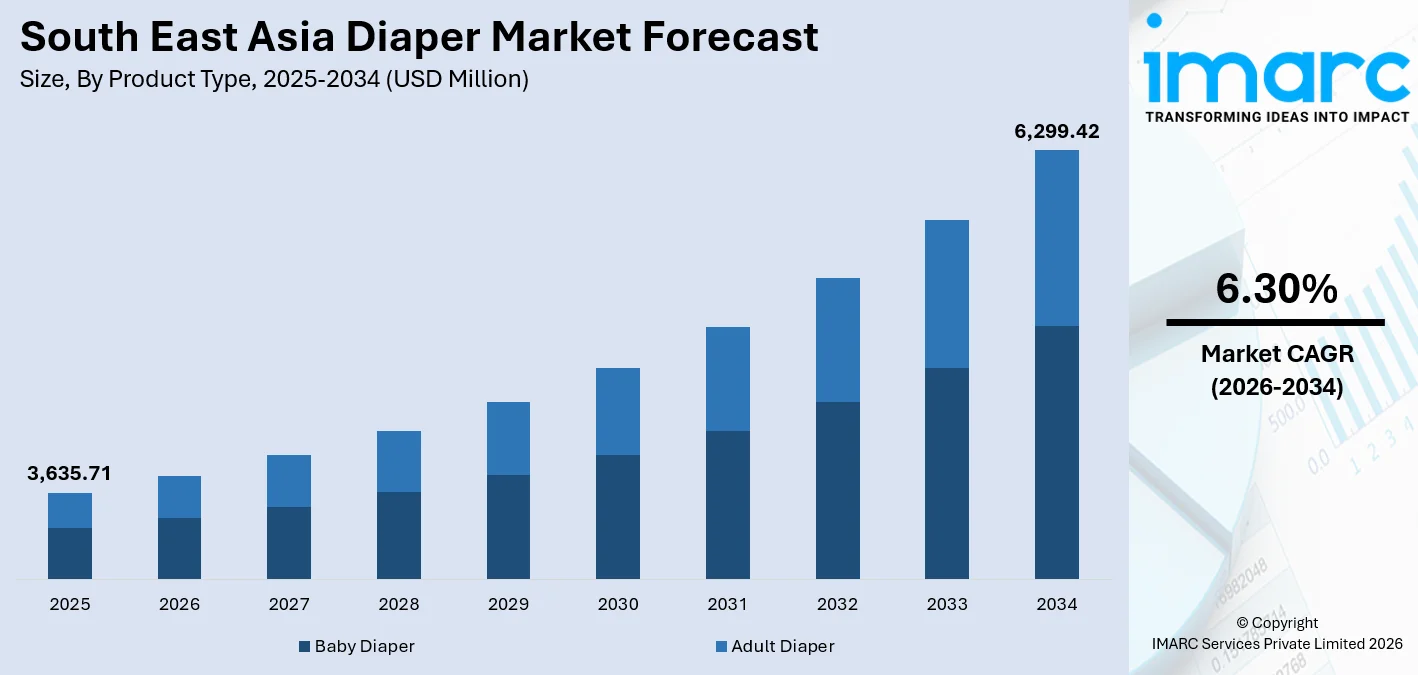
The South East Asia diaper market size was valued at USD 3,635.71 Million in 2025 and is projected to reach USD 6,299.42 Million by 2034, growing at a compound annual growth rate of 6.30% from 2026-2034.
The South East Asia diaper market is growing steadily with the rising birth rate, urbanization, and the importance of personal hygiene in the region. The rising disposable income is allowing families to spend on better diapering solutions, while the adoption of convenient disposable products by young dual-income families is also contributing to the demand. Additionally, the rapidly aging population in countries such as Thailand and Singapore is also contributing to the adoption of adult incontinence products, thus collectively contributing to the South East Asia diaper market share.
Key Takeaways and Insights:
- By Product Type: Baby Diaper dominates the market with a share of 70% in 2025, driven by the region's large infant population, heightened parental hygiene awareness, and widespread adoption of disposable products.
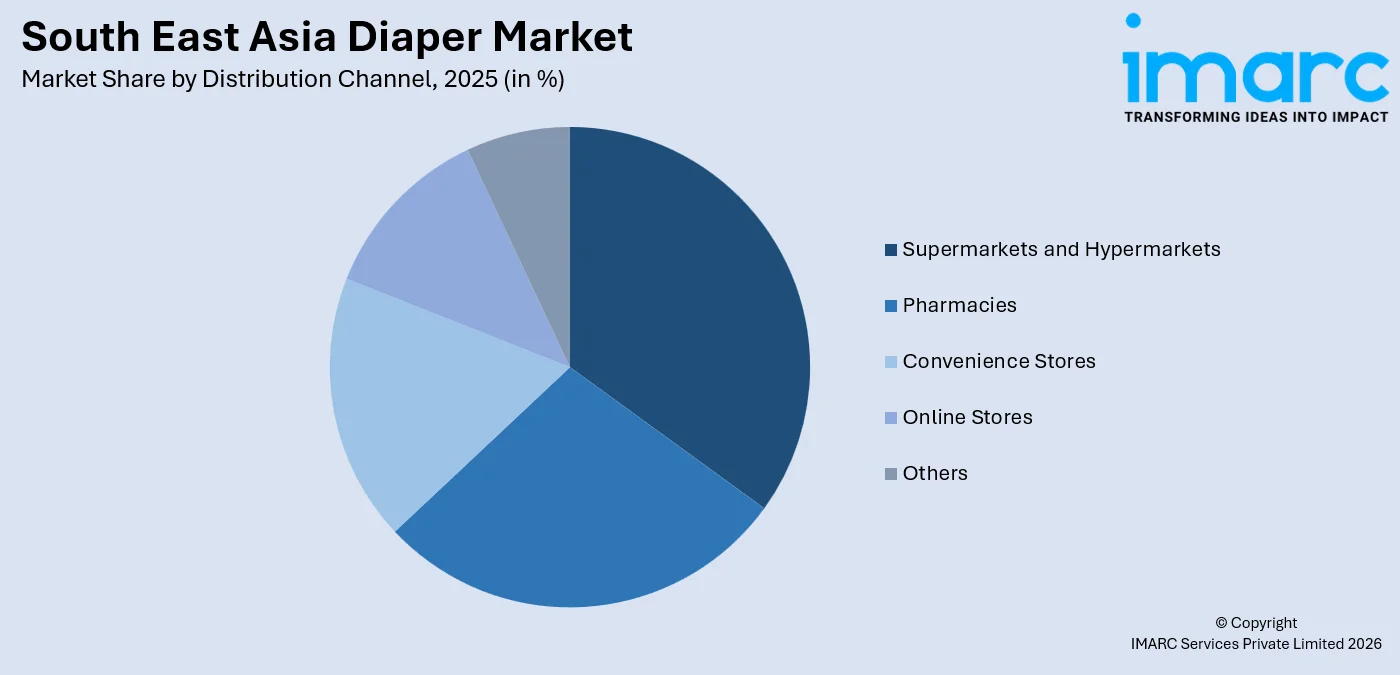
- By Distribution Channel: Supermarkets and Hypermarkets lead the market with a share of 32% in 2025, offering extensive product variety, trusted retail environments, and one-stop shopping convenience for families across the region.
- Key Players: The South East Asia diaper market features a competitive mix of global multinationals and established regional manufacturers competing across baby and adult categories through product innovation, brand investment, and expanding distribution networks. Some of the key players operating in the market include, Kao Industrial (Thailand) Co. Ltd. (Kao Corporation), Offspring Inc Sdn Bhd, Procter & Gamble Company, PT Softex Indonesia (Kimberly-Clark Corporation), and Unicharm Corporation.
To get more information on this market Request Sample
The South East Asia diaper market encompasses a diverse consumer base across Indonesia, Thailand, Singapore, Philippines, Vietnam, and Malaysia, with each country presenting unique demographic and economic dynamics. The market caters to both infant hygiene needs through baby diapers and the growing adult incontinence segment driven by an aging population. In 2025, China’s Babycare brand launched its diapers in over 170 Kids Plaza stores across Vietnam, signaling accelerated premium diaper adoption in Southeast Asian retail channels and highlighting how established players are expanding local footprints. Rising disposable incomes, expanding middle-class households, and increased parental awareness of infant health are reinforcing demand for premium, high-performance diaper products. Simultaneously, e-commerce platforms are playing a pivotal role in expanding product accessibility, particularly in rural and semi-urban areas. Growing environmental consciousness is spurring interest in biodegradable and eco-friendly diaper alternatives, encouraging innovation across product portfolios and positioning the market for sustained long-term growth.
South East Asia Diaper Market Trends:
Rising Premiumization of Diaper Products
Consumers across South East Asia are increasingly opting for premium diapers offering superior absorbency, skin-friendly materials, and enhanced comfort features. For example, in December 2025, Kimberly‑Clark production capacity expansion announced plans to boost its manufacturing capacity near Ho Chi Minh City by about 40 % to better serve growing demand for high‑performance diaper products across the region. As disposable incomes rise and parental awareness of infant hygiene deepens, demand for high-performance products featuring breathable layers, ultra-thin designs, and hypoallergenic properties is gaining notable traction. This premiumization trend is accelerating across both baby and adult diaper categories, encouraging manufacturers to develop differentiated, value-added offerings tailored to evolving regional consumer expectations.
Growing Adoption of Eco-Friendly and Biodegradable Diapers
Environmental consciousness is reshaping consumer preferences across South East Asia, with a growing segment of parents and caregivers actively seeking eco-friendly and biodegradable diaper alternatives. In December 2025, Indonesian diaper brand Merries expanded its “Merries Senyumkan Lingkungan” program by partnering with Kertabumi Recycling Center to convert used diapers into renewable fuel using pyrolysis technology, a pilot initiative that underscores how major players are integrating waste‑to‑energy solutions into their sustainability efforts. Rising concerns around plastic waste and chemical additives are driving demand for plant-based materials, compostable packaging, and sustainably manufactured products. This shift is encouraging brands to expand their green product portfolios, contributing meaningfully to overall diaper market growth across the region.
Expansion of E-Commerce Distribution Channels
The rapid growth of e-commerce platforms is transforming diaper distribution across South East Asia, providing consumers with greater convenience, competitive pricing, and broader product selection. In February 2026, Shopee‑owner Sea Ltd. announced a strategic partnership with Alphabet’s Google to develop advanced artificial intelligence tools, including AI‑powered shopping capabilities, for its Shopee platform, reinforcing how leading e‑commerce marketplaces are investing in technology to enhance online shopping experiences in the region. Rising mobile internet penetration and expanding digital payment infrastructure are enabling access to diaper products in previously underserved areas. Online marketplaces are increasingly becoming the preferred channel for subscription-based and bulk purchasing, particularly among digitally engaged millennial parents seeking seamless, time-efficient shopping experiences.
Market Outlook 2026-2034:
The South East Asia market for diapers is expected to grow at a significant rate over the forecast period, driven by the favorable demographic trends, growing awareness among consumers, and the development of the retail infrastructure. The growing birth rate in the major markets and the growing geriatric population are expected to drive the demand for baby and adult diapers. Product innovations, the premiumization of the diaper category, and the growing trend of eco-friendly alternatives are expected to expand the base. The market generated a revenue of USD 3,635.71 Million in 2025 and is projected to reach a revenue of USD 6,299.42 Million by 2034, growing at a compound annual growth rate of 6.30% from 2026-2034.
South East Asia Diaper Market Report Segmentation:
| Segment Category | Leading Segment | Market Share |
|---|---|---|
|
Product Type |
Baby Diaper |
70% |
|
Distribution Channel |
Supermarkets and Hypermarkets |
32% |
Product Type Insights:
- Baby Diaper
- Disposable Diapers
- Training Diapers
- Cloth Diapers
- Swim Pants
- Biodegradable Diapers
- Adult Diaper
- Pad Type
- Flat Type
- Pant Type
The baby diaper dominates with a market share of 70% of the total South East Asia diaper market in 2025.
The baby diaper market is currently dominated by the baby diaper segment in the South East Asia diaper market, due to the large and growing population of babies in the region, as well as the increasing awareness of parents in the region regarding hygiene and health. The demand in the market has been consistent across various economic classes and regions, with disposable diapers holding the maximum market share in this segment due to their convenience, ease of use, and superior absorbency properties, making them the preferred choice of busy parents in the region.
Urbanization, the rise of two-income families, and the increasing influence of organized retail and e-commerce are further contributing to the overall growth of the baby diaper market in South East Asia. Parents are increasingly shifting towards the premium category of baby diapers, which offers better skin protection, breathability, and thinness suitable for active babies. The trend of biodegradable and plant-based alternatives is also catching up in the market, which is encouraging companies to diversify their baby diaper product range in the market to cater to the needs of environmentally conscious consumers in the region.
Distribution Channel Insights:
Access the comprehensive market breakdown Request Sample
- Supermarkets and Hypermarkets
- Pharmacies
- Convenience Stores
- Online Stores
- Others
The supermarkets and hypermarkets lead with a share of 32% of the total South East Asia diaper market in 2025.
Supermarkets and hypermarkets remain the most popular distribution channels for diapers in South East Asia, due to the high foot traffic generated by the cumulative visits of consumers for purchasing grocery and household items. The availability of various brands and sizes of diapers in these stores allows consumers to compare and make informed purchasing decisions. The safe and trusted environment, promotions, and bundle offers make supermarkets and hypermarkets the preferred shopping destinations for both planned and impulse purchases of diapers by various consumer groups in South East Asia.
The one-stop shopping feature of supermarkets and hypermarkets continues to strengthen their channel leadership, especially among young parents who have multiple household shopping needs to fulfill in a single visit. Their widespread presence in the urban and suburban areas ensures geographic accessibility for consumers with different purchasing power. Moreover, the efforts of the manufacturers to engage with consumers and stimulate consistent product demand through this important distribution channel are being facilitated by the strong partnerships between the retailers and the brands, loyalty programs, and visibility initiatives.
Country Insights:
- Indonesia
- Thailand
- Singapore
- Philippines
- Vietnam
- Malaysia
- Others
Indonesia is home to the biggest market for diapers in South East Asia, supported by one of the highest birth rates in the region and a rapidly growing middle-class consumer base. Increased awareness of personal and baby hygiene, rising urbanization, and growing penetration of organized retail are all contributing factors to the demand for both baby and adult diapers in the various provinces of Indonesia.
The market for diapers in Thailand is characterized by a dual demand trend, with a rapidly aging population contributing to the increasing demand for adult incontinence products, in addition to the demand for high-quality baby diapers. Urban consumers are becoming increasingly conscious of comfort, skin protection, and environmentally friendly ingredients, while improved accessibility of products through modern trade and online shopping is on the rise.
Singapore's diaper market is characterized by a high-income, health-conscious consumer base with strong preference for premium, hypoallergenic, and sustainably manufactured diapering solutions. Advanced retail infrastructure, high digital adoption, and widespread e-commerce penetration facilitate convenient access to a broad range of innovative diaper products, making Singapore one of the most mature and value-driven markets across the region.
The Philippines diaper market is aided by a young and growing population base, as well as growing parental awareness of infant hygiene standards. Urbanization, rising household incomes, and the development of modern trade distribution channels are all contributing factors to the adoption of baby diapers. Increasing awareness of healthcare is also encouraging the adoption of adult incontinence products among the aging population.
The Vietnam diaper market is growing at a significant rate due to increasing birth rates, rising female participation in the workforce, and rapid urbanization in key cities. Increasing consumer demands for quality baby care products, as well as the rapid development of e-commerce platforms and modern retail formats, are all contributing factors to the adoption of diapers in Vietnam.
The diaper market in Malaysia is supported by an established retail infrastructure and a health-conscious consumer base that is increasingly demanding high-quality and eco-friendly products. The rising levels of disposable income, young and growing population, and high adoption of e-commerce are also fueling steady market growth in the baby and adult diaper categories across the country's urban and suburban areas.
Other South East Asian markets, such as Myanmar, Cambodia, Laos, and Brunei, also offer promising growth opportunities in the diaper market due to the rising levels of living standards, growing awareness about hygiene, and an expanding retail infrastructure that is increasing the penetration of diaper products. Although the market development is at a relatively nascent stage in comparison to other regional economies, these countries also offer long-term growth opportunities as the purchasing power of consumers and retail infrastructure continue to evolve.
Market Dynamics:
Growth Drivers:
Why is the South East Asia Diaper Market Growing?
Rising Hygiene Awareness and Health Consciousness
Rising awareness of personal hygiene and infant health is driving a shift in consumer behavior across Southeast Asia, with parents and caregivers increasingly seeking high-quality diaper solutions. Enhanced healthcare literacy, effective public health campaigns, and broader access to maternal and child health information are supporting higher diaper adoption, especially in semi-urban and rural areas. The growing recognition that reliable diaper use contributes to better health outcomes for both infants and adults is becoming a key long-term driver, fueling sustained demand and reinforcing the market’s growth potential in the region.
Growing Infant and Elderly Population Base
South East Asia's demographic profile presents a compelling dual growth opportunity for the diaper market. Sustained birth rates in Indonesia, the Philippines, and Vietnam generate consistent baby diaper demand, supported by rising parental investment in infant care. At the same time, Singapore’s population aged 65 and over exceeded 20 % of its total for the first time in 2025, the highest share in ASEAN, highlighting how rapid ageing is already reshaping demographics in parts of the region and underscoring growing long‑term demand for adult care products. Simultaneously, pronounced demographic aging in Thailand and Singapore is expanding the adult diaper segment, as growing incidences of urinary incontinence, rising awareness of incontinence management, and the gradual removal of associated social stigma drive broader product adoption.
Expanding Modern Retail and E-Commerce Infrastructure
The rapid expansion of modern retail networks, including supermarkets, hypermarkets, and convenience store chains, is significantly improving diaper accessibility across South East Asia, bringing branded products within reach of previously underserved consumer segments. According to the e‑Conomy SEA 2025 report by Google, Temasek Holdings, and Bain & Company, Southeast Asia’s digital economy is poised to surpass $300 billion in 2025, driven by strong growth in e‑commerce channels that enhance product discovery, online retailing, and digital payments across the region’s six key markets. Complementing physical retail, the proliferation of e-commerce platforms offering subscription services, home delivery, and competitive pricing is transforming purchasing behavior. Rising smartphone adoption and digital payment penetration are accelerating the shift toward online channels, collectively broadening market reach and sustaining diaper market growth throughout the region.
Market Restraints:
What Challenges the South East Asia Diaper Market is Facing?
Environmental Concerns Over Disposable Diaper Waste
The practice of using disposable diapers has resulted in the generation of a large amount of solid waste, which is an environmental concern in South East Asia. The non-biodegradable properties of traditional disposable diapers are major contributors to the overflow of landfills and environmental pollution. The increasing awareness of plastic waste problems and the shift in consumer behavior towards sustainable products are likely to bring traditional diaper production methods under scrutiny, which may act as a deterrent for some consumer groups to opt for disposables.
Price Sensitivity in Developing Markets
In the emerging markets of South East Asia, price sensitivity is a major hindrance to the adoption of diapers and the subsequent premiumization of brands. In many households in the lower-income segments of emerging markets, affordability is given greater importance than product quality, thereby hindering the entry of premium diaper brands into these markets. This could result in consumers opting for lower-quality products due to budget constraints.
Cultural Stigma Surrounding Adult Diaper Use
The social stigma of using adult diapers is a significant hindering factor in the South East Asian market, where the topic of incontinence is generally considered a taboo. The deeply embedded social culture and embarrassment of looking for incontinence care products are factors that have limited the adoption of adult diapers, especially among the older age group. Social stigma has decreased the adoption rate of adult diapers among affected individuals.
Competitive Landscape:
The diaper market in the South East Asia region is quite competitive where international hygiene companies, local producers, and new entrants are working on increasing their market share with a variety of product lines. International firms use established brands, sophisticated production facilities, and widespread distribution networks to sustain their position in the market –especially in high and medium segments. Local producers are competing effectively based on price competitiveness, product development for specific regions, and flexible supply chain development. As firms seek to distinguish their offerings and target value-for-money consumers, there is a rising investment in innovation with the launch of green products, improved absorbent and premium designs. Partnering with retail companies, healthcare organizations and online shopping companies is also becoming an important competitive tool that allows companies to tap into existing markets and engage consumers in the South East Asia market.
Some of the key players include:
- Kao Industrial (Thailand) Co. Ltd. (Kao Corporation)
- Offspring Inc Sdn Bhd
- Procter & Gamble Company
- PT Softex Indonesia (Kimberly-Clark Corporation)
- Unicharm Corporation
Recent Developments:
- In February 2026, Kudos, a U.S. diaper startup with 100% biodegradable, cotton‑lined disposables, is gaining global attention as an eco‑friendly alternative to traditional brands, sparking interest among sustainability‑focused parents and potentially influencing demand in Southeast Asian markets.
South East Asia Diaper Market Report Coverage:
| Report Features | Details |
|---|---|
| Base Year of the Analysis | 2025 |
| Historical Period | 2020-2025 |
| Forecast Period | 2026-2034 |
| Units | Million USD |
| Scope of the Report | Exploration of Historical and Forecast Trends, Industry Catalysts and Challenges, Segment-Wise Historical and Predictive Market Assessment:
|
| Product Types Covered |
|
| Distribution Channels Covered | Supermarkets and Hypermarkets, Pharmacies, Convenience Stores, Online Stores, Others |
| Countries Covered | Indonesia, Thailand, Singapore, Philippines, Vietnam, Malaysia, Others |
| Companies Covered | Kao Industrial (Thailand) Co. Ltd. (Kao Corporation), Offspring Inc Sdn Bhd, Procter & Gamble Company, PT Softex Indonesia (Kimberly-Clark Corporation), Unicharm Corporation, etc. |
| Customization Scope | 10% Free Customization |
| Post-Sale Analyst Support | 10-12 Weeks |
| Delivery Format | PDF and Excel through Email (We can also provide the editable version of the report in PPT/Word format on special request) |
Frequently Asked Questions About the South East Asia Diaper Market Report
The South East Asia diaper market size was valued at USD 3,635.71 Million in 2025.
The South East Asia diaper market is expected to grow at a compound annual growth rate of 6.30% from 2026-2034 to reach USD 6,299.42 Million by 2034.
Baby diaper dominates the market with a share of approximately 70%, driven by the region's large infant population, rising parental hygiene awareness, and the widespread adoption of disposable diaper products across key markets.
Key factors driving the South East Asia diaper market include rising hygiene awareness, growing infant and elderly population, expanding retail and e-commerce infrastructure, increasing disposable incomes, and growing demand for premium and eco-friendly diaper products.
Major challenges include environmental concerns over disposable diaper waste, price sensitivity in developing markets, cultural stigma surrounding adult diaper use, supply chain disruptions, and the need for continuous product innovation to meet evolving consumer preferences.
Need more help?
- Speak to our experienced analysts for insights on the current market scenarios.
- Include additional segments and countries to customize the report as per your requirement.
- Gain an unparalleled competitive advantage in your domain by understanding how to utilize the report and positively impacting your operations and revenue.
- For further assistance, please connect with our analysts.
 Request Customization
 Speak to an Analyst
 Request Brochure
 Inquire Before Buying
Benefits of Customization
- Personalize this research
- Triangulate with your data
- Get data as per your format and definition
- Gain a deeper dive into a specific application, geography, customer, or competitor
- Any level of personalization
Get in Touch With Us
UNITED STATES
Phone: +1-201-971-6302
INDIA
Phone: +91-120-433-0800
UNITED KINGDOM
Phone: +44-753-714-6104
Email: [email protected]
Client Testimonials




.webp)




.webp)













Related Reports

Choose your plan
*Please note that the prices mentioned below are starting prices for each bundle type. Kindly contact our team for further details.*
Single User License
- 1 User License, Access on 2 Devices
- PDF Report + Excel Dataset (Password Protected)
- Lifetime Access
- No Printing Rights
- 10% Free Report Customization
- 10–12 Weeks of Analyst Support
Five User License
- Access for 5 Users, 2 Devices per User
- PDF Report + Excel Dataset (Password Protected)
- Lifetime Access
- Dedicated Account Manager
- 12–14 Weeks of Analyst Support
- No Printing Rights
- 15% Free Report Customization
- 25% Discount on Your Next Purchase
Corporate User License
- Unlimited User Access (Within Your Organization)
- PDF Report + Excel Dataset
- Lifetime Access
- Dedicated Account Manager
- 14–20 Weeks of Analyst Support
- No Printing Rights
- 20% Free Report Customization
- 30% Discount on Your Next Purchase
Essential Insights
What's included:
3 reports
- Lifetime Access
- PDF Reports
- Excel Datasets
- 2 Weeks of Free Analyst Support
- 2 User Licenses
- Access on 2 Devices
- Printing Rights
- Complimentary PowerPoint (PPT) Version
- Complimentary License Upgrade
Professional Access
What's included:
5 reports
- Lifetime Access
- PDF Reports
- Excel Datasets
- 8 Weeks of Free Analyst Support
- 2 User Licenses
- Access on 2 Devices
- Printing Rights
- Complimentary PowerPoint (PPT) Version
- Complimentary License Upgrade
Business Advantage
What's included:
8 reports
- Lifetime Access
- PDF Reports
- Excel Datasets
- 14 Weeks of Free Analyst Support
- 2 User Licenses
- Access on 2 Devices
- Printing Rights
- Complimentary PowerPoint (PPT) Version
- Complimentary License Upgrade
Enterprise Intelligence
What's included:
10 reports
- Lifetime Access
- PDF Reports
- Excel Datasets
- 20 Weeks of Free Analyst Support
- 2 User Licenses
- Access on 2 Devices
- Printing Rights
- Complimentary PowerPoint (PPT) Version
- Complimentary License Upgrade