
UAE Camel Dairy Market Report by Product Type (Raw Camel Milk, Pasteurized Camel Milk, Flavoured Camel Milk, Camel Milk Cheese, Camel Milk Yoghurt, Camel Milk Ice Cream, Camel Milk Laban, Camel Milk Ghee, Camel Milk Infant Formula, Camel Milk Powder, and Others), Distribution Channel (Supermarkets and Hypermarkets, Convenience Stores, Specialty Stores, Online Stores, and Others), Packaging (Cartons, Bottles, Cans, Jars, and Others), and Emirates 2026-2034
Market Overview:
The UAE camel dairy market size increased from USD 270.5 Million in 2025 to USD 291.2 Million in 2026. Looking forward, IMARC Group expects the market to reach USD 462.9 Million by 2034, exhibiting a growth rate (CAGR) of 5.97% during 2026-2034.
|
Report Attribute
|
Key Statistics
|
|---|---|
|
Base Year
|
2025
|
|
Forecast Years
|
2026-2034
|
|
Historical Years
|
2020-2025
|
| Base Year Market Size (2025) | USD 270.5 Million |
| Market Size (2026) | USD 291.2 Million |
| Forecast Market Size (2034) | USD 462.9 Million |
| CAGR (2026-2034) | 5.97% |
Access the full market insights report Request Sample
Camel dairy comprises immunity-boosting antibodies that help minimize the risk of autoimmune diseases. It is a rich source of iron, copper, manganese, magnesium, sodium, and vitamins A and C. Besides this, it comprises less concentration of lactose and saturated fats. At present, there is a considerable rise in the consumption of camel dairy products on account of their health benefits and growing lactose-intolerant individuals across the UAE.
The camel dairy market is primarily driven by the rising prevalence of diabetes in the UAE. Camel milk helps in improving the lipid profile and minimizing insulin resistance. This, in confluence with the increasing health consciousness among individuals, represents another significant factor contributing to the market growth. Apart from this, manufacturers are investing in the production of value-added products, including camel milk-based ice cream, cheese and chocolates, to expand their consumer base. Moreover, governing agencies in the country are undertaking numerous initiatives to promote the consumption of camel milk and dairy products, which is positively influencing their demand. For instance, the UAE Ministry of Economy provided a value-added tax (VAT) exemption certificate to Emirates Industry for Camel Milk and Products (EICMP), a Dubai-based camel milk producer, thereby relieving the custom duty on imports.
Key Market Segmentation:
IMARC Group provides an analysis of the key trends in each sub-segment of the UAE camel dairy market report, along with forecasts at the country and emirates level from 2026-2034. Our report has categorized the market based on product type, distribution channel and packaging.
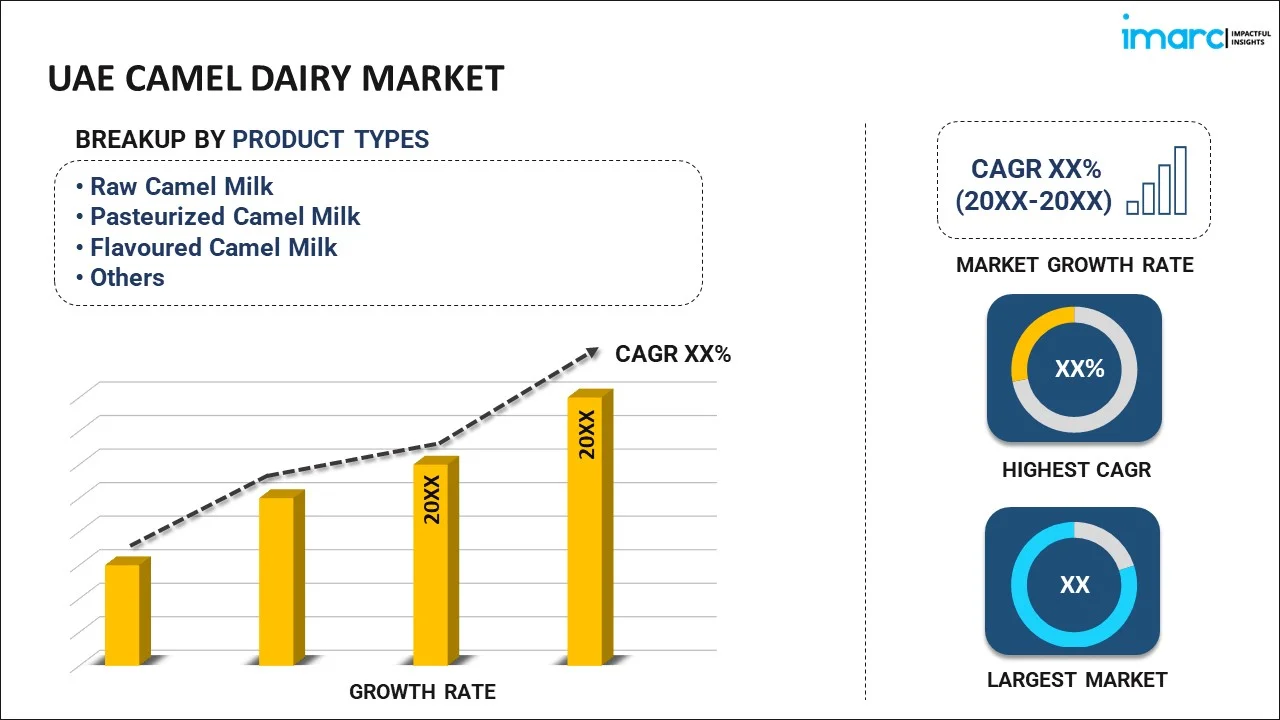
Breakup by Product Type:
To get detailed segment analysis of this market Request Sample
- Raw Camel Milk
- Pasteurized Camel Milk
- Flavoured Camel Milk
- Camel Milk Cheese
- Camel Milk Yoghurt
- Camel Milk Ice Cream
- Camel Milk Laban
- Camel Milk Ghee
- Camel Milk Infant Formula
- Camel Milk Powder
- Others
Breakup by Distribution Channel:
- Supermarkets and Hypermarkets
- Convenience Stores
- Specialty Stores
- Online Stores
- Others
Breakup by Packaging:
- Cartons
- Bottles
- Cans
- Jars
- Others
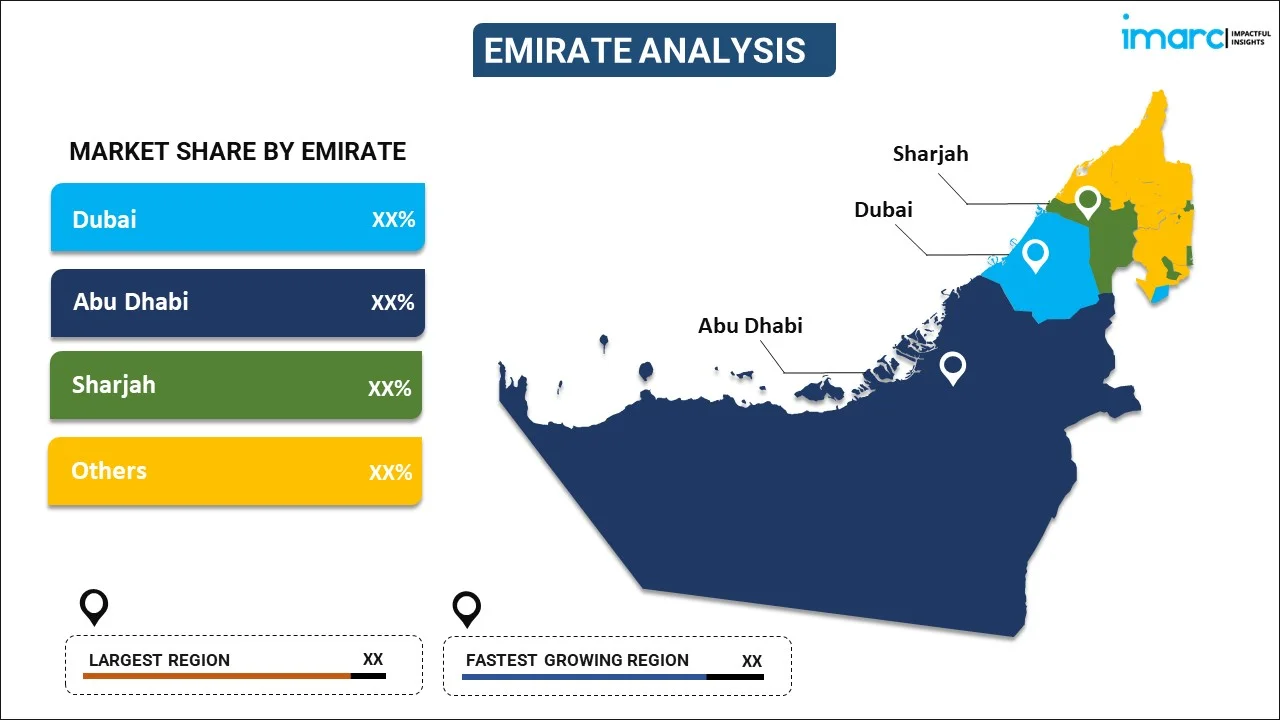
Breakup by Emirates:
To get detailed regional analysis of this market Request Sample
- Abu Dhabi
- Dubai
- Sharjah
- Others
Competitive Landscape:
The competitive landscape of the industry has also been examined along with the profiles of the key players.
Report Coverage:
| Report Features | Details |
|---|---|
| Base Year of the Analysis | 2025 |
| Historical Period | 2020-2025 |
| Forecast Period | 2026-2034 |
| Units | Million USD |
| Segment Coverage | Product Type, Distribution Channel, Packaging, Emirates |
| Emirates Covered | Abu Dhabi, Dubai, Sharjah, Others |
| Customization Scope | 10% Free Customization |
| Post-Sale Analyst Support | 10-12 Weeks |
| Delivery Format | PDF and Excel through Email (We can also provide the editable version of the report in PPT/Word format on special request) |
Frequently Asked Questions About the UAE Camel Dairy Market Report
The UAE camel dairy market size is estimated at USD 291.2 Million in 2026.
We expect the UAE camel dairy market to exhibit a CAGR of 5.97% during 2026-2034.
The increasing prevalence of chronic ailments, along with the growing consumer inclination towards camel dairy products, as they aid in maintaining the nutritional balance and boosting immunity levels, is primarily driving the global camel dairy market.
The sudden outbreak of the COVID-19 pandemic has led to the changing consumer inclination from conventional brick-and-mortar distribution channels towards online retail platforms for the purchase of camel dairy products, including milk, cheese, butter, desserts, yogurt, etc., across the nation.
Based on the product type, the UAE camel dairy market can be segmented into raw camel milk, pasteurized camel milk, flavored camel milk, camel milk cheese, camel milk yoghurt, camel milk ice cream, camel milk laban, camel milk ghee, camel milk infant formula, camel milk powder, and others. Currently, pasteurized camel milk holds the majority of the total market share.
Based on the distribution channel, the UAE camel dairy market has been divided into supermarkets and hypermarkets, convenience stores, specialty stores, online stores, and others. Among these, supermarkets and hypermarkets currently exhibit a clear dominance in the market.
Based on the packaging, the UAE camel dairy market can be categorized into cartons, bottles, cans, jars, and others. Currently, bottles account for the largest market share.
On a regional level, the market has been classified into Abu Dhabi, Dubai, Sharjah, and others, where Abu Dhabi currently dominates the UAE camel dairy market.
Need more help?
- Speak to our experienced analysts for insights on the current market scenarios.
- Include additional segments and countries to customize the report as per your requirement.
- Gain an unparalleled competitive advantage in your domain by understanding how to utilize the report and positively impacting your operations and revenue.
- For further assistance, please connect with our analysts.
 Request Customization
 Speak to an Analyst
 Request Brochure
 Inquire Before Buying
Benefits of Customization
- Personalize this research
- Triangulate with your data
- Get data as per your format and definition
- Gain a deeper dive into a specific application, geography, customer, or competitor
- Any level of personalization
Get in Touch With Us
UNITED STATES
Phone: +1-201-971-6302
INDIA
Phone: +91-120-433-0800
UNITED KINGDOM
Phone: +44-753-714-6104
Email: sales@imarcgroup.com
Client Testimonials




.webp)




.webp)













Related Reports

Choose your plan
*Please note that the prices mentioned below are starting prices for each bundle type. Kindly contact our team for further details.*
Single User License
- 1 User License, Access on 2 Devices
- PDF Report + Excel Dataset (Password Protected)
- Lifetime Access
- No Printing Rights
- 10% Free Report Customization
- 10–12 Weeks of Analyst Support
Five User License
- Access for 5 Users, 2 Devices per User
- PDF Report + Excel Dataset (Password Protected)
- Lifetime Access
- Dedicated Account Manager
- 12–14 Weeks of Analyst Support
- No Printing Rights
- 15% Free Report Customization
- 25% Discount on Your Next Purchase
Corporate User License
- Unlimited User Access (Within Your Organization)
- PDF Report + Excel Dataset
- Lifetime Access
- Dedicated Account Manager
- 14–20 Weeks of Analyst Support
- No Printing Rights
- 20% Free Report Customization
- 30% Discount on Your Next Purchase
Essential Insights
What's included:
3 reports
- Lifetime Access
- PDF Reports
- Excel Datasets
- 2 Weeks of Free Analyst Support
- 2 User Licenses
- Access on 2 Devices
- Printing Rights
- Complimentary PowerPoint (PPT) Version
- Complimentary License Upgrade
Professional Access
What's included:
5 reports
- Lifetime Access
- PDF Reports
- Excel Datasets
- 8 Weeks of Free Analyst Support
- 2 User Licenses
- Access on 2 Devices
- Printing Rights
- Complimentary PowerPoint (PPT) Version
- Complimentary License Upgrade
Business Advantage
What's included:
8 reports
- Lifetime Access
- PDF Reports
- Excel Datasets
- 14 Weeks of Free Analyst Support
- 2 User Licenses
- Access on 2 Devices
- Printing Rights
- Complimentary PowerPoint (PPT) Version
- Complimentary License Upgrade
Enterprise Intelligence
What's included:
10 reports
- Lifetime Access
- PDF Reports
- Excel Datasets
- 20 Weeks of Free Analyst Support
- 2 User Licenses
- Access on 2 Devices
- Printing Rights
- Complimentary PowerPoint (PPT) Version
- Complimentary License Upgrade