
UAE Luxury Market Size, Share, Trends and Forecast by Type, Gender, and Distribution Channel, 2026-2034
UAE Luxury Market Summary:
The UAE luxury market size was valued at USD 4.45 Billion in 2025 and is projected to reach USD 7.09 Billion by 2034, growing at a compound annual growth rate of 5.30% from 2026-2034.
The luxury market in the UAE is growing with vigor as the UAE has emerged as the pre-eminent international destination for luxury spending by consumers as well as high net worth individuals. The luxury market also derives strength from the well-developed tourism sector that attracts millions of foreign vacationers every year, the tax-free shopping culture, and the highly developed shopping infrastructure with world-class malls. The surge in premiumization of products, the trend towards customized luxury experiences, and the proliferation of international luxury brands also continue to enhance the share of the luxury market in the UAE.
Key Takeaways and Insights:
-
By Type: Travel and hotel dominate the market with a share of 34% in 2025, driven by the country's thriving tourism industry and world-class hospitality infrastructure attracting affluent travelers.
-
By Gender: Male leads the market with a share of 55% in 2025, reflecting higher spending on luxury automobiles, watches, and premium lifestyle products among male consumers.
-
By Distribution Channel: Monobrand stores accounts for the largest share of 43% in 2025, owing to immersive brand experiences, personalized services, and exclusive product offerings in flagship retail locations.
-
Key Players: The UAE luxury market is highly concentrated, with major multinational and regional players holding dominant positions through diverse brand portfolios, extensive retail networks, and strategic market presence, driving growth and shaping consumer experiences across the region.
The UAE has established itself as a premier destination for luxury consumption, driven by its strategic geographic position, world-renowned retail infrastructure, and a growing population of high-net-worth individuals. In April 2025, Majid Al Futtaim announced an ambitious expansion of its luxury retail footprint across the UAE and wider Middle East, planning to open over 30 new stores featuring Italian luxury brands such as Eleventy, Corneliani, and Poltrona Frau to meet rising demand for upscale shopping experience. The nation's commitment to developing exceptional hospitality experiences, combined with its tax-advantaged shopping environment, continues to attract affluent residents and international tourists alike. Luxury retailers are increasingly focused on creating immersive in-store experiences to capture consumer interest and generate revenue, while the growing demand for personalized products reflects evolving consumer preferences. The wide availability of luxury products through both online and offline retail channels is providing lucrative growth opportunities to industry stakeholders.
UAE Luxury Market Trends:
Rising Experiential Luxury and Personalization
Modern luxury consumers in the UAE, especially younger generations, are increasingly favoring unique experiences over material goods. In April 2025, luxury brands in Dubai embraced experiential retail, creating immersive store designs, interactive shopping journeys, and storytelling-driven engagement to appeal to Gen Z and millennials. This shift has prompted brands to host exclusive events, offer bespoke services, and launch limited-edition collections, emphasizing personalization and memorable encounters that redefine how luxury retailers connect with their discerning clientele.
Digital Transformation and Omnichannel Integration
The UAE luxury market is undergoing a major digital transformation as brands adopt advanced technologies to elevate customer experiences. In November 2025, luxury retailers across Dubai deployed augmented reality (AR) try-on solutions, AI-powered styling consultations, and blockchain-based authentication systems, with jewellers like Sana Jewellers leading the way. By integrating these digital tools with traditional retail, brands are creating seamless omnichannel experiences that allow consumers to engage with premium products across platforms while preserving exclusivity and trust in high-value purchases.
Sustainable and Conscious Luxury Consumption
Environmental consciousness is increasingly influencing luxury purchasing decisions in the UAE, with affluent consumers showing growing interest in sustainable and ethically sourced products. In January 2025, Dubai‑based platform Cloudset launched a sustainable luxury fashion initiative that enables the rental and re‑commerce of high‑end clothing and accessories, catering to eco‑conscious consumers who prefer responsible, lower‑waste consumption models. Luxury brands are embracing eco-friendly materials, transparent supply chains, and circular initiatives, reflecting global conscious consumption trends and supporting the UAE’s sustainability vision.
Market Outlook 2026-2034:
The UAE luxury goods market is set for steady growth during the forecast period, driven by strong economic fundamentals, a growing number of high-net-worth individuals, and expanding tourism infrastructure. Strategic initiatives to develop premium retail destinations, along with shifting consumer preferences toward exclusive experiences, are expected to further fuel market momentum. These factors collectively position the UAE as a key hub for luxury consumption and high-end retail expansion. The market generated a revenue of USD 4.45 Billion in 2025 and is projected to reach a revenue of USD 7.09 Billion by 2034, growing at a compound annual growth rate of 5.30% from 2026-2034.
UAE Luxury Market Report Segmentation:
| Segment Category | Leading Segment | Market Share |
|---|---|---|
| Type | Travel and Hotel | 34% |
| Gender | Male | 55% |
| Distribution Channel | Monobrand Stores | 43% |
Type Insights:
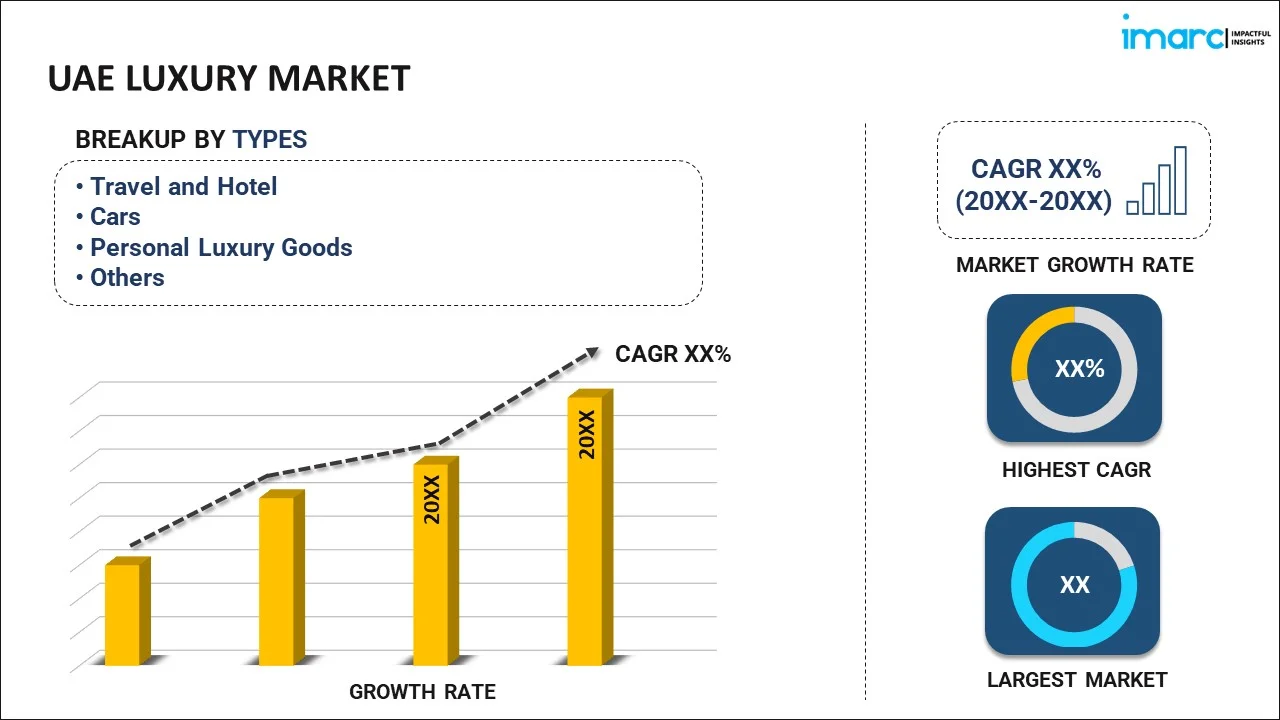
To get detailed segment analysis of this market, Request Sample
- Travel and Hotel
- Cars
- Personal Luxury Goods
- Food and Drinks
- Others
The travel and hotel dominate with a market share of 34% of the total UAE luxury market in 2025.
The travel and hotel segment maintains its leading position driven by the UAE's exceptional hospitality infrastructure and its reputation as a premier global tourism destination. Luxury hotels, resorts, and exclusive travel experiences continue to attract high-net-worth individuals seeking world-class amenities, personalized services, and unforgettable experiences in iconic destinations across Dubai and Abu Dhabi. International visitors and affluent residents alike contribute to sustained demand for exclusive travel packages, private jet services, and curated hospitality experiences that define the UAE's luxury tourism landscape.
The expansion of ultra-luxury properties, including branded residences and boutique hotels, reflects the growing appetite for premium accommodation experiences. For example, in March 2025 BNW Developments partnered with The Indian Hotels Company Limited (Taj Group) to introduce the first Taj Wellington Mews branded residences on Al Marjan Island in Ras Al Khaimah, marking a significant milestone in the UAE’s luxury real estate and hospitality landscape and underscoring strong investor confidence in high‑end living experiences.

Gender Insights:
- Male
- Female
The male leads with a share of 55% of the total UAE luxury market in 2025.
Male consumers in the region exhibit substantial purchasing power across a wide range of luxury segments, particularly premium automobiles, high-end timepieces, and exclusive fashion accessories. A strong cultural appreciation for status symbols, combined with a large and affluent male demographic, drives consistent spending on luxury products. These purchases often serve as expressions of personal achievement, social standing, and refined taste, reinforcing demand for sophisticated and prestigious brands.
The growing interest in premium grooming products, luxury casual wear, and collectible timepieces among younger male professionals continues to expand the segment's reach. For example, in December 2025 the global men’s grooming brand MANSCAPED entered physical retail in the UAE and wider GCC through a strategic partnership with Dubai‑based Monster Middle East, marking the UAE as the brand’s seventh global retail market and reflecting strong regional demand for premium grooming solutions. Luxury brands are responding with targeted marketing campaigns and exclusive product offerings designed to resonate with male consumers' evolving preferences and rising disposable incomes.
Distribution Channel Insights:
- Monobrand Stores
- Multibrand Stores
- Online Stores
- Others
The monobrand stores dominates with a market share of 43% of the total UAE luxury market in 2025.
Monobrand stores are able to sustain the dominant market position in the industry by providing an immersive and branded shopping experience that symbolizes the rich history and artisanal expertise of the luxury houses. The monobranded stores of the industry are found mainly at the most prestigious malls like the Dubai Mall, Mall of the Emirates, and the Galleria at Abu Dhabi.
The relevance of flagship stores in strategic planning has been rising as a result of investment by luxury brand owners in new formats, lounges, and experiences. Flagship stores are physical hubs that serve as brand storytelling mediums. The use of experiences alongside personalization in flagship stores helps the brand remain connected digitally while also allowing luxury experiences to be taken away from digital.
Market Dynamics:
Growth Drivers:
Why is the UAE Luxury Market Growing?
Expanding High-Net-Worth Individual Population
The UAE continues to attract a growing concentration of high-net-worth individuals, driven by its favorable tax environment, economic stability, and premium lifestyle offerings. In June 2025, reports identified the UAE as the world’s leading destination for millionaire migration, underscoring its strong appeal to global investors and entrepreneurs. This expanding affluent population brings substantial purchasing power and a strong preference for luxury consumption, boosting demand for premium fashion labels, exclusive collections, personalized services, flagship boutiques, and tailored private client retail experiences across the emirates.
Thriving Tourism Industry and Retail Infrastructure
The UAE’s status as a leading global tourism hub continues to support strong luxury goods consumption, driven by millions of international visitors drawn to its world-class shopping destinations each year. In April 2025, Emirati retail group Majid Al Futtaim announced a $1.36 billion expansion of Dubai’s Mall of the Emirates to introduce new stores, entertainment zones, and immersive retail concepts, strengthening the city’s appeal to high-end shoppers. The ongoing development of luxury malls, boutique districts, and duty-free zones further enhances premium retail experiences across the country.
Product Premiumization and Personalization Demand
The growing shift toward product premiumization reflects changing consumer preferences for exclusive, high-quality offerings that deliver experiences beyond simple ownership. In July 2025, Dubai-based The Experience Store (TES) officially launched as a curated luxury lifestyle platform, enabling affluent consumers to access bespoke yacht escapes, Michelin-starred dining, personalized wellness retreats, and adventure experiences through a single premium interface. Luxury brands are increasingly responding with personalized products, limited editions, and tailored services, as experiential value, emotional connection, and distinctiveness become key drivers of premium luxury demand across categories.
Market Restraints:
What Challenges the UAE Luxury Market is Facing?
Economic Volatility and Global Uncertainties
Although the UAE benefits from strong economic fundamentals, global economic volatility and geopolitical tensions can affect consumer confidence and discretionary spending. In such periods, affluent consumers often adopt a cautious approach to luxury purchases, which can dampen demand across high-end categories. This cautious behavior may slow growth in the premium market despite the region’s overall economic strength.
Counterfeiting and Brand Protection Challenges
The rise of counterfeit luxury goods continues to challenge brand protection and consumer trust. Combating these risks demands ongoing investment in advanced authentication technologies, consumer awareness initiatives, and strict enforcement measures. Such efforts are essential to safeguard brand integrity, maintain customer confidence, and protect the market value of genuine luxury products in an increasingly complex and globalized market.
Evolving Consumer Preferences and Digital Competition
Rapidly evolving consumer preferences and the rise of digital platforms are reshaping traditional luxury retail. Brands must adapt strategies to stay relevant while preserving exclusivity, carefully balancing online accessibility with the premium in-store experiences that define luxury. Success depends on integrating digital engagement without compromising the high-end, personalized experiences central to luxury consumption.
Competitive Landscape:
The UAE luxury goods market exhibits a highly concentrated competitive structure dominated by multinational luxury conglomerates with extensive brand portfolios and global distribution networks. These industry leaders maintain significant market presence through strategically located flagship stores in premium retail destinations across Dubai and Abu Dhabi. The competitive landscape is characterized by continuous investment in innovative retail formats, experiential marketing initiatives, and digital transformation strategies designed to capture the attention of discerning consumers. Market participants differentiate through exclusive product offerings, personalized services, and immersive brand experiences that reinforce their premium positioning. Regional luxury retailers also play important roles in bringing international brands to the market while developing localized engagement strategies.
Recent Developments:
-
December 2025, Luxury perfume brand Canéza made its debut at Beautyworld Middle East 2025, combining Rasasi heritage with modern artisanal fragrances. The brand launched 22 signature scents and plans expansion across the UAE, GCC, USA, with Europe and India set for late 2025.
Report Coverage:
| Report Features | Details |
|---|---|
| Base Year of the Analysis | 2025 |
| Historical Period | 2020-2025 |
| Forecast Period | 2026-2034 |
| Units | Billion USD |
| Scope of the Report | Exploration of Historical and Forecast Trends, Industry Catalysts and Challenges, Segment-Wise Historical and Predictive Market Assessment:
|
| Type Covered | Travel and Hotel, Cars, Personal Luxury Goods, Food and Drinks, Others |
| Gender Covered | Male, Female |
| Distribution Channel Covered | Monobrand Stores, Multibrand Stores, Online Stores, Others |
| Customization Scope | 10% Free Customization |
| Post-Sale Analyst Support | 10-12 Weeks |
| Delivery Format | PDF and Excel through Email (We can also provide the editable version of the report in PPT/Word format on special request) |
Frequently Asked Questions About the UAE Luxury Market Report
The UAE luxury market size was valued at USD 4.45 Billion in 2025.
The UAE luxury market is expected to grow at a compound annual growth rate of 5.30% from 2026-2034 to reach USD 7.09 Billion by 2034.
Travel and hotel dominated the market with a 34% share, driven by the UAE's world-class hospitality infrastructure and thriving international tourism sector attracting affluent travelers.
Key factors driving the UAE luxury market include expanding high-net-worth individual population, thriving tourism industry, growing e-commerce platforms, increasing premiumization trends, and strong demand for personalized luxury experiences.
Major challenges include global economic volatility and uncertainties, counterfeiting and brand protection concerns, evolving consumer preferences requiring continuous adaptation, and intensifying competition in digital retail channels.
Need more help?
- Speak to our experienced analysts for insights on the current market scenarios.
- Include additional segments and countries to customize the report as per your requirement.
- Gain an unparalleled competitive advantage in your domain by understanding how to utilize the report and positively impacting your operations and revenue.
- For further assistance, please connect with our analysts.
 Request Customization
 Speak to an Analyst
 Request Brochure
 Inquire Before Buying
Benefits of Customization
- Personalize this research
- Triangulate with your data
- Get data as per your format and definition
- Gain a deeper dive into a specific application, geography, customer, or competitor
- Any level of personalization
Get in Touch With Us
UNITED STATES
Phone: +1-201-971-6302
INDIA
Phone: +91-120-433-0800
UNITED KINGDOM
Phone: +44-753-714-6104
Email: [email protected]
Client Testimonials




.webp)




.webp)













Related Reports

Choose your plan
*Please note that the prices mentioned below are starting prices for each bundle type. Kindly contact our team for further details.*
Single User License
- 1 User License, Access on 2 Devices
- PDF Report + Excel Dataset (Password Protected)
- Lifetime Access
- No Printing Rights
- 10% Free Report Customization
- 10–12 Weeks of Analyst Support
Five User License
- Access for 5 Users, 2 Devices per User
- PDF Report + Excel Dataset (Password Protected)
- Lifetime Access
- Dedicated Account Manager
- 12–14 Weeks of Analyst Support
- No Printing Rights
- 15% Free Report Customization
- 25% Discount on Your Next Purchase
Corporate User License
- Unlimited User Access (Within Your Organization)
- PDF Report + Excel Dataset
- Lifetime Access
- Dedicated Account Manager
- 14–20 Weeks of Analyst Support
- No Printing Rights
- 20% Free Report Customization
- 30% Discount on Your Next Purchase
Essential Insights
What's included:
3 reports
- Lifetime Access
- PDF Reports
- Excel Datasets
- 2 Weeks of Free Analyst Support
- 2 User Licenses
- Access on 2 Devices
- Printing Rights
- Complimentary PowerPoint (PPT) Version
- Complimentary License Upgrade
Professional Access
What's included:
5 reports
- Lifetime Access
- PDF Reports
- Excel Datasets
- 8 Weeks of Free Analyst Support
- 2 User Licenses
- Access on 2 Devices
- Printing Rights
- Complimentary PowerPoint (PPT) Version
- Complimentary License Upgrade
Business Advantage
What's included:
8 reports
- Lifetime Access
- PDF Reports
- Excel Datasets
- 14 Weeks of Free Analyst Support
- 2 User Licenses
- Access on 2 Devices
- Printing Rights
- Complimentary PowerPoint (PPT) Version
- Complimentary License Upgrade
Enterprise Intelligence
What's included:
10 reports
- Lifetime Access
- PDF Reports
- Excel Datasets
- 20 Weeks of Free Analyst Support
- 2 User Licenses
- Access on 2 Devices
- Printing Rights
- Complimentary PowerPoint (PPT) Version
- Complimentary License Upgrade