
UAE Pharmaceutical Market Size, Share, Trends and Forecast by Type, Nature, and Region, 2026-2034
UAE Pharmaceutical Market Summary:
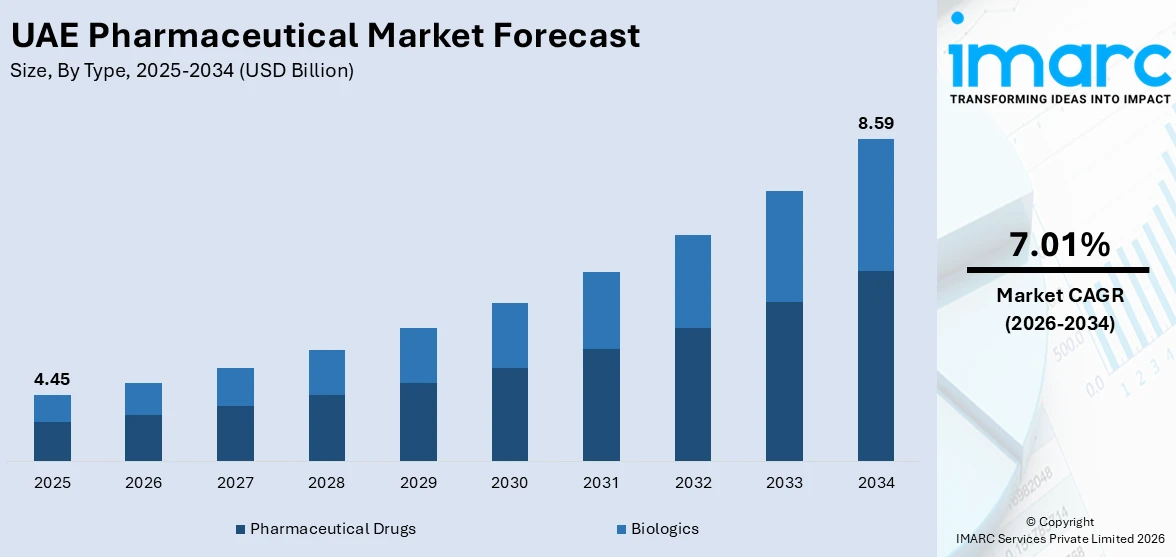
The UAE pharmaceutical market size increased from USD 4.45 Billion in 2025 to USD 4.99 Billion in 2026 and is projected to reach USD 8.59 Billion by 2034, growing at a compound annual growth rate of 7.01% from 2026-2034.
The market is propelled by the escalating prevalence of chronic diseases, substantial government investments in healthcare infrastructure, and the growing demand for innovative therapies. Proactive regulatory reforms, expanding local drug manufacturing capabilities, and an influx of medical tourism further accelerate the UAE pharmaceutical market share, reinforcing the country's ambitions to become a leading pharmaceutical hub across the Middle East region.
Key Takeaways and Insights:
- By Type: Pharmaceutical drugs dominate the market with a share of 71.6% in 2025, owing to the wide therapeutic application of conventional drugs across chronic disease management, acute care, and preventive healthcare. The growing burden of metabolic and cardiovascular conditions continues to drive sustained demand across this segment.
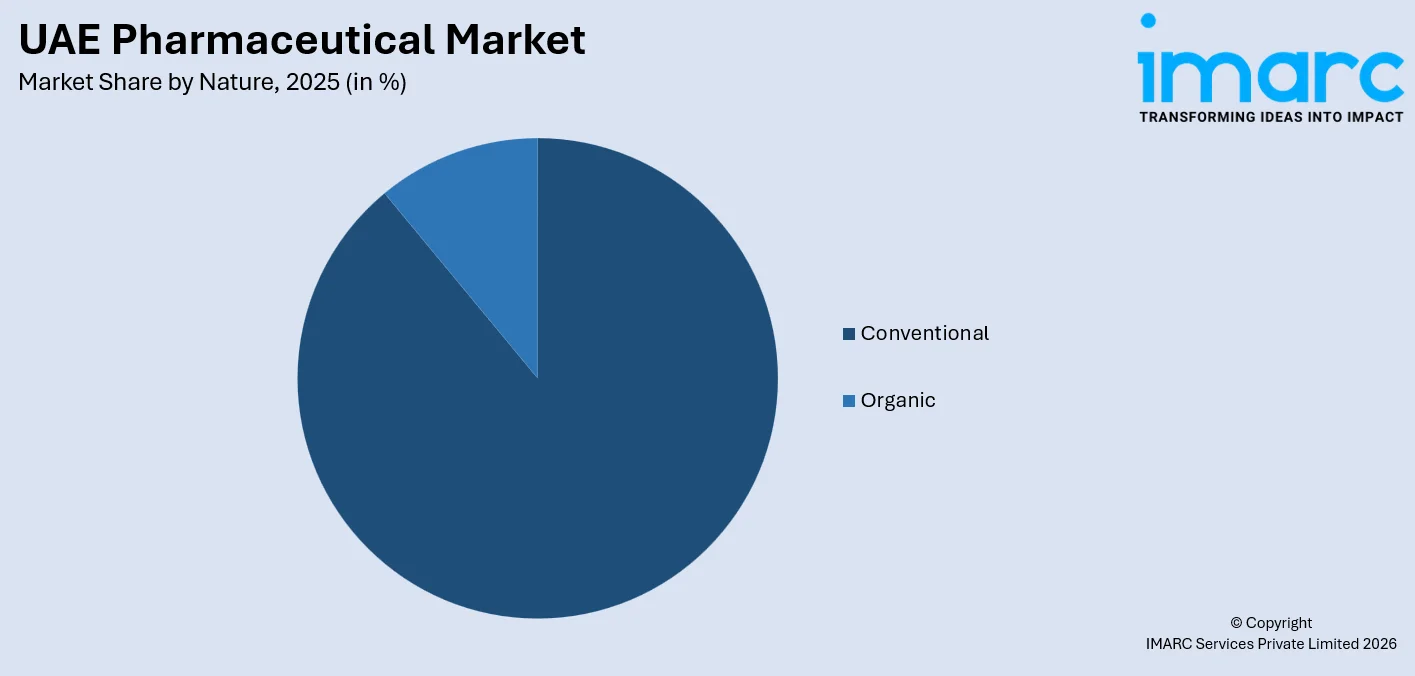
- By Nature: Conventional exhibits a clear dominance in the market with 88.4% share in 2025, driven by well-established clinical protocols, wider product availability, physician familiarity, and the lower cost structure compared to organic alternatives, making them the preferred treatment choice across public and private healthcare facilities.
- By Region: Dubai represents the largest region with 39.7% share in 2025, driven by the concentration of multinational pharmaceutical companies, advanced healthcare infrastructure, world-class logistics connectivity, and the emirate's strategic role as the UAE's commercial and medical tourism hub.
- Key Players: Key players in the UAE pharmaceutical market drive growth through product portfolio expansion, strategic manufacturing partnerships, and robust distribution networks. Their investments in research and development, regulatory compliance, and technology integration enhance drug accessibility, market penetration, and healthcare outcomes across the UAE's diverse patient population.
To get more information on this market Request Sample
The UAE pharmaceutical market has emerged as one of the most dynamic and forward-looking healthcare sectors in the Middle East, underpinned by a convergence of demographic shifts, escalating public health priorities, and a government-led industrial strategy aligned with Vision 2031. The country's steadily growing population, combined with a rising burden of chronic diseases such as diabetes, cardiovascular conditions, and oncological disorders, has significantly amplified demand for a broad spectrum of pharmaceutical products across prescription, over-the-counter, and biologic categories. The UAE's healthcare spending continues to climb, with public and private institutions channeling substantial resources into medical infrastructure, digital health platforms, and pharmaceutical supply chains. The government's Vision 2031 framework explicitly supports pharmaceutical self-sufficiency, directing investment toward local drug manufacturing, biosimilar production, and biopharmaceutical research and development. Emirates including Dubai and Abu Dhabi collectively anchor market growth through advanced healthcare facilities, progressive regulatory environments, and robust public-private collaborations that continue reshaping the pharmaceutical landscape.
UAE Pharmaceutical Market Trends:
Digital Health Integration and AI-Powered Pharmaceutical Innovation
Currently, the pharmaceutical market is undergoing a major technological shift, with telemedicine, electronic health records, artificial intelligence-based drug discovery, and e-prescription services playing a critical role in the delivery of pharmaceutical services. Dubai Health Authority has incorporated Robotic Process Automation solutions into its Sheryan licensing platform, enhancing the approval process and improving the effectiveness of the distribution network. These technological developments have improved the management of pharmaceutical services, reduced medication errors, and improved patient compliance, thus making the UAE a leader in pharmaceutical services.
Expansion of Local Pharmaceutical Manufacturing and Supply Chain Resilience
The UAE is rapidly transitioning from a predominantly import-dependent pharmaceutical market to a self-sufficient production hub. With over 35 pharmaceutical factories now operating nationwide, the country is expanding local manufacturing to cover biologics, injectables, oncology drugs, and over-the-counter medications. Free zones such as Dubai Industrial City and Khalifa Industrial Zone Abu Dhabi provide tax incentives, business-friendly regulations, and world-class infrastructure to attract global manufacturers. This shift is strengthening national drug security and aligning with the UAE's broader Vision 2031 industrial diversification goals.
Growing Focus on Biologics, Biosimilars, and Precision Medicine
Biologics and biosimilars are gaining rapid traction in the UAE pharmaceutical market, driven by increasing incidence of cancer, autoimmune disorders, and rare diseases, alongside proactive government regulatory reforms. In January 2025, the Emirates Drug Establishment enacted Federal Decree-Law No. 38/2024, establishing accelerated approval pathways for innovative drugs and biosimilars, substantially improving market access and competitive pricing. This regulatory modernization, combined with growing physician confidence in biologic therapies and expanding insurance coverage, is fostering a robust environment for precision medicine adoption across UAE healthcare institutions.
Market Outlook 2026-2034:
The UAE pharmaceutical market is expected to witness robust and multidimensional growth in the forecast period. This is attributed to the confluence of favorable demographic, regulatory, and economic factors. The increase in health expenditure and the growing patient pool will ensure sustained growth in the demand for conventional and biologic drugs. The government’s continued support for the domestic pharmaceutical sector and the active pursuit of international partnerships with global pharmaceutical companies will strengthen the pharmaceutical sector’s supply-side fundamentals. The country’s advanced free zones, licensing procedures, and a highly competitive logistics infrastructure will make the UAE an increasingly attractive location for regional pharmaceutical trade and distribution. As the country witnesses the advancement of digital health technologies, artificial intelligence in drug development, and precision medicine technologies, the UAE pharmaceutical sector is expected to transform from a mere distribution-based pharmaceutical sector to a robust innovation-driven drug development sector. The market generated a revenue of USD 4.45 Billion in 2025, which is expected to reach USD 4.99 Billion in 2026 and further grow to USD 8.59 Billion by 2034, at a compound annual growth rate of 7.01% from 2026-2034.
UAE Pharmaceutical Market Report Segmentation:
| Segment Category | Leading Segment | Market Share |
|---|---|---|
|
Type |
Pharmaceutical Drugs |
71.6% |
|
Nature |
Conventional |
88.4% |
|
Region |
Dubai |
39.7% |
Type Insights:
- Pharmaceutical Drugs
- Cardiovascular Drugs
- Dermatology Drugs
- Gastrointestinal Drugs
- Genito-Urinary Drugs
- Hematology Drugs
- Anti-Infective Drugs
- Metabolic Disorder Drugs
- Musculoskeletal Disorder Drugs
- Central Nervous System Drugs
- Oncology Drugs
- Ophthalmology Drugs
- Respiratory Diseases Drugs
- Biologics
- Monoclonal Antibodies (MAbS)
- Therapeutic Proteins
- Vaccines
Pharmaceutical drugs dominate with a market share of 71.6% of the total UAE pharmaceutical market in 2025.
The pharmaceutical drugs form the backbone of the UAE's healthcare system as they cover the broadest spectrum of healthcare needs. This conventional synthetic form of drugs has the advantage of well-established clinical proof and physician prescribing confidence. Moreover, the infrastructure for manufacturing such drugs is already well established, ensuring the drugs are always readily available in the market. The dominance of this segment is also ensured by the government's initiatives towards the use of generic drugs as an alternative for branded drugs. This has helped the patients as well as the healthcare system as a whole by providing the same level of efficacy and clinical outcomes.
The pharmaceutical drugs segment gains further momentum from the UAE's proactive approach to chronic disease management, with medications targeting diabetes, hypertension, cardiovascular conditions, and respiratory disorders among the most widely prescribed categories. Healthcare facilities continuously replenish both prescription and over-the-counter pharmaceutical drug inventories, supported by robust cold-chain logistics and real-time inventory management systems. Growing government emphasis on metabolic disorder management and specialized drug regimens continues to amplify demand for targeted pharmaceutical drugs across the country's healthcare institutions.
Nature Insights:
Access the comprehensive market breakdown Request Sample
- Organic
- Conventional
Conventional leads with a share of 88.4% of the total UAE pharmaceutical market in 2025.
The conventional segment of pharmaceuticals, including synthetic small molecules, generic medicines, and chemically formulated drugs, dominates the UAE pharmaceutical market with an overwhelming majority. This is due to the deeply rooted habits of healthcare practitioners and the presence of well-established regulatory and commercial practices. These medicines are manufactured by well-established processes of chemical synthesis, and this allows the pharmaceutical industry as a whole to benefit by enjoying the advantage of economies of scale and quality and competitive pricing for the medicines. There are high levels of clinical familiarity with this segment of drugs and medicines among the healthcare providers.
The dominance of conventional pharmaceuticals is also maintained by the UAE’s well-developed generic pharmaceutical sector that ensures cost-effective treatment is made widely available in the country despite increased healthcare costs. Some of the significant pharmaceutical regulatory agencies in the UAE include the Ministry of Health and Prevention and the Emirates Drug Establishment, which have made it easier for conventional generic pharmaceuticals to be procured by various healthcare agencies and insurance companies in the country. A case study is presented by the Dubai Health Authority’s 2024 initiative to introduce electronic prescription systems and Riayati, which mainly supports the dispensing of conventional medicines and ensures safe and efficient healthcare delivery in Dubai.

Regional Insights:
- Dubai
- Abu Dhabi
- Sharjah
- Others
Dubai represents the largest region with 39.7% share of the total UAE pharmaceutical market in 2025.
Dubai commands the largest share of the UAE pharmaceutical market owing to its exceptional concentration of multinational pharmaceutical companies, world-class healthcare facilities, and advanced logistics infrastructure. Jebel Ali Free Zone (JAFZA) hosts over 160 healthcare and pharmaceutical firms from more than 38 countries, serving as a critical regional distribution hub. Dubai's strategic geographic position, progressive regulatory environment, and thriving medical tourism sector collectively drive pharmaceutical demand and enhance market accessibility across the emirate.
Dubai's pharmaceutical sector is anchored by a robust ecosystem of purpose-built free zones, including Dubai Science Park and Dubai Healthcare City, which provide specialized infrastructure for pharmaceutical research, development, and manufacturing. The Dubai Industrial Strategy 2030 and sustained public-private partnerships continue attracting significant international pharmaceutical investment into the emirate. These initiatives collectively reinforce Dubai's position as the UAE's most dynamic pharmaceutical manufacturing and innovation hub, fostering long-term sector growth and strengthening its role as a regional gateway for pharmaceutical trade and distribution.
Market Dynamics:
Growth Drivers:
Why is the UAE Pharmaceutical Market Growing?
Rising Burden of Chronic Diseases
The UAE has recorded a sharp and sustained rise in chronic disease prevalence over the past decade, primarily attributable to rapid urbanization, sedentary dietary habits, demographic growth, and lifestyle-related health changes. Conditions including type 2 diabetes, cardiovascular disease, hypertension, obesity, and various forms of cancer now account for the majority of the national disease burden, generating consistent and escalating demand for long-term pharmaceutical treatments, specialty medications, and preventive drug regimens. The International Diabetes Federation has identified the UAE as having one of the highest adult diabetes prevalence rates globally, a factor that alone generates enormous demand for anti-diabetic, cardiovascular, and metabolic drug categories. Government-initiated national health screening programs have simultaneously improved diagnosis rates, translating a previously unaddressed disease burden into active, pharmacologically managed patient populations. The Ministry of Health and Prevention has responded by expanding formularies, promoting generic substitution, and launching awareness initiatives that accelerate treatment uptake. Healthcare institutions across the country are scaling pharmaceutical procurement, particularly for chronic disease medications, to meet growing patient volumes. These sustained clinical pressures are transforming the UAE pharmaceutical market into one of the fastest-growing in the region, with chronic disease therapeutics acting as the primary demand engine across public and private healthcare channels.
Government Healthcare Investments and Local Manufacturing Push
The UAE government's commitment to building a self-sufficient and innovation-driven pharmaceutical sector represents one of the most powerful structural forces shaping market growth. Through the National Strategy for the Pharmaceutical Industry, the Dubai Industrial Strategy 2030, and the broader Vision 2031 framework, the government has deployed a comprehensive policy toolkit designed to boost local drug manufacturing, attract foreign pharmaceutical investment, and reduce dependence on imports. The Ministry of Industry and Advanced Technology has implemented incentive programs including tax exemptions, manufacturing grants, and fast-track licensing pathways within free zones such as Dubai Science Park, Khalifa Industrial Zone Abu Dhabi, and Jebel Ali Free Zone. Public healthcare spending has also expanded substantially, with the government channeling resources into new hospital construction, pharmaceutical supply chain modernization, and health workforce training. These investments have translated into higher drug procurement volumes and an enlarged institutional pharmaceutical market. The government's collaborative approach, partnering with multinational pharmaceutical companies to transfer technology and build local manufacturing capacity, has further driven market sophistication. With over 23 pharmaceutical manufacturing centers producing more than 2,500 locally made medicines, the UAE has made remarkable strides toward pharmaceutical self-sufficiency, providing a stable and expanding foundation for long-term market growth across all therapeutic segments.
Medical Tourism Growth and Strategic Geographic Positioning
The strategic geographical position of the UAE, situated between Asia, Europe, and Africa, coupled with its high-quality healthcare facilities, has made the UAE one of the most prominent pharmaceutical trade centers in the Middle East region. Dubai and Abu Dhabi have emerged as main pharmaceutical distribution centers for the Middle East, Africa, and South Asian regions, enabled by their high-quality port facilities and highly efficient air freight services available through Dubai International Airport. Pharmaceutical demand is further boosted by the increasing trend of medical tourism, where the UAE is attracting a considerable number of international patients seeking high-quality treatments for various ailments, such as oncology, orthopedics, dermatology, and cardiology. This not only generates pharmaceutical demand directly within UAE hospitals, but hospitals are motivated to carry a wide range of pharmaceuticals, especially high-end, branded, and niche products. The UAE government’s efforts to develop the UAE as a global hub for medical tourism, through initiatives such as the Dubai Health Experience portal, have created a self-sustaining cycle of growth in healthcare investments and pharmaceutical demand.As patient volumes from neighboring GCC nations, South Asian countries, and Europe continue to increase, the UAE pharmaceutical market will increasingly benefit from this sustained cross-border healthcare demand.
Market Restraints:
What Challenges the UAE Pharmaceutical Market is Facing?
Heavy Reliance on Pharmaceutical Imports
Despite concerted government efforts to boost local manufacturing, the UAE pharmaceutical market continues to depend heavily on imported products to meet domestic demand. The country imports a significant proportion of its pharmaceutical requirements, making it vulnerable to global supply chain disruptions, currency fluctuations, and geopolitical risks affecting key sourcing markets. This import dependency inflates procurement costs, creates potential availability gaps for critical medications, and limits pricing competitiveness for healthcare providers and patients seeking cost-effective treatment options.
Stringent Regulatory Compliance Requirements
The UAE pharmaceutical market is governed by rigorous regulatory frameworks overseen by authorities including the Emirates Drug Establishment, the Ministry of Health and Prevention, and emirate-level health bodies such as the Dubai Health Authority and Abu Dhabi Department of Health. Navigating these multi-tiered, evolving regulatory requirements imposes significant compliance burdens on pharmaceutical manufacturers and distributors, increasing operational costs, extending product registration timelines, and creating market access barriers particularly challenging for smaller companies and new market entrants seeking to establish a footprint in the UAE.
Skilled Workforce Shortages in Pharmaceutical and Biosciences Sectors
The UAE's rapidly expanding pharmaceutical manufacturing ambitions are constrained by a persistent shortage of specialized talent, including pharmaceutical scientists, regulatory affairs professionals, quality assurance specialists, and bioprocess engineers. While the country attracts international professionals through Golden Visa programs and competitive compensation packages, the domestic bioscience education pipeline and specialized training infrastructure have not yet fully aligned with the pace of industry growth, creating talent bottlenecks that can delay manufacturing scale-up and research and development project timelines across the sector.
Competitive Landscape:
The pharmaceutical industry in the UAE has a competitive and varied landscape, including multinational companies, local manufacturers, as well as new local players. Some of the major multinational companies operating in the pharmaceutical industry in the UAE include Pfizer, Novartis, AstraZeneca, Bayer, and Sanofi, which have strong footholds in the pharmaceutical industry in the UAE through their existing distribution channels, pharmaceutical products, as well as partnerships with healthcare institutions. Locally, Julphar, Neopharma, and Pharmax Pharmaceuticals have also expanded their manufacturing capabilities to meet local as well as export markets.
UAE Pharmaceutical Market Report Scope:
| Report Features | Details |
|---|---|
| Base Year of the Analysis | 2025 |
| Historical Period | 2020-2025 |
| Forecast Period | 2026-2034 |
| Units | Billion USD |
| Scope of the Report | Exploration of Historical Trends and Market Outlook, Industry Catalysts and Challenges, Segment-Wise Historical and Future Market Assessment:
|
| Types Covered |
|
| Natures Covered | Organic, Conventional |
| Regions Covered | Dubai, Abu Dhabi, Sharjah, Others |
| Customization Scope | 10% Free Customization |
| Post-Sale Analyst Support | 10-12 Weeks |
| Delivery Format | PDF and Excel through Email (We can also provide the editable version of the report in PPT/Word format on special request) |
Frequently Asked Questions About the UAE Pharmaceutical Market Report
The UAE pharmaceutical market size increased from USD 4.45 Billion in 2025 to USD 4.99 Billion in 2026.
The UAE pharmaceutical market is expected to grow at a compound annual growth rate of 7.01% from 2026-2034 to reach USD 8.59 Billion by 2034.
Pharmaceutical drugs dominated the market with a share of 71.6%, driven by wide therapeutic application, well-established clinical protocols, government generic drug promotion, and consistent demand from chronic disease management across public and private healthcare settings.
Key factors include rising chronic disease prevalence in the UAE pharmaceutical market, substantial government healthcare investments and local manufacturing initiatives, expanding medical tourism, progressive regulatory reforms promoting biosimilar access and the UAE's strategic geographic positioning as a leading Middle East pharmaceutical trade and distribution hub.
Major challenges include heavy dependence on pharmaceutical imports, multi-tiered regulatory compliance burdens across federal and emirate-level authorities, significant skilled workforce shortages in pharmaceutical sciences, supply chain vulnerabilities, and rising cost pressures from growing generic drug competition across the region.
Need more help?
- Speak to our experienced analysts for insights on the current market scenarios.
- Include additional segments and countries to customize the report as per your requirement.
- Gain an unparalleled competitive advantage in your domain by understanding how to utilize the report and positively impacting your operations and revenue.
- For further assistance, please connect with our analysts.
 Request Customization
 Speak to an Analyst
 Request Brochure
 Inquire Before Buying
Benefits of Customization
- Personalize this research
- Triangulate with your data
- Get data as per your format and definition
- Gain a deeper dive into a specific application, geography, customer, or competitor
- Any level of personalization
Get in Touch With Us
UNITED STATES
Phone: +1-201-971-6302
INDIA
Phone: +91-120-433-0800
UNITED KINGDOM
Phone: +44-753-714-6104
Email: [email protected]
Client Testimonials




.webp)




.webp)













Related Reports

Choose your plan
*Please note that the prices mentioned below are starting prices for each bundle type. Kindly contact our team for further details.*
Single User License
- 1 User License, Access on 2 Devices
- PDF Report + Excel Dataset (Password Protected)
- Lifetime Access
- No Printing Rights
- 10% Free Report Customization
- 10–12 Weeks of Analyst Support
Five User License
- Access for 5 Users, 2 Devices per User
- PDF Report + Excel Dataset (Password Protected)
- Lifetime Access
- Dedicated Account Manager
- 12–14 Weeks of Analyst Support
- No Printing Rights
- 15% Free Report Customization
- 25% Discount on Your Next Purchase
Corporate User License
- Unlimited User Access (Within Your Organization)
- PDF Report + Excel Dataset
- Lifetime Access
- Dedicated Account Manager
- 14–20 Weeks of Analyst Support
- No Printing Rights
- 20% Free Report Customization
- 30% Discount on Your Next Purchase
Essential Insights
What's included:
3 reports
- Lifetime Access
- PDF Reports
- Excel Datasets
- 2 Weeks of Free Analyst Support
- 2 User Licenses
- Access on 2 Devices
- Printing Rights
- Complimentary PowerPoint (PPT) Version
- Complimentary License Upgrade
Professional Access
What's included:
5 reports
- Lifetime Access
- PDF Reports
- Excel Datasets
- 8 Weeks of Free Analyst Support
- 2 User Licenses
- Access on 2 Devices
- Printing Rights
- Complimentary PowerPoint (PPT) Version
- Complimentary License Upgrade
Business Advantage
What's included:
8 reports
- Lifetime Access
- PDF Reports
- Excel Datasets
- 14 Weeks of Free Analyst Support
- 2 User Licenses
- Access on 2 Devices
- Printing Rights
- Complimentary PowerPoint (PPT) Version
- Complimentary License Upgrade
Enterprise Intelligence
What's included:
10 reports
- Lifetime Access
- PDF Reports
- Excel Datasets
- 20 Weeks of Free Analyst Support
- 2 User Licenses
- Access on 2 Devices
- Printing Rights
- Complimentary PowerPoint (PPT) Version
- Complimentary License Upgrade