
United States Healthcare BPO Market Size, Share, Trends and Forecast by Payer Service, Provider Service, Pharmaceutical Service, and Region, 2026-2034
United States Healthcare BPO Market Size, Share, Trends & Forecast (2026-2034)
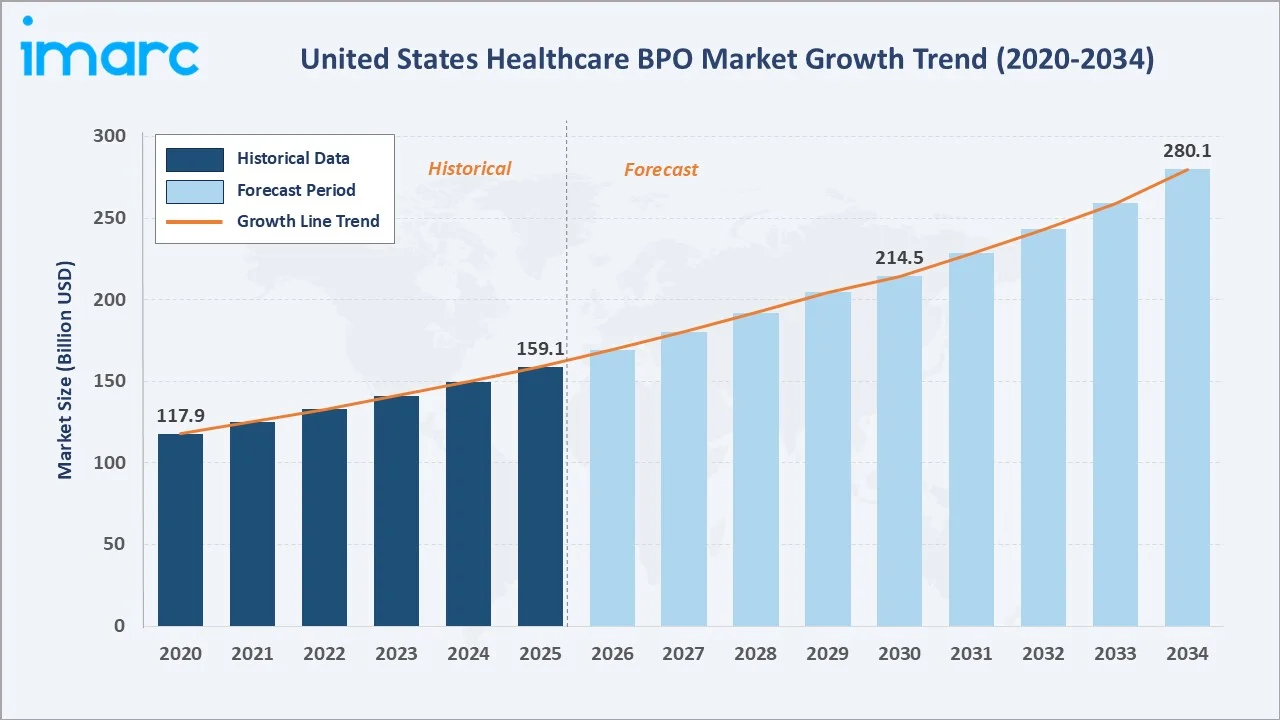
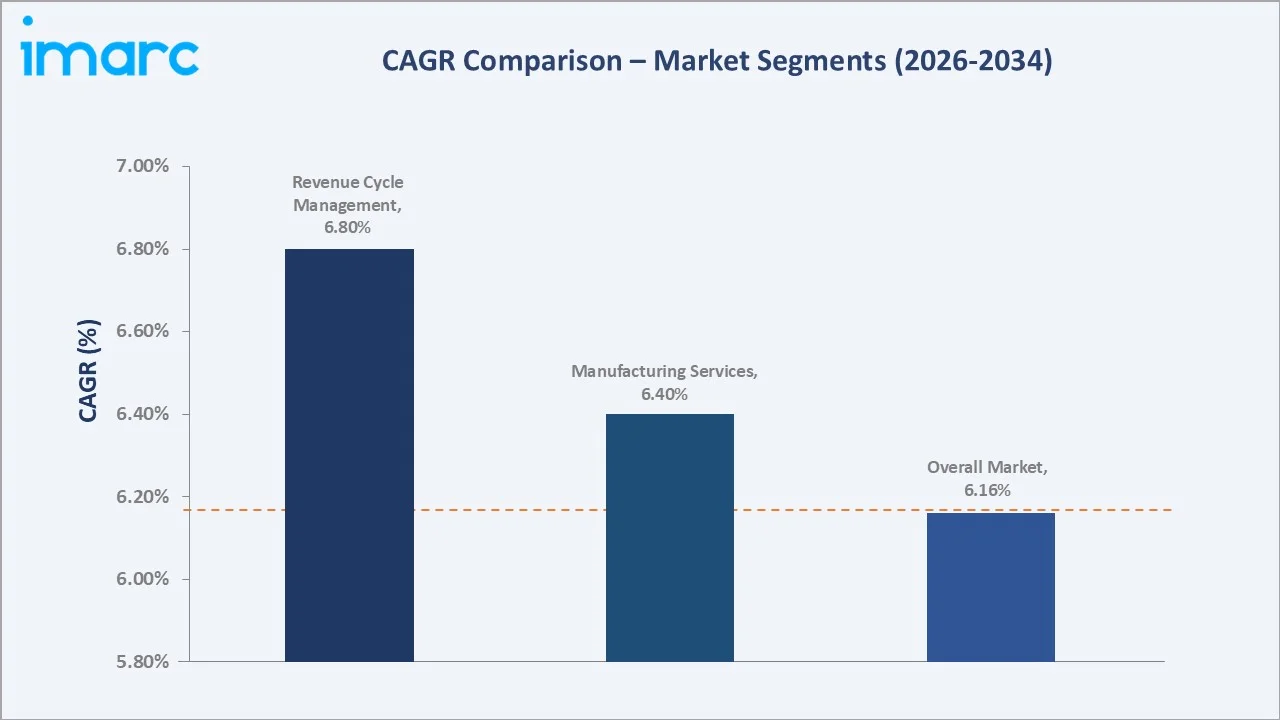
The United States healthcare BPO market size increased from USD 159.1 Billion in 2025 to USD 168.9 Billion in 2026 and is projected to reach USD 280.1 Billion by 2034, growing at a CAGR of 6.16% during 2026-2034. Rising administrative costs compelling healthcare organizations to outsource non-core functions, escalating regulatory complexity driving compliance outsourcing, rapid AI and automation adoption transforming BPO delivery economics, and the structural demand created by an aging population and growing chronic disease burden are the primary growth catalysts.
Market Snapshot
|
Metric |
Value |
|
Base Year Market Size (2025) |
USD 159.1 Billion |
| Market Size (2026) | USD 168.9 Billion |
|
Forecast Market Size (2034) |
USD 280.1 Billion |
|
CAGR (2026-2034) |
6.16% |
|
Base Year |
2025 |
|
Historical Period |
2020-2025 |
|
Forecast Period |
2026-2034 |
The South leads regionally with a 32.7% share in 2025, driven by the region’s large concentration of healthcare systems, pharmaceutical manufacturing facilities, and major health insurance company headquarters across Texas, Florida, Georgia, and Tennessee. Manufacturing services at 55.4% of the pharmaceutical service segment reflect the critical role of contract pharmaceutical manufacturing services in enabling pharmaceutical companies to outsource production of drug products, active pharmaceutical ingredients, and medical devices to specialized contract manufacturers.
To get more information on this market, Request Sample
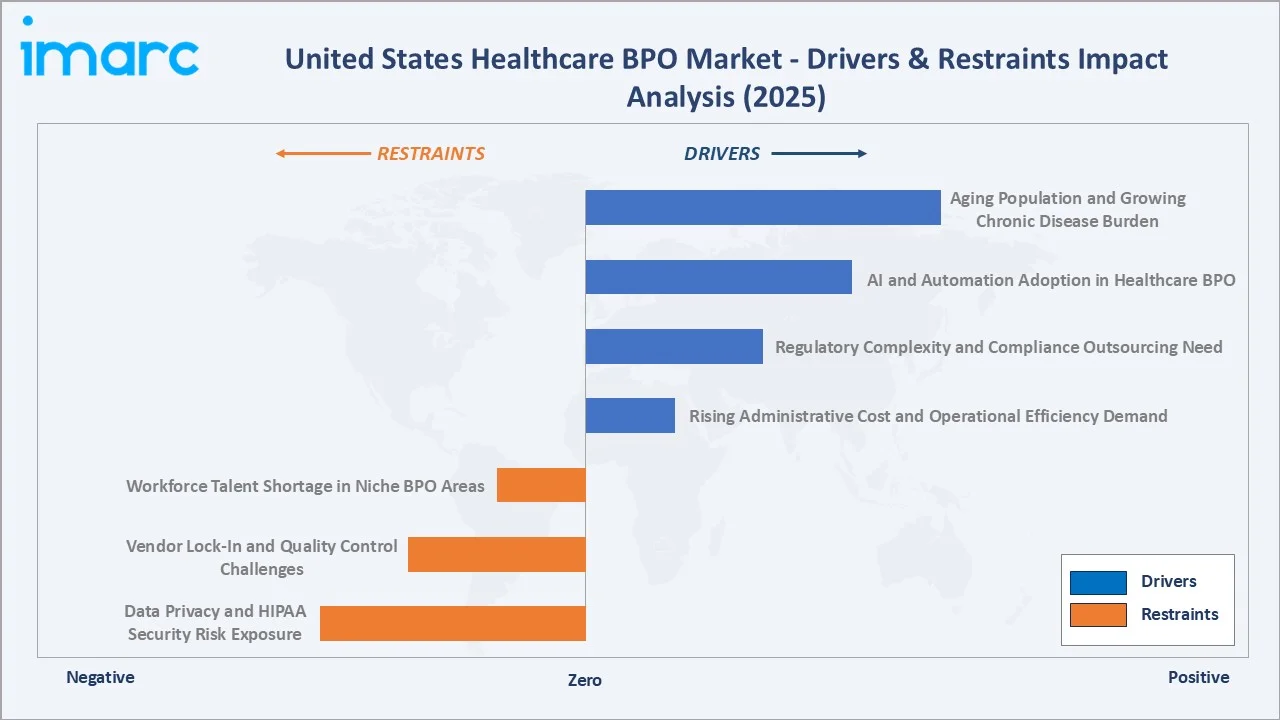
The market is driven by three structural demand forces: the escalating administrative cost burden of US healthcare that makes non-core function outsourcing a financial necessity for providers and payers operating on constrained margins; the complexity of US healthcare regulations including HIPAA, CMS billing rules, and FDA pharmaceutical standards that create specialized compliance outsourcing requirements beyond the capability of most in-house teams; and the transformative potential of AI, RPA, and cloud-based platforms that are enabling BPO providers to deliver significantly higher quality and throughput than comparable in-house operations at lower unit cost.
Executive Summary
The United States healthcare BPO market is experiencing robust growth, driven by the confluence of rising administrative cost pressures across payers and providers, increasing regulatory complexity compelling specialized outsourcing, and the progressive adoption of AI and automation technologies that are fundamentally transforming BPO service delivery economics. The market grew from USD 159.1 Billion in 2025 to USD 168.9 Billion in 2026 and is forecast to reach USD 280.1 Billion by 2034, growing at a CAGR of 6.16%.
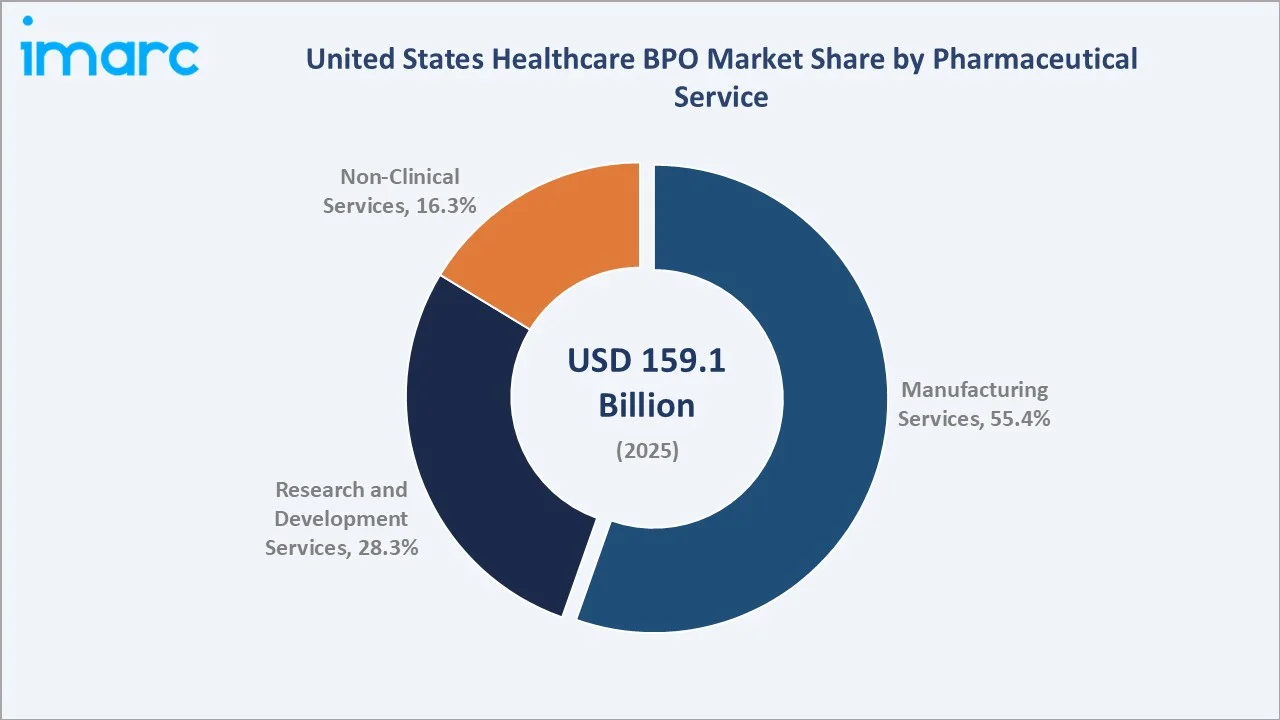
Manufacturing services account for 55.4% of the pharmaceutical service segment in 2025, reflecting the pharmaceutical industry’s extensive use of contract development and manufacturing organizations (CDMOs) for drug product manufacturing, active pharmaceutical ingredient production, and medical device contract manufacturing.
Revenue cycle management at 59.5% of provider service represents the largest and most established healthcare BPO category, encompassing medical coding, billing, claims submission, denial management, and collections outsourcing that is universally deployed across US hospital systems and physician groups of meaningful scale.
The South leads regionally at 32.7%, reflecting the region’s dominance in pharmaceutical manufacturing (particularly in Texas, North Carolina, and Tennessee), health insurance headquarters concentration, and the highest volume of Medicaid program outsourcing. Key players compete across service breadth, technology platform capability, and domain expertise depth.
Key Market Insights
|
Insight |
Data |
|
Largest Pharmaceutical Service |
Manufacturing Services – 55.4% share (2025) |
|
Second Largest Pharmaceutical Service |
Research and Development Services – 28.3% share (2025) |
|
Largest Provider Service |
Revenue Cycle Management – 59.5% share (2025) |
|
Second Largest Provider Service |
Patient Care Service – 24.1% share (2025) |
|
Leading Region |
South – 32.7% share (2025) |
|
Top Companies |
UnitedHealth Group, Inc., Cognizant Technology Solutions Corporation, Accenture PLC, Conduent Incorporated, Genpact |
Key Analytical Observations Supporting the Above Data:
- Manufacturing services at 55.4% (2025) lead the pharmaceutical service segment as the CDMO model has become the standard operating model for pharmaceutical manufacturing in the US market. Major pharmaceutical companies outsource significant portions of their manufacturing to CDMOs that can provide FDA-compliant production at lower capital requirements and greater flexibility than in-house manufacturing.
- Revenue cycle management at 59.5% (2025) dominates the provider service segment as healthcare revenue cycle complexity in the US has made RCM one of the most specialized and expertise-intensive administrative functions in any industry. Provider margin pressure makes the cost efficiency of outsourced RCM versus in-house billing departments a compelling economic argument, with outsourced RCM providers typically improving net collection rates by 2–8 percentage points.
- Research and development services at 28.3% (2025) of the pharmaceutical segment reflect the extensive use of contract research organizations (CROs) for clinical trial management, biostatistics, regulatory submission preparation, and pharmacovigilance services. IQVIA and ICON plc collectively manage pharmaceutical R&D spending on behalf of clients who outsource clinical development programs to gain access to specialist expertise and global patient recruitment networks.
- The South’s 32.7% share (2025) reflects the region’s structural advantages in both pharmaceutical BPO (manufacturing and R&D clusters in North Carolina, Texas, and Tennessee) and provider BPO (major hospital system networks in Texas, Florida, and Georgia generating large RCM outsourcing contracts), combined with Southern state governments’ active outsourcing of Medicaid program administration to companies including Conduent and Maximus.
United States Healthcare BPO Market Overview
Healthcare business process outsourcing encompasses the contracting of specific healthcare administrative, clinical support, and pharmaceutical services to third-party specialist providers who deliver these services more cost-effectively or at a higher quality than in-house operations. The market serves the full spectrum of US healthcare stakeholders, including commercial insurers, government health programs, hospital systems, physician groups, pharmaceutical companies, medical device manufacturers, and biotechnology companies.
Macroeconomic drivers include the US healthcare system’s annual expenditure approaching USD 5.6 trillion, representing the largest BPO addressable market of any sector; CMS projections for Medicare and Medicaid program growth at above-GDP rates through 2034, creating expanding government healthcare BPO procurement; and the FDA’s accelerated approval pathway expansion, creating additional pharmaceutical regulatory BPO demand.
Market Dynamics
To evaluate market opportunities, Request Sample
Market Drivers
- Rising Administrative Cost and Operational Efficiency Demand: Administrative costs represent approximately 34–35% of total US healthcare spending, creating sustained economic pressure on payers and providers to reduce administrative overhead through outsourcing to specialist BPO firms. Hospital administrative cost reduction through RCM outsourcing, payer claims processing efficiency through specialized BPO platforms, and pharmaceutical company cost structure improvement through CDMO partnerships are each independently compelling business cases for BPO adoption.
- Regulatory Complexity and Compliance Outsourcing Need: The US healthcare regulatory environment creates compliance demands that most healthcare organizations cannot meet cost-effectively with internal expertise alone. The escalating penalty environment for regulatory non-compliance, including CMS audit recovery through Recovery Audit Contractors and OCR HIPAA enforcement, creates compelling risk management rationale for outsourcing compliance-intensive functions to specialist providers.
- AI and Automation Adoption in Healthcare BPO: AI-powered medical coding assistants, RPA-driven claims processing bots, and natural language processing for clinical documentation are transforming healthcare BPO service delivery economics. This enables BPO providers to process higher volumes at lower unit cost while improving accuracy versus manual processes. Generative AI applications in prior authorization request generation, denial appeal letter drafting, and clinical summary creation are creating new BPO service categories that extend beyond traditional transaction processing into intelligent decision support.
- Aging Population and Growing Chronic Disease Burden: Adults aged 65 and older are projected to account for 22% of the U.S. population by 2040, creating structural growth in Medicare beneficiary volume that directly expands the RCM, care management, and patient access BPO addressable market. The US chronic disease burden requires intensive care coordination, disease management, and medication adherence support services that are increasingly delivered by BPO-enabled care management organizations working on behalf of payers and risk-bearing provider organizations.
Market Restraints
- Data Privacy and HIPAA Security Risk Exposure: Healthcare BPO relationships involve the transfer of Protected Health Information (PHI) and other sensitive patient data to third-party providers, creating HIPAA Business Associate Agreement obligations and significant cybersecurity risk exposure. The escalating sophistication of healthcare ransomware attacks demonstrates the catastrophic operational and financial impact of BPO security breaches, creating client hesitancy about outsourcing sensitive data-intensive processes.
- Vendor Lock-In and Quality Control Challenges: Long-term BPO relationships for core administrative functions, including RCM and claims management, create significant switching costs and operational dependency risks. Healthcare organizations that outsource RCM to large BPO providers find it difficult to transition back to in-house operations or switch vendors without extended transition periods, significant staff retraining, and potential revenue disruption.
- Workforce Talent Shortage in Niche BPO Areas: Specialized healthcare BPO functions, including medical coding, clinical research data management, and pharmaceutical regulatory affairs, require highly trained professionals who command significant salary premiums. The US shortage of Certified Professional Coders (CPCs) and Certified Coding Specialists (CCSs) creates talent scarcity at BPO providers that limits service capacity expansion and drives wage inflation in premium coding specialties.
Market Opportunities
- Government Healthcare Program Modernization: State Medicaid Management Information System (MMIS) modernization programs, Medicare Advantage plan growth requiring sophisticated member management outsourcing, and federal agency digital transformation initiatives represent a large and growing government healthcare BPO procurement market.
- Value-Based Care and Population Health Management BPO: The US healthcare system’s transition from fee-for-service to value-based care reimbursement creates demand for new BPO service categories, including risk stratification analytics, chronic disease care management, preventive care outreach, and quality measure reporting that traditional BPO providers are expanding to serve.
Market Challenges
- Healthcare Cybersecurity Threat Landscape: The US healthcare sector has become the most targeted sector for ransomware attacks globally, with BPO providers representing high-value targets due to their access to the PHI of millions of patients across multiple client organizations. The Change Healthcare cyberattack in February 2024, where reportedly up to 4–6TB of data was stolen, demonstrated the systemic risk that BPO provider cyber incidents can create across the entire US healthcare payment ecosystem.
- Interoperability and Data Standardization Complexity: Healthcare BPO delivery is complicated by the fragmented technology landscape of US healthcare, where clients may operate on multiple legacy EHR systems, proprietary data formats, and non-standardized clinical coding versions. Integrating BPO delivery workflows with diverse client technology environments requires significant custom integration investment that increases onboarding costs and extends time-to-value for new BPO relationships.
Emerging Market Trends
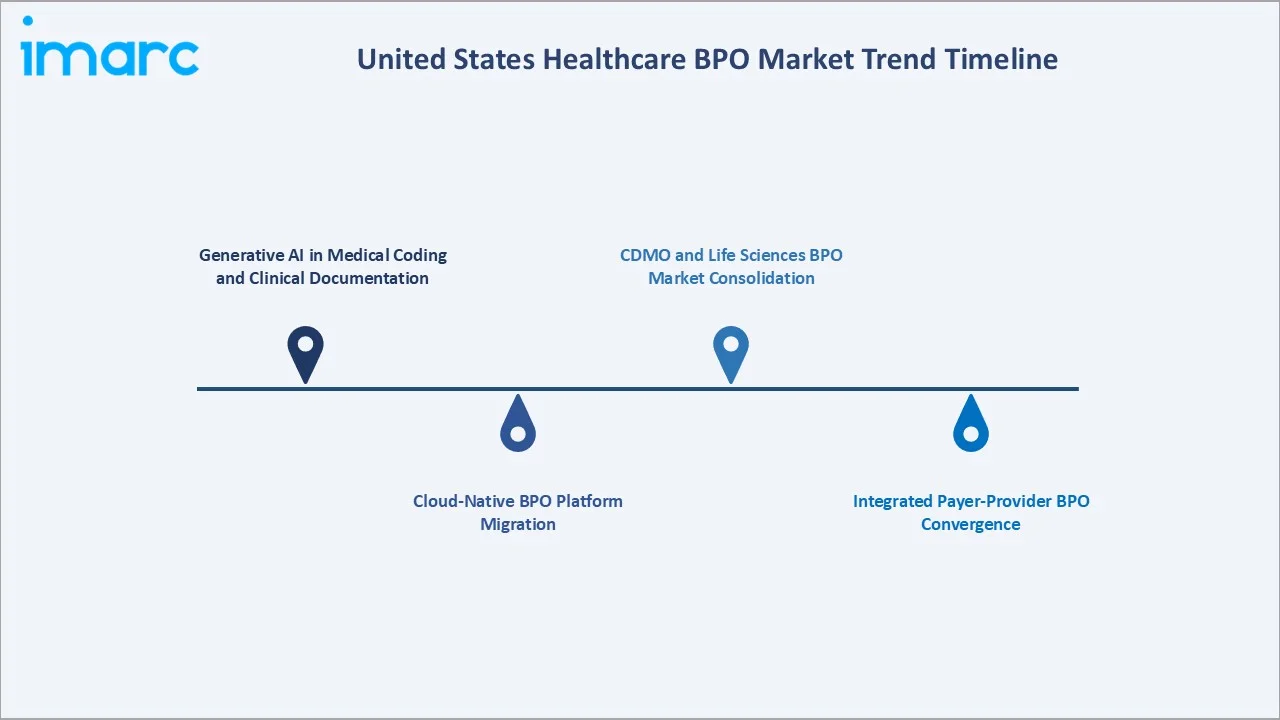
1. Generative AI in Medical Coding and Clinical Documentation
Generative AI is creating transformational productivity improvements in medical coding and clinical documentation improvement (CDI) workflows, the most labor-intensive components of the revenue cycle. AI coding assistants are enabling coders to process 2–3× more records per hour while improving ICD-10 and CPT code accuracy. BPO providers are integrating generative AI for denial appeal letter generation, prior authorization request drafting, and clinical query letter creation, reducing manual effort in these high-complexity workflows.
2. Cloud-Native BPO Platform Migration
The healthcare BPO industry is transitioning from legacy on-premises processing infrastructure to cloud-native platforms that enable scalable, configurable, and API-integrated service delivery. Cloud migration enables BPO providers to rapidly scale capacity during claims volume surges, deploy AI capabilities without hardware investment, and provide clients with real-time transparency into processing status through integrated dashboards.
3. Integrated Payer-Provider BPO Convergence
The traditional boundary between payer BPO and provider BPO is dissolving as large integrated BPO providers develop capabilities that serve both sides of the healthcare transaction simultaneously. Integrated payer-provider platforms that streamline prior authorization, eligibility verification, real-time adjudication, and claims reconciliation across the full administrative cycle create efficiency gains impossible to achieve with separately outsourced payer and provider BPO relationships. This convergence is driving consolidation in the BPO market as smaller specialist providers are acquired or displaced by integrated platform providers.
4. CDMO and Life Sciences BPO Market Consolidation
The pharmaceutical contract development and manufacturing organization market is undergoing rapid consolidation driven by pharmaceutical company demand for end-to-end CDMO partnerships that cover molecule development through commercial manufacturing at single integrated providers. Mergers, including Lonza’s multiple acquisitions since 2017, Novo Holdings A/S’s acquisition of Catalent, and Samsung Biologics’ capacity expansion, are reshaping the CDMO competitive landscape, concentrating pharmaceutical manufacturing BPO among a smaller number of larger, more capable providers.
Industry Value Chain Analysis
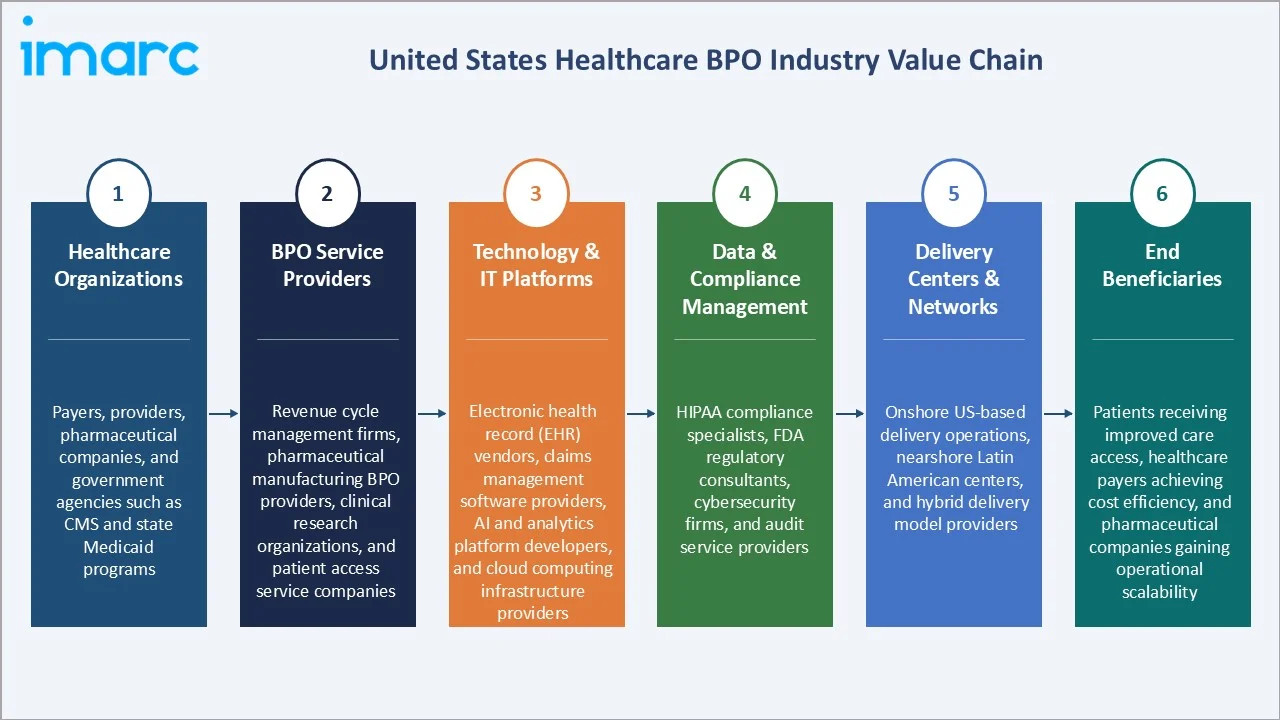
The US healthcare BPO value chain spans from client healthcare organizations through BPO service provider delivery operations, technology platform infrastructure, compliance management, and quality oversight to ultimate end beneficiaries of improved healthcare administration. The service delivery tier captures the majority of market value through specialized process expertise, technology platform investment, and regulatory compliance capability that clients cannot replicate internally at equivalent quality or cost.
|
Stage |
Key Players / Examples |
|
Healthcare Organizations |
Payers, providers, pharmaceutical companies, and government agencies such as CMS and state Medicaid programs |
|
BPO Service Providers |
Revenue cycle management firms, pharmaceutical manufacturing BPO providers, clinical research organizations, and patient access service companies |
|
Technology & IT Platforms |
Electronic health record (EHR) vendors, claims management software providers, AI and analytics platform developers, and cloud computing infrastructure providers |
|
Data & Compliance Management |
HIPAA compliance specialists, FDA regulatory consultants, cybersecurity firms, and audit service providers |
|
Delivery Centers & Networks |
Onshore US-based delivery operations, nearshore Latin American centers, and hybrid delivery model providers |
|
End Beneficiaries |
Patients receiving improved care access, healthcare payers achieving cost efficiency, and pharmaceutical companies gaining operational scalability |
Technology Landscape in the United States Healthcare BPO Industry
AI-Powered Revenue Cycle Management
The RCM segment is experiencing the most rapid AI transformation of any healthcare BPO category, with machine learning models deployed for charge capture accuracy improvement, claim denial prediction and prevention, payer rule interpretation, and real-time eligibility verification. AI-driven denial prevention systems are reducing initial denial rates from the industry average of 10–15% to below 5% at leading BPO providers, directly improving provider cash flow and reducing the costly appeals process. Natural language processing for clinical documentation review, AI-assisted prior authorization determination, and autonomous claim submission validation are creating measurable ROI improvements that are accelerating BPO adoption among provider organizations.
CDMO Advanced Manufacturing Technologies
Pharmaceutical contract manufacturing BPO is being transformed by advanced manufacturing technologies, including continuous manufacturing processes replacing batch production, single-use bioreactor systems enabling flexible capacity scale-up, and advanced analytical technologies enabling real-time release testing. These technologies are enabling CDMO BPO providers to deliver faster cycle times, reduced batch failure rates, and lower manufacturing cost per unit than traditional batch pharmaceutical manufacturing, creating compelling economic arguments for pharmaceutical companies to outsource production to technology-forward CDMO partners.
Robotic Process Automation in Claims and Billing
RPA bots handling repetitive claims processing tasks, including eligibility verification, claim status checking, remittance posting, and denial classification, are achieving 24/7 processing at zero incremental cost per transaction, dramatically improving BPO provider operating economics in high-volume transaction categories. Leading healthcare BPO providers have deployed thousands of RPA bots across their delivery operations, enabling them to absorb volume growth without proportional headcount expansion and to provide clients with predictable per-transaction processing costs that decline as automation penetration increases.
Market Segmentation Analysis
The report covers the following segments:
|
Segment Category |
Leading Segment |
Market Share |
Year |
|
Pharmaceutical Service |
Manufacturing Services |
55.4% |
2025 |
|
Provider Service |
Revenue Cycle Management |
59.5% |
2025 |
|
Payer Service |
Claims Management |
37.8% |
2025 |
|
Region |
South |
32.7% |
2025 |

By Pharmaceutical Service
Manufacturing services lead with a 55.4% share of the market’s pharmaceutical service segment in 2025. This dominant position reflects the pharmaceutical industry’s wholesale adoption of the CDMO model for drug product manufacturing, API production, and medical device contract manufacturing. The top CDMO providers collectively manage the manufacturing of a significant proportion of the US drug supply.
To access detailed market analysis, Request Sample
Research and development services at 28.3% encompasses the extensive outsourcing of clinical trial management, biostatistics, regulatory submission preparation, and pharmacovigilance to CROs. Non-clinical services at 16.3% includes pharmaceutical marketing, medical information services, medical affairs outsourcing, and supply chain management BPO.
By Provider Service
Revenue cycle management leads with a 59.5% share of the provider service segment in 2025. This dominant position reflects the universal adoption of RCM outsourcing across US hospital systems and physician organizations seeking to improve net collection rates, reduce denial rates, and eliminate the administrative overhead of in-house billing operations.
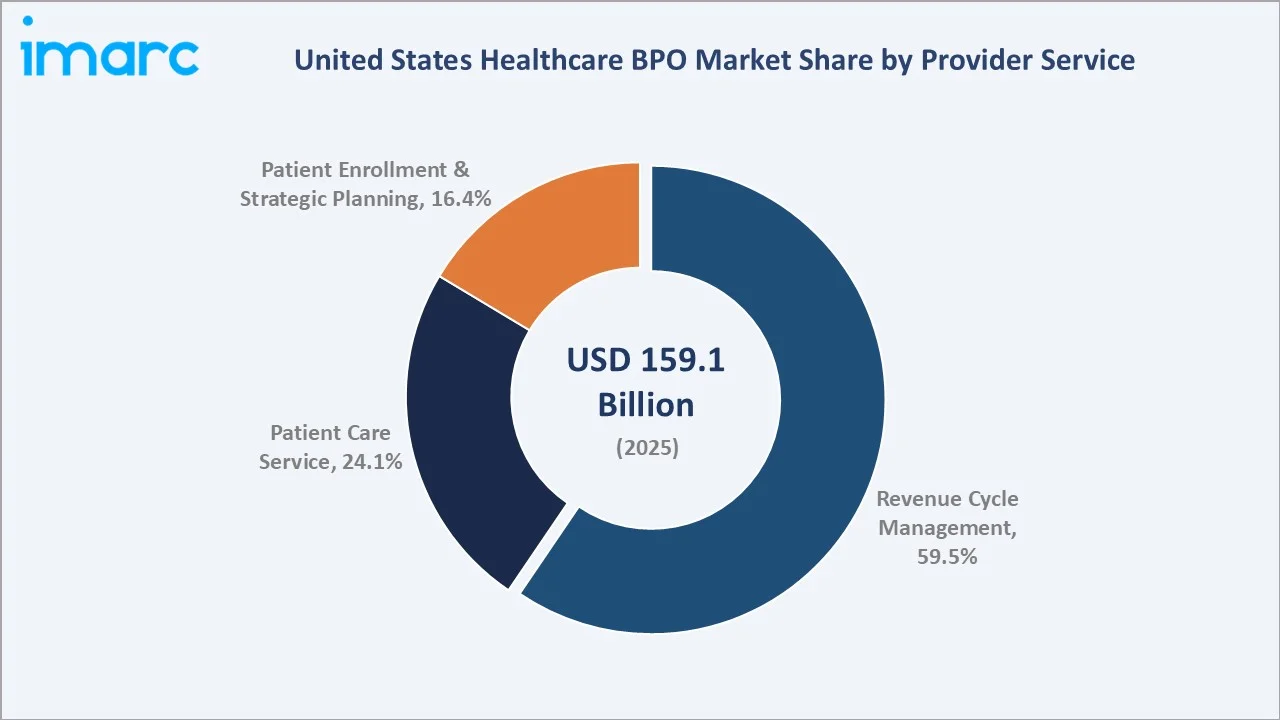
Patient care service at 24.1% encompasses care management, disease management, nurse advice lines, utilization management, and patient navigation services outsourced to BPO providers by health plans and risk-bearing provider organizations. This segment is growing at above-market rates, driven by value-based care program expansion. Patient enrollment and strategic planning at 16.4% covers health plan member enrollment, benefits administration, CRM services, and population health analytics outsourcing.
Regional Market Insights
The South’s dominant position (32.7%, 2025) reflects the region’s concentration of pharmaceutical manufacturing BPO across North Carolina’s Research Triangle Park, Tennessee’s pharmaceutical corridor, and Texas’s growing life sciences sector; the largest health insurance company headquarters concentration in states including Tennessee and Texas; and the highest volume of Southern state government Medicaid outsourcing activity.
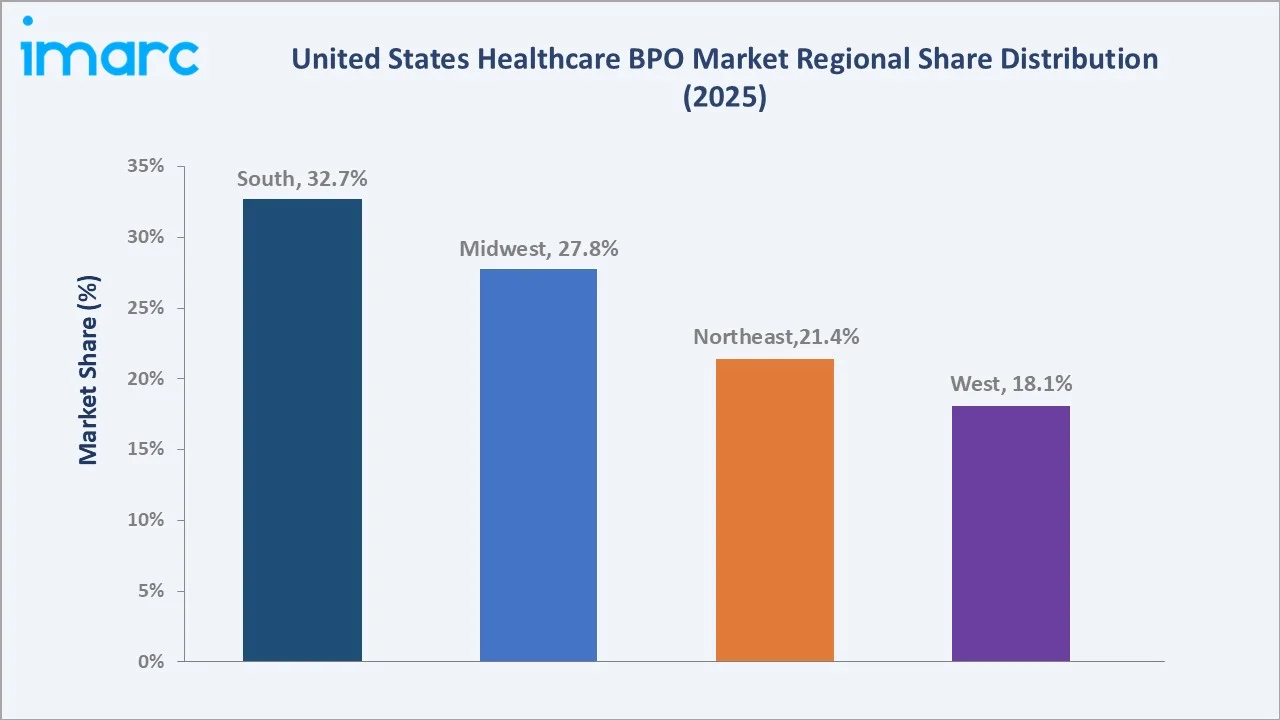
The Midwest at 27.8% share (2025) benefits from its established pharmaceutical and medical device manufacturing infrastructure across Illinois, Indiana, Ohio, and Michigan, major health system networks including Advocate Health, Cleveland Clinic, and Michigan Medicine that generate large-scale RCM outsourcing contracts, and significant Medicare and Medicaid claims processing activity.
|
Region |
Share (2025) |
Key Growth Drivers |
|
South |
32.7% |
Large concentration of healthcare systems, pharmaceutical manufacturing, and major health insurance headquarters, and significant Medicaid program outsourcing by Southern state governments |
|
Midwest |
27.8% |
Established pharmaceutical and medical device manufacturing base, large health system networks, significant Medicare and Medicaid claims processing activity, and a growing clinical research organization presence |
|
Northeast |
21.4% |
High density of academic medical centers and major health insurance payers, concentration of pharmaceutical R&D operations, regulatory compliance BPO demand driven by proximity to FDA activities, and premium patient access services market |
|
West |
18.1% |
California’s large Medicaid program is creating substantial outsourcing demand, technology-forward healthcare providers adopting AI-integrated BPO, and growing telehealth administrative services outsourcing |
Competitive Landscape
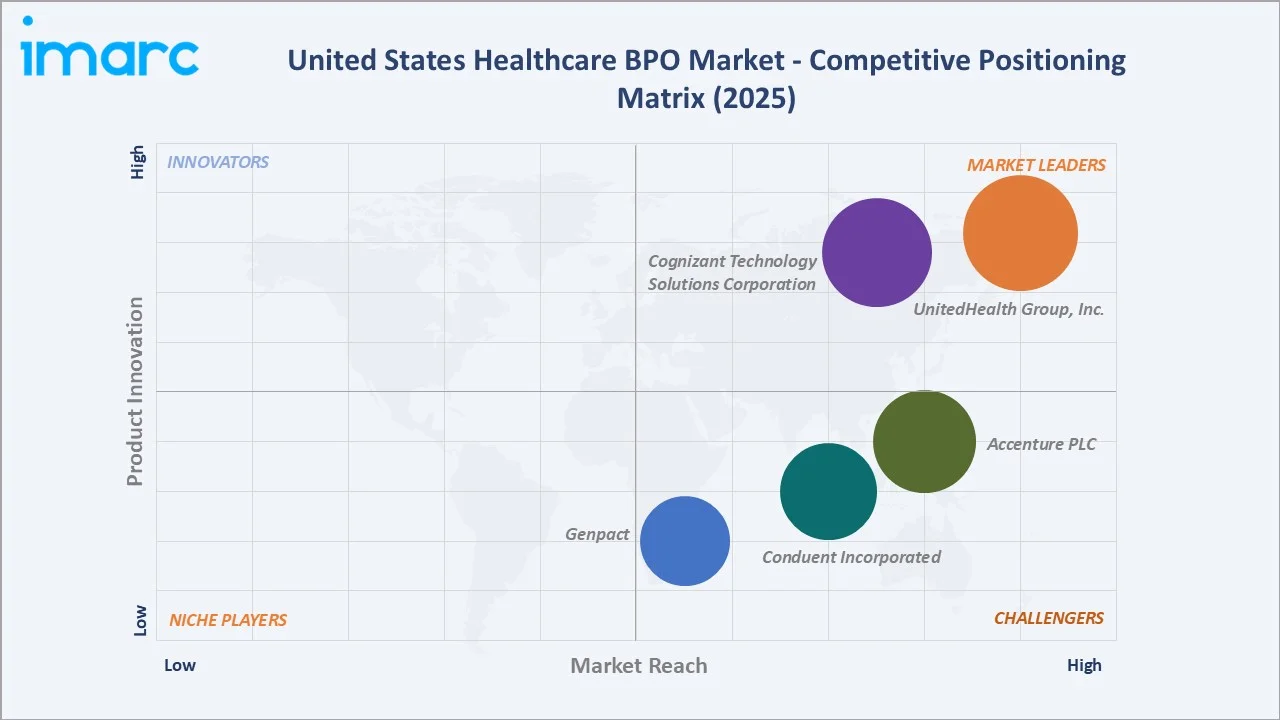
The United States healthcare BPO market exhibits moderate concentration, with the largest vendors collectively controlling approximately half of the total market revenue. The remaining market is served by hundreds of specialist providers and regional firms focusing on specific service categories, geographic markets, or healthcare sub-sectors.
|
Company Name |
Key Services |
Market Position |
Core Strength |
|
UnitedHealth Group, Inc. |
Consulting services, Data and analytics, Financial solutions, Health benefits solutions, Healthcare access, among others |
Market Leader |
One of the deepest integrated payer-provider BPO capabilities in the US market |
|
Cognizant Technology Solutions Corporation |
AI business accelerators, Clinical support services, Cognizant Neuro Business Processes, Customer experience management, TriZetto Unify, among others |
Market Leader |
TriZetto payer platform leader; processes billions of healthcare transactions for clinicians |
|
Accenture PLC |
Health Providers, Health Payers, Public Health |
Strong Challenger |
AI and cloud-native BPO platform; major CMS government contracts; strong payer and provider relationships |
|
Conduent Incorporated |
Community Health Solutions, Health Plan Administration Services, Payment Integrity, Pharmaceutical and Life Science Solutions, |
Strong Challenger |
Government program administration specialist; MMIS platform deployments across multiple US states |
|
Genpact |
Commercial Analytics, Generative AI Solutions, Regulatory Affairs Compliance |
Challenger |
Advanced AI analytics integration; strong pharmaceutical services BPO; growing healthcare payer client base |
The competitive landscape is undergoing structural consolidation driven by the premium placed on integrated technology platforms, AI investment scale, and end-to-end service capability. Acquisitions have concentrated capabilities among a smaller number of larger, better-capitalized competitors capable of deploying the AI and cloud technology investments required to maintain competitive service delivery economics.
Key Company Profiles
UnitedHealth Group, Inc.
UnitedHealth Group, Inc. operates Optum Inc. as part of its health services division. Optum Health serves value-based care delivery; OptumInsight provides analytics, technology, and RCM services; and OptumRx manages pharmacy benefits.
- Service Portfolio: Revenue cycle management, care management analytics, clinical decision support, pharmacy benefit management, health plan administrative services, government program administration, and population health management.
- Recent Developments: In January 2026, UnitedHealth Group Inc. reported 2025 revenues of USD 447.6 billion, an increase of 12% year-on-year, with strong growth across both UnitedHealthcare and Optum. However, the company's 2026 outlook projects revenues of more than USD 439.0 billion, implying projected revenue contraction due to planned divestitures and ongoing Medicare pressures.
- Strategic Focus: AI-integrated RCM platform leadership; value-based care enablement services; government healthcare program administration growth; pharmacovigilance and specialty pharmacy BPO expansion.
Cognizant Technology Solutions Corporation
Cognizant Technology Solutions Corporation is one of the leading global technology and BPO service providers with one of the most significant healthcare service practices in the US market. Its TriZetto payer platform processes transactions for hundreds of US health plans, and its provider services practice processes billions of healthcare transactions annually.
- Service Portfolio: Payer claims administration via the TriZetto platform, provider revenue cycle management, care management BPO, member services, clinical data management, and pharmacy benefit management services.
- Recent Developments: In February 2026, Cognizant reported Q4 2025 revenue of USD 5.3 billion, up 4.9% year-on-year, while full-year revenue rose 7.0% to USD 21.1 billion. The company issued 2026 revenue guidance of USD 22.14–22.66 billion, supported by strong bookings and AI-led growth initiatives.
- Strategic Focus: TriZetto cloud migration to be completed by 2026; generative AI integration across claims, coding, and member services; government healthcare program expansion; digital front door patient access services.
Market Concentration Analysis
The US healthcare BPO market exhibits moderate concentration at the large integrated services tier, with Optum’s unique scale across payer, provider, and pharmacy BPO, and Cognizant's TriZetto payer platform dominance, which together represent entrenched competitive positions reinforced by long-term client contracts and proprietary technology platform investments. The provider RCM segment is more fragmented than the payer segment, with hundreds of regional RCM companies serving different market tiers alongside larger BPO generalists.
Market consolidation is accelerating as AI investment requirements favor larger providers with the scale to amortize technology development costs across broader client bases. Private equity investment in healthcare BPO has driven acquisitive consolidation, with PE-backed roll-up strategies creating larger regional and specialty RCM companies competing with national BPO generalists for health system contracts.
Investment & Growth Opportunities
Fastest Growing Segments
AI-augmented revenue cycle management (~8% CAGR), government healthcare program administration, including Medicaid MMIS modernization (~9% annual growth), pharmaceutical CDMO manufacturing services driven by reshoring investment, and value-based care enablement BPO represent the highest-growth investment vectors within the US healthcare BPO market through 2034.
Emerging Trends
Several high-growth emerging trends are creating new investment vectors in the United States healthcare BPO market through 2034. The integration of generative AI into prior authorization determination, clinical documentation improvement, and denial appeal management is creating a new category of intelligent BPO services that command premium pricing above traditional transaction processing, representing the highest near-term investment opportunity for platform-capable BPO providers.
Technology Investment Trends
- Cloud-native BPO platform migration is accelerating as clients demand real-time processing transparency, API-based EHR integration, and configurable workflow management that legacy on-premises processing infrastructure cannot provide, creating multi-year technology transformation investment cycles at leading BPO providers.
- Cybersecurity and resilience infrastructure investment is becoming a mandatory competitive requirement following the Change Healthcare breach, with BPO providers investing in zero-trust architecture, multi-factor authentication, air-gapped backup systems, and incident response capabilities to meet client cybersecurity due diligence requirements.
Future Market Outlook (2026-2034)
The United States healthcare BPO market is positioned for sustained strong growth through 2034. From USD 159.1 Billion in 2025 to USD 168.9 Billion in 2026, the market is projected to reach USD 280.1 Billion by 2034, representing total incremental value creation of USD 121.0 Billion at a CAGR of 6.16%.
This growth is underpinned by the irreversible complexity of US healthcare administration, the escalating AI and technology investment requirements that favor outsourced specialist providers over in-house teams, the pharmaceutical industry’s progressive adoption of the CDMO model for manufacturing and CRO model for R&D, and the aging US population creating Medicare demand growth that expands every major healthcare BPO service category.
The market’s competitive structure will continue to bifurcate between large AI-integrated platform providers competing for enterprise health system and major pharmaceutical company BPO contracts and specialized boutique firms serving specific clinical, regulatory, or regional service categories. The AI transformation of healthcare BPO is accelerating rather than moderating, and BPO providers that successfully integrate generative AI, RPA, and predictive analytics into their service delivery will achieve structural cost advantages over competitors that maintain predominantly manual delivery models.
Research Methodology
Primary Research
Primary research comprised structured interviews with over 75 industry participants in 2024–2025, including healthcare BPO provider executives, hospital CFOs and RCM directors, health plan operations executives, pharmaceutical company CDMO procurement officers, CRO business development leaders, and healthcare IT advisors. Expert input validated market sizing, segment growth rates, and regional demand estimates.
Secondary Research
Secondary research encompassed BPO company annual reports and investor presentations, CMS National Health Expenditure Accounts data, HFMA revenue cycle benchmark surveys, Healthcare Financial Management Association publications, FDA pharmaceutical manufacturing data, AHRQ hospital administrative cost analyses, and industry publications including Modern Healthcare, Healthcare IT News, Contract Pharma, and Applied Clinical Trials.
Forecasting Models
Market size estimations were derived using top-down and bottom-up forecasting, incorporating US healthcare expenditure growth projections, BPO penetration rate modelling by service category, government healthcare program budget projections, pharmaceutical R&D and manufacturing outsourcing trend analysis, and end-user segment capital expenditure and operational budget data.
United States Healthcare BPO Market Report Scope:
| Report Features | Details |
|---|---|
| Base Year of the Analysis | 2025 |
| Historical Period | 2020-2025 |
| Forecast Period | 2026-2034 |
| Units | Billion USD |
| Scope of the Report |
Exploration of Historical and Forecast Trends, Industry Catalysts and Challenges, Segment-Wise Historical and Predictive Market Assessment:
|
| Payer Services Covered | Human Resource Management, Claims Management, Customer Relationship Management, Operational and Administrative Management, Care Management, Provider Management, Others |
| Provider Services Covered | Patient Enrollment and Strategic Planning, Patient Care Service, Revenue Cycle Management |
| Pharmaceutical Services Covered | Manufacturing Services, Research and Development Services, Non-clinical Services |
| Regions Covered | Northeast, Midwest, South, West |
| Companies Covered | UnitedHealth Group, Inc., Cognizant Technology Solutions Corporation, Accenture PLC, Conduent Incorporated, Genpact, etc. |
| Customization Scope | 10% Free Customization |
| Post-Sale Analyst Support | 10-12 Weeks |
| Delivery Format | PDF and Excel through Email (We can also provide the editable version of the report in PPT/Word format on special request) |
Key Benefits for Stakeholders:
- IMARC’s report offers a comprehensive quantitative analysis of various market segments, historical and current market trends, market forecasts, and dynamics of the United States Healthcare BPO market from 2020-2034.
- The research study provides the latest information on the market drivers, challenges, and opportunities in the United States Healthcare BPO market.
- The study maps the leading, as well as the fastest-growing, regional markets.
- Porter's Five Forces analysis assists stakeholders in assessing the impact of new entrants, competitive rivalry, supplier power, buyer power, and the threat of substitution. It helps stakeholders to analyze the level of competition within the United States Healthcare BPO industry and its attractiveness.
- Competitive landscape allows stakeholders to understand their competitive environment and provides an insight into the current positions of key players in the market.
Frequently Asked Questions About the United States Healthcare BPO Market Report
The United States healthcare BPO market size is estimated at USD 168.9 Billion in 2026 and is projected to reach USD 280.1 Billion by 2034.
The market is expected to grow at a CAGR of 6.16% during 2026-2034, driven by rising administrative cost pressures, regulatory complexity, AI and automation adoption, and the aging population creating expanded Medicare demand.
The South leads with a 32.7% share in 2025, driven by pharmaceutical manufacturing and R&D concentration, major health insurance headquarters, large hospital system RCM outsourcing, and significant state Medicaid program outsourcing activity.
Manufacturing services lead with a 55.4% share in 2025, reflecting the pharmaceutical industry’s extensive use of CDMO contract manufacturers for drug product production, API manufacturing, and medical device contract manufacturing under FDA-compliant quality systems.
Revenue cycle management leads with a 59.5% share in 2025, reflecting universal adoption across hospital systems and physician organizations seeking to improve net collection rates, reduce denial rates, and eliminate in-house billing administrative overhead.
Some of the key players include UnitedHealth Group, Inc., Cognizant Technology Solutions Corporation, Accenture PLC, Conduent Incorporated, and Genpact.
Key drivers include rising administrative costs compelling outsourcing, regulatory complexity requiring specialized compliance BPO, AI and automation transforming BPO delivery economics, and the aging US population expanding Medicare and Medicaid program BPO demand.
Key opportunities include AI-augmented RCM platform development, government Medicaid MMIS modernization program BPO, pharmaceutical CDMO capacity expansion for reshoring demand, value-based care enablement BPO services, and prior authorization automation.
Need more help?
- Speak to our experienced analysts for insights on the current market scenarios.
- Include additional segments and countries to customize the report as per your requirement.
- Gain an unparalleled competitive advantage in your domain by understanding how to utilize the report and positively impacting your operations and revenue.
- For further assistance, please connect with our analysts.
 Request Customization
 Speak to an Analyst
 Request Brochure
 Inquire Before Buying
Benefits of Customization
- Personalize this research
- Triangulate with your data
- Get data as per your format and definition
- Gain a deeper dive into a specific application, geography, customer, or competitor
- Any level of personalization
Get in Touch With Us
UNITED STATES
Phone: +1-201-971-6302
INDIA
Phone: +91-120-433-0800
UNITED KINGDOM
Phone: +44-753-714-6104
Email: [email protected]
Client Testimonials




.webp)




.webp)













Related Reports

Choose your plan
*Please note that the prices mentioned below are starting prices for each bundle type. Kindly contact our team for further details.*
Single User License
- 1 User License, Access on 2 Devices
- PDF Report + Excel Dataset (Password Protected)
- Lifetime Access
- No Printing Rights
- 10% Free Report Customization
- 10–12 Weeks of Analyst Support
Five User License
- Access for 5 Users, 2 Devices per User
- PDF Report + Excel Dataset (Password Protected)
- Lifetime Access
- Dedicated Account Manager
- 12–14 Weeks of Analyst Support
- No Printing Rights
- 15% Free Report Customization
- 25% Discount on Your Next Purchase
Corporate User License
- Unlimited User Access (Within Your Organization)
- PDF Report + Excel Dataset
- Lifetime Access
- Dedicated Account Manager
- 14–20 Weeks of Analyst Support
- No Printing Rights
- 20% Free Report Customization
- 30% Discount on Your Next Purchase
Essential Insights
What's included:
3 reports
- Lifetime Access
- PDF Reports
- Excel Datasets
- 2 Weeks of Free Analyst Support
- 2 User Licenses
- Access on 2 Devices
- Printing Rights
- Complimentary PowerPoint (PPT) Version
- Complimentary License Upgrade
Professional Access
What's included:
5 reports
- Lifetime Access
- PDF Reports
- Excel Datasets
- 8 Weeks of Free Analyst Support
- 2 User Licenses
- Access on 2 Devices
- Printing Rights
- Complimentary PowerPoint (PPT) Version
- Complimentary License Upgrade
Business Advantage
What's included:
8 reports
- Lifetime Access
- PDF Reports
- Excel Datasets
- 14 Weeks of Free Analyst Support
- 2 User Licenses
- Access on 2 Devices
- Printing Rights
- Complimentary PowerPoint (PPT) Version
- Complimentary License Upgrade
Enterprise Intelligence
What's included:
10 reports
- Lifetime Access
- PDF Reports
- Excel Datasets
- 20 Weeks of Free Analyst Support
- 2 User Licenses
- Access on 2 Devices
- Printing Rights
- Complimentary PowerPoint (PPT) Version
- Complimentary License Upgrade