
United States Salmon Market Size, Share, Trends and Forecast by Type, Species, End Product Type, and Distribution Channel, and Region, 2026-2034
United States Salmon Market Summary:
The United States salmon market size was valued at USD 1,529 Million in 2025 and is projected to reach USD 2,030.97 Million by 2034, growing at a compound annual growth rate of 3.21% from 2026-2034.
Growing health consciousness among American consumers, combined with increasing awareness of salmon's nutritional benefits, particularly its rich omega-3 fatty acid content, continues to drive market expansion. The proliferation of value-added salmon products, including smoked varieties, pre-marinated fillets, and ready-to-cook meals, addresses evolving consumer preferences for convenient yet nutritious meal solutions. Enhanced aquaculture practices and robust cold-chain logistics infrastructure ensure consistent year-round product availability, while sustainability certifications and traceable sourcing appeal to environmentally conscious purchasers, collectively exanding the United States salmon market share.
Key Takeaways and Insights:
- By Type: Farmed dominates the market with 72% share in 2025, supported by controlled production environments enabling consistent year-round supply.
- By Species: Atlantic leads the market with a share of 65% in 2025, driven by year-round farm availability and culinary versatility across diverse cooking applications.
- By End Product Type: Frozen represents the largest segment with a market share of 50% in 2025, offering extended shelf life and storage convenience for both retail consumers and foodservice operators.
- By Distribution Channel: Retail leads the market with a share of 63% in 2025, reflecting growing consumer preference for home meal preparation with health-conscious protein selections.
- Key Players: The United States salmon market features established multinational seafood corporations competing alongside regional suppliers and specialty processors across multiple distribution channels and product segments.
American consumers are placing greater importance on protein sources that support health and wellness goals, making salmon a favored option because of its outstanding nutritional benefits. The market gains from advanced supply chain systems linking worldwide aquaculture activities with local distribution frameworks, whereas technological improvements in farming methods boost sustainability and production effectiveness. In addition to this retail growth via supermarkets, specialty shops, and online platforms enhances consumer access to various salmon options. Additionally, culinary trends that highlight salmon in everything from classic dishes to modern fusion recipes bolster ongoing demand. In 2024, Multi X launched Latitude 45 Smoked Salmon Candy Bites and Smoked Chipotle Salmon at Seafood Expo North America, offering convenient ready-to-eat products with unique flavor blends aimed at home cooks who prioritize ease.
United States Salmon Market Trends:
Value-Added Product Innovation and Convenience Formats
The United States salmon market experiences accelerating innovation in value-added product development, with manufacturers introducing smoked varieties, pre-seasoned fillets, portion-controlled packaging, and ready-to-cook meal kits that cater to time-constrained consumers seeking restaurant-quality dining experiences at home. These innovations extend beyond traditional preparation methods to incorporate diverse flavor profiles, ethnic influences, and premium ingredients. In 2025, Seafood giant MOWI launched new Atlantic salmon product, MOWI Signature in the US food service market at the 2025 National Restaurant Association (NRA) Show in Chicago, Illinois.
Sustainable Sourcing and Certification Transparency
Sustainability consciousness shapes purchasing decisions across the United States salmon market, with consumers and retailers increasingly demanding certified sustainable seafood from responsible aquaculture operations and well-managed fisheries. Major retail chains require suppliers to obtain certification from organizations including the Aquaculture Stewardship Council and Global Good Agricultural Practices, while blockchain-based traceability systems enable consumers to verify product origins and production methods. The unveiling of the Marine Aquaculture Research for America (MARA) Act of 2025 in the U.S. Congress represents a significant advancement for sustainable U.S. aquaculture. This bipartisan legislation represents a significant advancement in promoting responsible research of open ocean aquaculture in the U.S., emphasizing robust environmental standards and community resilience.
E-Commerce Expansion and Direct-to-Consumer Distribution
Digital commerce channels transform United States salmon market dynamics, with e-commerce sales accounting for significant market share through subscription services, bulk purchase discounts, and online grocery platforms that provide convenient access to diverse salmon products. This channel expansion accelerates consumer adoption of frozen and shelf-stable formats while enabling specialized suppliers to reach broader audiences without traditional retail intermediaries. Online platforms offer detailed product information, preparation guidance, and sustainability credentials that influence purchasing decisions. The convenience of home delivery, combined with competitive pricing through direct-to-consumer models, attracts health-conscious consumers seeking premium salmon products, fundamentally reshaping distribution patterns and creating new growth opportunities. IMARC Group predicts that the United States e-commerce market is projected to attain USD 2,160.3 Billion by 2034.
Market Outlook 2026-2034:
The United States salmon market demonstrates robust growth prospects driven by sustained consumer health consciousness, expanding product innovation, and evolving distribution infrastructure. The market generated a revenue of USD 1,529 Million in 2025 and is projected to reach a revenue of USD 2,030.97 Million by 2034, growing at a compound annual growth rate of 3.21% from 2026-2034. Technological advancements in aquaculture, including recirculating systems and sustainable feed formulations, enhance production efficiency while addressing environmental considerations. Value-added product development, digital commerce expansion, and premium product positioning create differentiation opportunities across price segments. Foodservice sector recovery, combined with retail channel diversification through specialty stores and e-commerce platforms, broadens market accessibility.
United States Salmon Market Report Segmentation:
| Segment Category | Leading Segment | Market Share |
|---|---|---|
| Type | Farmed | 72% |
| Species | Atlantic | 65% |
| End Product Type | Frozen | 50% |
| Distribution Channel | Retail | 63% |
Type Insights:
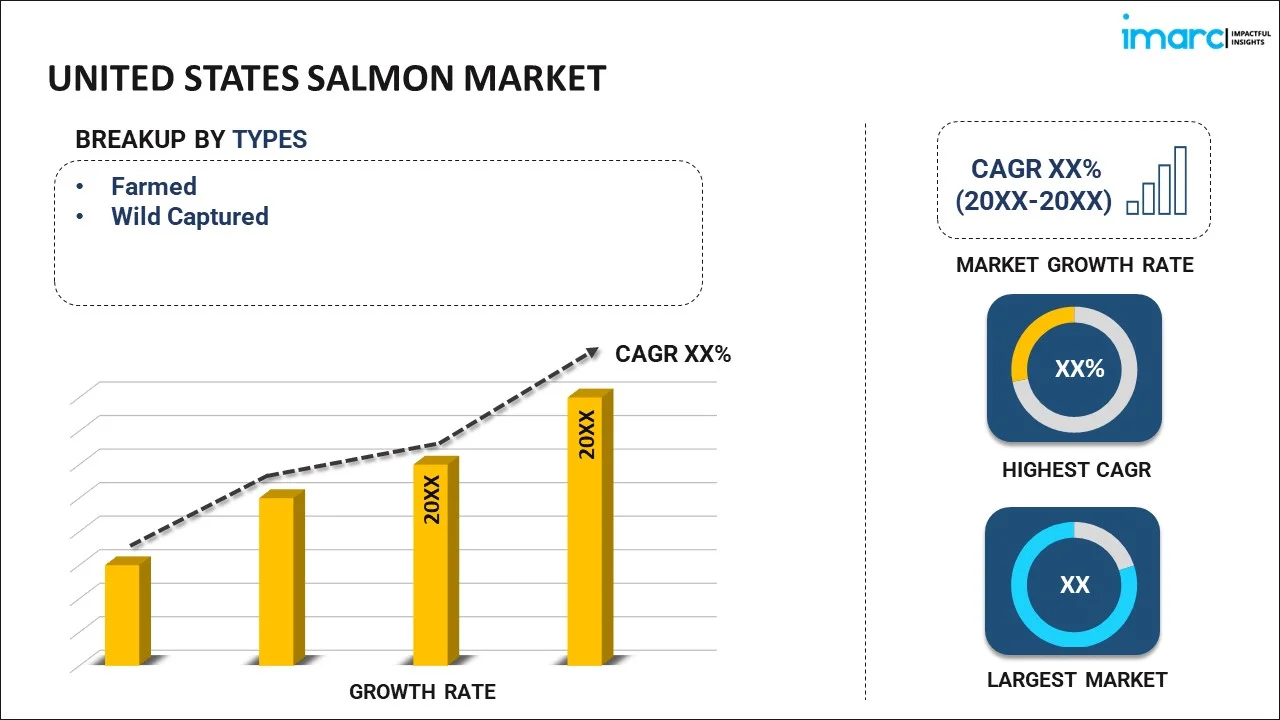
To get detailed segment analysis of this market Request Sample
- Farmed
- Wild Captured
Farmed dominates with a market share of 72% of the total United States salmon market in 2025.
Farmed salmon has established market leadership through production systems that deliver consistent supply throughout the calendar year, eliminating the seasonal availability constraints associated with wild fisheries. Aquaculture operations provide retailers with predictable inventory flows and standardized product specifications that simplify merchandising and reduce supply chain disruptions. The controlled growing environments enable producers to manage factors affecting flesh color, fat content, and portion sizes, meeting retailer requirements for uniformity that supports efficient processing and packaging operations.
The economic advantages of farmed salmon extend beyond supply consistency, with production volumes supporting competitive retail pricing that makes salmon accessible to broader consumer segments. Aquaculture operations achieve economies of scale that wild fisheries cannot replicate, translating to lower per-pound costs that enable promotional pricing strategies. Additionally, farming operations located closer to major population centers reduce transportation expenses and enable fresher product delivery compared to distant wild fisheries, particularly benefiting inland markets where salmon consumption continues expanding.
Species Insights:
- Atlantic
- Pink
- Chum/Dog
- Coho
- Sockeye
- Others
Atlantic leads with a share of 65% of the total United States salmon market in 2025.
Atlantic salmon commands market dominance through its mild, buttery flavor profile that appeals to American palates less accustomed to the more pronounced taste characteristics of Pacific salmon species. The flesh texture remains firm during various cooking methods, from grilling to baking, providing versatility that resonates with home cooks and foodservice operators alike. This species has become synonymous with salmon itself in many retail contexts, benefiting from strong brand recognition and consumer familiarity that reduces purchasing hesitation among less adventurous seafood buyers.
The cultivation advantages specific to Atlantic salmon further reinforce its market position, as this species demonstrates superior adaptability to farming conditions compared to Pacific varieties. Aquaculture operations achieve higher feed conversion ratios and faster growth rates with Atlantic salmon, translating to production efficiencies that support competitive pricing. The consistent availability of farmed Atlantic salmon throughout the year, combined with standardized product quality and widespread distribution networks, creates self-reinforcing market dynamics that maintain its leadership despite growing interest in wild-caught Pacific species among specialty market segments.
End Product Type Insights:
- Frozen
- Fresh
- Canned
- Others
Frozen exhibits a clear dominance with a 50% share of the total United States salmon market in 2025.
Frozen salmon addresses fundamental consumer needs for convenience and waste reduction, enabling households to maintain salmon inventory without immediate consumption pressure. The extended shelf life eliminates urgency in meal planning, allowing consumers to purchase during promotional periods and store for future use. Modern flash-freezing technologies preserve nutritional content and taste qualities that rival fresh offerings, while reducing the pressure of same-day or next-day consumption that constrains fresh salmon purchases among time-flexible consumers.
Distribution economics favor frozen formats through reduced spoilage risk and simplified logistics that enable efficient movement across extended supply chains reaching inland markets. Retailers allocate significant freezer space to salmon products, recognizing that frozen inventory turns more predictably than fresh seafood while requiring less intensive monitoring and markdown management. The format supports portion control preferences among smaller households and single-person dwellings, with individually vacuum-sealed fillets gaining traction as they enable consumers to thaw only required quantities, aligning with contemporary eating patterns and reducing food waste concerns.
Distribution Channel Insights:
- Foodservice
- Retail
Retail leads with a share of 63% of the total United States salmon market in 2025.
Retail distribution channels dominate the market through their direct connection to household consumption patterns, where meal preparation occurs within home kitchens rather than commercial dining establishments. Grocery stores, supermarkets, warehouse clubs, and specialty seafood retailers collectively provide consumers with diverse salmon offerings spanning price points, product forms, and quality tiers that align with varying household budgets and culinary preferences. The retail environment enables shoppers to make deliberate purchasing decisions without time pressure, examine packaging information including origin details and nutritional facts, and compare options across brands and formats to optimize value perceptions.
The expansion of retail salmon sales reflects broader shifts in American eating habits, where home cooking gained momentum as households seek cost control, dietary customization, and family meal experiences. Retailers respond to these preferences by enhancing seafood department presentations, expanding selection breadth to include both everyday staples and premium specialty items, and implementing service models ranging from full-service counters with trained fishmongers to self-service cases emphasizing convenience. Club stores and discount retailers particularly drive volume growth through bulk packaging and competitive pricing strategies that encourage pantry stocking, while natural and organic grocers capture premium segments with sustainability-focused assortments that command higher margins and attract environmentally conscious consumers.
Region Insights:
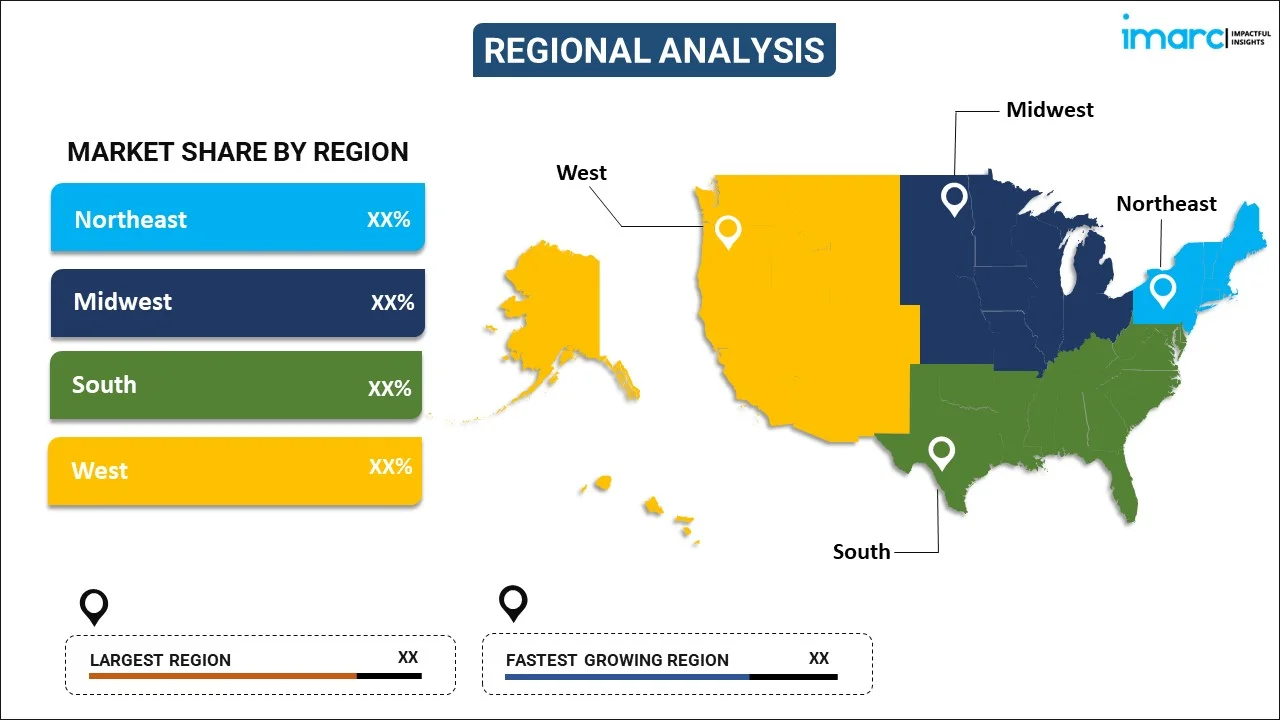
To get detailed regional analysis of this market Request Sample
- Northeast
- Midwest
- South
- West
The Northeast region exhibits strong salmon consumption reflecting historical fishing traditions, established distribution infrastructure, and affluent consumer demographics prioritizing premium protein sources. Major metropolitan markets including New York, Boston, and Philadelphia concentrate retail and foodservice demand, while coastal Maine's aquaculture operations contribute to regional supply. Various culinary influences and immigrant populations from salmon-consuming regions support diverse preparation traditions. The region demonstrates willingness to pay premium pricing for quality attributes including sustainability certifications, wild-caught origins, and specialty preparations.
The Midwest region exhibits moderate but growing salmon consumption reflecting increasing health awareness, expanding retail distribution, and gradual incorporation into regional culinary traditions. Distance from coastal fishing regions historically limited fresh product availability, though improved cold-chain logistics and frozen product formats now ensure consistent supply across the region's major metropolitan markets including Chicago, Detroit, and Minneapolis. Price sensitivity influences format preferences toward frozen and canned products offering favorable cost-per-serving economics.
The South region represents a growing salmon market driven by population expansion, increasing health consciousness, and evolving dietary patterns incorporating seafood protein sources. Demographic shifts, including retiree populations and urban growth, support expanding retail distribution and foodservice presence. Traditional Southern cuisine adaptations incorporating salmon in regional preparations create new consumption occasions, while Hispanic population growth introduces familiar salmon traditions from Latin American regions. Retail expansion through national chains and specialty stores improves product accessibility in markets historically dominated by alternative proteins.
The West region demonstrates strong salmon consumption driven by proximity to major Pacific fisheries, established seafood culture, and diverse culinary traditions incorporating salmon across traditional and contemporary preparations. States including Alaska, Washington, Oregon, and California benefit from direct access to both wild-caught and farmed salmon sources, supporting fresh product availability and competitive pricing. The region's demographic diversity influences salmon consumption patterns.
Market Dynamics:
Growth Drivers:
Why is the United States Salmon Market Growing?
Rising Health Consciousness and Nutritional Awareness
American consumers increasingly prioritize dietary choices that support cardiovascular health, cognitive function, and overall wellness, driving sustained demand for nutrient-dense protein sources with proven health benefits. Salmon's exceptional nutritional profile, particularly its high concentration of omega-3 fatty acids including eicosapentaenoic acid and docosahexaenoic acid, aligns with medical recommendations for heart disease prevention, inflammation reduction, and brain health maintenance. Farmed Atlantic salmon provides adequate amount of omega-3 fatty acids, meeting daily intake recommendations from health authorities including the American Heart Association. The American Heart Association suggests consuming 2 servings of fish (especially fatty fish) each week. A portion consists of 3 ounces cooked, or roughly ¾ cup, of flaked fish. Oily fish like anchovies, herring, mackerel, salmon, sardines, bluefin tuna, oysters, and mussels are rich in omega-3 fatty acids. This nutritional positioning resonates with health-conscious demographics seeking functional foods that deliver measurable wellness benefits beyond basic sustenance.
Aquaculture Technology Advancement and Production Efficiency
Technological innovation in salmon farming transforms production economics, environmental sustainability, and supply reliability through advanced systems that optimize growth conditions, minimize disease risks, and enhance operational efficiency. Recirculating aquaculture systems commissioned achieve survival rates exceeding 95 percent compared to 88-92 percent in traditional sea cage operations, eliminating sea lice exposure while stabilizing water temperature, oxygen levels, and quality parameters critical for fish health. These land-based facilities reduce environmental impacts through controlled waste management and water recycling, addressing sustainability concerns while enabling production facilities near major consumption centers that minimize transportation requirements and support fresh product distribution. In 2025, aquaculture technology firm Innovasea has partnered with the Andrew J. Young Foundation to develop recirculating aquaculture system (RAS) facilities in the United States.
Culinary Versatility and Convenience Product Innovation
Salmon's adaptability across diverse culinary applications and preparation methods positions the protein favorably within American food culture, accommodating preferences ranging from traditional grilled preparations to contemporary fusion cuisine, sushi applications, and ready-to-eat formats. The fish's mild flavor profile and firm texture complement varied seasoning approaches, cooking techniques, and cultural food traditions, supporting its incorporation across restaurant menus, meal kit offerings, and home cooking repertoires. This versatility enables market penetration across demographic segments, cuisine types, and dining occasions, from casual weeknight dinners to premium dining experiences. In 2025, frozen seafood meal brand Scott & Jon's announced its intention to introduce four new products shortly at the US organic supermarket leader Whole Foods. Soon to be released by the Auburn, Maine seafood company are packages featuring honey sesame salmon, lemon butter dill salmon, Baja fish taco bowl, and a fish tikka masala made with Alaska pollock.
Market Restraints:
What Challenges the United States Salmon Market is Facing?
Supply Chain Disruptions and Price Volatility
The United States salmon market confronts recurring supply chain challenges stemming from biological factors, environmental conditions, and logistical complexities that generate price fluctuations affecting producers, distributors, and consumers throughout the value chain. Disease outbreaks in aquaculture operations, algal blooms in farming regions, and parasitic infections can rapidly reduce production volumes and compromise product quality, creating supply shortages that elevate market prices and strain distribution networks. Climate variability influences both wild fishery yields and farmed production conditions, with temperature extremes, storm events, and precipitation patterns affecting fish health, growth rates, and harvest timing. These biological and environmental uncertainties complicate inventory planning, pricing strategies, and long-term supply contracts for retailers and foodservice operators.
Environmental Sustainability Concerns and Regulatory Pressures
The salmon industry faces intensifying scrutiny regarding environmental impacts associated with aquaculture operations, including concerns about ocean pollution from fish waste and uneaten feed, antibiotic usage for disease management, and ecological effects on wild fish populations near farming sites. Environmental organizations highlight potential risks including habitat degradation, genetic interactions between escaped farmed fish and wild populations, and resource consumption for feed production utilizing wild-caught forage fish. These sustainability challenges generate negative publicity, influence consumer purchasing decisions, and attract regulatory attention from environmental authorities implementing stricter operational requirements and monitoring protocols.
High Production and Operational Costs
Salmon aquaculture operations confront substantial capital requirements and ongoing operational expenses that challenge profitability and market competitiveness, particularly as industry standards evolve toward enhanced sustainability, fish welfare, and product quality. Initial facility establishment demands significant investments in site development, containment systems, water quality management infrastructure, and processing capabilities that create high barriers to entry and limit expansion opportunities for existing operations. Specialized feed formulations optimized for growth efficiency, nutritional content, and sustainability credentials represent major ongoing cost components, with feed expenses typically comprising the largest variable cost category for farming operations.
Competitive Landscape:
The United States salmon market exhibits moderate competitive intensity characterized by established multinational corporations with integrated production and distribution capabilities competing alongside regional suppliers, specialty processors, and value-added product manufacturers across diverse market segments. Major participants leverage vertical integration strategies encompassing aquaculture operations, processing facilities, and distribution networks that provide supply chain control, quality assurance, and cost management advantages. These industry leaders compete through brand recognition, product innovation, sustainability certifications, and retail relationships that secure premium shelf placement and consumer mindshare. Scale economies in production, processing, and distribution enable competitive pricing while supporting investments in technology advancement, quality improvement, and market expansion initiatives.
Recent Developments:
- In June 2025, US startup Wildtype has obtained regulatory clearance from the US Food and Drug Administration (FDA) to market its sushi-grade cultivated salmon in the nation. It is now offered at Kann, the live-fire Haitian eatery of James Beard Award winner Gregory Gourdet in Portland, Oregon.
United States Salmon Market Report Coverage:
| Report Features | Details |
|---|---|
| Base Year of the Analysis | 2025 |
| Historical Period | 2020-2025 |
| Forecast Period | 2026-2034 |
| Units | Million USD |
| Scope of the Report | Exploration of Historical Trends and Market Outlook, Industry Catalysts and Challenges, Segment-Wise Historical and Future Market Assessment:
|
| Types Covered | Farmed, Wild Captured |
| Species Covered | Atlantic, Pink, Chum/Dog, Coho, Sockeye, Others |
| End Product Types Covered | Frozen, Fresh, Canned, Others |
| Distribution Channels Covered | Foodservice, Retail |
| Regions Covered | Northeast, Midwest, South, West |
| Customization Scope | 10% Free Customization |
| Post-Sale Analyst Support | 10-12 Weeks |
| Delivery Format | PDF and Excel through Email (We can also provide the editable version of the report in PPT/Word format on special request) |
Frequently Asked Questions About the United States Salmon Market Report
The United States salmon market size was valued at USD 1,529 Million in 2025.
The United States salmon market is expected to grow at a compound annual growth rate of 3.21% from 2026-2034 to reach USD 2,030.97 Million by 2034.
Farmed dominated the market with 72% share in 2025, driven by year-round availability through controlled aquaculture environments that eliminate seasonal production constraints, consistent product quality, and competitive pricing supported by production scale economies enabling reliable supply to retail and foodservice channels.
Key factors driving the United States salmon market include rising health consciousness and nutritional awareness supporting omega-3 fatty acid consumption, aquaculture technology advancements enhancing production efficiency and sustainability, culinary versatility enabling diverse preparation methods and consumption occasions, value-added product innovation addressing convenience demands, e-commerce expansion broadening distribution access, and sustainable sourcing transparency meeting consumer environmental priorities.
Major challenges include supply chain disruptions from disease outbreaks and environmental factors causing price volatility, environmental sustainability concerns regarding ocean pollution and wild fish population impacts, high production and operational costs including infrastructure investments and specialized feed expenses, regulatory pressures implementing stricter environmental standards, competition from alternative protein sources, and consumer price sensitivity affecting premium product positioning and market penetration across diverse demographic segments.
Need more help?
- Speak to our experienced analysts for insights on the current market scenarios.
- Include additional segments and countries to customize the report as per your requirement.
- Gain an unparalleled competitive advantage in your domain by understanding how to utilize the report and positively impacting your operations and revenue.
- For further assistance, please connect with our analysts.
 Request Customization
 Speak to an Analyst
 Request Brochure
 Inquire Before Buying
Benefits of Customization
- Personalize this research
- Triangulate with your data
- Get data as per your format and definition
- Gain a deeper dive into a specific application, geography, customer, or competitor
- Any level of personalization
Get in Touch With Us
UNITED STATES
Phone: +1-201-971-6302
INDIA
Phone: +91-120-433-0800
UNITED KINGDOM
Phone: +44-753-714-6104
Email: [email protected]
Client Testimonials




.webp)




.webp)













Related Reports

Choose your plan
*Please note that the prices mentioned below are starting prices for each bundle type. Kindly contact our team for further details.*
Single User License
- 1 User License, Access on 2 Devices
- PDF Report + Excel Dataset (Password Protected)
- Lifetime Access
- No Printing Rights
- 10% Free Report Customization
- 10–12 Weeks of Analyst Support
Five User License
- Access for 5 Users, 2 Devices per User
- PDF Report + Excel Dataset (Password Protected)
- Lifetime Access
- Dedicated Account Manager
- 12–14 Weeks of Analyst Support
- No Printing Rights
- 15% Free Report Customization
- 25% Discount on Your Next Purchase
Corporate User License
- Unlimited User Access (Within Your Organization)
- PDF Report + Excel Dataset
- Lifetime Access
- Dedicated Account Manager
- 14–20 Weeks of Analyst Support
- No Printing Rights
- 20% Free Report Customization
- 30% Discount on Your Next Purchase
Essential Insights
What's included:
3 reports
- Lifetime Access
- PDF Reports
- Excel Datasets
- 2 Weeks of Free Analyst Support
- 2 User Licenses
- Access on 2 Devices
- Printing Rights
- Complimentary PowerPoint (PPT) Version
- Complimentary License Upgrade
Professional Access
What's included:
5 reports
- Lifetime Access
- PDF Reports
- Excel Datasets
- 8 Weeks of Free Analyst Support
- 2 User Licenses
- Access on 2 Devices
- Printing Rights
- Complimentary PowerPoint (PPT) Version
- Complimentary License Upgrade
Business Advantage
What's included:
8 reports
- Lifetime Access
- PDF Reports
- Excel Datasets
- 14 Weeks of Free Analyst Support
- 2 User Licenses
- Access on 2 Devices
- Printing Rights
- Complimentary PowerPoint (PPT) Version
- Complimentary License Upgrade
Enterprise Intelligence
What's included:
10 reports
- Lifetime Access
- PDF Reports
- Excel Datasets
- 20 Weeks of Free Analyst Support
- 2 User Licenses
- Access on 2 Devices
- Printing Rights
- Complimentary PowerPoint (PPT) Version
- Complimentary License Upgrade