
United States Superfoods Market Size, Share, Trends and Forecast by Product Type, Application, Distribution Channel, and Region, 2026-2034
United States Superfoods Market Size, Share, Trends & Forecast (2026-2034)
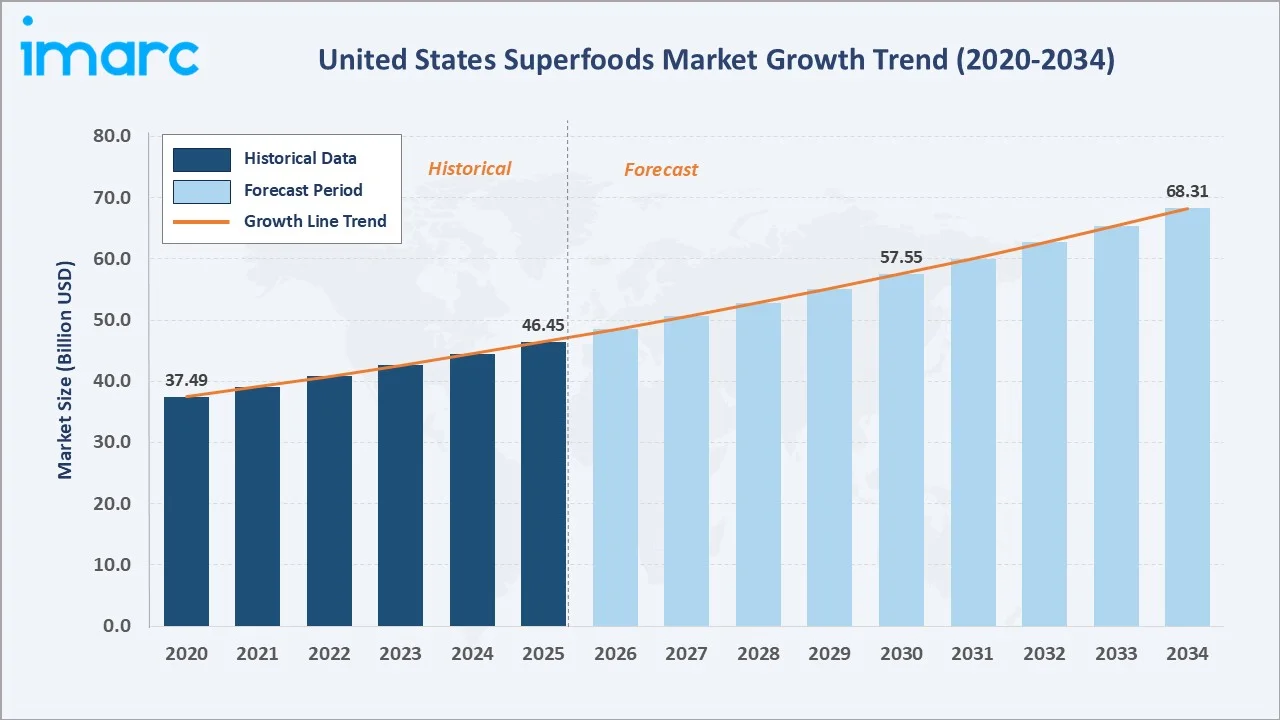
The United States superfoods market size increased from USD 46.45 Billion in 2025 to USD 48.48 Billion in 2026 and is projected to reach USD 68.31 Billion by 2034, growing at a CAGR of 4.38% during 2026-2034. Rising health consciousness, accelerating demand for functional foods, and widespread media influence are the primary growth drivers. Beverages lead application at 33.4%, while supermarkets and hypermarkets dominate distribution at 38.6%. The West region holds the leading regional share at 31.8%, driven by its wellness-oriented consumer base and premium retail ecosystem.
Market Snapshot
|
Metric |
Value |
|
Base Year Market Size (2025) |
USD 46.45 Billion |
| Market Size (2026) | USD 48.48 Billion |
|
Forecast Market Size (2034) |
USD 68.31 Billion |
|
CAGR (2026-2034) |
4.38% |
|
Base Year |
2025 |
|
Historical Period |
2020-2025 |
|
Forecast Period |
2026-2034 |
|
Largest Application Segment |
Beverages (33.4%, 2025) |
|
Leading Distribution Channel |
Supermarkets & Hypermarkets (38.6%, 2025) |
|
Leading Region |
West (31.8%, 2025) |
To get more information on this market, Request Sample
The market expanded from USD 37.49 Billion in 2020 to USD 46.45 Billion in 2025 and an estimated USD 48.48 Billion in 2026, reflecting consistent adoption of nutrient-dense food products across consumer groups. Growth was supported by the shift toward preventive health, plant-based diets, and functional ingredient integration. By 2030, the market is expected to reach USD 57.55 Billion as e-commerce penetration and personalized nutrition trends accelerate demand across all distribution formats, further reaching USD 68.31 Billion in 2034.
Executive Summary
The United States superfoods market, which increased from USD 46.45 Billion in 2025 to an estimated USD 48.48 Billion in 2026, representing consistent year-over-year expansion. The market is projected to reach USD 57.55 Billion by 2030 and USD 68.31 Billion by 2034, delivering a 4.38% CAGR across the forecast period. Growth is anchored in structural shifts in consumer behavior, rising chronic disease awareness, and the rapid expansion of e-commerce food retail channels.
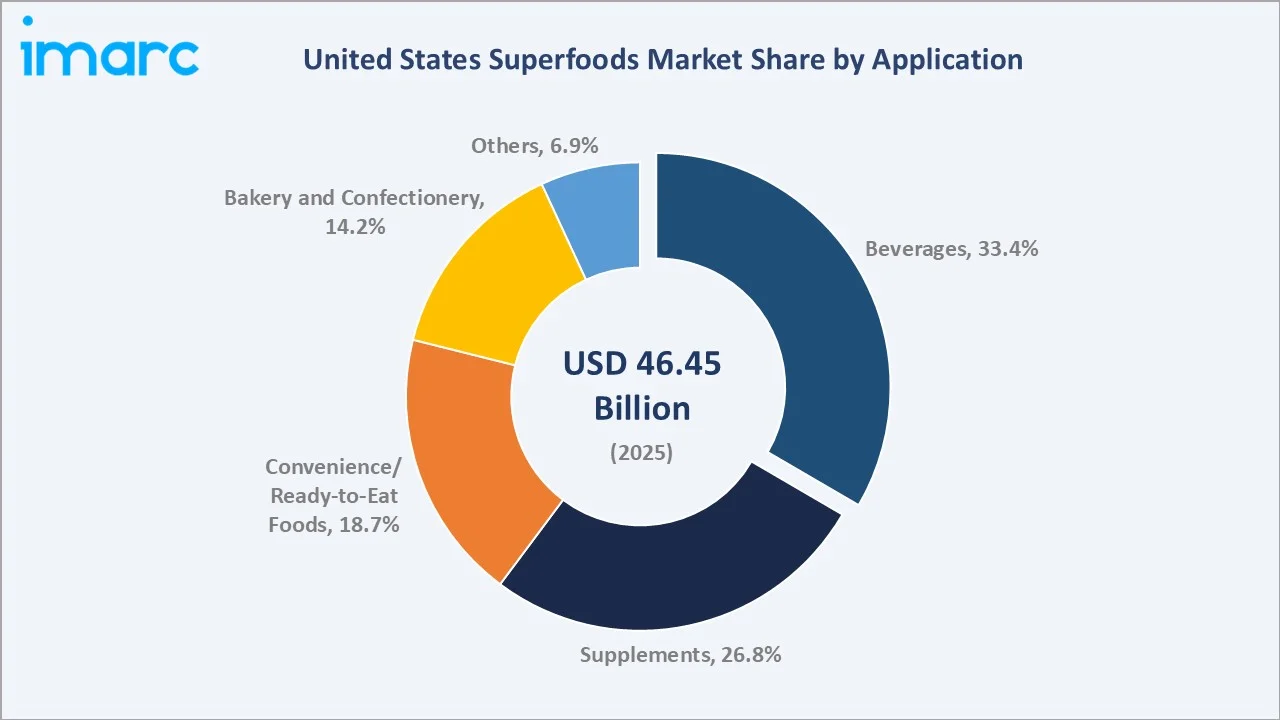
Beverages dominate the application segment at 33.4% (2025), driven by the proliferation of superfood-infused drinks such as matcha, acai blends, and adaptogenic tonics. Supplements follow at 26.8%, benefiting from growing consumer interest in immunity, gut health, and longevity-focused nutrition. Supermarkets and hypermarkets lead distribution at 38.6%, though online sales are the fastest growing channel at 16.8% (2025), reflecting digital-first purchasing behavior.
The West region leads regionally at 31.8%, followed by the Northeast at 27.4%, both benefiting from high health awareness and dense wellness retail infrastructure. Key growth enablers include the USDA's National Organic Program expansion, FDA dietary supplement guidance, and sustained consumer interest in clean-label products. Major market participants include Amazon Inc. (Whole Foods Market), Nestlé S.A., Hain Celestial Group, General Mills, and Sunfood Corporation, which continue to expand superfood-based product lines to capture premium segment demand.
Key Market Insights
|
Insight |
Data |
|
Dominant Application |
Beverages - 33.4% share (2025) |
|
Dominant Distribution Channel |
Supermarkets & Hypermarkets - 38.6% (2025) |
|
Leading Region |
West - 31.8% share (2025) |
|
Market Opportunity |
Personalized nutrition; functional beverage innovation; D2C e-commerce expansion |
Key Analytical Observations Supporting The Market Data:
- Beverages at 33.4% (2025): The beverages segment dominates as superfood-infused drinks, including matcha lattes, adaptogenic tonics, cold-pressed juices, and acai smoothies, have become mainstream wellness staples. Convenience and immediacy of liquid nutrition continue to fuel strong volume growth across quick-service and retail channels.
- Supplements at 26.8% (2025): Dietary supplements incorporating superfoods such as spirulina, moringa, and turmeric capsules are widely adopted across health-focused demographics. The growth is reinforced by increased consumer research, physician recommendations, and FDA-regulated supplement market transparency.
- Convenience/Ready-to-Eat Foods at 18.7% (2025): The RTE segment benefits from time-pressed consumers seeking nutritious meal solutions without preparation effort. Superfood-enhanced snack bars, grain bowls, and meal kits have expanded significantly through grocery and online delivery channels.
- Supermarkets & Hypermarkets at 38.6% (2025): Mass retail channels retain dominance due to wide superfood SKU availability, in-store promotions, and consumer trust in established grocery chains. National retailers such as Kroger and Walmart have expanded organic and functional food sections significantly.
- West Region at 31.8% (2025): The West leads due to its established wellness culture, high concentration of health-focused retailers, and early-adopter consumer behavior. California alone accounts for a disproportionate share of US organic food consumption, according to USDA Economic Research Service data.
- Online Sales at 16.8% (2025): The online channel is the fastest-growing distribution format, driven by direct-to-consumer superfood brands, Amazon Fresh, and subscription-based meal and supplement services that offer convenience, variety, and personalized recommendations.
United States Superfoods Market Overview
The United States superfoods market encompasses nutrient-dense foods - including fruits, vegetables, grains, seeds, herbs, roots, and marine-derived products - recognized for their exceptional concentration of vitamins, minerals, antioxidants, and bioactive compounds. The ecosystem integrates agricultural producers, food-tech manufacturers, nutraceutical companies, brand owners, retailers, and regulatory bodies such as the FDA and USDA. Macroeconomic drivers include per capita healthcare expenditure exceeding USD 15,000 (2024, CMS data), growing chronic disease prevalence, expanding organic farming acreage, and consumer digitalization enabling health information access. The market serves applications spanning functional beverages, dietary supplements, RTE foods, and bakery products.
Market Dynamics
To evaluate market opportunities, Request Sample
Market Drivers
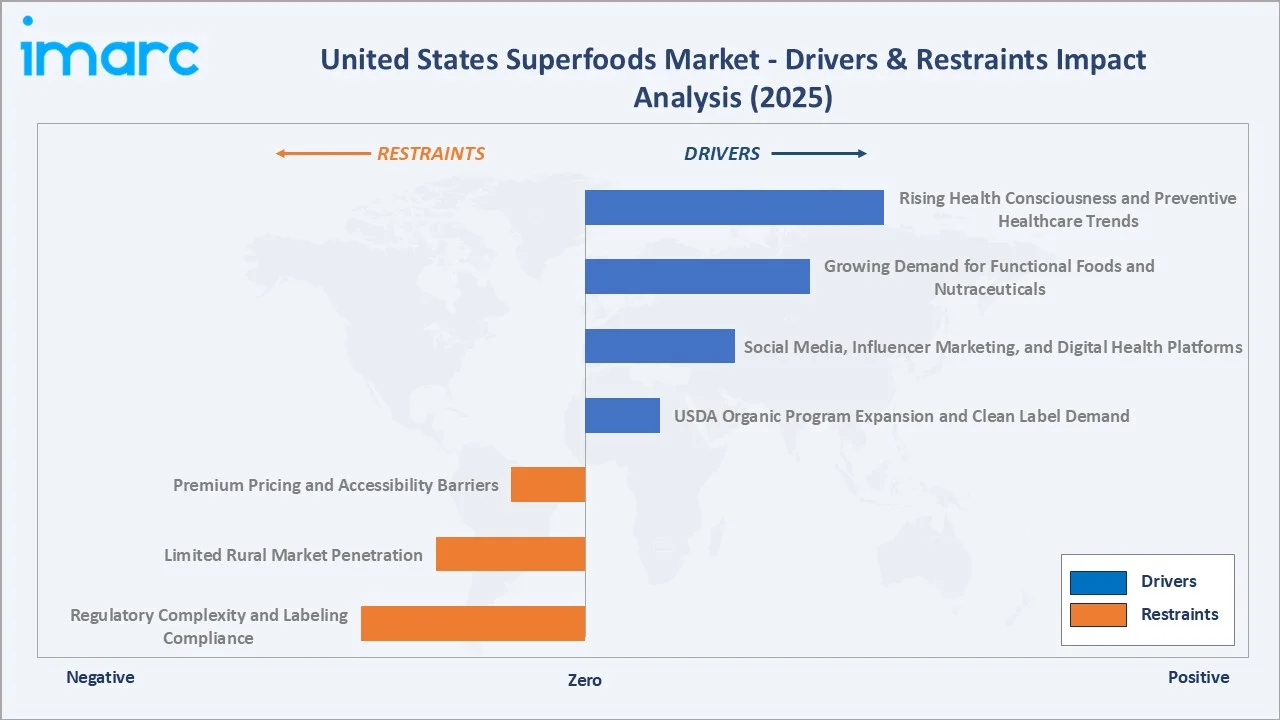
- Rising Health Consciousness and Preventive Healthcare Trends: Consumer awareness of the relationship between diet and long-term well-being has intensified significantly across US demographics. According to the CDC, over 60% of American adults suffer from at least one chronic disease, prompting proactive dietary choices. Superfoods, positioned as nutritional powerhouses capable of reducing inflammation and oxidative stress, align directly with preventive healthcare preferences. This shift is particularly pronounced among millennials and Gen Z consumers, who prioritize functional nutrition over caloric indulgence.
- Growing Demand for Functional Foods and Nutraceuticals: Functional foods that deliver health benefits beyond basic nutrition are experiencing accelerating demand across US grocery and online channels. The Academy of Nutrition and Dietetics reports that over 60% of Americans consider nutrition a primary factor in their food purchase decisions. Superfoods such as chia seeds, kale, blueberries, and quinoa are prominently featured in functional food formulations targeting immunity, digestive health, cardiovascular wellness, and cognitive performance.
- Social Media, Influencer Marketing, and Digital Health Platforms: The proliferation of health and wellness content across Instagram, TikTok, YouTube, and wellness podcasts has dramatically accelerated superfood awareness and trial. Influencer-led campaigns promoting spirulina smoothies, matcha rituals, and adaptogen protocols have created aspirational wellness narratives that resonate with broad consumer audiences. This media-driven demand generation has been particularly effective in expanding superfood consumption beyond traditional health-food consumers to mainstream demographics.
- USDA Organic Program Expansion and Clean Label Demand: The USDA's National Organic Program (NOP) certified over 28,000 operations in the US (2024 USDA data), reflecting the expanding organic agriculture base that supplies superfood raw materials. Clean-label preferences, demanding fewer ingredients, no artificial additives, and transparent sourcing, are driving manufacturers to reformulate products with superfood inclusions as natural, recognizable ingredients. This structural shift is supporting premium pricing and margin expansion across the category.
Market Restraints
- Premium Pricing and Accessibility Barriers: Superfoods command significant price premiums over conventional food alternatives, limiting penetration among lower-income consumer segments. Products such as acai, goji berries, and spirulina supplements are priced 2x-5x above standard fruit and vegetable substitutes. USDA ERS data indicates that food-insecure households, representing approximately 13.5% of US households (2023), face meaningful barriers to superfood adoption due to cost constraints.
- Limited Rural Market Penetration: Distribution networks for specialty and organic superfoods remain heavily concentrated in urban and suburban areas, where health-focused retail chains such as Whole Foods Market, Sprouts Farmers Market, and Natural Grocers maintain dense store footprints. Rural US areas, representing 97% of land area and 20% of population, have significantly lower specialty food retail accessibility, constraining the addressable consumer base for premium superfood products.
- Regulatory Complexity and Labeling Compliance: The FDA's complex regulatory framework governing health claims on food and supplement labels creates compliance challenges for emerging superfood brands. Structure-function claims, nutrient content claims, and disease claims each require specific substantiation and disclosure requirements. Smaller brands entering the superfood category frequently face labeling compliance issues that increase time-to-market and legal costs, creating barriers that favor established players with dedicated regulatory affairs capabilities.
Market Opportunities
- E-Commerce and Direct-to-Consumer Superfood Brands: The rapid expansion of D2C e-commerce, supported by platforms including Amazon, Shopify, and brand-owned subscription models, presents significant growth opportunities for superfood manufacturers. Online channels eliminate geographic barriers, enable targeted marketing to health-conscious demographics, and support subscription-based revenue models. US e-commerce food and beverage sales grew at double-digit rates through 2024 (US Census Bureau data), creating a substantial runway for digital-native superfood brands.
- Personalized Nutrition and Precision Wellness: Advances in nutritional genomics, microbiome testing, and AI-driven dietary recommendation platforms are enabling personalized superfood formulations tailored to individual health profiles. Companies offering DNA-based or gut microbiome-informed supplements and food subscriptions are attracting premium consumer segments willing to pay significantly above average market prices. This personalization trend represents a high-margin growth vector for innovative superfood brands.
Market Challenges
- Scientific Substantiation and Consumer Skepticism: While superfoods are widely marketed for their health benefits, the scientific community notes that many claims lack rigorous clinical validation at realistic consumption levels. Consumer skepticism, amplified by media coverage of overstated health claims, can erode brand trust and slow category adoption. Brands must invest in evidence-based marketing and clinical research partnerships to build credible differentiation in an increasingly scrutinized regulatory environment.
- Supply Chain Volatility and Ingredient Sourcing: Many high-demand superfoods, including acai, maca, and cacao, are primarily sourced from tropical and Andean regions in South America, creating exposure to geopolitical risks, climate events, and shipping disruptions. USDA and commodity market data indicate that price volatility for specialty agricultural commodities can exceed 30% in disruption years, compressing margins for manufacturers and increasing wholesale price instability across the supply chain.
Emerging Market Trends
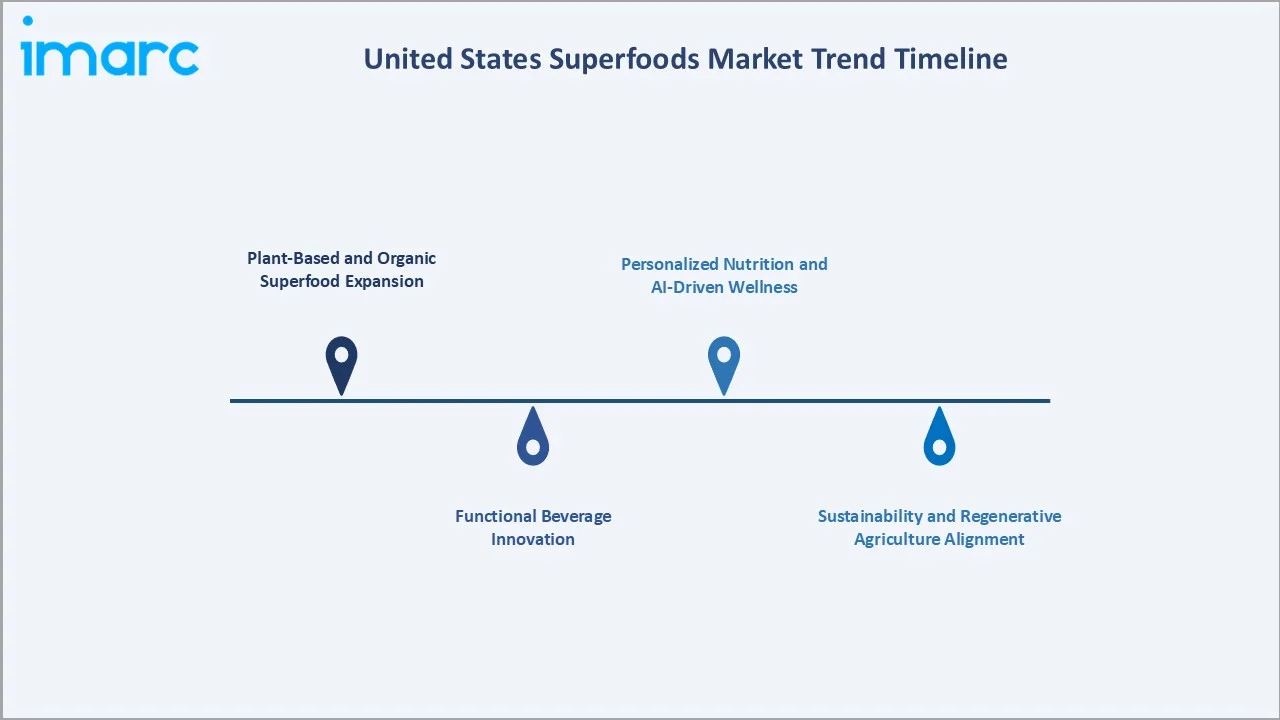
1. Plant-Based and Organic Superfood Expansion
Consumer demand for plant-based, non-GMO, and USDA-certified organic superfoods has grown substantially, reshaping product development strategies across the category. Retailers have expanded dedicated organic superfood sections, while food manufacturers are reformulating existing product lines to incorporate functional plant-based ingredients. The Organic Trade Association reported that US organic food sales exceeded USD 65 Billion in 2024, with functional and superfood subcategories among the fastest-growing segments.
2. Functional Beverage Innovation
Superfood-infused functional beverages, including adaptogenic lattes, nootropic shots, antioxidant-rich cold-pressed juices, and probiotic kombucha, represent one of the fastest-growing product formats in the US food and beverage market. Beverage manufacturers are investing heavily in R&D to develop shelf-stable, high-bioavailability formulations that deliver clinically meaningful quantities of key superfood bioactives. This segment benefits from high repurchase rates driven by daily consumption occasions.
3. Personalized Nutrition and AI-Driven Wellness
The convergence of nutritional science, genomics, and AI-powered health platforms is enabling the development of individualized superfood supplement regimens customized to each consumer's metabolic and genetic profile. Companies such as Ritual and Persona have pioneered subscription-based personalized supplement models that incorporate superfood ingredients. This trend is expected to accelerate through 2034 as consumer willingness to share health data increases and algorithm-driven recommendations improve.
4. E-Commerce and Subscription Model Growth
The shift toward online grocery shopping and subscription-based food delivery has created new distribution pathways for superfood brands that historically relied on specialty retail channels. Amazon Fresh, Thrive Market, and brand-owned D2C platforms are enabling broader superfood distribution while delivering consumer convenience and repeat purchase automation. This channel shift is particularly significant for premium superfood categories that benefit from detailed product education available in digital formats.
5. Sustainability and Regenerative Agriculture Alignment
Growing consumer awareness of environmental impact is driving demand for superfoods sourced through regenerative and sustainable agricultural practices. Brands that can credibly communicate carbon-neutral sourcing, fair trade certifications, and biodiversity-positive farming practices command premium positioning and loyalty among environmentally conscious consumers. This sustainability requirement is increasingly influencing supplier selection and product development decisions across the US superfoods industry.
Industry Value Chain Analysis
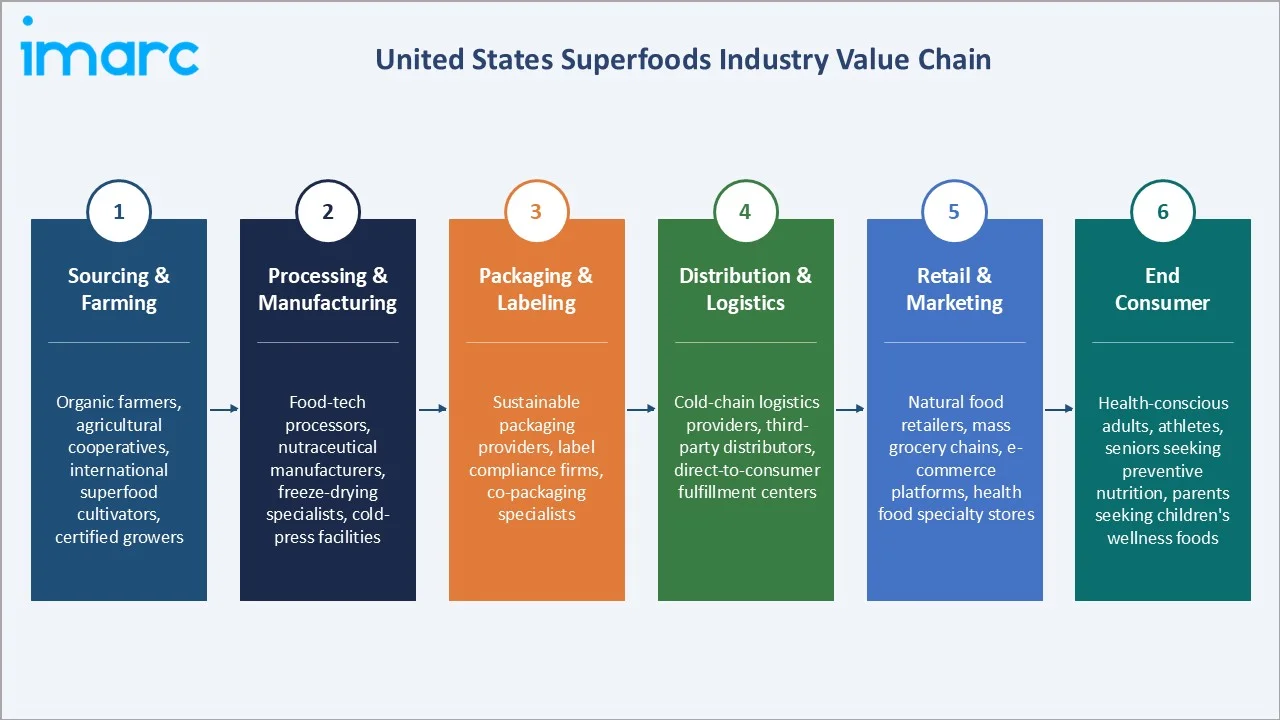
The United States superfoods industry value chain spans agricultural sourcing through end consumer engagement, integrating specialized participants at each stage who contribute distinct expertise and value-adding capabilities.
|
Stage |
Key Participants |
|
Sourcing & Farming |
Organic farmers, agricultural cooperatives, international superfood cultivators, certified growers |
|
Processing & Manufacturing |
Food-tech processors, nutraceutical manufacturers, freeze-drying specialists, cold-press facilities |
|
Packaging & Labeling |
Sustainable packaging providers, label compliance firms, co-packaging specialists |
|
Distribution & Logistics |
Cold-chain logistics providers, third-party distributors, direct-to-consumer fulfillment centers |
|
Retail & Marketing |
Natural food retailers, mass grocery chains, e-commerce platforms, health food specialty stores |
|
End Consumer |
Health-conscious adults, athletes, seniors seeking preventive nutrition, parents seeking children's wellness foods |
The processing and manufacturing stage represents the highest value-addition node within the superfoods value chain. Proprietary extraction technologies, bioavailability enhancement methods, and formulation expertise enable manufacturers to differentiate commodity ingredients into high-margin branded products. Brands that control this stage benefit from defensible competitive positioning and superior margin capture relative to raw material suppliers or retail channel participants.
Technology Landscape in the United States Superfoods Industry
Bioavailability Enhancement Technologies
Advanced processing technologies, including liposomal encapsulation, nano-emulsification, and micellar delivery systems, are being applied to superfood extracts to maximize bioavailability of key bioactive compounds. These innovations allow manufacturers to formulate supplements and functional foods with demonstrably higher absorption rates, supporting science-backed marketing claims and justifying premium retail pricing.
Precision Fermentation and Biotechnology
Precision fermentation is enabling the production of superfood-equivalent bioactives through controlled microbial processes, reducing dependence on geographically constrained agricultural supply chains. Companies are applying synthetic biology tools to produce astaxanthin, omega-3 fatty acids, and adaptogenic compounds with greater consistency, purity, and cost efficiency than traditional extraction methods.
AI-Powered Nutrition Platforms and Digital Health Integration
Artificial intelligence and machine learning algorithms are transforming personalized nutrition by analyzing consumer health data, including genomics, microbiome composition, lifestyle parameters, and biomarker data, to recommend targeted superfood interventions. Platforms integrating wearable device data with dietary tracking are enabling real-time nutritional optimization, creating high-engagement consumer relationships that support subscription-based superfood product models.
Market Segmentation Analysis
The report covers the following segments:
|
Segment Category |
Leading Segment |
Market Share |
Year |
|
Product Type |
🔒 |
🔒 |
2025 |
|
Application |
Beverages |
33.4% |
2025 |
|
Distribution Channel |
Supermarkets and Hypermarkets |
38.6% |
2025 |
|
Region |
West |
31.8% |
2025 |

By Application
The beverages segment leads the United States superfoods market at 33.4% (2025), reflecting the dominant role of functional drinks in daily wellness routines. The proliferation of superfood-infused RTD beverages, including matcha lattes, adaptogenic tonics, vitamin-enhanced waters, and cold-pressed juices, across mass retail, foodservice, and online channels drives strong volume and revenue performance. The segment is projected to maintain its leadership through 2034 as innovation in ingredient combinations and delivery formats continues.
To access detailed market analysis, Request Sample
Supplements hold the second position at 26.8% (2025), driven by consumer interest in targeted health outcomes including immunity support, cognitive performance, and anti-aging nutrition. Convenience/Ready-to-Eat Foods follow at 18.7%, supported by the demand for nutritious time-efficient meal solutions. Bakery and confectionery contribute 14.2%, with brands reformulating products using chia, flax, quinoa, and adaptogenic herbs. Others account for the remaining 6.9%.
By Distribution Channel
Supermarkets and hypermarkets dominate distribution at 38.6% (2025), leveraging wide product selection, in-store promotional capabilities, and established consumer trust. Major retailers including Kroger, Walmart, Target, and Whole Foods Market have expanded organic and functional food sections significantly over the past five years, increasing superfood product visibility and accessibility.
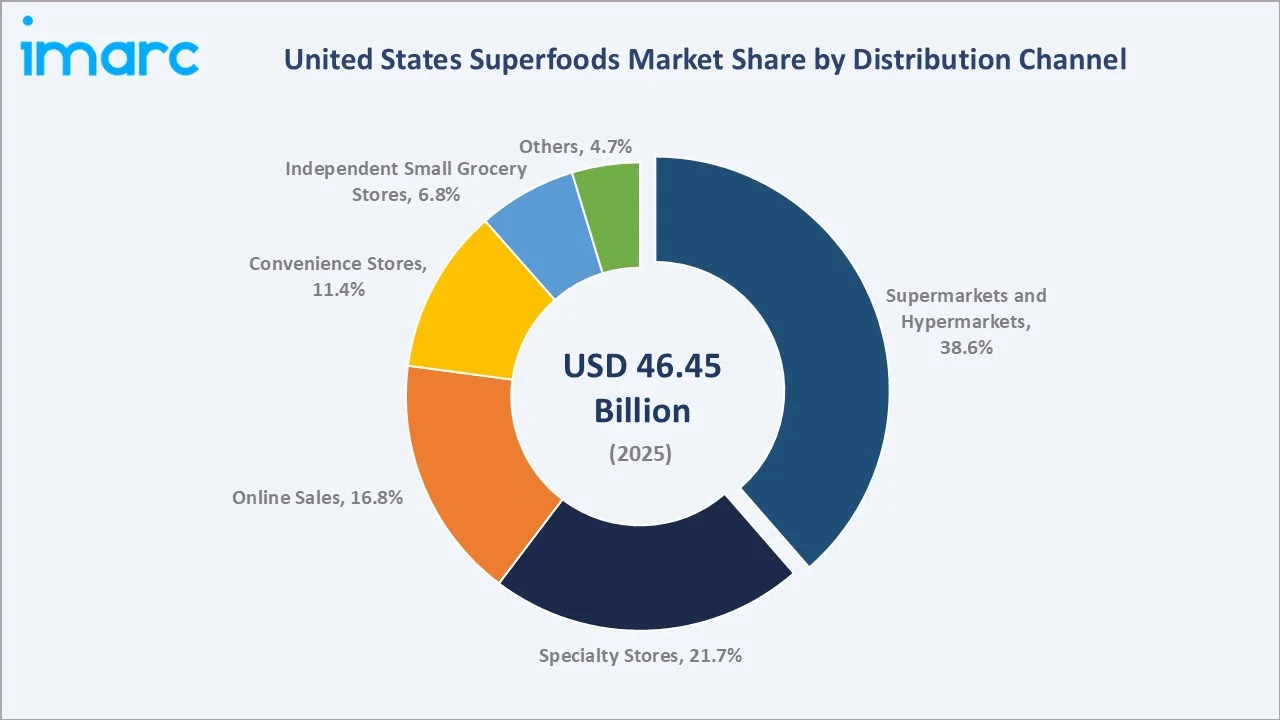
Specialty stores hold 21.7%, reflecting the premium positioning of dedicated health food retailers. Online sales account for 16.8% and represent the fastest-growing channel, driven by D2C brand models, Amazon's grocery expansion, and subscription services. Convenience stores contribute 11.4% as snack-format superfood products proliferate. Independent small grocery stores hold 6.8%, while other channels account for 4.7%.
Regional Market Insights
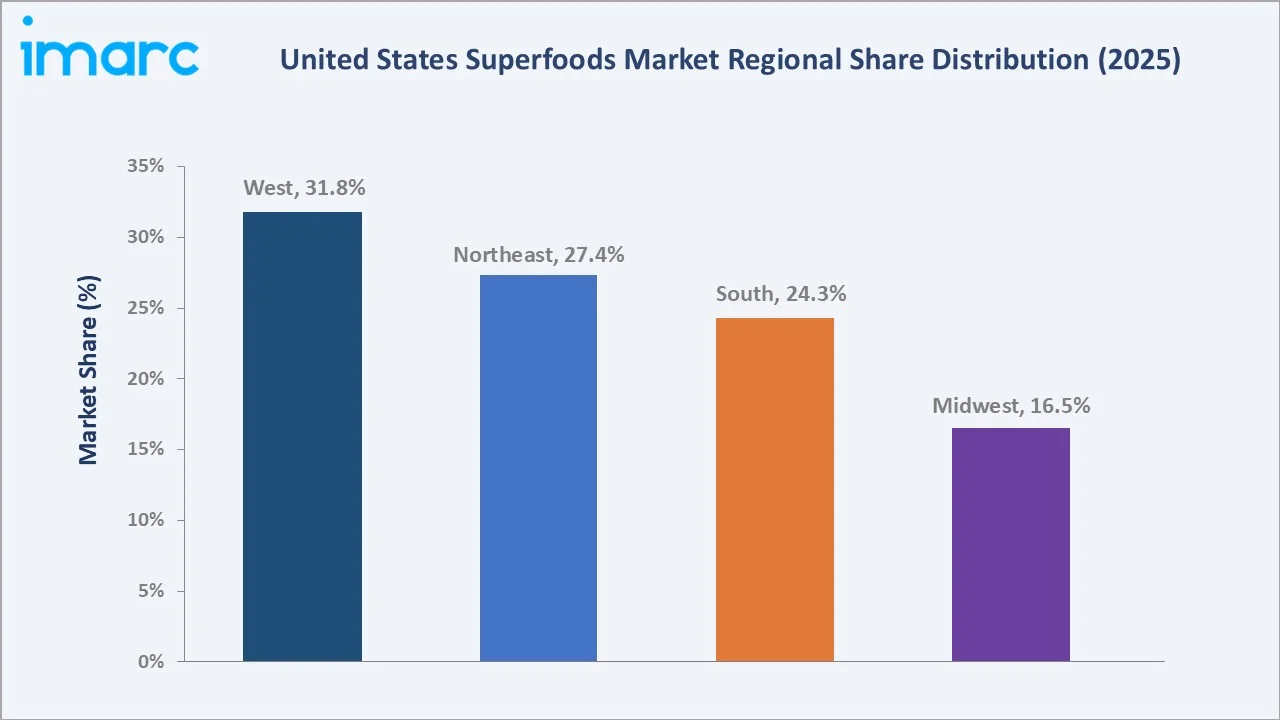
The United States superfoods market exhibits distinct regional dynamics, with the West leading at 31.8% (2025), followed by the Northeast at 27.4%, the South at 24.3%, and the Midwest at 16.5%.
|
Region |
Share (2025) |
Key Characteristics |
|
West |
31.8% |
High wellness culture adoption; dense health-food retail infrastructure; early-adopter consumer base; strong organic farming presence in California and Pacific Northwest |
|
Northeast |
27.4% |
High income levels and education; concentrated urban health-conscious populations; strong specialty food retail base in New York, Boston, and Philadelphia metro areas |
|
South |
24.3% |
Rapidly expanding health awareness; growing wellness retail penetration in metro areas; increasing Hispanic and diverse demographic demand for functional foods |
|
Midwest |
16.5% |
Emerging market with growing organic and natural food retail expansion; strong agricultural production base for domestic superfood ingredients; increasing health awareness in urban centers |
The West's 31.8% dominance reflects California's leading role as the largest US organic food market, supported by USDA-certified organic farmland exceeding 1.8 million acres in the state. The Northeast benefits from high consumer education and income levels that support premium superfood purchasing. The South is experiencing the fastest regional growth trajectory driven by expanding health retail infrastructure. The Midwest, while the smallest regional market, presents significant growth potential as health awareness and specialty retail penetration increase across major metros.
Competitive Landscape
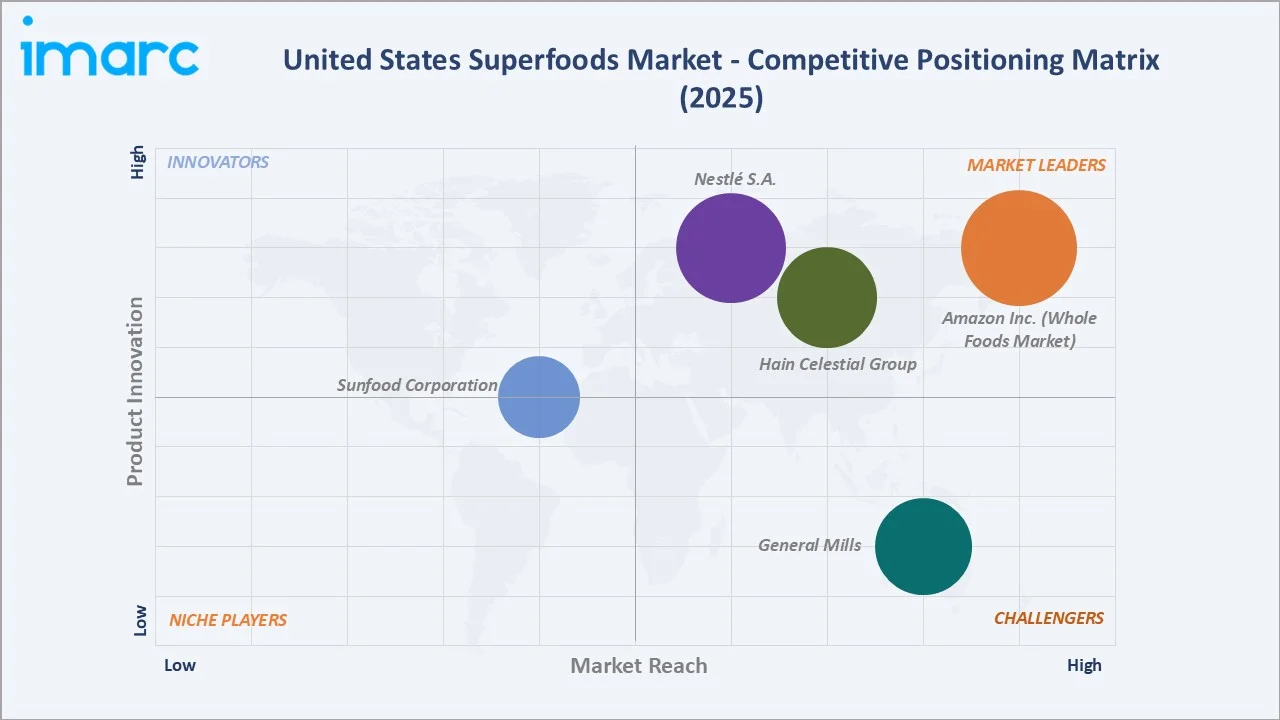
The United States superfoods market is moderately fragmented, with a mix of large diversified food conglomerates, dedicated natural food companies, and emerging D2C superfood brands competing across product categories. Market participants compete on ingredient quality, certification credentials, brand positioning, innovation velocity, and distribution reach. The competitive intensity is increasing as mainstream CPG companies enter the functional food space through acquisitions and internal brand development.
|
Company |
Key Brand / Product |
Market Position |
Core Strength |
|
Amazon Inc. (Whole Foods Market) |
365 by Whole Foods Market |
Market Leader |
Unparalleled specialty superfood retail reach; private label organic range; customer trust in premium natural products |
|
Nestlé S.A. |
Garden of Life; Orgain |
Market Leader |
Active in the segment via its Nestlé Health Science division, scale advantages; diversified superfood supplement portfolio; strong retail partnerships across mass and natural channels |
|
Hain Celestial Group |
Earth’s Best Organic; Spectrum |
Market Leader |
Pioneer in natural and organic food; broad superfood-aligned product portfolio across tea, yogurt, baby/kids products, and culinary oils |
|
General Mills |
Cascadian Farm; Annie's; Lärabar |
Strong Challenger |
Mainstream retail distribution leverage; clean-label superfood reformulations; resources for large-scale innovation |
|
Sunfood Corporation |
Sunfood Superfoods |
Emerging |
Raw, cold-processed superfood ingredients; strong e-commerce positioning; rapidly growing D2C subscription base |
Key Company Profiles
Amazon Inc. (Whole Foods Market)
Whole Foods Market, a subsidiary of Amazon Inc., is the United States' leading premium natural and organic grocery retailer and a primary distribution force for superfoods. The company operates over 500 stores across the US, serving as a critical launch platform for superfood brands and a trusted source for health-conscious consumers.
- Key Products: 365 by Whole Foods Market superfood range, in-store curated superfood sections spanning fresh, packaged, and supplement formats.
- Strategic Focus: Expanding the private-label 365 organic range with superfood-enhanced SKUs, deepening integration with Amazon Fresh delivery, and leveraging customer data to optimize superfood product assortment.
Hain Celestial Group
Hain Celestial Group is one of the largest dedicated natural and organic food companies in the United States, with a broad portfolio of superfood-aligned brands spanning tea, yogurt, baby/kids products, and culinary oils. The company's extensive brand portfolio includes several market-leading natural food brands with significant superfood content and positioning.
- Key Products: Earth’s Best Organic and Spectrum nutrient-dense superfoods.
- Strategic Focus: Portfolio simplification around highest-growth natural food brands, expansion in functional ingredient positioning, and increased e-commerce channel development to capture D2C growth.
Market Concentration Analysis
The United States superfoods market exhibits a moderately fragmented competitive structure, with no single player commanding a dominant market share. The top five companies - Amazon Inc. (Whole Foods Market), Nestlé, Hain Celestial Group, General Mills, and Sunfood Corporation - collectively account for an estimated 35-45% of the addressable market, reflecting the significant presence of regional brands, private-label products, and emerging D2C players.
Consolidation activity has accelerated as large CPG conglomerates seek to acquire established natural food brands with superfood positioning. Notable transactions include Nestlé's acquisition of Orgain, General Mills' acquisition of the Lärabar brand, and Amazon's strategic ownership of Whole Foods Market. These consolidation trends are increasing distribution scale and marketing resources for acquired brands while compressing the addressable space for independent competitors.
Emerging digital-native brands are disrupting the market by leveraging e-commerce, social media marketing, and subscription business models to capture premium consumer segments without traditional retail partnerships. Companies such as Athletic Greens (AG1), Sunfood, and Four Sigmatic have achieved significant market presence through digital-first approaches, demonstrating that distribution model innovation can create sustainable competitive positioning even against established players.
Investment & Growth Opportunities
Highest Growth Segments
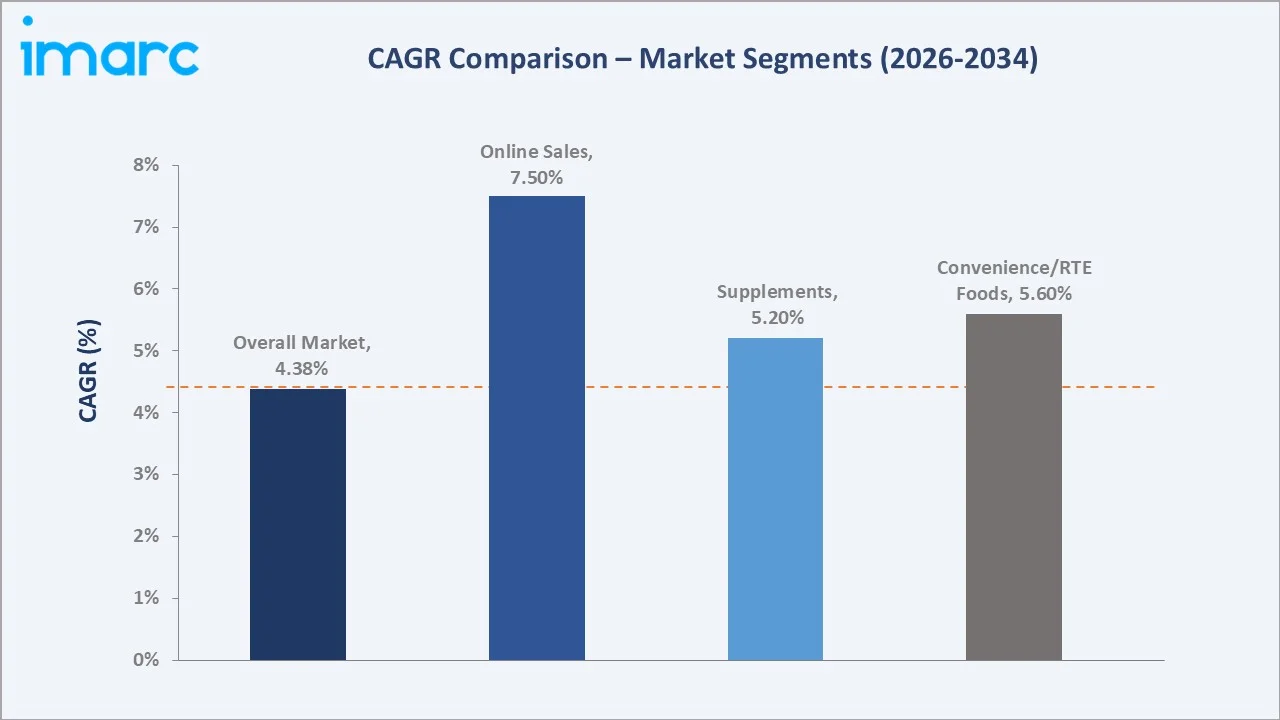
Online sales channel (~7.5% CAGR through 2034), supplements segment (~5.2% CAGR), convenience/RTE foods (~5.6% CAGR), and functional beverages represent the growing investment vectors in the US superfoods market through 2034.
Investment Themes
D2C E-Commerce and Subscription Superfood Brands
The shift toward online grocery purchasing and subscription-based supplement delivery creates attractive investment opportunities in digital-native superfood brands with recurring revenue models. Companies with strong brand authority, customer retention metrics, and data-driven personalization capabilities command premium valuation multiples. D2C models eliminate traditional retail margin requirements, enabling higher marketing investment and faster product iteration cycles.
Personalized Nutrition Technology Platforms
The convergence of nutritional science, AI, and consumer health data presents significant investment opportunity in platforms that deliver personalized superfood recommendations based on individual health profiles. Companies operating at the intersection of health diagnostics, nutritional genomics, and e-commerce distribution are attracting venture capital and strategic investment from major CPG companies seeking exposure to high-growth wellness technology trends.
Sustainable and Regenerative Sourcing Infrastructure
Brands and supply chain companies that can credibly deliver certified sustainable, regeneratively sourced superfoods are well-positioned to capture the growing premium consumer segment that prioritizes environmental responsibility alongside personal health outcomes. Investment in transparent sourcing, blockchain-enabled traceability, and regenerative farming partnerships represents a defensible competitive differentiator as clean-label and sustainability expectations intensify.
Future Market Outlook (2026-2034)
The United States superfoods market is projected to grow from USD 46.45 Billion in 2025 to USD 48.48 Billion in 2026, reaching USD 68.31 Billion by 2034, registering a CAGR of 4.38% during 2026–2034. The market will reach USD 57.55 Billion by 2030, representing an interim milestone supported by continued functional food adoption, e-commerce channel maturation, and personalized nutrition technology deployment.
Three structural forces will define market growth through 2034: the sustained shift toward preventive healthcare and functional nutrition, the maturation of digital commerce as the primary superfood discovery and purchase channel, and the integration of precision nutrition technology into mainstream consumer wellness routines.
By 2034, the beverages and supplements segments are expected to maintain combined market leadership, collectively representing over 60% of total market revenue. Online sales will emerge as the second-largest distribution channel as digital retail infrastructure matures and consumer confidence in online grocery purchasing consolidates. Regional convergence will occur as Southern and Midwestern markets close the wellness retail penetration gap relative to the West and Northeast, expanding the total addressable consumer base across all US geographies.
Research Methodology
Primary Research
Primary research comprised structured interviews and discussions with superfoods manufacturers, organic food retailers, dietary supplement companies, food-tech entrepreneurs, distribution channel managers, and registered dietitians. The research captured insights on consumption trends, pricing dynamics, channel preferences, ingredient sourcing challenges, and competitive positioning. These inputs were used to validate market sizing assumptions, calibrate segment growth forecasts, and identify emerging investment opportunities.
Secondary Research
Secondary research encompassed USDA Economic Research Service publications, FDA dietary supplement guidance documents, Organic Trade Association annual surveys, CDC chronic disease prevalence reports, US Census Bureau e-commerce retail data, company annual reports, investor presentations, and peer-reviewed nutritional science journals. Competitive intelligence was derived from public company filings, product databases, and retail channel tracking sources.
Forecasting Models
Forecasting models combined historical market growth trends (2020-2025), channel-level demand analysis, organic food retail expansion projections, and e-commerce adoption rates to generate segment-level and total-market growth forecasts through 2034. A bottom-up modeling approach estimated demand by application segment and distribution channel, while top-down analysis validated total market potential. Macroeconomic scenario analysis incorporated consumer spending elasticity, healthcare expenditure trends, and organic food price dynamics to stress-test central-case projections.
United States Superfoods Report Coverage:
| Report Features | Details |
|---|---|
| Base Year of the Analysis | 2025 |
| Historical Period | 2020-2025 |
| Forecast Period | 2026-2034 |
| Units | Billion USD |
| Scope of the Report | Exploration of Historical and Forecast Trends, Industry Catalysts and Challenges, Segment-Wise Historical and Predictive Market Assessment:
|
| Product Types Covered | Fruits, Vegetables, Grains and Seeds, Herbs and Roots, Meat, Others |
| Applications Covered | Bakery and Confectionary, Beverages, Supplements, Convenience/Ready-to-eat-Foods, and Others |
| Distribution Channels Covered | Supermarkets/Hypermarkets, Convenience Stores, Specialty Stores, Independent Small Grocery stores, Online Sales, and Others |
| Regions Covered | Northeast, Midwest, South, West |
| Companies Covered | Amazon Inc. (Whole Foods Market), Nestlé S.A., Hain Celestial Group, General Mills, Sunfood Corporation, etc. |
| Customization Scope | 10% Free Customization |
| Post-Sale Analyst Support | 10-12 Weeks |
| Delivery Format | PDF and Excel through Email (We can also provide the editable version of the report in PPT/Word format on special request) |
Key Benefits for Stakeholders:
- IMARC’s report offers a comprehensive quantitative analysis of various market segments, historical and current market trends, market forecasts, and dynamics of the United States superfoods market from 2020-2034.
- The research study provides the latest information on the market drivers, challenges, and opportunities in the United States superfoods market.
- Porter's five forces analysis assist stakeholders in assessing the impact of new entrants, competitive rivalry, supplier power, buyer power, and the threat of substitution. It helps stakeholders to analyze the level of competition within the United States superfoods industry and its attractiveness.
- Competitive landscape allows stakeholders to understand their competitive environment and provides an insight into the current positions of key players in the market.
Frequently Asked Questions About the United States Superfoods Market Report
The US superfoods market size is estimated at USD 48.48 Million in 2026, driven by rising health consciousness, functional food demand, and expanding organic retail distribution across both physical and digital channels.
The market grows at a 4.38% CAGR during 2026-2034, reaching USD 68.31 Billion by 2034, supported by sustained wellness trends, e-commerce expansion, and personalized nutrition technology adoption.
Beverages lead at 33.4% (2025) due to daily consumption frequency, functional drink innovation, and wide availability across retail and foodservice channels in RTD and powder formats.
Supermarkets and hypermarkets lead at 38.6% (2025), leveraging broad product assortment, in-store promotional activity, and established consumer trust in major grocery retailers.
The West leads at 31.8% (2025), driven by strong wellness culture, California's organic farming base, and a dense network of health-focused specialty and natural food retailers.
The market is projected to reach USD 57.55 Billion by 2030, supported by functional food category growth, online channel maturation, and expanding consumer awareness of preventive nutrition benefits.
Online sales and dietary supplements are the fastest-growing segments, driven by D2C brand expansion, subscription models, and consumer demand for targeted immunity, gut health, and cognitive wellness formulations.
Key players include Amazon Inc. (Whole Foods Market), Nestlé S.A., Hain Celestial Group, General Mills, and Sunfood Corporation, among other regional and emerging D2C brands.
Key drivers include rising health consciousness, growing chronic disease prevalence, social media wellness influence, USDA organic program expansion, and increasing demand for clean-label functional food products.
Key challenges include premium pricing limiting lower-income accessibility, rural distribution gaps, FDA labeling compliance complexity, supply chain volatility for imported superfood ingredients, and scientific substantiation requirements for health claims.
E-commerce is accelerating superfood market growth by eliminating geographic distribution barriers, enabling D2C subscription models, expanding consumer choice, and supporting digital-native brand development without traditional retail cost structures.
Need more help?
- Speak to our experienced analysts for insights on the current market scenarios.
- Include additional segments and countries to customize the report as per your requirement.
- Gain an unparalleled competitive advantage in your domain by understanding how to utilize the report and positively impacting your operations and revenue.
- For further assistance, please connect with our analysts.
 Request Customization
 Speak to an Analyst
 Request Brochure
 Inquire Before Buying
Benefits of Customization
- Personalize this research
- Triangulate with your data
- Get data as per your format and definition
- Gain a deeper dive into a specific application, geography, customer, or competitor
- Any level of personalization
Get in Touch With Us
UNITED STATES
Phone: +1-201-971-6302
INDIA
Phone: +91-120-433-0800
UNITED KINGDOM
Phone: +44-753-714-6104
Email: sales@imarcgroup.com
Client Testimonials




.webp)




.webp)













Related Reports

Choose your plan
*Please note that the prices mentioned below are starting prices for each bundle type. Kindly contact our team for further details.*
Single User License
- 1 User License, Access on 2 Devices
- PDF Report + Excel Dataset (Password Protected)
- Lifetime Access
- No Printing Rights
- 10% Free Report Customization
- 10–12 Weeks of Analyst Support
Five User License
- Access for 5 Users, 2 Devices per User
- PDF Report + Excel Dataset (Password Protected)
- Lifetime Access
- Dedicated Account Manager
- 12–14 Weeks of Analyst Support
- No Printing Rights
- 15% Free Report Customization
- 25% Discount on Your Next Purchase
Corporate User License
- Unlimited User Access (Within Your Organization)
- PDF Report + Excel Dataset
- Lifetime Access
- Dedicated Account Manager
- 14–20 Weeks of Analyst Support
- No Printing Rights
- 20% Free Report Customization
- 30% Discount on Your Next Purchase
Essential Insights
What's included:
3 reports
- Lifetime Access
- PDF Reports
- Excel Datasets
- 2 Weeks of Free Analyst Support
- 2 User Licenses
- Access on 2 Devices
- Printing Rights
- Complimentary PowerPoint (PPT) Version
- Complimentary License Upgrade
Professional Access
What's included:
5 reports
- Lifetime Access
- PDF Reports
- Excel Datasets
- 8 Weeks of Free Analyst Support
- 2 User Licenses
- Access on 2 Devices
- Printing Rights
- Complimentary PowerPoint (PPT) Version
- Complimentary License Upgrade
Business Advantage
What's included:
8 reports
- Lifetime Access
- PDF Reports
- Excel Datasets
- 14 Weeks of Free Analyst Support
- 2 User Licenses
- Access on 2 Devices
- Printing Rights
- Complimentary PowerPoint (PPT) Version
- Complimentary License Upgrade
Enterprise Intelligence
What's included:
10 reports
- Lifetime Access
- PDF Reports
- Excel Datasets
- 20 Weeks of Free Analyst Support
- 2 User Licenses
- Access on 2 Devices
- Printing Rights
- Complimentary PowerPoint (PPT) Version
- Complimentary License Upgrade