
United States Veterinary Imaging Market Size, Share, Trends and Forecast by Product Type, Animal Type, Application, End User, and Region, 2026-2034
United States Veterinary Imaging Market Size, Share, Trends & Forecast (2026-2034)
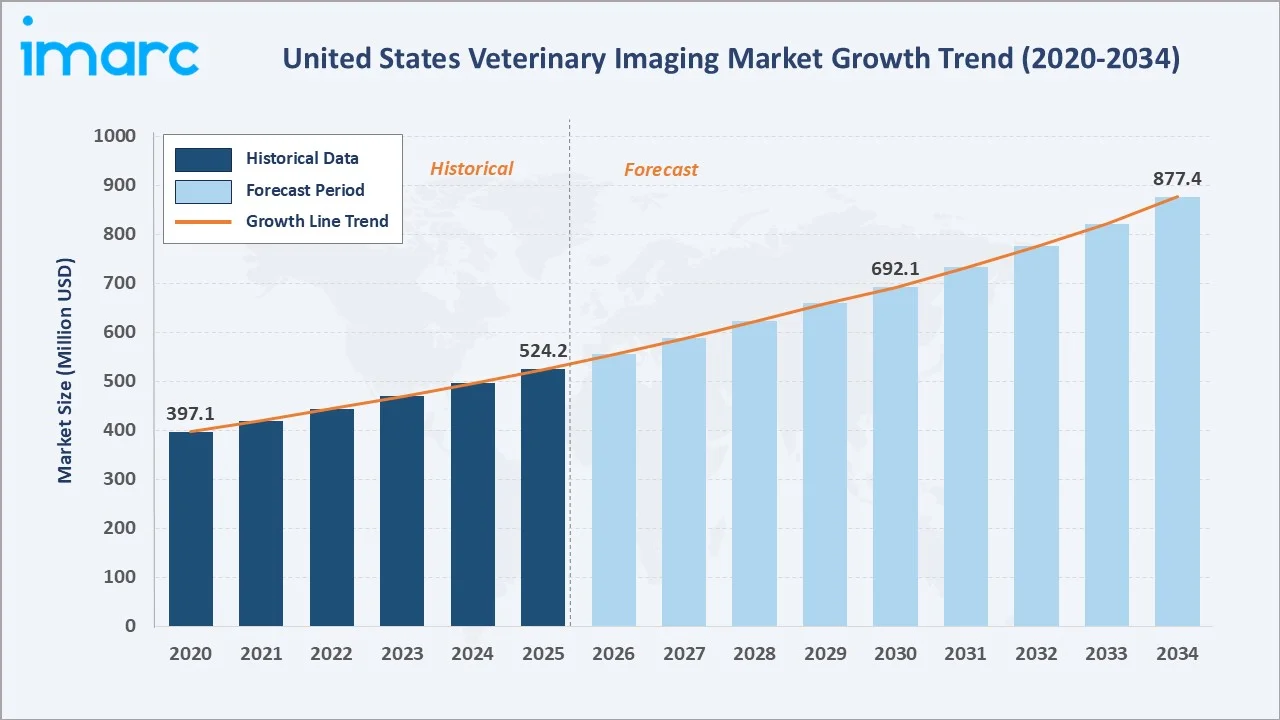
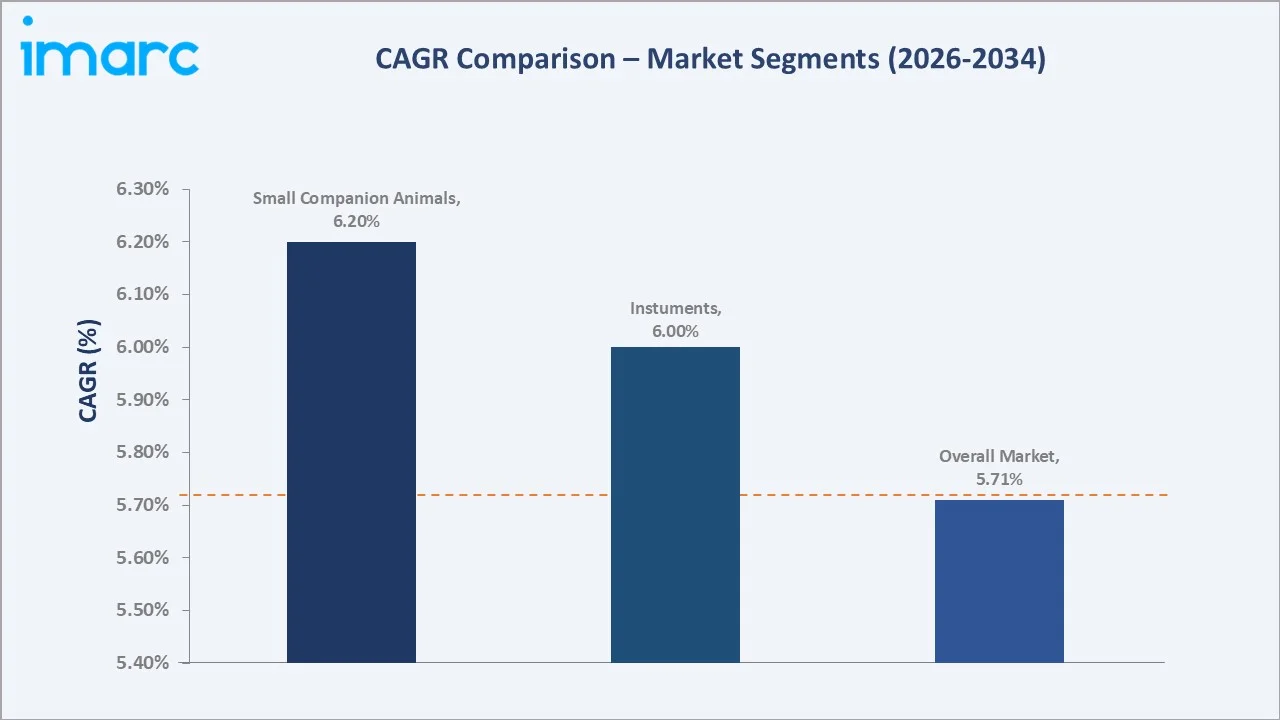
The United States veterinary imaging market size increased from USD 524.2 Million in 2025 to USD 554.2 Million in 2026 and is projected to reach USD 877.4 Million by 2034, growing at a CAGR of 5.71% during 2026-2034. The humanization of pets, driving higher healthcare spending, growing companion animal populations and pet insurance adoption, rapid integration of AI-assisted diagnostic imaging, and expansion of veterinary specialty practice infrastructure are the primary growth catalysts.
Market Snapshot
|
Metric |
Value |
|
Base Year Market Size (2025) |
USD 524.2 Million |
|
Market Size (2026) |
USD 554.2 Million |
|
Forecast Market Size (2034) |
USD 877.4 Million |
|
CAGR (2026-2034) |
5.71% |
|
Base Year |
2025 |
|
Historical Period |
2020-2025 |
|
Forecast Period |
2026-2034 |
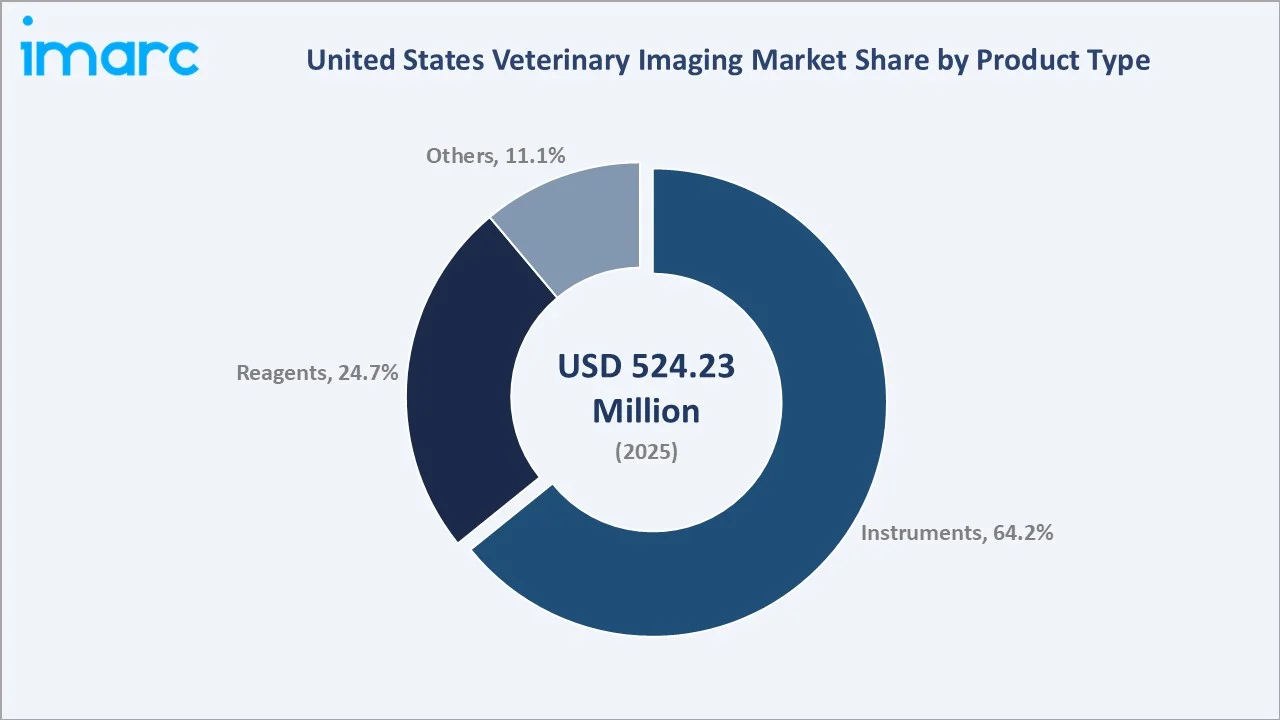
The South leads regionally with a 33.1% market share in 2025, driven by the region’s large companion animal population, significant equine and livestock markets in Texas and Florida, growing veterinary specialty hospital infrastructure, and major veterinary equipment distribution hubs. Instruments command the dominant 64.2% product type share, reflecting the capital equipment-driven nature of veterinary imaging, where digital radiography systems, ultrasound machines, and cross-sectional imaging platforms represent the primary market revenue category.
To get more information on this market, Request Sample
The US veterinary imaging market is driven by three structural demand forces: the pet humanization megatrend that has elevated companion animal healthcare standards toward human medical equivalents, creating demand for the same imaging modalities in veterinary practice that are standard in human hospitals; the rapid adoption of AI-powered diagnostic imaging that is transforming image interpretation from specialist-dependent to automated analysis accessible in general veterinary practice; and the expansion of veterinary specialty and referral hospital infrastructure that is creating centers of imaging excellence across all major US metropolitan areas.
Executive Summary
The United States veterinary imaging market is experiencing robust growth, driven by the convergence of rising pet ownership and humanization, growing pet insurance penetration, increasing diagnostic procedure utilization, and the rapid adoption of AI-integrated digital imaging technologies that are expanding imaging access beyond specialist referral centers to general veterinary practice. The market grew from USD 524.2 Million in 2025 to an estimated USD 554.2 Million in 2026 and is forecast to reach USD 877.4 Million by 2034, growing at a CAGR of 5.71%.
Instruments account for 64.2% of the product type segment in 2025, with digital radiography systems representing the single largest instrument sub-category, deployed across virtually every veterinary practice as the entry-level imaging modality. Reagents at 24.7% encompass imaging contrast agents, ultrasound gel, digital radiography plates, and associated consumables that generate recurring revenue alongside capital instrument placements.
Small companion animals at 72.8% reflects the US market’s primary driver in companion animal healthcare, where dogs and cats are treated as family members by their owners, with average annual veterinary expenditure per household pet growing consistently above GDP growth. Key players compete across imaging technology, AI integration, and distribution depth.
Key Market Insights
|
Insight |
Data |
|
Largest Product Type |
Instruments – 64.2% share (2025) |
|
Second Largest Product Type |
Reagents – 24.7% share (2025) |
|
Largest Animal Type |
Small Companion Animals – 72.8% share (2025) |
|
Second Largest Animal Type |
Large Animals – 27.2% share (2025) |
|
Leading Region |
South – 33.1% share (2025) |
|
Top Companies |
IDEXX Laboratories, Inc., GE HealthCare Technologies Inc., Siemens AG, FUJIFILM Holdings Corporation, Esaote S.p.A, Hallmarq Veterinary Imaging |
Key Analytical Observations Supporting the Above Data:
- Instruments at 64.2% (2025) lead as veterinary imaging is a capital equipment-driven market where the initial purchase of digital radiography, ultrasound, and cross-sectional imaging systems represents the primary market revenue event, followed by recurring reagent and service revenue over multi-year equipment life cycles.
- Small companion animals at 72.8% (2025) reflect the primary demand driver of the US veterinary imaging market in companion animal healthcare, where the willingness of pet owners to invest in advanced diagnostic imaging for dogs and cats, including CT, MRI, and nuclear medicine, is approaching human healthcare spending levels.
- Reagents at 24.7% (2025) represent the recurring revenue foundation of the veterinary imaging market, encompassing digital radiography consumables, including imaging plates, processing chemistry, and PACS storage; ultrasound gel and probe covers; and imaging contrast agents used in CT and MRI procedures.
- The South’s 33.1% share (2025) reflects the region’s combination of the highest US companion animal population concentration in Texas and Florida, significant equine healthcare markets driven by the American Quarter Horse Association’s concentration in Texas, and major veterinary practice chains and specialty hospitals headquartered across the Southern states.
United States Veterinary Imaging Market Overview
Veterinary imaging encompasses diagnostic imaging modalities, including digital radiography (X-ray), ultrasound, computed tomography (CT), magnetic resonance imaging (MRI), nuclear scintigraphy, fluoroscopy, and endoscopy, used to visualize internal anatomical structures of animals for diagnostic, surgical planning, and treatment monitoring purposes.
Macroeconomic drivers include the U.S. pet industry expenditures accounting for USD 158 billion in 2025, representing a 3.7% year-on-year increase, and are forecast to rise further to USD 165 billion in 2026, according to the American Pet Products Association (APPA). Moreover, the US pet insurance penetration rate is below 5% of the insured pet population (2025), creating a cohort of insured pet owners who are more likely to authorize advanced diagnostic imaging procedures without cost as the primary barrier.
Market Dynamics
To evaluate market opportunities, Request Sample
Market Drivers
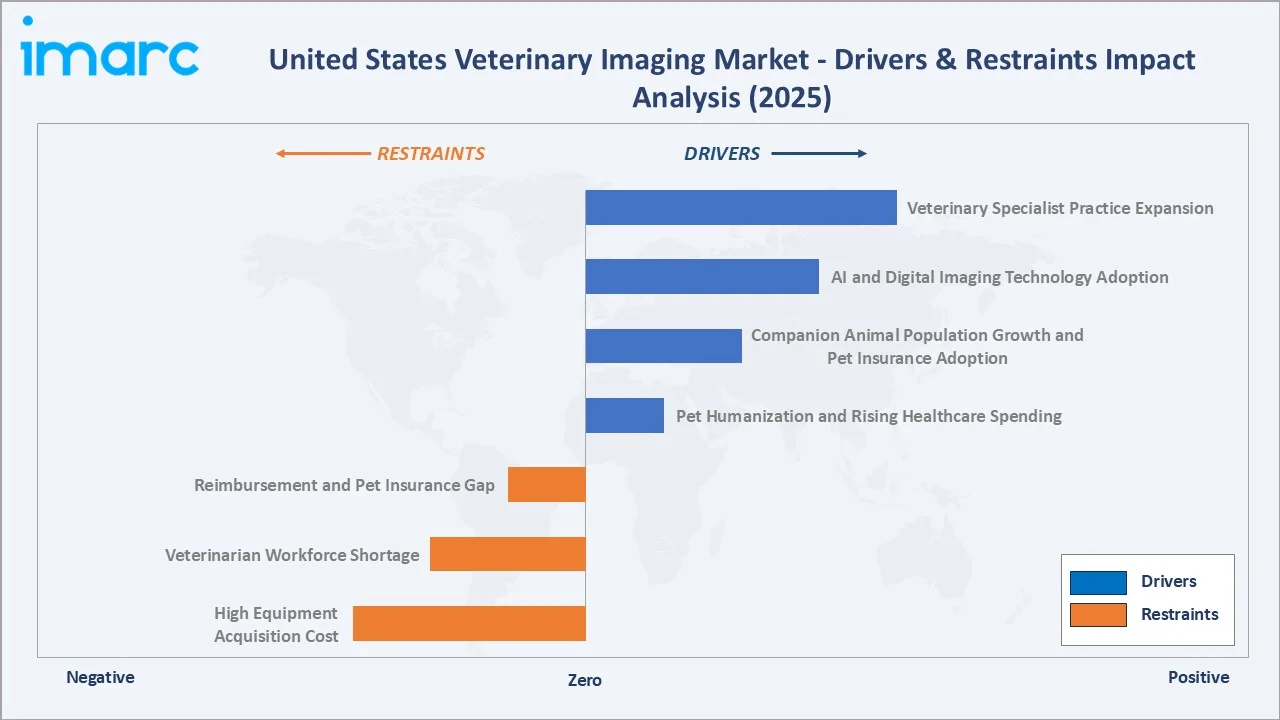
- Pet Humanization and Rising Healthcare Spending: Pet owners increasingly view their animals as family members deserving of the same diagnostic standard of care as human patients, driving demand for the same imaging modalities in veterinary settings that are standard in human hospitals. Annual per-household veterinary spending has grown consistently above inflation, with premium spending categories including imaging procedures among the fastest-growing cost items.
- Companion Animal Population Growth and Pet Insurance Adoption: The growing cohort of newly adopted pets is now entering their peak veterinary care years, creating sustained diagnostic procedure demand. Simultaneously, pet insurance penetration is growing at 15-20% annually, with insured pet owners 3–5× more likely to approve advanced imaging procedures than uninsured pet owners.
- AI and Digital Imaging Technology Adoption: The integration of artificial intelligence into veterinary imaging platforms is transforming diagnostic imaging accessibility and utility. AI-powered radiograph analysis systems are enabling general practitioners to receive expert-level image interpretation support without specialist radiologist referral, expanding imaging utilization beyond referral centers to the general practice setting where the majority of companion animal encounters occur.
- Veterinary Specialist Practice Expansion: The continued growth of veterinary specialty and referral hospitals, including board-certified internal medicine, oncology, cardiology, neurology, and orthopedic surgery specialists, is driving demand for the most advanced imaging modalities, including multi-slice CT, 3T MRI, nuclear scintigraphy, and interventional fluoroscopy.
Market Restraints
- High Equipment Acquisition Cost: Multi-slice CT scanners for veterinary applications cost USD 200,000–600,000, veterinary MRI systems USD 500,000–1.5 Million, and even digital radiography systems USD 15,000–100,000 depending on configuration. These capital costs represent significant barriers for independent general veterinary practices operating on thin margins, limiting the diffusion of advanced imaging modalities beyond specialty hospital settings into the broader general practice market.
- Veterinarian Workforce Shortage: The United States faces a structural veterinarian workforce shortage, with the Bureau of Labor Statistics projecting demand growth exceeding supply through 2034. Workforce constraints limit the expansion of imaging-enabled veterinary practices and create utilization gaps at practices that invest in imaging equipment but lack the specialist expertise to fully utilize it.
- Reimbursement and Pet Insurance Gap: Unlike human healthcare, veterinary procedures have no third-party reimbursement infrastructure for the uninsured majority of pet owners. Out-of-pocket payment for imaging procedures creates price sensitivity that limits procedure authorization rates, particularly for expensive cross-sectional imaging costing USD 500–2,500 per procedure.
Market Opportunities
- AI-Assisted General Practice Imaging Expansion: AI diagnostic imaging tools are progressively enabling general veterinary practitioners to perform and interpret imaging studies that previously required specialist referral. This capability is expanding the imaging addressable market from the specialty hospital segment to the general practice segment.
- Point-of-Care Ultrasound Market Expansion: Portable and handheld ultrasound systems costing USD 5,000–25,000 are making ultrasound accessible to the majority of general veterinary practices that previously could not justify the USD 30,000–80,000 cost of a conventional cart-based system. This market expansion is creating high-volume entry-level ultrasound instrument demand that supplements the established premium cart-based system market.
Market Challenges
- Human Medical Imaging Equipment Adaptation Complexity: Much of the veterinary imaging equipment market is served by human medical imaging equipment adapted for veterinary use, requiring modifications for different patient anatomies, sizes, and the absence of patient cooperation during imaging. Optimal veterinary imaging often requires anaesthesia or sedation, adding procedure cost, patient risk, and workflow complexity that limit the frequency of imaging in cost-sensitive practice settings.
- Radiation Safety and Regulatory Compliance: Digital radiography in veterinary practice is subject to state-level radiation safety regulations that vary significantly across the 50 states, with some states requiring lead apron use, radiation monitoring badges, and facility licensing inspections that add compliance burden. The training requirements for radiation safety compliance and the regulatory complexity of operating multiple imaging modalities in a single facility create administrative costs for veterinary practice operators.
Emerging Market Trends
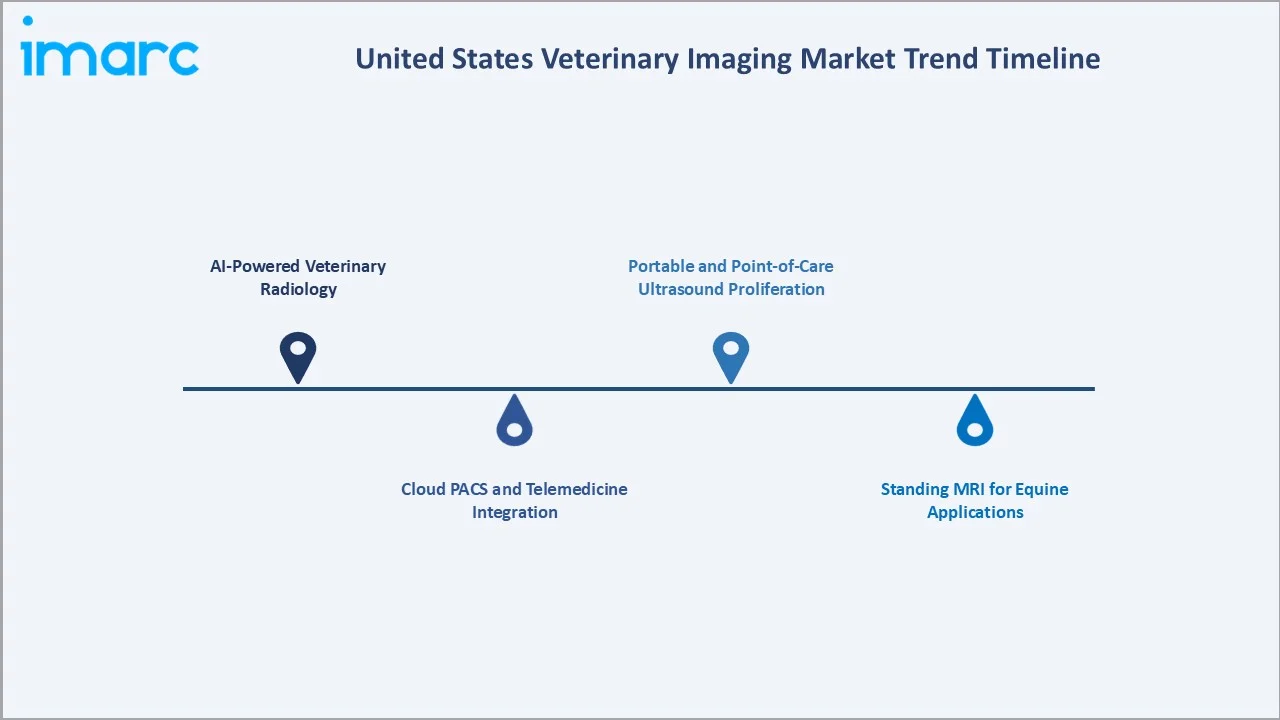
1. AI-Powered Veterinary Radiology
The deployment of AI radiology algorithms trained on large veterinary radiograph datasets is creating a paradigm shift in veterinary diagnostic imaging. IDEXX’s ImageVue DR50 Plus, launched in January 2026, incorporates AI-powered imaging that reduces radiation dose by up to 25% versus prior-generation systems while delivering high-definition image quality. Major players are offering AI-based radiograph triage and preliminary read services that flag abnormalities for veterinarian review, enabling general practitioners to perform same-day imaging interpretation without specialist referral.
2. Cloud PACS and Telemedicine Integration
Cloud-based Picture Archiving and Communication System (PACS) platforms are replacing on-premises imaging archives across US veterinary practices, enabling anywhere access to patient imaging records, instant sharing with specialist colleagues, and integration with veterinary practice management software. Platforms including Vet-Stream and ezyVet integrated imaging are creating SaaS subscription models that generate recurring revenue from imaging storage, sharing, and analysis alongside capital equipment sales.
3. Standing MRI for Equine Applications
Hallmarq Veterinary Imaging’s standing Equine MRI, enabling high-field MRI of horse hooves and distal limbs without general anesthesia, represents the most significant innovation in equine imaging in decades. Eliminating the anaesthesia risk that makes conventional MRI dangerous in horses, standing MRI is enabling accurate diagnosis of foot pain conditions at specialist equine hospitals across the South and Midwest, creating a growing installed base of high-utilization equine MRI systems.
4. Portable and Point-of-Care Ultrasound Proliferation
The proliferation of portable and handheld ultrasound devices at below USD 10,000 entry price points is extending ultrasound capability from large general and specialty practices to smaller general practices, mobile large animal practices, and even individual practitioner field use. Clarius wireless ultrasound probes, Butterfly iQ veterinary versions, and dedicated portable veterinary units from Mindray and Sonosite are each displacing the historical minimum USD 30,000 barrier for ultrasound entry, dramatically expanding the addressable market for ultrasound instruments.
Industry Value Chain Analysis
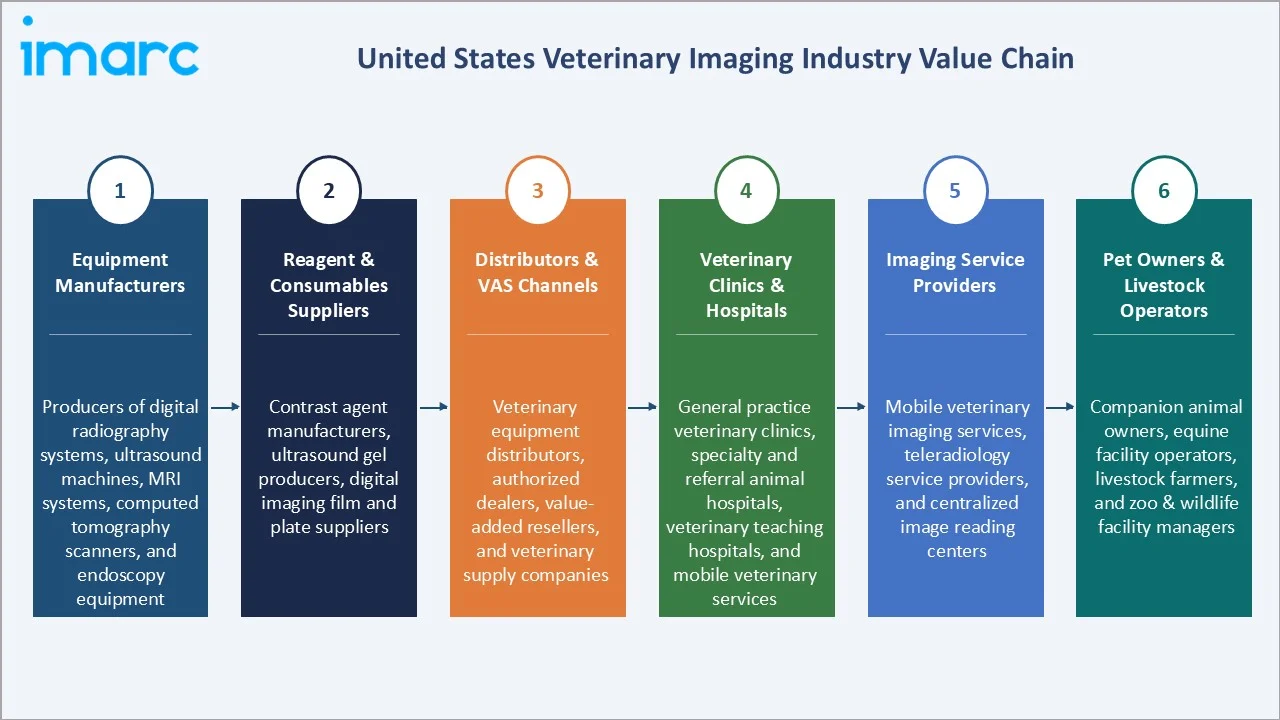
The value chain spans from imaging equipment manufacturing through reagent and consumable supply, distribution, veterinary clinic deployment, imaging service provision, and aftermarket support. The equipment manufacturing tier is dominated by global medical imaging companies that adapt human medical imaging platforms for veterinary applications, alongside dedicated veterinary imaging specialists like Esaote and Hallmarq that develop purpose-built veterinary systems.
|
Stage |
Key Players / Examples |
|
Equipment Manufacturers |
Producers of digital radiography systems, ultrasound machines, MRI systems, computed tomography scanners, and endoscopy equipment |
|
Reagent & Consumables Suppliers |
Contrast agent manufacturers, ultrasound gel producers, digital imaging film and plate suppliers |
|
Distributors & VAS Channels |
Veterinary equipment distributors, authorized dealers, value-added resellers, and veterinary supply companies |
|
Veterinary Clinics & Hospitals |
General practice veterinary clinics, specialty and referral animal hospitals, veterinary teaching hospitals, and mobile veterinary services |
|
Imaging Service Providers |
Mobile veterinary imaging services, teleradiology service providers, and centralized image reading centers |
|
Pet Owners & Livestock Operators |
Companion animal owners, equine facility operators, livestock farmers, and zoo & wildlife facility managers |
Technology Landscape in the United States Veterinary Imaging Industry
Digital Radiography
Digital radiography (DR) has replaced conventional film-based radiography as the standard of care across US veterinary practices, with wireless flat-panel detector (FPD) systems enabling rapid image acquisition without chemical processing delays. Modern veterinary DR systems deliver high-resolution 14-bit images with DICOM compliance, enabling immediate digital image transmission to PACS archives and teleradiology review platforms.
Ultrasound Technology
Veterinary ultrasound spans from portable handheld devices used in field large animal practice to high-end cart-based systems with color Doppler, strain rate imaging, and contrast-enhanced capabilities deployed in specialty hospitals. The ultrasound market is bifurcating between premium systems at USD 30,000–150,000 with full diagnostic capability and entry-level portable systems at USD 3,000–25,000, enabling basic abdominal and cardiac screening.
Cross-Sectional Imaging: CT and MRI
Computed tomography and MRI represent the fastest-growing imaging modalities in US veterinary practice by revenue growth rate, driven by the increasing expectation of specialty hospital clients for definitive diagnosis equivalent to human medical standards. Multi-slice CT scanners enable full-body imaging of companion animals in under 60 seconds under brief anesthesia, providing diagnostic information for neoplastic disease, trauma, vascular anomalies, and orthopedic assessment that cannot be obtained from radiography or ultrasound alone.
Market Segmentation Analysis
The report covers the following segments:
|
Segment Category |
Leading Segment |
Market Share |
Year |
|
Product Type |
Instruments |
64.2% |
2025 |
|
Animal Type |
Small Companion Animals |
72.8% |
2025 |
|
Application |
🔒 |
🔒 |
2025 |
|
End User |
🔒 |
🔒 |
2025 |
|
Region |
South |
33.1% |
2025 |

By Product Type
Instruments lead with a 64.2% share of the market in 2025, reflecting the capital equipment-driven revenue structure of veterinary imaging, where digital radiography systems, ultrasound machines, CT scanners, MRI systems, and endoscopy equipment represent the primary market revenue events.
To access detailed market analysis, Request Sample
Reagents at 24.7% share (2025) encompass the consumable and recurring revenue layer of veterinary imaging, including digital radiography imaging plates and processing chemistry, ultrasound transducer covers and coupling gel, CT and MRI contrast agents, and nuclear medicine radiopharmaceuticals.
By Animal Type
Small companion animals lead with a 72.8% share in 2025, with dogs and cats accounting for the vast majority of this segment’s volume. The companion animal imaging segment is characterized by high-frequency, lower-cost imaging procedures performed across a large number of general veterinary practices, combined with lower-frequency, higher-cost cross-sectional imaging at specialty referral hospitals.
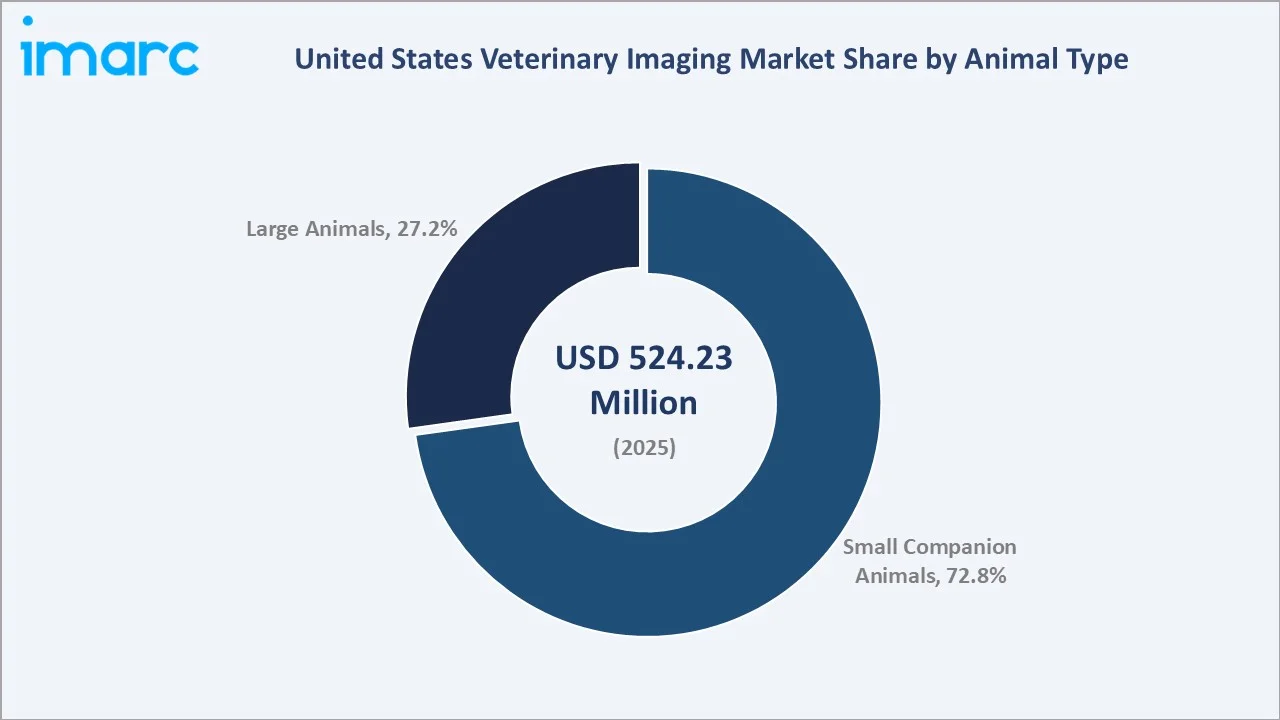
Large animals account for 27.2% share (2025), encompassing equine, bovine, and other livestock imaging. Equine imaging represents the most valuable large animal imaging segment, driven by the multi-million-dollar value of performance horses in racing, show, and breeding industries, where comprehensive imaging workups for lameness evaluation, pre-purchase examination, and injury management are standard professional practice.
Regional Market Insights
The South’s dominant position (33.1%, 2025) reflects the region’s combination of the largest US companion animal population concentration in Texas and Florida, and Texas representing the largest state equine population, and growing veterinary specialty hospital infrastructure across Dallas, Houston, Atlanta, and Miami metropolitan areas.
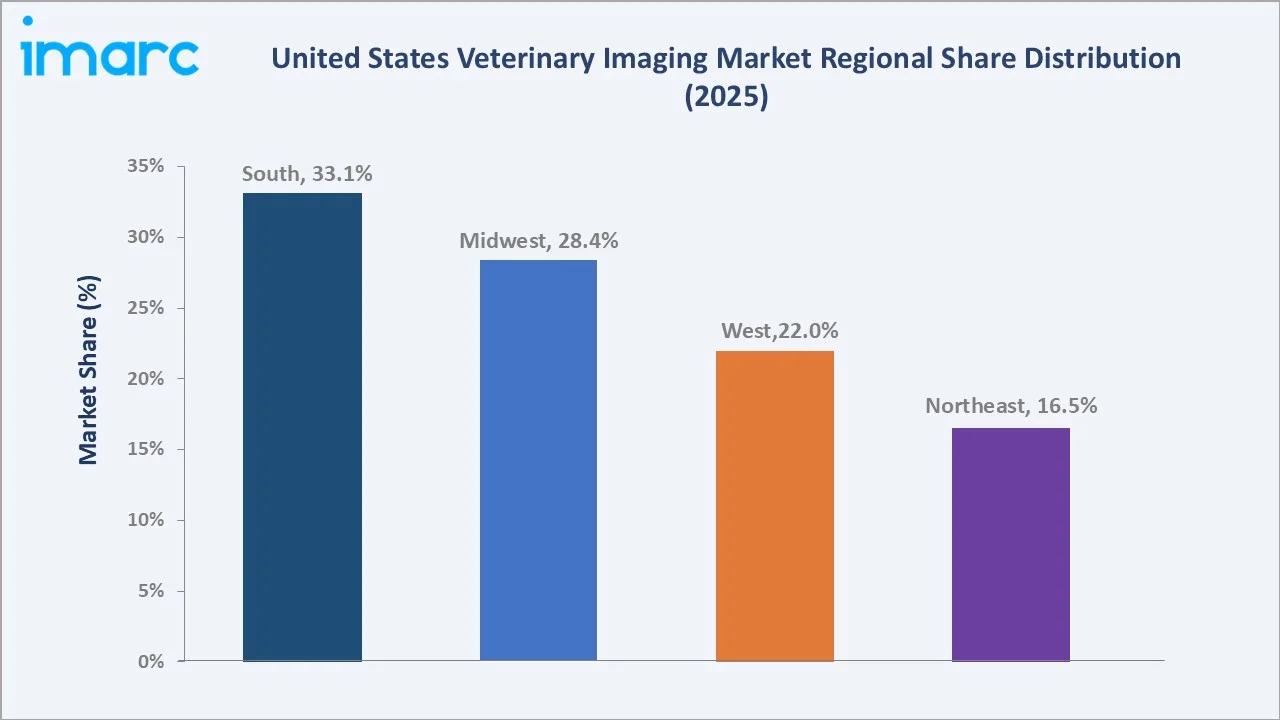
The Midwest at 28.4% benefits from the region’s dual character as a large companion animal market and the primary US livestock and equine production region, with Iowa, Nebraska, Kansas, and Missouri collectively representing major bovine, porcine, and equine populations requiring field and clinic-based imaging services.
|
Region |
Share (2025) |
Key Growth Drivers |
|
South |
33.1% |
Large companion animal population, high veterinary practice density, significant equine and livestock markets in Texas and Florida, growing veterinary specialty hospital infrastructure, and major veterinary distribution hubs |
|
Midwest |
28.4% |
Large agricultural and livestock sector requiring equine and food animal imaging, established veterinary teaching hospital infrastructure, strong companion animal veterinary care market, and significant rural large animal practice activity |
|
West |
22.0% |
High pet ownership rates and premium pet healthcare spending in California, growing companion animal specialty practice market, technology-forward veterinary practice adoption, and strong equine sector in Colorado and Oregon |
|
Northeast |
16.5% |
Concentration of veterinary teaching hospitals and academic veterinary medical centers, high-income urban pet owner population with premium healthcare spend, and established veterinary specialist practice market |
Competitive Landscape
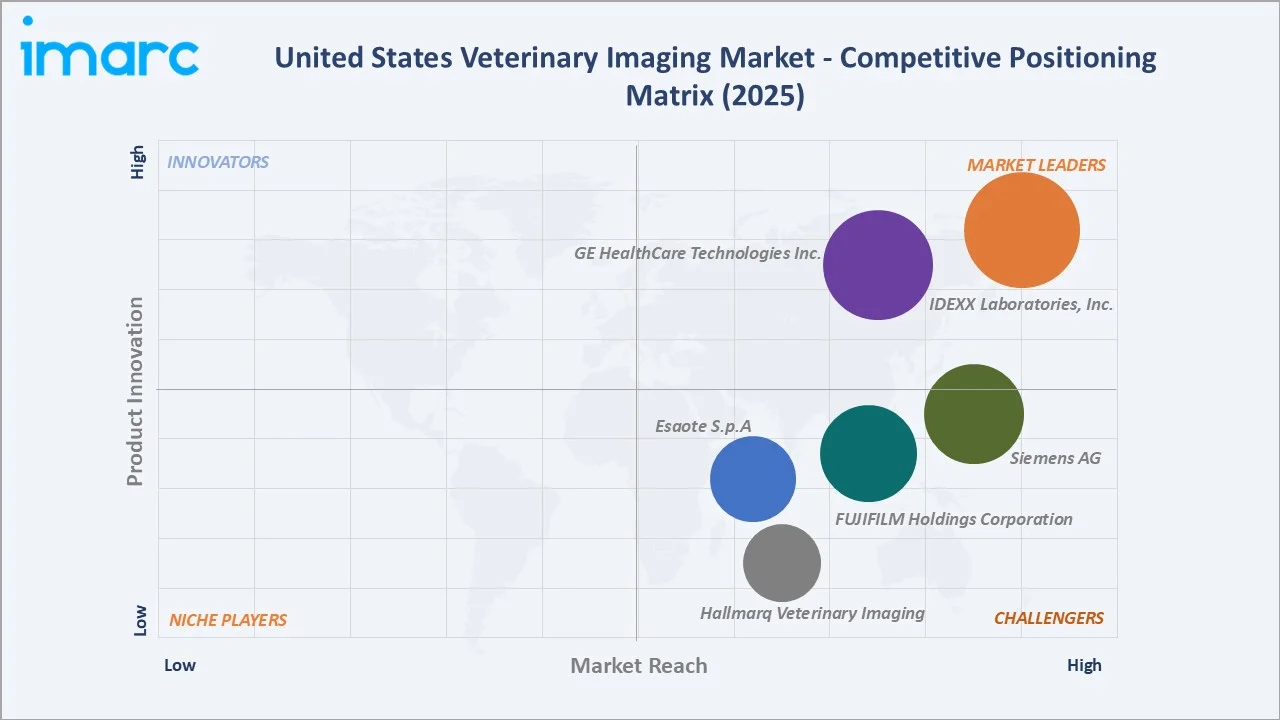
The United States veterinary imaging market exhibits moderate-to-high concentration among global medical imaging companies and dedicated veterinary imaging specialists.
|
Company Name |
Key Products |
Market Position |
Core Strength |
|
IDEXX Laboratories, Inc. |
ImageVue DR30 system, ImageVue DR50 Plus, IDEXX Web PACS Software |
Market Leader |
Deep companion animal practice relationships; AI-integrated imaging platform |
|
GE HealthCare Technologies Inc. |
Revolution ACT |
Market Leader |
Global medical imaging technology adapted for veterinary use; broad modality portfolio and strong US veterinary distribution |
|
Siemens AG |
ACUSON Freestyle |
Strong Challenger |
Advanced medical imaging technology with a growing veterinary channel; strong ultrasound and cross-sectional imaging portfolio |
|
FUJIFILM Holdings Corporation |
APERTO Lucent VET MRI, Supria Plus VET CT, VXR Veterinary X-Ray, FDR Cross, FDR ES, FDR-Flex |
Strong Challenger |
Leading digital radiography expertise, flat-panel detector technology, and strong US veterinary practice distribution |
|
Esaote S.p.A |
MyLab series, G-scan Equine, O-scan VET, Vet-MR Grande, Vet-MR Grande ELITE, Supreme vet-mr |
Challenger |
Dedicated veterinary ultrasound and MRI portfolio; strong specialty small animal imaging; field-proven equine ultrasound systems |
|
Hallmarq Veterinary Imaging |
Standing Equine MRI, Standing Equine CT, Small Animal 1.5T MRI |
Challenger |
Unique standing equine MRI technology; niche large animal imaging leadership; growing companion animal MRI portfolio |
The competitive dynamics of the US veterinary imaging market are evolving as AI integration becomes a primary differentiator, teleradiology platforms create new service revenue models, and the expansion of veterinary hospital chains creates large institutional procurement relationships that favor vendors with comprehensive multi-modality imaging portfolios and integrated PACS solutions.
Key Company Profiles
IDEXX Laboratories Inc.
IDEXX Laboratories Inc. is one of the global leaders in veterinary diagnostics and imaging, serving companion animal, livestock, and water testing markets. Its veterinary imaging portfolio is anchored by the ImageVue digital radiography system family, integrated with IDEXX’s PACS cloud platform and AI analysis tools, creating a comprehensive imaging ecosystem.
- Product Portfolio: ImageVue DR30 system, ImageVue DR50 Plus (AI-powered digital radiography launched January 2026), and IDEXX Web PACS Software
- Recent Developments: In January 2026, IDEXX Laboratories Inc. launched the ImageVue DR50 Plus digital imaging system for veterinary practices, offering high-definition radiography at its lowest radiation dose to date. The system improves image clarity, reduces retakes, and integrates with IDEXX software and telemedicine workflows.
- Strategic Focus: AI-native veterinary imaging platform development; cloud PACS expansion and teleradiology service growth; integration of imaging with broader IDEXX diagnostic and practice management ecosystem; US companion animal practice market deepening.
GE HealthCare Technologies Inc.
GE HealthCare Technologies Inc. is one of the global medical imaging technology leaders with a significant veterinary imaging presence through its Logiq ultrasound series and Venue point-of-care ultrasound systems adapted for veterinary use, distributed through veterinary equipment specialist channels and its direct sales force across the US.
- Product Portfolio: Logiq E10 and Logiq P9 veterinary ultrasound systems, Venue ultrasound for point-of-care applications, and OEC Elite.
- Recent Developments: In February 2026, GE HealthCare Technologies Inc. reported Q4 2025 revenue of USD 5.7 billion, up 7.1%, with adjusted EPS of USD 1.44. For FY2025, revenue rose 4.8% to USD 20.6 billion, while adjusted EPS reached USD 4.59.
- Strategic Focus: Premium ultrasound market leadership in companion animal specialty practice; mobile fluoroscopy for equine orthopedic applications; CT platform adaptation for veterinary teaching hospitals and large specialty centers.
Market Concentration Analysis
The US veterinary imaging market exhibits moderate-to-high concentration at the premium instrument tier, with top players collectively accounting for approximately 55–65% of instrument market revenues. The specialist veterinary imaging segment serves specific modality and application niches with differentiated competitive positions.
The veterinary hospital chain consolidation trend is creating larger institutional procurement entities that negotiate volume pricing agreements with equipment manufacturers. This consolidation is benefiting manufacturers with comprehensive multi-modality imaging portfolios and integrated PACS solutions over single-modality specialists, driving competitive pressure toward more comprehensive product offerings.
Investment & Growth Opportunities
Fastest Growing Segments
AI-integrated digital imaging platforms (~8% CAGR), point-of-care and portable ultrasound (~9% annual growth), veterinary CT at large general and specialty practices (~7% CAGR), and cloud PACS and teleradiology subscription services represent the highest-growth investment vectors within the US veterinary imaging market through 2034. The companion animal oncology imaging sub-segment, driven by pet cancer diagnosis rates equivalent to human rates, is particularly high-value.
Technology Investment Trends
- AI diagnostic imaging algorithm development is attracting significant venture and corporate R&D investment, with multiple startups and established imaging companies investing in veterinary-specific AI radiology tools that can detect orthopedic abnormalities, thoracic pathology, and abdominal organ disease from standard digital radiographs and ultrasound images.
- Portable and handheld ultrasound platform development for veterinary applications is attracting investment as the technology cost curve enables sub-USD-10,000 systems competitive with established cart-based products, dramatically expanding the addressable market for ultrasound instruments in veterinary practice.
- Cloud PACS and veterinary practice imaging software platform investment is growing as software-as-a-service models in veterinary imaging create recurring revenue streams with better retention economics than capital equipment sales, attracting interest from both imaging equipment manufacturers and practice management software companies.
Future Market Outlook (2026-2034)
The United States veterinary imaging market is positioned for sustained strong growth through 2034. From USD 524.2 Million in 2025 and an estimated USD 554.2 Million in 2026, the market is projected to reach USD 877.4 Million by 2034, representing total incremental value creation of USD 353.2 Million at a CAGR of 5.71%.
This growth is underpinned by the pet humanization megatrend that is progressively elevating companion animal healthcare standards toward human medical equivalents, the expanding pet insurance market that is reducing the cost barrier to imaging procedure authorization, and the AI integration that is extending imaging capability from specialist referral centers to the broader general practice market.
The technology composition of the market will continue to shift toward AI-integrated, cloud-connected imaging platforms, with traditional capital equipment sales increasingly bundled with recurring software subscriptions, teleradiology service access, and data analytics platforms. This transition toward software and service revenue will improve the revenue visibility and customer retention characteristics of leading veterinary imaging companies, supporting premium business valuations and continued investment in product innovation.
Research Methodology
Primary Research
Primary research comprised structured interviews with over 65 industry participants in 2024–2025, including veterinary imaging equipment manufacturers, US veterinary practice owners and hospital administrators, veterinary radiologists and imaging specialists, veterinary equipment distributors, pet insurance industry executives, and veterinary practice management consultants. Expert input validated market sizing, segment growth rates, and regional demand estimates.
Secondary Research
Secondary research encompassed veterinary imaging company annual reports and investor presentations, American Pet Products Association consumer expenditure surveys, American Veterinary Medical Association economic reports, Bureau of Labor Statistics veterinarian workforce data, American College of Veterinary Radiology member statistics, pet insurance industry association data, and industry publications including Veterinary Practice News, Today’s Veterinary Practice, and Journal of Veterinary Internal Medicine.
Forecasting Models
Market size estimations were derived using top-down and bottom-up forecasting, incorporating US veterinary practice count and imaging capability penetration rate data, average imaging equipment revenue per practice by modality and animal type, end-user segment capital expenditure cycle analysis, and companion animal population and veterinary visit frequency projections.
United States Veterinary Imaging Market Report Coverage:
| Report Features | Details |
|---|---|
| Base Year of the Analysis | 2025 |
| Historical Period | 2020-2025 |
| Forecast Period | 2026-2034 |
| Units | Million USD |
| Scope of the Report | Exploration of Historical and Forecast Trends, Industry Catalysts and Challenges, Segment-Wise Historical and Predictive Market Assessment:
|
| Product Types Covered | Instruments, Reagents, Others |
| Animal Types Covered | Small Companion Animals, Large Animals |
| Applications Covered | Orthopedics and Traumatology, Oncology, Cardiology, Neurology, Others |
| End Users Covered | Hospitals and Clinics, Reference Laboratories, Others |
| Regions Covered | Northeast, Midwest, South, West |
| Companies Covered | IDEXX Laboratories, Inc., GE HealthCare Technologies Inc., Siemens AG, FUJIFILM Holdings Corporation, Esaote S.p.A, Hallmarq Veterinary Imaging, etc. |
| Customization Scope | 10% Free Customization |
| Post-Sale Analyst Support | 10-12 Weeks |
| Delivery Format | PDF and Excel through Email (We can also provide the editable version of the report in PPT/Word format on special request) |
Key Benefits for Stakeholders:
- IMARC’s industry report offers a comprehensive quantitative analysis of various market segments, historical and current market trends, market forecasts, and dynamics of the United States veterinary imaging market from 2020-2034.
- The research report provides the latest information on the market drivers, challenges, and opportunities in the United States veterinary imaging market.
- Porter's five forces analysis assist stakeholders in assessing the impact of new entrants, competitive rivalry, supplier organization, buyer organization, and the threat of substitution. It helps stakeholders to analyze the level of competition within the United States veterinary imaging industry and its attractiveness.
- Competitive landscape allows stakeholders to understand their competitive environment and provides an insight into the current positions of key players in the market.
Frequently Asked Questions About the United States Veterinary Imaging Market Report
The United States veterinary imaging market size is estimated at USD 554.2 Million in 2026 and is projected to reach USD 877.4 Million by 2034.
The market is expected to grow at a CAGR of 5.71% during 2026-2034, driven by pet humanization and rising healthcare spending, companion animal population growth, AI imaging adoption, and veterinary specialty practice expansion.
The South leads with a 33.1% share in 2025, driven by the region’s large companion animal population, significant equine and livestock markets in Texas and Florida, growing veterinary specialty hospital infrastructure, and major veterinary equipment distribution activity.
Instruments lead with a 64.2% share in 2025, reflecting the capital equipment-driven revenue structure of veterinary imaging across digital radiography systems, ultrasound machines, CT scanners, MRI systems, and endoscopy equipment deployed across veterinary practices.
Small companion animals lead with a 72.8% share in 2025, reflecting the US market’s primary demand driver in companion animal healthcare, where dogs and cats receive premium veterinary imaging care driven by the pet humanization trend.
Some of the key players include IDEXX Laboratories, Inc., GE HealthCare Technologies Inc., Siemens AG, FUJIFILM Holdings Corporation, Esaote S.p.A, and Hallmarq Veterinary Imaging.
Key drivers include pet humanization, elevating companion animal healthcare standards, growing companion animal populations, AI-assisted imaging, democratizing advanced diagnostics, and veterinary specialty practice expansion, creating centers of imaging excellence.
Key opportunities include AI-integrated digital imaging platform development, point-of-care portable ultrasound market expansion, veterinary CT adoption at large general practices, and companion animal oncology imaging as a high-value specialist sub-segment.
Need more help?
- Speak to our experienced analysts for insights on the current market scenarios.
- Include additional segments and countries to customize the report as per your requirement.
- Gain an unparalleled competitive advantage in your domain by understanding how to utilize the report and positively impacting your operations and revenue.
- For further assistance, please connect with our analysts.
 Request Customization
 Speak to an Analyst
 Request Brochure
 Inquire Before Buying
Benefits of Customization
- Personalize this research
- Triangulate with your data
- Get data as per your format and definition
- Gain a deeper dive into a specific application, geography, customer, or competitor
- Any level of personalization
Get in Touch With Us
UNITED STATES
Phone: +1-201-971-6302
INDIA
Phone: +91-120-433-0800
UNITED KINGDOM
Phone: +44-753-714-6104
Email: [email protected]
Client Testimonials




.webp)




.webp)













Related Reports

Choose your plan
*Please note that the prices mentioned below are starting prices for each bundle type. Kindly contact our team for further details.*
Single User License
- 1 User License, Access on 2 Devices
- PDF Report + Excel Dataset (Password Protected)
- Lifetime Access
- No Printing Rights
- 10% Free Report Customization
- 10–12 Weeks of Analyst Support
Five User License
- Access for 5 Users, 2 Devices per User
- PDF Report + Excel Dataset (Password Protected)
- Lifetime Access
- Dedicated Account Manager
- 12–14 Weeks of Analyst Support
- No Printing Rights
- 15% Free Report Customization
- 25% Discount on Your Next Purchase
Corporate User License
- Unlimited User Access (Within Your Organization)
- PDF Report + Excel Dataset
- Lifetime Access
- Dedicated Account Manager
- 14–20 Weeks of Analyst Support
- No Printing Rights
- 20% Free Report Customization
- 30% Discount on Your Next Purchase
Essential Insights
What's included:
3 reports
- Lifetime Access
- PDF Reports
- Excel Datasets
- 2 Weeks of Free Analyst Support
- 2 User Licenses
- Access on 2 Devices
- Printing Rights
- Complimentary PowerPoint (PPT) Version
- Complimentary License Upgrade
Professional Access
What's included:
5 reports
- Lifetime Access
- PDF Reports
- Excel Datasets
- 8 Weeks of Free Analyst Support
- 2 User Licenses
- Access on 2 Devices
- Printing Rights
- Complimentary PowerPoint (PPT) Version
- Complimentary License Upgrade
Business Advantage
What's included:
8 reports
- Lifetime Access
- PDF Reports
- Excel Datasets
- 14 Weeks of Free Analyst Support
- 2 User Licenses
- Access on 2 Devices
- Printing Rights
- Complimentary PowerPoint (PPT) Version
- Complimentary License Upgrade
Enterprise Intelligence
What's included:
10 reports
- Lifetime Access
- PDF Reports
- Excel Datasets
- 20 Weeks of Free Analyst Support
- 2 User Licenses
- Access on 2 Devices
- Printing Rights
- Complimentary PowerPoint (PPT) Version
- Complimentary License Upgrade