
United States Water Purifier Market Size, Share, Trends and Forecast by Technology Type, Distribution Channel, End User, and Region, 2026-2034
United States Water Purifier Market Summary:
The United States water purifier market grew from USD 7.30 Billion in 2025 to USD 7.63 Billion in 2026 and is projected to reach USD 10.81 Billion by 2034, growing at a compound annual growth rate of 4.45% from 2026-2034.
The United States water purifier market is seeing continued growth due to increasing health awareness among consumers and greater awareness about waterborne contaminants. Concerns over municipal water quality and the presence of toxic substances in tap water are driving households towards better means of purification. Environmental sustainability and reduced reliance on single-use plastic bottles further accelerate the process of market adoption across different consumer segments in the country.
Key Takeaways and Insights:
- By Technology Type: RO purifiers dominate the market with a share of 44% in 2025, driven by superior filtration efficiency in removing dissolved solids, heavy metals, and microorganisms from various water sources effectively.
- By Distribution Channel: Retail stores lead the market with a share of 61% in 2025, owing to consumers’ strong preference for in-person product evaluation and immediate purchase availability across nationwide retail networks.
- By End User: Household represents the largest segment with a market share of 65% in 2025, propelled by increasing residential demand for safe drinking water and growing family health consciousness across American homes.
- By Region: South dominates the market with a share of 30% in 2025, attributed to higher population density, elevated water quality awareness, and growing suburban development driving purification system installations.
- Key Players: The United States water purifier market features a moderately consolidated competitive landscape characterized by established multinational corporations and specialized domestic manufacturers competing across premium, mid-range, and value segments through continuous product innovation and distribution expansion.
The United States water purifier market continues to evolve as technological advancements and shifting consumer expectations reshape product offerings. In December 2024, Ideal Living unveiled the Wi-Fi and app-compatible AquaTru Carafe Smart, a connected water purifier that lets users monitor water quality and filter life in real time via a smartphone app, illustrating how even traditional purification brands are embracing smart, IoT-linked features. The integration of smart features and IoT-enabled monitoring capabilities has transformed traditional purification systems into connected home appliances. Growing regulatory scrutiny on emerging contaminants has heightened consumer awareness about the limitations of conventional municipal treatment systems. The market benefits from strong retail infrastructure and expanding e-commerce penetration, enabling widespread product accessibility. Favorable demographic trends, including suburban expansion and aging housing infrastructure with outdated plumbing systems, contribute to sustained demand for residential water treatment solutions across the country.
United States Water Purifier Market Trends:
Rising Adoption of Smart Water Purification Systems
The market witnesses accelerated adoption of intelligent purification systems equipped with digital monitoring capabilities and mobile application connectivity. For example, in December 2025, Culligan International announced a strategic partnership with AmeriWater to deliver advanced water purification solutions, including systems with remote monitoring and analytics, to healthcare and commercial users in North America, reflecting how major purification brands are expanding connected and data-driven offerings beyond residential applications. These advanced units feature real-time water quality monitoring, automated filter replacement alerts, and consumption tracking functionalities that appeal to tech-savvy consumers seeking convenience and transparency.
Growing Preference for Eco-Friendly Filtration Solutions
Environmental consciousness is reshaping purchasing decisions as consumers seek sustainable alternatives to bottled water consumption. Water purifiers are increasingly marketed as eco-friendly solutions that reduce plastic waste and carbon footprint. According to reports, BRITA products are helping to replace 30% single-use plastic bottles and reduce CO₂ emissions globally, demonstrating how key players are aligning product development with environmental goals. Manufacturers respond by developing products with recyclable components and energy-efficient operations.
Expansion of Multi-Stage Purification Technologies
Demand for comprehensive water treatment solutions spurs innovation in multi-stage purification systems combining various filtration technologies. For example, in July 2025, U.S.-based Multipure launched its Aquapremier water purification system featuring advanced Nanomesh™ filtration, a next-generation two-stage technology certified to reduce PFAS, pharmaceuticals, microplastics, bacteria, and viruses, underscoring how domestic players are advancing multi-stage systems to address growing health and safety concerns. These integrated systems leverage complementary mechanisms including sediment filtration, activated carbon adsorption, and membrane separation to address diverse contamination challenges effectively.
Market Outlook 2026-2034:
The market for water purifiers in the United States is showcasing optimistic growth trends, and awareness about water purity is escalating to great heights. This can largely be attributed to increasing investments being made by governments on effective water treatment systems, making it a major contributor to fuel the growth of this market during the forecast period. Innovations aiming to make filtration processes more effective and environment-friendly are key factors to consider for vendors operating in this market. The market generated a revenue of USD 7.30 Billion in 2025, which is expected to reach USD 7.63 Billion in 2026 and further grow to USD 10.81 Billion by 2034, at a compound annual growth rate (CAGR) of 4.45% during 2026-2034.
United States Water Purifier Market Report Segmentation:
|
Segment Category |
Leading Segment |
Market Share |
|
Technology Type |
RO Purifiers |
44% |
|
Distribution Channel |
Retail Stores |
61% |
|
End User |
Household |
65% |
|
Region |
South |
30% |
Technology Type Insights:
To get detailed segment analysis of this market, Request Sample
- Gravity Purifiers
- RO Purifiers
- UV Purifiers
- Sediment Filter
- Water Softener
- Others
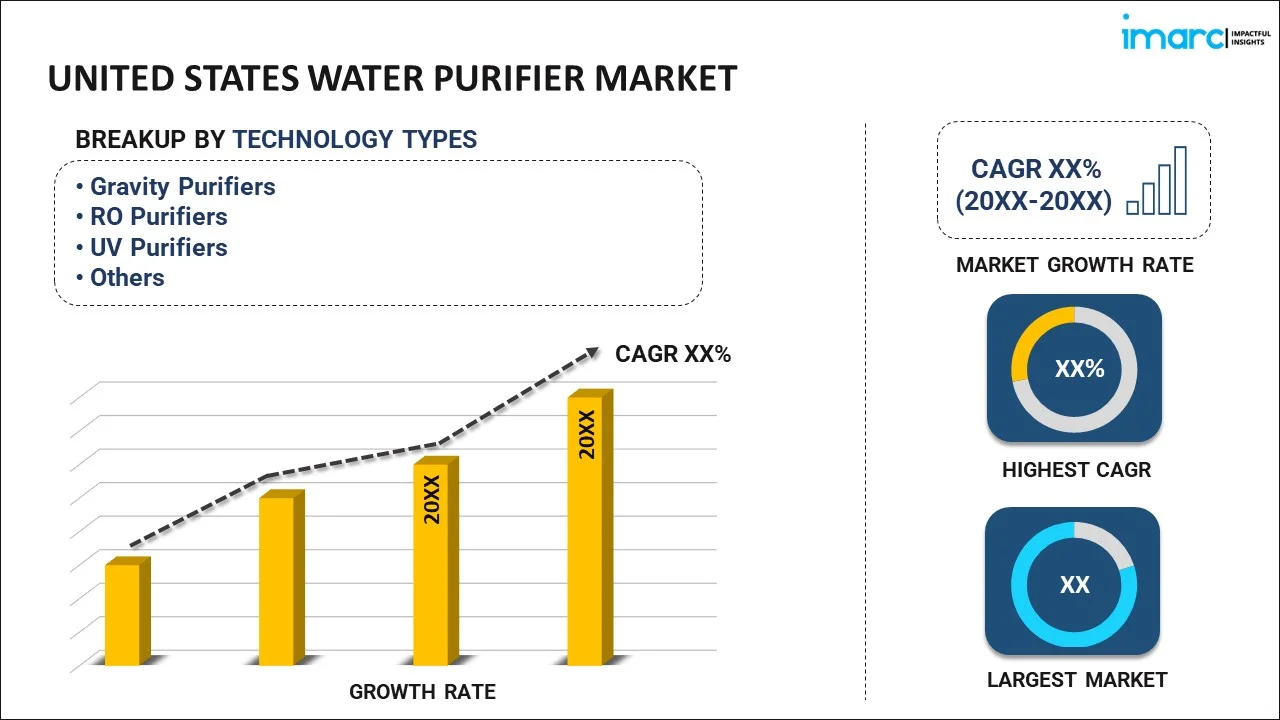
The RO purifiers dominates with a market share of 44% of the total United States water purifier market in 2025.
Reverse osmosis purifiers have established themselves as the preferred technology choice for American consumers seeking comprehensive water purification solutions. These systems effectively address multiple contamination concerns by forcing water through semi-permeable membranes that remove dissolved solids, heavy metals, pesticides, and various organic compounds from source water. The technology provides consistently high-quality purified water, ideal for drinking, cooking, and various household uses. Growing consumer confidence in membrane-based filtration continues to drive widespread residential adoption as households prioritize water safety and quality improvement.
The dominance of RO purifiers reflects growing consumer awareness about the limitations of conventional filtration methods in addressing complex water quality issues. As concerns about emerging contaminants gain prominence, households increasingly recognize the value of membrane-based purification in providing thorough protection against diverse pollutants present in municipal water supplies. The advanced filtration capability of reverse osmosis systems ensures effective removal of microscopic impurities that standard filters cannot capture, making them essential for health-conscious American families.
Distribution Channel Insights:
- Retail Stores
- Direct Sales
- Online
The retail stores lead with a share of 61% of the total United States water purifier market in 2025.
Retail stores maintain dominant position through their ability to provide tangible product experiences and immediate purchasing convenience to consumers. For example, in February 2024, U.S.-based Amway launched a redesigned eSpring water treatment system featuring advanced UV-C LED purification and integrated digital monitoring through the Amway Healthy Home App, a move that reinforces how major brands are using retail and direct-sales channels to showcase cutting-edge purification technology to American shoppers. They benefit from hands-on evaluation opportunities, allowing them to assess product features, compare specifications, and receive personalized recommendations from trained sales personnel at physical locations.
The retail channel strength stems from the consultative nature of water purifier purchases where consumers require guidance in selecting appropriate solutions for specific water quality conditions. Brick-and-mortar locations enable retailers to demonstrate product functionality, explain maintenance requirements, and facilitate installation services enhancing overall customer satisfaction. Additionally, physical stores offer immediate product availability and after-sales support that online channels cannot replicate effectively. The personalized shopping experience builds consumer trust and confidence in making informed purchasing decisions for their homes.

End User Insights:
- Industrial
- Commercial
- Household
The household dominates with a market share of 65% of the total United States water purifier market in 2025.
The household segment commands the largest market share as residential consumers increasingly prioritize water quality within their homes. Growing families demonstrate particular interest in water purification as they seek to protect children from potential contaminants present in tap water supplies across various municipalities nationwide. Health-conscious homeowners view purification systems as essential investments for safeguarding family wellbeing and ensuring access to clean drinking water. Rising awareness about waterborne health risks continues driving adoption rates among diverse residential demographics seeking reliable home-based treatment solutions.
Residential adoption patterns reflect diverse consumer motivations ranging from health protection to taste improvement and appliance preservation. Many households report dissatisfaction with municipal water taste due to chlorine treatment, driving demand for filtration systems that enhance palatability while extending lifespan of water-dependent household appliances. Purified water prevents mineral buildup in coffee makers, kettles, and washing machines, reducing maintenance costs and replacement frequency. These practical benefits complement health advantages, creating compelling value propositions that resonate with budget-conscious American consumers seeking comprehensive household solutions.
Regional Insights:
To get detailed regional analysis of this market, Request Sample
- Northeast
- Midwest
- South
- West
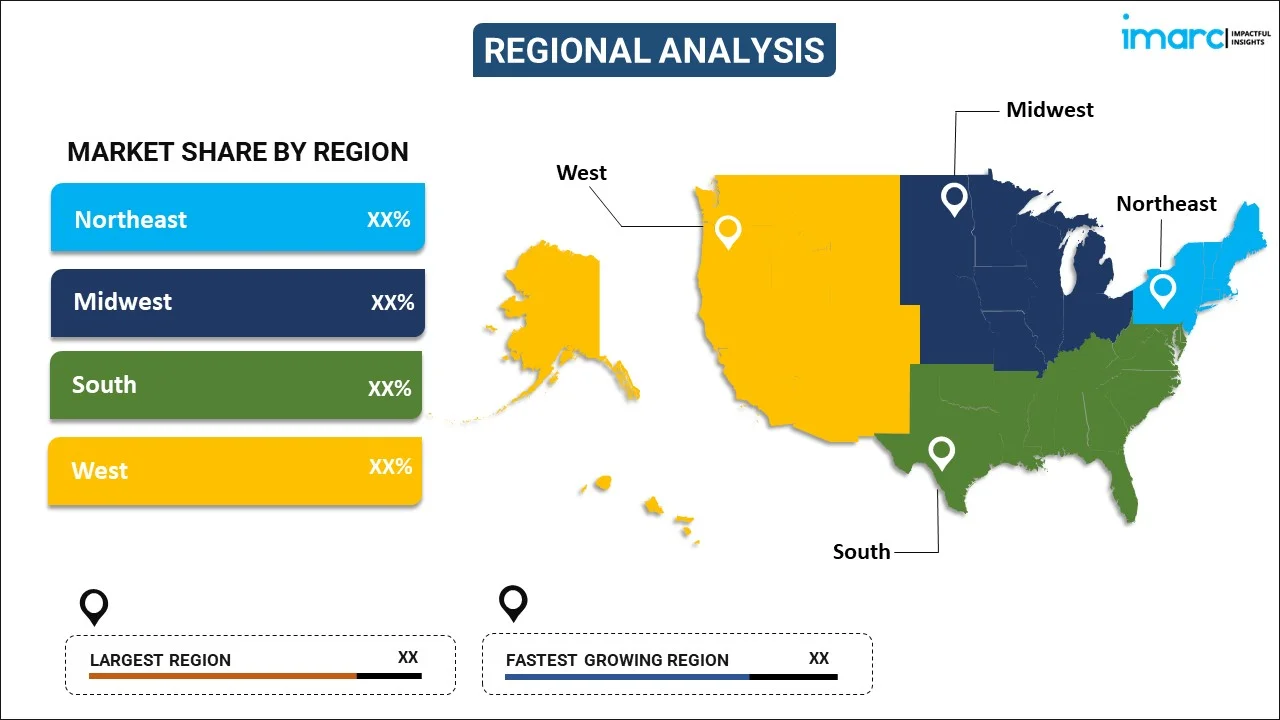
South exhibits a clear dominance with a 30% share of the total United States water purifier market in 2025.
The Southern region's market leadership reflects substantial population base and unique water quality characteristics driving purification demand. States throughout the region face diverse water challenges including hard water conditions, aging distribution infrastructure, and periodic contamination concerns motivating consumer investment in treatment solutions. Rapid suburban development and new residential construction projects further accelerate demand for water purification systems in newly built homes. The warm climate increases daily water consumption rates, reinforcing the value proposition of home-based purification systems for Southern households.
Southern consumers demonstrate heightened awareness regarding water quality issues following publicized contamination incidents across various municipalities in the region. This awareness translates into proactive purchasing behavior as households seek protection against potential infrastructure failures and emerging contaminant threats affecting drinking water. Local media coverage and community discussions about water safety have amplified consumer concerns, driving increased interest in reliable purification solutions. The region's growing middle-class population with rising disposable incomes further supports sustained investment in premium water treatment technologies.
Market Dynamics:
Growth Drivers:
Why is the United States Water Purifier Market Growing?
Increasing Consumer Awareness About Water Contamination Risks
The United States water purifier market experiences substantial growth driven by escalating consumer awareness regarding potential contaminants present in drinking water supplies. Widespread media coverage of water quality incidents, such as the prolonged Flint, Michigan lead contamination crisis, which sparked national discussions about aging infrastructure and toxic metals in tap water and recently culminated in the city replacing lead pipes, has educated the public about pollutants, including heavy metals, chemical compounds, and microbial organisms that may compromise tap water safety. This heightened awareness has transformed consumer attitudes, positioning water purifiers as essential household appliances rather than optional conveniences. Educational initiatives from environmental organizations and public health agencies further amplify understanding of waterborne health risks, encouraging proactive investment in home-based water treatment solutions across diverse demographic segments.
Stringent Regulatory Standards and Infrastructure Concerns
Growing regulatory attention on drinking water quality standards propels market expansion as consumers become informed about limitations of existing municipal treatment systems In April 2024, the U.S. Environmental Protection Agency (EPA) finalized the first-ever National Primary Drinking Water Regulation for multiple per- and polyfluoroalkyl substances (PFAS), setting legally enforceable limits on contaminants to protect public health and requiring public water systems to monitor and reduce these “forever chemicals. These infrastructure challenges motivate households to implement point-of-use purification as supplementary protection, ensuring water quality at consumption point regardless of distribution system conditions. Concerns about pipe degradation, secondary contamination, and treatment system limitations drive consumers toward reliable home-based water purification solutions that provide additional safety assurance for families.
Health and Wellness Lifestyle Trends
The broader health and wellness movement pervading American consumer culture significantly contributes to water purifier market growth across the country. Health-conscious consumers increasingly scrutinize every aspect of their dietary intake, including drinking water quality, as part of comprehensive wellness routines. In a 2025 national survey, 87% of U.S. adults reported being at least somewhat concerned about the quality of unfiltered tap water, with 80% saying cleaner, filtered water is key to a healthier life, reflecting how hydration quality has become a mainstream health priority. The connection between hydration quality and overall health outcomes has gained mainstream recognition, driving demand for purification solutions that remove potentially harmful substances from drinking water. Fitness enthusiasts, families with young children, and aging populations demonstrate particularly strong propensity for water treatment investments, viewing purification as fundamental to their health maintenance strategies and daily wellness practices.
Market Restraints:
What Challenges the United States Water Purifier Market is Facing?
High Initial Investment and Ongoing Maintenance Costs
The substantial upfront investment required for advanced water purification systems presents significant adoption barrier for price-sensitive consumer segments. Premium reverse osmosis and multi-stage filtration systems command considerable purchase prices that may exceed household budget constraints. Additionally, recurring filter replacement expenses and periodic maintenance requirements contribute to total ownership costs that deter potential buyers.
Consumer Awareness Gaps in Certain Demographics
Despite overall market growth, significant consumer segments remain inadequately informed about water quality concerns and purification benefits. Rural communities and lower-income households often lack access to water quality information that would motivate treatment investments. This awareness gap limits market penetration in potentially underserved demographics where water quality challenges remain prevalent.
Competition from Alternative Water Sources
The widespread availability of bottled water and convenient water delivery services creates competitive pressure on water purifier market adoption. Some consumers perceive bottled alternatives as simpler solutions avoiding installation complexity and maintenance responsibilities associated with purification systems. Established distribution infrastructure for bottled water products provides readily accessible alternatives competing for consumer spending.
Competitive Landscape:
The United States water purifier market exhibits a moderately consolidated competitive structure with established multinational corporations commanding significant market presence alongside specialized domestic manufacturers serving niche segments. Market participants employ diverse competitive strategies including continuous product innovation, strategic brand positioning, comprehensive distribution network development, and service excellence to capture and retain market share effectively. The competitive environment encourages technological advancement as manufacturers invest substantially in research and development initiatives to introduce differentiated features addressing evolving consumer preferences. Strategic acquisitions have emerged as prominent growth mechanisms enabling entities to expand product portfolios and geographic reach while accessing complementary technologies and distribution capabilities. Premium segment competition focuses on advanced filtration technologies and smart connectivity features while mid-range competition emphasizes value proposition balancing performance with affordability.
Recent Developments:
- In September 2025, Chinese water tech company Viomi Technology launched its MASTER M1 AI alkaline mineral water purifier on Amazon U.S., featuring AI-enabled real-time water quality and filter monitoring, a 9-stage RO system, and mineral enhancement for cleaner, healthier water. Filters can last up to four years, boosting appeal to smart home consumers.
United States Water Purifier Market Report Scope:
| Report Features | Details |
|---|---|
| Base Year of the Analysis | 2025 |
| Historical Period | 2020-2025 |
| Forecast Period | 2026-2034 |
| Units | Billion USD |
| Scope of the Report | Exploration of Historical and Forecast Trends, Industry Catalysts and Challenges, Segment-Wise Historical and Predictive Market Assessment:
|
| Technology Types Covered | Gravity Purifiers, RO Purifiers, UV Purifiers, Sediment Filter, Water Softener, Others |
| Distribution Channels Covered | Retail Stores, Direct Sales, Online |
| End Users Covered | Industrial, Commercial, Household |
| Regions Covered | Northeast, Midwest, South, West |
| Customization Scope | 10% Free Customization |
| Post-Sale Analyst Support | 10-12 Weeks |
| Delivery Format | PDF and Excel through Email (We can also provide the editable version of the report in PPT/Word format on special request) |
Frequently Asked Questions About the United States Water Purifier Market Report
The United States water purifier market size increased from USD 7.30 Billion in 2025 to USD 7.63 Billion in 2026.
The United States water purifier market is expected to grow at a compound annual growth rate of 4.45% from 2026-2034 to reach USD 10.81 Billion by 2034.
RO purifiers dominated the technology type segment with 44% market share, owing to superior efficiency in removing dissolved contaminants and providing comprehensive purification through advanced membrane filtration technology.
Key factors driving the United States water purifier market include increasing consumer awareness about water contamination risks, stringent regulatory standards highlighting infrastructure limitations, and growing health and wellness lifestyle trends promoting purified water consumption.
Major challenges include high initial investment and ongoing maintenance costs, consumer awareness gaps in certain demographics, competition from bottled water alternatives, limited product differentiation awareness, and installation complexity concerns among first-time buyers.
Need more help?
- Speak to our experienced analysts for insights on the current market scenarios.
- Include additional segments and countries to customize the report as per your requirement.
- Gain an unparalleled competitive advantage in your domain by understanding how to utilize the report and positively impacting your operations and revenue.
- For further assistance, please connect with our analysts.
 Request Customization
 Speak to an Analyst
 Request Brochure
 Inquire Before Buying
Benefits of Customization
- Personalize this research
- Triangulate with your data
- Get data as per your format and definition
- Gain a deeper dive into a specific application, geography, customer, or competitor
- Any level of personalization
Get in Touch With Us
UNITED STATES
Phone: +1-201-971-6302
INDIA
Phone: +91-120-433-0800
UNITED KINGDOM
Phone: +44-753-714-6104
Email: [email protected]
Client Testimonials




.webp)




.webp)













Related Reports

Choose your plan
*Please note that the prices mentioned below are starting prices for each bundle type. Kindly contact our team for further details.*
Single User License
- 1 User License, Access on 2 Devices
- PDF Report + Excel Dataset (Password Protected)
- Lifetime Access
- No Printing Rights
- 10% Free Report Customization
- 10–12 Weeks of Analyst Support
Five User License
- Access for 5 Users, 2 Devices per User
- PDF Report + Excel Dataset (Password Protected)
- Lifetime Access
- Dedicated Account Manager
- 12–14 Weeks of Analyst Support
- No Printing Rights
- 15% Free Report Customization
- 25% Discount on Your Next Purchase
Corporate User License
- Unlimited User Access (Within Your Organization)
- PDF Report + Excel Dataset
- Lifetime Access
- Dedicated Account Manager
- 14–20 Weeks of Analyst Support
- No Printing Rights
- 20% Free Report Customization
- 30% Discount on Your Next Purchase
Essential Insights
What's included:
3 reports
- Lifetime Access
- PDF Reports
- Excel Datasets
- 2 Weeks of Free Analyst Support
- 2 User Licenses
- Access on 2 Devices
- Printing Rights
- Complimentary PowerPoint (PPT) Version
- Complimentary License Upgrade
Professional Access
What's included:
5 reports
- Lifetime Access
- PDF Reports
- Excel Datasets
- 8 Weeks of Free Analyst Support
- 2 User Licenses
- Access on 2 Devices
- Printing Rights
- Complimentary PowerPoint (PPT) Version
- Complimentary License Upgrade
Business Advantage
What's included:
8 reports
- Lifetime Access
- PDF Reports
- Excel Datasets
- 14 Weeks of Free Analyst Support
- 2 User Licenses
- Access on 2 Devices
- Printing Rights
- Complimentary PowerPoint (PPT) Version
- Complimentary License Upgrade
Enterprise Intelligence
What's included:
10 reports
- Lifetime Access
- PDF Reports
- Excel Datasets
- 20 Weeks of Free Analyst Support
- 2 User Licenses
- Access on 2 Devices
- Printing Rights
- Complimentary PowerPoint (PPT) Version
- Complimentary License Upgrade