
UV-Curable Adhesives Market Size, Share, Trends and Forecast by Resin Type, Substrate, End User, and Region, 2026-2034
UV-Curable Adhesives Market Size, Share, Trends & Forecast (2026-2034)
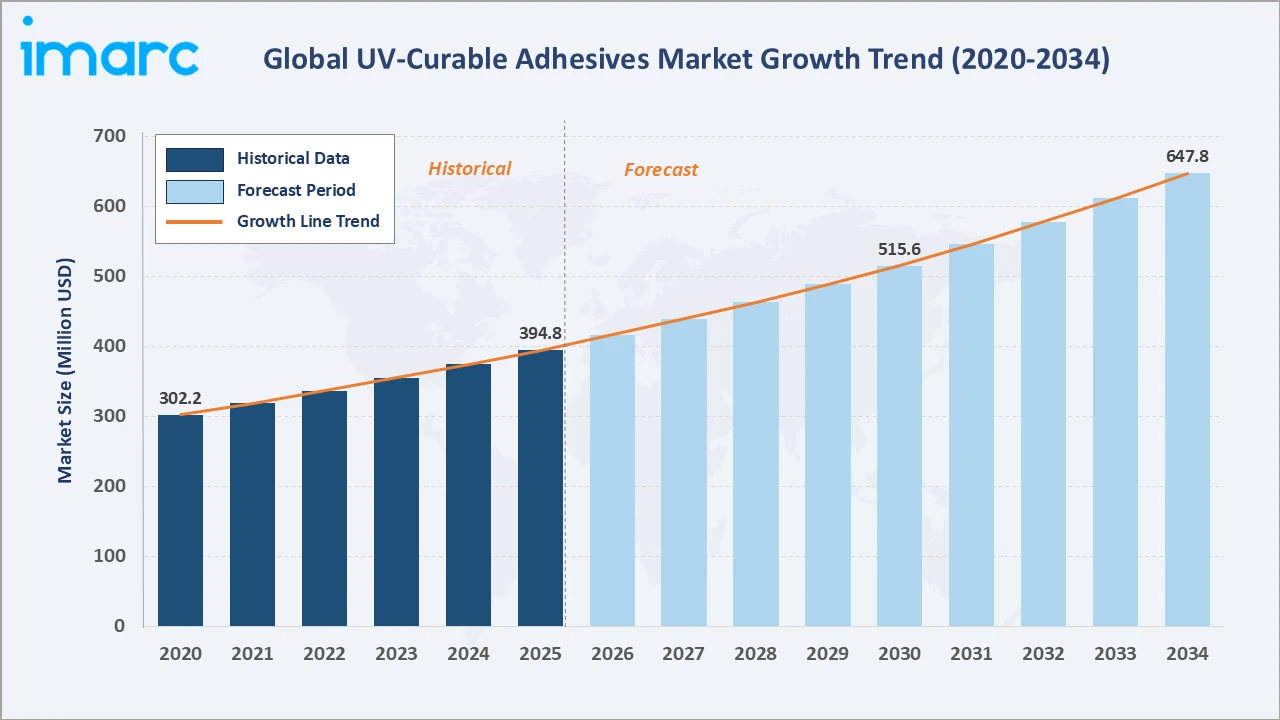
The global UV-curable adhesives market reached USD 394.8 Million in 2025 and is projected to reach USD 647.8 Million by 2034, expanding at a CAGR of 5.49% during 2026-2034. Growing demand across multiple bonding substrate types, faster production rates in electronics assembly, and rising demand for weather-resistant flexible packaging are the primary growth catalysts.
Market Snapshot
|
Metric |
Value |
|
Market Size (2025) |
USD 394.8 Million |
|
Forecast Market Size (2034) |
USD 647.8 Million |
|
CAGR (2026-2034) |
5.49% |
|
Base Year |
2025 |
|
Historical Period |
2020-2025 |
|
Forecast Period |
2026-2034 |
Asia-Pacific leads the global UV-curable adhesives landscape, holding a 41.3% share in 2025, anchored by the region's expansive electronics and packaging manufacturing base. Acrylic commands the largest share of the resin type mix at 31.8%, reflecting sustained demand for its versatile bonding performance and fast-cure characteristics across diverse applications.
To get more information on this market, Request Sample
The global UV-curable adhesives market is underpinned by three structural forces: growing demand across multiple bonding substrate types, faster production rates enabled in electronics assembly, and rising demand for weather-resistant flexible packaging. Each force independently reinforces category growth, sustaining steady CAGR expansion through 2034 despite the high cost of UV curing equipment.
Executive Summary
The global UV-curable adhesives market is experiencing steady expansion, driven by growing demand across multiple bonding substrate types, faster production rates in electronics assembly, and rising demand for weather-resistant flexible packaging solutions. The market was valued at USD 394.8 Million in 2025 and is forecast to reach USD 647.8 Million by 2034, growing at a CAGR of 5.49%.
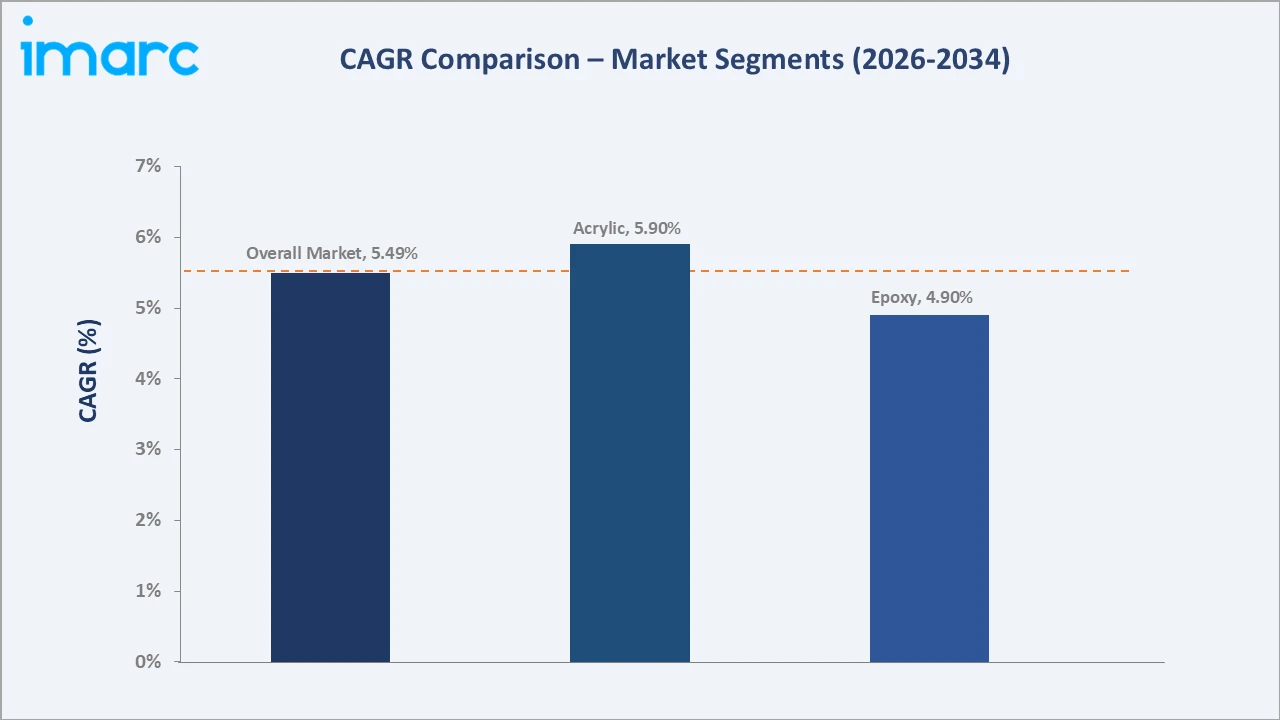
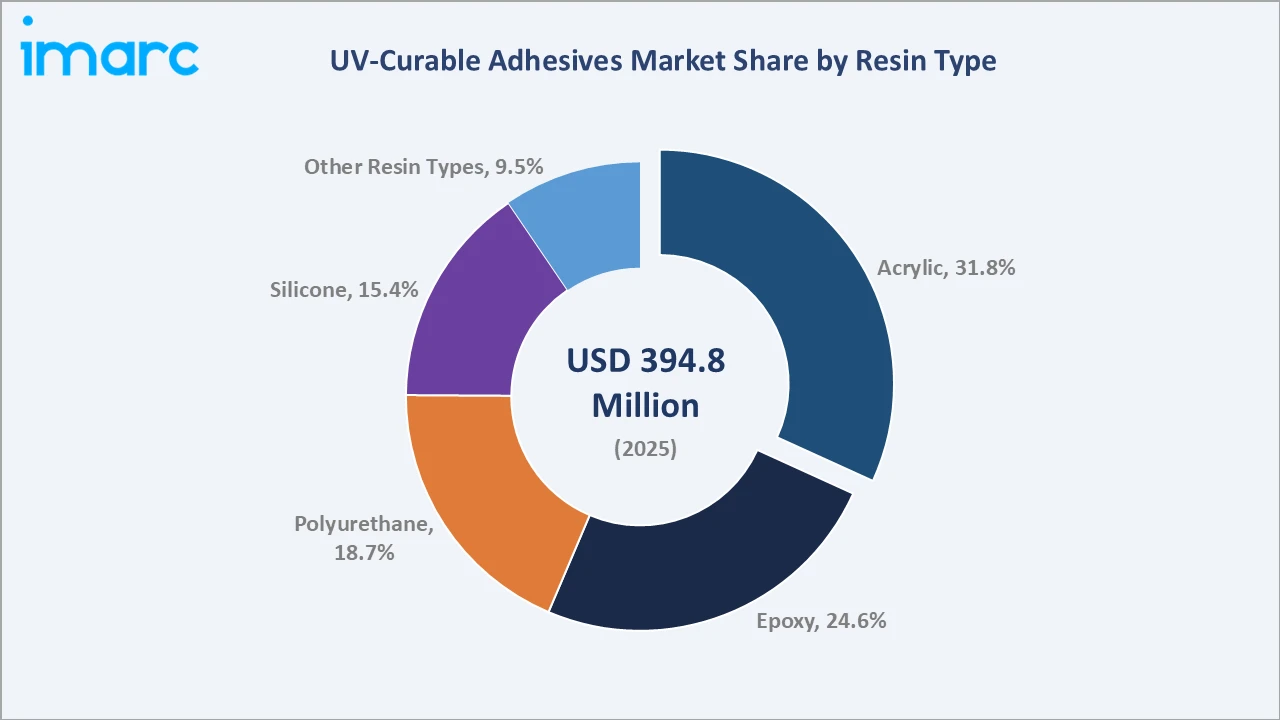
Acrylic dominates the resin type segment with a 31.8% share in 2025, encompassing the largest formulation category offering fast cure speeds and strong substrate adhesion, while epoxy accounts for 24.6%, reflecting demand for its superior chemical and thermal resistance in demanding applications. Polyurethane contributes 18.7%, silicone contributes 15.4%, and other resin types contribute the remaining 9.5%.
Electrical and electronics lead the end-user mix at a 28.7% share, supported by rising demand for fast, precise bonding in electronic assemblies, while medical (21.5%), transportation (18.2%), packaging (13.4%), furniture (9.1%), and others (9.1%) serve varied bonding needs. Asia-Pacific leads regionally at 41.3%, anchored by the region's expansive electronics and packaging manufacturing base.
Key Market Insights
|
Insight |
Data |
|
Largest Resin Type Segment |
Acrylic – 31.8% share (2025) |
|
Fastest Growing Resin Type Segment |
Acrylic – ~5.9% CAGR (2026-2034) |
|
Largest End User Segment |
Electrical and Electronics – 28.7% share (2025) |
|
Leading Region |
Asia-Pacific – 41.3% share (2025) |
|
Top Companies |
3M Company, Henkel AG & Co. KGaA, H.B. Fuller Company, and Dymax |
Key Analytical Observations Supporting the Above Data:
- Acrylic accounts for 31.8% of the global UV-curable adhesives market in 2025. This dominance reflects sustained demand for its fast-cure speed, strong adhesion, and cost-effectiveness across mass-market bonding applications.
- Electrical and electronics remains the leading end-user segment at 28.7% share (2025), supported by rising demand for precise, high-speed bonding in electronic component assembly.
- Medical applications are expanding steadily at 21.5% share (2025), as device manufacturers increasingly rely on UV-curable adhesives for biocompatible, rapid-bonding assembly processes.
- Asia-Pacific's 41.3% share (2025) reflects the region's expansive electronics and packaging manufacturing base and rising industrialization.
- Rising adoption of rapid-cure LED UV technology and bio-based oligomer formulations is broadening the addressable market across 3D printing and sustainable packaging applications.
UV-Curable Adhesives Market Overview
The UV-curable adhesives market encompasses formulations based on oligomers, monomers, and photoinitiators that cure rapidly upon exposure to ultraviolet light, offering fast processing speeds, strong substrate adhesion, and minimal solvent emissions for bonding across electronics, medical, transportation, and packaging applications. The global UV-curable adhesives ecosystem spans raw material suppliers, formulation and compounding specialists, and an expanding distribution network across direct and distributor sales channels.
Macroeconomic drivers include rising global electronics and medical device production, growing flexible packaging demand, and expanding 3D printing and printed circuit applications requiring fast, reliable bonding solutions. Manufacturers are simultaneously investing in rapid-cure LED UV technology and bio-based oligomer formulations to improve processing efficiency and environmental compliance, positioning the global UV-curable adhesives sector for continued innovation-led growth through 2034 despite the high cost of UV curing equipment.
Market Dynamics
To evaluate market opportunities, Request Sample
Market Drivers
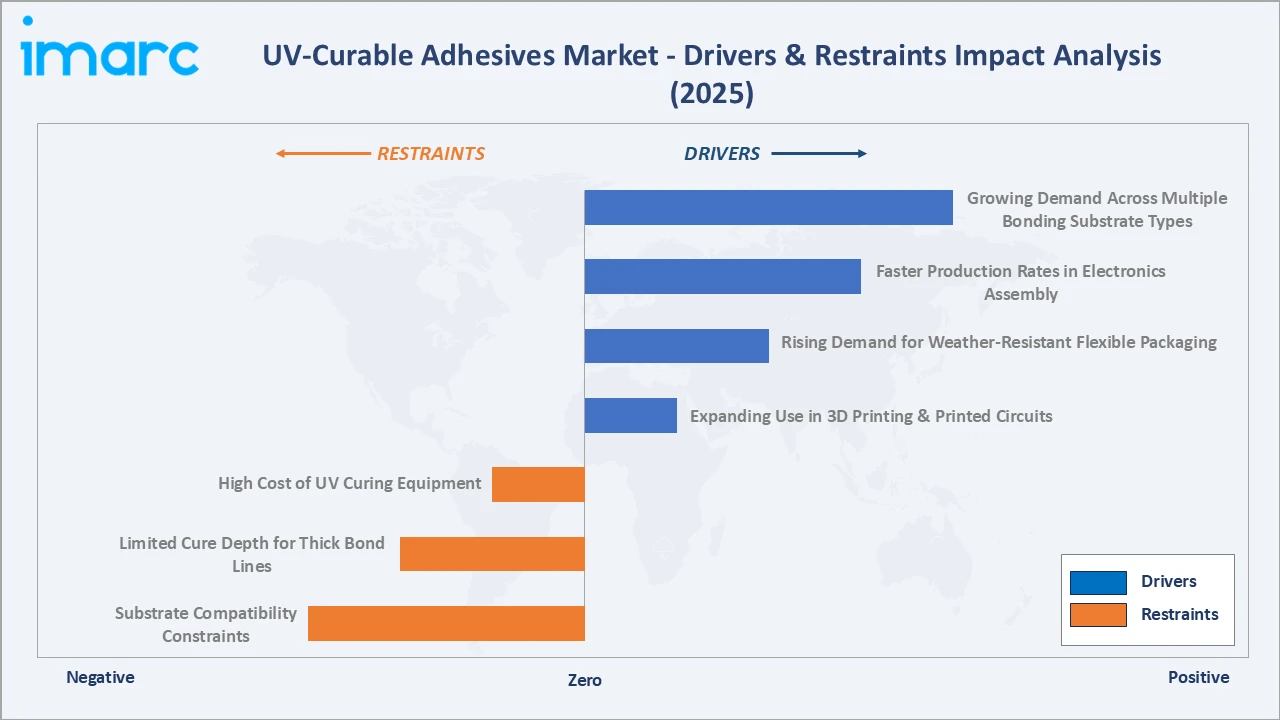
- Growing Demand Across Multiple Bonding Substrate Types: Expanding use of UV-curable adhesives across glass, plastic, metal, and composite substrates is driving sustained demand for versatile, fast-curing bonding solutions.
- Faster Production Rates in Electronics Assembly: Rapid cure speeds are accelerating electronics assembly line throughput, supporting broader adoption in consumer electronics and component manufacturing.
- Rising Demand for Weather-Resistant Flexible Packaging: Growing e-commerce and food packaging activity is accelerating demand for adhesives that offer durable, weather-resistant bonding performance. Global B2C e-commerce revenue is projected to reach USD 5.5 trillion by 2027, expanding at a CAGR of 14.4%.
- Expanding Use in 3D Printing & Printed Circuits: Increasing adoption of UV-curable formulations in additive manufacturing and printed circuit applications is broadening the addressable market.
Market Restraints
- High Cost of UV Curing Equipment: Significant capital investment required for UV curing systems can limit adoption among smaller manufacturers and cost-sensitive end users.
- Limited Cure Depth for Thick Bond Lines: UV-curable adhesives face performance constraints in applications requiring thick bond lines, restricting use in certain structural bonding scenarios.
- Substrate Compatibility Constraints: Certain opaque or UV-blocking substrates limit the applicability of UV-curable formulations, creating a barrier for select bonding applications.
Market Opportunities
- Bio-Based Oligomer Innovation: Rising demand for environmentally responsible formulations presents opportunities for manufacturers investing in bio-based oligomer and low-VOC adhesive innovation.
- Rapid-Cure LED UV Technology Expansion: Growing adoption of energy-efficient LED UV curing systems creates opportunities for adhesive manufacturers optimizing formulations for LED-compatible curing.
- Emerging Market Manufacturing Expansion: Expanding electronics and packaging manufacturing infrastructure across Southeast Asia and Latin America offers producers new distribution and production opportunities.
Market Challenges
- Balancing Cost and Performance: Manufacturers must balance formulation costs with the need to remain competitive against alternative bonding technologies.
- Addressing Substrate Compatibility Limitations: Ensuring formulations meet evolving substrate diversity requirements requires ongoing R&D investment and photoinitiator innovation.
Emerging Market Trends
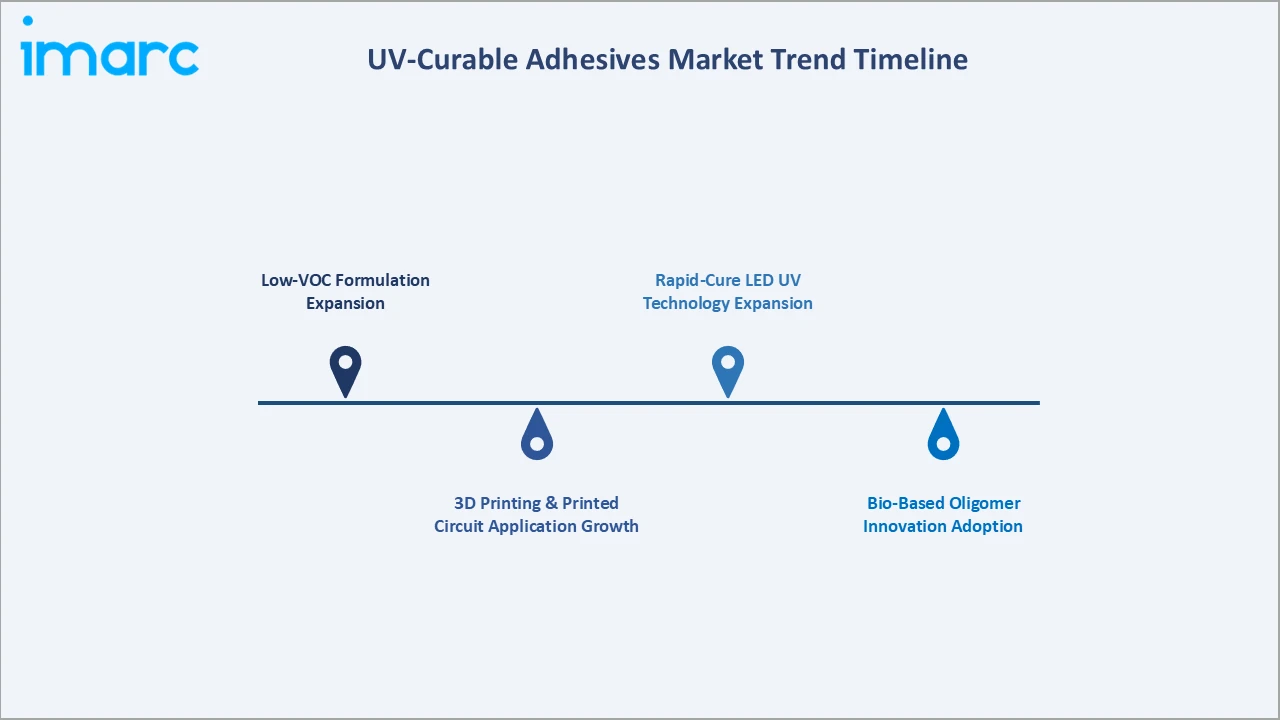
1. Low-VOC Formulation Expansion
In May 2026, Dymax launched HLC-M-1004, a low-viscosity, hybrid light-curable adhesive designed for assembling complex medical devices, including catheters and diagnostic equipment. HLC-M-1004 contains no nonreactive solvents, which can help reduce VOC emissions and supports the broader trend toward low-VOC or solvent-free adhesive formulations.
2. 3D Printing & Printed Circuit Application Growth
Growing demand for additive manufacturing and printed circuit fabrication is driving adoption of UV-curable adhesives optimized for precision bonding and rapid prototyping applications. The global printed circuit board market size reached USD 75.5 Billion in 2025 and is expected to reach USD 100.6 Billion by 2034, exhibiting a growth rate (CAGR) of 3.13% during 2026-2034.
3. Rapid-Cure LED UV Technology Expansion
Rising adoption of energy-efficient LED UV curing systems is accelerating demand for adhesive formulations compatible with lower-heat, faster-cure LED technology. In July 2026, Hoenle launched the bluepoint LED UV spot-curing system for medical devices, electronics, optics, and photonics, offering intensities up to 20,000 mW/cm² across 365, 385, and 405 nm wavelengths.
4. Bio-Based Oligomer Innovation Adoption
Leading manufacturers are exploring bio-based oligomer and renewable feedstock formulations to address environmental concerns, reflecting the broader industry shift toward sustainable material development. In March 2025, hubergroup Chemicals introduced bio-based UV oligomers for wood and plastic coatings, featuring 50% bio-based carbon, strong reactivity, and high stain resistance.
Industry Value Chain Analysis
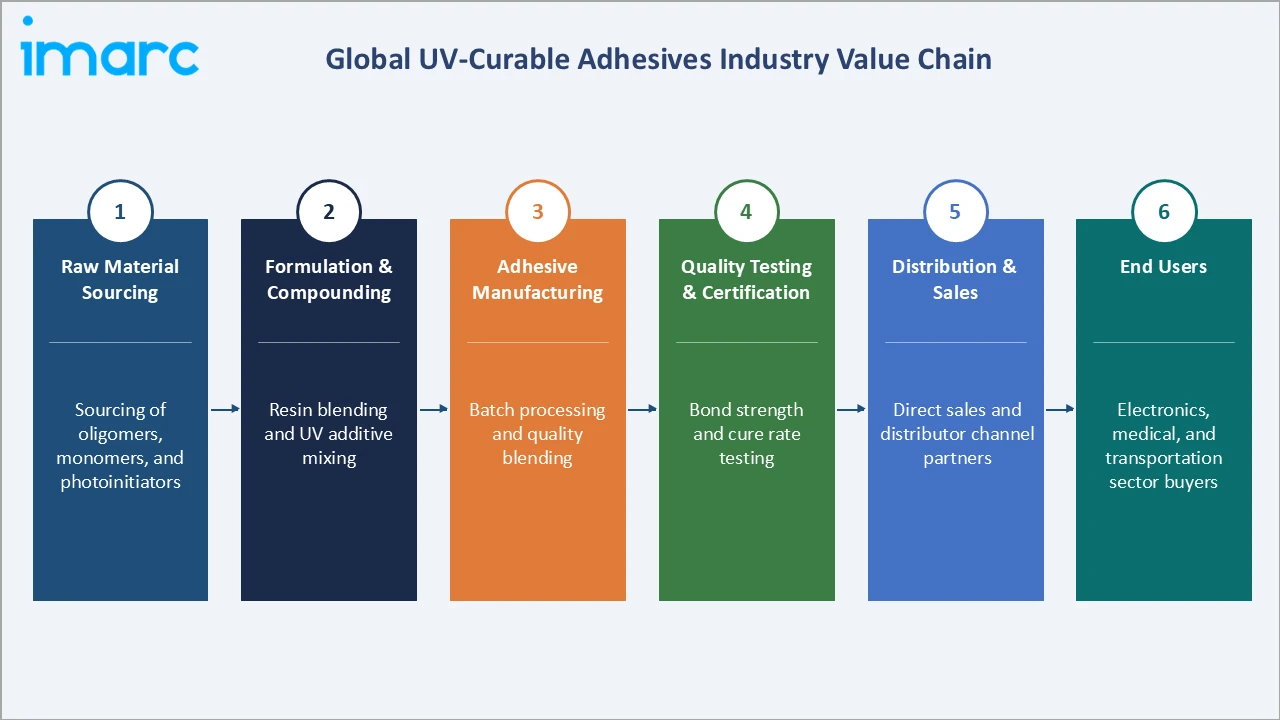
The global UV-curable adhesives value chain spans raw material sourcing through end-user delivery, with each stage occupied by specialized raw material suppliers, formulation and manufacturing specialists, and distribution partners whose performance directly influences product quality, cure performance, and cost efficiency.
|
Stage |
Key Activities |
|
Raw Material Sourcing |
Sourcing of oligomers, monomers, and photoinitiators |
|
Formulation & Compounding |
Resin blending and UV additive mixing |
|
Adhesive Manufacturing |
Batch processing and quality blending |
|
Quality Testing & Certification |
Bond strength and cure rate testing |
|
Distribution & Sales |
Direct sales and distributor channel partners |
|
End Users |
Electronics, medical, and transportation sector buyers |
Technology Landscape in the UV-Curable Adhesives Industry
Rapid-Cure LED UV Formulations
Manufacturers are advancing LED-compatible photoinitiator packages to improve energy efficiency, supporting broader adoption among electronics and medical device assembly facilities. The shift from mercury arc lamp systems to narrow-spectrum LED curing at 365–405 nm is enabling sub-second cure cycles with significantly reduced heat output, lowering energy consumption per cure event and eliminating mercury disposal compliance obligations across high-throughput assembly operations.
Bio-Based Oligomer Development
Growing investment in bio-based and renewable oligomer development is expanding sustainable formulation options, addressing rising demand for environmentally responsible bonding solutions. Epoxidized vegetable oil derivatives and acrylated sucrose esters are being incorporated as partial replacements for petroleum-derived urethane acrylate oligomers, enabling formulators to reduce carbon footprint without sacrificing crosslink density, adhesion strength, or optical clarity in cured film applications.
High-Performance Substrate Compatibility Engineering
Providers are engineering broader substrate compatibility across glass, metal, and composite materials to extend adoption across demanding transportation and industrial applications. Advances in silane coupling agent integration and reactive diluent selection are enabling UV-curable adhesive formulations to achieve durable adhesion across low-surface-energy substrates without requiring plasma or corona pre-treatment steps that add process complexity and cost.
Enhanced Cure Depth Formulation
Expanding research into photoinitiator chemistry and cure depth optimization is strengthening performance for thicker bond line applications, supporting premium positioning across structural bonding use cases. Dual-cure hybrid formulations combining UV initiation with moisture or thermal secondary cure mechanisms are being developed to address shadow-area and thick-section limitations, enabling reliable through-cure in bond lines exceeding 5 mm across potting, encapsulation, and structural assembly applications.
Market Segmentation Analysis
The report covers the following segments:
|
Segment Category |
Leading Segment |
Market Share |
Year |
|
Resin Type |
Acrylic |
31.8% |
2025 |
|
End User |
Electrical and Electronics |
28.7% |
2025 |
|
Substrate |
🔒 |
🔒 |
2025 |
|
Region |
Asia-Pacific |
41.3% |
2025 |

By Resin Type
Acrylic dominates with a 31.8% share in 2025. This segment encompasses the largest formulation category, supported by sustained demand for its fast cure speed, strong substrate adhesion, and cost-effectiveness across mass-market applications.
To access detailed market analysis, Request Sample
Epoxy represents 24.6% (2025) of the market, reflecting demand for its superior chemical and thermal resistance in demanding applications, a segment expected to expand steadily as transportation and industrial adoption grows. Polyurethane (18.7%), silicone (15.4%), and other resin types (9.5%) continue to serve specialty formulation needs.
By End User
Electrical and Electronics leads the end-user mix at 28.7% share (2025), supported by rising demand for fast, precise bonding across electronic component assembly and printed circuit applications.
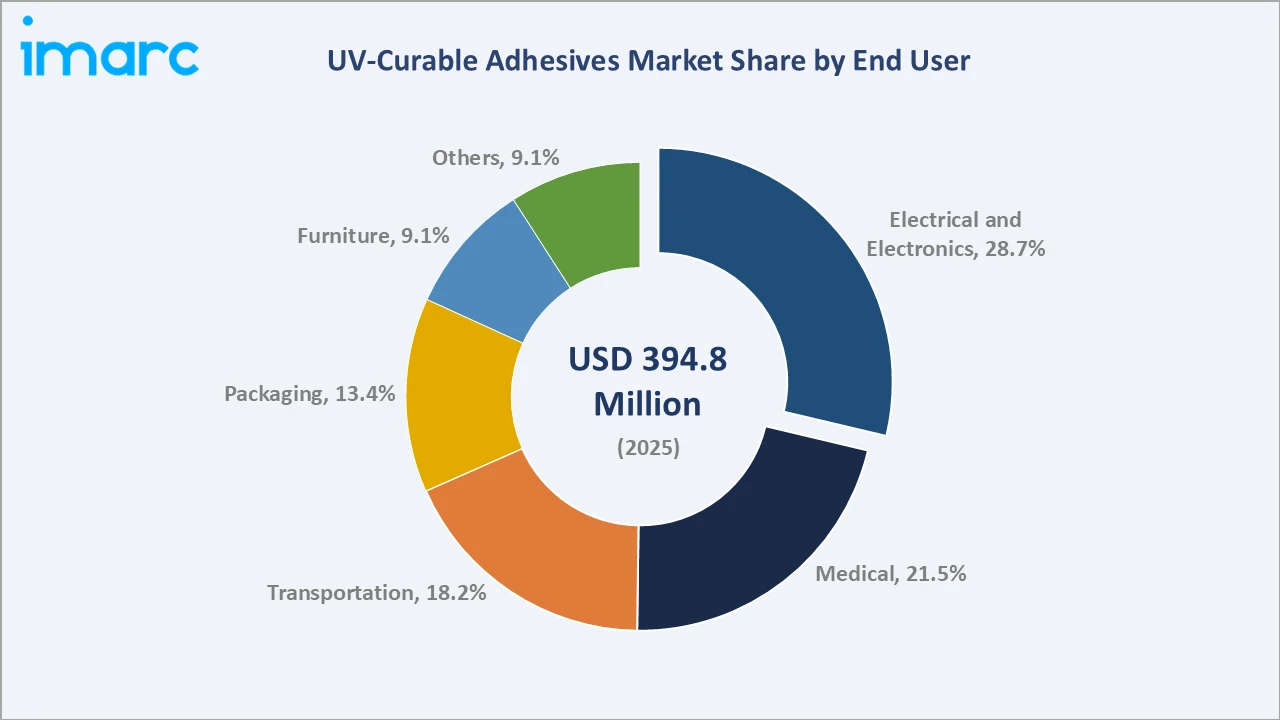
Medical (21.5%), transportation (18.2%), packaging (13.4%), furniture (9.1%), and others (9.1%) continue to serve varied bonding needs, with medical applications expanding steadily as device manufacturers prioritize rapid, biocompatible assembly processes.
Regional Market Insights
Asia-Pacific's market leadership (41.3%, 2025) reflects the region's expansive electronics and packaging manufacturing base and rising industrialization across consumer electronics and medical device production. Growing infrastructure investment and expanding export-oriented manufacturing combine to sustain its dominant position through 2034.
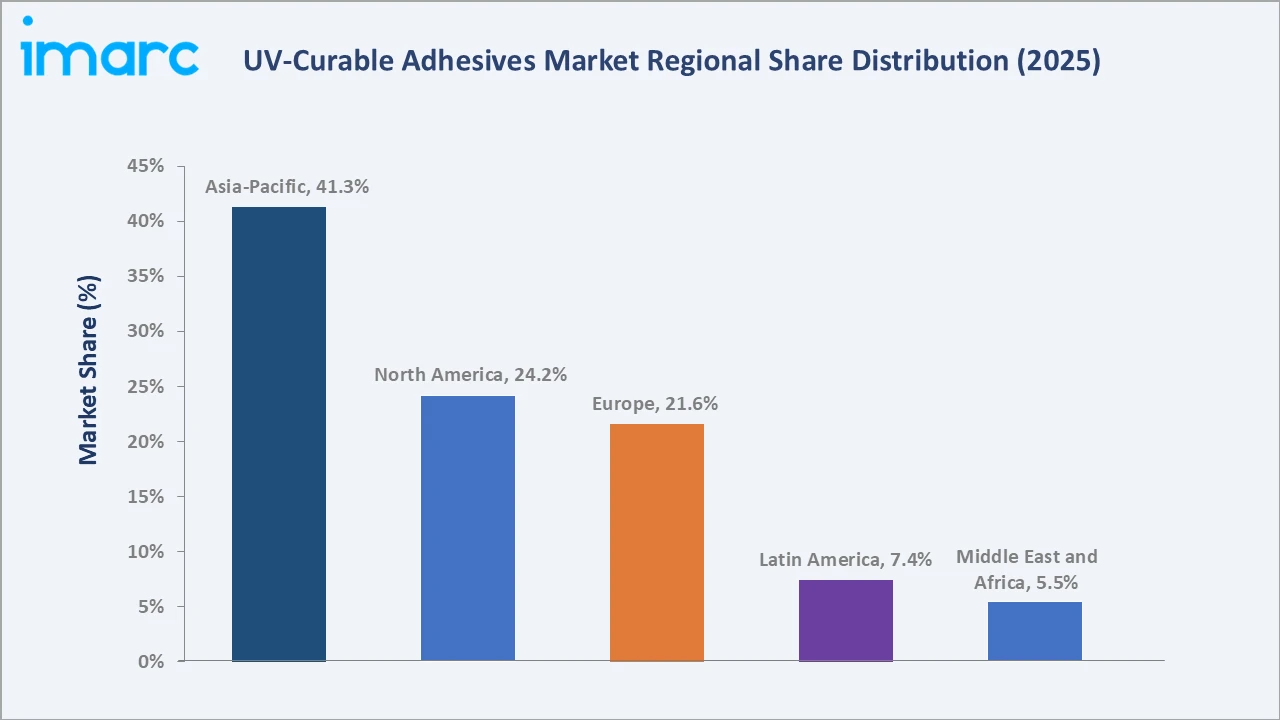
North America at 24.2% (2025) represents the second-largest UV-curable adhesives market globally. Strong medical device and electronics manufacturing infrastructure is sustaining steady growth, positioning the region as a key contributor alongside Asia-Pacific through the forecast period.
|
Region |
Share (2025) |
Key Growth Drivers |
|
Asia-Pacific |
41.3% |
Expansive electronics and packaging manufacturing base |
|
North America |
24.2% |
Strong medical device and electronics manufacturing infrastructure |
|
Europe |
21.6% |
Stringent quality standards and expanding automotive production |
|
Latin America |
7.4% |
Emerging industrialization and expanding packaging manufacturing infrastructure |
|
Middle East and Africa |
5.5% |
Growing interest in industrial applications and gradual infrastructure expansion |
Competitive Landscape
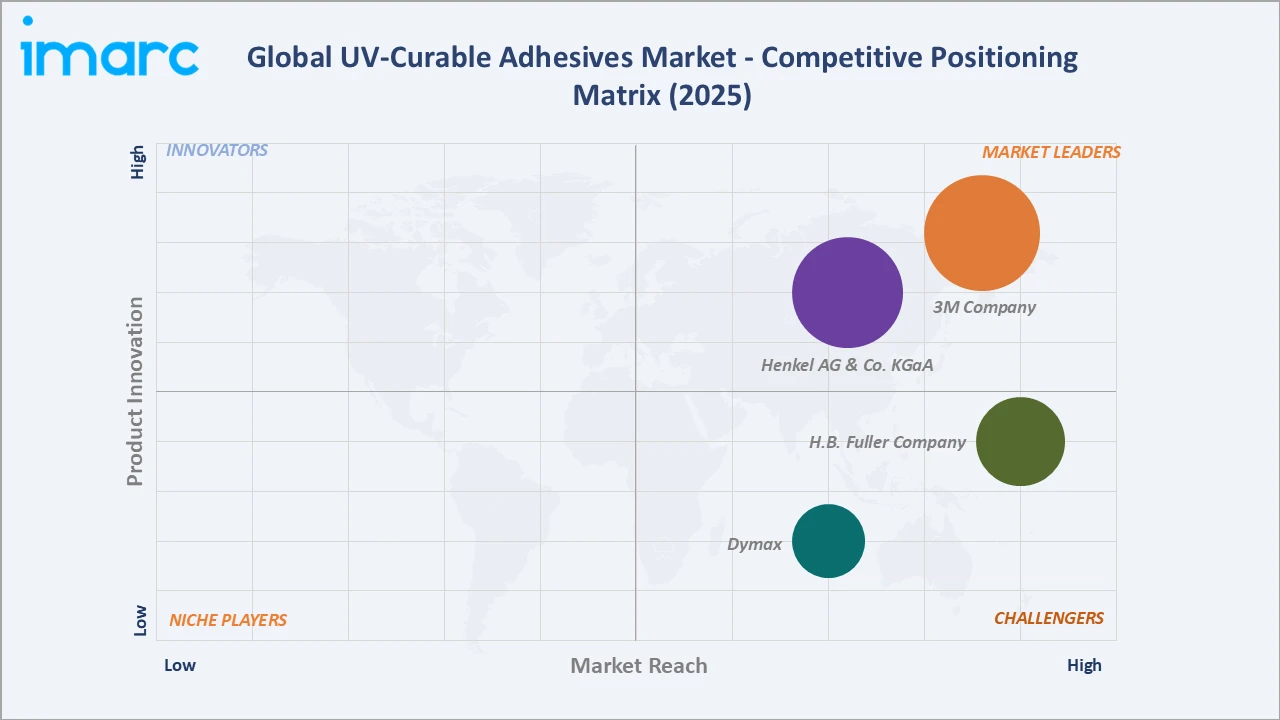
The global UV-curable adhesives market exhibits moderate concentration, with leading manufacturers collectively holding a significant share of market revenue in 2025, reflecting sustained investment in product innovation and distribution reach.
|
Company Name |
Brand Name |
Market Position |
Core Strength |
|
3M Company |
3M UV-Curable Adhesive LC-3200 |
Market Leader |
Extensive global distribution network and adhesive innovation pipeline |
|
Henkel AG & Co. KGaA |
LOCTITE |
Market Leader |
Broad industrial and electronics adhesive portfolio |
|
H.B. Fuller Company |
H.B. Fuller |
Strong Challenger |
Diversified specialty adhesive manufacturing heritage |
|
Dymax |
Dymax |
Challenger |
Specialty light-curable adhesive and equipment expertise |
3M Company and Henkel AG & Co. KGaA dominate through comprehensive product portfolios and extensive global distribution networks, supported by continuous R&D investment. H.B. Fuller Company and Dymax compete through targeted premium positioning, chemistry heritage, and specialty formulation differentiation, respectively.
Key Company Profiles
3M Company
3M Company is a global diversified manufacturer with an extensive adhesives product portfolio spanning electronics, medical, and industrial applications distributed across global retail and distributor networks.
- Product Portfolio: UV-Curable Adhesive LC-3200, structural bonding solutions, and specialty tapes under multiple 3M brands.
- Recent Developments: In January 2026, 3M Company reported full-year 2025 sales of USD 24.9 billion, up 1.5%, while adjusted EPS rose 10% to USD 8.06. For 2026, the company expects approximately 4% adjusted sales growth and adjusted EPS of USD 8.50–8.70.
- Strategic Focus: Strengthening product innovation; expanding distribution reach across emerging markets.
Henkel AG & Co. KGaA
Henkel AG & Co. KGaA is a leading global provider of adhesive technologies with a growing UV-curable portfolio serving both electronics and industrial bonding channels worldwide.
- Product Portfolio: LOCTITE UV-curable adhesives and specialty bonding solutions distributed through industrial and electronics distributor partnerships.
- Recent Developments: In September 2025, Henkel AG & Co. KGaA launched new flexible and rigid LED-curable LOCTITE adhesives, including AA 3951/3953 and AA 3961/3963, for high-performance medical device assembly. The products support faster, energy-efficient production, biocompatibility requirements, sterilization resistance, and reduced use of substances of concern.
- Strategic Focus: Scaling product innovation; deepening electronics and medical distribution partnerships.
Market Concentration Analysis
The global UV-curable adhesives market exhibits moderate concentration, with 3M Company and Henkel AG & Co. KGaA collectively accounting for a significant share of total category revenue in 2025, reflecting sustained R&D investment, brand loyalty, and extensive distribution infrastructure worldwide.
Consolidation pressure remains limited as leading manufacturers maintain distinct strategic positioning: 3M Company and Henkel AG & Co. KGaA through comprehensive multi-category portfolios, H.B. Fuller Company through chemistry and formulation heritage positioning, and Dymax through specialty and custom engineering differentiation, rather than pursuing direct M&A consolidation.
Investment & Growth Opportunities
Fastest Growing Segments
Acrylic (~5.9% CAGR) represents the highest-growth investment vector through 2034, driven by expanding electronics and packaging manufacturing demand and continuous innovation across formulation and rapid-cure technologies. This subcategory addresses a rapidly expanding addressable market within the global bonding and adhesives ecosystem.
Emerging Market Expansion
Latin America and the Middle East and Africa collectively represent an incremental growth opportunity beyond Asia-Pacific and North America by 2034, as rising industrialization and expanding electronics and packaging manufacturing infrastructure accelerate category penetration in these secondary regional markets.
Venture and Institutional Investment Trends
- Manufacturer investment toward bio-based oligomer innovation is creating opportunities for material technology vendors serving the UV-curable adhesives sector.
- Growing 3D printing and printed circuit application demand is sustaining institutional interest in specialty adhesive manufacturing platforms.
- Rapid-cure LED UV technology innovation, led by major manufacturers, is opening opportunities for equipment and formulation vendors serving the global bonding industry.
Future Market Outlook (2026-2034)
The global UV-curable adhesives market is positioned for steady, innovation-driven expansion through 2034. From a base of USD 394.8 Million in 2025, the market is projected to reach USD 647.8 Million by 2034, representing substantial incremental value creation at a CAGR of 5.49%. This growth is underpinned by growing demand across multiple bonding substrate types, faster electronics production rates, and expanding flexible packaging demand.
The resin type mix will continue evolving through 2034, with Acrylic gaining further share as cost-effective, fast-cure bonding demand accelerates. This shift creates opportunities for manufacturers investing in rapid-cure LED UV technology, bio-based oligomer innovation, and enhanced substrate compatibility engineering to capture the next phase of the global UV-curable adhesives market growth.
Research Methodology
Primary Research
Primary research comprised structured interviews with industry participants across 2024-2025, including adhesive manufacturer executives, electronics procurement managers, formulation specialists, and medical device analysts globally. Expert input validated market sizing, segmentation trends, and regional consumption patterns.
Secondary Research
Secondary research encompassed manufacturer annual reports, adhesives and sealants association publications, and electronics trade press covering UV-curable adhesive innovation, regulatory trends, and regional manufacturing dynamics across major markets.
Forecasting Models
Market size estimations were derived using top-down and bottom-up forecasting, incorporating resin type and end-user mix transitions and manufacturer capacity disclosures. A base-case CAGR of 5.49% reflects consensus estimates validated against announced production expansion timelines and manufacturer strategic investment plans.
Report Coverage:
| Report Features | Details |
|---|---|
| Base Year of the Analysis | 2025 |
| Historical Period | 2020-2025 |
| Forecast Period | 2026-2034 |
| Units | Million USD |
| Scope of the Report | Exploration of Historical Trends and Market Outlook, Industry Catalysts and Challenges, Segment-Wise Historical and Future Market Assessment:
|
| Resin Types Covered | Silicone, Acrylic, Polyurethane, Epoxy, Other Resin Types |
| Substrates Covered | Ceramic, Glass, Composites, Metal, Plastics, Rubber and Elastomers, Others |
| End Users Covered | Medical, Electrical and Electronics, Transportation, Packaging, Furniture, Others |
| Regions Covered | Asia Pacific, Europe, North America, Latin America, Middle East and Africa |
| Countries Covered | United States, Canada, Germany, France, United Kingdom, Italy, Spain, Russia, China, Japan, India, South Korea, Australia, Indonesia, Brazil, Mexico |
| Companies Covered | 3M Company, Henkel AG & Co. KGaA, H.B. Fuller Company, Dymax, etc. |
| Customization Scope | 10% Free Customization |
| Post-Sale Analyst Support | 10-12 Weeks |
| Delivery Format | PDF and Excel through Email (We can also provide the editable version of the report in PPT/Word format on special request) |
Frequently Asked Questions About the UV-Curable Adhesives Market Report
The global UV-curable adhesives market reached USD 394.8 Million in 2025 and is projected to reach USD 647.8 Million by 2034.
The market is expected to grow at a CAGR of 5.49% during 2026-2034, driven by growing demand across multiple bonding substrate types and faster production rates in electronics assembly.
Asia-Pacific leads with a 41.3% share in 2025, anchored by the region's expansive electronics and packaging manufacturing base.
Acrylic dominates with a 31.8% share in 2025, driven by sustained demand for its fast cure speed, strong adhesion, and cost-effectiveness.
Electrical and electronics leads with a 28.7% share in 2025, supported by rising demand for fast, precise bonding in component assembly.
Some of the key players include 3M Company, Henkel AG & Co. KGaA, H.B. Fuller Company, and Dymax.
Acrylic is growing fastest at an estimated 5.9% CAGR as electronics and packaging manufacturing demand accelerates.
Key challenges include the high cost of UV curing equipment, limited cure depth for thick bond lines, and substrate compatibility constraints.
Bio-based oligomer innovation, rapid-cure LED UV technology expansion, and emerging market manufacturing growth represent leading investment opportunities.
Medical, at 21.5% share, is expanding steadily as rising device production and demand for biocompatible, rapid-bonding assembly drive adoption.
Need more help?
- Speak to our experienced analysts for insights on the current market scenarios.
- Include additional segments and countries to customize the report as per your requirement.
- Gain an unparalleled competitive advantage in your domain by understanding how to utilize the report and positively impacting your operations and revenue.
- For further assistance, please connect with our analysts.
 Request Customization
 Speak to an Analyst
 Request Brochure
 Inquire Before Buying
Benefits of Customization
- Personalize this research
- Triangulate with your data
- Get data as per your format and definition
- Gain a deeper dive into a specific application, geography, customer, or competitor
- Any level of personalization
Get in Touch With Us
UNITED STATES
Phone: +1-201-971-6302
INDIA
Phone: +91-120-433-0800
UNITED KINGDOM
Phone: +44-753-714-6104
Email: [email protected]
Client Testimonials




.webp)




.webp)













Related Reports

Choose your plan
*Please note that the prices mentioned below are starting prices for each bundle type. Kindly contact our team for further details.*
Single User License
- 1 User License, Access on 2 Devices
- PDF Report + Excel Dataset (Password Protected)
- Lifetime Access
- No Printing Rights
- 10% Free Report Customization
- 10–12 Weeks of Analyst Support
Five User License
- Access for 5 Users, 2 Devices per User
- PDF Report + Excel Dataset (Password Protected)
- Lifetime Access
- Dedicated Account Manager
- 12–14 Weeks of Analyst Support
- No Printing Rights
- 15% Free Report Customization
- 25% Discount on Your Next Purchase
Corporate User License
- Unlimited User Access (Within Your Organization)
- PDF Report + Excel Dataset
- Lifetime Access
- Dedicated Account Manager
- 14–20 Weeks of Analyst Support
- No Printing Rights
- 20% Free Report Customization
- 30% Discount on Your Next Purchase
Essential Insights
What's included:
3 reports
- Lifetime Access
- PDF Reports
- Excel Datasets
- 2 Weeks of Free Analyst Support
- 2 User Licenses
- Access on 2 Devices
- Printing Rights
- Complimentary PowerPoint (PPT) Version
- Complimentary License Upgrade
Professional Access
What's included:
5 reports
- Lifetime Access
- PDF Reports
- Excel Datasets
- 8 Weeks of Free Analyst Support
- 2 User Licenses
- Access on 2 Devices
- Printing Rights
- Complimentary PowerPoint (PPT) Version
- Complimentary License Upgrade
Business Advantage
What's included:
8 reports
- Lifetime Access
- PDF Reports
- Excel Datasets
- 14 Weeks of Free Analyst Support
- 2 User Licenses
- Access on 2 Devices
- Printing Rights
- Complimentary PowerPoint (PPT) Version
- Complimentary License Upgrade
Enterprise Intelligence
What's included:
10 reports
- Lifetime Access
- PDF Reports
- Excel Datasets
- 20 Weeks of Free Analyst Support
- 2 User Licenses
- Access on 2 Devices
- Printing Rights
- Complimentary PowerPoint (PPT) Version
- Complimentary License Upgrade