
Veterinary Endoscopy Market Size, Share, Trends and Forecast by Product, Animal Type, End User, and Region, 2026-2034
Veterinary Endoscopy Market Size, Share, Trends & Forecast (2026-2034)
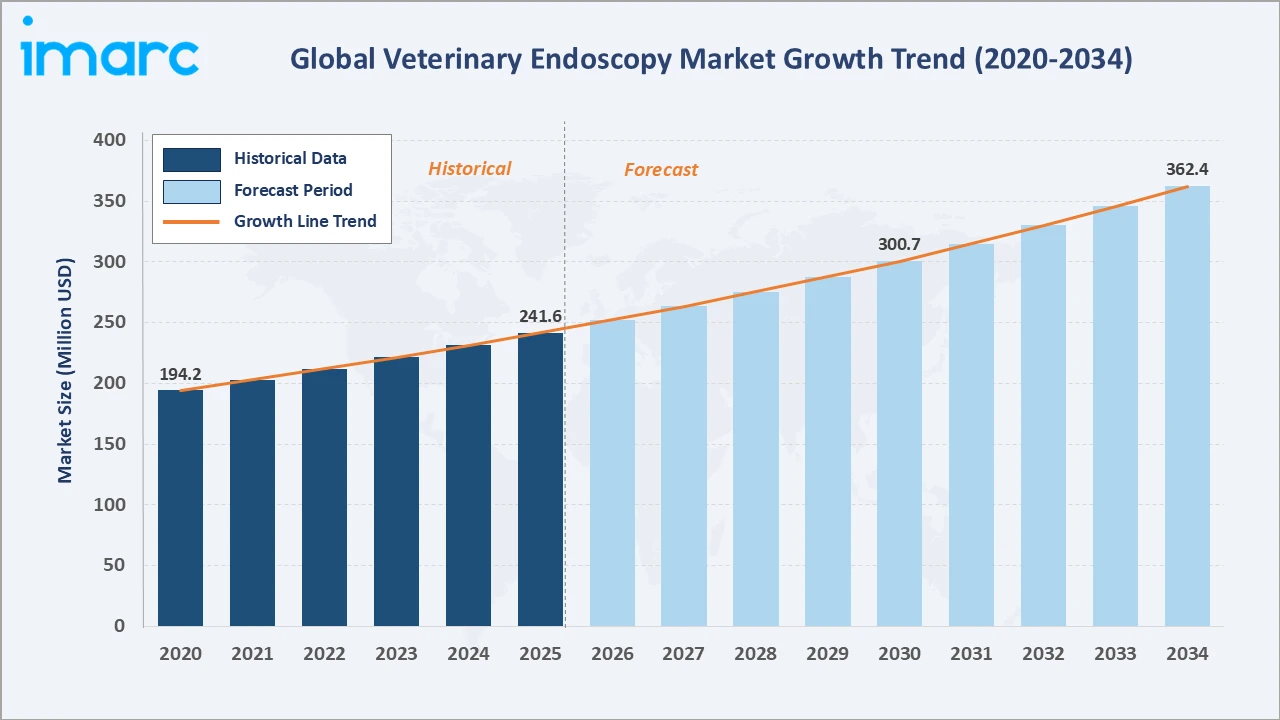
The global veterinary endoscopy market reached USD 241.6 Million in 2025 and is projected to reach USD 362.4 Million by 2034, growing at a CAGR of 4.47% during 2026-2034. The market is driven by the rising prevalence of infectious diseases among companion and livestock animals, growing pet insurance penetration, expanding veterinary hospital infrastructure, and increasing adoption of minimally invasive diagnostic procedures over traditional exploratory surgery.
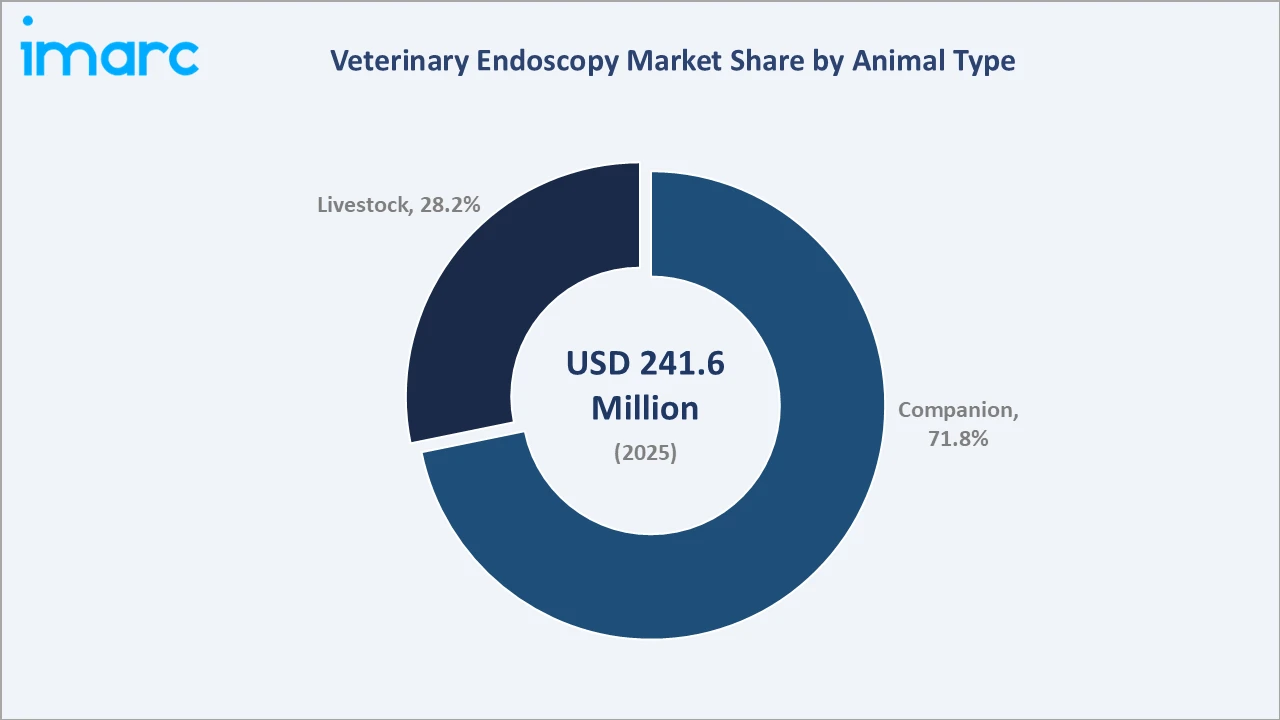
Companion animals dominate the animal type segment at 71.8%, reflecting rising pet ownership and healthcare spending. Veterinary hospitals lead the end user segment at 63.5%. North America commands 37.6% of the global market share.
Market Snapshot
|
Metric |
Value |
|
Market Size (2025) |
USD 241.6 Million |
|
Forecast Market Size (2034) |
USD 362.4 Million |
|
CAGR (2026-2034) |
4.47% |
|
Base Year |
2025 |
|
Historical Period |
2020-2025 |
|
Forecast Period |
2026-2034 |
|
Dominant Animal Type |
Companion (71.8%, 2025) |
|
Dominant End User |
Veterinary Hospitals (63.5%, 2025) |
|
Leading Region |
North America (37.6%, 2025) |
The market expanded from an estimated USD 194.2 Million in 2020 to USD 241.6 Million in 2025 - a steady rise over five years - anchored at USD 300.7 Million by 2030 and forecast to reach USD 362.4 Million by 2034. Demand growth reflects rising companion animal healthcare spending, expanding pet insurance coverage, and gradual replacement of exploratory surgery with endoscopic diagnosis across veterinary hospitals and academic institutions.
To get more information on this market, Request Sample
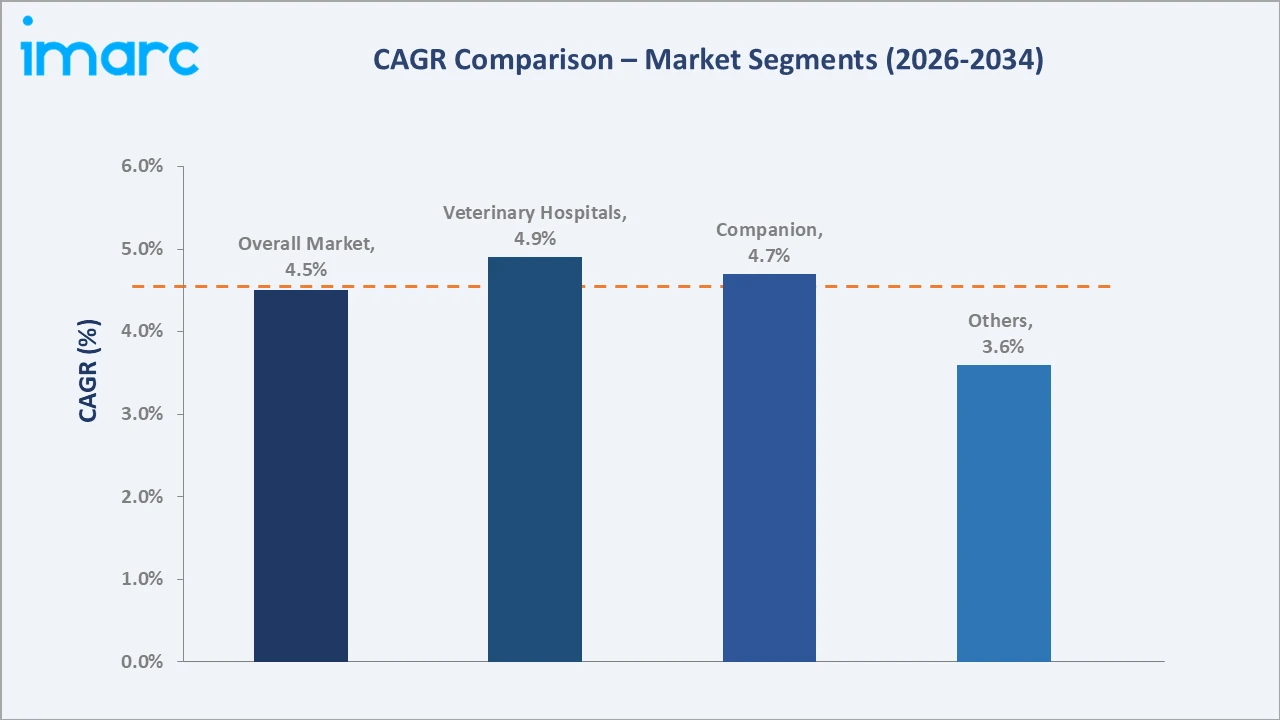
The companion animal segment grows fastest at ~4.7% CAGR as rising pet humanization and expanding insurance coverage increase per-pet diagnostic spending. The veterinary hospital end user segment grows at ~4.9% CAGR as hospitals continue to anchor capital investment in advanced endoscopic towers and specialist staffing.
Executive Summary
The global veterinary endoscopy market reached USD 241.6 Million in 2025, representing a steadily maturing segment of the animal healthcare equipment industry driven by rising minimally invasive diagnostic adoption across companion and livestock animal care. Veterinary endoscopy replaces exploratory surgery for many gastrointestinal, respiratory, and urogenital diagnostic and interventional needs, reducing pain, sedation requirements, and recovery time for the animal. The market is projected to reach USD 362.4 Million by 2034.
Companion at 71.8% dominates through rising pet ownership, higher per-pet healthcare spending, and growing pet insurance penetration. Veterinary Hospitals at 63.5% lead through concentrated capital investment in endoscopic towers and specialist staffing. North America at 37.6% leads globally through high per-pet healthcare expenditure and dense veterinary hospital networks across the United States and Canada.
Key Market Insights
|
Insight |
Data |
|
Dominant Animal Type |
Companion - 71.8% share (2025) |
|
Dominant End User |
Veterinary Hospitals - 63.5% market share (2025) |
|
Leading Region |
North America - 37.6% market share (2025) |
|
Market Opportunity |
Capsule endoscopy; robot-assisted systems; AI-assisted image interpretation; academic training expansion |
Key Analytical Observations Supporting the Above Data:
- Companion at 71.8%: The companion segment dominates as rising pet humanization, higher discretionary per-pet healthcare spending, and expanding pet insurance penetration support advanced diagnostic procedure adoption in dogs and cats. Its widespread use in general practice and specialty referral hospitals further strengthens segment demand.
- Veterinary Hospitals at 63.5%: The veterinary hospital segment dominates due to concentrated capital investment in endoscopic towers, specialist staffing, and sufficient case volume to justify high equipment costs. With rising companion animal case volumes, hospital procurement generates substantial demand for advanced endoscopic systems.
- North America at 37.6%: North America dominates the veterinary endoscopy market due to high per-pet healthcare expenditure, dense veterinary hospital networks, and early adoption of advanced diagnostic technologies, led primarily by the United States.
Veterinary Endoscopy Market Overview
The global veterinary endoscopy market encompasses the design, manufacture, and clinical use of flexible, rigid, video, fiber-optic, capsule, and robot-assisted endoscopic systems used to examine and treat internal organs of animals across all categories, such as companion animals (dogs, cats), and livestock animals including cattle, swine, and poultry.
The ecosystem integrates endoscope and instrument manufacturers, optical and imaging component suppliers, veterinary hospital and clinic networks, academic and training institutions, equipment distributors, and regulatory and veterinary association bodies setting animal welfare and diagnostic standards. Macroeconomic factors include rising pet ownership, growing livestock disease surveillance needs, expanding pet insurance coverage, and investments in veterinary specialist training capacity.
Market Dynamics
To evaluate market opportunities, Request Sample
Market Drivers
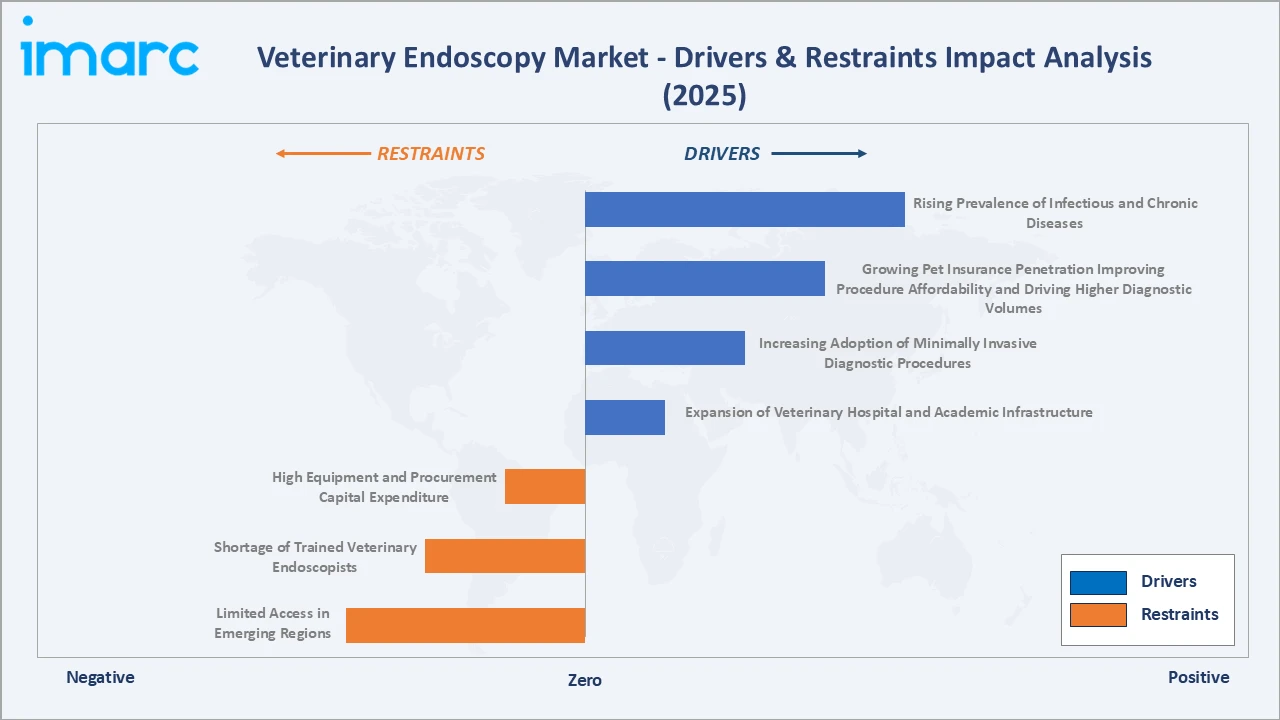
- Rising Prevalence of Infectious and Chronic Diseases: Growing incidence of gastrointestinal, respiratory, and zoonotic diseases such as brucellosis and foot-and-mouth disease among companion and livestock animals is increasing demand for accurate endoscopic diagnosis and monitoring, supporting sustained procedure volume growth across veterinary hospitals and clinics. Rising awareness of early disease detection among pet owners and livestock managers is further reinforcing the role of endoscopy as a first-line diagnostic tool. This trend is particularly pronounced in regions with dense livestock populations, where herd-level surveillance programs increasingly rely on endoscopic evaluation to contain outbreaks.
- Growing Pet Insurance Penetration Improving Procedure Affordability and Driving Higher Diagnostic Volumes: Expanding pet insurance coverage is reducing out-of-pocket costs for advanced diagnostic procedures, encouraging pet owners to opt for endoscopic examination over exploratory surgery. As every diagnostic case increasingly involves endoscopic evaluation, rising insured pet populations directly boost demand for veterinary endoscopy equipment. Insurers are also increasingly bundling diagnostic imaging coverage into standard policies, further normalizing endoscopy as a routine rather than exceptional procedure.
- Increasing Adoption of Minimally Invasive Diagnostic Procedures: Endoscopy causes less pain, requires minimal sedation, and shortens recovery relative to traditional exploratory surgery, making it the preferred diagnostic route for practitioners and pet owners alike, and driving procurement of flexible and video endoscopy systems. Shorter recovery times also reduce post-procedure monitoring costs for veterinary hospitals, improving the overall economics of endoscopic case management. Practitioners increasingly cite client preference for less invasive options as a key factor in equipment purchasing decisions.
- Expansion of Veterinary Hospital and Academic Infrastructure: Growing investment in veterinary hospital networks and academic training programs is expanding the installed base of endoscopic equipment and the pool of clinicians trained in endoscopic technique. As of 2025, expanding veterinary specialist certification programs across major markets is widening addressable procedure volume globally. New hospital construction and referral center expansion are also creating fresh capital equipment budgets, supporting incremental endoscopy tower procurement beyond simple replacement demand.
Market Restraints
- High Equipment and Procurement Capital Expenditure: Advanced flexible video endoscopy towers and robot-assisted systems carry high upfront capital costs, requiring precision optics, imaging processors, and specialized sterilization infrastructure. This can limit entry for smaller independent clinics, slow capacity expansion, and constrain adoption in cost-sensitive regions. Financing and leasing constraints in developing markets can further delay equipment upgrades, extending the useful life of older, less capable systems.
- Shortage of Trained Veterinary Endoscopists: Endoscopic procedures require specialized operator training in technique and image interpretation. A limited pool of clinicians proficient in endoscopy constrains procedure volume growth, particularly outside major veterinary hospital networks and academic centers. Continuing education programs remain unevenly distributed geographically, leaving many general practitioners without practical access to hands-on endoscopy certification.
- Limited Access in Emerging Regions: Underdeveloped veterinary infrastructure, lower per-animal healthcare spending, and limited insurance penetration across parts of Latin America, the Middle East, and Africa restrict the adoption of advanced endoscopic equipment and constrain procedure affordability for pet owners and livestock operators alike. The scarcity of trained endoscopists and accredited training centers in these markets compounds the access gap, as even clinics that can afford equipment often lack qualified operators to utilize it effectively. Together, these factors create a persistent structural gap between emerging and developed markets, with procedure volumes in emerging regions growing at a comparatively slower pace through the forecast period despite rising underlying demand for animal healthcare.
Market Opportunities
- Capsule Endoscopy Commercialization for Veterinary Use: Capsule endoscopy, enabling non-invasive visualization of the gastrointestinal tract without sedation, is gaining early traction in companion animal diagnostics. As comfort and safety expectations rise among pet owners, wider adoption of capsule-based systems can open new growth avenues for veterinary endoscopy providers. Early commercial pilots suggest strong client acceptance, particularly for anxious or geriatric patients where sedation risk is a concern.
- AI-Assisted Image Interpretation Integration: Integration of AI-assisted image analysis into endoscopy towers can improve diagnostic accuracy and reduce interpretation time for veterinary practitioners. As adoption of digital imaging systems scales across hospitals, demand for AI-enabled endoscopic platforms is expected to rise, creating growth opportunities for equipment manufacturers. Vendors that bundle interpretation software with hardware sales may also capture recurring subscription revenue beyond the initial equipment purchase.
Market Challenges
- Limited Access to Advanced Veterinary Care in Emerging Regions: Underdeveloped veterinary infrastructure, lower pet healthcare spending, and limited insurance penetration in parts of Latin America, the Middle East, and Africa restrict endoscopic equipment adoption and procedure affordability, creating a persistent access gap relative to developed markets. Import duties and limited local service and calibration support further raise the effective cost of ownership in these regions.
- Endoscope Reprocessing and Sterilization Complexity Requiring Rigorous Infection Control Protocols: Veterinary endoscopy equipment requires meticulous cleaning, disinfection, and sterilization between procedures to prevent cross-contamination. Meeting these infection-control standards increases operating costs and workflow complexity for veterinary hospitals and clinics, particularly smaller practices with limited reprocessing infrastructure. Non-compliance risk also creates liability exposure, prompting some smaller clinics to limit procedure volume rather than invest in dedicated reprocessing capacity.
Emerging Market Trends
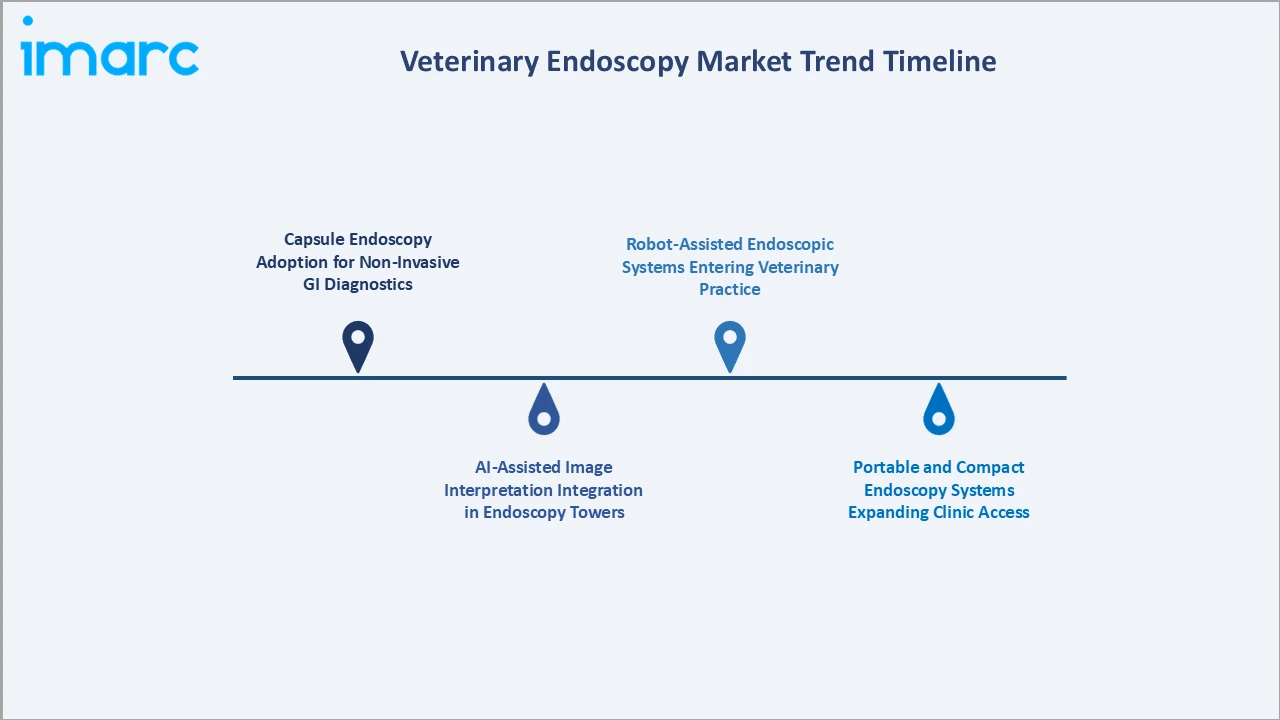
1. Capsule Endoscopy Adoption for Non-Invasive GI Diagnostics
Capsule endoscopy, involving a swallowable wireless camera capsule, is gaining adoption for non-invasive diagnosis of gastrointestinal bleeding, polyps, and tumors in companion animals. This approach eliminates sedation requirements and reduces procedural discomfort, increasing pet owner willingness to pursue diagnostic evaluation and expanding overall procedure volumes for veterinary practices offering the technology.
2. Robot-Assisted Endoscopic Systems Entering Veterinary Practice
Robot-assisted endoscopic systems are beginning to enter specialized veterinary referral hospitals, offering improved precision for interventional procedures such as foreign body retrieval and biopsy sampling. As referral hospital networks expand and case complexity rises, demand for robot-assisted platforms is expected to grow gradually through the forecast period.
3. AI-Assisted Image Interpretation Integration in Endoscopy Towers
AI-assisted image interpretation tools are being integrated into veterinary endoscopy towers to support lesion detection and reduce diagnostic variability between practitioners. As digital imaging adoption scales, AI-enabled interpretation is emerging as a key differentiator for equipment manufacturers targeting hospital and academic institution buyers.
4. Portable and Compact Endoscopy Systems Expanding Clinic Access
Portable and compact endoscopy systems are lowering the capital barrier for smaller independent clinics, expanding access to endoscopic diagnosis beyond large veterinary hospitals. As manufacturers introduce more cost-effective compact systems, procedure volumes in general practice settings are expected to rise steadily through the forecast period.
Industry Value Chain Analysis
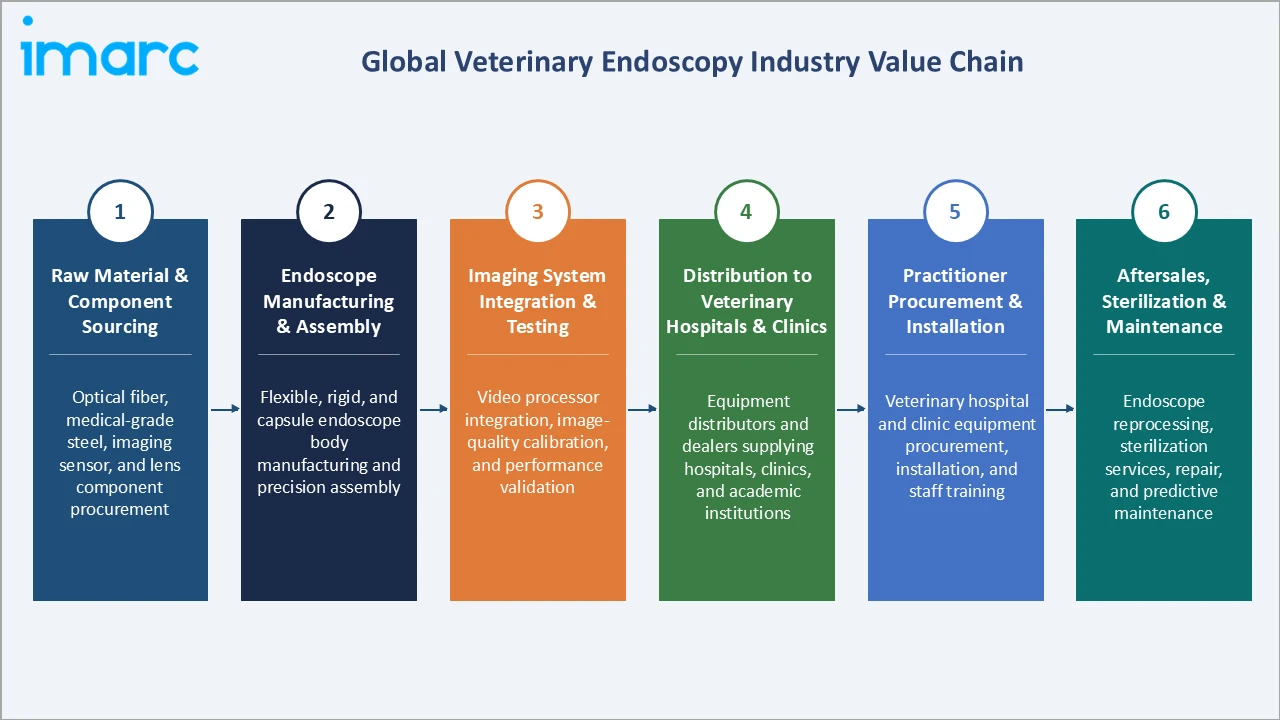
The veterinary endoscopy value chain integrates raw material and optical component sourcing, endoscope manufacturing and assembly, imaging system integration and testing, distribution to veterinary hospitals and clinics, practitioner procurement and installation, and aftersales sterilization and maintenance services.
|
Stage |
Key Participants |
|
Raw Material & Component Sourcing |
Optical fiber, medical-grade steel, imaging sensor, and lens component procurement |
|
Endoscope Manufacturing & Assembly |
Flexible, rigid, and capsule endoscope body manufacturing and precision assembly |
|
Imaging System Integration & Testing |
Video processor integration, image-quality calibration, and performance validation |
|
Distribution to Veterinary Hospitals & Clinics |
Equipment distributors and dealers supplying hospitals, clinics, and academic institutions |
|
Practitioner Procurement & Installation |
Veterinary hospital and clinic equipment procurement, installation, and staff training |
|
Aftersales, Sterilization & Maintenance |
Endoscope reprocessing, sterilization services, repair, and predictive maintenance |
The endoscope manufacturing and assembly stage is the value chain's most technically demanding tier, requiring precision optics and medical-grade materials. The aftersales sterilization and maintenance tier is gaining commercial importance as infection-control standards tighten across veterinary hospital networks.
Technology Landscape in the Veterinary Endoscopy Industry
Flexible Video Endoscopy Technology
Flexible video endoscopy technology offers high maneuverability, real-time digital imaging, and compatibility with a wide range of diagnostic and interventional procedures. Its adaptability to companion animal gastrointestinal and respiratory examinations makes it the most widely adopted technology across veterinary hospitals.
Rigid Endoscopy Technology
Rigid endoscopy technology provides superior image clarity and durability for procedures such as arthroscopy, laparoscopy, and rhinoscopy. Its cost-effectiveness and reliability support continued adoption across general practice and academic institution settings.
Capsule and Robot-Assisted Endoscopy Technology
Capsule and robot-assisted endoscopy technologies represent the market's emerging frontier, offering non-invasive visualization and enhanced procedural precision respectively. Their gradual commercialization in referral hospitals and specialty practices is expected to broaden the technology landscape through the forecast period.
Market Segmentation Analysis
The report covers the following segments:
|
Segment Category |
Leading Segment |
Market Share |
Year |
|
Product |
Flexible Endoscopes |
🔒 |
2025 |
|
Animal Type |
Companion |
71.8% |
2025 |
|
End User |
Veterinary Hospitals |
63.5% |
2025 |
|
Region |
North America |
37.6% |
2025 |

By Animal Type
The companion segment leads at 71.8% in 2025, reflecting concentrated procedure demand from dogs and cats supported by high per-pet healthcare spending and expanding pet insurance coverage.
To access detailed market analysis, Request Sample
The livestock segment accounts for 28.2%, driven by disease surveillance requirements in cattle, swine, and poultry operations, and growing adoption of endoscopic diagnosis for herd-level gastrointestinal and reproductive health management.
By End User
Veterinary hospitals lead at 63.5%, reflecting concentrated capital investment in endoscopic towers and specialist staffing sufficient to support high procedure case volumes and complex interventional cases.
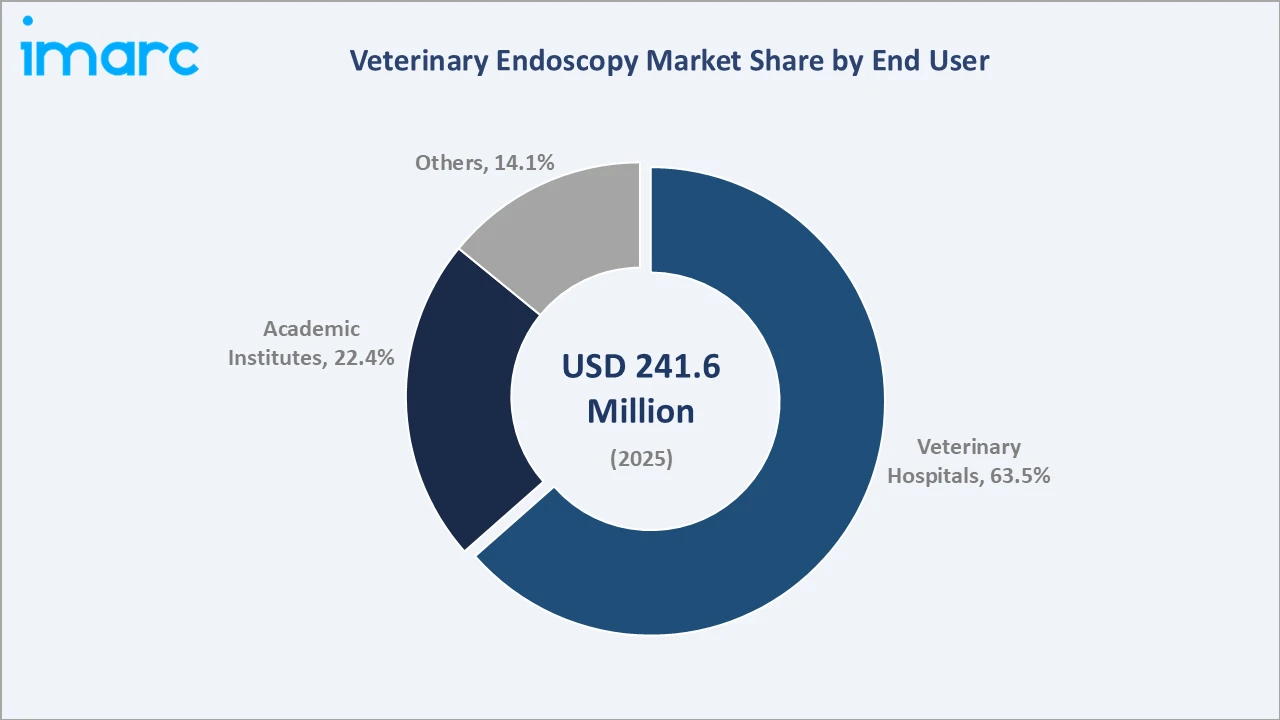
Academic institutes account for 22.4%, supported by expanding veterinary training programs and research use of endoscopic equipment, while other end users, including standalone clinics, represent 14.1% of the market.
Regional Market Insights
|
Region |
Share (2025) |
Key Market Drivers & Characteristics |
|
North America |
37.6% |
Supported by high animal healthcare spending, well-established veterinary hospital networks, and early adoption of advanced diagnostic technologies |
|
Europe |
28.3% |
Driven by strong insurance penetration, supportive regulatory standards, and established veterinary academic infrastructure |
|
Asia-Pacific |
24.7% |
Driven by rising pet ownership, growing livestock populations, and expanding veterinary hospital investment |
|
Latin America |
5.4% |
Supported by gradual expansion of animal healthcare access and livestock disease monitoring initiatives |
|
Middle East and Africa |
4.0% |
Emerging with growing veterinary infrastructure development and increasing awareness of advanced animal diagnostics |
North America, at 37.6%, leads through high per-animal healthcare expenditure and concentrated veterinary specialist infrastructure. Europe, at 28.3%, reflects strong insurance penetration and veterinary academic leadership.
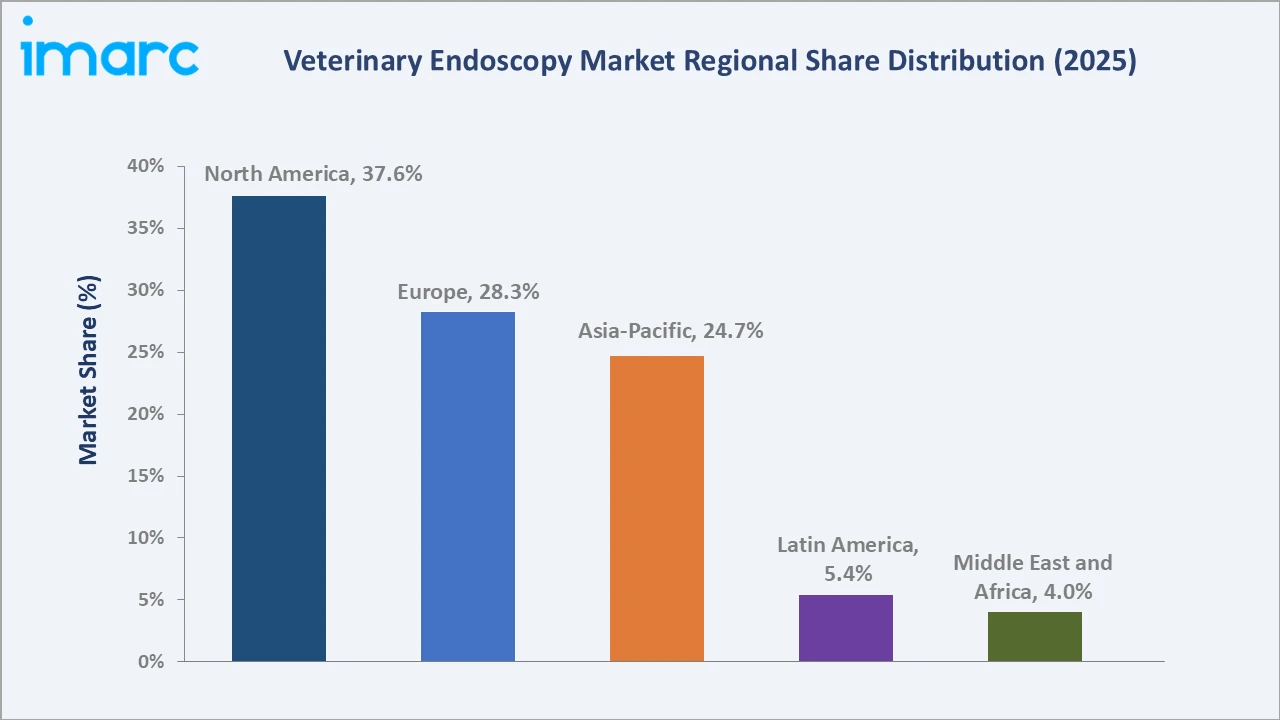
Asia-Pacific, at 24.7%, is expanding rapidly on rising pet ownership and livestock health monitoring investment. Latin America, at 5.4%, and Middle East and Africa, at 4.0%, represent early-stage but growing markets, driven by gradual veterinary infrastructure development.
Competitive Landscape
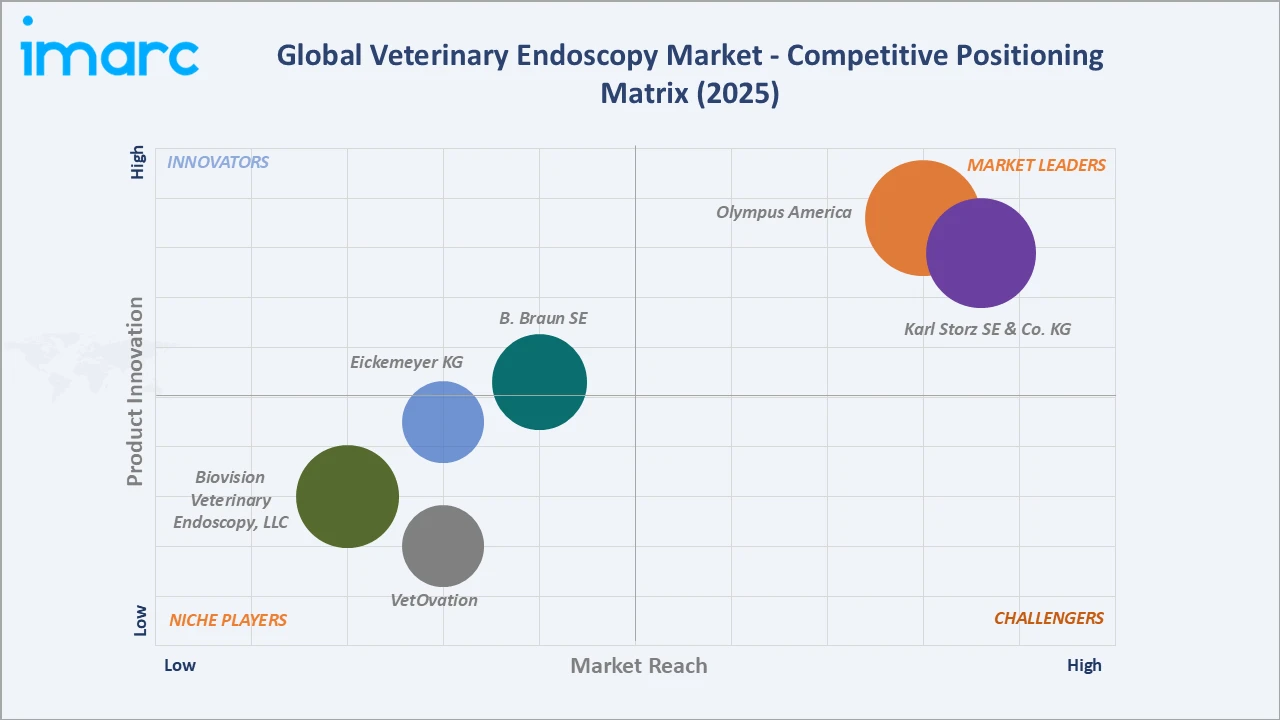
The global veterinary endoscopy market competitive landscape is moderately consolidated, comprising established medical device manufacturers extending human endoscopy expertise into veterinary applications alongside specialized veterinary endoscopy equipment providers.
|
Company Name |
Key Products |
Market Position |
Core Strength |
|
Karl Storz SE & Co. KG |
Rigid & Flexible Veterinary Endoscopes |
Market Leader |
Karl Storz specializes in rigid and flexible endoscopic visualization systems with a dedicated veterinary product line. |
|
Olympus America |
Flexible Video Endoscopes |
Market Leader |
Olympus leverages decades of human medical endoscopy expertise to serve advanced veterinary diagnostic imaging. |
|
Biovision Veterinary Endoscopy, LLC |
EndoDiagnostic |
Niche Specialist |
Biovision focuses exclusively on veterinary-purpose-built endoscopy systems designed for general practice and specialty clinic workflows. |
|
B. Braun SE |
Aesculap Veterinary Endoscopy |
Established Player |
B. Braun supplies surgical and endoscopic instruments supporting veterinary interventional procedures. |
|
Eickemeyer KG |
EickView Endoscopy System |
Established Player |
Eickemeyer combines endoscopic equipment manufacturing with veterinary-focused distribution and clinician training support across Europe |
|
VetOvation |
Flexible Endoscope Systems |
Niche Specialist |
VetOvation delivers cost-effective flexible endoscopy systems targeted at independent and general practice veterinary clinics. |
Key players include Karl Storz SE & Co. KG, Olympus America, Biovision Veterinary Endoscopy, LLC, B. Braun SE, Eickemeyer KG, VetOvation, and others.
Key Company Profiles
Karl Storz SE & Co. KG
Karl Storz SE & Co. KG is a Germany-based manufacturer of endoscopic and visualization equipment with a long-standing presence in veterinary endoscopy through its dedicated veterinary product line.
- Key Products: Rigid endoscopes, flexible video endoscopes, veterinary visualization towers.
- Strategic Focus: Expanding veterinary-specific endoscope portfolios and strengthening distribution to veterinary hospitals and academic institutions. The company is also investing in clinician training programs to build long-term brand familiarity among newly certified veterinary endoscopists. Continued emphasis on modular tower designs is intended to lower upgrade costs for existing hospital customers.
Olympus America
Olympus America is a Japan-based global leader in optical and endoscopic technology, leveraging its human medical endoscopy expertise to serve the veterinary diagnostics segment.
- Key Products: Flexible video endoscopes, imaging processors, veterinary diagnostic accessories.
- Strategic Focus: Extending advanced video-imaging technology from human healthcare into veterinary hospital and academic channels. Olympus is prioritizing image-quality enhancements and ergonomic scope design to reduce practitioner fatigue during extended procedures. The company is also exploring closer collaboration with veterinary academic institutions to support curriculum-based endoscopy training.
Market Concentration Analysis
The veterinary endoscopy market is moderately concentrated at the global manufacturer level, with the top four key players collectively accounting for an estimated 45-55% of global veterinary endoscopy equipment revenue. Specialized veterinary-focused suppliers and regional distributors account for the remainder, with market concentration expected to remain broadly stable through the forecast period as established medical device manufacturers continue to extend their human-healthcare endoscopy expertise into veterinary applications.
Investment & Growth Opportunities
Highest Growth Segments
Companion animal application (~4.7% CAGR), veterinary hospital end user (~4.9% CAGR), capsule endoscopy premium sub-segment (~8-10% CAGR from a small base), and AI-assisted image interpretation platforms (~10-12% CAGR from a near-zero commercial base) represent the highest-growth investment vectors through 2034.
Emerging Investment Opportunities
Robot-assisted veterinary endoscopic systems represent the market's highest per-unit-value emerging opportunity, with referral-hospital-grade systems generating several multiples of the revenue per unit of standard flexible video endoscopes, supported by growing specialty referral hospital investment through 2034.
Investment Themes
- AI-assisted image interpretation integration as a structural differentiator through 2034: Manufacturers that achieve reliable AI-assisted lesion detection integrated into standard endoscopy towers can create a durable diagnostic-accuracy advantage over competitors offering conventional imaging only.
- Academic and training institution partnership expansion, capturing the market's fastest-growing specialist pipeline: Academic institute procurement and training partnerships create a structural pathway to build long-term brand preference among newly certified veterinary endoscopists entering hospital and clinic practice.
Future Market Outlook (2026-2034)
The global veterinary endoscopy market is projected to grow from USD 241.6 Million in 2025 to USD 362.4 Million by 2034, delivering a 4.47% CAGR over the forecast period. The market's anchor value of approximately USD 300.7 Million in 2030 represents continued mainstream adoption of endoscopic diagnosis across veterinary hospitals. Capsule endoscopy and robot-assisted systems are expected to gain incremental adoption as academic training and specialist availability expand, AI-assisted image interpretation is expected to achieve wider integration into standard endoscopy towers, and veterinary hospitals will continue to anchor the largest share of equipment procurement through the forecast period.
Three structural forces define veterinary endoscopy market growth through 2034 with reasonable confidence. Rising companion animal healthcare spending creates a self-reinforcing demand cycle where insurance penetration begets diagnostic adoption, which begets further procedure volume. The academic and specialist training pipeline expansion widens the pool of clinicians capable of performing advanced endoscopic procedures. The gradual shift from exploratory surgery to endoscopic diagnosis across both companion and livestock animal care creates a durable, structurally growing demand base.
Research Methodology
Primary Research
Primary research comprised structured interviews with veterinary hospital administrators, practicing veterinary endoscopists, academic institution procurement leads, and equipment distributor representatives across major regional markets.
Secondary Research
Secondary research encompassed company disclosures, veterinary association publications, animal health industry reports, and regional veterinary registration data. Over 45 secondary sources were reviewed to validate segment shares and regional distribution.
Forecasting Models
Market revenue forecasts were developed using a bottom-up model incorporating: (i) procedure volume by animal type and end user; (ii) average equipment and consumable spend per procedure; (iii) regional veterinary infrastructure investment trends; and (iv) technology premium adjustment for advanced systems such as capsule and robot-assisted endoscopy versus standard flexible endoscopy pricing.
Report Coverage:
| Report Features | Details |
|---|---|
| Base Year of the Analysis | 2025 |
| Historical Period | 2020-2025 |
| Forecast Period | 2026-2034 |
| Units | Million USD |
| Scope of the Report | Exploration of Historical Trends and Market Outlook, Industry Catalysts and Challenges, Segment-Wise Historical and Future Market Assessment:
|
| Products Covered | Capsule Endoscopes, Flexible Endoscopes, Rigid Endoscopes, Robot Assisted Endoscopes |
| Animal Types Covered | Companion, Livestock |
| End Users Covered | Veterinary Hospitals, Academic Institutes, Others |
| Regions Covered | Asia Pacific, Europe, North America, Latin America, Middle East and Africa |
| Countries Covered | United States, Canada, Germany, France, United Kingdom, Italy, Spain, Russia, China, Japan, India, South Korea, Australia, Indonesia, Brazil, Mexico |
| Companies Covered | Karl Storz SE & Co. KG, Olympus America, Biovision Veterinary Endoscopy, LLC, B. Braun SE, Eickemeyer KG, VetOvation, etc. |
| Customization Scope | 10% Free Customization |
| Post-Sale Analyst Support | 10-12 Weeks |
| Delivery Format | PDF and Excel through Email (We can also provide the editable version of the report in PPT/Word format on special request) |
Frequently Asked Questions About the Veterinary Endoscopy Market Report
The global veterinary endoscopy market reached USD 241.6 Million in 2025, driven by the companion animal segment dominant at 71.8%, veterinary hospitals leading end user demand at 63.5%, and North America commanding 37.6% market share.
The veterinary endoscopy market grows at 4.47% CAGR during 2026-2034, reaching USD 362.4 Million by 2034. This growth reflects rising companion animal healthcare spending, expanding pet insurance penetration, growing academic and specialist training capacity, and gradual replacement of exploratory surgery with endoscopic diagnosis.
The companion segment leads at 71.8%, capturing the mainstream companion animal diagnostic specification. This segment grows at ~4.7% CAGR through rising pet insurance penetration and per-pet healthcare spending.
Veterinary hospitals lead at 63.5% through the highest per-unit equipment investment and compounding procedure case volume, creating sustained procurement expansion. Veterinary Hospitals grow fastest at ~4.9% CAGR through concentrated specialist staffing and case volume growth.
North America leads at 37.6% through high per-pet healthcare expenditure, dense veterinary hospital networks, and early adoption of advanced diagnostic technologies.
Leading companies include Karl Storz SE & Co. KG, Olympus America, Biovision Veterinary Endoscopy, LLC, B. Braun SE, Eickemeyer KG, VetOvation, and others .
The veterinary endoscopy market is projected to reach approximately USD 300.7 Million by 2030, with AI-assisted image interpretation becoming more common in new endoscopy tower installations, capsule endoscopy adoption expanding, and robot-assisted systems beginning early referral-hospital deployment.
Three priority investment opportunities: AI-assisted image interpretation platform development, academic and training institution partnership expansion, and robot-assisted veterinary endoscopy system commercialization.
Need more help?
- Speak to our experienced analysts for insights on the current market scenarios.
- Include additional segments and countries to customize the report as per your requirement.
- Gain an unparalleled competitive advantage in your domain by understanding how to utilize the report and positively impacting your operations and revenue.
- For further assistance, please connect with our analysts.
 Request Customization
 Speak to an Analyst
 Request Brochure
 Inquire Before Buying
Benefits of Customization
- Personalize this research
- Triangulate with your data
- Get data as per your format and definition
- Gain a deeper dive into a specific application, geography, customer, or competitor
- Any level of personalization
Get in Touch With Us
UNITED STATES
Phone: +1-201-971-6302
INDIA
Phone: +91-120-433-0800
UNITED KINGDOM
Phone: +44-753-714-6104
Email: [email protected]
Client Testimonials




.webp)




.webp)













Related Reports

Choose your plan
*Please note that the prices mentioned below are starting prices for each bundle type. Kindly contact our team for further details.*
Single User License
- 1 User License, Access on 2 Devices
- PDF Report + Excel Dataset (Password Protected)
- Lifetime Access
- No Printing Rights
- 10% Free Report Customization
- 10–12 Weeks of Analyst Support
Five User License
- Access for 5 Users, 2 Devices per User
- PDF Report + Excel Dataset (Password Protected)
- Lifetime Access
- Dedicated Account Manager
- 12–14 Weeks of Analyst Support
- No Printing Rights
- 15% Free Report Customization
- 25% Discount on Your Next Purchase
Corporate User License
- Unlimited User Access (Within Your Organization)
- PDF Report + Excel Dataset
- Lifetime Access
- Dedicated Account Manager
- 14–20 Weeks of Analyst Support
- No Printing Rights
- 20% Free Report Customization
- 30% Discount on Your Next Purchase
Essential Insights
What's included:
3 reports
- Lifetime Access
- PDF Reports
- Excel Datasets
- 2 Weeks of Free Analyst Support
- 2 User Licenses
- Access on 2 Devices
- Printing Rights
- Complimentary PowerPoint (PPT) Version
- Complimentary License Upgrade
Professional Access
What's included:
5 reports
- Lifetime Access
- PDF Reports
- Excel Datasets
- 8 Weeks of Free Analyst Support
- 2 User Licenses
- Access on 2 Devices
- Printing Rights
- Complimentary PowerPoint (PPT) Version
- Complimentary License Upgrade
Business Advantage
What's included:
8 reports
- Lifetime Access
- PDF Reports
- Excel Datasets
- 14 Weeks of Free Analyst Support
- 2 User Licenses
- Access on 2 Devices
- Printing Rights
- Complimentary PowerPoint (PPT) Version
- Complimentary License Upgrade
Enterprise Intelligence
What's included:
10 reports
- Lifetime Access
- PDF Reports
- Excel Datasets
- 20 Weeks of Free Analyst Support
- 2 User Licenses
- Access on 2 Devices
- Printing Rights
- Complimentary PowerPoint (PPT) Version
- Complimentary License Upgrade