
Xylitol Market Size, Share, Trends and Forecast by Form, Application, and Region, 2026-2034
Xylitol Market Size and Share:
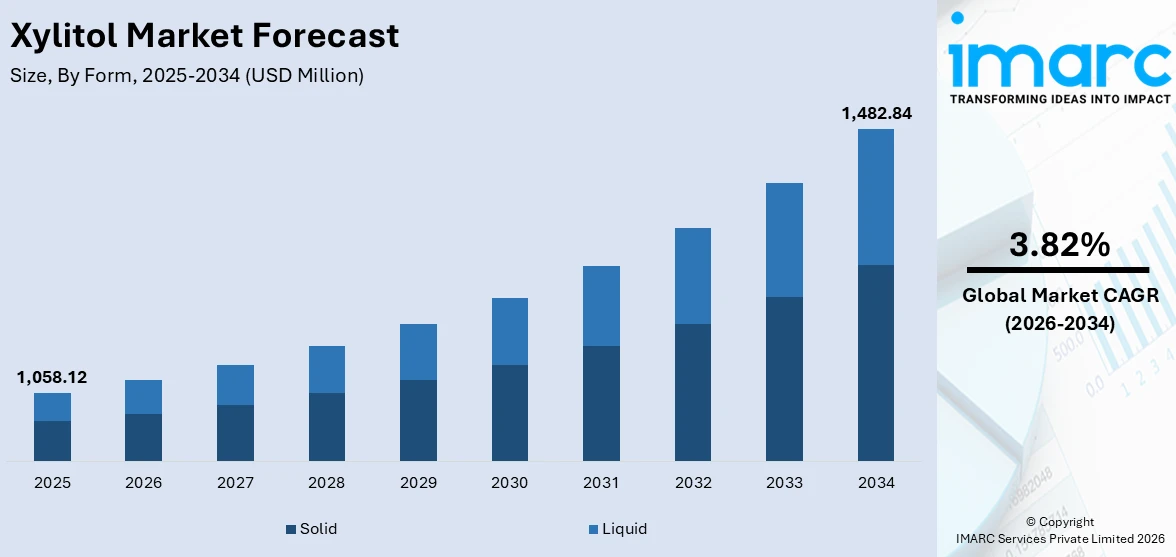
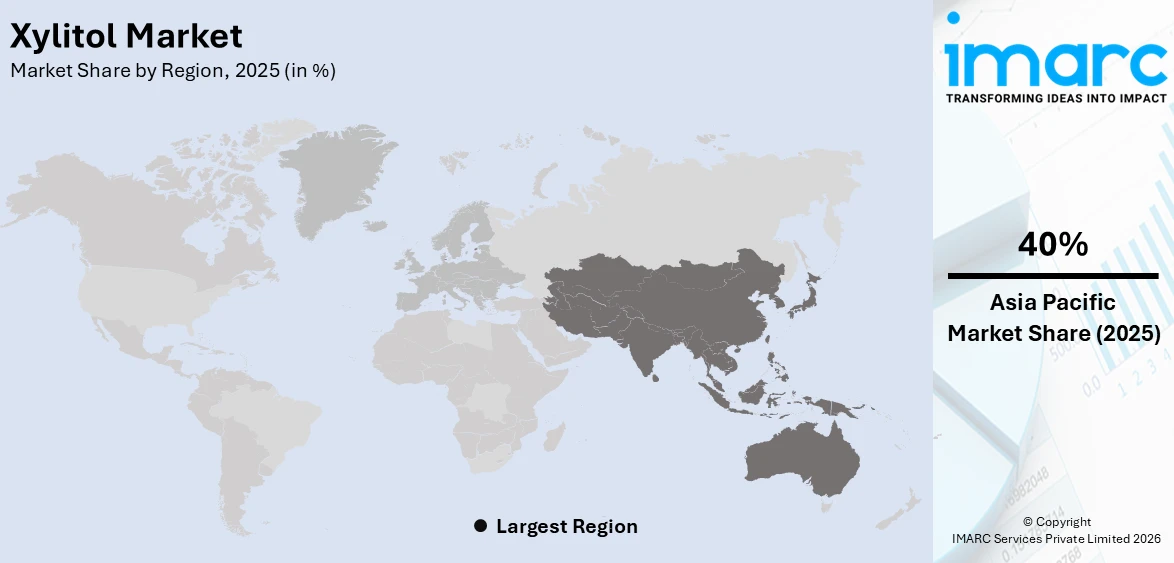
The global xylitol market size was valued at USD 1,058.12 Million in 2025. Looking forward, IMARC Group estimates the market to reach USD 1,482.84 Million by 2034, exhibiting a CAGR of 3.82% from 2026-2034. Asia-Pacific currently dominates the market, holding a market share of 40% in 2025. The region benefits from extensive xylitol production infrastructure in China and strong domestic consumption driven by increasing applications in diabetic-friendly foods, oral care products, and functional confectionery items, contributing to the xylitol market share.
Increasing global awareness about health and wellness is a significant factor propelling the demand for xylitol as a preferred low-calorie sweetener across the food, beverage, and pharmaceutical industries. Xylitol, being a naturally occurring sugar alcohol with a low glycemic index, is gaining traction among health-conscious consumers seeking alternatives to refined sugar. Its well-documented dental health benefits, including the ability to inhibit cavity-causing bacteria and promote tooth mineralization, are encouraging its widespread adoption in sugar-free chewing gums, candies, and oral care products. Furthermore, the rising prevalence of lifestyle diseases, such as diabetes and obesity, is driving consumers towards low-calorie and diabetic-friendly sweetener options. Government-led initiatives promoting sugar reduction in processed food and beverage (F&B) items are also catalyzing the xylitol market growth and encouraging manufacturers to reformulate their products with healthier alternatives.
The United States has emerged as a major region in the xylitol market owing to many factors. The growing consumer inclination towards sugar-free and low-calorie dietary choices is fostering a favorable environment for xylitol-based product development across the country. The rising incidence of diabetes and obesity in the nation is encouraging a shift towards natural sweeteners that do not spike blood glucose levels. By 2024, every state and territory in the United States exhibited an obesity rate of 25% or more (at least 1 in 4 adults). Additionally, the expansion of retail distribution channels and the increasing availability of xylitol-infused chewing gums, confectionery items, and oral care products in supermarkets and online platforms are bolstering consumption. Moreover, ongoing research into the therapeutic applications of xylitol in nasal sprays and wound care formulations is broadening its commercial utility.
To get more information on this market Request Sample
Xylitol Market Trends:
Rising Demand for Sugar-Free Products
The escalating consumer preference for sugar-free and reduced-sugar food products is a pivotal trend shaping the market. As awareness regarding the adverse health effects of excessive sugar consumption, including dental caries, obesity, and metabolic disorders, continues to spread globally, manufacturers are increasingly incorporating xylitol into their formulations as a natural sugar substitute. Xylitol offers sweetness comparable to sucrose while delivering approximately 40% fewer calories, making it an attractive ingredient for health-oriented F&B products. The chewing gum segment, in particular, is witnessing robust demand for xylitol-sweetened products, as consumers recognize its non-cariogenic properties and its ability to stimulate saliva production. According to the IDF Diabetes Atlas 2025, 1 in 8 adults, roughly 853 Million people across the globe, will have diabetes by 2050, underscoring the urgent need for diabetic-friendly sweeteners. This growing patient population is creating sustained demand for xylitol-based formulations across multiple categories.
Advancements in Sustainable Production Technologies
Technological innovations are significantly shaping the xylitol market outlook. Manufacturers are increasingly investing in biotechnological fermentation and enzymatic extraction techniques that utilize agricultural residues, such as corn cobs and sugarcane bagasse, reducing reliance on traditional chemical hydrogenation methods. These green production approaches offer enhanced cost efficiency, lower environmental impact, and improved product purity, aligning with the broader industry shift toward sustainable manufacturing practices. The adoption of bio-based production pathways is particularly evident in China, where major producers are expanding capacities with advanced purification and automated packaging systems. These developments are strengthening supply chain resilience and enabling manufacturers to meet the growing global demand for high-quality xylitol at competitive prices.
Expanding Applications in Oral Care Products
The broadening utilization of xylitol across pharmaceutical and personal care products represents a notable trend augmenting market expansion. Beyond its traditional role in confectionery and chewing gums, xylitol is increasingly being incorporated into toothpastes, mouthwashes, nasal sprays, and therapeutic lozenges, capitalizing on its well-established anti-bacterial and moisturizing properties. The growing emphasis on preventive oral healthcare among consumers, coupled with endorsements from dental associations regarding the efficacy of xylitol in reducing cavity-causing bacteria, is among the major xylitol market trends. In June 2025, a unique dental health screening program called ‘Path of Smiles', co-hosted by the Madurai corporation and CSI Dental College, was launched to enhance oral hygiene among students in Madurai corporation schools. Approximately 18,000 students would receive education on the significance of maintaining oral hygiene and practicing preventive dental care. The pharmaceutical and personal care segment is witnessing accelerated adoption as manufacturers develop innovative product formulations that leverage xylitol's low glycemic index and non-cariogenic characteristics.
Xylitol Market Industry Segmentation:
IMARC Group provides an analysis of the key trends in each segment of the global xylitol market, along with forecast at the global and regional levels from 2026-2034. The market has been categorized based on form and application.

Analysis by Form:
- Solid
- Liquid
Solid holds 91% of the market share, owing to its broad compatibility with a variety of manufacturing methods, stability, and adaptability. Because of solid xylitol’s physical similarity to sucrose, it is widely used in food production, especially in confectionery, chewing gum, and bakery applications. It is a favored ingredient for businesses looking to create sugar-free dietary supplements, functional meals, and medicinal tablets because of its extended shelf life offered by its anhydrous nature. Its attractiveness throughout the supply chain is further increased by how simple it is to handle, store, and transport. Furthermore, solid xylitol exhibits outstanding thermal stability, which allows it to be processed at high temperatures without sacrificing functionality or sweetness. Large-scale food and pharmaceutical industries choose it because of its accurate dosage capacity, which also promotes consistent product development.
Analysis by Application:
Access the comprehensive market breakdown Request Sample
- Chewing Gum
- Confectionery
- Pharmaceutical and Personal Care
- Others
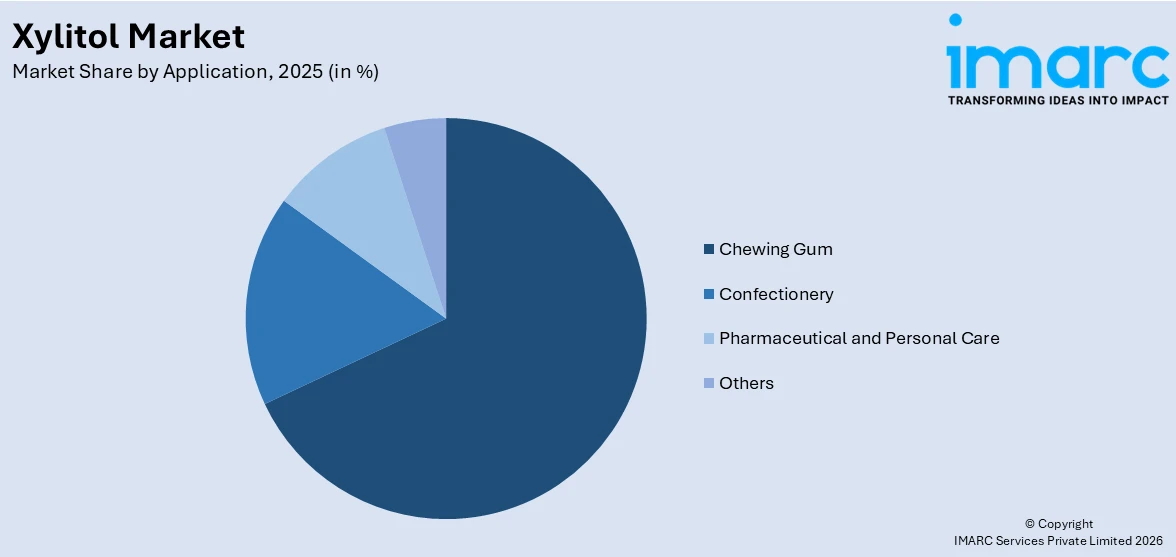
Chewing gum leads the market with a share of 68%, driven by the strong and ongoing demand from consumers for sugar-free gum products that are beneficial to tooth health. Major chewing gum makers across the world use xylitol as their preferred sweetener due to its special anti-cariogenic qualities, which include its capacity to prevent the formation of Streptococcus mutans and lessen plaque accumulation. The pleasant cooling effect and sweetness profile comparable to sugar further enhance its desirability in this application. Gum containing xylitol is being adopted by consumers as a handy oral hygiene aid in between meals due to growing knowledge of the connection between sugar consumption and dental damage. As per the xylitol market forecast, product innovations in tastes and functional gum variations will continue to maintain consumer interest and encourage repeat purchases.
Regional Analysis:
To get more information on the regional analysis of this market Request Sample
- Europe
- North America
- Asia-Pacific
- Middle East and Africa
- Latin America
Asia-Pacific, accounting for 40% of the share, enjoys the leading position in the market. The region's dominance is attributable to China's position as one of the leading producers and exporters of xylitol, leveraging extensive corn cob-based manufacturing capacities and cost-efficient production technologies. Strong domestic consumption across China, India, Thailand, and Japan, driven by increasing health awareness, rising disposable incomes, and expanding applications in diabetic foods, nutraceuticals, and chewing gums, further reinforces the regional lead. As per IMARC Group, the India nutraceuticals market size was valued at USD 8.93 Billion in 2025. The presence of established manufacturing clusters in Shandong Province and the growing export infrastructure connecting producers to North American and European markets sustain supply chain efficiency. Government initiatives aimed at promoting healthier lifestyles and the expanding F&B industry across the region continue to accelerate xylitol adoption.
Key Regional Takeaways:
North America Xylitol Market Analysis
North America represents a significant market for xylitol, supported by high consumer awareness regarding sugar-free products, stringent food safety regulations, and robust retail distribution networks. The region's well-established confectionery and oral care industries provide a strong foundation for xylitol consumption, with sugar-free chewing gums, candies, and toothpastes featuring prominently in retail and online channels. The growing prevalence of diabetes and obesity-related health conditions is driving consumer migration towards low-calorie and diabetic-friendly sweetener alternatives, creating favorable conditions for xylitol-based product development. Regulatory support from agencies, such as the FDA, provides manufacturers with confidence to expand their product portfolios incorporating this ingredient. Furthermore, the rising demand for clean-label and plant-based food formulations is encouraging product innovation centered on natural sweeteners like xylitol. Strategic investments by leading manufacturers in production capacity expansion and distribution network optimization continue to bolster market growth across the region. Additionally, increasing consumer acceptance of preventive oral healthcare products is further strengthening xylitol demand across both food and personal care applications in North America.
United States Xylitol Market Analysis
The United States constitutes a key growth market for xylitol, driven by increasing consumer health consciousness, rising diabetic population, and expanding retail availability of sugar-free F&B products. The shift in consumer preferences towards low-calorie and natural sweetener alternatives is encouraging manufacturers to incorporate xylitol into a broadening range of applications, including confectionery, functional beverages, oral care products, and dietary supplements. The strong presence of major confectionery brands offering xylitol-sweetened chewing gums and candies supports sustained product demand across the country. Additionally, growing clinical evidence supporting xylitol's dental health benefits is driving its adoption in oral hygiene products, with dental professionals increasingly recommending xylitol-containing products for cavity prevention. The expansion of e-commerce platforms and direct-to-consumer (D2C) sales channels is further improving product accessibility, enabling consumers across diverse geographic locations to access xylitol-based products conveniently. As per IMARC Group, the United States e-commerce market is set to reach USD 2,160.3 Billion by 2034.
Europe Xylitol Market Analysis
Europe represents a mature and steadily growing market for xylitol, underpinned by stringent regulatory frameworks promoting sugar reduction and heightened consumer awareness regarding oral and metabolic health. Finland holds a prominent position as one of the leading xylitol producers in Europe, with production facilities utilizing sustainable birch wood-based extraction processes. The region's well-established confectionery and oral care industries serve as primary demand drivers, while growing interest in functional foods and nutraceuticals is expanding the application landscape. The growing prevalence of dental decay cases across Europe is further accelerating the adoption of xylitol-infused oral care products. The NHS England data revealed that 21,162 children aged 5 to 9 were hospitalized in 2024/2025 because of tooth decay, positioning it as the primary reason for hospitalizations in this age category. Additionally, the increasing demand for clean-label, natural sweeteners, aligned with sustainability and traceability standards, is reinforcing xylitol’s position across European food and healthcare formulations.
Asia-Pacific Xylitol Market Analysis
Asia-Pacific dominates the global xylitol market, driven by China's unparalleled production capacity and the region's expanding consumption base across food, pharmaceutical, and personal care sectors. The growing health consciousness and increasing disposable incomes in countries, such as India, Japan, and Thailand, are accelerating the demand for sugar-free and low-calorie products containing xylitol. As per Trading Economics, disposable personal income in Japan rose to 1010.41 JPY Thousand in December 2025, up from 425.50 JPY Thousand in November 2025. The region's extensive corn cob availability provides a cost-efficient raw material base for large-scale production. Government initiatives promoting healthier dietary habits and preventive healthcare practices continue to support market expansion across the region.
Latin America Xylitol Market Analysis
Latin America is an emerging market for xylitol, supported by rising consumer awareness about sugar-related health concerns and the gradual expansion of sugar-free product availability across the region. The increasing prevalence of diabetes and obesity is driving demand for healthier sweetener alternatives in F&B formulations. Growing retail infrastructure, improving distribution networks, and the entry of international confectionery brands offering sugar-free products are facilitating market development. Additionally, increasing investments in product localization and affordability are enabling manufacturers to better cater to diverse consumer preferences and price sensitivities across Latin American markets.
Middle East and Africa Xylitol Market Analysis
The Middle East and Africa xylitol market is at a nascent stage but exhibiting gradual growth, driven by increasing health awareness and the expanding availability of imported sugar-free and low-calorie food products. The rising prevalence of diabetes and lifestyle-related diseases across the region is creating demand for healthier sweetening alternatives. Improvements in retail distribution channels and increasing consumer exposure to international dietary trends are supporting the gradual penetration of xylitol-based products in the region.
Competitive Landscape:
The global xylitol market exhibits a moderately consolidated competitive structure, characterized by the presence of established multinational corporations alongside specialized regional manufacturers. Leading players are pursuing strategic initiatives, including capacity expansions, technological innovations in bio-based production, and product portfolio diversification, to strengthen their market positions. Companies are increasingly investing in sustainable extraction technologies, improved enzymatic processes, and purity enhancement capabilities to meet the rising demand for high-quality, food-grade and pharmaceutical-grade xylitol. Strategic partnerships with major confectionery brands and oral care product manufacturers are enabling producers to broaden their distribution reach and penetrate new application segments. Regional manufacturers, particularly in China, are leveraging cost-efficient corn cob-based production to maintain competitive pricing while meeting international quality standards. Innovations in product formulations, including customized blends and improved solubility profiles, are further differentiating market offerings and driving growth.
The report provides a comprehensive analysis of the competitive landscape in the xylitol market with detailed profiles of all major companies, including:
- Cargill, Incorporated
- Foodchem International Corporation
- Herboveda India
- Jining Hengda Green Engineering Co., Ltd.
- Merck KGaA
- Mitsubishi Corporation Life Sciences Limited
- Roquette Freres
- Shandong Futaste Co.
- Shandong Longlive Bio-technology Co., Ltd.
- Zhejiang Huakang Pharmaceutical Co., Ltd.
Xylitol Market Report Scope:
| Report Features | Details |
|---|---|
| Base Year of the Analysis | 2025 |
| Historical Period | 2020-2025 |
| Forecast Period | 2026-2034 |
| Units | Million USD |
| Scope of the Report | Exploration of Historical Trends and Market Outlook, Industry Catalysts and Challenges, Segment-Wise Historical and Future Market Assessment:
|
| Forms Covered | Solid, Liquid |
| Applications Covered | Chewing Gum, Confectionery, Pharmaceutical and Personal Care, Others |
| Regions Covered | Europe, North America, Asia-Pacific, Middle East and Africa, Latin America |
| Companies Covered | Cargill, Incorporated, Foodchem International Corporation, Herboveda India, Jining Hengda Green Engineering Co., Ltd., Merck KGaA, Mitsubishi Corporation Life Sciences Limited, Roquette Freres, Shandong Futaste Co., Shandong Longlive Bio-technology Co., Ltd., Zhejiang Huakang Pharmaceutical Co., Ltd., etc. |
| Customization Scope | 10% Free Customization |
| Post-Sale Analyst Support | 10-12 Weeks |
| Delivery Format | PDF and Excel through Email (We can also provide the editable version of the report in PPT/Word format on special request) |
Key Benefits for Stakeholders:
- IMARC’s report offers a comprehensive quantitative analysis of various market segments, historical and current market trends, market forecasts, and dynamics of the xylitol market from 2020-2034.
- The research study provides the latest information on the market drivers, challenges, and opportunities in the global xylitol market.
- The study maps the leading, as well as the fastest-growing, regional markets.
- Porter’s Five Forces analysis assists stakeholders in assessing the impact of new entrants, competitive rivalry, supplier power, buyer power, and the threat of substitution. It helps stakeholders to analyze the level of competition within the xylitol industry and its attractiveness.
- Competitive landscape allows stakeholders to understand their competitive environment and provides an insight into the current positions of key players in the market.
Frequently Asked Questions About the Xylitol Market Report
The xylitol market was valued at USD 1,058.12 Million in 2025.
The xylitol market is projected to exhibit a CAGR of 3.82% during 2026-2034, reaching a value of USD 1,482.84 Million by 2034.
The xylitol market is driven by increasing consumer health awareness and demand for low-calorie sweetener alternatives, the rising global prevalence of diabetes and obesity, expanding applications in sugar-free confectionery and oral care products, advancements in sustainable bio-based production technologies, and supportive government policies promoting sugar reduction in processed F&B items.
Asia-Pacific currently dominates the xylitol market, accounting for a share of 40%. The region benefits from China’s leading production capacity and extensive export infrastructure, alongside rising health-conscious consumption across India, Japan, and Thailand.
Some of the major players in the xylitol market include Cargill, Incorporated, Foodchem International Corporation, Herboveda India, Jining Hengda Green Engineering Co., Ltd., Merck KGaA, Mitsubishi Corporation Life Sciences Limited, Roquette Freres, Shandong Futaste Co., Shandong Longlive Bio-technology Co., Ltd., Zhejiang Huakang Pharmaceutical Co., Ltd., etc.
Need more help?
- Speak to our experienced analysts for insights on the current market scenarios.
- Include additional segments and countries to customize the report as per your requirement.
- Gain an unparalleled competitive advantage in your domain by understanding how to utilize the report and positively impacting your operations and revenue.
- For further assistance, please connect with our analysts.
 Request Customization
 Speak to an Analyst
 Request Brochure
 Inquire Before Buying
Benefits of Customization
- Personalize this research
- Triangulate with your data
- Get data as per your format and definition
- Gain a deeper dive into a specific application, geography, customer, or competitor
- Any level of personalization
Get in Touch With Us
UNITED STATES
Phone: +1-201-971-6302
INDIA
Phone: +91-120-433-0800
UNITED KINGDOM
Phone: +44-753-714-6104
Email: [email protected]
Client Testimonials




.webp)




.webp)













Related Reports

Choose your plan
*Please note that the prices mentioned below are starting prices for each bundle type. Kindly contact our team for further details.*
Single User License
- 1 User License, Access on 2 Devices
- PDF Report + Excel Dataset (Password Protected)
- Lifetime Access
- No Printing Rights
- 10% Free Report Customization
- 10–12 Weeks of Analyst Support
Five User License
- Access for 5 Users, 2 Devices per User
- PDF Report + Excel Dataset (Password Protected)
- Lifetime Access
- Dedicated Account Manager
- 12–14 Weeks of Analyst Support
- No Printing Rights
- 15% Free Report Customization
- 25% Discount on Your Next Purchase
Corporate User License
- Unlimited User Access (Within Your Organization)
- PDF Report + Excel Dataset
- Lifetime Access
- Dedicated Account Manager
- 14–20 Weeks of Analyst Support
- No Printing Rights
- 20% Free Report Customization
- 30% Discount on Your Next Purchase
Essential Insights
What's included:
3 reports
- Lifetime Access
- PDF Reports
- Excel Datasets
- 2 Weeks of Free Analyst Support
- 2 User Licenses
- Access on 2 Devices
- Printing Rights
- Complimentary PowerPoint (PPT) Version
- Complimentary License Upgrade
Professional Access
What's included:
5 reports
- Lifetime Access
- PDF Reports
- Excel Datasets
- 8 Weeks of Free Analyst Support
- 2 User Licenses
- Access on 2 Devices
- Printing Rights
- Complimentary PowerPoint (PPT) Version
- Complimentary License Upgrade
Business Advantage
What's included:
8 reports
- Lifetime Access
- PDF Reports
- Excel Datasets
- 14 Weeks of Free Analyst Support
- 2 User Licenses
- Access on 2 Devices
- Printing Rights
- Complimentary PowerPoint (PPT) Version
- Complimentary License Upgrade
Enterprise Intelligence
What's included:
10 reports
- Lifetime Access
- PDF Reports
- Excel Datasets
- 20 Weeks of Free Analyst Support
- 2 User Licenses
- Access on 2 Devices
- Printing Rights
- Complimentary PowerPoint (PPT) Version
- Complimentary License Upgrade