
Brazil Cybersecurity Market Size, Share, Trends and Forecast by Offering, Deployment, End User, and Region, 2026-2034
Brazil Cybersecurity Market Size, Share, Trends & Forecast (2026-2034)
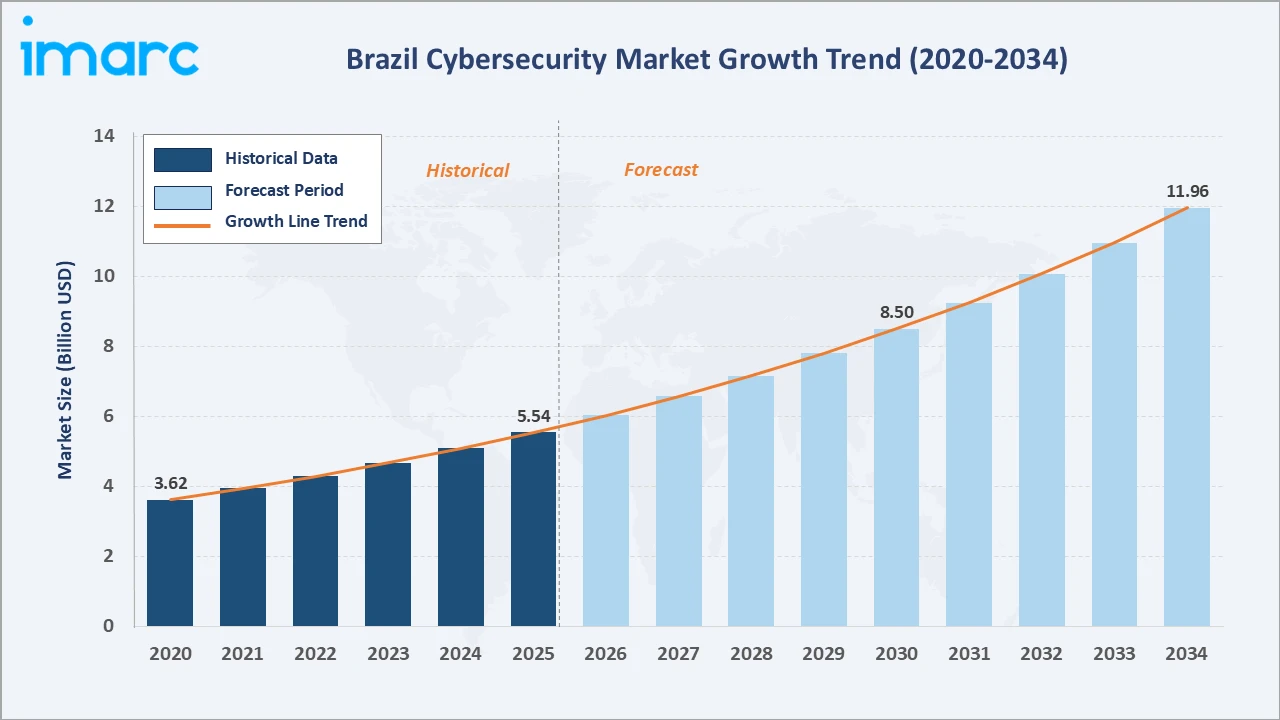
The Brazil cybersecurity market was valued at USD 5.54 Billion in 2025 and is projected to reach USD 11.96 Billion by 2034, exhibiting a CAGR of 8.92% during 2026-2034. The market is driven by increasing cyber threats, rapid digital transformation across enterprises, and rising government initiatives to strengthen national cybersecurity infrastructure.
Security type leads the offering segment at 67.0%, on-premise dominates the deployment segment at 61.0%, and Southeast commands 63.0% regional share.
Market Snapshot
|
Metric |
Value |
|
Market Size (2025) |
USD 5.54 Billion |
|
Forecast Market Size (2034) |
USD 11.96 Billion |
|
CAGR (2026-2034) |
8.92% |
|
Base Year |
2025 |
|
Historical Period |
2020-2025 |
|
Forecast Period |
2026-2034 |
|
Largest Region |
Southeast (63.0%, 2025) |
|
Second Largest Region |
South (14.2%, 2025) |
|
Leading Offering |
Security Type (67.0%, 2025) |
|
Leading Deployment |
On-premise (61.0%, 2025) |
The Brazil cybersecurity market expanded from USD 3.62 Billion in 2020 to USD 5.54 Billion in 2025, supported by widening digital adoption, growing e-commerce penetration, and rising awareness of data protection obligations. Anchored at USD 8.50 Billion in 2030, the climb to USD 11.96 Billion by 2034 reflects deepening cloud migration, expanding managed security adoption, and tightening regulatory oversight across public and private institutions.
To get more information on this market, Request Sample
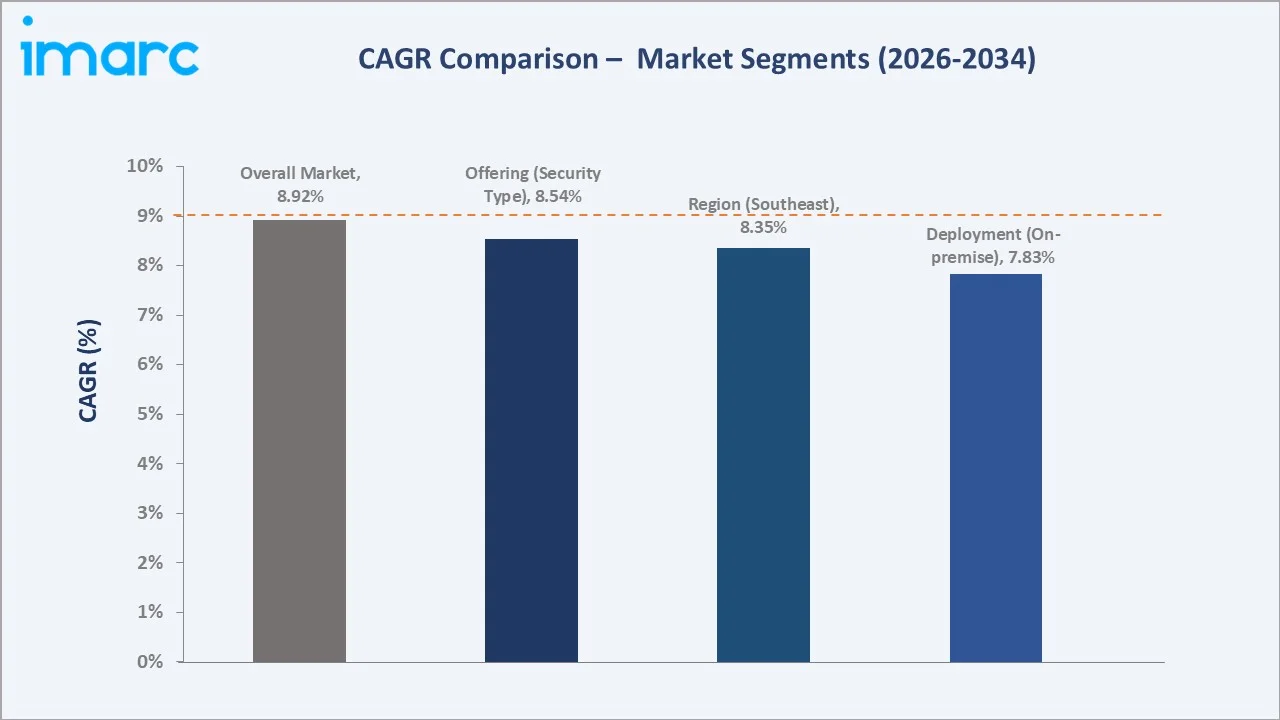
CAGR trajectories across offering, deployment, and regional sub-segments show cloud and services growing faster than the overall 8.92% market CAGR, driven by hybrid infrastructure adoption, subscription-based pricing models, and rising demand for outsourced security operations beyond the Southeast hub.
Executive Summary
The Brazil cybersecurity market is on a steady growth trajectory from USD 3.62 Billion in 2020 to USD 11.96 Billion by 2034. The market has evolved from siloed perimeter defenses to converged security architectures spanning network, cloud, identity, and endpoint protection across financial services, government, retail, and healthcare. Rising digital adoption, expanding e-commerce activity, and increasing reliance on interconnected payment systems are pushing organizations to prioritize continuous threat monitoring and rapid incident response.
Security type leads the offering segment at 67.0% in 2025, supported by sustained investment in network security, endpoint protection, and identity and access management across regulated industries. On-premise leads at 61.0%, driven by organizations' preference for greater control over sensitive data, regulatory compliance, and legacy IT infrastructure. Southeast commands 63.0% of the regional share, anchored by São Paulo's dense concentration of financial institutions and technology enterprises.
Key Market Insights
|
Insight |
Data |
|
Leading Offering |
Security Type - 67.0% share (2025) |
|
Second Largest Offering |
Services - 33.0% share (2025) |
|
Leading Deployment |
On-premise - 61.0% share (2025) |
|
Second Largest Deployment |
Cloud - 39.0% share (2025) |
|
Leading Region |
Southeast - 63.0% share (2025) |
|
Second Largest Region |
South - 14.2% share (2025) |
|
Top Companies |
IBM, Cisco Systems, Inc., Microsoft, Palo Alto Networks, Fortinet, Inc., Check Point Software Technologies Ltd. |
Key Analytical Observations Supporting the Above Data:
- Security type leadership at 67.0% reflects concentrated enterprise spending on network security, endpoint protection, and identity and access management.
- Services share at 33.0% is expanding as organizations increasingly outsource monitoring, incident response, and compliance advisory to specialized providers amid a persistent shortage of in-house security talent.
- On-premise at 61.0% remains dominant among large enterprises and regulated institutions that require direct control over sensitive data and legacy system integration.
- Cloud share at 39.0% is accelerating as mid-sized enterprises adopt subscription-based security platforms that reduce upfront infrastructure costs and simplify ongoing management.
- Southeast at 63.0% dominates regional share, anchored by São Paulo and Rio de Janeiro's concentration of financial institutions, corporate headquarters, and technology infrastructure.
Brazil Cybersecurity Market Overview
Cybersecurity refers to the technologies, services, and practices used to protect networks, systems, applications, and data from unauthorized access, disruption, or theft. In Brazil, the market spans network security, endpoint protection, cloud security, identity and access management, and data protection, delivered through on-premise and cloud-based deployment models.
The Brazilian ecosystem integrates global and regional technology vendors, systems integrators, managed security service providers, cloud and data center operators, regulatory bodies, and end users across banking, government, retail, healthcare, and telecommunications. Rising digital payment adoption and tightening data protection enforcement under the LGPD are reshaping how organizations approach digital risk management.
Market Dynamics
To evaluate market opportunities, Request Sample
Market Drivers
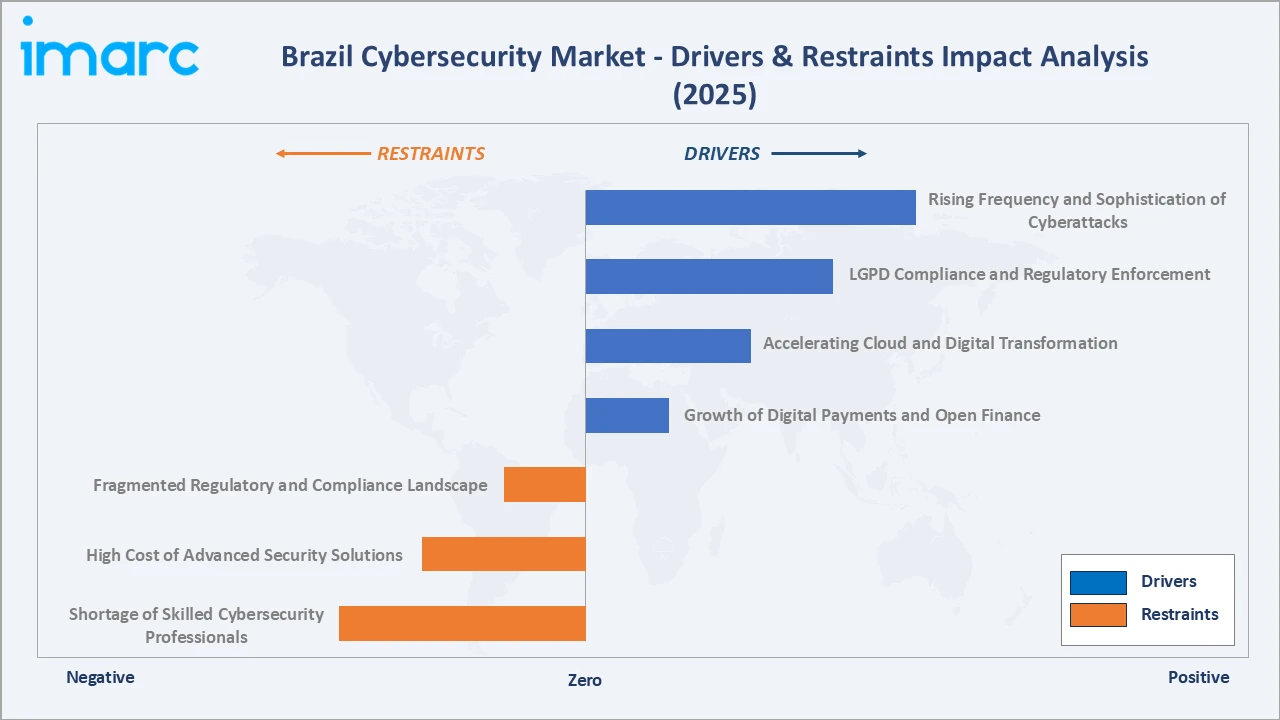
- Rising Frequency and Sophistication of Cyberattacks: Escalating ransomware, phishing, and data-breach attempts across financial services, government, and healthcare sectors are compelling organizations to strengthen detection and response capabilities. The Central Bank of Brazil (BC) documented 76 cyber incidents classified as ‘relevant’ within the financial system in 2025, marking a 29% rise from 2024.
- LGPD Compliance and Regulatory Enforcement: Growing enforcement activity under Brazil's data protection law is pushing enterprises to invest in data governance, encryption, and access control frameworks to avoid penalties and reputational damage.
- Accelerating Cloud and Digital Transformation: Expanding cloud migration, e-commerce growth, and digital banking adoption are widening the enterprise attack surface and driving demand for cloud-native security architectures. As per IMARC Group, the Brazil e-commerce market reached USD 513.25 Billion in 2025.
- Growth of Digital Payments and Open Finance: The expansion of PIX and open banking frameworks is increasing transaction volumes and fraud-prevention requirements across the financial sector.
Market Restraints
- Shortage of Skilled Cybersecurity Professionals: A persistent talent gap is limiting the pace at which enterprises, particularly mid-sized organizations, can build and staff dedicated security operations teams.
- High Cost of Advanced Security Solutions: Enterprise-grade platforms and managed services remain cost-prohibitive for smaller organizations, constraining broader market penetration beyond large enterprises.
- Fragmented Regulatory and Compliance Landscape: Overlapping sector-specific requirements across financial, telecom, and public-sector regulators add complexity for organizations operating across multiple business lines.
Market Opportunities
- Managed Security Services Expansion: Rising demand for outsourced monitoring and incident response creates opportunities for regional and global providers to scale managed detection and response offerings.
- Small and Mid-Sized Enterprise Adoption: A large underserved base of small and mid-sized Brazilian enterprises presents a long-term growth opportunity for affordable, cloud-delivered security platforms.
Market Challenges
- Persistent Ransomware and Supply Chain Risk: Increasingly sophisticated ransomware campaigns targeting third-party vendors and suppliers are complicating enterprise risk management strategies.
- Legacy Infrastructure Modernization: Many public-sector and traditional enterprise systems require significant modernization investment before advanced security architectures can be fully deployed.
Emerging Market Trends
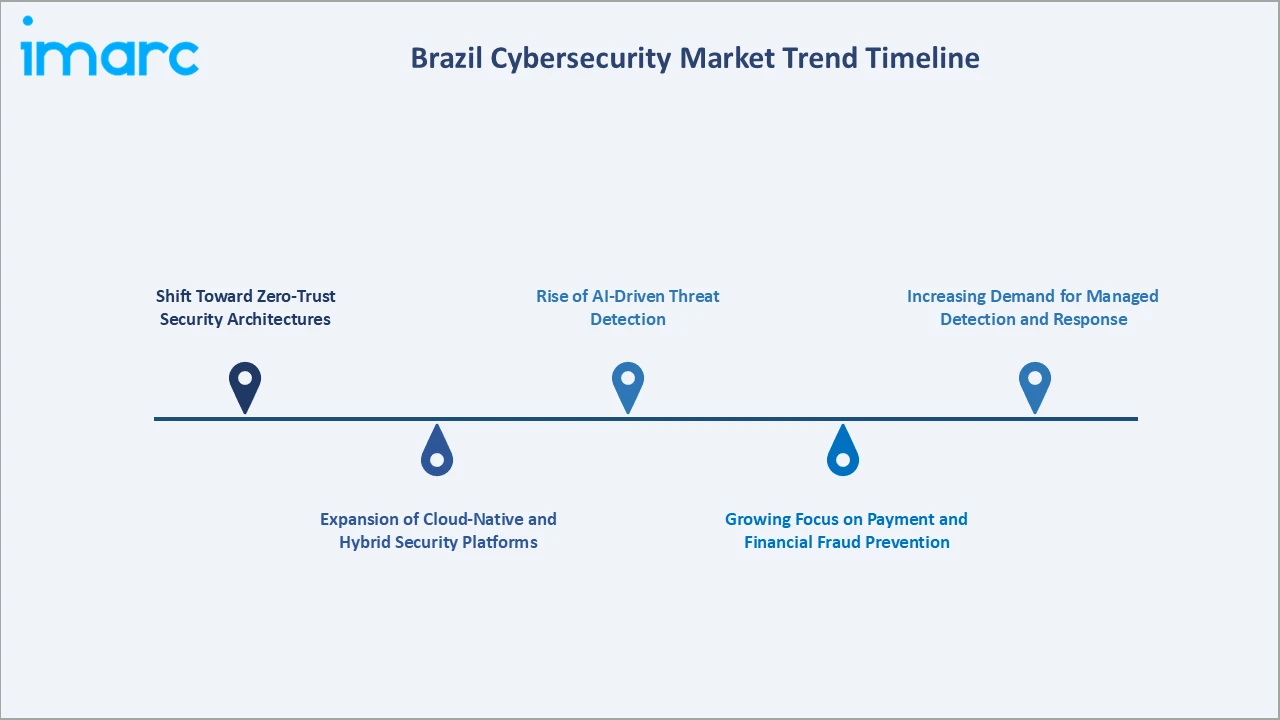
1. Shift Toward Zero-Trust Security Architectures
Enterprises are moving away from perimeter-based models toward identity-first, zero-trust frameworks that continuously verify users and devices before granting network access, reducing exposure from compromised credentials and lateral movement.
2. Expansion of Cloud-Native and Hybrid Security Platforms
Growing hybrid infrastructure adoption is driving demand for unified security platforms that protect workloads consistently across on-premise and multi-cloud environments.
3. Rise of AI-Driven Threat Detection
Machine learning (ML)-based analytics are increasingly embedded into security operations centers to accelerate anomaly detection across large data volumes.
4. Growing Focus on Payment and Financial Fraud Prevention
Expansion of PIX and digital banking is accelerating investment in real-time fraud detection and transaction-monitoring technologies across financial institutions.
5. Increasing Demand for Managed Detection and Response
Persistent talent shortages are pushing organizations toward outsourced, subscription-based security operations delivered by managed service providers.
Industry Value Chain Analysis
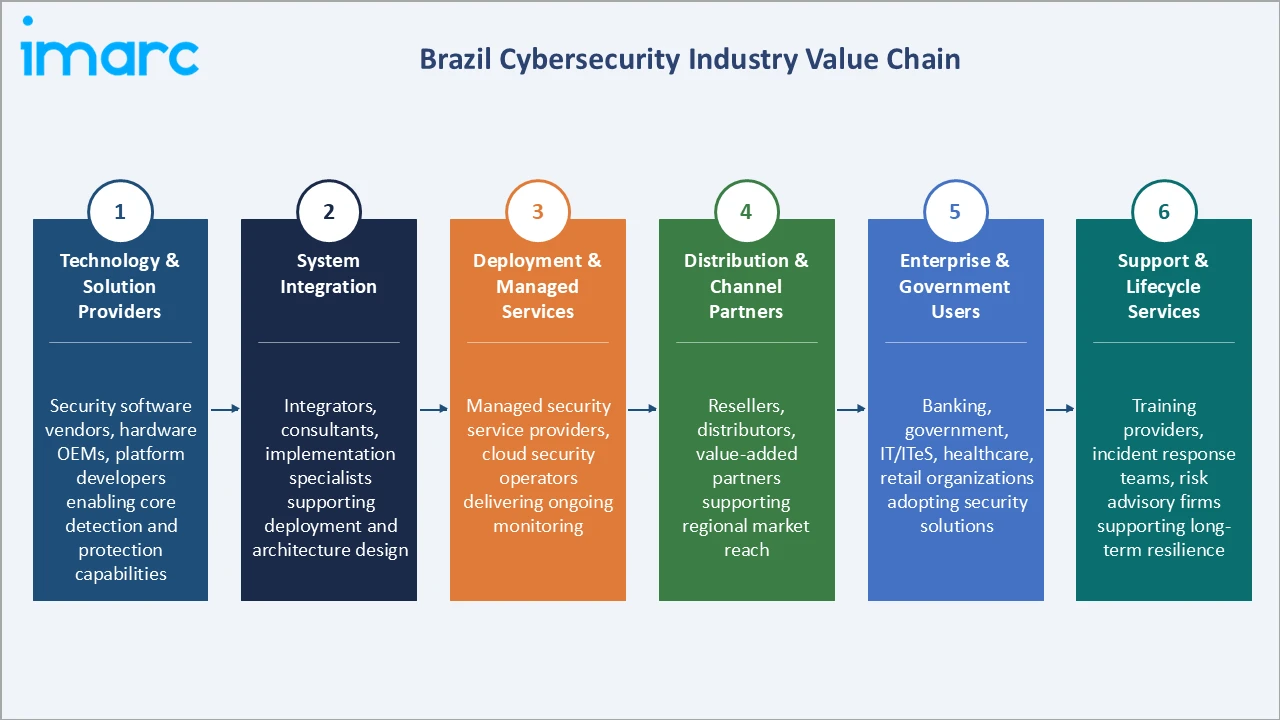
The Brazil cybersecurity value chain spans six stages, from technology development through end-user deployment and ongoing lifecycle support. Solution providers and managed service operators capture the highest value-add, while distribution and support functions increasingly shape long-term customer retention in this services-intensive market.
|
Stage |
Key Players / Examples |
|
Technology & Solution Providers |
Security software vendors, hardware OEMs, and platform developers enabling core detection and protection capabilities |
|
System Integration |
Integrators, consultants, and implementation specialists supporting deployment and architecture design |
|
Deployment & Managed Services |
Managed security service providers and cloud security operators delivering ongoing monitoring |
|
Distribution & Channel Partners |
Resellers, distributors, and value-added partners supporting regional market reach |
|
Enterprise & Government Users |
Banking, government, IT/ITeS, healthcare, and retail organizations adopting security solutions |
|
Support & Lifecycle Services |
Training providers, incident response teams, and risk advisory firms supporting long-term resilience |
Vendors with integrated platforms spanning network, cloud, and identity security are increasingly favored by large enterprises seeking to consolidate their security stack and reduce integration complexity across multiple point solutions.
Technology Landscape in the Brazil Cybersecurity Industry
Threat Detection and Response Platforms
Security operations centers are deploying extended detection and response (XDR) platforms that unify telemetry from endpoints, networks, and cloud workloads, enabling faster correlation of threats and streamlined incident response across increasingly complex enterprise environments.
Cloud and Identity Security
Growing multi-cloud adoption is driving demand for cloud security posture management and identity governance tools that enforce consistent access controls, reduce misconfiguration risk, and support compliance across hybrid infrastructure.
AI and Behavioral Analytics
ML models are increasingly applied to user and entity behavior analytics, enabling security teams to detect anomalous activity, insider threats, and fraud patterns that traditional rule-based systems often miss.
Zero-Trust and Network Security
Organizations are adopting micro-segmentation, secure access service edge (SASE), and continuous authentication frameworks to limit lateral movement and strengthen defenses across distributed workforces and branch networks.
Market Segmentation Analysis
The report covers the following segments:
|
Segment Category |
Leading Segment |
Market Share |
Year |
|
Offering |
Security Type |
67.0% |
2025 |
|
Deployment |
On-premise |
61.0% |
2025 |
|
End User |
BFSI |
27.0% |
2025 |
|
Region |
Southeast |
63.0% |
2025 |

By Offering
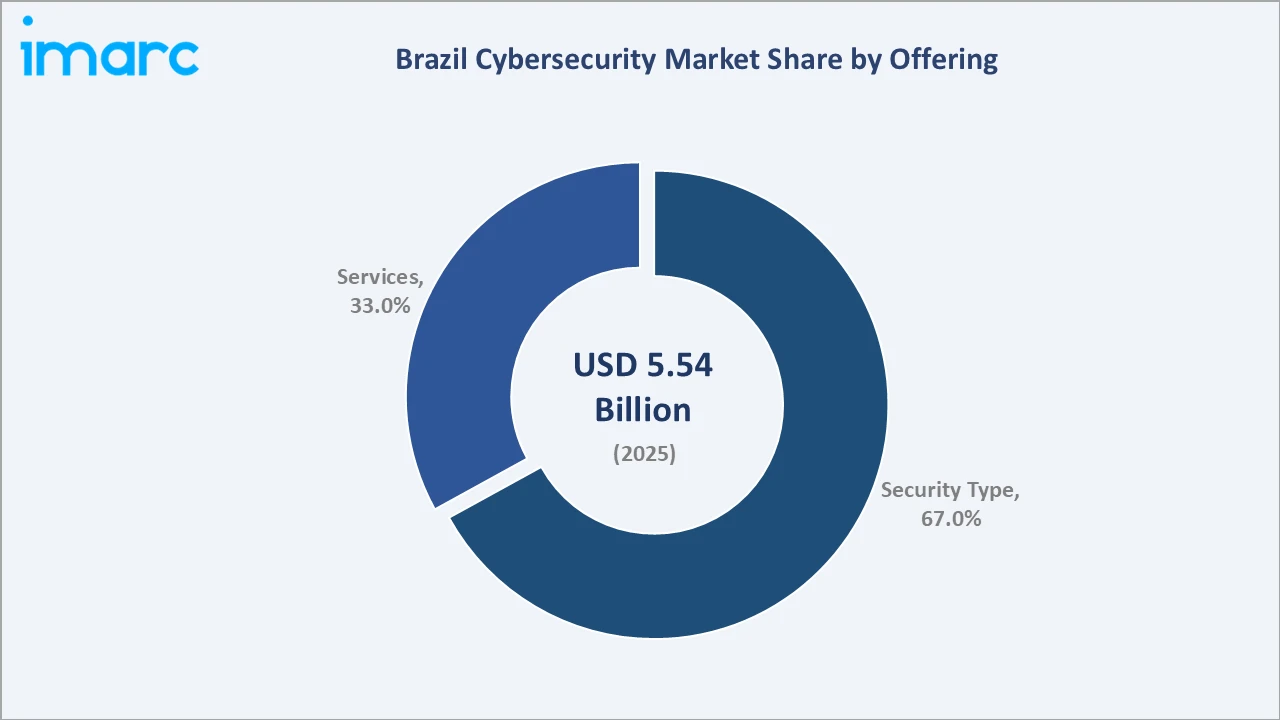
Security type commands a 67.0% majority share in 2025, driven by sustained enterprise investment in network security, endpoint protection, cloud security, and identity and access management across regulated sectors. The segment benefits from continuous upgrade cycles as threat vectors evolve and organizations expand their technology footprint.
To access detailed market analysis, Request Sample
Services at 33.0% are expanding steadily, covering consulting, systems integration, and managed security services. Rising talent shortages and growing platform complexity are encouraging enterprises to outsource ongoing monitoring, incident response, and compliance support to specialized providers.
By Deployment
On-premise leads with 61.0% share in 2025, reflecting the continued preference of large enterprises, financial institutions, and government agencies for direct control over sensitive infrastructure and compliance-sensitive workloads.
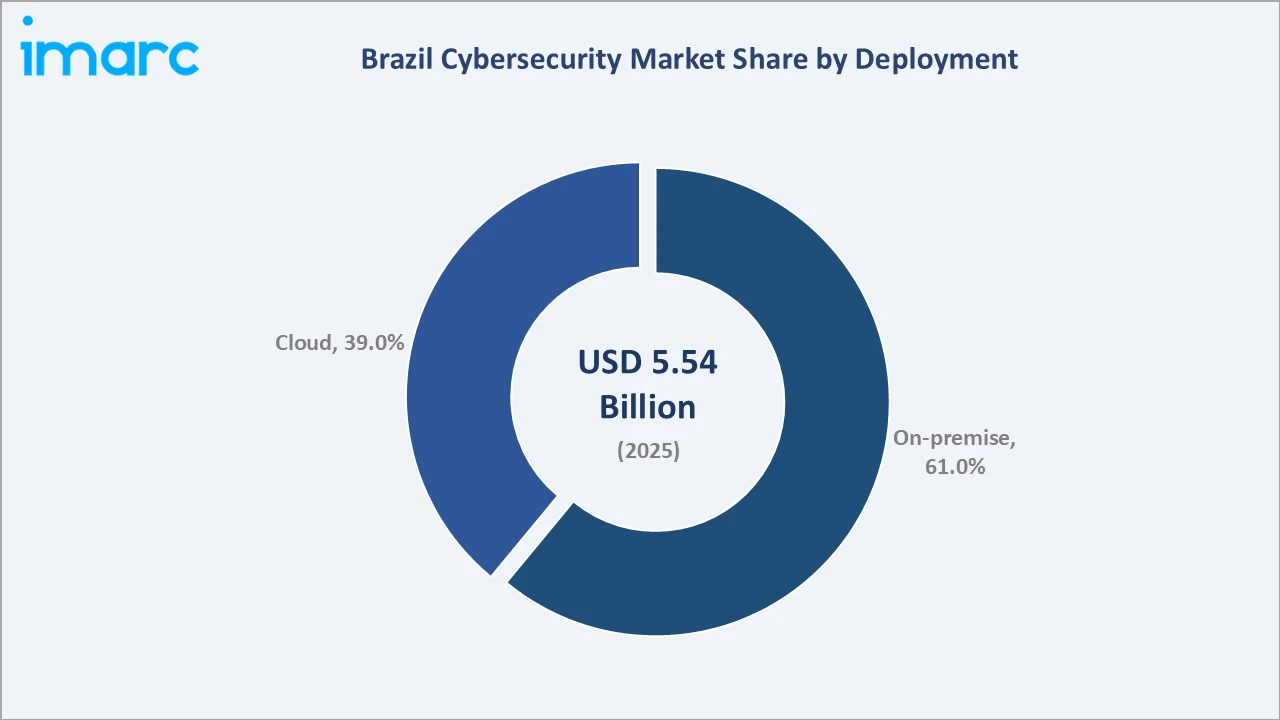
Cloud at 39.0% is gaining ground as mid-sized enterprises adopt subscription-based platforms that lower upfront costs, simplify updates, and support scalable protection across distributed and remote work environments.
Regional Market Insights
|
Region |
Share (2025) |
Key Growth Drivers |
|
Southeast |
63.0% |
Large concentration of financial institutions, corporate headquarters, and technology infrastructure supporting sustained enterprise security investment |
|
South |
14.2% |
Expanding industrial and technology sectors along with growing enterprise digitalization supporting steady security adoption |
|
Northeast |
9.5% |
Rising digital infrastructure investment and expanding enterprise formation supporting emerging demand for security solutions |
|
Central-West |
7.2% |
Growing agribusiness and government digitalization initiatives supporting gradual expansion of enterprise security spending |
|
North |
6.1% |
Early-stage digital adoption and expanding connectivity infrastructure supporting long-term regional growth potential |
Southeast at 63.0% in 2025 leads the regional landscape, anchored by São Paulo, Rio de Janeiro, and Minas Gerais. Dense concentration of financial institutions, corporate headquarters, and technology infrastructure supports sustained leadership across both on-premise and cloud-based deployment models.
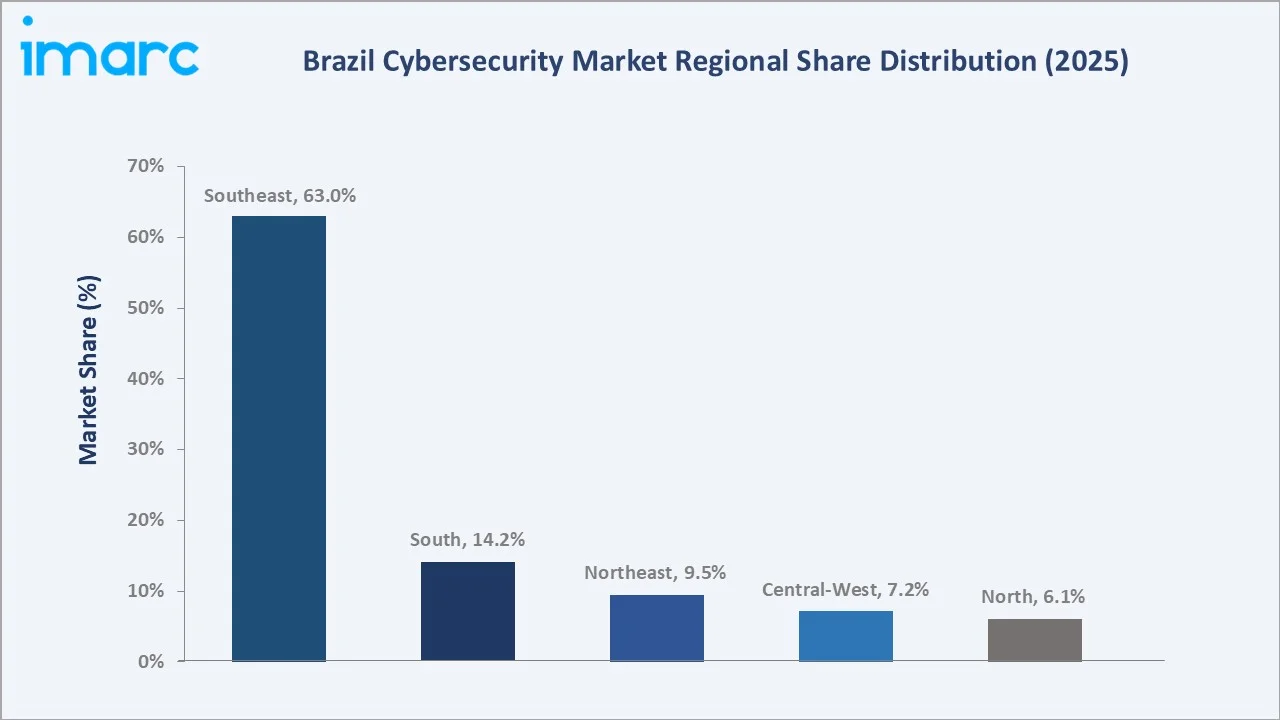
South at 14.2% is expanding steadily as enterprise digitalization broadens beyond the traditional Southeast hub, supported by growing data center investment and rising cybersecurity awareness among mid-sized organizations nationwide.
Competitive Landscape
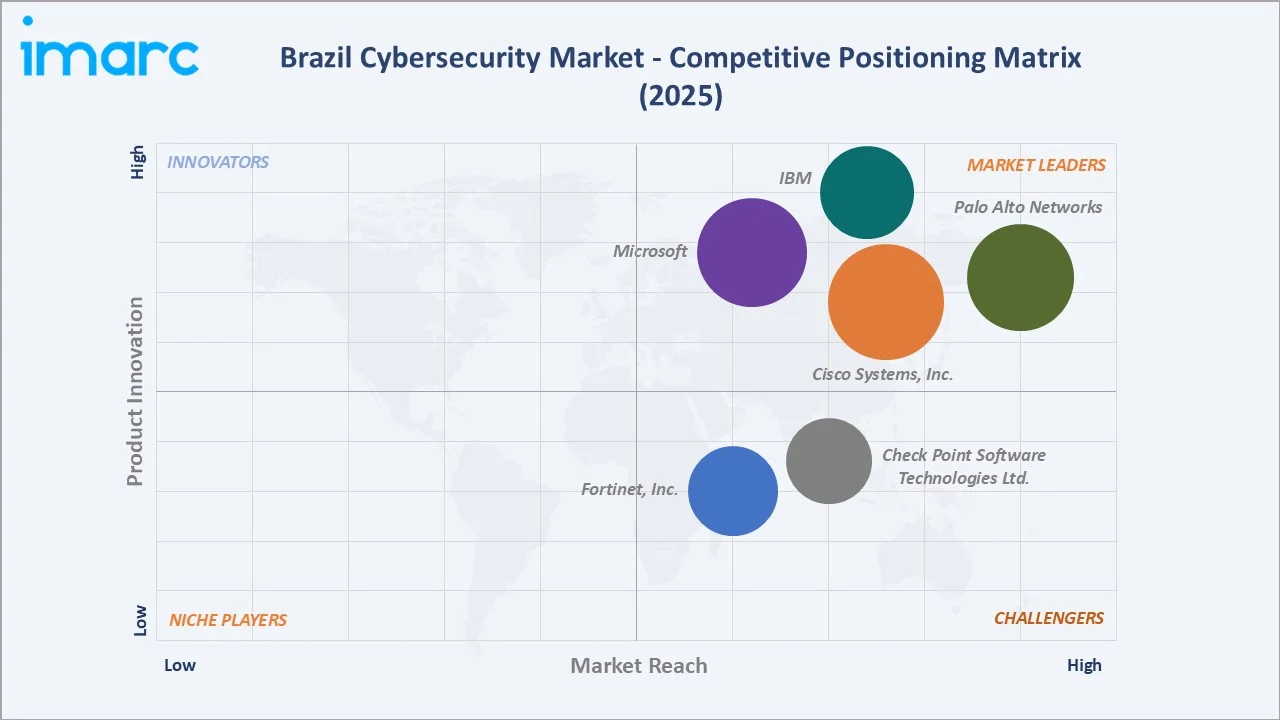
The Brazil cybersecurity market is moderately fragmented, with established global technology vendors leading enterprise deployments while regional and domestic providers compete through managed services, local compliance expertise, and channel partnerships. Brand strength, platform breadth, and local support capability form the key competitive differentiators across the market.
|
Company Name |
Brand / Key Product |
Position |
Strategic Focus |
|
IBM |
IBM Guardium |
Leader |
Broad enterprise security portfolio with focus on data security, identity, and AI-driven analytics |
|
Cisco Systems, Inc. |
Cisco Secure Access |
Leader |
Network-centric security portfolio with focus on unified access control and threat visibility |
|
Microsoft |
Microsoft Defender |
Leader |
Cloud-integrated security suite with focus on identity, endpoint, and unified security operations |
|
Palo Alto Networks |
Cortex Cloud |
Leader |
Platform-driven portfolio with focus on cloud-native protection and unified security operations |
|
Fortinet, Inc. |
FortiGate |
Challenger |
Integrated appliance-based security portfolio with focus on channel-led regional distribution |
|
Check Point Software Technologies Ltd. |
Check Point Platform (formerly Infinity) |
Challenger |
Consolidated security architecture with focus on unified threat prevention across environments |
Key players include IBM, Cisco Systems, Inc., Microsoft, Palo Alto Networks, Fortinet, Inc., and Check Point Software Technologies Ltd., among others.
Key Company Profiles
IBM
IBM is a global technology and consulting company headquartered in Armonk, New York, offering a broad portfolio of enterprise security software and services. In Brazil, IBM supports large financial institutions and government agencies through its security operations and consulting practice.
- Product Portfolio: IBM Guardium, a data security platform providing activity monitoring, vulnerability assessment, and compliance support across hybrid and multicloud data environments.
- Recent Developments: IBM has continued to invest in its data security and hybrid cloud portfolio, extending integration across multicloud environments for enterprise clients.
- Strategic Focus: Strengthening hybrid cloud security capabilities through integrated data protection and enterprise security solutions for multi-cloud environments.
Cisco Systems, Inc.
Cisco Systems, Inc. is a global networking and technology company headquartered in San Jose, California. In Brazil, the firm supports enterprise and telecommunications clients through its network and cloud security offerings.
- Product Portfolio: Cisco Secure Access, a cloud-delivered security service edge solution providing zero-trust network and application access.
- Recent Developments: Cisco has continued expanding its security portfolio integration across networking and cloud infrastructure, supporting enterprises in consolidating access and threat visibility.
- Strategic Focus: Broadening network and cloud security convergence for enterprise customers.
Microsoft
Microsoft is a global technology company headquartered in Redmond, Washington, offering cloud-integrated security solutions across identity, endpoint, and cloud workload protection. Microsoft supports enterprises in Brazil through its Azure cloud and broader security ecosystem.
- Product Portfolio: Microsoft Defender, an integrated security suite providing endpoint, identity, email, and cloud protection.
- Recent Developments: The firm has continued expanding its cybersecurity portfolio by enhancing Microsoft Defender and Security Copilot capabilities with AI-driven threat detection, automated response, and broader protection across cloud, endpoint, and identity environments.
- Strategic Focus: Expanding integrated, AI-assisted cloud security across its hyperscaler ecosystem.
Market Concentration Analysis
The Brazil cybersecurity market is moderately fragmented, with global technology vendors including IBM, Cisco Systems, Inc., Microsoft, and Palo Alto Networks, accounting for a substantial share of enterprise security spending, particularly across large financial institutions and government agencies.
Barriers to entry include the need for broad platform capability, established channel relationships, and the ability to navigate Brazil's evolving data protection and sector-specific compliance requirements. These factors favor well-capitalized global vendors alongside established regional providers with local regulatory expertise.
Consolidation is gradually increasing as managed service providers expand through partnerships and platform integrations, while global vendors deepen regional investment to support growing demand for cloud-native and AI-enabled security capabilities across Brazilian enterprises.
Investment & Growth Opportunities
Fastest-Growing Segments
Cloud is expanding faster than the overall market as enterprises accelerate migration toward subscription-based, cloud-native security platforms that reduce infrastructure overhead. Services are also outpacing product-based offering growth, driven by rising demand for managed detection, consulting, and compliance advisory support.
Emerging Markets
Northeast and South represent the fastest-growing geographic opportunities, supported by expanding digital infrastructure, growing enterprise formation, and rising cybersecurity awareness beyond the traditional Southeast hub. These markets offer significant untapped potential for providers able to deliver cost-efficient, regionally supported security solutions.
Venture & Investment Trends
Investment activity is concentrated in managed detection and response platforms, cloud security posture management tools, and AI-enabled threat intelligence solutions. Strategic investment from established industrial and technology groups reflects growing confidence in the long-term growth of Brazil's domestic cybersecurity sector.
Future Market Outlook (2026-2034)
The Brazil cybersecurity market is forecast to expand from USD 5.54 Billion in 2025 to USD 11.96 Billion by 2034 at a CAGR of 8.92%, adding approximately USD 6.42 Billion in incremental market value over the forecast period.
Three forces will shape the market through 2034: accelerating cloud and hybrid infrastructure adoption; deepening enforcement of data protection and sector-specific compliance requirements; and the growing integration of AI into threat detection and response operations.
By 2034, the Brazil cybersecurity market is expected to be defined by platform consolidation, broader managed security adoption, and increasingly proactive, intelligence-driven defense strategies across financial services, government, and enterprise sectors nationwide.
Research Methodology
Primary Research
Primary research included structured interviews with security technology vendors, managed security service providers, systems integrators, and enterprise security leaders, validating market sizing, segment mix, and regional demand patterns.
Secondary Research
Secondary sources included CERT.br incident statistics, Brazilian government cybersecurity strategy publications, sector regulatory disclosures, and public filings, presentations, and press releases from listed and private security technology vendors.
Forecasting Models
Market forecasts used top-down and bottom-up models combining enterprise IT security spending patterns, deployment mix evolution, regional digitalization trends, and macroeconomic variables. Scenario analysis addressed regulatory enforcement pace and cloud migration timelines.
Brazil Cybersecurity Market Report Coverage:
| Report Features | Details |
|---|---|
| Base Year of the Analysis | 2025 |
| Historical Period | 2020-2025 |
| Forecast Period | 2026-2034 |
| Units | Billion USD |
| Scope of the Report | Exploration of Historical Trends and Market Outlook, Industry Catalysts and Challenges, Segment-Wise Historical and Future Market Assessment:
|
| Offerings Covered |
|
| Deployments Covered | Cloud, On-premise |
| End Users Covered | BFSI, Healthcare, Manufacturing, Government and Defense, IT and Telecommunication, Others |
| Regions Covered | Southeast, South, Northeast, North, Central-West |
| Companies Covered | IBM, Cisco Systems, Inc., Microsoft, Palo Alto Networks, Fortinet, Inc., Check Point Software Technologies Ltd., etc. |
| Customization Scope | 10% Free Customization |
| Post-Sale Analyst Support | 10-12 Weeks |
| Delivery Format | PDF and Excel through Email (We can also provide the editable version of the report in PPT/Word format on special request) |
Key Benefits for Stakeholders:
- IMARC’s industry report offers a comprehensive quantitative analysis of various market segments, historical and current market trends, market forecasts, and dynamics of the Brazil cybersecurity market from 2020-2034.
- The research report provides the latest information on the market drivers, challenges, and opportunities in the Brazil cybersecurity market.
- Porter's five forces analysis assist stakeholders in assessing the impact of new entrants, competitive rivalry, supplier power, buyer power, and the threat of substitution. It helps stakeholders to analyze the level of competition within the Brazil cybersecurity industry and its attractiveness.
- Competitive landscape allows stakeholders to understand their competitive environment and provides an insight into the current positions of key players in the market.
Frequently Asked Questions About the Brazil Cybersecurity Market Report
The Brazil cybersecurity market was valued at USD 5.54 Billion in 2025, driven by rising cyber threats, expanding digital adoption, and growing enforcement of data protection regulations.
The market is projected to grow at an 8.92% CAGR from 2026-2034, reaching USD 11.96 Billion, supported by expanding cloud adoption and managed security demand.
Security type leads the offering segment at 67.0% in 2025, driven by sustained investment in network security, endpoint protection, and identity and access management across regulated sectors.
On-premise dominates at 61.0% in 2025, reflecting enterprise and government preference for direct control over sensitive infrastructure and compliance-sensitive workloads.
Southeast commands 63.0% share in 2025, anchored by São Paulo and Rio de Janeiro's concentration of financial institutions and corporate headquarters.
Leading players include IBM, Cisco Systems, Inc., Microsoft, Palo Alto Networks, Fortinet, Inc., and Check Point Software Technologies Ltd., among others.
Expanding cloud and hybrid infrastructure adoption is driving demand for cloud-native security platforms, positioning cloud deployment as the fastest-growing segment through the forecast period.
A persistent shortage of skilled cybersecurity professionals and the high cost of advanced security platforms remain key challenges, particularly for small and mid-sized enterprises.
Need more help?
- Speak to our experienced analysts for insights on the current market scenarios.
- Include additional segments and countries to customize the report as per your requirement.
- Gain an unparalleled competitive advantage in your domain by understanding how to utilize the report and positively impacting your operations and revenue.
- For further assistance, please connect with our analysts.
 Request Customization
 Speak to an Analyst
 Request Brochure
 Inquire Before Buying
Benefits of Customization
- Personalize this research
- Triangulate with your data
- Get data as per your format and definition
- Gain a deeper dive into a specific application, geography, customer, or competitor
- Any level of personalization
Get in Touch With Us
UNITED STATES
Phone: +1-201-971-6302
INDIA
Phone: +91-120-433-0800
UNITED KINGDOM
Phone: +44-753-714-6104
Email: [email protected]
Client Testimonials




.webp)




.webp)













Related Reports

Choose your plan
*Please note that the prices mentioned below are starting prices for each bundle type. Kindly contact our team for further details.*
Single User License
- 1 User License, Access on 2 Devices
- PDF Report + Excel Dataset (Password Protected)
- Lifetime Access
- No Printing Rights
- 10% Free Report Customization
- 10–12 Weeks of Analyst Support
Five User License
- Access for 5 Users, 2 Devices per User
- PDF Report + Excel Dataset (Password Protected)
- Lifetime Access
- Dedicated Account Manager
- 12–14 Weeks of Analyst Support
- No Printing Rights
- 15% Free Report Customization
- 25% Discount on Your Next Purchase
Corporate User License
- Unlimited User Access (Within Your Organization)
- PDF Report + Excel Dataset
- Lifetime Access
- Dedicated Account Manager
- 14–20 Weeks of Analyst Support
- No Printing Rights
- 20% Free Report Customization
- 30% Discount on Your Next Purchase
Essential Insights
What's included:
3 reports
- Lifetime Access
- PDF Reports
- Excel Datasets
- 2 Weeks of Free Analyst Support
- 2 User Licenses
- Access on 2 Devices
- Printing Rights
- Complimentary PowerPoint (PPT) Version
- Complimentary License Upgrade
Professional Access
What's included:
5 reports
- Lifetime Access
- PDF Reports
- Excel Datasets
- 8 Weeks of Free Analyst Support
- 2 User Licenses
- Access on 2 Devices
- Printing Rights
- Complimentary PowerPoint (PPT) Version
- Complimentary License Upgrade
Business Advantage
What's included:
8 reports
- Lifetime Access
- PDF Reports
- Excel Datasets
- 14 Weeks of Free Analyst Support
- 2 User Licenses
- Access on 2 Devices
- Printing Rights
- Complimentary PowerPoint (PPT) Version
- Complimentary License Upgrade
Enterprise Intelligence
What's included:
10 reports
- Lifetime Access
- PDF Reports
- Excel Datasets
- 20 Weeks of Free Analyst Support
- 2 User Licenses
- Access on 2 Devices
- Printing Rights
- Complimentary PowerPoint (PPT) Version
- Complimentary License Upgrade