
Brazil Photodynamic Therapy Market Size, Share, Trends, and Forecast by Product Type, Application, End User, and Region, 2026-2034
Brazil Photodynamic Therapy Market Summary:
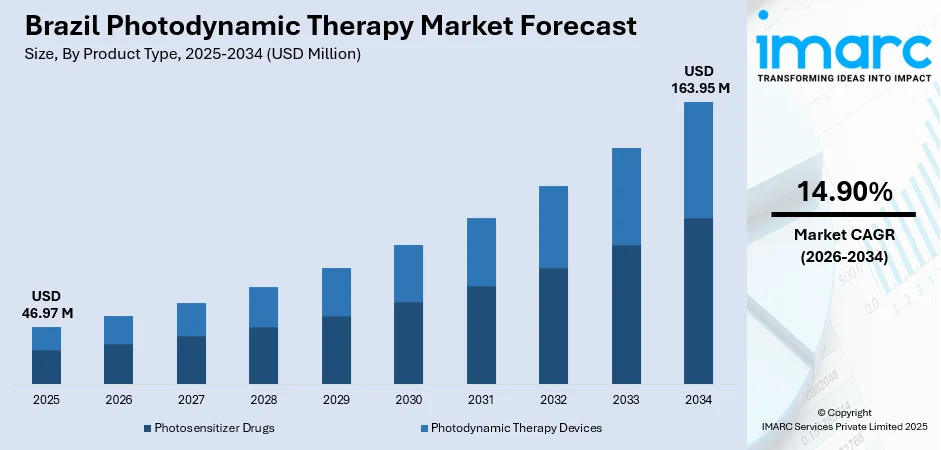
The Brazil photodynamic therapy market size was valued at USD 46.97 Million in 2025 and is projected to reach USD 163.95 Million by 2034, growing at a compound annual growth rate of 14.90% from 2026-2034.
The market is experiencing robust growth driven by escalating cancer incidence across the country, particularly in metropolitan areas where healthcare infrastructure is concentrated. The growing preference for minimally invasive treatment modalities among Brazilian physicians and patients is accelerating adoption of photodynamic therapy across oncology and dermatology applications. In March 2024, the largest state hospital for orthopedics and traumatology in Brazil was launched in Bahia under the management of the Brazilian Israeli Beneficent Society Albert Einstein, receiving BRL 224 million in investments and boasting 212 beds, demonstrating ongoing healthcare infrastructure enhancements that support advanced treatment delivery including photodynamic therapy services. The Brazil photodynamic therapy market share continues expanding as healthcare providers increasingly recognize the therapy’s precision in targeting diseased cells while minimizing damage to surrounding healthy tissues.
Key Takeaways and Insights:
- By Product Type: Photosensitizer drugs dominate the market with a share of 67.0% in 2025, driven by their essential role in activating photodynamic reactions and ongoing advancements in drug formulations.
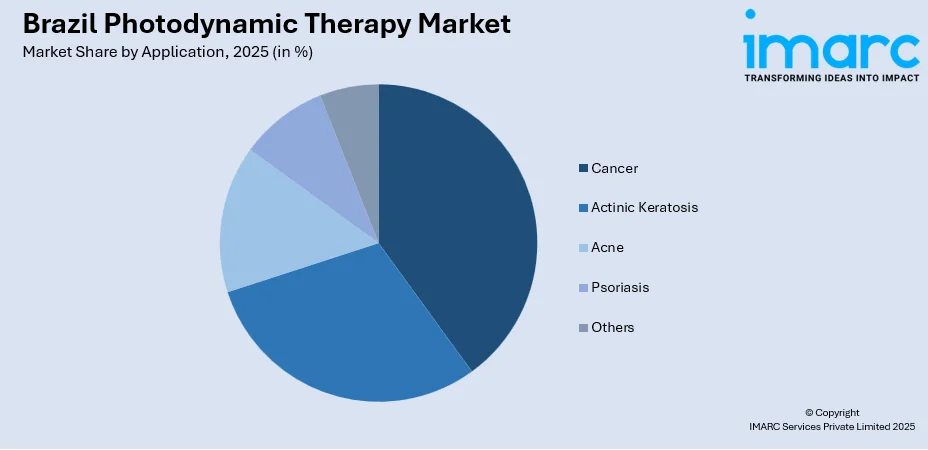
- By Application: Cancer leads the market with a share of 37.9% in 2025, owing to the escalating burden of cutaneous malignancies and solid tumors where photodynamic therapy offers non-invasive alternatives with favorable cosmetic outcomes.
- By End User: Hospitals represent the largest segment with a market share of 58.1% in 2025, driven by their comprehensive clinical infrastructure, availability of specialized oncology and dermatology departments, and capacity to manage complex photodynamic therapy protocols.
- By Region: Southeast leads the market with a share of 47.8% in 2025, driven by the concentration of accredited hospitals and specialized cancer treatment centers in São Paulo and Rio de Janeiro metropolitan areas.
- Key Players: The Brazil photodynamic therapy market exhibits moderate competitive intensity, with international pharmaceutical corporations and medical device manufacturers competing to establish market presence through strategic partnerships with local distributors and healthcare institutions across urban centers.
To get more information on this market Request Sample
The Brazilian market landscape reflects broader global patterns where photodynamic therapy adoption correlates strongly with healthcare infrastructure sophistication and physician awareness of advanced treatment modalities. The country’s ongoing investments in healthcare modernization create opportunities for market expansion beyond traditional urban strongholds into secondary cities. Cancer ranks as the third highest cause of death in Brazil, with one in eight premature (before age 75) fatalities (13%) projected to result from cancer from 2023 to 2050, underscoring the growing disease burden that drives demand for diverse therapeutic approaches including photodynamic therapy. The market benefits from Brazil’s Sistema Único de Saúde providing universal healthcare coverage to approximately seventy-two percent of the population, although private healthcare facilities maintain advantages in adopting specialized technologies. Regional disparities persist with the Southeast and South regions possessing the highest rates of healthcare professionals and infrastructure compared to northern regions, influencing photodynamic therapy market penetration patterns across the country.
Brazil Photodynamic Therapy Market Trends:
Integration of Advanced Light Emitting Diode (LED)-Based Light Delivery Systems
The photodynamic therapy market is experiencing significant transformation through the introduction of sophisticated LED-based illumination devices that enhance treatment precision and clinical outcomes. These advanced systems incorporate multiple LED panels enabling simultaneous treatment of larger surface areas while maintaining optimal energy delivery through integrated positioning sensors and automated dosimetry controls. The technological evolution addresses previous limitations in treatment efficiency where single-panel devices required multiple sessions for extensive lesion coverage. The incorporation of real-time monitoring capabilities in advanced LED systems enables precise control over light exposure parameters ensuring standardized treatment delivery across different patient populations and anatomical sites. IMARC Group predicts that the Brazil LED market is projected to attain USD 7.3 Billion by 2033.
Emergence of Combination Drug-Device Products
The market is witnessing growing adoption of integrated photodynamic therapy solutions combining proprietary photosensitizer formulations with dedicated light delivery systems optimized for specific therapeutic applications. These combination products streamline treatment protocols by eliminating compatibility concerns between photosensitizing agents and illumination devices while ensuring optimal therapeutic outcomes through manufacturer-validated treatment parameters. The integrated approach simplifies regulatory approval pathways as drug-device combinations undergo comprehensive clinical validation demonstrating safety and efficacy as complete therapeutic systems. Clinical studies demonstrate improved patient outcomes with combination products as treatment protocols are standardized reducing variability in photosensitizer application techniques and light exposure parameters across different operators and clinical settings. The combination approach facilitates expanded therapeutic indications as manufacturers conduct clinical trials validating their integrated systems for diverse dermatological and oncological applications. In 2024, Research conducted by scientists in Brazil indicates that antimicrobial photodynamic therapy utilizing blue light to target annatto colorant is a viable and efficient treatment for halitosis in children who breathe through their mouths. Annatto is an orange-reddish dye obtained from the seeds of Bixa orellana (achiote or urucum), a plant found in tropical regions of the Americas.
Rising Patient Preference for Non-Invasive Treatment Modalities
Brazilian patients are increasingly seeking minimally invasive therapeutic options that minimize recovery periods and reduce treatment-related complications compared to conventional surgical interventions or systemic therapies. This preference shift reflects broader societal trends toward patient-centered care where treatment decisions incorporate quality of life considerations alongside clinical efficacy metrics. Photodynamic therapy aligns with these preferences through its targeted mechanism of action that selectively destroys diseased cells while preserving surrounding healthy tissues resulting in superior cosmetic outcomes particularly important for visible anatomical locations. The outpatient nature of photodynamic therapy procedures eliminates hospitalization requirements reducing direct medical costs and indirect productivity losses associated with extended recovery periods. The growing elderly population in Brazil, particularly concentrated in southeastern metropolitan areas, drives demand for less invasive treatment alternatives as this demographic often presents contraindications for aggressive surgical interventions. According to new forecasts from the IBGE (Brazilian Institute of Geography and Statistics), seniors are projected to comprise nearly 38% of Brazil's population by 2070.
Market Outlook 2026-2034:
The Brazil photodynamic therapy market is poised for substantial expansion throughout the forecast period driven by converging factors including escalating cancer burden across metropolitan regions, ongoing healthcare infrastructure modernization initiatives, and increasing physician familiarity with advanced photodynamic protocols. The market generated a revenue of USD 163.95 Million in 2025 and is projected to reach a revenue of USD 46.97 Million by 2034, growing at a compound annual growth rate of 14.90% from 2026-2034. The projected establishment of smart hospitals incorporating artificial intelligence and enhanced monitoring capabilities scheduled to begin operations positions Brazil for technological leapfrogging in specialized treatment delivery modalities including photodynamic therapy applications.
Brazil Photodynamic Therapy Market Report Segmentation:
| Segment Category | Leading Segment | Market Share |
|---|---|---|
| Product Type | Photosensitizer Drugs | 67.0% |
| Application | Cancer | 37.9% |
| End User | Hospitals | 58.1% |
| Region | Southeast | 47.8% |
Product Type Insights:
- Photosensitizer Drugs
- Photodynamic Therapy Devices
Photosensitizer drugs dominate with a market share of 67.0% of the total Brazil photodynamic therapy market in 2025.
Photosensitizer drugs represent the cornerstone of photodynamic therapy protocols through their ability to selectively accumulate in target tissues and generate cytotoxic reactive oxygen species upon activation by specific light wavelengths. The segment’s dominance reflects the essential nature of these compounds in initiating therapeutic effects regardless of light delivery system sophistication. In 2024, photosensitizer drugs accounted for a majority of the portion of segmental share in global markets underscoring their crucial role in photodynamic therapy procedures, with ongoing advancements in drug formulations resulting in improved efficacy, reduced side effects, and better tissue-specific targeting.
Modern photosensitizer development focuses on enhancing absorption and emission properties while optimizing pharmacokinetics for superior targeting precision and minimizing off-target accumulation that causes photosensitivity reactions. Nanotechnology integration enhances photosensitizer delivery enabling targeted accumulation at disease sites while reducing systemic exposure and associated adverse effects. In 2025, during the official mission to Portugal, Fiocruz signed a Memorandum of Understanding (MoU) (4/23) with the International Iberian Nanotechnology Laboratory (INL), located in Braga and established through a bilateral accord between Spain and Portugal. The document establishes the groundwork for collaboration among the institutions on an international level. The accord was executed in Lisbon during a ceremony held by the Brazilian Ambassador in Lisbon, Raimundo Carreiro, at his official residence. The initiative complements other agreements established in the country. That same day, the Fiocruz president, Mario Moreira, signed an agreement with ApexBrasil.
Application Insights:
Access the comprehensive market breakdown Request Sample
- Cancer
- Actinic Keratosis
- Acne
- Psoriasis
- Others
Cancer leads with a share of 37.9% of the total Brazil photodynamic therapy market in 2025.
Cancer treatment applications dominate the photodynamic therapy market driven by escalating skin cancer incidence and photodynamic therapy’s proven efficacy against superficial malignancies including basal cell carcinoma, squamous cell carcinoma, and certain early-stage cancers. In the country, basal cell carcinoma affects more than three million cases annually representing the most common skin cancer diagnosis, while photodynamic therapy achieves ninety percent complete clearance rates in superficial basal cell carcinoma cases demonstrating superior therapeutic outcomes. The treatment modality offers particular value for organ transplant recipients and patients with genetic predispositions requiring repeated interventions where photodynamic therapy’s non-scarring properties and repeatability provide advantages over surgical excision or radiotherapy.
Moreover, photodynamic research therapy resulted in significant statistical outcomes for superficial basal cell carcinoma patients, validating photodynamic therapy efficacy in oncological applications. The therapy addresses unmet needs in field cancerization management where multiple pre-malignant lesions occur across anatomical regions enabling simultaneous treatment of extensive areas. Growing clinical evidence supports photodynamic therapy applications in esophageal cancer, lung cancer, and bladder cancer expanding beyond dermatological indications into systemic oncology where minimally invasive approaches offer advantages for medically fragile patients. Market growth accelerates as reimbursement coverage expands recognizing photodynamic therapy’s cost-effectiveness compared to repeated surgical procedures or prolonged systemic therapy regimens.
End User Insights:
- Hospitals
- Specialty Clinics
- Others
Hospitals exhibit a clear dominance with a 58.1% share of the total Brazil photodynamic therapy market in 2025.
Hospitals represent the dominant end-user segment commanding approximately sixty percent of photodynamic therapy market share globally in 2024 due to their comprehensive clinical infrastructure, specialized oncology and dermatology departments, and capacity to manage complex treatment protocols requiring multidisciplinary care coordination. Brazil is the largest healthcare market in Latin America, spending 9.7% of its GDP on healthcare, representing US$135 B. According to the Brazilian Federation of Hospitals (FBH) and the National Confederation of Health (CNSaúde), of Brazil’s 7,309 hospitals, 63% are private. As of 2024, there are 500,253 hospital beds (ANAHP, the Brazilian Association for Private Hospitals), 668 health insurance providers (Agência Nacional de Saúde - ANS), and 575,930 physicians (Conselho Federal de Medicina -CFM).
Hospitals maintain advantages in photodynamic therapy adoption through established oncology departments with experienced physicians capable of patient selection, treatment planning, and post-procedure monitoring essential for optimal clinical outcomes. The availability of supportive care resources including anesthesiology services, nursing staff trained in photodynamic procedures, and emergency response capabilities addresses potential treatment complications particularly in complex oncological applications. Hospital-based photodynamic therapy programs benefit from integrated diagnostic imaging and pathology services enabling accurate lesion characterization and treatment response assessment. The controlled clinical environment facilitates clinical research participation and protocol refinement advancing photodynamic therapy evidence base while supporting regulatory submissions for expanded therapeutic indications.
Regional Insights:
- Southeast
- South
- Northeast
- North
- Central-West
Southeast leads with a share of 47.8% of the total Brazil photodynamic therapy market in 2025.
The Southeast region commands dominant market position driven by the concentration of Brazil’s most sophisticated healthcare infrastructure in São Paulo and Rio de Janeiro metropolitan areas where private accredited hospitals and specialized cancer treatment centers cluster. The region benefits from higher per capita income levels enabling greater private healthcare spending and adoption of premium treatment modalities including photodynamic therapy not universally covered by public health system reimbursement schedules. São Paulo state faces substantial cancer burden with new cases to be diagnosed by 2025 with an estimated crude incidence rate, creating significant clinical demand for diverse therapeutic approaches.
The concentration of medical education institutions and research centers in São Paulo, Rio de Janeiro, and Minas Gerais states produces higher densities of specialized dermatologists and oncologists familiar with photodynamic therapy protocols supporting market penetration. Superior transportation infrastructure and urban healthcare accessibility in southeastern metropolitan regions facilitate patient access to specialized photodynamic therapy providers reducing geographic barriers limiting adoption in other regions. The Southeast region maintains the highest rates of professionals and infrastructure for attending patients with advanced therapeutic needs compared to northern regions according to emergency care analyses. International pharmaceutical companies and medical device manufacturers prioritize the Southeast region for initial market entry and commercial operations leveraging existing distribution networks and established relationships with key opinion leaders in major academic medical centers.
Market Dynamics:
Growth Drivers:
Why is the Brazil Photodynamic Therapy Market Growing?
Escalating Cancer Burden Across Brazilian Population
Brazil faces substantial and growing cancer burden with projections indicating 704,000 new cancer cases for the triennium from 2023 to 2025 according to the National Cancer Institute Instituto Nacional de Cancer, representing 483,000 cases when excluding non-melanoma skin cancers according to Harvard Health Systems and Cancer Initiative analysis. The rising incidence reflects demographic aging combined with persistent environmental risk factors including ultraviolet radiation exposure particularly relevant for cutaneous malignancies amenable to photodynamic therapy interventions. Cutaneous squamous cell carcinoma cases exceed three million annually in the United States representing substantial global disease burden with similar patterns emerging in Brazil’s aging population concentrated in urban centers. The cancer burden drives healthcare system investments in diverse treatment modalities including photodynamic therapy as institutions seek to address growing patient volumes requiring oncological interventions across multiple tumor types and disease stages.
Healthcare Infrastructure Expansion and Modernization
Brazil is experiencing significant healthcare infrastructure development with both public and private investors constructing new hospitals, specialty clinics, diagnostic laboratories, and rehabilitation centers particularly in underserved northeastern and central states creating expanded access points for specialized treatments. Government programs aimed at improving healthcare access in regions with historically limited infrastructure involve procurement of modern surgical, diagnostic, and monitoring devices including photodynamic therapy systems supporting market penetration beyond traditional southeastern strongholds. In 2025, USP’s Medical School held the ceremony to formalize the technical cooperation agreement for establishing the Institute of Intelligent Medicine Technology (ITMI). TMI will be the nation's inaugural smart hospital, incorporating technologies like artificial intelligence, internet of things, big data, telehealth, and systematized processes. The initiative involves a collaboration among USP, the Government of São Paulo, the Ministry of Health, and the New Development Bank (NDB), also referred to as the BRICS Bank, aimed at enhancing high-complexity care in Brazil. The initiative will include 800 dedicated beds for clinical emergencies and aims to greatly lessen the time needed for diagnosing and treating the numerous cases referred to HC each day.
Advancements in Photosensitizer Drug Development
The photodynamic therapy market benefits from continuous innovation in photosensitizer compounds with research focusing on enhanced absorption and emission properties, improved biocompatibility, and optimized pharmacokinetics for superior targeting precision. The integration of nanotechnology enhances photosensitizer delivery, stability, and bioavailability enabling more precise and efficient treatments for conditions including psoriasis and cancer as noted in market analyses. Nanoparticles are now used to deliver photosensitizers to tumor sites in targeted manner thereby improving treatment efficiency according to photosensitizer market analyses. Next-generation photosensitizers with improved biocompatibility and efficiency have expanded photodynamic therapy applications to previously challenging conditions according to global market assessments. Moreover, various drug manufacturing companies are investing in expanding their operations, thereby supporting the market growth. In 2025, Merck KGaA invested over BRL 100 million by 2025 to modify its industrial park in Rio de Janeiro and newly opened USD 21.7 million distribution center in São Paulo.
Market Restraints:
What Challenges the Brazil Photodynamic Therapy Market is Facing?
High Treatment Costs and Limited Reimbursement Coverage
Photodynamic therapy costs including photosensitizers and specialized light delivery devices can restrict adoption particularly in developing regions where many countries lack comprehensive insurance coverage or reimbursement policies according to global market analyses. The average cost of photodynamic therapy especially that associated with photosensitizer drugs and light therapy devices is significant restricting patient access to this treatment alternative to a large extent with situations more prominent across regions where healthcare budgets are limited and reimbursement frameworks are underdeveloped. Many insurers categorize photodynamic therapy as niche or experimental therapy limiting patient access despite demonstrated clinical efficacy according to market assessments. The high cost of devices, poor awareness among medical professionals, and inequality in accessing highly advanced treatments at rural locations create hurdles for market expansion according to Brazil-specific analyses.
Limited Healthcare Professional Awareness and Training
Despite proven effectiveness photodynamic therapy faces challenges in form of limited awareness among both healthcare professionals and patients with lack of standardization of treatment protocols often resulting in varied treatment delivery according to market assessments. Many healthcare providers remain unfamiliar with photodynamic therapy protocols, indications, and benefits with lack of formal training programs for oncologists and dermatologists restricting widespread adoption according to global analyses. This awareness gap reduces referrals and limits photodynamic therapy service availability especially in smaller health facilities and developing countries. The need for raising levels of awareness about availability and effectiveness of photodynamic therapy through education and awareness campaigns becomes imperative according to market assessments.
Geographic Disparities in Healthcare Access
Regional inequalities in Brazil’s healthcare infrastructure create substantial barriers to photodynamic therapy market penetration beyond southeastern urban centers with vast geographic size and uneven distribution of specialized medical resources forcing many patients to travel long distances for adequate care. The North region has the lowest accessibility to intensive care units and specialized services compared to South and Southeast regions which have the highest rates of professionals and infrastructure to attend patients. Health resources in Brazil are majorly accessible to people living in urban areas with abundant access focused in larger centers in southeast and south regions such as São Paulo, Rio de Janeiro, Paraná, and Santa Catarina states.
Competitive Landscape:
The Brazil photodynamic therapy market demonstrates moderate competitive intensity characterized by international pharmaceutical corporations and medical device manufacturers establishing market presence through strategic distribution partnerships with local healthcare institutions and specialty clinics. Global leaders in photodynamic therapy including companies leverage established dermatology and oncology portfolios to introduce photosensitizer drugs and light delivery systems into the Brazilian market. The competitive landscape features both multinational enterprises with comprehensive product portfolios spanning photosensitizers and devices, alongside specialized manufacturers focusing exclusively on light delivery platforms or specific photosensitizer formulations. Market participants pursue differentiation strategies emphasizing proprietary drug-device combinations that lock in recurring revenue through consumable photosensitizer sales while raising switching barriers for healthcare institutions already invested in specific light delivery platforms.
Brazil Photodynamic Therapy Market Report Coverage:
| Report Features | Details |
|---|---|
| Base Year of the Analysis | 2025 |
| Historical Period | 2020-2025 |
| Forecast Period | 2026-2034 |
| Units | Million USD |
| Scope of the Report |
Exploration of Historical Trends and Market Outlook, Industry Catalysts and Challenges, Segment-Wise Historical and Future Market Assessment:
|
| Product Types Covered | Photosensitizer Drugs, Photodynamic Therapy Devices |
| Applications Covered | Cancer, Actinic Keratosis, Acne, Psoriasis, Others |
| End Users Covered | Hospitals, Speciality Clinics, Others |
| Regions Covered | Southeast, South, Northeast, North, Central-West |
| Customization Scope | 10% Free Customization |
| Post-Sale Analyst Support | 10-12 Weeks |
| Delivery Format | PDF and Excel through Email (We can also provide the editable version of the report in PPT/Word format on special request) |
Frequently Asked Questions About the Brazil Photodynamic Therapy Market Report
The Brazil photodynamic therapy market size was valued at USD 46.97 Million in 2025.
The Brazil photodynamic therapy market is expected to grow at a compound annual growth rate of 14.90% from 2026-2034 to reach USD 163.95 Million by 2034.
Photosensitizer drugs segment dominated the market with 67.0% revenue share in 2025, driven by their essential role in activating photodynamic reactions and ongoing advancements in drug formulations that enhance targeting precision and reduce adverse effects.
Key factors driving the Brazil Photodynamic Therapy market include escalating cancer burden across Brazilian population with projections of new cancer cases for 2023-2025 triennium, healthcare infrastructure expansion with investments in new hospitals and smart healthcare facilities scheduled from 2026, and continuous advancements in photosensitizer drug development including nanotechnology integration enhancing delivery precision and treatment efficacy.
Major challenges include high treatment costs with photosensitizers and specialized devices creating financial barriers particularly where reimbursement frameworks are underdeveloped, limited awareness among healthcare professionals with lack of formal training programs restricting widespread adoption especially in smaller facilities and developing regions, geographic disparities in healthcare access with northern regions having lowest accessibility to specialized services compared to southeastern urban centers, and varying treatment protocols due to lack of standardization affecting consistent delivery across different clinical settings and operator expertise levels.
Need more help?
- Speak to our experienced analysts for insights on the current market scenarios.
- Include additional segments and countries to customize the report as per your requirement.
- Gain an unparalleled competitive advantage in your domain by understanding how to utilize the report and positively impacting your operations and revenue.
- For further assistance, please connect with our analysts.
 Request Customization
 Speak to an Analyst
 Request Brochure
 Inquire Before Buying
Benefits of Customization
- Personalize this research
- Triangulate with your data
- Get data as per your format and definition
- Gain a deeper dive into a specific application, geography, customer, or competitor
- Any level of personalization
Get in Touch With Us
UNITED STATES
Phone: +1-201-971-6302
INDIA
Phone: +91-120-433-0800
UNITED KINGDOM
Phone: +44-753-714-6104
Email: [email protected]
Client Testimonials




.webp)




.webp)













Related Reports

Choose your plan
*Please note that the prices mentioned below are starting prices for each bundle type. Kindly contact our team for further details.*
Single User License
- 1 User License, Access on 2 Devices
- PDF Report + Excel Dataset (Password Protected)
- Lifetime Access
- No Printing Rights
- 10% Free Report Customization
- 10–12 Weeks of Analyst Support
Five User License
- Access for 5 Users, 2 Devices per User
- PDF Report + Excel Dataset (Password Protected)
- Lifetime Access
- Dedicated Account Manager
- 12–14 Weeks of Analyst Support
- No Printing Rights
- 15% Free Report Customization
- 25% Discount on Your Next Purchase
Corporate User License
- Unlimited User Access (Within Your Organization)
- PDF Report + Excel Dataset
- Lifetime Access
- Dedicated Account Manager
- 14–20 Weeks of Analyst Support
- No Printing Rights
- 20% Free Report Customization
- 30% Discount on Your Next Purchase
Essential Insights
What's included:
3 reports
- Lifetime Access
- PDF Reports
- Excel Datasets
- 2 Weeks of Free Analyst Support
- 2 User Licenses
- Access on 2 Devices
- Printing Rights
- Complimentary PowerPoint (PPT) Version
- Complimentary License Upgrade
Professional Access
What's included:
5 reports
- Lifetime Access
- PDF Reports
- Excel Datasets
- 8 Weeks of Free Analyst Support
- 2 User Licenses
- Access on 2 Devices
- Printing Rights
- Complimentary PowerPoint (PPT) Version
- Complimentary License Upgrade
Business Advantage
What's included:
8 reports
- Lifetime Access
- PDF Reports
- Excel Datasets
- 14 Weeks of Free Analyst Support
- 2 User Licenses
- Access on 2 Devices
- Printing Rights
- Complimentary PowerPoint (PPT) Version
- Complimentary License Upgrade
Enterprise Intelligence
What's included:
10 reports
- Lifetime Access
- PDF Reports
- Excel Datasets
- 20 Weeks of Free Analyst Support
- 2 User Licenses
- Access on 2 Devices
- Printing Rights
- Complimentary PowerPoint (PPT) Version
- Complimentary License Upgrade