
EDTA Prices, Trend, Chart, Demand, Market Analysis, News, Historical and Forecast Data Report 2026 Edition
EDTA Price Trend, Index and Forecast
Track the latest insights on EDTA price trend and forecast with detailed analysis of regional fluctuations and market dynamics across North America, Latin America, Central Europe, Western Europe, Eastern Europe, Middle East, North Africa, West Africa, Central and Southern Africa, Central Asia, Southeast Asia, South Asia, East Asia, and Oceania.
EDTA Prices Outlook Q2 2026
- China: USD 1420/MT
- USA: USD 1690/MT
- Germany: USD 1762/MT
- India: USD 1511/MT
- Japan: USD 1801/MT
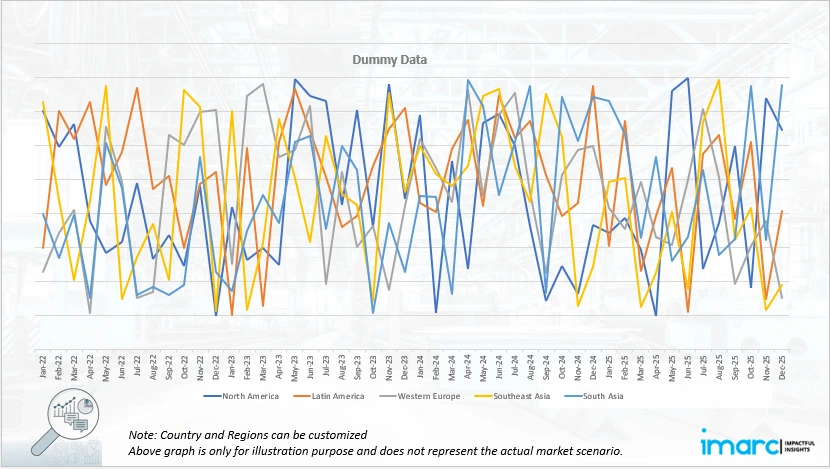
EDTA Prices Chart
Get real-time access to monthly/quarterly/yearly prices Request Sample
During the second quarter of 2026, the EDTA prices in China reached 1420 USD/MT in June. Prices moved upward from the previous quarter as steady demand from water treatment, detergents, personal care, and agrochemical applications supported market sentiment. Domestic producers maintained firm offers due to stable feedstock costs and balanced availability. Export interest also improved, particularly from buyers seeking competitively priced Asian material.
During the second quarter of 2026, the EDTA prices in the USA reached 1690 USD/MT in June. Prices increased from the previous quarter as demand improved across water treatment, cleaning products, agriculture, and pharmaceutical intermediates. Buyers maintained regular purchasing activity, supported by steady consumption from municipal and industrial water systems.
During the second quarter of 2026, the EDTA prices in Germany reached 1762 USD/MT in June. Prices strengthened as demand from industrial cleaning, detergents, water treatment, and specialty chemical applications remained stable. The market was supported by firm production costs, steady energy related expenses, and cautious inventory rebuilding among buyers. European suppliers maintained stable offers as downstream users preferred timely procurement over large volume stockpiling.
During the second quarter of 2026, the EDTA prices in India reached 1511 USD/MT in June. Prices rose as demand improved from agrochemicals, textile processing, detergents, and water treatment applications. Domestic consumption remained steady, supported by regular buying from formulation units and industrial users. Suppliers adjusted offers upward due to stable feedstock costs and firm procurement from downstream industries.
During the second quarter of 2026, the EDTA prices in Japan reached 1801 USD/MT in June. Prices increased from the previous quarter as demand from water treatment, personal care, pharmaceuticals, and specialty chemical applications remained firm. The market was supported by steady procurement from high purity formulation segments and industrial users. Supply was stable, yet sellers maintained firm offers due to elevated operating costs and disciplined inventory management.
Regional Coverage
The report provides a detailed analysis of the market across different regions, each with unique pricing dynamics influenced by localized market conditions, supply chain intricacies, and geopolitical factors. This includes price trends, price forecast and supply and demand trends for each region, along with spot prices by major ports. The report also provides coverage of FOB and CIF prices, as well as the key factors influencing EDTA prices.
Europe EDTA Price Trend
Q2 2026:
The EDTA price index in Europe moved upward, supported by steady demand from detergents, water treatment, personal care, and industrial cleaning applications. Producers maintained firm offers as operating costs, energy expenses, and compliance requirements continued to influence pricing decisions. Demand from downstream formulation industries remained stable, with buyers focusing on reliable supply and consistent quality. Imported material supported availability, yet freight and regulatory costs kept landed offers firm. The market also gained support from regular procurement by users in metal cleaning, textile processing, and specialty chemicals.
| Region | Countries Covered |
|---|---|
| Europe | Germany, France, United Kingdom, Italy, Spain, Russia, Turkey, Netherlands, Poland, Sweden, Belgium, Austria, Ireland, Switzerland, Norway, Denmark, Romania, Finland, Czech Republic, Portugal, and Greece, among other European countries. |
North America EDTA Price Trend
Q2 2026:
The EDTA price index in North America increased as demand improved across water treatment, detergents, agriculture, and industrial cleaning sectors. Buyers maintained steady procurement schedules, supported by regular consumption from municipal treatment systems and specialty chemical formulators. Domestic supply remained adequate, yet suppliers kept offers firm due to stable feedstock costs and logistics expenses. Imported EDTA also carried firm landed costs, which supported regional pricing. Demand from cleaning formulations and chelated micronutrient products added further stability to the market.
| Region | Countries Covered |
|---|---|
| North America | United States and Canada |
Middle East and Africa EDTA Price Trend
Q2 2026:
According to the EDTA price chart, prices in the Middle East and Africa changed due to a complex interplay of events, including supply chain disruptions, seasonal demand swings, and geopolitical effects.
| Region | Countries Covered |
|---|---|
| Middle East & Africa | Saudi Arabia, UAE, Israel, Iran, South Africa, Nigeria, Oman, Kuwait, Qatar, Iraq, Egypt, Algeria, and Morocco, among other Middle Eastern and African countries. |
Asia Pacific EDTA Price Trend
Q2 2026:
In the Asia Pacific, EDTA prices increased due to steady demand from water treatment, detergents, agrochemicals, textiles, and personal care applications. China, India, and Japan showed firm market sentiment, supported by consistent downstream consumption and controlled supply. Producers maintained stable to higher offers as feedstock costs and production expenses supported price firmness. Export demand from Asian suppliers also remained active, particularly from buyers seeking competitively priced material.
| Region | Countries Covered |
|---|---|
| Asia Pacific | China, India, Indonesia, Pakistan, Bangladesh, Japan, Philippines, Vietnam, Thailand, South Korea, Malaysia, Nepal, Taiwan, Sri Lanka, Hongkong, Singapore, Australia, and New Zealand, among other Asian countries. |
Latin America EDTA Price Trend
Q2 2026:
The market for EDTA in Latin America is primarily driven by the region's abundant natural resources, especially in nations like Chile and Brazil. However, EDTA prices might fluctuate significantly due to different regulatory regimes and political unpredictability.
| Region | Countries Covered |
|---|---|
| Latin America | Brazil, Mexico, Argentina, Columbia, Chile, Ecuador, and Peru, among other Latin American countries. |
EDTA Pricing Report, Market Analysis, and News
IMARC's latest publication, “EDTA Prices, Trend, Chart, Demand, Market Analysis, News, Historical and Forecast Data Report 2026 Edition,” presents a detailed examination of the EDTA market, providing insights into both global and regional trends that are shaping prices. This report delves into the spot price of EDTA at major ports and analyzes the composition of prices, including FOB and CIF terms. It also presents detailed EDTA prices trend analysis by region, covering North America, Europe, Asia Pacific, Latin America, and Middle East and Africa. The factors affecting EDTA pricing, such as the dynamics of supply and demand, geopolitical influences, and sector specific developments, are thoroughly explored. This comprehensive report helps stakeholders stay informed with the latest market news, regulatory updates, and technological progress, facilitating informed strategic decision-making and forecasting.
EDTA Industry Analysis
The global EDTA industry size reached USD 2.2 Billion in 2025. By 2034, IMARC Group expects the market to reach USD 3.2 Billion, at a projected CAGR of 4.65% during 2026-2034. Market expansion is supported by the growing construction activity and expanding infrastructure investments across developing economies.
Latest News and Developments:
- April 2026: A review published highlighted the expanding role of ethylenediaminetetraacetic acid (EDTA) beyond its traditional use as a chelating agent. Researchers found that EDTA and its salts demonstrate antibacterial, antifungal, and antibiofilm properties against a broad range of pathogens. The study noted that EDTA can enhance the effectiveness of natural therapeutics and conventional antibiotics, particularly against multidrug resistant bacteria. The review also emphasized EDTA’s ability to reduce heavy metal toxicity through chelation, supporting its continued relevance in medical, industrial, and environmental applications.
Product Description
EDTA, or ethylenediaminetetraacetic acid, is an organic chelating agent widely used to bind metal ions in aqueous and industrial systems. It contains amine and carboxyl functional groups that allow it to form stable complexes with calcium, magnesium, iron, copper, and other metal ions. EDTA is valued for its strong chelation efficiency, chemical stability, water solubility in salt forms, and ability to improve formulation performance. It is used in water treatment, detergents, industrial cleaners, textiles, pulp and paper processing, agriculture, personal care, pharmaceuticals, and food processing. In water systems, EDTA helps control scale and metal contamination. In detergents and cleaners, it improves cleaning efficiency by reducing hardness interference. In agriculture, EDTA is used in chelated micronutrients to improve nutrient availability.
Report Coverage
| Key Attributes | Details |
|---|---|
| Product Name | EDTA |
| Report Features | Exploration of Historical Trends and Market Outlook, Industry Demand, Industry Supply, Gap Analysis, Challenges, EDTA Price Analysis, and Segment-Wise Assessment. |
| Currency/Units | US$ (Data can also be provided in local currency) or Metric Tons |
| Region/Countries Covered |
The current coverage includes analysis at the global and regional levels only. |
| Information Covered for Key Suppliers |
|
| Customization Scope | The report can be customized as per the requirements of the customer |
| Report Price and Purchase Option |
Plan A: Monthly Updates - Annual Subscription
Plan B: Quarterly Updates - Annual Subscription
Plan C: Biannually Updates - Annual Subscription
|
| Post-Sale Analyst Support | 360-degree analyst support after report delivery |
| Delivery Format | PDF and Excel through email (We can also provide the editable version of the report in PPT/Word format on special request) |
Key Benefits for Stakeholders:
- IMARC’s report presents a detailed analysis of EDTA pricing, covering global and regional trends, spot prices at key ports, and a breakdown of Ex Works, FOB, and CIF prices.
- The study examines factors affecting EDTA price trend, including raw material costs, supply-demand shifts, geopolitical impacts, and industry developments, offering insights for informed decision-making.
- The competitive landscape review equips stakeholders with crucial insights into the latest market news, regulatory changes, and technological advancements, ensuring a well-rounded, strategic overview for forecasting and planning.
- IMARC offers various subscription options, including monthly, quarterly, and biannual updates, allowing clients to stay informed with the latest market trends, ongoing developments, and comprehensive market insights. The EDTA price charts ensure our clients remain at the forefront of the industry.
Need more help?
- Speak to our experienced analysts for insights on the current market scenarios.
- Include additional segments and countries to customize the report as per your requirement.
- Gain an unparalleled competitive advantage in your domain by understanding how to utilize the report and positively impacting your operations and revenue.
- For further assistance, please connect with our analysts.
 Request Customization
 Inquire Before Buying
 Speak to an Analyst
 Request Brochure
Benefits of Customization
- Personalize this research
- Triangulate with your data
- Get data as per your format and definition
- Gain a deeper dive into a specific application, geography, customer, or competitor
- Any level of personalization
Get in Touch With Us
UNITED STATES
Phone: +1-201-971-6302
INDIA
Phone: +91-120-433-0800
UNITED KINGDOM
Phone: +44-753-714-6104
Email: sales@imarcgroup.com
Client Testimonials




.webp)




.webp)













Related Reports

Why Choose Us
IMARC offers trustworthy, data-centric insights into commodity pricing and evolving market trends, enabling businesses to make well-informed decisions in areas such as procurement, strategic planning, and investments. With in-depth knowledge spanning more than 1000 commodities and a vast global presence in over 150 countries, we provide tailored, actionable intelligence designed to meet the specific needs of diverse industries and markets.
1000
+Commodities
150
+Countries Covered
3000
+Clients
20
+Industry

Robust Methodologies & Extensive Resources
IMARC delivers precise commodity pricing insights using proven methodologies and a wealth of data to support strategic decision-making.

Subscription-Based Databases
Our extensive databases provide detailed commodity pricing, import-export trade statistics, and shipment-level tracking for comprehensive market analysis.

Primary Research-Driven Insights
Through direct supplier surveys and expert interviews, we gather real-time market data to enhance pricing accuracy and trend forecasting.

Extensive Secondary Research
We analyze industry reports, trade publications, and market studies to offer tailored intelligence and actionable commodity market insights.
Trusted by 3000+ industry leaders worldwide to drive data-backed decisions. From global manufacturers to government agencies, our clients rely on us for accurate pricing, deep market intelligence, and forward-looking insights.