
Empty Capsules Market Size, Share, Trends and Forecast by Type, Raw Material, Functionality, Therapeutic Application, End User, and Region, 2026-2034
Global Empty Capsules Market Size, Share, Trends & Forecast (2026-2034)
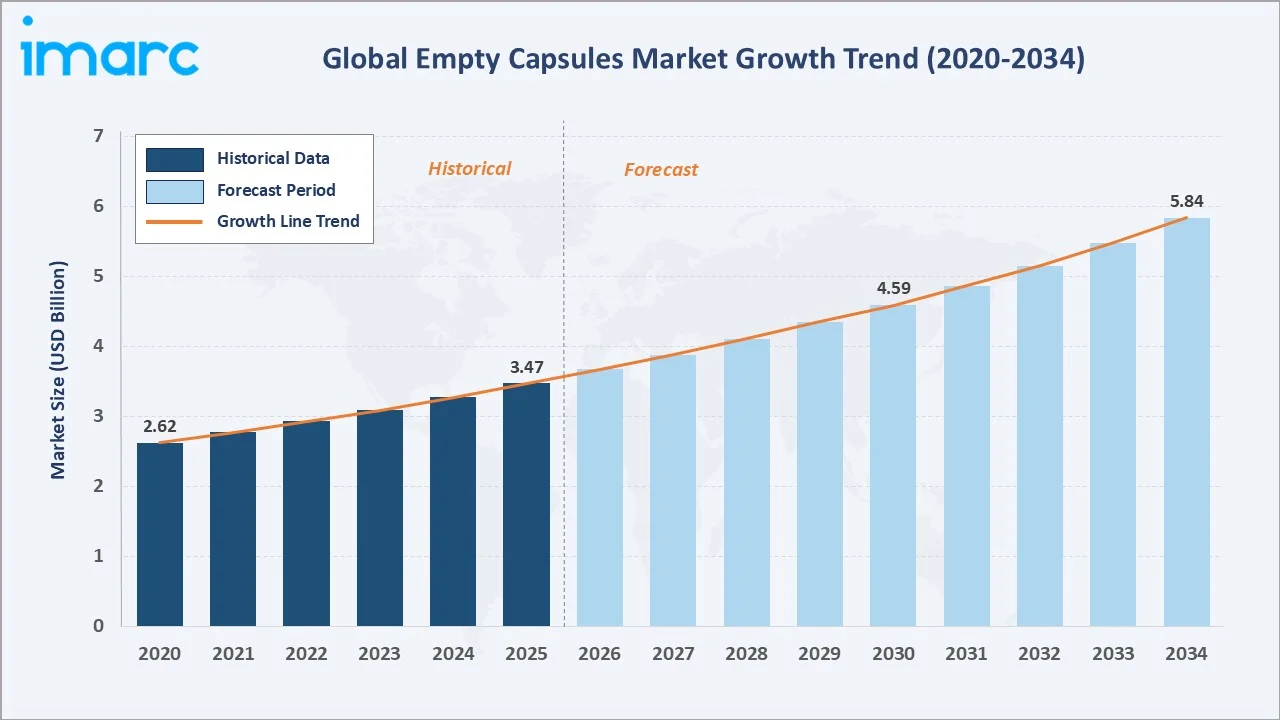
The global empty capsules market size reached USD 3.47 Billion in 2025 and is projected to reach USD 5.84 Billion by 2034, exhibiting a CAGR of 5.79% during 2026-2034. Growing pharmaceutical production, rising nutraceutical consumption, vegetarian capsule innovation, and expanding generic drug manufacturing drive sustained market growth globally.
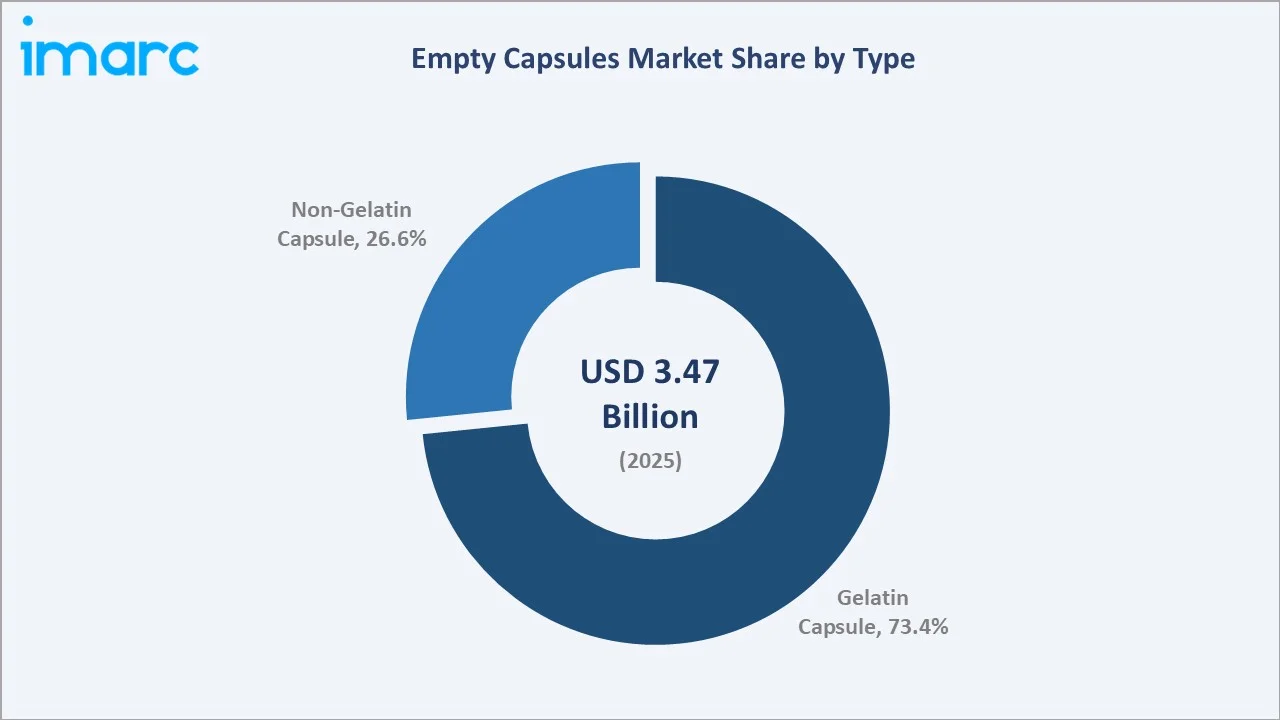
Gelatin Capsules dominate the type mix at 73.4% in 2025, driven by widespread pharmaceutical use. Immediate-release Capsules lead functionality at 50.2%. North America commands a dominant 34.5% regional share in 2025.
Market Snapshot
|
Metric |
Value |
|
Market Size (2025) |
USD 3.47 Billion |
|
Forecast Market Size (2034) |
USD 5.84 Billion |
|
CAGR (2026-2034) |
5.79% |
|
Base Year |
2025 |
|
Historical Period |
2020-2025 |
|
Forecast Period |
2026-2034 |
|
Largest Region |
North America (34.5% share, 2025) |
|
Second Largest Region |
Europe (27.8% share, 2025) |
|
Leading Type |
Gelatin Capsule (73.4%, 2025) |
|
Leading Functionality |
Immediate-release Capsules (50.2%, 2025) |
The global empty capsules market trajectory from 2020 through 2034, with historical expansion to USD 3.47 Billion in 2025, reflects consistent demand from pharmaceutical and nutraceutical sectors. The forecast to USD 5.84 Billion captures vegetarian capsule adoption, modified-release technology growth, and emerging-market pharmaceutical manufacturing expansion.
To get more information on this market, Request Sample
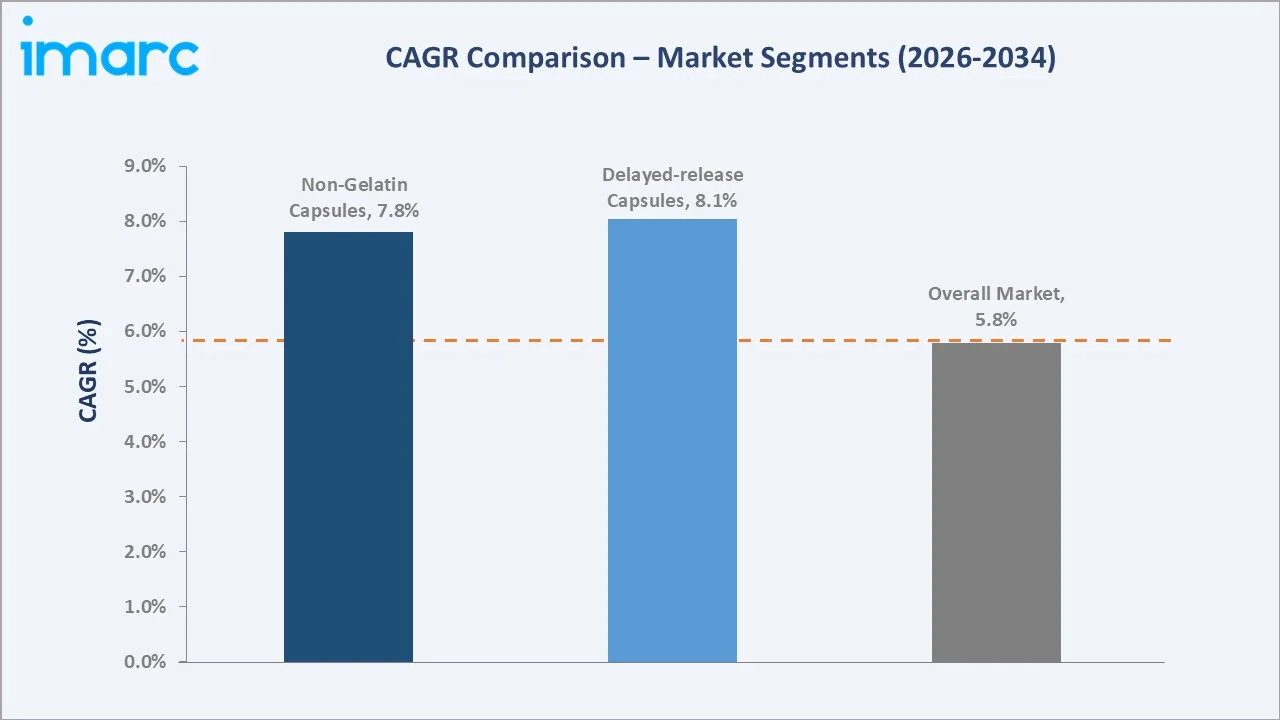
The CAGR trajectories across key type and functionality sub-segments, with Non-gelatin Capsules at ~7.82% CAGR and Delayed-release Capsules at ~8.05% CAGR, represent the fastest-growing categories within the global empty capsules industry through 2034.
Executive Summary
The global empty capsules market is on a sustained growth trajectory from USD 3.47 Billion in 2025 to USD 5.84 Billion by 2034. Empty capsules encompass gelatin and non-gelatin shells used for pharmaceutical, nutraceutical, and dietary supplement encapsulation worldwide.
Gelatin Capsules lead type at 73.4% in 2025, driven by widespread availability and cost-effectiveness in pharmaceutical applications. Non-gelatin Capsules at 26.6% reflect growing vegan and clean-label product demand. Immediate-release Capsules at 50.2% dominate functionality, while sustained and delayed-release formats serve specialty drug-delivery applications.
North America dominates at 34.5% in 2025, reflecting mature pharmaceutical infrastructure, strong generics markets, and leading nutraceutical consumption. Europe at 27.8% is underpinned by stringent drug standards and premium capsule demand. Asia-Pacific at 24.6% represents the fastest-growing region, anchored by India and China pharmaceutical manufacturing expansion.
Key Market Insights
|
Insight |
Data |
|
Largest Type |
Gelatin Capsule – 73.4% share (2025) |
|
Leading Functionality |
Immediate-release Capsules – 50.2% share (2025) |
|
Leading Region |
North America – 34.5% share (2025) |
|
Second Largest Region |
Europe – 27.8% share (2025) |
|
Top Companies |
ACG, Bright Pharma Caps, HealthCaps India, Medicaps Limited, and Suheung Co., Ltd. |
Key Analytical Observations Expanding On The Above Data:
- Gelatin Capsule: Gelatin Capsules' 73.4% share reflects the enduring dominance of animal-derived shells as the most cost-effective and widely validated encapsulation format across pharmaceutical and nutraceutical applications globally.
- Immediate-release Capsules: Immediate-release Capsules' 50.2% share captures the predominant preference for fast-dissolving standard formulations in both over-the-counter nutraceutical and prescription pharmaceutical applications globally.
- North America: North America's 34.5% dominance reflects an advanced pharmaceutical supply chain, high per-capita supplement consumption, well-established capsule manufacturing infrastructure, and strong regulatory frameworks supporting innovation.
- Non-gelatin Capsules: Non-gelatin Capsules' 26.6% share represents a structurally growing segment, driven by vegan, vegetarian, kosher, and halal product requirements gaining rapid commercial traction in nutraceutical and specialty pharmaceutical markets.
Global Empty Capsules Market Overview
Empty capsules are two-piece or soft-gel hollow shells used for encapsulating powders, granules, pellets, liquids, and semi-solids. They serve as precision drug delivery vehicles in pharmaceuticals, nutraceuticals, and dietary supplement manufacturing across global production facilities.
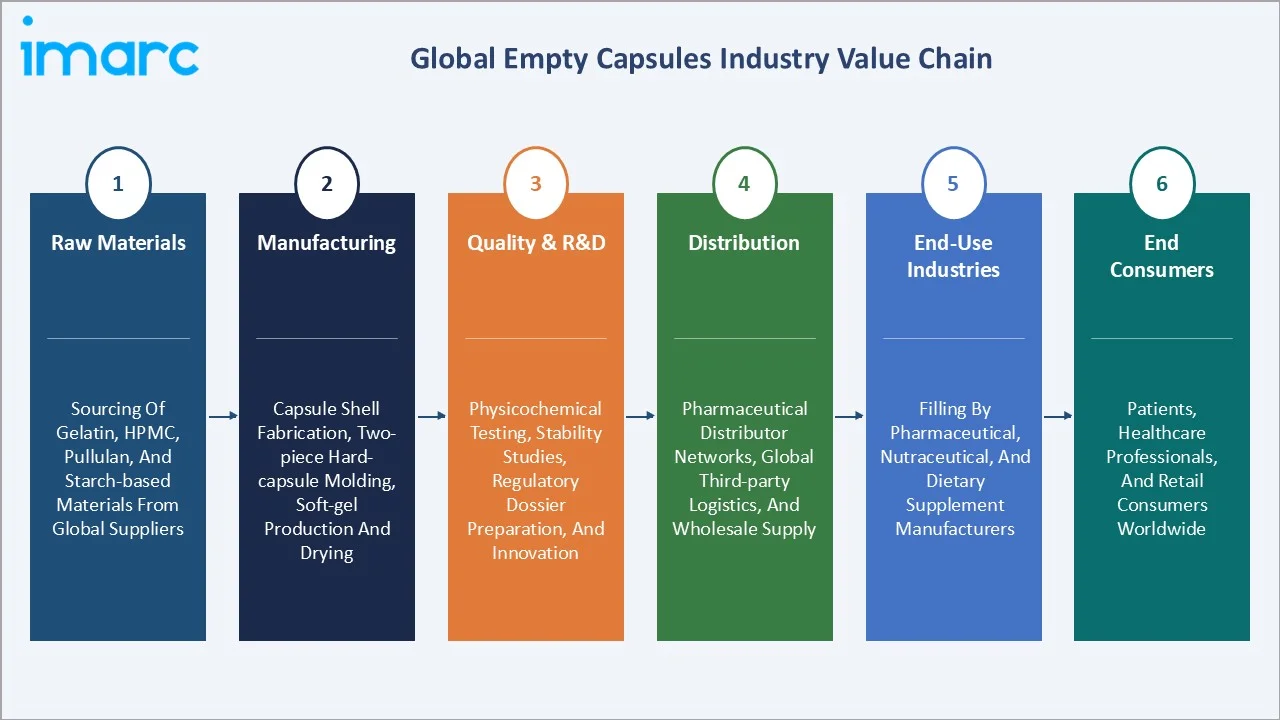
The global empty capsules ecosystem benefits from expanding pharmaceutical generics production in Asia-Pacific, rising consumer health awareness driving nutraceutical demand, technological innovation in plant-based and modified-release capsule materials, and the growing prevalence of chronic diseases requiring sophisticated oral drug delivery systems.
Market Dynamics
To evaluate market opportunities, Request Sample
Market Drivers
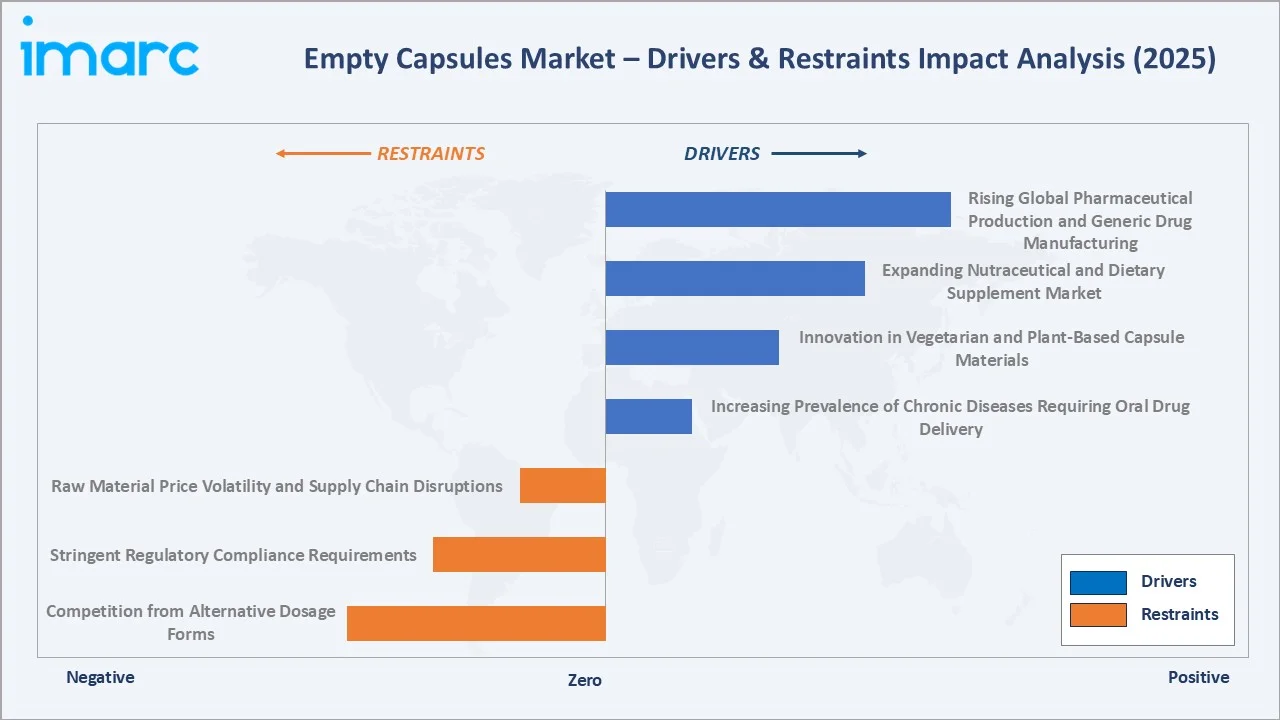
- Rising Global Pharmaceutical Production and Generic Drug Manufacturing: Global pharmaceutical production is expanding steadily, with generics manufacturing in India, China, and emerging markets driving bulk capsule demand. The WHO Essential Medicines program and patent cliffs on branded drugs continue to accelerate generic formulation activity, directly amplifying consumption of pharmaceutical-grade empty capsules worldwide.
- Expanding Nutraceutical and Dietary Supplement Market: Growing health awareness, increasing focus on preventive healthcare, and rising consumer interest in wellness products are driving demand for dietary supplements worldwide. The continued expansion of the nutraceutical industry has significantly increased the need for high-quality gelatin and non-gelatin empty capsules across major global markets.
- Innovation in Vegetarian and Plant-Based Capsule Materials: Growing consumer demand for vegan, vegetarian, kosher, and halal-certified products is accelerating adoption of HPMC, pullulan, and starch-based non-gelatin capsule materials. Regulatory approvals and clinical validation of plant-based capsules across major pharmaceutical markets are further expanding their addressable customer base globally.
- Increasing Prevalence of Chronic Diseases Requiring Oral Drug Delivery: Rising global incidence of diabetes, cardiovascular disease, hypertension, and oncological conditions is increasing the volume of oral medication prescriptions globally. Empty capsules serve as the preferred delivery format for powder-filled and modified-release pharmaceutical formulations targeting these high-prevalence therapeutic categories worldwide.
Market Restraints
- Raw Material Price Volatility and Supply Chain Disruptions: Gelatin prices are subject to volatility linked to livestock availability, food industry competition, and geographic concentration of collagen extraction. Supply chain disruptions affecting key raw material suppliers can create manufacturing cost pressures for capsule producers dependent on animal-derived gelatin sourcing globally.
- Stringent Regulatory Compliance Requirements: Pharmaceutical-grade empty capsules require compliance with pharmacopoeial standards including USP, EP, and JP, and are subject to FDA, EMA, and regional regulatory authority oversight. Compliance costs, quality documentation requirements, and manufacturing standard audits impose significant operational burdens on smaller regional capsule manufacturers.
- Competition from Alternative Dosage Forms: Tablets, softgels, sachets, and oral liquid formulations compete with hard capsules across pharmaceutical and nutraceutical applications. Manufacturer preference for tablet compression in high-volume generics and advances in orally disintegrating tablet technology limit incremental capsule adoption in certain therapeutic formulation categories.
Market Opportunities
- Modified-Release and Specialty Capsule Technology Development: Modified-release capsule technologies, including delayed-release enteric coatings, sustained-release polymer systems, and two-compartment capsule-in-capsule designs, command significant price premiums. Growing clinical demand for targeted gastrointestinal delivery and chronotherapy creates high-value differentiation opportunities for leading manufacturers.
- Pharmaceutical Manufacturing Expansion in Emerging Economies: Rapid pharmaceutical manufacturing growth in India, China, Vietnam, Brazil, and Mexico is creating large incremental demand for pharmaceutical-grade empty capsules. Government incentive schemes for domestic API and formulation production in these markets are accelerating local capsule sourcing requirements from global and regional manufacturers.
Market Challenges
- Quality Counterfeiting and Sub-Standard Capsule Supply in Emerging Markets: Proliferation of sub-standard and counterfeit empty capsules through informal channels in emerging markets poses safety risks and creates pricing pressure on legitimate manufacturers. Non-compliance with pharmacopoeial standards by unregulated producers undermines patient safety and distorts competitive dynamics in price-sensitive market segments.
- Certification Complexity for Halal, Kosher, and Vegan Market Segments: Meeting the overlapping certification requirements for halal, kosher, vegan, and non-GMO product segments requires separate validated manufacturing lines, third-party audits, and regulatory documentation. The complexity and cost of maintaining multiple certifications creates operational challenges particularly for smaller manufacturers targeting diverse global regulatory environments.
Emerging Market Trends
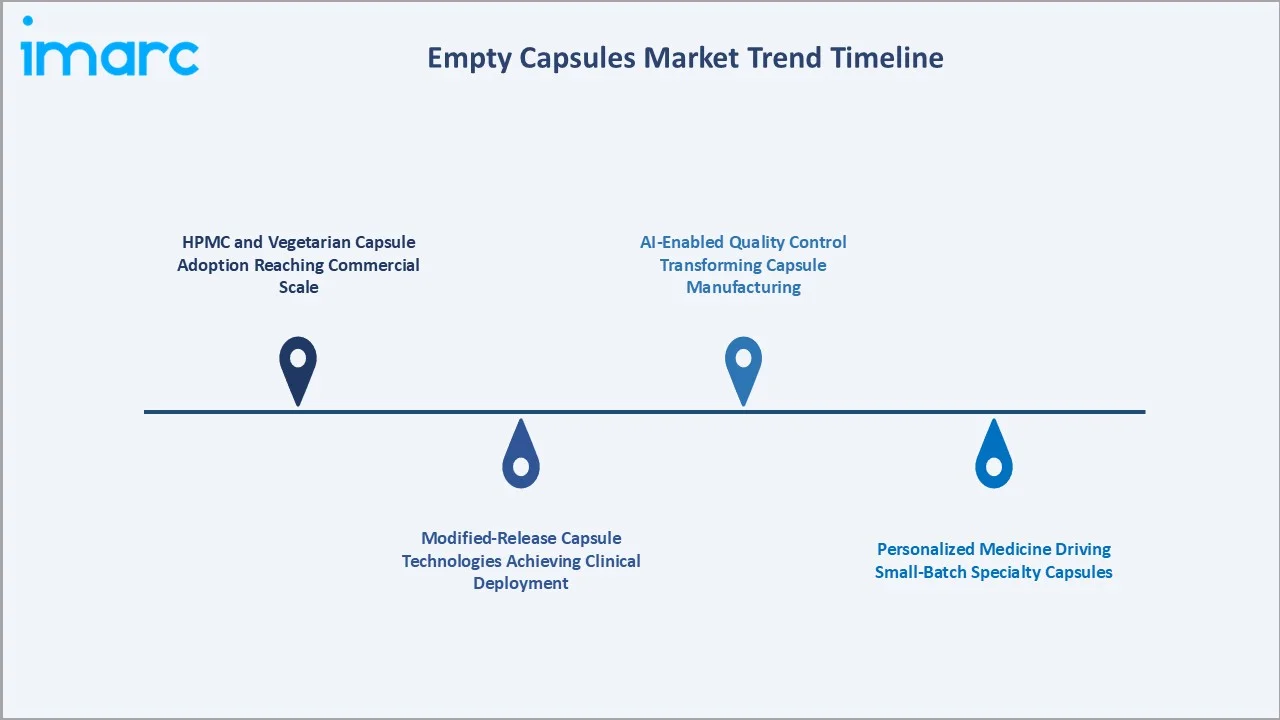
1. HPMC and Vegetarian Capsule Adoption Reaching Commercial Scale
Hydroxypropyl methylcellulose capsules have achieved mainstream commercial deployment across pharmaceutical and nutraceutical applications by 2025. Regulatory acceptance across the US, Europe, and Asia-Pacific, combined with improving cost parity with gelatin alternatives, is accelerating HPMC capsule penetration in premium product categories globally.
2. Modified-Release Capsule Technologies Achieving Widespread Clinical Deployment
Enteric-coated, sustained-release, and delayed-release capsule technologies are gaining regulatory approvals and clinical deployment across therapeutic categories including proton pump inhibitors, pain management, and oncology formulations, establishing modified-release capsules as an essential precision drug delivery format globally.
3. Personalized Medicine Driving Demand for Small-Batch Specialty Capsules
Advances in genomics, AI-assisted diagnostics, and precision oncology are increasing demand for small-batch and custom-formulated capsule production. Capsule-based delivery uniquely supports individualized medication dosing for rare diseases and personalized therapy regimens, creating a high-margin niche within global empty capsule markets.
4. AI-Enabled Quality Control Transforming Capsule Manufacturing
Artificial intelligence-assisted vision inspection and automated quality control systems are being deployed by leading capsule manufacturers to achieve near-zero defect rates. ACG and Lonza Group AG have pioneered AI-enabled inspection platforms, substantially improving throughput, defect detection, and pharmacopoeial compliance globally.
Industry Value Chain Analysis
The global empty capsules value chain spans six stages from raw material sourcing through end consumer delivery. R&D and specialty capsule manufacturing capture the highest value-add margins, while commodity gelatin capsule production faces pricing pressure from expanding low-cost Asian manufacturing capacity and raw material cost volatility.
|
Stage |
Key Activities / Examples |
|
Raw Materials |
Sourcing of gelatin, HPMC, pullulan, and starch-based materials from global suppliers |
|
Manufacturing |
Capsule shell fabrication, two-piece hard-capsule molding, soft-gel production and drying |
|
Quality & R&D |
Physicochemical testing, stability studies, regulatory dossier preparation, innovation |
|
Distribution |
Pharmaceutical distributor networks, global third-party logistics, wholesale supply |
|
End-Use Industries |
Filling by pharmaceutical, nutraceutical, and dietary supplement manufacturers |
|
End Consumers |
Patients, healthcare professionals, and retail consumers worldwide |
Technology Landscape in the Global Empty Capsules Industry
Hydroxypropyl Methylcellulose (HPMC) Capsule Technology
HPMC capsules deliver superior compatibility with hygroscopic and moisture-sensitive formulations, low moisture content critical for biological APIs, and broad acceptance across vegan and clean-label product categories. Continuous R&D by companies like, Lonza Group AG, is yielding next-generation HPMC surface treatments globally.
Modified-Release Polymer Systems for Targeted Drug Delivery
Modified-release capsule technologies utilising enteric polymer coatings, pH-responsive polymers, and sustained-release matrix systems enable precise gastrointestinal targeting. Capsule-in-capsule and dual-compartment designs support combination therapy and chronotherapy applications across oncology, gastroenterology, and pain management globally.
Pullulan and Bio-Based Capsule Material Innovation
Pullulan-based capsules offer superior oxygen barrier properties critical for highly oxidation-sensitive nutraceutical ingredients including omega-3 fatty acids, probiotics, and botanical extracts. Emerging bio-based and biodegradable capsule material platforms are gaining commercial traction as sustainability regulations intensify globally.
Market Segmentation Analysis
The report covers the following segments:
|
Segment Category |
Leading Segment |
Market Share |
Year |
|
Type |
Gelatin Capsule |
73.4% |
2025 |
|
Raw Material |
🔒 |
🔒 |
2025 |
|
Functionality |
Immediate-release Capsules |
50.2% |
2025 |
|
Therapeutic Application |
🔒 |
🔒 |
2025 |
|
End User |
🔒 |
🔒 |
2025 |
|
Region |
North America |
34.5% |
2025 |

By Type
Gelatin Capsules command a 73.4% majority share in 2025, driven by their cost-effectiveness, widespread pharmacopoeial acceptance, and established manufacturing infrastructure. Animal-derived gelatin remains the dominant raw material for pharmaceutical-grade capsule shells, supported by mature supply chains and superior mechanical properties for high-speed filling operations globally.
To access detailed market analysis, Request Sample
Non-gelatin Capsules at 26.6% represent the fastest-growing type segment, driven by rising vegan and vegetarian consumer demand, halal and kosher certification requirements, and the pharmaceutical industry's need for moisture-sensitive API encapsulation compatible with HPMC and pullulan-based shell materials across global nutraceutical and specialty pharmaceutical markets.
By Functionality
Immediate-release Capsules dominate functionality at 50.2% in 2025, reflecting the standard encapsulation format for most pharmaceutical and nutraceutical products requiring rapid dissolution and bioavailability. The segment is anchored by high-volume generic drug production and mass-market dietary supplement manufacturing across all global production regions.
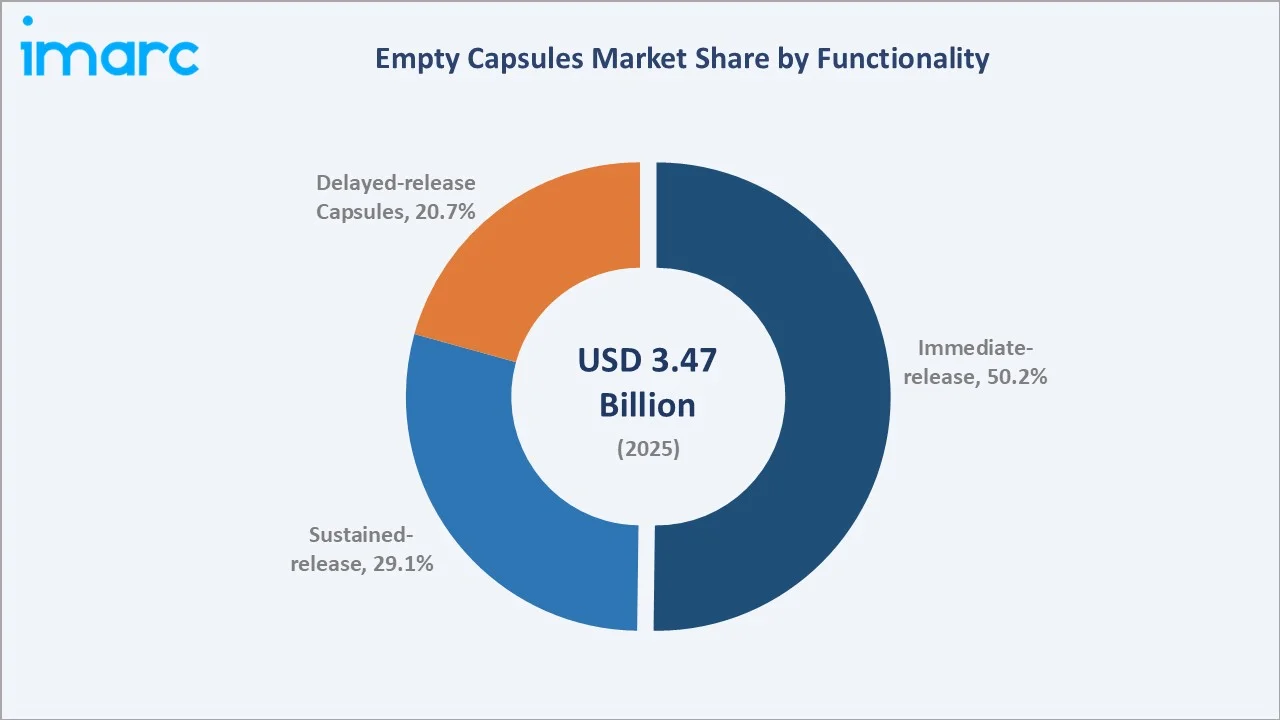
Sustained-release Capsules at 29.1% serve pharmaceutical applications requiring extended therapeutic effect with reduced dosing frequency, particularly for cardiovascular, CNS, and pain management drugs. Delayed-release Capsules at 20.7% are driven by enteric drug delivery applications protecting acid-labile APIs and targeting intestinal absorption in gastroenterology and precision therapeutics.
Regional Market Insights
|
Region |
Share (2025) |
Key Growth Drivers |
|
North America |
34.5% |
Advanced pharmaceutical infrastructure, high nutraceutical consumption, strong generics market |
|
Europe |
27.8% |
Aging population, stringent quality standards, established pharmaceutical manufacturing base |
|
Asia-Pacific |
24.6% |
Expanding generic drug production, rising health awareness, growing pharma export volumes |
|
Latin America |
7.4% |
Growing nutraceutical demand, expanding pharmaceutical manufacturing, rising healthcare investment |
|
Middle East & Africa |
5.7% |
Increasing healthcare spending, growing pharmaceutical manufacturing, rising supplement consumption |
North America's 34.5% market dominance in 2025 reflects the world's largest pharmaceutical and nutraceutical consumption base, supported by advanced manufacturing standards, strong branded and generic pharmaceutical production, and exceptional consumer adoption of dietary supplements in the United States and Canada.
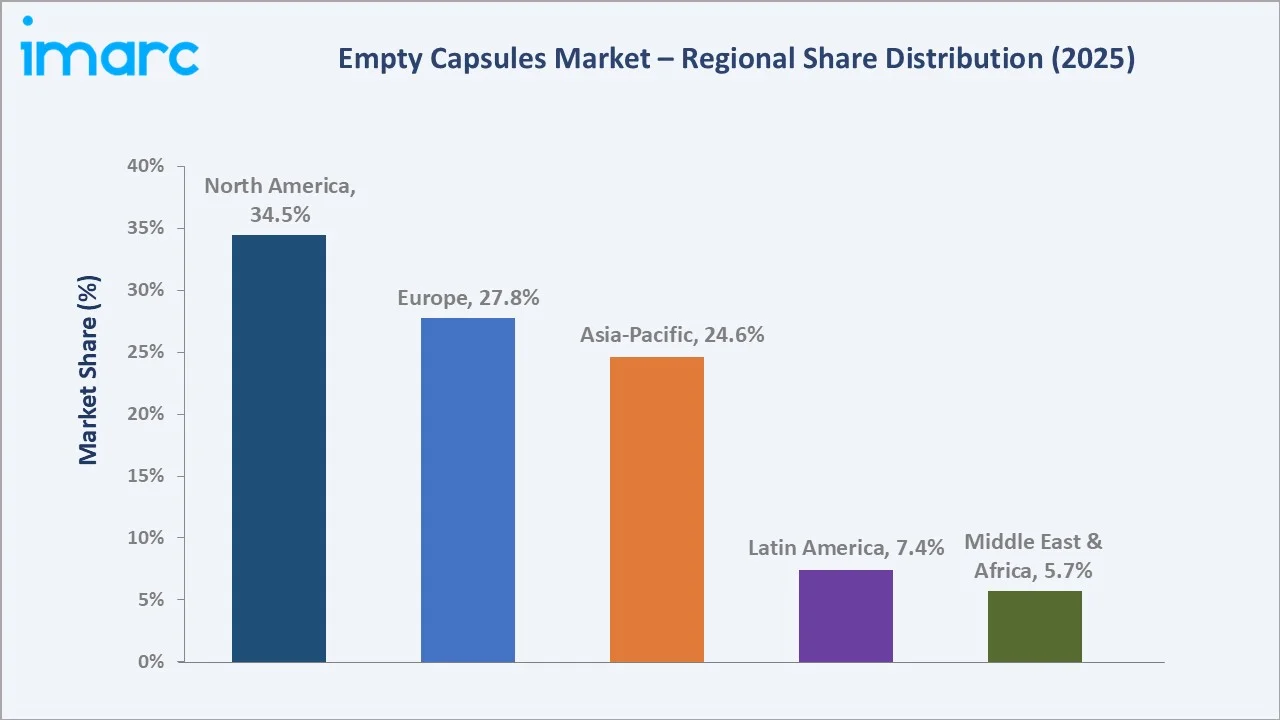
Europe's 27.8% share reflects the region's established pharmaceutical manufacturing infrastructure, strong generics market in countries including Germany, France, and Italy, and high-quality standards for pharmaceutical packaging materials. Asia-Pacific at 24.6% is growing rapidly, anchored by India's generic drug export leadership and China's expanding domestic pharmaceutical production capacity.
Competitive Landscape
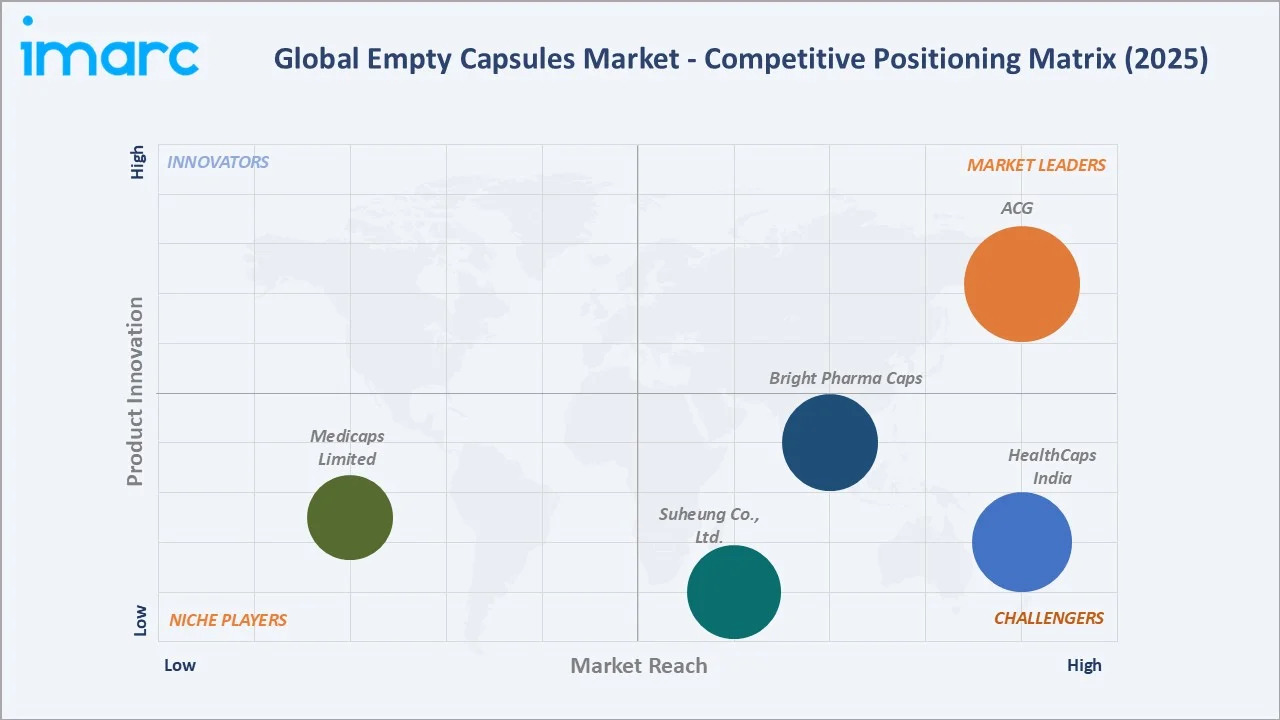
The global empty capsules market is moderately concentrated, with a handful of multinational corporations commanding significant market shares across gelatin and non-gelatin segments, while regional specialists and emerging Asian manufacturers maintain strong positions in generic capsule supply.
|
Company Name |
Key Products |
Market Position |
Global Strategic Focus |
|
ACG |
Hard gelatin capsules, Vegetarian capsules |
Leader |
Integrated capsule and packaging solutions; plant-based format expansion globally |
|
Bright Pharma Caps |
Organic capsules, Enteric capsules, JC-Delayed Release Capsule, Liquid capsules, Goh-Veg HPMC vegetable capsules |
Challenger |
North American focus; kosher and halal-certified capsule supply for nutraceuticals |
|
HealthCaps India |
HV caps, PURA caps, NT caps, HV Caps NXG, HG caps, HV caps ART, HD caps, HP caps, LIQ caps |
Challenger |
Indian pharma market leadership; export-oriented supply to developed markets |
|
Medicaps Limited |
Hard gelatin capsules |
Niche |
Mid-size Indian manufacturer; generic pharma and nutraceutical capsule supply |
|
Suheung Co., Ltd. |
Hard gelatin capsules |
Challenger |
Korean capsule leader; Asia-Pacific expansion; modified-release capsule R&D |
Key players include ACG, Bright Pharma Caps, HealthCaps India, Medicaps Limited, and Suheung Co., Ltd., among others.
Key Company Profiles
ACG
ACG is one of the world's largest integrated pharmaceutical solutions companies and a leading capsule manufacturer, supplying hard gelatin and HPMC capsules alongside encapsulation machinery, packaging, and inspection solutions to pharmaceutical manufacturers globally.
- Product Portfolio: Hard gelatin capsules, Vegetarian capsules
- Recent Developments: In October 2025, ACG invested $200 million in establishing its first hard-shell capsule manufacturing operations in the United States, strengthening its presence in the North American pharmaceutical and nutraceutical markets. The phased investment will support the development of a new manufacturing facility in Atlanta, Georgia, focused on producing both gelatin and vegetarian (HPMC) capsules.
- Strategic Focus: ACG's strategy leverages its integrated pharmaceutical supply chain model to cross-sell capsule shells with encapsulation machinery and packaging solutions, capturing higher customer lifetime value while expanding its non-gelatin capsule portfolio to serve clean-label and vegan product segments globally.
Bright Pharma Caps
Bright Pharma Caps is recognised globally as the pioneer of the world's first NOP-certified organic vegetable capsules, serving the nutraceutical and pharmaceutical industries across North America and international markets.
- Product Portfolio: Organic capsules, Enteric capsules, JC-Delayed Release Capsule, Liquid capsules, Goh-Veg HPMC vegetable capsules
- Strategic Focus: Bright Pharma Caps' strategy centres on serving health-conscious and certification-driven nutraceutical brands through its differentiated organic, halal, kosher, and non-GMO certified capsule portfolio. The company maintains six warehouses across the USA and Canada to enable next-day delivery to domestic customers, prioritising supply chain reliability and customer proximity as its primary competitive advantages in the North American specialty capsule segment.
Market Concentration Analysis
The global empty capsules market exhibits moderate-to-high concentration in the pharmaceutical-grade segment. ACG and Bright Pharma Caps maintain strong competitive positions across gelatin and non-gelatin categories respectively.
Strategic consolidation is underway as leading players pursue vertical integration into raw material supply, encapsulation equipment, and adjacent pharmaceutical packaging categories. Mid-tier manufacturers differentiate through specialty capsule certifications, modified-release technology investment, and regional market focus to sustain positions against global leaders.
Investment & Growth Opportunities
Fastest-Growing Segments
Delayed-release Capsules at ~8.05% CAGR through 2034 represent the highest-growth functionality segment, driven by expanding enteric drug delivery applications, growing gastrointestinal therapeutic market volumes, and increasing pharmaceutical innovation targeting acid-sensitive APIs requiring precision intestinal delivery globally.
Emerging Segments
Non-gelatin Capsules at ~7.82% CAGR through 2034 represent the fastest-growing type category, capturing accelerating demand from vegan consumers, halal and kosher-certified product manufacturers, and pharmaceutical producers requiring moisture-impermeable HPMC formats for sensitive biologics, probiotics, and moisture-reactive active pharmaceutical ingredients.
Investment Trends
Private equity and strategic investment in empty capsules is concentrated in HPMC and specialty capsule manufacturing capacity, modified-release technology platforms, and AI-enabled quality control infrastructure. Government-supported pharmaceutical self-sufficiency programs across India, South Korea, and China are generating investment flows into domestic capsule manufacturing expansion.
Future Market Outlook (2026-2034)
The global empty capsules market is forecast to expand from USD 3.47 Billion in 2025 to USD 5.84 Billion by 2034 at a CAGR of 5.79%, adding USD 2.37 Billion in incremental annual market value over the forecast period, supported by broad-based pharmaceutical and nutraceutical demand growth.
Three structural forces will most significantly shape the global empty capsules landscape through 2034. Non-gelatin and plant-based capsule formats will achieve mainstream pharmaceutical adoption, modified-release specialty capsule technologies will capture an increasing share of high-value formulation pipelines, and Asia-Pacific pharmaceutical manufacturing will emerge as the dominant volume-growth engine globally.
Research Methodology
Primary Research
Primary research encompassed structured interviews with global empty capsules industry stakeholders, including senior executives at leading capsule manufacturers, pharmaceutical formulation heads, nutraceutical procurement managers, regulatory affairs specialists, and investment analysts covering pharmaceutical packaging and drug delivery sectors globally.
Secondary Research
Key secondary sources include pharmacopoeial standards bodies (USP, EP, JP), WHO pharmaceutical production reports, national regulatory authority databases, leading company annual reports, pharmaceutical trade publications, patent filing databases, and market intelligence reports from specialist pharmaceutical research firms.
Forecasting Models
Market size estimations were derived using combined top-down and bottom-up forecasting models incorporating global pharmaceutical production volume trends, nutraceutical consumption growth rates, capsule material adoption trajectories, pricing trend analysis, and regional healthcare expenditure and pharmaceutical manufacturing capacity data.
Empty Capsules Market Report Scope:
| Report Features | Details |
|---|---|
| Base Year of the Analysis | 2025 |
| Historical Period | 2020-2025 |
| Forecast Period | 2026-2034 |
| Units | Billion USD |
| Scope of the Report | Exploration of Historical Trends and Market Outlook, Industry Catalysts and Challenges, Segment-Wise Historical and Future Market Assessment:
|
| Types Covered | Gelatin Capsule, Non-gelatin Capsule |
| Raw Materials Covered | Pig Meat, Bovine Meat, Bone, Hydroxypropyl Methylcellulose (HPMC), Others |
| Functionalities Covered | Immediate-release Capsules, Sustained-release Capsules, Delayed-release Capsules |
| Therapeutic Applications Covered | Antibiotic and Antibacterial Drugs, Vitamins and Dietary Supplements, Antacid and Antiflatulent Preparations, Cardiovascular Therapy Drugs, Others |
| End Users Covered | Pharmaceutical Industry, Nutraceutical Industry, Cosmetics Industry, Others |
| Regions Covered | Asia Pacific, Europe, North America, Latin America, Middle East and Africa |
| Countries Covered | United States, Canada, Germany, France, United Kingdom, Italy, Spain, Russia, China, Japan, India, South Korea, Australia, Indonesia, Brazil, Mexico |
| Companies Covered | ACG, Bright Pharma Caps, HealthCaps India, Medicaps Limited, Suheung Co. Ltd., etc. |
| Customization Scope | 10% Free Customization |
| Post-Sale Analyst Support | 10-12 Weeks |
| Delivery Format | PDF and Excel through Email (We can also provide the editable version of the report in PPT/Word format on special request) |
Key Benefits for Stakeholders:
- IMARC’s report offers a comprehensive quantitative analysis of various market segments, historical and current market trends, market forecasts, and dynamics of the empty capsules market from 2020-2034.
- The research study provides the latest information on the market drivers, challenges, and opportunities in the global empty capsules market.
- The study maps the leading, as well as the fastest-growing, regional markets. It further enables stakeholders to identify the key country-level markets within each region.
- Porter's Five Forces analysis assists stakeholders in assessing the impact of new entrants, competitive rivalry, supplier power, buyer power, and the threat of substitution. It helps stakeholders to analyze the level of competition within the empty capsules industry and its attractiveness.
- Competitive landscape allows stakeholders to understand their competitive environment and provides an insight into the current positions of key players in the market.
Frequently Asked Questions About the Empty Capsules Market Report
The global empty capsules market size reached USD 3.47 Billion in 2025 and is projected to reach USD 5.84 Billion by 2034, exhibiting a CAGR of 5.79% during 2026-2034.
Gelatin Capsules lead the type segment with a 73.4% share in 2025, driven by cost-effectiveness and widespread pharmacopoeial acceptance across pharmaceutical and nutraceutical encapsulation applications globally.
Delayed-release Capsules exhibit the highest projected CAGR of ~8.05% through 2034, driven by expanding enteric drug delivery applications and growing pharmaceutical demand for precise gastrointestinal targeting across major therapeutic categories.
North America dominates with a 34.5% share in 2025, reflecting the world's largest pharmaceutical and nutraceutical consumption market, advanced manufacturing infrastructure, and strong consumer demand for dietary supplements.
Key players include ACG, Bright Pharma Caps, HealthCaps India, Medicaps Limited, Suheung Co., Ltd., and others
The global empty capsules market is projected to reach USD 5.84 Billion by 2034, growing from USD 3.47 Billion in 2025 at a CAGR of 5.79% over the 2026-2034 forecast period.
Key growth drivers include rising pharmaceutical production and generic drug manufacturing, expanding nutraceutical demand, innovation in vegetarian and plant-based capsule materials, and increasing chronic disease prevalence requiring sophisticated oral drug delivery globally.
The global empty capsules market grew from USD 2.62 Billion in 2020 to USD 3.47 Billion in 2025, reflecting consistent demand growth driven by expanding pharmaceutical production, rising nutraceutical consumption, and accelerating adoption of vegetarian capsule formats across global markets.
Need more help?
- Speak to our experienced analysts for insights on the current market scenarios.
- Include additional segments and countries to customize the report as per your requirement.
- Gain an unparalleled competitive advantage in your domain by understanding how to utilize the report and positively impacting your operations and revenue.
- For further assistance, please connect with our analysts.
 Request Customization
 Speak to an Analyst
 Request Brochure
 Inquire Before Buying
Benefits of Customization
- Personalize this research
- Triangulate with your data
- Get data as per your format and definition
- Gain a deeper dive into a specific application, geography, customer, or competitor
- Any level of personalization
Get in Touch With Us
UNITED STATES
Phone: +1-201-971-6302
INDIA
Phone: +91-120-433-0800
UNITED KINGDOM
Phone: +44-753-714-6104
Email: [email protected]
Client Testimonials




.webp)




.webp)













Related Reports

Choose your plan
*Please note that the prices mentioned below are starting prices for each bundle type. Kindly contact our team for further details.*
Single User License
- 1 User License, Access on 2 Devices
- PDF Report + Excel Dataset (Password Protected)
- Lifetime Access
- No Printing Rights
- 10% Free Report Customization
- 10–12 Weeks of Analyst Support
Five User License
- Access for 5 Users, 2 Devices per User
- PDF Report + Excel Dataset (Password Protected)
- Lifetime Access
- Dedicated Account Manager
- 12–14 Weeks of Analyst Support
- No Printing Rights
- 15% Free Report Customization
- 25% Discount on Your Next Purchase
Corporate User License
- Unlimited User Access (Within Your Organization)
- PDF Report + Excel Dataset
- Lifetime Access
- Dedicated Account Manager
- 14–20 Weeks of Analyst Support
- No Printing Rights
- 20% Free Report Customization
- 30% Discount on Your Next Purchase
Essential Insights
What's included:
3 reports
- Lifetime Access
- PDF Reports
- Excel Datasets
- 2 Weeks of Free Analyst Support
- 2 User Licenses
- Access on 2 Devices
- Printing Rights
- Complimentary PowerPoint (PPT) Version
- Complimentary License Upgrade
Professional Access
What's included:
5 reports
- Lifetime Access
- PDF Reports
- Excel Datasets
- 8 Weeks of Free Analyst Support
- 2 User Licenses
- Access on 2 Devices
- Printing Rights
- Complimentary PowerPoint (PPT) Version
- Complimentary License Upgrade
Business Advantage
What's included:
8 reports
- Lifetime Access
- PDF Reports
- Excel Datasets
- 14 Weeks of Free Analyst Support
- 2 User Licenses
- Access on 2 Devices
- Printing Rights
- Complimentary PowerPoint (PPT) Version
- Complimentary License Upgrade
Enterprise Intelligence
What's included:
10 reports
- Lifetime Access
- PDF Reports
- Excel Datasets
- 20 Weeks of Free Analyst Support
- 2 User Licenses
- Access on 2 Devices
- Printing Rights
- Complimentary PowerPoint (PPT) Version
- Complimentary License Upgrade