
Europe Feed Premix Market Size, Share, Trends and Forecast by Ingredient Type, Form, Livestock, and Country, 2026-2034
Europe Feed Premix Market Size, Share, Trends & Forecast (2026-2034)
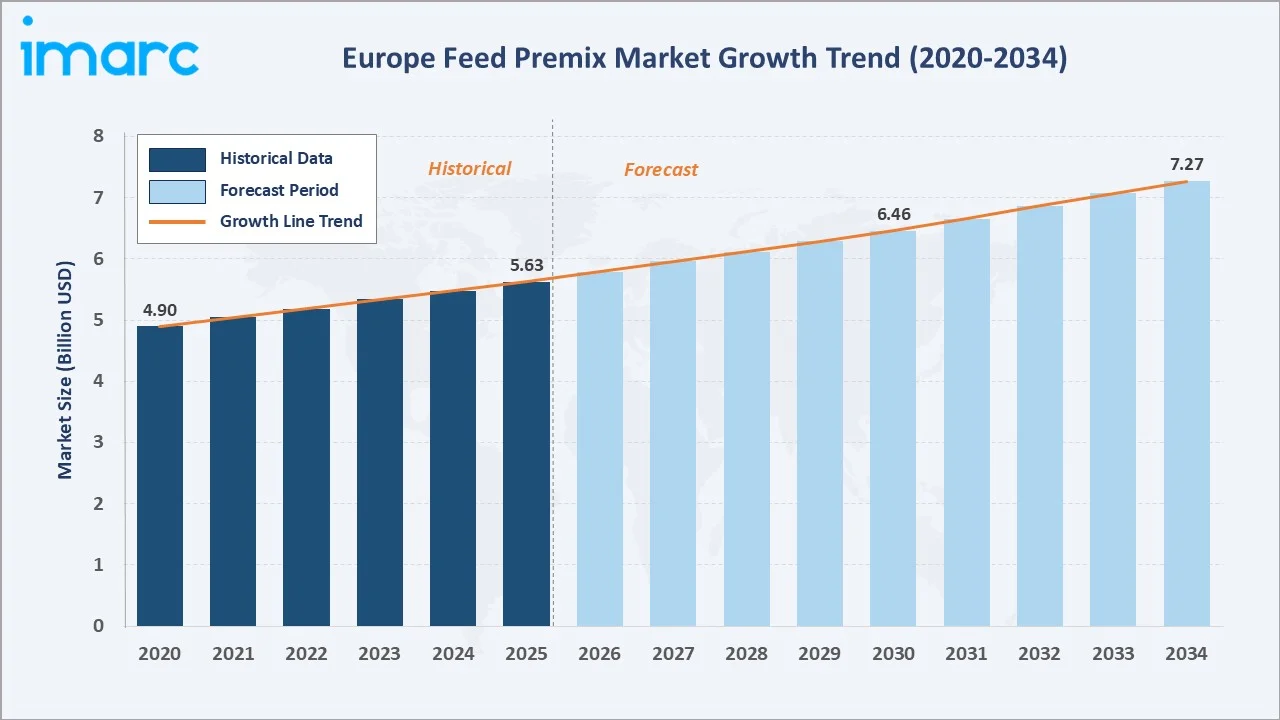
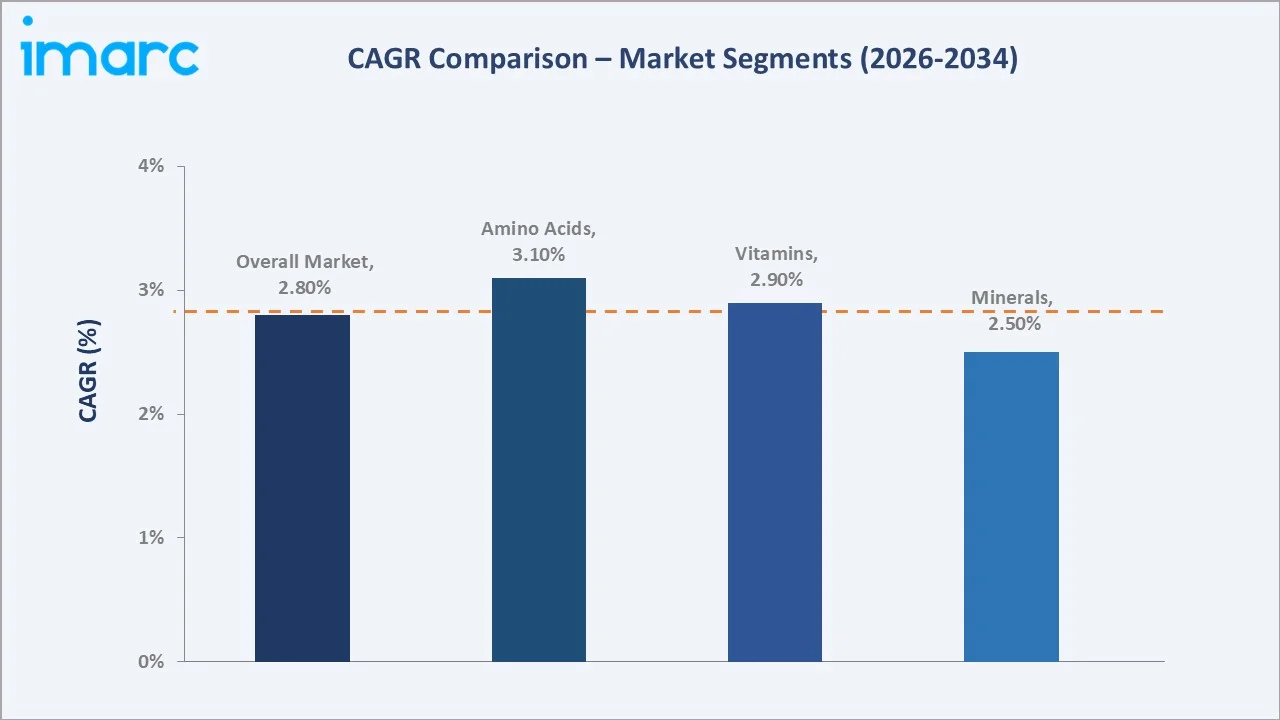
The Europe feed premix market grew from USD 5.63 Billion in 2025 to USD 5.79 Billion in 2026 and is projected to reach USD 7.27 Billion by 2034, growing at a CAGR of 2.80% during 2026-2034. The market is driven by rising demand for high-quality animal protein, expanding aquaculture, and stringent EU food safety regulations promoting nutritional compliance. Amino Acids lead at 28.6%. Dry form dominates at 84.8%. Germany commands 18.6% of the regional market.
Growing livestock productivity requirements, precision nutrition technology advances, and EU Farm to Fork sustainability policies are further supporting market expansion. Regulatory shifts away from antibiotic use are accelerating demand for alternative functional premix ingredients across European livestock and aquaculture sectors.
Market Snapshot
|
Metric |
Value |
|
Base Year Market Size (2025) |
USD 5.63 Billion |
|
Market Size (2026) |
USD 5.79 Billion |
|
Forecast Market Size (2034) |
USD 7.27 Billion |
|
CAGR (2026-2034) |
2.80% |
|
Base Year |
2025 |
|
Historical Period |
2020-2025 |
|
Forecast Period |
2026-2034 |
|
Dominant Ingredient Type |
Amino Acids (28.6%, 2025) |
|
Dominant Form |
Dry (84.8%, 2025) |
|
Leading Country |
Germany (18.6%, 2025) |
The Europe feed premix market size increased from an estimated USD 4.90 Billion in 2020 to USD 5.63 Billion in 2025 and is estimated to reach USD 5.79 Billion in 2026. The market is further expected to grow to USD 6.46 Billion by 2030 and USD 7.27 Billion by 2034.
To get more information on this market, Request Sample
Amino Acids lead at 28.6% CAGR through growing demand for methionine and lysine in poultry and swine diets. Vitamins at 24.3% grow through EU regulations mandating vitamin fortification. Dry form dominates at 84.8% through superior shelf stability and ease of handling in large-scale feed operations.
Executive Summary
The Europe feed premix market expanded from USD 5.63 Billion in 2025 to an estimated USD 5.79 Billion in 2026, positioning it among Europe's most commercially significant animal nutrition segments. Germany leads at 18.6%, supported by its large livestock base and advanced feed manufacturing infrastructure.
Rising consumer demand for antibiotic-free and sustainably produced animal proteins is reshaping premix formulation priorities across Europe. Feed manufacturers are investing in precision nutrition platforms and functional ingredient innovation to meet evolving regulatory and market requirements. The market is projected to reach USD 7.27 Billion by 2034.
Dry form leads at 84.8%, reflecting operational preferences for bulk handling in large compound feed mills. However, liquid premixes are gaining traction for specialized applications. Amino Acids at 28.6% lead through critical roles in protein metabolism efficiency across all livestock categories.
Key Market Insights
|
Insight |
Data |
|
Dominant Ingredient Type |
Amino Acids – 28.6% share (2025) |
|
Second Ingredient Type |
Vitamins – 24.3% market share (2025) |
|
Dominant Form |
Dry – 84.8% share (2025) |
|
Growing Form |
Liquid – 15.2% share (2025) |
|
Leading Country |
Germany – 18.6% share (2025) |
|
Market Opportunity |
Antibiotic alternatives; precision nutrition platforms; aquaculture-specific premixes; organic and natural ingredient formulations |
Key Analytical Observations Supporting the Above Data:
- Amino Acids at 28.6%: Amino acids dominate due to their critical role in meeting essential protein requirements in monogastric animals, particularly poultry and swine. Methionine and lysine supplementation allows feed formulators to optimize protein efficiency and reduce crude protein levels, lowering feed costs and environmental nitrogen output while maintaining animal performance standards across European production systems.
- Dry at 84.8%: Dry premixes dominate due to their superior shelf life, ease of transportation, and compatibility with bulk blending operations in large compound feed mills. Dry forms maintain ingredient stability and allow precise dosing during the feed manufacturing process. European feed mills predominantly use automated dry mixing systems, making dry premixes the commercially and operationally preferred format across all livestock sectors.
- Germany at 18.6%: Germany leads regionally owing to its large and highly efficient livestock farming sector, advanced compound feed manufacturing industry, and stringent adherence to EU nutritional and safety standards. German feed producers invest significantly in premix quality and traceability, supporting strong demand for premium nutritional formulations across poultry, swine, and ruminant production systems.
Europe Feed Premix Market Overview
The Europe feed premix market is commercially positioned at the intersection of animal nutrition science, regulatory compliance, and sustainability imperatives. Europe's highly structured livestock sector, combined with stringent EU Feed Law requirements, creates consistent demand for precisely formulated nutritional premixes.
The market integrates raw material sourcing from global commodity suppliers, premix manufacturing by specialized nutritional companies, and distribution through feed mill networks to farm operators. Key macroeconomic drivers include EU protein demand growth, livestock intensification, and the post-antibiotic regulatory environment reshaping formulation strategies.
Market Dynamics
To evaluate market opportunities, Request Sample
Market Drivers
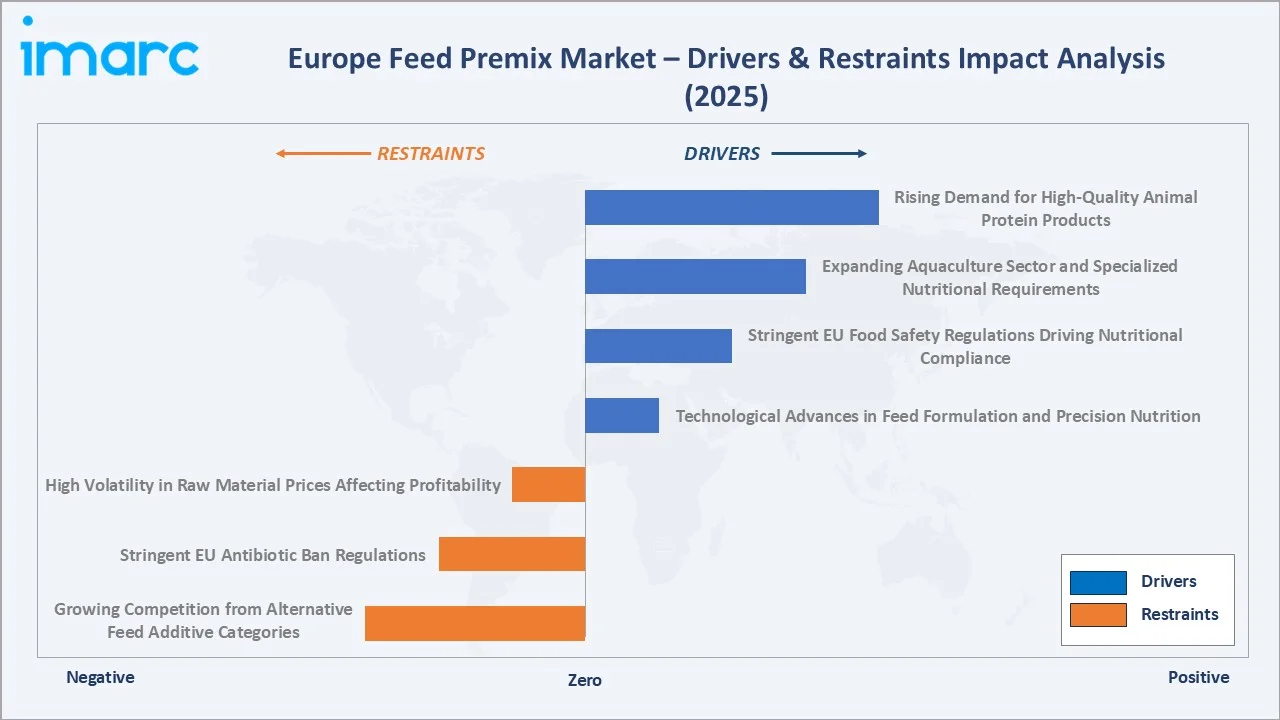
- Rising Demand for High-Quality Animal Protein Products: Europe's growing population and increasing consumer preference for high-quality, traceable animal protein products are driving livestock producers to optimize feed efficiency and animal health outcomes. Premium feed premix formulations enable producers to achieve superior weight gain, feed conversion ratios, and product quality. Rising per capita protein consumption across European urban populations is creating sustained structural demand for advanced nutritional premix solutions throughout the continent's integrated livestock value chain.
- Expanding Aquaculture Sector and Specialized Nutritional Requirements: Europe's rapidly growing aquaculture industry is creating significant demand for species-specific feed premixes tailored to the nutritional requirements of salmon, trout, sea bass, and other commercially farmed aquatic species. The expanding aquaculture sector is coupled with rising need for specialized feed formulations, driving premix manufacturers to develop targeted solutions that support optimal fish growth, immune function, and feed conversion efficiency across diverse European aquatic farming environments.
- Stringent EU Food Safety Regulations Driving Nutritional Compliance: EU Feed Law (Regulation EC 183/2005), EFSA safety assessments, and national food safety standards are mandating precise nutritional fortification of animal feed across Europe. Compliance requirements are driving feed manufacturers to adopt scientifically validated premix formulations that guarantee consistent nutrient delivery. Regulatory push for antibiotic reduction under the EU Action Plan on Antimicrobial Resistance is accelerating adoption of functional premix alternatives including probiotics, organic acids, and botanical extracts.
- Technological Advances in Feed Formulation and Precision Nutrition: Advances in computational feed formulation, near-infrared spectroscopy, and real-time nutrient analysis are enabling premix manufacturers to develop increasingly precise and customized nutritional solutions. Digital precision nutrition platforms allow feed formulators to optimize premix inclusion rates based on real-time ingredient quality data, animal performance metrics, and economic parameters. These technological innovations are driving premiumization of the European feed premix market and creating competitive differentiation opportunities for advanced manufacturers.
Market Restraints
- High Volatility in Raw Material Prices Affecting Profitability: Significant price volatility in key amino acid, vitamin, and mineral raw materials, largely driven by Chinese production dynamics and global commodity markets, creates substantial margin pressure for European premix manufacturers. Supply chain disruptions and geopolitical factors affecting raw material availability can cause rapid cost increases that are difficult to pass through to feed mill customers operating under long-term supply contracts, compressing manufacturer margins and challenging business planning continuity.
- Stringent EU Antibiotic Ban Regulations: The comprehensive EU ban on antibiotic growth promoters and increasing restrictions on therapeutic antibiotic use in livestock feed has eliminated a significant premix ingredient category. Reformulation costs, extended product development timelines, and the challenge of achieving comparable performance outcomes with alternative functional ingredients are constraining premix manufacturers' operational efficiency and increasing new product development investment requirements across the European market.
- Growing Competition from Alternative Feed Additive Categories: Rapid innovation in functional feed additives including enzymes, probiotics, phytogenics, and organic acids is creating competitive pressure on traditional vitamin-mineral premix formulations. These alternatives can target specific production outcomes and are increasingly incorporated into complete feed solutions, reducing the per-tonne premix inclusion rates and shifting purchasing patterns in European compound feed manufacturing operations toward single-function additive solutions.
Market Opportunities
- Antibiotic-Free and Natural Ingredient Premix Innovation: The EU's post-antibiotic livestock production environment is creating significant commercial opportunity for manufacturers developing effective natural alternatives including phytogenic compounds, organic acids, and microbiome-supporting probiotics. First movers in clinically validated antibiotic-free premix solutions can establish strong brand differentiation and capture premium pricing from European livestock producers committed to antibiotic stewardship and certification programs.
- Aquaculture-Specific Premix Development for European Fish Farming: The rapid growth of European salmon, trout, and sea bass farming creates significant demand for species-specific premix formulations addressing the unique vitamin, mineral, and functional ingredient requirements of aquatic species. Manufacturers investing in aquaculture nutrition R&D can capture above-market growth in this premium-priced specialty segment, which commands higher margins than standard terrestrial livestock premixes.
Market Challenges
- Fragmented Regulatory Framework Across European National Markets: Despite EU harmonization, significant variation in national feed regulation interpretation, approval timelines for novel ingredients, and enforcement stringency creates operational complexity for premix manufacturers seeking pan-European commercial strategies. Maintaining product registrations and compliance across multiple regulatory jurisdictions requires substantial investment in regulatory affairs expertise and complicates new ingredient commercialization timelines.
- Rising R&D and Reformulation Costs in a Post-Antibiotic Regulatory Environment: The ongoing transition away from antibiotic-based formulations requires significant investment in new ingredient research, clinical validation studies, and manufacturing process adaptation. Smaller regional premix manufacturers face disproportionate burdens from reformulation requirements, potentially accelerating market consolidation as R&D costs favor larger players with established innovation infrastructure and global ingredient supply relationships.
Emerging Market Trends
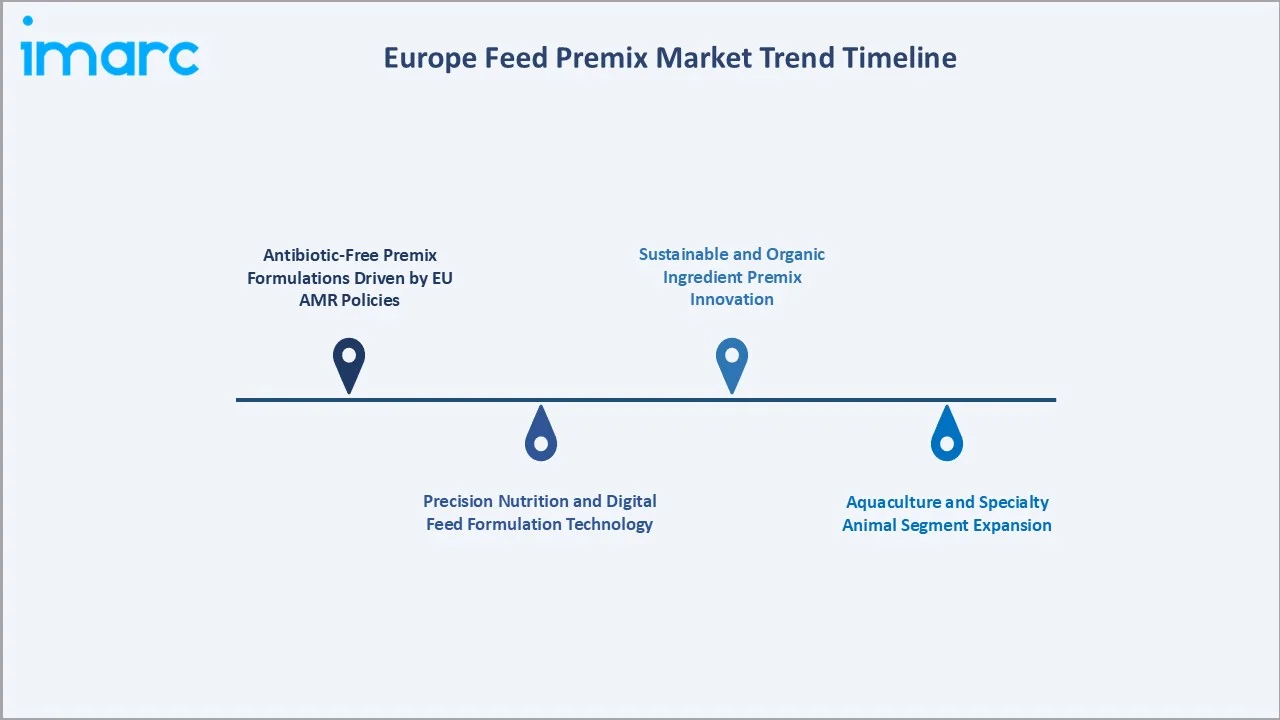
1. Antibiotic-Free Premix Formulations Driven by EU AMR Policies
The EU Action Plan on Antimicrobial Resistance has fundamentally restructured premix formulation priorities. Manufacturers are developing validated antibiotic-free solutions combining functional botanicals, organic acids, and immune-supporting nutritional compounds. This trend is driving significant R&D investment and creating a distinct premium product tier in the European premix market.
2. Precision Nutrition and Digital Feed Formulation Technology
Integration of AI-driven feed formulation platforms, real-time ingredient quality analysis, and farm performance data is enabling dynamic premix optimization. European premix manufacturers are investing in digital services that connect formulation decisions to farm-level outcomes, creating value-added service differentiation beyond commodity ingredient supply.
3. Sustainable and Organic Ingredient Premix Innovation
Growing consumer demand for organic and sustainably certified animal products is driving premix manufacturers to develop certified organic, non-GMO, and sustainably sourced ingredient formulations. EU organic farming regulations are expanding the addressable market for premium organic premix solutions across poultry, ruminant, and specialty livestock segments.
4. Aquaculture and Specialty Animal Segment Expansion
Aquaculture-specific premix development is emerging as a high-growth specialty segment, driven by the rapid expansion of European salmon, trout, and sea bass farming. Simultaneously, growing premium pet food markets and equine nutrition segments are creating demand for specialized premix formulations with differentiated ingredient profiles and quality standards.
Industry Value Chain Analysis
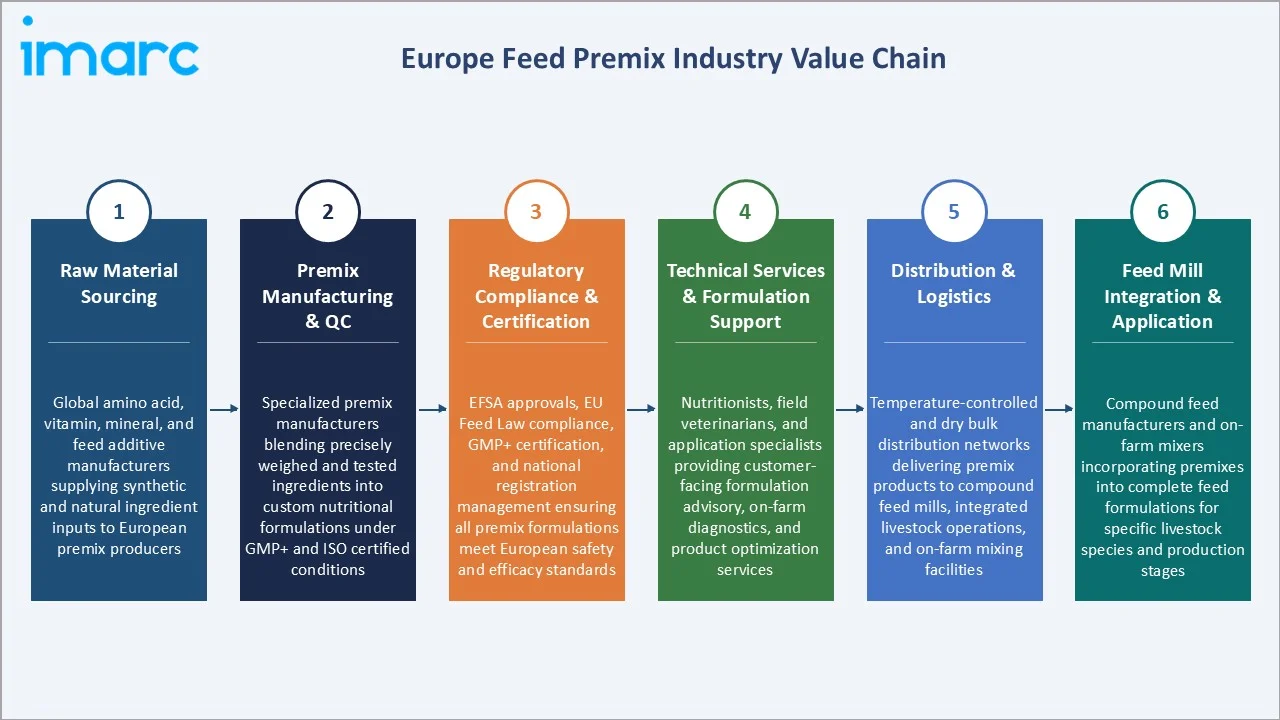
The Europe feed premix value chain integrates global raw material sourcing, precision manufacturing, regulatory compliance infrastructure, and direct customer technical services. The chain's complexity creates differentiation opportunity at every stage.
|
Stage |
Key Participants |
|
Raw Material Sourcing |
Global amino acid, vitamin, mineral, and feed additive manufacturers supplying synthetic and natural ingredient inputs to European premix producers |
|
Premix Manufacturing & QC |
Specialized premix manufacturers blending precisely weighed and tested ingredients into custom nutritional formulations under GMP+ and ISO certified conditions |
|
Regulatory Compliance & Certification |
EFSA approvals, EU Feed Law compliance, GMP+ certification, and national registration management ensuring all premix formulations meet European safety and efficacy standards |
|
Technical Services & Formulation Support |
Nutritionists, field veterinarians, and application specialists providing customer-facing formulation advisory, on-farm diagnostics, and product optimization services |
|
Distribution & Logistics |
Temperature-controlled and dry bulk distribution networks delivering premix products to compound feed mills, integrated livestock operations, and on-farm mixing facilities |
|
Feed Mill Integration & Application |
Compound feed manufacturers and on-farm mixers incorporating premixes into complete feed formulations for specific livestock species and production stages |
The manufacturing and quality control stage is Europe's most commercially significant premix value chain node, where investment in analytical capability, GMP+ certification, and nutritional expertise determines the commercial positioning and premium pricing authority of premix manufacturers.
Technology Landscape in the Europe Feed Premix Industry
Precision Ingredient Micro-dosing and Automated Blending Technology
Advanced micro-dosing systems and automated gravimetric blending platforms enable premix manufacturers to achieve sub-gram accuracy in ingredient incorporation, ensuring homogeneous nutrient distribution across high-volume production batches. These technologies are critical for manufacturing premixes containing high-potency vitamins and trace minerals that require precise delivery at extremely low inclusion rates.
Near-Infrared Spectroscopy and Real-Time Quality Verification
NIR spectroscopy integration into premix production lines enables rapid, non-destructive verification of ingredient identity, nutrient content, and moisture levels during manufacturing. Real-time quality data allows immediate formulation adjustment, reducing batch rejection rates and ensuring consistent nutritional specifications across production runs in European GMP+ certified manufacturing facilities.
Digital Nutrition Platforms and Farm-Connected Formulation Systems
Cloud-based nutrition management platforms connecting premix manufacturers with feed mill customers and farm operators represent the frontier of European feed technology. These systems enable real-time formulation optimization based on ingredient price fluctuations, animal performance data, and regulatory requirements, creating new service models that extend manufacturer value beyond physical product delivery.
Market Segmentation Analysis
The report covers the following segments:
|
Segment Category |
Leading Segment |
Market Share |
Year |
|
Ingredient Type |
Amino Acids |
28.6% |
2025 |
|
Form |
Dry |
84.8% |
2025 |
|
Livestock |
🔒 |
🔒 |
2025 |
|
Country |
Germany |
18.6% |
2025 |

By Ingredient Type
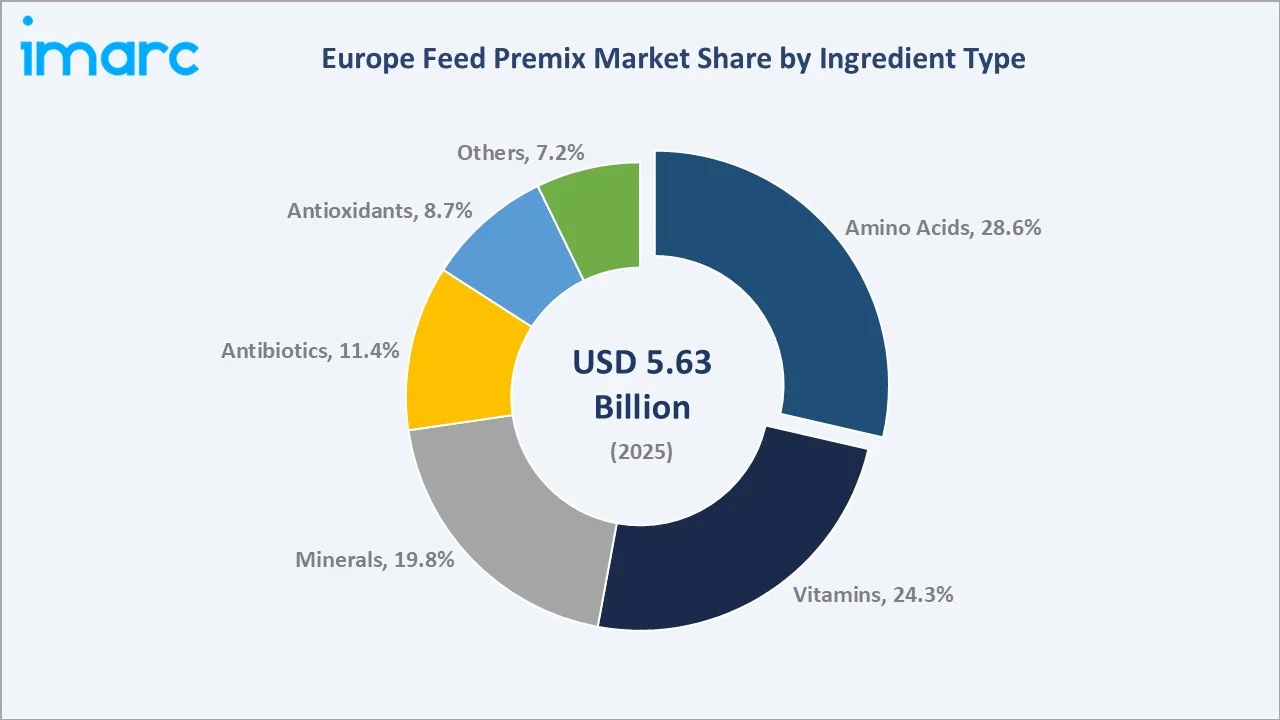
Amino Acids lead at 28.6% (2025). This segment dominates through essential roles in protein synthesis, feed efficiency optimization, and the commercial imperative to reduce crude protein content in livestock diets. Methionine and lysine supplementation enables precision protein formulation across poultry and swine production systems.
To access detailed market analysis, Request Sample
Vitamins at 24.3% grow through mandatory EU fortification requirements and expanding aquaculture applications requiring fat-soluble vitamin supplementation. Minerals at 19.8% reflect continued demand for chelated trace minerals in high-performance livestock diets. Antibiotics (11.4%), Antioxidants (8.7%), and Others (7.2%) serve functional and specialized applications across the market.
By Form
Dry leads at 84.8% (2025). This segment dominates through superior shelf life, ease of automated handling in large compound feed mills, ingredient stability, and established compatibility with European bulk feed manufacturing infrastructure. Dry premixes allow precise gravimetric incorporation in both large and small batch operations.
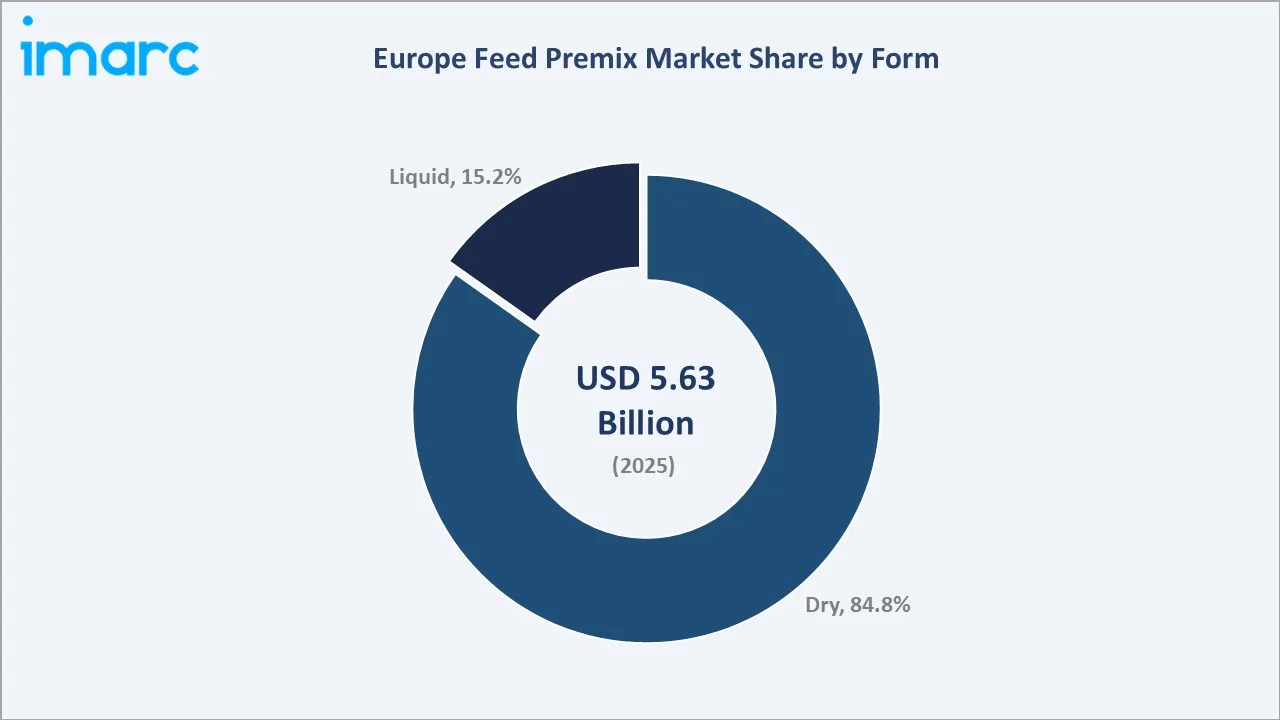
Liquid at 15.2% is growing in specialized applications including aquaculture and precision livestock feeding systems where improved ingredient bioavailability and uniform distribution in liquid feed delivery systems create technical advantages over dry alternatives.
Regional Market Insights
|
Country |
Share (2025) |
Key Europe Feed Premix Market Drivers & Characteristics |
|
Germany |
18.6% |
Driven by Europe's largest compound feed industry, highly efficient livestock sector, and stringent adherence to EU nutritional and safety standards across poultry, swine, and ruminant production. |
|
France |
14.7% |
Supported by large integrated poultry and swine operations, strong regulatory framework, and growing premium livestock product demand driving adoption of advanced premix formulations. |
|
United Kingdom |
13.9% |
Reflects well-developed livestock industry, post-Brexit regulatory adaptation, and strong demand for antibiotic-free and sustainably certified premix solutions in premium retail supply chains. |
|
Spain |
10.8% |
Growing swine and poultry sectors, significant aquaculture expansion along Mediterranean coast, and increasing premium animal protein production are driving premix demand growth. |
|
Italy |
10.2% |
Characterized by premium livestock production for high-value PDO and IGP certified meat products requiring precision nutritional management and traceable premix sourcing. |
|
Netherlands |
8.1% |
Home to major global feed and animal nutrition companies, with strong export-oriented livestock production and leadership in premix manufacturing and innovation for European markets. |
|
Poland |
7.5% |
Rapidly expanding intensive poultry and swine production, growing EU market integration, and increasing adoption of modern nutritional standards are driving above-average premix market growth. |
|
Russia |
6.8% |
Significant livestock herd supported by domestic feed production growth, though geopolitical factors have affected supply chain dynamics and western premix manufacturer operations. |
|
Switzerland |
3.9% |
Premium livestock production focused on quality dairy and specialty animal products, with stringent national standards driving demand for high-quality certified nutritional premix formulations. |
|
Others |
5.5% |
Includes emerging Eastern and Southern European markets where livestock intensification and EU standard adoption are supporting above-average premix market growth trajectories. |
Germany's 18.6% leadership reflects its position as Europe's largest compound feed producer and its strong integration of precision nutrition technologies across industrial-scale poultry and swine operations. France and the UK together represent a further 28.6% of the market.
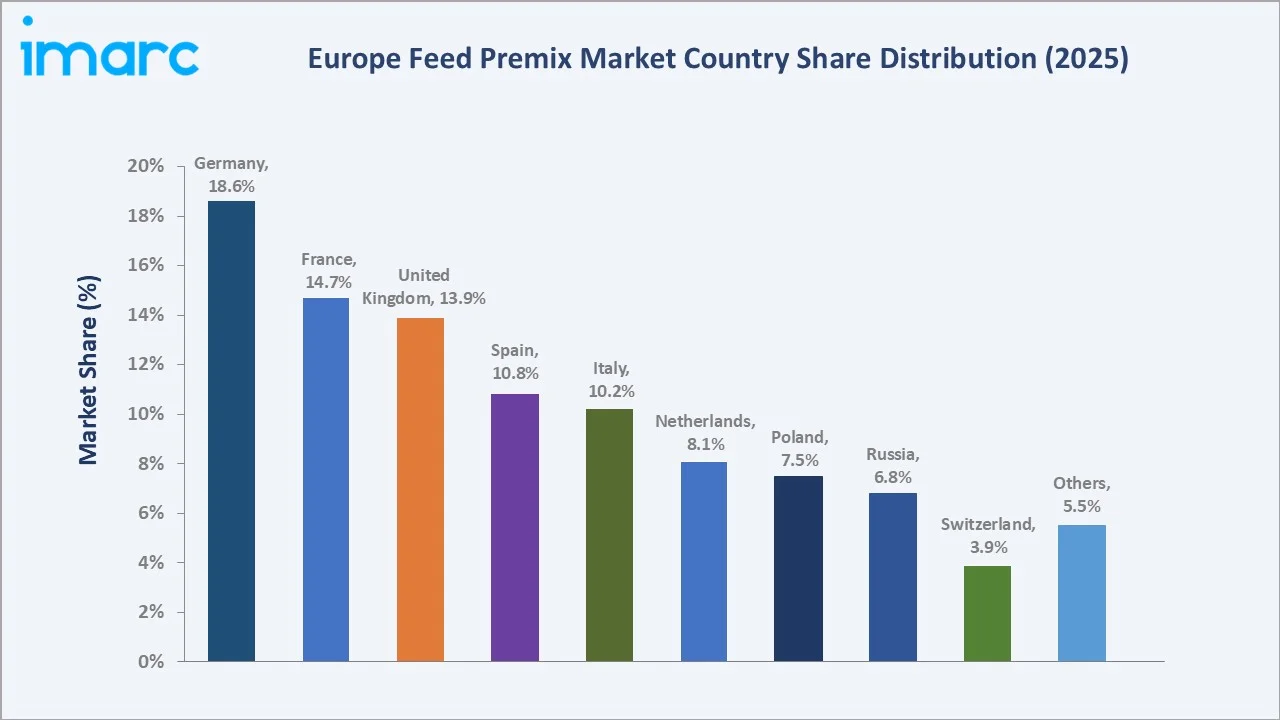
Spain's 10.8% reflects its world-leading swine sector and growing Mediterranean aquaculture industry. Italy (10.2%) is driven by premium protected-designation livestock production. Netherlands (8.1%) hosts major global animal nutrition headquarters, while Poland (7.5%) represents the fastest-growing Central European feed market. Russia (6.8%) is supported by its large livestock and poultry production base, while Switzerland (3.9%) benefits from its developed livestock sector and strong demand for high-quality animal nutrition products.
Competitive Landscape
The Europe feed premix competitive landscape is characterized by the dominance of multinational ingredient and nutrition companies with integrated raw material supply chains, balanced by regional specialists with deep local market knowledge and customer relationships.
|
Company |
Key Brands |
Market Position |
Core Strength |
|
Cargill, Incorporated |
Cargill Animal Nutrition, Provimi |
Market Leader |
Cargill leverages its global grain and ingredient supply chain integration with specialized European premix manufacturing to offer competitive nutritional solutions across poultry, swine, and ruminant sectors. |
|
ADM |
ADM Animal Nutrition, Sojaprotein |
Strong Challenger |
ADM applies its global oilseed processing and amino acid supply chain advantage to offer cost-competitive premix formulations while expanding its specialty and aquaculture-specific product portfolio in Europe. |
|
De Heus Animal Nutrition |
De Heus, De Heus, Koudijs |
Regional Leader |
De Heus leverages its European-headquartered network and deep regional market expertise to serve Eastern and Central European feed premix markets with locally adapted formulations and supply chain reliability. |
Key players include Cargill, Incorporated, ADM, De Heus Animal Nutrition, and others.
Key Company Profiles
Cargill, Incorporated
Cargill, Incorporated is one of the world's largest privately held food and agriculture companies, with a significant European feed premix presence through its Animal Nutrition division, leveraging global raw material supply chain integration with regional manufacturing and technical service expertise.
- Key Brands: Cargill Animal Nutrition (premixes and complete feeds) and specialty aquaculture and companion animal nutritional products across European market segments.
- Strategic Focus: Leveraging its unmatched global grain and ingredient sourcing scale to offer price-competitive European premix solutions while differentiating through technical nutritional services, sustainability reporting tools, and specialized product lines for premium European livestock sectors. Cargill is specifically targeting European poultry and swine integrators with comprehensive nutritional management programs that combine premix supply with performance guarantee frameworks, building long-term customer relationships beyond transactional ingredient supply.
ADM
ADM is a global agricultural processing and human food ingredient company with a growing European feed premix presence through its Animal Nutrition segment, leveraging its amino acid and protein ingredient manufacturing capabilities to serve European livestock markets.
- Key Brands: ADM Animal Nutrition (premixes and feed ingredients), SojaProtein (soy-based feed proteins), and specialty aquaculture and companion animal nutrition products.
- Strategic Focus: Utilizing ADM's global fermentation-derived amino acid supply chain advantage to offer competitively priced methionine and lysine-optimized premix solutions while building European market share through expanded technical nutritional services. ADM is investing in European aquaculture-specific premix expertise to capture growth in this premium specialty segment where its global ingredient sourcing capabilities and fermentation technology provide competitive differentiation versus established European-centric competitors.
Market Concentration Analysis
The Europe feed premix market is moderately concentrated at the premium end, with the key players commanding significant combined market share through their integrated supply chains and comprehensive nutritional service platforms.
Market concentration is evolving through the tension between consolidation among large global players expanding European capabilities and the resilience of regional specialists with deep customer relationships, local regulatory expertise, and species-specific formulation knowledge that larger global companies struggle to replicate.
Investment & Growth Opportunities
Highest Growth Segments
Aquaculture-specific premix segment (~4.5% CAGR from expanding European fish farming), antibiotic-free functional premix solutions (~4.2% CAGR from EU AMR policy drivers), organic and sustainably certified premixes (~5.0% CAGR from premium livestock certification growth), liquid premix applications (~3.8% CAGR), and Eastern European market expansion (~4.0% CAGR) represent the highest-growth investment vectors through 2034.
Emerging Investment Opportunities
Europe's Farm to Fork strategy mandating 25% organic agricultural land by 2030 represents a structural opportunity for organic-certified premix manufacturers. Precision fermentation-derived ingredients including sustainable amino acids and vitamins offer supply chain differentiation and environmental credential advantages attractive to premium European livestock producers.
Investment Themes
- Aquaculture premix specialization for Europe's fastest-growing livestock segment: Species-specific premix formulations for salmon, sea bass, and trout farming command premium pricing and are supported by European aquaculture expansion targets, creating compelling investment opportunity for manufacturers with fish nutrition R&D capabilities.
- Digital precision nutrition platform investment for service-led market differentiation: Cloud-based nutrition management tools connecting premix formulation to farm performance data create recurring service revenue and customer lock-in above commodity premix supply, enabling sustainable margin improvement in an otherwise price-competitive market environment.
Future Market Outlook (2026-2034)
The Europe feed premix market is projected to grow from USD 5.63 Billion in 2025 to USD 5.79 Billion in 2026, reaching USD 7.27 Billion by 2034, registering a CAGR of 2.80% during 2026-2034.
Three structural forces define Europe feed premix market growth through 2034: EU regulatory transformation driving formulation innovation in a post-antibiotic environment; protein demand growth creating sustained livestock sector expansion; and sustainability imperatives requiring verified nutritional transparency from farm to consumer.
Research Methodology
Primary Research
Primary research comprised structured interviews with Europe feed premix industry stakeholders including feed mill nutrition managers, livestock producers, premix manufacturer representatives, EFSA regulatory specialists, and consumer survey data from animal protein buyers across Germany, France, the UK, Spain, Italy, and other European markets.
Secondary Research
Secondary research encompassed EU feed industry statistics, FEFAC compound feed production data, company annual reports, EFSA scientific opinions, EU regulatory publications, investor presentations, and industry association reports. Over 50 secondary sources reviewed across European and global animal nutrition markets.
Forecasting Models
Market revenue forecasts developed using a bottom-up livestock feed consumption model: European livestock population by species and country, multiplied by compound feed consumption per animal, premix inclusion rate, and average premix selling price, aggregated across all segment and country combinations.
Europe Feed Premix Market Report Coverage:
| Report Features | Details |
|---|---|
| Base Year of the Analysis | 2025 |
| Historical Period | 2020-2025 |
| Forecast Period | 2026-2034 |
| Units | Billion USD |
| Scope of the Report |
Exploration of Historical Trends and Market Outlook, Industry Catalysts and Challenges, Segment-Wise Historical and Future Market Assessment:
|
| Ingredient Types Covered | Amino Acids, Vitamins, Minerals, Antibiotics, Antioxidants, Others |
| Forms Covered | Dry, Liquid |
| Livestocks Covered | Poultry, Ruminants, Swine, Aquatic Animals, Equine, Pets |
| Countries Covered | Germany, United Kingdom, France, Italy, Russia, Spain, Netherlands, Switzerland, Poland, Others |
| Companies Covered | Cargill, Incorporated, ADM, De Heus Animal Nutrition, etc. |
| Customization Scope | 10% Free Customization |
| Post-Sale Analyst Support | 10-12 Weeks |
| Delivery Format | PDF and Excel through Email (We can also provide the editable version of the report in PPT/Word format on special request) |
Key Benefits for Stakeholders:
- IMARC’s industry report offers a comprehensive quantitative analysis of various market segments, historical and current market trends, market forecasts, and dynamics of the Europe feed premix market from 2020-2034.
- The research report provides the latest information on the market drivers, challenges, and opportunities in the Europe feed premix market.
- Porter's five forces analysis assist stakeholders in assessing the impact of new entrants, competitive rivalry, supplier power, buyer power, and the threat of substitution. It helps stakeholders to analyze the level of competition within the Europe feed premix industry and its attractiveness.
- Competitive landscape allows stakeholders to understand their competitive environment and provides an insight into the current positions of key players in the market.
Frequently Asked Questions About the Europe Feed Premix Market Report
The Europe feed premix market size is estimated at USD 5.79 Billion in 2026, driven by rising demand for quality animal protein, expanding aquaculture, and EU regulatory requirements mandating precise nutritional supplementation across all livestock production categories.
The Europe feed premix market grows at 2.80% CAGR during 2026-2034, reaching USD 7.27 Billion by 2034. Growth is sustained by livestock sector expansion, aquaculture growth, antibiotic-free reformulation demand, and EU Farm to Fork sustainability-driven nutritional innovation.
Amino Acids lead at 28.6% through their critical role in monogastric protein efficiency optimization. Methionine and lysine supplementation enables precision protein formulation in poultry and swine diets, reducing environmental nitrogen output while maintaining production performance across European livestock operations.
Dry leads at 84.8% through superior shelf life, compatibility with automated bulk blending systems in large compound feed mills, and established integration with European dry feed manufacturing infrastructure. Liquid forms serve specialized aquaculture and precision livestock feeding applications at premium price points.
Germany leads at 18.6% through its position as Europe's largest compound feed producer, highly efficient integrated livestock sector, and strong investment in precision nutrition and feed safety compliance across industrial-scale poultry, swine, and dairy production systems.
Leading companies include Cargill, Incorporated, ADM, De Heus Animal Nutrition, and others.
Need more help?
- Speak to our experienced analysts for insights on the current market scenarios.
- Include additional segments and countries to customize the report as per your requirement.
- Gain an unparalleled competitive advantage in your domain by understanding how to utilize the report and positively impacting your operations and revenue.
- For further assistance, please connect with our analysts.
 Request Customization
 Speak to an Analyst
 Request Brochure
 Inquire Before Buying
Benefits of Customization
- Personalize this research
- Triangulate with your data
- Get data as per your format and definition
- Gain a deeper dive into a specific application, geography, customer, or competitor
- Any level of personalization
Get in Touch With Us
UNITED STATES
Phone: +1-201-971-6302
INDIA
Phone: +91-120-433-0800
UNITED KINGDOM
Phone: +44-753-714-6104
Email: [email protected]
Client Testimonials













Related Reports

Choose your plan
*Please note that the prices mentioned below are starting prices for each bundle type. Kindly contact our team for further details.*
Single User License
- 1 User License, Access on 2 Devices
- PDF Report + Excel Dataset (Password Protected)
- Lifetime Access
- No Printing Rights
- 10% Free Report Customization
- 10–12 Weeks of Analyst Support
Five User License
- Access for 5 Users, 2 Devices per User
- PDF Report + Excel Dataset (Password Protected)
- Lifetime Access
- Dedicated Account Manager
- 12–14 Weeks of Analyst Support
- No Printing Rights
- 15% Free Report Customization
- 25% Discount on Your Next Purchase
Corporate User License
- Unlimited User Access (Within Your Organization)
- PDF Report + Excel Dataset
- Lifetime Access
- Dedicated Account Manager
- 14–20 Weeks of Analyst Support
- No Printing Rights
- 20% Free Report Customization
- 30% Discount on Your Next Purchase
Essential Insights
What's included:
3 reports
- Lifetime Access
- PDF Reports
- Excel Datasets
- 2 Weeks of Free Analyst Support
- 2 User Licenses
- Access on 2 Devices
- Printing Rights
- Complimentary PowerPoint (PPT) Version
- Complimentary License Upgrade
Professional Access
What's included:
5 reports
- Lifetime Access
- PDF Reports
- Excel Datasets
- 8 Weeks of Free Analyst Support
- 2 User Licenses
- Access on 2 Devices
- Printing Rights
- Complimentary PowerPoint (PPT) Version
- Complimentary License Upgrade
Business Advantage
What's included:
8 reports
- Lifetime Access
- PDF Reports
- Excel Datasets
- 14 Weeks of Free Analyst Support
- 2 User Licenses
- Access on 2 Devices
- Printing Rights
- Complimentary PowerPoint (PPT) Version
- Complimentary License Upgrade
Enterprise Intelligence
What's included:
10 reports
- Lifetime Access
- PDF Reports
- Excel Datasets
- 20 Weeks of Free Analyst Support
- 2 User Licenses
- Access on 2 Devices
- Printing Rights
- Complimentary PowerPoint (PPT) Version
- Complimentary License Upgrade