
Europe Fish Market Size, Share, Trends and Forecast by Fish Type, Product Type, Distribution Channel, Sector and Region, 2026-2034
Europe Fish Market Size, Share, Trends & Forecast (2026-2034)
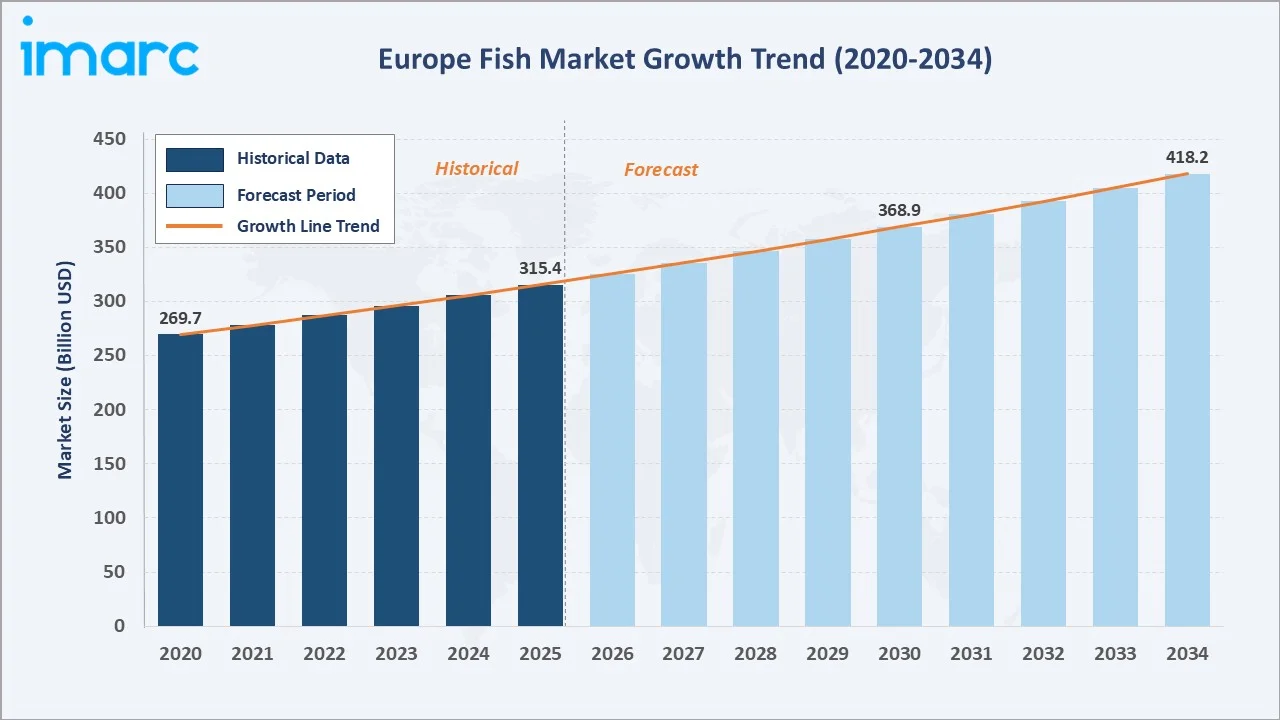
The Europe fish market size increased from USD 315.4 Billion in 2025 to USD 325.5 Billion in 2026 and is projected to reach USD 418.2 Billion by 2034, growing at a CAGR of 3.18% during 2026-2034. The Europe seafood market is driven by rising health awareness, strong demand for sustainable sourcing, growing frozen fish consumption, and expanding retail distribution channels. Consumer expenditure on fishery and aquaculture products across the European Union increased by 4% in 2024, reaching €62.8 billion. During the same year, EU imports amounted to 5.9 million tonnes valued at €29.9 billion, with import volumes rising marginally by 0.3% compared with 2023. This growth in consumer spending, together with sustained import demand, is supporting the expansion of the Europe fish market by strengthening seafood consumption, encouraging broader product availability, and creating opportunities for suppliers, processors, and retailers across the region. Fresh fish leads product type at 43.8%. Retail leads distribution at 68.7%. Spain leads regionally at 23.7%.
Market Snapshot
|
Metric |
Value |
|
Base Year Market Size (2025) |
USD 315.4 Billion |
|
Market Size (2026) |
USD 325.5 Billion |
|
Forecast Market Size (2034) |
USD 418.2 Billion |
|
CAGR (2026-2034) |
3.18% |
|
Base Year |
2025 |
|
Historical Period |
2020-2025 |
|
Forecast Period |
2026-2034 |
|
Leading Product Type |
Fresh (43.8%, 2025) |
|
Leading Distribution Channel |
Retail (68.7%, 2025) |
|
Leading Country |
Spain (23.7%, 2025) |
The Europe fish market expanded from USD 269.7 Billion in 2020 to USD 315.4 Billion in 2025 and an estimated USD 325.5 Billion in 2026, reflecting sustained consumer demand for seafood as a healthy, protein-rich dietary staple across the continent. The market is projected to reach USD 368.9 Billion by 2030 and USD 418.2 Billion by 2034.
To get more information on this market, Request Sample
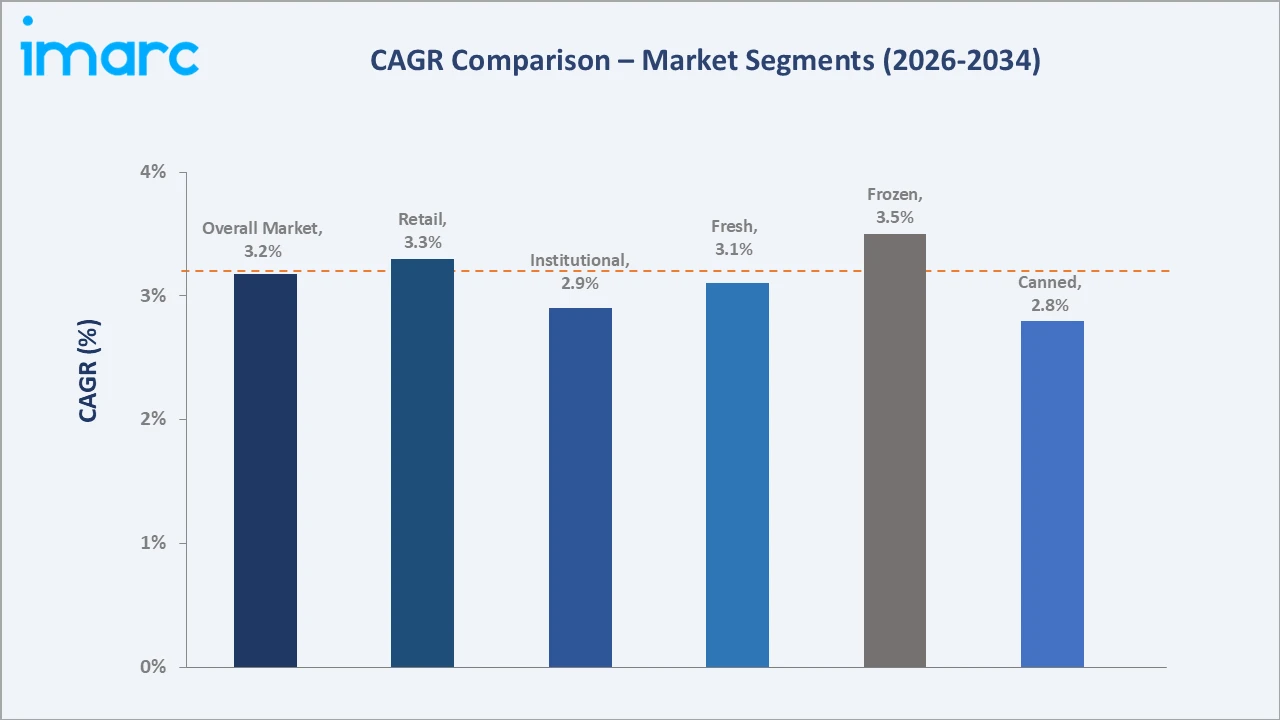
Fresh fish grows at ~3.1% CAGR through sustained consumer preference for high-quality unprocessed fish across Southern European markets. Frozen fish grows at ~3.5% CAGR through convenience-driven demand and flash-freezing innovation. The retail channel grows at ~3.3% CAGR through supermarket seafood counter expansion and e-grocery adoption. The overall 3.18% CAGR reflects steady, broad-based growth underpinned by the Europe seafood market's structural health and sustainability trends.
Executive Summary
The Europe fish market is experiencing steady structural growth, underpinned by deep-rooted seafood consumption cultures across Mediterranean Europe and growing awareness of fish as a premium source of omega-3 fatty acids, lean protein, and essential micronutrients. Rising incidences of cardiovascular disease, obesity, and lifestyle-related health conditions are reinforcing the health positioning of fish and seafood within European dietary recommendations. Fresh fish leads at 43.8%, retail at 68.7%, and Spain at 23.7% (2025).
Key Market Insights
|
Insight |
Data |
|
Leading Product Type |
Fresh Fish - 43.8% share (2025) |
|
Leading Distribution Channel |
Retail - 68.7% share (2025) |
|
Leading Country |
Spain - 23.7% share (2025) |
|
Market Opportunity |
Certified sustainable products; frozen convenience; e-grocery seafood; aquaculture expansion; plant-based seafood |
Key Analytical Observations Supporting the Above Data:
- Fresh Fish at 43.8%: Fresh fish is driven by Mediterranean European consumer preference for high-quality, unprocessed seafood purchased directly from market stalls, fishmongers, and supermarket fresh counters.
- Retail at 68.7%: The retail distribution channel dominates through the widespread availability of fish products across hypermarkets, supermarkets, specialist fishmongers, and increasingly online grocery platforms.
- Spain at 23.7%: Spain leads Europe's fish market as the EU's largest fish consumer per capita. Spain's Atlantic and Mediterranean coastlines, deep seafood culinary culture, extensive fishing fleet, and strong domestic aquaculture sector combine to establish its dominant market position in the Europe seafood market.
Europe Fish Market Overview
The Europe fish market encompasses the production, processing, distribution, and retail sale of fish and seafood products across the continent. It spans product forms including fresh (whole, fillets, portions), frozen (fillets, coated products, ready meals), canned (tuna, sardines, mackerel, salmon), and Others (smoked, dried, marinated). Distribution channels include retail (supermarkets, specialist fishmongers, online grocery) and institutional (HoReCa, foodservice, catering). The Europe fin fish market, spanning salmon, tuna, cod, sea bass, sea bream, trout, and other species, represents the dominant segment by value. The emerging Europe plant-based seafood market adds an innovative adjacent growth vector to the broader seafood landscape.
Market Dynamics
To evaluate market opportunities, Request Sample
Market Drivers
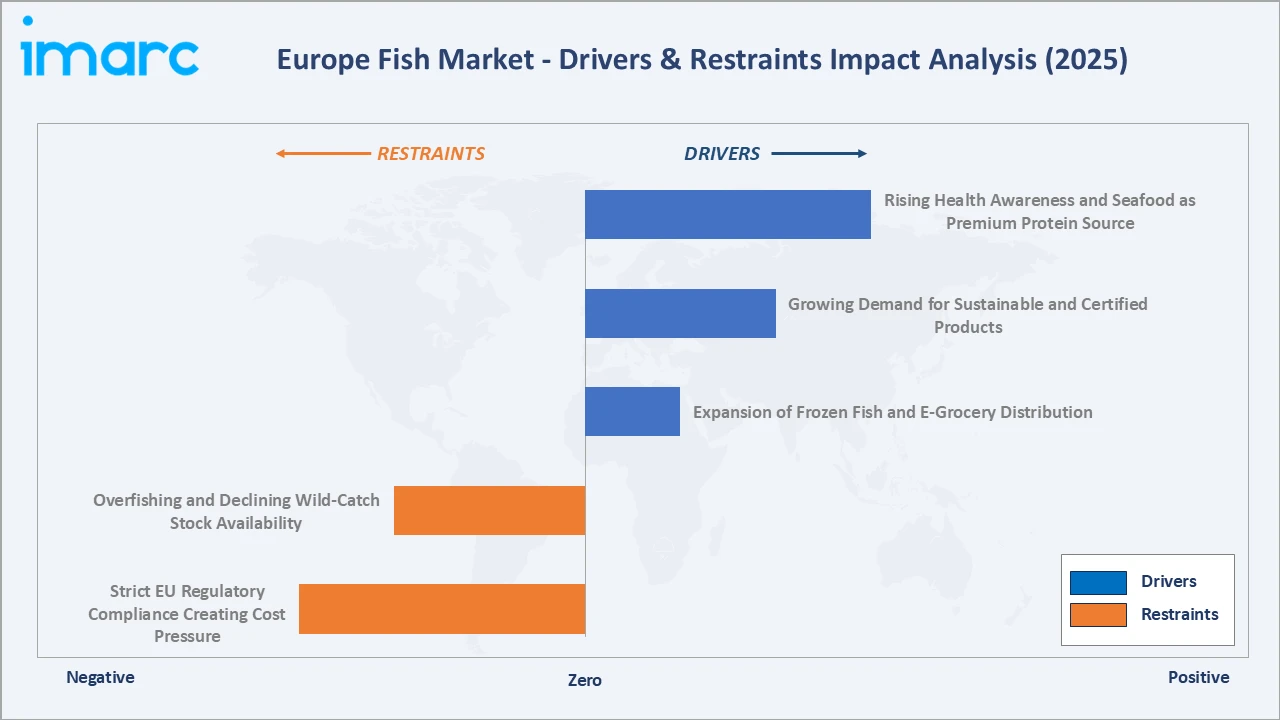
- Rising Health Awareness and Seafood as Premium Protein Source: European consumers are increasingly adopting fish and seafood as their preferred lean protein source, driven by growing awareness of omega-3 fatty acids, cardiovascular health benefits, and fish's superior protein-to-calorie ratio. According to Spain’s Ministry of Agriculture, Fisheries and Food, 2025, average fish consumption in Spain stood at approximately 1.48 kilograms per person per month.
- Growing Demand for Sustainable and Certified Products: European consumers demonstrate the strongest demand for sustainably sourced seafood, with certifications becoming purchasing prerequisites for an increasing share of European buyers. Major European retailers have committed to sustainably sourced seafood targets, driving supply chain transformation throughout the Europe seafood market.
- Expansion of Frozen Fish and E-Grocery Distribution: Technological advances in flash freezing, which preserves the nutritional profile, texture, and flavor of fish at near-fresh quality, have driven significant consumer uptake of frozen fish products. Expanding e-grocery platforms are also increasing consumer access to premium fresh and frozen seafood through convenient home delivery services.
Market Restraints
- Overfishing and Declining Wild-Catch Stock Availability: Overexploitation of wild fish stocks remains the most significant structural supply-side constraint in the Europe fish market. The EU enforces total allowable catches (TACs) to prevent stock depletion, but many commercially important species - including cod in the North Sea and bluefin tuna in the Mediterranean - continue to face population pressure. Declining wild-catch volumes for key species are creating price inflation and driving market dependency on aquaculture and import sourcing.
- Strict EU Regulatory Compliance Creating Cost Pressure: EU regulations on fish product labeling, species traceability, date marking, allergen information, and sustainability certification impose significant compliance costs across the European fish supply chain. New EU fisheries control regulations strengthening catch documentation, landing declarations, and digital traceability requirements are increasing operational costs for fishermen, processors, and retailers operating within the Europe seafood market ecosystem.
Market Opportunities
- Europe Fish Farming Market Expansion Through Advanced Aquaculture: The growing Europe fish farming market, particularly innovative recirculating aquaculture systems (RAS) enabling land-based fish production with minimal environmental footprint, represents a significant growth and investment opportunity. RAS aquaculture reduces dependency on ocean wild-catch, enables year-round production near consumer markets, and meets sustainability criteria increasingly demanded by European retailers and consumers.
- Plant-Based Seafood and Hybrid Product Innovation: The growing Europe plant-based seafood market represents an emerging opportunity to capture flexitarian and sustainability-motivated consumers seeking seafood taste and texture without environmental impact concerns. In September 2025, Schouten Europe introduced a new plant-based tuna alternative. The product has been developed for multiple applications, including spreads, salads, wraps, ready-to-eat meals, and as a topping for pizzas and flammkuchen, reflecting growing demand for versatile plant-based seafood substitutes.
Market Challenges
- Cold Chain Infrastructure Investment Requirements: Maintaining fresh fish quality from sea to consumer requires extensive refrigerated logistics infrastructure, including fishing vessel refrigeration, processing facility cold rooms, refrigerated transport, and supermarket fresh counter investment. Cold chain infrastructure deficiencies, particularly in Eastern European markets seeking to grow seafood retail, create quality consistency challenges and food safety risks that constrain market expansion in underdeveloped logistics environments.
- Consumer Price Sensitivity Amid Cost-of-Living Pressures: While fish demand is structurally supported by health trends, consumer price sensitivity during European cost-of-living pressures has redirected some purchases from premium fresh fish toward more affordable frozen and canned alternatives. Persistent food price inflation and consumer trade-down behaviors create margin pressure for fresh fish retailers, fishmongers, and premium seafood brands operating in price-sensitive market segments.
Emerging Market Trends
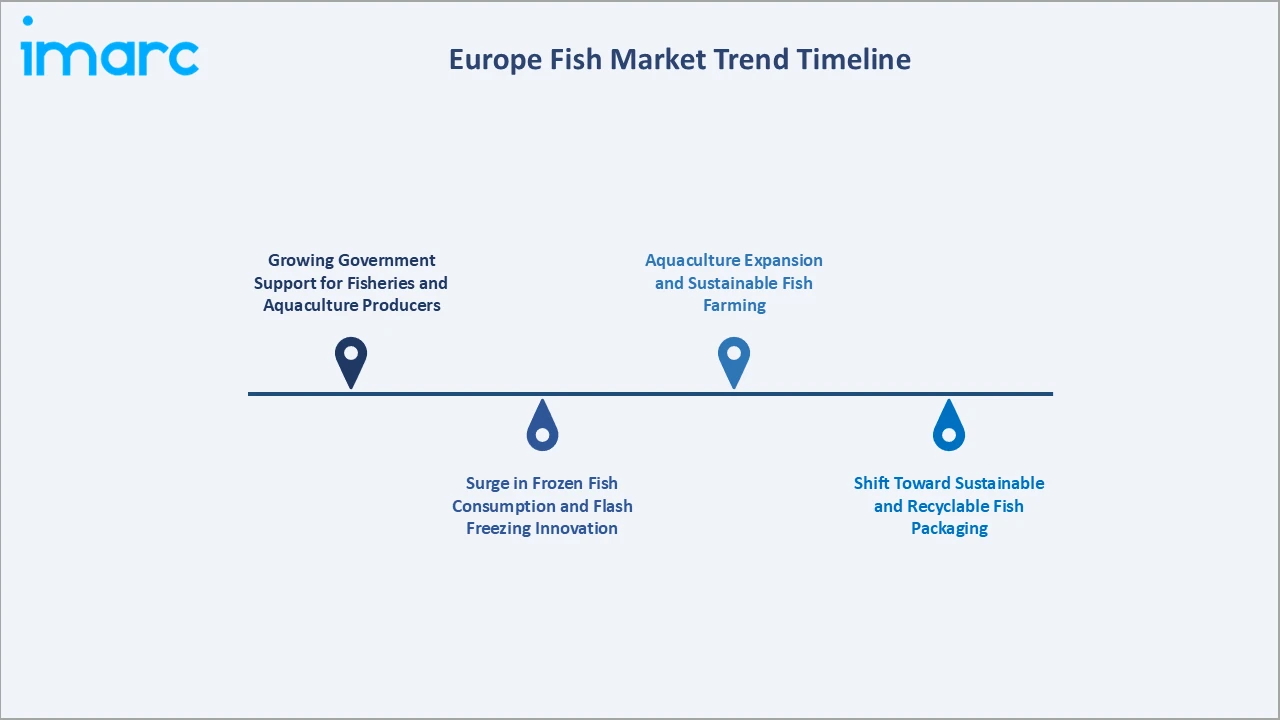
1. Growing Government Support for Fisheries and Aquaculture Producers
In August 2026, Spain’s Ministry of Agriculture, Fisheries and Food introduced a €200,000 funding initiative to support recently recognised fisheries and aquaculture producer organisations. Under the programme, eligible producer organisations, associations, and fisheries interbranch bodies recognised within the last five years can receive grants of up to €100,000. Increasing public funding is emerging as an important trend in the European fish market, helping newly established producer organizations strengthen operations, improve market access, and enhance competitiveness. Such initiatives are also supporting the modernization and long-term sustainability of fisheries and aquaculture activities across the region.
2. Surge in Frozen Fish Consumption and Flash Freezing Innovation
Frozen fish consumption is accelerating across European markets as flash-freezing technology, pioneered in the Europe fish farming market and wild-catch processing sectors, delivers near-fresh nutritional quality and flavor at significantly lower prices. Retailers are expanding frozen seafood ranges, from basic fillets to premium ready meals, seafood mixes, and ethnic cuisine ingredients, meeting demand from time-pressed consumers who value convenience without nutritional compromise. The environmental benefit of reduced food waste from frozen fish is an additional sustainability-aligned driver of consumer preference.
3. Aquaculture Expansion and Sustainable Fish Farming
The Europe fish farming market is expanding rapidly to address declining wild-catch volumes and meet EU sustainability objectives. Norwegian salmon aquaculture, Mediterranean sea bass and sea bream aquaculture, and Scottish salmon farming collectively produce sustainably certified seafood. Innovation in recirculating aquaculture systems (RAS), enabling land-based fish production with controlled environments, minimal water use, and zero ocean interaction, is being scaled across Germany, Denmark, and the Netherlands as a transformative technology for the Europe fin fish market.
4. Shift Toward Sustainable and Recyclable Fish Packaging
In April 2026, Klöckner Pentaplast (kp) introduced its new kp Evolve Fish Boards, developed specifically for vacuum skin packaging of processed fish and capable of incorporating up to 100% recycled content. The lightweight, mono-material design is intended to reduce carbon impact and help minimize Extended Producer Responsibility (EPR) fees across many European markets. In addition, the boards feature an open-flap format that improves pallet utilization and enhances overall logistics efficiency. The launch reflects a growing trend toward lightweight, mono-material, and recycled-content packaging solutions in the European fish market. Producers are increasingly adopting sustainable packaging to lower carbon impact, reduce EPR-related costs, and improve logistics efficiency.
Industry Value Chain Analysis
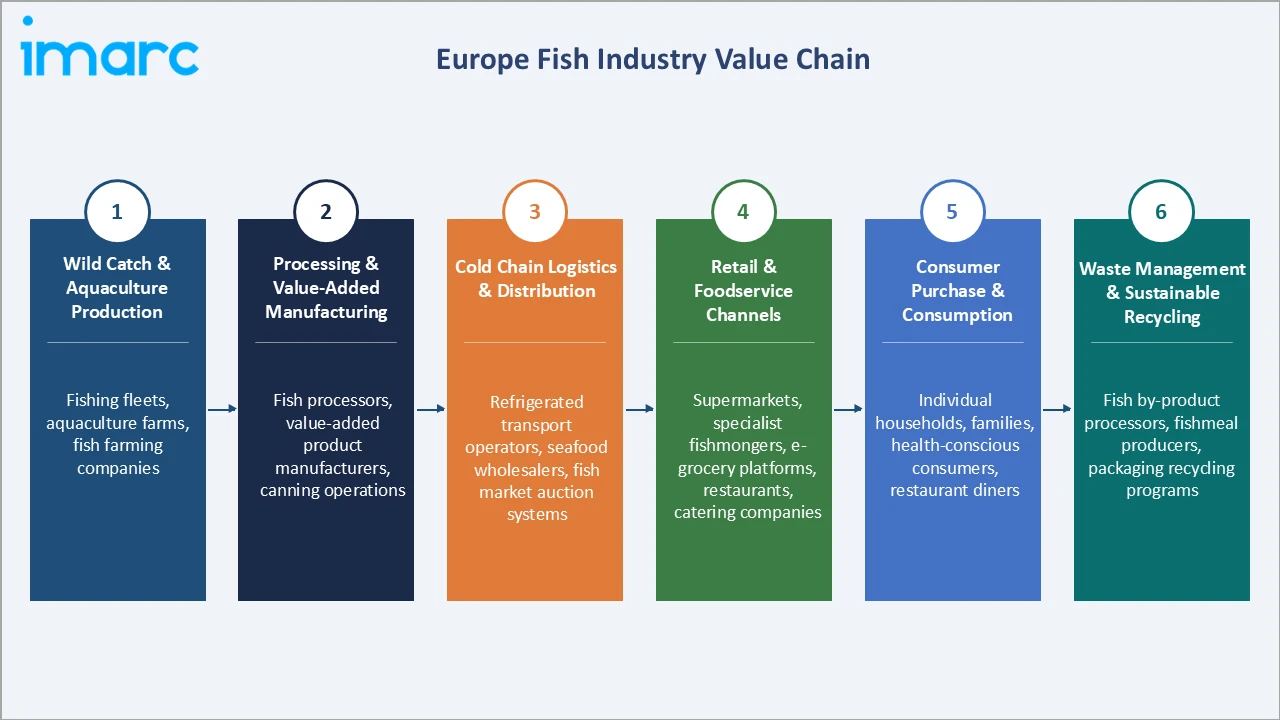
The Europe fish market value chain integrates wild-catch and aquaculture production, fish processing and value-added manufacturing, cold chain logistics and distribution, retail and foodservice channels, consumer purchase and consumption, and waste management and sustainability recycling.
|
Stage |
Key Participants |
|
Wild Catch & Aquaculture Production |
Fishing fleets, aquaculture farms, fish farming companies. |
|
Processing & Value-Added Manufacturing |
Fish processors, value-added product manufacturers, canning operations. |
|
Cold Chain Logistics & Distribution |
Refrigerated transport operators, seafood wholesalers, fish market auction systems. |
|
Retail & Foodservice Channels |
Supermarkets, specialist fishmongers, e-grocery platforms, restaurants, catering companies. |
|
Consumer Purchase & Consumption |
Individual households, families, health-conscious consumers, restaurant diners. |
|
Waste Management & Sustainable Recycling |
Fish by-product processors, fishmeal producers, packaging recycling programs. |
Processing and cold chain logistics are the most value-intensive stages, as fish product quality and safety are directly dependent on temperature control from catch point to consumer. Sustainability certification at the production stage is increasingly the critical market access enabler for European retail, making regulatory compliance a commercial imperative rather than an optional brand differentiator.
Technology Landscape in the Europe Fish Industry
Flash Freezing and Advanced Preservation Technology
Individually Quick Frozen (IQF) and flash freezing technologies are transforming the Europe fish market by enabling frozen fish products to deliver near-fresh nutritional profiles, texture, and flavor. These technologies lock in omega-3 fatty acids and protein quality at their peak, enabling higher-value frozen product positioning. Processing innovation in modified atmosphere packaging (MAP), vacuum sealing, and high-pressure processing (HPP) further extends fresh fish shelf life, reducing retailer food waste and expanding distribution radius for fresh seafood products.
Recirculating Aquaculture Systems (RAS) and Smart Fish Farming
Recirculating aquaculture systems represent the frontier technology of the Europe fish farming market, enabling inland land-based fish production with computer-controlled water quality, feeding automation, and disease prevention systems. RAS facilities are demonstrating commercial-scale salmon and trout production near European consumer markets, reducing transport distances and carbon footprints. Sensor networks, AI-driven fish health monitoring, and automated feeding optimization are improving RAS farm efficiency and product quality in the Europe fin fish market.
Blockchain Traceability and Digital Seafood Provenance
Blockchain-based traceability platforms are emerging as the gold standard for seafood supply chain transparency, enabling consumers, retailers, and regulators to verify the species identity, catch location, fishing method, and sustainability certification of fish products from sea to sale. QR code-enabled product packaging providing catch-to-consumer supply chain data is being adopted by leading European seafood brands and retailers as a differentiating feature for sustainability-conscious European consumers who prioritize provenance transparency in the Europe seafood market.
Market Segmentation Analysis
The report covers the following segments:
|
Segment Category |
Leading Segment |
Market Share |
Year |
|
Fish Type |
🔒 |
🔒 |
2025 |
|
Product Type |
Fresh |
43.8% |
2025 |
|
Distribution Channel |
Retail |
68.7% |
2025 |
|
Sector |
🔒 |
🔒 |
2025 |
|
Country |
Spain |
23.7% |
2025 |

By Product Type
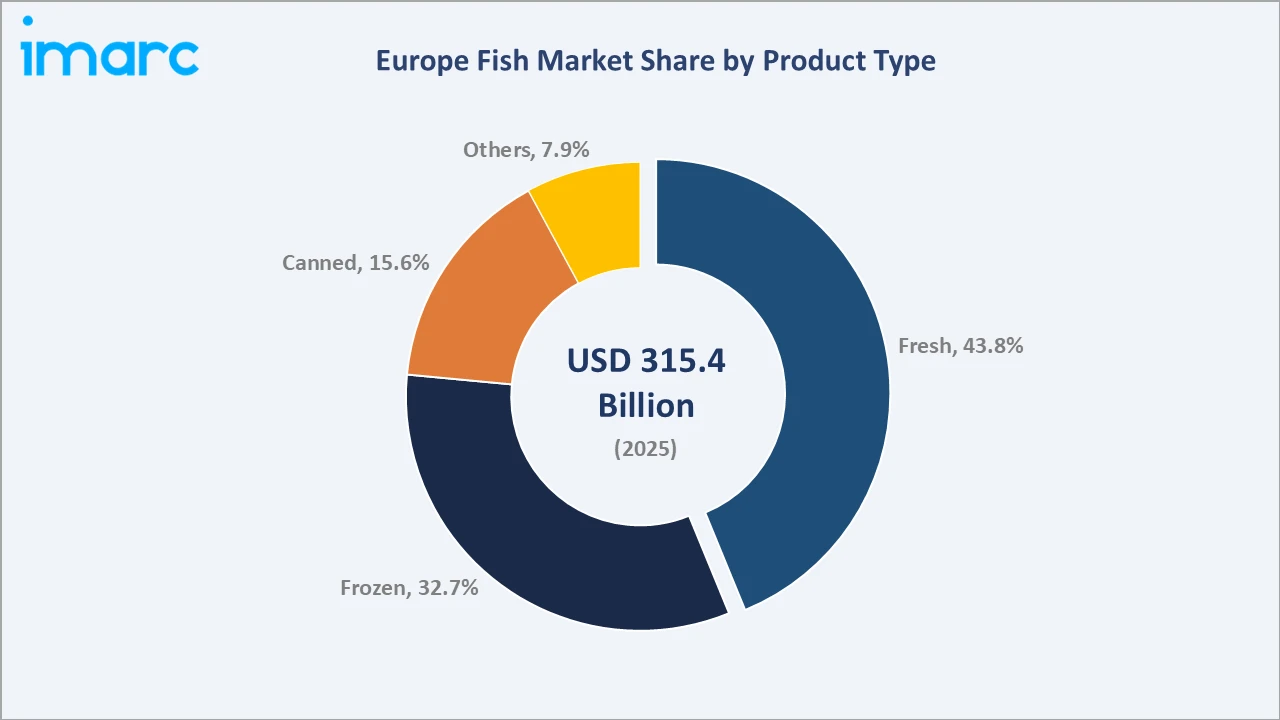
Fresh fish dominates at 43.8% (2025), reflecting Mediterranean and Northern European consumer preference for high-quality, unprocessed whole fish, fillets, and portions purchased from supermarket fresh counters and specialist fishmongers. Fresh fish grows at ~3.1% CAGR through sustained cultural demand and supermarket fresh counter investment.
To access detailed market analysis, Request Sample
Frozen fish accounts for 32.7%, driven by flash-freezing technology advances, convenience-driven consumer lifestyle changes, and reduced food waste advantages. Frozen fish is the fastest-growing product type at ~3.5% CAGR through 2034, supported by retailer frozen seafood range expansion and growing e-grocery frozen fish sales. Canned fish at 15.6% retains importance through convenience, affordability, and long shelf life, with tuna, sardines, and mackerel as category stalwarts in the Spain, France, and Italy markets.
By Distribution Channel
Retail distribution leads at 68.7% (2025), encompassing supermarket and hypermarket seafood departments, specialist fishmongers, online grocery platforms, and direct-to-consumer seafood subscription boxes. European retail chains have systematically upgraded their fresh fish and seafood counters to capture growing consumer demand for accessible, quality seafood products in convenient one-stop shopping environments.
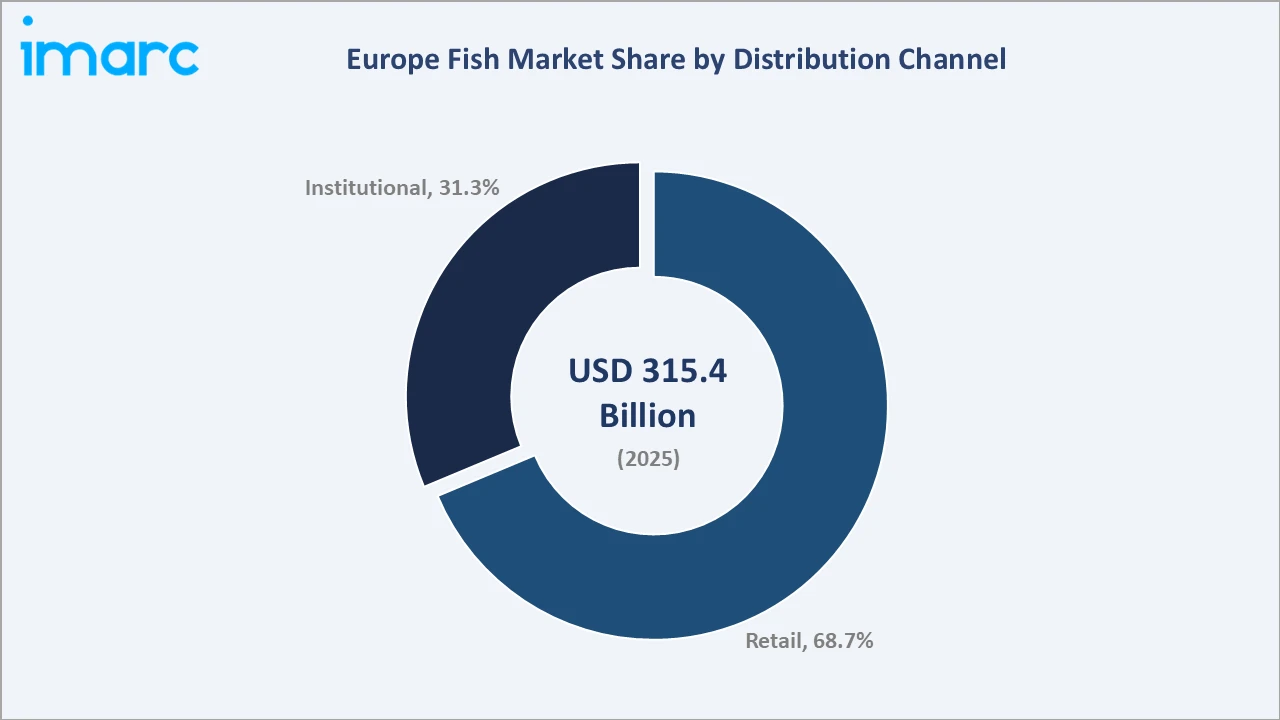
Institutional distribution at 31.3% serves the hotels, restaurants, and catering across Europe's vibrant food culture markets. France's restaurant sector, Italy's coastal trattorias, Spain's fish tapas bars, and Germany's growing seafood restaurant culture collectively drive sustained institutional fish demand. The institutional segment grows at ~2.9% CAGR through 2034, supported by tourism recovery, restaurant sector expansion, and growing corporate catering demand for healthy protein options.
Regional Market Insights
|
Country |
Share (2025) |
Key Europe Fish Market Drivers & Characteristics |
|
Spain |
23.7% |
Reflecting Europe's highest per-capita fish consumption, extensive Atlantic and Mediterranean fishing fleets, and deep seafood culinary culture. |
|
France |
20.8% |
Reflecting France's sophisticated seafood gastronomy culture, strong fresh fish consumption through poissonneries and supermarket counters. |
|
Italy |
18.6% |
Reflecting Italy's Mediterranean coastal seafood traditions, strong fresh and canned fish consumption. |
|
Germany |
16.4% |
Reflecting Germany's preference for frozen and canned fish products, growing fresh and sustainable seafood retail adoption. |
|
United Kingdom |
11.7% |
Reflecting the UK's strong fish-and-chips tradition, salmon and tuna consumption, and growing premium fresh and sustainable seafood retail interest across UK supermarket chains. |
|
Others |
8.8% |
Reflecting collective growth across the Netherlands, Portugal, Norway, Denmark, Poland, and other European markets with growing organized retail seafood penetration and aquaculture development. |
Spain's 23.7% leadership reflects its dual strength as Europe's most significant fish-consuming nation and a major fishing and aquaculture producer. French consumers' 20.8% share reflects the country's world-renowned seafood gastronomy culture and sophisticated retail and restaurant fresh fish demand. Italy's 18.6% is anchored by Mediterranean coastal food traditions where fresh fish consumption is deeply embedded in daily dietary habits.
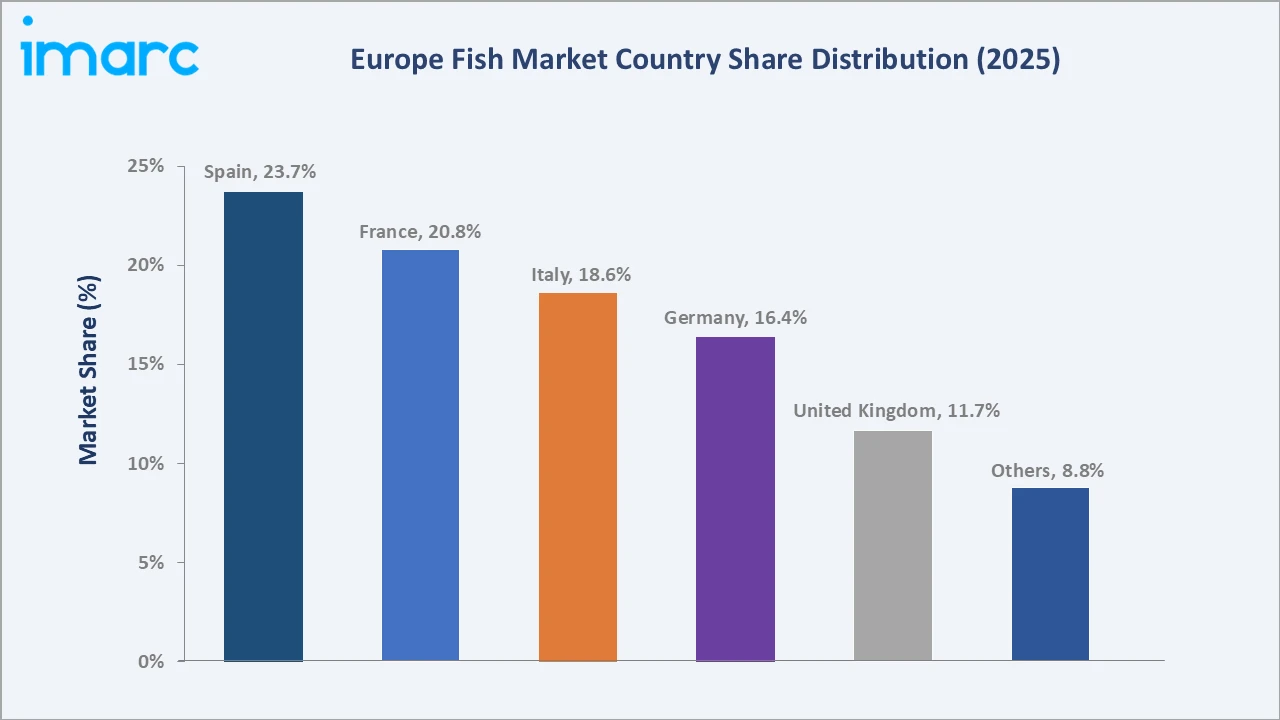
Germany's 16.4% share reflects its large consumer market and growing adoption of sustainable and premium seafood products through organized retail chains. The UK's 11.7% reflects its post-Brexit fishing industry context and growing premium seafood retail demand. The others at 8.8% represent significant collective growth potential in the Netherlands (strong frozen fish market), Portugal (traditional dried cod market), and Poland (growing seafood processing hub).
Competitive Landscape
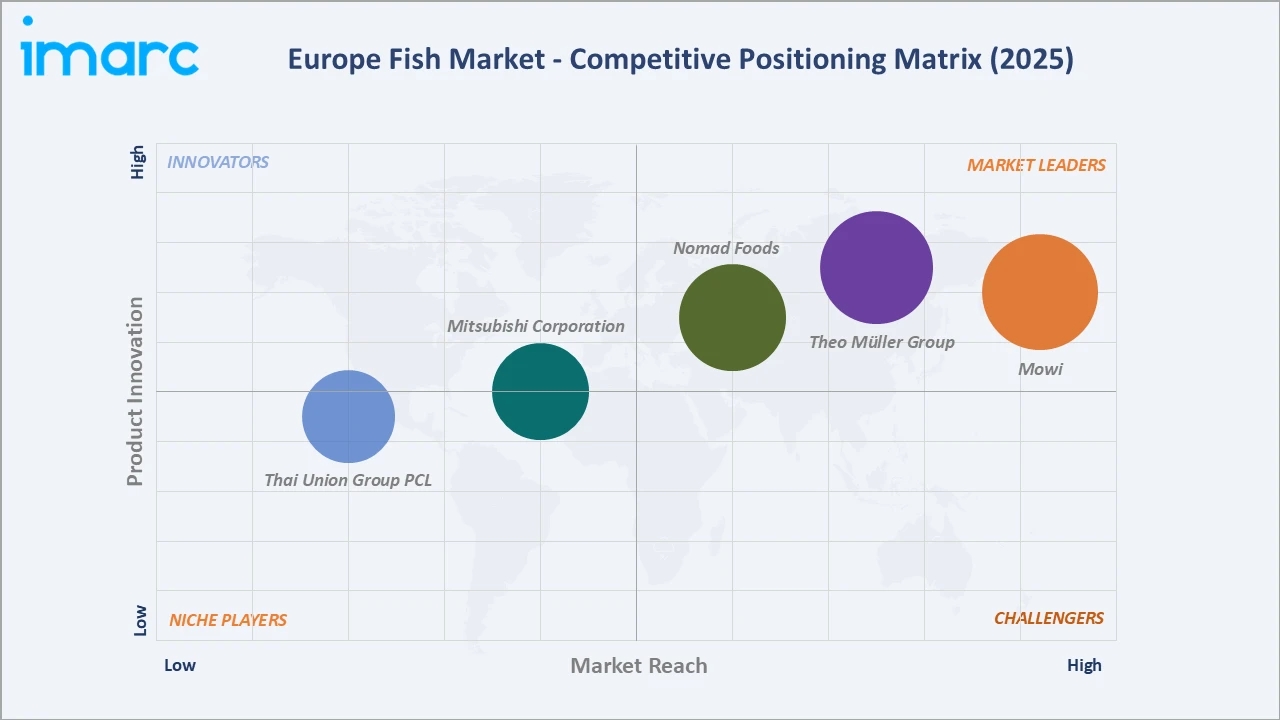
The Europe fish market is moderately fragmented, with a mix of multinational seafood companies, regional processors, aquaculture specialists, and branded food manufacturers competing across product categories and distribution channels. Competition centers on species diversity, sustainability certifications, cold chain infrastructure, processing capacity, brand recognition, and distribution network depth.
|
Company |
Key Brands |
Market Position |
Core Strength |
|
Mowi |
Mowi, Marine Harvest |
Market Leader |
The world's largest producer of farm-raised Atlantic salmon and a dominant force in the European seafood sector. |
|
Theo Müller Group |
Lisner, Graal, Homann, Nadler, Nordsee |
Market Leader |
Theo Müller Group is a major European food manufacturer that operates a significant fish and seafood business. |
|
Mitsubishi Corporation |
Cermaq |
Established Player |
Mitsubishi Corporation operates Cermaq Group AS, acting as a major salmon producer and supplier within Europe. |
|
Thai Union Group PCL |
PETIT NAVIRE, JOHN WEST, KING OSCAR, MAREBLU, PARMENTIER, RÜGEN FISCH |
Established Player |
Thai Union Group PCL is a major player in the European seafood market, operating as a leading supplier of shelf-stable, chilled, and frozen fish products through a strong network of regional brands. |
|
Nomad Foods |
Frikom, Birds Eye |
Market Leader |
Owns iconic household seafood brands including Birds Eye and others across multiple European regions. |
The competitive landscape is shaped by ongoing consolidation alongside organic growth from aquaculture companies expanding Europe fish farming market capacity. Sustainability certification and regulatory compliance are becoming critical competitive differentiators for retail market access.
Key Company Profiles
Mowi
Mowi is the world's largest salmon producer and the leading company in the Europe fish farming market. The company farms Atlantic salmon, supplying fresh, frozen, and smoked salmon to European retail and foodservice customers under the Mowi brand. Mowi's vertically integrated model, from salmon egg to finished consumer product, gives it exceptional control over product quality, sustainability compliance, and supply chain traceability.
- Key Brands: Mowi, Marine Harvest.
- Strategic Focus: Advancing salmon aquaculture sustainability through certification and reduced environmental footprint, expanding premium branded product portfolio across European retail, growing value-added smoked and marinated salmon ranges, investing in feed innovation to reduce marine ingredient dependency.
Theo Müller Group
Theo Müller Group is a diversified European food and beverage company with a broad presence across chilled and packaged food categories. Within the Europe fish market context, the group can be viewed as part of the wider processed and convenience food ecosystem, supported by established distribution networks, strong retail relationships, and extensive consumer-market reach.
- Key Brands: Lisner, Graal, Homann, Nadler, Nordsee.
- Strategic Focus: Strengthening its fish and delicatessen portfolio, supported by product development, modern production capabilities, and established distribution. The group emphasizes innovation, strong brands, operational efficiency, and expansion across European food markets to reinforce its competitive position.
Market Concentration Analysis
The Europe fish market is moderately fragmented, with no single operator holding dominant market share across all product types, distribution channels, and geographies. The frozen fish segment is most concentrated, holding significant share across the UK, Germany, and Northern Europe. The September 2024 acquisition of Graal by Theo Müller Group and ongoing consolidation in the European aquaculture and processing sectors indicate a market trending toward greater concentration through strategic M&A, particularly as sustainability investment requirements and cold chain infrastructure costs favor scale operators over smaller regional processors.
Investment & Growth Opportunities
Highest Growth Segments
Frozen fish (~3.5% CAGR est.), recirculating aquaculture system (RAS) technology investments in the Europe fish farming market, sustainable and MSC-certified fresh seafood premiumization, the Europe plant-based seafood market, and e-commerce seafood distribution platforms represent the highest-priority investment vectors through 2034.
Investment Themes
- Aquaculture Technology and RAS Expansion: Investment in land-based recirculating aquaculture systems in Germany, Denmark, and the Netherlands represents a strategically compelling opportunity as wild-catch supply constraints accelerate and consumer demand for local, sustainably produced European seafood grows. RAS facilities producing salmon, trout, and other Europe fin fish market species near consumer markets command premium positioning and retail access through sustainability credentials.
- Plant-Based Seafood Product Development: The emerging Europe plant-based seafood market offers an early-mover brand-building opportunity in one of Europe's fastest-growing alternative protein categories. Investment in seaweed-based, algae-protein, and soy-based seafood texture innovation positions food companies to capture growing flexitarian and vegan European consumer segments seeking sustainable seafood alternatives.
Future Market Outlook (2026-2034)
The Europe fish market is projected to grow from USD 315.4 Billion in 2025 to USD 325.5 Billion in 2026 and is forecast to reach USD 418.2 Billion by 2034, delivering a 3.18% CAGR over the forecast period through sustained seafood consumption growth, frozen fish innovation, aquaculture expansion, and sustainability-driven premiumization. The market's anchor value of USD 368.9 Billion in 2030 represents the consolidation of sustainable sourcing certification as a universal market access standard and the mainstream commercial emergence of the Europe plant-based seafood market as a recognized category within European retail.
Three structural forces are expected to define the Europe fish market through 2034. First, the continued expansion of the Europe fish farming market, through both traditional coastal aquaculture and innovative RAS land-based systems, will supplement declining wild-catch volumes and ensure supply chain resilience for premium species. Second, sustainability transformation will accelerate across the entire Europe seafood market value chain through 2034. Third, product innovation will reshape category dynamics through frozen fish technology advancement, plant-based seafood market development, and value-added processing growth.
Research Methodology
Primary Research
Primary research comprised in-depth interviews with senior executives from fish processing companies, aquaculture operators, seafood distributors and wholesalers, major European retailers, foodservice procurement managers, sustainability certification bodies, and industry consultants across Spain, France, Italy, Germany, the United Kingdom, and other European markets. Discussions validated market size estimates, assessed product type and distribution channel growth dynamics, evaluated competitive positioning, and gathered qualitative insights on EU regulatory developments, sustainable sourcing trends, and the Europe fish farming market's technological evolution.
Secondary Research
Secondary research encompassed company annual reports, EU Common Fisheries Policy publications, certification databases, EU fisheries control regulation documents, press releases, trade publication data, and reputed market intelligence publications. These resources analyzed market trends, competitive positioning, regulatory developments, and country-level market dynamics across the European fish industry.
Forecasting Models
Forecasting models were developed using historical market revenue data (2020-2025), EU aquaculture production growth projections, wild-catch stock TAC trends, consumer health and sustainability preference surveys, cold chain infrastructure investment data, and macroeconomic consumer spending indicators. The analysis incorporated both top-down and bottom-up approaches, validated through primary research, to generate reliable market forecasts through 2034.
Europe Fish Market Report Coverage:
| Report Features | Details |
|---|---|
| Base Year of the Analysis | 2025 |
| Historical Period | 2020-2025 |
| Forecast Period | 2026-2034 |
| Units | Billion USD |
| Scope of the Report | Exploration of Historical Trends and Market Outlook, Industry Catalysts and Challenges, Segment-Wise Historical and Future Market Assessment:
|
| Fish Types Covered |
|
| Product Types Covered | Fresh, Frozen, Canned, Others |
| Distribution Channels Covered | Retail, Institutional |
| Sectors Covered | Organised, Unorganised |
| Regions Covered | Germany, France, United Kingdom, Italy, Spain, Others |
| Companies Covered | Mowi, Theo Müller Group, Mitsubishi Corporation, Thai Union Group PCL, Nomad Foods, etc. |
| Customization Scope | 10% Free Customization |
| Post-Sale Analyst Support | 10-12 Weeks |
| Delivery Format | PDF and Excel through Email (We can also provide the editable version of the report in PPT/Word format on special request) |
Key Benefits for Stakeholders:
- IMARC’s industry report offers a comprehensive quantitative analysis of various market segments, historical and current market trends, market forecasts, and dynamics of the Europe fish market from 2020-2034.
- The research report provides the latest information on the market drivers, challenges, and opportunities in the Europe fish market.
- Porter's five forces analysis assist stakeholders in assessing the impact of new entrants, competitive rivalry, supplier power, buyer power, and the threat of substitution. It helps stakeholders to analyze the level of competition within the Europe fish industry and its attractiveness.
- Competitive landscape allows stakeholders to understand their competitive environment and provides an insight into the current positions of key players in the market.
Frequently Asked Questions About the Europe Fish Market Report
The Europe fish market size is estimated at USD 325.5 Billion in 2026, driven by rising health awareness, strong Mediterranean seafood consumption cultures, growing demand for sustainable and certified products, and the expansion of frozen fish distribution channels across European retail.
The market is projected to grow at a CAGR of 3.18% during 2026-2034, reaching USD 418.2 Billion by 2034, supported by the Europe fish farming market expansion, frozen fish innovation, plant-based seafood development, and sustainability-driven premiumization across European retail channels.
Fresh fish leads at 43.8% (2025), driven by Mediterranean cultural preference for high-quality unprocessed fish across Spain, France, and Italy.
Retail leads at 68.7% (2025) through supermarket seafood counters, specialist fishmongers, and rapidly growing online grocery platforms.
Spain leads at 23.7% (2025) as Europe's highest per-capita fish-consuming nation. Spain's extensive fishing fleet, deep seafood culinary culture, and strong domestic aquaculture underpin its leadership in the Europe seafood market.
Leading companies include Mowi, Theo Müller Group, Mitsubishi Corporation, Thai Union Group PCL, and Nomad Foods, among others.
The market is projected to reach approximately USD 368.9 Billion by 2030, reflecting sustained seafood consumption growth, Europe fish farming market aquaculture expansion, certification mainstream adoption, and the growing Europe plant-based seafood market's contribution to total European seafood revenue.
The Europe fish farming market offers significant opportunities through recirculating aquaculture system (RAS) technology enabling land-based fish production near consumer markets, traditional coastal aquaculture expansion for salmon and Mediterranean species, and investment in feed innovation reducing marine ingredient dependency in European aquaculture operations.
Need more help?
- Speak to our experienced analysts for insights on the current market scenarios.
- Include additional segments and countries to customize the report as per your requirement.
- Gain an unparalleled competitive advantage in your domain by understanding how to utilize the report and positively impacting your operations and revenue.
- For further assistance, please connect with our analysts.
 Request Customization
 Speak to an Analyst
 Request Brochure
 Inquire Before Buying
Benefits of Customization
- Personalize this research
- Triangulate with your data
- Get data as per your format and definition
- Gain a deeper dive into a specific application, geography, customer, or competitor
- Any level of personalization
Get in Touch With Us
UNITED STATES
Phone: +1-201-971-6302
INDIA
Phone: +91-120-433-0800
UNITED KINGDOM
Phone: +44-753-714-6104
Email: [email protected]
Client Testimonials




.webp)




.webp)













Related Reports

Choose your plan
*Please note that the prices mentioned below are starting prices for each bundle type. Kindly contact our team for further details.*
Single User License
- 1 User License, Access on 2 Devices
- PDF Report + Excel Dataset (Password Protected)
- Lifetime Access
- No Printing Rights
- 10% Free Report Customization
- 10–12 Weeks of Analyst Support
Five User License
- Access for 5 Users, 2 Devices per User
- PDF Report + Excel Dataset (Password Protected)
- Lifetime Access
- Dedicated Account Manager
- 12–14 Weeks of Analyst Support
- No Printing Rights
- 15% Free Report Customization
- 25% Discount on Your Next Purchase
Corporate User License
- Unlimited User Access (Within Your Organization)
- PDF Report + Excel Dataset
- Lifetime Access
- Dedicated Account Manager
- 14–20 Weeks of Analyst Support
- No Printing Rights
- 20% Free Report Customization
- 30% Discount on Your Next Purchase
Essential Insights
What's included:
3 reports
- Lifetime Access
- PDF Reports
- Excel Datasets
- 2 Weeks of Free Analyst Support
- 2 User Licenses
- Access on 2 Devices
- Printing Rights
- Complimentary PowerPoint (PPT) Version
- Complimentary License Upgrade
Professional Access
What's included:
5 reports
- Lifetime Access
- PDF Reports
- Excel Datasets
- 8 Weeks of Free Analyst Support
- 2 User Licenses
- Access on 2 Devices
- Printing Rights
- Complimentary PowerPoint (PPT) Version
- Complimentary License Upgrade
Business Advantage
What's included:
8 reports
- Lifetime Access
- PDF Reports
- Excel Datasets
- 14 Weeks of Free Analyst Support
- 2 User Licenses
- Access on 2 Devices
- Printing Rights
- Complimentary PowerPoint (PPT) Version
- Complimentary License Upgrade
Enterprise Intelligence
What's included:
10 reports
- Lifetime Access
- PDF Reports
- Excel Datasets
- 20 Weeks of Free Analyst Support
- 2 User Licenses
- Access on 2 Devices
- Printing Rights
- Complimentary PowerPoint (PPT) Version
- Complimentary License Upgrade