
Hotel and Hospitality Management Software Market Size, Share, Trends and Forecast by Type, Hotel Type, Deployment, and Region, 2026-2034
Hotel and Hospitality Management Software Market Size and Share:
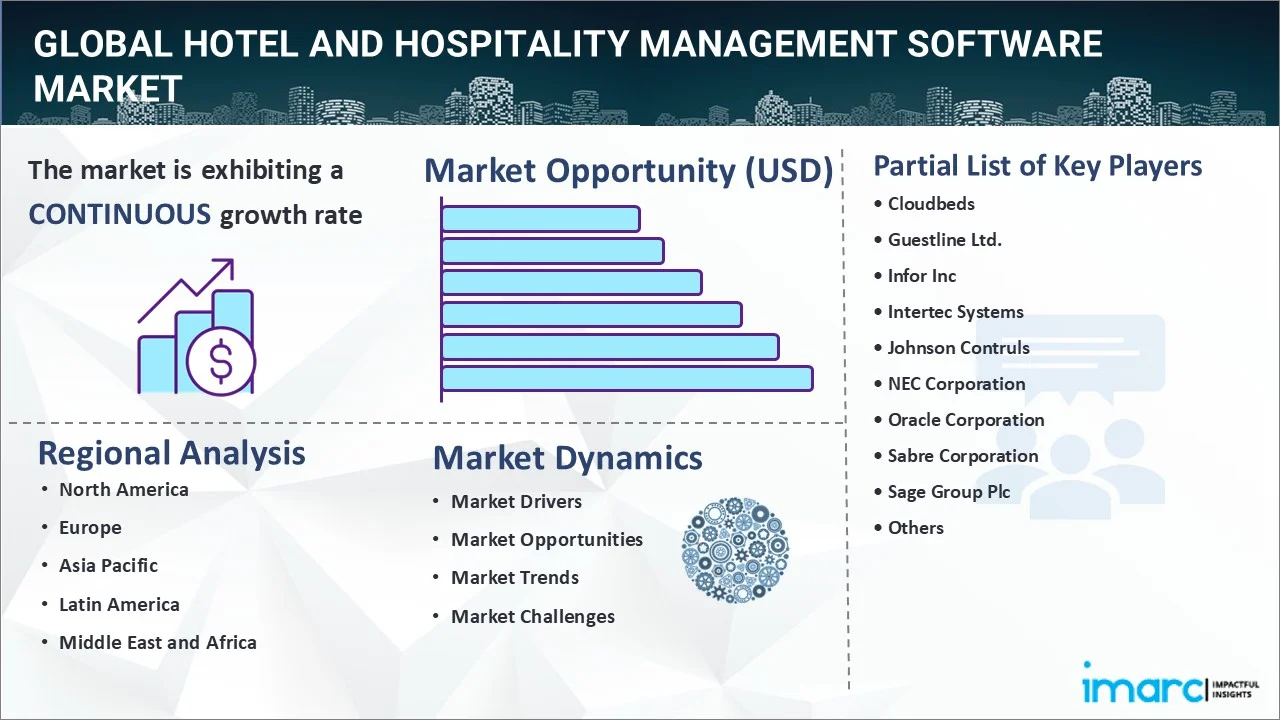
The global hotel and hospitality management software market size was valued at USD 3.86 Billion in 2025. Looking forward, IMARC Group estimates the market to reach USD 5.71 Billion by 2034, exhibiting a CAGR of 4.41% from 2026-2034. Asia Pacific currently dominates the market, holding a market share of 31% in 2025. The region benefits from rapid urbanization, expanding tourism activities, increasing investments in smart hotel infrastructure, and widespread adoption of cloud-based management platforms that collectively enhance operational capabilities, driving the hotel and hospitality management software market share.
The global hotel and hospitality management software market is being propelled by several interconnected factors that are reshaping the hospitality landscape. The growing emphasis on delivering personalized and seamless guest experiences has made advanced software solutions indispensable for hotel operators worldwide. As travelers increasingly expect contactless check-in processes, mobile room keys, and AI-driven service recommendations, hotels are investing heavily in comprehensive management platforms to meet these evolving expectations. Furthermore, the rising volume of global tourism activities, coupled with the expansion of hotel chains across both developed and emerging economies, is amplifying the need for centralized property management systems that can efficiently handle reservations, billing, housekeeping, and revenue optimization. The intensifying competitive landscape among hospitality providers is also encouraging widespread technology adoption to reduce operational inefficiencies, enhance workforce productivity, and gain a data-driven advantage, thereby supporting the hotel and hospitality management software market growth.
The United States has emerged as a major region in the hotel and hospitality management software market owing to many factors. the country possesses a mature and well-established hospitality sector characterized by a high degree of technology adoption, where hotels of all sizes are integrating sophisticated software solutions to enhance operational performance and guest satisfaction. The strong presence of leading technology providers within the country accelerates innovation and the development of advanced property management, distribution, and revenue optimization tools. Additionally, the increasing demand for mobile and contactless technologies among American travelers is compelling hoteliers to modernize their digital infrastructure. The growing focus on data analytics for informed decision-making and the expanding extended-stay segment further amplify software requirements across the hospitality value chain, reinforcing the hotel and hospitality management software market outlook.
To get more information on this market Request Sample
Hotel and Hospitality Management Software Market Trends:
Growing Integration of Artificial Intelligence
The increasing integration of artificial intelligence (AI) into hotel and hospitality management platforms is transforming how properties operate and engage with guests. AI-powered tools, including virtual concierge services, chatbots, and predictive analytics engines, are enabling hotels to deliver hyper-personalized experiences by analyzing guest preferences, booking history, and behavioral patterns in real time. These technologies automate routine tasks such as handling guest inquiries, optimizing room assignments, and forecasting demand fluctuations, allowing staff to focus on higher-value service delivery. Additionally, AI-driven revenue management systems analyze competitor pricing, local events, and seasonal trends to dynamically adjust room rates for maximum profitability. The ability of AI to enhance both operational efficiency and guest satisfaction is positioning it as a cornerstone of modern hospitality management strategies worldwide.
Accelerating Shift Toward Cloud-Based Platforms
The accelerating migration from legacy on-premises systems to cloud-based hospitality management platforms represents a defining trend in the hotel and hospitality management software market forecast. Cloud-native solutions offer hotels enhanced scalability, remote accessibility, real-time data synchronization, and seamless integration with third-party applications through open APIs, making them particularly attractive for both independent operators and large hotel chains. These platforms eliminate the need for substantial upfront hardware investments while providing automatic updates and robust data security features that support regulatory compliance. The flexibility of cloud deployment allows hotel staff to manage operations from any location, improving responsiveness to guest needs and enabling centralized oversight across multi-property portfolios. This widespread recognition of cloud-based advantages is driving sustained adoption and reshaping the competitive dynamics within the global hospitality technology ecosystem.
Rising Adoption of IoT and Smart Room Technologies
The rising adoption of Internet of Things (IoT) devices and smart room technologies is creating significant opportunities for hotel management software vendors and catalyzing the hotel and hospitality management software market trends. IoT-enabled solutions facilitate real-time monitoring and control of hotel systems, including lighting, climate, energy consumption, and security infrastructure, resulting in enhanced operational efficiency and meaningful energy savings. These smart technologies also elevate guest experiences by offering personalized room settings, keyless entry via mobile devices, and voice-activated controls that align with modern consumer expectations for convenience and connectivity. Hotel management software platforms are increasingly incorporating IoT integration capabilities to provide centralized dashboards for property managers to oversee all connected systems from a single interface. The convergence of IoT with hospitality management software is enabling hotels to differentiate their offerings, optimize resource utilization, and deliver technology-enhanced stays.
Hotel and Hospitality Management Software Industry Segmentation:
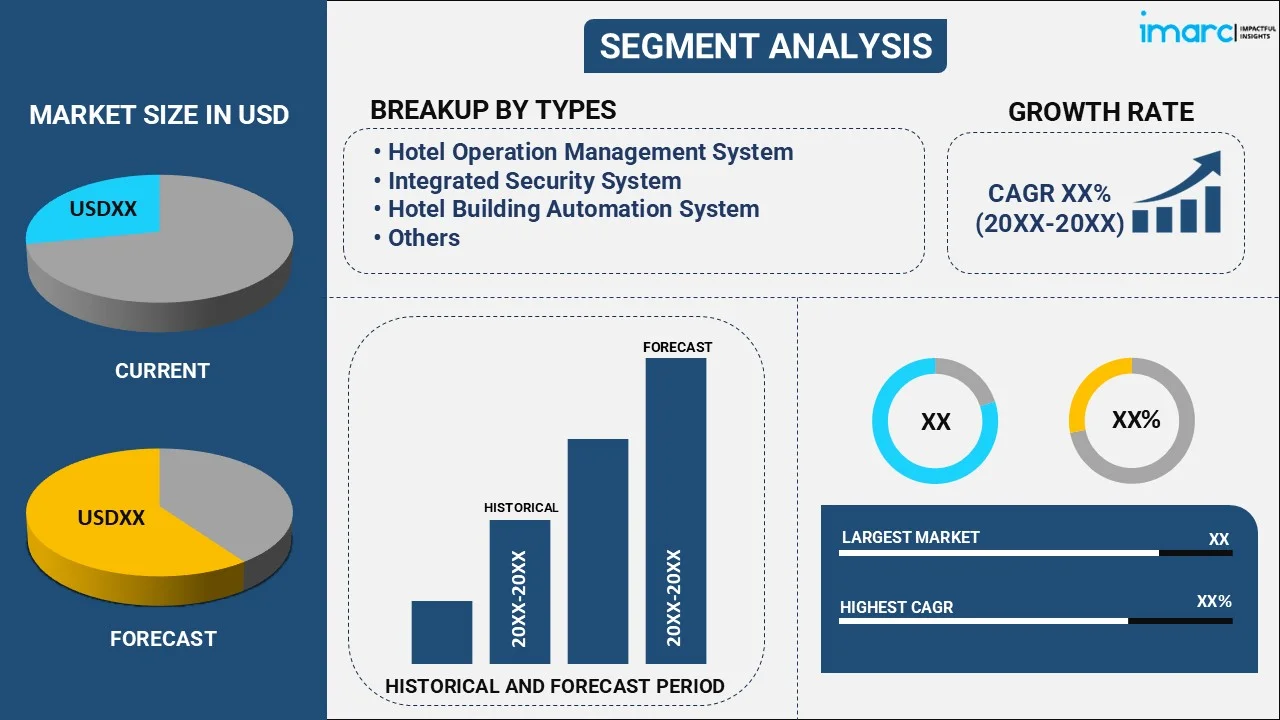
IMARC Group provides an analysis of the key trends in each segment of the global hotel and hospitality management software market, along with forecast at the global, regional, and country levels from 2026-2034. The market has been categorized based on type, hotel type, and deployment.
Analysis by Type:
To get detailed segment analysis of this market Request Sample
- Hotel Operation Management System
- Integrated Security System
- Hotel Building Automation System
- Guest Service Management System
- Integrated Communication Technology Solutions
Hotel operation management system holds 32% of the market share. Hotel operation management systems encompass a comprehensive suite of software tools designed to streamline core property functions, including reservation management, front desk operations, housekeeping coordination, billing, and guest relationship management. These systems serve as the central operational backbone for hotels, enabling real-time visibility into room availability, occupancy rates, and revenue metrics across single or multi-property portfolios. The growing complexity of hotel operations, combined with increasing guest expectations for seamless and personalized service, has accelerated the adoption of advanced operation management platforms that integrate AI-driven analytics, mobile accessibility, and automated workflows. The ability of these systems to consolidate disparate operational functions into a unified platform significantly enhances efficiency and decision-making for hotel operators.
Analysis by Hotel Type:
- Business Hotels
- Heritage and Boutique Hotels
- Resorts and Spas
Business hotels lead the market with a share of 45%. Business hotels represent the primary end-user category for hospitality management software, driven by their high operational complexity and the substantial volume of corporate travelers they accommodate. These establishments depend on robust software solutions to efficiently manage frequent guest turnovers, conference and event bookings, integrated billing with corporate accounts, and loyalty program administration. The persistent demand for streamlined check-in and check-out processes, real-time room inventory management, and data-driven revenue optimization underscores the critical role of advanced management platforms in business hotel operations. Additionally, the growing emphasis on delivering seamless digital experiences to technology-savvy corporate guests is accelerating investment in mobile-enabled platforms, contactless service capabilities, and AI-powered concierge tools that enhance both operational efficiency and guest satisfaction across business-oriented hotel properties worldwide.

Analysis by Deployment:
- Cloud-based
- On-premises
Cloud-based dominates the market, with a share of 60%. Cloud-based deployment has emerged as the preferred model for hotel and hospitality management software owing to its inherent advantages in scalability, cost-effectiveness, and operational flexibility. Cloud platforms enable hotels to access critical management functions remotely, synchronize data across multiple properties in real time, and integrate seamlessly with a broad ecosystem of third-party applications through open application programming interfaces. The subscription-based pricing model significantly reduces upfront capital expenditure, making advanced software capabilities accessible to small and mid-sized hotel operators alongside large chains. Cloud-based solutions also provide automatic software updates, enhanced data security protocols, and built-in disaster recovery features that support compliance with evolving regulatory requirements. These combined benefits are driving widespread migration from legacy on-premises systems to cloud-native hospitality management platforms globally.
Regional Analysis:
To get more information on the regional analysis of this market Request Sample
- North America
- United States
- Canada
- Asia-Pacific
- China
- Japan
- India
- South Korea
- Australia
- Indonesia
- Others
- Europe
- Germany
- France
- United Kingdom
- Italy
- Spain
- Russia
- Others
- Latin America
- Brazil
- Mexico
- Others
- Middle East and Africa
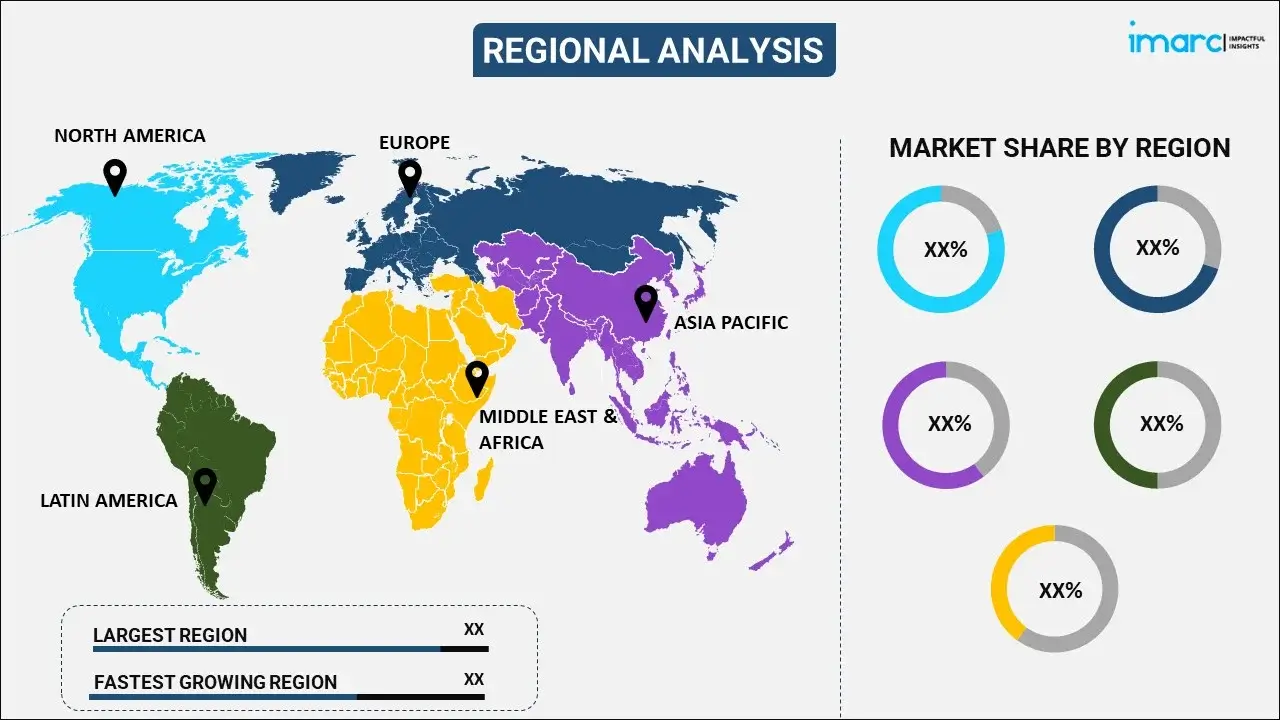
Asia Pacific exhibits a clear dominance in the market with a 31% share. The dominance of the region is due to the factors of rapid urbanization, a thriving tourism industry, and the growing adoption of digital technology among hoteliers across various market segments. The increasing investments in smart hotel technology, mobile hotel booking solutions, and cloud-based hotel management systems are driving the demand for the market, especially in countries such as China, India, Japan, South Korea, and Southeast Asia. The government initiatives to develop the tourism sector and the digital transformation of the region are further fueling the growth of the market, and the rise of mid-scale and budget hotels across the region is opening up the addressable market for the software solutions.
Key Regional Takeaways:
United States Hotel and Hospitality Management Software Market Analysis
The United States represents a pivotal market for hotel and hospitality management software, driven by its well-established hospitality infrastructure and the early adoption of advanced technology solutions. The country is home to numerous leading software providers and technology startups that are accelerating innovation in property management, revenue optimization, guest engagement, and distribution management platforms. American hotels across all segments are investing in mobile-enabled, contactless, and AI-driven solutions to meet the rapidly evolving expectations of both leisure and business travelers who increasingly demand seamless digital experiences throughout their stays. The strong emphasis on data analytics and customer relationship management further supports software adoption as hoteliers seek deeper insights into guest preferences and behavior to deliver tailored experiences. Additionally, the growing influence of major sporting events, including the upcoming 2026 FIFA World Cup and the 2028 Los Angeles Olympics, presents substantial opportunities for hotels to deploy advanced management systems capable of handling heightened operational demands and maximizing revenue during peak periods.
Europe Hotel and Hospitality Management Software Market Analysis
Europe represents a significant market for hotel and hospitality management software, supported by its rich cultural heritage, diverse tourism landscape, and forward-looking approach to digital transformation within the hospitality sector. The region's hotels are increasingly adopting cloud-based platforms, AI-driven personalization tools, and integrated property management systems to enhance both operational efficiency and guest satisfaction across a diverse range of property types, from luxury urban hotels to heritage boutique establishments. Regulatory requirements around data privacy and sustainability reporting are steering platform enhancements, compelling software providers to develop solutions that support compliance with evolving European standards while delivering advanced management capabilities. The emphasis on sustainability-driven technology, including energy-efficient building management systems and waste reduction analytics, is creating additional demand for comprehensive hospitality software solutions that integrate operational management with environmental performance monitoring across European hotel portfolios.
Asia-Pacific Hotel and Hospitality Management Software Market Analysis
Asia-Pacific leads the global hotel and hospitality management software market, driven by rapid urbanization, expanding middle-class populations, and substantial investments in tourism infrastructure across the region. The proliferation of mid-scale and budget hotel chains, combined with the growing digitalization drive among small and medium-sized hotel operators, is creating significant demand for scalable and cost-effective cloud-based management solutions. Countries such as China, India, Japan, and Southeast Asian nations are experiencing strong growth in both domestic and international tourism, prompting hotels to adopt advanced software platforms for efficient property management, distribution optimization, and enhanced guest engagement. For instance, according to a 2025 analysis, Philippines-based independent hotels alone added more than 10,000 active users to cloud-based property management platforms in 2025. Government initiatives promoting digital transformation and tourism development are further supporting software adoption throughout the region.
Latin America Hotel and Hospitality Management Software Market Analysis
Latin America presents growing opportunities for hotel and hospitality management software adoption, driven by expanding tourism activities and increasing digital transformation initiatives across the region's hospitality sector. Properties in the region are progressively leveraging mobile check-in, digital payment integrations, and cloud-based management platforms to enhance guest experiences and streamline operations. The development of new hotel properties in key urban and resort destinations across Brazil, Mexico, and other markets is further driving demand for modern management software solutions.
Middle East and Africa Hotel and Hospitality Management Software Market Analysis
The Middle East and Africa region is witnessing growing adoption of hotel and hospitality management software, fueled by substantial investments in tourism infrastructure and the development of major hospitality projects. Strategic government initiatives, particularly Saudi Arabia's Vision 2030 program, are creating a favorable environment for advanced technology adoption within the hospitality sector. The expansion of luxury hotel developments in the UAE, Saudi Arabia, and Qatar, combined with increasing emphasis on contactless and automated guest services, is driving the integration of sophisticated management platforms across the region.
Competitive Landscape:
The competitive environment of the global hotel and hospitality management software market is dominated by a combination of established technology conglomerates and nimble hospitality software companies. The leading players in the industry are aggressively pursuing strategies that focus on product development, partnerships, cloud platform development, and AI integration to further enhance their competitive positions and reach a wider customer base. The leading companies are heavily investing in research and development to develop innovative solutions with integrated AI processes, predictive analytics, IoT integration, and comprehensive property management solutions that cater to the diverse needs of the modern hotel industry. The industry is experiencing rapid platform consolidation as companies strive to develop comprehensive hospitality solutions that encompass property management, distribution, revenue management, and guest engagement on a single unified platform. Furthermore, technology partnerships between software companies, payment gateways, and distribution companies are dramatically changing the competitive landscape of the industry.
The report provides a comprehensive analysis of the competitive landscape in the hotel and hospitality management software market with detailed profiles of all major companies, including:
- Cloudbeds
- Guestline Ltd.
- Infor Inc
- Intertec Systems
- Johnson Controls
- NEC Corporation
- Oracle Corporation
- Sabre Corporation
- Sage Group Plc
- Schneider Electric SE
- Siemens AG
- Workday Inc.
Latest News and Developments:
- In September 2025, Oracle announced that Accor, a world-leading hospitality group operating across 110 countries, is currently moving its global properties to Oracle OPERA Cloud PMS to streamline and enhance its hotel operations. The partnership enables Accor to standardize its property management system across its entire portfolio to monitor performance, inform business decisions, and better tailor guest experiences.
- In February 2025, Cloudbeds, a leading hospitality management technology provider, announced a strategic partnership with Sabre Hospitality to deliver a deeper integration between Cloudbeds Property Management System (PMS) and Sabre's SynXis Central Reservation System (CRS). The collaboration introduces a real-time, enhanced two-way connection enabling hotels to streamline operations, optimize distribution strategies, and improve data accuracy.
Hotel And Hospitality Management Software Market Scope:
| Report Features | Details |
|---|---|
| Base Year of the Analysis | 2025 |
| Historical Period | 2020-2025 |
| Forecast Period | 2026-2034 |
| Units | Billion USD |
| Types Covered | Hotel Operation Management System, Integrated Security System, Hotel Building Automation System, Guest Service Management System, Integrated Communication Technology Solutions |
| Hotel Types Covered | Business Hotels, Heritage and Boutique Hotels, Resorts and Spas |
| Deployments Covered | Cloud-based, On-premises |
| Regions Covered | North America, Asia-Pacific, Europe, Latin America, Middle East and Africa |
| Countries Covered | United States, Canada, China, Japan, India, South Korea, Australia, Indonesia, Germany, France, United Kingdom, Italy, Spain, Russia, Brazil, Mexico |
| Companies Covered | Cloudbeds, Guestline Ltd., Infor Inc, Intertec Systems, Johnson Controls, NEC Corporation, Oracle Corporation, Sabre Corporation, Sage Group Plc, Schneider Electric SE, Siemens AG, Workday Inc., etc. |
| Customization Scope | 10% Free Customization |
| Post-Sale Analyst Support | 10-12 Weeks |
| Delivery Format | PDF and Excel through Email (We can also provide the editable version of the report in PPT/Word format on special request) |
Key Benefits for Stakeholders:
- IMARC's report offers a comprehensive quantitative analysis of various market segments, historical and current market trends, market forecasts, and dynamics of the hotel and hospitality management software market from 2020-2034.
- The research study provides the latest information on the market drivers, challenges, and opportunities in the global hotel and hospitality management software market.
- The study maps the leading, as well as the fastest-growing, regional markets. It further enables stakeholders to identify the key country-level markets within each region.
- Porter's Five Forces analysis assists stakeholders in assessing the impact of new entrants, competitive rivalry, supplier power, buyer power, and the threat of substitution. it helps stakeholders to analyze the level of competition within the hotel and hospitality management software industry and its attractiveness.
- Competitive landscape allows stakeholders to understand their competitive environment and provides an insight into the current positions of key players in the market.
Frequently Asked Questions About the Hotel and Hospitality Management Software Market Report
The hotel and hospitality management software market was valued at USD 3.86 Billion in 2025.
The hotel and hospitality management software market is projected to exhibit a CAGR of 4.41% during 2026-2034, reaching a value of USD 5.71 Billion by 2034.
The hotel and hospitality management software market is driven by the rising demand for automation and personalized guest experiences, widespread adoption of cloud-based and mobile solutions, increasing global tourism activities, and operational efficiency requirements. The integration of AI, IoT, and data analytics further enhances decision-making, resource management, and customer satisfaction across hospitality operations.
Asia Pacific currently dominates the hotel and hospitality management software market, accounting for a share of 31%. The region benefits from rapid urbanization, booming tourism, increased digital adoption, growing investments in smart hotel infrastructure, and the expanding presence of cloud-based management solutions across emerging Asian economies.
Some of the major players in the hotel and hospitality management software market include Cloudbeds, Guestline Ltd., Infor Inc, Intertec Systems, Johnson Controls, NEC Corporation, Oracle Corporation, Sabre Corporation, Sage Group Plc, Schneider Electric SE, Siemens AG, Workday Inc., etc.
Need more help?
- Speak to our experienced analysts for insights on the current market scenarios.
- Include additional segments and countries to customize the report as per your requirement.
- Gain an unparalleled competitive advantage in your domain by understanding how to utilize the report and positively impacting your operations and revenue.
- For further assistance, please connect with our analysts.
 Request Customization
 Speak to an Analyst
 Request Brochure
 Inquire Before Buying
Benefits of Customization
- Personalize this research
- Triangulate with your data
- Get data as per your format and definition
- Gain a deeper dive into a specific application, geography, customer, or competitor
- Any level of personalization
Get in Touch With Us
UNITED STATES
Phone: +1-201-971-6302
INDIA
Phone: +91-120-433-0800
UNITED KINGDOM
Phone: +44-753-714-6104
Email: [email protected]
Client Testimonials




.webp)




.webp)













Related Reports

Choose your plan
*Please note that the prices mentioned below are starting prices for each bundle type. Kindly contact our team for further details.*
Single User License
- 1 User License, Access on 2 Devices
- PDF Report + Excel Dataset (Password Protected)
- Lifetime Access
- No Printing Rights
- 10% Free Report Customization
- 10–12 Weeks of Analyst Support
Five User License
- Access for 5 Users, 2 Devices per User
- PDF Report + Excel Dataset (Password Protected)
- Lifetime Access
- Dedicated Account Manager
- 12–14 Weeks of Analyst Support
- No Printing Rights
- 15% Free Report Customization
- 25% Discount on Your Next Purchase
Corporate User License
- Unlimited User Access (Within Your Organization)
- PDF Report + Excel Dataset
- Lifetime Access
- Dedicated Account Manager
- 14–20 Weeks of Analyst Support
- No Printing Rights
- 20% Free Report Customization
- 30% Discount on Your Next Purchase
Essential Insights
What's included:
3 reports
- Lifetime Access
- PDF Reports
- Excel Datasets
- 2 Weeks of Free Analyst Support
- 2 User Licenses
- Access on 2 Devices
- Printing Rights
- Complimentary PowerPoint (PPT) Version
- Complimentary License Upgrade
Professional Access
What's included:
5 reports
- Lifetime Access
- PDF Reports
- Excel Datasets
- 8 Weeks of Free Analyst Support
- 2 User Licenses
- Access on 2 Devices
- Printing Rights
- Complimentary PowerPoint (PPT) Version
- Complimentary License Upgrade
Business Advantage
What's included:
8 reports
- Lifetime Access
- PDF Reports
- Excel Datasets
- 14 Weeks of Free Analyst Support
- 2 User Licenses
- Access on 2 Devices
- Printing Rights
- Complimentary PowerPoint (PPT) Version
- Complimentary License Upgrade
Enterprise Intelligence
What's included:
10 reports
- Lifetime Access
- PDF Reports
- Excel Datasets
- 20 Weeks of Free Analyst Support
- 2 User Licenses
- Access on 2 Devices
- Printing Rights
- Complimentary PowerPoint (PPT) Version
- Complimentary License Upgrade