
HVAC Insulation Market Size, Share, Trends and Forecast by Material Type, Product Type, Application, and Region, 2026-2034
HVAC Insulation Market Size, Share, Trends & Forecast (2026-2034)
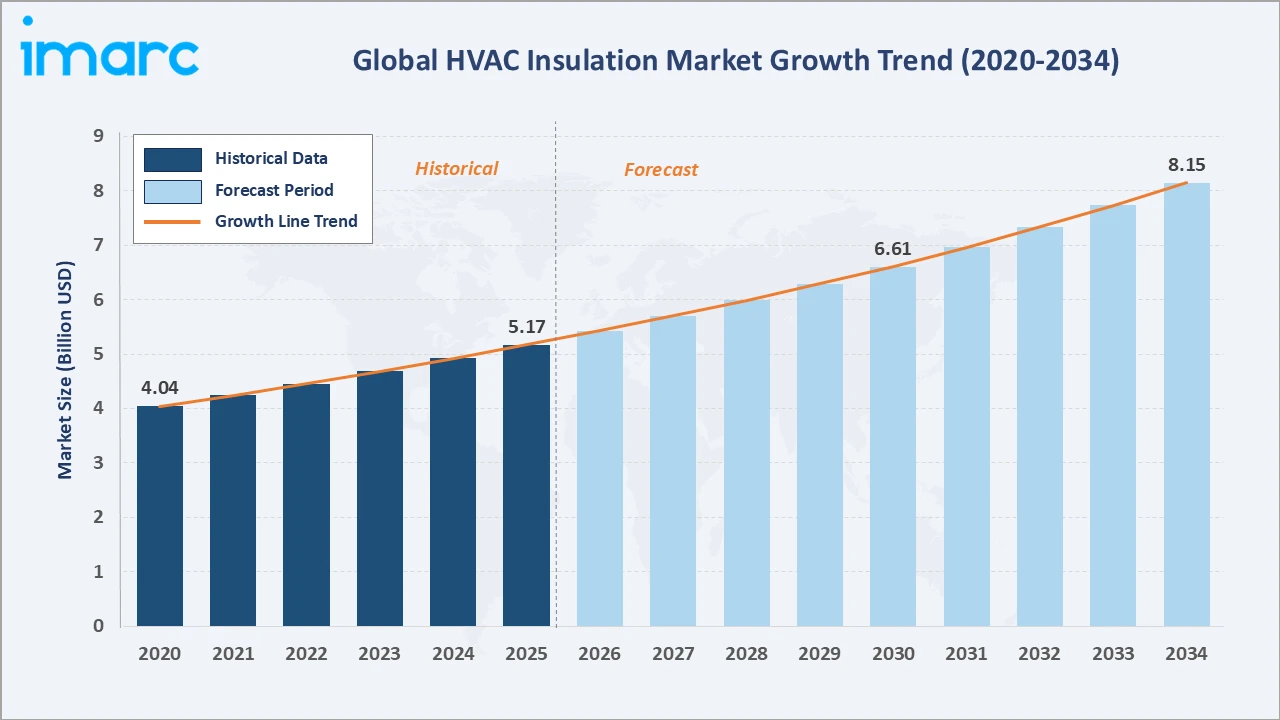
The global HVAC insulation market reached USD 5.17 Billion in 2025 and is projected to reach USD 8.15 Billion by 2034, growing at a CAGR of 5.04% during 2026-2034. Growth is driven by stricter energy-efficiency building codes, rising green construction activity, and expanding HVAC installations across residential, commercial, and industrial buildings. Pipes lead the product type segment at 52.0%. Glass wool leads the material type segment at 44.0%. Asia Pacific commands 42.0% of the global market share, supported by rapid construction growth and rising industrialization across the region.
Market Snapshot
|
Metric |
Value |
|
Market Size (2025) |
USD 5.17 Billion |
|
Forecast Market Size (2034) |
USD 8.15 Billion |
|
CAGR (2026-2034) |
5.04% |
|
Base Year |
2025 |
|
Historical Period |
2020-2025 |
|
Forecast Period |
2026-2034 |
|
Dominant Product Type |
Pipes (52.0%, 2025) |
|
Dominant Material Type |
Glass Wool (44.0%, 2025) |
|
Leading Region |
Asia Pacific (42.0%, 2025) |
The market expanded from USD 4.04 Billion in 2020 to USD 5.17 Billion in 2025, anchored at approximately USD 6.61 Billion by 2030 and forecast to reach USD 8.15 Billion by 2034. This sustained expansion has been supported by continued investment in energy-efficient buildings, steady replacement of legacy HVAC insulation systems, and rising construction activity across both mature and emerging economies.
To get more information on this market, Request Sample
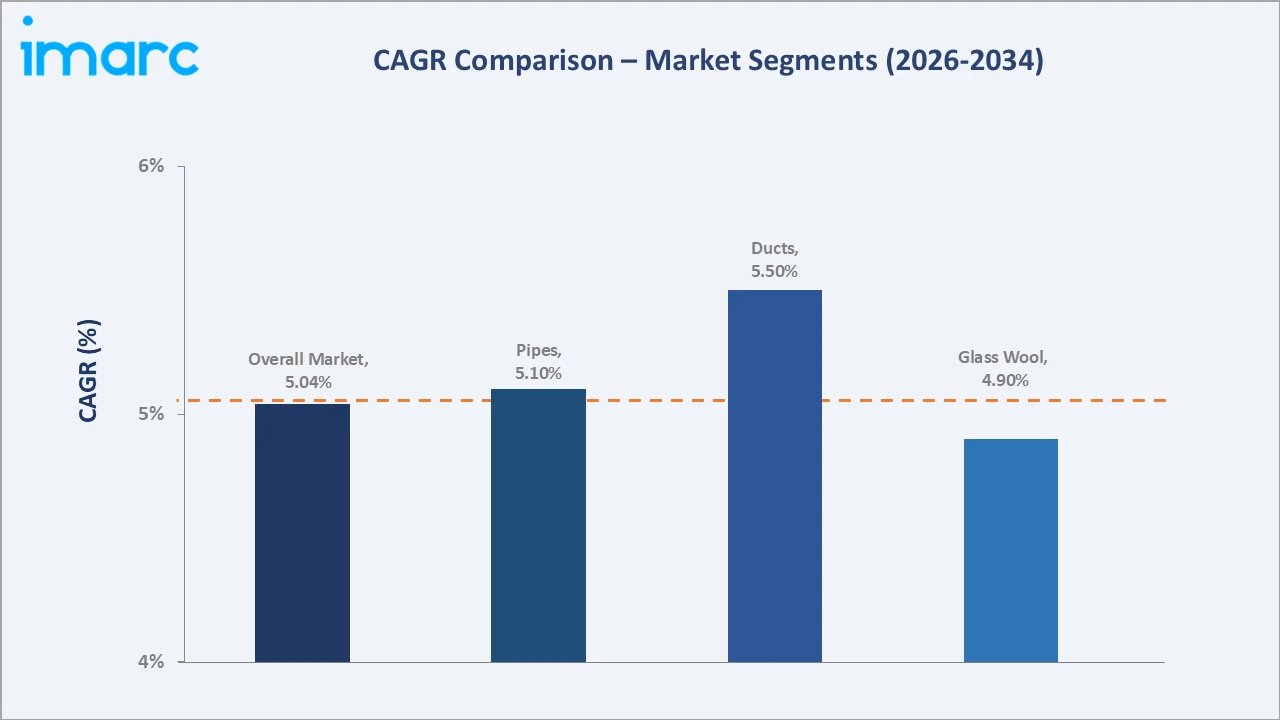
Ducts grow fastest at an estimated ~5.5% CAGR as centralized commercial HVAC installations expand across new construction projects, while pipes maintain the largest overall revenue base through sustained industrial and commercial demand for thermal protection across piping networks.
Executive Summary
The global HVAC insulation market reached USD 5.17 Billion in 2025, reflecting sustained demand from the construction and building-management industries for thermal and acoustic performance solutions across residential, commercial, and industrial buildings. The market is projected to reach USD 8.15 Billion by 2034, at a CAGR of 5.04% during 2026-2034, as global construction activity, energy-efficiency regulation, and building retrofit programs continue to expand in tandem.
Pipes lead the product type segmentation at 52.0%, supported by widespread use across commercial and industrial piping networks where thermal protection and condensation control are critical. Glass wool leads material type segmentation at 44.0% owing to its cost-effectiveness and strong thermal performance across large-scale installations. Asia Pacific leads regionally at 42.0%, driven by construction growth across China, India, and Southeast Asia, supported by expanding manufacturing capacity and rising adoption of energy codes.
Key Market Insights
|
Insight |
Data |
|
Dominant Product Type |
Pipes - 52.0% share (2025) |
|
Dominant Material Type |
Glass Wool - 44.0% market share (2025) |
|
Leading Region |
Asia Pacific - 42.0% market share (2025) |
|
Market Opportunity |
Bio-based insulation; recyclable material systems; smart HVAC-integrated insulation; prefabricated modular systems |
Key Analytical Observations Supporting The Above Data:
- Pipes at 52.0%: Pipe insulation dominates due to its critical role in preventing heat loss and condensation across HVAC piping networks in commercial, industrial, and residential buildings, supported by widespread retrofit and new-construction demand. Ongoing expansion of centralized chilled-water and heating distribution networks in large commercial developments continues to reinforce pipe insulation as the largest single revenue pool within the market.
- Glass Wool at 44.0%: Glass wool leads material type demand owing to its favorable thermal conductivity, affordability, and non-combustible properties, making it the preferred choice for large-scale HVAC installations. Its broad availability across regional manufacturing hubs further supports consistent specification across both developed and emerging construction markets.
- Asia Pacific at 42.0%: Asia Pacific leads through rapid urbanization, expanding construction activity, and rising adoption of energy-efficient building codes across China, India, and Southeast Asian economies. Continued expansion of domestic manufacturing capacity across the region is also improving cost competitiveness relative to imported insulation products.
HVAC Insulation Market Overview
The global HVAC insulation market encompasses materials and systems used to regulate thermal and acoustic performance across heating, ventilation, and air-conditioning installations in residential, commercial, and industrial buildings. HVAC insulation reduces energy loss, prevents condensation, and supports compliance with increasingly stringent building-efficiency codes worldwide.
The ecosystem integrates raw material suppliers, insulation product manufacturers, HVAC system integrators, mechanical contractors, building owners, and regulatory bodies overseeing building energy codes. Macroeconomic factors including rising construction spending, energy price volatility, and sustainability mandates continue to shape demand across mature and emerging markets. Coordination between manufacturers and HVAC system integrators is deepening as buildings increasingly specify insulation as part of an integrated, performance-guaranteed HVAC package rather than a standalone material purchase.
Market Dynamics
To evaluate market opportunities, Request Sample
Market Drivers
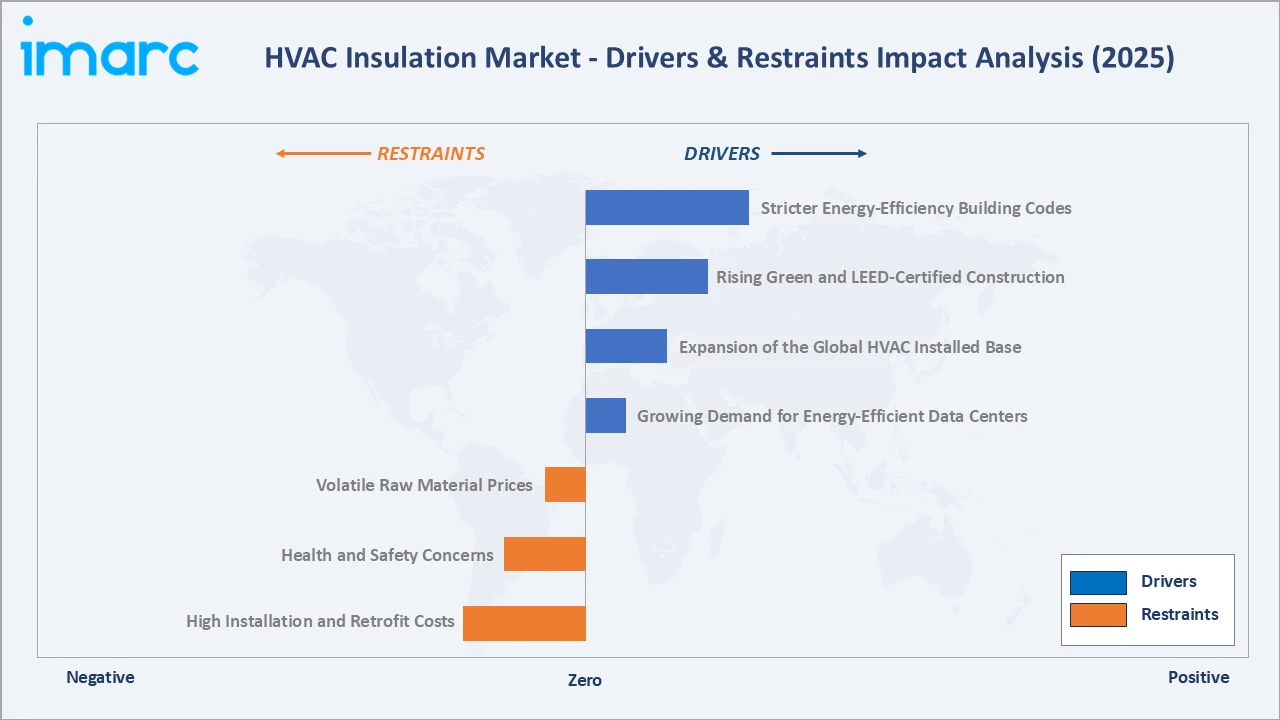
- Stricter Energy-Efficiency Building Codes: Governments worldwide are tightening building energy codes, mandating improved thermal performance envelopes. This is compelling developers and contractors to adopt higher-specification HVAC insulation, directly boosting product demand across new construction projects. Compliance deadlines set by national energy agencies are further accelerating retrofit programs across older commercial and institutional building stock. As enforcement mechanisms strengthen, non-compliant developers face rising penalties, reinforcing insulation specification as a standard design requirement.
- Rising Green and LEED-Certified Construction: Growing adoption of green building certifications is increasing demand for sustainable, high-performance insulation materials that reduce energy consumption and support certification compliance, encouraging manufacturers to expand eco-friendly product portfolios. Corporate sustainability commitments are also pushing commercial developers to specify certified insulation systems as a default requirement in new project tenders.
- Expansion of the Global HVAC Installed Base: Continued growth in HVAC equipment installations across residential, commercial, and industrial buildings is generating proportional demand for insulation used in ducts, pipes, and associated system components. Rising average system sizes and more complex ducting layouts in modern buildings are further increasing per-installation insulation material consumption.
- Growing Demand for Energy-Efficient Data Centers: The rapid expansion of data center capacity is increasing the need for advanced HVAC insulation solutions that support precise thermal management and reduce operational energy costs. Hyperscale facility operators are increasingly specifying premium insulation materials to meet aggressive power usage effectiveness targets, supporting sustained demand growth in this high-value application segment.
Market Restraints
- Volatile Raw Material Prices: Fluctuating costs of fiberglass, mineral wool, and foam-based raw materials increase production cost uncertainty for manufacturers, occasionally constraining margins and slowing capacity expansion. Supply chain disruptions and energy-intensive production processes further amplify cost volatility, particularly for foam-based insulation materials dependent on petrochemical feedstocks.
- Health and Safety Concerns: Certain insulation materials raise handling and installation safety concerns, requiring specialized protective measures that can increase installation costs and limit adoption in some applications. Regulatory scrutiny around fiber-based material handling continues to evolve, requiring manufacturers to invest in safer formulations and updated worker safety protocols.
- High Installation and Retrofit Costs: Retrofitting existing buildings with upgraded HVAC insulation can involve significant labor and material costs, which may delay adoption among cost-sensitive commercial and residential end users. Limited access to financing for energy-efficiency retrofits in emerging markets further slows the pace of upgrade cycles across older building stock.
Market Opportunities
- Bio-Based and Low-VOC Insulation Materials: Rising demand for sustainable construction materials is creating opportunities for manufacturers to develop bio-based and low-emission HVAC insulation products aligned with green building certification requirements. Early movers in this category stand to capture premium pricing as sustainability-linked procurement policies expand across major construction markets.
- Smart HVAC-Integrated Insulation Systems: Integration of sensor-enabled insulation with smart building management systems can enable predictive maintenance and further energy optimization, opening new product development avenues. Partnerships between insulation manufacturers and building automation providers are expected to accelerate commercialization of these integrated solutions over the forecast period.
Market Challenges
- Competitive Pricing Pressure from Regional Manufacturers: Regional and domestic insulation manufacturers offering cost-competitive products are increasing pricing pressure on established global suppliers, particularly across Asia Pacific. This dynamic is compelling global players to localize production and streamline distribution networks to defend market share.
- Balancing Fire Safety and Thermal Performance: Meeting simultaneous fire-safety and thermal-efficiency requirements requires continuous product innovation, adding complexity and cost to material development. Evolving building-code fire ratings across different regions further complicate standardized product design for multinational manufacturers.
Emerging Market Trends
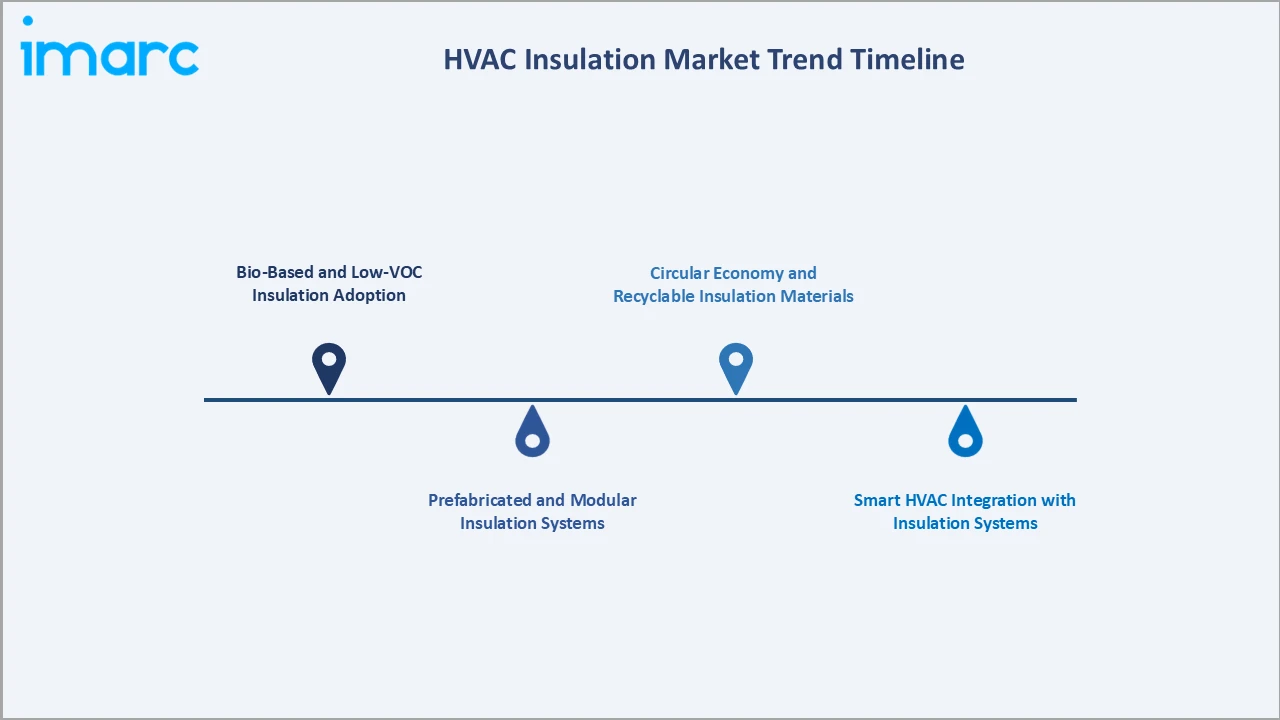
1. Bio-Based and Low-VOC Insulation Adoption
Rising sustainability mandates are driving adoption of bio-based and low-VOC insulation materials that reduce environmental impact while meeting thermal performance requirements, supporting green building certification goals across new and retrofit projects. Manufacturers are increasingly reformulating existing product lines to reduce embodied carbon, positioning bio-based options as a mainstream rather than niche specification over the coming decade.
2. Prefabricated and Modular Insulation Systems
Growing use of prefabricated, ready-to-install insulation modules is reducing installation time and labor costs, supporting faster project completion across large-scale commercial and industrial HVAC installations. Contractors increasingly favor modular systems in labor-constrained markets, where prefabrication shortens on-site schedules and improves installation quality consistency.
3. Smart HVAC Integration with Insulation Systems
Integration of insulation with smart building management systems is enabling real-time thermal performance monitoring, supporting predictive maintenance and further energy optimization across modern HVAC installations. Facility managers are increasingly using this data to identify insulation degradation early, reducing unplanned energy losses and extending system service life.
4. Circular Economy and Recyclable Insulation Materials
Increasing focus on circular economy principles is driving development of recyclable and reusable insulation materials, helping manufacturers meet sustainability targets and reduce construction waste. Take-back and recycling programs for end-of-life insulation are gradually expanding across mature markets, supported by tightening construction waste regulations.
Industry Value Chain Analysis
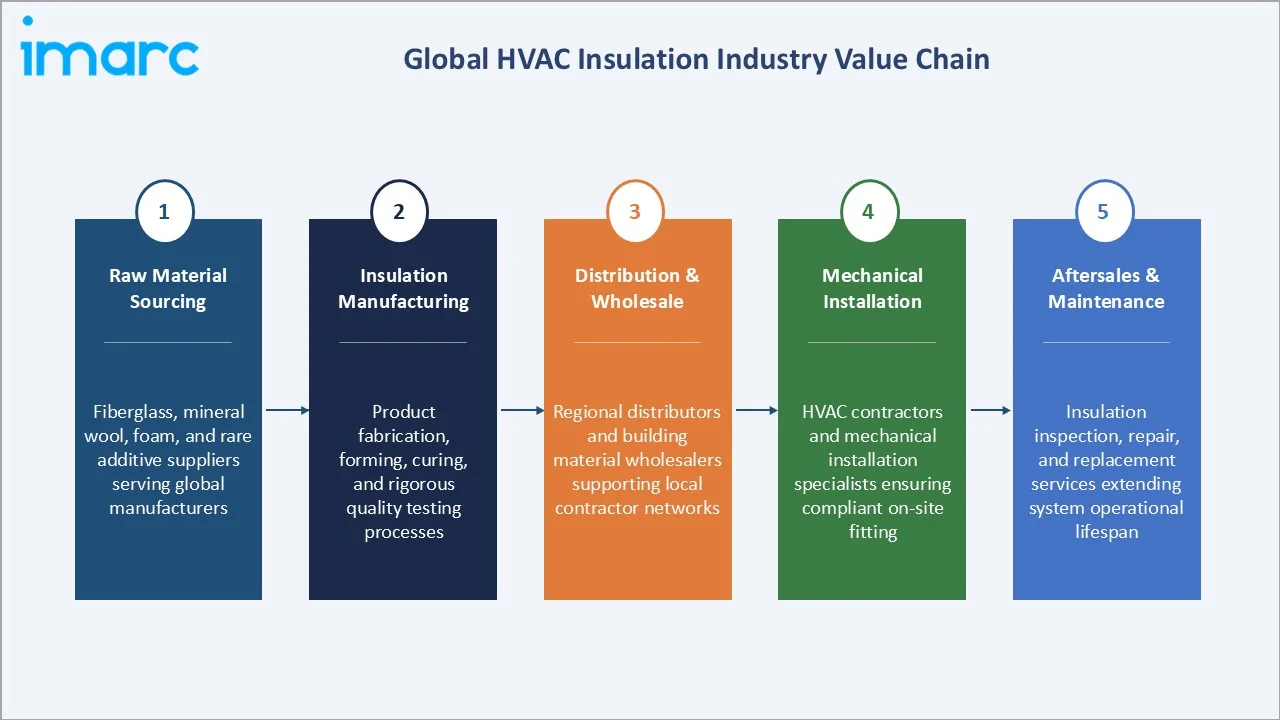
The HVAC insulation value chain integrates raw material sourcing, insulation product manufacturing, distribution and wholesale, mechanical installation, and aftersales maintenance services. Value is increasingly concentrated at the manufacturing and installation stages, as manufacturers expand technical support services to help contractors achieve compliant, high-performance installations on complex commercial projects.
|
Stage |
Key Participants |
|
Raw Material Sourcing |
Fiberglass, mineral wool, foam, and rare additive suppliers serving global manufacturers |
|
Insulation Manufacturing |
Product fabrication, forming, curing, and rigorous quality testing processes |
|
Distribution & Wholesale |
Regional distributors and building material wholesalers supporting local contractor networks |
|
Mechanical Installation |
HVAC contractors and mechanical installation specialists ensuring compliant on-site fitting |
|
Aftersales & Maintenance |
Insulation inspection, repair, and replacement services extending system operational lifespan |
Technology Landscape in the HVAC Insulation Industry
Glass Wool Insulation Technology
Glass wool insulation technology offers strong thermal resistance, affordability, and ease of installation, making it the preferred choice for large-scale HVAC duct and pipe insulation across commercial and residential buildings. Ongoing improvements in binder chemistry are reducing formaldehyde content in newer product generations, improving indoor air quality compliance.
Elastomeric Foam Insulation Technology
Elastomeric foam insulation technology offers flexibility, moisture resistance, and closed-cell structure, making it well suited for refrigeration piping and cold-HVAC applications requiring condensation control. Newer low-smoke, halogen-free formulations are gaining traction in applications with stricter fire-safety requirements.
Phenolic Foam Insulation Technology
Phenolic foam insulation technology offers high thermal efficiency in space-constrained installations, supporting compact HVAC system designs in modern commercial buildings. Its low smoke-emission characteristics make it increasingly attractive for high-occupancy buildings with stringent fire-safety codes, including hospitals and transit facilities.
Market Segmentation Analysis
The report covers the following segments:
|
Segment Category |
Leading Segment |
Market Share |
Year |
|
Product Type |
Pipes |
52.0% |
2025 |
|
Material Type |
Glass Wool |
44.0% |
2025 |
|
Application |
Residential |
44.0% |
2025 |
|
Region |
Asia Pacific |
42.0% |
2025 |

By Product Type
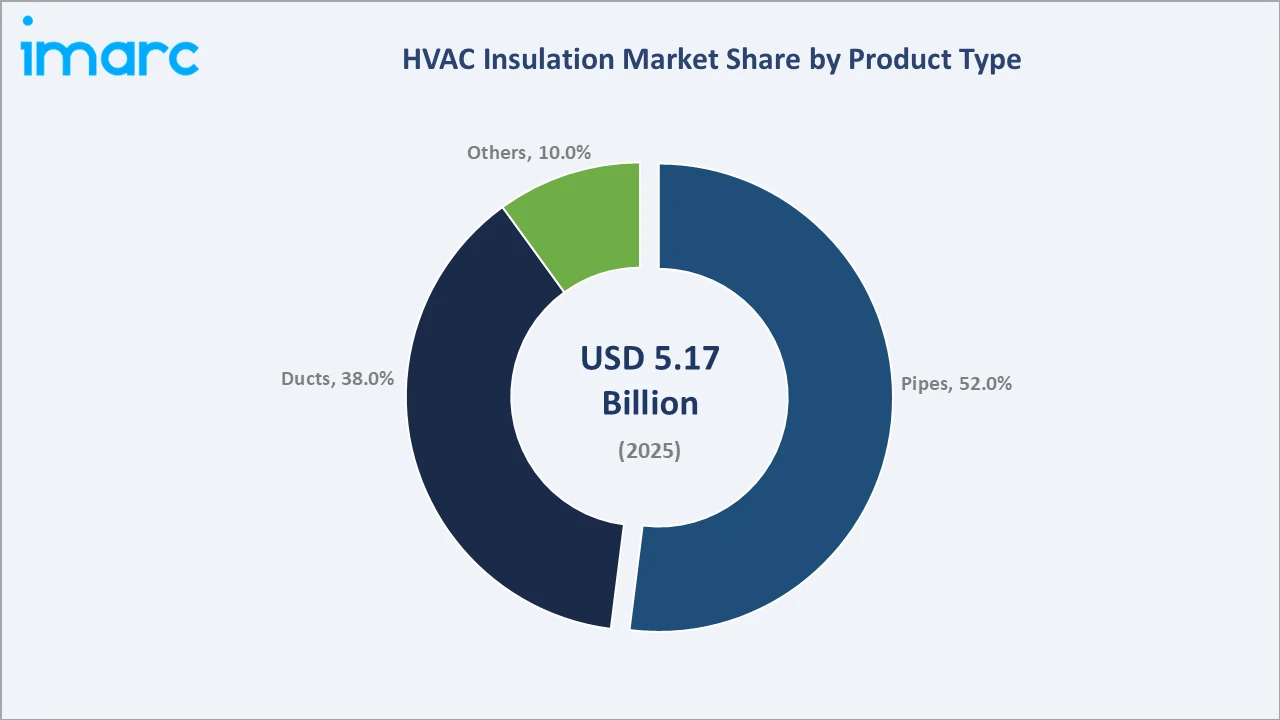
Pipes lead the product type segment at 52.0% in 2025, reflecting their extensive use in preventing heat loss and condensation across HVAC piping networks in commercial and industrial facilities. This leadership position is expected to persist through the forecast period as chilled-water and heating distribution networks continue to expand alongside new commercial construction.
To access detailed market analysis, Request Sample
Ducts follow at 38.0%, driven by rising installation of centralized HVAC systems in commercial and institutional buildings, where duct insulation supports airflow efficiency and noise reduction. The others category, at 10.0%, includes fittings, valves, and ancillary insulation components used across HVAC installations, an area gradually gaining specification attention as buildings pursue more comprehensive thermal envelope performance.
By Material Type
Glass wool leads the material type segment at 44.0% in 2025, owing to its strong thermal performance, affordability, and widespread availability across construction markets. Its consistent supply chain and established manufacturing base across all major regions continue to support its position as the default specification for standard HVAC insulation applications.
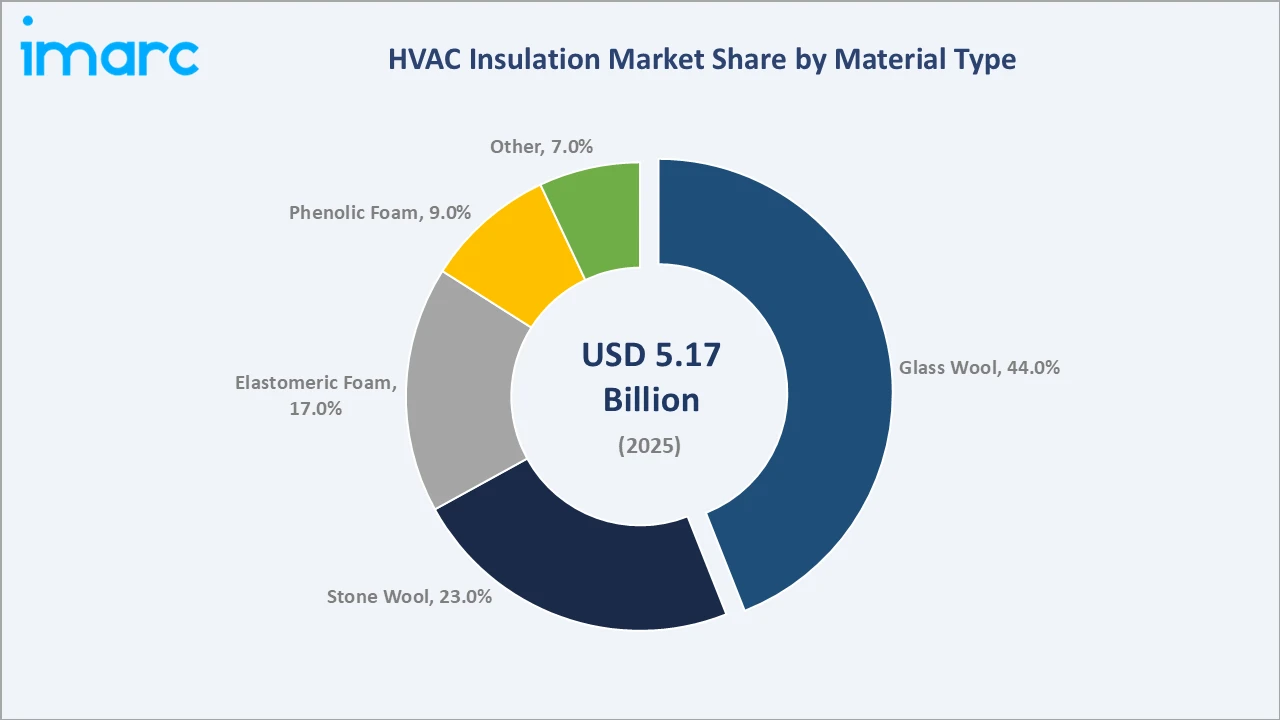
Stone wool follows at 23.0%, valued for its fire resistance and acoustic performance in commercial buildings. Elastomeric foam at 17.0% is preferred for its flexibility and moisture resistance in refrigeration and cold-piping applications. Phenolic foam, at 9.0%, offers high thermal efficiency in space-constrained installations, while other materials collectively account for 7.0% of the market.
Regional Market Insights
|
Region |
Share (2025) |
Key HVAC Insulation Market Drivers & Characteristics |
|
Asia Pacific |
42.0% |
Driven by rapid construction growth, industrialization, and rising adoption of energy-efficient building codes across China, India, and Southeast Asia |
|
North America |
24.0% |
Supported by stringent energy codes, retrofit demand, and expanding commercial construction activity |
|
Europe |
22.0% |
Driven by strict EU energy-efficiency mandates, green building initiatives, and sustainable construction practices |
|
Latin America |
7.0% |
Growing due to expanding construction activity and rising awareness of energy-efficient building solutions |
|
Middle East and Africa |
5.0% |
Emerging with infrastructure development and rising demand for climate-adapted HVAC systems |
Asia Pacific, at 42.0%, leads through large-scale construction activity and rising industrialization across China and India, supported by expanding domestic manufacturing capacity and growing adoption of energy-efficient building codes across the region's fastest-growing economies.
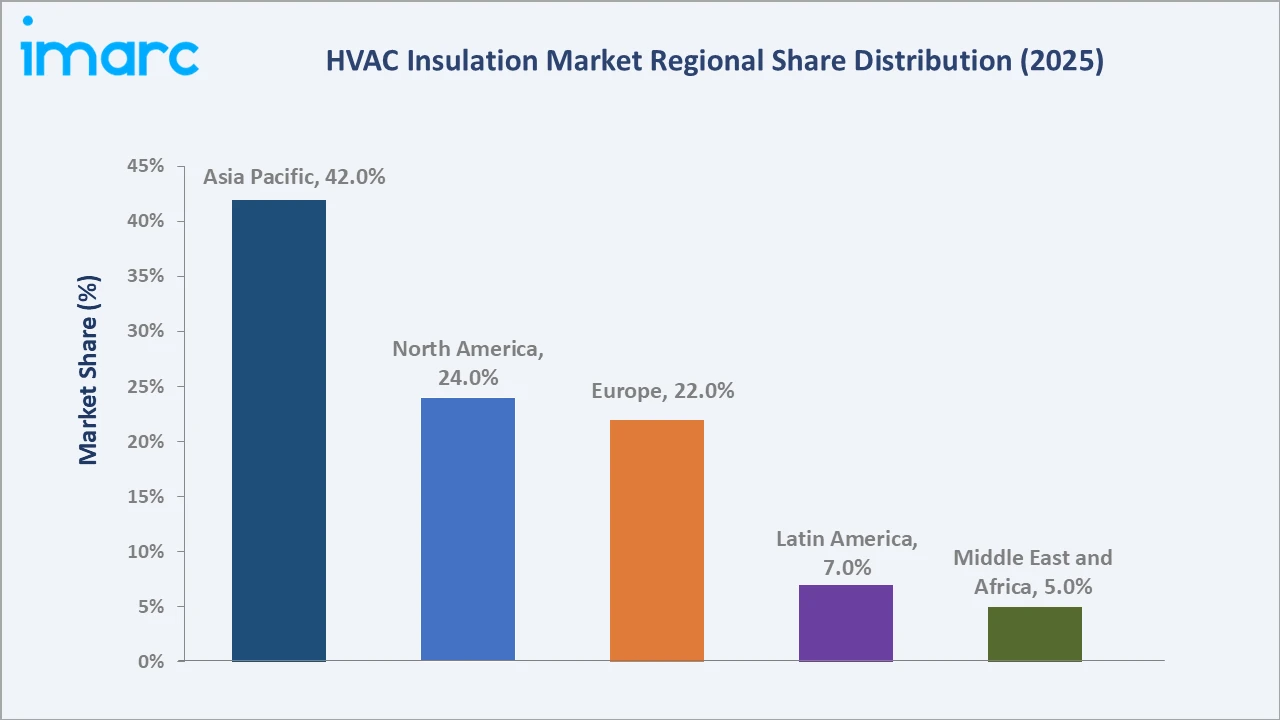
North America, at 24.0%, and Europe, at 22.0%, reflect mature markets driven by strict energy codes and steady retrofit demand within aging commercial and institutional building stock. Latin America and the Middle East and Africa represent smaller but growing markets supported by expanding infrastructure investment and rising awareness of energy-efficient building practices.
Competitive Landscape
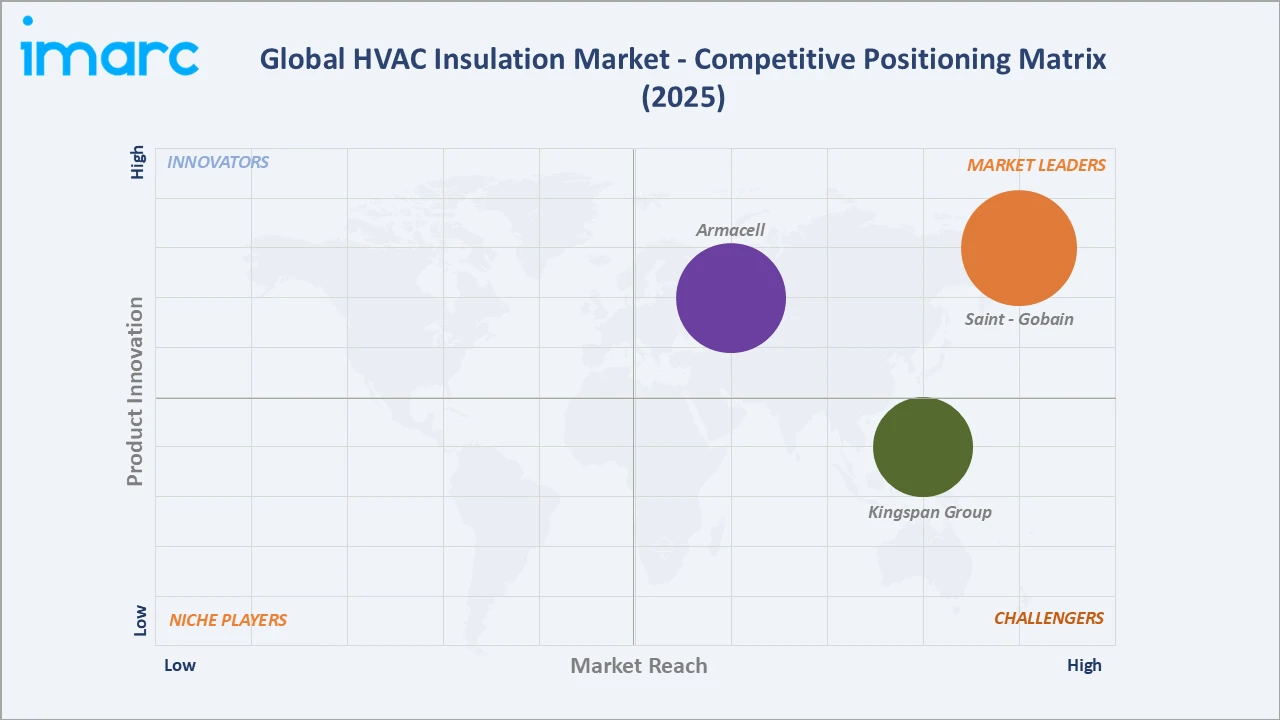
The global HVAC insulation market is moderately fragmented, comprising established multinational manufacturers alongside regional specialists competing on product breadth, technical performance, and regional distribution reach. Competitive differentiation increasingly rests on sustainability credentials and technical service capability, in addition to traditional factors such as price and product availability.
|
Company Name |
Key Products |
Market Position |
Core Strength |
|
Armacell |
ArmaFlex, ArmaGel, ArmaClad, ArmaFix, AccoFlex |
Market Leader |
Global specialist in flexible foam insulation for HVAC and refrigeration applications |
|
Saint - Gobain |
Glass wool, mineral wool insulation |
Market Leader |
Diversified building materials group with extensive global insulation manufacturing footprint |
|
Kingspan Group |
Pipe insulation, Duct insulation, K-Roc Pipe Insulation |
Strong Challenger |
Global insulation and building envelope specialist focused on energy-efficient solutions |
Key players include Armacell, Saint – Gobain, Kingspan Group, and others.
Key Company Profiles
Armacell
Armacell is a Luxembourg-based global manufacturer specializing in flexible foam insulation materials for HVAC, refrigeration, and industrial applications. The company operates an extensive global manufacturing network and maintains a strong reputation for technical performance and energy-efficiency innovation across its elastomeric foam product range.
- Key Products: ArmaFlex, ArmaGel, ArmaClad, ArmaFix, AccoFlex
- Strategic Focus: Expanding low-emission and bio-based flexible foam insulation solutions for HVAC and building applications. The company continues to invest in regional manufacturing capacity across Asia Pacific and North America to shorten supply lead times. It is also broadening its portfolio of fire-safe and recyclable foam formulations to align with tightening global sustainability standards.
Kingspan Group
Kingspan Group is an Ireland-based building envelope and insulation specialist with a growing footprint in HVAC insulation solutions for commercial and industrial buildings. The company has built a reputation for high-performance rigid foam systems and is increasingly positioning itself as a full building-envelope solutions provider across European and North American markets.
- Key Products: Pipe insulation, Duct insulation, K-Roc Pipe Insulation
- Strategic Focus: Advancing high-performance, sustainable insulation technologies to support global net-zero building targets. Kingspan continues to invest in low-carbon manufacturing processes and expanded rigid foam production capacity across Europe and North America. The company is also deepening collaboration with HVAC system integrators to deliver pre-engineered, certification-ready insulation solutions for large commercial developments.
Market Concentration Analysis
The HVAC insulation market is moderately concentrated, with leading players collectively holding a significant share of global revenue. Regional manufacturers continue to compete on cost and proximity, particularly across Asia Pacific and Latin America, sustaining moderate fragmentation at the country level. Market concentration is expected to gradually increase over the forecast period as leading global players expand regional manufacturing footprints and pursue targeted acquisitions of specialized regional producers to strengthen product breadth and distribution reach.
Investment & Growth Opportunities
Highest Growth Segments
Ducts (~5.5% CAGR), glass wool material systems, bio-based insulation (from a small base), and smart HVAC-integrated insulation represent the highest-growth investment vectors through 2034. Investors and manufacturers focused on these categories are best positioned to capture disproportionate share of incremental market growth relative to the overall market CAGR.
Emerging Investment Opportunities
Prefabricated and modular insulation systems represent an emerging opportunity as commercial developers seek faster installation timelines and reduced on-site labor costs, particularly across large-scale infrastructure and data center projects. Manufacturers that establish early partnerships with modular construction specialists are well positioned to capture disproportionate share of this fast-growing installation format.
Investment Themes
- Sustainable Material Innovation: Investment in bio-based and recyclable insulation material R&D positions manufacturers to meet tightening sustainability regulations and green building certification demand through 2034.
- Asia Pacific Manufacturing Expansion: Capacity investment across China, India, and Southeast Asia captures the region's fastest-growing construction-driven HVAC insulation demand pool.
Future Market Outlook (2026-2034)
The global HVAC insulation market is projected to grow from USD 5.17 Billion in 2025 to USD 8.15 Billion by 2034, delivering a 5.04% CAGR over the forecast period. The market's anchor value of approximately USD 6.61 Billion by 2030 reflects steady mid-cycle growth. Bio-based insulation materials are expected to achieve wider commercial adoption, smart HVAC-integrated insulation systems will gain traction in premium commercial buildings, and prefabricated modular insulation is expected to become a standard specification for large-scale projects.
Three structural forces underpin HVAC insulation market growth through 2034. Sustained global construction activity, particularly across Asia Pacific, continues to generate a broad base of new-installation demand. Tightening energy-efficiency regulation across mature markets is driving a parallel wave of retrofit-driven demand within existing building stock. The gradual shift toward sustainable, bio-based, and recyclable insulation materials is expected to create an additional premium-tier demand pool as green building certification requirements expand across both developed and emerging economies.
Research Methodology
Primary Research
Primary research comprised structured interviews with industry stakeholders, including manufacturers, distributors, mechanical contractors, and HVAC system integrators. Interview insights were used to validate segment-level growth assumptions and to identify emerging product and regional demand shifts not yet fully reflected in published data.
Secondary Research
Secondary research encompassed company annual reports, building energy code publications, construction industry association data, and green building certification program reports. These sources were cross-referenced to validate historical market trends and to benchmark regional regulatory developments affecting insulation specification.
Forecasting Models
Market revenue forecasts were developed using a construction-activity-based bottom-up model incorporating regional building starts, HVAC installation volumes, and insulation adoption rates by product and material type. Forecasts were further stress-tested against historical growth patterns and macroeconomic construction-spending indicators to ensure consistency across the 2026-2034 forecast horizon.
HVAC Insulation Market Report Coverage:
| Report Features | Details |
|---|---|
| Base Year of the Analysis | 2025 |
| Historical Period | 2020-2025 |
| Forecast Period | 2026-2034 |
| Units | Billion USD |
| Scope of the Report |
Exploration of Historical Trends and Hot Melts Adhesive Market Outlook, Industry Catalysts and Challenges, Segment-Wise Historical and Future Market Assessment:
|
| Material Types Covered | Glass Wool, Stone Wool, Phenolic Foam, Elastomeric Foam, Others |
| Product Types Covered | Ducts, Pipes, Others |
| Applications Covered | Residential, Commercial, Industrial |
| Regions Covered | Asia Pacific, Europe, North America, Latin America, Middle East and Africa |
| Countries Covered | United States, Canada, Germany, France, United Kingdom, Italy, Spain, Russia, China, Japan, India, South Korea, Australia, Indonesia, Brazil, Mexico |
| Companies Covered | Armacell, Saint – Gobain, Kingspan Group, etc. |
| Customization Scope | 10% Free Customization |
| Post-Sale Analyst Support | 10-12 Weeks |
| Delivery Format | PDF and Excel through Email (We can also provide the editable version of the report in PPT/Word format on special request) |
Frequently Asked Questions About the HVAC Insulation Market Report
The global HVAC insulation market reached USD 5.17 Billion in 2025, driven by pipes leading the product type segment at 52.0% and glass wool leading the material type segment at 44.0%, alongside Asia Pacific's leading regional share of 42.0%.
The market is projected to grow at a CAGR of 5.04% during 2026-2034, reaching USD 8.15 Billion by 2034, supported by sustained construction activity and tightening energy-efficiency regulation.
Pipes lead at 52.0% share in 2025, reflecting extensive use across commercial and industrial HVAC piping networks, followed by ducts at 38.0% and other components at 10.0%.
Glass wool leads at 44.0% share in 2025, owing to its strong thermal performance and affordability, followed by stone wool at 23.0% and elastomeric foam at 17.0%.
Asia Pacific leads at 42.0% share, driven by rapid construction growth and industrialization across China and India, followed by North America at 24.0% and Europe at 22.0%.
Leading companies include Armacell, Saint – Gobain, Kingspan Group, and others.
The market is projected to reach approximately USD 6.61 Billion by 2030, supported by continued construction growth, expanding HVAC installations, and tightening energy-efficiency regulation.
Three priority investment opportunities include sustainable material innovation, Asia Pacific manufacturing capacity expansion, and prefabricated modular insulation systems for large-scale construction projects.
Need more help?
- Speak to our experienced analysts for insights on the current market scenarios.
- Include additional segments and countries to customize the report as per your requirement.
- Gain an unparalleled competitive advantage in your domain by understanding how to utilize the report and positively impacting your operations and revenue.
- For further assistance, please connect with our analysts.
 Request Customization
 Speak to an Analyst
 Request Brochure
 Inquire Before Buying
Benefits of Customization
- Personalize this research
- Triangulate with your data
- Get data as per your format and definition
- Gain a deeper dive into a specific application, geography, customer, or competitor
- Any level of personalization
Get in Touch With Us
UNITED STATES
Phone: +1-201-971-6302
INDIA
Phone: +91-120-433-0800
UNITED KINGDOM
Phone: +44-753-714-6104
Email: [email protected]
Client Testimonials




.webp)




.webp)













Related Reports

Choose your plan
*Please note that the prices mentioned below are starting prices for each bundle type. Kindly contact our team for further details.*
Single User License
- 1 User License, Access on 2 Devices
- PDF Report + Excel Dataset (Password Protected)
- Lifetime Access
- No Printing Rights
- 10% Free Report Customization
- 10–12 Weeks of Analyst Support
Five User License
- Access for 5 Users, 2 Devices per User
- PDF Report + Excel Dataset (Password Protected)
- Lifetime Access
- Dedicated Account Manager
- 12–14 Weeks of Analyst Support
- No Printing Rights
- 15% Free Report Customization
- 25% Discount on Your Next Purchase
Corporate User License
- Unlimited User Access (Within Your Organization)
- PDF Report + Excel Dataset
- Lifetime Access
- Dedicated Account Manager
- 14–20 Weeks of Analyst Support
- No Printing Rights
- 20% Free Report Customization
- 30% Discount on Your Next Purchase
Essential Insights
What's included:
3 reports
- Lifetime Access
- PDF Reports
- Excel Datasets
- 2 Weeks of Free Analyst Support
- 2 User Licenses
- Access on 2 Devices
- Printing Rights
- Complimentary PowerPoint (PPT) Version
- Complimentary License Upgrade
Professional Access
What's included:
5 reports
- Lifetime Access
- PDF Reports
- Excel Datasets
- 8 Weeks of Free Analyst Support
- 2 User Licenses
- Access on 2 Devices
- Printing Rights
- Complimentary PowerPoint (PPT) Version
- Complimentary License Upgrade
Business Advantage
What's included:
8 reports
- Lifetime Access
- PDF Reports
- Excel Datasets
- 14 Weeks of Free Analyst Support
- 2 User Licenses
- Access on 2 Devices
- Printing Rights
- Complimentary PowerPoint (PPT) Version
- Complimentary License Upgrade
Enterprise Intelligence
What's included:
10 reports
- Lifetime Access
- PDF Reports
- Excel Datasets
- 20 Weeks of Free Analyst Support
- 2 User Licenses
- Access on 2 Devices
- Printing Rights
- Complimentary PowerPoint (PPT) Version
- Complimentary License Upgrade