
India Agricultural Biologicals Market Size, Share, Trends and Forecast by Type, Source, Mode of Application, Application, and Region, 2026-2034
India Agricultural Biologicals Market Size, Share, Trends & Forecast (2026-2034)
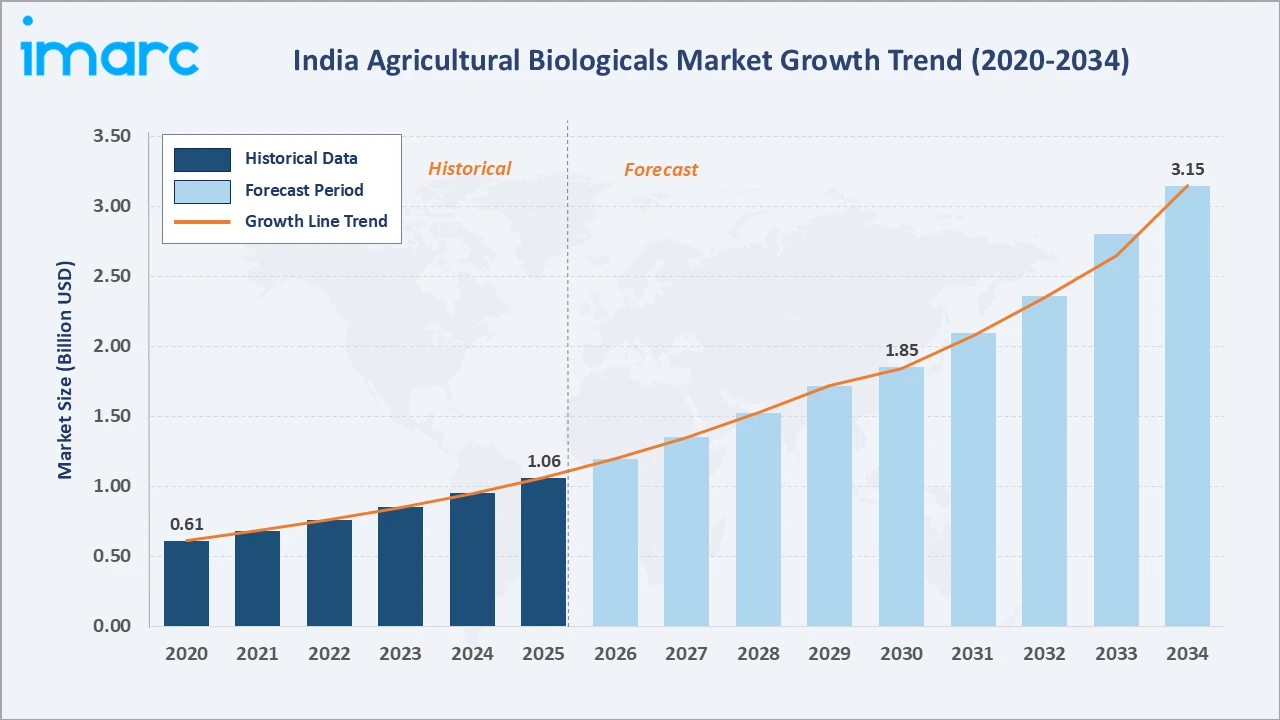
The India agricultural biologicals market grew from USD 1.06 Billion in 2025 to USD 1.19 Billion in 2026 and is projected to reach USD 3.15 Billion by 2034, growing at a CAGR of 11.71% during 2026-2034. The Government of India’s National Mission on Natural Farming and PM-PRANAM program incentivizing chemical fertilizer reduction, rising pest resistance to chemical pesticides, and increasing investments by domestic and multinational companies in biological product R&D and registration are the primary growth catalysts.
Market Snapshot
|
Metric |
Value |
|
Base Year Market Size (2025) |
USD 1.06 Billion |
| Market Size (2026) | USD 1.19 Billion |
|
Forecast Market Size (2034) |
USD 3.15 Billion |
|
CAGR (2026-2034) |
11.71% |
|
Base Year |
2025 |
|
Historical Period |
2020-2025 |
|
Forecast Period |
2026-2034 |
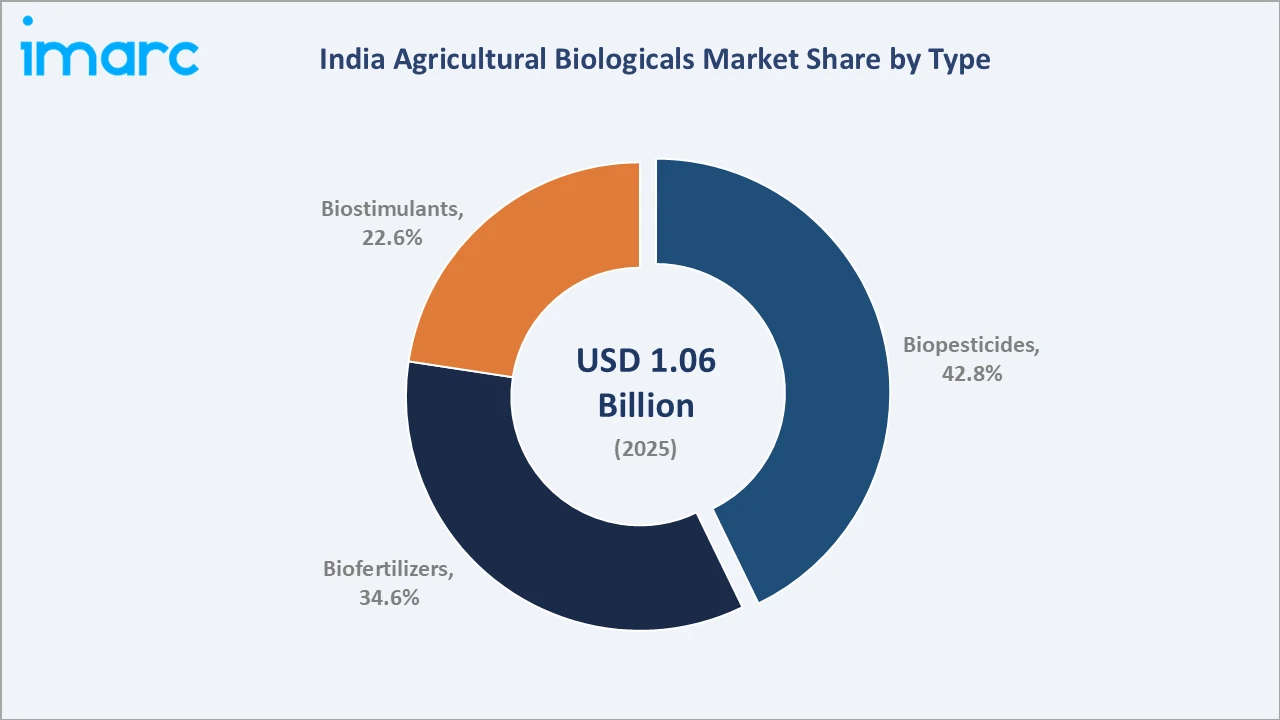
West and Central India leads with a 32.8% market share in 2025, driven by the large commercial cotton, soybean, and horticultural crop areas of Maharashtra, Madhya Pradesh, and Gujarat that represent India’s most intensive agricultural biologicals-consuming agricultural zones. Biopesticides command the dominant type share at 42.8%, while microbials represent the largest source category at 48.3%, reflecting the primacy of bacterial, fungal, and viral biopesticide active ingredients in India’s integrated pest management programs for cotton, vegetables, pulses, and rice.
To get more information on this market, Request Sample
The India agricultural biologicals market is underpinned by the following structural forces: India’s transition toward sustainable agriculture as a policy priority creating a government-supported structural shift in Indian farming practices; and accelerating corporate investment in biological product development by domestic companies including UPL, Coromandel International, PI Industries, and Rallis India that are building dedicated biologicals product portfolios alongside their conventional chemical crop protection businesses.
Executive Summary
The India agricultural biologicals market is among Asia’s fastest-growing agricultural input segments, driven by the convergence of government policy support for sustainable agriculture, commercial export market quality imperatives, and a domestic farming community increasingly exposed to the risks of over-reliance on synthetic chemical crop protection. The market expanded from USD 1.06 Billion in 2025 to an estimated USD 1.19 Billion in 2026, and is forecast to reach USD 3.15 Billion by 2034 at a CAGR of 11.71%.
Biopesticides lead the type segment at 42.8% in 2025, encompassing microbial insecticides (Bacillus thuringiensis, Beauveria bassiana, Metarhizium anisopliae, nuclear polyhedrosis virus), microbial fungicides, microbial nematicides, and biochemical biopesticides (neem-based azadirachtin, pyrethrin extracts, pheromone traps). Microbials dominate the source segment at 48.3%, encompassing bacterial, fungal, viral, and protozoal active organisms that form the technological core of India’s biopesticide and biofertilizer market.
Key Market Insights
|
Insight |
Data |
| Largest Type | Biopesticides – 42.8% share (2025) |
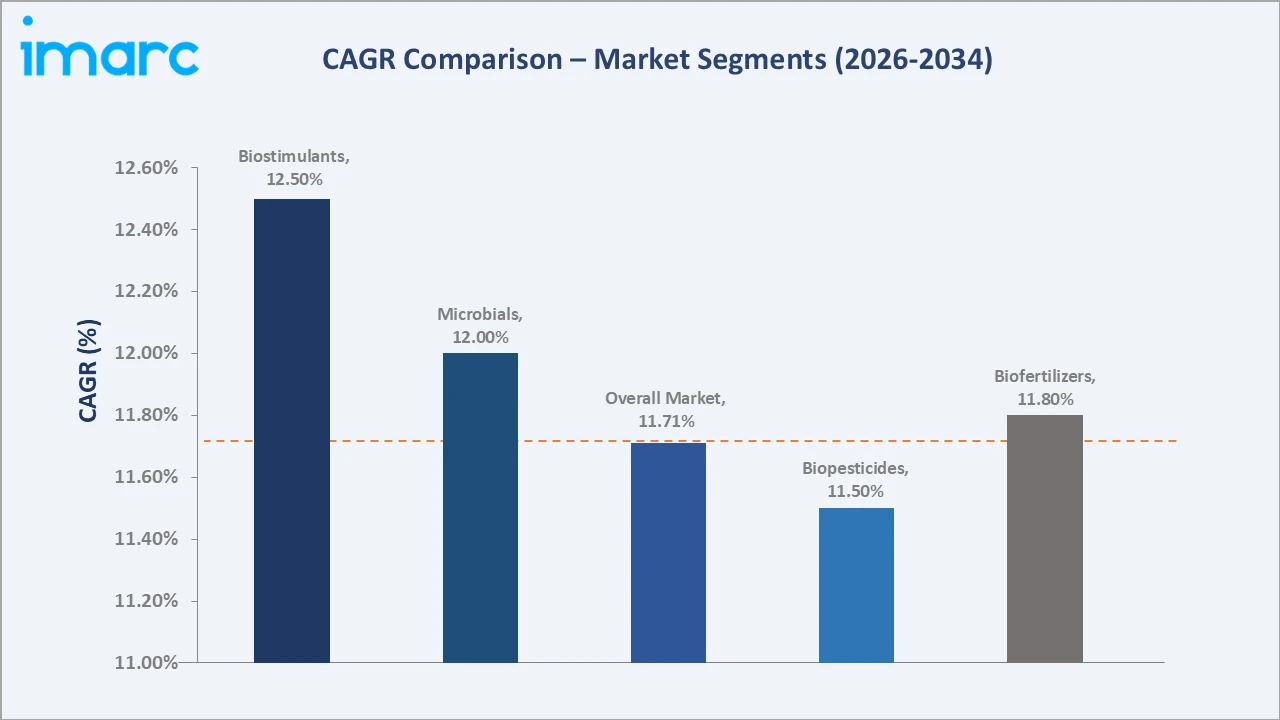
| Fastest Growing Type | Biostimulants – ~12.5% CAGR (2026-2034) |
| Largest Source | Microbials – 48.3% share (2025) |
| Fastest Growing Source | Microbials – ~12.0% CAGR (2026-2034) |
| Leading Region | West and Central India – 32.8% share (2025) |
| Top Companies | UPL LTD, Bayer AG, E.I.D. – Parry (India) Limited, IPL Biologicals Limited |
Key Analytical Observations Supporting the Above Data:
- Biopesticides' 42.8% (2025) type dominance reflects it as the most direct substitute for chemical insecticides and fungicides in India’s largest pesticide-consuming crop segments. Biopesticides generate recurring seasonal demand from established pest management spray programs and as MRL-compliant crop protection tools for export-oriented growers of grapes, mangoes, and Basmati rice.
- Microbials’ 48.3% (2025) source dominance reflects the fundamental biological substrate of India’s agricultural biologicals market. The vast majority of both biopesticide and biofertilizer products registered and sold in India are microbial-based, encompassing Bacillus thuringiensis subsp. kurstaki (Btk) for lepidopteran pest control, Trichoderma harzianum for soil-borne fungal disease suppression, Rhizobium leguminosarum for legume nitrogen fixation, and Phosphate Solubilizing Bacteria (PSB) for phosphate availability enhancement.
- West and Central India’s 32.8% (2025) regional dominance reflects the commercial agriculture intensity of Maharashtra’s cotton and horticulture belt, Madhya Pradesh’s soybean and wheat cropping system, and Gujarat’s diversified cotton, groundnut, and vegetable production.
- The 11.71% CAGR is driven by the PM-PRANAM and National Mission on Natural Farming policy momentum, the progressive expansion of India’s organic farming certification area, and the export market’s progressive tightening of MRL standards creating commercial demand for biologicals.
India Agricultural Biologicals Market Overview
Agricultural biologicals are progressively transforming India’s crop protection and soil nutrition management landscape as the country’s farming households navigate the transition from conventional chemical-dependent agriculture toward integrated and sustainable farming systems. India is the world’s second largest agricultural land area, producing 357.73 MMT (2024-25) of food grains, 362.08 MT of horticulture produce, and significant volumes of export-oriented cash crops that collectively represent the largest addressable market for agricultural biologicals in South Asia.
The Indian agricultural biologicals market is structurally distinct from developed market biologicals markets in three key dimensions: the price sensitivity of India’s smallholder farming economy requires biologicals to be competitively priced against chemical alternatives; the distribution system’s reliance on a network of licensed agrodealer outlets requires biological products to achieve ambient temperature shelf stability; and India’s highly diverse agro-climatic zones require biological product recommendations to be validated for efficacy under the specific soil temperature, humidity, and UV radiation conditions of each target geography.
Market Dynamics
To evaluate market opportunities, Request Sample
Market Drivers
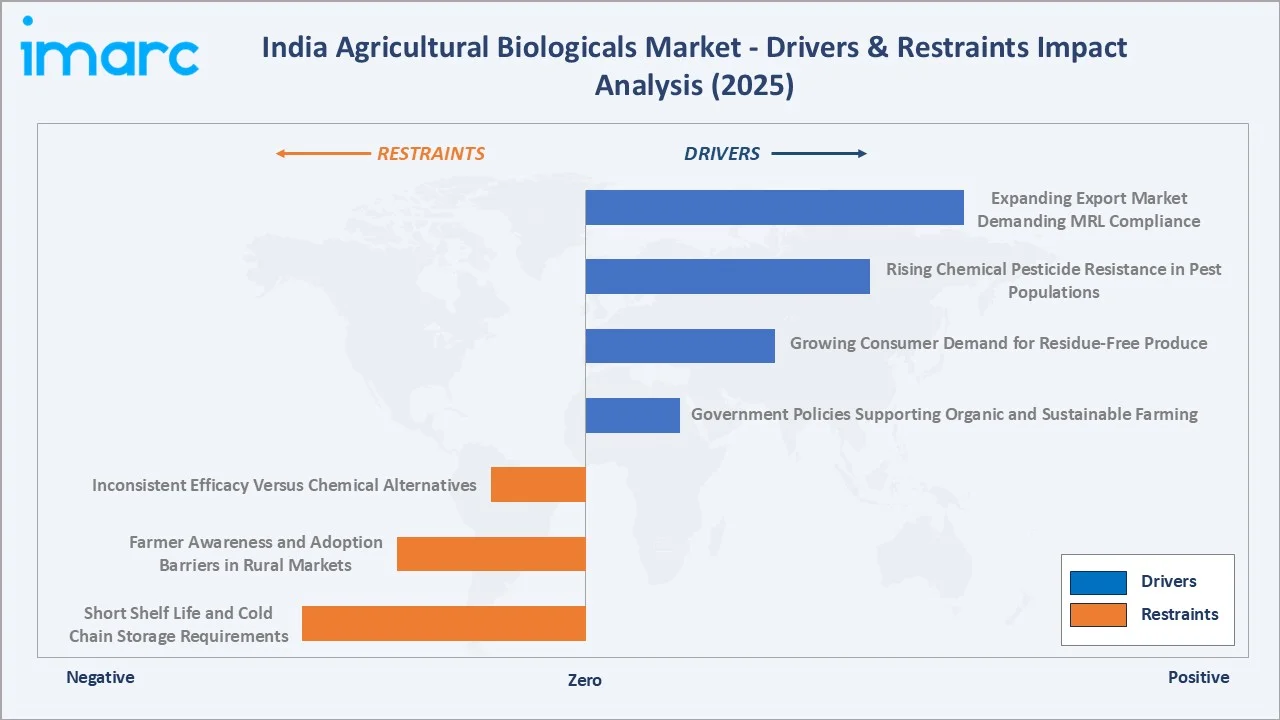
- Government Policies Supporting Organic and Sustainable Farming: The Government of India’s multi-pronged policy support for sustainable agriculture represents the single most powerful structural driver of the agricultural biologicals market. PM-PRANAM (PM Program for Restoration, Awareness, Nourishment and Amelioration of Mother Earth) incentivizes states to reduce consumption of chemical fertilizers by sharing 50% of savings in fertilizer subsidy as grants for natural and organic farming promotion, creating a fiscal mechanism that systematically drives biofertilizer and biostimulant adoption at the state policy level.
- Growing Consumer Demand for Residue-Free Produce: Urban Indian consumers are creating a premium market for certified organic and residue-free agricultural produce at major modern retail chains and direct-to-consumer organic food delivery platforms. The premium price commanded by MRL-compliant, low-residue produce creates a commercial incentive for farmers supplying urban premium retail channels to adopt biological crop protection that enables residue-free produce certification.
- Rising Chemical Pesticide Resistance in Pest Populations: Decades of intensive chemical insecticide use across India’s cotton, paddy, and vegetable cropping systems have generated documented resistance development in key pest populations including Helicoverpa armigera (cotton bollworm) to pyrethroids and organophosphates, Spodoptera frugiperda (fall armyworm) to chemical insecticides.
- Expanding Export Market Demanding MRL Compliance: India’s agricultural export sector faces progressive tightening of MRL requirements from destination country regulators. The EU’s progressive reduction of MRLs for Indian crop protection products and the associated risk of consignment rejections and black-listing create a powerful financial incentive for export-oriented farmers to switch to biological crop protection programs that eliminate residue risk entirely.
Market Restraints
- Short Shelf Life and Cold Chain Storage Requirements: Many microbial agricultural biological products have relatively short shelf lives and may require refrigerated storage to maintain viable organism count above the minimum efficacy threshold. India’s agrodealer network creates significant challenges for maintaining product quality from production facility to farmer’s field.
- Farmer Awareness and Adoption Barriers in Rural Markets: Despite significant government investment in agricultural extension, the majority of India’s smallholder farmers with holdings below 2 hectares have limited awareness of agricultural biological product types, application techniques, and integration with conventional crop protection programs. Biological products require more precise application timing than chemical alternatives that can be applied at any time pest symptoms appear.
- Inconsistent Efficacy Versus Chemical Alternatives: Under-the-counter sales of spurious or substandard biological products by unscrupulous agrodealers generate inconsistent efficacy experiences among farmers who cannot distinguish genuine from counterfeit biological products at point of purchase. Efficacy inconsistency damages farmer confidence and creates resistance to biological product adoption that can persist for multiple crop seasons.
Market Opportunities
- Biostimulant Market Regulation and Formalization: India’s June 2025 decision to end provisional biostimulant approvals and require full compliance and supporting data documentation for biostimulant product registration represents a market maturation opportunity that will reduce counterfeit and substandard product competition for compliant registered biostimulant brands.
- AI and Precision Fermentation for Strain Improvement: Advances in AI-guided microbial strain screening, genomic selection of high-performance strains, and precision fermentation technology are improving the efficacy consistency and environmental resilience of microbial biological products, directly addressing the efficacy variability that has historically limited farmer adoption.
Market Challenges
- Quality Control Infrastructure for Biological Products: India’s state agricultural laboratory network for biological product quality testing lacks both the capacity and technical standardization to effectively monitor the quality of the growing volume of agricultural biological products entering the market.
- Integration with Conventional Crop Protection Programs: Adoption of agricultural biologicals in India’s mainstream commercial farming sector requires integration with existing chemical crop protection programs in a way that maintains pest and disease control efficacy while progressively substituting chemical products with biological alternatives.
Emerging Market Trends
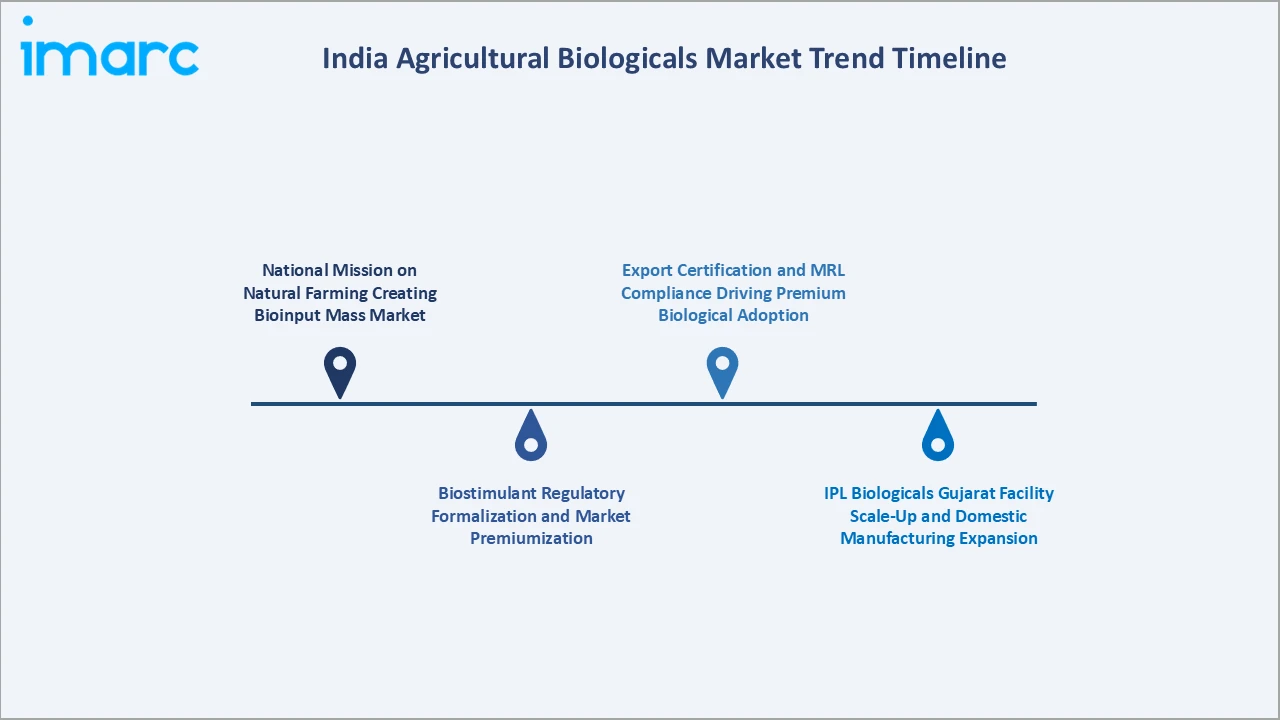
1. National Mission on Natural Farming Creating Bioinput Mass Market
The Government of India’s National Mission on Natural Farming (NMNF), launched under PM-Ministry of Agriculture & Farmers' Welfare and targeting 1 crore farmers on natural farming principles, is systematically building a mass market for agricultural biologicals by training farmers in bioinput preparation and linking them to bio-input resource centers (BIRCs) established at village cluster levels. The NMNF’s farmer training programs are building biological product familiarity across India’s smallholder farming base.
2. Biostimulant Regulatory Formalization and Market Premiumization
India’s June 2025 biostimulant regulatory transition is catalyzing a market consolidation in India’s previously fragmented biostimulant segment where hundreds of loosely registered products competed on price with little efficacy differentiation. Companies with strong regulatory dossiers and documented agronomic efficacy data from multi-location trials are positioned to capture market share from displaced low-quality products, enabling premium price positioning justified by credible performance evidence.
3. IPL Biologicals’ Gujarat Facility Scale-Up and Domestic Manufacturing Expansion
IPL Biologicals’ announced investment of approximately INR 400 crore in a new Gujarat manufacturing facility for biofertilizers and biopesticides represents one of the largest capital investment in Indian agricultural biological product manufacturing infrastructure. This scale-up investment signals domestic manufacturer confidence in India’s biologicals market growth trajectory and addresses the microbial supply bottleneck that has historically constrained market growth during peak Kharif and Rabi season demand periods.
4. Export Certification and MRL Compliance Driving Premium Biological Adoption
India’s grape export cluster in Nashik (Maharashtra) has become a reference success case for integrated biological crop protection program adoption, with leading grape exporters transitioning to biological biopesticide-centered spray programs that achieve EU MRL compliance while maintaining commercially acceptable crop protection efficacy. The success model from Maharashtra’s grape belt is progressively being replicated in other export-oriented crop belts including Andhra Pradesh chilli exports, Punjab’s Basmati rice export supply chain, and Kerala’s organic spice export cluster.
Industry Value Chain Analysis
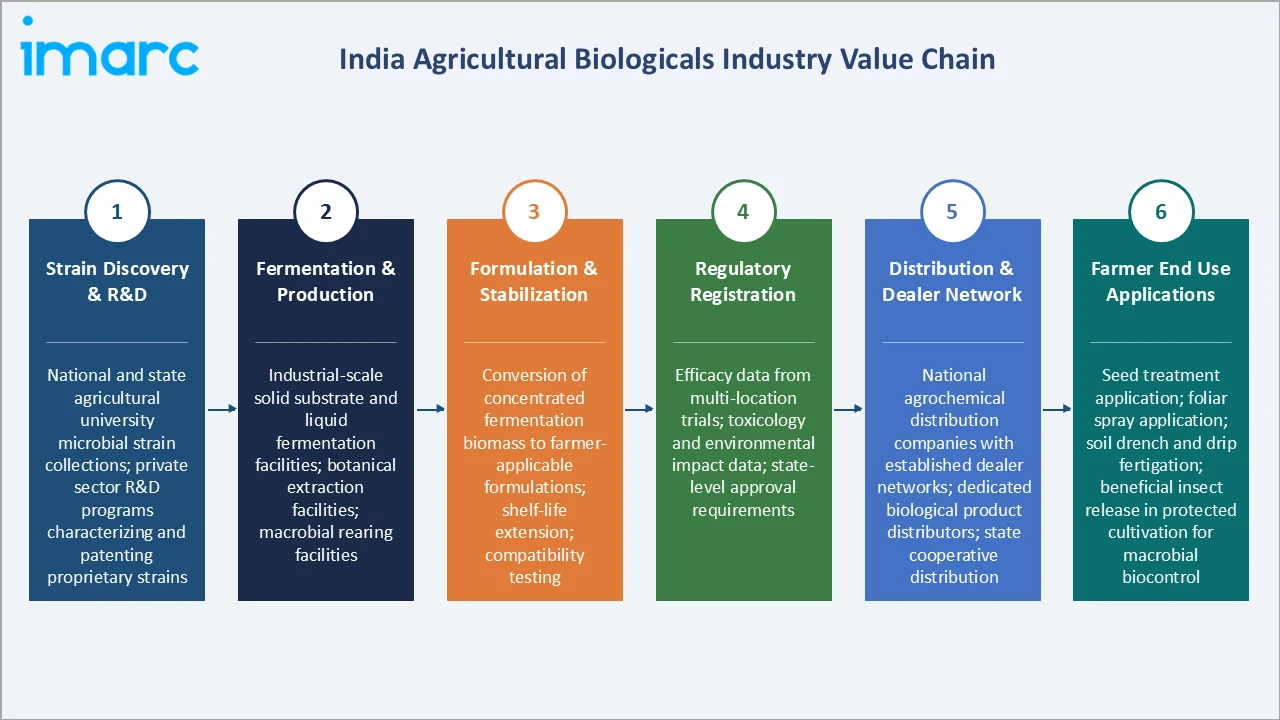
The India agricultural biologicals market value chain spans microbial strain discovery through farmer field application, with the CIB&RC registration gateway serving as the critical market access control point that differentiates registered, quality-assured biological products from the informal bioinput preparation market.
|
Stage |
Key Players / Examples |
| Strain Discovery & R&D | National and state agricultural university microbial strain collections; private sector R&D programs characterizing and patenting proprietary strains |
| Fermentation & Production | Industrial-scale solid substrate and liquid fermentation facilities; botanical extraction facilities; macrobial rearing facilities |
| Formulation & Stabilization | Conversion of concentrated fermentation biomass to farmer-applicable formulations; shelf-life extension; compatibility testing |
| Regulatory Registration | Efficacy data from multi-location trials; toxicology and environmental impact data; state-level approval requirements |
| Distribution & Dealer Network | National agrochemical distribution companies with established dealer networks; dedicated biological product distributors; state cooperative distribution |
| Farmer End Use Applications | Seed treatment application; foliar spray application; soil drench and drip fertigation; beneficial insect release in protected cultivation for macrobial biocontrol |
Technology Landscape in the India Agricultural Biologicals Industry
Microbial Fermentation and Strain Improvement Technology
India’s microbial agricultural biologicals industry is built on established industrial fermentation technology adapted from the pharmaceutical and enzyme industries. Solid substrate fermentation (SSF) technology provides a low-cost domestic production route for fungal biopesticide agents including Trichoderma, Beauveria bassiana, and Metarhizium anisopliae that is particularly suited to India’s cost-constrained farm gate price structure.
Formulation Technology for Tropical Field Stability
India’s high ambient temperatures, intense UV radiation, and highly variable monsoon humidity create formidable challenges for maintaining microbial viability and efficacy from production through agrodealer storage to post-application field persistence. Advanced formulation technologies addressing these challenges include microencapsulation of microbial cells within protective polymer capsules; oil dispersion formulations that improve microbial surface adhesion and reduce photodegradation rates; and stabilized dry formulations using lyophilization that extend shelf life to 18–24 months at ambient temperature for bacterial biopesticide products previously requiring refrigeration.
AI and Precision Agriculture Integration
AI and data analytics platforms are being integrated with agricultural biologicals advisory systems to improve biological product application timing, dose optimization, and IPM program design. The deployment of AI-powered pest forecasting models is enabling more precise prediction of pest population outbreak timing that is critical for maximizing biopesticide efficacy.
Market Segmentation Analysis
The report covers the following segments:
|
Segment Category |
Leading Segment |
Market Share |
Year |
| Type | Biopesticides | 42.8% |
2025 |
| Source | Microbials | 48.3% |
2025 |
| Mode of Application | 🔒 | 🔒 |
2025 |
|
Application |
🔒 | 🔒 |
2025 |
|
Region |
West & Central India | 32.8% |
2025 |

By Type
The type segment is analyzed across biopesticides (42.8%), biofertilizers (34.6%), and biostimulants (22.6%). Biopesticides command the dominant position, reflecting their role as the most commercially compelling category for farmers managing significant pest pressure across India’s commercially intensive cotton, vegetable, rice, and pulses cropping systems.
To access detailed market analysis, Request Sample
Biofertilizers benefit from government procurement programs through State Departments of Agriculture and fertilizer cooperative networks that subsidize biofertilizer supply to farmers at below-market prices, creating accessible entry points to biological product use. Biostimulants represent the premium category where seaweed extract and amino acid products are adopted by progressive horticulture farmers seeking crop quality improvement and stress tolerance enhancement at premium market-oriented price points.
By Source
The source segment is led by microbials (48.3%), biochemicals (27.5%), macrobials (15.2%), and others (9.0%). Microbials dominate, reflecting the established industrial fermentation infrastructure, regulatory registration base, and farmer familiarity with bacterial and fungal biological products across India’s diverse agricultural system.
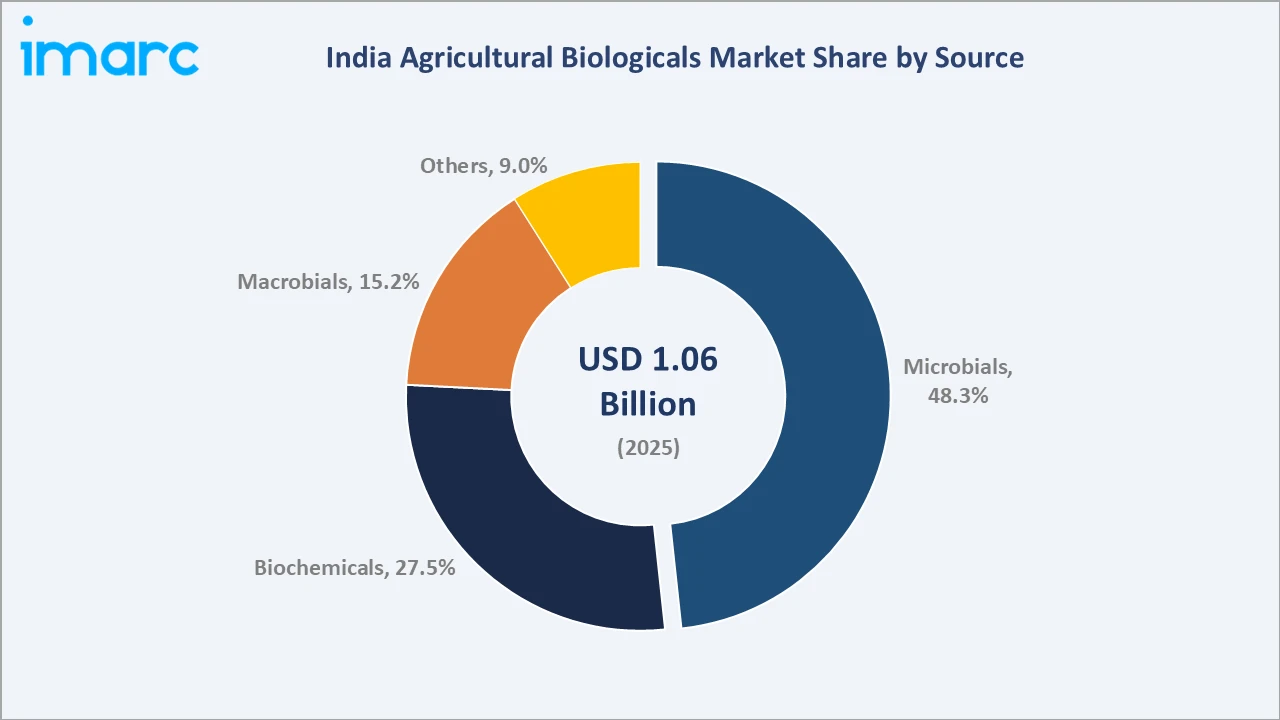
Biochemicals at 27.5% includes azadirachtin, pyrethrin, plant extracts with biopesticide or biostimulant activity, and kaolin-based mineral repellents. Macrobials serves India’s growing biological control market for greenhouse crops and high-value open-field horticulture, encompassing Chrysoperla carnea and Coccinella for aphid biocontrol.
Regional Market Insights
West and Central India’s 32.8% market leadership reflects the region’s combination of high commercial cropping intensity, export-oriented horticulture production, and above-average farmer income enabling biological product adoption.
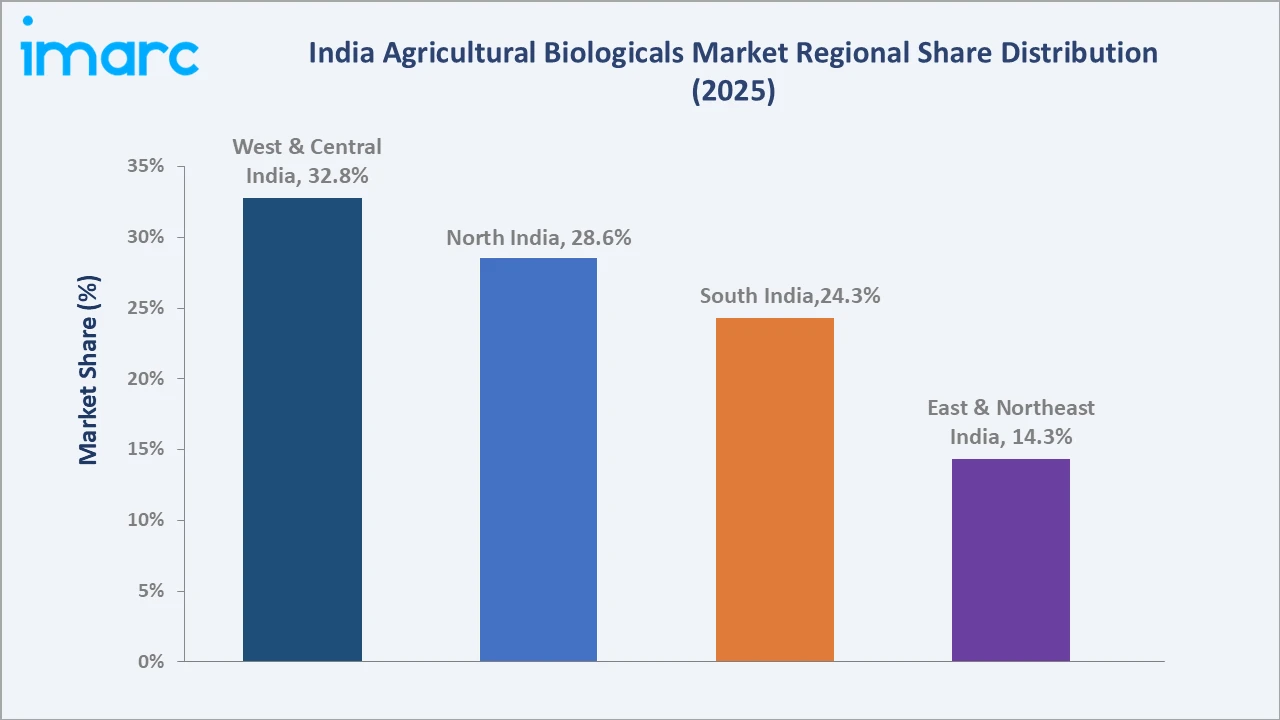
North India at 28.6% encompasses the Gangetic Plain’s rice-wheat cereal cropping system, Punjab’s intensive agriculture, and Rajasthan’s cotton and vegetable production where government biofertilizer distribution programs drive category adoption across large farmer populations.
|
Region |
Share (2025) |
Key EV Charging Management Software Platform Market Drivers & Characteristics |
| West & Central India | 32.8% | Maharashtra’s export-oriented grape, onion, and vegetable MRL compliance; Madhya Pradesh soybean and wheat biofertilizer adoption; Gujarat’s diverse commercial cropping system generating multi-category biological demand |
| North India | 28.6% | Punjab-Haryana Basmati rice export biofertilizer and biopesticide adoption for residue-free certification; UP’s large sugarcane and vegetable belt for biological pest management; Rajasthan’s growing cotton and cumin production adopting biological input programs |
| South India | 24.3% | Andhra Pradesh and Telangana’s intensive cotton and chilli production; Karnataka’s diversified horticulture (grapes, pomegranate, tomato) and coffee/tea plantation biological adoption; Tamil Nadu’s paddy system biofertilizer adoption; Kerala’s organic spice and plantation crop biological input market |
| East & Northeast India |
14.3% | West Bengal’s intensive vegetable and jute production biological adoption; Odisha and Jharkhand’s tribal farming area organic bioinput adoption through government schemes; Assam’s tea estate biological pest management program |
Competitive Landscape
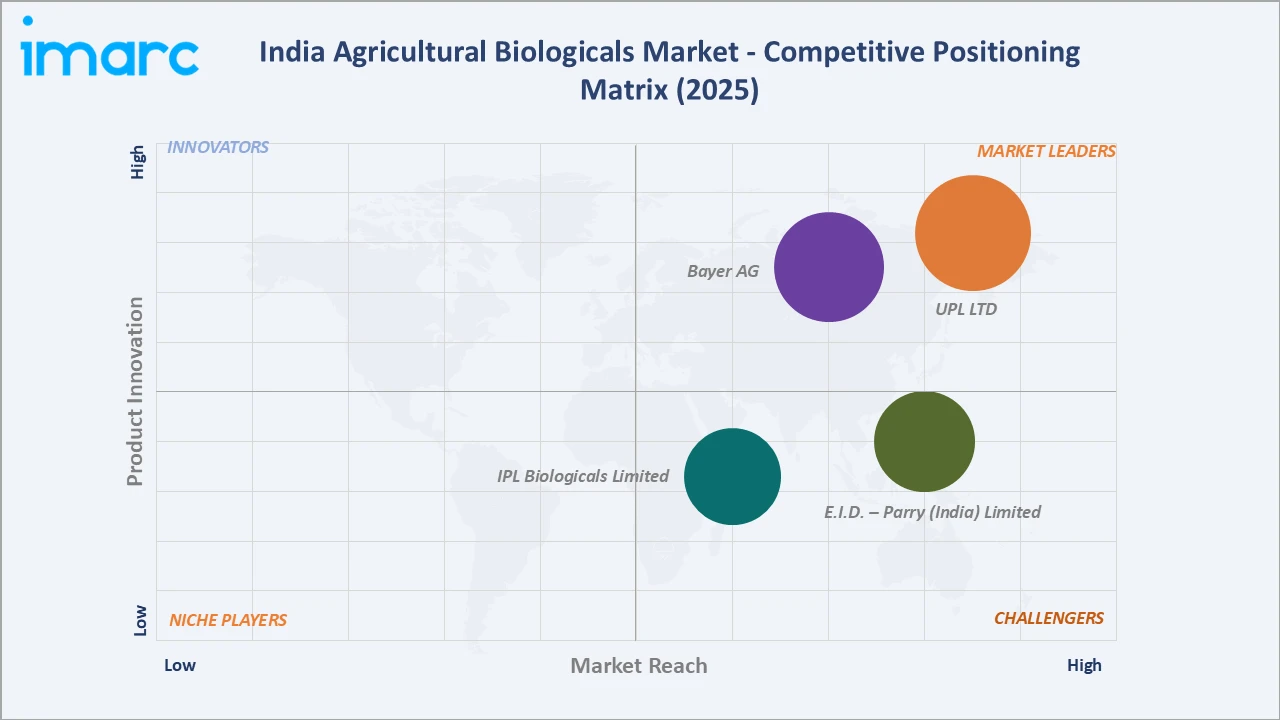
The India agricultural biologicals market competitive landscape combines multinational crop science companies expanding their biological product portfolios through acquisitions and product launches, established Indian agrochemical companies building dedicated biologicals divisions, and specialist domestic biological manufacturers serving specific crops and geographies.
|
Company Name |
Brand/Product |
Market Position |
Core Strength |
|
UPL LTD |
Pilatus, Biozyme TF, BM Start, Calibra, Appetizer, Gainexa FC, Foltron, Optimat |
Market Leader |
One of India’s largest agrochemical companies with dedicated biosolutions business unit; broad biopesticide, biofertilizer, and biostimulant portfolio; extensive national dealer distribution network |
|
Bayer AG |
Serenade |
Market Leader |
One of the global life science leaders with comprehensive biologicals pipeline including microbial, extensive biological product registration portfolio across Indian crops |
|
E.I.D. – Parry (India) Limited |
Neemazal F, Neemazal T/S, Avana, CoroIndika, Adhiraj, Abda, Spreadmax, Beemax, Coroneem, CoroBT, CoroTricho, among others |
Strong Challenger |
Major Indian fertilizer and crop protection company with established biofertilizer manufacturing; Maharashtra and South India distribution strength; integration of biological products within holistic soil health and crop nutrition advisory |
|
IPL Biologicals Limited |
Sanjeevni, Nematofree Plus, Phasal Rakshak, Kalichakra (Powder), Bactvipe, Premium Phoster, among others |
Strong Challenger |
Specialist Indian biological products company with proprietary strain collection and formulation technology; tropical climate-stable formulation expertise; dedicated biological distribution network |
Specialist Indian biological manufacturers compete on cost-competitive pricing and regional crop-specific formulation expertise that enables them to serve price-sensitive smallholder farmers in geographies where multinational brand premium pricing is a commercial barrier to adoption.
Key Company Profiles
UPL LTD
UPL LTD is one of India’s largest agrochemical company and one of the top 5 global crop protection companies by revenue.
- Product Portfolio: Pilatus, Biozyme TF, BM Start, Calibra, Appetizer, Gainexa FC, Foltron, and Optimat.
- Recent Developments: In May 2026, UPL LTD, through its subsidiary SWAL, secured India’s Fertilizer Control Order (FCO) registration for Bioclassic, a flagship biostimulant from its NPP biologicals business. The approval enables the nationwide rollout of Bioclassic to Indian farmers and strengthens UPL’s position in the country’s growing science-backed biologicals and sustainable agriculture market.
- Strategic Focus: Biosolutions platform development integrating biological and conventional products; India biologicals portfolio expansion across biopesticide, biofertilizer, and biostimulant categories.
Bayer AG
Bayer AG is one of the world’s leading life science companies with significant agricultural biologicals capabilities developed through its Crop Science division.
- Product Portfolio: Serenade (Bacillus subtilis QST 713 biofungicide for powdery mildew and grey mould control).
- Recent Developments: In December 2025, DCM Shriram and Bayer CropScience signed a strategic MoU to advance sustainable agricultural innovation in India through farmer-centric solutions. The partnership will focus on seeds, specialty plant nutrition, biologicals, agri-inputs, digital advisory platforms, and pilot projects in soil health, carbon sequestration, and integrated crop management.
- Strategic Focus: Integration of biological products within Bayer’s Customer Success crop advisory model; RNAi biopesticide technology development for Indian crop-pest targets; collaboration with domestic Indian biological manufacturers for locally adapted product development.
Market Concentration Analysis
The India agricultural biologicals market exhibits moderate fragmentation, with the top companies collectively holding an estimated 40–50% of total market value. The remaining 50–60% is shared among a large population of domestic specialist biological manufacturers, regional producers, and biofertilizer units operating at state and district level under the government’s decentralized biofertilizer production framework.
The biofertilizer sub-segment is more fragmented than biopesticides, with hundreds of CIB&RC-registered biofertilizer production units collectively supplying a significant share of India’s biofertilizer volume through government procurement and direct distribution channels.
Investment & Growth Opportunities
Fastest Growing Segments
Biostimulants (~12.5% CAGR, fastest type segment); microbial biofertilizers for direct seeding rice and precision cropping systems; biopesticides for export horticulture MRL compliance (grapes, mangoes, vegetables); macrobial biocontrol for expanding greenhouse and polyhouse cultivation; and AI-integrated precision biological advisory platforms represent the highest-growth investment vectors within India’s agricultural biologicals market through 2034.
Emerging Market Expansion
India’s East and Northeast region represents the most significant emerging geographic opportunity for agricultural biologicals expansion. The region’s progressive farmers in West Bengal’s vegetable belt, Bihar’s FPO-led farming clusters, and Assam’s tea estate management are beginning to adopt biological inputs driven by government organic farming scheme incentives and FPO procurement cost optimization.
Venture and Institutional Investment Trends
- The Government of India’s PM-PRANAM and NMNF programs are creating institutional procurement pipelines for biological products through state Departments of Agriculture that represent predictable government demand streams for compliant registered biological product suppliers, supplementing commercial channel sales with government procurement volume that is particularly significant in the biofertilizer category.
- International strategic investment in Indian biologicals companies is accelerating as multinational crop science companies recognize India as both a large domestic biologicals market and a low-cost R&D and production base for biological product development serving global markets at Indian manufacturing cost structures.
Future Market Outlook (2026-2034)
The India agricultural biologicals market is positioned for its most rapid and structurally grounded growth phase in the forecast period 2026-2034. From a base of USD 1.06 Billion in 2025 to USD 1.19 Billion in 2026, the market is projected to reach USD 3.15 Billion by 2034 at a CAGR of 11.71%.
This growth trajectory reflects a structural market inflection driven by the compounding effect of policy tailwind, export market quality demand, corporate investment in biological product development, and the progressive building of farmer familiarity with biological product use through government bioinput awareness programs.
By 2034, Biostimulants will have grown from 22.6% to an estimated 26–28% of type segment value as premium horticulture adoption accelerates and the biostimulant regulatory formalization post-June 2025 establishes a credible premium segment with differentiated science-backed products.
Research Methodology
Primary Research
Primary research comprised structured interviews with over 65 industry participants in 2024–2025, including agricultural biologicals product managers at leading domestic and multinational companies, CIB&RC registered biological product distributors and agrodealers, state Department of Agriculture extension officials involved in biofertilizer procurement and distribution, and academic researchers from agricultural universities and ICAR institutes specializing in biological crop protection.
Secondary Research
Secondary research encompassed CIB&RC biological product registration database, Ministry of Agriculture PKVY and NMNF scheme implementation statistics, APEDA agricultural export statistics and MRL compliance incident data, India’s organic certification area data from APEDA and state organic farming boards, corporate annual reports, ICAR research publications on microbial biological product efficacy, and state government biofertilizer procurement and distribution statistics.
Forecasting Models
Market size estimations were derived using top-down and bottom-up forecasting, incorporating Ministry of Agriculture organic farming area and natural farming program target data, agricultural export value trend and MRL compliance investment projection, company biological product revenue growth disclosure and guidance, biofertilizer subsidy budget trend analysis from Union Budget agricultural allocation data, and per-hectare biological product adoption rate diffusion modelling across key crop and region combinations.
India Agricultural Biologicals Market Report Coverage:
| Report Features | Details |
|---|---|
| Base Year of the Analysis | 2025 |
| Historical Period | 2020-2025 |
| Forecast Period | 2026-2034 |
| Units | Billion USD |
| Scope of the Report | Exploration of Historical Trends and Market Outlook, Industry Catalysts and Challenges, Segment-Wise Historical and Future Market Assessment:
|
| Types Covered | Biopesticides, Biofertilizers, Biostimulants |
| Sources Covered | Microbials, Macrobials, Biochemicals, Others |
| Mode of Applications Covered | Foliar Spray, Soil Treatment, Seed Treatment, Post-Harvest |
| Applications Covered | Cereals and Grains, Oilseed and Pulses, Fruits and Vegetables, Turf and Ornamentals, Others |
| Regions Covered | North India, West and Central India, South India, East and Northeast India |
| Companies Covered | UPL LTD, Bayer AG, E.I.D. – Parry (India) Limited, IPL Biologicals Limited, etc. |
| Customization Scope | 10% Free Customization |
| Post-Sale Analyst Support | 10-12 Weeks |
| Delivery Format | PDF and Excel through Email (We can also provide the editable version of the report in PPT/Word format on special request) |
Key Benefits for Stakeholders:
- IMARC’s industry report offers a comprehensive quantitative analysis of various market segments, historical and current market trends, market forecasts, and dynamics of the India agricultural biologicals market from 2020-2034.
- The research report provides the latest information on the market drivers, challenges, and opportunities in the India agricultural biologicals market.
- Porter's five forces analysis assist stakeholders in assessing the impact of new entrants, competitive rivalry, supplier power, buyer power, and the threat of substitution. It helps stakeholders to analyze the level of competition within the India agricultural biologicals industry and its attractiveness.
- Competitive landscape allows stakeholders to understand their competitive environment and provides an insight into the current positions of key players in the market.
Frequently Asked Questions About the India Agricultural Biologicals Market Report
The India agricultural biologicals market size is estimated at USD 1.19 Billion in 2026 and is projected to reach USD 3.15 Billion by 2034.
The market is expected to grow at a CAGR of 11.71% during 2026-2034, driven by PM-PRANAM and National Mission on Natural Farming government policy support, growing export market MRL compliance demand, and increasing corporate investment in biological product R&D and manufacturing by domestic and multinational companies.
West and Central India leads with a 32.8% market share in 2025, driven by Maharashtra’s export-oriented grape and horticulture MRL compliance biological demand, Vidarbha’s cotton belt biopesticide use, and Madhya Pradesh’s soybean and wheat belt biofertilizer adoption.
Biopesticides dominate with a 42.8% share in 2025, reflecting their role as the most commercially compelling biological category for farmers managing significant pest pressure in cotton, rice, vegetables, and export horticulture crops, where biopesticide efficacy benefits are immediately verifiable within a single crop season.
Microbials hold the largest source share at 48.3%, reflecting the established fermentation production infrastructure, extensive CIB&RC registration base, and farmer familiarity with bacterial and fungal biological products across India’s major cropping systems.
Some of the key players include UPL LTD, Bayer AG, E.I.D. – Parry (India) Limited, and IPL Biologicals Limited.
Key drivers include PM-PRANAM and National Mission on Natural Farming creating government-backed biological adoption pathways for farmers, rising chemical pesticide resistance creating unmet pest control need addressable by biologicals, and biostimulant regulatory formalization reducing low-quality competition.
Key challenges include short shelf life and cold chain requirements for microbial biological products limiting agrodealer network distribution quality, efficacy inconsistency from product quality variation and incorrect application timing, and integration complexity of biological products with existing chemical crop protection programs.
Need more help?
- Speak to our experienced analysts for insights on the current market scenarios.
- Include additional segments and countries to customize the report as per your requirement.
- Gain an unparalleled competitive advantage in your domain by understanding how to utilize the report and positively impacting your operations and revenue.
- For further assistance, please connect with our analysts.
 Request Customization
 Speak to an Analyst
 Request Brochure
 Inquire Before Buying
Benefits of Customization
- Personalize this research
- Triangulate with your data
- Get data as per your format and definition
- Gain a deeper dive into a specific application, geography, customer, or competitor
- Any level of personalization
Get in Touch With Us
UNITED STATES
Phone: +1-201-971-6302
INDIA
Phone: +91-120-433-0800
UNITED KINGDOM
Phone: +44-753-714-6104
Email: [email protected]
Client Testimonials




.webp)




.webp)













Related Reports

Choose your plan
*Please note that the prices mentioned below are starting prices for each bundle type. Kindly contact our team for further details.*
Single User License
- 1 User License, Access on 2 Devices
- PDF Report + Excel Dataset (Password Protected)
- Lifetime Access
- No Printing Rights
- 10% Free Report Customization
- 10–12 Weeks of Analyst Support
Five User License
- Access for 5 Users, 2 Devices per User
- PDF Report + Excel Dataset (Password Protected)
- Lifetime Access
- Dedicated Account Manager
- 12–14 Weeks of Analyst Support
- No Printing Rights
- 15% Free Report Customization
- 25% Discount on Your Next Purchase
Corporate User License
- Unlimited User Access (Within Your Organization)
- PDF Report + Excel Dataset
- Lifetime Access
- Dedicated Account Manager
- 14–20 Weeks of Analyst Support
- No Printing Rights
- 20% Free Report Customization
- 30% Discount on Your Next Purchase
Essential Insights
What's included:
3 reports
- Lifetime Access
- PDF Reports
- Excel Datasets
- 2 Weeks of Free Analyst Support
- 2 User Licenses
- Access on 2 Devices
- Printing Rights
- Complimentary PowerPoint (PPT) Version
- Complimentary License Upgrade
Professional Access
What's included:
5 reports
- Lifetime Access
- PDF Reports
- Excel Datasets
- 8 Weeks of Free Analyst Support
- 2 User Licenses
- Access on 2 Devices
- Printing Rights
- Complimentary PowerPoint (PPT) Version
- Complimentary License Upgrade
Business Advantage
What's included:
8 reports
- Lifetime Access
- PDF Reports
- Excel Datasets
- 14 Weeks of Free Analyst Support
- 2 User Licenses
- Access on 2 Devices
- Printing Rights
- Complimentary PowerPoint (PPT) Version
- Complimentary License Upgrade
Enterprise Intelligence
What's included:
10 reports
- Lifetime Access
- PDF Reports
- Excel Datasets
- 20 Weeks of Free Analyst Support
- 2 User Licenses
- Access on 2 Devices
- Printing Rights
- Complimentary PowerPoint (PPT) Version
- Complimentary License Upgrade