
India Genomics Market Size, Share, Trends and Forecast by Component, Application, Technology, End User, and Region, 2026-2034
India Genomics Market Size, Share, Trends & Forecast (2026-2034)
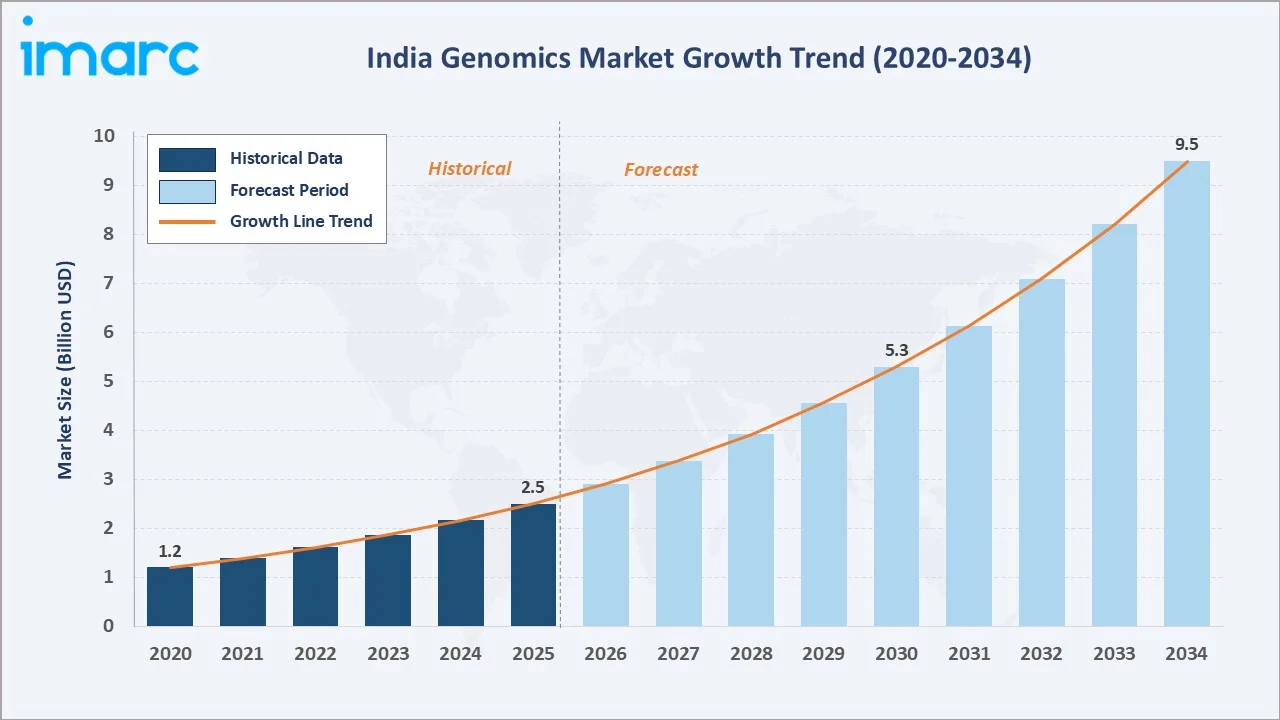
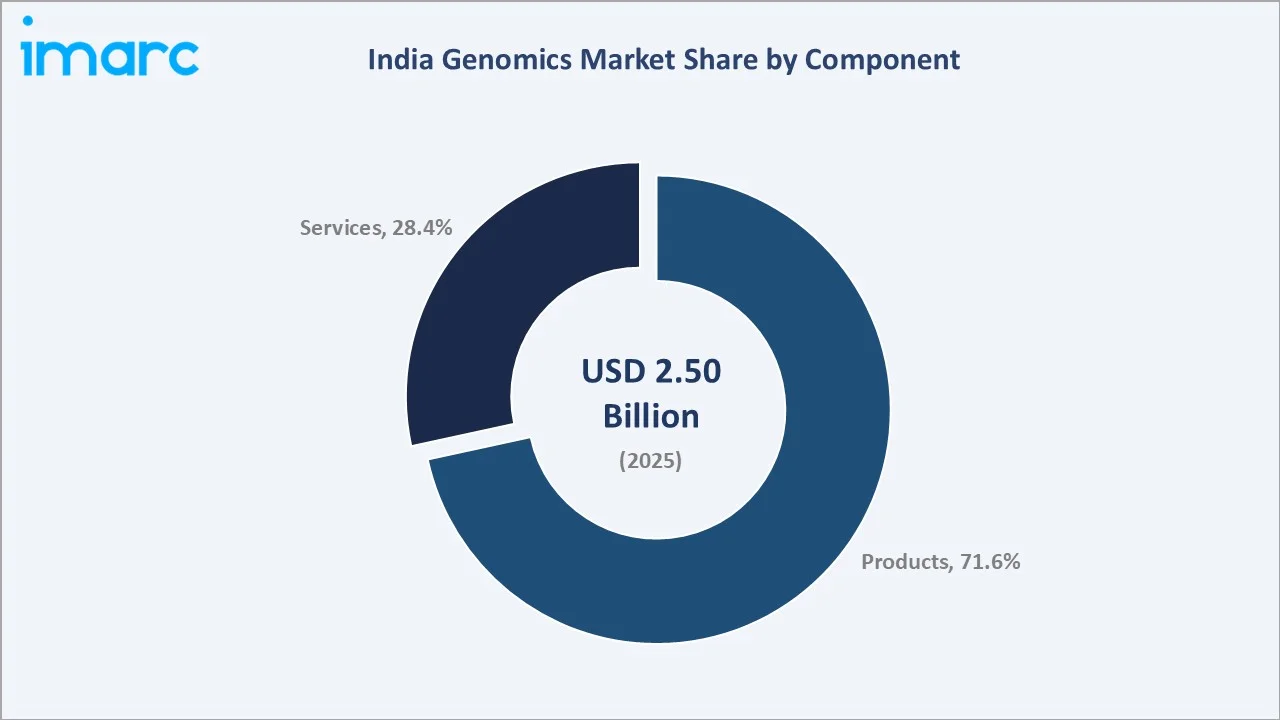
The India genomics market grew from USD 2.5 Billion in 2025 to USD 2.9 Billion in 2026 and is projected to reach USD 9.5 Billion by 2034, growing at a CAGR of 15.94% during 2026-2034. The market is driven by the shift toward precision medicine, falling sequencing costs, and expanding national genomics programmes. Products dominate the component segment at 71.6%. Functional genomics leads applications at 31.5%. West and Central India commands 34.5% of the national market share.
Market Snapshot
|
Metric |
Value |
|
Base Year Market Size (2025) |
USD 2.5 Billion |
|
Market Size (2026) |
USD 2.9 Billion |
|
Forecast Market Size (2034) |
USD 9.5 Billion |
|
CAGR (2026-2034) |
15.94% |
|
Base Year |
2025 |
|
Historical Period |
2020-2025 |
|
Forecast Period |
2026-2034 |
|
Dominant Component |
Products (71.6%, 2025) |
|
Dominant Application |
Functional Genomics (31.5%, 2025) |
|
Leading Region |
West and Central India (34.5%, 2025) |
The market expanded from USD 1.2 Billion in 2020 to USD 2.5 Billion in 2025 and an estimated USD 2.9 Billion in 2026, more than doubling in five years, anchored at USD 5.3 Billion in 2030 and forecast to reach USD 9.5 Billion by 2034. Pandemic-era sequencing capacity built for surveillance was subsequently redeployed into clinical diagnostics.
To get more information on this market, Request Sample
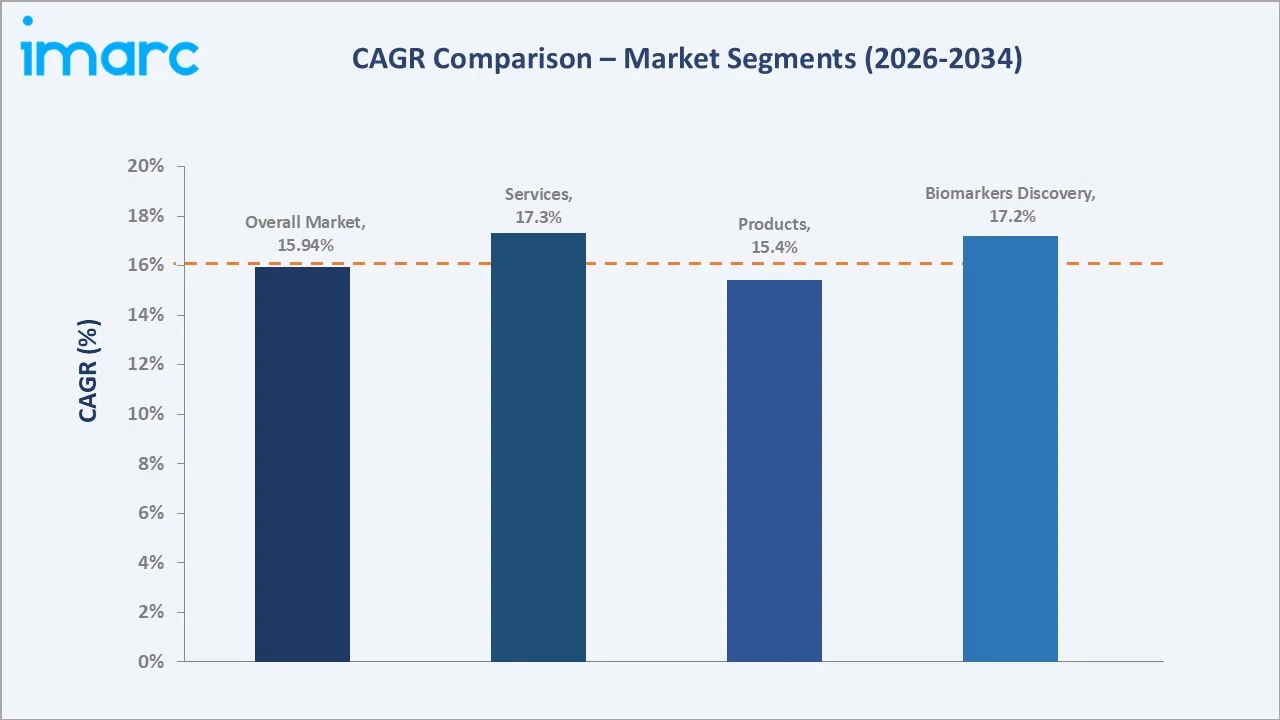
The services component grows fastest at approximately 17.3% CAGR as hospitals outsource sequencing and interpretation to specialised laboratories. Biomarkers discovery expands at roughly 17.2% CAGR, supported by pharmaceutical partnerships and India-specific variant data emerging from national cohort programmes.
Executive Summary
The India genomics market, which increased from USD 2.5 Billion in 2025 to an estimated USD 2.9 Billion in 2026, representing one of Asia-Pacific’s fastest-growing life sciences segments. Genomics has moved from a research discipline into routine clinical decision-making across oncology, rare disease, and prenatal screening. The market is projected to reach USD 9.5 Billion by 2034.
Products at 71.6% dominate through sustained instrument, consumable, and reagent demand across an expanding laboratory base. Functional genomics at 31.5% leads applications by underpinning gene-function and translational research. West and Central India at 34.5% leads through its concentrated research and diagnostic infrastructure.
Key Market Insights
|
Insight |
Data |
|
Dominant Component |
Products - 71.6% share (2025) |
|
Dominant Application |
Functional Genomics - 31.5% market share (2025) |
|
Leading Region |
West and Central India - 34.5% market share (2025) |
|
Market Opportunity |
India-specific variant databases; AI-based interpretation; tier-2 laboratory networks; direct-to-consumer wellness genomics; pharmacogenomics |
Key Analytical Observations Supporting the Above Data:
- Products at 71.6%: The products segment dominates as every genomics workflow requires sequencing instruments, microarrays, library preparation kits, and consumables. Rapid laboratory capacity addition sustains recurring reagent demand, while capital equipment procurement by research institutes and hospital chains reinforces the segment’s revenue lead.
- Functional Genomics at 31.5%: Functional genomics leads because it forms the analytical foundation for understanding gene expression, regulation, and disease mechanisms. Academic institutions, contract research organisations, and pharmaceutical companies rely on it for target validation, making it the most widely commissioned genomics application nationally.
- West and Central India at 34.5%: West and Central India leads through concentrated pharmaceutical and biotechnology activity supported by a dense contract research base. The region hosts numerous accredited molecular laboratories and tertiary hospitals, generating the country’s highest combined research and clinical genomics testing volumes.
India Genomics Market Overview
The India genomics market encompasses instruments, consumables, reagents, software, and services used to sequence, analyse, and interpret genetic material across clinical diagnostics, translational research, pharmaceutical discovery, and population-scale reference programmes.
The ecosystem integrates sequencing platform and reagent suppliers, accredited laboratories, bioinformatics providers, clinical geneticists, hospitals, contract research organisations, and regulatory bodies. Macroeconomic drivers include rising healthcare expenditure, insurance penetration, biotechnology policy support, and expanding diagnostic infrastructure.
Market Dynamics
To evaluate market opportunities, Request Sample
Market Drivers
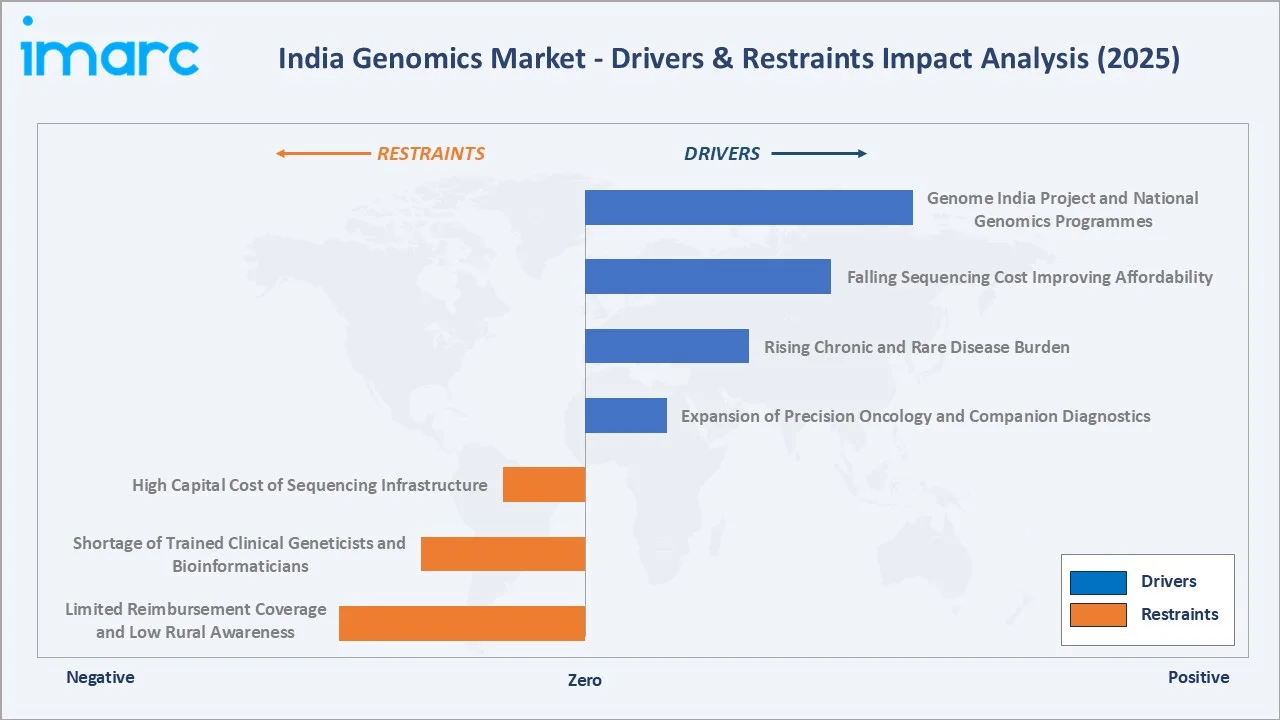
- Genome India Project and National Genomics Programmes: The Department of Biotechnology completed whole-genome sequencing of 10,000 individuals spanning 83 population groups, with data archived at the Indian Biological Data Centre and released for global research use. This national reference resource enables India-specific variant interpretation, reducing diagnostic ambiguity. State-level sequencing initiatives targeting inherited disorders are extending this infrastructure into public health delivery. Collectively, these programmes expand sustained demand for sequencing capacity, bioinformatics tooling, and downstream clinical validation services.
- Falling Sequencing Cost Improving Affordability: Declining per-genome sequencing costs have made whole-exome and whole-genome testing accessible to a far broader patient base. Lower reagent pricing, higher-throughput platforms, and domestic laboratory competition have compressed test prices substantially. This has converted genomics from a premium offering into a mainstream diagnostic option across urban and increasingly tier-2 settings. Falling price points also widen the addressable pool faster than realisations decline, expanding total market value.
- Rising Chronic and Rare Disease Burden: India carries a substantial burden of inherited disorders, including thalassemia, sickle cell anaemia, and hereditary cardiac conditions. Consanguinity in certain communities elevates recessive disorder prevalence. Growing clinician awareness and national screening initiatives are converting this burden into sustained demand for carrier screening, diagnostic panels, and confirmatory sequencing. Earlier diagnosis also reduces the diagnostic odyssey for rare disease families, strengthening the clinical case for first-line genomic testing.
- Expansion of Precision Oncology and Companion Diagnostics: Oncology has become the highest-value clinical genomics application as targeted therapies require molecular profiling before prescription. Comprehensive genomic profiling panels, liquid biopsy assays, and minimal residual disease monitoring are being adopted across tertiary cancer centres. These tests generate recurring high-margin volumes that anchor laboratory revenue growth. Expanding approvals for biomarker-linked therapies continue to widen the range of tumour types requiring routine molecular characterisation.
Market Restraints
- High Capital Cost of Sequencing Infrastructure: High-throughput sequencers, automation systems, and accredited laboratory buildouts require substantial upfront capital. Import dependence on instruments and proprietary reagents adds currency and supply-chain exposure. These costs limit entry for smaller diagnostic operators and slow the geographic spread of genomics capacity. Utilisation risk compounds the problem, as underused platforms carry high fixed costs that push smaller laboratories toward unsustainable unit economics.
- Shortage of Trained Clinical Geneticists and Bioinformaticians: India has a limited pool of certified clinical geneticists, genetic counsellors, and variant interpretation specialists relative to testing volumes. This constrains report turnaround, raises interpretation costs, and restricts clinical adoption in smaller cities. Training pipelines remain narrow, with few accredited medical genetics programmes graduating annually. The resulting talent scarcity also drives wage inflation, further pressuring laboratory margins on interpretation-heavy assays.
- Limited Reimbursement Coverage and Low Rural Awareness: Most genomic tests remain outside standard insurance reimbursement, leaving patients to fund testing out of pocket. Combined with limited awareness of genetic testing benefits outside metropolitan populations, this suppresses volume conversion despite clinical need. Persistent concerns around genetic data privacy and familial implications further reduce uptake. Absent structured payer pathways, high-value tests remain concentrated among self-paying urban patients.
Market Opportunities
- India-Specific Variant and Reference Databases: Global variant databases underrepresent South Asian populations, producing high rates of variants of uncertain significance in Indian patients. Building curated, population-specific reference datasets creates defensible commercial assets and improves diagnostic yield. It also positions Indian laboratories as preferred partners for global pharmaceutical discovery programmes. Such datasets compound in value over time, as accumulating phenotype linkage steadily improves classification accuracy and clinical utility.
- Tier-2 and Tier-3 Laboratory Network Expansion: Genomics capacity remains concentrated in a handful of metropolitan centres while clinical demand is dispersing nationally. Hub-and-spoke collection networks, sample logistics partnerships, and regional processing laboratories can unlock substantial untapped volume at competitive unit economics. Franchise and asset-light partnership models reduce the capital intensity of geographic expansion. Early movers can secure clinician referral relationships in markets where organised competition remains minimal.
Market Challenges
- Genomic Data Privacy and Governance Uncertainty: Population-scale genomic datasets raise questions on consent, community data sovereignty, and cross-border data transfer. Evolving requirements under India’s data protection framework create compliance uncertainty for laboratories and cloud analytics providers. This potentially raises operating costs and slows international research collaboration agreements. Ambiguity around secondary use of genomic data also complicates commercial monetisation of accumulated laboratory datasets.
- Price Competition Compressing Laboratory Margins: Aggressive discounting among diagnostic chains and standalone genomics laboratories has compressed realisations on high-volume tests such as carrier screening and non-invasive prenatal testing. Sustaining profitability increasingly requires scale, automation, and a shift toward differentiated assays. Smaller laboratories lacking volume leverage face structural margin erosion. Price-led competition also risks diverting investment away from quality systems and interpretation capability.
Emerging Market Trends
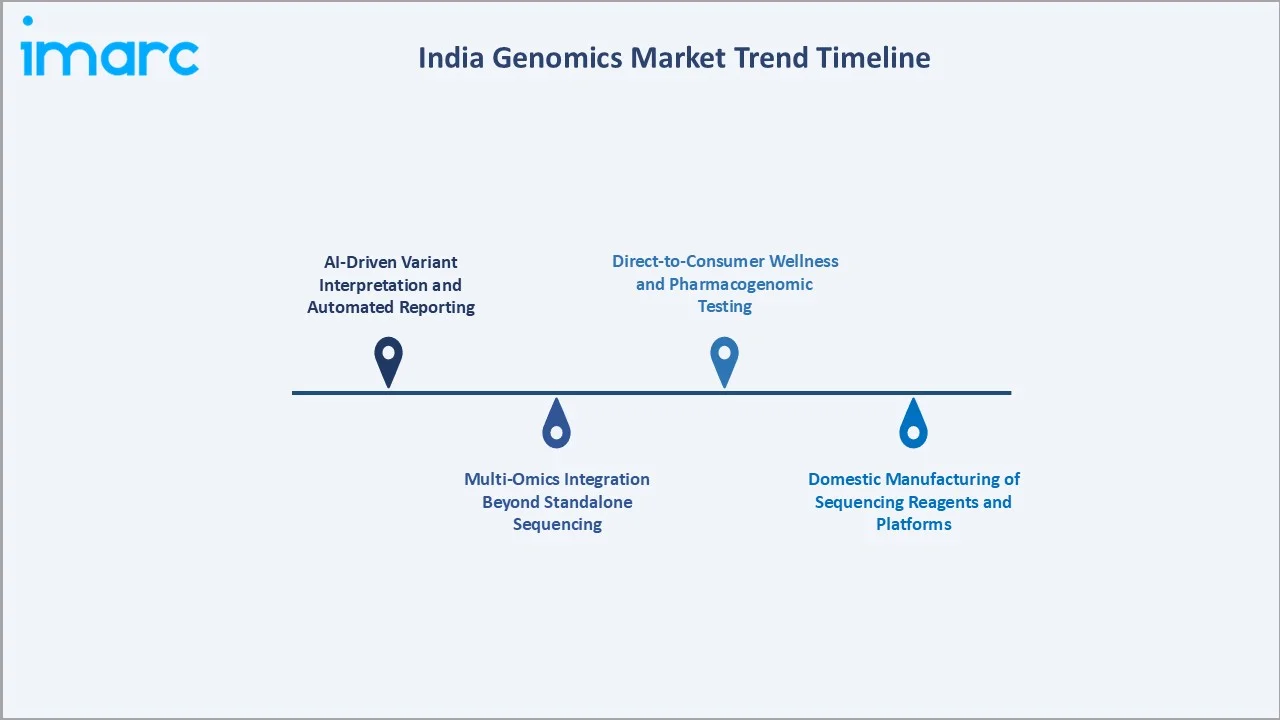
1. AI-Driven Variant Interpretation and Automated Reporting
Artificial intelligence is being applied to variant classification, phenotype matching, and report drafting, compressing turnaround from weeks to days. Machine learning models trained on India-specific cohorts improve pathogenicity calling accuracy, directly addressing the clinical geneticist shortage and enabling laboratories to scale volumes without proportionate headcount growth.
2. Multi-Omics Integration Beyond Standalone Sequencing
Laboratories are combining genomics with transcriptomics, epigenomics, proteomics, and metabolomics to deliver richer biological insight. Integrated multi-omics improves biomarker discovery yield and disease stratification, commanding higher realisations per sample and shifting competitive advantage toward providers with broad analytical platforms and bioinformatics depth.
3. Direct-to-Consumer Wellness and Pharmacogenomic Testing
Consumer-facing genetic wellness, nutrigenomics, and pharmacogenomic panels are expanding through digital health platforms at accessible price points. This channel builds genomic literacy, creates upsell pathways into clinical testing, and generates large phenotype-linked datasets valuable for downstream research monetisation.
4. Domestic Manufacturing of Sequencing Reagents and Platforms
Policy support under national biotechnology initiatives is encouraging local production of reagents, library preparation kits, and sequencing consumables. Import substitution reduces foreign exchange exposure and lead times, while lowering per-test costs and improving the economics of high-volume public health screening programmes.
Industry Value Chain Analysis
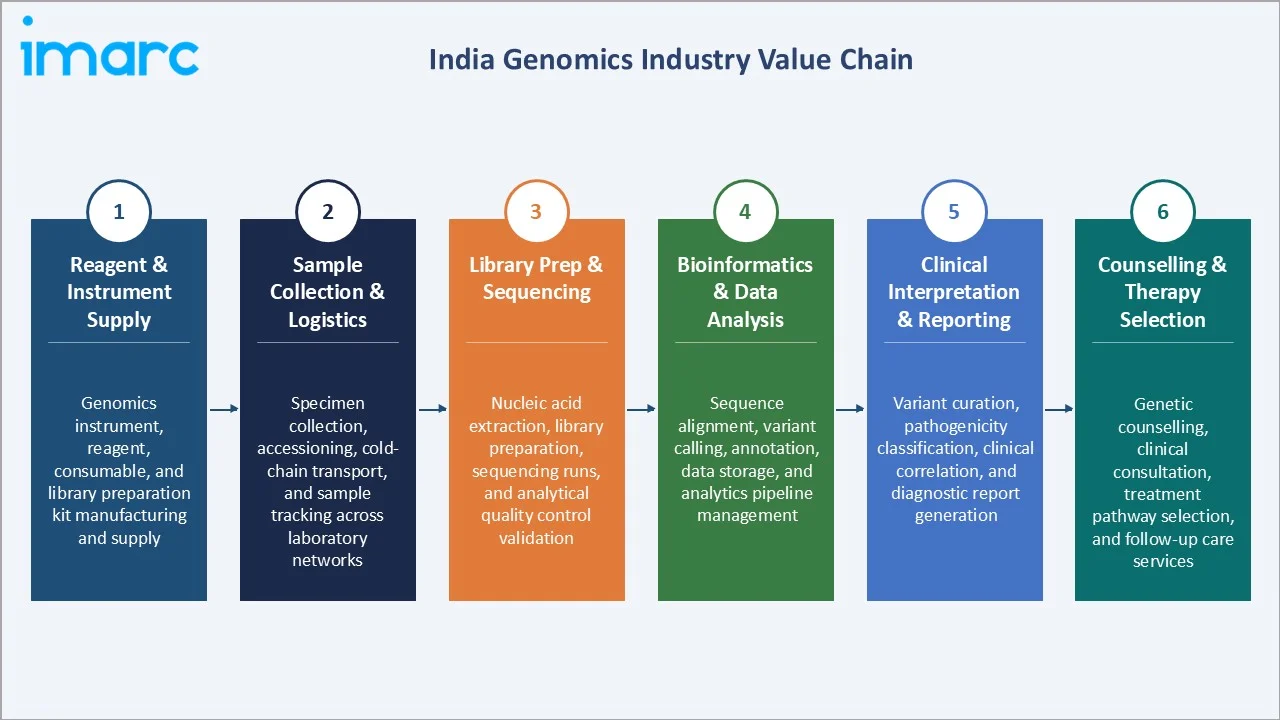
The genomics value chain integrates reagent and instrument supply, sample collection and logistics, library preparation and sequencing, bioinformatics analysis, clinical interpretation and reporting, and counselling with therapy selection. Commercial value has been migrating steadily downstream toward interpretation and clinical decision support.
|
Stage |
Key Participants |
|
Reagent & Instrument Supply |
Genomics instrument, reagent, consumable, and library preparation kit manufacturing and supply |
|
Sample Collection & Logistics |
Specimen collection, accessioning, cold-chain transport, and sample tracking across laboratory networks |
|
Library Prep & Sequencing |
Nucleic acid extraction, library preparation, sequencing runs, and analytical quality control validation |
|
Bioinformatics & Data Analysis |
Sequence alignment, variant calling, annotation, data storage, and analytics pipeline management |
|
Clinical Interpretation & Reporting |
Variant curation, pathogenicity classification, clinical correlation, and diagnostic report generation |
|
Counselling & Therapy Selection |
Genetic counselling, clinical consultation, treatment pathway selection, and follow-up care services |
The bioinformatics and interpretation tiers capture the fastest-growing share of value as sequencing itself commoditises. Reagent supply remains the most import-dependent stage, making domestic manufacturing initiatives strategically significant for long-term cost structure and supply security.
Technology Landscape in the India Genomics Industry
Next-Generation Sequencing (NGS) Technology
Next-generation sequencing delivers massively parallel, high-throughput analysis at declining per-base cost. It underpins whole-genome, whole-exome, and targeted panel testing across oncology, rare disease, and infectious disease applications, and remains the dominant technology platform driving Indian genomics laboratory capital investment.
Microarray and Polymerase Chain Reaction Technology
Microarray and PCR platforms remain widely deployed for genotyping, copy number analysis, and targeted mutation detection. Their lower capital requirement, faster turnaround, and established reimbursement pathways sustain relevance in routine screening, carrier testing, and high-volume public health applications across decentralised laboratory settings.
Cloud Bioinformatics and Long-Read Sequencing
Cloud-native analysis pipelines are replacing on-premises compute, reducing infrastructure cost and enabling elastic scaling during volume surges. Long-read sequencing is gaining traction for structural variant detection and complex genomic regions that short-read platforms resolve poorly, expanding diagnostic yield in unresolved rare disease cases.
Market Segmentation Analysis
The report covers the following segments:
|
Segment Category |
Leading Segment |
Market Share |
Year |
|
Component |
Products |
71.6% |
2025 |
|
Application |
Functional Genomics |
31.5% |
2025 |
|
Technology |
🔒 |
🔒 |
2025 |
|
End User |
🔒 |
🔒 |
2025 |
|
Region |
West and Central India |
34.5% |
2025 |

By Component
Products lead at 71.6% in 2025, covering sequencing instruments, software, consumables, and reagents. Recurring consumable purchases scale directly with test volumes, making this the largest and most defensible revenue pool in the Indian genomics value chain.
To access detailed market analysis, Request Sample
Services at 28.4% comprise core genomics services, NGS-based services, biomarker translation, and computational services. The segment grows faster at approximately 17.3% CAGR as hospitals and pharmaceutical sponsors outsource sequencing and interpretation rather than building captive capability.
By Application
Functional genomics leads at 31.5%, supported by gene expression profiling, target validation, and mechanism-of-disease research across academic and industry laboratories. Biomarkers discovery at 24.3% grows fastest at roughly 17.2% CAGR, driven by pharmaceutical partnerships and precision oncology programmes.
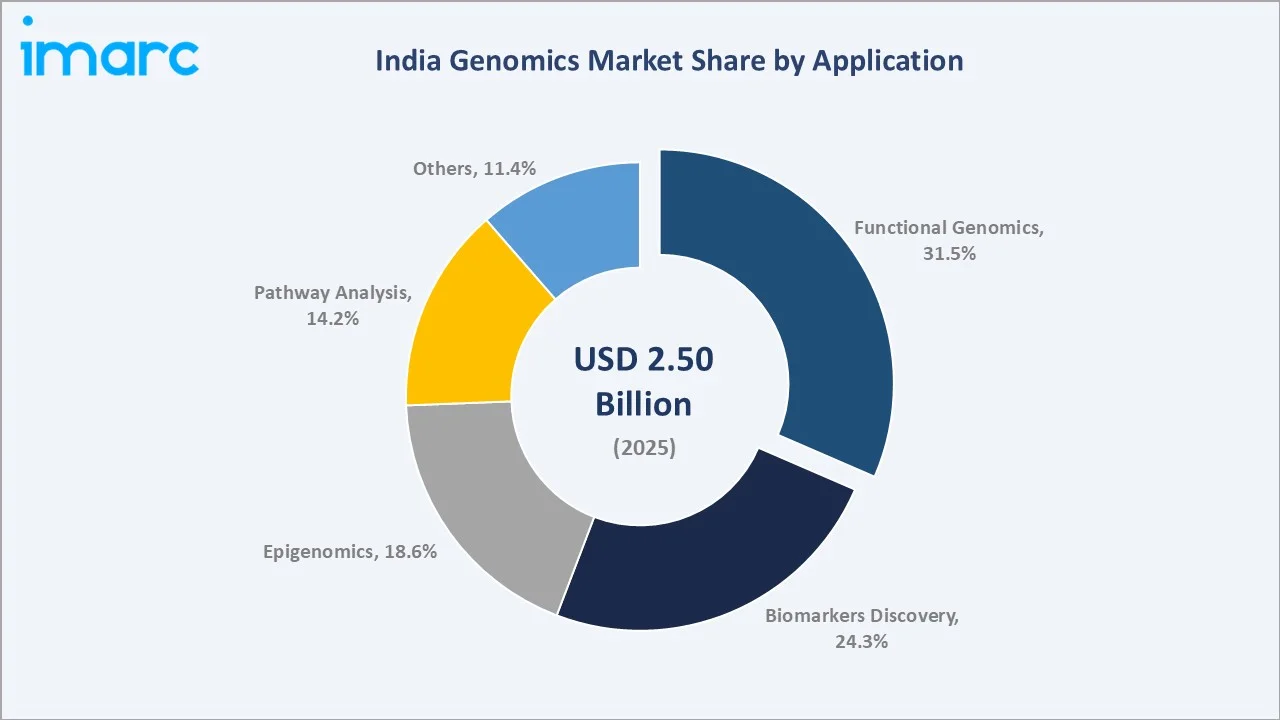
Epigenomics at 18.6% is expanding through methylation-based cancer classification and prenatal applications. Pathway analysis at 14.2% supports systems-level interpretation of multi-omics datasets, while others at 11.4% covers comparative genomics, agricultural genomics, and emerging microbiome applications.
Regional Market Insights
|
Region |
Share (2025) |
Key Genomics Market Drivers & Characteristics |
|
West and Central India |
34.5% |
Driven by a strong pharmaceutical and biotechnology base, established research infrastructure, and a high concentration of accredited diagnostic laboratories |
|
South India |
29.8% |
Supported by advanced genomics research ecosystems, expanding sequencing capacity, strong academic institutions, and rising clinical adoption |
|
Northern India |
22.4% |
Driven by high tertiary healthcare density, government research funding, expanding diagnostic networks, and growing rare disease referrals |
|
East and Northeast India |
13.3% |
Emerging with increasing public health screening programmes, expanding laboratory infrastructure, and rising genomics awareness |
West and Central India, at 34.5%, leads through pharmaceutical research density and contract research concentration. South India, at 29.8%, reflects established research infrastructure and the presence of the country’s largest sequencing laboratories.
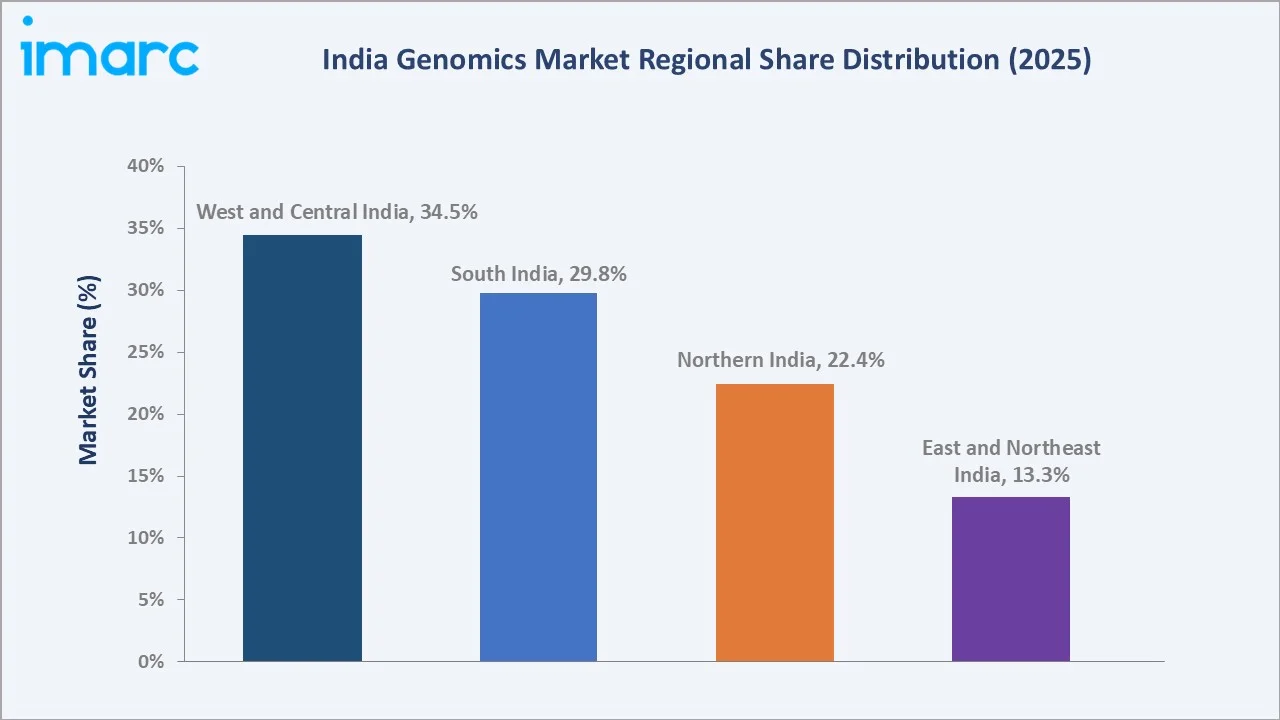
Northern India, at 22.4%, reflects clinical referral volumes and public research funding. East and Northeast India, at 13.3%, represents an early-stage but rapidly growing market driven by inherited haemoglobinopathy screening programmes across tribal and rural populations.
Competitive Landscape
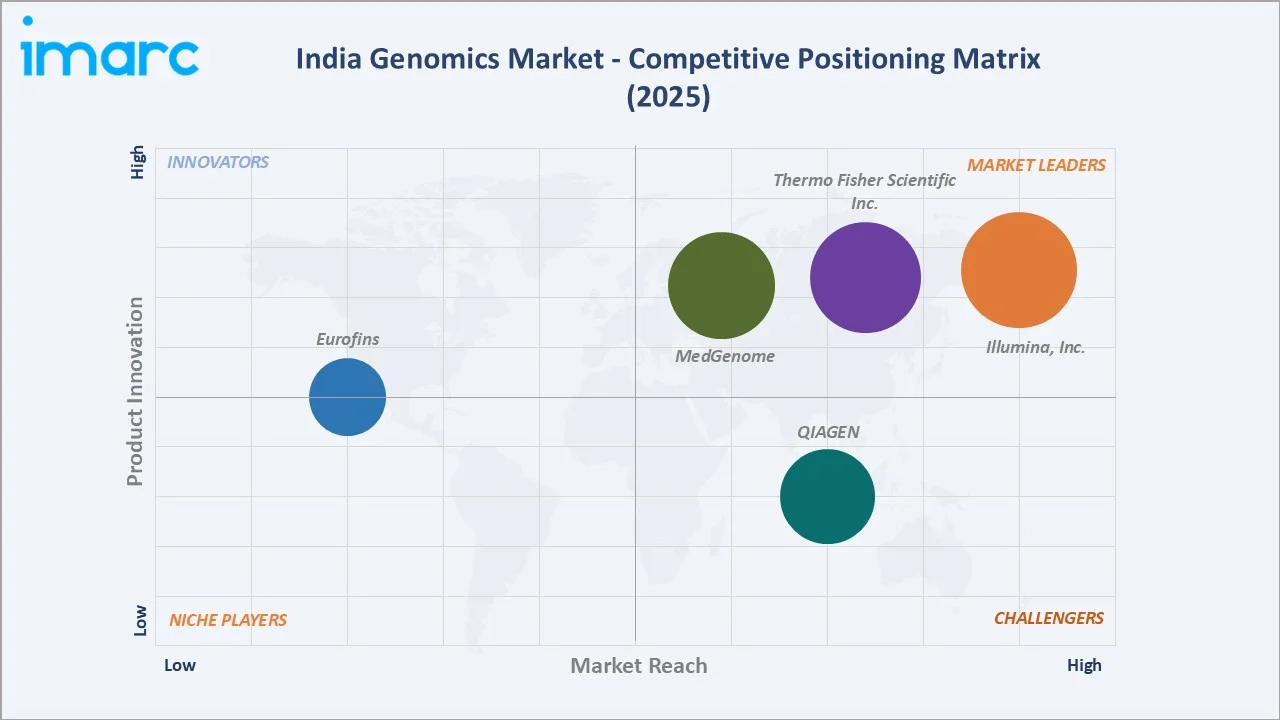
The India genomics market is moderately fragmented across three competitive tiers: global sequencing platform and reagent suppliers, domestic full-service genomics laboratories, and diversified diagnostic chains adding molecular capability to existing pathology networks.
|
Company Name |
Key Products |
Market Position |
Core Strength |
|
Illumina, Inc. |
NovaSeq X, NextSeq, iScan System, NextSeq 550 System, MiSeqDx Instrument, NovaSeq 6000Dx Instrument |
Market Leader |
Dominant installed base of high-throughput sequencing platforms and proprietary consumables across Indian laboratories |
|
MedGenome |
Clinical exome, NIPT, liquid biopsy, MetaSeq, research genomics services |
Market Leader |
South Asia’s largest CAP-accredited genomics laboratory with an extensive clinical test menu and nationwide reach |
|
Thermo Fisher Scientific Inc. |
Ion Torrent sequencers, Applied Biosystems PCR, microarrays, Oncomine panels |
Market Leader |
Broad end-to-end portfolio spanning instruments, reagents, and oncology assays with deep India distribution |
|
QIAGEN |
Sample preparation kits, QIAseq panels, QIAGEN Digital Insights |
Strong Challenger |
Leadership in nucleic acid extraction chemistry and integrated bioinformatics interpretation software |
|
Eurofins |
Genomic services, sequencing, genotyping, bioinformatics support |
Emerging Player |
Global laboratory network with established Indian genomics service operations and research customer base |
Key players include Illumina, Inc., MedGenome, Thermo Fisher Scientific Inc., QIAGEN, Eurofins, and others.
Key Company Profiles
MedGenome
MedGenome is a Bengaluru-headquartered genomics-driven diagnostics and research company operating South Asia’s largest CAP-accredited and NABL-certified genomics sequencing laboratory, with a test menu of genetic assays.
- Key Products: Clinical exome sequencing, non-invasive prenatal testing validated for Indian populations, liquid biopsy, high-resolution HLA typing, MetaSeq, and coronary artery disease polygenic risk scoring.
- Recent Developments: In February 2026, MedGenome launched MetaSeq, a metagenomic next-generation sequencing blood test capable of identifying over 1,400 clinically relevant pathogens in a single assay, strengthening its bloodstream infection diagnostics portfolio.
- Strategic Focus: Expanding tier-2 and tier-3 city penetration through franchise and acquisition-led network growth, while deepening research services for pharmaceutical partners using India-specific genomic datasets. The company is also broadening its infectious disease and oncology test menus to raise revenue per patient. Continued investment in proprietary interpretation pipelines supports faster turnaround and higher diagnostic yield.
Illumina, Inc.
Illumina, Inc. is a United States-based sequencing technology company holding the dominant installed platform base across Indian clinical, research, and population genomics laboratories through its short-read sequencing systems and proprietary reagent ecosystem.
- Key Products: NovaSeq X series, NextSeq 1000/2000, MiSeq i100, iSeq, Infinium microarrays, and associated library preparation and sequencing reagent kits.
- Strategic Focus: Driving per-genome cost reduction, broadening multiomics capability, and deepening partnerships with Indian laboratories and public research institutions supporting population-scale sequencing initiatives. The company is also strengthening local applications support and training to accelerate platform adoption. Expanding software and analysis offerings further extends its position beyond instruments into interpretation workflows.
Market Concentration Analysis
The India genomics market is moderately fragmented. Global suppliers collectively control an estimated 60-70% of the products component through platform and reagent lock-in. Domestic laboratories dominate the services component. Large diagnostic chains together account for an estimated 35-45% of organised genomics service revenue, with the remainder distributed across hospital-captive laboratories, academic facilities, and regional independents. Concentration is expected to rise modestly as consolidation accelerates.
Investment & Growth Opportunities
Highest Growth Segments
Services component (~17.3% CAGR), biomarkers discovery (~17.2% CAGR), epigenomics (~16.8% CAGR), precision oncology profiling, pharmacogenomics panels, direct-to-consumer wellness genomics, and tier-2 city laboratory networks represent the highest-growth investment vectors through 2034.
Emerging Investment Opportunities
India-specific genomic reference databases represent the market’s highest strategic-value opportunity. Curated South Asian variant datasets materially reduce variants of uncertain significance rates, improving diagnostic yield while creating licensable data assets for global pharmaceutical discovery and clinical trial stratification programmes.
Investment Themes
- AI-native variant interpretation platforms as a structural cost and turnaround advantage: Interpretation is the genomics value chain’s principal bottleneck given India’s clinical geneticist shortage. Laboratories deploying validated machine learning classification and automated report generation can scale volumes without proportionate specialist hiring, creating a durable unit-economics advantage that competitors dependent on manual curation cannot match.
- Domestic reagent and consumable manufacturing capturing import substitution economics: Import dependence on sequencing consumables exposes Indian laboratories to currency volatility and extended lead times. Local manufacturing supported by national biotechnology policy can meaningfully reduce per-test cost, improving the viability of large-scale public health screening programmes and unlocking price-sensitive volume segments.
Future Market Outlook (2026-2034)
The India genomics market is projected to grow from USD 2.5 Billion in 2025 to USD 2.9 Billion in 2026, reaching USD 9.5 Billion by 2034, delivering a 15.94% CAGR. The market’s anchor value of USD 5.3 Billion in 2030 represents genomics transitioning from specialist referral testing into standard clinical practice across major disease areas.
By 2030, comprehensive genomic profiling is expected to become routine in tertiary oncology, AI-assisted interpretation should materially compress reporting timelines, India-specific variant databases will improve diagnostic yield, and multi-omics service offerings will command premium realisations over standalone sequencing.
Research Methodology
Primary Research
Primary research comprised structured interviews with 45+ industry stakeholders (2025), including genomics laboratory directors; clinical geneticists and molecular pathologists; bioinformatics platform leads; sequencing instrument distribution partners; and hospital diagnostic procurement heads across India.
Secondary Research
Secondary research encompassed company annual reports; Department of Biotechnology and Genome India Project publications; Indian Biological Data Centre releases; ICMR and CDSCO regulatory guidance; NABL and CAP accreditation registries; peer-reviewed Indian genomics literature; and biotechnology industry association data. Over 55 secondary sources reviewed.
Forecasting Models
Market revenue forecasts were developed using a test-volume-based bottom-up model: (i) addressable patient and research cohort sizing by application; (ii) genomics test penetration rates by region and care setting; (iii) average realisation per test by component and technology; and (iv) adjustment for reagent price deflation and service mix shift.
India Genomics Market Report Coverage:
| Report Features | Details |
|---|---|
| Base Year of the Analysis | 2025 |
| Historical Period | 2020-2025 |
| Forecast Period | 2026-2034 |
| Units | Billion USD |
| Scope of the Report |
Exploration of Historical Trends and Market Outlook, Industry Catalysts and Challenges, Segment-Wise Historical and Future Market Assessment:
|
| Components Covered |
|
| Applications Covered | Functional Genomics, Epigenomics, Biomarkers Discovery, Pathway Analysis, Others |
| Technologies Covered | Sequencing, Microarray, Polymerase Chain Reaction, Nucleic Acid Extraction and Purification, Others |
| End Users Covered | Research Centers, Hospitals and Clinics, Pharmaceutical and Biotechnology Companies, Others |
| Regions Covered | North India, West and Central India, South India, East and Northeast India |
| Companies Covered | Illumina, Inc., MedGenome, Thermo Fisher Scientific Inc., QIAGEN, Eurofins, etc. |
| Customization Scope | 10% Free Customization |
| Post-Sale Analyst Support | 10-12 Weeks |
| Delivery Format | PDF and Excel through Email (We can also provide the editable version of the report in PPT/Word format on special request) |
Key Benefits for Stakeholders:
- IMARC’s industry report offers a comprehensive quantitative analysis of various market segments, historical and current market trends, market forecasts, and dynamics of the India genomics market from 2020-2034.
- The research report provides the latest information on the market drivers, challenges, and opportunities in the India genomics market.
- Porter's five forces analysis assist stakeholders in assessing the impact of new entrants, competitive rivalry, supplier power, buyer power, and the threat of substitution. It helps stakeholders to analyze the level of competition within the India genomics industry and its attractiveness.
- Competitive landscape allows stakeholders to understand their competitive environment and provides an insight into the current positions of key players in the market.
Frequently Asked Questions About the India Genomics Market Report
The India genomics market size is estimated at USD 2.9 Billion in 2026, driven by products dominant at 71.6%, functional genomics leading applications at 31.5%, the Genome India Project releasing 10,000 sequenced genomes, West and Central India commanding 34.5% market share, and rapidly expanding clinical genomics adoption across oncology and rare disease diagnostics.
The India genomics market grows at 15.94% CAGR during 2026-2034, reaching USD 9.5 Billion by 2034. This growth reflects falling sequencing costs, expanding precision oncology adoption, national genomics programme infrastructure, rising rare disease screening volumes, and services outsourcing by hospitals and pharmaceutical sponsors.
The products segment leads at 71.6%, covering instruments, software, consumables, and reagents required by every genomics workflow. This segment grows at approximately 15.4% CAGR through expanding laboratory capacity and recurring consumable demand.
Functional genomics leads at 31.5% through gene expression profiling, target validation, and disease mechanism research, creating sustained procurement expansion. Biomarkers discovery grows fastest at roughly 17.2% CAGR through pharmaceutical partnerships and precision oncology programmes requiring molecular stratification.
West and Central India leads at 34.5% through its concentrated pharmaceutical and biotechnology base, dense contract research presence, and high density of accredited molecular laboratories and tertiary hospitals.
Leading companies include Illumina, Inc., MedGenome, Thermo Fisher Scientific Inc., QIAGEN, Eurofins, and others.
The India genomics market is projected to reach approximately USD 5.3 Billion by 2030, with comprehensive genomic profiling becoming routine in tertiary oncology, AI-assisted interpretation compressing turnaround times, India-specific variant databases improving diagnostic yield, and tier-2 city laboratory networks expanding accessible testing volumes.
Three priority investment opportunities: India-specific variant reference database development, AI-native variant interpretation platforms addressing the clinical geneticist shortage, and domestic manufacturing of sequencing reagents and consumables to capture import substitution economics.
Need more help?
- Speak to our experienced analysts for insights on the current market scenarios.
- Include additional segments and countries to customize the report as per your requirement.
- Gain an unparalleled competitive advantage in your domain by understanding how to utilize the report and positively impacting your operations and revenue.
- For further assistance, please connect with our analysts.
 Request Customization
 Speak to an Analyst
 Request Brochure
 Inquire Before Buying
Benefits of Customization
- Personalize this research
- Triangulate with your data
- Get data as per your format and definition
- Gain a deeper dive into a specific application, geography, customer, or competitor
- Any level of personalization
Get in Touch With Us
UNITED STATES
Phone: +1-201-971-6302
INDIA
Phone: +91-120-433-0800
UNITED KINGDOM
Phone: +44-753-714-6104
Email: [email protected]
Client Testimonials




.webp)




.webp)













Related Reports

Choose your plan
*Please note that the prices mentioned below are starting prices for each bundle type. Kindly contact our team for further details.*
Single User License
- 1 User License, Access on 2 Devices
- PDF Report + Excel Dataset (Password Protected)
- Lifetime Access
- No Printing Rights
- 10% Free Report Customization
- 10–12 Weeks of Analyst Support
Five User License
- Access for 5 Users, 2 Devices per User
- PDF Report + Excel Dataset (Password Protected)
- Lifetime Access
- Dedicated Account Manager
- 12–14 Weeks of Analyst Support
- No Printing Rights
- 15% Free Report Customization
- 25% Discount on Your Next Purchase
Corporate User License
- Unlimited User Access (Within Your Organization)
- PDF Report + Excel Dataset
- Lifetime Access
- Dedicated Account Manager
- 14–20 Weeks of Analyst Support
- No Printing Rights
- 20% Free Report Customization
- 30% Discount on Your Next Purchase
Essential Insights
What's included:
3 reports
- Lifetime Access
- PDF Reports
- Excel Datasets
- 2 Weeks of Free Analyst Support
- 2 User Licenses
- Access on 2 Devices
- Printing Rights
- Complimentary PowerPoint (PPT) Version
- Complimentary License Upgrade
Professional Access
What's included:
5 reports
- Lifetime Access
- PDF Reports
- Excel Datasets
- 8 Weeks of Free Analyst Support
- 2 User Licenses
- Access on 2 Devices
- Printing Rights
- Complimentary PowerPoint (PPT) Version
- Complimentary License Upgrade
Business Advantage
What's included:
8 reports
- Lifetime Access
- PDF Reports
- Excel Datasets
- 14 Weeks of Free Analyst Support
- 2 User Licenses
- Access on 2 Devices
- Printing Rights
- Complimentary PowerPoint (PPT) Version
- Complimentary License Upgrade
Enterprise Intelligence
What's included:
10 reports
- Lifetime Access
- PDF Reports
- Excel Datasets
- 20 Weeks of Free Analyst Support
- 2 User Licenses
- Access on 2 Devices
- Printing Rights
- Complimentary PowerPoint (PPT) Version
- Complimentary License Upgrade