
Japan Blood Pressure Monitoring Devices Market Size, Share, Trends and Forecast by Product Type, Technology, End User, and Region, 2026-2034
Japan Blood Pressure Monitoring Devices Market Size, Share, Trends & Forecast (2026-2034)
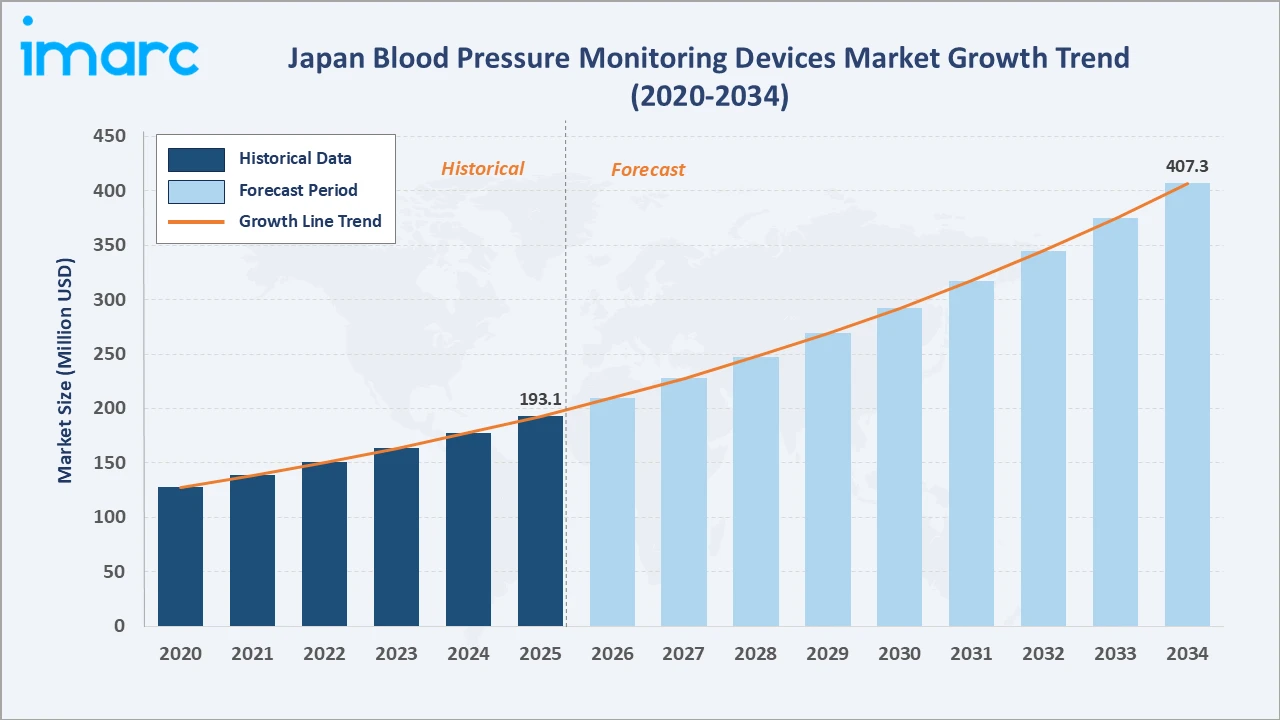
The Japan blood pressure monitoring devices market grew from USD 193.1 Million in 2025 to USD 209.8 Million in 2026 and is projected to reach USD 407.3 Million by 2034, exhibiting a CAGR of 8.65% during 2026-2034. Rising prevalence of hypertension among Japan's aging population, expanding adoption of home-based monitoring, and increasing integration of digital and smart technology in blood pressure devices are the primary forces shaping market growth.
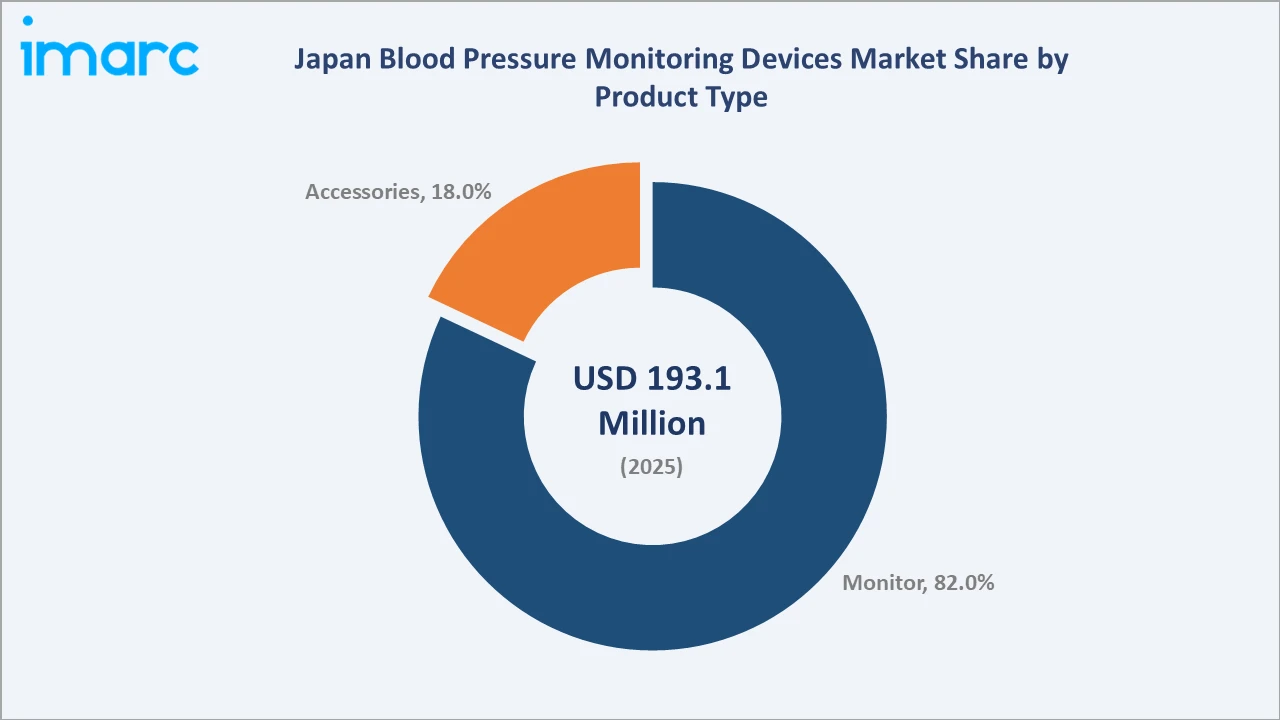
Monitor leads the product type segment at 82.0%, digital dominates the technology segment at 72.0%, and Kanto Region commands 35.0% of regional share.
Market Snapshot
| Metric | Value |
|---|---|
| Base Year Market Size (2025) | USD 193.1 Million |
| Market Size (2026) | USD 209.8 Million |
| Forecast Market Size (2034) | USD 407.3 Million |
| CAGR (2026-2034) | 8.65% |
| Base Year | 2025 |
| Historical Period | 2020-2025 |
| Forecast Period | 2026-2034 |
| Largest Region | Kanto Region (35.0%, 2025) |
| Second Largest Region | Kansai/Kinki Region (20.0%, 2025) |
| Leading Product Type | Monitor (82.0%, 2025) |
| Leading Technology | Digital (72.0%, 2025) |
The Japan blood pressure monitoring devices market size increased from USD 127.6 Million in 2020 to USD 193.1 Million in 2025 and is estimated to reach USD 209.8 Million in 2026. The market is further expected to grow to USD 292.3 Million by 2030 and USD 407.3 Million by 2034. The market holds a distinctive position within the global cardiovascular monitoring landscape, supported by Japan's high hypertension prevalence rate, a strong culture of preventive healthcare, and a well-established medical device manufacturing ecosystem.
To get more information on this market, Request Sample
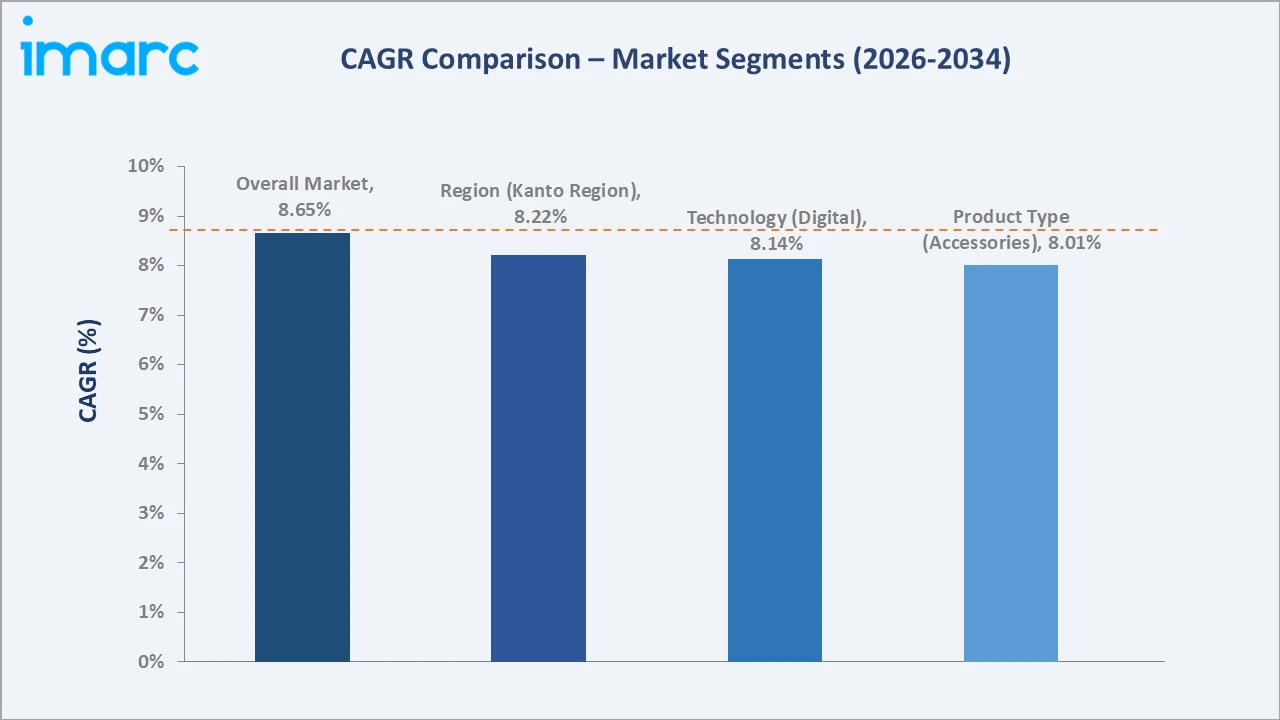
CAGR trajectories across product type, technology, and regional sub-segments show wearable and Shikoku Region expanding faster than the overall 8.65% market CAGR, driven by rising consumer demand for continuous monitoring solutions, expanding digital health infrastructure, and increasing adoption of connected health devices across regional healthcare systems.
Executive Summary
The Japan blood pressure monitoring devices market expanded from USD 193.1 Million in 2025 to an estimated USD 209.8 Million in 2026, positioning it among Asia's steadily growing medical device markets. Strong demand is underpinned by Japan's high hypertension prevalence, widespread physician endorsement of home monitoring, and accelerating technological innovation in smart and connected blood pressure devices.
Monitor commands 82.0% of product type share, driven by its established clinical accuracy and broad adoption across hospitals, clinics, and home healthcare settings throughout Japan. Digital leads the technology segment at 72.0%, reflecting widespread infrastructure for digital health devices and consumer preference for automated, easy-to-read solutions. Kanto Region leads regional share at 35.0%, anchored by the high population density, advanced healthcare infrastructure, and concentration of key medical device distributors and manufacturers.
Key Market Insights
| Insight | Data |
|---|---|
| Leading Product Type | Monitor – 82.0% share (2025) |
| Second Largest Product Type | Accessories – 18.0% share (2025) |
| Leading Technology | Digital – 72.0% share (2025) |
| Second Largest Technology | Wearable – 16.0% share (2025) |
| Leading Region | Kanto Region – 35.0% share (2025) |
| Second Largest Region | Kansai/Kinki Region – 20.0% share (2025) |
| Top Companies | Omron Corporation, A&D Company, Limited, CITIZEN WATCH CO., LTD. |
Key Analytical Observations Expanding On the Data Above:
- Monitor dominance at 82.0% reflects its established clinical utility, strong physician endorsement, and widespread consumer familiarity with upper-arm cuff measurement across Japan's large hypertensive patient population.
- Accessories at 18.0% are growing steadily as the installed base of blood pressure monitors expands, driving replacement demand for cuffs, batteries, and compatible peripherals across clinical and home-use segments.
- Digital leadership at 72.0% is underpinned by ease of use, automated inflation and reading, and memory storage features, making it the preferred choice for Japan's aging population managing blood pressure independently.
- Wearable at 16.0% is the fastest-growing technology segment, driven by rising health consciousness, integration with smartphone health platforms, and increasing demand for continuous ambulatory blood pressure monitoring.
- Kanto Region at 35.0% leads due to the concentration of tertiary hospitals, specialist clinics, pharmacy chains, and medical device distribution infrastructure.
Japan Blood Pressure Monitoring Devices Market Overview
Blood pressure monitoring devices are medical instruments designed to measure systolic and diastolic blood pressure in clinical and home settings. Core product categories include digital monitors offering automated measurement, aneroid devices for manual auscultation by healthcare professionals, and wearable monitors enabling continuous real-time tracking. Applications span hospital wards, outpatient clinics, community pharmacies, and direct-to-consumer home healthcare.
The Japan blood pressure monitoring devices ecosystem integrates component and raw material suppliers, domestic and international device manufacturers, regulatory bodies, hospital procurement networks, and pharmacy chains. Supporting infrastructure includes clinical validation networks, national health insurance reimbursement frameworks, and a robust distribution network connecting manufacturers to numerous pharmacies and hospitals across Japan.
Market Dynamics
To evaluate market opportunities, Request Sample
Market Drivers
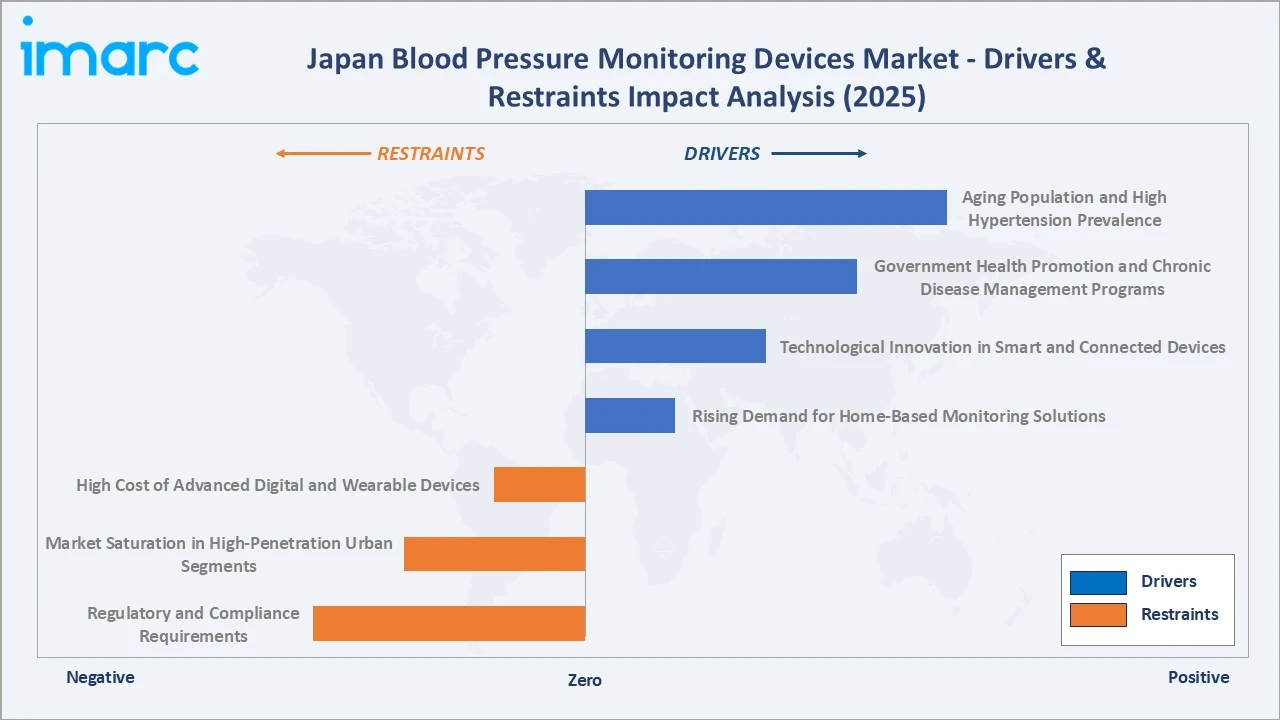
- Aging Population and High Hypertension Prevalence: Japan has one of the world's oldest demographic profiles, with 29.6% of its population aged 65 and above, as of September 2026. Hypertension affects a substantial proportion of the adult population, increasing the need for regular blood pressure monitoring. The growing elderly population and rising emphasis on preventive healthcare are driving demand for home-based blood pressure monitoring devices.
- Government Health Promotion and Chronic Disease Management Programs: Japan's government promotes preventive healthcare and early detection of chronic conditions through nationwide health screening initiatives and public health programs. Regular health check-ups and hypertension management initiatives encourage individuals to monitor their blood pressure and maintain cardiovascular health.
- Technological Innovation in Smart and Connected Devices: Ongoing advancement in sensor accuracy, semiconductor miniaturization, and connectivity is enabling wrist-type wearable monitors, Bluetooth-connected devices, and AI-assisted diagnostics, broadening the addressable market and creating new purchase occasions beyond clinical users.
- Rising Demand for Home-Based Monitoring Solutions: Increased preference for home blood pressure monitoring, supported by clinical guidelines recommending home measurement for hypertension management, is driving sustained replacement and upgrade demand among Japan's large hypertensive patient population.
Market Restraints
- High Cost of Advanced Digital and Wearable Devices: Premium-priced smart and wearable blood pressure monitors carry significantly higher unit costs compared to traditional devices, limiting accessibility for older or lower-income consumer segments and constraining broader adoption across certain demographic groups.
- Market Saturation in High-Penetration Urban Segments: Established urban markets, particularly within Kanto Region and Kansai/Kinki Region, are approaching saturation for standard digital monitors, reducing unit growth potential and intensifying price-based competition among established players.
- Regulatory and Compliance Requirements: Japan's rigorous medical device regulatory environment places significant compliance demands on manufacturers, adding time and cost to product development and market entry cycles for new device categories and foreign entrants.
Market Opportunities
- Rural and Semi-Urban Market Expansion: Areas, including Tohoku Region, Chugoku Region, and Shikoku Region, remain underpenetrated relative to hypertension prevalence, offering substantial expansion opportunity for manufacturers with localized distribution and marketing strategies.
- Integration with Telemedicine and Remote Patient Monitoring: Growing adoption of telehealth platforms is creating demand for Bluetooth-enabled, cloud-connected blood pressure devices that transmit readings directly to healthcare providers, opening new product categories and recurring service revenue streams. As per IMARC Group, the Japan telehealth market grew from USD 1.7 Billion in 2025 to USD 2.1 Billion in 2026.
Market Challenges
- Intensifying Price Competition from Import Players: Competition from value-priced imports offering acceptable accuracy at lower price points is compressing margins for established brands and placing continuous pressure on product differentiation strategies across all distribution channels.
- Consumer Trust and Clinical Validation Requirements: Japanese consumers and healthcare providers place high emphasis on clinical validation and device accuracy, requiring substantial investment in clinical studies and third-party certifications before market acceptance of new product categories or brands.
Emerging Market Trends
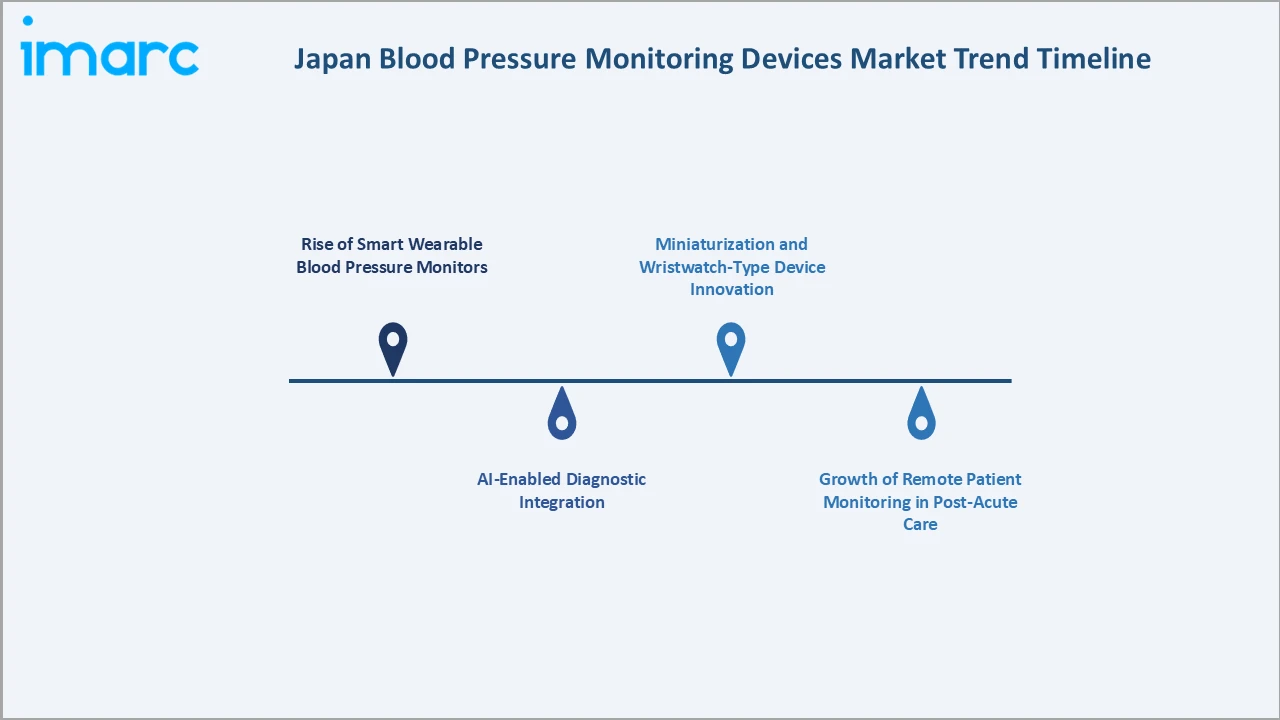
1. Rise of Smart Wearable Blood Pressure Monitors
Smart wearable devices capable of continuous blood pressure monitoring are transitioning from a niche category to a mainstream product segment in Japan. Device manufacturers are investing in cuffless and wrist-type wearable blood pressure monitors, driven by growing consumer health consciousness and expanding smartphone integration. This trend is expanding the addressable market beyond traditional clinical device cycles.
2. AI-Enabled Diagnostic Integration
AI and machine learning (ML) are being embedded into blood pressure monitoring platforms to enhance diagnostic accuracy and personalize hypertension management. AI-powered platforms can detect irregular pulse patterns, identify potential atrial fibrillation, and generate long-term trend insights from stored measurement data, evolving monitoring devices into connected health management tools with clinical-grade analytical capability.
3. Growth of Remote Patient Monitoring in Post-Acute Care
Japan's expanding telemedicine infrastructure is creating significant demand for clinical-grade blood pressure monitors compatible with remote monitoring platforms. Healthcare providers are increasingly prescribing connected blood pressure devices to post-discharge hypertensive patients, enabling medication management and care coordination without requiring repeated in-person clinic visits.
4. Miniaturization and Wristwatch-Type Device Innovation
Consumer preference for discreet, convenient blood pressure monitoring is driving demand for compact wrist-type and watch-integrated monitors. This miniaturization trend is supported by advances in MEMS sensor technology, improved oscillometric algorithms, and growing consumer familiarity with wearable health tracking platforms, positioning wrist monitors as everyday health tools rather than clinical devices.
Industry Value Chain Analysis
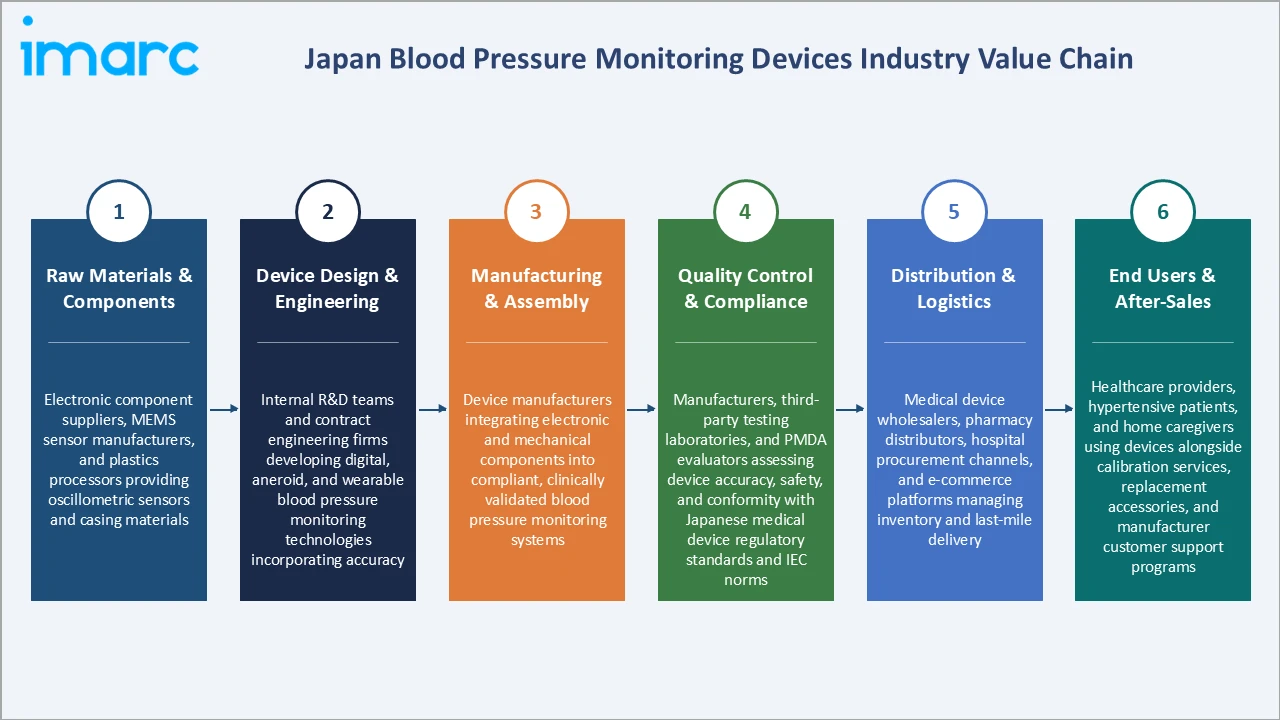
The Japan blood pressure monitoring devices value chain spans six stages, from component sourcing through manufacturing, distribution, and end-user deployment. Manufacturing, quality assurance, and retail distribution stages capture the highest value-add, while regulatory compliance and post-market surveillance are increasingly defining competitive position in Japan's medically regulated device environment.
| Stage | Key Players / Examples |
|---|---|
| Raw Materials & Components | Electronic component suppliers, MEMS sensor manufacturers, and plastics processors providing oscillometric sensors, display units, and casing materials for blood pressure monitoring devices |
| Device Design & Engineering | Internal R&D teams and contract engineering firms developing digital, aneroid, and wearable blood pressure monitoring technologies incorporating accuracy, connectivity, and usability requirements |
| Manufacturing & Assembly | Device manufacturers integrating electronic and mechanical components into compliant, clinically validated blood pressure monitoring systems under GMP and ISO-regulated production conditions |
| Quality Control & Compliance | Manufacturers, third-party testing laboratories, and PMDA evaluators assessing device accuracy, safety, and conformity with Japanese medical device regulatory standards and IEC norms |
| Distribution & Logistics | Medical device wholesalers, pharmacy distributors, hospital procurement channels, and e-commerce platforms managing inventory and last-mile delivery across Japan's national healthcare network |
| End Users & After-Sales | Healthcare providers, hypertensive patients, and home caregivers using devices alongside calibration services, replacement accessories, and manufacturer customer support programs |
Vertically integrated operators controlling device manufacturing, distribution, and after-sales service are positioned to capture greater margin than single-stage participants dependent on third-party logistics and independent calibration providers.
Technology Landscape in the Japan Blood Pressure Monitoring Devices Industry
Digital Technology
Digital blood pressure monitors dominate the technology share, leveraging oscillometric measurement algorithms, automatic cuff inflation, and digital displays to deliver user-friendly, accurate readings. Product development focuses on multi-user memory storage, irregular heartbeat detection, and Bluetooth connectivity for seamless health platform integration.
Aneroid Technology
Aneroid devices, utilizing a mechanical gauge calibrated against a reference standard and requiring manual auscultation, remain relevant in professional clinical environments. Aneroid monitors serve settings where trained practitioners prefer manual measurement for diagnostic precision and cost-effectiveness.
Wearable Technology
Wearable blood pressure monitoring technology is the fastest-growing segment, driven by optical photoplethysmography sensors and MEMS-based pressure transducers enabling cuffless, continuous measurement. Integration with consumer health wearables and smartphones is broadening this segment well beyond traditional clinical applications.
Smart Connectivity and IoT Integration
Leading blood pressure monitoring companies in Japan are embedding Bluetooth, Wi-Fi, and NFC modules into new device generations, enabling seamless data transfer to health apps, electronic health records, and telemedicine platforms. This connectivity layer is transforming standalone monitoring devices into integral components of digital health management ecosystems for Japan's aging population.
Market Segmentation Analysis
The report covers the following segments:
| Segment Category | Leading Segment | Market Share | Year |
|---|---|---|---|
| Product Type | Monitor | 82.0% | 2025 |
| Technology | Digital | 72.0% | 2025 |
| End User | 🔒 | 🔒 | 2025 |
| Region | Kanto Region | 35.0% | 2025 |

By Product Type
Monitor commands an 82.0% majority share in 2025, driven by widespread clinical adoption, strong physician recommendation, and established consumer familiarity with automated arm-cuff measurement across Japan's large hypertensive population. The segment benefits from continuous product improvement, particularly the integration of digital features and Bluetooth connectivity, supporting repeat purchase and upgrade cycles.
To access detailed market analysis, Request Sample
Accessories at 18.0% represent the second-largest segment, supported by the expanding installed base of blood pressure monitors requiring periodic replacement of cuffs, batteries, and calibration accessories across both clinical and home-use applications in Japan.
By Technology
Digital represents 72.0% of the technology segment in 2025, reflecting its dominant adoption across clinical and home settings due to its ease of operation, automated measurement, and reliable accuracy for Japan's aging and self-monitoring patient population across all regional markets.
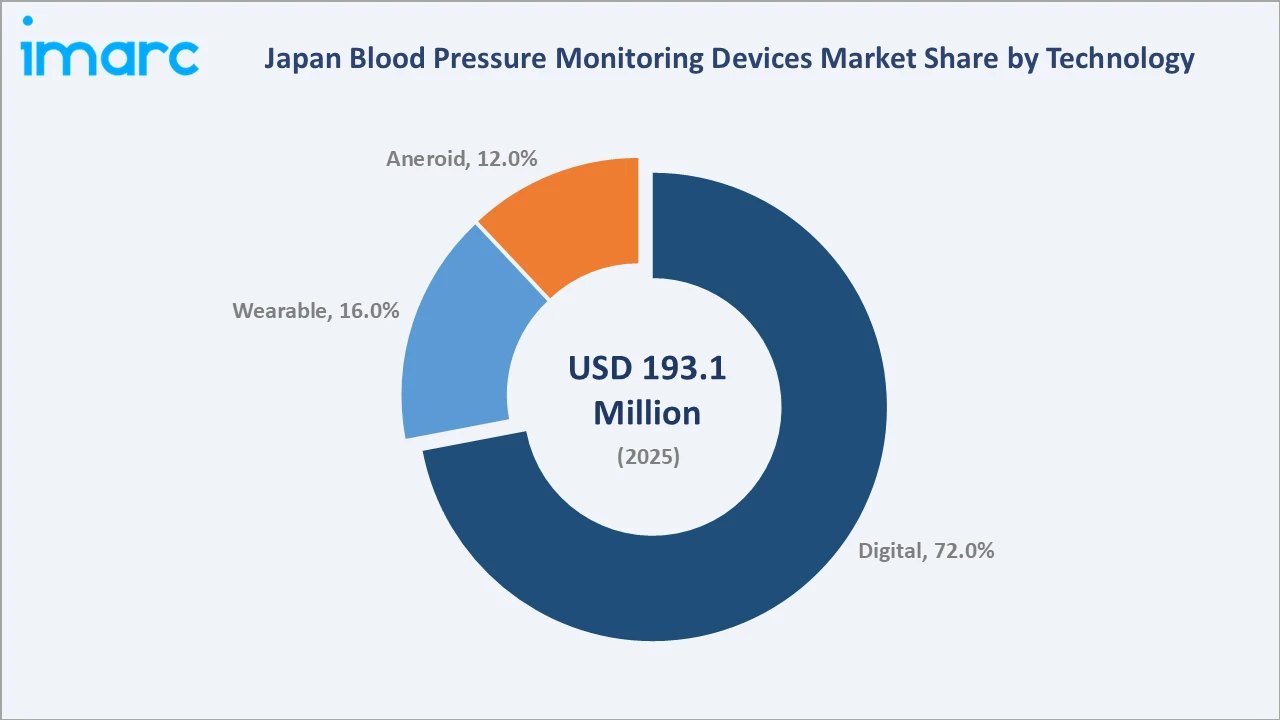
Wearable at 16.0% is the fastest-growing technology segment, supported by growing demand for continuous ambulatory monitoring and the expansion of connected health platforms across Japan.
Regional Market Insights
| Region | Share (2025) | Key Growth Drivers |
|---|---|---|
| Kanto Region | 35.0% | High population density, concentration of tertiary hospitals and specialty clinics, advanced pharmacy distribution networks, and proximity to leading medical device manufacturers |
| Kansai/Kinki Region | 20.0% | Large urban population in Osaka and Kyoto, growing health awareness programs, expanding pharmacy chains, and strong concentration of regional healthcare facilities |
| Central/Chubu Region | 15.0% | Manufacturing-driven industrial base, growing elderly population in Aichi and Nagano prefectures, and expanding community healthcare and home monitoring infrastructure |
| Kyushu-Okinawa Region | 8.0% | Increasing healthcare investment, growing elderly population, proximity to production clusters, and rising demand for home blood pressure monitoring devices |
| Tohoku Region | 7.0% | Aging rural population, ongoing healthcare infrastructure investment, expanding pharmacy and community clinic networks, and rising public health awareness campaigns |
| Chugoku Region | 6.0% | Rising elderly care demand, expanding regional public health programs, and growing adoption of home-based blood pressure monitoring among aging rural communities |
| Hokkaido Region | 5.0% | Cold climate-related cardiovascular risk prevalence, aging demographic profile, government-supported healthcare expansion, and growing home health monitoring adoption |
| Shikoku Region | 4.0% | Fastest-growing region by CAGR, driven by improving healthcare access, rapidly aging population, and expanding public awareness campaigns for blood pressure monitoring |
Kanto Region at 35.0% in 2025 leads the regional landscape, driven by its high population density, advanced healthcare infrastructure, strong concentration of medical facilities, and greater adoption of home-based healthcare monitoring devices.
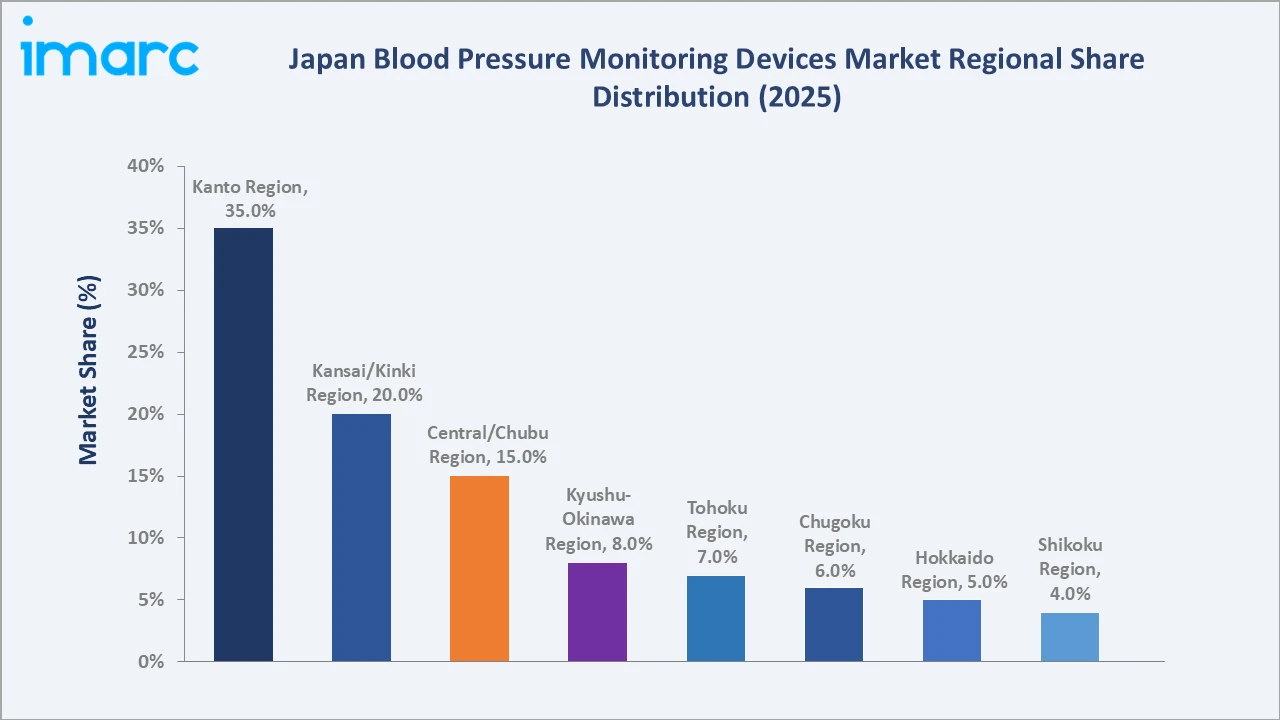
Shikoku Region, while currently the smallest regional contributor at 4.0%, is the fastest-growing region, driven by improving healthcare access, a rapidly aging rural population, and expanding public health programs promoting regular blood pressure self-monitoring across underserved communities.
Competitive Landscape
The Japan blood pressure monitoring devices market is moderately concentrated, with domestic leaders holding significant market share by volume and brand recognition. International companies and specialist players compete on technology differentiation, clinical validation credentials, and connected health platform integration to capture specific user segments.
| Company Name | Brand / Key Product | Position | Strategic Focus |
|---|---|---|---|
| Omron Corporation | OMRON Healthcare | Leader | Expanding connected and wearable blood pressure monitoring range through digital health platform integration and direct-to-consumer channel development |
| A&D Company, Limited | A&D Medical | Leader | Advancing clinical-grade measurement accuracy and expanding distribution across hospital procurement and pharmacy channels in Japan and internationally |
| CITIZEN WATCH CO., LTD. | Citizen | Challenger | Leveraging precision engineering heritage to develop accurate and compact blood pressure monitoring devices for clinical and home consumer markets in Japan |
Key players include Omron Corporation, A&D Company, Limited, and CITIZEN WATCH CO., LTD., among others.
Key Company Profiles
Omron Corporation
Omron Corporation is a Japan-based global manufacturer of industrial automation and healthcare equipment, headquartered in Kyoto. The company operates one of the world's largest blood pressure monitor manufacturing and distribution platforms under its OMRON Healthcare brand, serving clinical and home-use markets across Japan and several other countries.
- Product Portfolio: Arm-type and wrist-type digital blood pressure monitors, including the Evolv cuffless wearable monitor, multi-user memory devices, and Bluetooth-connected monitors compatible with the OMRON Connect health management platform.
- Recent Developments: The company continues to advance its cuffless and wearable blood pressure monitoring technology, expanding its connected health platform and ongoing clinical validation studies across major markets including Japan.
- Strategic Focus: Strengthening leadership in connected blood pressure monitoring through continued investment in AI-driven diagnostics, wearable device innovation, and digital health platform integration across clinical and consumer channels.
A&D Company, Limited
A&D Company, Limited is a Japan-based precision measurement and medical device manufacturer. The company produces clinical-grade and consumer blood pressure monitors marketed internationally under the A&D Medical brand, with strong penetration across hospital, pharmacy, and home-use channels.
- Product Portfolio: Upper arm and wrist blood pressure monitors for clinical, hospital, and home use, including automatic digital monitors with Bluetooth connectivity, large LCD displays, and clinically validated irregular heartbeat detection capabilities.
- Recent Developments: The company continues to develop precision measurement technology and expand its blood pressure monitoring range across clinical and consumer channels in Japan and international markets.
- Strategic Focus: Advancing clinical-grade measurement accuracy and expanding distribution partnerships across pharmacy, hospital procurement, and e-commerce channels in Japan and key export markets.
CITIZEN WATCH CO., LTD.
CITIZEN WATCH CO., LTD. is a Japan-based precision technology company headquartered in Tokyo, internationally recognized for its watchmaking heritage and precision engineering capabilities applied to medical measurement devices.
- Product Portfolio: Digital blood pressure monitors for home use, incorporating precision oscillometric measurement technology, large LCD displays, memory storage, and ergonomic cuff design features aligned with consumer usability requirements.
- Recent Developments: The company continues to develop compact and accurate blood pressure monitoring products leveraging its precision engineering capabilities to advance device accuracy, form factor design, and consumer accessibility.
- Strategic Focus: Leveraging precision engineering heritage and brand recognition to develop compact, accurate blood pressure monitoring devices targeting Japan's home healthcare consumer market.
Market Concentration Analysis
The Japan blood pressure monitoring devices market is moderately concentrated, with Omron Corporation and A&D Company, Limited collectively commanding a substantial majority of market volume and brand-driven revenue. These companies benefit from deep brand loyalty, established clinical endorsement, and extensive distribution partnerships across Japan's pharmacy, hospital, and e-commerce channels.
Barriers to entry include PMDA regulatory approval requirements, the clinical validation investment needed to establish product credibility with Japanese healthcare providers, and the high brand loyalty concentrated among established domestic manufacturers. These factors create meaningful competitive advantages for incumbents while limiting rapid share capture by new entrants or value-priced imports.
Consolidation activity is primarily driven by technology platform acquisitions and digital health partnerships, as established players seek to extend device sales into recurring software and health management service revenue. Strategic alliances between device manufacturers and telehealth providers are emerging as a key structural feature of the market through the forecast period.
Investment & Growth Opportunities
Fastest-Growing Segments
Wearable is expanding fastest among technology sub-segments, driven by rising consumer demand for continuous monitoring, improving sensor accuracy, and growing compatibility with consumer health platforms.
Emerging Markets
Shikoku Region is expanding at the fastest CAGR among regional sub-segments, supported by improving healthcare access, a rapidly aging population, and expanding public health program coverage. Growing awareness of hypertension management and increasing demand for convenient home-based monitoring solutions are further supporting regional market growth.
Venture & Investment Trends
Investment is concentrating in AI-enabled diagnostic platforms, cuffless wearable blood pressure monitoring technology, and telehealth integration platforms connecting monitoring devices to clinical management systems. Capital is also flowing into digital health software that aggregates blood pressure data from multiple device types, creating subscription revenue models that extend value beyond hardware sales for leading manufacturers.
Future Market Outlook (2026-2034)
The Japan blood pressure monitoring devices market is projected to grow from USD 193.1 Million in 2025 to USD 209.8 Million in 2026, reaching USD 407.3 Million by 2034, registering a CAGR of 8.65% during 2026-2034.
Three structural forces will shape the market through 2034 continued expansion of Japan's aging population driving hypertension prevalence and monitoring demand; accelerating integration of AI, IoT, and wearable technology into monitoring devices; and the growing role of blood pressure monitoring in Japan's evolving telehealth and remote patient management infrastructure.
By 2034, the Japan blood pressure monitoring devices market is expected to be characterized by a maturing digital monitor segment, a rapidly expanding wearable and cuffless monitoring category, and a growing proportion of connected devices transmitting data to cloud health platforms.
Research Methodology
Primary Research
Primary research included structured discussions with blood pressure device manufacturers, hospital procurement managers, pharmacy chain executives, clinical cardiologists, and healthcare policy specialists in Japan, validating market sizing, segment mix, and regional demand patterns across the Japan blood pressure monitoring devices ecosystem.
Secondary Research
Secondary sources included PMDA regulatory disclosures, Ministry of Health, Labour and Welfare publications, Japan Hypertension Society clinical guidelines, national health insurance reimbursement data, and public disclosures from listed medical device manufacturers and distributors operating in the Japanese market.
Forecasting Models
Market forecasts used top-down and bottom-up models combining hypertension prevalence estimates, home-monitoring penetration rate projections, hospital procurement data, and technology adoption trend analysis. Scenario analysis addressed regulatory change pace, wearable device adoption rates, and the impact of digital health platform integration on device upgrade cycles.
Japan Blood Pressure Monitoring Devices Market Report Coverage:
| Report Features | Details |
|---|---|
| Base Year of the Analysis | 2025 |
| Historical Period | 2020-2025 |
| Forecast Period | 2026-2034 |
| Units | Million USD |
| Scope of the Report |
Exploration of Historical and Forecast Trends, Industry Catalysts and Challenges, Segment-Wise Historical and Predictive Market Assessment:
|
| Product Types Covered |
|
| Technologies Covered | Digital, Aneroid, Wearable |
| End Users Covered | Hospitals and Clinics, Ambulatory Surgical Centers, Diagnostic Centers, Homecare Settings, Others |
| Regions Covered | Kanto Region, Kansai/Kinki Region, Central/ Chubu Region, Kyushu-Okinawa Region, Tohoku Region, Chugoku Region, Hokkaido Region, Shikoku Region |
| Companies Covered | Omron Corporation, A&D Company, Limited, CITIZEN WATCH CO., LTD., etc. |
| Customization Scope | 10% Free Customization |
| Post-Sale Analyst Support | 10-12 Weeks |
| Delivery Format | PDF and Excel through Email (We can also provide the editable version of the report in PPT/Word format on special request) |
Key Benefits for Stakeholders:
- IMARC’s industry report offers a comprehensive quantitative analysis of various market segments, historical and current market trends, market forecasts, and dynamics of the Japan blood pressure monitoring devices market from 2020-2034.
- The research report provides the latest information on the market drivers, challenges, and opportunities in the Japan blood pressure monitoring devices market.
- Porter's five forces analysis assist stakeholders in assessing the impact of new entrants, competitive rivalry, supplier power, buyer power, and the threat of substitution. It helps stakeholders to analyze the level of competition within the Japan blood pressure monitoring devices industry and its attractiveness.
- Competitive landscape allows stakeholders to understand their competitive environment and provides an insight into the current positions of key players in the market.
Frequently Asked Questions About the Japan Blood Pressure Monitoring Devices Market Report
The Japan blood pressure monitoring devices market size is estimated at USD 209.8 Million in 2026, driven by Japan's high hypertension prevalence, rising home monitoring adoption, and growing integration of digital and smart technology in blood pressure monitoring devices.
The market is projected to grow at a CAGR of 8.65% from 2026-2034, reaching USD 407.3 Million, supported by an aging population, technological innovation in smart devices, and expanding telehealth integration.
Monitor dominates the market at 82.0% product type share in 2025, driven by its established clinical utility and widespread adoption among Japan's large hypertensive population for home-based monitoring.
Digital represents 72.0% of the technology segment in 2025, driven by ease of use, automated measurement, and wide compatibility with connected health platforms across Japan's clinical and home-user base.
Kanto Region commands 35.0% share in 2025, driven by its high population density, advanced healthcare infrastructure, concentration of medical facilities, and strong adoption of home-based blood pressure monitoring devices.
Shikoku Region is the fastest-growing region, supported by improving healthcare access, a rapidly aging population, and expanding public health programs promoting regular blood pressure monitoring across underserved communities.
Key players include Omron Corporation, A&D Company, Limited, and CITIZEN WATCH CO., LTD., among others.
Key drivers include Japan's aging population and high hypertension prevalence, rising demand for home monitoring, government health programs, and accelerating adoption of smart and connected blood pressure devices.
Key trends include the rise of smart wearable monitors, AI-enabled diagnostic integration, growth in remote patient monitoring and telemedicine, and increasing miniaturization of blood pressure measurement technology.
Need more help?
- Speak to our experienced analysts for insights on the current market scenarios.
- Include additional segments and countries to customize the report as per your requirement.
- Gain an unparalleled competitive advantage in your domain by understanding how to utilize the report and positively impacting your operations and revenue.
- For further assistance, please connect with our analysts.
 Request Customization
 Speak to an Analyst
 Request Brochure
 Inquire Before Buying
Benefits of Customization
- Personalize this research
- Triangulate with your data
- Get data as per your format and definition
- Gain a deeper dive into a specific application, geography, customer, or competitor
- Any level of personalization
Get in Touch With Us
UNITED STATES
Phone: +1-201-971-6302
INDIA
Phone: +91-120-433-0800
UNITED KINGDOM
Phone: +44-753-714-6104
Email: [email protected]
Client Testimonials























Related Reports

Choose your plan
*Please note that the prices mentioned below are starting prices for each bundle type. Kindly contact our team for further details.*
Single User License
- 1 User License, Access on 2 Devices
- PDF Report + Excel Dataset (Password Protected)
- Lifetime Access
- No Printing Rights
- 10% Free Report Customization
- 10–12 Weeks of Analyst Support
Five User License
- Access for 5 Users, 2 Devices per User
- PDF Report + Excel Dataset (Password Protected)
- Lifetime Access
- Dedicated Account Manager
- 12–14 Weeks of Analyst Support
- No Printing Rights
- 15% Free Report Customization
- 25% Discount on Your Next Purchase
Corporate User License
- Unlimited User Access (Within Your Organization)
- PDF Report + Excel Dataset
- Lifetime Access
- Dedicated Account Manager
- 14–20 Weeks of Analyst Support
- No Printing Rights
- 20% Free Report Customization
- 30% Discount on Your Next Purchase
Essential Insights
What's included:
3 reports
- Lifetime Access
- PDF Reports
- Excel Datasets
- 2 Weeks of Free Analyst Support
- 2 User Licenses
- Access on 2 Devices
- Printing Rights
- Complimentary PowerPoint (PPT) Version
- Complimentary License Upgrade
Professional Access
What's included:
5 reports
- Lifetime Access
- PDF Reports
- Excel Datasets
- 8 Weeks of Free Analyst Support
- 2 User Licenses
- Access on 2 Devices
- Printing Rights
- Complimentary PowerPoint (PPT) Version
- Complimentary License Upgrade
Business Advantage
What's included:
8 reports
- Lifetime Access
- PDF Reports
- Excel Datasets
- 14 Weeks of Free Analyst Support
- 2 User Licenses
- Access on 2 Devices
- Printing Rights
- Complimentary PowerPoint (PPT) Version
- Complimentary License Upgrade
Enterprise Intelligence
What's included:
10 reports
- Lifetime Access
- PDF Reports
- Excel Datasets
- 20 Weeks of Free Analyst Support
- 2 User Licenses
- Access on 2 Devices
- Printing Rights
- Complimentary PowerPoint (PPT) Version
- Complimentary License Upgrade