
Japan Cement Market Size, Share, Trends and Forecast by Type, End Use, and Region, 2026-2034
Japan Cement Market Size, Share, Trends & Forecast (2026-2034)
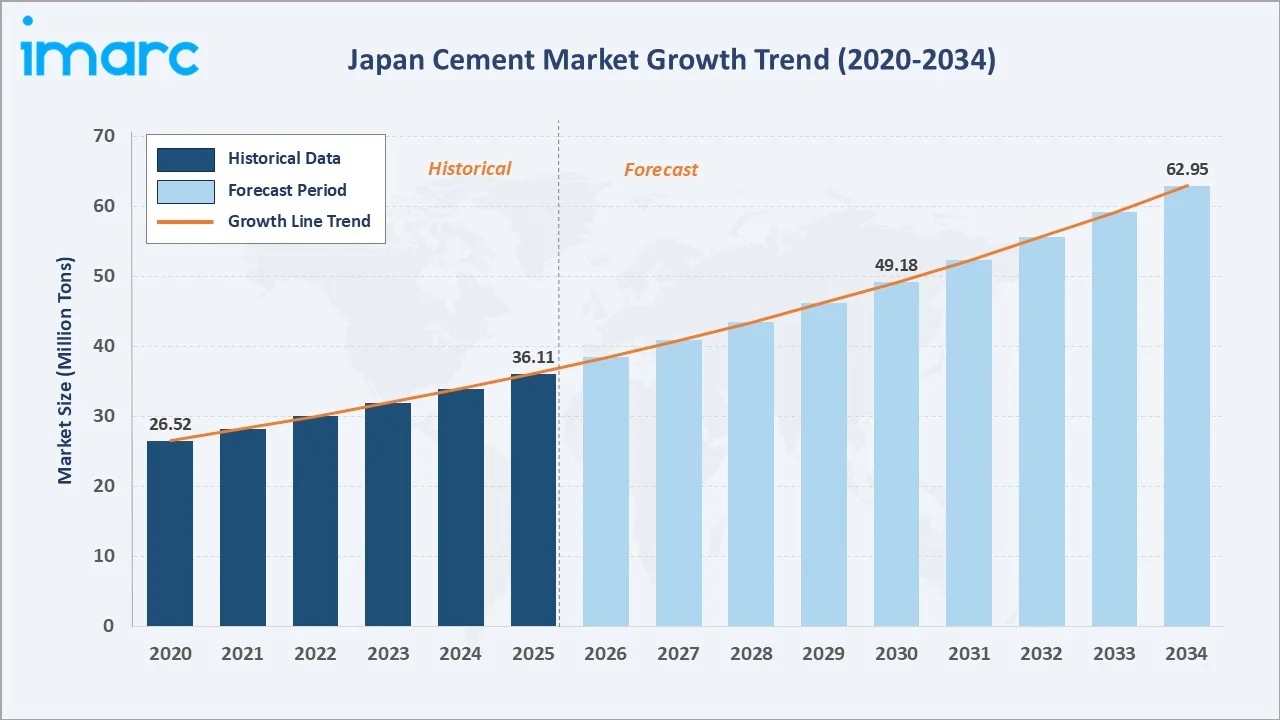
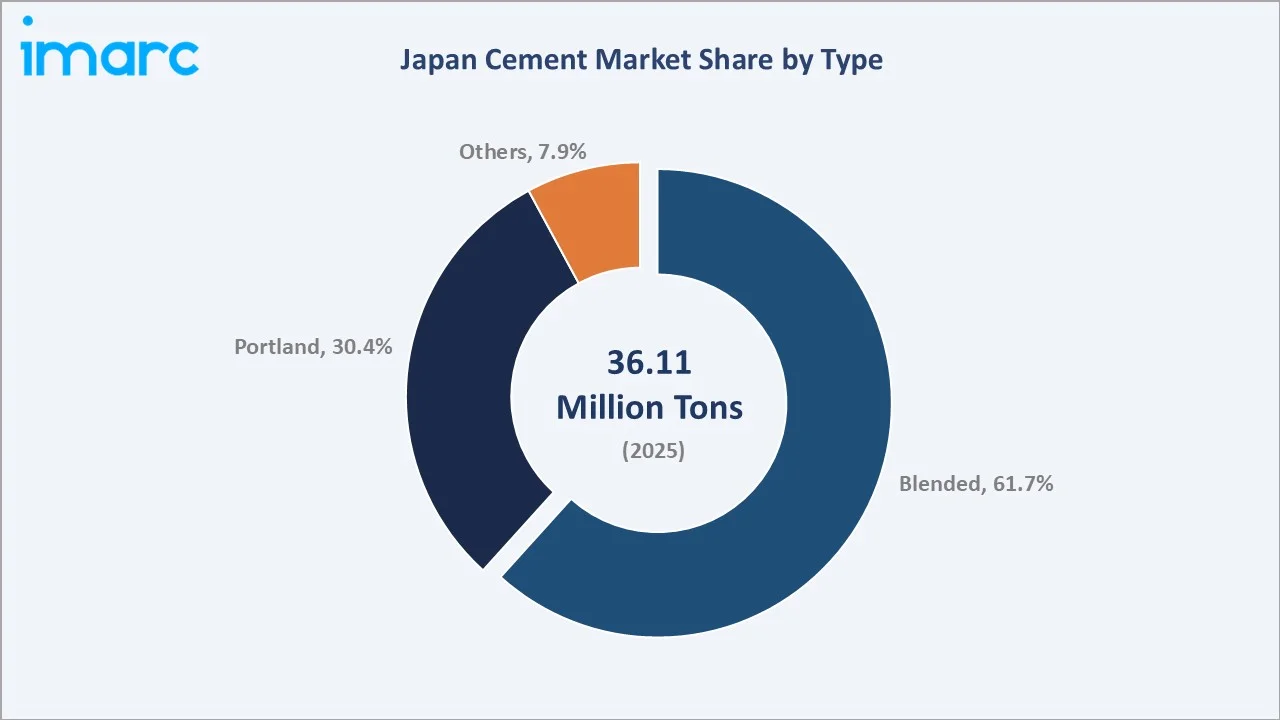
The Japan cement market reached 36.11 Million Tons in 2025 and is projected to reach 62.95 Million Tons by 2034, exhibiting a CAGR of 6.37% during 2026-2034. As of 2023, a substantial share of Japan’s infrastructure, including over 730,000 bridges, 11,000 tunnels, 10,000 water gates, 470,000 metres of sewer pipelines, and 5,000 port quays, exceeded 50 years of service. This is driving Japan’s cement market by increasing demand for cement and concrete used in bridge rehabilitation, tunnel reinforcement, sewer replacement, flood-control upgrades, and port modernization. Blended cement leads the type at 61.7%, infrastructure dominates end use at 49.5%, and the Kanto region accounts for the largest regional share at 32.8%.
Market Snapshot
|
Metric |
Value |
|
Market Size (2025) |
36.11 Million Tons |
|
Forecast Market Size (2034) |
62.95 Million Tons |
|
CAGR (2026-2034) |
6.37% |
|
Base Year |
2025 |
|
Historical Period |
2020-2025 |
|
Forecast Period |
2026-2034 |
|
Dominant Type |
Blended (61.7%, 2025) |
|
Dominant End Use |
Infrastructure (49.5%, 2025) |
|
Leading Region |
Kanto Region (32.8%, 2025) |
The Japan cement market grew from 26.52 Million Tons in 2020 to 36.11 Million Tons in 2025, driven by post-COVID reconstruction spending reactivation and seismic infrastructure investment. The market is projected to reach 49.18 Million Tons by 2030 and 62.95 Million Tons by 2034.
To get more information on this market, Request Sample
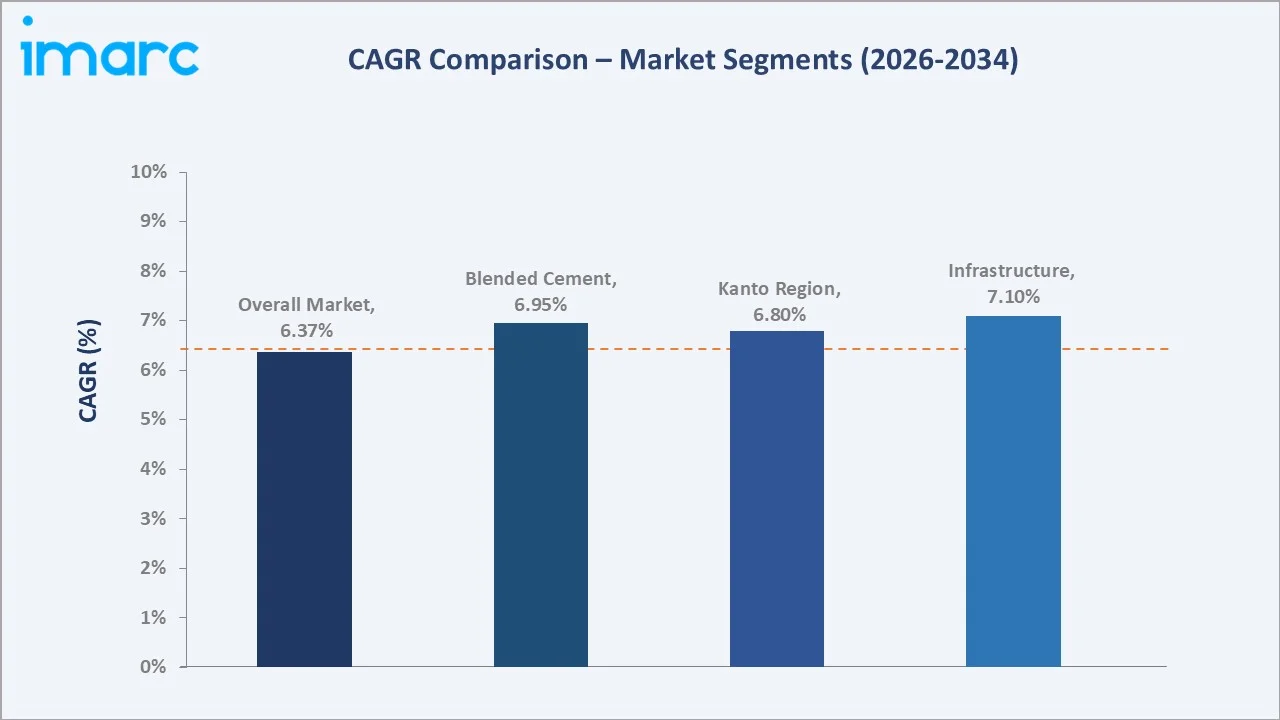
Infrastructure end use grows at ~7.1% CAGR through Japan's National Resilience Plan public works acceleration, seismic retrofit of aging highway bridges and tunnels, and Kyushu-Okinawa coastal protection works. Blended cement grows at ~6.95% CAGR through environmental regulatory pressure favoring lower-clinker ratio products. Kanto region grows at ~6.8% CAGR through Tokyo metropolitan area urban renewal, Yokohama waterfront development, and Chiba coastal infrastructure investment.
Executive Summary
The Japan cement market occupies a structurally mature but dynamically evolving position in Asia's construction materials industry, characterized by domestic volume driven by Japan's continuous public infrastructure investment cycle, accelerating low-carbon product transformation, and the progressive consolidation of what was historically a fragmented domestic producer landscape into a more concentrated three-major-producer structure. Japan's cement market is distinctive for the extraordinary quality standards maintained by its producers. Japan's infrastructure replacement cycle creates a structural demand floor for cement consumption that will sustain market growth independent of new construction activity cycles. Market volume reached 36.11 Million Tons in 2025, forecast at 62.95 Million Tons by 2034.
Blended cement leads at 61.7% (2025) through Japan's progressive adoption of supplementary cementitious materials that partially substitute clinker in cement formulations, reducing CO2 emissions per ton of cement while maintaining or improving specific performance properties for infrastructure applications. Infrastructure leads end use at 49.5% (2025) through Japan's continuously elevated public works expenditure, seismic retrofitting programs, and coastal protection from typhoon and tsunami events collectively sustaining infrastructure cement consumption at volumes substantially above residential and commercial sector demand.
Key Market Insights
|
Insight |
Data |
|
Dominant Type |
Blended Cement – 61.7% share (2025) |
|
Dominant End Use |
Infrastructure – 49.5% share (2025) |
|
Leading Region |
Kanto Region – 32.8% share (2025) |
|
Market Opportunity |
Carbon capture cement (CCUS); slag-blended specialty infrastructure cement; Kyushu seismic rebuild; export to Southeast Asia and Pacific markets |
Key Analytical Observations:
- Blended Cement at 61.7% (2025): Blended cement, incorporating varying proportions of granulated blast furnace slag (GGBS), coal fly ash (FA), and silica fume as supplementary cementitious materials (SCMs) that partially replace Portland clinker, has achieved dominant market share in Japan through the dual commercial driver of cost reduction and environmental compliance.
- Infrastructure End Use at 49.5%: Infrastructure cement consumption, encompassing highway bridges, tunnels, railway infrastructure, seaport and airport improvements, flood control and coastal protection, water and wastewater treatment facilities, and energy infrastructure, represents Japan's single largest cement demand source through the combination of the government public works allocation, the coastal reconstruction program, and the ongoing legacy urban transformation of Osaka Bay artificial islands and Kansai airport connectivity infrastructure.
- Kanto Region at 32.8% (2025): The Kanto region leads due to its high concentration of urban development, transport infrastructure, commercial construction, and large-scale redevelopment projects. Ongoing maintenance of aging bridges, roads, ports, and public facilities further supports regional cement demand.
Japan Cement Market Overview
The Japan cement market encompasses the production, distribution, and consumption of hydraulic cementitious binders, primarily Portland cement and blended cement formulations incorporating supplementary cementitious materials, used in the preparation of concrete and mortar for construction applications across infrastructure, residential, and commercial end-use sectors. Japan's cement industry is structurally differentiated from other major cement markets by several distinctive characteristics: the extraordinary quality and consistency standards maintained under regulatory standards, where cement quality specifications include not only compressive strength and setting time but also stringent limits on chloride ion content, heat of hydration, and expansion, which make Japanese cement the reference standard for demanding structural applications globally. Macroeconomic factors include government infrastructure renewal spending, urban redevelopment, disaster-resilient construction, and continued investment in transportation and public utilities.
Market Dynamics
To evaluate market opportunities, Request Sample
Market Drivers
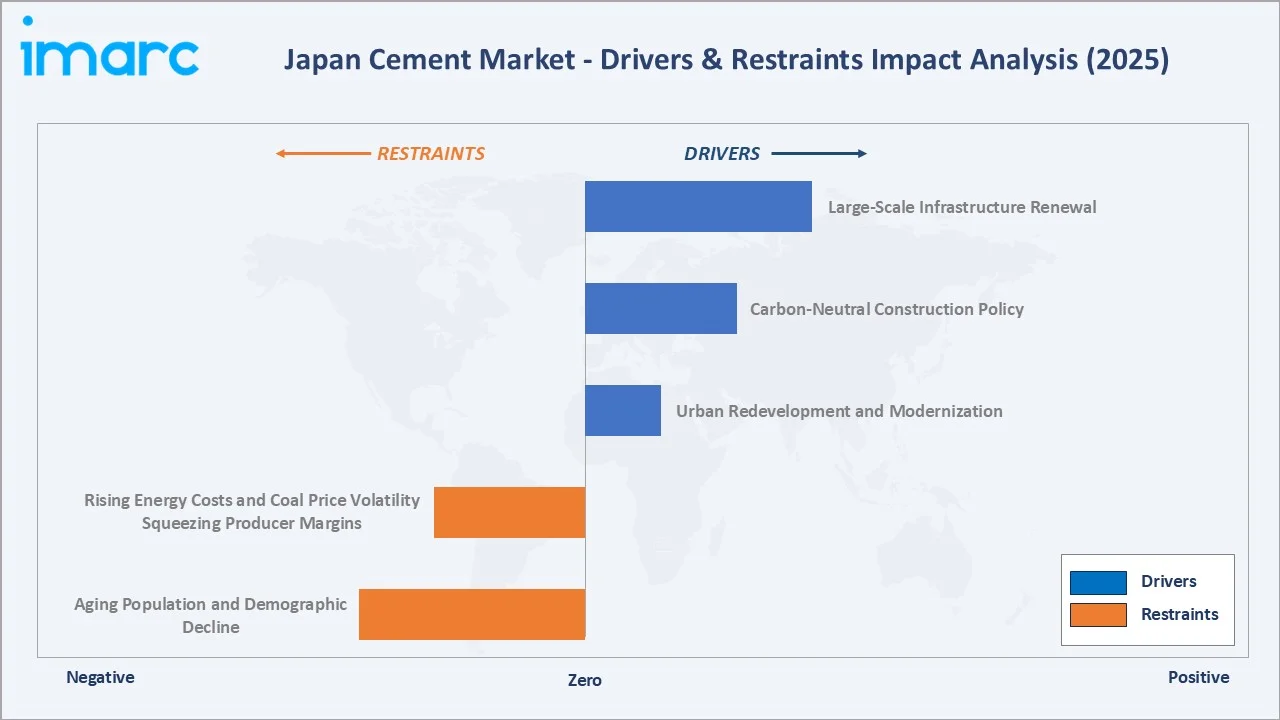
- Large-Scale Infrastructure Renewal: In June 2025, the Japanese government approved a five-year infrastructure resilience plan valued at more than JPY 20 trillion (USD 139 billion) to strengthen the country’s preparedness against natural disasters. Japan’s extensive stock of bridges, tunnels, sewer systems, water gates, and port facilities is increasingly reaching the end of its intended service life. The rehabilitation, reinforcement, and replacement of these assets require substantial volumes of cement and concrete. Regular maintenance programs also generate stable demand for repair materials. This long-term renewal cycle is expected to support cement consumption across the country.
- Carbon-Neutral Construction Policy: Japan's government Green Innovation Fund allocated JPY 2 trillion over 10 years to decarbonization technologies, including construction materials has embedded low-carbon cement specifications in public procurement guidelines, requiring government infrastructure contracts to specify cement products with demonstrable lifecycle CO2 reduction relative to standard Portland cement. This procurement policy creates a structural price premium for blended cement and low-carbon cement products, improving blended cement segment profitability while accelerating substitution of Portland cement in government-funded infrastructure contracts.
- Urban Redevelopment and Modernization: Major cities, particularly in the Kanto region, are witnessing continued redevelopment of railway stations, commercial districts, residential complexes, and public facilities. Replacement of older buildings and modernization of urban infrastructure require significant volumes of cement and concrete. Large mixed-use and transit-oriented projects further support market growth.
Market Restraints
- Aging Population and Demographic Decline: Japan's structural demographic decline, with the population projected to fall from 125 million to approximately 100 million by 2050, creates a long-term residential cement demand headwind as household formation rates decline and the construction of new housing units falls toward the demographic replacement level. Japan's residential cement demand is partially insulated from demographic decline by two countervailing forces: the continuous demolish-and-rebuild cycle and the seismic retrofit program for earthquake standard buildings.
- Rising Energy Costs and Coal Price Volatility Squeezing Producer Margins: Cement kiln operations require substantial thermal energy supplied primarily through coal, supplemented by waste-derived fuels and petroleum coke. The surge in thermal coal prices created acute margin pressure for Japan's cement producers, who faced simultaneous energy cost spikes without proportionate ability to raise domestic cement prices.
Market Opportunities
- Southeast Asia and Pacific Export Market Development: Japan's major cement producers have historically maintained significant export businesses to Southeast Asian and Pacific construction markets. The weakened Japanese yen has materially improved Japan's cement export cost competitiveness, enabling domestic producers to increase export volumes to Vietnam, Bangladesh, Hong Kong, Taiwan, and Pacific island markets where Japanese cement quality commands premium pricing.
- Carbon Capture Cement Premium Product Development: The convergence of Japan's cement industry investment, government carbon credit scheme development, and premium green construction procurement standards creates a potential high-value product category that commands premium pricing above standard equivalents in government infrastructure contracts, ESG-committed private development projects, and green building certification schemes.
Market Challenges
- Labor Shortage in Construction Sector: Japan's construction sector labor shortage is creating construction project delays and cost escalation that indirectly reduce cement consumption by extending project timelines and suppressing developer new starts.
- Alternative Materials Competition from Ultra-High-Performance Concrete and Timber: The emergence of Ultra-High-Performance Concrete (UHPC), using cement at 2-3x conventional concrete cement intensity but with dramatically reduced cross-section requirements that net-reduce cement consumption per structural unit, and the growing acceptance of mass timber for commercial building floors create emerging alternative material substitution dynamics that could constrain conventional concrete cement demand growth in commercial construction through the forecast period.
Emerging Market Trends
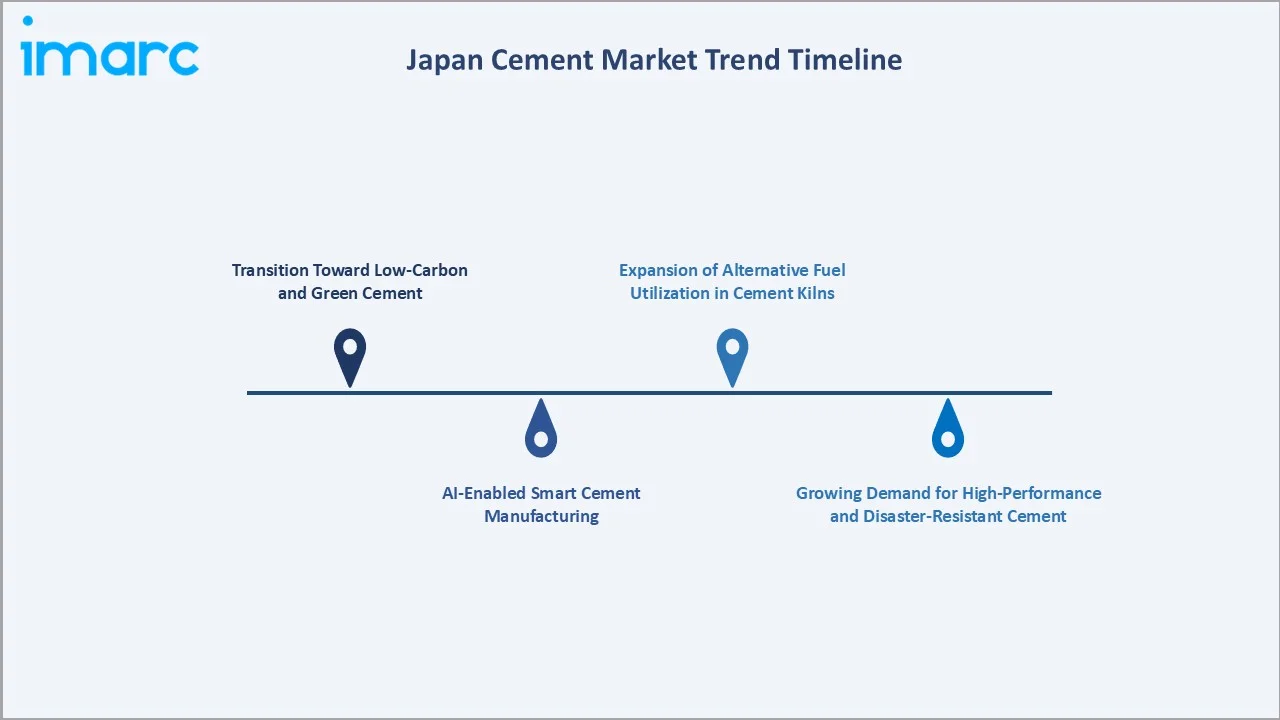
1. Transition Toward Low-Carbon and Green Cement
Japan's cement industry is increasingly adopting low-carbon cement through the use of supplementary cementitious materials, alternative fuels, and carbon-efficient manufacturing processes. In July 2025, Mitsubishi UBE Cement Corporation (MUCC) launched a pilot project at its Kyushu plant in Kitakyushu to support carbon neutrality by converting CO2 emissions from cement production and industrial waste into carbon-storing construction materials. The initiative captures CO2 and combines it with waste cement, chemical residues, and steel slag to produce carbon-recycled aggregates, road base materials, and artificial carbonate sand for use in public infrastructure projects across Kitakyushu. Growing demand for sustainable construction materials is accelerating the commercialization of eco-friendly cement products.
2. AI-Enabled Smart Cement Manufacturing
Japanese cement producers are increasingly deploying artificial intelligence, IoT sensors, and advanced process automation to optimize kiln operations, reduce fuel consumption, and improve production efficiency. Predictive maintenance and real-time quality monitoring are helping plants minimize downtime and operating costs. Digital transformation enhancing productivity while supporting sustainability objectives.
3. Growing Demand for High-Performance and Disaster-Resistant Cement
Increasing investments in disaster-resilient infrastructure are driving demand for high-strength, durable, and specialized cement products. Cement with enhanced durability, crack resistance, and longer service life are increasingly used in bridges, tunnels, coastal protection structures, and earthquake-resistant buildings. This trend is supported by Japan's continuous focus on infrastructure resilience and long-term asset durability.
4. Expansion of Alternative Fuel Utilization in Cement Kilns
Cement manufacturers are increasingly replacing conventional fossil fuels with biomass, waste-derived fuels, and other alternative energy sources in kiln operations. This transition helps reduce production costs, lowers carbon emissions, and supports Japan's waste management objectives. Greater adoption of alternative fuels is becoming a key strategy for improving the environmental performance of cement production.
Industry Value Chain Analysis
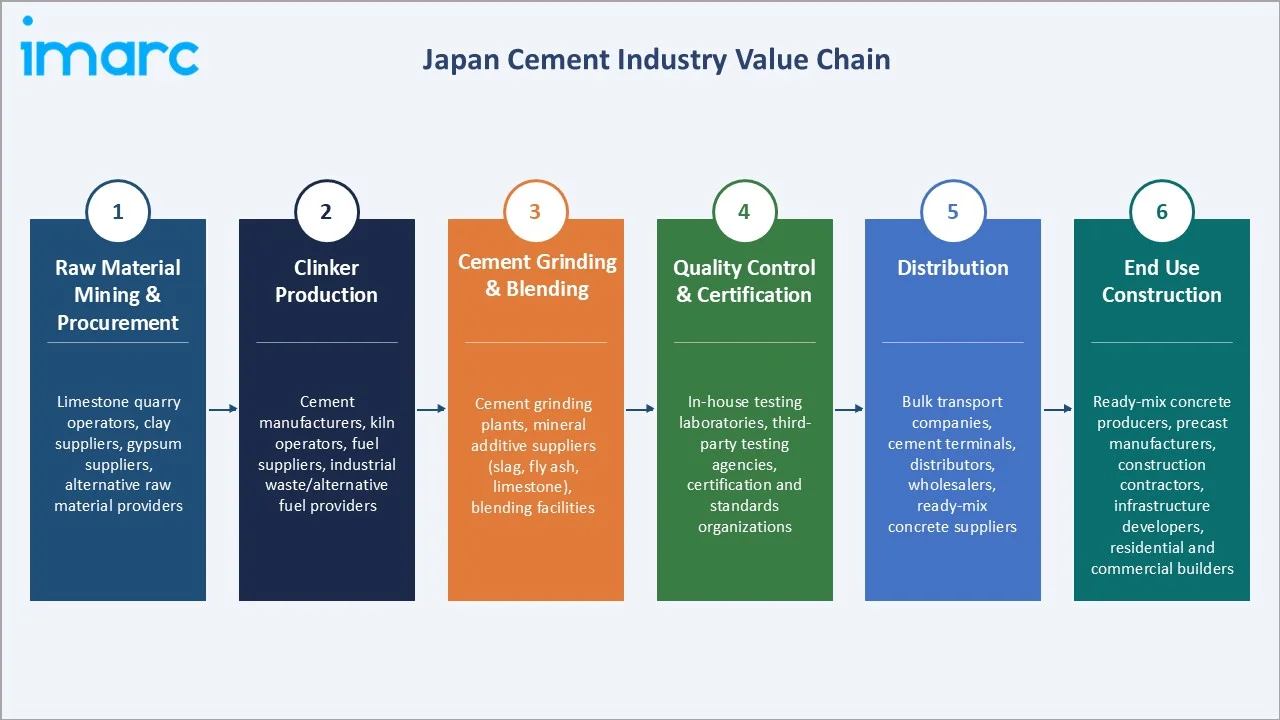
The Japan cement value chain integrates raw material mining & procurement, clinker production, cement grinding & blending, quality control & certification, distribution, and end use construction.
|
Stage |
Key Participants |
|
Raw Material Mining & Procurement |
Limestone quarry operators, clay suppliers, gypsum suppliers, alternative raw material providers. |
|
Clinker Production |
Cement manufacturers, kiln operators, fuel suppliers, industrial waste/alternative fuel providers. |
|
Cement Grinding & Blending |
Cement grinding plants, mineral additive suppliers (slag, fly ash, limestone), blending facilities. |
|
Quality Control & Certification |
In-house testing laboratories, third-party testing agencies, certification and standards organizations. |
|
Distribution |
Bulk transport companies, cement terminals, distributors, wholesalers, ready-mix concrete suppliers. |
|
End Use Construction |
Ready-mix concrete producers, precast manufacturers, construction contractors, infrastructure developers, residential and commercial builders. |
Clinker production is the most value-added stage in the cement value chain, as it involves the energy-intensive conversion of raw materials into clinker, the primary intermediate product that determines cement quality and performance. This stage requires advanced kiln technology, significant capital investment, and process expertise, making it the largest contributor to production cost and value creation.
Technology Landscape in the Japan Cement Industry
Energy-Efficient Grinding Technologies
Modern vertical roller mills (VRMs), high-efficiency separators, and energy-saving grinding systems are replacing conventional grinding equipment. These technologies significantly reduce electricity consumption while maintaining consistent cement fineness and product quality. Improved grinding efficiency also lowers overall production costs.
Alternative Fuel and Waste Co-Processing Technologies
Japanese cement manufacturers are adopting advanced combustion systems capable of utilizing biomass, municipal waste, waste plastics, and industrial by-products as alternative fuels. These technologies reduce fossil fuel dependence while supporting circular economy initiatives. Co-processing also lowers landfill waste and decreases overall production emissions.
Carbon-Recycled Construction Material Technologies
Japanese companies are developing technologies that mineralize captured CO2 into recycled aggregates, road base materials, artificial sand, and other low-carbon construction products. These innovations permanently store carbon while creating sustainable alternatives to conventional building materials. The technology supports both emissions reduction and resource recycling.
Market Segmentation Analysis
The report covers the following segments:
|
Segment Category |
Leading Segment |
Market Share |
Year |
|
Type |
Blended |
61.7% |
2025 |
|
End Use |
Infrastructure |
49.5% |
2025 |
|
Region |
Kanto Region |
32.8% |
2025 |

By Type
Blended cement leads at 61.7% (2025) through Japan's progressive SCM adoption driven by both environmental regulations and technical performance advantages for infrastructure applications.
To access detailed market analysis, Request Sample
Portland cement at 30.4% retains essential structural application volumes including high-strength concrete for seismically resistant building frames, precast segment production, and rapid-hardening applications. Others at 7.9% encompass specialty cements including expansive cement, low-heat Portland cement, and oil-well cement.
By End Use
Infrastructure leads at 49.5% (2025) through seawall reconstruction, underground works, highway bridge replacement, seaport expansion, and coastal protection from climate change-amplified typhoon and tsunami hazard. Infrastructure concrete specification in Japan consistently requires high-durability performance: low water-to-cement ratios, slag or fly ash blended cement for chemical resistance, and extended curing protocols that collectively create higher cement intensity per cubic meter of concrete than residential or commercial applications.
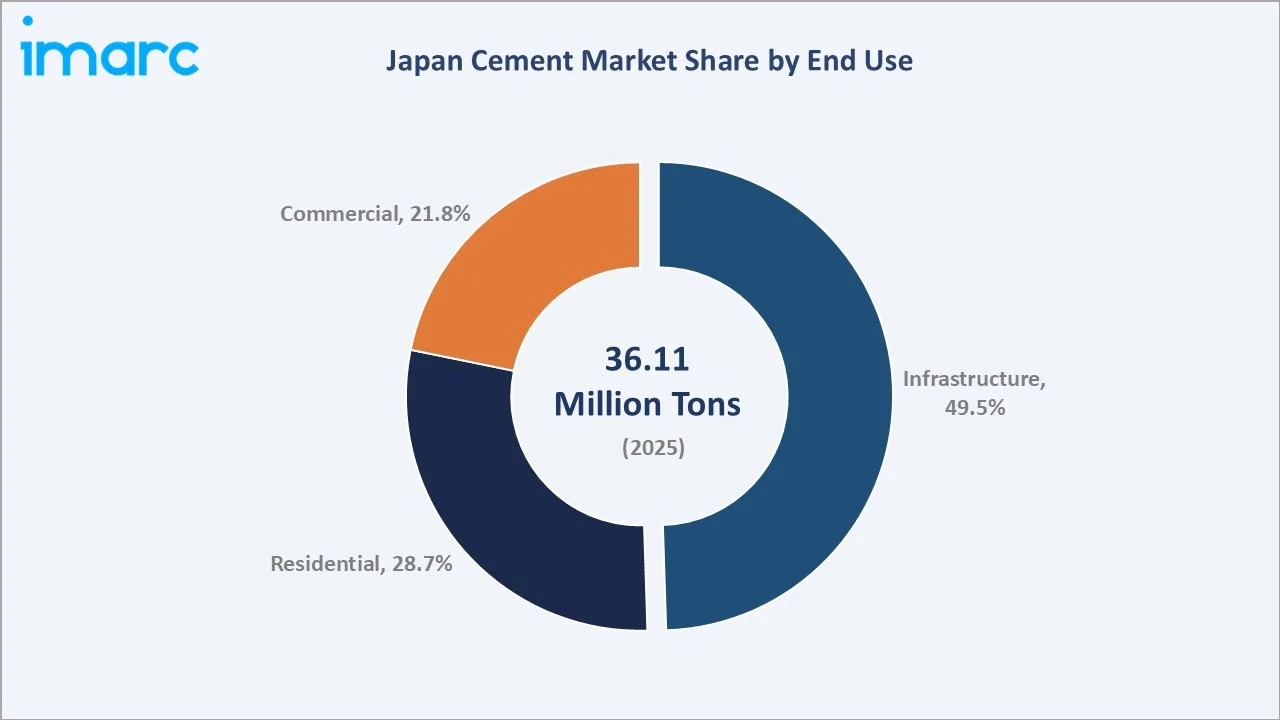
Residential at 28.7% reflects Japan's condominium construction dominance, seismic retrofit programs, and the constant demolish-and-rebuild cycle of Japan's aging wooden housing stock. Commercial at 21.8% serves super-high-rise construction, logistics warehouse construction, and data center reinforced concrete infrastructure.
Regional Market Insights
|
Region |
Share (2025) |
Key Japan Cement Market Drivers & Characteristics |
|
Kanto Region |
32.8% |
Largest cement-consuming region, driven by large-scale urban redevelopment, commercial construction, transportation infrastructure upgrades, and continuous maintenance of aging public infrastructure. |
|
Kansai/Kinki Region |
18.2% |
Demand is supported by manufacturing activity, urban renewal projects, port infrastructure, and commercial and residential construction across major metropolitan areas. |
|
Central/Chubu Region |
14.6% |
Strong industrial base, automotive manufacturing, logistics infrastructure, and transportation projects contribute to stable cement consumption throughout the region. |
|
Kyushu-Okinawa Region |
10.8% |
Infrastructure resilience projects, disaster reconstruction, port development, and industrial investments support steady demand for cement and concrete products. |
|
Hokkaido Region |
8.3% |
Cement demand is primarily driven by transportation infrastructure, road maintenance, public works, and cold-climate construction requirements. |
|
Tohoku Region |
5.9% |
Ongoing post-disaster reconstruction, infrastructure modernization, and coastal protection projects continue to sustain regional cement demand. |
|
Chugoku Region |
5.1% |
Industrial manufacturing, port facilities, energy infrastructure, and regional public construction projects support consistent cement consumption. |
|
Shikoku Region |
4.3% |
Market growth is supported by regional infrastructure maintenance, road and bridge rehabilitation, and residential and public construction activities. |
Kanto region's 32.8% dominance is supported by its high concentration of population, large-scale urban redevelopment, and continuous investment in transportation and commercial infrastructure. Kansai/Kinki region’s 18.2% follows as another major market, driven by manufacturing activities, port infrastructure, and urban modernization projects. The Central/Chubu region’s 14.6% benefits from its strong industrial base, automotive manufacturing, and logistics investments, sustaining steady cement demand.
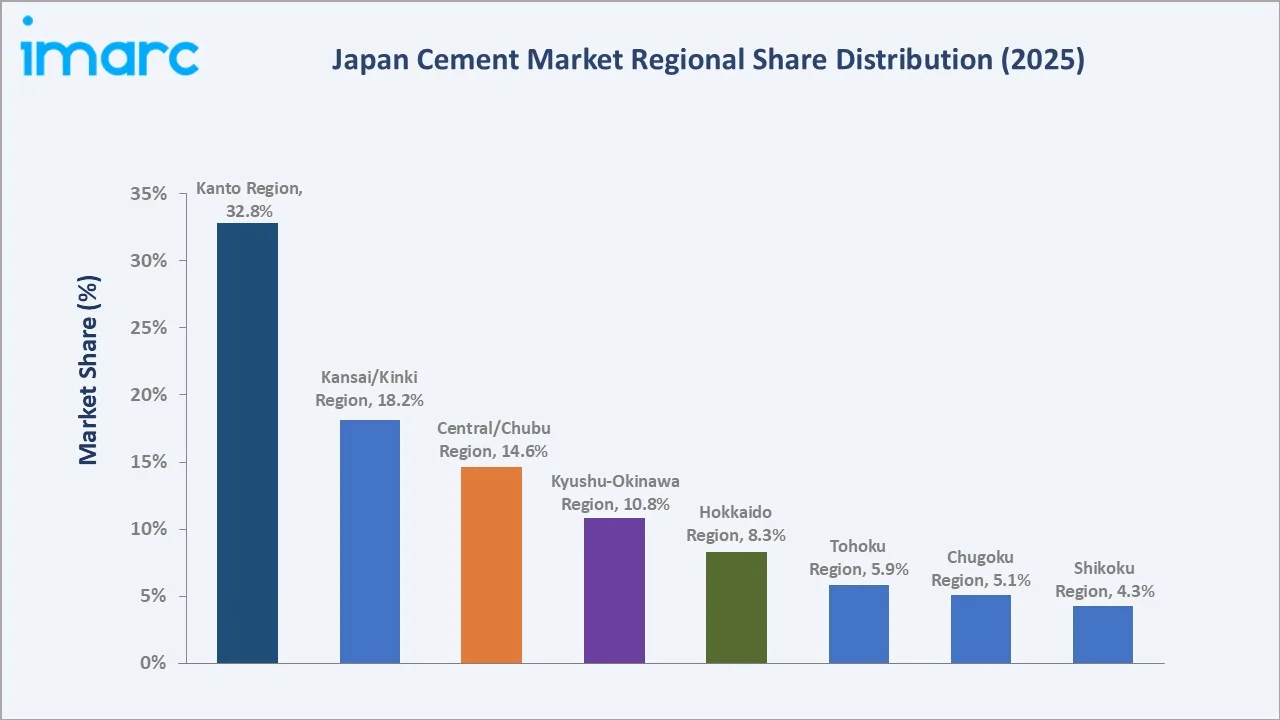
Kyushu-Okinawa region’s 10.8% continues to witness growth through disaster-resilient infrastructure development, industrial expansion, and port projects. In the Hokkaido region’s 8.3% is largely supported by public infrastructure, road maintenance, and cold-climate construction requirements. The Tohoku region’s 5.9% remains supported by post-disaster reconstruction and infrastructure rehabilitation initiatives. Meanwhile, Chugoku region’s 5.1% and Shikoku region’s 4.3% contribute smaller but stable shares through regional public works, industrial facilities, and transportation infrastructure upgrades.
Competitive Landscape
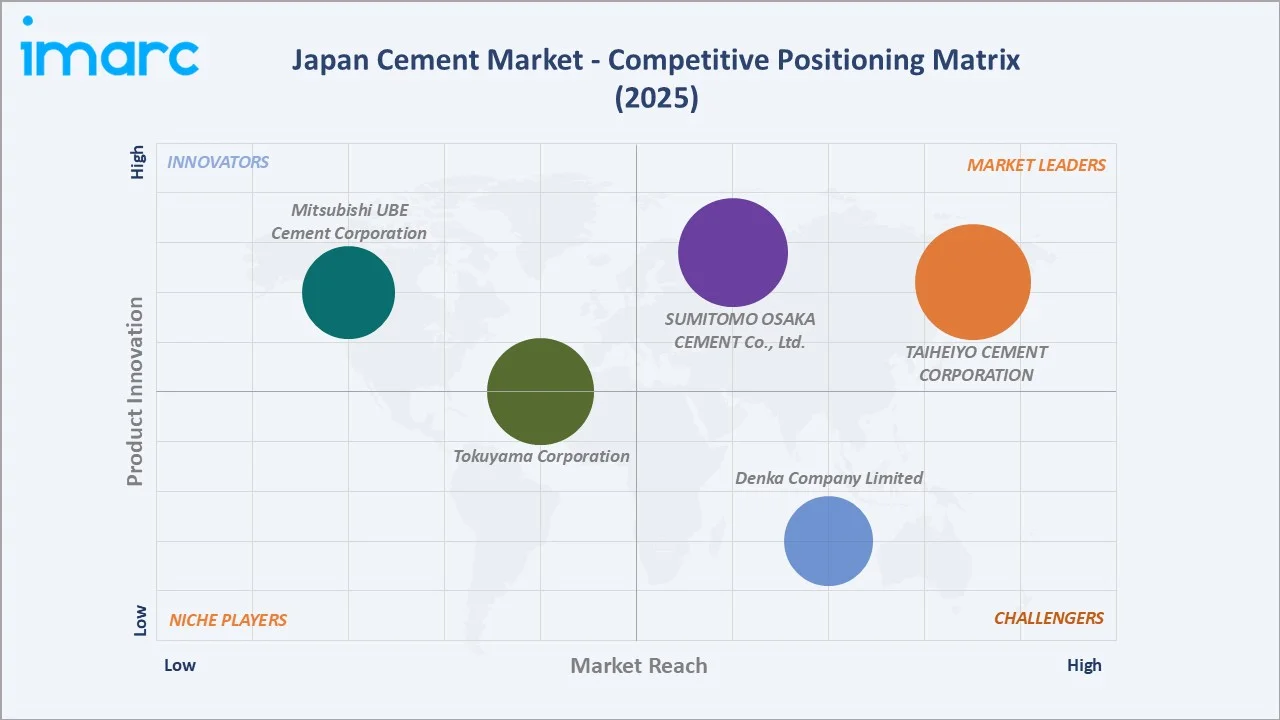
The Japan cement market is highly consolidated, with a few large domestic manufacturers accounting for a significant share of production capacity and nationwide distribution. Leading companies compete through capacity expansion, low-carbon cement development, digital manufacturing, and investments in carbon capture and alternative fuel technologies. Strategic partnerships, product innovation, and sustainability initiatives are becoming key competitive differentiators as the industry moves toward carbon neutrality. Regional production networks and long-standing customer relationships further strengthen the market positions of established players.
|
Company |
Key Products |
Market Position |
Core Strength |
|
TAIHEIYO CEMENT CORPORATION |
Ordinary Portland Cement, High Early Strength Portland Cement, Moderate-Heat Portland Cement, Portland Blast-Furnace Slag Cement, Portland Fly-Ash Cement, Low-Heat Portland Cement |
Market Leader |
TAIHEIYO CEMENT CORPORATION is Japan's largest cement manufacturer, controlling a significant portion of the country's clinker production capacity. |
|
SUMITOMO OSAKA CEMENT Co., Ltd. |
Ordinary Portland cement, High-early-strength Portland cement, Moderate-heat Portland cement, Low-heat Portland cement, Blast furnace cement, Fly ash cement, Moderate heat fly ash cement |
Market Leader |
Sumitomo Osaka Cement Co., Ltd., manufactures and supplies cement, ready-mix concrete, and solidification materials used in critical social infrastructure. |
|
Mitsubishi UBE Cement Corporation |
Ordinary Portland Cement, High-Early-Strength Portland Cement, Portland Blast-Furnace Slag Cement, Fly-Ash Cement, Moderate Heat Portland Cement, Low Heat Portland Cement, Silica Fume Cement, Moderate Heat Fly-Ash Cement |
Innovator |
Mitsubishi UBE Cement Corporation plays a crucial role in Japan's infrastructure and circular economy by manufacturing cement, ready-mixed concrete, and supplying vital mineral resources |
|
Tokuyama Corporation |
Ordinary Portland Cement, Early Strength Portland Cement, Blast Furnace Slag Cement (type B), Soil Stabilizing Cement |
Established Player |
Tokuyama Corporation is a major player in Japan's cement sector, primarily operating through its colossal Nanyo Plant in Yamaguchi Prefecture. |
|
Denka Company Limited |
DENKA ALUMINA CEMENT |
Challenger |
Denka Company Limited plays a highly specialized role in the Japanese cement industry, shifting away from standard cement manufacturing to focus on niche, high-performance cement additives and alumina cement. |
Competitive dynamics are increasingly defined by the decarbonization strategy race, where operational scale and alternative fuel leadership, internal carbon pricing and semiconductor diversification, mineral carbonation CCUS technology investment, and post-combustion CCUS demonstration represent four distinct approaches to achieving the carbon-neutral cement positioning that Japan's government procurement framework will increasingly reward through the forecast period.
Key Company Profiles
TAIHEIYO CEMENT CORPORATION
TAIHEIYO CEMENT CORPORATION is Japan's largest cement manufacturer and one of the leading suppliers of cement, ready-mixed concrete, aggregates, and construction materials in the Asia-Pacific region. The company operates an extensive network of cement plants, grinding facilities, distribution terminals, and recycling operations across Japan. It serves infrastructure, commercial, industrial, and residential construction projects while also expanding its presence in overseas markets. Taiheiyo Cement is recognized for its strong focus on sustainable manufacturing, resource recycling, low-carbon cement technologies, and innovations that support Japan's carbon neutrality goals.
- Key Products: Ordinary Portland Cement, High Early Strength Portland Cement, Moderate-Heat Portland Cement, Portland Blast-Furnace Slag Cement, Portland Fly-Ash Cement, Low-Heat Portland Cement, Low-Heat Portland Cement.
- Strategic Focus: Focused on decarbonizing cement production through investments in carbon capture, utilization, and storage (CCUS), low-carbon cement products, and alternative fuel technologies. The company is advancing digital transformation by implementing AI, IoT, and automation to improve manufacturing efficiency and reduce energy consumption. It is also expanding its resource recycling and circular economy initiatives by utilizing industrial by-products and waste materials as alternative raw materials and fuels.
SUMITOMO OSAKA CEMENT Co., Ltd.
SUMITOMO OSAKA CEMENT Co., Ltd. is one of Japan's leading cement manufacturers, producing cement, ready-mixed concrete, aggregates, and construction materials for infrastructure, commercial, and residential projects. The company operates integrated cement production facilities and a nationwide distribution network, serving customers across Japan while also expanding selected international operations. In addition to its cement business, SUMITOMO OSAKA CEMENT is engaged in advanced materials, optical products, and electronic materials, supporting business diversification. The company emphasizes sustainable manufacturing, energy efficiency, resource recycling, and the development of environmentally friendly cement products to align with Japan's decarbonization objectives.
- Key Products: Ordinary Portland cement, High-early-strength Portland cement, Moderate-heat Portland cement, Low-heat Portland cement, Blast furnace cement, Fly ash cement, Moderate heat fly ash cement.
- Strategic Focus: Focused on developing low-carbon cement products and reducing greenhouse gas emissions through energy-efficient manufacturing processes and alternative fuel utilization. The company is strengthening its resource recycling initiatives by increasing the use of industrial by-products and waste-derived materials in cement production to support a circular economy.
Market Concentration Analysis
The Japan cement market is highly concentrated, with a small number of large domestic manufacturers accounting for the majority of production and supply. Major players benefit from extensive production facilities, nationwide distribution networks, and long-standing relationships with infrastructure and construction companies. High capital requirements, strict environmental regulations, and the need for integrated logistics networks create significant barriers to entry for new participants. Competition is increasingly centered on low-carbon cement technologies, resource recycling, energy-efficient manufacturing, and digital plant optimization, while strategic collaborations and sustainability investments continue to strengthen the market positions of established players.
Investment & Growth Opportunities
Highest Growth Segments
Infrastructure end use (~7.1% CAGR), low-carbon/blended cement sub-segment (~6.95-9.5% CAGR), Kanto region infrastructure cement (~6.8% CAGR), Kyushu-Okinawa reconstruction demand, and carbon-neutral premium cement represent Japan's highest-growth cement investment vectors through 2034.
Investment Themes
- CCUS technology commercialization partnership investment: Investment in partnerships among cement manufacturers, technology providers, utilities, and research institutions can accelerate the commercialization of carbon capture, utilization, and storage solutions. These collaborations help reduce technical and financial risks while supporting large-scale emission reduction across Japan’s cement plants.
- Specialty blended cement product development for coastal infrastructure: Investment in specialty blended cement can address demand for materials with improved resistance to seawater, chlorides, and harsh coastal conditions. Such products offer opportunities in ports, bridges, seawalls, and other marine infrastructure while supporting longer asset life and lower maintenance costs.
Future Market Outlook (2026-2034)
The Japan cement market is projected to grow from 36.11 Million Tons in 2025 to 62.95 Million Tons by 2034, delivering a 6.37% CAGR that reflects the structural alignment between Japan's continuously elevated public infrastructure investment, its accelerating decarbonization-driven product transformation, and the competitive consolidation that has created a more investment-capable industry structure. The anchor value of 49.18 Million Tons in 2030 is driven by three structural forces that will define Japan's cement market trajectory through the forecast period.
First, Japan's infrastructure replacement imperative creates a guaranteed demand floor for infrastructure cement consumption that sustains end-use dominance through the forecast period. Second, Japan's decarbonization policy framework is creating a structural product upgrade within the cement market where higher-value blended and specialty cement products progressively replace commodity Portland cement, expanding revenue and margin per ton even in scenarios where absolute volume growth moderates. Third, Japan's cement industry consolidation has created a three-major-producer oligopoly with the financial strength, R&D investment capacity, and pricing discipline to sustain profitability through energy cost volatility, execute CCUS technology deployment, and maintain export market development programs that smaller pre-consolidation industry structures could not support.
Research Methodology
Primary Research
Primary research comprised in-depth interviews with Japan Cement Association technical representatives, procurement managers at major public works contractors, infrastructure project engineers, ready-mix concrete batching plant operators, cement logistics terminal managers, and senior executives at both major and regional Japanese cement producers. Discussions validated market volume estimates, segment dynamics, competitive positioning, regional demand characteristics, and CCUS technology development timelines.
Secondary Research
Secondary research encompassed Japan cement annual production and shipment statistics, public works construction investment data, company annual reports, cement strategic plan documents, and Carbon Neutrality 2050 roadmap documentation.
Forecasting Models
Forecasting models were developed using historical Japan cement production and domestic shipment data, infrastructure investment budget pipeline analysis, construction cement demand modeling, blended cement adoption rate projections under green procurement policy scenarios, energy cost impact on production economics, industry consolidation competitive structure modeling, export market development opportunity analysis, and demographic residential construction decline offset calculation. Both top-down and bottom-up approaches were validated through primary research.
Japan Cement Market Report Coverage:
| Report Features | Details |
|---|---|
| Base Year of the Analysis | 2025 |
| Historical Period | 2020-2025 |
| Forecast Period | 2026-2034 |
| Units | Million Tons |
| Scope of the Report |
Exploration of Historical Trends and Market Outlook, Industry Catalysts and Challenges, Segment-Wise Historical and Future Market Assessment:
|
| Types Covered | Blended, Portland, Others |
| End Uses Covered | Residential, Commercial, Infrastructure |
| Regions Covered | Kanto Region, Kansai/Kinki Region, Central/ Chubu Region, Kyushu-Okinawa Region, Tohoku Region, Chugoku Region, Hokkaido Region, Shikoku Region |
| Companies Covered | TAIHEIYO CEMENT CORPORATION, SUMITOMO OSAKA CEMENT Co., Ltd., Mitsubishi UBE Cement Corporation, Tokuyama Corporation, Denka Company Limited, etc. |
| Customization Scope | 10% Free Customization |
| Post-Sale Analyst Support | 10-12 Weeks |
| Delivery Format | PDF and Excel through Email (We can also provide the editable version of the report in PPT/Word format on special request) |
Key Benefits for Stakeholders:
- IMARC’s industry report offers a comprehensive quantitative analysis of various market segments, historical and current market trends, market forecasts, and dynamics of the Japan cement market from 2020-2034.
- The research report provides the latest information on the market drivers, challenges, and opportunities in the Japan cement market.
- Porter's five forces analysis assist stakeholders in assessing the impact of new entrants, competitive rivalry, supplier power, buyer power, and the threat of substitution. It helps stakeholders to analyze the level of competition within the Japan cement industry and its attractiveness.
- Competitive landscape allows stakeholders to understand their competitive environment and provides an insight into the current positions of key players in the market.
Frequently Asked Questions About the Japan Cement Market Report
The Japan cement market reached 36.11 Million Tons in 2025, driven by public infrastructure investment and sustained infrastructure replacement demand from Japan's aging public works assets.
The market grows at 6.37% CAGR during 2026-2034, reaching 62.95 Million Tons by 2034. Growth is supported by infrastructure renewal, disaster-resilient construction, urban redevelopment, and demand for low-carbon cement products.
Blended cement leads at 61.7% (2025) through blast furnace slag and fly ash supplementary cementitious materials adoption driven by: CO2 reduction regulatory incentives, green procurement standards requiring certified low-CO2 cement in public infrastructure contracts, blended cement's technical performance advantages for coastal and marine infrastructure, and cost efficiency through industrial by-product SCM utilization below clinker production cost.
Infrastructure leads at 49.5% (2025) through underground construction, coast seawall reconstruction, hotel construction, seaport expansion, and continuous aging infrastructure replacement with concrete-intensive modern specifications.
Kanto region leads at 32.8% (2025) through Greater Tokyo's highest construction activity density, waterfront redevelopment, Airport expansion, and seismic infrastructure renewal.
Leading companies include TAIHEIYO CEMENT CORPORATION, SUMITOMO OSAKA CEMENT Co., Ltd., Mitsubishi UBE Cement Corporation, Tokuyama Corporation, and Denka Company Limited, among others.
The market is projected to reach approximately 49.18 Million Tons by 2030, driven by the construction peak phase, hotel construction, extension completion infrastructure, seawall program final phases, green procurement-mandated blended cement adoption in all national infrastructure contracts, and Kyushu-Okinawa post-earthquake and defense construction continuation.
Top opportunities include CCUS technology commercialization partnership, high-performance slag cement for coastal infrastructure, export market development from weakened JPY competitive advantage, AI process optimization, and carbon-negative concrete pre-cast product development.
Need more help?
- Speak to our experienced analysts for insights on the current market scenarios.
- Include additional segments and countries to customize the report as per your requirement.
- Gain an unparalleled competitive advantage in your domain by understanding how to utilize the report and positively impacting your operations and revenue.
- For further assistance, please connect with our analysts.
 Request Customization
 Speak to an Analyst
 Request Brochure
 Inquire Before Buying
Benefits of Customization
- Personalize this research
- Triangulate with your data
- Get data as per your format and definition
- Gain a deeper dive into a specific application, geography, customer, or competitor
- Any level of personalization
Get in Touch With Us
UNITED STATES
Phone: +1-201-971-6302
INDIA
Phone: +91-120-433-0800
UNITED KINGDOM
Phone: +44-753-714-6104
Email: [email protected]
Client Testimonials




.webp)




.webp)













Related Reports

Choose your plan
*Please note that the prices mentioned below are starting prices for each bundle type. Kindly contact our team for further details.*
Single User License
- 1 User License, Access on 2 Devices
- PDF Report + Excel Dataset (Password Protected)
- Lifetime Access
- No Printing Rights
- 10% Free Report Customization
- 10–12 Weeks of Analyst Support
Five User License
- Access for 5 Users, 2 Devices per User
- PDF Report + Excel Dataset (Password Protected)
- Lifetime Access
- Dedicated Account Manager
- 12–14 Weeks of Analyst Support
- No Printing Rights
- 15% Free Report Customization
- 25% Discount on Your Next Purchase
Corporate User License
- Unlimited User Access (Within Your Organization)
- PDF Report + Excel Dataset
- Lifetime Access
- Dedicated Account Manager
- 14–20 Weeks of Analyst Support
- No Printing Rights
- 20% Free Report Customization
- 30% Discount on Your Next Purchase
Essential Insights
What's included:
3 reports
- Lifetime Access
- PDF Reports
- Excel Datasets
- 2 Weeks of Free Analyst Support
- 2 User Licenses
- Access on 2 Devices
- Printing Rights
- Complimentary PowerPoint (PPT) Version
- Complimentary License Upgrade
Professional Access
What's included:
5 reports
- Lifetime Access
- PDF Reports
- Excel Datasets
- 8 Weeks of Free Analyst Support
- 2 User Licenses
- Access on 2 Devices
- Printing Rights
- Complimentary PowerPoint (PPT) Version
- Complimentary License Upgrade
Business Advantage
What's included:
8 reports
- Lifetime Access
- PDF Reports
- Excel Datasets
- 14 Weeks of Free Analyst Support
- 2 User Licenses
- Access on 2 Devices
- Printing Rights
- Complimentary PowerPoint (PPT) Version
- Complimentary License Upgrade
Enterprise Intelligence
What's included:
10 reports
- Lifetime Access
- PDF Reports
- Excel Datasets
- 20 Weeks of Free Analyst Support
- 2 User Licenses
- Access on 2 Devices
- Printing Rights
- Complimentary PowerPoint (PPT) Version
- Complimentary License Upgrade