
Japan Peripheral Vascular Devices Market Report by Device Type (Peripheral Vascular Stents, Peripheral Transluminal Angioplasty (PTA) Balloon Catheters, Peripheral Transluminal Angioplasty (PTA) Guidewires, Atherectomy Devices, Embolic Protection Devices, Inferior Vena Cava Filters, and Others), End User (Hospitals and Clinics, Ambulatory Care Centers, Specialty Clinics, and Others), and Region 2026-2034
Market Overview:
Japan peripheral vascular devices market size reached USD 584.3 Million in 2025. Looking forward, IMARC Group expects the market to reach USD 1,032.8 Million by 2034, exhibiting a growth rate (CAGR) of 6.53% during 2026-2034. The growing usage of minimally invasive surgeries, as they require shortened hospital stay and have faster recovery, is primarily driving the market growth.
|
Report Attribute
|
Key Statistics
|
|---|---|
|
Base Year
|
2025 |
|
Forecast Years
|
2026-2034
|
|
Historical Years
|
2020-2025
|
| Market Size in 2025 | USD 584.3 Million |
| Market Forecast in 2034 | USD 1,032.8 Million |
| Market Growth Rate (2026-2034) | 6.53% |
Access the full market insights report Request Sample
Peripheral vascular disease (PVD) is a circulatory ailment resulting from the constriction, obstruction, or spasms in blood vessels situated outside the heart and brain. These occurrences lead to a diminished blood flow within these vessels, resulting in symptoms like weakness, discomfort, gangrene, leg hair loss, numbness, and muscle fatigue. To address artery blockages and narrowing, healthcare professionals utilize peripheral vascular devices, including angioplasty catheters, peripheral guidewires, vena cava filters, stent grafts, and embolic protection devices (EPD). Blockages in the peripheral vasculature, in particular, are primarily caused by the accumulation of plaque, which constricts the blood vessels and hampers blood circulation to various body regions. Peripheral vascular devices are a secure solution that minimizes the risk of infection and irritation while enhancing blood flow and supplying oxygen-rich blood through the arteries.
Japan Peripheral Vascular Devices Market Trends:
The Japan peripheral vascular disease market is experiencing a promising trajectory, primarily due to the escalating prevalence of venous diseases, including chronic venous insufficiency (CVI) on a global scale. Peripheral vascular devices play a pivotal role in ensuring adequate blood flow to critical regions like the brain, legs, and feet, thus enabling optimal bodily functions. Contributing to this upward trend is the growing aging population in Japan and the surging incidence of various conditions such as peripheral artery disease (PAD) and arterial blockages. Lifestyle factors, including smoking, excessive alcohol consumption, physical inactivity, and unhealthy dietary choices, have played a significant role in these health issues. The market is further bolstered by the increasing preference for minimally invasive surgeries (MIS), driven by their advantages such as reduced complications, decreased postoperative discomfort, shorter hospital stays, and quicker recovery times. Additionally, the widespread adoption of atherectomy devices is on the rise due to the increasing prevalence of atherosclerosis, obesity, and lifestyle-related disorders. The healthcare sector in Japan is witnessing substantial growth, with consumers having greater spending capacity and increased investment in research and development (R&D) activities. These factors collectively contribute to a positive outlook for the Japan peripheral vascular disease market, ensuring its continued growth and development, over the forecasted period.
Japan Peripheral Vascular Devices Market Segmentation:
IMARC Group provides an analysis of the key trends in each segment of the market, along with forecasts at the country level for 2026-2034. Our report has categorized the market based on device type and end user.
Device Type Insights:
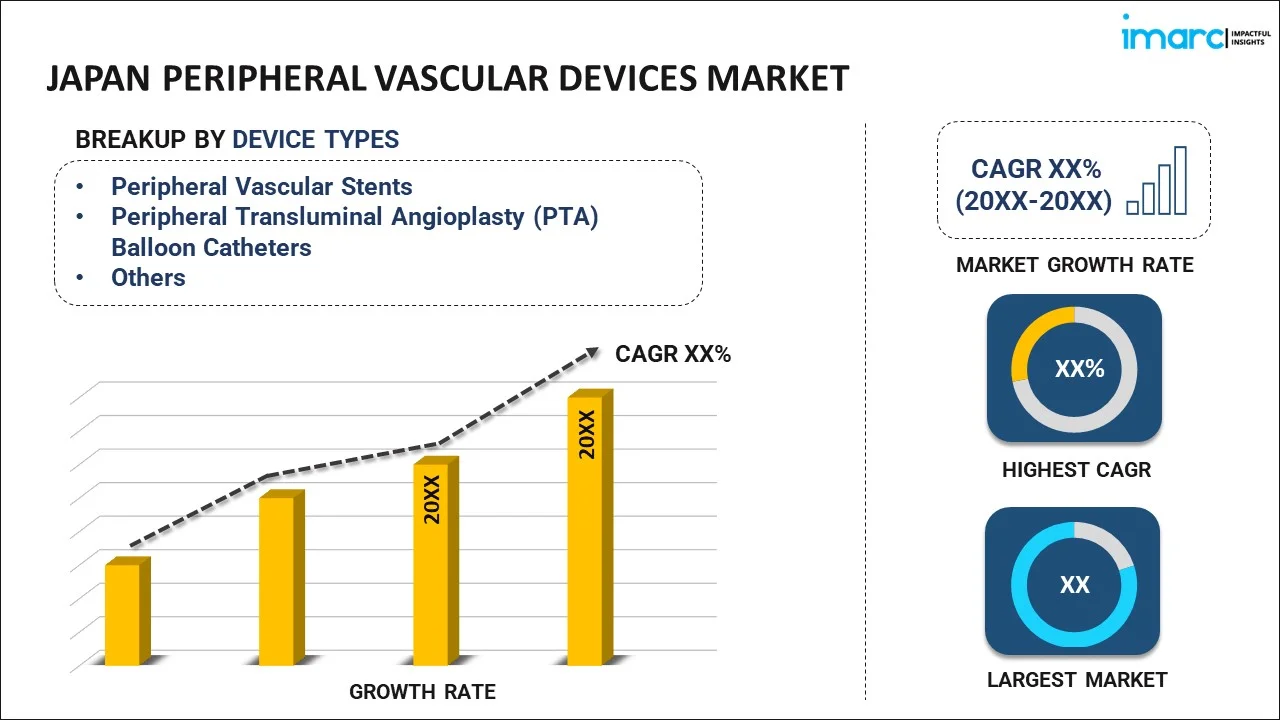
To get detailed segment analysis of this market Request Sample
- Peripheral Vascular Stents
- Peripheral Transluminal Angioplasty (PTA) Balloon Catheters
- Peripheral Transluminal Angioplasty (PTA) Guidewires
- Atherectomy Devices
- Embolic Protection Devices
- Inferior Vena Cava Filters
- Others
The report has provided a detailed breakup and analysis of the market based on the device type. This includes peripheral vascular stents, peripheral transluminal angioplasty (PTA) balloon catheters, peripheral transluminal angioplasty (PTA) guidewires, atherectomy devices, embolic protection devices, inferior vena cava filters, and others.
End User Insights:
- Hospitals and Clinics
- Ambulatory Care Centers
- Specialty Clinics
- Others
A detailed breakup and analysis of the market based on the end user have also been provided in the report. This includes hospitals and clinics, ambulatory care centers, specialty clinics, and others.
Regional Insights:
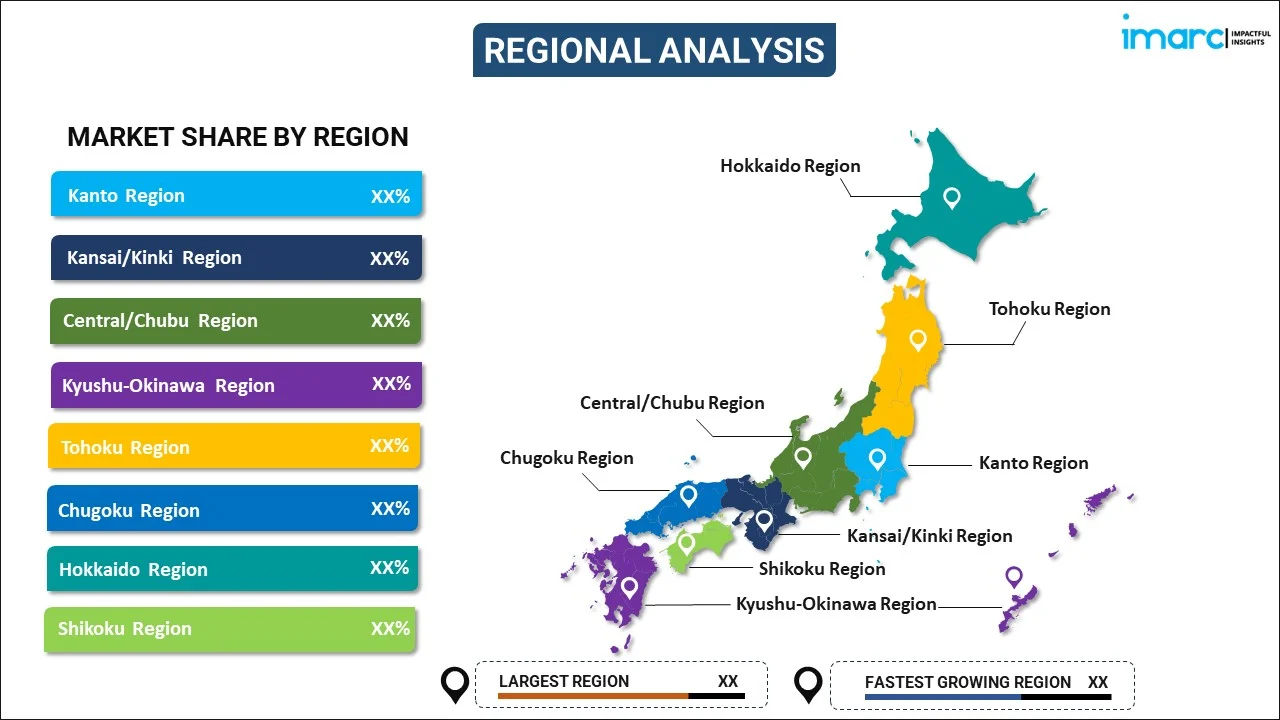
To get detailed regional analysis of this market Request Sample
- Kanto Region
- Kansai/Kinki Region
- Central/ Chubu Region
- Kyushu-Okinawa Region
- Tohoku Region
- Chugoku Region
- Hokkaido Region
- Shikoku Region
The report has also provided a comprehensive analysis of all the major regional markets, which include Kanto Region, Kansai/Kinki Region, Central/ Chubu Region, Kyushu-Okinawa Region, Tohoku Region, Chugoku Region, Hokkaido Region, and Shikoku Region.
.webp)
Competitive Landscape:
The market research report has also provided a comprehensive analysis of the competitive landscape. Competitive analysis such as market structure, key player positioning, top winning strategies, competitive dashboard, and company evaluation quadrant has been covered in the report. Also, detailed profiles of all major companies have been provided.
Japan Peripheral Vascular Devices Market Report Coverage:
| Report Features | Details |
|---|---|
| Base Year of the Analysis | 2025 |
| Historical Period | 2020-2025 |
| Forecast Period | 2026-2034 |
| Units | Million USD |
| Scope of the Report | Exploration of Historical and Forecast Trends, Industry Catalysts and Challenges, Segment-Wise Historical and Predictive Market Assessment:
|
| Device Types Covered | Peripheral Vascular Stents, Peripheral Transluminal Angioplasty (PTA) Balloon Catheters, Peripheral Transluminal Angioplasty (PTA) Guidewires, Atherectomy Devices, Embolic Protection Devices, Inferior Vena Cava Filters, Others |
| End Users Covered | Hospitals and Clinics, Ambulatory Care Centers, Specialty Clinics, Others |
| Regions Covered | Kanto Region, Kansai/Kinki Region, Central/ Chubu Region, Kyushu-Okinawa Region, Tohoku Region, Chugoku Region, Hokkaido Region, Shikoku Region |
| Customization Scope | 10% Free Customization |
| Post-Sale Analyst Support | 10-12 Weeks |
| Delivery Format | PDF and Excel through Email (We can also provide the editable version of the report in PPT/Word format on special request) |
Key Questions Answered in This Report:
- How has the Japan peripheral vascular devices market performed so far and how will it perform in the coming years?
- What has been the impact of COVID-19 on the Japan peripheral vascular devices market?
- What is the breakup of the Japan peripheral vascular devices market on the basis of device type?
- What is the breakup of the Japan peripheral vascular devices market on the basis of end user?
- What are the various stages in the value chain of the Japan peripheral vascular devices market?
- What are the key driving factors and challenges in the Japan peripheral vascular devices?
- What is the structure of the Japan peripheral vascular devices market and who are the key players?
- What is the degree of competition in the Japan peripheral vascular devices market?
Key Benefits for Stakeholders:
- IMARC’s industry report offers a comprehensive quantitative analysis of various market segments, historical and current market trends, market forecasts, and dynamics of the Japan peripheral vascular devices market from 2020-2034.
- The research report provides the latest information on the market drivers, challenges, and opportunities in the Japan peripheral vascular devices market.
- Porter's five forces analysis assist stakeholders in assessing the impact of new entrants, competitive rivalry, supplier power, buyer power, and the threat of substitution. It helps stakeholders to analyze the level of competition within the Japan peripheral vascular devices industry and its attractiveness.
- Competitive landscape allows stakeholders to understand their competitive environment and provides an insight into the current positions of key players in the market.
Need more help?
- Speak to our experienced analysts for insights on the current market scenarios.
- Include additional segments and countries to customize the report as per your requirement.
- Gain an unparalleled competitive advantage in your domain by understanding how to utilize the report and positively impacting your operations and revenue.
- For further assistance, please connect with our analysts.
 Request Customization
 Speak to an Analyst
 Request Brochure
 Inquire Before Buying
Benefits of Customization
- Personalize this research
- Triangulate with your data
- Get data as per your format and definition
- Gain a deeper dive into a specific application, geography, customer, or competitor
- Any level of personalization
Get in Touch With Us
UNITED STATES
Phone: +1-201-971-6302
INDIA
Phone: +91-120-433-0800
UNITED KINGDOM
Phone: +44-753-714-6104
Email: [email protected]
Client Testimonials




.webp)




.webp)













Related Reports

Choose your plan
*Please note that the prices mentioned below are starting prices for each bundle type. Kindly contact our team for further details.*
Single User License
- 1 User License, Access on 2 Devices
- PDF Report + Excel Dataset (Password Protected)
- Lifetime Access
- No Printing Rights
- 10% Free Report Customization
- 10–12 Weeks of Analyst Support
Five User License
- Access for 5 Users, 2 Devices per User
- PDF Report + Excel Dataset (Password Protected)
- Lifetime Access
- Dedicated Account Manager
- 12–14 Weeks of Analyst Support
- No Printing Rights
- 15% Free Report Customization
- 25% Discount on Your Next Purchase
Corporate User License
- Unlimited User Access (Within Your Organization)
- PDF Report + Excel Dataset
- Lifetime Access
- Dedicated Account Manager
- 14–20 Weeks of Analyst Support
- No Printing Rights
- 20% Free Report Customization
- 30% Discount on Your Next Purchase
Essential Insights
What's included:
3 reports
- Lifetime Access
- PDF Reports
- Excel Datasets
- 2 Weeks of Free Analyst Support
- 2 User Licenses
- Access on 2 Devices
- Printing Rights
- Complimentary PowerPoint (PPT) Version
- Complimentary License Upgrade
Professional Access
What's included:
5 reports
- Lifetime Access
- PDF Reports
- Excel Datasets
- 8 Weeks of Free Analyst Support
- 2 User Licenses
- Access on 2 Devices
- Printing Rights
- Complimentary PowerPoint (PPT) Version
- Complimentary License Upgrade
Business Advantage
What's included:
8 reports
- Lifetime Access
- PDF Reports
- Excel Datasets
- 14 Weeks of Free Analyst Support
- 2 User Licenses
- Access on 2 Devices
- Printing Rights
- Complimentary PowerPoint (PPT) Version
- Complimentary License Upgrade
Enterprise Intelligence
What's included:
10 reports
- Lifetime Access
- PDF Reports
- Excel Datasets
- 20 Weeks of Free Analyst Support
- 2 User Licenses
- Access on 2 Devices
- Printing Rights
- Complimentary PowerPoint (PPT) Version
- Complimentary License Upgrade