
Japan Seaweed Market Size, Trends and Forecast by Environment, Product, Application, and Region, 2026-2034
Japan Seaweed Market Size, Share, Trends & Forecast (2026-2034)
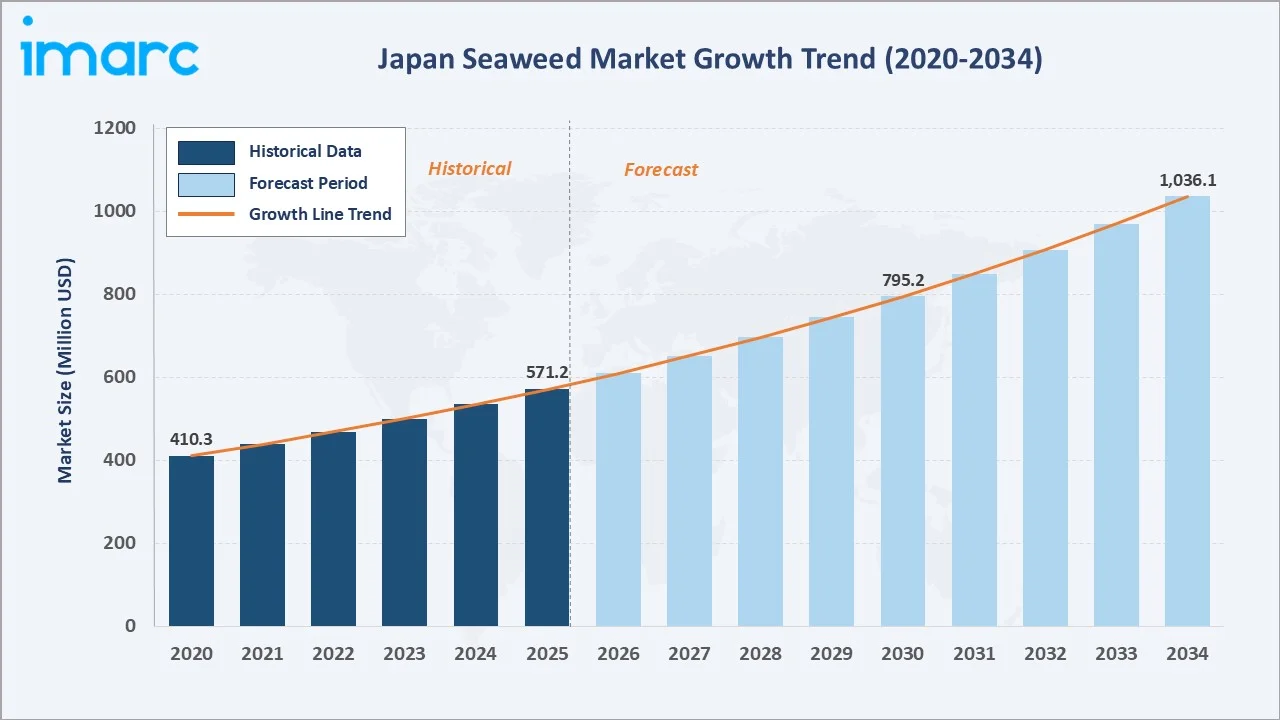
The Japan seaweed market reached USD 571.2 Million in 2025 and is projected to reach USD 1,036.1 Million by 2034, growing at a CAGR of 6.84% during 2026-2034. The market is driven by growing demand for health-functional seaweed products, expanding aquaculture production, rising export volumes, and government-supported coastal fisheries revitalization programs. According to Japan’s Ministry of Agriculture, Forestry and Fisheries, the country’s total fishery and aquaculture production reached 3.63 million tons in 2024. This substantial production base supports the Japan seaweed market by strengthening aquaculture infrastructure, processing capacity, and supply-chain networks. Aquaculture dominates the environment at 74.8%. Brown seaweed leads the product at 44.7%. Hokkaido leads regionally at 22.7%.
Market Snapshot
|
Metric |
Value |
|
Market Size (2025) |
USD 571.2 Million |
|
Forecast Market Size (2034) |
USD 1,036.1 Million |
|
CAGR (2026-2034) |
6.84% |
|
Base Year |
2025 |
|
Historical Period |
2020-2025 |
|
Forecast Period |
2026-2034 |
|
Dominant Environment |
Aquaculture (74.8%, 2025) |
|
Leading Product |
Brown Seaweed (44.7%, 2025) |
|
Leading Region |
Hokkaido Region (22.7%, 2025) |
The Japan seaweed market has grown steadily from USD 410.3 Million in 2020 to USD 571.2 Million in 2025, driven by rising domestic health food demand, growing international interest in Japanese seaweed products, and the expansion of aquaculture production. The market is projected to reach USD 795.2 Million by 2030 and USD 1,036.1 Million by 2034, supported by global functional food trends, Japan's green food export strategy, government support for aquaculture technology investment, and the expanding application of seaweed in pharmaceutical, cosmetic, and nutraceutical industries beyond traditional food markets.
To get more information on this market, Request Sample
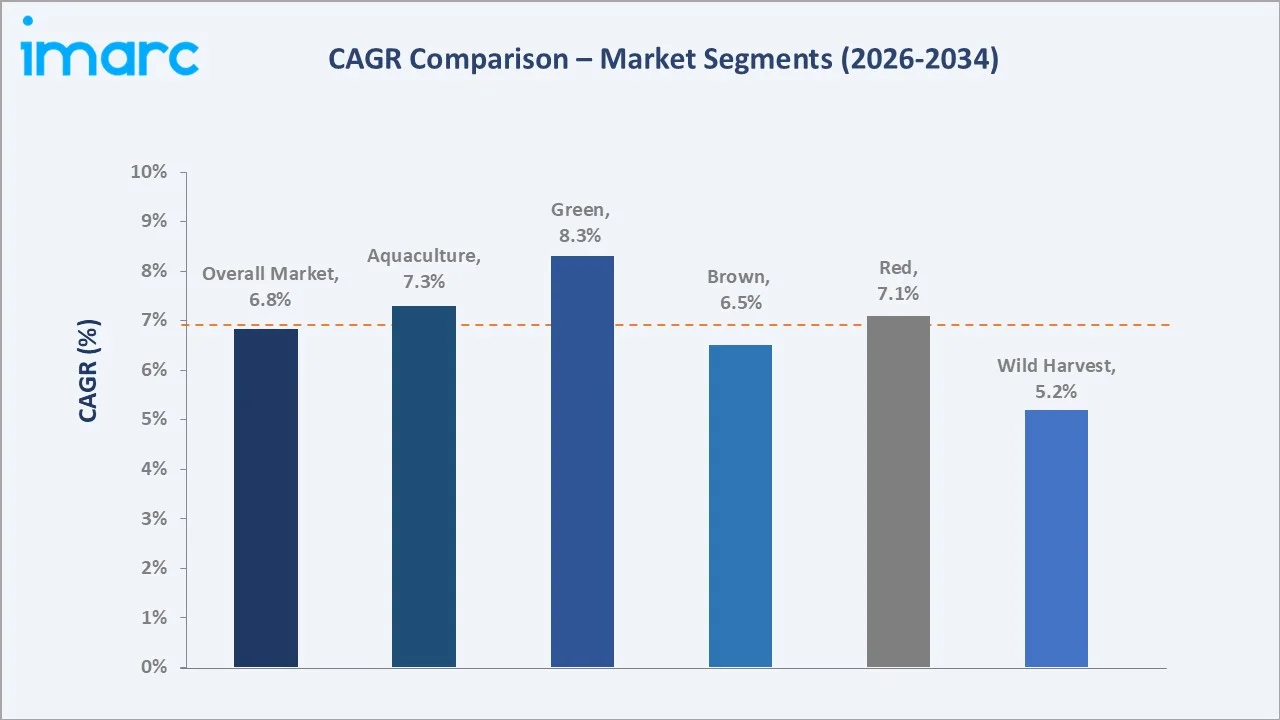
Aquaculture grows at ~7.3% CAGR through technology-enhanced cultivation, genetic selection for yield improvement, and government-supported expansion of seaweed aquaculture capacity across Japan's coastal prefectures. Green seaweed grows at ~8.3% CAGR through growing applications in food ingredients and cosmetics. Brown seaweed grows at ~6.5% CAGR, sustained by kombu's irreplaceable role in Japanese culinary culture and expanding export markets.
Executive Summary
The Japan seaweed market occupies a uniquely important position in the seaweed industry as the most sophisticated seaweed consumer culture, premier quality producer, and an increasingly significant exporter of value-added seaweed products. Japan has consumed seaweed as a fundamental culinary and nutritional staple, with nori, kombu, and wakame forming the three core pillars of Japanese seaweed gastronomy.
Aquaculture dominates at 74.8% (2025), reflecting the transition from wild-harvest-dependent supply chains to controlled aquaculture systems that deliver consistent quality, year-round production, and certified organic output meeting international food safety and traceability standards. Brown seaweed leads at 44.7%, dominated by kombu and wakame. Hokkaido leads regionally at 22.7% (2025) as Japan's premier kombu-producing region, home to the legendary kombu varieties that command premium pricing in domestic and export markets.
Key Market Insights
|
Insight |
Data |
|
Dominant Environment |
Aquaculture - 74.8% share (2025) |
|
Leading Product |
Brown Seaweed - 44.7% share (2025) |
|
Leading Region |
Hokkaido Region - 22.7% share (2025) |
|
Market Opportunity |
Functional ingredient extraction; export premiumization; nutraceutical applications; smart aquaculture |
Key Analytical Observations Supporting the Above Data:
- Aquaculture at 74.8%: Aquaculture dominates due to Japan's pioneering role in seaweed aquaculture technology development, the controllable and certifiable production conditions it provides, the superior consistency of aquaculture-produced seaweed versus wild harvest, and government policy support.
- Brown Seaweed at 44.7%: Brown seaweed leads through kombu's foundational role in Japanese cuisine, used universally for dashi stock preparation in restaurants and homes across Japan, and wakame's widespread application in miso soup, salads, and seaweed noodle products.
- Hokkaido at 22.7%: Hokkaido leads as Japan's most productive seaweed region and the exclusive source of premium wild-harvest kombu varieties that define Japanese culinary heritage. The cold, nutrient-rich waters of Hokkaido's coastal shelf produce kombu of unmatched umami intensity, making Hokkaido seaweed synonymous with culinary excellence in both domestic and global Japanese food culture contexts.
Japan Seaweed Market Overview
The Japan seaweed market encompasses the commercial production, processing, and distribution of marine macroalgae across three product categories: brown, red, and green seaweeds, sourced through both aquaculture cultivation and wild harvesting from Japan's coastal waters. Applications span processed foods, direct human consumption, hydrocolloid extraction, agricultural fertilizers, animal feed additives, nutraceuticals, cosmetics, and pharmaceuticals. The market serves domestic food industry buyers, retail consumers, and growing international export markets.
Market Dynamics
To evaluate market opportunities, Request Sample
Market Drivers
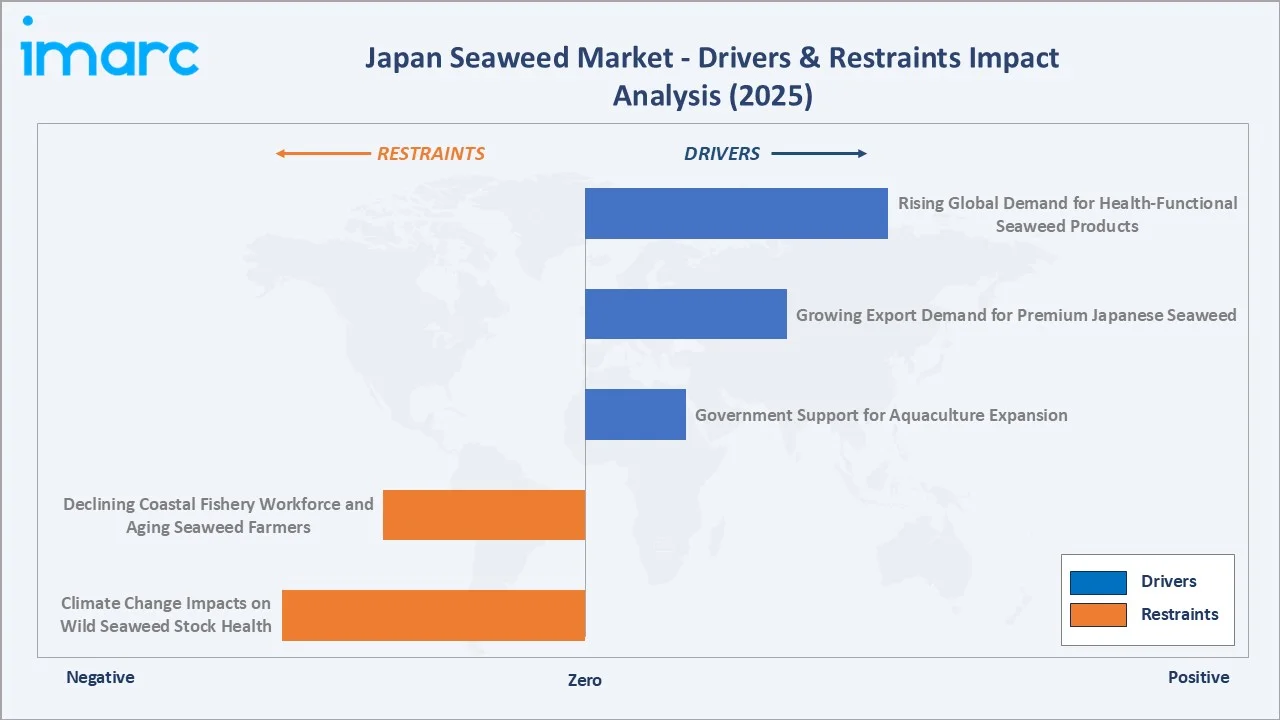
- Rising Global Demand for Health-Functional Seaweed Products: Growing global scientific recognition of seaweed's health benefits, including its exceptional iodine, mineral, and prebiotic fiber content, bioactive compounds (fucoidans, phlorotannins, laminarin), and omega-3 fatty acid profiles, is driving both domestic and international demand for Japanese seaweed products.
- Growing Export Demand for Premium Japanese Seaweed: Japan's seaweed export value has grown consistently, driven by the global sushi restaurant industry's demand for authentic Japanese nori, rising Western consumer interest in umami ingredients and Japanese food culture, and growing Asian market premiumization toward Japanese-branded seaweed products. In 2024, Japan exported approximately 1,012 tonnes of seaweed, with the total export value reaching around USD 20.95 million.
- Government Support for Aquaculture Expansion: Government initiatives aimed at strengthening aquaculture are supporting the Japan seaweed market by encouraging higher marine cultivation output and improving production infrastructure. Policy support for sustainable fisheries, coastal resource management, and advanced farming practices is helping producers enhance productivity and supply consistency. These measures also support investment in seaweed cultivation, processing, and commercialization, thereby contributing to long-term market growth.
Market Restraints
- Declining Coastal Fishery Workforce and Aging Seaweed Farmers: Japan's coastal fisheries sector faces a severe generational succession crisis, with the average age of Japan's registered fishermen exceeding 60 years and the total fishermen population declining. Seaweed farming, traditionally a labor-intensive family enterprise, is particularly vulnerable to this workforce decline, creating production capacity constraints despite growing market demand. Aquaculture automation investment is partially addressing this challenge, but skilled seaweed farming knowledge is being lost at an alarming rate in many coastal communities.
- Climate Change Impacts on Wild Seaweed Stock Health: Rising ocean temperatures from climate change are significantly impacting wild seaweed populations across Japan's coastal waters, particularly in Hokkaido, where kombu habitats are experiencing northward range shifts and densification loss. Sea urchin population explosions, exacerbated by warmer water temperatures eliminating natural predators, are creating "isoyake" (coastal barren) zones where seaweed beds are denuded by overgrazing.
Market Opportunities
- Functional Ingredient Extraction and Biorefinery Development: Japan's seaweed industry is developing high-value biorefinery capabilities that extract multiple functional compounds from a single seaweed feedstock, producing food-grade hydrocolloids, pharmaceutical-grade bioactive polysaccharides, nutraceutical ingredient concentrates, and agricultural biostimulants from processing residues. This biorefinery approach multiplies seaweed value per tonne compared to single-use food applications and creates new premium market channels for Japanese seaweed producers in pharmaceutical and cosmetic ingredient markets.
- Seaweed-Based Animal Feed and Aquaculture Feed Additives: Growing evidence of seaweed's methane-reducing properties in ruminant feed, combined with proven growth-promotion and health benefits in fish and shrimp aquaculture feed, is creating new industrial applications for Japanese seaweed producers. Japan's established seaweed production infrastructure and expertise positions domestic producers to supply premium-certified seaweed ingredients to the growing functional animal feed and aquaculture feed additive markets domestically and for export to Asia-Pacific livestock and aquaculture producers.
Market Challenges
- Price Competitiveness Against Lower-Cost Asian Production: Japan faces intensifying price competition from Chinese and South Korean seaweed producers, particularly in commodity nori, wakame, and kombu segments. Japanese producers must continuously premiumize and differentiate through certified quality, geographic origin designation, and value-added processing to defend margin positions.
- Isoyake Coastal Barrenness Threatening Sustainable Production: The expansion of isoyake (coastal barren zones), where seaweed beds are consumed by sea urchin overgrazing driven by climate-altered predator-prey imbalances, is reducing available wild seaweed habitat and complicating aquaculture site selection across Japan's Pacific coastal prefectures. Restoration of isoyake zones through artificial reef construction, sea urchin culling programs, and seaweed transplantation initiatives requires significant government and industry investment to prevent further loss of productive seaweed habitat.
Emerging Market Trends
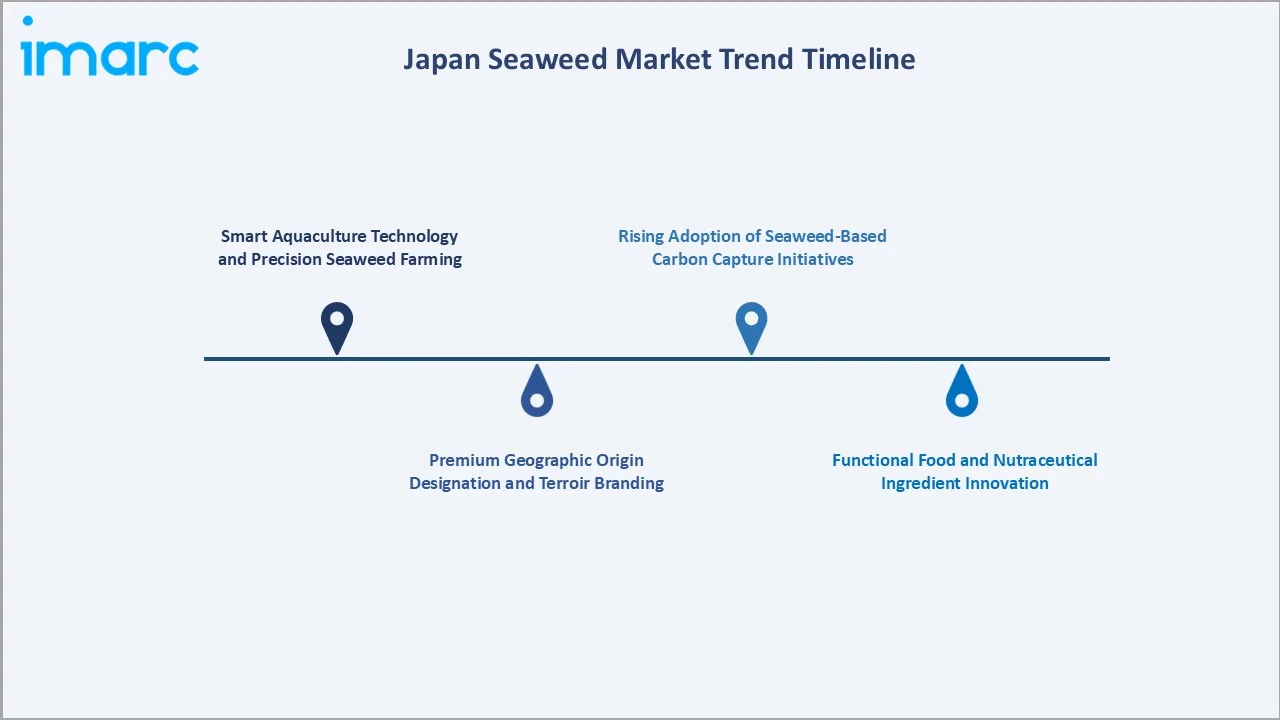
1. Smart Aquaculture Technology and Precision Seaweed Farming
Advanced aquaculture technology is transforming Japan's seaweed production sector, addressing the twin challenges of labor shortage and climate change adaptation. IoT-enabled oceanographic monitoring systems tracking water temperature, salinity, nutrient levels, and current patterns in real-time are being deployed across major seaweed aquaculture zones, enabling precision farming decisions that optimize growth conditions and reduce crop failure risk. Automated seeding machines, underwater drone inspection systems, and AI-powered growth prediction algorithms are enabling younger, technology-fluent operators to manage larger aquaculture operations with reduced physical labor requirements.
2. Premium Geographic Origin Designation and Terroir Branding
Japanese seaweed producers are developing geographic origin designation systems to differentiate premium regional seaweed products and command price premiums in domestic and international markets. Hokkaido's four premium kombu varieties each carry distinct terroir characteristics attributable to specific coastal water chemistry, depth, and current conditions. Tohoku nori producers are developing regional branding around unique cultivar characteristics, and Okinawan mozuku producers are registering geographic indications to protect their premium market position.
3. Rising Adoption of Seaweed-Based Carbon Capture Initiatives
In June 2026, Japan’s Ministry of the Environment selected organizations for a large-scale seaweed cultivation demonstration project aimed at enhancing CO2 absorption. As part of the initiative, Riken Foods, Nichimo, and other partners will work to improve the productivity of Undaria seaweed and kelp cultivation, supporting more sustainable and efficient seaweed farming practices. This is encouraging investment in higher-yield cultivation methods and sustainable aquaculture practices, thereby creating new growth opportunities in Japan’s seaweed market.
4. Functional Food and Nutraceutical Ingredient Innovation
Japanese seaweed processors are developing sophisticated functional ingredient portfolios targeting the global health supplement, functional food, and pharmaceutical markets. Fucoidan, a sulfated polysaccharide abundant in brown seaweed (particularly mozuku and kombu) with documented immunomodulatory, anti-tumor, and anti-coagulant properties, is Japan's highest-value seaweed-derived pharmaceutical ingredient, with clinical research programs advancing its cancer adjuvant therapy and anti-viral applications. Japanese companies are investing in standardized fucoidan extraction and purification technology to supply pharmaceutical-grade ingredients to global clinical trial programs and nutraceutical brands.
Industry Value Chain Analysis
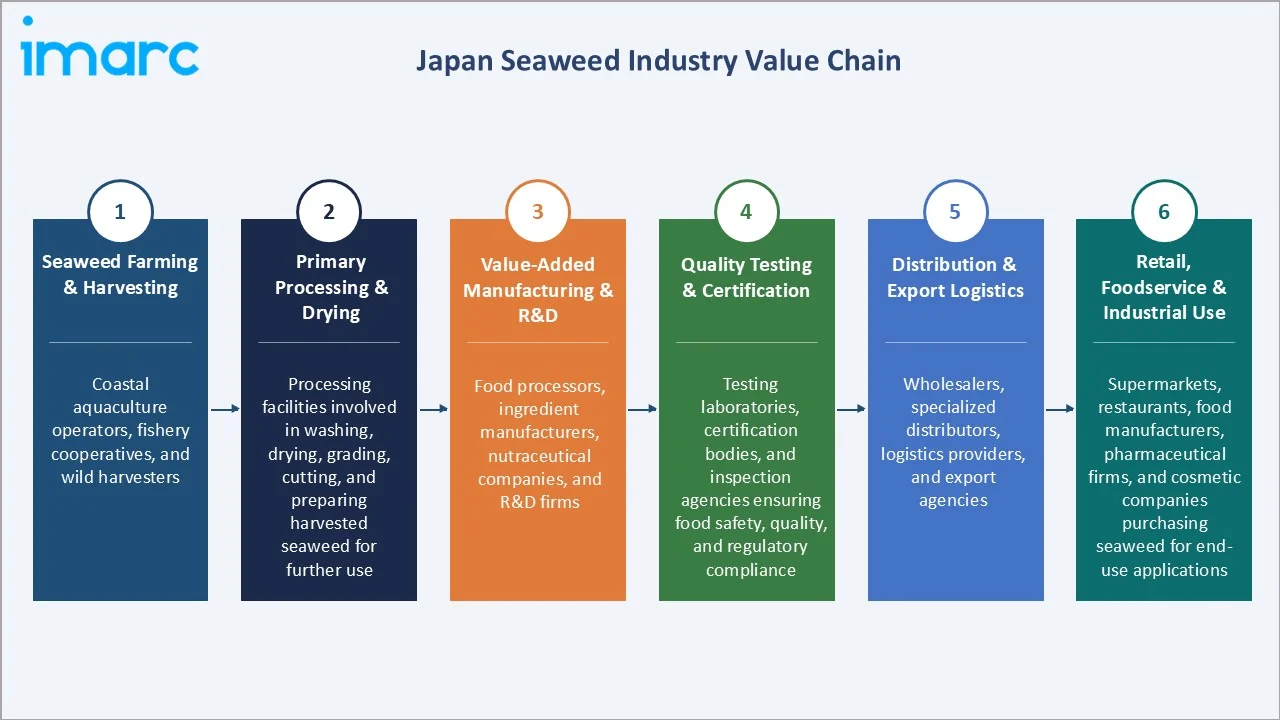
The Japan seaweed market value chain integrates seaweed farming and harvesting, primary processing and drying, value-added manufacturing and R&D, quality testing and certification, distribution and export logistics, and retail, foodservice, and industrial end use.
|
Stage |
Key Participants |
|
Seaweed Farming & Harvesting |
Coastal aquaculture operators, fishery cooperatives, and wild harvesters. |
|
Primary Processing & Drying |
Processing facilities involved in washing, drying, grading, cutting, and preparing harvested seaweed for further use. |
|
Value-Added Manufacturing & R&D |
Food processors, ingredient manufacturers, nutraceutical companies, and R&D firms. |
|
Quality Testing & Certification |
Testing laboratories, certification bodies, and inspection agencies ensuring food safety, quality, and regulatory compliance. |
|
Distribution & Export Logistics |
Wholesalers, specialized distributors, logistics providers, and export agencies. |
|
Retail, Foodservice & Industrial Use |
Supermarkets, restaurants, food manufacturers, pharmaceutical firms, and cosmetic companies purchasing seaweed for end-use applications. |
Primary processing and drying represent the most critical quality-determining stage in Japan's seaweed value chain. Kombu processing methods and nori toasting and sheet forming processes directly determine end-product quality and market classification. The value-added manufacturing stage creates the highest margin opportunities through functional ingredient extraction, premium snack products, and export-ready branded product development.
Technology Landscape in the Japan Seaweed Industry
Aquaculture Technology and Strain Improvement
Japan's seaweed aquaculture technology encompasses selective breeding programs for yield and disease resistance improvement, spore bank cryopreservation systems for genetic material conservation, optimized substrate design for efficient seaweed attachment and growth, and computerized environmental monitoring networks enabling precision aquaculture management.
Bioactive Compound Extraction and Purification Technology
Sophisticated extraction and purification technology is enabling Japan's seaweed processors to capture premium value from functional bioactive compounds including fucoidan, fucoxanthin, phlorotannins, agar, carrageenan, and alginate. Supercritical CO2 extraction, membrane filtration, enzyme-assisted extraction, and chromatographic purification systems are producing pharmaceutical-grade seaweed bioactive ingredients with documented biological activity and standardized concentration profiles. These purified ingredients command higher value per kilogram compared to raw dried seaweed, creating exceptional value escalation opportunities for technically capable Japanese processors.
Seaweed Snack Processing and Value-Added Manufacturing Technology
Advanced processing technology for premium seaweed snack products, including seasoned nori sheets, kombu confectionery, wakame crisps, and innovative seaweed-based ready meals, combines traditional Japanese food craftsmanship with modern continuous production systems, modified atmosphere packaging, and precision seasoning application technology. These value-added products achieve higher retail price premiums versus commodity dried seaweed, and Japanese seaweed snack brands are gaining significant traction in export markets where they represent premium offerings in the growing health snack category.
Market Segmentation Analysis
The report covers the following segments:
|
Segment Category |
Leading Segment |
Market Share |
Year |
|
Environment |
Aquaculture |
74.8% |
2025 |
|
Product |
Brown |
44.7% |
2025 |
|
Application |
🔒 |
🔒 |
2025 |
|
Region |
Hokkaido Region |
22.7% |
2025 |

By Environment
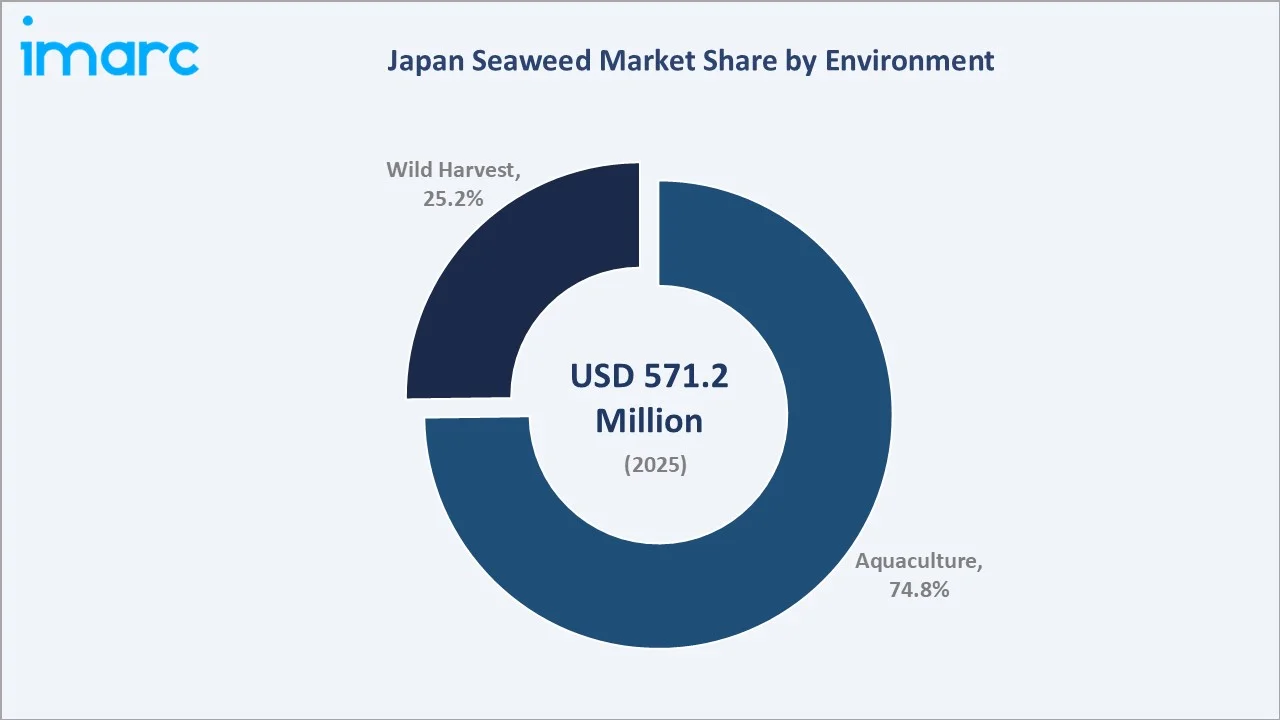
Aquaculture dominates at 74.8% (2025), reflecting Japan's seaweed aquaculture technology, the consistent quality advantages of controlled cultivation over wild harvest, and government policy support. Aquaculture grows at ~7.3% CAGR, the fastest environment segment, through capacity expansion enabled by government subsidies and smart aquaculture technology adoption.
To access detailed market analysis, Request Sample
Wild harvest retains a 25.2% share, predominantly through premium wild kombu varieties from Hokkaido that command exceptional price premiums impossible to replicate through cultivation. Wild harvest grows at ~5.2% CAGR, constrained by a declining workforce and climate impacts on coastal seaweed habitats, but sustained by irreplaceable premium market demand for authentic wild-harvest Hokkaido kombu in Japanese haute cuisine, premium dashi ingredient markets, and international Japanese restaurant supply chains.
By Product
Brown seaweed leads at 44.7% (2025), anchored by kombu and wakame. Kombu's unique umami-generating glutamate content, producing the characteristic deep savory flavor essential to Japanese culinary tradition, creates structurally inelastic demand that sustains Brown seaweed's market leadership. Brown seaweed grows at ~6.5% CAGR through sustained domestic consumption and growing export demand for kombu-based dashi ingredients.
.webp)
Red seaweed at 38.6% reflects nori's enormous commercial scale as Japan's highest-value seaweed product. Green seaweed at 16.7% is growing fastest at ~8.3% CAGR through expanding applications in functional ingredient extraction, cosmetic raw materials, and growing consumer interest in green algae nutritional supplements featuring chlorophyll, protein, and mineral content profiles attractive to health-conscious consumer segments.
Regional Market Insights
|
Region |
Share (2025) |
Key Japan Seaweed Market Drivers & Characteristics |
|
Hokkaido Region |
22.7% |
Reflecting Japan's premier kombu production region, home to renowned Rausu, Rishiri, Hidaka, and Ma kombu varieties, wild-harvested and cultivated kombu production. |
|
Tohoku Region |
17.8% |
Reflecting Japan's largest nori and wakame production zone, Miyagi wakame's geographic indication status, major nori sheet processing and packaging hub. |
|
Kanto Region |
16.4% |
Reflecting Tokyo's concentration as Japan's primary seaweed distribution, processing, and export trading hub, and major food manufacturer headquarters driving seaweed ingredient procurement. |
|
Kyushu-Okinawa Region |
13.8% |
Reflecting Okinawa's dominant mozuku seaweed production, Kumamoto and Saga's nori production, and Fukuoka's role as a seaweed processing and distribution hub for Southern Japan. |
|
Chugoku Region |
10.8% |
Reflecting Hiroshima and Okayama's significant nori aquaculture production, established seaweed processing operations serving Kansai regional food manufacturers. |
|
Kansai/Kinki Region |
8.7% |
Reflecting Osaka's historic role as Japan's seaweed trading center, significant seaweed food product manufacturing, and Kyoto's culinary tradition driving premium kombu demand. |
|
Central/Chubu Region |
6.8% |
Reflecting coastal seaweed aquaculture in Shizuoka, Aichi, and Mie prefectures, significant dried seaweed product distribution through Nagoya's food wholesale networks. |
|
Shikoku Region |
3.0% |
Reflecting nori production in Kagawa and Ehime prefectures, smaller-scale coastal seaweed harvesting, and regional seaweed products including distinctive Shikoku coastal varieties sold in local specialty food markets. |
Hokkaido's 22.7% market share leadership reflects the premium pricing of Hokkaido kombu, which commands some of the highest per-kilogram seaweed prices due to the cold, nutrient-rich Pacific and Sea of Japan coastal waters that produce kombu of exceptional mineral richness and umami intensity. The Tohoku region's 17.8% reflects the complete revitalization of its seaweed aquaculture infrastructure, with rebuilt and technologically upgraded wakame and nori aquaculture operations in Miyagi and Iwate prefectures representing some of Japan's most modern seaweed production facilities.
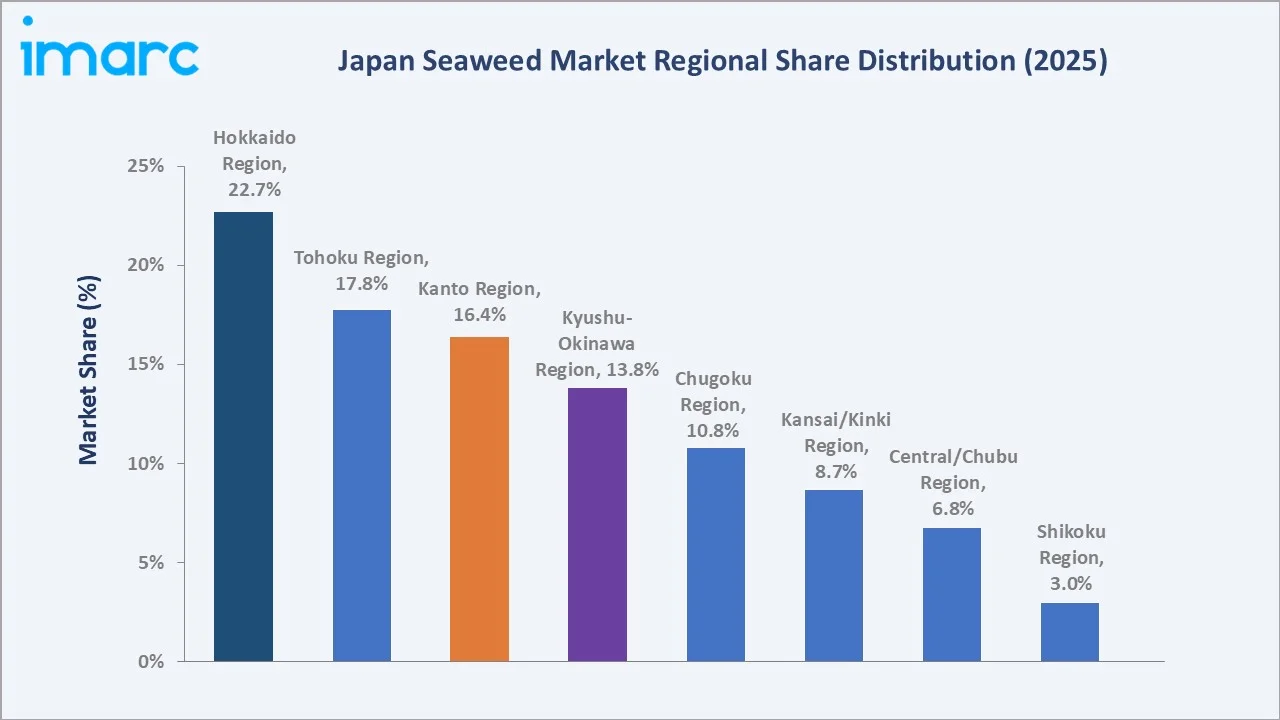
The Kanto region's 16.4% reflects Tokyo's role as the commercial and distribution hub for Japan's seaweed industry rather than a major production center, housing the headquarters of major seaweed food manufacturers and the trading companies that manage Japan's seaweed export operations. Kyushu-Okinawa's 13.8% reflects Okinawa's unique and dominant position in mozuku seaweed production, a high-value species known for its exceptionally high fucoidan content and its role as the primary raw material for Japan's growing fucoidan dietary supplement industry.
Competitive Landscape
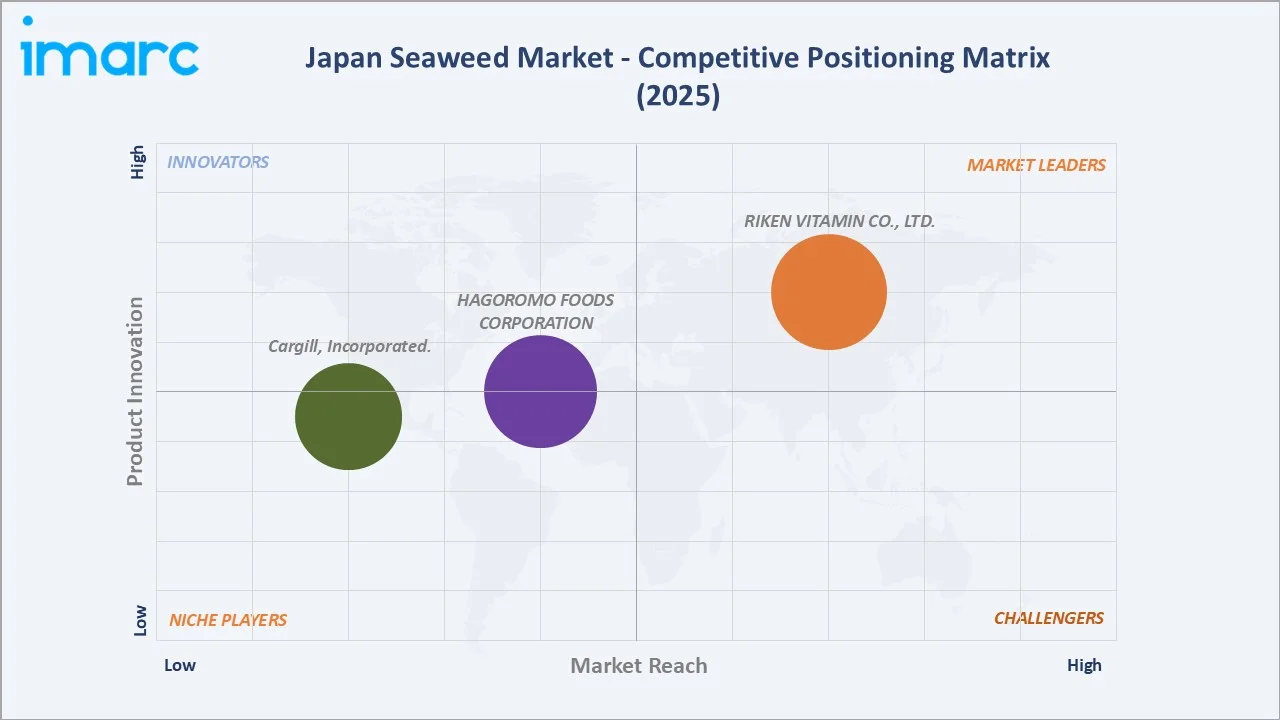
Japan seaweed market is moderately fragmented, with large food manufacturers and trading companies competing alongside regional fishery cooperatives, specialty seaweed processors, and a growing cohort of innovative functional ingredient companies. Competition centers on product quality and origin certification, brand recognition in premium market segments, processing technology capabilities, and increasingly on functional ingredient extraction and nutraceutical product development.
|
Company |
Key Offerings |
Market Position |
Core Strength |
|
RIKEN VITAMIN CO., LTD. |
Tokimeki Kaisoya |
Market Leader |
RIKEN VITAMIN CO., LTD. develops, processes, and manufactures commercial seaweed products in Japan. |
|
HAGOROMO FOODS CORPORATION |
Nori seaweed |
Established Player |
HAGOROMO FOODS CORPORATION manufactures and sells processed seaweed products, flavored seaweeds, and dried foods. |
|
Cargill, Incorporated. |
WavePure Seaweed Powder |
Established Player |
Cargill, Incorporated plays a vital role in the Japanese seaweed market as a major importer, distributor, and formulator. |
The competitive landscape is increasingly shaped by the divergence between commodity seaweed processors competing on price and volume, and premium functional ingredient and branded product specialists commanding significant margin premiums through technology investment, geographic origin certification, and export market development. Companies investing in pharmaceutical ingredient development are creating the highest-growth, highest-margin market positions within Japan's seaweed industry.
Key Company Profiles
RIKEN VITAMIN CO., LTD.
RIKEN VITAMIN CO., LTD. is one of Japan's leading functional seaweed ingredient companies, specializing in the development, extraction, and commercialization of high-value seaweed bioactive compounds. The company's proprietary fucoidan extraction and purification technology produces standardized, pharmaceutical-grade ingredients supplied to Japanese health supplement manufacturers, international nutraceutical brands, and clinical research programs investigating fucoidan's immunomodulatory and anti-tumor properties.
- Key Offerings: Tokimeki Kaisoya.
- Strategic Focus: Expanding pharmaceutical ingredient sales to clinical trial programs and international nutraceutical brands, developing next-generation seaweed bioactive compound extraction capabilities, growing direct-to-consumer functional food and supplement product lines leveraging seaweed ingredient expertise.
HAGOROMO FOODS CORPORATION
HAGOROMO FOODS CORPORATION is a Japan-based food manufacturer with a diversified portfolio spanning canned foods, packaged foods, and marine-based products, including seaweed offerings. In the Japan seaweed market, the company benefits from its established brand presence, broad retail distribution, and experience in processed food manufacturing. Its focus on quality, convenience, and value-added food products supports its participation across both household and foodservice seaweed applications.
- Key Offerings: Nori seaweed.
- Strategic Focus: Expanding its value-added nori portfolio, including roasted, seasoned, and shredded seaweed products, while emphasizing convenience, quality, and diverse culinary applications to strengthen its presence in Japan’s seaweed market.
Market Concentration Analysis
Japan seaweed market is moderately fragmented, with no single operator holding a dominant share across all product types, environments, and regions. The processing and brand layer is most concentrated, with companies holding large shares in commodity seaweed food product markets through retail distribution scale. The functional ingredient segment is more concentrated around a small number of technically capable extractors with proprietary bioactive compound purification capability. The aquaculture production layer is fragmented among hundreds of coastal fishery cooperatives and private operators, with no single entity controlling more than a single-digit percentage of national production volume.
Investment & Growth Opportunities
Highest Growth Segments
Green seaweed applications (~8.3% CAGR est.), aquaculture expansion (~7.3% CAGR est.), fucoidan pharmaceutical ingredient development, smart aquaculture technology deployment, and premium Japanese seaweed brand export development represent Japan's highest-priority seaweed market investment vectors through 2034.
Investment Themes
- Functional Ingredient Extraction and Pharmaceutical Seaweed Development: Japan's expertise in fucoidan, fucoxanthin, and seaweed polysaccharide extraction creates a compelling investment opportunity in pharmaceutical and nutraceutical ingredient development. With clinical research programs advancing fucoidan's oncology adjuvant therapy applications, Japanese companies with certified pharmaceutical-grade fucoidan production capability are positioned to capture significant value from this high-growth, high-margin functional ingredient market segment.
- Smart Aquaculture Technology and Scale-Up Investment: The Japanese government's aquaculture framework, combined with the urgent need to replace retiring wild-harvest workforce with technology-enabled aquaculture systems, creates a compelling investment opportunity in smart seaweed aquaculture technology. IoT ocean monitoring, automated seeding systems, AI growth management, and precision environmental control technology investments enable scale-up of certified premium seaweed production with reduced labor requirements and superior quality consistency.
Future Market Outlook (2026-2034)
The Japan seaweed market is projected to grow from USD 571.2 Million in 2025 to USD 1,036.1 Million by 2034, delivering a 6.84% CAGR over the forecast period through functional ingredient market development, aquaculture technology expansion, premium brand export growth, and emerging industrial applications including seaweed-based biomaterials. The market's anchor value of USD 795.2 Million in 2030 represents the structural inflection at which Japan's seaweed functional ingredient industry achieves pharmaceutical market scale and smart aquaculture technology enables significant production volume expansion.
Three structural forces are expected to define the Japan seaweed market through 2034. First, the functional ingredient market for seaweed-derived bioactive compounds will reach commercial pharmaceutical scale as clinical evidence for fucoidan's immunomodulatory, anti-tumor, and anti-viral properties generates regulatory approvals and health claim authorizations in major markets. Second, the premiumization of Japanese food culture will accelerate export demand for authenticated premium Japanese seaweed products across all three product categories. Third, technological innovation across aquaculture production, functional ingredient extraction, and emerging industrial applications will create new market vectors that expand the Japan seaweed market's addressable value far beyond traditional food applications.
Research Methodology
Primary Research
Primary research comprised in-depth interviews with senior executives from seaweed aquaculture operators, fishery cooperatives, seaweed processing and ingredient companies, functional food and pharmaceutical ingredient buyers, export market specialists, government fisheries officials, and industry researchers specializing in Japan's marine food industry. Discussions validated market size estimates, assessed environment and product segment dynamics, evaluated competitive positioning, and gathered qualitative insights on climate impacts on seaweed production, smart aquaculture technology adoption, and functional ingredient market development trajectories.
Secondary Research
Secondary research encompassed Fisheries Agency of Japan statistics, Japan Fisheries Research and Education Agency publications, food safety data, export statistics, certification records, seaweed industry association reports, academic research publications on seaweed bioactive compounds, company annual reports, and reputed market intelligence publications. These resources analyzed market trends, production volumes, competitive positioning, and regional market dynamics across Japan's seaweed industry.
Forecasting Models
Forecasting models were developed using historical market revenue data (2020-2025), fisheries agency production and price statistics, government aquaculture expansion policy targets, functional ingredient market growth projections, export demand trend analysis, climate impact assessments on wild seaweed stock availability, and macroeconomic consumption and health food spending indicators. The analysis incorporated both top-down and bottom-up approaches, validated through primary research cross-referencing, to generate reliable market forecasts through 2034.
Japan Seaweed Market Report Coverage:
| Report Features | Details |
|---|---|
| Base Year of the Analysis | 2025 |
| Historical Period | 2020-2025 |
| Forecast Period | 2026-2034 |
| Units | Million USD |
| Scope of the Report | Exploration of Historical Trends and Market Outlook, Industry Catalysts and Challenges, Segment-Wise Historical and Future Market Assessment:
|
| Environments Covered | Aquaculture, Wild Harvest |
| Products Covered | Red, Brown, Green |
| Applications Covered | Processed Foods, Direct Human Consumption, Hydrocolloids, Fertilizers, Animal Feed Additives, Others |
| Regions Covered | Kanto Region, Kansai/Kinki Region, Central/ Chubu Region, Kyushu-Okinawa Region, Tohoku Region, Chugoku Region, Hokkaido Region, Shikoku Region |
| Companies Covered | RIKEN VITAMIN CO., LTD., HAGOROMO FOODS CORPORATION, Cargill, Incorporated., etc. |
| Customization Scope | 10% Free Customization |
| Post-Sale Analyst Support | 10-12 Weeks |
| Delivery Format | PDF and Excel through Email (We can also provide the editable version of the report in PPT/Word format on special request) |
Key Benefits for Stakeholders:
- IMARC’s industry report offers a comprehensive quantitative analysis of various market segments, historical and current market trends, market forecasts, and dynamics of the Japan seaweed market from 2020-2034.
- The research report provides the latest information on the market drivers, challenges, and opportunities in the Japan seaweed market.
- Porter's five forces analysis assist stakeholders in assessing the impact of new entrants, competitive rivalry, supplier power, buyer power, and the threat of substitution. It helps stakeholders to analyze the level of competition within the Japan seaweed industry and its attractiveness.
- Competitive landscape allows stakeholders to understand their competitive environment and provides an insight into the current positions of key players in the market.
Frequently Asked Questions About the Japan Seaweed Market Report
The Japan seaweed market reached USD 571.2 Million in 2025, driven by growing domestic and global demand for health-functional seaweed products, expanding aquaculture production, rising premium seaweed export volumes, and government support for coastal fisheries revitalization and aquaculture technology investment.
The market is projected to grow at a CAGR of 6.84% during 2026-2034, reaching USD 1,036.1 Million by 2034, driven by functional ingredient market development, aquaculture expansion, premium brand export growth, and emerging industrial applications including nutraceuticals and seaweed-based biomaterials.
Aquaculture leads at 74.8% (2025) through Japan's world-leading seaweed aquaculture technology, consistent quality production capabilities, government policy support, and certified production conditions supporting organic and traceability certification increasingly required by export markets.
Brown seaweed leads at 44.7% (2025) through kombu's irreplaceable role in Japanese culinary culture as the foundational dashi stock ingredient and wakame's widespread everyday consumption.
Hokkaido leads at 22.7% (2025) as Japan's premier kombu-producing region, home to world-renowned varieties harvested from cold, nutrient-rich Pacific and Sea of Japan coastal waters that produce seaweed of exceptional umami intensity and premium market value.
Leading companies include RIKEN VITAMIN CO., LTD., HAGOROMO FOODS CORPORATION, and Cargill, Incorporated, among others.
The market is projected to reach approximately USD 795.2 Million by 2030, reflecting the pharmaceutical-scale emergence of Japan's fucoidan ingredient market, significant smart aquaculture production expansion, and accelerating premium Japanese seaweed brand export growth across North American, European, and Asian markets.
Major opportunities include pharmaceutical-grade fucoidan ingredient development for cancer adjuvant therapy and anti-viral clinical programs, fucoxanthin anti-obesity ingredient development, standardized seaweed polysaccharide supply to global nutraceutical brands, and seaweed biorefinery development that extracts multiple high-value compounds from a single seaweed feedstock.
Need more help?
- Speak to our experienced analysts for insights on the current market scenarios.
- Include additional segments and countries to customize the report as per your requirement.
- Gain an unparalleled competitive advantage in your domain by understanding how to utilize the report and positively impacting your operations and revenue.
- For further assistance, please connect with our analysts.
 Request Customization
 Speak to an Analyst
 Request Brochure
 Inquire Before Buying
Benefits of Customization
- Personalize this research
- Triangulate with your data
- Get data as per your format and definition
- Gain a deeper dive into a specific application, geography, customer, or competitor
- Any level of personalization
Get in Touch With Us
UNITED STATES
Phone: +1-201-971-6302
INDIA
Phone: +91-120-433-0800
UNITED KINGDOM
Phone: +44-753-714-6104
Email: [email protected]
Client Testimonials




.webp)




.webp)













Related Reports

Choose your plan
*Please note that the prices mentioned below are starting prices for each bundle type. Kindly contact our team for further details.*
Single User License
- 1 User License, Access on 2 Devices
- PDF Report + Excel Dataset (Password Protected)
- Lifetime Access
- No Printing Rights
- 10% Free Report Customization
- 10–12 Weeks of Analyst Support
Five User License
- Access for 5 Users, 2 Devices per User
- PDF Report + Excel Dataset (Password Protected)
- Lifetime Access
- Dedicated Account Manager
- 12–14 Weeks of Analyst Support
- No Printing Rights
- 15% Free Report Customization
- 25% Discount on Your Next Purchase
Corporate User License
- Unlimited User Access (Within Your Organization)
- PDF Report + Excel Dataset
- Lifetime Access
- Dedicated Account Manager
- 14–20 Weeks of Analyst Support
- No Printing Rights
- 20% Free Report Customization
- 30% Discount on Your Next Purchase
Essential Insights
What's included:
3 reports
- Lifetime Access
- PDF Reports
- Excel Datasets
- 2 Weeks of Free Analyst Support
- 2 User Licenses
- Access on 2 Devices
- Printing Rights
- Complimentary PowerPoint (PPT) Version
- Complimentary License Upgrade
Professional Access
What's included:
5 reports
- Lifetime Access
- PDF Reports
- Excel Datasets
- 8 Weeks of Free Analyst Support
- 2 User Licenses
- Access on 2 Devices
- Printing Rights
- Complimentary PowerPoint (PPT) Version
- Complimentary License Upgrade
Business Advantage
What's included:
8 reports
- Lifetime Access
- PDF Reports
- Excel Datasets
- 14 Weeks of Free Analyst Support
- 2 User Licenses
- Access on 2 Devices
- Printing Rights
- Complimentary PowerPoint (PPT) Version
- Complimentary License Upgrade
Enterprise Intelligence
What's included:
10 reports
- Lifetime Access
- PDF Reports
- Excel Datasets
- 20 Weeks of Free Analyst Support
- 2 User Licenses
- Access on 2 Devices
- Printing Rights
- Complimentary PowerPoint (PPT) Version
- Complimentary License Upgrade