US Tantalum Prices Hold at USD 502/KG Amid Stable Industrial Demand
18-Feb-2026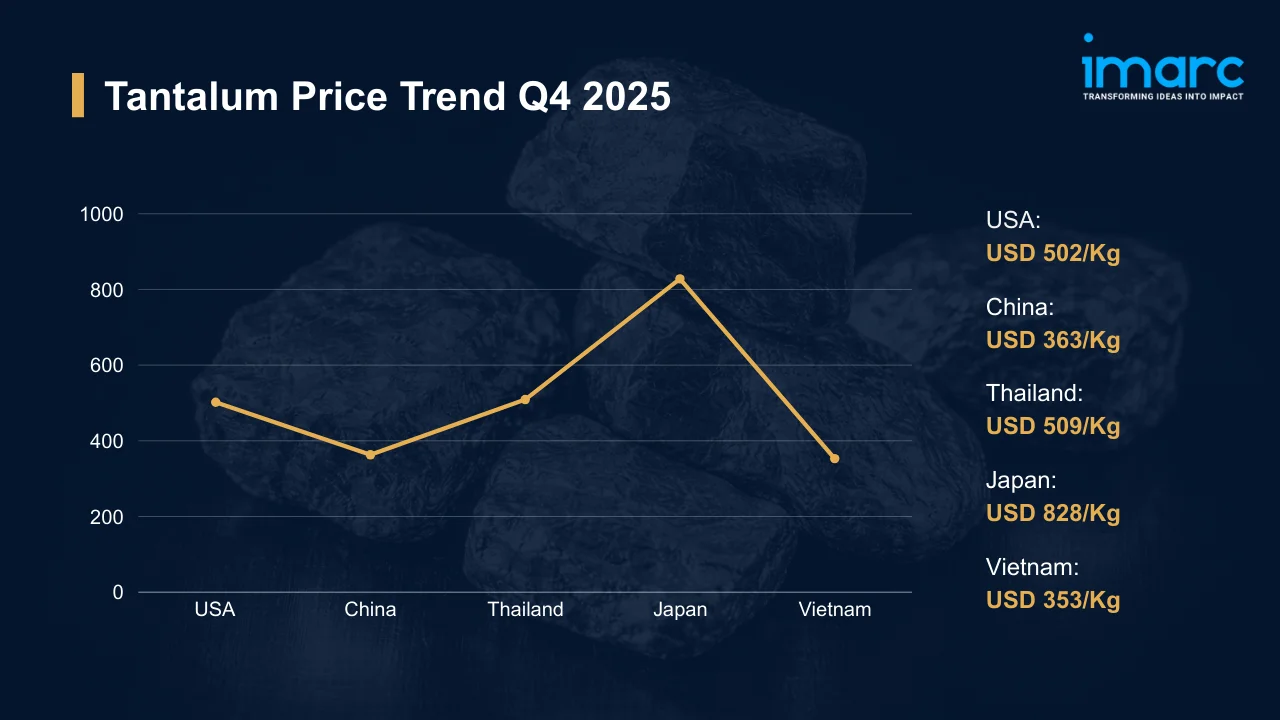
Tantalum is a rare, dense, and exceptionally hard transition metal distinguished by its remarkable resistance to corrosion, elevated melting point, and outstanding biocompatibility. These distinctive characteristics render it indispensable across numerous high-performance sectors, including electronics manufacturing for capacitors and semiconductors, aerospace engineering for turbine blades and heat exchangers, medical device fabrication for surgical implants, and chemical processing for corrosion-resistant equipment. Tantalum pricing is particularly responsive to shifts in the electronics sector demand, fluctuations in conflict-free ore supply from Central Africa, geopolitical disruptions, and evolving regulatory frameworks governing responsible mineral sourcing.
Global Market Overview:
Globally, the tantalum industry reached a volume of 2,576.28 Tons in 2025. Market projections indicate steady growth, with the industry expected to reach 3,462.43 Tons by 2034, with a compound annual growth rate (CAGR) of 3.34% during 2026–2034. Expanding utilization in capacitors, semiconductors, aerospace alloys, and high-performance industrial components continues to propel market growth, underpinned by broadening electronics manufacturing activity and the rising integration of specialty materials in advanced engineering applications. Additionally, the proliferation of 5G telecommunications infrastructure and the accelerating adoption of artificial intelligence (AI) server architectures are generating sustained procurement demand for high-purity tantalum powder. Ongoing strategic stockpiling efforts by major economies further contribute to supply tightness, while increasing emphasis on conflict-free sourcing compliance shapes the competitive dynamics of global supply chains.
Tantalum Price Trend Q4 2025:
Regional prices (USD per KG) and QoQ changes vs Q3 2025:
| Region | Price (USD/KG) | QoQ Change | Direction |
|---|---|---|---|
| USA | 502 | +5.46% | ↑ |
| China | 363 | -3.46% | ↓ |
| Thailand | 509 | +7.16% | ↑ |
| Japan | 828 | +3.50% | ↑ |
| Vietnam | 353 | +2.32% | ↑ |
To access real-time prices Request Sample
What Moved Prices:
- USA: In Q4 2025, tantalum prices in the USA had a significant quarterly increase, reaching USD 502/KG. Procurement quantities were sustained by the electronics manufacturing sector's consumption, especially for semiconductor components and capacitor fabrication. While downstream manufacturers made systematic attempts to refill their inventory, aerospace-related sourcing requirements provided additional help. In order to obtain sufficient material, buyers' procurement behavior was primarily defined by forward planning in line with verified production schedules. Over the course of the period, stable end use consumption trends in the high-technology and defense sectors kept offer levels under pressure to rise.
- China: The price of tantalum in China fell to USD 363/KG in Q4 2025, marking a slight quarterly decrease. Overall demand conditions in the domestic market were softer due to decreased offtake from the electronic and metallurgical end-use industries. Buyers chose cautious purchase techniques as a result of the relaxed procurement urgency caused by the easy availability of materials from established supply channels. Cost containment and cautious involvement were given priority in sourcing decisions during this period, which was in line with patterns of moderate downstream consumption. Price trends were further eased by the lack of notable supply-side interruptions, while competitive regional offers kept the downward movement going.
- Thailand: During Q4 2025, tantalum prices in Thailand advanced to USD 509/KG, marking the sharpest quarterly gain among the five tracked markets. Robust consumption from electronics assembly operations and component manufacturing facilities strengthened purchasing activity throughout the quarter. Consistent downstream utilization, particularly from export-oriented production units, supported regular procurement cycles. Buyers focused their sourcing strategies on inventory accumulation aligned with ongoing production commitments and anticipated export orders. The presence of major tantalum powder production operations within the country sustained firm demand fundamentals, as manufacturers prioritized supply continuity for high-grade material requirements.
- Japan: In Q4 2025, tantalum prices in Japan reached USD 828/KG. Sustained procurement from high-performance electronics manufacturers, precision capacitor producers, and advanced industrial application segments underpinned the elevated pricing environment. Quality-driven sourcing requirements characteristic of Japanese manufacturers encouraged steady and disciplined procurement patterns. Purchasing decisions throughout the period reflected a strong emphasis on supply reliability and alignment with exacting precision manufacturing schedules, as buyers prioritized material quality and traceability over cost considerations in their procurement frameworks.
- Vietnam: During the fourth quarter of 2025, tantalum prices in Vietnam edged higher to USD 353/KG, reflecting a moderate quarterly appreciation. Improving demand from the electronics assembly sector and expanding component manufacturing operations supported the upward price trajectory. Consistent downstream consumption from both domestic production facilities and export-oriented manufacturers encouraged regular sourcing activity. Procurement strategies throughout the quarter centered on inventory optimization and alignment with near-term production scheduling needs, as buyers balanced cost management objectives with the necessity of maintaining adequate material coverage for ongoing manufacturing programs.
Drivers Influencing the Market:
Several factors continue to shape tantalum pricing and market behavior:
- Electronics Sector Demand: The global electronics industry remains the principal consumption driver for tantalum, with capacitor manufacturing and semiconductor fabrication accounting for a substantial share of total offtake. Expanding deployment of 5G infrastructure, rising AI server installations, and growing consumer device production sustain firm procurement volumes across all major markets.
- Aerospace and Defense Applications: Tantalum consumption in the aerospace and defense sectors continues to expand, driven by rising production of turbine blades, heat exchangers, and missile components. Increasing military expenditure globally and robust commercial aircraft manufacturing backlogs contribute to sustained procurement activity for high-purity tantalum across critical application segments.
- Conflict-Free Sourcing Compliance: Regulatory frameworks governing responsible mineral sourcing impose rigorous compliance requirements on tantalum supply chains. These mandates elevate procurement complexity, extend verification timelines, and narrow the qualified supplier base, thereby influencing landed costs and market pricing dynamics.
- Supply Concentration and Ore Availability: Global tantalum ore production remains concentrated in a limited number of geographies, principally Central Africa and Australia. This geographic concentration creates vulnerability to geopolitical disruptions, logistical constraints, and regulatory changes that periodically tighten spot market availability and amplify price volatility across downstream markets.
- Strategic Stockpiling Initiatives: Government-led strategic stockpiling programs in major economies, particularly the United States and China, continue to absorb meaningful volumes of tantalum from commercial markets. These initiatives tighten available supply for industrial consumers, reinforce upward price momentum, and encourage downstream buyers to maintain higher inventory levels as a buffer.
- Currency Fluctuations and Trade Policies: Exchange rate movements between the US dollar and local currencies in key consuming markets influence the cost competitiveness of imported tantalum materials. Evolving trade policies, tariff adjustments, and retaliatory measures between major economies introduce additional procurement uncertainty that shapes regional pricing outcomes and sourcing strategies.
- Recycling and Secondary Supply: Secondary tantalum recovery from manufacturing scrap and end-of-life electronics provides a supplementary supply channel that partially offsets primary ore dependence. Improvements in recycling technologies and higher scrap collection rates moderate supply tightness in certain markets, though secondary sources currently account for a limited proportion of total consumption.
Recent Highlights & Strategic Developments:
Recent strategic moves within the industry further illustrate evolving dynamics:
- In July 2025, Power Metals Corp announced that metallurgical testing at its Case Lake project verified high-grade tantalum, reaching 12,508 ppm Ta in a 1.25% Ta concentrate, in addition to lithium, highlighting tantalum's developing significance as a valuable by-product from the deposit. The company assessed possibilities to incorporate tantalum recovery into its comprehensive development strategy.
Outlook & Strategic Takeaways:
Looking ahead, the tantalum market is expected to sustain a moderately firm trajectory, supported by persistent electronics sector consumption, expanding aerospace procurement, and tightening supply conditions arising from limited ore production geographies and intensifying regulatory compliance requirements.
To navigate this complex landscape, stakeholders should:
- Monitor Regional Price Differentials Quarterly: Establish systematic tracking of tantalum pricing across all five reported markets on a quarterly basis. Comparative analysis of regional spreads enables procurement teams to identify cost-advantageous sourcing windows and optimize purchasing timing.
- Assess Upstream Ore Supply Conditions: Track mining output trends and concentrate availability from principal producing regions, including Central Africa and Australia. Anticipating shifts in primary supply enables proactive adjustments to inventory positioning and contract negotiations.
- Evaluate Emerging Application Demand: Analyze consumption trajectories in rapidly expanding segments, such as AI infrastructure and quantum computing components. Understanding forward demand from these sectors supports informed capacity planning and investment prioritization.
- Strengthen Compliance and Traceability Frameworks: Invest in robust due diligence systems for conflict-free mineral certification and supply chain transparency. Maintaining compliance readiness reduces procurement disruption risk and preserves access to regulated market channels.
- Leverage Secondary Supply Channels: Incorporate recycled tantalum from manufacturing scrap and end-of-life electronics into procurement strategies. Expanding secondary sourcing reduces primary ore dependence and provides cost moderation during periods of elevated spot pricing.
- Hedge Currency Exposure on Import Purchases: Implement financial hedging instruments to manage exchange rate volatility on cross-border tantalum transactions. Structured currency risk mitigation protects landed cost budgets from adverse movements in the US dollar.
Subscription Plans & Customization:
IMARC offers flexible subscription models to suit varying needs:
- Monthly Updates — 12 deliverables/year
- Quarterly Updates — 4 deliverables/year
- Biannual Updates — 2 deliverables/year
Each includes detailed datasets (Excel + PDF) and post-report analyst support.
Get in Touch With Us
UNITED STATES
Phone: +1-201-971-6302
INDIA
Phone: +91-120-433-0800
UNITED KINGDOM
Phone: +44-753-714-6104
Email: [email protected]
Client Testimonials




.webp)




.webp)












