
Personal Cloud Market Size, Share, Trends and Forecast by Revenue Type, Hosting Type, End User, and Region, 2026-2034
Personal Cloud Market Size, Share, Trends & Forecast (2026-2034)
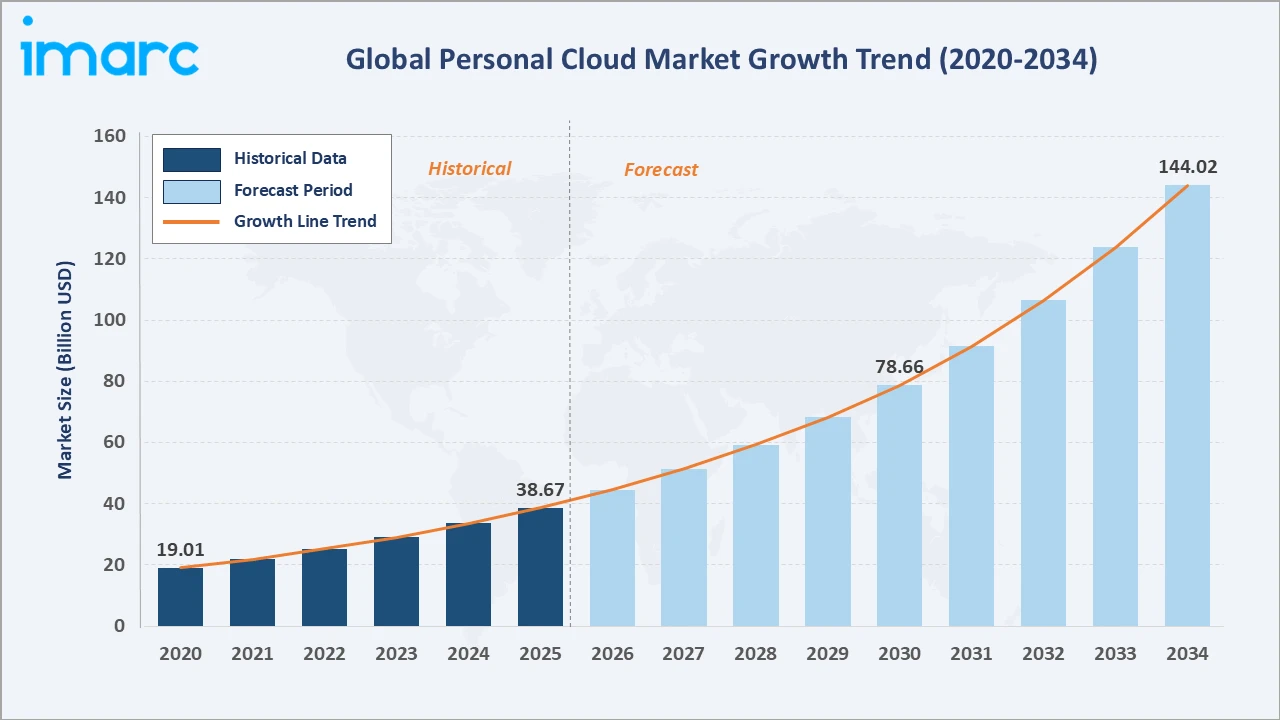
The global personal cloud market reached USD 38.67 Billion in 2025 and is projected to reach USD 144.02 Billion by 2034, expanding at a CAGR of 15.26% during 2026-2034. Rapid digital transformation and IT sector growth, rising BYOD and work-from-home adoption, and growing cloud-based data recovery demand are the primary growth catalysts.
Market Snapshot
|
Metric |
Value |
|
Market Size (2025) |
USD 38.67 Billion |
|
Forecast Market Size (2034) |
USD 144.02 Billion |
|
CAGR (2026-2034) |
15.26% |
|
Base Year |
2025 |
|
Historical Period |
2020-2025 |
|
Forecast Period |
2026-2034 |
North America leads the global personal cloud landscape, holding a 34.9% share in 2025, anchored by the region's advanced digital infrastructure and high cloud adoption across consumers and enterprises. Consumers command the largest share of the hosting type segment at 61.7%, reflecting sustained demand for personal data storage and synchronization solutions.
To get more information on this market, Request Sample
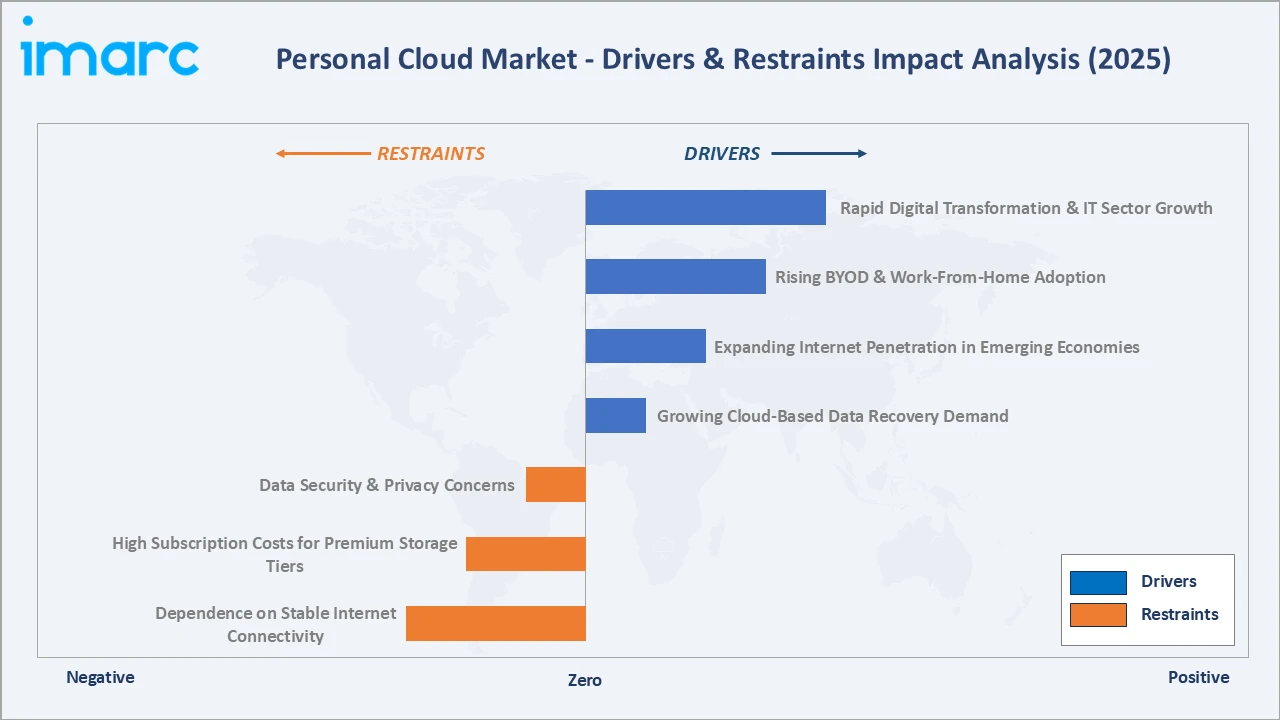
The global personal cloud market is underpinned by three structural forces: rapid digital transformation and IT sector growth, the emergence of BYOD and work-from-home models, and rising adoption of cloud-based data recovery systems. Each force independently reinforces category growth, sustaining steady CAGR expansion through 2034 despite data security and connectivity dependence concerns.
Executive Summary
The global personal cloud market is experiencing robust expansion, driven by rapid digital transformation, growing BYOD and remote work adoption, and increasing demand for cloud-based data recovery solutions. The market was valued at USD 38.67 Billion in 2025 and is forecast to reach USD 144.02 Billion by 2034, growing at a CAGR of 15.26%.
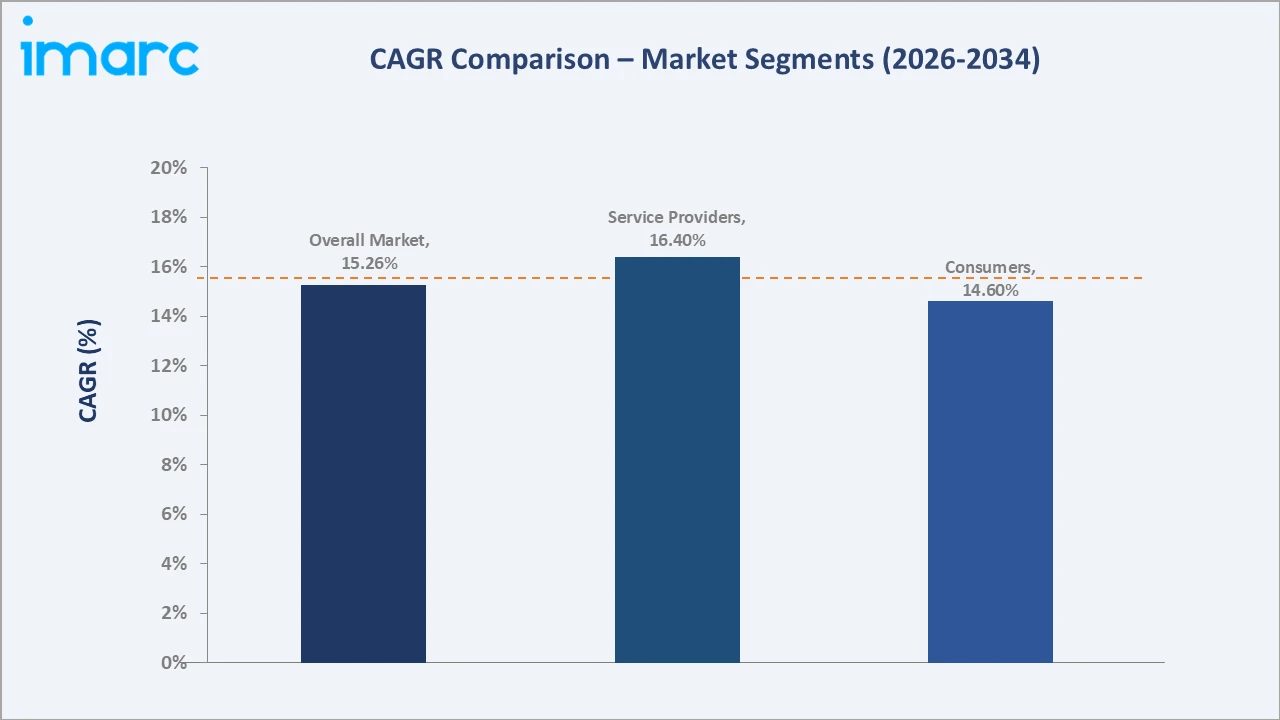
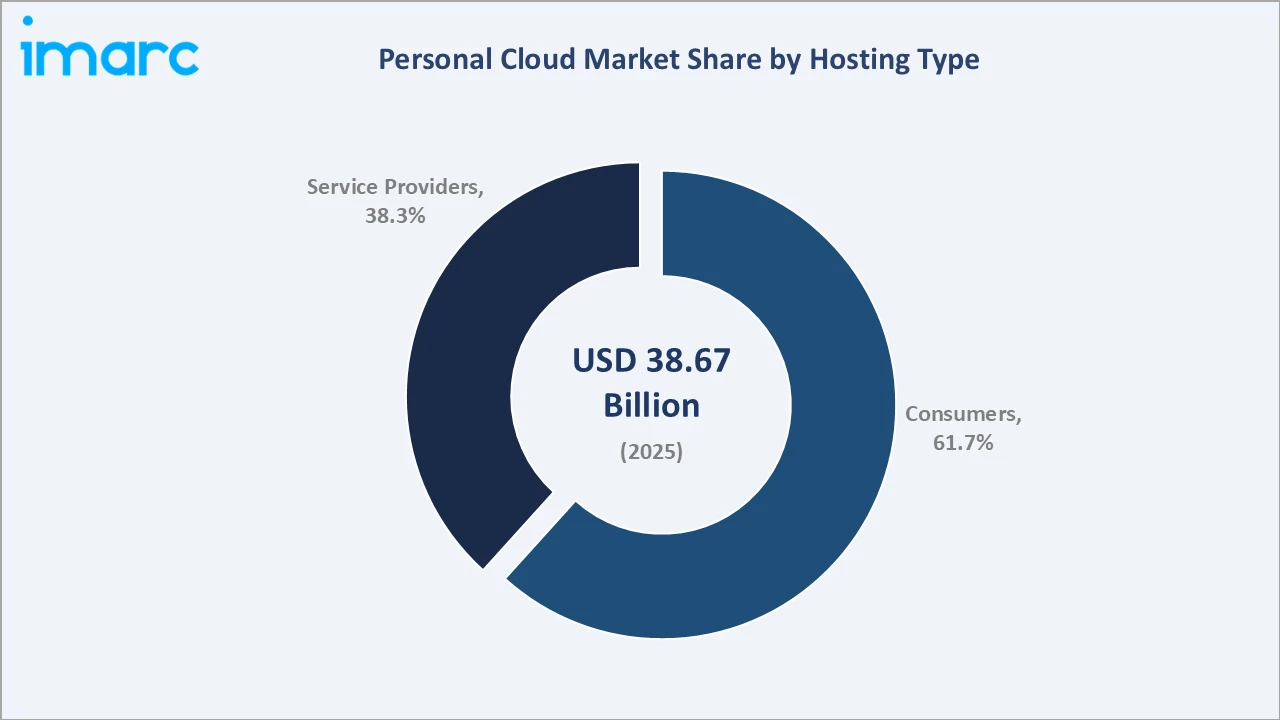
Consumers dominate the hosting type segment with a 61.7% share in 2025, encompassing the traditional core user base for personal cloud storage and synchronization services, while service providers account for 38.3%, reflecting growing enterprise and managed hosting demand.
Direct leads the revenue type segment at a 68.4% share, supported by established subscription-based distribution models, while indirect (31.6%) serves reseller and bundled partnership arrangements. North America leads regionally at 34.9%, anchored by the region's advanced digital infrastructure and high cloud adoption. Leading providers are collectively shaping the industry's innovation roadmap through continuous R&D investment and platform expansion.
Key Market Insights
|
Insight |
Data |
|
Largest Hosting Type Segment |
Consumers – 61.7% share (2025) |
|
Fastest Growing Hosting Type Segment |
Service Providers – ~16.4% CAGR (2026-2034) |
|
Largest Revenue Type Segment |
Direct – 68.4% share (2025) |
|
Leading Region |
North America – 34.9% share (2025) |
|
Top Companies |
Microsoft Corporation, Alphabet Inc., Apple Inc., Dropbox, Inc. |
Key Analytical Observations Supporting The Above Data:
- Consumers account for 61.7% of the global personal cloud market in 2025. This dominance reflects sustained demand for personal data storage, backup, and synchronization solutions across devices.
- Direct remains the leading revenue type at 68.4% share (2025), supported by established subscription-based sales models and direct provider-to-consumer relationships.
- Service providers are expanding steadily at a 38.3% share (2025), as enterprises increasingly favor managed hosting arrangements to support BYOD and hybrid work environments.
- North America's 34.9% share (2025) reflects the region's advanced digital infrastructure, high cloud adoption rates, and strong enterprise IT spending.
- Rising BYOD and work-from-home adoption is broadening the addressable market beyond traditional consumer storage into enterprise collaboration applications.
Personal Cloud Market Overview
The personal cloud market encompasses local network-attached storage and cloud-hosted services used for storing, synchronizing, and sharing personal or professional data such as videos, photos, and documents across multiple devices, serving both individual consumers and enterprises seeking flexible, secure storage solutions. The global personal cloud ecosystem spans infrastructure hardware providers, platform and software developers, and an expanding distribution network across direct and indirect sales channels.
Macroeconomic drivers include rising global digitization and IT sector expansion, growing internet penetration across emerging economies, and expanding enterprise adoption of cloud-as-a-service business models supporting flexible infrastructure costs. Providers are simultaneously investing in AI-enabled smart sync features and zero-trust security frameworks to improve data protection and user experience, positioning the global personal cloud sector for continued platform-led growth through 2034 despite data security and connectivity dependence concerns.
Market Dynamics
To evaluate market opportunities, Request Sample
Market Drivers
- Rapid Digital Transformation & IT Sector Growth: Global IT spending is projected to surpass USD 6 trillion in 2026. Significant expansion within the global information technology sector is driving sustained demand for personal cloud storage and synchronization solutions.
- Rising BYOD & Work-From-Home Adoption: In 2025, more than 32.6 million Americans work remotely, accounting for approximately 22% of the US workforce. Growing bring-your-own-device and hybrid work models are necessitating personal storage solutions for secure file sharing among distributed employees.
- Expanding Internet Penetration in Emerging Economies: Rising internet access, particularly in developing regions, is supporting broader personal cloud adoption and market reach. In India, the number of internet subscribers reached approximately 1.003 billion during the April–June 2025 quarter, highlighting the country’s rapidly expanding digital user base and substantial market potential for personal cloud services.
- Growing Cloud-Based Data Recovery Demand: Increasing adoption of cloud-based recovery systems is driving market expansion as consumers and enterprises prioritize data resilience.
Market Restraints
- Data Security & Privacy Concerns: In 2024, the US recorded 3,158 data breaches, exposing the personal information of more than 1.35 billion individuals. Growing concerns over data breaches and privacy compliance can limit adoption among security-conscious consumers and enterprises.
- High Subscription Costs for Premium Storage Tiers: Premium storage plans with advanced features can carry meaningful cost premiums, limiting adoption among price-sensitive user segments.
- Dependence on Stable Internet Connectivity: Personal cloud services require reliable internet access, constraining adoption in regions with limited or inconsistent connectivity.
Market Opportunities
- Zero-Trust Security Integration: Rising demand for enhanced data protection presents opportunities for providers investing in zero-trust security architectures.
- Edge-Cloud Hybrid Storage Adoption: Growing interest in hybrid storage architectures creates opportunities for providers to combine local and cloud-based solutions.
Market Challenges
- Balancing Cost and Feature Innovation: Providers must balance advanced feature development costs with the need to remain accessible to price-sensitive mainstream consumers.
- Consumer Trust in Data Privacy Practices: Ensuring consumers trust provider data handling and privacy practices requires ongoing transparency and security certification investment.
Emerging Market Trends
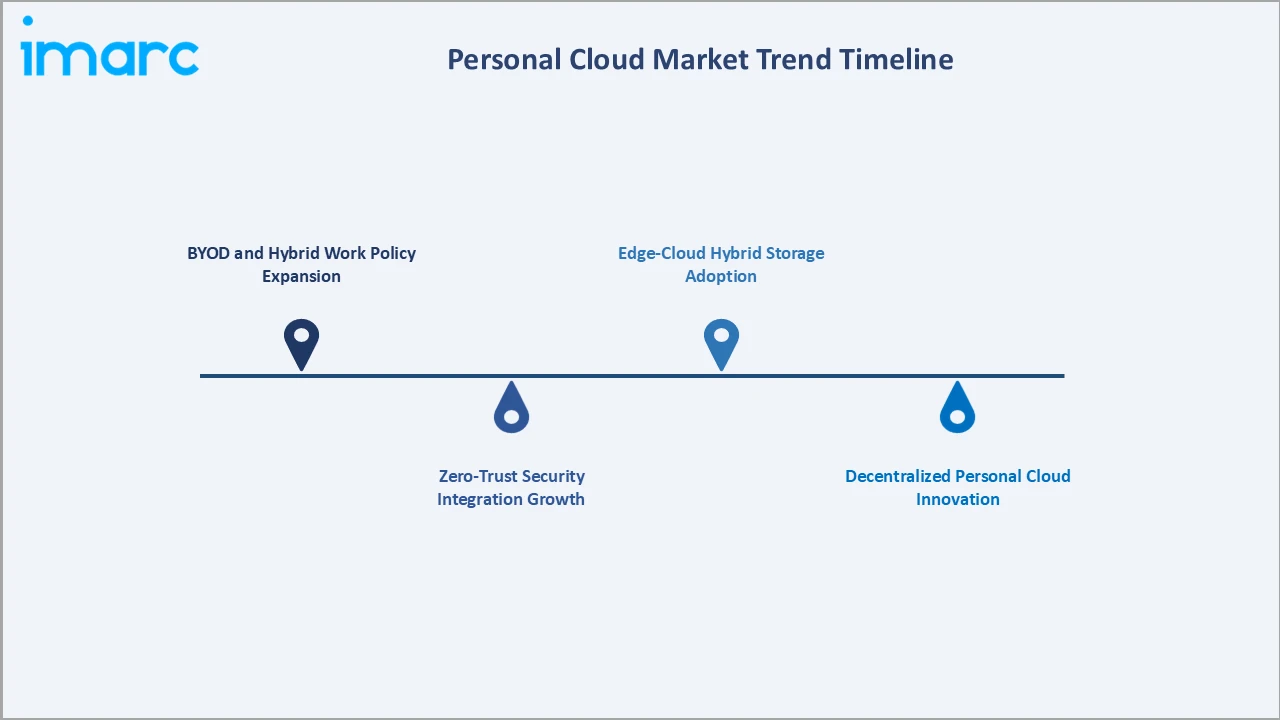
1. BYOD & Hybrid Work Policy Expansion
Globally, more than 95% of organizations permit some use of personal devices for work, while 67% had formal BYOD policies by late 2024, up from 51% in 2023. The increasing adoption of BYOD and hybrid work policies is leveraging personal cloud platforms to enable secure file sharing and collaboration among distributed employees.
2. Zero-Trust Security Integration Growth
Growing consumer and enterprise demand for enhanced data protection is driving integration of zero-trust security frameworks across personal cloud platforms. Features such as continuous authentication, identity-based access controls, encryption, and real-time threat monitoring are strengthening user confidence and accelerating adoption.
3. Edge-Cloud Hybrid Storage Adoption
Rising interest in hybrid storage architectures is accelerating adoption of solutions that combine local edge storage with cloud-based synchronization and backup. For instance, HPE’s Edge-to-Cloud Adoption Framework helps organizations assess their cloud maturity and develop an actionable roadmap for delivering a unified hybrid-cloud experience across workloads.
4. Decentralized Personal Cloud Innovation
Leading providers are exploring decentralized storage architectures to enhance data privacy and resilience, reflecting the broader industry shift toward user-controlled personal cloud ecosystems. In February 2025, Secret Network and Aethir partnered to combine privacy-preserving smart contracts with decentralized GPU infrastructure for secure, scalable, and compliant AI applications.
Industry Value Chain Analysis
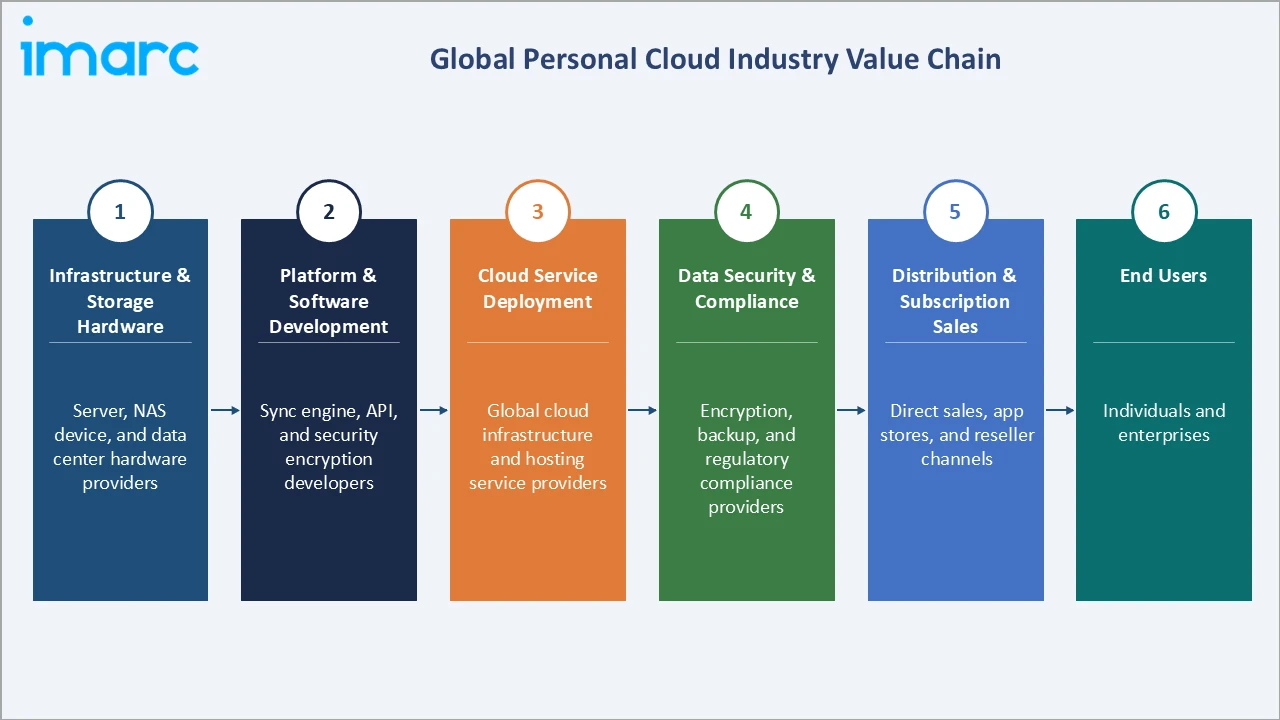
The global personal cloud value chain spans infrastructure sourcing through end-user delivery, with each stage occupied by specialized hardware providers, platform developers, and distribution partners whose performance directly influences service reliability, security, and user experience.
|
Stage |
Key Players / Examples |
|
Infrastructure & Storage Hardware |
Server, NAS device, and data center hardware providers |
|
Platform & Software Development |
Sync engine, API, and security encryption developers |
|
Cloud Service Deployment |
Global cloud infrastructure and hosting service providers |
|
Data Security & Compliance |
Encryption, backup, and regulatory compliance providers |
|
Distribution & Subscription Sales |
Direct sales, app stores, and reseller channels |
|
End Users |
Individuals and enterprises |
Technology Landscape in the Personal Cloud Industry
AI-Enabled Smart Sync Technology
Providers are advancing AI-enabled smart synchronization features to improve file organization and predictive storage management, supporting broader adoption among consumers and enterprises. AI-driven deduplication engines, intelligent version control, and context-aware file tagging are being embedded directly into sync clients, reducing manual organization effort while significantly improving the user experience for both individual subscribers and enterprise-tier teams managing large distributed file repositories.
Zero-Trust Security Architecture
Growing investment in zero-trust security frameworks is expanding personal cloud data protection capabilities, addressing rising demand for fully secure storage solutions. Implementation of continuous identity verification, micro-segmentation of stored data, and device-level trust scoring is becoming a baseline expectation among enterprise and prosumer subscribers, compelling providers to integrate zero-trust principles natively into client applications and backend infrastructure rather than as optional add-on security layers.
Edge-Cloud Hybrid Integration
Providers are adopting hybrid edge-cloud architectures to extend performance and reliability across the full spectrum of storage and synchronization use cases. In the personal cloud market, this translates into local NAS-to-cloud bridging, on-device cache management, and intelligent workload routing, allowing latency-sensitive operations such as real-time document editing and large media file access to execute locally while offloading archival, backup, and cross-device synchronization tasks to scalable cloud infrastructure.
Decentralized Storage Systems
Expanding research into decentralized and distributed storage infrastructure is strengthening data privacy and resilience, supporting premium positioning across security-conscious user segments. Blockchain-anchored storage protocols and IPFS-based content addressing are being evaluated as alternatives to centralized server architectures, enabling users to retain full data sovereignty by fragmenting and encrypting files across distributed node networks.
Market Segmentation Analysis
The report covers the following segments:
|
Segment Category |
Leading Segment |
Market Share |
Year |
|
Hosting Type |
Consumers |
61.7% |
2025 |
|
Revenue Type |
Direct |
68.4% |
2025 |
|
End User |
Enterprises |
🔒 |
2025 |
|
Region |
North America |
34.9% |
2025 |

By Hosting Type
Consumers dominate with a 61.7% share in 2025. This segment encompasses the traditional core user base for personal cloud storage and synchronization services, supported by sustained demand for accessible, secure personal data management.
To access detailed market analysis, Request Sample
Service providers represent 38.3% (2025) of the market, reflecting growing enterprise and managed hosting demand as organizations adopt cloud-as-a-service business models, a segment expected to expand steadily as BYOD and hybrid work models mature.
By Revenue Type
Direct revenue channels lead the segment at 68.4% share, supported by established subscription-based distribution models and direct provider-to-consumer relationships across major personal cloud platforms.
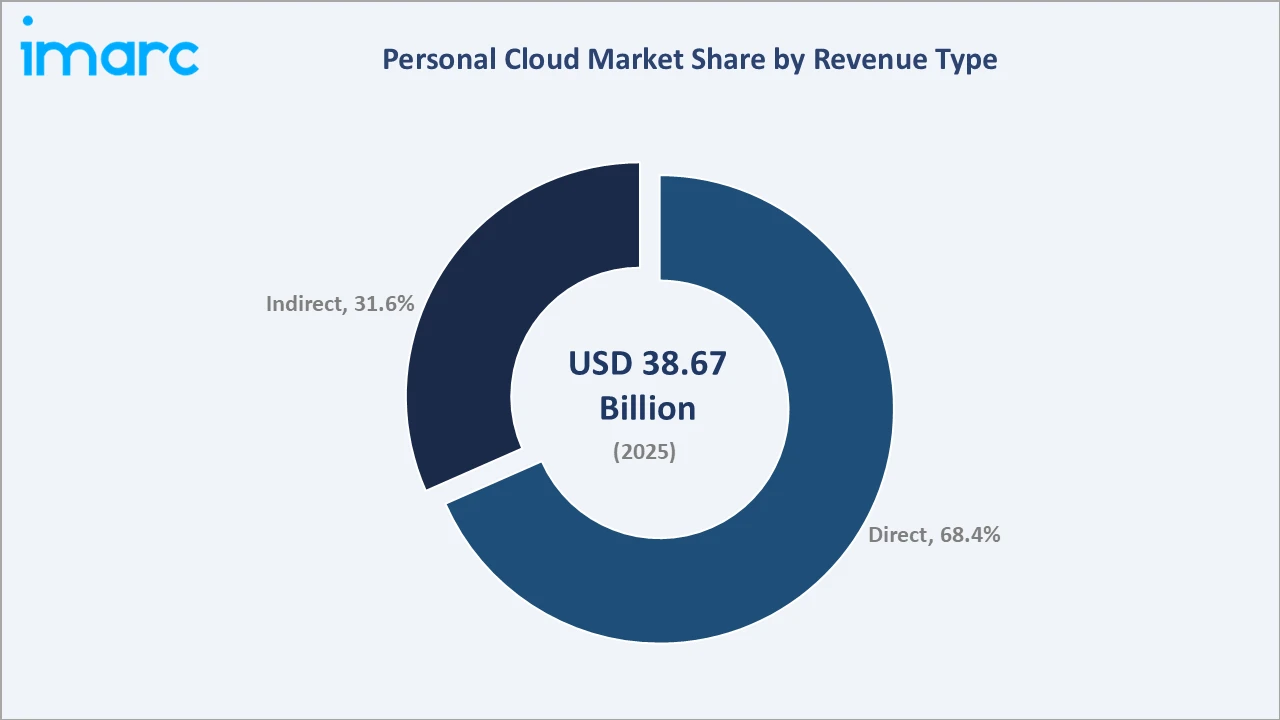
Indirect channels account for 31.6% share (2025), encompassing reseller, bundled hardware, and third-party partnership arrangements that extend provider reach across diverse distribution ecosystems.
Regional Market Insights
North America's market leadership (34.9%, 2025) reflects the region's advanced digital infrastructure and high cloud adoption across consumers and enterprises. Strong enterprise IT spending and rising remote work adoption combine to sustain its dominant position through 2034.
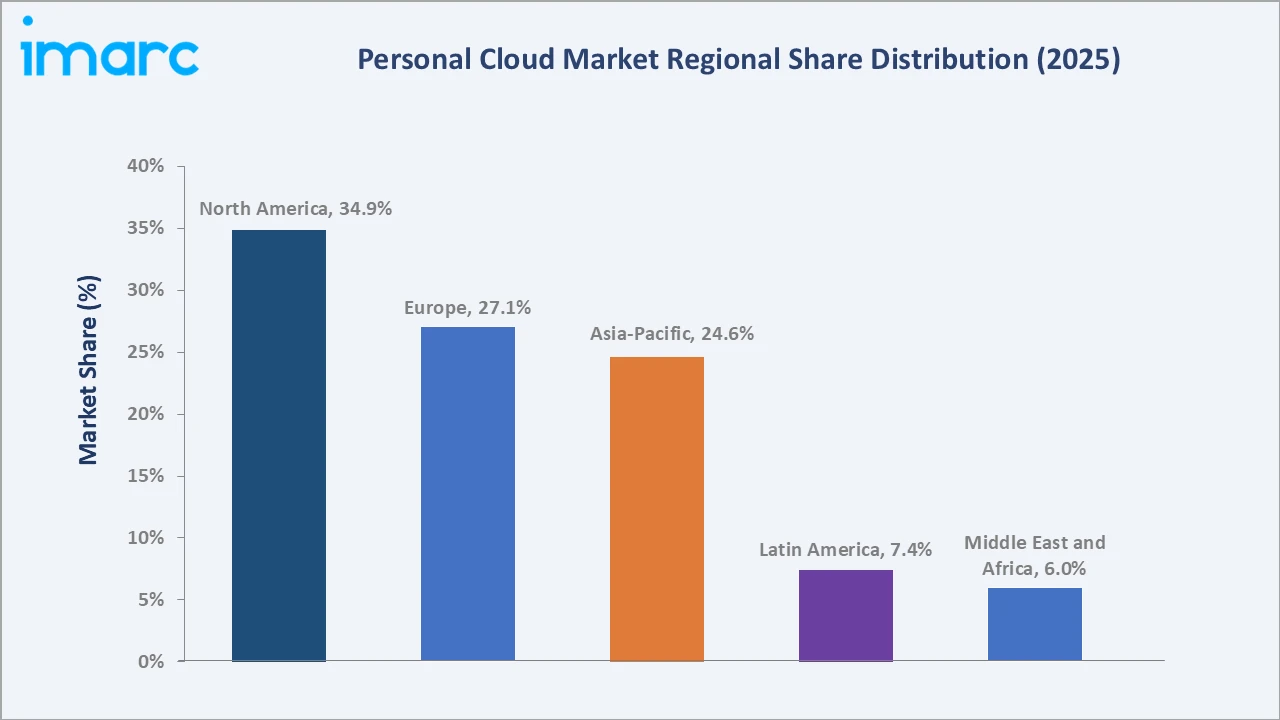
Europe at 27.1% represents the second-largest personal cloud market globally. Stringent data protection regulations and expanding cloud service adoption are sustaining steady growth, positioning the region as a key contributor alongside North America through the forecast period.
|
Region |
Share (2025) |
Key Growth Drivers |
|
North America |
34.9% |
Advanced digital infrastructure and high enterprise cloud adoption |
|
Europe |
27.1% |
Stringent data protection regulations and expanding cloud service adoption |
|
Asia-Pacific |
24.6% |
Rising internet penetration and expanding digital economy infrastructure |
|
Latin America |
7.4% |
Emerging digital transformation and expanding internet access |
|
Middle East and Africa |
6.0% |
Growing interest in cloud services and gradual digital infrastructure expansion |
Competitive Landscape
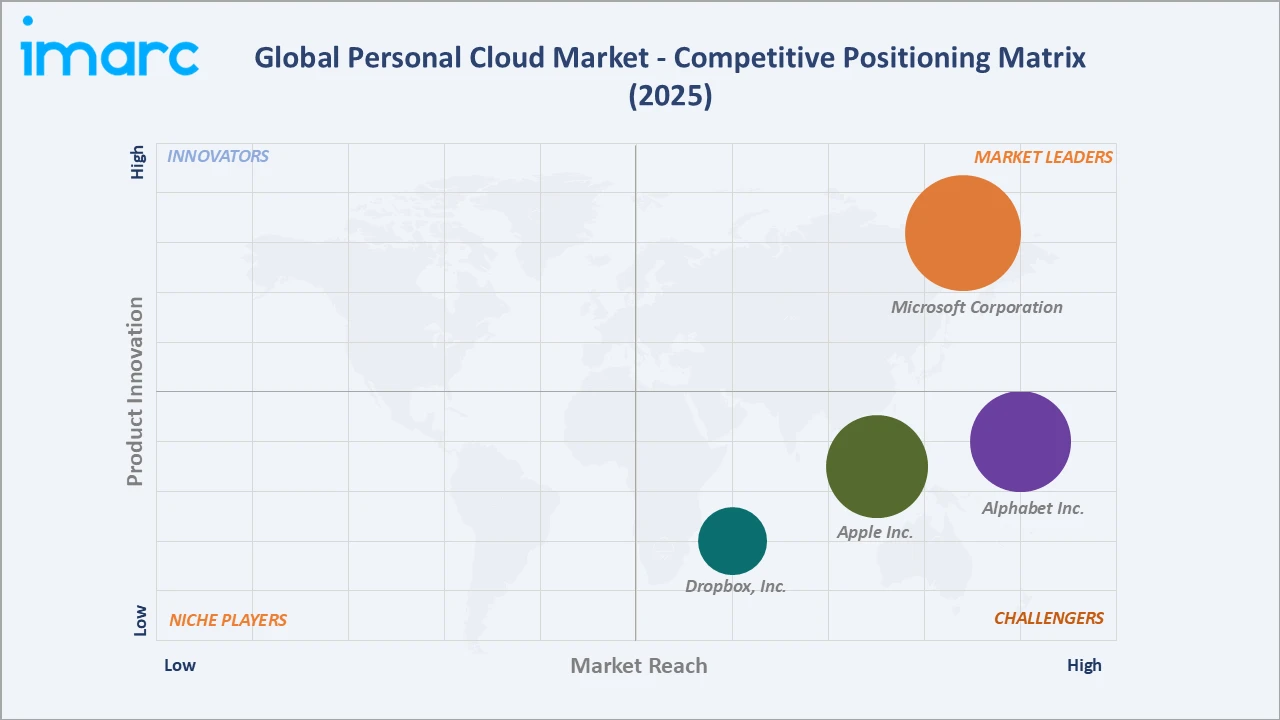
The global personal cloud market exhibits moderate-to-high concentration, with leading providers collectively holding a significant share of market revenue in 2025, reflecting sustained investment in platform innovation and distribution reach.
|
Company Name |
Brand Name |
Market Position |
Core Strength |
|
Microsoft Corporation |
Microsoft OneDrive |
Market Leader |
Broad enterprise and consumer cloud storage integration across Microsoft 365 |
|
Alphabet Inc. |
Google Drive |
Strong Challenger |
Deep integration with productivity suite and consumer ecosystem reach |
|
Apple Inc. |
iCloud |
Strong Challenger |
Seamless device ecosystem integration and premium user experience |
|
Dropbox, Inc. |
Dropbox |
Challenger |
Specialty file sync and collaboration platform expertise |
Microsoft Corporation dominates through comprehensive infrastructure portfolio and extensive global distribution network, supported by continuous R&D investment. Google LLC, Apple Inc., and Dropbox, Inc., compete through targeted ecosystem integration, premium positioning, and specialty collaboration differentiation, respectively.
Key Company Profiles
Microsoft Corporation
Microsoft Corporation is a leading global technology provider with a deeply integrated personal cloud portfolio serving both consumer and enterprise channels worldwide through OneDrive.
- Product Portfolio: Microsoft OneDrive personal and business cloud storage integrated across Microsoft 365 productivity applications.
- Recent Developments: Microsoft Corporation reported record revenue of USD 281.7 billion, up 15%, while operating income increased 17% to USD 128.5 billion. Microsoft identified OneDrive as a key communication and storage service supporting Microsoft 365 Consumer cloud revenue, which grew 11% as subscribers increased 8% to 89 million.
- Strategic Focus: Scaling productivity-integrated storage innovation; deepening enterprise and consumer distribution partnerships.
Alphabet Inc.
Alphabet Inc.’s subsidiary Google LLC is a prominent technology brand known for its innovation-focused, deeply integrated personal cloud storage presence through Google Drive.
- Product Portfolio: Google Drive consumer and enterprise cloud storage integrated with Google Workspace productivity tools.
- Recent Developments: In April 2026, Alphabet Inc. reported Q1 2026 revenue of USD 109.9 billion, up 22%, while Google Cloud revenue surged 63% to USD 20.0 billion and net income rose 81% to USD 62.6 billion.
- Strategic Focus: Expanding AI-enabled storage innovation; strengthening ecosystem-wide integration presence.
Market Concentration Analysis
The global personal cloud market exhibits moderate-to-high concentration, with Microsoft Corporation and Alphabet Inc. collectively accounting for a significant share of total category revenue in 2025, reflecting sustained R&D investment, ecosystem integration, and extensive distribution infrastructure worldwide.
Consolidation pressure remains limited as leading providers maintain distinct strategic positioning: Microsoft Corporation through comprehensive infrastructure and enterprise portfolios, Alphabet Inc. and Apple Inc. through ecosystem integration and premium positioning, and Dropbox, Inc. through specialty collaboration and compliance-focused differentiation, rather than pursuing direct M&A consolidation.
Investment & Growth Opportunities
Fastest Growing Segments
Service providers (~16.4% CAGR) represent the highest-growth investment vector through 2034, driven by expanding BYOD and hybrid work adoption and continuous platform innovation across AI-enabled sync, security, and hybrid storage technologies. This subcategory addresses a rapidly expanding addressable market within the global enterprise cloud adoption ecosystem.
Emerging Market Expansion
Latin America and the Middle East and Africa collectively represent an incremental growth opportunity beyond North America and Europe by 2034, as rising digital transformation and expanding internet infrastructure accelerate category penetration in these secondary regional markets.
Venture and Institutional Investment Trends
- Provider investment toward zero-trust security integration is creating opportunities for security technology vendors serving the personal cloud sector.
- Growing enterprise adoption of cloud-as-a-service business models is sustaining institutional interest in managed hosting and subscription platforms.
- Edge-cloud hybrid storage innovation, led by major providers, is opening opportunities for infrastructure technology and integration vendors serving the global cloud services industry.
Future Market Outlook (2026-2034)
The global personal cloud market is positioned for robust, digital-transformation-driven expansion through 2034. From a base of USD 38.67 Billion in 2025, the market is projected to reach USD 144.02 Billion by 2034, representing substantial incremental value creation at a CAGR of 15.26%. This growth is underpinned by rapid digital transformation, expanding BYOD and remote work adoption, and continuous platform innovation across the cloud services sector.
The hosting type mix will continue evolving through 2034, with service providers gaining further share as enterprise cloud-as-a-service adoption and hybrid work models accelerate. This shift creates opportunities for providers investing in zero-trust security, edge-cloud hybrid architectures, and expanding distribution to capture the next phase of the global personal cloud market growth.
Research Methodology
Primary Research
Primary research comprised structured interviews with industry participants across 2024-2025, including cloud service provider executives, enterprise IT managers, security specialists, and technology analysts globally. Expert input validated market sizing, segmentation trends, and regional adoption patterns.
Secondary Research
Secondary research encompassed provider annual reports, technology industry association publications, and enterprise IT trade press covering personal cloud innovation, data security regulation trends, and regional adoption dynamics across major markets.
Forecasting Models
Market size estimations were derived using top-down and bottom-up forecasting, incorporating hosting type and revenue type mix transitions and provider capacity disclosures. A base-case CAGR of 15.26% reflects consensus estimates validated against announced platform launch timelines and provider strategic investment plans.
Personal Cloud Market Report Coverage:
| Report Features | Details |
|---|---|
| Base Year of the Analysis | 2025 |
| Historical Period | 2020-2025 |
| Forecast Period | 2026-2034 |
| Units | Billion USD |
| Scope of the Report |
Exploration of Historical Trends and Hot Melts Adhesive Market Outlook, Industry Catalysts and Challenges, Segment-Wise Historical and Future Market Assessment:
|
| Revenue Types Covered | Direct, Indirect |
| Hosting Types Covered | Service Providers, Consumers |
| End Users Covered | Individuals, Enterprises |
| Regions Covered | Asia Pacific, Europe, North America, Latin America, Middle East and Africa |
| Countries Covered | United States, Canada, Germany, France, United Kingdom, Italy, Spain, Russia, China, Japan, India, South Korea, Australia, Indonesia, Brazil, Mexico |
| Companies Covered | Microsoft Corporation, Alphabet Inc., Apple Inc., Dropbox Inc., etc. |
| Customization Scope | 10% Free Customization |
| Post-Sale Analyst Support | 10-12 Weeks |
| Delivery Format | PDF and Excel through Email (We can also provide the editable version of the report in PPT/Word format on special request) |
Frequently Asked Questions About the Personal Cloud Market Report
The global personal cloud market reached USD 38.67 Billion in 2025 and is projected to reach USD 144.02 Billion by 2034.
The market is expected to grow at a CAGR of 15.26% during 2026-2034, driven by rapid digital transformation and rising BYOD adoption.
North America leads with a 34.9% share in 2025, anchored by the region's advanced digital infrastructure and high cloud adoption.
Consumers dominate with a 61.7% share in 2025, driven by sustained demand for personal data storage and synchronization solutions.
Direct revenue channels lead with a 68.4% share in 2025, supported by established subscription-based distribution models.
Some of the key players include Microsoft Corporation, Alphabet Inc., Apple Inc., and Dropbox, Inc.
Service providers are growing fastest at an estimated 16.4% CAGR as enterprise cloud-as-a-service adoption accelerates.
Key challenges include data security and privacy concerns, high subscription costs for premium tiers, and dependence on stable internet connectivity.
Zero-trust security integration, edge-cloud hybrid storage innovation, and cloud-as-a-service platform expansion represent leading investment opportunities.
Need more help?
- Speak to our experienced analysts for insights on the current market scenarios.
- Include additional segments and countries to customize the report as per your requirement.
- Gain an unparalleled competitive advantage in your domain by understanding how to utilize the report and positively impacting your operations and revenue.
- For further assistance, please connect with our analysts.
 Request Customization
 Speak to an Analyst
 Request Brochure
 Inquire Before Buying
Benefits of Customization
- Personalize this research
- Triangulate with your data
- Get data as per your format and definition
- Gain a deeper dive into a specific application, geography, customer, or competitor
- Any level of personalization
Get in Touch With Us
UNITED STATES
Phone: +1-201-971-6302
INDIA
Phone: +91-120-433-0800
UNITED KINGDOM
Phone: +44-753-714-6104
Email: [email protected]
Client Testimonials




.webp)




.webp)













Related Reports

Choose your plan
*Please note that the prices mentioned below are starting prices for each bundle type. Kindly contact our team for further details.*
Single User License
- 1 User License, Access on 2 Devices
- PDF Report + Excel Dataset (Password Protected)
- Lifetime Access
- No Printing Rights
- 10% Free Report Customization
- 10–12 Weeks of Analyst Support
Five User License
- Access for 5 Users, 2 Devices per User
- PDF Report + Excel Dataset (Password Protected)
- Lifetime Access
- Dedicated Account Manager
- 12–14 Weeks of Analyst Support
- No Printing Rights
- 15% Free Report Customization
- 25% Discount on Your Next Purchase
Corporate User License
- Unlimited User Access (Within Your Organization)
- PDF Report + Excel Dataset
- Lifetime Access
- Dedicated Account Manager
- 14–20 Weeks of Analyst Support
- No Printing Rights
- 20% Free Report Customization
- 30% Discount on Your Next Purchase
Essential Insights
What's included:
3 reports
- Lifetime Access
- PDF Reports
- Excel Datasets
- 2 Weeks of Free Analyst Support
- 2 User Licenses
- Access on 2 Devices
- Printing Rights
- Complimentary PowerPoint (PPT) Version
- Complimentary License Upgrade
Professional Access
What's included:
5 reports
- Lifetime Access
- PDF Reports
- Excel Datasets
- 8 Weeks of Free Analyst Support
- 2 User Licenses
- Access on 2 Devices
- Printing Rights
- Complimentary PowerPoint (PPT) Version
- Complimentary License Upgrade
Business Advantage
What's included:
8 reports
- Lifetime Access
- PDF Reports
- Excel Datasets
- 14 Weeks of Free Analyst Support
- 2 User Licenses
- Access on 2 Devices
- Printing Rights
- Complimentary PowerPoint (PPT) Version
- Complimentary License Upgrade
Enterprise Intelligence
What's included:
10 reports
- Lifetime Access
- PDF Reports
- Excel Datasets
- 20 Weeks of Free Analyst Support
- 2 User Licenses
- Access on 2 Devices
- Printing Rights
- Complimentary PowerPoint (PPT) Version
- Complimentary License Upgrade