
India Instrument Transformers Market Size, Share, Trends and Forecast by Type, Voltage, Enclosure Type, Cooling Method, Application, End User, and Region, 2026-2034
India Instrument Transformers Market Size, Share, Trends & Forecast (2026-2034)
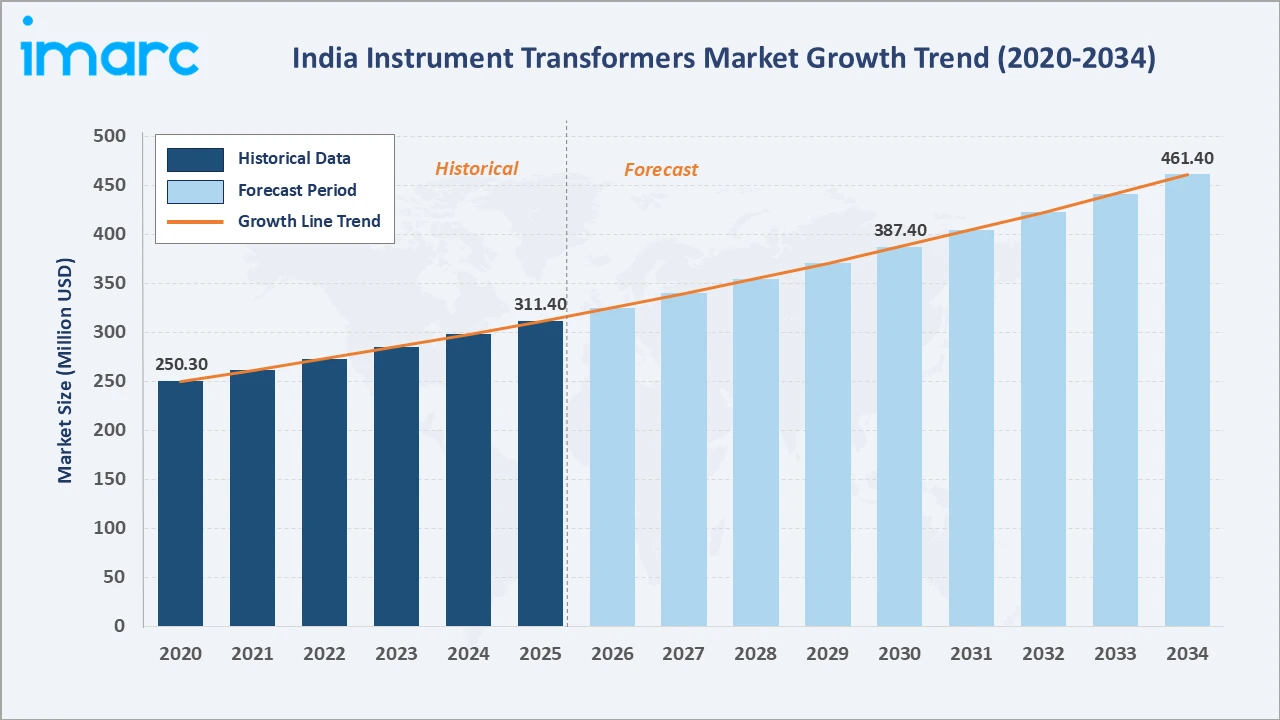
The India instrument transformers market grew from USD 311.4 Million in 2025 to USD 325.3 Million in 2026 and is projected to reach USD 461.4 Million by 2034, growing at a CAGR of 4.47% during 2026-2034. The market is driven by rapid expansion of power infrastructure, increasing integration of renewable energy sources into the national grid, and growing demand from power utilities and industrial sectors. Leading instrument transformer manufacturers in india are benefiting from robust government investments in transmission and distribution networks and smart grid upgrades, which are spurring replacement and new-installation demand across urban and rural electrification programs.
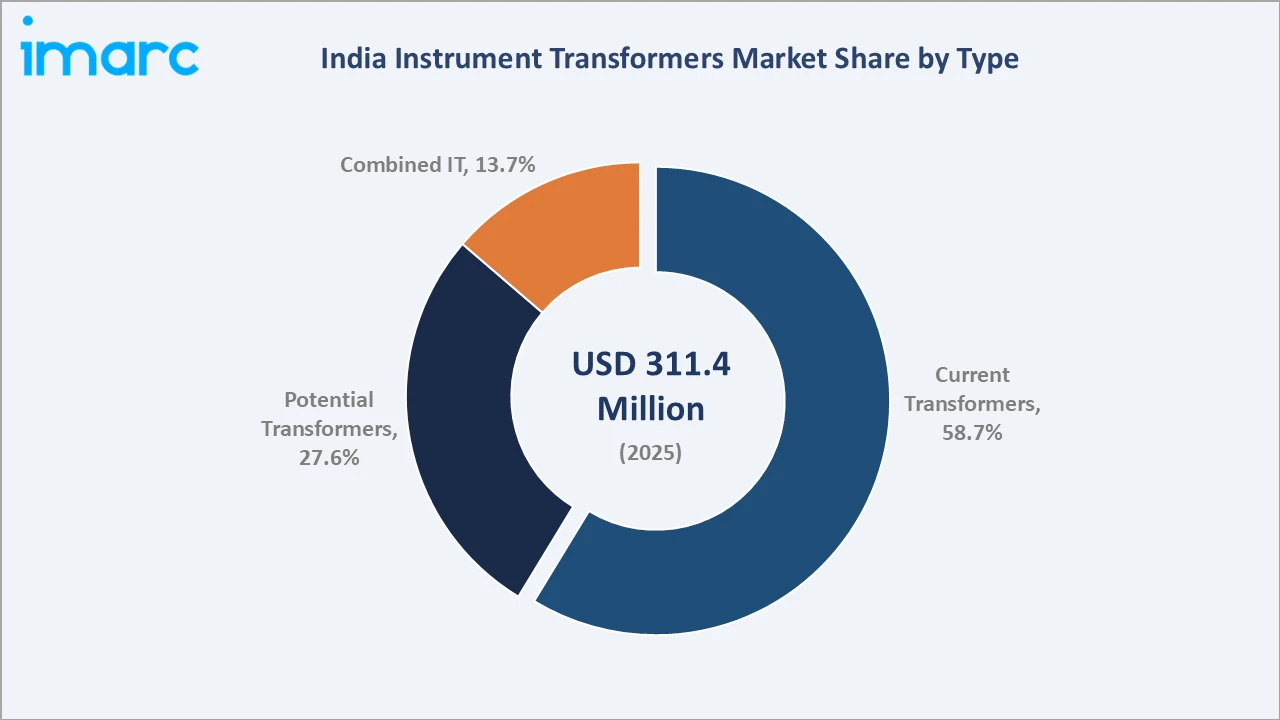
Current Transformers dominate at 58.7%, Power Utilities lead end-user demand at 42.8% of the market, and West India leads regionally at 31.6%.
Market Snapshot
| Metric | Value |
|---|---|
| Base Year Market Size (2025) | USD 311.4 Million |
| Market Size (2026) | USD 325.3 Million |
| Forecast Market Size (2034) | USD 461.4 Million |
| CAGR (2026-2034) | 4.47% |
| Base Year | 2025 |
| Historical Period | 2020-2025 |
| Forecast Period | 2026-2034 |
| Dominant Type | Current Transformers (58.7%, 2025) |
| Dominant End User | Power Utilities (42.8%, 2025) |
| Leading Region | West India (31.6%, 2025) |
The India instrument transformers market size increased from USD 250.3 Million in 2020 to USD 311.4 Million in 2025 and is estimated to reach USD 325.3 Million in 2026. The market is further expected to grow to USD 387.4 Million by 2030 and USD 461.4 Million by 2034.
To get more information on this market, Request Sample
India instrument transformers market is distinguished by its strong dependence on government-mandated power sector investment programs. The market's commercial structure is characterized by high barriers to entry through stringent BIS certification requirements and utility-grade quality standards, creating a concentrated supplier landscape dominated by a few large domestic and multinational manufacturers.
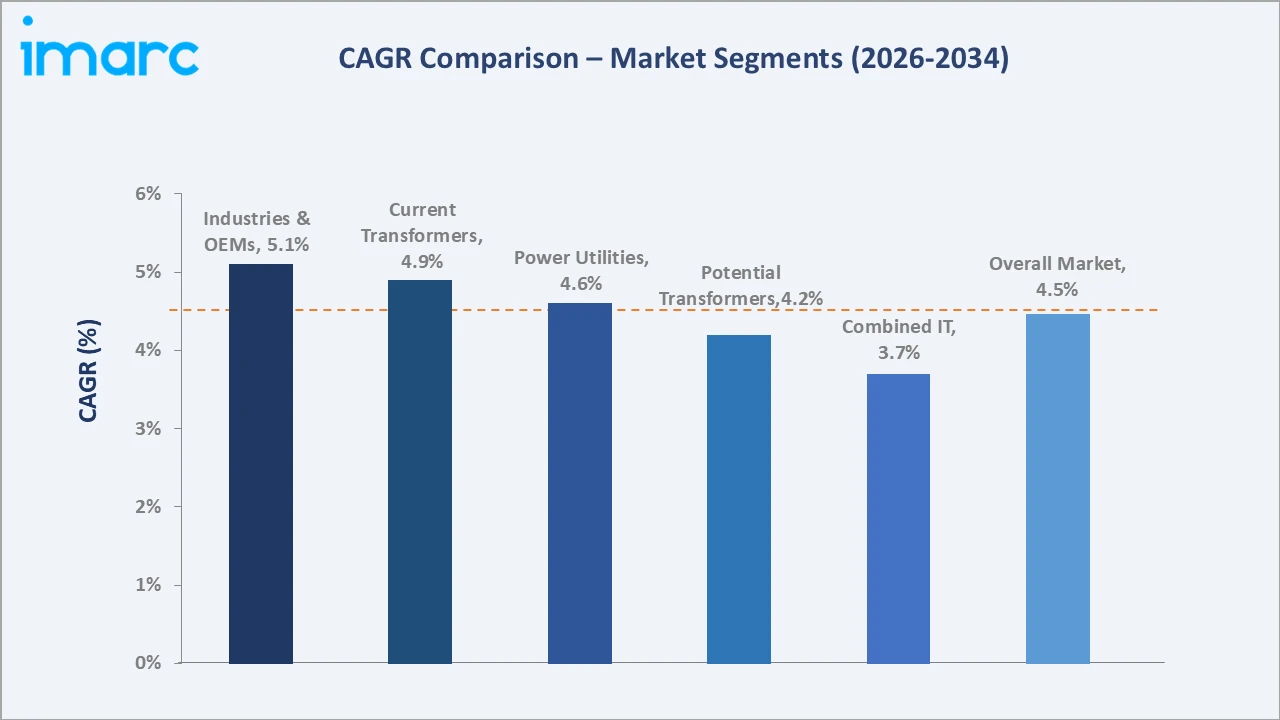
The current transformers segment grows fastest at approximately 4.90% CAGR during 2026–2034, driven by India's expanding metering infrastructure, smart grid projects, and renewable energy integration. Potential transformers grow at approximately 4.20% CAGR through substation capacity expansion, and combined instrument transformers grow at approximately 3.70% CAGR.
Executive Summary
The India instrument transformers market expanded from USD 311.4 Million in 2025 to an estimated USD 325.3 Million in 2026, driven by sustained government investment in transmission and distribution infrastructure, accelerating smart grid deployment, and growing renewable energy capacity requiring grid measurement and protection equipment. India's power sector modernization under the Revamped Distribution Sector Scheme (RDSS) and the National Infrastructure Pipeline (NIP) continues to generate structured procurement demand across all voltage classes. Growing renewable energy integration and smart grid automation programs are simultaneously expanding the addressable market for higher-accuracy and digital-output instrument transformers, supporting a product upgrade cycle alongside base volume growth. The market is projected to reach USD 461.4 Million by 2034. Current Transformers at 58.7% lead through metering and protection applications across utility and industrial networks. Power Utilities at 42.8% reflect the dominant procurement share of DISCOMs and central utilities. West India leads regionally at 31.6%.
Key Market Insights
| Insight | Data |
|---|---|
| Dominant Type | Current Transformers – 58.7% share (2025) |
| Dominant End User | Power Utilities – 42.8% market share (2025) |
| Leading Region | West India – 31.6% share (2025) |
| Market Opportunity | Smart grid-compatible digital instrument transformers; renewable integration metering; RDSS-driven distribution expansion; EHV substation capacity growth |
Key Analytical Observations Supporting the above data:
- Current Transformers at 58.7%: The current transformer segment dominates due to its essential role in protection and metering across transmission and distribution networks. High deployment volumes in DISCOMs, industrial plants, and substations drive sustained demand.
- Power Utilities at 42.8%: Power utilities dominate through state electricity boards and central utilities procuring instrument transformers in large volumes for substation expansion, replacement cycles, and smart metering programs under RDSS and the National Smart Grid Mission.
- West India at 31.6%: West India leads driven by Maharashtra's large T&D infrastructure and Gujarat's expanding renewable energy installations requiring grid measurement and protection equipment.
India Instrument Transformers Market Overview
India instrument transformers market is commercially essential within India's power sector ecosystem, providing measurement, protection, and metering functions across high-voltage transmission and distribution networks. The market serves power utilities, generation companies, industrial enterprises, and railways through a technically specialized product range requiring BIS certification and utility-grade performance standards.
India instrument transformers market integrates domestic manufacturing, multinational subsidiaries, technology licensing, and component imports. Macroeconomic factors include rising electricity demand from industrialization and urbanization, government investments in the National Infrastructure Pipeline, and India's renewable energy capacity expansion program targeting 500 GW by 2030.
Market Dynamics
To evaluate market opportunities, Request Sample
Market Drivers
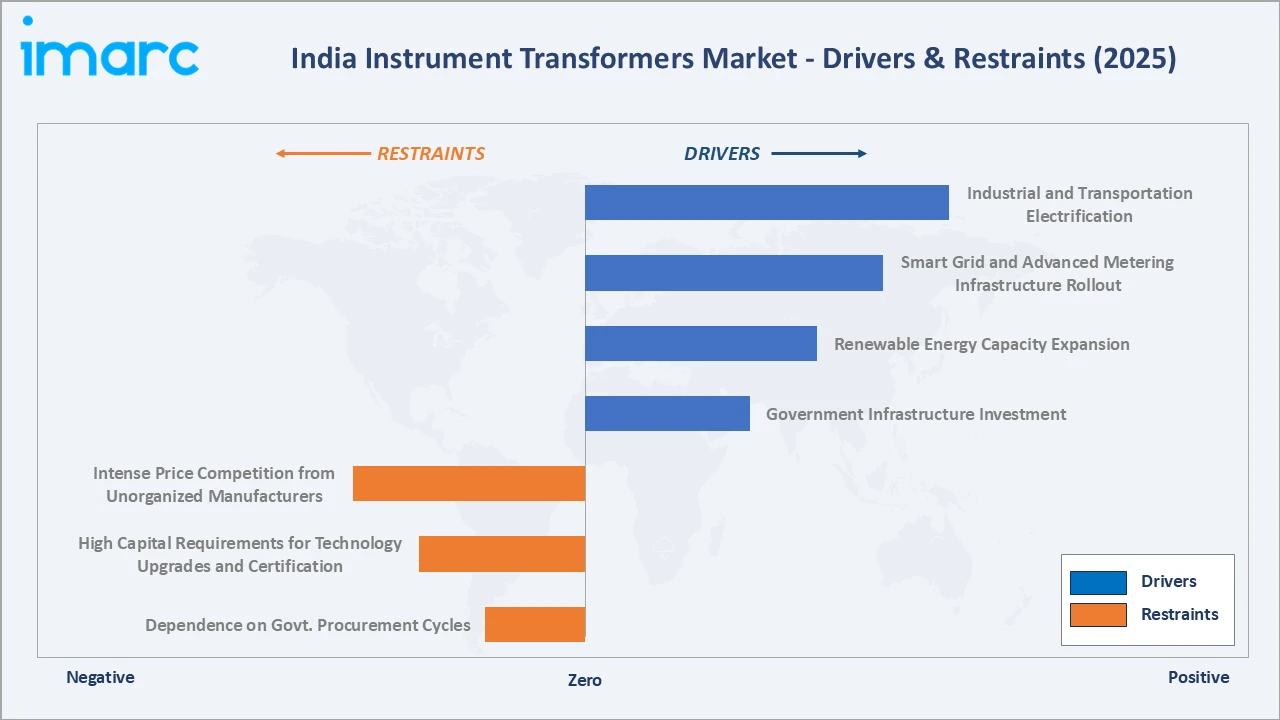
- Government Infrastructure Investment: Sustained government capital allocation toward power sector infrastructure and associated equipment procurement creates consistent demand visibility for manufacturers. Policy-driven capital expenditure programs direct procurement toward certified domestic suppliers, providing volume predictability across extended planning horizons and supporting long-term capacity utilization across the manufacturing base.
- Renewable Energy Capacity Expansion: Capacity addition in renewable energy generation requires proportional expansion of grid measurement and protection infrastructure at each integration point. Growing installed renewable capacity creates a structurally expanding procurement base for associated electrical equipment, supporting sustained volume growth across the forecast period independent of traditional demand drivers.
- Smart Grid and Advanced Metering Infrastructure Rollout: Grid modernization through automation and advanced metering programs drives adoption of higher-accuracy equipment classes. Digitalization initiatives create product upgrade cycles that add value-accretive demand on top of base volume growth, supporting improved average selling prices and broader market participation for technology-capable manufacturers.
- Industrial and Transportation Electrification: Electrification of transportation networks and expansion of industrial manufacturing capacity generate incremental demand from diversified end-user segments. Growing commercial and industrial investments broaden the procurement base beyond traditional utility buyers, reducing concentration risk and opening higher-margin commercial market channels for established manufacturers.
Market Restraints
- Intense Price Competition from Unorganized Manufacturers: The market faces significant price competition from smaller manufacturers operating with lower regulatory compliance overhead, enabling aggressive pricing in volume procurement tenders. This competitive dynamic constrains margin improvement for organized players and creates persistent pricing pressure on standard product lines, limiting the ability to improve returns through premiumization within commodity product tiers.
- High Capital Requirements for Technology Upgrades and Certification: Meeting evolving technical standards requires continuous investment in testing infrastructure and manufacturing equipment. Certification costs and lead times constrain product line expansion, particularly for manufacturers seeking to address higher-specification customer requirements. The capital intensity of qualifying for premium product categories limits the pace at which manufacturers can broaden their addressable market scope.
- Dependence on Government Procurement Cycles: A significant share of demand is linked to government procurement timelines, introducing revenue cyclicality dependent on budget disbursement and tender execution schedules. Extended payment terms on institutional orders increase working capital financing requirements and reduce effective profitability compared to commercial customer segments, creating financial management complexity for manufacturers with high institutional revenue concentration.
Market Opportunities
- Digital and IoT-Enabled Products: The shift toward digital infrastructure creates demand for products with integrated communication and data capabilities. Smart-enabled offerings support value-accretive segment growth with differentiated technical positioning and limited direct price competition from commodity suppliers, enabling manufacturers to participate in premium segments with more favorable margin profiles than standard product lines.
- Export Market Development: Improving product quality standards and competitive manufacturing economics create opportunities to address demand in regional and international markets. Certification programs enable access to procurement tenders across emerging market infrastructure development programs, diversifying revenue base and reducing concentration in domestic procurement cycles that are subject to periodic budget and policy variability.
Market Challenges
- Raw Material Price Volatility: Manufacturing operations depend on key input materials that exhibit significant price volatility in global commodity markets. Rising input costs compress manufacturer margins, particularly under fixed-price procurement contracts where recovery of actual cost increases may lag price movements. Concentration of supply among a limited number of global material producers creates procurement risk during periods of constrained availability.
- Skilled Workforce Availability: Specialized manufacturing and testing operations require a skilled workforce developed through years of industry-specific training programs. Workforce availability is constrained outside established manufacturing clusters, limiting rapid production capacity scaling during periods of demand acceleration. Attrition of skilled workers to higher-paying adjacent sectors adds recruitment and retention cost pressure to the underlying workforce challenge.
Emerging Market Trends
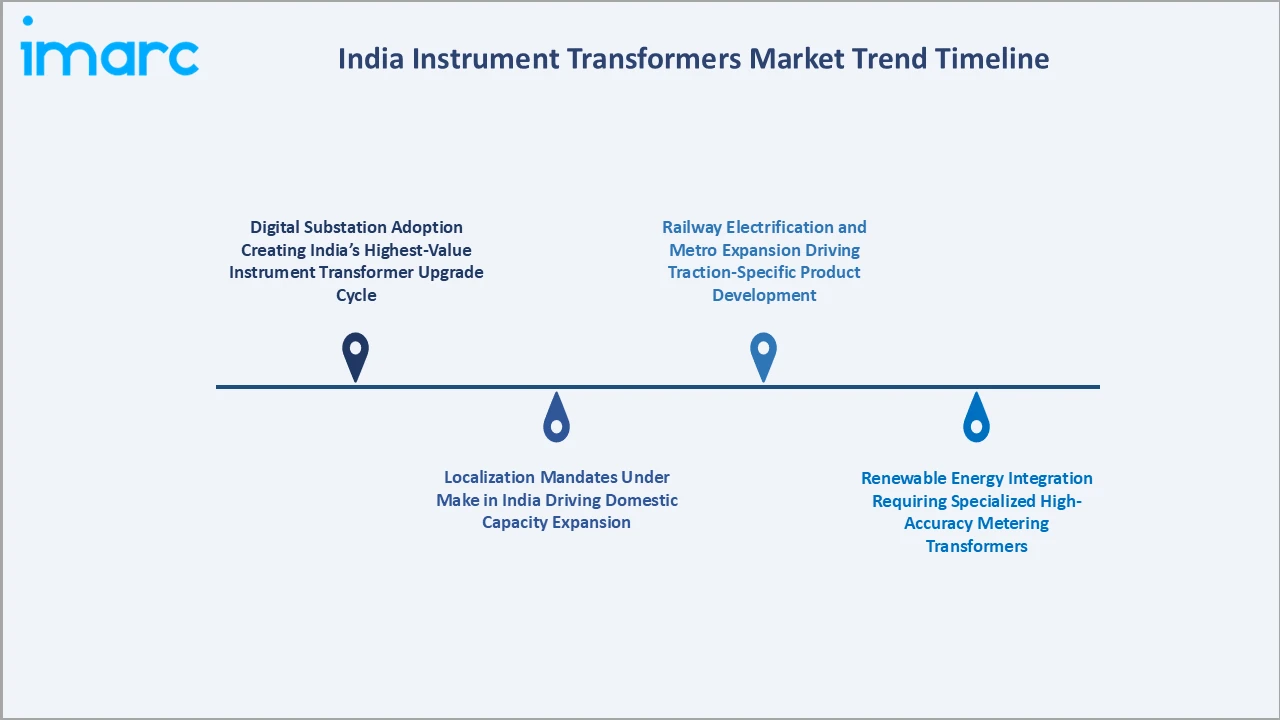
1. Digital Substation Adoption Creating India's Highest-Value Instrument Transformer Upgrade Cycle
Digital substation adoption is driving replacement demand for conventional instrument transformers with IEC 61850-compatible digital-output units. Utilities investing in substation automation are standardizing on non-conventional instrument transformers, supporting premium product positioning and signaling a long-term structural shift toward higher-value offerings within India's instrument transformer market. Utilities investing in IEC 61850-based substation automation are standardizing on process bus architectures that require digital-output instrument transformers, creating a distinct premium product segment with limited price competition from unorganized manufacturers. Digital substations reduce secondary wiring complexity and copper consumption, providing total cost of ownership advantages that utility procurement teams are beginning to factor into life-cycle cost evaluations alongside initial unit price. Global digital substation technology providers are executing pilot projects in India that serve as reference demonstrations, accelerating technology familiarity among utility planners and creating commercial pathways for non-conventional instrument transformer adoption beyond initial pilot deployments.
2. Localization Mandates Under Make in India Driving Domestic Capacity Expansion
Public Procurement Preference for Make in India Orders are mandating minimum domestic value addition for government-funded instrument transformer procurement. This policy accelerates domestic manufacturing capacity expansion, encourages technology transfer partnerships, and reduces import dependence for higher-voltage product classes previously imported from international sources. Minimum domestic content mandates are directing government utility procurement toward BIS-certified domestic suppliers, improving domestic manufacturers' competitive positioning in utility tendering relative to import-dependent competitors. Technology transfer partnerships between international instrument transformer manufacturers and Indian companies are accelerating domestic capability development in higher-voltage product classes, enabling progressive substitution of imported EHV product classes with locally certified alternatives. Foreign direct investment in domestic instrument transformer manufacturing capacity is expanding the organized manufacturing base and raising the overall quality profile of India's supplier industry, creating a more competitive domestic supply ecosystem.
3. Renewable Energy Integration Requiring Specialized High-Accuracy Metering Transformers
Grid-connected renewable energy facilities require high-accuracy class 0.2S current transformers for energy accounting in India's renewable purchase obligation framework. Growing renewable installations are expanding demand for specialized metering instrument transformers with less price sensitivity and higher technical barriers, supporting value-accretive segment growth. Wind energy installations require current transformers rated for low power factor operating conditions of wind turbines, creating technically differentiated product requirements that separate specialized from commodity instrument transformer segments. Large solar power parks connected at 33 kV and above generate significant volumetric demand for multiple current and potential transformers per connecting bay, with projects in the hundreds of megawatts requiring instrument transformers in substantial quantities. Central and state electricity regulatory commission guidelines mandate high-accuracy revenue metering for renewable energy, directly driving demand for Class 0.2S instrument transformers that command technical and price premium over standard protection class units.
4. Railway Electrification and Metro Expansion Driving Traction-Specific Product Development
Indian Railways' 100% electrification program and metro rail expansion in multiple Indian cities are creating structured demand for 25 kV single-phase traction current transformers and railway-grade potential transformers. These traction-specific units command higher unit values and require specialized certification, creating a profitable niche segment. Railway traction substations require current transformers with precise ratio accuracy to support energy metering under Indian Railways' energy accounting programs, making product specifications more demanding than standard utility-grade instruments. Metro rail systems require traction substation instrument transformers with technical specifications distinct from standard utility-grade products, necessitating specialized manufacturing capability and type certification through Railway Board and RDSO qualification processes. RDSO qualification requirements create an approved supplier framework that restricts market entry, establishing durable competitive barriers and protecting profit margins for manufacturers with railway-grade product certifications.
5. Export Market Development Through International Type Testing Certification
Leading Indian instrument transformer manufacturers are investing in KEMA, CESI, and CPRI type testing for international EHV certifications to access export markets. Growing demand from South Asian, African, and Middle Eastern power sector projects creates export opportunities, diversifying revenue base and reducing domestic procurement cycle dependence. International type testing certifications are increasingly required by export market utilities for procurement qualification, enabling Indian manufacturers holding such certifications to participate in international tender processes that would otherwise be inaccessible. Established Indian manufacturers are developing dedicated export business units and international sales representative networks in Southeast Asian and African target markets, building the commercial infrastructure to convert market access opportunities into export order books. Export revenue diversification reduces dependency on domestic government procurement cycles, providing more consistent revenue streams and allowing manufacturers to optimize production planning across broader and more geographically diversified order portfolios.
Industry Value Chain Analysis
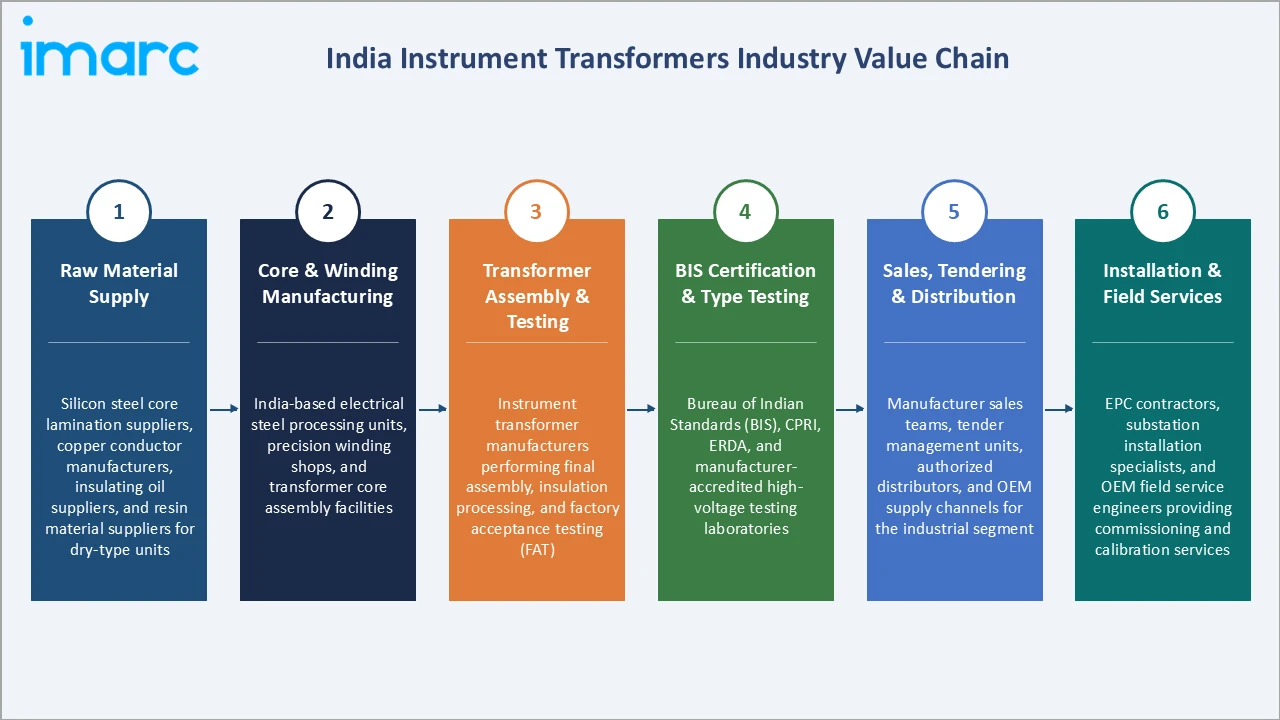
India instrument transformers value chain integrates raw material supply, component manufacturing, transformer production and testing, and field installation services. The value chain's commercial structure creates market differentiation between organized manufacturers with full in-house design, manufacturing, and testing capabilities and smaller manufacturers dependent on external component supply and outsourced type testing.
| Stage | Key Participants |
|---|---|
| Raw Material Supply | Silicon steel core lamination suppliers, copper conductor manufacturers, insulating oil suppliers, and resin material suppliers for dry-type units |
| Core and Winding Manufacturing | India-based electrical steel processing units, precision winding shops, and transformer core assembly facilities |
| Transformer Assembly & Testing | Instrument transformer manufacturers performing final assembly, insulation processing, and factory acceptance testing (FAT) |
| BIS Certification & Type Testing | Bureau of Indian Standards (BIS), CPRI, ERDA, and manufacturer-accredited high-voltage testing laboratories |
| Sales, Tendering & Distribution | Manufacturer sales teams, tender management units, authorized distributors, and OEM supply channels for the industrial segment |
| Installation & Field Services | EPC contractors, substation installation specialists, and OEM field service engineers providing commissioning and calibration services |
The BIS certification and type testing stage is India's instrument transformer value chain's most commercially significant regulatory gateway. Certification requirements create barriers to market entry and limit the eligible supplier pool for utility procurement, particularly for EHV voltage class equipment above 132 kV where type testing costs and high-voltage facility requirements substantially restrict eligible suppliers.
Technology Landscape in the India Instrument Transformers Industry
High-Voltage Oil-Immersed Instrument Transformers
Oil-immersed instrument transformers using mineral insulating oil remain the dominant technology for transmission-class applications across India's 132 kV, 220 kV, 400 kV, and 765 kV substation infrastructure. Oil-insulated designs provide superior insulation properties and heat dissipation for high-voltage applications, and technology improvements are increasingly focused on eco-friendly biodegradable ester insulating oils and improved bushing designs. India's expanding 765 kV Ultra High Voltage network is creating demand for UHV-class oil-immersed units where stringent partial discharge testing and impulse withstand requirements create technical entry barriers that protect established manufacturers' positioning.
Dry-Type and Resin-Cast Instrument Transformers
Dry-type and resin-cast instrument transformers serve indoor switchgear, industrial distribution, and railway traction applications where mineral oil presents fire or maintenance risks. Epoxy resin-encapsulated designs provide compact, maintenance-free alternatives for 11 kV and 33 kV distribution applications, and growing Gas-Insulated Switchgear substation adoption in land-constrained urban areas is expanding the segment's commercial scope. Ongoing improvements in resin casting technology are progressively extending dry-type product capability toward 66 kV and 132 kV applications, widening the addressable market beyond traditional distribution-voltage boundaries.
Non-Conventional and Digital Instrument Transformers
Non-conventional instrument transformers (NCITs) using optical and electronic measurement principles are emerging in India's premium digital substation segment. These technologies replace conventional wound primary designs with optical current sensing or Rogowski coil-based measurement, enabling IEC 61850-9-2 digital output for direct integration with numerical protection relays. While NCITs represent a small current share, their adoption in HVDC projects and digital substation pilots signals a growing technology transition that will progressively expand the premium product segment over the forecast period.
Market Segmentation Analysis
The report covers the following segments:
| Segment Category | Leading Segment | Market Share (2025) | Base Year |
|---|---|---|---|
| Type | Current Transformers | 58.7% | 2025 |
| Voltage | 🔒 | 🔒 | 2025 |
| Enclosure Type | 🔒 | 🔒 | 2025 |
| Cooling Method | 🔒 | 🔒 | 2025 |
| Application | 🔒 | 🔒 | 2025 |
| End User | Power Utilities | 42.8% | 2025 |
| Region | West India | 31.6% | 2025 |

By Type
Current Transformers lead at 58.7% (2025) and are projected to grow at a CAGR of approximately 4.90% during 2026-2034. The current transformer segment encompasses India's most commercially diverse measurement and protection application range, from low-ratio metering CTs for AMI applications through high-voltage protection CTs for EHV transmission substations, covering the full spectrum of India's power sector metering, revenue metering, and differential protection requirements.
To access detailed market analysis, Request Sample
Potential Transformers at 27.6% are expected to grow at a CAGR of approximately 4.20% during 2026-2034, serving voltage measurement, protection, and metering applications in substations and industrial switchgear. Combined Instrument Transformers at 13.7% are projected to grow at approximately 3.70% CAGR, offering integrated current and voltage measurement in a single unit and gaining adoption in compact substations and GIS applications where space optimization is a commercial priority.
By End User
Power Utilities lead at 42.8% (2025) and are projected to grow at approximately 4.60% CAGR during 2026-2034. The power utilities segment encompasses India's most commercially significant instrument transformer procurement base, comprising state electricity boards, DISCOMs, and central utilities procuring instrument transformers for substation expansion, system upgrades, and compliance with energy audit and smart metering mandates under RDSS and the National Smart Grid Mission.
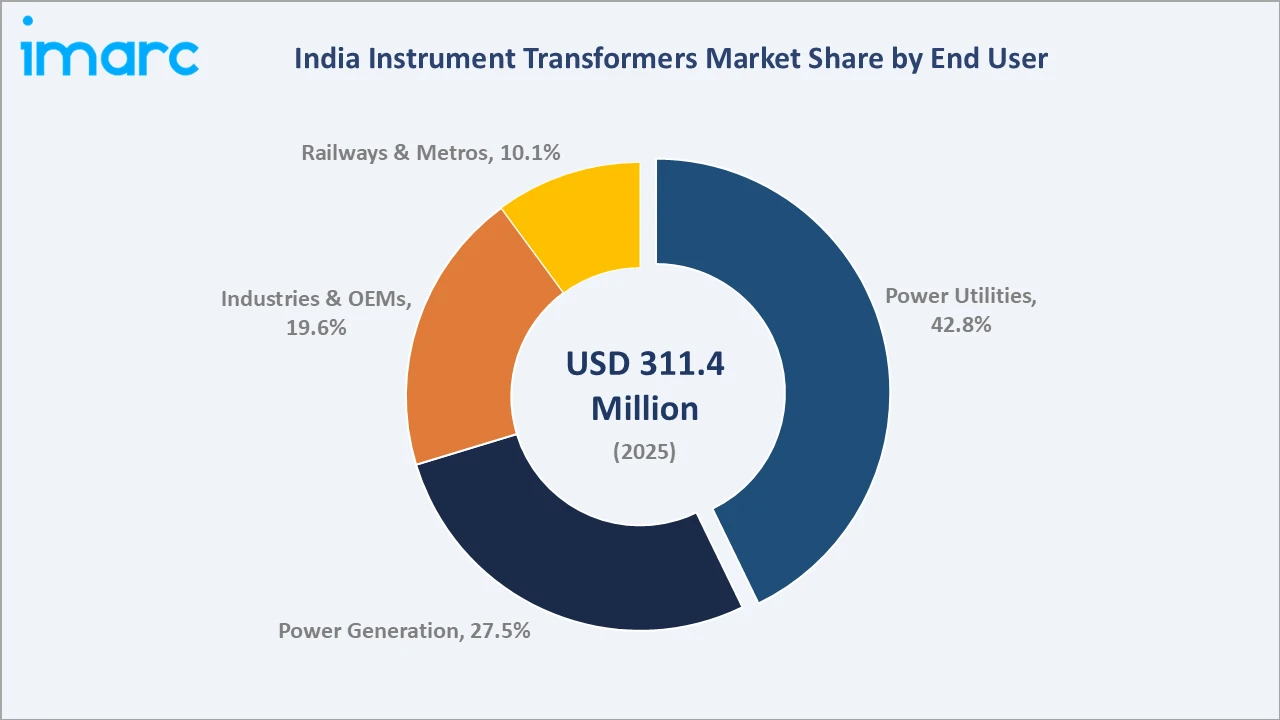
Power Generation (27.5%) is projected to grow at 4.30% CAGR, driven by metering and protection needs. Industries and OEMs (19.6%) are expected to record 5.10% CAGR, the fastest growth, supported by captive power and switchgear demand. Railways and Metros (10.1%) are forecast to grow at 5.50% CAGR, driven by railway electrification and metro expansion.
Regional Market Insights
| Region | Share (2025) | Key India Instrument Transformers Market Drivers & Characteristics |
|---|---|---|
| West India | 31.6% | Driven by Maharashtra's large T&D infrastructure investment, Gujarat's growing renewable energy base, and significant EHV substation investment by PGCIL in the western grid. |
| North India | 27.4% | Supported by Rajasthan and Madhya Pradesh's renewable energy capacity expansion, Delhi-NCR's urban distribution modernization, and large central and state utility procurement. |
| South India | 23.5% | Reflects Karnataka, Tamil Nadu, and Andhra Pradesh's renewable energy integration investments, industrial corridor expansion, and growing metro rail development requiring traction instrument transformers. |
| East India | 17.5% | Rising power sector investment in Odisha, West Bengal, and Bihar through RDSS and NIP projects, with growing industrial electrification supporting market development. |
West India's 31.6% market leadership reflects Maharashtra's status as India's largest state power consumer and the concentration of major T&D infrastructure investment in the western regional grid. Gujarat's rapidly expanding renewable energy capacity, with large solar and wind park installations requiring grid measurement and protection equipment, is creating above-average instrument transformer demand growth.
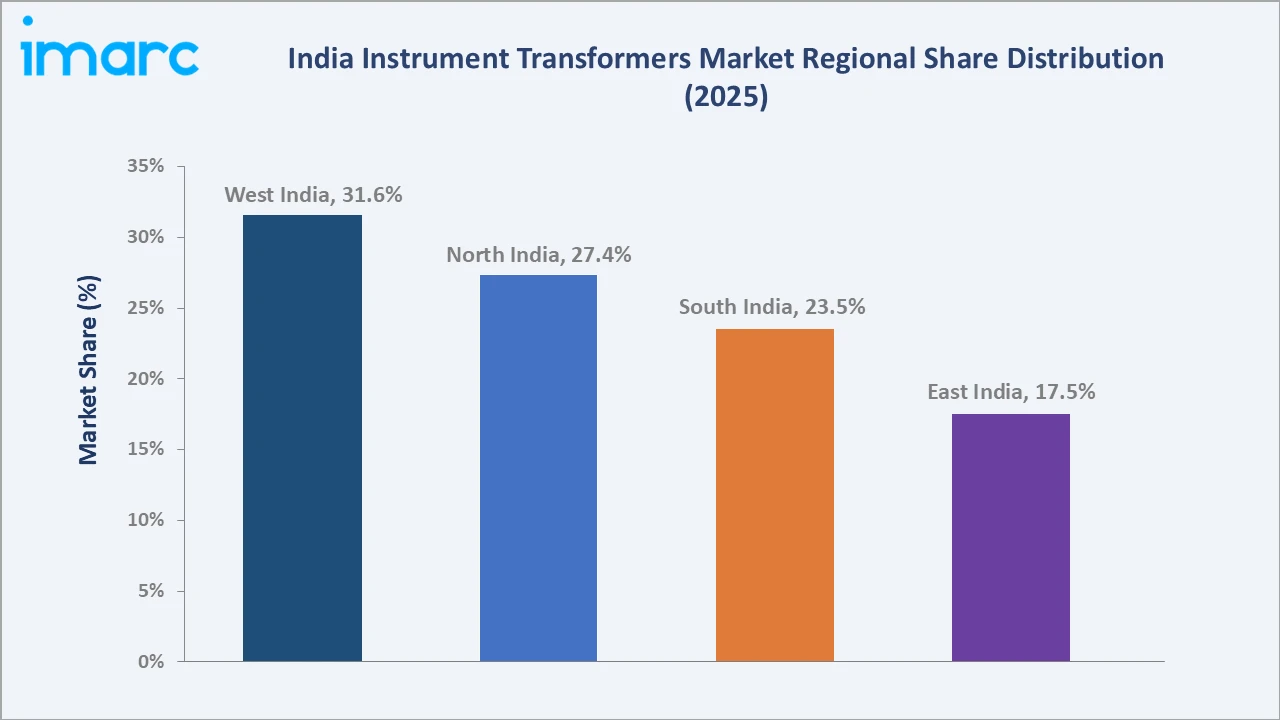
South India's 23.5% reflects Andhra Pradesh and Karnataka's large renewable energy installations and Tamil Nadu's expanding manufacturing industrial base. East India's 17.5% is growing through Bihar, Jharkhand, and Odisha's accelerating rural electrification and RDSS-funded distribution network expansion, representing the highest absolute incremental demand growth region for future market development.
Competitive Landscape
India instrument transformer market competitive landscape is concentrated among a limited number of large, organized manufacturers with BIS certification for transmission and sub-transmission voltage class equipment. Competition is intensifying in the distribution segment through growing participation of domestic mid-size manufacturers, while the EHV segment remains concentrated among globally affiliated manufacturers.
| Company | Key Products | Market Position | Core Strength |
|---|---|---|---|
| Hitachi Energy India Limited | Oil-immersed CTs (up to 1200 kV), CVTs, GIS-integrated units | Market Leader | Hitachi Energy India Limited leads through technology depth in EHV and HVDC-class instrument transformers and dominant positioning in central utility and PGCIL procurement. |
| Siemens Limited | HV CTs (up to 765 kV), inductive VTs, SF₆-insulated GIS units | Strong Challenger | Siemens Limited leverages digital substation technology integration, IEC 61850-compatible product portfolio, and long-standing central and state utility relationships. |
| GE T&D India Limited | EHV CTs, CVTs | Innovator | GE T&D India Limited brings advanced technology through its GE Energy connection, with strong positioning in 400 kV and 765 kV substation projects. |
| Transformers & Rectifiers India Ltd (TARIL) | Oil-immersed CTs and VTs (11 kV to 400 kV) | Strong Challenger | TARIL competes effectively on domestic manufacturing cost, delivery performance, and strong DISCOM and industrial procurement relationships. |
| Bharat Heavy Electricals Limited (BHEL) | Current transformers, voltage transformers | Innovator | BHEL leverages its government enterprise status and established utility relationships for large central sector project procurement. |
The competitive landscape's most commercially significant dynamic is the price gap between multinational subsidiary manufacturers and domestic manufacturers in the mid-voltage segment. TARIL and BHEL compete effectively on price in domestic utility tenders, while Hitachi Energy and Siemens command premium positioning through EHV certifications and digital substation technology integration, sustaining India's most commercially differentiated instrument transformer competitive structure.
Key Company Profiles
Hitachi Energy India Limited
Hitachi Energy India Limited (formerly ABB Power Products and Systems India Limited) is a globally recognized authority in high-voltage instrument transformers, manufacturing oil-immersed CTs, capacitor voltage transformers, and GIS-integrated solutions at its Vadodara facility.
- Key Products: Oil-immersed current transformers (up to 1200 kV), capacitor voltage transformers (up to 800 kV), GIS-integrated measurement solutions.
- Recent Developments: In June 2025, Hitachi Energy India received an order from Power Grid Corporation of India Limited (POWERGRID) to supply 30 units of 765 kV, 500 MVA single-phase transformers. The order supports India's high-voltage transmission grid expansion and renewable energy integration. Although the announcement concerns power transformers, it is relevant to the broader transformer and transmission equipment market, rather than instrument transformers specifically.
- Strategic Focus: Advancing digital and eco-efficient instrument transformers, expanding domestic manufacturing for localization mandates, and positioning for India's smart grid and HVDC programs.
Siemens Limited
Siemens Limited supplies a comprehensive range of current transformers, voltage transformers, and GIS-integrated measurement transformers to India's transmission and distribution operators through its Energy division, with domestic manufacturing at Kalwa.
- Key Products: HV/EHV current transformers (up to 765 kV), inductive voltage transformers, SF₆-insulated GIS instrument transformers.
- Strategic Focus: Integrated substation automation combining instrument transformers with digital protection and SCADA systems; expanding 400 kV and 765 kV manufacturing capability.
Market Concentration Analysis
India instrument transformers market is moderately concentrated at the EHV and transmission voltage class segment, with Hitachi Energy India Limited commanding an estimated 25-30% of India's high-voltage instrument transformer market by value, and the top three manufacturers collectively accounting for approximately 55-60% of transmission-class procurement. The distribution-voltage segment is more fragmented, with a larger number of BIS-certified domestic manufacturers competing for DISCOM procurement.
Market concentration is evolving through two opposing forces: increasing localization requirements and government preference for domestic manufacturers supporting domestic producers' market share expansion in mid-voltage classes, while the growing adoption of digital and EHV instrument transformers is reinforcing the competitive advantage of technologically advanced globally affiliated manufacturers in India's highest-value market segments.
Investment & Growth Opportunities
Highest Growth Segments
Current Transformers represent the fastest-growing type segment at ~4.90% CAGR (2026–2034), driven by expanding metering infrastructure and renewable energy integration. Potential Transformers grow at ~4.20% CAGR through substation capacity expansion, while Combined Instrument Transformers grow at ~3.70% CAGR. Among end-user segments, Industries and OEMs grow fastest at ~5.10% CAGR, followed by Power Utilities at ~4.60% CAGR. The overall market grows at 4.47% CAGR, with segments tied to industrial electrification and digital grid infrastructure consistently outpacing the market average through 2034.
Emerging Investment Opportunities
India's digital instrument transformer market, growing above the overall market CAGR from a relatively small base, represents the highest-value emerging segment. Digital instrument transformer adoption is driven by DISCOM and utility investment in digital substation automation, smart grid SCADA integration, and compatibility requirements with IEC 61850 digital protection systems.
Investment Themes
- Smart-grid compatible and digital instrument transformer manufacturing capability investment: India's digital substation transition represents the highest-value technology investment opportunity. Manufacturers establishing IEC 61850-compatible instrument transformer production capability before mass utility adoption will secure a differentiated position in premium procurement.
- EHV manufacturing capacity expansion to capture 765 kV and HVDC corridor procurement: India's planned HVDC interconnectors and 765 kV substation expansion create structural procurement demand for EHV instrument transformers exceeding current domestic supply capacity. Manufacturers investing in 765 kV type testing and production certification will capture supply-constrained EHV market demand.
Future Market Outlook (2026-2034)
The India instrument transformers market is projected to grow from USD 325.3 Million in 2026 to USD 461.4 Million by 2034, registering a CAGR of 4.47% during 2026-2034.
The market's anchor value of USD 387.4 Million in 2030 represents India's instrument transformer industry at a structural growth point. Three forces define market growth through 2034: India's power infrastructure investment acceleration through RDSS and NIP execution; India's renewable energy integration program requiring proportional grid instrumentation capacity; and India's digital substation transition creating a premium product upgrade cycle that supports value-accretive growth above pure volume expansion.
Research Methodology
Primary Research
Primary research comprised structured interviews with India instrument transformer industry stakeholders, including procurement directors from central and state utilities, transformer manufacturers and their technical directors, EPC substation contractors, BIS certification officers, and power sector consultants with transmission and distribution project experience across India.
Secondary Research
Secondary research encompassed BIS certification records, CEA Annual Report on Power Sector, company annual reports, PGCIL and SECI tender data, India transformer market analysis, DISCOM procurement data, investor presentations, and NIP project implementation reports. Over 50 secondary sources were reviewed.
Forecasting Models
Market revenue forecasts were developed using a power infrastructure capex allocation model: India's planned T&D capital expenditure segmented by project type (EHV transmission, sub-transmission, distribution) multiplied by instrument transformer cost coefficient per MVA of installed capacity, aggregated across central and state utilities, industrial segment, and railway end-user categories.
India Instrument Transformers Market Report Coverage:
| Report Features | Details |
|---|---|
| Base Year of the Analysis | 2025 |
| Historical Period | 2020-2025 |
| Forecast Period | 2026-2034 |
| Units | Million USD |
| Scope of the Report |
Exploration of Historical Trends and Market Outlook, Industry Catalysts and Challenges, Segment-Wise Historical and Future Market Assessment:
|
| Types Covered | Current Transformers, Potential Transformers, Combined Instrument Transformers |
| Voltages Covered | Distribution Voltage, Sub-Transmission Voltage, High Voltage Transmission, Extra High Voltage Transmission, Ultra-High Voltage Transmission |
| Enclosure Types Covered | Indoor, Outdoor |
| Cooling Methods Covered | Dry-Type, Oil Immersion |
| Applications Covered | Transformer and Circuit Breaker Bushing, Switchgear Assemblies, Relaying, Metering and Protection |
| End Users Covered | Power Utilities, Power Generation, Railways and Metros, Industries and OEMs |
| Regions Covered | North India, South India, East India, West India |
| Companies Covered | Hitachi Energy India Limited, Siemens Limited, GE T&D India Limited, Transformers & Rectifiers India Ltd (TARIL), Bharat Heavy Electricals Limited (BHEL), etc. |
| Customization Scope | 10% Free Customization |
| Post-Sale Analyst Support | 10-12 Weeks |
| Delivery Format | PDF and Excel through Email (We can also provide the editable version of the report in PPT/Word format on special request) |
Key Benefits for Stakeholders:
- IMARC’s industry report offers a comprehensive quantitative analysis of various market segments, historical and current market trends, market forecasts, and dynamics of the India instrument transformers market from 2020-2034.
- The research report provides the latest information on the market drivers, challenges, and opportunities in the India instrument transformers market.
- Porter's five forces analysis assist stakeholders in assessing the impact of new entrants, competitive rivalry, supplier power, buyer power, and the threat of substitution. It helps stakeholders to analyze the level of competition within the India instrument transformers industry and its attractiveness.
- Competitive landscape allows stakeholders to understand their competitive environment and provides an insight into the current positions of key players in the market.
Frequently Asked Questions About the India Instrument Transformers Market Report
India instrument transformers market size is estimated at USD 325.3 Million in 2026, driven by expanding power infrastructure investments, renewable energy integration, smart grid deployment, and growing demand from DISCOMs and industrial users for metering and protection equipment upgrades.
India instrument transformers market grows at 4.47% CAGR during 2026-2034, reaching USD 461.4 Million by 2034. Growth is sustained by RDSS-funded distribution network modernization, India's 500 GW renewable energy target driving grid capacity expansion, and structural demand from digital substation and smart metering infrastructure rollouts.
Current Transformers lead at 58.7% through India's dominant demand for metering and protection applications across all voltage classes, driven by large DISCOM metering programs, substation expansion, and renewable energy facility connections requiring current measurement and differential protection equipment.
Power Utilities lead at 42.8% through state electricity boards and DISCOMs' large-volume procurement for substation infrastructure expansion, smart metering programs under RDSS, and central utility transmission substation additions, making utilities the largest and most structurally important end-user category.
West India leads at 31.6% through Maharashtra's large T&D infrastructure investment, Gujarat's renewable energy capacity expansion creating grid metering demand, and the western regional grid's transmission expansion program. Maharashtra and Gujarat collectively represent India's largest state-level power sector capital expenditure markets.
Leading instrument transformer manufacturers in india include Hitachi Energy India Limited, Siemens Limited, GE T&D India Limited, Transformers & Rectifiers India Ltd (TARIL), and Bharat Heavy Electricals Limited (BHEL), among others.
India instrument transformers market is projected to reach approximately USD 387.4 Million by 2030, with the current transformers segment maintaining leadership through smart metering and renewable integration demand, EHV instrument transformers growing above market average through 765 kV corridor expansion, and digital instrument transformer adoption creating value-accretive demand growth.
Three priority investment opportunities: smart-grid compatible and digital instrument transformer manufacturing capability investment for India's digital substation transition, EHV manufacturing capacity expansion for 765 kV and HVDC corridor procurement, and export market development through international type testing certification for South Asian, African, and Middle Eastern power sector markets.
Key growth drivers include government infrastructure investment through RDSS and NIP, India's 500 GW renewable energy target requiring proportional grid instrumentation expansion, smart grid and AMI rollout driving demand for higher-accuracy instrument transformers, and industrial and railway electrification creating structurally growing procurement from OEM and traction substation end-user segments.
Need more help?
- Speak to our experienced analysts for insights on the current market scenarios.
- Include additional segments and countries to customize the report as per your requirement.
- Gain an unparalleled competitive advantage in your domain by understanding how to utilize the report and positively impacting your operations and revenue.
- For further assistance, please connect with our analysts.
 Request Customization
 Speak to an Analyst
 Request Brochure
 Inquire Before Buying
Benefits of Customization
- Personalize this research
- Triangulate with your data
- Get data as per your format and definition
- Gain a deeper dive into a specific application, geography, customer, or competitor
- Any level of personalization
Get in Touch With Us
UNITED STATES
Phone: +1-201-971-6302
INDIA
Phone: +91-120-433-0800
UNITED KINGDOM
Phone: +44-753-714-6104
Email: [email protected]
Client Testimonials























Related Reports

Choose your plan
*Please note that the prices mentioned below are starting prices for each bundle type. Kindly contact our team for further details.*
Single User License
- 1 User License, Access on 2 Devices
- PDF Report + Excel Dataset (Password Protected)
- Lifetime Access
- No Printing Rights
- 10% Free Report Customization
- 10–12 Weeks of Analyst Support
Five User License
- Access for 5 Users, 2 Devices per User
- PDF Report + Excel Dataset (Password Protected)
- Lifetime Access
- Dedicated Account Manager
- 12–14 Weeks of Analyst Support
- No Printing Rights
- 15% Free Report Customization
- 25% Discount on Your Next Purchase
Corporate User License
- Unlimited User Access (Within Your Organization)
- PDF Report + Excel Dataset
- Lifetime Access
- Dedicated Account Manager
- 14–20 Weeks of Analyst Support
- No Printing Rights
- 20% Free Report Customization
- 30% Discount on Your Next Purchase
Essential Insights
What's included:
3 reports
- Lifetime Access
- PDF Reports
- Excel Datasets
- 2 Weeks of Free Analyst Support
- 2 User Licenses
- Access on 2 Devices
- Printing Rights
- Complimentary PowerPoint (PPT) Version
- Complimentary License Upgrade
Professional Access
What's included:
5 reports
- Lifetime Access
- PDF Reports
- Excel Datasets
- 8 Weeks of Free Analyst Support
- 2 User Licenses
- Access on 2 Devices
- Printing Rights
- Complimentary PowerPoint (PPT) Version
- Complimentary License Upgrade
Business Advantage
What's included:
8 reports
- Lifetime Access
- PDF Reports
- Excel Datasets
- 14 Weeks of Free Analyst Support
- 2 User Licenses
- Access on 2 Devices
- Printing Rights
- Complimentary PowerPoint (PPT) Version
- Complimentary License Upgrade
Enterprise Intelligence
What's included:
10 reports
- Lifetime Access
- PDF Reports
- Excel Datasets
- 20 Weeks of Free Analyst Support
- 2 User Licenses
- Access on 2 Devices
- Printing Rights
- Complimentary PowerPoint (PPT) Version
- Complimentary License Upgrade