
Saudi Arabia E-Bike Market Size, Share, Trends and Forecast by Propulsion Type, Application, Battery Type, Power, and Region, 2026-2034
Saudi Arabia E-Bike Market Size, Share, Trends & Forecast (2026-2034)
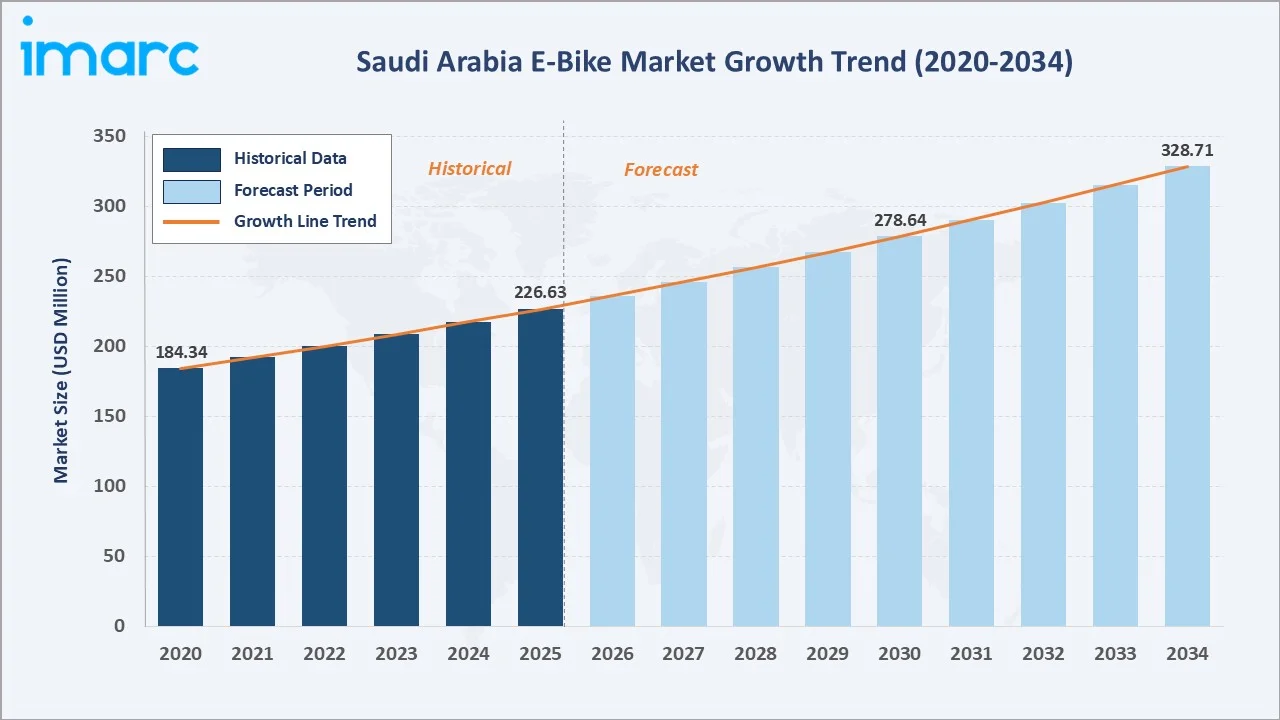
The Saudi Arabia e-bike market grew from USD 226.63 Million in 2025 to USD 236.19 Million in 2026 and is projected to reach USD 328.71 Million by 2034, exhibiting a CAGR of 4.22% during the forecast period 2026-2034. Vision 2030 sustainability mandates, rapid urban mobility transformation, rising recreational and tourism-led cycling demand, and government investments in cycling infrastructure are the primary growth enablers.
Market Snapshot
|
Metric |
Value |
|
Base Year Market Size (2025) |
USD 226.63 Million |
|
Market Size (2026) |
USD 236.19 Million |
|
Forecast Market Size (2034) |
USD 328.71 Million |
|
CAGR (2026-2034) |
4.22% |
|
Base Year |
2025 |
|
Historical Period |
2020-2025 |
|
Forecast Period |
2026-2034 |
|
Largest Region |
Northern and Central Region (31.6% share, 2025) |
|
Fastest Growing Region |
Northern and Central Region (~4.5% CAGR) |
|
Dominant Propulsion Type |
Pedal Assisted (62.7%, 2025) |
|
Dominant Battery Type |
Lithium-ion Battery (71.8%, 2025) |
The chart below illustrates the Saudi Arabia e-bike market growth trajectory from 2020 through 2034, contrasting historical expansion against a sustained forecast curve powered by Vision 2030 infrastructure investments and urban mobility transformation.
To get more information on this market, Request Sample
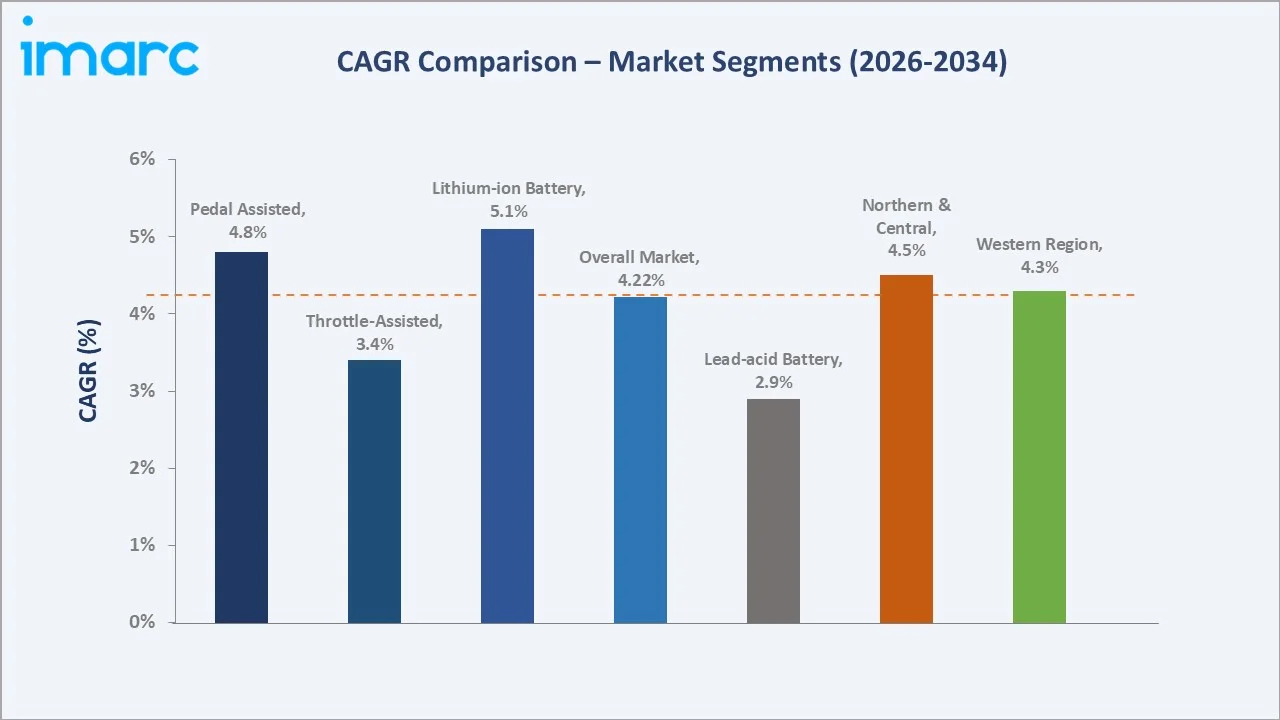
Segment-level CAGR comparisons across propulsion type, battery chemistry, and regional sub-markets highlight lithium-ion battery adoption and pedal-assisted e-bikes as the fastest-growing sub-categories within the Saudi Arabia e-bike market forecast through 2034.
Executive Summary
The Saudi Arabia e-bike market is undergoing a structural transformation, driven by Vision 2030 sustainability objectives, rapid urban mobility shifts, and a growing recreational cycling culture across the Kingdom. the market size increased from USD 226.63 Million in 2025 to USD 236.19 Million in 2026 and is forecast to reach USD 328.71 Million by 2034 at a steady CAGR of 4.22%, supported by government-funded cycling infrastructure and rising environmental awareness among urban consumers.
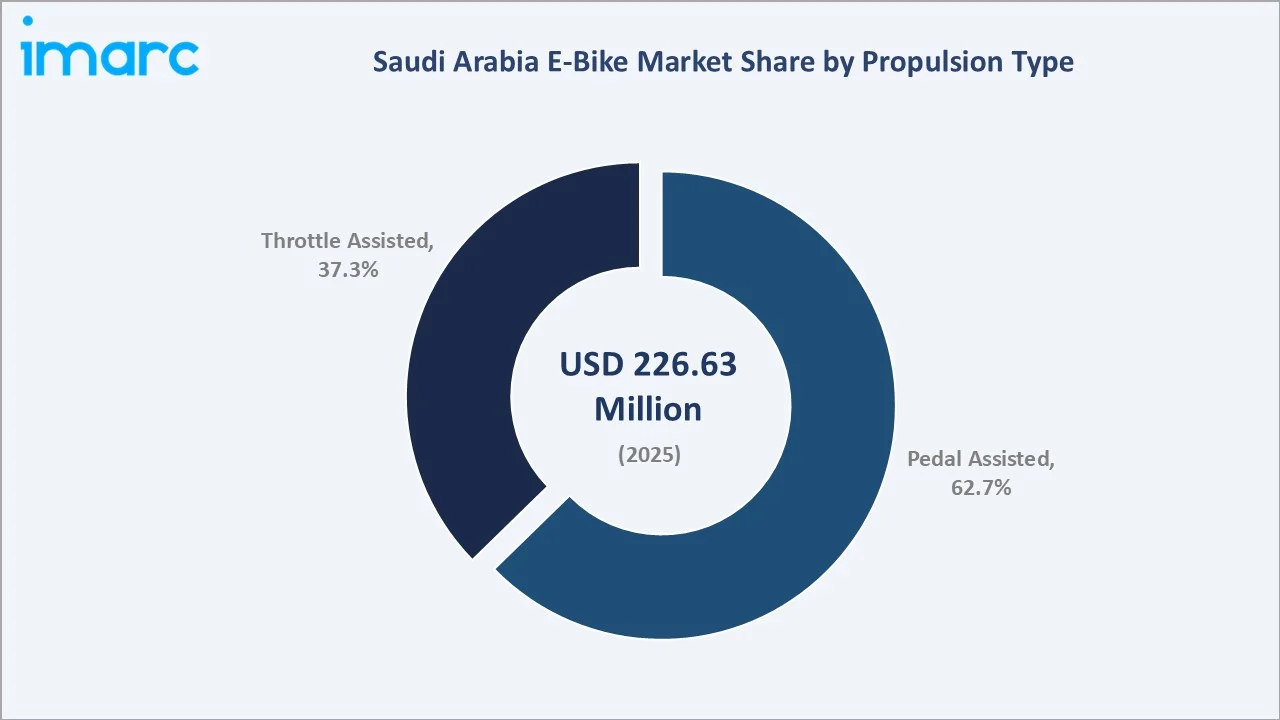
Pedal-assisted e-bikes command 62.7% of propulsion-type market share in 2025, preferred for daily commuting and recreational use due to extended range and lower energy consumption. Throttle-assisted models account for the remaining 37.3%, with growing demand from logistics and delivery operators. On the battery front, lithium-ion chemistry holds a dominant 71.8% share, reflecting strong consumer preference for lightweight, high-energy-density solutions with longer lifespans.
Geographically, the Northern and Central Region leads with 31.6% of national revenue in 2025, driven by Riyadh's expanding cycling infrastructure and Tourism Authority-backed recreational programs. The Western Region (27.4%) and Eastern Region (24.8%) follow, benefiting from Jeddah's coastal cycling routes and industrial commuter demand in Dammam. The e-bike market outlook for Saudi Arabia remains positive as premiumization, smart connectivity, and sustainability mandates converge across all regional markets through 2034.
Key Market Insights
|
Insight |
Data |
|
Dominant Propulsion Type |
Pedal Assisted – 62.7% share (2025) |
|
Fastest Growing Propulsion Type |
Pedal Assisted (~4.8% CAGR, 2026-2034) |
|
Dominant Battery Type |
Lithium-ion Battery – 71.8% share (2025) |
|
Fastest Growing Battery Type |
Lithium-ion Battery (~5.1% CAGR, 2026-2034) |
|
Leading Region |
Northern and Central Region – 31.6% (2025) |
|
Fastest Growing Region |
Northern and Central Region (~4.5% CAGR) |
|
Key Growth Driver |
Vision 2030 cycling infrastructure investments |
|
Market Opportunity |
Smart e-bike adoption and tourism cycling corridors |
Key Analytical Observations Supporting the Above Data:
- Pedal-assisted e-bikes' 62.7% dominance in 2025 reflects their superior efficiency and alignment with Saudi Arabia's National Cycling Strategy, aiming to expand non-motorized transport in urban mobility across cities and communities.
- Lithium-ion batteries' 71.8% share is underpinned by rapidly declining cell prices and their 2-3x longer lifespan compared to lead-acid alternatives in Saudi Arabia's extreme heat conditions.
- Northern and Central Region's 31.6% leadership reflects Riyadh’s large-scale investment pipeline for urban transport infrastructure under Vision 2030, including the expansion of dedicated cycling lane networks to support sustainable and integrated mobility solutions.
- The Southern Region's 16.2% share is the smallest but growing, supported by government-led agri-mobility programs and expanding eco-tourism cycling routes around Asir National Park and Jizan.
- Smart e-bike integration with IoT platforms and GPS tracking systems represents a high-growth emerging segment, driven by fleet operators in Saudi Arabia's last-mile delivery sector, which grew approximately 22% year-over-year in 2024.
Saudi Arabia E-Bike Market Overview
Electric bicycles (e-bikes) are pedal-driven or throttle-operated two-wheelers equipped with an electric motor and rechargeable battery system, enabling assisted or fully electric propulsion. In Saudi Arabia, the market encompasses pedal-assisted (pedelec) and throttle-on-demand configurations, catering to urban commuters, delivery operators, recreational cyclists, and tourism operators. Applications range from city commuting and recreational riding to agricultural logistics and eco-tourism in mountainous regions such as Asir. Macroeconomic enablers include Vision 2030's diversification agenda, rising disposable incomes, urbanization, and Saudi Arabia's green mobility ambitions targeting a 30% reduction in urban carbon emissions by 2030.
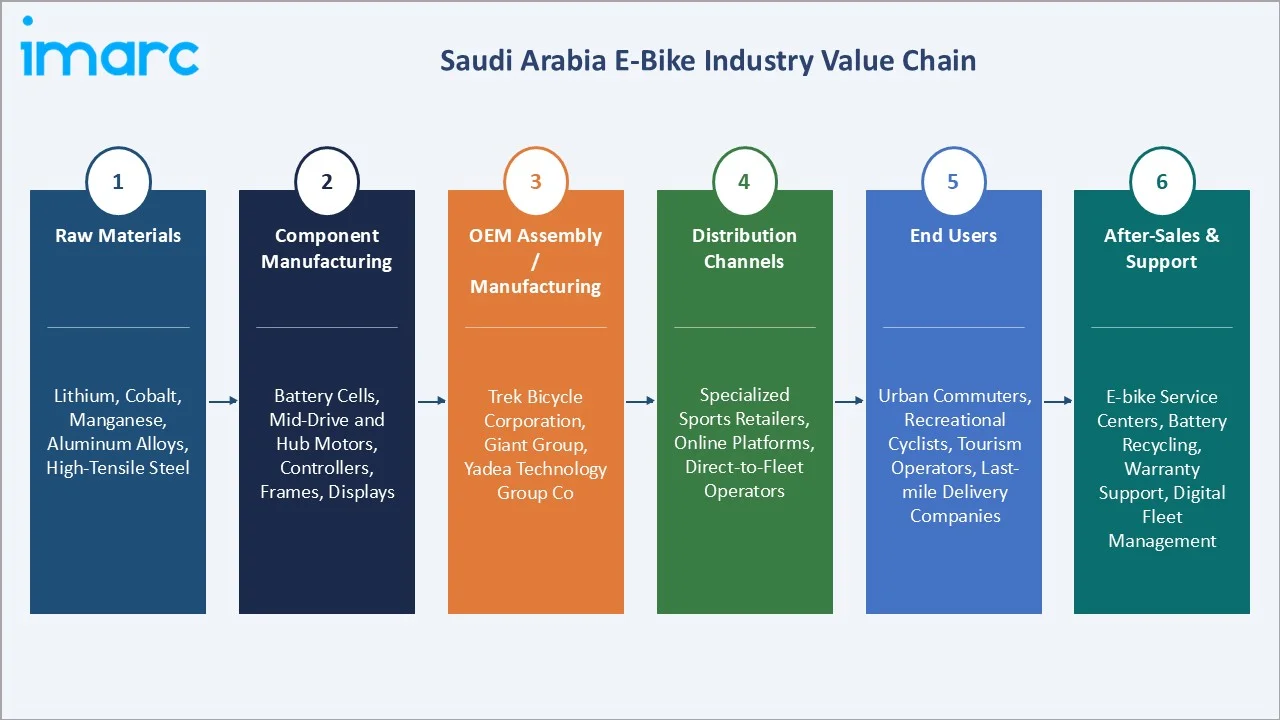
The ecosystem spans five integrated tiers from raw material sourcing through end-user delivery, with OEM manufacturers and technology integrators holding the highest strategic value in the overall Saudi Arabia e-bike industry analysis.
Market Dynamics
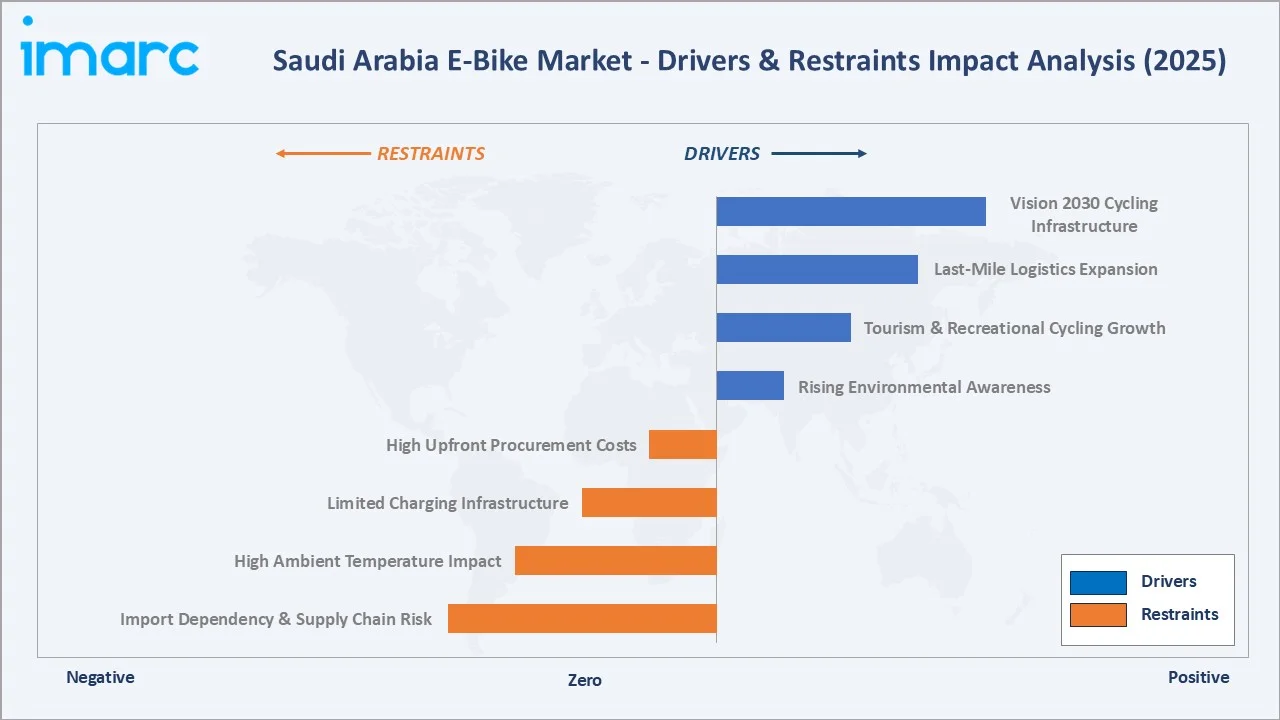
The chart below illustrates the relative impact weight of key market drivers and restraints shaping the Saudi Arabia e-bike market in 2025, based on expert assessment of their influence on near- and medium-term demand.
To evaluate market opportunities, Request Sample
Market Drivers
- Vision 2030 Mobility Infrastructure: The Saudi government has committed to developing extensive dedicated cycling tracks nationwide by 2030. Riyadh has already established a significant cycling infrastructure network, with further expansion planned under the Riyadh Cycling Master Plan, directly stimulating e-bike adoption among urban commuters and recreational users across the Kingdom.
- Rising Environmental Awareness: Consumer preference for low-emission mobility solutions is accelerating, with Saudi Arabia targeting net-zero carbon emissions by 2060. E-bikes, producing zero direct emissions, are increasingly positioned as a sustainable alternative to private vehicles for short-distance urban travel.
- Tourism and Recreational Cycling Growth: Saudi Arabia's tourism sector, targeting 150 million annual visitors by 2030, is driving demand for e-bikes in eco-tourism corridors, resort destinations, and hospitality properties. The Saudi Tourism Authority's Cycling Kingdom initiative promotes cycling as a leisure activity, expanding the recreational e-bike segment.
- Last-Mile Logistics Expansion: Saudi Arabia's e-commerce sector, valued at approximately USD 21.3 Billion in 2024, is fuelling demand for cargo e-bikes in urban last-mile delivery. Platforms such as Jahez, Hunger Station, and Amazon.sa are increasingly trialing electric cargo bikes in Riyadh and Jeddah to reduce delivery costs and emissions.
Market Restraints
- High Ambient Temperatures: Average summer temperatures exceeding 45°C in major Saudi cities significantly reduce lithium-ion battery efficiency, reducing range and shortening battery lifespan, thereby increasing total cost of ownership for end users.
- Limited Charging Infrastructure: Outside Riyadh and Jeddah, public e-bike charging points remain sparse, constraining adoption in secondary cities and rural areas. The absence of standardized charging protocols further complicates multi-brand fleet management for commercial operators.
- High Initial Procurement Costs: Premium e-bikes with advanced features are priced at a high level in the Saudi market, often exceeding the affordability range of a significant share of the target consumer base, particularly in lower-income segments.
Market Opportunities
- Smart E-Bike and Connected Mobility Solutions: Integration of IoT, GPS, and real-time diagnostics into e-bikes is creating high-value product tiers. Saudi Arabia's smart city initiatives under NEOM and Riyadh Smart City frameworks are actively procuring connected mobility assets, presenting a structured institutional demand opportunity for smart e-bike manufacturers.
- Corporate Fleet and Campus Mobility Programs: Saudi Aramco, SABIC, and emerging NEOM-related entities are piloting zero-emission campus transport solutions. E-bike fleet programs targeting corporate campuses, industrial zones, and educational institutions represent a scalable and underserved B2B market segment within the Kingdom.
Market Challenges
- Cultural Shift in Transport Behaviour: Saudi Arabia's historically car-centric culture presents adoption inertia. Overcoming consumer preference for private vehicles requires sustained behavioral change campaigns and supportive urban planning policy implementation.
- Import Dependency and Supply Chain Exposure: Most e-bike components, including motors, controllers, and battery cells, are imported from China. Geopolitical disruptions, shipping cost volatility, and Red Sea trade route uncertainty directly impact product availability and pricing stability in the Saudi market.
Emerging Market Trends
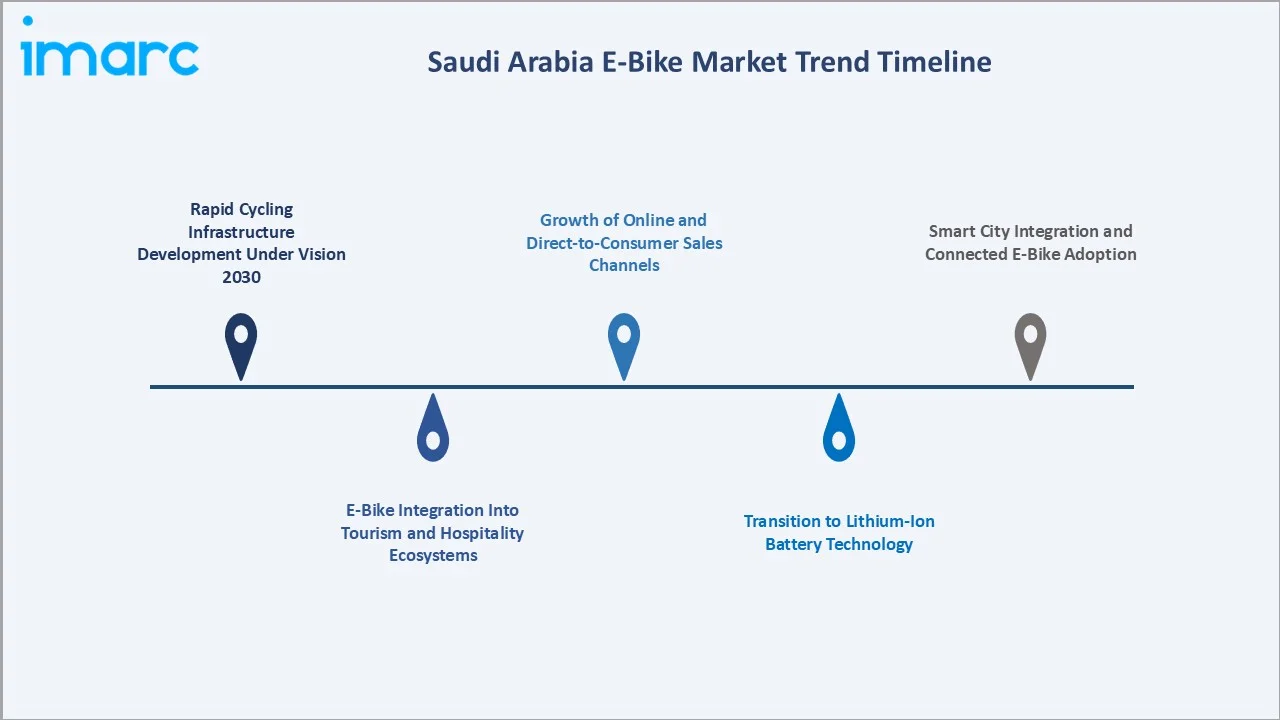
1. Rapid Cycling Infrastructure Development Under Vision 2030
Saudi Arabia’s National Cycling Strategy is a primary structural driver for market growth. The government has allocated substantial funding for cycling infrastructure through 2030. Riyadh’s Cycling Master Plan is also expanding dedicated cycling networks, creating a direct enabling environment for urban e-bike adoption among daily commuters and recreational users.
2. E-Bike Integration Into Tourism and Hospitality Ecosystems
Saudi Arabia's giga-projects including NEOM, The Red Sea Project, and Diriyah are incorporating e-bike fleets as standard mobility features within resort and tourism environments. The Red Sea Project alone has committed to a fully electric transportation ecosystem, creating immediate procurement demand for premium e-bikes and driving global manufacturer interest in the market.
3. Transition to Lithium-Ion Battery Technology
The accelerating shift from lead-acid to lithium-ion battery packs is reshaping product competitiveness in the Saudi market. Lithium-ion's energy density advantage is critical given Saudi Arabia's high-temperature operating environment.
4. Growth of Online and Direct-to-Consumer Sales Channels
E-commerce platforms including Amazon.sa, Noon, and Jarir Bookstore's digital channels are capturing a growing share of e-bike retail in Saudi Arabia. Online channels offer competitive pricing, wider product assortment, and home delivery convenience. Saudi Arabia's overall e-commerce sector grew at a CAGR exceeding 13% from 2020 to 2024, creating a favorable channel growth environment.
5. Smart City Integration and Connected E-Bike Adoption
NEOM's transportation blueprint and Riyadh's smart city framework includes connected micro-mobility as a core pillar. Smart e-bikes equipped with real-time tracking, digital locking systems, and integration with mobility-as-a-service (MaaS) platforms are gaining traction among institutional procurers. This segment is projected to grow at above-average rates through 2030 as smart city investments are operationalized.
Industry Value Chain Analysis
The Saudi Arabia e-bike industry value chain spans five integrated stages from raw material procurement through end-user delivery. Each stage presents distinct competitive dynamics and supply chain dependencies relevant to the overall Saudi Arabia e-bike market analysis.
|
Value Chain Stage |
Key Participants / Description |
|
Raw Materials |
Lithium, cobalt, manganese, aluminum alloys, high-tensile steel; primarily sourced from China, Australia, and the Democratic Republic of Congo |
|
Component Manufacturing |
Battery cells, mid-drive and hub motors, controllers, frames, displays – predominantly manufactured by Tier-1/2 Chinese suppliers |
|
OEM Assembly / Manufacturing |
Trek Bicycle Corporation, Giant Group Limited, Specialized Bicycle Components, Inc., and Yadea Technology Group Co. |
|
Distribution Channels |
Specialized sports retailers, online platforms, direct-to-fleet operators, and tourism/hospitality procurement |
|
End Users |
Urban commuters, recreational cyclists, tourism operators, last-mile delivery companies, corporate campus mobility programs, and government e-bike sharing schemes |
OEMs and component manufacturers hold the highest strategic value, integrating motors, battery management systems, and connectivity features into complete mobility solutions. Distribution channel transformation driven by e-commerce growth is reshaping margin structures and enabling manufacturers to establish direct relationships with Saudi end consumers.
Technology Landscape in the E-Bike Industry
Motor and Drive System Technology
Mid-drive motors are gaining preference over hub motors in the Saudi market for high-performance and recreational applications, offering improved weight distribution and better torque management on uneven terrain. Hub motors remain more cost-competitive for urban commuter and entry-level models, representing a significant share of volume sales in Saudi Arabia’s mid-range price segment.
Battery Technology and Thermal Management
Lithium-ion NMC and LFP chemistries are the dominant battery types. LFP is gaining preference due to superior thermal stability, a key advantage in Saudi Arabia’s extreme summer heat. Advanced battery management systems with temperature compensation features are becoming standard in mid-to-premium e-bikes, helping extend operational battery life in high-temperature environments.
Smart Connectivity and IoT Integration
GPS tracking, anti-theft systems, and Bluetooth connectivity are increasingly standard features in the higher e-bike price segment. Integration with smartphone applications for real-time navigation, battery monitoring, and remote diagnostics is also expanding. Fleet operators in the logistics and tourism sectors are actively deploying telematics-enabled e-bike platforms to improve operational efficiency.
Lightweight Frame and Materials Innovation
Carbon fiber and premium aluminum alloy frames are gaining market penetration in Saudi Arabia’s premium recreational segment, particularly for mountain and off-road e-bikes targeting highland and desert terrain riding communities. Weight reduction also helps extend battery range, making materials innovation a key product differentiator in the country’s high-temperature riding environment.
Market Segmentation Analysis
The report covers the following segments:
|
Segment Category |
Leading Segment |
Market Share |
Year |
| Propulsion Type | Pedal Assisted | 62.7% |
2025 |
| Application | 🔒 | 🔒 |
2025 |
| Battery Type | Lithium-ion Battery | 71.8% |
2025 |
| Power | Kanto Region | 28.6% |
2025 |
| Region | Northern and Central Region | 31.6% | 2025 |

By Propulsion Type
To access detailed market analysis, Request Sample
Pedal-assisted e-bikes lead the Saudi Arabia e-bike market with a dominant 62.7% market share in 2025. These models use electric motor assistance only when the rider pedals, aligning with Saudi Arabia's cycling infrastructure investments targeting active, health-conscious urban commuters and recreational users. The sub-segment benefits from regulatory preference, as pedal-assisted e-bikes typically face fewer restrictions on cycling tracks and public spaces. Pedal-assisted models are forecast to grow at approximately 4.8% CAGR through 2034.
By Battery Type
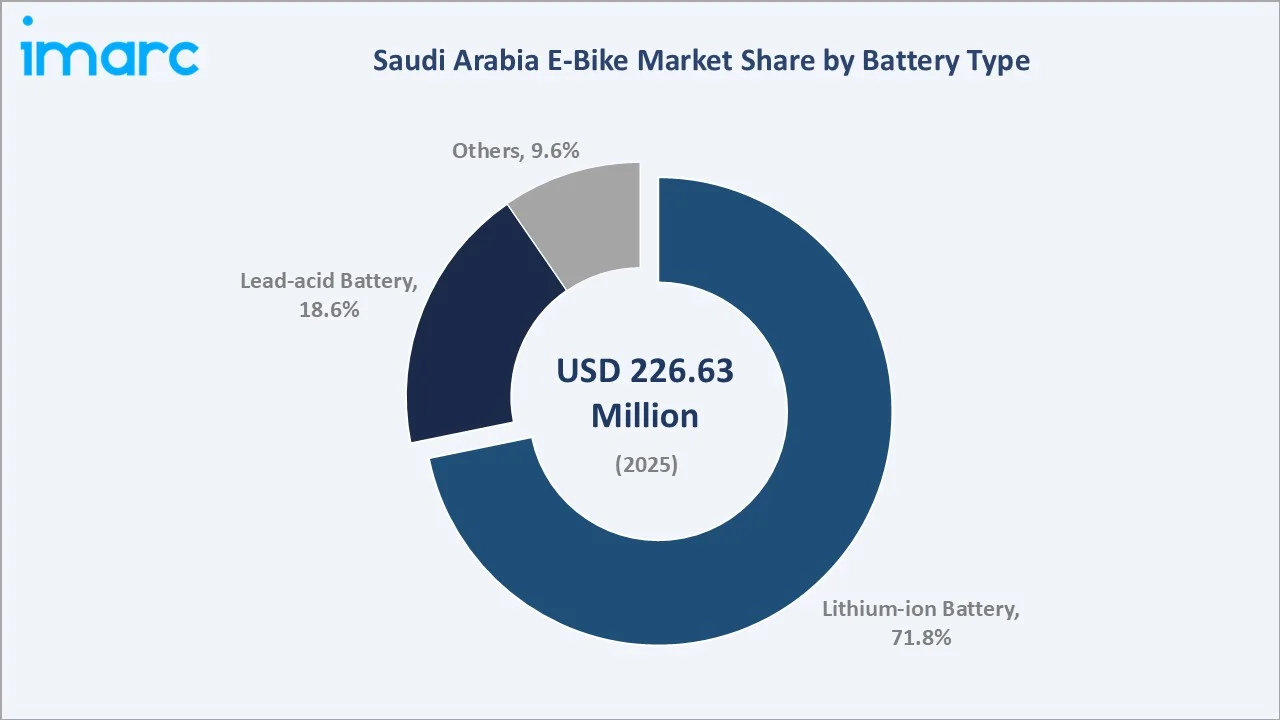
Lithium-ion batteries dominate the Saudi Arabia e-bike battery segment with a commanding 71.8% share in 2025. Superior energy density, lighter weight, and longer cycle life versus lead-acid alternatives make lithium-ion the technology of choice.
Regional Market Insights
|
Region |
Share (2025) |
Key Growth Drivers |
Major Cities |
|
Northern and Central Region |
31.6% |
Vision 2030 infrastructure, Riyadh cycling masterplan, corporate campus programs |
Riyadh, Hail, Al Qassim |
|
Western Region |
27.4% |
Jeddah coastal cycling, tourism (Makkah, Madinah), NEOM Sindalah island |
Jeddah, Makkah, Madinah, Taif |
|
Eastern Region |
24.8% |
Industrial commuter demand, Aramco/SABIC campuses, Khobar recreational cycling |
Dammam, Khobar, Dhahran, Jubail |
|
Southern Region |
16.2% |
Eco-tourism (Asir National Park), agri-mobility, Jizan Special Economic Zone |
Abha, Jizan, Najran |
The Northern and Central Region commands 31.6% of national revenue in 2025, anchored by Riyadh's status as Saudi Arabia's primary urban hub. Corporate campus mobility initiatives by major employers in King Abdullah Financial District (KAFD) are creating institutional demand for fleet e-bikes.
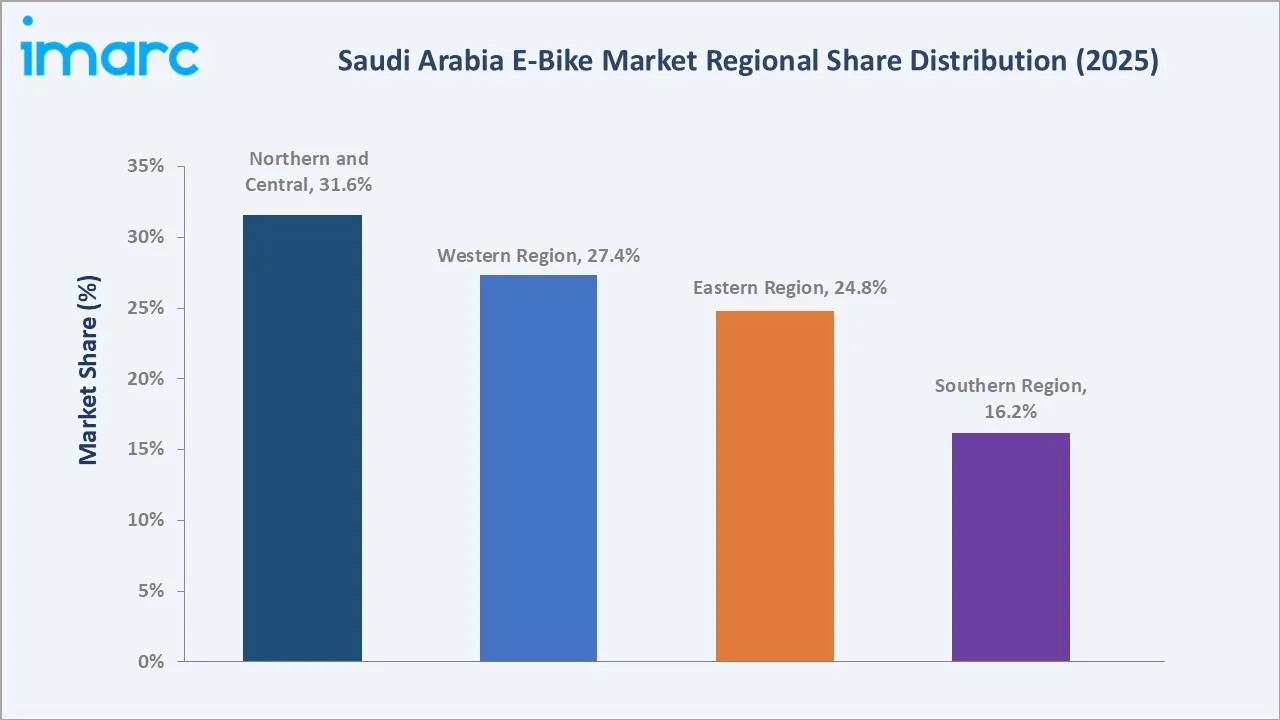
The Western Region accounts for 27.4%, driven by Jeddah's 30-km Corniche coastal cycling boulevard and annual Jeddah Season tourism events. Proximity to Makkah and Madinah creates unique demand from pilgrimage-related mobility infrastructure. The region is benefiting from NEOM's Sindalah island project, incorporating micro-mobility as a core transport modality.
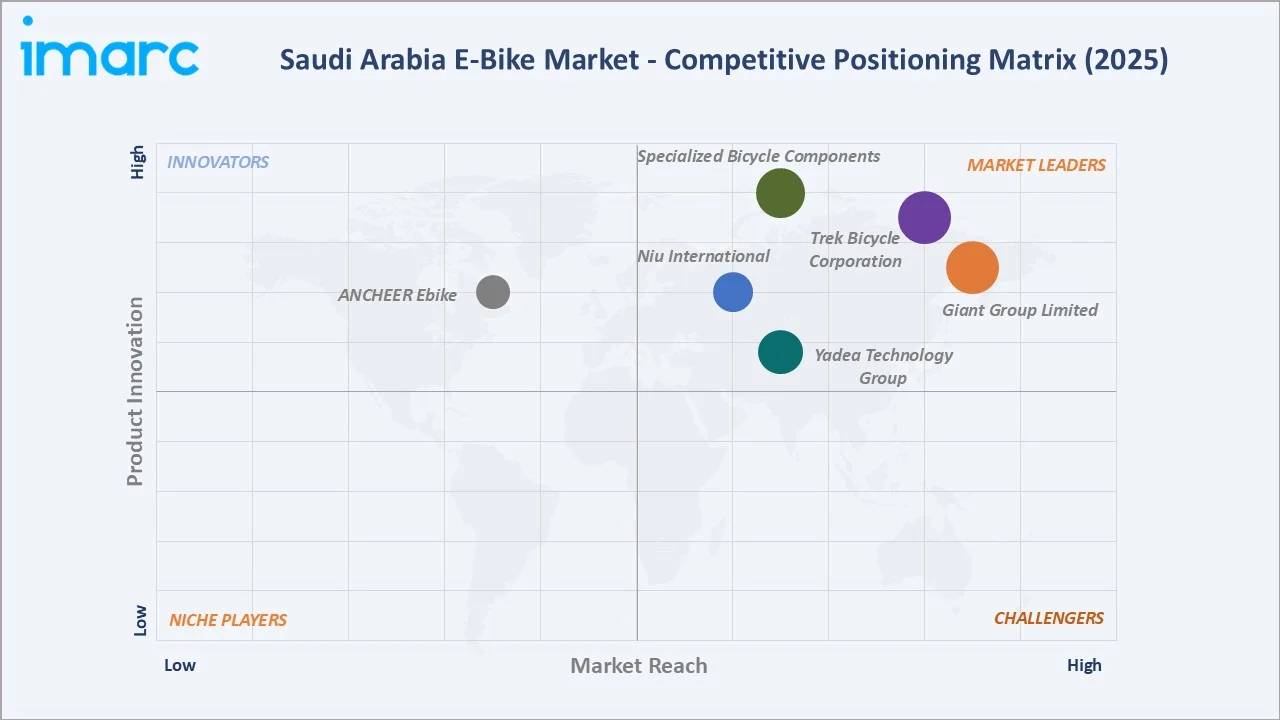
Competitive Landscape
|
Company Name |
Key Brand / Platform |
Market Position |
Core Strength |
|
Trek Bicycle Corporation |
Trek, Electra, Diamant |
Leader |
Premium engineering, wide dealer network, recreational segment leadership |
|
Giant Group Limited |
Giant, Liv, Momentum |
Leader |
High-volume manufacturing, mid-range dominance, Asia-Saudi supply chain |
|
Specialized Bicycle Components, Inc. |
Specialized |
Leader |
Performance-oriented, strong brand equity in premium segment |
|
Yadea Technology Group Co |
Yadea |
Challenger |
Cost-competitive, mass-market focus, strong in throttle-assisted segment |
|
Niu International. |
NIU |
Challenger |
Smart connectivity, IoT integration, urban commuter positioning |
|
ANCHEER Ebike |
ANCHEER |
Emerging |
Value-tier, e-commerce focused, high volume in entry-level market |
The Saudi Arabia e-bike competitive landscape is moderately fragmented, with international brands competing alongside regional distributors and direct e-commerce entrants. Vision 2030's procurement programs for public cycling infrastructure are increasingly influencing OEM positioning strategies for the institutional market.
Key Company Profiles
Trek Bicycle Corporation
Trek Bicycle Corporation is a leading global bicycle manufacturing company headquartered in Waterloo, Wisconsin, USA. The company operates as a privately held entity and has grown into one of the most recognized brands in the cycling industry.
- Product Portfolio: Trek's e-bike product portfolio includes electric mountain bikes, the Powerfly+ hardtail and full-suspension eMTBs, the Slash+ for long-travel enduro, the Marlin+ as an entry-level eMTB, the Domane+ electric road bikes, and the Verve+, FX+, Allant+, and Dual Sport+ electric hybrid and commuter bikes.
- Recent Developments: In 2026, Trek Bicycle Corporation has unveiled its 2026 lineup of new city and e-bikes, with the addition of the FX Sport series alongside its latest city bike lineup, targeting performance-focused commuters and fitness riders.
- Strategic Focus: Trek Bicycle Corporation’s strategy in Saudi Arabia centers on premium recreational positioning, cycling event sponsorship, and strategic partnerships with Vision 2030-aligned tourism operators to capture institutional e-bike fleet procurement opportunities.
Giant Group Limited
Giant Group Limited is one of the world’s leading bicycle and e-bike manufacturers, headquartered in Taichung, Taiwan. The company has evolved from an original equipment manufacturer (OEM) into a globally recognized brand in the cycling industry.
- Product Portfolio: Giant's e-bike product portfolio includes the Trance X E+ and Trance X Advanced E+ full-suspension trail bikes, the Reign E+ premium enduro eMTB, the Fathom E+ hardtail cross-country eMTB, the Stance E+ mid-range trail bike, alongside the Explore E+ and Anytour E+/Anytour X E+ electric adventure-trekking bikes.
- Recent Developments: In 2026, Giant Group Limited has introduced significant upgrades to its 2026 e-bike portfolio, particularly across the Road E+ and MTB E+ series, focusing on delivering a more natural and refined riding experience. Additionally, Giant’s latest E+ technology emphasizes intelligent power control, automatically adjusting assistance based on riding conditions to improve efficiency and ride comfort.
- Strategic Focus: Giant Group Limited’s Saudi Arabia strategy focuses on broadening its mid-range product accessibility, strengthening its service and parts supply chain, and expanding its Liv women's cycling brand to capitalize on Saudi Arabia's emerging female recreational cycling segment post-2019 regulatory changes.
Yadea Technology Group Co
Yadea Technology Group Co. is a leading global manufacturer of electric two-wheelers, headquartered in Wuxi, Jiangsu, China. The company has grown into one of the largest players in the electric mobility industry, with a strong presence across Asia, Middle East, Europe, and North America.
- Product Portfolio: Yadea's e-bike product portfolio includes the FATBOY fat-tire cross-terrain e-bike, the FLO torque-sensor urban commuter e-bike, the UFO S foldable city e-bike for regulatory-compliant short-distance commuting, the Trooper 1 moped-style commuter e-bike, and the Modern series.
- Recent Developments: In 2026, Yadea showcased its latest e-bike innovations at Consumer Electronics Show 2026, marking its third consecutive appearance and reinforcing its expansion into the North American market. At the event, the company introduced two new e-bike models FATBOY and FLO highlighting its “All-Scenario, All-People” mobility strategy backed by strong R&D and global supply chain capabilities.
- Strategic Focus: Yadea Technology Group Co’s strategy targets volume growth in Saudi Arabia's urban commuter and commercial delivery segments, leveraging its cost-competitive manufacturing base and growing brand recognition through e-commerce platform partnerships.
Market Concentration Analysis
The Saudi Arabia e-bike market exhibits moderate-to-high fragmentation. The top five brands — Trek Bicycle Corporation, Giant Group Limited, Specialized Bicycle Components, Inc., Yadea Technology Group Co, Niu International. — collectively account for an estimated 38-45% of national retail revenue in 2025.
The premium segment is consolidating around Trek, Giant, and Specialized, with brand equity, service network depth, and technology innovation driving consumer loyalty.
Saudi Arabia's e-bike market is in an early consolidation phase through 2034. As Vision 2030 institutional procurement programs scale and consumers become more brand-literate, market concentration at the premium tier is expected to increase.
Investment & Growth Opportunities
Fastest-Growing Segments
Lithium-ion battery-equipped e-bikes represent the highest-growth product sub-segment at approximately 5.1% CAGR through 2034. The smart e-bike category integrating GPS, IoT telemetry, and connected mobility platforms is a nascent but high-value growth opportunity within the premium urban commuter and institutional fleet segments.
Emerging Market Expansion
The Southern Region and NEOM-linked giga-project zones are emerging as high-potential markets for advanced mobility solutions in Saudi Arabia. NEOM is being developed as a future-ready urban ecosystem with a strong focus on zero-carbon transportation, where e-bikes are positioned as a key mode of last-mile and intra-city mobility.
Venture and Strategic Investment Trends
Saudi Arabia's Public Investment Fund (PIF) and its portfolio entity NEOM are actively investing in sustainable mobility infrastructure, creating favorable conditions for strategic partnerships with e-bike manufacturers. International OEMs are exploring joint ventures with Saudi distributors to establish local assembly capabilities, qualifying for Vision 2030 local content requirements and government procurement preference policies.
Future Market Outlook (2026-2034)
The Saudi Arabia e-bike market forecast projects sustained value expansion from USD 226.63 Million in 2025 to USD 236.19 Million in 2026 and is projected to reach USD 328.71 Million by 2034 at a CAGR of 4.22%. By 2030, the market is expected to reach USD 278.64 Million, representing a USD 52 Million increment from the 2025 base.
Pedal-assisted technology will retain its structural dominance through 2034, reinforced by regulatory preference and alignment with Vision 2030's active-mobility objectives. Lithium-ion batteries are expected to dominate the market by 2034, as declining cell costs and improved thermal performance accelerate the replacement of lead-acid alternatives across all price segments.
Smart connectivity and IoT-enabled features are expected to evolve from premium add-ons into standard offerings in higher-value e-bike segments, as institutional buyers such as giga-project developers and corporate fleet operators increasingly prioritize integrated digital capabilities. Features like real-time tracking, predictive maintenance, remote diagnostics, and app-based controls are becoming essential requirements, particularly in large-scale, managed mobility ecosystems.
Research Methodology
Primary Research
IMARC Group conducted structured interviews with e-bike distributors, retailers, logistics fleet operators, tourism operators, cycling infrastructure project managers, and regulatory bodies in Saudi Arabia. These primary data points were used to validate market sizing estimates, verify segmentation shares, and calibrate regional demand patterns.
Secondary Research
Secondary data sources include Saudi Vision 2030 progress reports, Saudi Tourism Authority publications, General Authority for Statistics (GaStat) transport data, International Energy Agency (IEA) electric vehicle statistics, and publicly available financial disclosures from leading e-bike manufacturers. Trade data from Saudi Customs Authority and COMTRADE was used to validate import volumes and pricing trends.
Forecasting Models
Market size forecasting employs a hybrid bottom-up and top-down approach. Bottom-up estimation aggregates unit volume projections by product category, average selling price trajectories, and regional demand profiles. Top-down validation benchmarks national penetration rates against comparable markets including UAE, Egypt, and Malaysia at similar stages of e-bike market development.
Saudi Arabia E-Bike Market Report Coverage:
| Report Features | Details |
|---|---|
| Base Year of the Analysis | 2025 |
| Historical Period | 2020-2025 |
| Forecast Period | 2026-2034 |
| Units | Million USD |
| Scope of the Report | Exploration of Historical Trends and Market Outlook, Industry Catalysts and Challenges, Segment-Wise Historical and Future Market Assessment:
|
| Propulsion Types Covered | Pedal Assisted, Throttle-assisted (Power-on-demand) |
| Applications Covered | E-Mountain, Cargo, City/Urban |
| Battery Types Covered | Lithium-ion Battery, Lead-acid Battery, Others |
| Powers Covered | Less than and Equal to 250W, Above 250W |
| Regions Covered | Northern and Central Region, Western Region, Eastern Region, Southern Region |
| Companies Covered | Trek Bicycle Corporation, Giant Group Limited, Specialized Bicycle Components, Inc., Yadea Technology Group Co, Niu International., ANCHEER Ebike, etc. |
| Customization Scope | 10% Free Customization |
| Post-Sale Analyst Support | 10-12 Weeks |
| Delivery Format | PDF and Excel through Email (We can also provide the editable version of the report in PPT/Word format on special request) |
Key Benefits for Stakeholders:
- IMARC’s industry report offers a comprehensive quantitative analysis of various market segments, historical and current market trends, market forecasts, and dynamics of the Saudi Arabia e-bike market from 2020-2034.
- The research report provides the latest information on the market drivers, challenges, and opportunities in the Saudi Arabia e-bike market.
- Porter's five forces analysis assist stakeholders in assessing the impact of new entrants, competitive rivalry, supplier power, buyer power, and the threat of substitution. It helps stakeholders to analyze the level of competition within the Saudi Arabia e-bike industry and its attractiveness.
- Competitive landscape allows stakeholders to understand their competitive environment and provides an insight into the current positions of key players in the market.
Frequently Asked Questions About the Saudi Arabia E-Bike Market Report
The Saudi Arabia e-bike market size is estimated at USD 236.19 Million in 2026, expanding from USD 184.34 Million in 2020, reflecting sustained year-on-year growth driven by Vision 2030 mobility investments and rising urban cycling demand.
The market is projected to grow at a CAGR of 4.22% during 2026-2034, reaching USD 328.71 Million by 2034, supported by cycling infrastructure development and rising urban mobility demand.
Pedal-assisted e-bikes dominate with a 62.7% market share in 2025, preferred for urban commuting and recreational riding due to regulatory alignment and extended range performance.
Lithium-ion batteries lead with 71.8% share in 2025, favored for superior energy density, lighter weight, and better thermal performance in Saudi Arabia's extreme high-temperature operating environment.
The Northern and Central Region leads with 31.6% of market revenue in 2025, driven by Riyadh's extensive cycling infrastructure and Vision 2030 urban mobility investments.
Primary drivers include Vision 2030 cycling infrastructure mandates, tourism and recreational cycling growth, the expanding last-mile logistics sector, rising environmental consciousness, and increasing adoption of smart mobility solutions.
Key players include Trek Bicycle Corporation, Giant Group Limited, Specialized Bicycle Components, Inc., Yadea Technology Group Co, Niu International., and ANCHEER Ebike.
The Saudi Arabia e-bike market is projected to reach USD 278.64 Million by 2030, representing a USD 52 Million increase from the 2025 base, driven by giga-project institutional procurement and infrastructure expansion.
Vision 2030 is the single most significant structural driver, funding over 3,000 km of national cycling tracks, promoting active mobility, and creating institutional procurement demand through giga-projects including NEOM and The Red Sea Project.
Key trends include smart e-bike adoption with IoT connectivity, accelerating lithium-ion battery penetration, integration into tourism ecosystems, e-commerce channel expansion, and NEOM's zero-emission mobility mandate driving institutional fleet procurement.
The market is moderately fragmented, with top five brands accounting for an estimated 38-45% of revenue in 2025. Consolidation is expected in the premium tier through 2034 as institutional procurement scales and brand awareness deepens.
Key challenges include high ambient temperatures reducing battery efficiency, limited charging infrastructure outside major cities, high initial procurement costs, import dependency on Chinese components, and car-centric cultural behaviour.
Need more help?
- Speak to our experienced analysts for insights on the current market scenarios.
- Include additional segments and countries to customize the report as per your requirement.
- Gain an unparalleled competitive advantage in your domain by understanding how to utilize the report and positively impacting your operations and revenue.
- For further assistance, please connect with our analysts.
 Request Customization
 Speak to an Analyst
 Request Brochure
 Inquire Before Buying
Benefits of Customization
- Personalize this research
- Triangulate with your data
- Get data as per your format and definition
- Gain a deeper dive into a specific application, geography, customer, or competitor
- Any level of personalization
Get in Touch With Us
UNITED STATES
Phone: +1-201-971-6302
INDIA
Phone: +91-120-433-0800
UNITED KINGDOM
Phone: +44-753-714-6104
Email: [email protected]
Client Testimonials




.webp)




.webp)













Related Reports

Choose your plan
*Please note that the prices mentioned below are starting prices for each bundle type. Kindly contact our team for further details.*
Single User License
- 1 User License, Access on 2 Devices
- PDF Report + Excel Dataset (Password Protected)
- Lifetime Access
- No Printing Rights
- 10% Free Report Customization
- 10–12 Weeks of Analyst Support
Five User License
- Access for 5 Users, 2 Devices per User
- PDF Report + Excel Dataset (Password Protected)
- Lifetime Access
- Dedicated Account Manager
- 12–14 Weeks of Analyst Support
- No Printing Rights
- 15% Free Report Customization
- 25% Discount on Your Next Purchase
Corporate User License
- Unlimited User Access (Within Your Organization)
- PDF Report + Excel Dataset
- Lifetime Access
- Dedicated Account Manager
- 14–20 Weeks of Analyst Support
- No Printing Rights
- 20% Free Report Customization
- 30% Discount on Your Next Purchase
Essential Insights
What's included:
3 reports
- Lifetime Access
- PDF Reports
- Excel Datasets
- 2 Weeks of Free Analyst Support
- 2 User Licenses
- Access on 2 Devices
- Printing Rights
- Complimentary PowerPoint (PPT) Version
- Complimentary License Upgrade
Professional Access
What's included:
5 reports
- Lifetime Access
- PDF Reports
- Excel Datasets
- 8 Weeks of Free Analyst Support
- 2 User Licenses
- Access on 2 Devices
- Printing Rights
- Complimentary PowerPoint (PPT) Version
- Complimentary License Upgrade
Business Advantage
What's included:
8 reports
- Lifetime Access
- PDF Reports
- Excel Datasets
- 14 Weeks of Free Analyst Support
- 2 User Licenses
- Access on 2 Devices
- Printing Rights
- Complimentary PowerPoint (PPT) Version
- Complimentary License Upgrade
Enterprise Intelligence
What's included:
10 reports
- Lifetime Access
- PDF Reports
- Excel Datasets
- 20 Weeks of Free Analyst Support
- 2 User Licenses
- Access on 2 Devices
- Printing Rights
- Complimentary PowerPoint (PPT) Version
- Complimentary License Upgrade