
Saudi Arabia Hormone Replacement Therapy Market Size, Share, Trends and Forecast by Product, Route of Administration, Type of Disease, and Region, 2026-2034
Saudi Arabia Hormone Replacement Therapy Market Size, Share, Trends & Forecast (2026-2034)
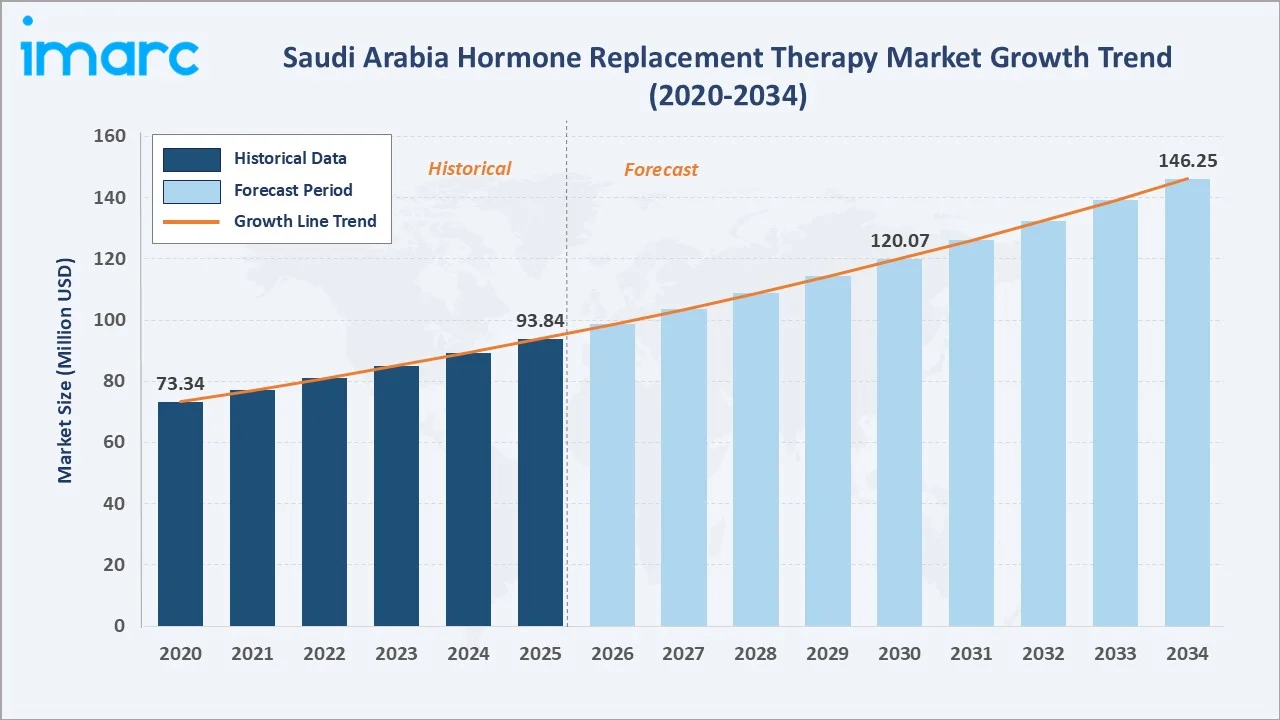
The Saudi Arabia hormone replacement therapy market size increased from USD 93.84 Million in 2025 to USD 98.58 Million in 2026 and is projected to reach USD 146.25 Million by 2034, exhibiting a CAGR of 5.05% during 2026-2034. Expanding awareness of hormonal health, a rising menopausal population, and increasing healthcare investments under Vision 2030 are the primary factors driving the market growth.
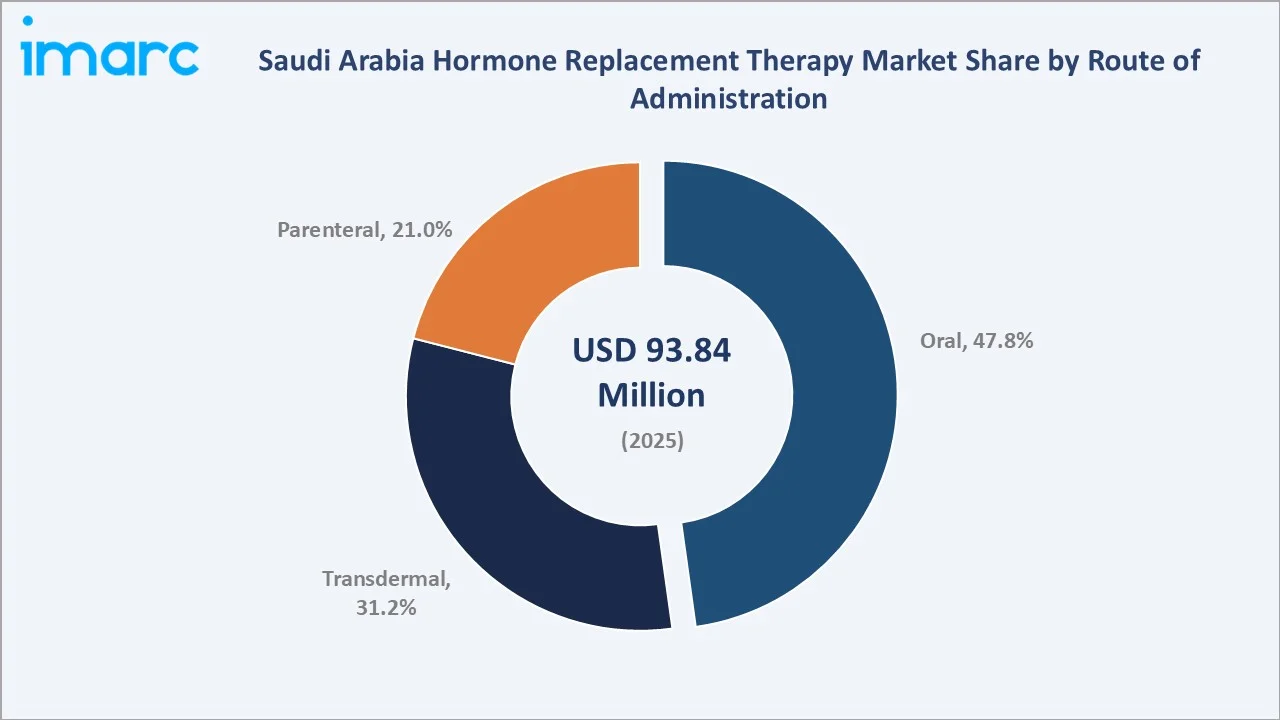
Oral leads the route of administration segment at 47.8%, menopause dominates the type of disease segment at 38.6%, and Northern and Central Region commands 36.5% regional share in 2025.
Market Snapshot
|
Metric |
Value |
|
Base Year Market Size (2025) |
USD 93.84 Million |
|
Market Size (2026) |
USD 98.58 Million |
|
Forecast Market Size (2034) |
USD 146.25 Million |
|
CAGR (2026-2034) |
5.05% |
|
Base Year |
2025 |
|
Historical Period |
2020-2025 |
|
Forecast Period |
2026-2034 |
|
Largest Region |
Northern and Central Region (36.5%, 2025) |
|
Second Largest Region |
Western Region (28.4%, 2025) |
|
Leading Route of Administration |
Oral (47.8%, 2025) |
|
Leading Type of Disease |
Menopause (38.6%, 2025) |
The Saudi Arabia hormone replacement therapy market expanded from USD 73.34 Million in 2020 to USD 93.84 Million in 2025, reaching an estimated USD 98.58 Million in 2026, underpinned by growing endocrinology infrastructure and a rising middle-aged population seeking evidence-based hormonal care. Anchored at USD 120.07 Million in 2030, the forecast to USD 146.25 Million by 2034 is supported by expanding insurance coverage, the emergence of personalized hormone therapy protocols, and accelerating uptake of transdermal and biosimilar formulations.
To get more information on this market, Request Sample
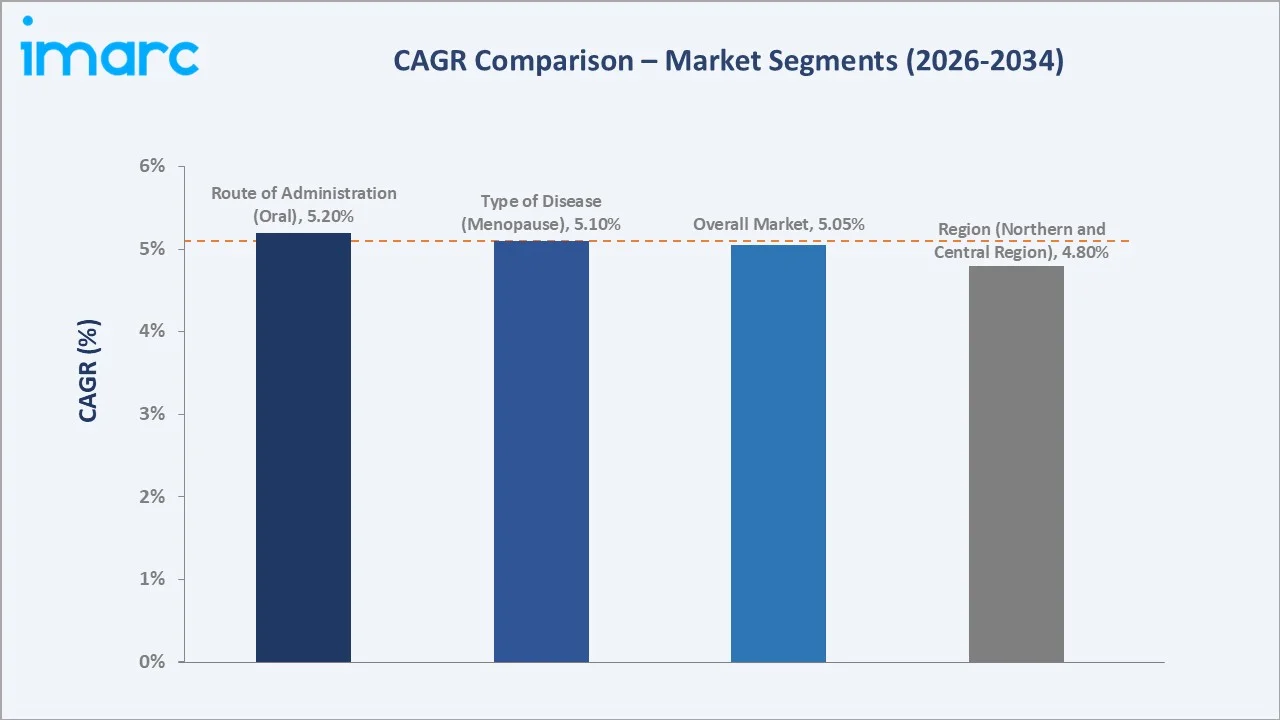
CAGR trajectories across route of administration and type of disease sub-segments show transdermal and male hypogonadism expanding faster than the overall 5.05% market CAGR, driven by physician preference for lower systemic exposure and rising male hormonal health awareness across the Kingdom.
Executive Summary
The Saudi Arabia hormone replacement therapy market is on a sustained growth trajectory, increasing from USD 73.34 Million in 2020 to USD 98.58 Million in 2026 and reaching USD 146.25 Million by 2034. The market has evolved from limited clinical utilization in niche patient populations to a broadly adopted therapeutic category addressing menopause, hypothyroidism, male hypogonadism, and growth hormone deficiency across public and private healthcare channels.
Oral dominates at 47.8% in 2025, supported by established clinical protocols, wide pharmacy availability, and patient preference for familiar dosage forms. Menopause leads with 38.6% market share, driven by the high prevalence of menopausal symptoms, increasing awareness of hormone replacement therapy, and growing demand for symptom management. Northern and Central Region commands 36.5% of regional share, led by high population density and a large concentration of tertiary hospitals.
Key Market Insights
|
Insight |
Data |
|
Leading Route of Administration |
Oral – 47.8% share (2025) |
|
Second Largest Route of Administration |
Transdermal – 31.2% share (2025) |
|
Leading Type of Disease |
Menopause – 38.6% share (2025) |
|
Second Largest Type of Disease |
Hypothyroidism – 27.9% share (2025) |
|
Leading Region |
Northern and Central Region – 36.5% share (2025) |
|
Second Largest Region |
Western Region – 28.4% share (2025) |
|
Top Companies |
AbbVie Inc., Pfizer Inc., Bayer AG, Abbott |
Key Analytical Observations Expanding On The Data Above:
- Oral dominance at 47.8% is supported by established clinical guidelines, high physician familiarity, and widespread availability across hospital and retail pharmacy channels.
- Transdermal share at 31.2% reflects growing physician preference for non-oral delivery routes that bypass hepatic first-pass metabolism. Estrogen patches and gels are increasingly prescribed for postmenopausal women with elevated cardiovascular risk, aligning with international clinical guidance favoring transdermal administration in high-risk profiles.
- Menopause leadership at 38.6% is driven by the large and growing population of perimenopausal and postmenopausal women in Saudi Arabia, rising willingness to seek medical care for menopausal symptoms, and increased clinician training in evidence-based menopause management under national continuing medical education programs.
- Hypothyroidism at 27.9% is the second largest type of disease segment, underpinned by high prevalence of thyroid disorders in the region and growing screening coverage for thyroid disorders through national health programs.
- Northern and Central Region at 36.5% leads regional share, anchored by Riyadh's dense tertiary care infrastructure, a high concentration of specialist endocrinologists, and developed insurance reimbursement ecosystem for hormonal medications in the Kingdom.
Saudi Arabia Hormone Replacement Therapy Market Overview
Hormone replacement therapy refers to the clinical administration of synthetic or bioidentical hormones to patients experiencing deficiencies or imbalances caused by aging, disease, or surgical intervention. The therapy encompasses multiple formulations and delivery routes designed to restore hormonal balance, alleviate symptoms, and improve long-term health outcomes across a range of endocrine and reproductive conditions.
The Saudi hormone replacement therapy ecosystem integrates pharmaceutical manufacturers and importers, hospital formulary committees, specialist endocrinologists and gynecologists, community pharmacies, private health insurers, and patient support programs. Together, these participants enable evidence-based hormonal care delivery across all four regions of the Kingdom under an evolving regulatory and reimbursement framework.
Market Dynamics
To evaluate market opportunities, Request Sample
Market Drivers
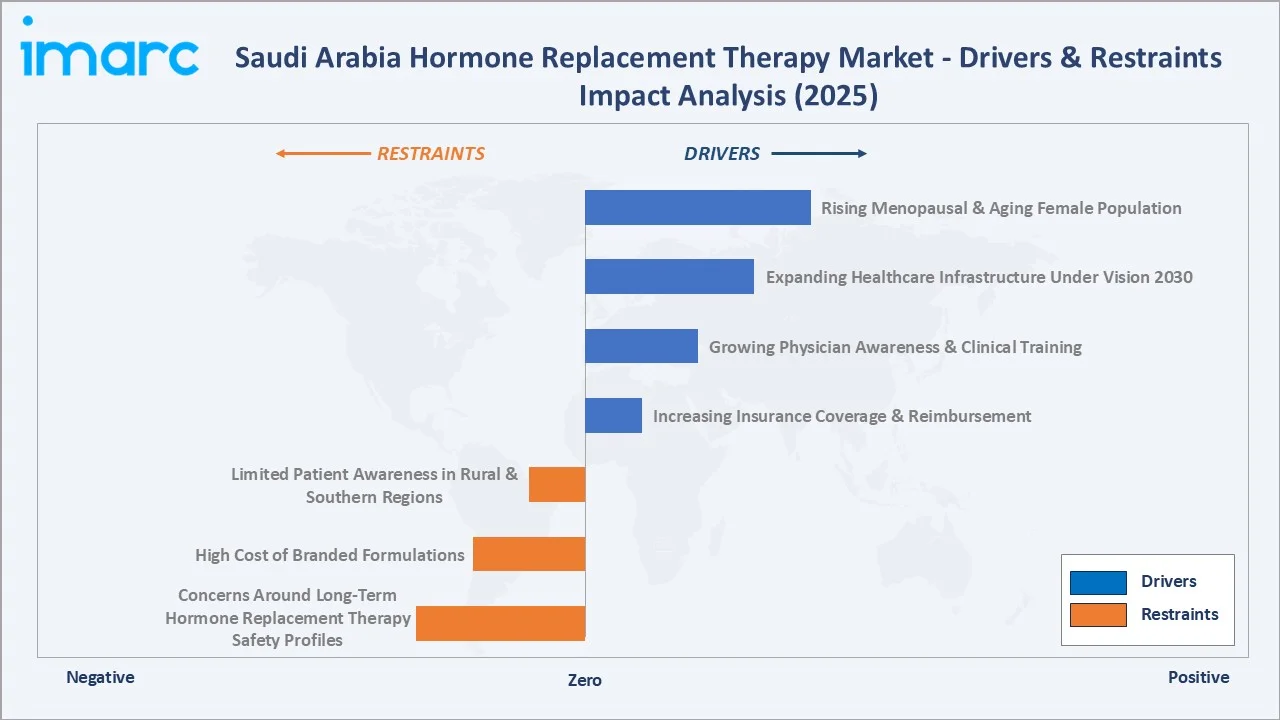
- Rising Menopausal and Aging Female Population: Saudi Arabia's steadily growing population of women aged 45 and above is increasing demand for evidence-based menopausal symptom management, including vasomotor symptom control and osteoporosis prevention through hormone replacement therapy protocols. In January 2026, Medi-Gyn Hormone Health Center revealed intentions to organize the first focused menopause awareness and hormonal balance education event in Riyadh, Saudi Arabia.
- Expanding Healthcare Infrastructure Under Vision 2030: The government's Vision 2030 health transformation program has significantly increased the number of specialty hospitals, endocrinology clinics, and diagnostic centers across all regions. This infrastructure expansion is improving access to hormonal diagnosis and treatment, particularly in the Eastern and Southern Regions where coverage was previously limited.
- Growing Physician Awareness and Clinical Training: National medical societies are conducting continuing medical education programs to improve physician competence in diagnosing and managing hormonal disorders. This is directly expanding the prescription base for hormone replacement therapy products across clinical indications.
- Increasing Insurance Coverage and Reimbursement: The extension of mandatory health insurance to a broader segment of the Saudi population, combined with expanding formulary coverage for hormonal medications under major insurance plans, is reducing out-of-pocket cost barriers and improving sustained medication adherence among hormone replacement therapy patients.
Market Restraints
- Concerns Around Long-Term Hormone Replacement Therapy Safety Profiles: Patient and physician concerns regarding the association of certain combined hormone replacement therapy formulations with elevated risks of breast cancer, thromboembolic events, and stroke continue to limit uptake, particularly among women with pre-existing cardiovascular risk factors or family histories of hormone-sensitive cancers.
- High Cost of Branded Formulations: Branded hormone replacement therapy products, particularly imported transdermal and combination formulations, carry significant cost premiums relative to generic alternatives. For patients with limited insurance coverage or those in lower-income brackets, this cost differential restricts access and reduces treatment initiation rates in price-sensitive segments.
- Limited Patient Awareness in Rural and Southern Regions: Despite national health awareness campaigns, awareness of hormonal health conditions, particularly subclinical hypothyroidism and early-stage menopause, remains limited in rural areas and smaller urban centers, contributing to underdiagnosis and delayed treatment initiation.
Market Opportunities
- Personalized Hormone Therapy and Compounding: Growing patient interest in individualized hormone dosing, bioidentical hormone preparations, and compounded formulations is creating a premium market segment that supports higher margins and stronger patient retention for specialty pharmacy operators and specialist clinicians.
- Male Hormonal Health Market Development: Rising awareness of male hypogonadism and testosterone deficiency syndrome among Saudi men is expanding the addressable patient population beyond the traditionally female-dominant hormone replacement therapy market, opening new clinical and commercial opportunities for testosterone replacement therapy providers.
Market Challenges
- Regulatory Pathway Complexity for Novel Hormone Replacement Therapy Formulations: Obtaining Saudi Food and Drug Authority (SFDA) approval for new hormone replacement therapy delivery systems, including implantable hormonal pellets, novel transdermal gels, and combination formulations, involves lengthy clinical data submission and review cycles that can delay market entry and limit product diversification for smaller market participants.
- Sustaining Long-Term Patient Adherence: Hormone replacement therapy effectiveness depends on sustained, long-term therapy adherence; however, concerns about side effects, inadequate follow-up care, and socio-cultural attitudes toward medicating natural aging processes continue to drive premature treatment discontinuation, particularly among menopausal patients.
Emerging Market Trends
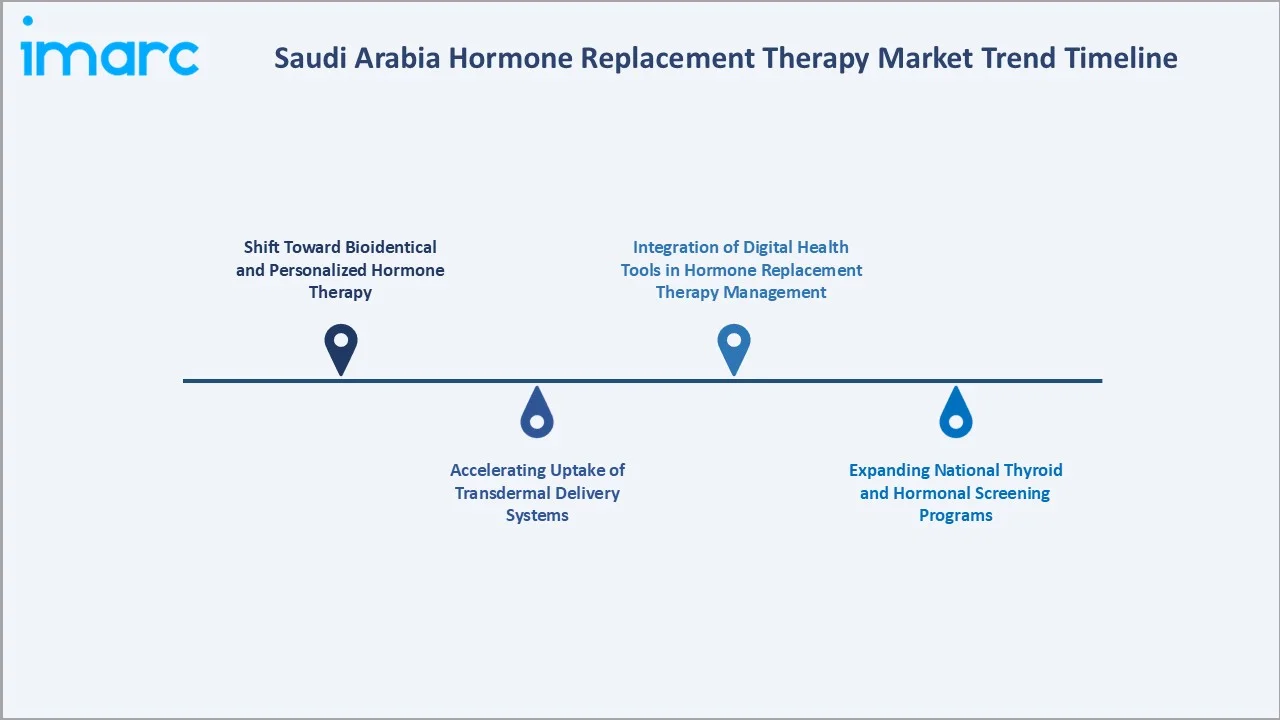
1. Shift Toward Bioidentical and Personalized Hormone Therapy
Saudi endocrinologists and gynecologists are increasingly adopting bioidentical hormone formulations that closely replicate the molecular structure of endogenous hormones, offering patients improved tolerability profiles compared to conventional synthetic hormone replacement therapy.
2. Accelerating Uptake of Transdermal Delivery Systems
Transdermal hormone replacement therapy formulations, including estrogen patches, gels, and sprays, are gaining rapid adoption as physicians and patients prioritize delivery systems with reduced hepatic impact and more stable serum hormone levels compared to oral alternatives.
3. Integration of Digital Health Tools in Hormone Replacement Therapy Management
Digital health platforms, including telemedicine consultations, mobile symptom-tracking applications, and AI-assisted laboratory interpretation tools, are being integrated into hormone replacement therapy management pathways by private hospitals and specialty clinics across Saudi Arabia. These tools improve patient monitoring, support adherence through automated prescription refill reminders, and enable more frequent hormonal level assessments between in-person consultations.
4. Expanding National Thyroid and Hormonal Screening Programs
The Saudi Ministry of Health has been progressively expanding newborn screening programs and adult thyroid function testing as part of its preventive healthcare agenda. Wider screening coverage is generating earlier hypothyroidism diagnoses and increasing the pool of patients requiring long-term thyroid hormone replacement.
Industry Value Chain Analysis
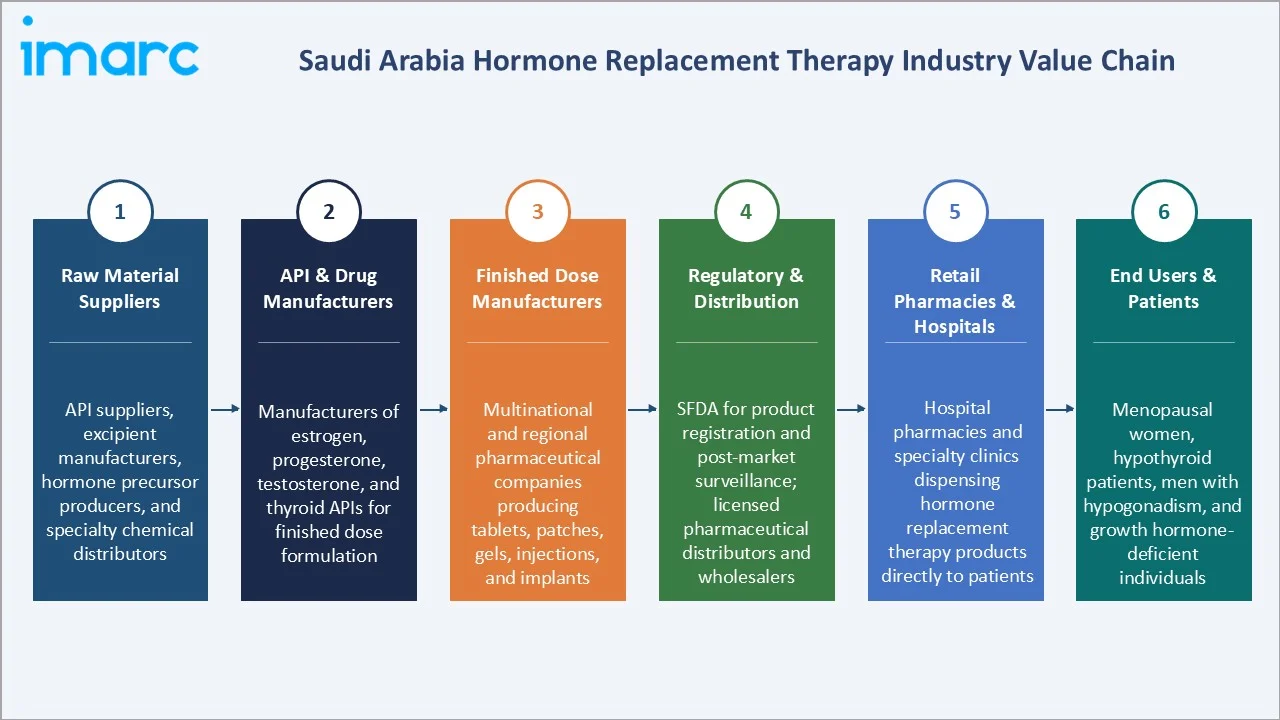
The Saudi Arabia hormone replacement therapy market value chain spans six interconnected stages, from hormone precursor sourcing through end-patient therapy management. Pharmaceutical manufacturing, SFDA regulatory approval, and last-mile dispensing through hospital and retail pharmacy channels capture the highest value-add positions, while compliance and post-market surveillance capabilities are increasingly central to sustainable competitive position in this regulated therapeutic category.
|
Stage |
Key Players / Examples |
|
Raw Material Suppliers |
API suppliers, excipient manufacturers, hormone precursor chemical producers, and specialty chemical distributors supplying base compounds for hormone formulations |
|
API & Drug Manufacturers |
Pharmaceutical manufacturers producing estrogen, progesterone, testosterone, and thyroid hormone APIs for finished dose formulation across oral, transdermal, and parenteral delivery systems |
|
Finished Dose Manufacturers |
Multinational and regional pharmaceutical companies producing tablets, patches, gels, injections, and implants meeting SFDA quality and registration standards |
|
Regulatory & Distribution |
SFDA for product registration and post-market surveillance; licensed pharmaceutical distributors, wholesalers, and cold chain logistics providers |
|
Retail Pharmacies & Hospitals |
Hospital pharmacies, community pharmacies, and specialty clinics dispensing hormone replacement therapy products directly to patients under physician prescription |
|
End Users & Patients |
Menopausal women, hypothyroid patients, men with hypogonadism, growth hormone-deficient individuals, and healthcare providers managing hormonal conditions across the Kingdom |
Manufacturers with broad hormone therapy portfolios, established relationships with hospitals and specialist physicians, and robust distribution networks are better positioned to capture market growth than suppliers with limited product offerings or reliance on third-party commercialization partners.
Technology Landscape in the Saudi Arabia Hormone Replacement Therapy Industry
Advanced Drug Delivery Systems
Pharmaceutical manufacturers are investing in next-generation hormone replacement therapy delivery platforms including matrix and reservoir transdermal patches, intranasal estrogen sprays, subdermal implantable pellets, and extended-release injectable formulations. These innovations are improving pharmacokinetic profiles and reducing dosing frequency.
Bioidentical Hormone Compounding Technology
Specialty compounding pharmacies are deploying precision mixing and quality-control technologies to prepare patient-specific hormone formulations based on serology-guided dosing. Automated compounding systems and analytical testing platforms are being adopted by licensed compounding facilities in major Saudi cities to ensure product consistency, potency accuracy, and regulatory compliance with SFDA compounding guidelines.
Telemedicine and Remote Hormone Replacement Therapy Consultation Platforms
Licensed telemedicine platforms are enabling patients to access hormone replacement therapy consultations, prescription renewals, and laboratory result reviews without in-person visits. This digital access layer is particularly impactful for patients in the Eastern and Southern Regions where specialist endocrinologist density is lower.
Market Segmentation Analysis
The report covers the following segments:
|
Segment Category |
Leading Segment |
Market Share |
Year |
|
Product |
🔒 |
🔒 |
2025 |
|
Route of Administration |
Oral |
47.8% |
2025 |
|
Type of Disease |
Menopause |
38.6% |
2025 |
|
Region |
Northern and Central Region |
36.5% |
2025 |

By Route of Administration
Oral commands a 47.8% majority share in 2025, driven by established prescribing protocols, wide physician familiarity, ease of patient administration, and broad availability across hospital and retail pharmacy channels throughout the Kingdom.
To access detailed market analysis, Request Sample
Transdermal at 31.2% in 2025 covers estrogen patches, gels, and sprays prescribed primarily for menopausal symptom management in women with elevated cardiovascular or thrombotic risk.
By Type of Disease
Menopause dominates with a 38.6% share in 2025, reflecting the large and growing base of perimenopausal and postmenopausal women in Saudi Arabia seeking treatment for vasomotor symptoms, genitourinary syndrome, and osteoporosis prevention.
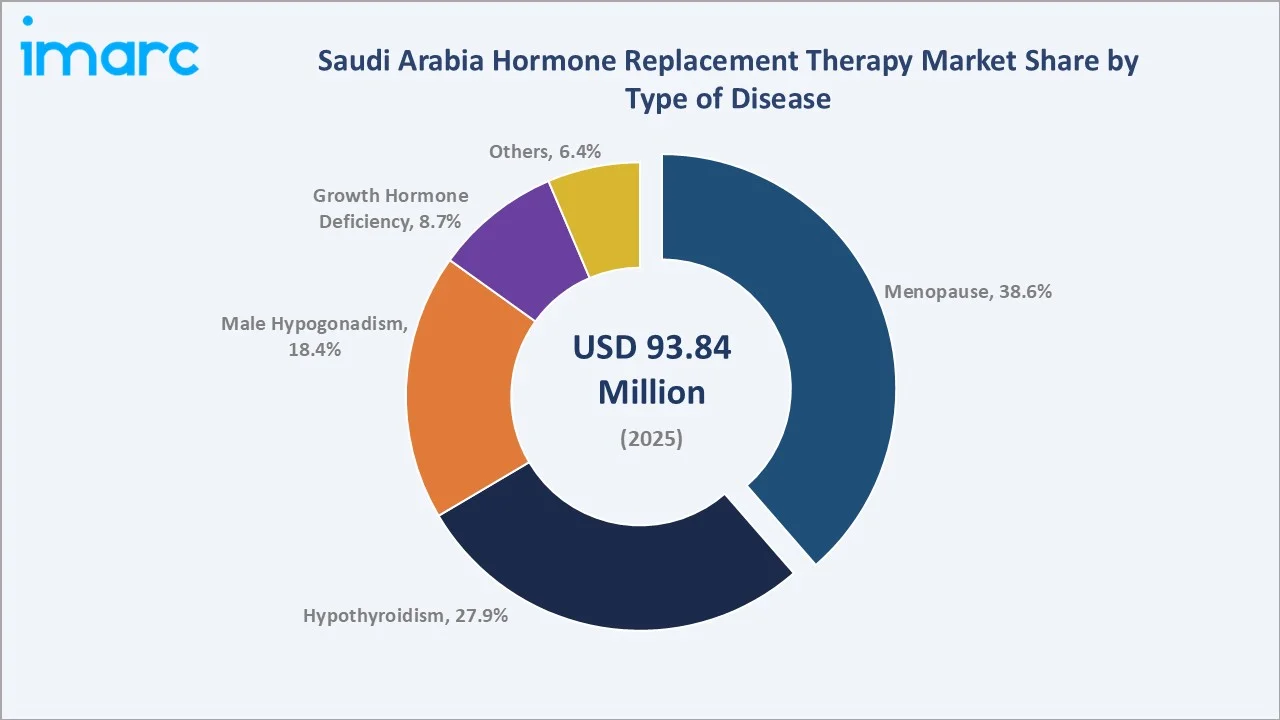
Hypothyroidism at 27.9% is the second largest segment, supported by high regional prevalence of thyroid disorders, expanding national screening programs, and the lifelong nature of thyroid hormone replacement therapy once initiated.
Regional Market Insights
|
Region |
Share (2025) |
Key Growth Drivers |
|
Northern and Central Region |
36.5% |
High population density, well-established healthcare infrastructure, government investment in endocrinology services, and concentration of specialist hospitals and medical centers |
|
Western Region |
28.4% |
Rapidly expanding private hospital network, growing health awareness among urban populations, rising incidence of lifestyle-related hormonal disorders, and increasing insurance coverage |
|
Eastern Region |
21.7% |
Industrial workforce with occupational health programs, growing expatriate population with healthcare access, and expansion of pharmacy and diagnostic networks |
|
Southern Region |
13.4% |
Expanding primary healthcare centers under Vision 2030, improving access to specialist care, and growing awareness campaigns targeting hormonal health among women |
Northern and Central Region at 36.5% in 2025 leads the regional landscape, anchored by Riyadh's dense tertiary care infrastructure, the Kingdom's large concentration of specialist endocrinologists and gynecologists, and developed health insurance ecosystem for hormonal medications.
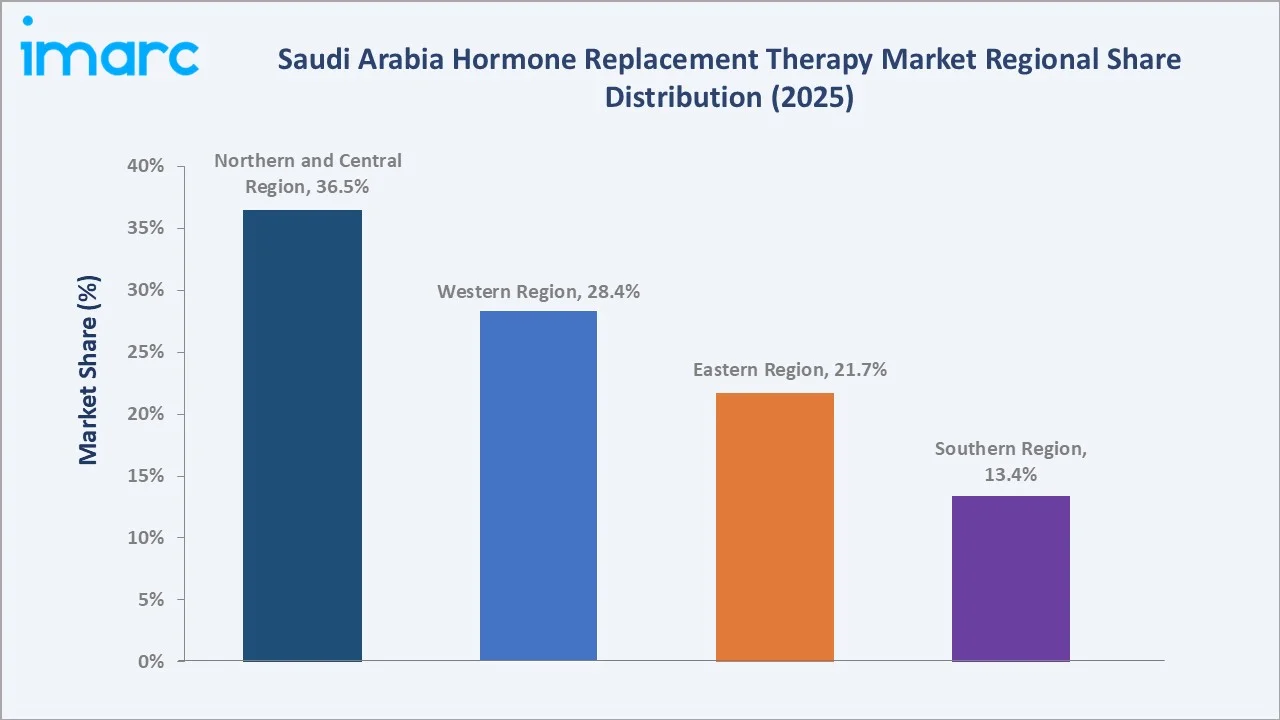
Western Region at 28.4% is the second largest and fastest-growing region. Jeddah's rapidly expanding private hospital network, rising health literacy among its cosmopolitan population, and growing international medical tourism activity are accelerating regional hormone replacement therapy market expansion through 2034.
Competitive Landscape
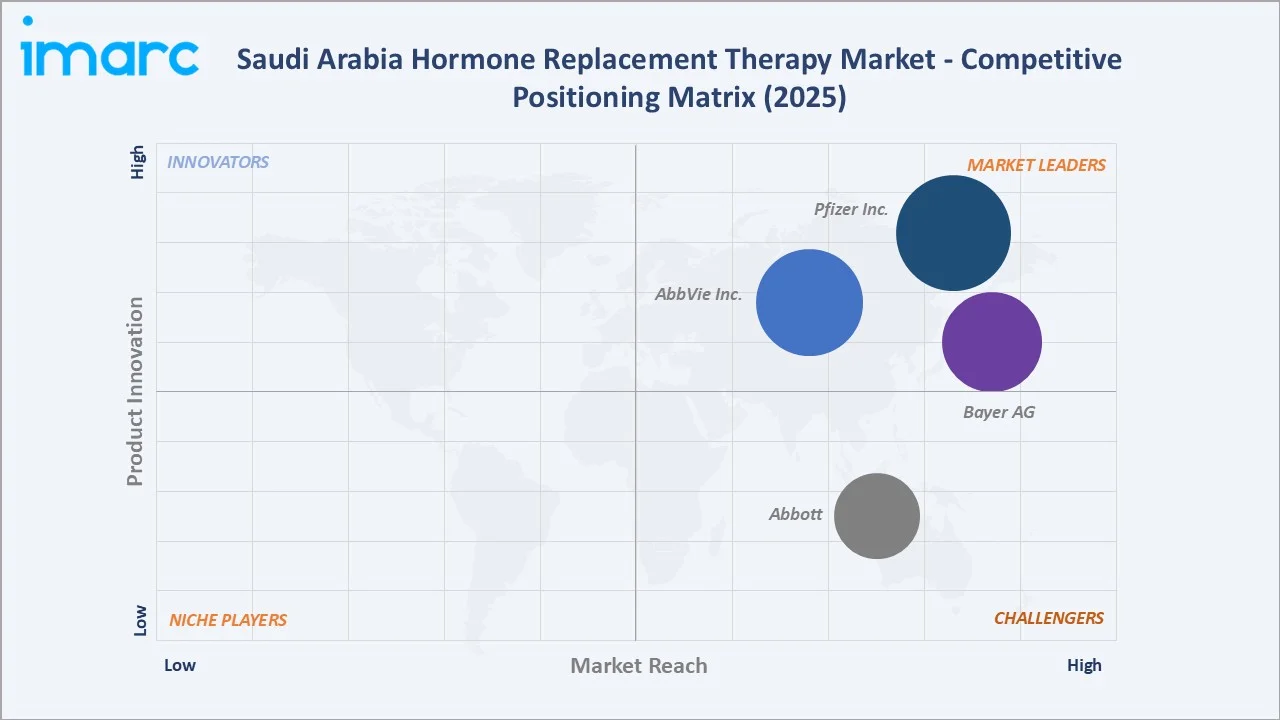
The Saudi Arabia hormone replacement therapy market is moderately concentrated, with multinational pharmaceutical companies holding dominant positions across all major hormone replacement therapy categories. Brand recognition, established SFDA registrations, physician relationships, and clinical data depth form the principal competitive moats.
|
Company Name |
Brand / Key Product |
Position |
Strategic Focus |
|
AbbVie Inc. |
Synthroid, AndroGel |
Leader |
Broad hormonal portfolio spanning thyroid hormone replacement and male hypogonadism therapy |
|
Pfizer Inc. |
Premarin, Depo-Provera |
Leader |
Established oral and injectable hormone replacement therapy franchise with extensive clinical evidence base and physician relationships |
|
Bayer AG |
Angeliq, Mirena |
Leader |
Women's health specialization with combined hormone replacement therapy and hormonal intrauterine solutions |
|
Abbott |
Duphaston, Femoston |
Challenger |
Women's hormonal health portfolio with broad international hormone replacement therapy product presence |
Key players include AbbVie Inc., Pfizer Inc., Bayer AG, and Abbott, among others.
Key Company Profiles
AbbVie Inc.
AbbVie Inc. is a North Chicago-based global biopharmaceutical company spun off from Abbott Laboratories in 2013. The company focuses on immunology, oncology, neuroscience, and endocrinology, with a diversified portfolio marketed across several countries.
- Product Portfolio: Synthroid (levothyroxine sodium) for hypothyroidism management and AndroGel (testosterone gel) for male hypogonadism, both active endocrinology brands distributed through the firm's established pharmaceutical network.
- Recent Developments: AbbVie Inc. continues to strengthen its presence in endocrinology through ongoing medical education initiatives, physician engagement programs, and support for evidence-based treatment practices across international markets.
- Strategic Focus: Strengthening endocrinology and women's health market presence through evidence-based prescribing programs and specialist physician engagement.
Pfizer Inc.
Pfizer Inc. is a New York-based multinational pharmaceutical corporation and one of the world's largest research-based pharmaceutical companies, with operations across several countries and a broad portfolio spanning branded and generic medicines, vaccines, and consumer health products.
- Product Portfolio: Premarin (conjugated estrogens) for menopausal estrogen replacement therapy and Depo-Provera (medroxyprogesterone acetate injection) for hormonal management, both active Pfizer brands with long-established clinical track records.
- Recent Developments: Pfizer continues to actively market and distribute Premarin and Depo-Provera across global markets, with ongoing physician education programs supporting appropriate prescribing in menopause and hormonal management.
- Strategic Focus: Maintaining clinical leadership in the menopause and women's hormonal health segment through established brand equity, evidence-based physician detailing, and broad pharmacy distribution networks.
Bayer AG
Bayer AG is a Leverkusen-based German multinational life sciences company with core competencies in health care and nutrition. Bayer's pharmaceutical division operates across oncology, cardiovascular, women's health, and radiology, with products marketed in several countries.
- Product Portfolio: Angeliq (drospirenone/estradiol) for menopausal vasomotor symptom management and Mirena (levonorgestrel-releasing intrauterine system) for hormonal contraception and perimenopausal management, both confirmed active Bayer brands with strong clinical evidence bases.
- Recent Developments: Bayer AG continues to strengthen its women's health portfolio through ongoing lifecycle management, medical education initiatives, and engagement with healthcare professionals to support evidence-based hormone therapy.
- Strategic Focus: Expanding women's health clinical indications and sustaining market leadership across the menopausal hormone therapy and hormonal intrauterine device segments through active clinical development and physician partnership programs.
Market Concentration Analysis
The Saudi Arabia hormone replacement therapy market is moderately concentrated, with the top three companies (AbbVie Inc., Pfizer Inc., and Bayer AG) collectively holding a significant combined share of branded hormone replacement therapy prescriptions across the Kingdom's hospital and retail pharmacy channels.
Barriers to market entry include the complexity of obtaining SFDA marketing authorizations for new hormonal formulations, the significant investment required to build physician relationships and hospital formulary positions in a relationship-driven healthcare market, and the clinical evidence requirements for competing against incumbent brands with long-established safety and efficacy records.
Consolidation trends are being shaped by portfolio expansion, strategic partnerships, and lifecycle management initiatives, as manufacturers strengthen their presence across hormone replacement therapy indications and delivery formats while responding to evolving clinical practice and patient needs.
Investment & Growth Opportunities
Fastest-Growing Segments
Male hypogonadism is the fastest-growing type of disease segment, expanding at above-average rates driven by rising awareness among Saudi men and improved testosterone diagnostics availability. Transdermal is simultaneously expanding faster than the overall market CAGR, as prescribing preferences shift toward formulations with more favorable safety profiles.
Emerging Markets
Western Region represents the highest-growth regional opportunity, anchored by Jeddah's fast-expanding private healthcare sector, a cosmopolitan patient base with high health literacy, and significant medical tourism activity.
Venture & Investment Trends
Capital investment is concentrating in specialty pharmacy platforms offering personalized hormone compounding services, digital health applications for hormone replacement therapy monitoring and patient support, and biosimilar manufacturing capabilities targeting the Saudi and broader Gulf hormone replacement therapy market.
Future Market Outlook (2026-2034)
The Saudi Arabia hormone replacement therapy market is forecast to expand from USD 93.84 Million in 2025 to an estimated USD 98.58 Million in 2026 and further to USD 146.25 Million by 2034 at a CAGR of 5.05%, adding approximately USD 52.4 Million in incremental market value over the forecast period.
Four forces will shape the market through 2034: the continued roll-out of Vision 2030 healthcare infrastructure; the rise of personalized, bioidentical, and transdermal formulations as physician and patient preferences evolve; deeper integration of digital health tools in hormonal monitoring and adherence management; and the gradual entry of generic and biosimilar competitors in patent-expired hormone replacement therapy categories.
By 2034, the Saudi hormone replacement therapy market is expected to feature a broader range of delivery formats, a more diverse supplier base, and a significantly larger patient population accessing evidence-based hormonal care.
Research Methodology
Primary Research
Primary research included structured interviews with endocrinologists, gynecologists, pharmacists, hospital procurement officers, and health insurance specialists in Saudi Arabia, validating market sizing, segment shares, regional demand patterns, and prescribing trend evolution across all four major hormone replacement therapy indications.
Secondary Research
Secondary sources included SFDA publications, Ministry of Health statistical yearbooks, Council of Health Insurance data, Saudi Endocrine Society and Saudi Menopause Society clinical guidelines, WHO and regional epidemiological studies on hormonal disorder prevalence, and annual reports, regulatory filings, and investor presentations from key market participants.
Forecasting Models
Market forecasts used top-down and bottom-up modeling approaches combining patient population estimates, diagnosis and treatment rates, average therapy duration, unit pricing data, and macroeconomic variables including GDP growth projections and healthcare expenditure trends under the Vision 2030 framework.
Saudi Arabia Hormone Replacement Therapy Market Report Coverage:
| Report Features | Details |
|---|---|
| Base Year of the Analysis | 2025 |
| Historical Period | 2020-2025 |
| Forecast Period | 2026-2034 |
| Units | Million USD |
| Scope of the Report | Exploration of Historical Trends and Market Outlook, Industry Catalysts and Challenges, Segment-Wise Historical and Future Market Assessment:
|
| Products Covered | Estrogen Replacement Therapy, Human Growth Hormone Replacement Therapy, Thyroid Replacement Therapy, Testosterone Replacement Therapy, Others |
| Route of Administrations Covered | Oral, Parenteral, Transdermal |
| Type of Diseases Covered; | Menopause, Hypothyroidism, Male Hypogonadism, Growth Hormone Deficiency, Others |
| Regions Covered | Northern and Central Region, Western Region, Eastern Region, Southern Region |
| Companies Covered | AbbVie Inc., Pfizer Inc., Bayer AG, Abbott, etc. |
| Customization Scope | 10% Free Customization |
| Post-Sale Analyst Support | 10-12 Weeks |
| Delivery Format | PDF and Excel through Email (We can also provide the editable version of the report in PPT/Word format on special request) |
Key Benefits for Stakeholders:
- IMARC’s industry report offers a comprehensive quantitative analysis of various market segments, historical and current market trends, market forecasts, and dynamics of the Saudi Arabia hormone replacement therapy market from 2020-2034.
- The research report provides the latest information on the market drivers, challenges, and opportunities in the Saudi Arabia hormone replacement therapy market.
- Porter's five forces analysis assist stakeholders in assessing the impact of new entrants, competitive rivalry, supplier power, buyer power, and the threat of substitution. It helps stakeholders to analyze the level of competition within the Saudi Arabia hormone replacement therapy industry and its attractiveness.
- Competitive landscape allows stakeholders to understand their competitive environment and provides an insight into the current positions of key players in the market.
Frequently Asked Questions About the Saudi Arabia Hormone Replacement Therapy Market Report
The Saudi Arabia hormone replacement therapy market size is estimated at USD 98.58 Million in 2026, driven by rising hormonal disorder prevalence and expanding healthcare infrastructure.
The market is projected to grow at a CAGR of 5.05% from 2026-2034, reaching USD 146.25 Million, supported by Vision 2030 healthcare investments, expanding insurance coverage, and rising demand for personalized hormone therapy.
Oral leads at 47.8% in 2025, driven by established clinical protocols, wide physician familiarity, and broad pharmacy availability.
Menopause dominates at 38.6% in 2025, fueled by a large and growing postmenopausal female population and increasing clinical awareness of evidence-based menopausal hormone therapy.
Northern and Central Region commands 36.5% in 2025, led by Riyadh's dense tertiary care infrastructure and the developed health insurance ecosystem for hormonal medications in the Kingdom.
Leading companies include AbbVie Inc., Pfizer Inc., Bayer AG, and Abbott, among others.
Vision 2030 is expanding specialist healthcare infrastructure, broadening insurance coverage for hormonal medications, and investing in preventive screening programs that are collectively increasing hormone replacement therapy diagnosis rates, patient access, and market volume across all four regions.
Key challenges include long-term patient safety concerns limiting hormone replacement therapy uptake, high branded product costs restricting access in price-sensitive segments, limited awareness in rural areas, and regulatory pathway complexity for novel hormonal formulations seeking SFDA registration.
Need more help?
- Speak to our experienced analysts for insights on the current market scenarios.
- Include additional segments and countries to customize the report as per your requirement.
- Gain an unparalleled competitive advantage in your domain by understanding how to utilize the report and positively impacting your operations and revenue.
- For further assistance, please connect with our analysts.
 Request Customization
 Speak to an Analyst
 Request Brochure
 Inquire Before Buying
Benefits of Customization
- Personalize this research
- Triangulate with your data
- Get data as per your format and definition
- Gain a deeper dive into a specific application, geography, customer, or competitor
- Any level of personalization
Get in Touch With Us
UNITED STATES
Phone: +1-201-971-6302
INDIA
Phone: +91-120-433-0800
UNITED KINGDOM
Phone: +44-753-714-6104
Email: [email protected]
Client Testimonials




.webp)




.webp)













Related Reports

Choose your plan
*Please note that the prices mentioned below are starting prices for each bundle type. Kindly contact our team for further details.*
Single User License
- 1 User License, Access on 2 Devices
- PDF Report + Excel Dataset (Password Protected)
- Lifetime Access
- No Printing Rights
- 10% Free Report Customization
- 10–12 Weeks of Analyst Support
Five User License
- Access for 5 Users, 2 Devices per User
- PDF Report + Excel Dataset (Password Protected)
- Lifetime Access
- Dedicated Account Manager
- 12–14 Weeks of Analyst Support
- No Printing Rights
- 15% Free Report Customization
- 25% Discount on Your Next Purchase
Corporate User License
- Unlimited User Access (Within Your Organization)
- PDF Report + Excel Dataset
- Lifetime Access
- Dedicated Account Manager
- 14–20 Weeks of Analyst Support
- No Printing Rights
- 20% Free Report Customization
- 30% Discount on Your Next Purchase
Essential Insights
What's included:
3 reports
- Lifetime Access
- PDF Reports
- Excel Datasets
- 2 Weeks of Free Analyst Support
- 2 User Licenses
- Access on 2 Devices
- Printing Rights
- Complimentary PowerPoint (PPT) Version
- Complimentary License Upgrade
Professional Access
What's included:
5 reports
- Lifetime Access
- PDF Reports
- Excel Datasets
- 8 Weeks of Free Analyst Support
- 2 User Licenses
- Access on 2 Devices
- Printing Rights
- Complimentary PowerPoint (PPT) Version
- Complimentary License Upgrade
Business Advantage
What's included:
8 reports
- Lifetime Access
- PDF Reports
- Excel Datasets
- 14 Weeks of Free Analyst Support
- 2 User Licenses
- Access on 2 Devices
- Printing Rights
- Complimentary PowerPoint (PPT) Version
- Complimentary License Upgrade
Enterprise Intelligence
What's included:
10 reports
- Lifetime Access
- PDF Reports
- Excel Datasets
- 20 Weeks of Free Analyst Support
- 2 User Licenses
- Access on 2 Devices
- Printing Rights
- Complimentary PowerPoint (PPT) Version
- Complimentary License Upgrade