
Silver Nanoparticles Market Size, Share, Trends and Forecast by Synthesis Method, Shape, End Use Industry, and Region, 2026-2034
Silver Nanoparticles Market Size, Share, Trends & Forecast (2026-2034)
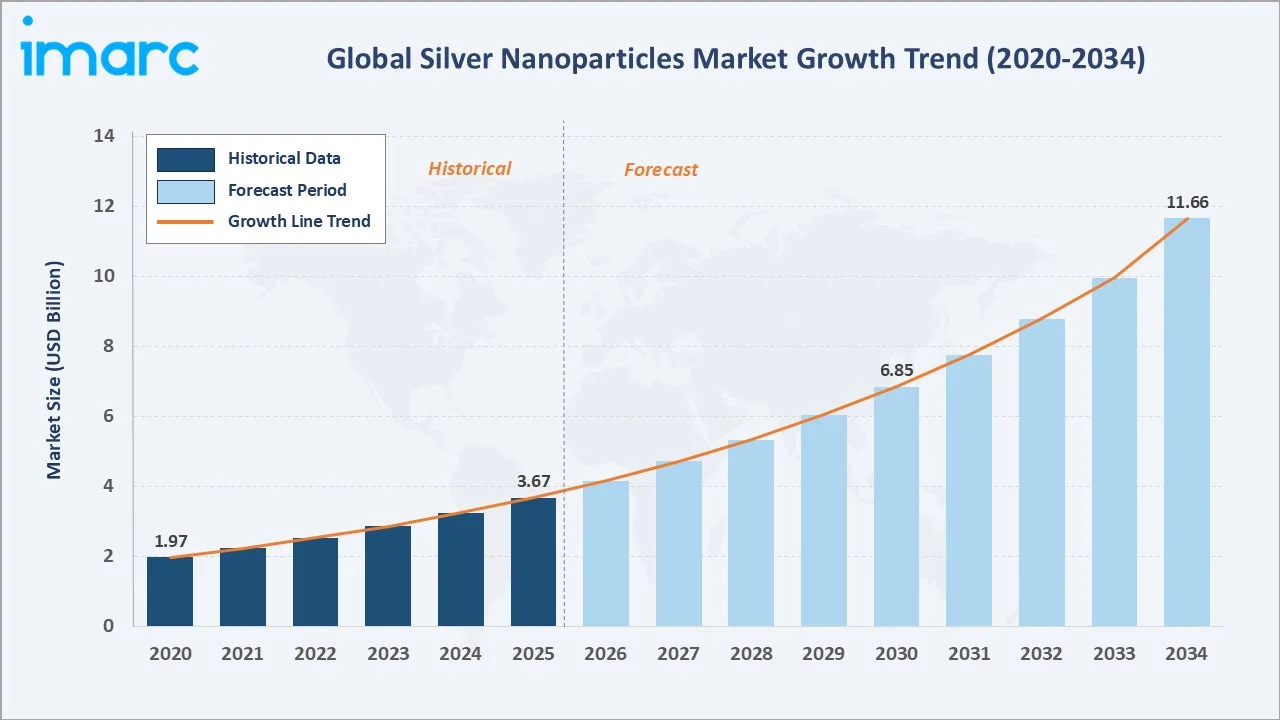
The global silver nanoparticles market reached USD 3.67 Billion in 2025 and is projected to reach USD 11.66 Billion by 2034, growing at a CAGR of 13.30% during 2026-2034. The market is driven by rising demand from healthcare, electronics, textiles, and water treatment applications due to their strong antimicrobial and conductive properties. Growing use in wound care, coatings, sensors, and advanced materials further supports market growth. More than 13 million people globally suffer from chronic wounds every year. This is driving the silver nanoparticles market as their strong antimicrobial properties make them useful in wound dressings, coatings, and infection-control products. Wet chemistry leads the synthesis at 61.0%. Spheres lead shape at 36.5%. North America commands 34.0% of the global market share.
Market Snapshot
|
Metric |
Value |
|
Market Size (2025) |
USD 3.67 Billion |
|
Forecast Market Size (2034) |
USD 11.66 Billion |
|
CAGR (2026-2034) |
13.30% |
|
Base Year |
2025 |
|
Historical Period |
2020-2025 |
|
Forecast Period |
2026-2034 |
|
Dominant Synthesis Method |
Wet Chemistry (61.0%, 2025) |
|
Dominant Shape |
Spheres (36.5%, 2025) |
|
Leading Region |
North America (34.0%, 2025) |
The global silver nanoparticles market expanded from USD 1.97 Billion in 2020 to USD 3.67 Billion in 2025, anchored at USD 6.85 Billion in 2030, and forecast to reach USD 11.66 Billion by 2034. Silver nanoparticles are particles of silver metal with dimensions in the 1-100 nanometre range, possessing unique physicochemical properties. The COVID-19 pandemic created a significant demand acceleration for silver nanoparticles, particularly in antimicrobial surface coatings, PPE treatment, and hospital infection-control products.
To get more information on this market, Request Sample
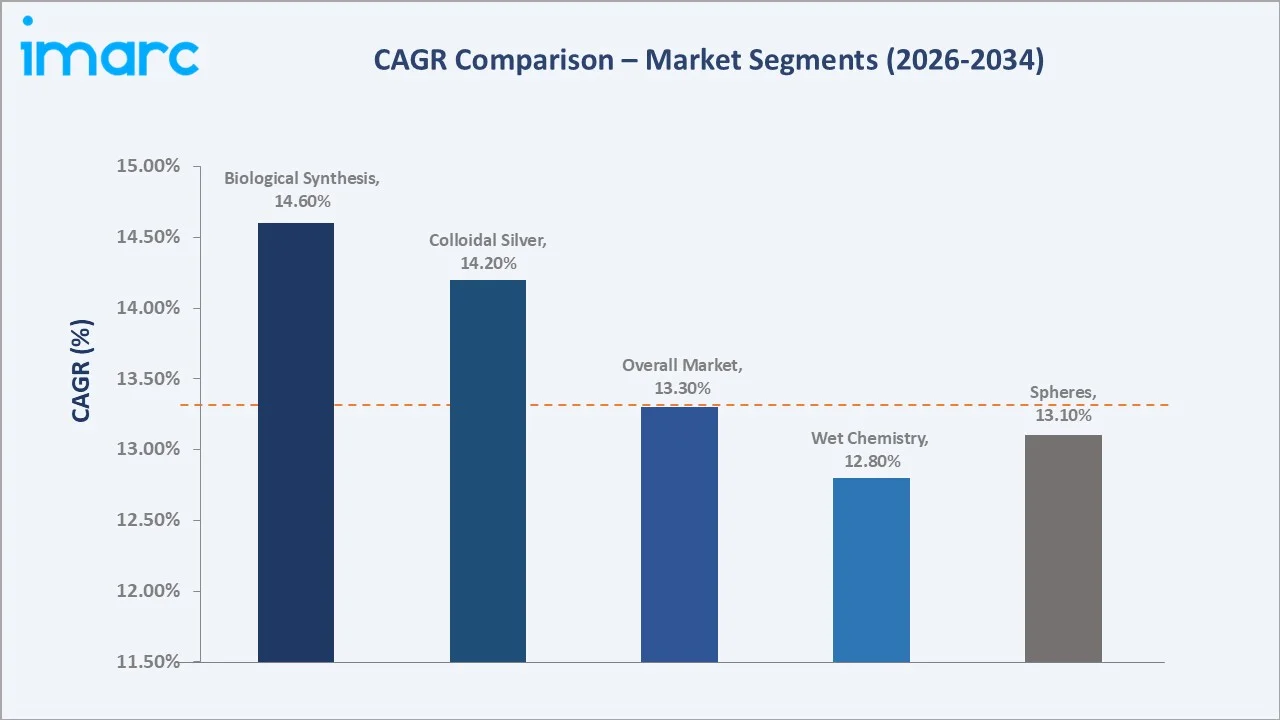
Biological synthesis grows fastest at ~14.6% CAGR through plant extract and microbial green synthesis routes, creating commercially scalable low-toxicity production above conventional wet chemistry without hazardous reductant. Colloidal silver particles grow at ~14.2% CAGR through medical wound care, textile antimicrobial finishing, and consumer health product formulation, creating the most commercially volume-diverse single product form above fixed-dimension particle types.
Executive Summary
The global silver nanoparticles market at USD 3.67 Billion in 2025 represents one of the most commercially dynamic advanced material categories in the global nanomaterial industry. Silver nanoparticles' most commercially unique characteristic is the combination of multiple commercially valuable properties in a single material, with antimicrobial activity, electrical conductivity, and optical resonance. The market is projected to reach USD 11.66 Billion by 2034.
Wet chemistry at 61.0% leads through commercial scalability. Spheres at 36.5% lead shape through isotropic antimicrobial, optical, and electrical properties. North America leads at 34.0% through leading nanotechnology R&D infrastructure, medical device market, and conductive ink electronics manufacturing.
Key Market Insights
|
Insight |
Data |
|
Dominant Synthesis Method |
Wet Chemistry - 61.0% share (2025) |
|
Dominant Shape |
Spheres - 36.5% market share (2025) |
|
Leading Region |
North America - 34.0% share (2025) |
|
Market Opportunity |
Antimicrobial wound dressings and healthcare textiles; conductive ink for flexible electronics; nano-agriculture crop protection; water purification membrane coating; advanced food packaging |
Key Analytical Observations Supporting The Above Data:
- Wet Chemistry at 61.0%: The wet chemistry segment dominates due to its cost-effectiveness, scalability, and ability to produce nanoparticles with controlled size, shape, and purity. Its widespread adoption in healthcare, electronics, textiles, and coatings applications supports strong market demand.
- Spheres at 36.5%: The spheres segment dominates due to their uniform shape, high surface area, and ease of synthesis compared to complex nanostructures. Their stability and broad usability in healthcare, electronics, coatings, textiles, and antimicrobial applications support strong demand.
- North America at 34.0%: North America dominates regionally due to strong demand from healthcare, electronics, antimicrobial coatings, and advanced material applications. High R&D investment, established nanotechnology infrastructure, and the presence of leading medical and electronics manufacturers further support regional growth.
Silver Nanoparticles Market Overview
The global silver nanoparticles market operates within the broader nanomaterial and advanced material industry as the most commercially diversified single-metal nanoparticle category above gold nanoparticles' premium diagnostics focus or iron oxide's MRI contrast agent specialization. The silver nanoparticles market's commercial uniqueness is the simultaneous presence in consumer, industrial, and medical markets.
The silver nanoparticles ecosystem integrates upstream silver precursor supply, synthesis facility operations, functionalization and formulation, downstream product integration, and regulatory compliance pathway. Macroeconomic factors include rising healthcare spending, expanding electronics manufacturing, and increasing demand for antimicrobial materials across consumer and industrial sectors.
Market Dynamics
To evaluate market opportunities, Request Sample
Market Drivers
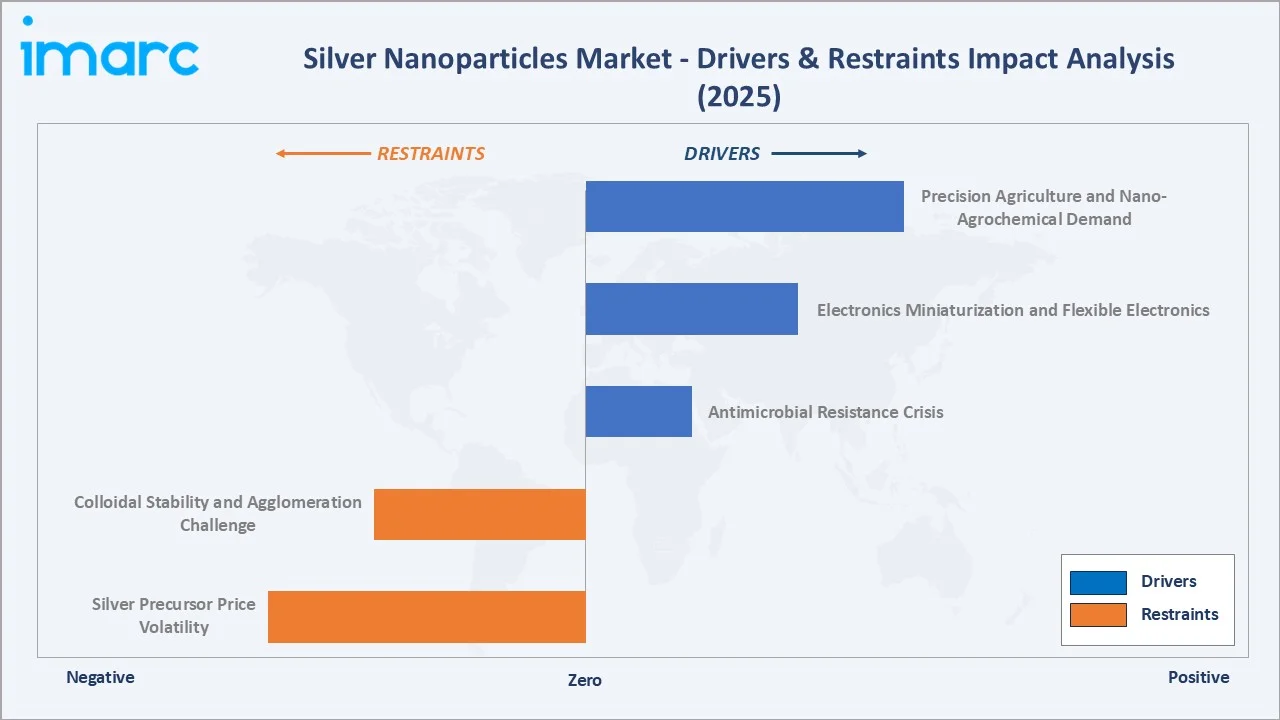
- Antimicrobial Resistance Crisis: Antimicrobial resistance (AMR) carries major economic risks, with the World Bank estimating that it could add around US$ 1 trillion in healthcare costs by 2050 and cause annual GDP losses of US$ 1 trillion to US$ 3.4 trillion by 2030. Silver nanoparticles offer broad-spectrum antimicrobial activity, making them useful in wound dressings, medical device coatings, textiles, and surface disinfectant products. Their ability to limit microbial growth supports infection-control efforts in healthcare and consumer applications. As drug-resistant infections increase, demand for advanced antimicrobial nanomaterials is expected to rise.
- Electronics Miniaturization and Flexible Electronics: Electronics miniaturization and flexible electronics are driving the market due to the need for highly conductive materials in compact and lightweight electronic devices. Silver nanoparticles are widely used in conductive inks, printed circuits, sensors, RFID tags, and flexible displays because of their excellent electrical conductivity. As wearable devices, flexible screens, and advanced consumer electronics become more popular, demand for silver nanoparticle-based components continues to grow. Their ability to support high-performance electronics in smaller form factors further accelerates market adoption.
- Precision Agriculture and Nano-Agrochemical Demand: The global population is projected to reach around 9.7 billion by 2050. This supports precision agriculture and nano-agrochemical demand as farmers need to produce more food from limited land and resources. Silver nanoparticles can be used in nano-enabled crop protection, seed treatment, and disease-control solutions, helping improve agricultural efficiency and reduce losses from plant pathogens. Their use in nano-enabled agrochemicals can improve targeted application and reduce chemical wastage. As agriculture becomes more technology-driven, demand for nanoparticle-based solutions is expected to increase.
Market Restraints
- Silver Precursor Price Volatility: Silver precursor price volatility increases the cost of key raw materials such as silver nitrate and silver salts. Fluctuating silver prices make production costs unpredictable, affecting manufacturers' margins and product pricing. Higher input costs can limit adoption in price-sensitive applications such as textiles, coatings, and agriculture. This also creates challenges in long-term supply contracts, inventory planning, and large-scale commercialization.
- Colloidal Stability and Agglomeration Challenge: Colloidal stability and agglomeration challenges affecting product consistency, shelf life, and performance. Silver nanoparticles can cluster together during storage or application, reducing their surface area and antimicrobial or conductive efficiency. This creates difficulties in formulation, scaling, and quality control across healthcare, coatings, textiles, and electronics applications. As a result, manufacturers must invest in stabilizers, coatings, and advanced dispersion technologies, increasing production costs.
Market Opportunities
- Nano-Drug Delivery: Nano-drug delivery presents a significant opportunity due to the nanoparticles' ability to carry and release therapeutic agents in a controlled manner. Their small size and high surface area enable targeted drug delivery, improving treatment effectiveness while reducing side effects. Silver nanoparticles are being explored for applications in cancer therapy, wound healing, antimicrobial treatments, and precision medicine. Growing investment in nanomedicine and advanced healthcare technologies is expected to accelerate demand for nanoparticle-based drug delivery systems.
- Water Purification Silver Nanoparticle Membrane: Water purification silver nanoparticle membranes create opportunities due to their strong antimicrobial and filtration-enhancing properties. These membranes can help remove or inhibit bacteria, viruses, and other contaminants in water treatment systems. Rising demand for clean drinking water, wastewater treatment, and portable filtration solutions is increasing interest in nano-enabled membranes. Their use in advanced filtration products can support market expansion across municipal, industrial, and household water purification applications.
Market Challenges
- Toxicity and Environmental Safety Concerns: Toxicity and environmental safety concerns present a challenge due to uncertainties regarding their long-term effects on human health and ecosystems. Silver nanoparticles released into water or soil may accumulate in organisms and potentially affect beneficial microorganisms and aquatic life. Regulatory agencies often require extensive safety testing and risk assessments before commercialization. These concerns can increase compliance costs, slow product approvals, and limit adoption in certain applications.
- Competition from Alternative Antimicrobial Materials: Competition from alternative antimicrobial materials challenges the market as industries may choose lower-cost or easier-to-regulate substitutes such as copper, zinc oxide, titanium dioxide, quaternary ammonium compounds, and antimicrobial polymers. These alternatives can offer adequate microbial protection in textiles, coatings, packaging, and healthcare products. Their wider availability and lower perceived safety concerns may reduce silver nanoparticle adoption. This pressure manufacturers to prove superior performance, safety, and cost-effectiveness.
Emerging Market Trends
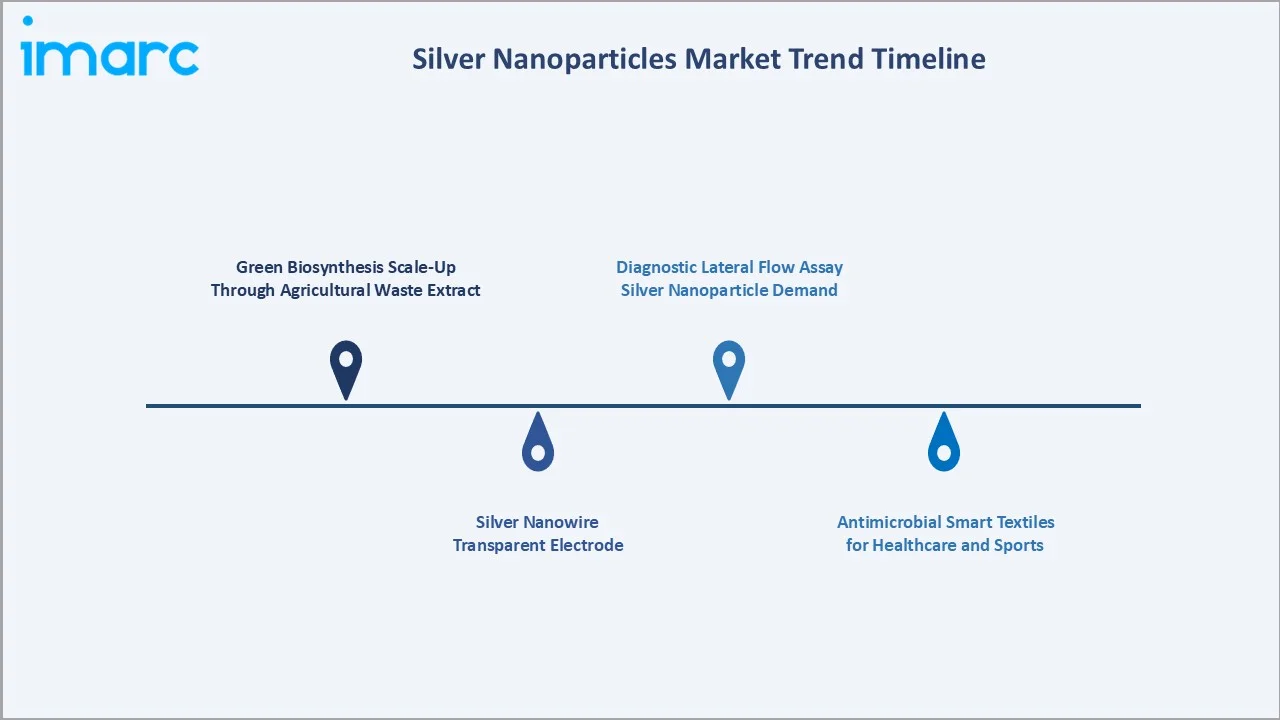
1. Green Biosynthesis Scale-Up Through Agricultural Waste Extract
Green biosynthesis scale-up using agricultural waste extracts offers a cleaner and lower-cost alternative to chemical synthesis. Plant residues, fruit peels, crop waste, and other bio-based extracts can act as natural reducing and stabilizing agents. This reduces reliance on hazardous chemicals and supports sustainable nanoparticle production. As industries prioritize eco-friendly materials, green-synthesized silver nanoparticles are gaining interest in healthcare, agriculture, coatings, and water treatment applications.
2. Silver Nanowire Transparent Electrode
Silver nanowire transparent electrodes are an emerging technology due to their high electrical conductivity, flexibility, and optical transparency. They are increasingly used in touchscreens, flexible displays, OLED lighting, solar cells, and wearable electronics. Compared to traditional indium tin oxide, silver nanowires offer better bendability and suitability for next-generation flexible devices. This is creating strong demand for advanced silver-based nanomaterials in electronics manufacturing.
3. Antimicrobial Smart Textiles for Healthcare and Sports
Antimicrobial smart textiles for healthcare and sports are emerging due to their ability to reduce microbial growth, odor, and infection risks. Silver nanoparticles can be embedded into fabrics used in medical gowns, wound-care textiles, compression wear, socks, and sports apparel. These textiles offer added hygiene, durability, and performance benefits. Rising demand for protective healthcare fabrics and high-performance activewear is supporting silver nanoparticle adoption.
4. Diagnostic Lateral Flow Assay Silver Nanoparticle Demand
Based on Mie theory, silver nanoparticles possess a significantly larger scattering cross-section, and a 100-nm silver nanoparticle can deliver approximately 75% greater scattering area in the visible spectrum compared to a gold nanoparticle of the same size. This stronger optical scattering can improve signal visibility and test sensitivity in rapid diagnostic kits. Enhanced detection performance enables more accurate identification of diseases and biomarkers, making silver nanoparticles increasingly attractive for next-generation point-of-care and lateral flow diagnostic applications.
Industry Value Chain Analysis
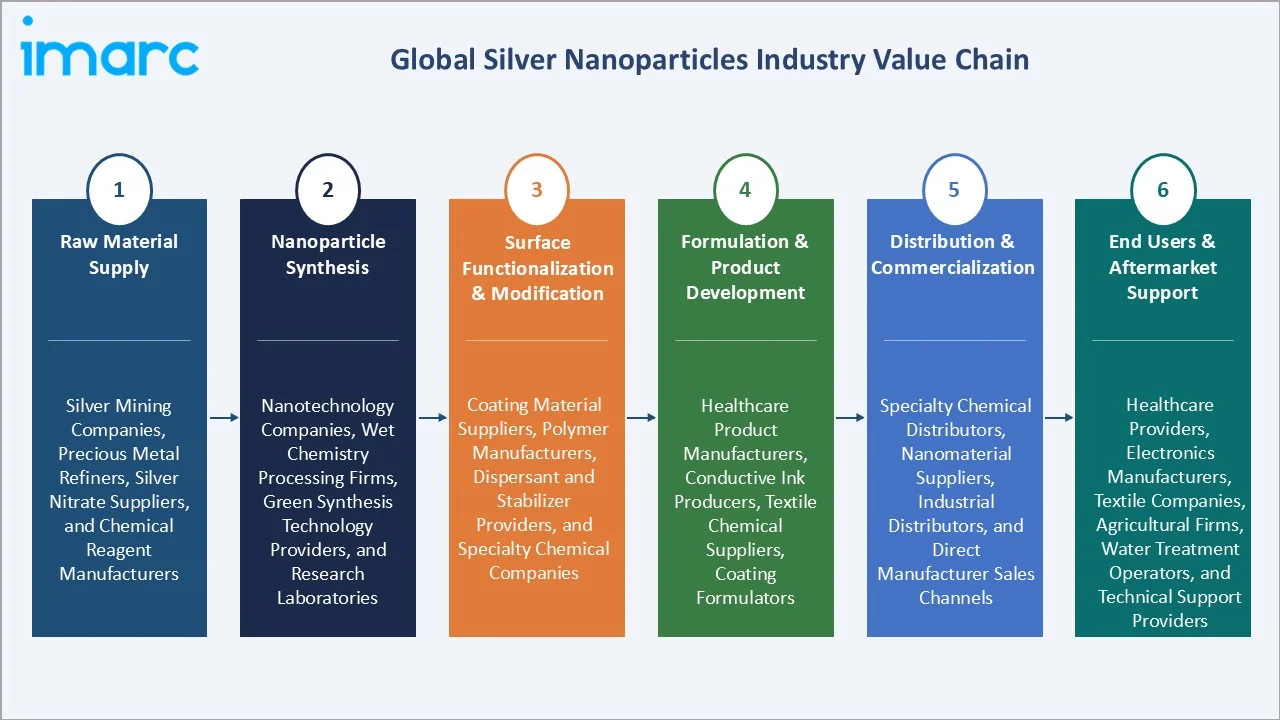
The global silver nanoparticles value chain integrates raw material supply, nanoparticle synthesis, surface functionalization & modification, formulation & product development, distribution & commercialization, and end users & aftermarket support.
|
Stage |
Key Participants |
|
Raw Material Supply |
Silver mining companies, precious metal refiners, silver nitrate suppliers, and chemical reagent manufacturers |
|
Nanoparticle Synthesis |
Nanotechnology companies, wet chemistry processing firms, green synthesis technology providers, and research laboratories |
|
Surface Functionalization & Modification |
Coating material suppliers, polymer manufacturers, dispersant and stabilizer providers, and specialty chemical companies |
|
Formulation & Product Development |
Healthcare product manufacturers, conductive ink producers, textile chemical suppliers, coating formulators |
|
Distribution & Commercialization |
Specialty chemical distributors, nanomaterial suppliers, industrial distributors, and direct manufacturer sales channels |
|
End Users & Aftermarket Support |
Healthcare providers, electronics manufacturers, textile companies, agricultural firms, water treatment operators, and technical support providers |
The surface functionalization & modification stage is the value chain's most commercially significant differentiation point because it determines the performance, stability, compatibility, and application-specific functionality of silver nanoparticles. Advanced surface coatings and functionalization techniques enable manufacturers to tailor nanoparticles for healthcare, electronics, textiles, and water treatment applications, creating higher-value products and stronger competitive advantages.
Technology Landscape in the Silver Nanoparticles Industry
Synthesis Technology Comparison
Synthesis technology comparison is shaping the technology landscape as manufacturers evaluate chemical, physical, and biological production methods to improve efficiency, scalability, and product quality. Each approach offers different advantages in terms of particle size control, purity, cost, and environmental impact. Growing interest in green synthesis techniques using plant extracts and biological agents is driving the development of more sustainable production processes. These advancements are helping expand silver nanoparticle applications across healthcare, electronics, agriculture, and water treatment sectors.
Surface Functionalization Technology
Surface functionalization technology enhances nanoparticle stability, biocompatibility, dispersibility, and application-specific performance. Using polymers, biomolecules, surfactants, and specialized coatings, manufacturers can tailor silver nanoparticles for healthcare, electronics, textiles, and water treatment applications. Functionalization also helps prevent agglomeration and improves interaction with target materials or biological systems. These advancements are expanding commercial applications and enabling the development of higher-value, customized nanomaterial solutions.
Nanosilver Hydrogel Medical Technology
Nanosilver hydrogel medical technology combines the antimicrobial properties of silver nanoparticles with the moisture-retention capabilities of hydrogels. These materials are increasingly used in wound dressings, burn care, tissue engineering, and infection-control applications to promote healing while reducing bacterial growth. In August 2025, Asclepii launched Poseidon, an FDA-cleared nanosilver hydrogel engineered to accelerate wound healing. Advanced hydrogel formulations also enable controlled silver release, improving treatment effectiveness and patient safety. The growing demand for advanced wound care and regenerative medicine is accelerating innovation in nanosilver hydrogel technologies.
Market Segmentation Analysis
The report covers the following segments:
|
Segment Category |
Leading Segment |
Market Share |
Year |
|
Synthesis Method |
Wet Chemistry |
61.0% |
2025 |
|
Shape |
Spheres |
36.5% |
2025 |
|
End Use Industry |
🔒 |
🔒 |
2025 |
|
Region |
North America |
34.0% |
2025 |

By Synthesis Method
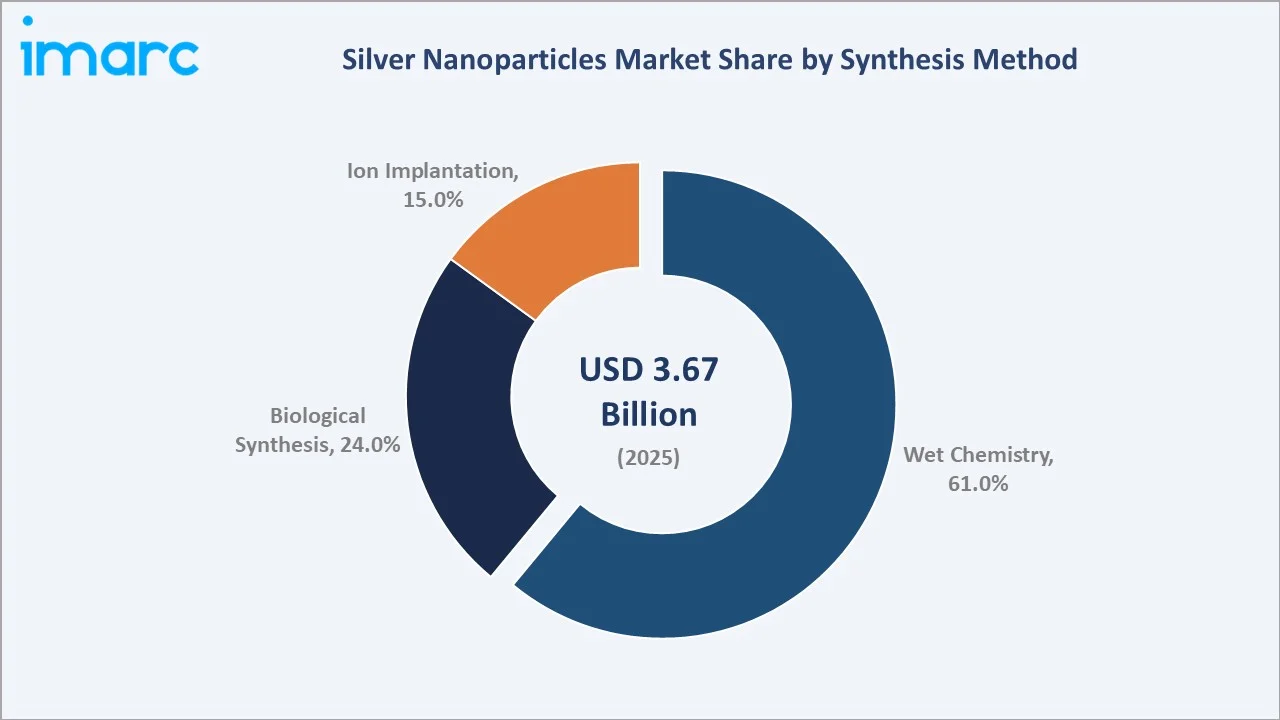
Wet chemistry leads at 61.0% (2025). The wet chemistry segment encompasses silver nitrate reduction, silver mirror reaction, and polyol synthesis process variants serving commercial production at the laboratory through multi-kilogram industrial scale. Wet chemistry's ~12.8% CAGR reflects the method's continued commercial scale-up for conductive ink, textile treatment, and colloidal silver applications, growing above biological and physical method specialty markets.
To access detailed market analysis, Request Sample
Biological synthesis at 24.0% grows fastest at ~14.6% CAGR through green chemistry regulatory alignment and premium pricing in eco-labelled product markets. Ion implantation at 15.0% serves premium medical device, optical, and high-security surface coating applications at above-wet-chemistry per-unit pricing.
By Shape
Spheres lead at 36.5% (2025). The spherical AgNP segment serves the broadest application spectrum through isotropic properties, antimicrobial wound care, conductive ink, lateral flow diagnostic label, and textile treatment, collectively creating the most commercially diverse single particle shape revenue base above shape-specific applications.
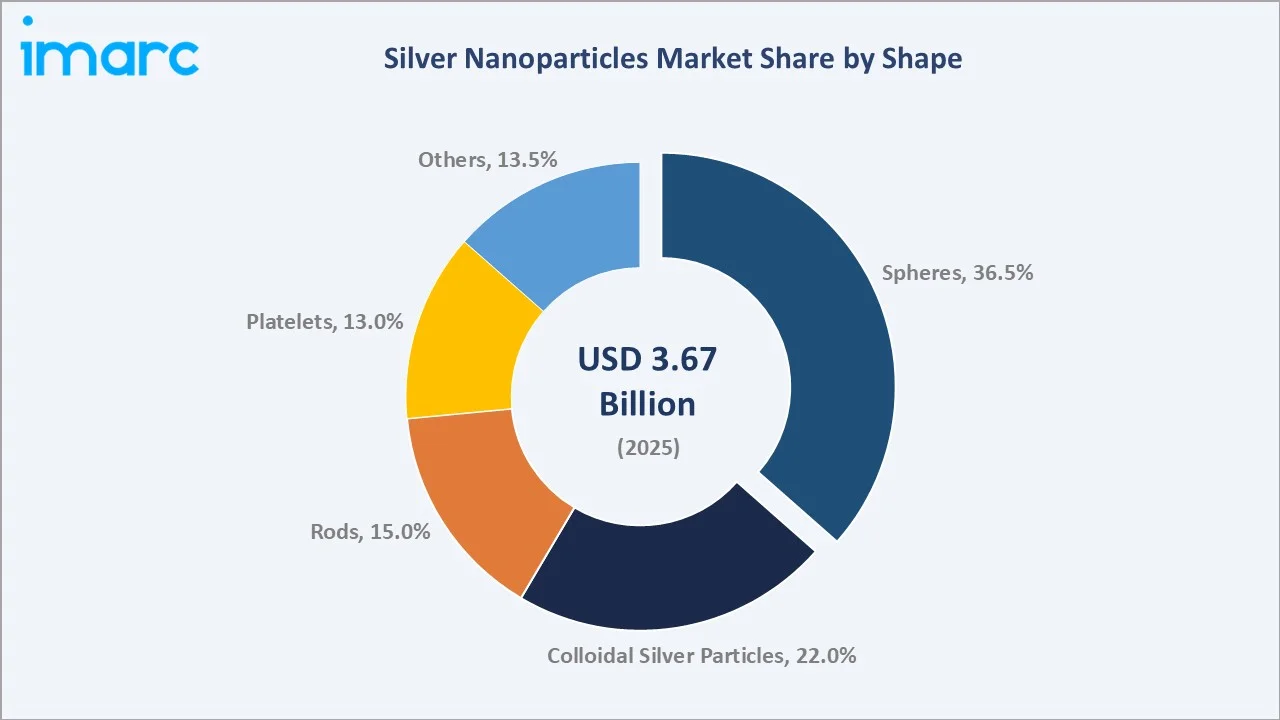
Colloidal silver particles at 22.0% grow fastest at ~14.2% CAGR through wound care, consumer health, and textile applications. Rods at 15.0% serve biosensor and photothermal therapy applications through tunable aspect-ratio optical resonance. Platelets at 13.0% and others at 13.5% serve specialty optical and flexible electronics applications.
Regional Market Insights
|
Region |
Share (2025) |
Key Silver Nanoparticles Market Drivers & Characteristics |
|
North America |
34.0% |
Driven by strong demand from healthcare, medical devices, antimicrobial coatings, electronics, and advanced materials applications. |
|
Asia Pacific |
27.5% |
Driven by growing electronics manufacturing, increasing healthcare expenditure, and rising adoption of nanotechnology across industrial sectors. |
|
Europe |
22.0% |
Supported by strong innovation in nanomaterials, increasing demand for sustainable technologies, and growing applications in healthcare, water treatment, and smart textiles. |
|
Latin America |
9.0% |
Supported by the rising adoption of silver nanoparticles in healthcare, agriculture, water purification, and consumer products. |
|
Middle East & Africa |
7.5% |
The market is emerging as nanotechnology adoption increases across healthcare, water treatment, and industrial sectors. |
North America's 34.0% market leadership reflects the USA's leading nanotechnology R&D investment, FDA-regulated medical device market creating premium validated silver nanoparticle demand, and electronics manufacturing creating conductive ink silver nanoparticle procurement. Asia Pacific's 27.5% reflects China's electronics manufacturing volume, creating conductive ink demand alongside Japan and South Korea's precision electronics silver nanoparticle requirements. Europe's 22.0% reflects Germany's chemical and medical technology industry.
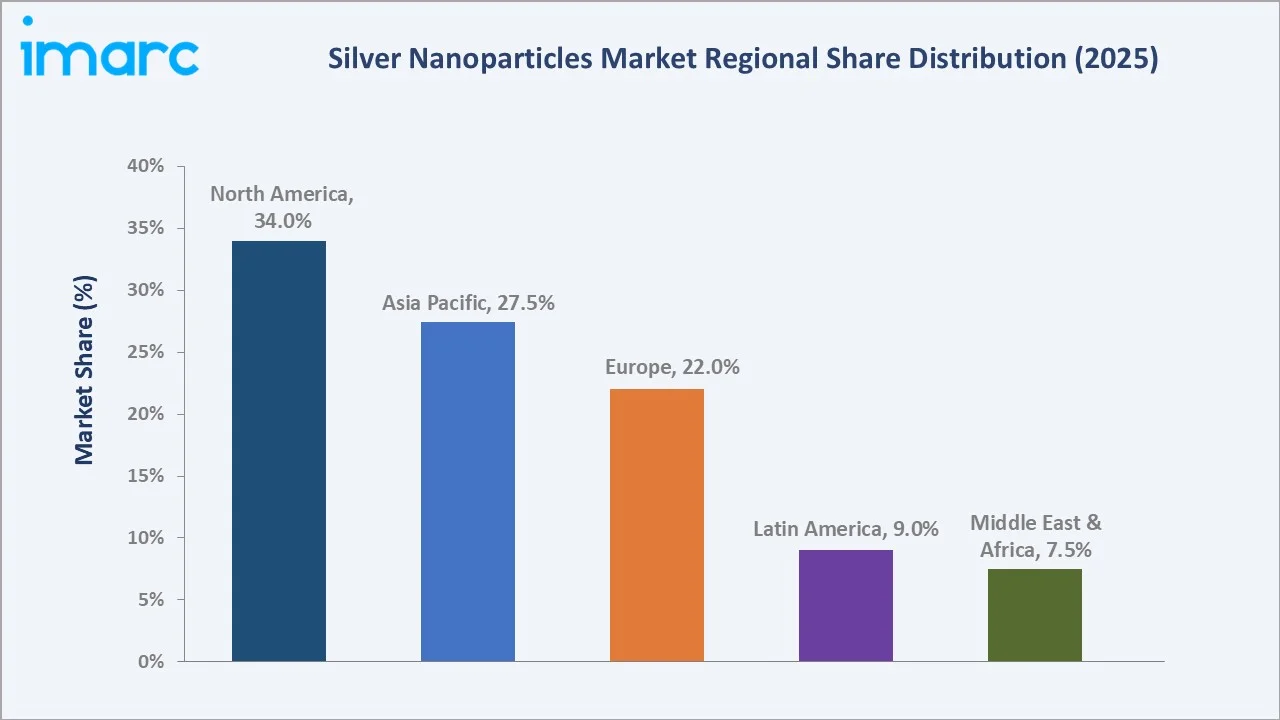
Latin America's 9.0% is growing at a high CAGR through Brazil's nano-agriculture innovation and Mexico's electronics manufacturing sector. The Middle East and Africa's 7.5% is growing through medtech silver nanoparticle application, and water purification ceramic filter silver nanoparticle demand.
Competitive Landscape
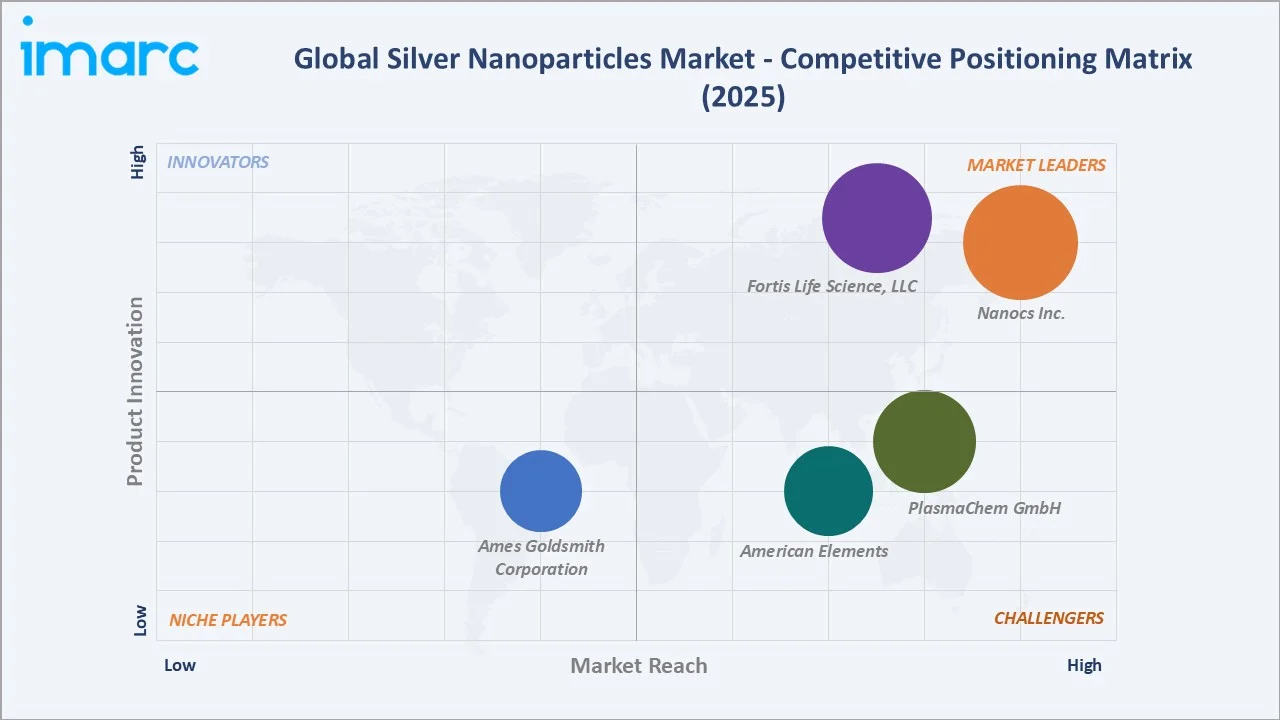
The global silver nanoparticles competitive landscape is commercially fragmented relative to most advanced materials categories. The competitive landscape's most commercially significant characteristic is the application-segment specialization.
|
Company |
Key Products |
Market Position |
Core Strength |
|
|
Silver Nanoparticles in aqueous solution and Toluene |
Market Leader |
Nanocs Inc. plays a significant role in the field of nanotechnology as a manufacturer and supplier of high-quality silver nanoparticles (AgNPs) and related functionalized products. |
|
|
Silver Platelets |
Niche Player |
Ames Goldsmith Corporation is a leading manufacturer of high-performance silver powders, platelets, and submicron materials. |
|
|
Silver nanospheres, Silver nanocubes, Silica shelled silver nanospheres, Silver shelled gold nanospheres |
Market Leader |
Fortis Life Science, LLC, through its subsidiary nanoComposix, acts as a premier manufacturer and developer of specialized silver nanoparticles for research and industrial applications. |
|
|
Silver nanoparticles, APS 6-7 nm, hydrophobic |
Strong Challenger |
PlasmaChem GmbH plays a significant role in the development, manufacturing, and supply of silver nanoparticles (AgNPs) and related nanomaterials. |
|
|
99% Silver Nanoparticles, 99.5% Silver Nanoparticles, 99.9% Silver Nanoparticles, 99.95% Silver Nanoparticles, 99.99% Silver Nanoparticles, 99.999% Silver Nanoparticles |
Strong Challenger |
American Elements is a leading manufacturer and industrial supplier of high-purity silver nanoparticles (AgNPs), offering them in various forms. |
The competitive landscape is being reshaped through three forces: acquisitions, green synthesis differentiation, and direct-to-researcher e-commerce.
Key Company Profiles
Nanocs Inc.
Nanocs Inc. is a nanotechnology company specializing in the development and supply of advanced nanoparticles, biopolymers, PEG derivatives, nanowires, and bioconjugation materials for life science, biomedical, pharmaceutical, and industrial research applications. The company offers a broad portfolio of nanomaterials, including silver nanoparticles.
- Key Products: Silver Nanoparticles in aqueous solution and Toluene.
- Strategic Focus: Developing high-purity and surface-functionalized silver nanoparticles for applications in biomedicine, diagnostics, drug delivery, antimicrobial products, and advanced materials research.
Fortis Life Science, LLC
Fortis Life Science, LLC is a life sciences and nanotechnology company with a growing presence in the silver nanoparticles market through its nanoComposix business. The company develops and supplies high-purity, monodisperse silver nanoparticles with a range of sizes, shapes, and surface modifications for applications in diagnostics, nanomedicine, biosensors, optical engineering, and advanced materials.
- Key Products: Silver nanospheres, Silver nanocubes, Silica shelled silver nanospheres, Silver shelled gold nanospheres.
- Strategic Focus: Expanding its portfolio of high-quality silver nanoparticles for applications in diagnostics, life sciences, biosensing, imaging, and nanomedicine.
Market Concentration Analysis
The global silver nanoparticles market is highly fragmented. The market's fragmentation reflects the silver nanoparticle product's application diversity, each major application (medical device, conductive ink, antimicrobial textile, diagnostic label, agricultural nano-spray) creating specialized performance and regulatory requirements that drive application-specific supplier specialization above consolidated general-purpose supply. Market concentration is increasing through acquisitions.
Investment & Growth Opportunities
Highest Growth Segments
Biological synthesis AgNP (~14.6% CAGR through green chemistry premium), colloidal silver medical wound care (~14.2% CAGR through chronic wound management growth), silver nanowire transparent electrode (~20-25% CAGR from emerging application), nano-agriculture silver nanoparticle fungicide (~18-22% CAGR from near-zero base), lateral flow diagnostic AgNP label (~13-15% CAGR through home testing market), and nano-drug delivery functionalized AgNP (~15-20% CAGR through nano-medicine precision therapy) represent the highest-growth silver nanoparticle investment vectors through 2034.
Emerging Investment Opportunities
The antimicrobial textile market's most commercially underserved segment is healthcare, with hospital bed sheets, patient gowns, and operating theatre textiles requiring durable wash-resistant silver nanoparticle antimicrobial treatment, creating structured institutional procurement at above-consumer-textile pricing.
Investment Themes
- Green biological synthesis scale-up creating premium-priced sustainable silver nanoparticle for eco-label consumer and medical market: Investment in continuous flow plant-extract silver nanoparticle synthesis reactor combined with green chemistry certification creates the most commercially premium silver nanoparticle production capability for healthcare, personal care, and food packaging application, where sustainability premium pricing justifies above-commodity production investment.
- Silver nanowire transparent electrode scale-up for flexible electronics market: Investment in high-aspect-ratio silver nanowire synthesis and coating process development creates the enabling material for foldable display, flexible solar cell, and wearable biosensor manufacturing, representing the most commercially high-value single silver nanoparticle product above colloidal silver and conductive ink through transparent electrode's premium pricing in flexible electronics OEM supply.
Future Market Outlook (2026-2034)
The global silver nanoparticles market is projected to grow from USD 3.67 Billion in 2025 to USD 11.66 Billion by 2034, delivering a 13.30% CAGR over the forecast period. The market's anchor value of USD 6.85 Billion in 2030 represents the silver nanoparticle industry at its most commercially dynamic structural phase, with multiple high-CAGR end-use applications simultaneously expanding above their 2025 development stage toward commercial maturity, with above-market per-unit value creating revenue growth above volume growth through application premiumization.
Three structural forces define the silver nanoparticles market's exceptional growth through 2034: antimicrobial resistance creating permanent structural healthcare demand, the flexible electronics revolution creating silver nanowire and nano-ink demand that grows with the most commercially dynamic consumer electronics segment, and sustainable agriculture's nano-agrochemical transition.
Research Methodology
Primary Research
Primary research comprised structured interviews with global silver nanoparticles industry stakeholders, including chief scientific officers, technical directors, senior researchers, application engineers, procurement managers from semiconductor packaging manufacturers, flexible display panel producers, and water purification technology companies, and a researcher survey from silver nanoparticle end-user researchers across North America, Europe, and the Asia Pacific.
Secondary Research
Secondary research encompassed the antimicrobial resistance global action plan, company annual reports, nanotechnology review articles on silver nanoparticle synthesis and application, nano silver nanoparticle toxicology review, and the flexible electronics materials market. Over 50 secondary sources reviewed.
Forecasting Models
Market revenue forecasts developed using an application-segment bottom-up model: global silver nanoparticle demand estimated by summing six major end-use application segments multiplied by segment-specific average AgNP price trajectory and segment-specific volume growth rate from sector market size forecasts. Synthesis method and shape segments calculated as applied proportions of total market volume with adjustment factors for green synthesis premium pricing versus commodity wet chemistry pricing.
Silver Nanoparticles Market Report Scope:
| Report Features | Details |
|---|---|
| Base Year of the Analysis | 2025 |
| Historical Period | 2020-2025 |
| Forecast Period | 2026-2034 |
| Units | Billion USD |
| Scope of the Report | Exploration of Historical Trends and Market Outlook, Industry Catalysts and Challenges, Segment-Wise Historical and Future Market Assessment:
|
| Synthesis Methods Covered | Wet Chemistry, Ion Implantation, Biological |
| Shapes Covered | Spheres, Platelets, Rods, Colloidal Silver Particles, Others |
| End Use Industries Covered | Electronics and IT, Healthcare and Lifesciences, Textiles, Food and Beverages, Pharmaceuticals, Cosmetics, Water Treatment, Others |
| Regions Covered | Asia Pacific, Europe, North America, Latin America, Middle East and Africa |
| Countries Covered | United States, Canada, Germany, France, United Kingdom, Italy, Spain, Russia, China, Japan, India, South Korea, Australia, Indonesia, Brazil, Mexico |
| Companies Covered | Nanocs Inc., Ames Goldsmith Corporation, Fortis Life Science LLC, PlasmaChem GmbH, American Elements, etc. |
| Customization Scope | 10% Free Customization |
| Post-Sale Analyst Support | 10-12 Weeks |
| Delivery Format | PDF and Excel through Email (We can also provide the editable version of the report in PPT/Word format on special request) |
Key Benefits for Stakeholders:
- IMARC’s industry report offers a comprehensive quantitative analysis of various market segments, historical and current market trends, market forecasts, and dynamics of the silver nanoparticles market from 2020-2034.
- The research report provides the latest information on the market drivers, challenges, and opportunities in the global silver nanoparticles market.
- The study maps the leading, as well as the fastest-growing, regional markets. It further enables stakeholders to identify the key country-level markets within each region.
- Porter's five forces analysis assists stakeholders in assessing the impact of new entrants, competitive rivalry, supplier power, buyer power, and the threat of substitution. It helps stakeholders to analyze the level of competition within the silver nanoparticles industry and its attractiveness.
- The competitive landscape allows stakeholders to understand their competitive environment and provides insight into the current positions of key players in the market.
Frequently Asked Questions About the Silver Nanoparticles Market Report
The global silver nanoparticles market reached USD 3.67 Billion in 2025, driven by rising demand for antimicrobial materials in healthcare, textiles, coatings, and water treatment. Expanding use in conductive inks, flexible electronics, diagnostics, and nano-enabled drug delivery is further supporting market growth.
The global silver nanoparticles market grows at 13.30% CAGR during 2026-2034, reaching USD 11.66 Billion by 2034. The overall growth is sustained by antimicrobial resistance driving healthcare demand, flexible electronics creating silver nanowire demand, diagnostic lateral flow assay AgNP label adoption, and emerging nano-agriculture application creating a new end-use market above historical electronics and medical base.
Wet chemistry leads at 61.0% through the method's commercial scalability from laboratory to industrial scale using established chemical reduction chemistry.
Spheres lead at 36.5% through isotropic geometry, creating uniform optical properties, predictable surface chemistry modification, and consistent antimicrobial surface area across wound care, conductive ink, diagnostic label, and textile applications.
North America leads at 34.0% through the FDA-regulated medical device market, creating premium validated AgNP demand through wound care and antimicrobial medical devices, and electronics manufacturing, creating conductive ink AgNP procurement.
Leading companies include Nanocs Inc., Ames Goldsmith Corporation, Fortis Life Science, LLC, PlasmaChem GmbH, and American Elements, among others.
The global silver nanoparticles market is projected to reach approximately USD 6.85 Billion by 2030, with biological synthesis reaching 28-30% market share through green synthesis commercial scale-up, silver nanowire transparent electrode creating high investment single application from near-zero base as flexible OLED display and wearable electronics adopt AgNW, lateral flow diagnostic AgNP growth, and China's continued electronics manufacturing AgNP demand.
Three priority investment opportunities: green biological synthesis continuous flow reactor development, silver nanowire transparent electrode scale-up for flexible electronics, and silver nanoparticle nano-fungicide creating first-mover commercial exclusivity in nano-precision agriculture's conversion.
Need more help?
- Speak to our experienced analysts for insights on the current market scenarios.
- Include additional segments and countries to customize the report as per your requirement.
- Gain an unparalleled competitive advantage in your domain by understanding how to utilize the report and positively impacting your operations and revenue.
- For further assistance, please connect with our analysts.
 Request Customization
 Speak to an Analyst
 Request Brochure
 Inquire Before Buying
Benefits of Customization
- Personalize this research
- Triangulate with your data
- Get data as per your format and definition
- Gain a deeper dive into a specific application, geography, customer, or competitor
- Any level of personalization
Get in Touch With Us
UNITED STATES
Phone: +1-201-971-6302
INDIA
Phone: +91-120-433-0800
UNITED KINGDOM
Phone: +44-753-714-6104
Email: [email protected]
Client Testimonials




.webp)




.webp)













Related Reports

Choose your plan
*Please note that the prices mentioned below are starting prices for each bundle type. Kindly contact our team for further details.*
Single User License
- 1 User License, Access on 2 Devices
- PDF Report + Excel Dataset (Password Protected)
- Lifetime Access
- No Printing Rights
- 10% Free Report Customization
- 10–12 Weeks of Analyst Support
Five User License
- Access for 5 Users, 2 Devices per User
- PDF Report + Excel Dataset (Password Protected)
- Lifetime Access
- Dedicated Account Manager
- 12–14 Weeks of Analyst Support
- No Printing Rights
- 15% Free Report Customization
- 25% Discount on Your Next Purchase
Corporate User License
- Unlimited User Access (Within Your Organization)
- PDF Report + Excel Dataset
- Lifetime Access
- Dedicated Account Manager
- 14–20 Weeks of Analyst Support
- No Printing Rights
- 20% Free Report Customization
- 30% Discount on Your Next Purchase
Essential Insights
What's included:
3 reports
- Lifetime Access
- PDF Reports
- Excel Datasets
- 2 Weeks of Free Analyst Support
- 2 User Licenses
- Access on 2 Devices
- Printing Rights
- Complimentary PowerPoint (PPT) Version
- Complimentary License Upgrade
Professional Access
What's included:
5 reports
- Lifetime Access
- PDF Reports
- Excel Datasets
- 8 Weeks of Free Analyst Support
- 2 User Licenses
- Access on 2 Devices
- Printing Rights
- Complimentary PowerPoint (PPT) Version
- Complimentary License Upgrade
Business Advantage
What's included:
8 reports
- Lifetime Access
- PDF Reports
- Excel Datasets
- 14 Weeks of Free Analyst Support
- 2 User Licenses
- Access on 2 Devices
- Printing Rights
- Complimentary PowerPoint (PPT) Version
- Complimentary License Upgrade
Enterprise Intelligence
What's included:
10 reports
- Lifetime Access
- PDF Reports
- Excel Datasets
- 20 Weeks of Free Analyst Support
- 2 User Licenses
- Access on 2 Devices
- Printing Rights
- Complimentary PowerPoint (PPT) Version
- Complimentary License Upgrade