
South Korea Fruit Juice Market Report by Product Type (100% Fruit Juice, Nectars, Juice Drinks, Concentrates, Powdered Juice, and Others), Flavor (Orange, Apple, Mango, Mixed Fruit, and Others), Distribution Channel (Supermarkets and Hypermarkets, Convenience Stores, Specialty Food Stores, Online Retail, and Others), and Region 2026-2034
Market Overview:
The South Korea fruit juice market size reached USD 3.3 Billion in 2025. Looking forward, IMARC Group expects the market to reach USD 6.5 Billion by 2034, exhibiting a growth rate (CAGR) of 7.54% during 2026-2034. The growing health consciousness, diverse fruit varieties, rapid urbanization and busy lifestyles, rising disposable income levels, effective marketing and branding efforts, emerging health and wellness trends, increasing popularity of e-commerce sector represent some of the key factors driving the market.
|
Report Attribute
|
Key Statistics
|
|---|---|
|
Base Year
|
2025
|
|
Forecast Years
|
2026-2034
|
|
Historical Years
|
2020-2025
|
|
Market Size in 2025
|
USD 3.3 Billion |
|
Market Forecast in 2034
|
USD 6.5 Billion |
| Market Growth Rate 2026-2034 | 7.54% |
Access the full market insights report Request Sample
Fruit juice is a liquid extracted from fruits, primarily for consumption as a beverage. It is a popular and refreshing drink enjoyed worldwide due to its natural sweetness and the vitamins and minerals it contains. To create fruit juice, ripe fruits are typically washed, peeled, or processed, and their pulp is separated from the liquid content. The resulting liquid, which is rich in the natural sugars, flavors, and nutrients of the fruit, is what we commonly refer to as fruit juice. Fruit juices are available in various forms, including fresh-squeezed, pasteurized, and concentrated. Fresh-squeezed juice is often regarded as the purest form, as it involves pressing or squeezing the fruit to extract the juice without any additives. Pasteurized juices are heat-treated to extend their shelf life while preserving flavor and nutrients. Concentrated juices, on the other hand, involve removing water content from the juice to reduce volume for storage and transportation, with the water later reconstituted before consumption.
South Korea Fruit Juice Market Trends:
South Korean consumers are increasingly health-conscious and are actively seeking out healthier beverage options. Fruit juices, with their natural vitamins and antioxidants, are seen as a nutritious choice. Due to this, the perception that fruit juices can contribute to overall well-being and provide essential nutrients is driving their popularity. Additionally, South Korea possesses a wide range of fruit varieties, including apples, pears, grapes, and citrus fruits, which are used in fruit juice production. This diversity allows for a broad spectrum of flavors and options, appealing to different consumer tastes. Other than this, the fast-paced urban lifestyle in South Korea has led to a growing demand for convenient, on-the-go options. Fruit juices, available in ready-to-drink formats, cater to this need. They offer a quick and easy way to consume fruit-based nutrition amid hectic schedules. Besides this, the economy of this nation has witnessed steady growth over the years, resulting in higher disposable incomes. This has allowed consumers to explore premium and healthier beverage options, including organic and premium fruit juices. In line with this, the global wellness trend has permeated South Korea, influencing consumer choices. As individuals become more health-conscious, they are willing to pay a premium for products that align with their wellness goals, including fruit juices with no added sugars or preservatives. Furthermore, the rise of e-commerce platforms in South Korea has made it easier for consumers to access a wide variety of fruit juice brands and flavors. Online retail channels offer convenience and a broad selection, further boosting the fruit juice market. Moreover, the South Korean government has been proactive in promoting a healthy lifestyle and nutrition. Public health campaigns and educational programs have underscored the benefits of consuming natural fruit juices, aligning with broader health goals.
South Korea Fruit Juice Market Segmentation:
IMARC Group provides an analysis of the key trends in each segment of the market, along with forecasts at the country level for 2026-2034. Our report has categorized the market based on product type, flavor, and distribution channel.
Product Type Insights:
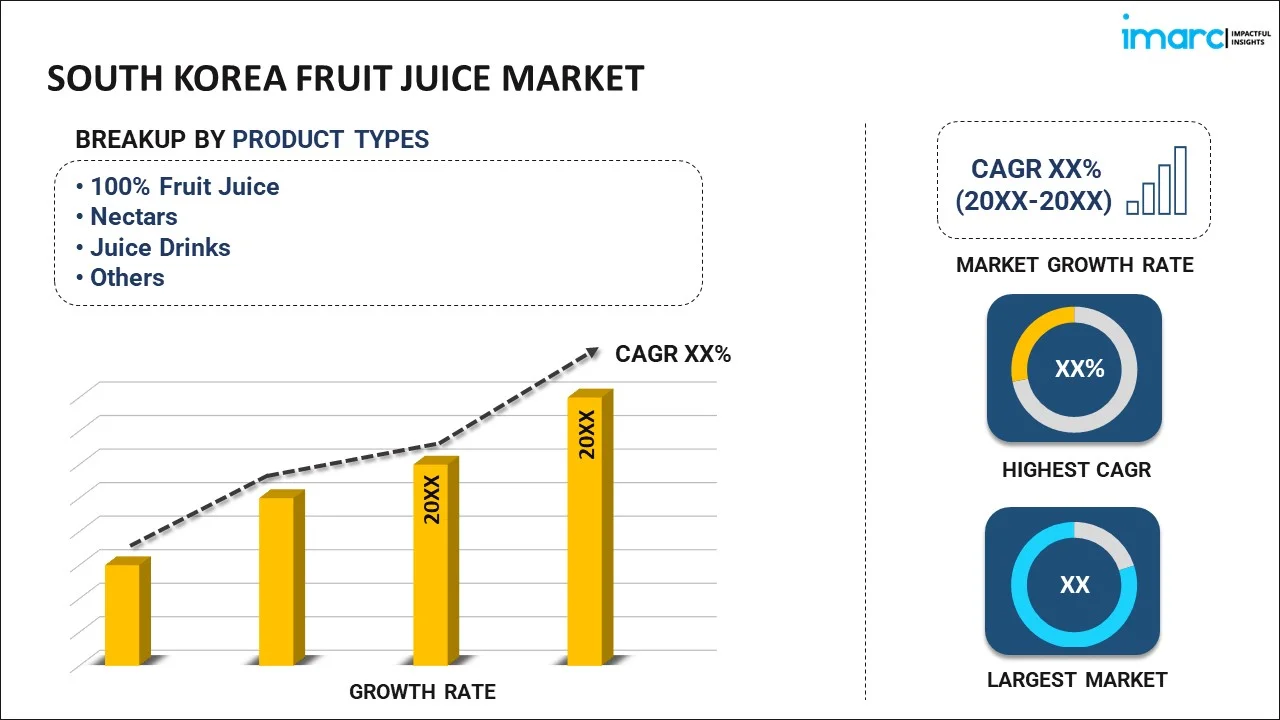
To get detailed segment analysis of this market Request Sample
- 100% Fruit Juice
- Nectars
- Juice Drinks
- Concentrates
- Powdered Juice
- Others
The report has provided a detailed breakup and analysis of the market based on the product type. This includes 100% fruit juice, nectars, juice drinks, concentrates, powdered juice, and others.
Flavor Insights:
- Orange
- Apple
- Mango
- Mixed Fruit
- Others
A detailed breakup and analysis of the market based on the flavor have also been provided in the report. This includes orange, apple, mango, mixed fruit, and others.
Distribution Channel Insights:
- Supermarkets and Hypermarkets
- Convenience Stores
- Specialty Food Stores
- Online Retail
- Others
The report has provided a detailed breakup and analysis of the market based on the distribution channel. This includes supermarkets and hypermarkets, convenience stores, specialty food stores, online retail, and others.
Regional Insights:
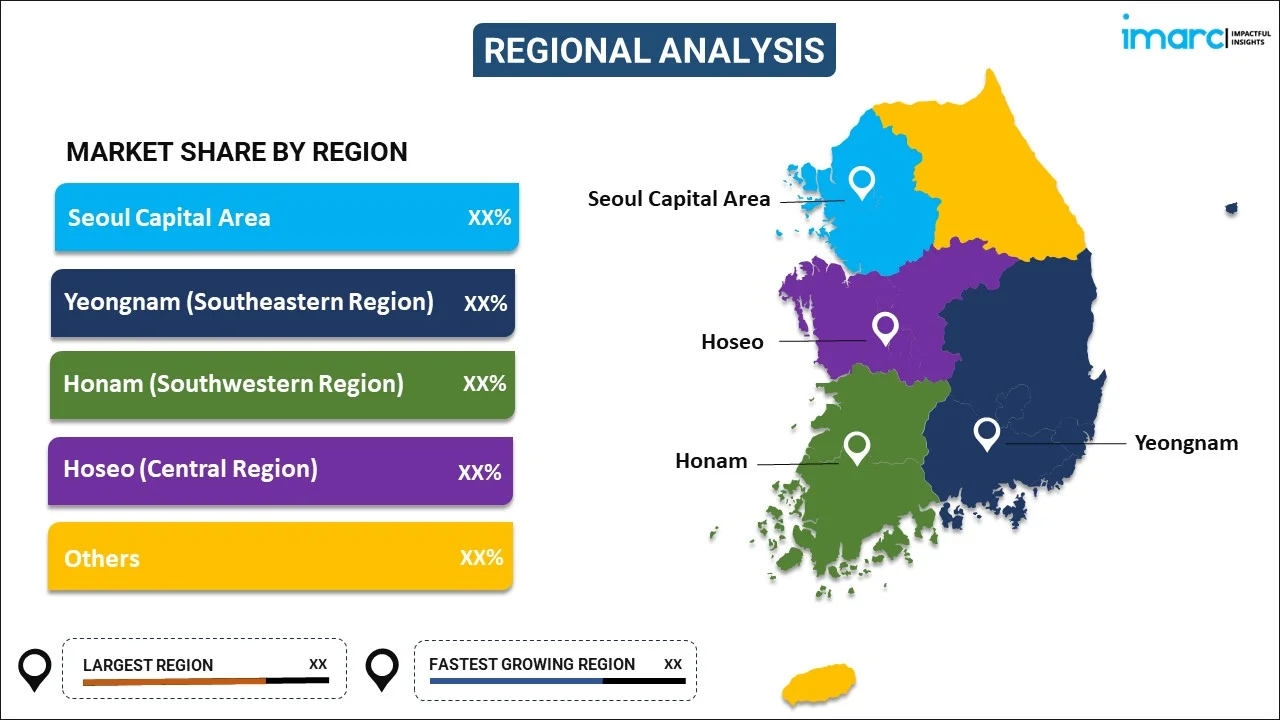
To get detailed regional analysis of this market Request Sample
- Seoul Capital Area
- Yeongam (Southeastern Region)
- Honam (Southwestern Region)
- Hoseo (Central Region)
- Others
The report has also provided a comprehensive analysis of all the major regional markets, which include Seoul Capital Area, Yeongam (Southeastern Region), Honam (Southwestern Region), Hoseo (Central Region), and Others.
Competitive Landscape:
The market research report has also provided a comprehensive analysis of the competitive landscape in the market. Competitive analysis such as market structure, key player positioning, top winning strategies, competitive dashboard, and company evaluation quadrant has been covered in the report. Also, detailed profiles of all major companies have been provided.
South Korea Fruit Juice Market Report Coverage:
| Report Features | Details |
|---|---|
| Base Year of the Analysis | 2025 |
| Historical Period | 2020-2025 |
| Forecast Period | 2026-2034 |
| Units | Billion USD |
| Scope of the Report | Exploration of Historical Trends and Market Outlook, Industry Catalysts and Challenges, Segment-Wise Historical and Future Market Assessment:
|
| Product Types Covered | 100% Fruit Juice, Nectars, Juice Drinks, Concentrates, Powdered Juice, Others |
| Flavors Covered | Orange, Apple, Mango, Mixed Fruit, Others |
| Distribution Channels Covered | Supermarkets and Hypermarkets, Convenience Stores, Specialty Food Stores, Online Retail, Others |
| Regions Covered | Seoul Capital Area, Yeongam (Southeastern Region), Honam (Southwestern Region), Hoseo (Central Region), Others |
| Customization Scope | 10% Free Customization |
| Post-Sale Analyst Support | 10-12 Weeks |
| Delivery Format | PDF and Excel through Email (We can also provide the editable version of the report in PPT/Word format on special request) |
Key Questions Answered in This Report:
- How has the South Korea fruit juice market performed so far and how will it perform in the coming years?
- What has been the impact of COVID-19 on the South Korea fruit juice market?
- What is the breakup of the South Korea fruit juice market on the basis of product type?
- What is the breakup of the South Korea fruit juice market on the basis of flavor?
- What is the breakup of the South Korea fruit juice market on the basis of distribution channel?
- What are the various stages in the value chain of the South Korea fruit juice market?
- What are the key driving factors and challenges in the South Korea fruit juice?
- What is the structure of the South Korea fruit juice market and who are the key players?
- What is the degree of competition in the South Korea fruit juice market?
Key Benefits for Stakeholders:
- IMARC’s industry report offers a comprehensive quantitative analysis of various market segments, historical and current market trends, market forecasts, and dynamics of the South Korea fruit juice market from 2020-2034.
- The research report provides the latest information on the market drivers, challenges, and opportunities in the South Korea fruit juice market.
- Porter's five forces analysis assist stakeholders in assessing the impact of new entrants, competitive rivalry, supplier power, buyer power, and the threat of substitution. It helps stakeholders to analyze the level of competition within the South Korea fruit juice industry and its attractiveness.
- A competitive landscape allows stakeholders to understand their competitive environment and provides an insight into the current positions of key players in the market.
Need more help?
- Speak to our experienced analysts for insights on the current market scenarios.
- Include additional segments and countries to customize the report as per your requirement.
- Gain an unparalleled competitive advantage in your domain by understanding how to utilize the report and positively impacting your operations and revenue.
- For further assistance, please connect with our analysts.
 Request Customization
 Speak to an Analyst
 Request Brochure
 Inquire Before Buying
Benefits of Customization
- Personalize this research
- Triangulate with your data
- Get data as per your format and definition
- Gain a deeper dive into a specific application, geography, customer, or competitor
- Any level of personalization
Get in Touch With Us
UNITED STATES
Phone: +1-201-971-6302
INDIA
Phone: +91-120-433-0800
UNITED KINGDOM
Phone: +44-753-714-6104
Email: [email protected]
Client Testimonials




.webp)




.webp)













Related Reports

Choose your plan
*Please note that the prices mentioned below are starting prices for each bundle type. Kindly contact our team for further details.*
Single User License
- 1 User License, Access on 2 Devices
- PDF Report + Excel Dataset (Password Protected)
- Lifetime Access
- No Printing Rights
- 10% Free Report Customization
- 10–12 Weeks of Analyst Support
Five User License
- Access for 5 Users, 2 Devices per User
- PDF Report + Excel Dataset (Password Protected)
- Lifetime Access
- Dedicated Account Manager
- 12–14 Weeks of Analyst Support
- No Printing Rights
- 15% Free Report Customization
- 25% Discount on Your Next Purchase
Corporate User License
- Unlimited User Access (Within Your Organization)
- PDF Report + Excel Dataset
- Lifetime Access
- Dedicated Account Manager
- 14–20 Weeks of Analyst Support
- No Printing Rights
- 20% Free Report Customization
- 30% Discount on Your Next Purchase
Essential Insights
What's included:
3 reports
- Lifetime Access
- PDF Reports
- Excel Datasets
- 2 Weeks of Free Analyst Support
- 2 User Licenses
- Access on 2 Devices
- Printing Rights
- Complimentary PowerPoint (PPT) Version
- Complimentary License Upgrade
Professional Access
What's included:
5 reports
- Lifetime Access
- PDF Reports
- Excel Datasets
- 8 Weeks of Free Analyst Support
- 2 User Licenses
- Access on 2 Devices
- Printing Rights
- Complimentary PowerPoint (PPT) Version
- Complimentary License Upgrade
Business Advantage
What's included:
8 reports
- Lifetime Access
- PDF Reports
- Excel Datasets
- 14 Weeks of Free Analyst Support
- 2 User Licenses
- Access on 2 Devices
- Printing Rights
- Complimentary PowerPoint (PPT) Version
- Complimentary License Upgrade
Enterprise Intelligence
What's included:
10 reports
- Lifetime Access
- PDF Reports
- Excel Datasets
- 20 Weeks of Free Analyst Support
- 2 User Licenses
- Access on 2 Devices
- Printing Rights
- Complimentary PowerPoint (PPT) Version
- Complimentary License Upgrade