
Styrenic Block Copolymer Market Size, Share, Trends and Forecast by Type, Application, and Region, 2026-2034
Styrenic Block Copolymer Market Size, Share, Trends & Forecast (2026-2034)
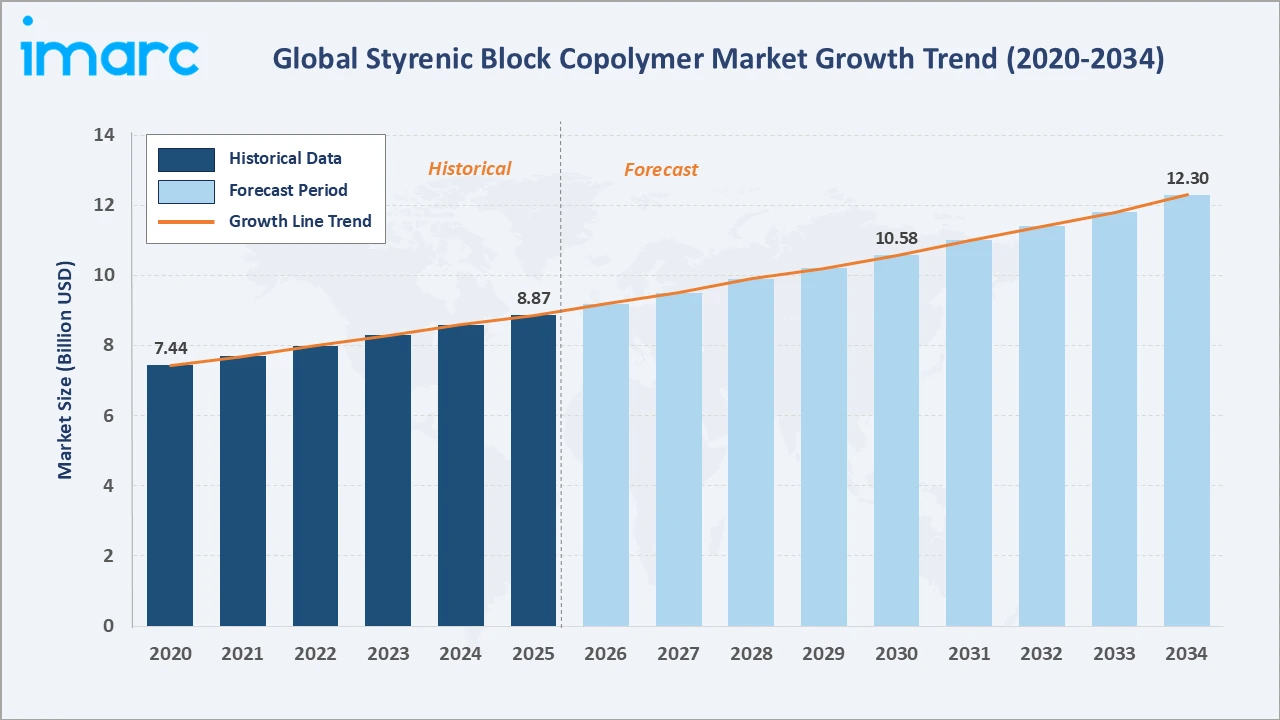
The global styrenic block copolymer (SBC) market reached USD 8.87 Billion in 2025 and is projected to reach USD 12.30 Billion by 2034, expanding at a CAGR of 3.58% during 2026-2034. Rising demand for SBS-modified bitumen in road construction and roofing applications, expanding utilization in medical devices and drug delivery systems, and growing adoption across adhesives, sealants, and elastic film formulations are the primary growth catalysts.
Market Snapshot
|
Metric |
Value |
|
Market Size (2025) |
USD 8.87 Billion |
|
Forecast Market Size (2034) |
USD 12.30 Billion |
|
CAGR (2026-2034) |
3.58% |
|
Base Year |
2025 |
|
Historical Period |
2020-2025 |
|
Forecast Period |
2026-2034 |
Asia-Pacific leads the global styrenic block copolymer landscape, holding a 46.3% share in 2025, anchored by the region's expansive petrochemical manufacturing base and rising construction and automotive demand. Styrene-Butadiene-Styrene (SBS) commands the largest share of the type segment at 52.8%, reflecting sustained demand across asphalt modification, adhesives, and polymer modification applications.
To get more information on this market, Request Sample
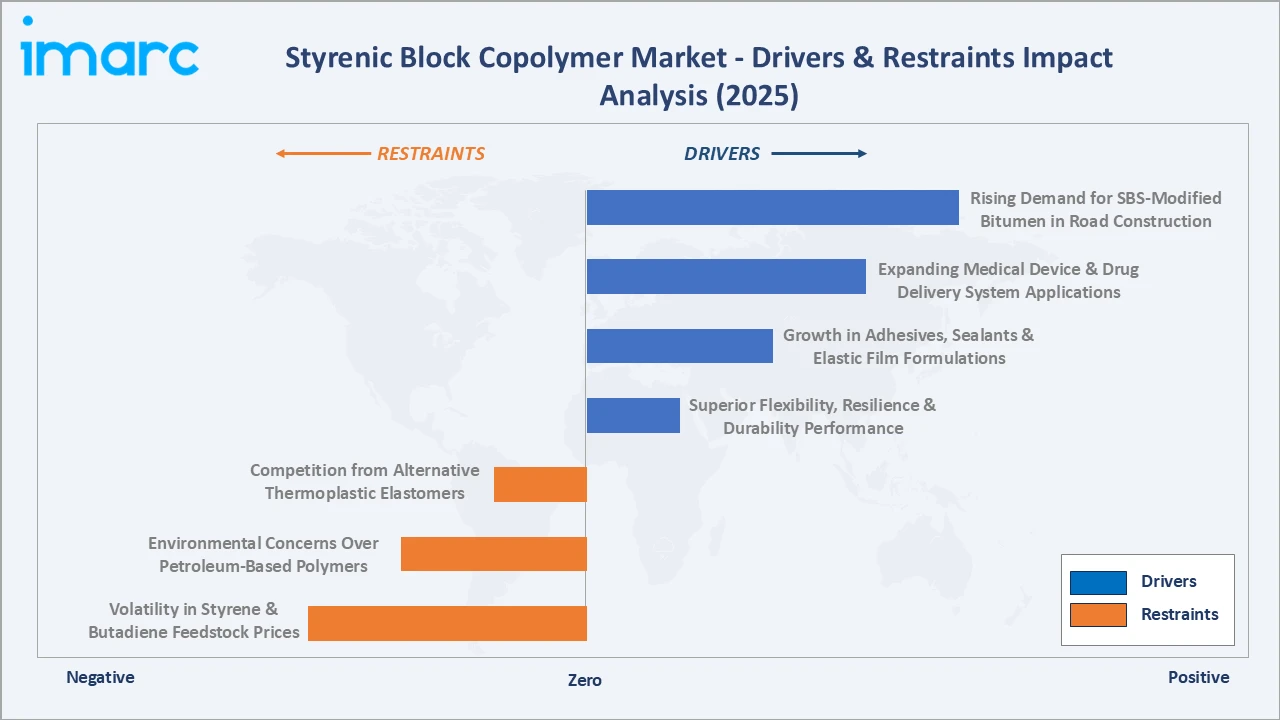
The global styrenic block copolymer market is underpinned by three structural forces: rising demand for SBS-modified bitumen in road construction and roofing, expanding medical device and drug delivery applications, and growing adoption across adhesives, sealants, and elastic film formulations. Each force independently reinforces category growth, sustaining steady CAGR expansion through 2034 despite volatility in styrene and butadiene feedstock prices.
Executive Summary
The global styrenic block copolymer market is experiencing steady expansion, driven by rising demand for SBS-modified bitumen in road construction, expanding medical device applications, and growing adoption across adhesives and sealants. The market was valued at USD 8.87 Billion in 2025 and is forecast to reach USD 12.30 Billion by 2034, growing at a CAGR of 3.58%.
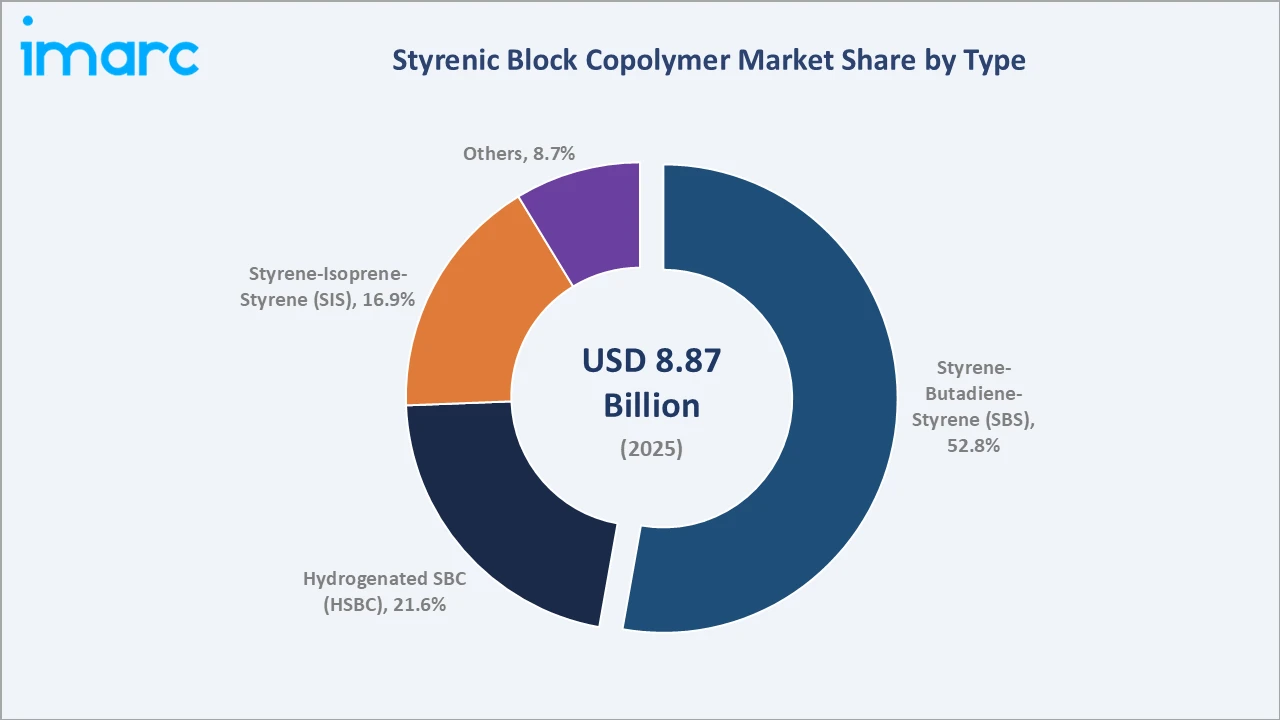
Styrene-Butadiene-Styrene (SBS) dominates the type segment with a 52.8% share in 2025, encompassing asphalt modification, adhesives, and polymer modification applications, while Hydrogenated SBC (HSBC) accounts for 21.6%, reflecting demand for its superior weatherability and clarity in medical and specialty applications, and Styrene-Isoprene-Styrene (SIS) contributes 16.9%.
Asphalt modification leads the application segment at 36.7% share (2025), supported by rising infrastructure development and road paving activity, while adhesives and sealants (25.4%), polymer modification (17.8%), medical devices (8.6%), and wires and cables (6.1%) serve varied industrial needs. Asia-Pacific leads regionally at 46.3%, anchored by the region's expansive petrochemical manufacturing base.
Key Market Insights
|
Insight |
Data |
|
Largest Type Segment |
Styrene-Butadiene-Styrene (SBS) – 52.8% share (2025) |
|
Fastest Growing Type Segment |
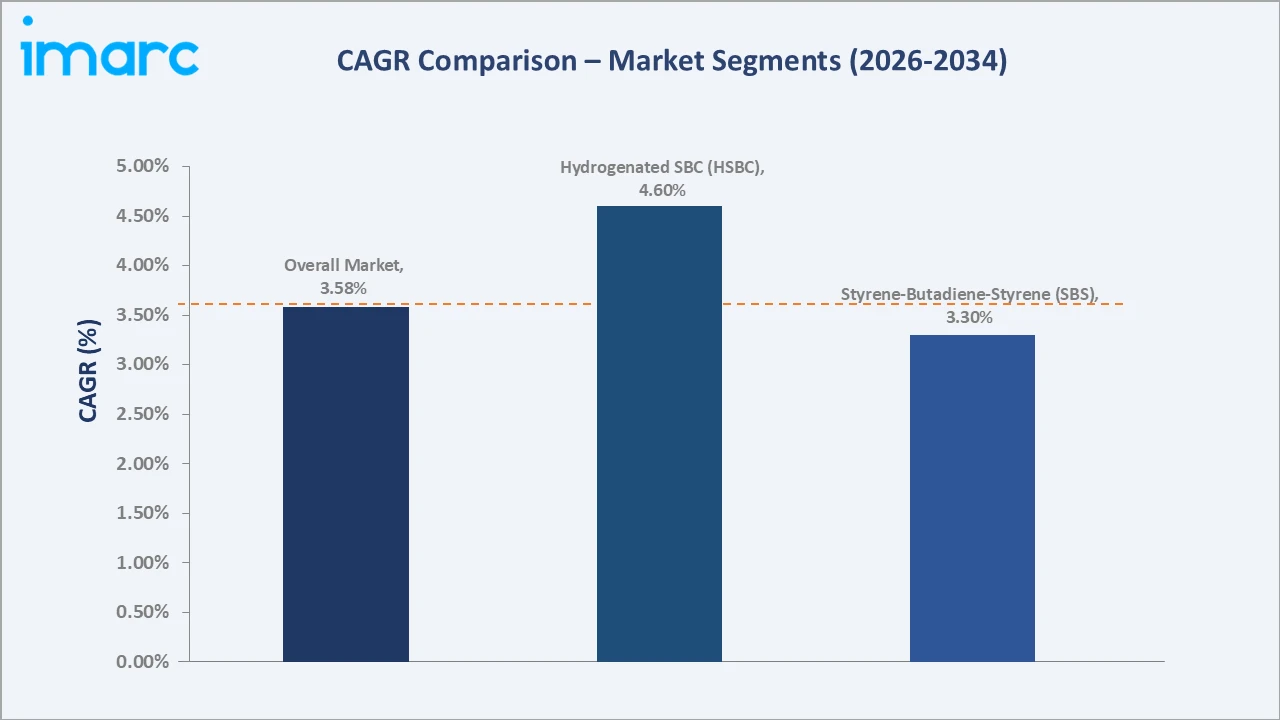
Hydrogenated SBC (HSBC) – ~4.6% CAGR (2026-2034) |
|
Largest Application Segment |
Asphalt Modification – 36.7% share (2025) |
|
Leading Region |
Asia-Pacific – 46.3% share (2025) |
|
Top Companies |
DL Chemical Co., Ltd., BASF SE, Asahi Kasei Corporation, INEOS AG, TSRC Corporation |
Key Analytical Observations Supporting the Above Data:
- Styrene-Butadiene-Styrene (SBS) accounts for 52.8% of the global styrenic block copolymer market in 2025. This dominance reflects sustained demand for its cost-effectiveness and versatility across asphalt modification and adhesives applications.
- Asphalt modification remains the leading application segment at 36.7% share (2025), supported by rising infrastructure development and road paving and roofing activity worldwide.
- Adhesives and sealants applications are expanding steadily at 25.4% share (2025), as construction and packaging industries increasingly rely on SBC-based bonding solutions.
- Asia-Pacific's 46.3% share (2025) reflects the region's expansive petrochemical manufacturing base and rising construction and automotive demand.
- Rising adoption of hydrogenated SBC in medical devices and drug delivery systems is broadening the addressable market across healthcare applications.
Styrenic Block Copolymer Market Overview
The global styrenic block copolymer market encompasses SBS, HSBC, SIS, and other specialty thermoplastic elastomers applied across asphalt modification, adhesives and sealants, polymer modification, medical devices, and wire and cable insulation applications. The styrenic block copolymer ecosystem spans raw material suppliers, polymerization and compounding specialists, and an expanding distribution network across distributors, direct sales, and OEM contract channels.
Macroeconomic drivers include expanding infrastructure projects and rising road construction activity, growing medical device and drug delivery system demand, and supportive innovation across bio-based and sustainable SBC formulations. Manufacturers are simultaneously investing in hydrogenation technology and specialty compounding to improve performance characteristics, positioning the global styrenic block copolymer sector for continued innovation-led growth through 2034 despite volatility in styrene and butadiene feedstock prices.
Market Dynamics
To evaluate market opportunities, Request Sample
Market Drivers
- Rising Demand for SBS-Modified Bitumen in Road Construction: Global private infrastructure investment increased from USD 95 billion in 2023 to USD 126 billion in 2024, before surging to a record of nearly USD 200 billion in 2025. Expanding infrastructure development and road upgrade initiatives are driving sustained demand for SBS-modified bitumen in paving and roofing applications.
- Expanding Medical Device & Drug Delivery System Applications: Growing utilization of flexible films and tubing for IV systems, peristaltic pumps, and home care equipment is accelerating demand for medical-grade SBC formulations.
- Growth in Adhesives, Sealants & Elastic Film Formulations: Rising demand for diaper adhesives, elastic films, and packaging sealants is expanding SBC consumption across consumer goods manufacturing.
- Superior Flexibility, Resilience & Durability Performance: SBCs offer flexibility, resilience, strength, and durability, making them attractive as impact modifiers and tougheners across diverse industrial applications.
Market Restraints
- Volatility in Styrene & Butadiene Feedstock Prices: Fluctuations in petrochemical feedstock prices can impact manufacturing costs and profit margins across the value chain. The Brent crude oil spot price averaged USD 85 per barrel in June 2026, declining by USD 22 per barrel from May 2026’s average.
- Environmental Concerns Over Petroleum-Based Polymers: Growing environmental scrutiny of petroleum-derived polymers creates pressure for manufacturers to develop bio-based alternatives.
- Competition from Alternative Thermoplastic Elastomers: Competing thermoplastic elastomer technologies present pricing and performance competition in select application segments.
Market Opportunities
- Bio-Based & Sustainable SBC Development: Rising demand for sustainable materials presents opportunities for manufacturers investing in bio-based feedstock and recyclable SBC formulations.
- Medical-Grade Formulation Innovation: Growing manufacturer focus on medical-grade hydrogenated SBC creates opportunities for specialty compounding and certification-driven differentiation.
- Emerging Market Infrastructure Expansion: Expanding road construction and infrastructure investment in emerging economies offers SBC producers new regional growth opportunities.
Market Challenges
- Balancing Cost and Performance: Manufacturers must balance feedstock costs with the need to deliver high-performance SBC formulations competitively.
- Addressing Sustainability Expectations: Meeting rising sustainability expectations while maintaining cost competitiveness requires ongoing R&D and process innovation.
Emerging Market Trends
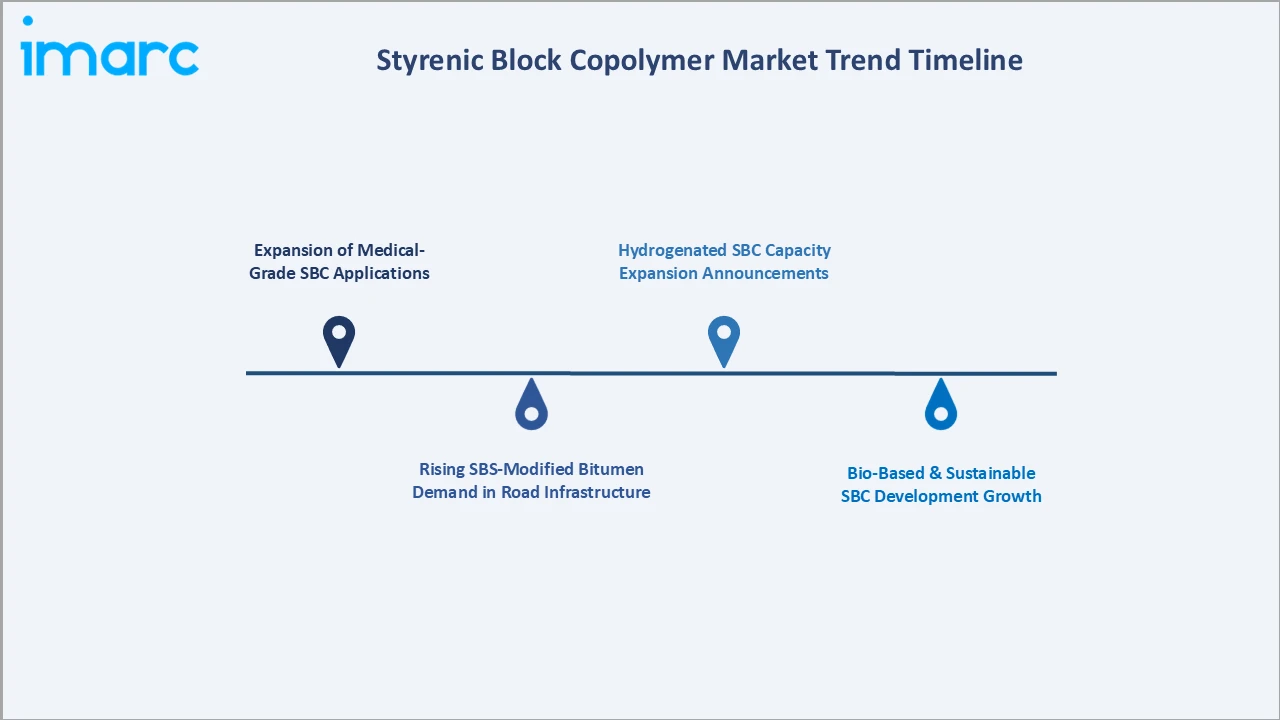
1. Expansion of Medical-Grade SBC Applications
Manufacturers are increasingly developing medical-grade hydrogenated SBC formulations for flexible films, tubing, and drug delivery systems, accelerating adoption across healthcare applications. Kraton Corporation provides ERS and styrenic block copolymer solutions for medical bags, tubing, containers, films, and elastomeric compounds, offering flexibility, clarity, strength, and easy thermoplastic processing.
2. Rising SBS-Modified Bitumen Demand in Road Infrastructure
Growing infrastructure investment worldwide is driving adoption of SBS-modified bitumen in road paving and roofing applications, supporting sustained category growth. The National Highways Authority of India (NHAI) exceeded its FY2025–26 construction target by 15%, completing 5,313 kilometers of national highways against the planned 4,640 kilometers.
3. Hydrogenated SBC Capacity Expansion Announcements
Leading producers are announcing expansions of hydrogenated SBC capacity to meet rising demand from medical, packaging, and specialty formulation applications. Kraton Corporation and Formosa Petrochemical Corp. announced a 30% capacity expansion at their hydrogenated styrenic block copolymer joint-venture plant in Mailiao, Taiwan. The expansion will enable regional production of a broader SEBS and SEPS portfolio in crumb and pellet forms to serve growing Asian demand.
4. Bio-Based & Sustainable SBC Development Growth
Rising investment in bio-based feedstock and recyclable SBC formulations is enabling manufacturers to address growing environmental and regulatory sustainability expectations. In March 2022, SABIC partnered with Kraton Corporation to supply certified renewable butadiene from its TRUCIRCLE portfolio for producing ISCC PLUS-certified styrenic block copolymers with up to 70% renewable content.
Industry Value Chain Analysis
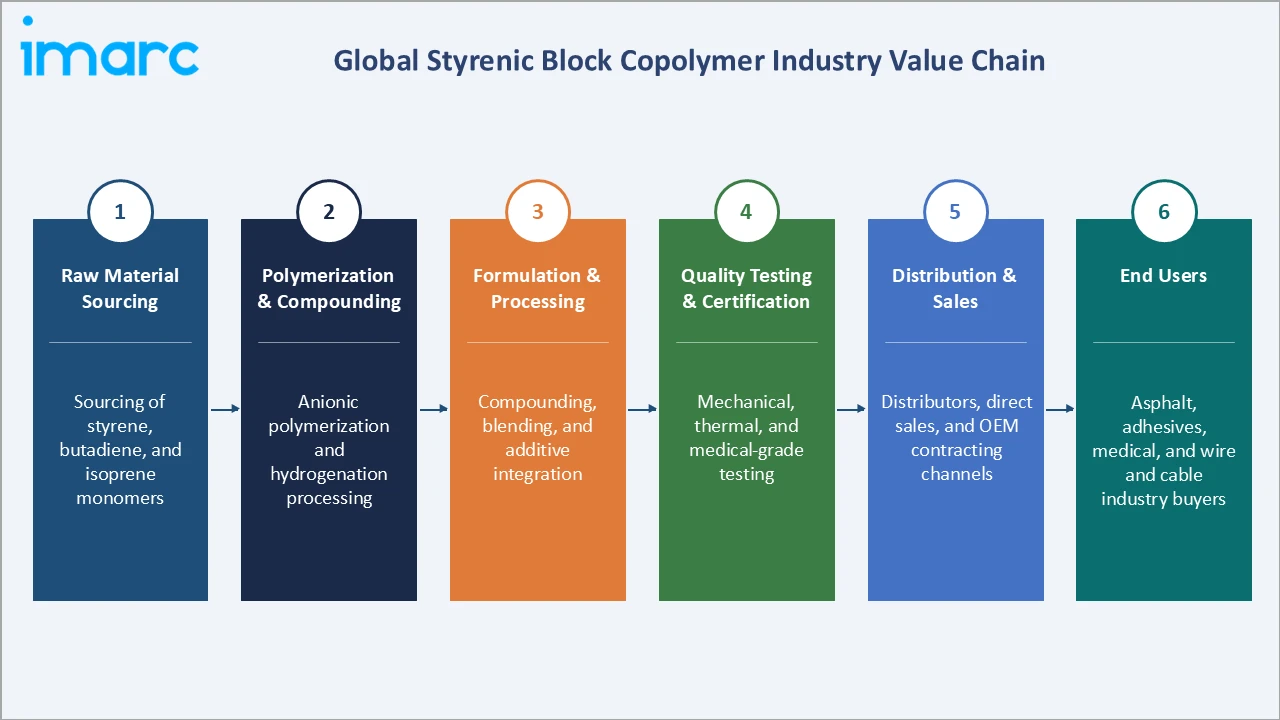
The global styrenic block copolymer value chain spans raw material sourcing through end-user delivery, with each stage occupied by specialized raw material suppliers, polymerization and compounding specialists, and distribution partners whose performance directly influences product quality, performance, and cost efficiency.
|
Stage |
Key Activities |
|
Raw Material Sourcing |
Sourcing of styrene, butadiene, and isoprene monomers |
|
Polymerization & Compounding |
Anionic polymerization and hydrogenation processing |
|
Formulation & Processing |
Compounding, blending, and additive integration |
|
Quality Testing & Certification |
Mechanical, thermal, and medical-grade testing |
|
Distribution & Sales |
Distributors, direct sales, and OEM contracting channels |
|
End Users |
Asphalt, adhesives, medical, and wire and cable industry buyers |
Technology Landscape in the Styrenic Block Copolymer Industry
SBS-Modified Bitumen Formulation Technology
Manufacturers are advancing SBS-modified bitumen formulations to improve road durability and weather resistance, supporting broader adoption among infrastructure and roofing applications. Linear and radial SBS polymer architectures are being optimized at 4–6% loading levels within bitumen matrices to achieve enhanced elastic recovery, rutting resistance, and low-temperature flexibility.
Hydrogenated SBC (HSBC) Development
Growing investment in hydrogenation technology is expanding medical-grade and specialty compounding capabilities, addressing rising demand for clarity, weatherability, and biocompatibility. SEBS and SEPS hydrogenated block copolymers are being formulated into transparent, UV-stable compounds for optical film lamination, medical tubing, and infant care product applications.
Medical-Grade Compounding & Certification
Providers are engineering medical-grade SBC compounds and certification processes to extend adoption across demanding drug delivery and healthcare device applications. SEBS-based thermoplastic elastomer compounds are being developed and validated against USP Class VI, ISO 10993, and EU MDR biocompatibility requirements for catheter tubing, IV bag port seals, and wearable drug delivery patch substrates.
Bio-Based & Sustainable Polymer Innovation
Expanding research into bio-based feedstock and recyclable SBC formulations is strengthening sustainability performance, supporting premium positioning across environmentally conscious industrial use cases. Partially bio-based SBC grades utilizing renewable styrene derived from bio-ethanol and farnesene-based soft block alternatives to petrochemical butadiene are being evaluated by compounders targeting sustainability-labelled product lines.
Market Segmentation Analysis
The report covers the following segments:
|
Segment Category |
Leading Segment |
Market Share |
Year |
|
Type |
Styrene-Butadiene-Styrene (SBS) |
52.8% |
2025 |
|
Application |
Asphalt Modification |
36.7% |
2025 |
|
Region |
Asia-Pacific |
46.3% |
2025 |

By Type
Styrene-Butadiene-Styrene (SBS) dominates with a 52.8% share in 2025. This segment encompasses asphalt modification, adhesives, and polymer modification applications, supported by sustained demand for its cost-effectiveness and versatility.
To access detailed market analysis, Request Sample
Hydrogenated SBC (HSBC) represents 21.6% (2025) of the market, reflecting demand for its superior weatherability, clarity, and biocompatibility in medical and specialty applications, a segment expected to expand steadily as healthcare demand grows. Styrene-Isoprene-Styrene (SIS) contributes 16.9%, and others make up the remaining 8.7%, serving specialty elastomer needs.
By Application
Asphalt modification leads the application segment at 36.7% share (2025), supported by rising infrastructure development and road paving and roofing activity worldwide.
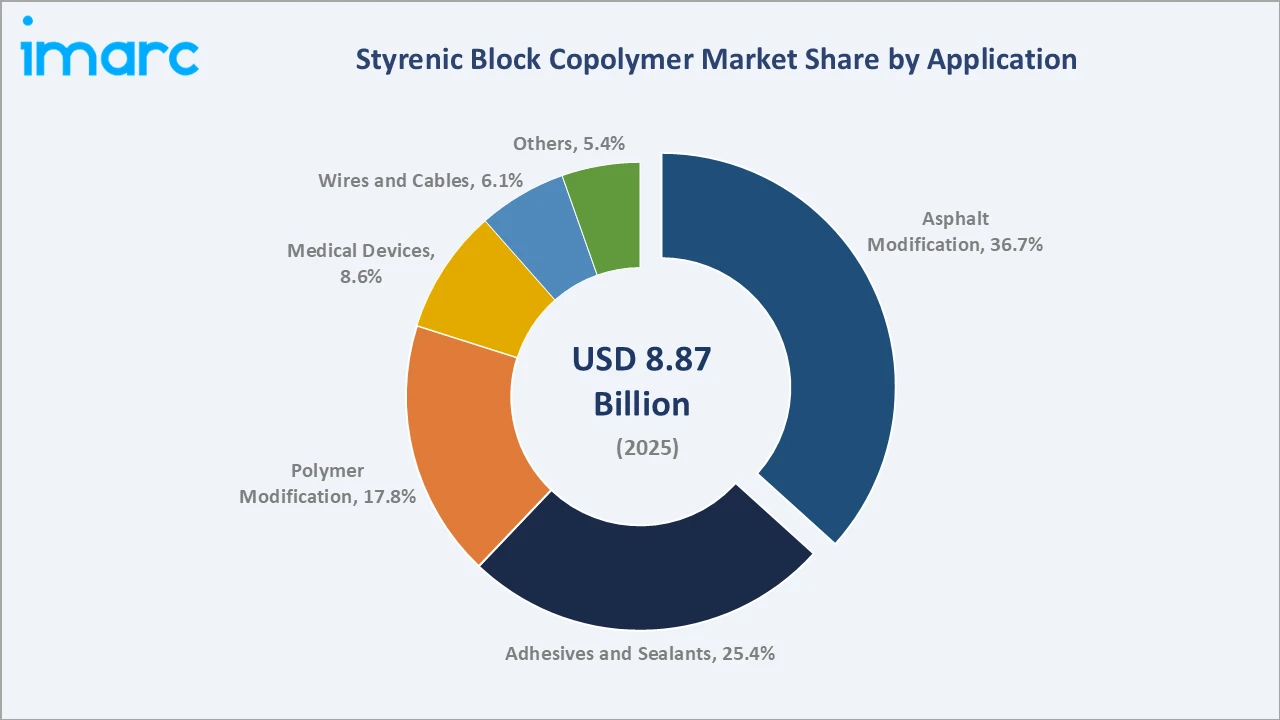
Adhesives and sealants (25.4%), polymer modification (17.8%), medical devices (8.6%), wires and cables (6.1%), and others (5.4%) continue to serve varied industrial needs, with medical devices expanding steadily as healthcare providers prioritize flexible, biocompatible material solutions.
Regional Market Insights
Asia-Pacific's market leadership (46.3%, 2025) reflects the region's expansive petrochemical manufacturing base and rising infrastructure development activity across construction and automotive sectors. Growing domestic consumption and expanding export-oriented manufacturing combine to sustain its dominant position through 2034.
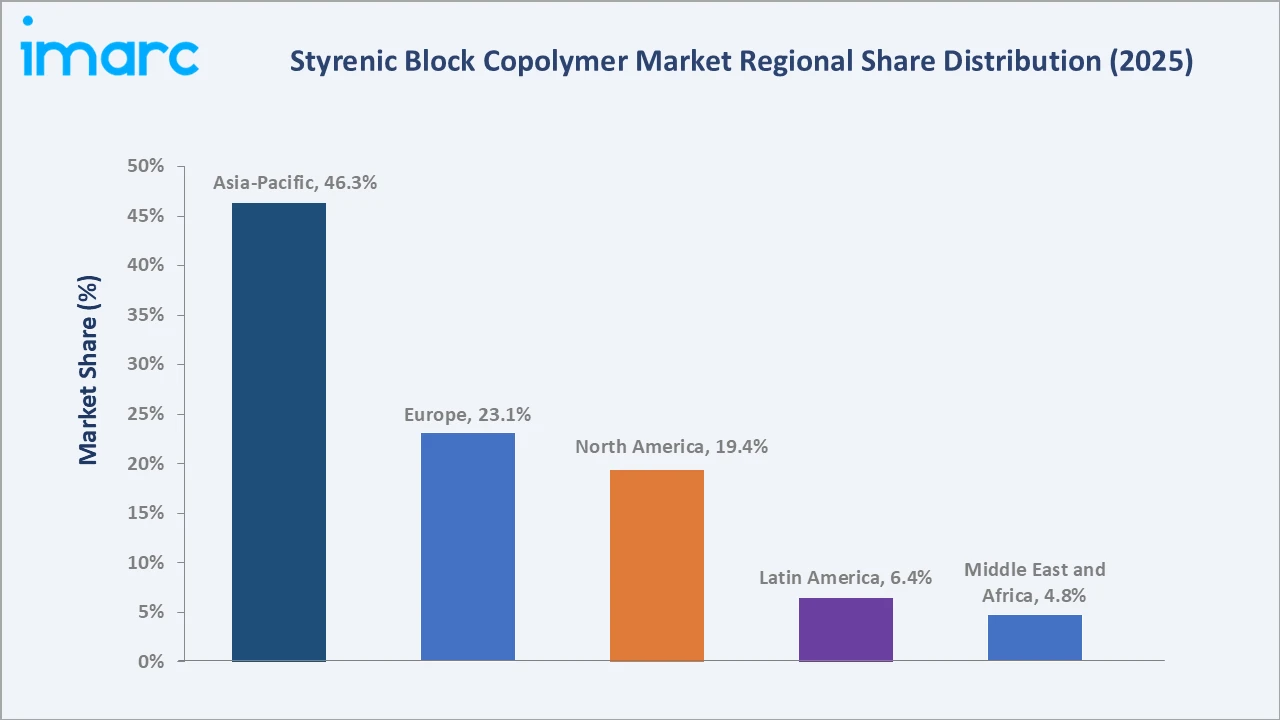
Europe at 23.1% (2025) represents the second-largest styrenic block copolymer market globally. Strong automotive and medical device manufacturing infrastructure is sustaining steady growth, positioning the region as a key contributor alongside Asia-Pacific through the forecast period.
|
Region |
Share (2025) |
Key Growth Drivers |
|
Asia-Pacific |
46.3% |
Expansive petrochemical manufacturing base and infrastructure development |
|
Europe |
23.1% |
Strong automotive and medical device manufacturing infrastructure |
|
North America |
19.4% |
Rising infrastructure investment and expanding adhesives industry activity |
|
Latin America |
6.4% |
Emerging industrialization and expanding road construction activity |
|
Middle East and Africa |
4.8% |
Growing infrastructure investment and expanding petrochemical capacity |
Competitive Landscape
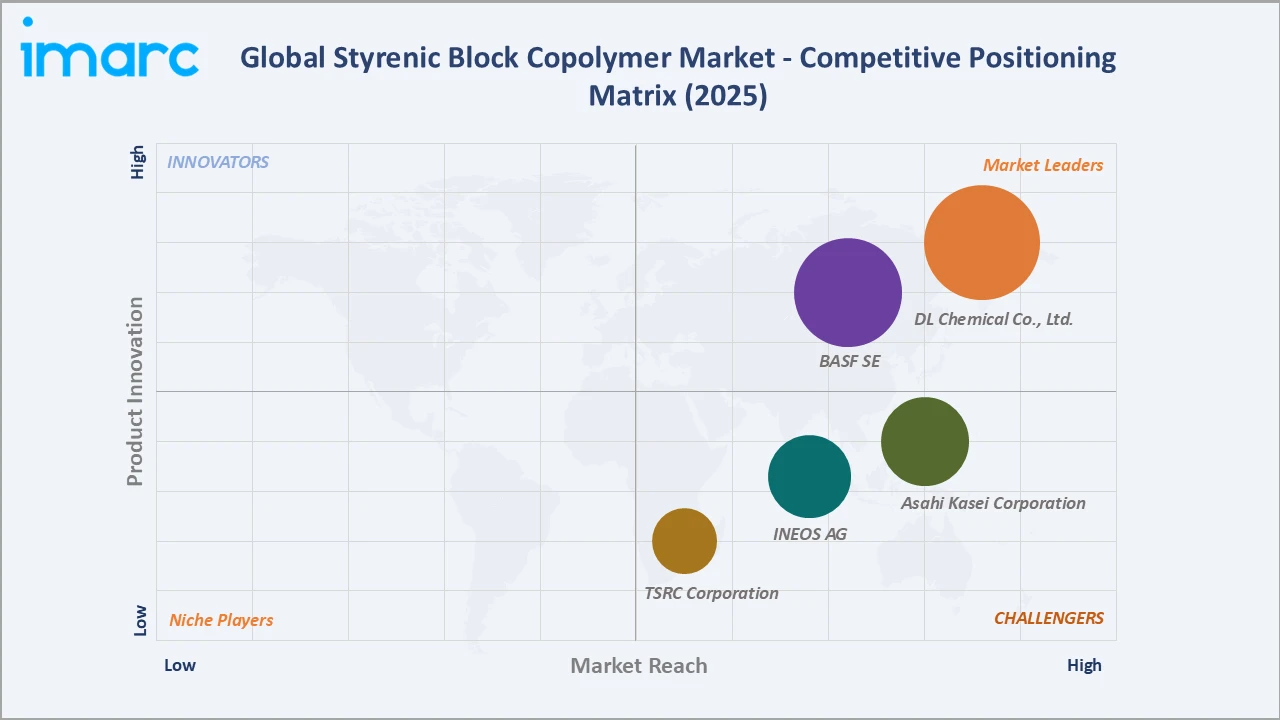
The global styrenic block copolymer market exhibits moderate concentration, with leading manufacturers collectively holding a significant share of market revenue in 2025, reflecting sustained investment in product innovation and distribution reach.
|
Company Name |
Brand Name |
Market Position |
Core Strength |
|
DL Chemical Co., Ltd. |
KratonG |
Market Leader |
Global specialty polymer leadership and extensive SBC product portfolio |
|
BASF SE |
Butonal |
Market Leader |
Diversified petrochemical platform and integrated feedstock capabilities |
|
Asahi Kasei Corporation |
TUFPRENE and ASAPRENET |
Strong Challenger |
Advanced hydrogenation technology and specialty elastomer expertise |
|
INEOS AG |
Styrolution |
Strong Challenger |
Global styrenics manufacturing scale and application development |
|
TSRC Corporation |
VECTOR and TAIPOL |
Challenger |
Asia-Pacific manufacturing presence and diversified SBC product range |
DL Chemical Co., Ltd. and BASF SE dominate through comprehensive global product portfolios and extensive manufacturing capacity, supported by continuous R&D investment. Asahi Kasei Corporation, INEOS AG, and TSRC Corporation compete through targeted premium positioning, regional manufacturing scale, and specialty formulation differentiation, respectively.
Key Company Profiles
DL Chemical Co., Ltd.
DL Chemical Co., Ltd.’s subsidiary Kraton Corporation is one of the leading global producers of specialty polymers with an extensive styrenic block copolymer portfolio spanning SBS, SIS, and hydrogenated SBC grades distributed across a vast global customer base.
- Product Portfolio: SBS, SIS, and hydrogenated styrenic block copolymers under the Kraton G brand, serving adhesives, paving, and medical applications.
- Recent Developments: In February 2026, Kraton Corporation announced a global price increase of USD 330 per metric ton, or USD 0.15 per pound, across its SBS, SIS, and HSBC polymer product lines. Effective March 2026, the increase reflects higher raw-material, storage, handling, and logistics costs.
- Strategic Focus: Strengthening specialty polymer innovation; expanding hydrogenated SBC capacity across emerging application segments.
BASF SE
BASF SE is one of the leading diversified chemical companies with a strong integrated petrochemical platform serving styrenic block copolymer, adhesives, and specialty elastomer markets across the globe.
- Product Portfolio: Styrenic block copolymers, specialty elastomers, and integrated petrochemical feedstock solutions under the Butonal brand.
- Recent Developments: In April 2026, BASF SE reported Q1 2026 sales of EUR 16.02 billion, while net income increased to EUR 927 million from EUR 808 million, and BASF maintained its 2026 outlook for EBITDA before special items of EUR 6.2–7.0 billion.
- Strategic Focus: Scaling integrated feedstock capabilities; deepening automotive and construction sector distribution partnerships.
Market Concentration Analysis
The global styrenic block copolymer market exhibits moderate concentration, with DL Chemical Co., Ltd., BASF SE, and Asahi Kasei Corporation collectively accounting for a significant share of total category revenue in 2025, reflecting sustained R&D investment, brand loyalty, and extensive manufacturing infrastructure worldwide.
Consolidation pressure remains limited as leading manufacturers maintain distinct strategic positioning: DL Chemical Co., Ltd. and BASF SE through comprehensive multi-category portfolios, Asahi Kasei Corporation and INEOS AG through hydrogenation technology and manufacturing scale positioning, and TSRC Corporation through regional and specialty differentiation, rather than pursuing direct M&A consolidation.
Investment & Growth Opportunities
Fastest Growing Segments
Hydrogenated SBC (~4.6% CAGR) represents the highest-growth investment vector through 2034, driven by expanding medical device and drug delivery system demand and continuous innovation across hydrogenation and specialty compounding technologies. This subcategory addresses a rapidly expanding addressable market within the global styrenic block copolymer ecosystem.
Emerging Market Expansion
Latin America and the Middle East and Africa collectively represent an incremental growth opportunity beyond Asia-Pacific and Europe by 2034, as rising infrastructure investment and expanding petrochemical capacity accelerate category penetration in these regional markets.
Venture and Institutional Investment Trends
- Manufacturer investment toward bio-based feedstock and sustainable SBC technology is creating opportunities for material science vendors serving the styrenic block copolymer sector.
- Growing medical device and drug delivery demand is sustaining institutional interest in specialty hydrogenated SBC manufacturing platforms.
- Hydrogenation and medical-grade compounding innovation, led by major manufacturers, is opening opportunities for technology and equipment vendors serving the global SBC industry.
Future Market Outlook (2026-2034)
The global styrenic block copolymer market is positioned for steady, application-driven expansion through 2034. From a base of USD 8.87 Billion in 2025, the market is projected to reach USD 12.30 Billion by 2034, representing substantial incremental value creation at a CAGR of 3.58%. This growth is underpinned by rising demand for SBS-modified bitumen in road construction, expanding medical device applications, and growing adoption across adhesives and sealants.
The type segment will continue evolving through 2034, with hydrogenated SBC gaining further share as medical device and drug delivery demand accelerates. This shift creates opportunities for manufacturers investing in hydrogenation technology, bio-based feedstock development, and medical-grade compounding to capture the next phase of the global styrenic block copolymer market growth.
Research Methodology
Primary Research
Primary research comprised structured interviews with industry participants across 2024-2025, including polymer manufacturer executives, road construction procurement managers, medical device specialists, and petrochemical industry analysts across major global markets. Expert input validated market sizing, segmentation trends, and regional consumption patterns.
Secondary Research
Secondary research encompassed manufacturer annual reports, styrenic block copolymer industry association publications, and petrochemical trade press covering formulation innovation, regulatory trends, and regional manufacturing dynamics across major markets.
Forecasting Models
Market size estimations were derived using top-down and bottom-up forecasting, incorporating type and application segment transitions and manufacturer capacity disclosures. A base-case CAGR of 3.58% reflects consensus estimates validated against announced production expansion timelines and manufacturer strategic investment plans.
Report Coverage:
| Report Features | Details |
|---|---|
| Base Year of the Analysis | 2025 |
| Historical Period | 2020-2025 |
| Forecast Period | 2026-2034 |
| Units | Billion USD |
| Scope of the Report | Exploration of Historical Trends and Market Outlook, Industry Catalysts and Challenges, Segment-Wise Historical and Future Market Assessment:
|
| Types Covered | Styrene-Butadiene-Styrene (SBS), Styrene-Isoprene-Styrene (SIS), Hydrogenated SBC (HSBC), Others |
| Applications Covered | Asphalt Modification, Adhesives and Sealants, Polymer Modification, Medical Devices, Wires and Cables, Others |
| Regions Covered | Asia Pacific, Europe, North America, Latin America, Middle East and Africa |
| Countries Covered | United States, Canada, Germany, France, United Kingdom, Italy, Spain, Russia, China, Japan, India, South Korea, Australia, Indonesia, Brazil, Mexico |
| Companies Covered | DL Chemical Co., Ltd., BASF SE, Asahi Kasei Corporation, INEOS AG, TSRC Corporation, etc. |
| Customization Scope | 10% Free Customization |
| Post-Sale Analyst Support | 10-12 Weeks |
| Delivery Format | PDF and Excel through Email (We can also provide the editable version of the report in PPT/Word format on special request) |
Frequently Asked Questions About the Styrenic Block Copolymer Market Report
The global styrenic block copolymer market reached USD 8.87 Billion in 2025 and is projected to reach USD 12.30 Billion by 2034.
The market is expected to grow at a CAGR of 3.58% during 2026-2034, driven by rising demand for SBS-modified bitumen in road construction and expanding medical device applications.
Asia-Pacific leads with a 46.3% share in 2025, anchored by the region's expansive petrochemical manufacturing base.
Styrene-Butadiene-Styrene (SBS) dominates with a 52.8% share in 2025, driven by sustained demand across asphalt modification, adhesives, and polymer modification applications.
Asphalt modification leads with a 36.7% share in 2025, supported by rising infrastructure development and road paving activity.
Some of the key players include DL Chemical Co., Ltd., BASF SE, Asahi Kasei Corporation, INEOS AG, and TSRC Corporation.
Hydrogenated SBC (HSBC) is growing fastest at an estimated 4.6% CAGR as medical device and drug delivery demand accelerates.
Key challenges include volatility in styrene and butadiene feedstock prices, environmental concerns over petroleum-based polymers, and competition from alternative thermoplastic elastomers.
Bio-based and sustainable SBC development, medical-grade formulation innovation, and emerging market infrastructure expansion represent leading investment opportunities.
Medical devices, at 8.6% share, are expanding steadily as healthcare providers increasingly prioritize flexible, biocompatible material solutions.
Need more help?
- Speak to our experienced analysts for insights on the current market scenarios.
- Include additional segments and countries to customize the report as per your requirement.
- Gain an unparalleled competitive advantage in your domain by understanding how to utilize the report and positively impacting your operations and revenue.
- For further assistance, please connect with our analysts.
 Request Customization
 Speak to an Analyst
 Request Brochure
 Inquire Before Buying
Benefits of Customization
- Personalize this research
- Triangulate with your data
- Get data as per your format and definition
- Gain a deeper dive into a specific application, geography, customer, or competitor
- Any level of personalization
Get in Touch With Us
UNITED STATES
Phone: +1-201-971-6302
INDIA
Phone: +91-120-433-0800
UNITED KINGDOM
Phone: +44-753-714-6104
Email: [email protected]
Client Testimonials




.webp)




.webp)













Related Reports

Choose your plan
*Please note that the prices mentioned below are starting prices for each bundle type. Kindly contact our team for further details.*
Single User License
- 1 User License, Access on 2 Devices
- PDF Report + Excel Dataset (Password Protected)
- Lifetime Access
- No Printing Rights
- 10% Free Report Customization
- 10–12 Weeks of Analyst Support
Five User License
- Access for 5 Users, 2 Devices per User
- PDF Report + Excel Dataset (Password Protected)
- Lifetime Access
- Dedicated Account Manager
- 12–14 Weeks of Analyst Support
- No Printing Rights
- 15% Free Report Customization
- 25% Discount on Your Next Purchase
Corporate User License
- Unlimited User Access (Within Your Organization)
- PDF Report + Excel Dataset
- Lifetime Access
- Dedicated Account Manager
- 14–20 Weeks of Analyst Support
- No Printing Rights
- 20% Free Report Customization
- 30% Discount on Your Next Purchase
Essential Insights
What's included:
3 reports
- Lifetime Access
- PDF Reports
- Excel Datasets
- 2 Weeks of Free Analyst Support
- 2 User Licenses
- Access on 2 Devices
- Printing Rights
- Complimentary PowerPoint (PPT) Version
- Complimentary License Upgrade
Professional Access
What's included:
5 reports
- Lifetime Access
- PDF Reports
- Excel Datasets
- 8 Weeks of Free Analyst Support
- 2 User Licenses
- Access on 2 Devices
- Printing Rights
- Complimentary PowerPoint (PPT) Version
- Complimentary License Upgrade
Business Advantage
What's included:
8 reports
- Lifetime Access
- PDF Reports
- Excel Datasets
- 14 Weeks of Free Analyst Support
- 2 User Licenses
- Access on 2 Devices
- Printing Rights
- Complimentary PowerPoint (PPT) Version
- Complimentary License Upgrade
Enterprise Intelligence
What's included:
10 reports
- Lifetime Access
- PDF Reports
- Excel Datasets
- 20 Weeks of Free Analyst Support
- 2 User Licenses
- Access on 2 Devices
- Printing Rights
- Complimentary PowerPoint (PPT) Version
- Complimentary License Upgrade