
Tactile Switches Market Size, Share, Trends and Forecast by Type, Application, and Region, 2026-2034
Tactile Switches Market Size, Share, Trends & Forecast (2026-2034)
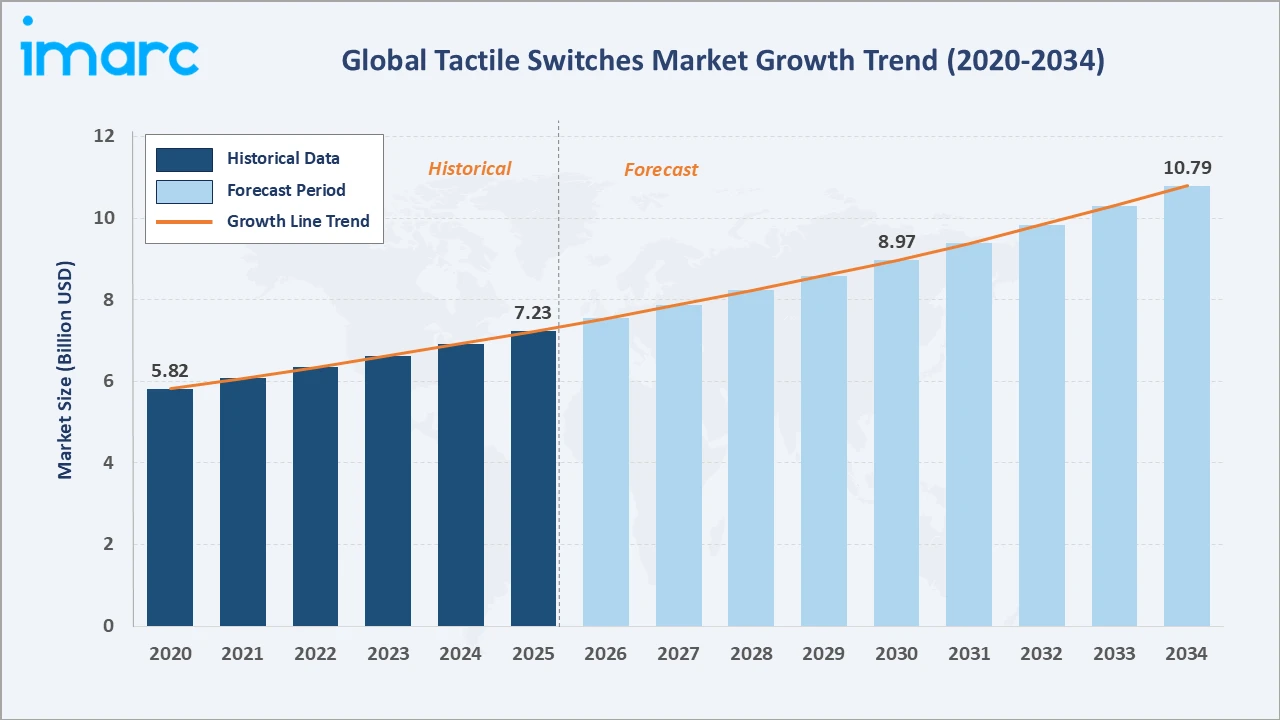
The global tactile switches market reached USD 7.23 Billion in 2025 and is projected to reach USD 10.79 Billion by 2034, exhibiting a CAGR of 4.42% during 2026-2034. The escalating adoption of tactile switches in electric vehicle human-machine interfaces, the rapid expansion of medical wearables and diagnostic devices requiring reliable miniaturized input components, and extensive R&D investment by leading manufacturers are the primary growth catalysts. Global electric vehicle sales reached approximately 17.1 million units in 2024, increasing by nearly 25% from the previous year. Annual EV sales are expected to surpass 50 million units by 2030. This rapid expansion is supporting demand for tactile switches used in vehicle dashboards, steering controls, infotainment systems, battery management interfaces, charging equipment, and other electronic control modules. Standard type leads at 35.0%, electronic devices dominate the application at 48.0%, and Asia-Pacific accounts for the largest regional share at 39.0%.
Market Snapshot
|
Metric |
Value |
|
Market Size (2025) |
USD 7.23 Billion |
|
Forecast Market Size (2034) |
USD 10.79 Billion |
|
CAGR (2026-2034) |
4.42% |
|
Base Year |
2025 |
|
Historical Period |
2020-2025 |
|
Forecast Period |
2026-2034 |
|
Dominant Type |
Standard (35.0%, 2025) |
|
Dominant Application |
Electronic Devices (48.0%, 2025) |
|
Leading Region |
Asia-Pacific (39.0%, 2025) |
The global tactile switches market grew from USD 5.82 Billion in 2020 to USD 7.23 Billion in 2025, driven by persistent demand from consumer electronics, robust automotive integration, and the expanding medical device sector. The market is projected to reach USD 8.97 Billion by 2030 and USD 10.79 Billion by 2034.
To get more information on this market, Request Sample
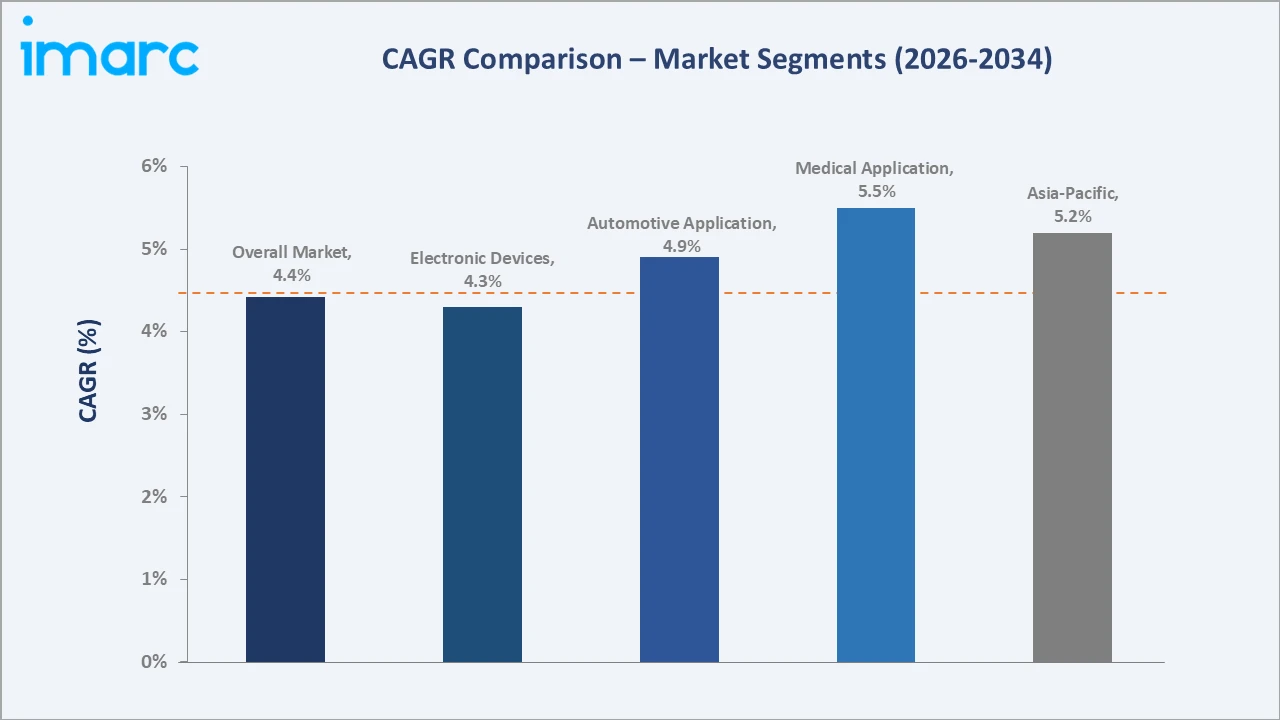
Medical applications grow at ~5.5% CAGR, driven by wearables, portable diagnostics, and implantable device adoption requiring ultra-reliable, miniaturized input components. Automotive application grows at ~4.9% CAGR. Asia-Pacific leads regional CAGR at ~5.2% through Japan and China's electronics manufacturing leadership and India's rapidly expanding electronics ecosystem.
Executive Summary
The global tactile switches market occupies a critical position in the electronics component supply chain, providing the essential physical input interface for a vast array of consumer electronics, automotive systems, industrial control panels, and medical devices. As electromechanical switching components that deliver precise tactile feedback and reliable circuit actuation, tactile switches are irreplaceable in applications requiring positive operator confirmation of command execution. Market value stood at USD 7.23 Billion in 2025 and is forecast to reach USD 10.79 Billion by 2034.
Standard type leads at 35.0% (2025) as the foundational product category serving the broadest range of applications from consumer electronics keyboards to industrial control interfaces, with the segment experiencing technology evolution toward longer cycle life and lower actuation force profiles compatible with modern UX design. Electronic devices command 48.0% of applications (2025), reflecting the vast and growing installed base of smartphones, tablets, laptops, gaming peripherals, smart home devices, and IoT endpoints that each incorporate multiple tactile switches for power control, mode selection, and user interaction. Asia-Pacific commands 39.0% (2025), anchored by Japan's world-class component manufacturing ecosystem and China's massive electronics assembly sector.
Key Market Insights
|
Insight |
Data |
|
Dominant Type |
Standard – 35.0% share (2025) |
|
Dominant Application |
Electronic Devices – 48.0% share (2025) |
|
Leading Region |
Asia-Pacific - 39.0% (2025) |
|
Market Opportunity |
EV HMI sealed switches; medical wearable ultra-miniature switches; IoT edge device SMD switches; gaming peripheral haptic-tactile hybrids |
Key Analytical Observations:
- Standard Type at 35.0% (2025): Standard tactile switches are the industry's highest-volume product category, serving applications from consumer electronics to industrial control where cost-effectiveness, breadth of availability, and broad actuation force options are prioritized. The category encompasses both through-hole mounting configurations for traditional PCB assembly and increasingly SMD (surface-mount) variants as consumer electronics PCB design migrates toward automated surface mount technology.
- Electronic Devices at 48.0% (2025): Consumer and commercial electronic devices collectively represent the single largest application segment, driven by the proliferation of smartphones, tablets, laptops, gaming keyboards and controllers, smart home devices, and IoT-connected devices. The consumer electronics segment benefits from massive volume advantages that drive manufacturing cost efficiency, creating the price-performance dynamics that underpin the broader tactile switch market's economic structure.
- Asia-Pacific at 39.0% (2025): Asia-Pacific leads regionally due to its strong electronics manufacturing base, large automotive production capacity, and expanding consumer electronics industry. The presence of major component manufacturers in China, Japan, South Korea, and Taiwan, along with rising demand for smartphones, appliances, industrial equipment, and electric vehicles, further strengthens regional market growth.
Tactile Switches Market Overview
The global tactile switches market encompasses electromechanical switching components that provide a distinct tactile sensation (physical click or bump in resistance) to the operator upon circuit activation, confirming successful command input without requiring visual confirmation. Core product types include standard through-hole and SMD tactile switches, illuminated versions with integrated LED or light pipe capability, sealed switches for harsh environments, key-top switches with integrated cap mechanisms for keyboard and panel applications, and ultra-miniature surface-mount devices for space-constrained electronic devices. Tactile switches differ from membrane switches and capacitive touch interfaces in providing definitive physical feedback that reduces input errors in critical applications. Macroeconomic factors include rising consumer spending on electronic devices, increasing investments in automotive electrification and industrial automation, and expanding manufacturing activities across emerging economies.
Market Dynamics
To evaluate market opportunities, Request Sample
Market Drivers
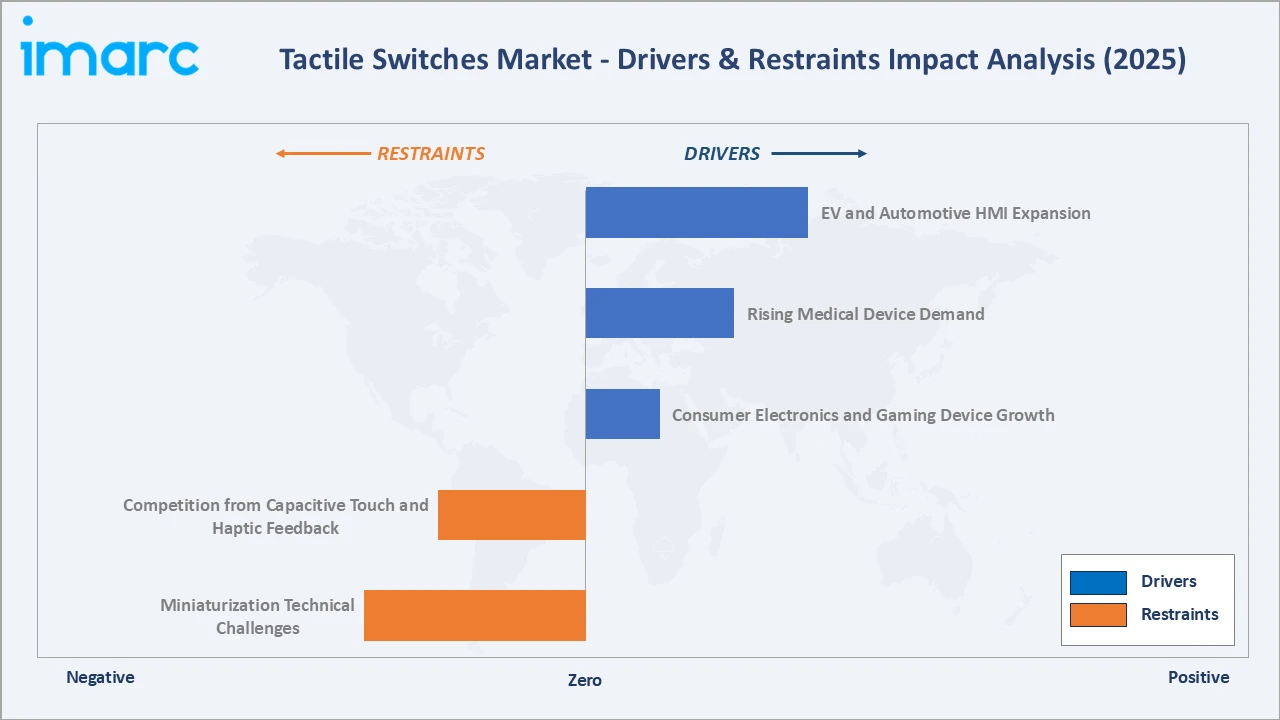
- EV and Automotive HMI Expansion: In 2024, global electric vehicle (EV) sales reached approximately 17.1 million units, marking a 25% increase from the previous year. The annual EV sales are projected to surpass 50 million units by 2030. The global electric vehicle transition is creating transformational demand for qualified, sealed tactile switches in dashboard controls, steering wheel-mounted inputs, door handle controls, and infotainment systems. EV interiors eliminate the mechanical complexity of ICE vehicle control layouts, replacing gear selectors, ignition switches, and mechanical HVAC knobs with electronic button interfaces that require premium tactile switches providing consistent actuation feel across the vehicle's service life.
- Rising Medical Device Demand: The medical devices sector's tactile switch demand is expanding across multiple device categories simultaneously, wearable health monitors requiring ultra-miniature switches with minimal actuation force for patient comfort, portable diagnostic equipment requiring sealed IP-rated switches for clinical environment sanitation compliance, home-use medical devices (blood glucose monitors, pulse oximeters, CPAP machines) requiring consumer-friendly tactile interfaces, and implantable device external programming controls requiring extreme reliability and biocompatible materials.
- Consumer Electronics and Gaming Device Growth: The consumer electronics segment's tactile switch demand benefits from multiple expanding sub-markets simultaneously, premium mechanical gaming keyboards, gaming controllers requiring satisfying tactile response, smart home control panels and remotes, true wireless earbuds and their charging cases, laptop power and function switches, and smartphone physical button requirements.
Market Restraints
- Miniaturization Technical Challenges: Advancing tactile switch miniaturization toward sub-2mm footprints creates engineering challenges in maintaining adequate actuation force consistency, operational cycle life, and contact reliability within progressively smaller component envelopes. As spring mechanism dimensions shrink toward their physical performance limits, manufacturers face increasing difficulty maintaining the consistent tactile feedback feel that is the defining functional characteristic of the product category. These technical constraints create R&D investment requirements that disadvantage smaller manufacturers without the engineering depth.
- Competition from Capacitive Touch and Haptic Feedback: Capacitive touchscreen technology has displaced tactile switches in many consumer electronics applications where industrial design aesthetics prioritize a smooth, button-free surface. Advanced haptic feedback systems that simulate physical click sensations through high-frequency vibration actuators are creating hybrid interfaces that provide a tactile-like user experience without physical switch mechanisms.
Market Opportunities
- Growth in Hybrid Switch Technology: The introduction of mechanical-magnetic hybrid switches creates opportunities for manufacturers to develop next-generation tactile switches that combine the familiar feel of mechanical keyboards with advanced magnetic sensing capabilities. In March 2026, Lofree introduced Hyzen, which it describes as the first keyboard to feature tactile mechanical-magnetic switches. The compact 65% keyboard combines a CNC-machined aluminum body with enthusiast-focused internal components, led by a newly developed hybrid switch technology designed to deliver both mechanical feedback and magnetic responsiveness. This innovation is expected to drive product differentiation and premiumization in the keyboard and human-machine interface (HMI) markets.
- Aerospace and Defense Sector Qualification Demand: Aerospace cockpit interfaces, military communication systems, and defense electronics require tactile switches with qualified reliability, extended operating temperature ranges, vibration and shock resistance ratings, and operational cycle life specifications. This highly specialized segment, while volumetrically smaller than consumer or automotive applications, commands significant price premiums and creates defensible market positions for manufacturers with the qualification credentials to serve it.
Market Challenges
- Supply Chain Concentration in Asia-Pacific Manufacturing: Japan and China collectively represent most of the global tactile switch production, creating supply chain concentration risks that were exposed during the COVID-19 pandemic's manufacturing disruption and persist through ongoing geopolitical tensions that affect component availability and pricing. Western OEMs in automotive, medical, and defense sectors are actively pursuing supply chain diversification strategies that could affect Asia-Pacific manufacturers' market share unless those manufacturers establish dual-sourcing production capabilities in alternative regions.
- Component Price Pressure from Volume Electronics Applications: High-volume consumer electronics OEMs exert persistent downward price pressure on commodity-grade tactile switch components, compressing manufacturer margins in the standard switch category's volume tiers. This price pressure incentivizes manufacturers to shift portfolio emphasis toward premium application segments where differentiated performance specifications support higher average selling prices and more sustainable margin profiles.
Emerging Market Trends
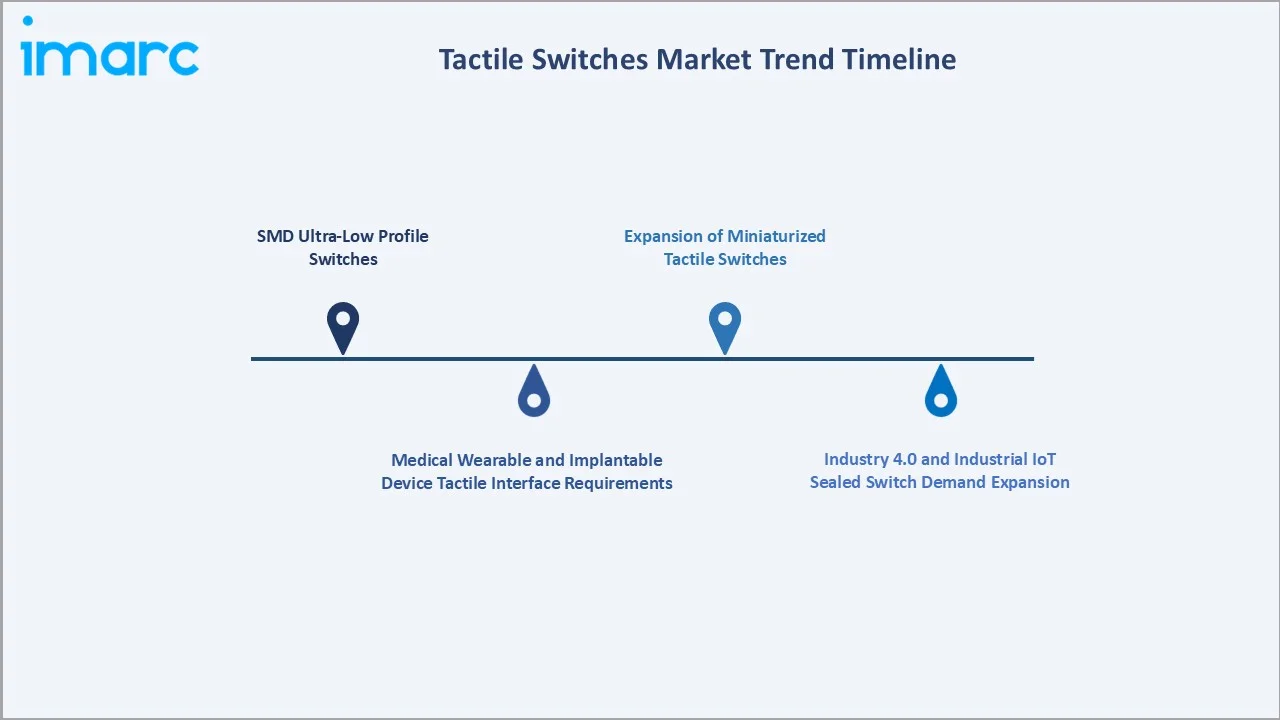
1. SMD Ultra-Low Profile Switches
Surface-mount device (SMD) ultra-low-profile switches are emerging as manufacturers focus on thinner, lighter, and more compact electronic devices. Their surface-mount design supports automated assembly, reduces PCB space requirements, and enables high-density component integration. These switches are increasingly used in wearable devices, smartphones, automotive controls, medical equipment, and compact industrial interfaces.
2. Medical Wearable and Implantable Device Tactile Interface Requirements
Medical wearable and implantable device interface requirements are emerging, driven by demand for compact, precise, and highly reliable control components. Manufacturers are developing ultra-miniature switches with low actuation force, strong sealing, biocompatible materials, and resistance to moisture, chemicals, and repeated sterilization. These switches support applications such as wearable monitors, drug-delivery devices, hearing aids, and portable diagnostic equipment.
3. Expansion of Miniaturized Tactile Switches
The expansion of miniaturized tactile switches is emerging as electronic devices become smaller, thinner, and more functionally integrated. These compact switches enable efficient use of limited PCB space while maintaining precise actuation, durability, and consistent tactile feedback. In November 2025, Panasonic Industry Europe introduced a new tiny tactile switch, EVPBB5AHE00, featuring a 3 N operating force and a crisp tactile response. Designed for space-constrained PCBs, it offers IP67 protection and a service life of up to 500,000 cycles, making it suitable for demanding applications. Continued advances in surface-mount technology and automated assembly are further supporting high-volume production and broader market penetration.
4. Industry 4.0 and Industrial IoT Sealed Switch Demand Expansion
Industry 4.0 and industrial Internet of Things adoption are expanding demand for sealed tactile switches used in connected machinery, control panels, sensors, and human-machine interfaces. These switches must withstand dust, moisture, oils, vibration, and frequent actuation in demanding industrial environments. Their compact size and reliable feedback make them suitable for smart factories, robotics, automated equipment, and predictive maintenance systems. Growing investment in industrial automation is therefore encouraging the development of durable, high-ingress-protection tactile switch solutions.
Industry Value Chain Analysis
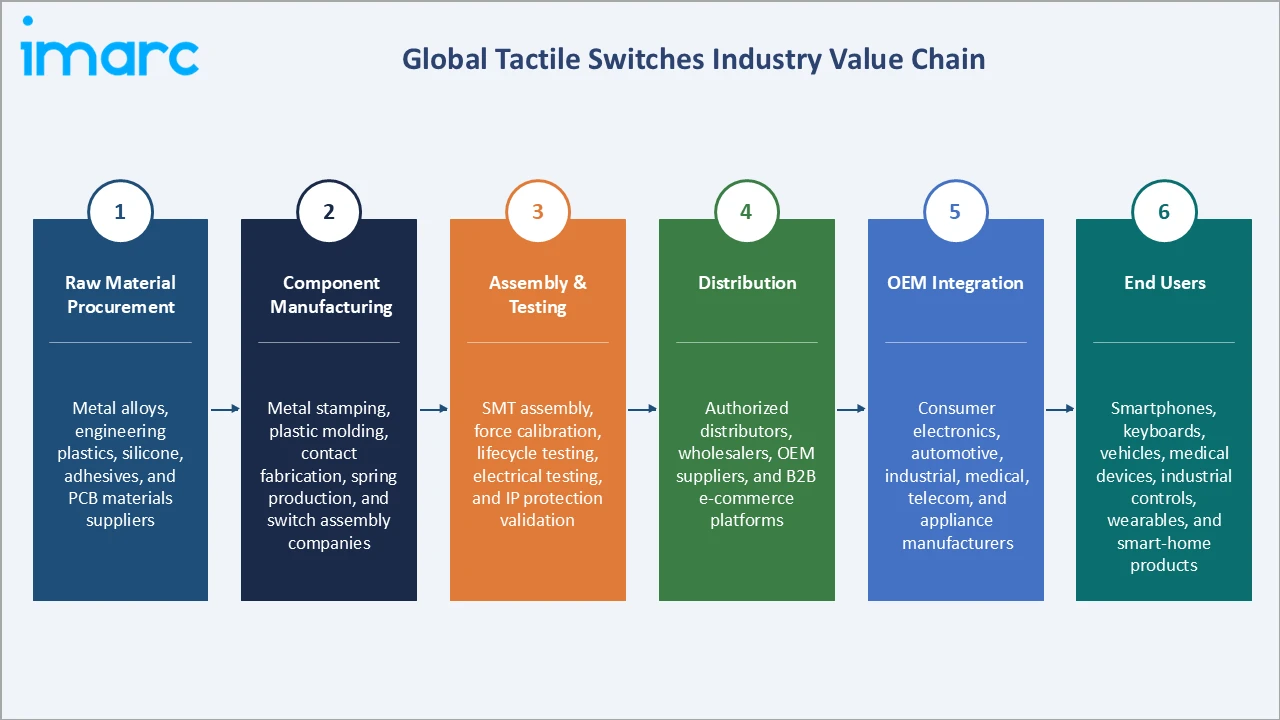
The tactile switches value chain integrates raw material procurement, component manufacturing, rigorous assembly and testing, multi-channel distribution, OEM device integration, and end-market deployment across electronic devices, automotive, medical, and industrial sectors.
|
Stage |
Key Participants |
|
Raw Material Procurement |
Metal alloys, engineering plastics, silicone, adhesives, and PCB materials suppliers. |
|
Component Manufacturing |
Metal stamping, plastic molding, contact fabrication, spring production, and switch assembly companies. |
|
Assembly & Testing |
SMT assembly, force calibration, lifecycle testing, electrical testing, and IP protection validation. |
|
Distribution |
Authorized distributors, wholesalers, OEM suppliers, and B2B e-commerce platforms. |
|
OEM Integration |
Consumer electronics, automotive, industrial, medical, telecom, and appliance manufacturers. |
|
End Users |
Smartphones, keyboards, vehicles, medical devices, industrial controls, wearables, and smart-home products. |
Distribution through authorized electronic component distributors represents the critical B2B channel for small and medium-sized OEM customers that cannot meet minimum order quantities for direct manufacturer purchase programs. This distributor channel commands a significant share of tactile switch revenue for all major manufacturers.
Technology Landscape in the Tactile Switches Industry
Contact Mechanism Technology
Contact mechanism technology improves electrical conductivity, switching accuracy, and operational reliability. Innovations in contact materials, such as silver- and gold-plated alloys, reduce contact resistance, minimize wear, and extend switch lifespan. Enhanced contact designs also provide faster response times and more consistent tactile feedback across millions of actuation cycles. These advancements support high-performance applications in automotive electronics, industrial controls, consumer devices, and medical equipment.
SMD and Miniaturization Technology
SMD and miniaturization technology enable the development of smaller, thinner, and more space-efficient switch designs for compact electronic devices. Surface-mount device (SMD) technology supports high-speed automated assembly, improved PCB density, and lower manufacturing costs. Advances in miniaturization also enhance reliability and performance while maintaining precise tactile feedback. These innovations are accelerating the adoption of tactile switches in smartphones, wearables, medical devices, automotive electronics, and IoT products.
Advanced Silent Tactile Switch Technology
Manufacturers are developing tactile switches that deliver distinct tactile feedback while minimizing operating noise. Improved stem geometry, damping materials, and optimized spring designs enhance typing comfort without compromising responsiveness. In September 2024, Razer introduced the BlackWidow V4 Pro 75%, a compact mechanical keyboard equipped with third-generation tactile switches designed to provide quiet and responsive keystrokes. Its 75% layout removes the number pad while retaining essential arrow and function keys. These switches are increasingly used in premium keyboards for office, gaming, and hybrid work environments.
Market Segmentation Analysis
The report covers the following segments:
|
Segment Category |
Leading Segment |
Market Share |
Year |
|
Type |
Standard |
35.0% |
2025 |
|
Application |
Electronic Devices |
48.0% |
2025 |
|
Region |
Asia-Pacific |
39.0% |
2025 |

By Type
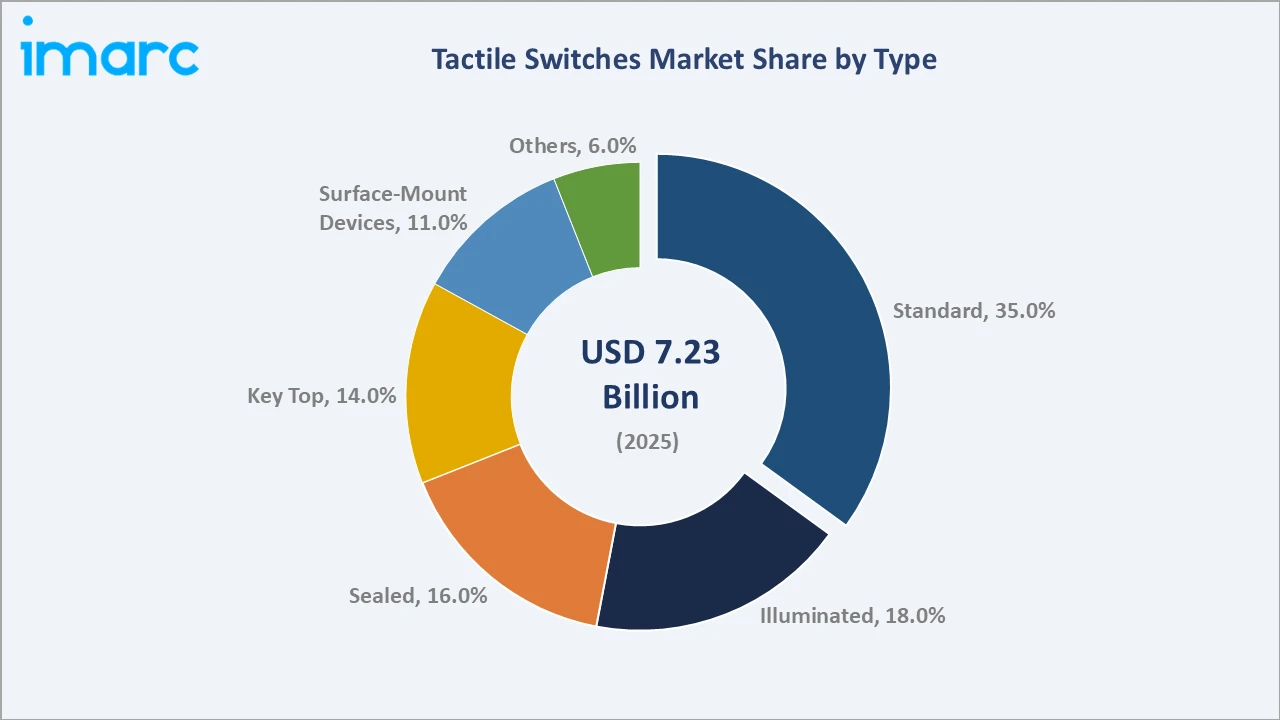
Standard type leads at 35.0% (2025), serving the broadest application spectrum from consumer electronics to industrial controls. Standard switches offer the most comprehensive range of actuation force options, operating cycle life ratings, and mounting configurations that accommodate diverse design requirements across price-sensitive and performance-critical applications simultaneously.
To access detailed market analysis, Request Sample
Illuminated at 18.0% (2025) serves premium consumer electronics, gaming peripherals, and automotive ambient lighting applications with above-market pricing that sustains healthy margin contributions. Sealed at 16.0% (2025) addresses growing harsh environment application requirements across medical, industrial, outdoor, and marine electronics segments, the fastest-growing type segment at ~5.0% CAGR. Key top at 14.0% (2025) serves specialized human-machine interface applications requiring integrated cap mechanisms that provide ergonomic operator contact surfaces for panel control and keyboard applications. Surface-mount devices at 11.0% (2025) represent the miniaturization frontier, growing rapidly as consumer electronics and wearable device design continues shrinking component envelopes.
By Application
Electronic devices dominate at 48.0% (2025) as the largest and most volume-intensive application segment, encompassing smartphones, gaming keyboards and controllers, smart speakers, remote controls, and IoT devices.
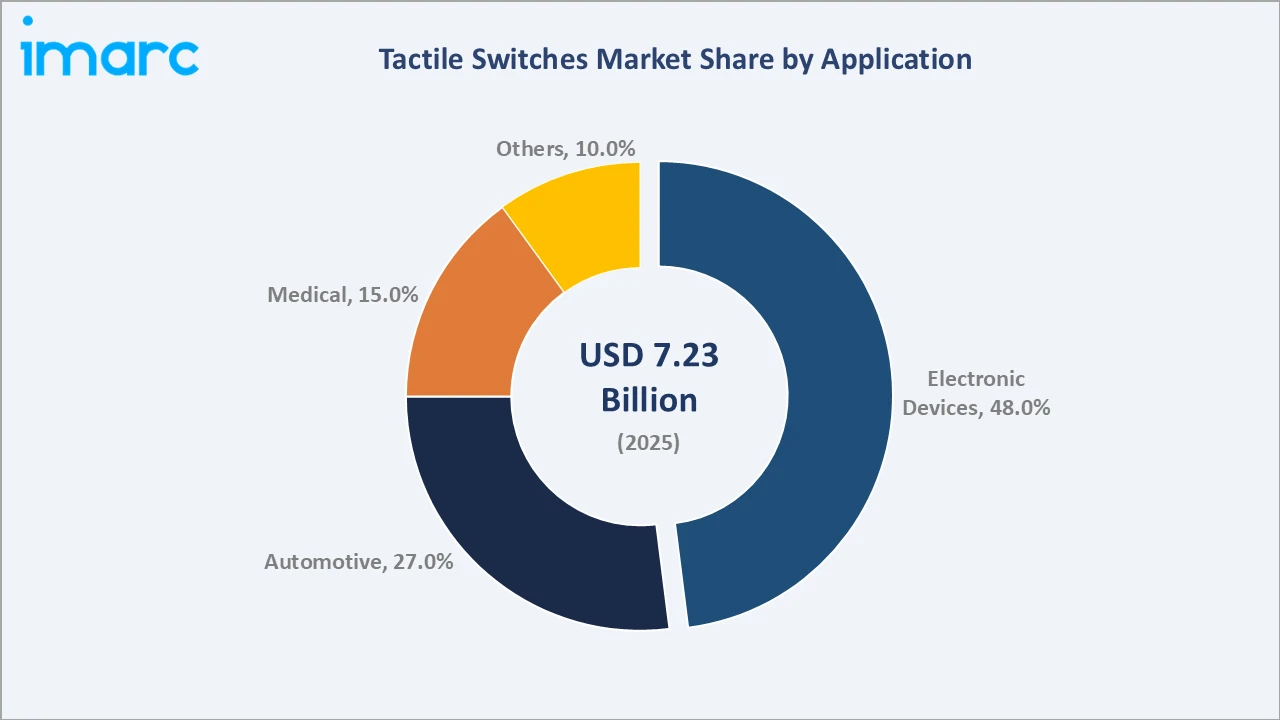
Automotive at 27.0% (2025) is the second-largest segment and the primary driver of premium specification development, extended temperature range, vibration resistance, and enhanced cycle life requirements that command pricing premiums over consumer-grade equivalent switches. Medical at 15.0% (2025), growing at ~5.5% CAGR, represents the highest-value-per-switch application segment, with medical grade specifications requiring bio-compatible materials, sterilization-compatible sealing, and exceptional cycle life for patient safety applications. Others at 10.0% encompass industrial control, aerospace, defense, telecommunications, and test and measurement applications.
Regional Market Insights
|
Region |
Share (2025) |
Key Tactile Switches Market Drivers & Characteristics |
|
Asia-Pacific |
39.0% |
Largest manufacturing hub for consumer electronics and automotive components, supported by strong demand from China, Japan, South Korea, and Taiwan. |
|
North America |
24.0% |
Growth driven by gaming peripherals, industrial automation, medical devices, and increasing adoption of smart electronic products. |
|
Europe |
21.0% |
Demand supported by automotive electronics, Industry 4.0 adoption, premium industrial equipment, and stringent quality standards. |
|
Latin America |
9.0% |
Market growth fueled by expanding consumer electronics demand, automotive production, and increasing electronics manufacturing investments. |
|
Middle East and Africa |
7.0% |
Rising adoption of consumer electronics, smart infrastructure projects, and industrial automation supports gradual market expansion. |
Asia-Pacific's 39.0% regional dominance is driven by its strong electronics manufacturing ecosystem, large automotive production base, and the presence of leading component suppliers in China, Japan, South Korea, and Taiwan. North America, at 24.0%, benefits from increasing demand for gaming peripherals, industrial automation systems, and advanced medical devices.
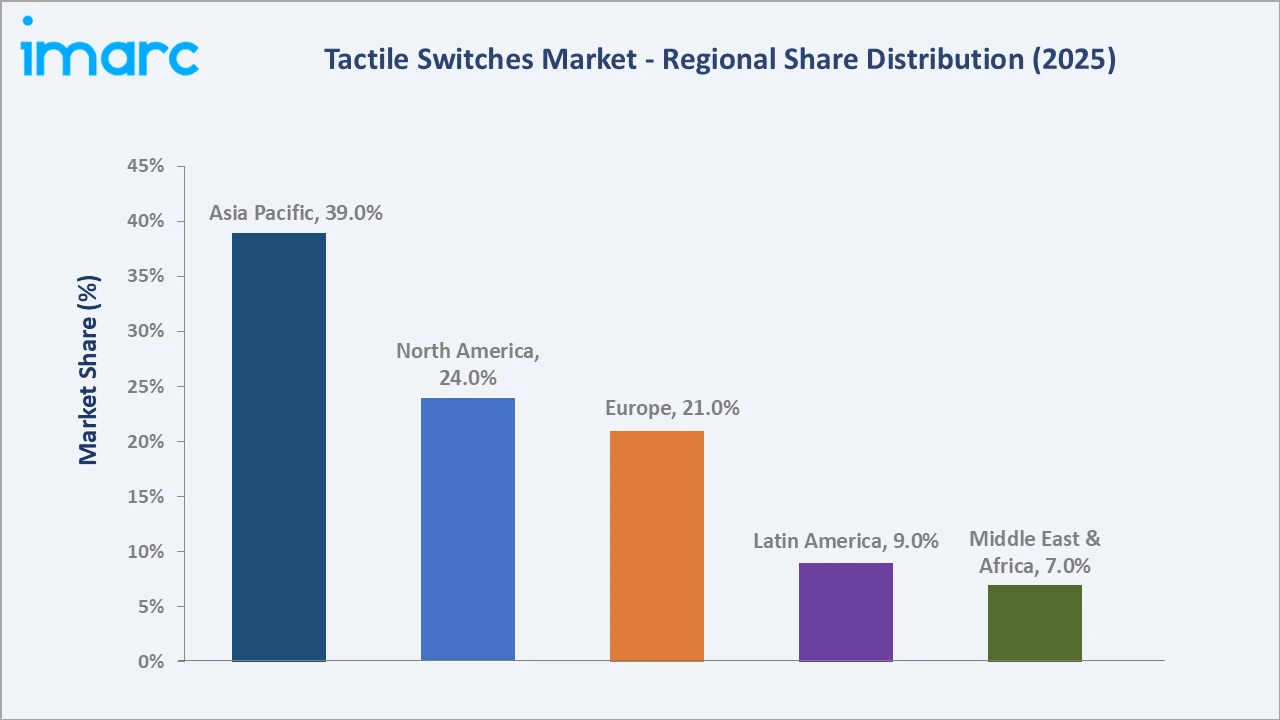
Europe at 21.0% is supported by automotive electronics, Industry 4.0 initiatives, and high-quality manufacturing standards. Latin America at 9.0%, witnessing steady growth as consumer electronics adoption and regional manufacturing investments continue to expand. Middle East and Africa at 7.0%, benefiting from rising digitalization, smart infrastructure development, and growing industrial automation.
Competitive Landscape
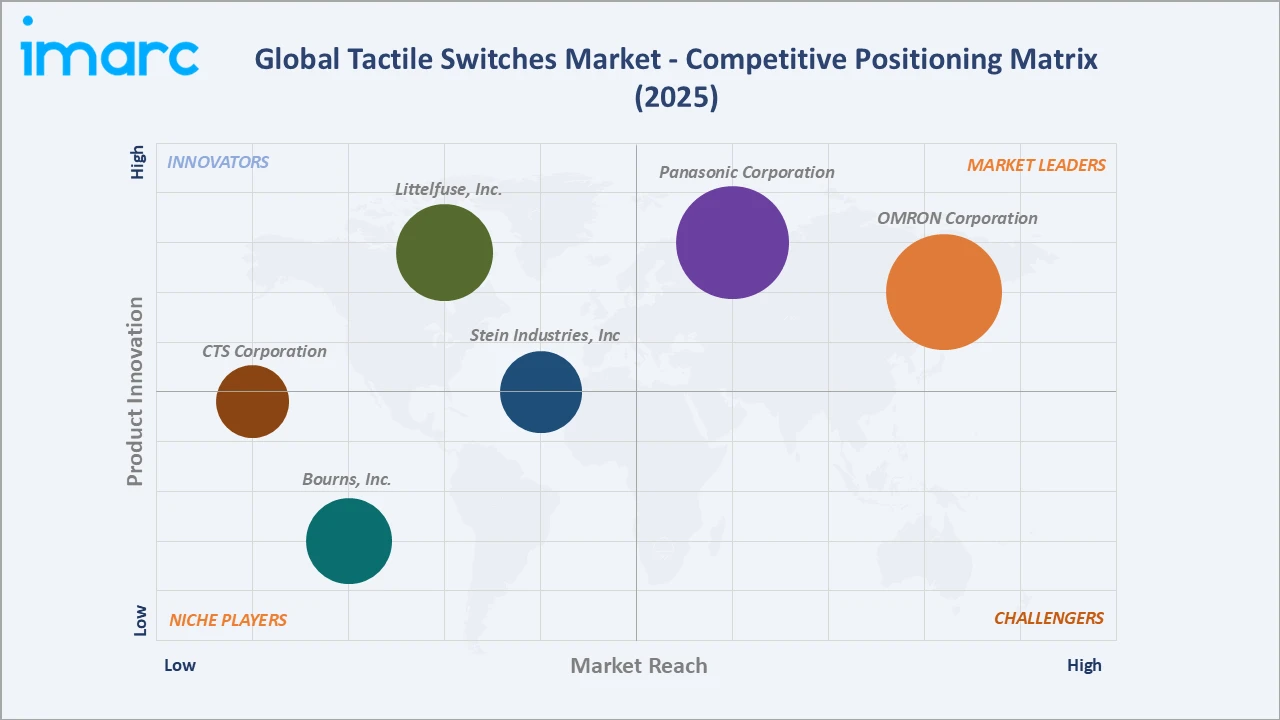
The global tactile switches market is moderately concentrated. This concentration reflects the industry's high barriers to entry: precision manufacturing capability, extensive product qualification infrastructure, global distribution networks, and the customer relationship depth required to achieve design wins at major OEM accounts.
|
Company |
Key Products |
Market Position |
Core Strength |
|
OMRON Corporation |
B3F, B3W-9 Illuminated Tactile Switch, B3W, B3WN, B3SL, B3SN, B3AL, B3FS, B3FS-4, B32 Tactile Switch Key Top, B3J Hinged Tactile Switch |
Market Leader |
OMRON Corporation is a recognized leader in electronic components, widely known for designing tactile switches that prioritize durability, haptic feedback, and reliability. |
|
Panasonic Corporation |
2.6mm x 1.6mm SMD series, 2.8mm x 1.9mm SMD series, 3.0mm x 2.0mm SMD series, 3.0mm x 2.6mm SMD series, 3.4mm x 2.9mm SMD series, 3.5mm x 2.9mm SMD series |
Market Leader |
Panasonic Corporation (through Panasonic Industry) is a leading innovator in tactile switches, historically pioneering them as "Light Touch Switches". |
|
Littelfuse, Inc. |
K5V, KSC2 TE, KMR2, KSJ, KSC XA, NanoT |
Innovator |
Littelfuse, Inc.'s role in tactile switches focuses on designing miniaturized, illuminated, and acoustically optimized switches for automotive, aerospace, medical, and industrial applications. |
|
Bourns, Inc. |
7914 |
Niche Player |
Bourns, Inc. is a leading manufacturer of electronic components, specializing in ultra-miniature, highly reliable tactile switches. |
|
CTS Corporation |
222A, 223A, 226A, 228A |
Established Player |
CTS Corporation specializes in engineering, highly customizable, reliable tactile switches for human-machine interfaces. |
|
Stein Industries, Inc |
320 Series, LL3301 Series, RT1105 Series, RT3301 Series, TL1014 Series, TL1015 Series, TL1016 Series, TL1017 Series, TL1018 Series, TL1030 Series |
Established Player |
Stein Industries, Inc. plays a major role in the tactile switch industry through its wholly owned subsidiary, E-Switch, Inc. |
Competition is intensifying through strategic partnerships, portfolio acquisitions, and product innovation cycles targeting the highest-growth premium segments, including EV automotive, medical wearables, and IoT sealed applications. Manufacturers differentiating on automotive qualification depth, miniaturization capability, and environmental sealing expertise are capturing disproportionate revenue growth relative to their unit volume positions.
Key Company Profiles
OMRON Corporation
OMRON Corporation is a leading manufacturer of electronic components and automation solutions, with a strong presence in the tactile switches market through its broad portfolio of high-performance electromechanical switches. The company designs compact, durable, and high-reliability tactile switches for applications in consumer electronics, automotive systems, industrial automation, medical devices, and home appliances. Leveraging its expertise in sensing, automation, and precision manufacturing, OMRON focuses on delivering switches with long operational life, consistent tactile feedback, and surface-mount compatibility.
- Key Products: B3F, B3W-9 Illuminated Tactile Switch, B3W, B3WN, B3SL, B3SN, B3AL, B3FS, B3FS-4, B32 Tactile Switch Key Top, B3J Hinged Tactile Switch.
- Strategic Focus: Developing compact, high-durability, and high-reliability solutions for consumer electronics, automotive, industrial automation, and medical applications. The company emphasizes switch miniaturization, surface-mount (SMD) compatibility, long operational life, and consistent tactile performance to meet evolving device requirements.
Panasonic Corporation
Panasonic Corporation is a key player in electronic components, offering a comprehensive portfolio of tactile switches for consumer electronics, automotive systems, industrial equipment, medical devices, and IoT applications. The company specializes in compact, low-profile, and high-durability tactile switches with features such as surface-mount (SMD) compatibility and long operational life. Leveraging its expertise in precision engineering and advanced manufacturing, Panasonic focuses on delivering reliable switching solutions that support device miniaturization and enhanced user experience.
- Key Products: 2.6mm x 1.6mm SMD series, 2.8mm x 1.9mm SMD series, 3.0mm x 2.0mm SMD series, 3.0mm x 2.6mm SMD series, 3.4mm x 2.9mm SMD series, 3.5mm x 2.9mm SMD series.
- Key Developments: In November 2025, Panasonic Industry Europe launched the EVPBB5AHE00 miniature tactile switch, featuring a compact 2.6 mm × 1.6 mm footprint, a low 0.5–0.57 mm profile, and a strong 3 N operating force. The IP67-rated switch offers a crisp tactile response and a service life of up to 500,000 cycles, making it suitable for space-constrained and harsh-environment applications.
- Strategic Focus: Developing compact, ultra-low-profile, and high-reliability tactile switches to address the growing demand for miniaturized electronic devices. The company emphasizes innovations in SMD technology, IP-rated sealed switch designs, long lifecycle performance, and enhanced tactile feedback for automotive, industrial, medical, and consumer electronics applications.
Market Concentration Analysis
The global tactile switches market is moderately concentrated, with OMRON Corporation, Panasonic Corporation, Littelfuse, Inc., Bourns, Inc., and CTS Corporation collectively holding approximately 60% of global market revenue in 2025. This concentration reflects the industry’s precision requirements, OEM qualification investment depth, and global distribution infrastructure that advantage established manufacturers against new market entrants. Market concentration is expected to increase marginally through 2034 as technical specifications for automotive and medical applications become more demanding, favoring manufacturers with established qualification infrastructure.
Investment & Growth Opportunities
Highest Growth Segments
Medical application (~5.5% CAGR), sealed type (~5.0% CAGR), automotive application (~4.9% CAGR), Asia-Pacific region (~5.2% CAGR), and SMD type (~5.3% CAGR from miniaturization demand) represent the tactile switches market's highest-growth investment vectors through 2034.
Investment Themes
- Automotive and EV HMI program targeting: Investment is increasing in tactile switches designed for automotive and electric vehicle human–machine interfaces, including steering controls, dashboards, infotainment systems, and charging equipment. The focus is on high durability, precise feedback, temperature resistance, and compliance with automotive reliability standards.
- Medical grade sealed and ultra-miniature switch development: Manufacturers are investing in compact, sealed tactile switches for wearable monitors, diagnostic equipment, drug-delivery systems, and other medical devices. Key priorities include IP-rated protection, low actuation force, sterilization resistance, long operating life, and dependable performance in space-constrained applications.
Future Market Outlook (2026-2034)
The global tactile switches market is projected to grow from USD 7.23 Billion in 2025 to USD 10.79 Billion by 2034, delivering a 4.42% CAGR over the forecast period, consistent, structurally supported growth driven by the fundamental necessity of reliable physical input interfaces across the expanding electronic device ecosystem. The market's anchor value of USD 8.97 Billion in 2030 marks the midpoint expected to be an accelerating growth trajectory as EV HMI adoption reaches scale and medical wearable device proliferation moves from early adoption toward mainstream deployment.
Three structural forces will define the tactile switches market trajectory through 2034. First, the electric vehicle transition's demand for automotive-grade tactile switches will provide the market's highest-value demand increment through 2034, with each EV model incorporating qualified tactile switches at premium pricing of consumer-grade equivalent products. Second, Asia-Pacific's continued dominance and acceleration as the fastest-growing region for both tactile switch manufacturing and consumption will drive disproportionate market growth through 2034. Third, the medical device and IoT sectors' convergence around miniaturized, sealed, ultra-reliable switching components will create a premium market tier that grows significantly faster than the overall market average and commands substantially higher average selling prices that elevate total market value above unit volume growth rates.
Research Methodology
Primary Research
Primary research comprised in-depth interviews with tactile switch manufacturer product managers and sales executives, OEM procurement specialists at consumer electronics, automotive, and medical device companies, electronic component distribution executives, and independent electronic components market analysts. These discussions validated market size estimates, assessed segment demand trends, evaluated competitive dynamics, and provided insights into regional market characteristics and emerging application growth areas.
Secondary Research
Secondary research encompassed company annual reports and press releases, qualification standard documentation, electronic component distributor catalog analysis, trade publication coverage of product launches and M&A activity, technical publications on electromechanical switch technology, and credible market intelligence sources.
Forecasting Models
Forecasting models were developed using historical tactile switches market data, global electronics production trends, EV production volume projections, medical device market growth rates, IoT device proliferation forecasts, and regional manufacturing investment indicators. Both top-down and bottom-up approaches were validated through primary research.
Tactile Switches Market Report Scope:
| Report Features | Details |
|---|---|
| Base Year of the Analysis | 2025 |
| Historical Period | 2020-2025 |
| Forecast Period | 2026-2034 |
| Units | Billion USD |
| Scope of the Report | Exploration of Historical Trends and Market Outlook, Industry Catalysts and Challenges, Segment-Wise Historical and Predictive Market Assessment: ·
|
| Types Covered | Standard, Illuminated, Sealed, Key Top, Surface-mount Devices, Others |
| Applications Covered | Automotive, Medical, Electronic Devices, Others |
| Regions Covered | North America, Europe, Asia Pacific, Latin America, Middle East and Africa |
| Countries Covered | United States, Canada, Germany, France, United Kingdom, Italy, Spain, China, Japan, India, South Korea, Australia, Indonesia, Brazil, Mexico |
| Companies Covered | OMRON Corporation, Panasonic Corporation, Littelfuse Inc., Bourns Inc., CTS Corporation, Stein Industries Inc, etc. |
| Customization Scope | 10% Free Customization |
| Post-Sale Analyst Support | 10-12 Weeks |
| Delivery Format | PDF and Excel through Email (We can also provide the editable version of the report in PPT/Word format on special request) |
Key Benefits for Stakeholders:
- IMARC’s report offers a comprehensive quantitative analysis of various market segments, historical and current market trends, market forecasts, and dynamics of the tactile switches market from 2020-2034.
- The research study provides the latest information on the market drivers, challenges, and opportunities in the global tactile switches market.
- The study maps the leading, as well as the fastest-growing, regional markets. It further enables stakeholders to identify the key country-level markets within each region.
- Porter's five forces analysis assist stakeholders in assessing the impact of new entrants, competitive rivalry, supplier power, buyer power, and the threat of substitution. It helps stakeholders to analyze the level of competition within the tactile switches industry and its attractiveness.
- Competitive landscape allows stakeholders to understand their competitive environment and provides an insight into the current positions of key players in the market.
Frequently Asked Questions About the Tactile Switches Market Report
The global tactile switches market reached USD 7.23 Billion in 2025, driven by EV automotive HMI demand and medical wearable expansion.
The market grows at 4.42% CAGR during 2026-2034, reaching USD 10.79 Billion by 2034. The CAGR reflects EV automotive switch demand compounding, growing medical application, the Asia-Pacific region accelerating at ~5.2% CAGR, and sealed switch expansion across medical wearable and industrial IoT applications.
Standard type leads at 35.0% (2025) as the foundational volume category serving consumer electronics, industrial controls, and general-purpose applications across the broadest actuation force and mounting configuration range.
Electronic devices dominate at 48.0% (2025), driven by smartphones, gaming keyboards, laptops, IoT devices, and consumer electronics volume.
Asia-Pacific leads at 39.0% (2025) with ~5.2% CAGR, driven by Japan's headquarters of major market players, China's massive electronics assembly base, and India's expanding electronics manufacturing.
Leading companies include OMRON Corporation, Panasonic Corporation, Littelfuse, Inc., Bourns, Inc., CTS Corporation, and Stein Industries, Inc, among others.
The market is projected to reach approximately USD 8.97 Billion by 2030, driven by EV switch proliferation, micro-switch adoption, sealed wearable switch deployment in medical devices, and combined aerospace-automotive portfolio market expansion.
Top opportunities include EV sealed switch programs, medical wearable ultra-miniature switch development, SMD micro-switch production capability for IoT and 3C device miniaturization, Asia-Pacific distribution network investment for India and Southeast Asia electronics manufacturing expansion, and gaming peripheral premium tactile switch development commanding standard switch pricing.
Need more help?
- Speak to our experienced analysts for insights on the current market scenarios.
- Include additional segments and countries to customize the report as per your requirement.
- Gain an unparalleled competitive advantage in your domain by understanding how to utilize the report and positively impacting your operations and revenue.
- For further assistance, please connect with our analysts.
 Request Customization
 Speak to an Analyst
 Request Brochure
 Inquire Before Buying
Benefits of Customization
- Personalize this research
- Triangulate with your data
- Get data as per your format and definition
- Gain a deeper dive into a specific application, geography, customer, or competitor
- Any level of personalization
Get in Touch With Us
UNITED STATES
Phone: +1-201-971-6302
INDIA
Phone: +91-120-433-0800
UNITED KINGDOM
Phone: +44-753-714-6104
Email: [email protected]
Client Testimonials




.webp)




.webp)













Related Reports

Choose your plan
*Please note that the prices mentioned below are starting prices for each bundle type. Kindly contact our team for further details.*
Single User License
- 1 User License, Access on 2 Devices
- PDF Report + Excel Dataset (Password Protected)
- Lifetime Access
- No Printing Rights
- 10% Free Report Customization
- 10–12 Weeks of Analyst Support
Five User License
- Access for 5 Users, 2 Devices per User
- PDF Report + Excel Dataset (Password Protected)
- Lifetime Access
- Dedicated Account Manager
- 12–14 Weeks of Analyst Support
- No Printing Rights
- 15% Free Report Customization
- 25% Discount on Your Next Purchase
Corporate User License
- Unlimited User Access (Within Your Organization)
- PDF Report + Excel Dataset
- Lifetime Access
- Dedicated Account Manager
- 14–20 Weeks of Analyst Support
- No Printing Rights
- 20% Free Report Customization
- 30% Discount on Your Next Purchase
Essential Insights
What's included:
3 reports
- Lifetime Access
- PDF Reports
- Excel Datasets
- 2 Weeks of Free Analyst Support
- 2 User Licenses
- Access on 2 Devices
- Printing Rights
- Complimentary PowerPoint (PPT) Version
- Complimentary License Upgrade
Professional Access
What's included:
5 reports
- Lifetime Access
- PDF Reports
- Excel Datasets
- 8 Weeks of Free Analyst Support
- 2 User Licenses
- Access on 2 Devices
- Printing Rights
- Complimentary PowerPoint (PPT) Version
- Complimentary License Upgrade
Business Advantage
What's included:
8 reports
- Lifetime Access
- PDF Reports
- Excel Datasets
- 14 Weeks of Free Analyst Support
- 2 User Licenses
- Access on 2 Devices
- Printing Rights
- Complimentary PowerPoint (PPT) Version
- Complimentary License Upgrade
Enterprise Intelligence
What's included:
10 reports
- Lifetime Access
- PDF Reports
- Excel Datasets
- 20 Weeks of Free Analyst Support
- 2 User Licenses
- Access on 2 Devices
- Printing Rights
- Complimentary PowerPoint (PPT) Version
- Complimentary License Upgrade