
Tetrafluoroethylene Prices, Trend, Chart, Market Analysis, News, Demand, Historical and Forecast Data Report 2026 Edition
Tetrafluoroethylene Price Trend, Index and Forecast
Track the latest insights on tetrafluoroethylene price trend and forecast with detailed analysis of regional fluctuations and market dynamics across North America, Latin America, Central Europe, Western Europe, Eastern Europe, Middle East, North Africa, West Africa, Central and Southern Africa, Central Asia, Southeast Asia, South Asia, East Asia, and Oceania.
Tetrafluoroethylene Prices Outlook Q2 2026
- China: USD 2861/MT
- USA: USD 4234/MT
- Germany: USD 4060/MT
- Japan: USD 3798/MT
- India: USD 3229/MT
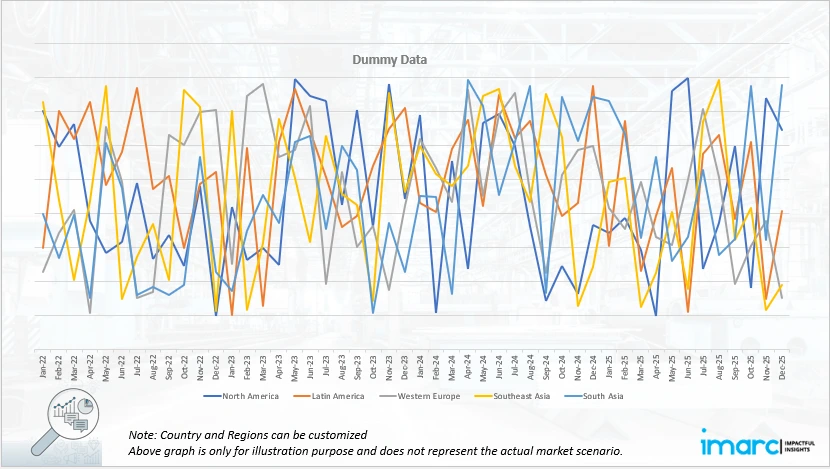
Tetrafluoroethylene Price Chart
Get real-time access to monthly/quarterly/yearly prices Request Sample
During the second quarter of 2026, the tetrafluoroethylene prices in China reached 2861 USD/MT in June. Prices increased as strong demand from fluoropolymer manufacturers supported market activity and tightened domestic availability. Rising consumption from electronics, chemical processing, industrial coatings, and advanced manufacturing applications encouraged regular procurement of tetrafluoroethylene. Stricter import controls and reduced flexibility in external supply sources added pressure on domestic availability, allowing producers to maintain firmer quotations.
During the second quarter of 2026, the tetrafluoroethylene prices in the USA reached 4234 USD/MT in June. Prices rose as higher raw material expenses and strong demand from automotive, aerospace, electronics, and industrial applications supported firmer market conditions. Manufacturers of fluoropolymers maintained steady procurement activity due to the importance of tetrafluoroethylene in producing high performance materials used in demanding environments.
During the second quarter of 2026, the tetrafluoroethylene prices in Germany reached 4060 USD/MT in June. Prices increased as demand from advanced industrial sectors remained strong and supply chain constraints affected market availability. Manufacturers using fluoropolymer materials for chemical processing equipment, electronics, automotive components, and specialized industrial applications maintained consistent purchasing requirements.
During the second quarter of 2026, the tetrafluoroethylene prices in Japan reached 3798 USD/MT in June. Prices moved upward as higher import expenses and shipping challenges increased procurement costs for domestic buyers. Japan’s reliance on external supply sources made the market sensitive to international availability and transportation conditions. Demand from electronics, semiconductor manufacturing, precision engineering, and advanced industrial applications remained supportive as manufacturers required high performance fluoropolymer materials.
During the second quarter of 2026, the tetrafluoroethylene prices in India reached 3229 USD/MT in June. Prices increased as rising feedstock costs and stronger demand from refrigeration, automotive, electronics, and industrial applications supported market growth. Expanding use of fluoropolymer materials across manufacturing sectors encouraged consistent procurement activity among downstream users. Higher input costs affected production economics and contributed to increased supplier quotations.
Tetrafluoroethylene Prices Outlook Q1 2026
- China: USD 2775/MT
- USA: USD 4054/MT
- Germany: USD 3871/MT
- Japan: USD 3652/MT
- India: USD 3121/MT
During the first quarter of 2026, the tetrafluoroethylene prices in China reached 2775 USD/MT in March. Prices in China showed moderate upward momentum, supported by a gradual recovery in domestic chemical production and increased procurement from downstream polymer industries. Supply chain improvements combined with steady demand from fluoropolymer manufacturers contributed to stable market activity, while export demand remained healthy.
During the first quarter of 2026, the tetrafluoroethylene prices in the USA reached 4054 USD/MT in March. US prices advanced moderately due to rising operational costs and supply constraints from key domestic producers. Increased consumption in the coatings and industrial applications sector drove demand, while inventories remained lean. Additionally, energy cost fluctuations and strategic raw material sourcing impacted pricing dynamics, creating a cautious upward trend across key distribution hubs.
During the first quarter of 2026, the tetrafluoroethylene prices in Germany reached 3871 USD/MT in March. German prices experienced steady growth, influenced by rising demand in the automotive and chemical processing sectors. Production adjustments in European fluorochemical facilities and tighter regional supply influenced the market. The balance between industrial uptake and inventory levels contributed to moderate price gains, while import dynamics added additional support.
During the first quarter of 2026, the tetrafluoroethylene prices in Japan reached 3652 USD/MT in March. Japanese prices increased, driven by strong demand from the electronic and chemical industries. Limited production capacity, coupled with higher operational costs, contributed to price escalation. Market participants responded to global supply fluctuations and regional procurement challenges, keeping prices on an upward trajectory throughout the quarter.
During the first quarter of 2026, the tetrafluoroethylene prices in India reached 3121 USD/MT in March. Indian prices saw significant upward movement due to rising import costs and strong demand from polymer manufacturing sectors. Supply constraints, coupled with logistical challenges, further supported price increases. Domestic market absorption and strategic stockpiling by key buyers also reinforced steady growth in pricing trends.
Regional Coverage
The report provides a detailed analysis of the market across different regions, each with unique pricing dynamics influenced by localized market conditions, supply chain intricacies, and geopolitical factors. This includes price trends, price forecast and supply and demand trends for each region, along with spot prices by major ports. The report also provides coverage of FOB and CIF prices, as well as the key factors influencing tetrafluoroethylene prices.
Europe Tetrafluoroethylene Price Trend
Q2 2026:
The tetrafluoroethylene price index in Europe moved upward as tighter delivered supply, export demand, and logistics constraints supported firmer offers. Port congestion periodically restricted shipments and raised replacement concerns among manufacturers. Feedstock volatility also kept production economics under pressure, even when costs eased later in the quarter. Demand from fluoroelastomers, chemical synthesis, electronics, and specialty coatings provided consistent support. German integrated plants continued operating reliably, which maintained supply continuity and prevented a more severe shortage. Buyers generally purchased against immediate requirements because inventories remained comfortable in several markets. Export orders absorbed part of the available material and reduced downward pricing pressure.
Q1 2026:
The tetrafluoroethylene price index for Europe in Q1 showed moderate growth, supported by increasing demand from automotive and chemical processing sectors. Supply adjustments across the region maintained price stability, while fluctuations in energy costs influenced production expenses. Import dynamics also played a role, as European buyers secured raw materials at stable rates. Regulatory compliance and environmental considerations led to production scheduling adjustments, affecting availability. Regional industrial uptake remained steady, contributing to moderate upward trends across major markets.
This analysis can be extended to include detailed tetrafluoroethylene price information for a comprehensive list of countries.
| Region | Countries Covered |
|---|---|
| Europe | Germany, France, United Kingdom, Italy, Spain, Russia, Turkey, Netherlands, Poland, Sweden, Belgium, Austria, Ireland, Switzerland, Norway, Denmark, Romania, Finland, Czech Republic, Portugal, and Greece, among other European countries. |
North America Tetrafluoroethylene Price Trend
Q2 2026:
The tetrafluoroethylene price index in North America rose strongly as constrained prompt availability and active demand from fluoropolymer manufacturers tightened market balances. Electrification efforts, chemical processing, and industrial coatings supported steady procurement. Export demand absorbed regional volumes and reduced spot flexibility, strengthening seller negotiating power. Rising raw material costs due to geopolitical instability also increased production pressure during much of the quarter. Logistics difficulties and higher insurance and delivered costs added further support to replacement values. Supply concerns encouraged buyers to protect inventories and maintain regular purchasing instead of delaying orders. Producers kept offers firm as domestic availability remained relatively tight.
Q1 2026:
The tetrafluoroethylene price index in North America demonstrated steady gains in Q1. Rising operational costs and strong demand from coatings and industrial manufacturing sectors pushed prices higher. Supply constraints from domestic producers influenced inventory management, while fluctuating energy costs affected production. Import and export movements further moderated market activity. Strategic procurement by key end-users supported stable pricing, and regional logistics efficiencies ensured consistent product flow. Overall, North American markets reflected controlled upward pricing momentum.
Specific tetrafluoroethylenehistorical data within the United States and Canada can also be provided.
| Region | Countries Covered |
|---|---|
| North America | United States and Canada |
Middle East and Africa Tetrafluoroethylene Price Trend
Q2 2026:
The study includes tetrafluoroethylene price trends across the Middle East and Africa, taking into consideration variables that have a direct impact on market prices, such as regional industrial expansion, natural resource availability, and geopolitical conflicts.
Q1 2026:
According to the price chart for tetrafluoroethylene, supply chain interruptions, seasonal changes in demand, and geopolitical influences were the main causes of the price fluctuations in the Middle East and Africa.
In addition to region-wise data, information on tetrafluoroethylene prices for countries can also be provided.
| Region | Countries Covered |
|---|---|
| Middle East & Africa | Saudi Arabia, UAE, Israel, Iran, South Africa, Nigeria, Oman, Kuwait, Qatar, Iraq, Egypt, Algeria, and Morocco, among other Middle Eastern and African countries. |
Asia Pacific Tetrafluoroethylene Price Trend
Q2 2026:
The tetrafluoroethylene prices across Asia Pacific moved upward as higher production expenses, tighter supply conditions, and steady downstream demand supported stronger market quotations. Rising raw material costs increased manufacturing expenses for producers, encouraging suppliers to maintain firmer pricing across regional markets. China experienced supply chain challenges and higher operating costs, which affected material availability and increased pressure on domestic prices. Demand from fluoropolymer manufacturers remained strong as industries such as electronics, chemical processing, automotive, and industrial equipment continued requiring PTFE and other high performance polymer materials.
Q1 2026:
The region witnessed steady price increases driven by high industrial consumption, particularly in electronics and chemical sectors. Supply chain optimizations helped maintain consistent availability despite growing demand. Import dynamics and fluctuating raw material costs influenced pricing, while domestic manufacturing adjustments moderated sharp price swings. Buyers adjusted purchasing schedules in response to global supply conditions, supporting upward momentum. Regional demand trends reinforced steady price growth across key markets.
This tetrafluoroethylene price analysis can be expanded to include a comprehensive list of countries within the region.
| Region | Countries Covered |
|---|---|
| Asia Pacific | China, India, Indonesia, Pakistan, Bangladesh, Japan, Philippines, Vietnam, Thailand, South Korea, Malaysia, Nepal, Taiwan, Sri Lanka, Hongkong, Singapore, Australia, and New Zealand, among other Asian countries. |
Latin America Tetrafluoroethylene Price Trend
Q2 2026:
The tetrafluoroethylene market in Latin America is influenced by the region's industrial expansion and infrastructural projects. However, supply chain disruptions and fluctuating energy prices can lead to variable tetrafluoroethylene prices. Regulatory changes and shifting economic policies also impact market dynamics, leading to potential pricing volatility.
Q1 2026:
Latin America's tetrafluoroethylene market is predominantly influenced by its rich natural reserves, particularly in countries like Chile and Brazil. However, political instability and inconsistent regulatory frameworks can lead to significant volatility in tetrafluoroethylene prices.
This comprehensive review can be extended to include specific countries within the region.
| Region | Countries Covered |
|---|---|
| Latin America | Brazil, Mexico, Argentina, Columbia, Chile, Ecuador, and Peru, among other Latin American countries. |
Tetrafluoroethylene Pricing Report, Market Analysis, and News
IMARC's latest publication, “Tetrafluoroethylene Prices, Trend, Chart, Demand, Market Analysis, News, Historical and Forecast Data Report 2026 Edition,” offers a comprehensive examination of the tetrafluoroethylene market, providing valuable insights into both global and regional trends shaping prices. This report investigates the spot price of tetrafluoroethylene at key ports and evaluates the price composition, including FOB and CIF terms. It presents detailed tetrafluoroethylene prices trend analysis by region, covering North America, Europe, Asia Pacific, Middle East and Africa, and Latin America. The factors influencing tetrafluoroethylene pricing, such as supply and demand dynamics and geopolitical influences, are thoroughly assessed. This extensive report supports stakeholders in making informed strategic decisions with the latest news, regulatory updates, and technological advancements.
Tetrafluoroethylene Industry Analysis
The global tetrafluoroethylene market size reached 505.1 Million in 2025. By 2034, IMARC Group expects the market to reach 834.5 Million, at a projected CAGR of 5.56% during 2026-2034. The market is primarily driven by the increasing demand for high-performance polymers, advancements in industrial applications, and the need for materials with superior thermal and chemical stability.
Latest News and Developments:
- December 2025: Researchers identified tetrafluoroethylene telomers (TFE-T) as a cost effective and readily available fluorinated electrolyte additive that can significantly enhance rechargeable battery performance. Used at low concentrations, TFE-T improves cycling stability and safety in both lithium ion and potassium ion batteries across various cathode chemistries. The additive helps preserve the structural integrity of nickel based cathodes, reduces ion intermixing, and improves radiation resistance.
Product Description
Tetrafluoroethylene is a key monomer in the production of various fluoropolymers, most notably PTFE. It is synthesized through the pyrolysis of chlorodifluoromethane and is known for its resistance to high temperatures and chemical interactions. Tetrafluoroethylene polymers exhibit remarkable non-stick properties, low friction coefficients, and exceptional electrical insulation qualities. These characteristics make them ideal for coatings, films, and sealants, particularly in applications requiring high purity and stability. It is also used in the formulation of gaskets, bearings, and other components that operate under extreme conditions, solidifying its importance across the chemical, automotive, and electrical industries.
Report Coverage
| Key Attributes | Details |
|---|---|
| Product Name | Tetrafluoroethylene |
| Report Features | Exploration of Historical Trends and Market Outlook, Industry Demand, Industry Supply, Gap Analysis, Challenges, Tetrafluoroethylene Price Analysis, and Segment-Wise Assessment. |
| Currency/Units | US$ (Data can also be provided in local currency) or Metric Tons |
| Region/Countries Covered | The current coverage includes analysis at the global and regional levels only. Based on your requirements, we can also customize the report and provide specific information for the following countries: Asia Pacific: China, India, Indonesia, Pakistan, Bangladesh, Japan, Philippines, Vietnam, Thailand, South Korea, Malaysia, Nepal, Taiwan, Sri Lanka, Hongkong, Singapore, Australia, and New Zealand Europe: Germany, France, United Kingdom, Italy, Spain, Russia, Turkey, Netherlands, Poland, Sweden, Belgium, Austria, Ireland, Switzerland, Norway, Denmark, Romania, Finland, Czech Republic, Portugal and Greece North America: United States and Canada Latin America: Brazil, Mexico, Argentina, Columbia, Chile, Ecuador, and Peru Middle East & Africa: Saudi Arabia, UAE, Israel, Iran, South Africa, Nigeria, Oman, Kuwait, Qatar, Iraq, Egypt, Algeria, and Morocco The list of countries presented is not exhaustive. Information on additional countries can be provided if required by the client. |
| Information Covered for Key Suppliers |
|
| Customization Scope | The report can be customized as per the requirements of the customer |
| Report Price and Purchase Option |
Plan A: Monthly Updates - Annual Subscription
Plan B: Quarterly Updates - Annual Subscription
Plan C: Biannually Updates - Annual Subscription
|
| Post-Sale Analyst Support | 360-degree analyst support after report delivery |
| Delivery Format | PDF and Excel through email (We can also provide the editable version of the report in PPT/Word format on special request) |
Key Benefits for Stakeholders:
- IMARC’s report presents a detailed analysis of tetrafluoroethylene pricing, covering global and regional trends, spot prices at key ports, and a breakdown of Ex Works, FOB, and CIF prices.
- The study examines factors affecting tetrafluoroethylene price trend, including raw material costs, supply-demand shifts, geopolitical impacts, and industry developments, offering insights for informed decision-making.
- The competitive landscape review equips stakeholders with crucial insights into the latest market news, regulatory changes, and technological advancements, ensuring a well-rounded, strategic overview for forecasting and planning.
- IMARC offers various subscription options, including monthly, quarterly, and biannual updates, allowing clients to stay informed with the latest market trends, ongoing developments, and comprehensive market insights. The tetrafluoroethylene price charts ensure our clients remain at the forefront of the industry.
Need more help?
- Speak to our experienced analysts for insights on the current market scenarios.
- Include additional segments and countries to customize the report as per your requirement.
- Gain an unparalleled competitive advantage in your domain by understanding how to utilize the report and positively impacting your operations and revenue.
- For further assistance, please connect with our analysts.
 Request Customization
 Inquire Before Buying
 Speak to an Analyst
 Request Brochure
Benefits of Customization
- Personalize this research
- Triangulate with your data
- Get data as per your format and definition
- Gain a deeper dive into a specific application, geography, customer, or competitor
- Any level of personalization
Get in Touch With Us
UNITED STATES
Phone: +1-201-971-6302
INDIA
Phone: +91-120-433-0800
UNITED KINGDOM
Phone: +44-753-714-6104
Email: [email protected]
Client Testimonials




.webp)




.webp)













Related Reports

Why Choose Us
IMARC offers trustworthy, data-centric insights into commodity pricing and evolving market trends, enabling businesses to make well-informed decisions in areas such as procurement, strategic planning, and investments. With in-depth knowledge spanning more than 1000 commodities and a vast global presence in over 150 countries, we provide tailored, actionable intelligence designed to meet the specific needs of diverse industries and markets.
1000
+Commodities
150
+Countries Covered
3000
+Clients
20
+Industry

Robust Methodologies & Extensive Resources
IMARC delivers precise commodity pricing insights using proven methodologies and a wealth of data to support strategic decision-making.

Subscription-Based Databases
Our extensive databases provide detailed commodity pricing, import-export trade statistics, and shipment-level tracking for comprehensive market analysis.

Primary Research-Driven Insights
Through direct supplier surveys and expert interviews, we gather real-time market data to enhance pricing accuracy and trend forecasting.

Extensive Secondary Research
We analyze industry reports, trade publications, and market studies to offer tailored intelligence and actionable commodity market insights.
Trusted by 3000+ industry leaders worldwide to drive data-backed decisions. From global manufacturers to government agencies, our clients rely on us for accurate pricing, deep market intelligence, and forward-looking insights.