
United States Tuna Market Report by Species (Skipjack, Yellowfin, Albacore, Bigeye, Bluefin), Type (Canned, Frozen, Fresh), and Region 2026-2034
United States Tuna Market Size & Share:
The United States tuna market size reached USD 584.2 Million in 2025. Looking forward, IMARC Group expects the market to reach USD 751.6 Million by 2034, exhibiting a growth rate (CAGR) of 2.84% during 2026-2034. The increasing focus on tuna's rich nutritional profile, the rising environmental concerns and sustainability, and the influence of global cuisine, especially the popularity of Japanese and Mediterranean dishes represent some of the key factors driving the market.
|
Report Attribute
|
Key Statistics
|
|---|---|
|
Base Year
|
2025 |
|
Forecast Years
|
2026-2034
|
|
Historical Years
|
2020-2025
|
| Market Size in 2025 | USD 584.2 Million |
| Market Forecast in 2034 | USD 751.6 Million |
| Market Growth Rate (2026-2034) | 2.84% |
Access the full market insights report Request Sample
Tuna is a term that refers to multiple species of oceanic fish that belong to the Thunnini tribe. Widely found in the Atlantic, Indian, and Pacific Oceans, tuna are known for their sleek, streamlined bodies and incredible swimming speed. These migratory fish are sought after in both commercial and recreational fishing due to their size and the rich, flavorful meat they provide. It plays a crucial role in various cuisines around the world, particularly in Japanese dishes, including sushi and sashimi. Since it is a high source of vitamins, protein, and omega-3 fatty acids, tuna is recognized as a healthy choice in a balanced diet. Moreover, tuna fishing significantly contributes to the global economy, generating employment and business opportunities. Its importance in gastronomy, nutrition, and economic contribution makes tuna an essential part of our global ecosystem.
United States Tuna Market Trends:
The United States tuna industry is influenced by several market drivers that shape its growth and direction. One of the primary drivers is consumer preference and demand. With an increasing focus on healthy eating, tuna's rich nutritional profile, including its high protein and omega-3 fatty acid content, has made it a popular choice among health-conscious consumers. Additionally, environmental concerns and sustainability are also significant drivers in the industry. The awareness of overfishing and its ecological impact has led to a preference for sustainably sourced tuna. Certifications and eco-labeling have become vital in assuring consumers that the products meet specific environmental standards. Along with this, trade agreements and regulatory policies play a critical role too. Regulations on catch limits, fishing methods, and import-export tariffs can either facilitate or hinder the industry's growth. Government initiatives promoting local produce also contribute to shaping the market. In addition, technological advancements in fishing, processing, and packaging have enabled more efficient and eco-friendly practices, contributing to the industry's growth. Innovations in aquaculture are also expanding the possibilities for controlled tuna farming, reducing dependence on wild catch. Apart from this, the influence of global cuisine, especially the popularity of Japanese and Mediterranean dishes, has further boosted the demand for tuna in the United States. Restaurants and home cooks alike are exploring diverse culinary uses of tuna, broadening its appeal. Economic factors, such as disposable income levels and economic growth, also impact the consumption of tuna. During prosperous times, consumers may be more willing to spend on premium seafood products, including tuna. Furthermore, such as the rise of online retail and home delivery services are providing new avenues for purchasing tuna, making it more accessible to a broader consumer base. Some of the other factors driving the market include cultural shifts towards ethical consumption and community support in their purchasing decisions.
United States Tuna Market Segmentation:
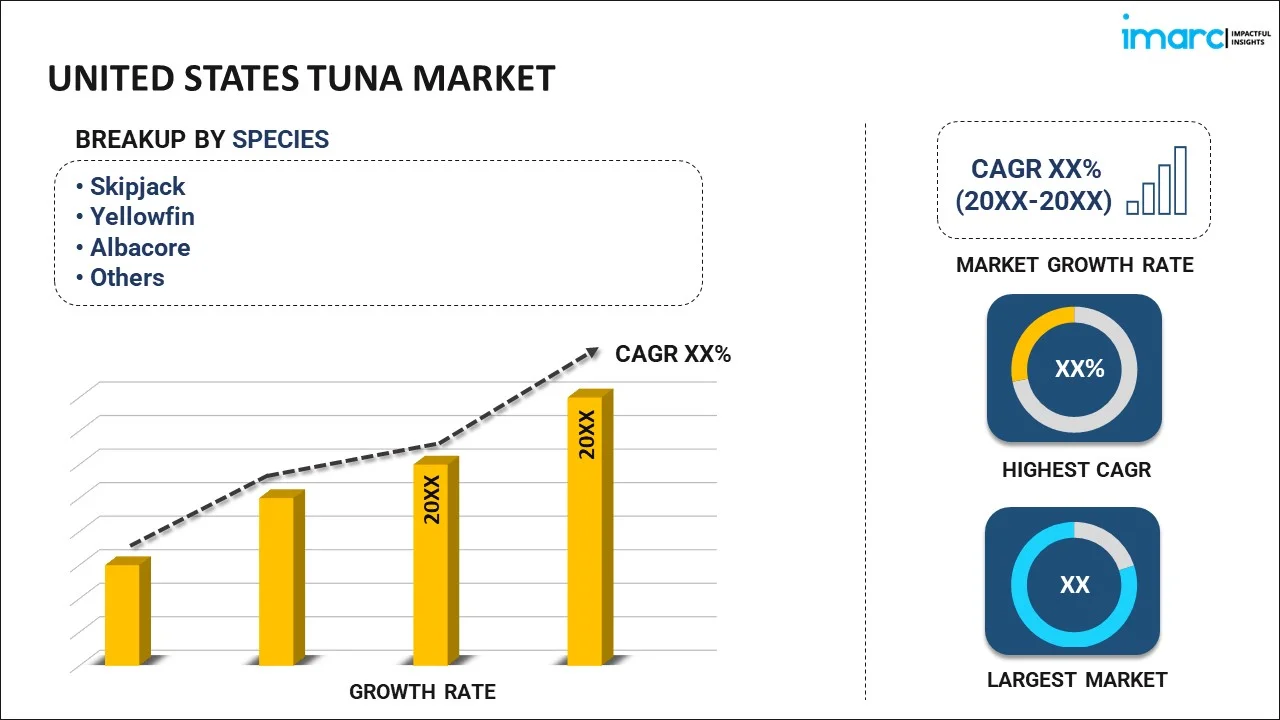
IMARC Group provides an analysis of the key trends in each segment of the United States tuna market report, along with forecasts at the country level for 2026-2034. Our report has categorized the market based on species and type.
Species Insights:
To get detailed segment analysis of this market Request Sample
- Skipjack
- Yellowfin
- Albacore
- Bigeye
- Bluefin
The report has provided a detailed breakup and analysis of the market based on the species. This includes skipjack, yellowfin, albacore, bigeye, and bluefin.

Type Insights:
- Canned
- Frozen
- Fresh
A detailed breakup and analysis of the market based on the type have also been provided in the report. This includes canned, frozen, and fresh.
Regional Insights:
To get detailed regional analysis of this market Request Sample
- Northeast
- Midwest
- South
- West
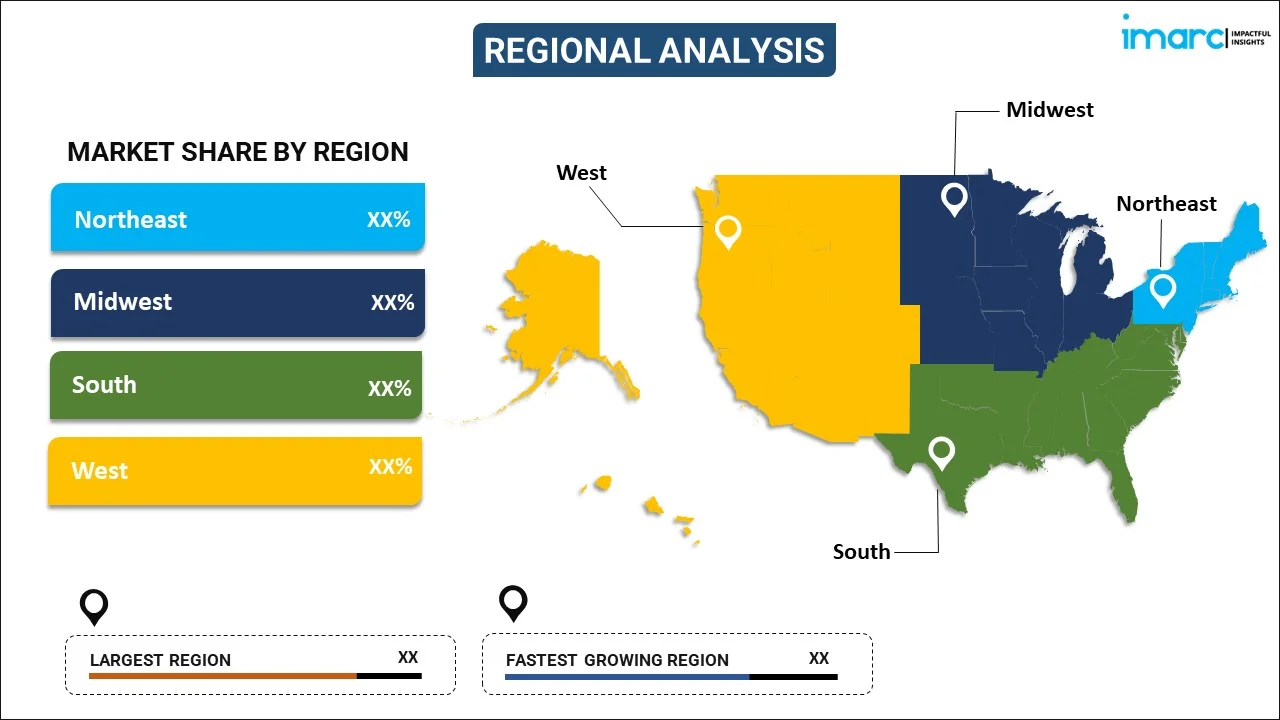
The report has also provided a comprehensive analysis of all the major regional markets, which include Northeast, Midwest, South, and West.
Competitive Landscape:
The report has also provided a comprehensive analysis of the competitive landscape in the market. Competitive analysis such as market structure, key player positioning, top winning strategies, competitive dashboard, and company evaluation quadrant has been covered in the report. Also, detailed profiles of all major companies have been provided.
United States Tuna Market Report Scope:
| Report Features | Details |
|---|---|
| Base Year of the Analysis | 2025 |
| Historical Period | 2020-2025 |
| Forecast Period | 2026-2034 |
| Units | Million USD |
| Scope of the Report | Exploration of Historical and Forecast Trends, Industry Catalysts and Challenges, Segment-Wise Historical and Predictive Market Assessment:
|
| Species Covered | Skipjack, Yellowfin, Albacore, Bigeye, Bluefin |
| Types Covered | Canned, Frozen, Fresh |
| Regions Covered | Northeast, Midwest, South, West |
| Customization Scope | 10% Free Customization |
| Post-Sale Analyst Support | 10-12 Weeks |
| Delivery Format | PDF and Excel through Email (We can also provide the editable version of the report in PPT/Word format on special request) |
Key Questions Answered in This Report:
- How has the United States tuna market performed so far and how will it perform in the coming years?
- What has been the impact of COVID-19 on the United States tuna market?
- What is the breakup of the United States tuna market on the basis of species?
- What is the breakup of the United States tuna market on the basis of type?
- What are the various stages in the value chain of the United States tuna market?
- What are the key driving factors and challenges in the United States tuna market?
- What is the structure of the United States tuna market and who are the key players?
- What is the degree of competition in the United States tuna market?
Key Benefits for Stakeholders:
- IMARC’s report offers a comprehensive quantitative analysis of various market segments, historical and current market trends, market forecasts, and dynamics of the United States tuna market from 2020-2034.
- The research study provides the latest information on the market drivers, challenges, and opportunities in the United States tuna market.
- Porter's five forces analysis assist stakeholders in assessing the impact of new entrants, competitive rivalry, supplier power, buyer power, and the threat of substitution. It helps stakeholders to analyze the level of competition within the United States tuna industry and its attractiveness.
- Competitive landscape allows stakeholders to understand their competitive environment and provides an insight into the current positions of key players in the market.
Need more help?
- Speak to our experienced analysts for insights on the current market scenarios.
- Include additional segments and countries to customize the report as per your requirement.
- Gain an unparalleled competitive advantage in your domain by understanding how to utilize the report and positively impacting your operations and revenue.
- For further assistance, please connect with our analysts.
 Request Customization
 Speak to an Analyst
 Request Brochure
 Inquire Before Buying
Benefits of Customization
- Personalize this research
- Triangulate with your data
- Get data as per your format and definition
- Gain a deeper dive into a specific application, geography, customer, or competitor
- Any level of personalization
Get in Touch With Us
UNITED STATES
Phone: +1-201-971-6302
INDIA
Phone: +91-120-433-0800
UNITED KINGDOM
Phone: +44-753-714-6104
Email: [email protected]
Client Testimonials




.webp)




.webp)













Related Reports

Choose your plan
*Please note that the prices mentioned below are starting prices for each bundle type. Kindly contact our team for further details.*
Single User License
- 1 User License, Access on 2 Devices
- PDF Report + Excel Dataset (Password Protected)
- Lifetime Access
- No Printing Rights
- 10% Free Report Customization
- 10–12 Weeks of Analyst Support
Five User License
- Access for 5 Users, 2 Devices per User
- PDF Report + Excel Dataset (Password Protected)
- Lifetime Access
- Dedicated Account Manager
- 12–14 Weeks of Analyst Support
- No Printing Rights
- 15% Free Report Customization
- 25% Discount on Your Next Purchase
Corporate User License
- Unlimited User Access (Within Your Organization)
- PDF Report + Excel Dataset
- Lifetime Access
- Dedicated Account Manager
- 14–20 Weeks of Analyst Support
- No Printing Rights
- 20% Free Report Customization
- 30% Discount on Your Next Purchase
Essential Insights
What's included:
3 reports
- Lifetime Access
- PDF Reports
- Excel Datasets
- 2 Weeks of Free Analyst Support
- 2 User Licenses
- Access on 2 Devices
- Printing Rights
- Complimentary PowerPoint (PPT) Version
- Complimentary License Upgrade
Professional Access
What's included:
5 reports
- Lifetime Access
- PDF Reports
- Excel Datasets
- 8 Weeks of Free Analyst Support
- 2 User Licenses
- Access on 2 Devices
- Printing Rights
- Complimentary PowerPoint (PPT) Version
- Complimentary License Upgrade
Business Advantage
What's included:
8 reports
- Lifetime Access
- PDF Reports
- Excel Datasets
- 14 Weeks of Free Analyst Support
- 2 User Licenses
- Access on 2 Devices
- Printing Rights
- Complimentary PowerPoint (PPT) Version
- Complimentary License Upgrade
Enterprise Intelligence
What's included:
10 reports
- Lifetime Access
- PDF Reports
- Excel Datasets
- 20 Weeks of Free Analyst Support
- 2 User Licenses
- Access on 2 Devices
- Printing Rights
- Complimentary PowerPoint (PPT) Version
- Complimentary License Upgrade