
Vietnam Wireless Connectivity Market Report by Technology (Bluetooth, Wi-Fi, Ultra-Wide Band, NFC, Cellular, Zigbee, GPS, and Others), Network Type (Wireless Wide Area Network (WWAN), Wireless Personal Area Network (WPAN), Wireless Local Area Network (WLAN)), End User (Automotive and Transportation, Building Automation, Consumer Electronics and Wearables, Energy and Utilities, Healthcare, Industrial, IT and Telecom, and Others), and Region 2026-2034
Market Overview:
Vietnam wireless connectivity market size reached USD 608.4 Million in 2025. Looking forward, IMARC Group expects the market to reach USD 1,607.5 Million by 2034, exhibiting a growth rate (CAGR) of 11.06% during 2026-2034. The inflating application of 5G networks, which offer faster data speeds, lower latency, and increased network capacity compared to previous generations, is driving the market.
|
Report Attribute
|
Key Statistics
|
|---|---|
|
Base Year
|
2025
|
|
Forecast Years
|
2026-2034
|
|
Historical Years
|
2020-2025
|
|
Market Size in 2025
|
USD 608.4 Million |
|
Market Forecast in 2034
|
USD 1,607.5 Million |
| Market Growth Rate 2026-2034 | 11.06% |
Access the full market insights report Request Sample
Wireless connectivity refers to the ability of electronic devices to communicate and exchange data without the need for physical cables or wires. This technology utilizes various wireless communication protocols, such as Wi-Fi, Bluetooth, and cellular networks, enabling seamless data transfer between devices over short or long distances. Wireless connectivity has become ubiquitous in modern life, powering the communication between smartphones, laptops, tablets, smartwatches, and a plethora of other devices. It offers the convenience of untethered mobility, allowing users to access information, share data, and connect to networks without the constraints of physical connections. This technology has revolutionized industries, from telecommunications to healthcare, enabling the Internet of Things (IoT) and fostering a more interconnected and efficient world.
Vietnam Wireless Connectivity Market Trends:
The wireless connectivity market in Vietnam is thriving, driven by several key factors that are shaping the technological landscape. Firstly, the increasing demand for seamless and high-speed connectivity has propelled the adoption of wireless technologies across various industries. Moreover, the ubiquitous use of smartphones and smart devices has created a surge in data traffic, necessitating robust wireless infrastructure. Additionally, the proliferation of IoT devices, ranging from smart home gadgets to industrial sensors, has further intensified the need for reliable wireless connectivity. Furthermore, the advent of 5G technology has emerged as a significant driver, promising unparalleled speed and bandwidth for a wide range of applications. This next-generation connectivity is set to revolutionize industries such as healthcare, autonomous vehicles, and augmented reality. Simultaneously, the ongoing digital transformation across sectors has fueled the demand for flexible and scalable wireless solutions, fostering innovation and efficiency. In conclusion, a confluence of factors, including the demand for high-speed connectivity, the prevalence of smart devices, the rise of IoT, and the evolution of 5G technology, collectively propel the regional wireless connectivity market forward, creating a dynamic and interconnected future.
Vietnam Wireless Connectivity Market Segmentation:
IMARC Group provides an analysis of the key trends in each segment of the market, along with forecasts at the country level for 2026-2034. Our report has categorized the market based on technology, network type, and end user.
Technology Insights:
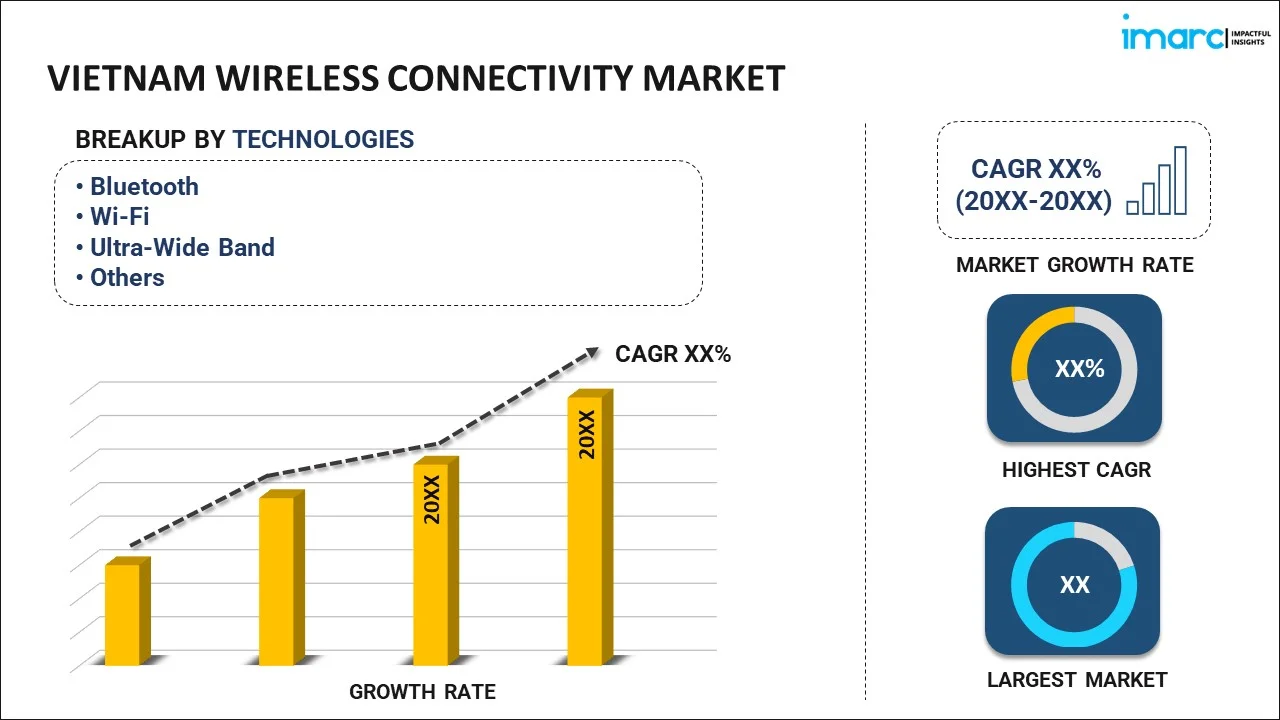
To get detailed segment analysis of this market Request Sample
- Bluetooth
- Wi-Fi
- Ultra-Wide Band
- NFC
- Cellular
- Zigbee
- GPS
- Others
The report has provided a detailed breakup and analysis of the market based on the technology. This includes bluetooth, wi-fi, ultra-wide band, NFC, cellular, zigbee, GPS, and others.
Network Type Insights:
- Wireless Wide Area Network (WWAN)
- Wireless Personal Area Network (WPAN)
- Wireless Local Area Network (WLAN)
A detailed breakup and analysis of the market based on the network type have also been provided in the report. This includes wireless wide area network (WWAN), wireless personal area network (WPAN), and wireless local area network (WLAN).
End User Insights:
- Automotive and Transportation
- Building Automation
- Consumer Electronics and Wearables
- Energy and Utilities
- Healthcare
- Industrial
- IT and Telecom
- Others
The report has provided a detailed breakup and analysis of the market based on the end user. This includes automotive and transportation, building automation, consumer electronics and wearables, energy and utilities, healthcare, industrial, IT and telecom, and others.
Regional Insights:
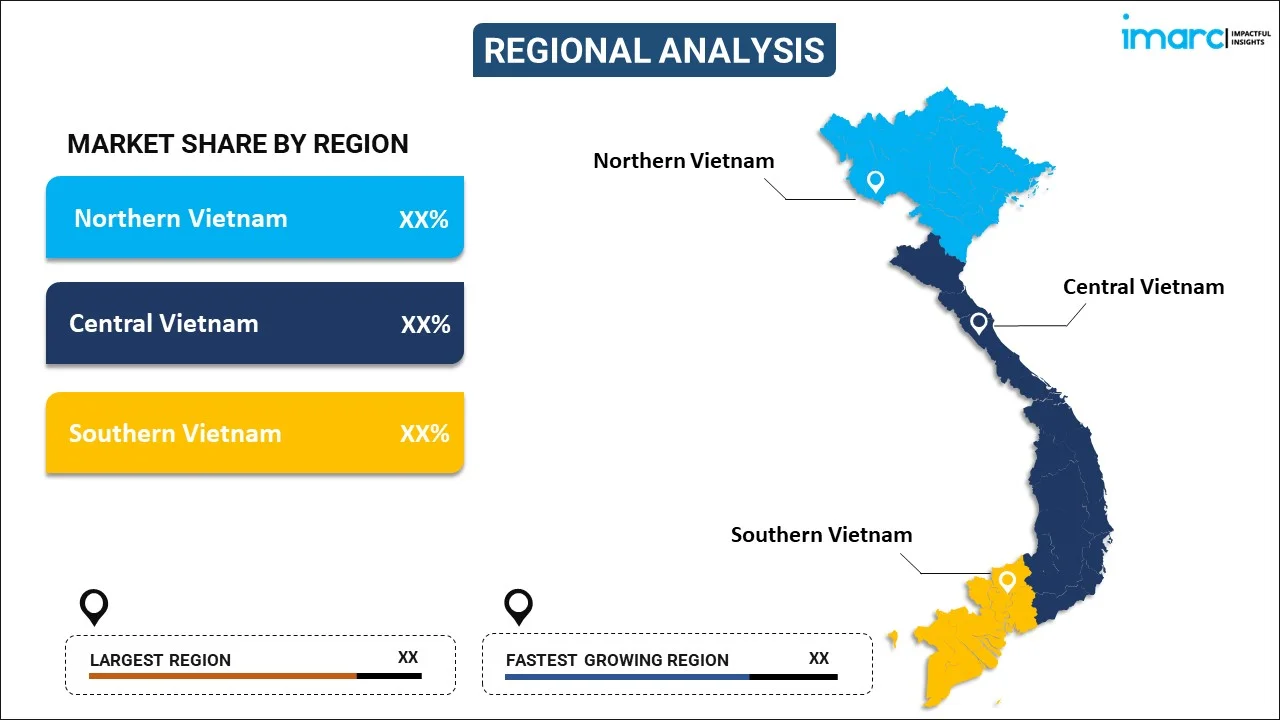
To get detailed regional analysis of this market Request Sample
- Northern Vietnam
- Central Vietnam
- Southern Vietnam
The report has also provided a comprehensive analysis of all the major regional markets, which include Northern Vietnam, Central Vietnam, and Southern Vietnam.
Competitive Landscape:
The market research report has also provided a comprehensive analysis of the competitive landscape in the market. Competitive analysis such as market structure, key player positioning, top winning strategies, competitive dashboard, and company evaluation quadrant has been covered in the report. Also, detailed profiles of all major companies have been provided.
Vietnam Wireless Connectivity Market Report Coverage:
| Report Features | Details |
|---|---|
| Base Year of the Analysis | 2025 |
| Historical Period | 2020-2025 |
| Forecast Period | 2026-2034 |
| Units | Million USD |
| Scope of the Report | Exploration of Historical Trends and Market Outlook, Industry Catalysts and Challenges, Segment-Wise Historical and Future Market Assessment:
|
| Technologies Covered | Bluetooth, Wi-Fi, Ultra-Wide Band, NFC, Cellular, Zigbee, GPS, Others |
| Network Types Covered | Wireless Wide Area Network (WWAN), Wireless Personal Area Network (WPAN), Wireless Local Area Network (WLAN) |
| End Users Covered | Automotive and Transportation, Building Automation, Consumer Electronics and Wearables, Energy and Utilities, Healthcare, Industrial, IT and Telecom, Others |
| Regions Covered | Northern Vietnam, Central Vietnam, Southern Vietnam |
| Customization Scope | 10% Free Customization |
| Post-Sale Analyst Support | 10-12 Weeks |
| Delivery Format | PDF and Excel through Email (We can also provide the editable version of the report in PPT/Word format on special request) |
Key Questions Answered in This Report:
- How has the Vietnam wireless connectivity market performed so far and how will it perform in the coming years?
- What has been the impact of COVID-19 on the Vietnam wireless connectivity market?
- What is the breakup of the Vietnam wireless connectivity market on the basis of technology?
- What is the breakup of the Vietnam wireless connectivity market on the basis of network type?
- What is the breakup of the Vietnam wireless connectivity market on the basis of end user?
- What are the various stages in the value chain of the Vietnam wireless connectivity market?
- What are the key driving factors and challenges in the Vietnam wireless connectivity?
- What is the structure of the Vietnam wireless connectivity market and who are the key players?
- What is the degree of competition in the Vietnam wireless connectivity market?
Key Benefits for Stakeholders:
- IMARC’s industry report offers a comprehensive quantitative analysis of various market segments, historical and current market trends, market forecasts, and dynamics of the Vietnam wireless connectivity market from 2020-2034.
- The research report provides the latest information on the market drivers, challenges, and opportunities in the Vietnam wireless connectivity market.
- Porter's five forces analysis assist stakeholders in assessing the impact of new entrants, competitive rivalry, supplier power, buyer power, and the threat of substitution. It helps stakeholders to analyze the level of competition within the Vietnam wireless connectivity industry and its attractiveness.
- Competitive landscape allows stakeholders to understand their competitive environment and provides an insight into the current positions of key players in the market.
Need more help?
- Speak to our experienced analysts for insights on the current market scenarios.
- Include additional segments and countries to customize the report as per your requirement.
- Gain an unparalleled competitive advantage in your domain by understanding how to utilize the report and positively impacting your operations and revenue.
- For further assistance, please connect with our analysts.
 Request Customization
 Speak to an Analyst
 Request Brochure
 Inquire Before Buying
Benefits of Customization
- Personalize this research
- Triangulate with your data
- Get data as per your format and definition
- Gain a deeper dive into a specific application, geography, customer, or competitor
- Any level of personalization
Get in Touch With Us
UNITED STATES
Phone: +1-201-971-6302
INDIA
Phone: +91-120-433-0800
UNITED KINGDOM
Phone: +44-753-714-6104
Email: [email protected]
Client Testimonials























Related Reports

Choose your plan
*Please note that the prices mentioned below are starting prices for each bundle type. Kindly contact our team for further details.*
Single User License
- 1 User License, Access on 2 Devices
- PDF Report + Excel Dataset (Password Protected)
- Lifetime Access
- No Printing Rights
- 10% Free Report Customization
- 10–12 Weeks of Analyst Support
Five User License
- Access for 5 Users, 2 Devices per User
- PDF Report + Excel Dataset (Password Protected)
- Lifetime Access
- Dedicated Account Manager
- 12–14 Weeks of Analyst Support
- No Printing Rights
- 15% Free Report Customization
- 25% Discount on Your Next Purchase
Corporate User License
- Unlimited User Access (Within Your Organization)
- PDF Report + Excel Dataset
- Lifetime Access
- Dedicated Account Manager
- 14–20 Weeks of Analyst Support
- No Printing Rights
- 20% Free Report Customization
- 30% Discount on Your Next Purchase
Essential Insights
What's included:
3 reports
- Lifetime Access
- PDF Reports
- Excel Datasets
- 2 Weeks of Free Analyst Support
- 2 User Licenses
- Access on 2 Devices
- Printing Rights
- Complimentary PowerPoint (PPT) Version
- Complimentary License Upgrade
Professional Access
What's included:
5 reports
- Lifetime Access
- PDF Reports
- Excel Datasets
- 8 Weeks of Free Analyst Support
- 2 User Licenses
- Access on 2 Devices
- Printing Rights
- Complimentary PowerPoint (PPT) Version
- Complimentary License Upgrade
Business Advantage
What's included:
8 reports
- Lifetime Access
- PDF Reports
- Excel Datasets
- 14 Weeks of Free Analyst Support
- 2 User Licenses
- Access on 2 Devices
- Printing Rights
- Complimentary PowerPoint (PPT) Version
- Complimentary License Upgrade
Enterprise Intelligence
What's included:
10 reports
- Lifetime Access
- PDF Reports
- Excel Datasets
- 20 Weeks of Free Analyst Support
- 2 User Licenses
- Access on 2 Devices
- Printing Rights
- Complimentary PowerPoint (PPT) Version
- Complimentary License Upgrade