
Europe Organ Preservation Market Size, Share, Trends and Forecast by Preservation Solution, Organ Donation Type, Technique, Organ Type, End User, and Country, 2026-2034
Europe Organ Preservation Market Summary:
The Europe organ preservation market size was valued at USD 76.98 Million in 2025 and is projected to reach USD 119.93 Million by 2034, growing at a compound annual growth rate of 5.05% from 2026-2034.
The Europe organ preservation market is primarily driven by the increasing prevalence of chronic organ failures and the growing demand for effective transplantation procedures across the region. Advancements in preservation technologies, including machine perfusion systems, are enabling extended organ viability and improved transplant outcomes. Government initiatives promoting organ donation awareness and regulatory frameworks supporting transplantation activities are further catalyzing market expansion. Additionally, the rising geriatric population susceptible to organ dysfunction and the growing number of deceased donor transplants are contributing to the sustained demand for organ preservation solutions and bolstering Europe organ preservation market share.
Key Takeaways and Insights:
-
By Preservation Solution: UW solution dominates the market with a share of 35.86% in 2025, owing to its proven effectiveness in reducing cellular injury and extending organ viability during cold storage. The solution's widespread adoption for kidney, liver, and pancreas preservation continues to drive its market leadership across European transplant centers.
-
By Organ Donation Type: Deceased organ donation leads the market with a share of 74.05% in 2025, reflecting the predominant role of post-mortem organ procurement in meeting transplant demand. Expanding opt-out legislation across European nations and improved donation coordination systems are strengthening this segment's contribution to overall transplant activities.
-
By Technique: Static cold storage technique exhibits a clear dominance in the market with 45.07% share in 2025, attributed to its simplicity, cost-effectiveness, and established clinical protocols. Despite the emergence of machine perfusion alternatives, static cold storage remains the preferred preservation method for standard criteria donor organs throughout Europe.
-
By Organ Type: Kidney represents the largest segment with a market share of 33.95% in 2025, driven by the high prevalence of chronic kidney disease affecting millions of Europeans. Kidney transplantation remains the most frequently performed solid organ transplant procedure, necessitating substantial preservation solution volumes and advanced storage techniques.
-
By End User: Organ banks lead the market with a share of 45.09% in 2025, reflecting their central role in organ procurement, preservation, and distribution networks. The robust infrastructure of European organ sharing organizations and their coordinated allocation systems underpin this segment's market dominance.
-
Key Players: Key players drive the Europe organ preservation market by investing in advanced perfusion technologies, expanding preservation solution portfolios, and strengthening distribution partnerships with transplant centers. Their strategic focus on clinical research collaborations and regulatory approvals accelerates product innovation and market penetration.
The Europe organ preservation market demonstrates sustained growth potential driven by the region's advanced healthcare infrastructure and commitment to transplantation excellence. Spain achieved a record of 6,464 organ transplants in 2024, representing a 10% increase over the previous year and attaining the world's highest deceased donor rate of 52.6 per million population. This accomplishment underscores the critical importance of preservation technologies in enabling successful transplant outcomes. The market continues to evolve with technological innovations such as normothermic machine perfusion gaining traction alongside traditional cold storage methods. European nations are implementing comprehensive organ donation legislation, including opt-out consent systems, to expand donor pools and address waiting list backlogs. The integration of artificial intelligence in organ viability assessment and the development of next-generation preservation solutions are positioning the market for continued expansion throughout the forecast period.
Europe Organ Preservation Market Trends:
Advancement in Machine Perfusion Technologies
The Europe organ preservation market is witnessing significant adoption of machine perfusion technologies as transplant centers seek methods to extend organ viability and improve post-transplant outcomes. Hypothermic and normothermic machine perfusion systems are enabling clinicians to assess organ function prior to transplantation, reducing the incidence of primary graft dysfunction. In December 2024, Royal Papworth Hospital in the United Kingdom performed its first clinical ex-vivo lung perfusion procedure using advanced perfusion equipment, demonstrating the expanding implementation of dynamic preservation techniques across European institutions.
Expansion of Deceased Donor Programs
European nations are increasingly implementing legislative frameworks and organizational structures to maximize deceased organ donation rates. The adoption of opt-out consent systems and the establishment of dedicated transplant coordinator roles are enhancing donation conversion rates throughout the region. Spain's transplant model, characterized by clinical leadership and family-centered consent processes, continues to serve as a benchmark for other European countries seeking to optimize their organ procurement systems. These coordinated efforts are strengthening the pipeline of available organs requiring preservation solutions.
Integration of Extended Criteria Donor Organs
The Europe organ preservation market is adapting to accommodate extended criteria donor organs as transplant programs seek to address persistent organ shortages. Advanced preservation techniques enable the utilization of organs from older donors and those with marginal characteristics that would previously have been declined. The development of specialized solutions and perfusion protocols for suboptimal organs is expanding the transplantable organ pool, necessitating enhanced preservation infrastructure and clinical protocols across European transplant networks.
Europe Organ Preservation Market Outlook 2026-2034:
The Europe organ preservation market is positioned for sustained growth as regional healthcare systems prioritize transplantation capacity expansion and technological advancement. The market generated a revenue of USD 76.98 Million in 2025 and is projected to reach a revenue of USD 119.93 Million by 2034, growing at a compound annual growth rate of 5.05% from 2026-2034. Continued investment in machine perfusion platforms, the development of next-generation preservation solutions, and harmonized regulatory frameworks across European Union member states will catalyze market expansion throughout the forecast period. The increasing adoption of normothermic and hypothermic perfusion technologies by leading transplant centers is expected to enhance organ utilization rates and improve post-transplant outcomes. Strategic collaborations between medical device manufacturers and healthcare institutions will further accelerate innovation and market penetration across the region.
.webp)
Europe Organ Preservation Market Report Segmentation:
| Segment Category | Leading Segment | Market Share |
|---|---|---|
| Preservation Solution | UW Solution | 35.86% |
| Organ Donation Type | Deceased Organ Donation | 74.05% |
| Technique | Static Cold Storage Technique | 45.07% |
| Organ Type | Kidney | 33.95% |
| End User | Organ Banks | 45.09% |
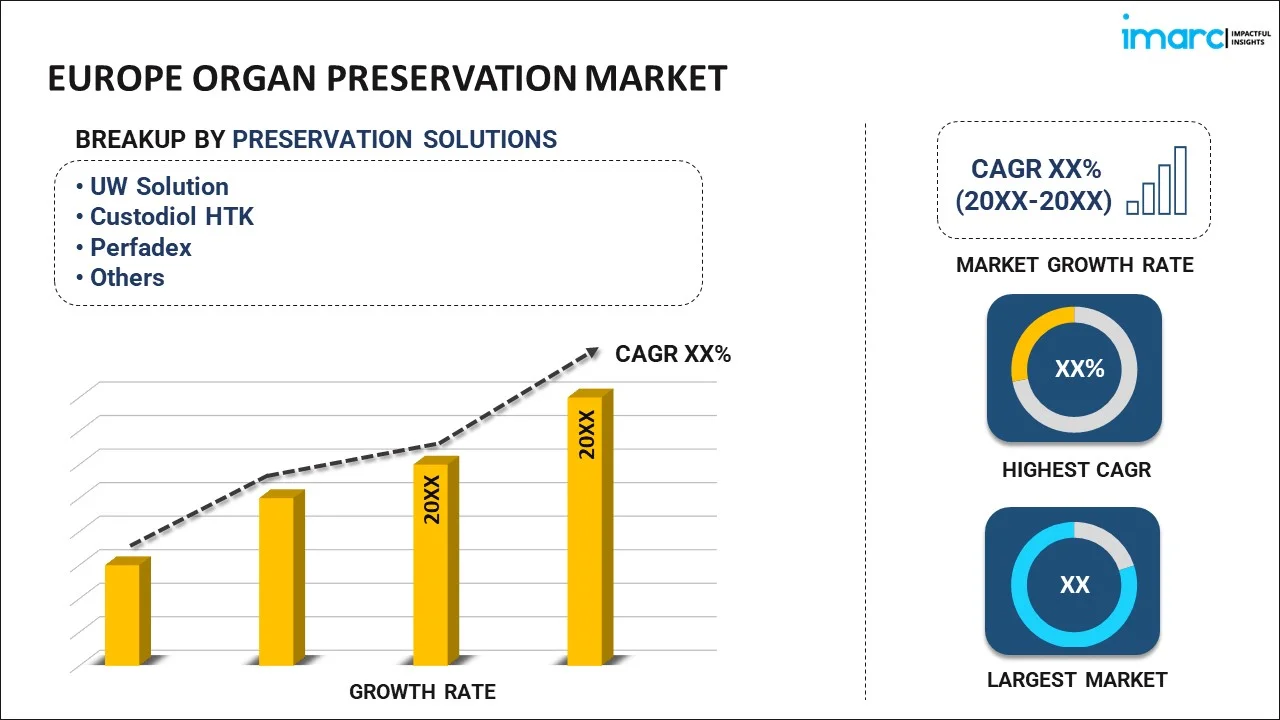
Breakup by Preservation Solution:
To get more information on this market, Request Sample
- UW Solution
- Custodiol HTK
- Perfadex
- Others
UW solution dominates with a market share of 35.86% of the total Europe organ preservation market in 2025.
UW solution maintains its market leadership position through its established clinical efficacy and widespread acceptance across European transplant centers. The solution's formulation provides optimal cellular protection during hypothermic storage, reducing adenosine triphosphate depletion and limiting oxidative stress damage. Its compatibility with multiple organ types including kidneys, livers, and pancreata establishes UW solution as a versatile preservation standard. The solution contains essential components such as lactobionate, raffinose, and hydroxyethyl starch that prevent cellular swelling and maintain membrane integrity during cold ischemia periods.
The European transplant community continues to rely on UW solution for standard criteria donor organs due to its extensive clinical validation and predictable preservation outcomes. According to transplantation research studies, UW solution enables safe preservation windows extending beyond traditional timeframes, facilitating broader geographic organ sharing among European allocation networks. The solution's availability through established supply channels and its favorable cost-effectiveness profile reinforce its predominant market position. Additionally, comprehensive training protocols and standardized handling procedures across European institutions have strengthened clinical confidence in UW solution's reliability and consistent performance.
Organ Donation Type Insights:
- Living Organ Donation
- Deceased Organ Donation
Deceased organ donation leads with a share of 74.05% of the total Europe organ preservation market in 2025.
Deceased organ donation constitutes the primary source of transplantable organs across Europe, requiring comprehensive preservation solutions and logistics infrastructure. The segment encompasses both donation after brain death and donation after circulatory death pathways, each demanding specific preservation protocols tailored to the physiological conditions of organ procurement. European nations have implemented legislative frameworks supporting deceased donation, including opt-out consent systems and mandatory referral policies that strengthen organ procurement activities. The establishment of dedicated transplant coordinators within intensive care units has improved donation identification and family consent processes across the region.
The expansion of donation after circulatory death programs throughout Europe is contributing to increased deceased donor organ volumes, necessitating advanced preservation techniques capable of mitigating ischemic injury. Machine perfusion technologies are enabling the utilization of organs from these donors that may experience extended warm ischemia times during the withdrawal process. The coordinated organ sharing networks established through organizations that facilitate the efficient distribution of deceased donor organs across national boundaries, optimizing allocation based on medical urgency and compatibility matching criteria.
Technique Insights:
- Static Cold Storage Technique
- Hypothermic Machine Perfusion
- Normothermic Machine Perfusion
- Others
Static cold storage technique exhibits a clear dominance with a 45.07% share of the total Europe organ preservation market in 2025.
Static cold storage remains the foundational preservation technique employed across European transplant centers due to its simplicity, portability, and cost-effectiveness. The method involves flushing organs with cold preservation solution and storing them on ice at hypothermic temperatures that effectively reduce metabolic activity. This approach delays cellular deterioration during the interval between organ procurement and transplantation by minimizing oxygen consumption and slowing enzymatic degradation processes. The technique's straightforward implementation allows rapid organ cooling at procurement sites without requiring complex equipment or specialized technical expertise.
European transplant protocols have optimized static cold storage procedures over decades of clinical experience, establishing reliable preservation windows for various organ types including kidneys, livers, and pancreata. While machine perfusion technologies are gaining adoption for marginal donor organs, static cold storage continues to serve as the preferred method for standard criteria donors demonstrating optimal function. The technique requires minimal specialized equipment, enabling organ preservation in diverse clinical settings and during transport between procurement and transplant facilities. Additionally, the established supply chains for cold storage containers and preservation solutions ensure consistent availability across European healthcare networks.
Organ Type Insights:
- Kidney
- Liver
- Lung
- Heart
- Others
Kidney represents the leading segment with a 33.95% share of the total Europe organ preservation market in 2025.
Kidney preservation dominates the European market reflecting the high volume of renal transplantation procedures performed annually across the region. Chronic kidney disease represents a significant healthcare burden affecting millions of Europeans, generating substantial demand for kidney transplants as the preferred treatment for end-stage renal disease compared to long-term dialysis dependency. Kidneys demonstrate favorable tolerance to cold ischemia compared to other solid organs, enabling extended preservation intervals that facilitate broader geographic sharing and optimal recipient matching through allocation networks.
Renal transplantation constitutes the majority of solid organ transplantation activity across Europe, driven by the prevalence of diabetes, hypertension, and other conditions contributing to progressive kidney dysfunction. Hypothermic machine perfusion has gained particular traction for kidney preservation, enabling assessment of organ viability through perfusion parameters and potentially improving outcomes from extended criteria donors and donation after circulatory death procurement. The segment's volume requirements drive substantial consumption of preservation solutions and associated consumables throughout European transplant networks. Additionally, the development of biomarkers for predicting post-transplant kidney function continues to advance preservation decision-making protocols.
End User Insights:
- Hospitals and Clinics
- Organ Banks
- Others
Organ banks dominate the market with a 45.09% share of the total Europe organ preservation market in 2025.
Organ banks serve as the central coordination points for organ procurement, preservation, and allocation throughout Europe, driving substantial demand for preservation technologies and solutions. These organizations maintain the infrastructure necessary for organ storage, quality assessment, and distribution to transplant centers across national and international boundaries. European organ sharing networks and national organ procurement organizations operate through coordinated organ banking systems that ensure efficient matching between donors and recipients based on medical urgency and immunological compatibility criteria.
The segment's market leadership reflects the institutional model of organ transplantation prevalent across European healthcare systems, where centralized coordination optimizes resource utilization and clinical outcomes. Organ banks employ specialized personnel including transplant coordinators, perfusionists, and laboratory technicians who maintain advanced preservation equipment to optimize organ viability throughout the allocation process. These organizations manage comprehensive preservation solution inventories and logistics capabilities to support round-the-clock procurement activities. Furthermore, organ banks increasingly invest in machine perfusion platforms and real-time monitoring systems to enhance organ assessment protocols and expand the utilization of marginal donor organs across their service regions.
Country Insights:
- Germany
- France
- United Kingdom
- Italy
- Spain
- Others
Germany represents a significant contributor to the Europe organ preservation market, with substantial patient waiting lists for solid organ transplantation highlighting persistent demand for preservation solutions. The country's transplant infrastructure includes multiple university hospital transplant programs and operates under explicit consent legislation requiring documented donor authorization. Ongoing legislative discussions regarding potential opt-out donation systems and recent implementation of online organ donation registration are shaping the German transplant landscape.
France maintains an established organ transplantation system with comprehensive preservation infrastructure supporting robust annual transplant volumes across multiple organ types. The country implements presumed consent legislation and operates through coordinated regional organ procurement organizations that streamline donation processes. French transplant centers are investing in advanced preservation technologies including machine perfusion systems to expand utilization of available donor organs throughout the nation.
The United Kingdom organ preservation market serves a well-developed transplant system coordinated by NHS Blood and Transplant, which oversees organ donation activities and investments in innovative preservation technologies across England, Scotland, Wales, and Northern Ireland. The country has transitioned to an opt-out consent framework to strengthen donor availability and reduce waiting list burdens. British transplant centers are increasingly adopting machine perfusion technologies including ex-vivo lung perfusion systems to recondition marginal donor organs and expand the transplantable organ pool, signaling growing commitment to dynamic preservation techniques.
Italy has implemented an organ donation and transplantation program influenced by the Spanish model, demonstrating improved donation rates and transplant volumes in recent years. The country's transplant network includes specialized centers equipped with contemporary preservation technologies and trained clinical personnel. Italian healthcare authorities continue to strengthen organ procurement coordination and public awareness initiatives to expand the donor pool effectively.
Spain remains the global leader in organ donation and transplantation, consistently achieving the highest deceased donor rates worldwide for over three decades. The country's success is attributed to its three-tiered coordination structure featuring national, regional, and hospital-level transplant coordinators, along with its clinical leadership model and progressive legislation supporting expanded donation criteria including donation after circulatory death pathways.
Market Dynamics:
Growth Drivers:
Why is the Europe Organ Preservation Market Growing?
Rising Prevalence of Chronic Organ Failure Conditions
The Europe organ preservation market is experiencing sustained growth driven by the increasing burden of chronic diseases leading to end-stage organ failure across the region. Chronic kidney disease, liver cirrhosis, heart failure, and respiratory conditions affect millions of Europeans, generating persistent demand for transplantation as definitive treatment. Diabetes and hypertension prevalence continue to rise, contributing to progressive organ dysfunction requiring transplant intervention. The aging European population demonstrates heightened susceptibility to these conditions, amplifying the need for organ transplant procedures and associated preservation solutions. Healthcare systems are expanding transplant program capacities to address growing waiting lists, necessitating enhanced preservation infrastructure and solution supplies.
Technological Advancements in Preservation Methods
Innovation in organ preservation technologies is catalyzing market expansion as transplant centers adopt advanced solutions to improve clinical outcomes. Machine perfusion systems including hypothermic and normothermic platforms enable extended organ viability and functional assessment prior to transplantation. These technologies allow utilization of marginal donor organs that would previously have been declined, expanding the transplantable organ pool. Research institutions and medical device companies are developing next-generation preservation solutions optimized for specific organ types and donor categories. The integration of real-time monitoring capabilities and artificial intelligence-assisted decision support into preservation platforms is advancing clinical practice and driving equipment adoption across European transplant networks.
Government Initiatives Supporting Organ Donation
European governments are implementing comprehensive policies and programs to increase organ donation rates and strengthen transplantation infrastructure across the region. Legislative reforms including opt-out consent systems have been adopted across multiple European nations to address persistent organ shortages by shifting the default position toward donation willingness. Public awareness campaigns and educational initiatives are reducing barriers to donation consent and normalizing organ donation discussions among families, healthcare professionals, and community organizations. The World Health Organization has endorsed resolutions on increasing availability and ethical access to transplantation, reflecting international commitment to expanding organ donation globally through coordinated policy frameworks. National health authorities are investing in transplant coordinator training programs, donor identification systems, and preservation infrastructure to optimize donation conversion rates and transplant success. Additionally, governments are funding research initiatives focused on advanced preservation technologies and supporting regulatory pathways that facilitate the adoption of innovative solutions across transplant networks throughout Europe.
Market Restraints:
What Challenges is the Europe Organ Preservation Market Facing?
Persistent Shortage of Donor Organs
The Europe organ preservation market faces limitations from the ongoing shortage of available donor organs relative to transplant demand. Waiting lists continue to grow across European nations despite donation promotion efforts, with thousands of patients experiencing prolonged waiting times. The gap between organ supply and demand constrains the overall volume of preservation activities.
High Costs of Advanced Preservation Technologies
The significant capital investment and operational expenses associated with machine perfusion systems present adoption barriers for some transplant centers. Advanced preservation platforms require specialized training, dedicated staff, and ongoing consumable costs that may strain institutional budgets. Healthcare reimbursement frameworks in certain countries may not adequately cover the full costs of dynamic preservation technologies.
Regulatory Complexity Across European Markets
The fragmented regulatory landscape across European nations creates challenges for preservation solution manufacturers and equipment developers. Varying approval requirements, quality standards, and reimbursement policies complicate market access strategies. Harmonization efforts are ongoing but disparities persist in how different countries regulate and adopt novel preservation technologies.
Competitive Landscape:
The Europe organ preservation market features a competitive landscape comprising established pharmaceutical companies, specialized medical device manufacturers, and emerging technology developers. Leading players maintain market positions through diversified product portfolios encompassing preservation solutions, machine perfusion systems, and transport containers. Companies pursue strategic partnerships with transplant centers and organ procurement organizations to establish clinical validation and expand market penetration. Investment in research and development focuses on next-generation preservation formulations, enhanced perfusion platforms, and integrated monitoring systems. The market demonstrates consolidation trends as larger medical technology corporations acquire specialized organ preservation innovators to strengthen their transplant portfolios.
Report Coverage:
| Report Features | Details |
|---|---|
| Base Year of the Analysis | 2025 |
| Historical Period | 2020-2025 |
| Forecast Period | 2026-2034 |
| Units | Million USD |
| Segment Coverage | Preservation Solution, Organ Donation Type, Technique, Organ Type, End-User, Country |
| Countries Covered | Germany, France, United Kingdom, Italy, Spain, Others |
| Customization Scope | 10% Free Customization |
| Post-Sale Analyst Support | 10-12 Weeks |
| Delivery Format | PDF and Excel through Email (We can also provide the editable version of the report in PPT/Word format on special request) |
Frequently Asked Questions About the Europe Organ Preservation Market Research Report Report
The Europe organ preservation market size was valued at USD 76.98 Million in 2025.
The Europe organ preservation market is expected to grow at a compound annual growth rate of 5.05% from 2026-2034 to reach USD 119.93 Million by 2034.
UW solution dominates the market with a share of 35.86%, attributed to its proven effectiveness in reducing cellular injury and extending organ viability during cold storage preservation.
Key factors driving the Europe organ preservation market include rising prevalence of chronic organ failure conditions, technological advancements in preservation methods, government initiatives supporting organ donation, and expanding transplant program capacities.
Major challenges include persistent shortage of donor organs relative to transplant demand, high costs associated with advanced preservation technologies, regulatory complexity across European markets, limited awareness of donation options, and cybersecurity concerns for connected medical devices.
Need more help?
- Speak to our experienced analysts for insights on the current market scenarios.
- Include additional segments and countries to customize the report as per your requirement.
- Gain an unparalleled competitive advantage in your domain by understanding how to utilize the report and positively impacting your operations and revenue.
- For further assistance, please connect with our analysts.
 Request Customization
 Speak to an Analyst
 Request Brochure
 Inquire Before Buying
Benefits of Customization
- Personalize this research
- Triangulate with your data
- Get data as per your format and definition
- Gain a deeper dive into a specific application, geography, customer, or competitor
- Any level of personalization
Get in Touch With Us
UNITED STATES
Phone: +1-201-971-6302
INDIA
Phone: +91-120-433-0800
UNITED KINGDOM
Phone: +44-753-714-6104
Email: [email protected]
Client Testimonials




.webp)




.webp)













Related Reports

Choose your plan
*Please note that the prices mentioned below are starting prices for each bundle type. Kindly contact our team for further details.*
Single User License
- 1 User License, Access on 2 Devices
- PDF Report + Excel Dataset (Password Protected)
- Lifetime Access
- No Printing Rights
- 10% Free Report Customization
- 10–12 Weeks of Analyst Support
Five User License
- Access for 5 Users, 2 Devices per User
- PDF Report + Excel Dataset (Password Protected)
- Lifetime Access
- Dedicated Account Manager
- 12–14 Weeks of Analyst Support
- No Printing Rights
- 15% Free Report Customization
- 25% Discount on Your Next Purchase
Corporate User License
- Unlimited User Access (Within Your Organization)
- PDF Report + Excel Dataset
- Lifetime Access
- Dedicated Account Manager
- 14–20 Weeks of Analyst Support
- No Printing Rights
- 20% Free Report Customization
- 30% Discount on Your Next Purchase
Essential Insights
What's included:
3 reports
- Lifetime Access
- PDF Reports
- Excel Datasets
- 2 Weeks of Free Analyst Support
- 2 User Licenses
- Access on 2 Devices
- Printing Rights
- Complimentary PowerPoint (PPT) Version
- Complimentary License Upgrade
Professional Access
What's included:
5 reports
- Lifetime Access
- PDF Reports
- Excel Datasets
- 8 Weeks of Free Analyst Support
- 2 User Licenses
- Access on 2 Devices
- Printing Rights
- Complimentary PowerPoint (PPT) Version
- Complimentary License Upgrade
Business Advantage
What's included:
8 reports
- Lifetime Access
- PDF Reports
- Excel Datasets
- 14 Weeks of Free Analyst Support
- 2 User Licenses
- Access on 2 Devices
- Printing Rights
- Complimentary PowerPoint (PPT) Version
- Complimentary License Upgrade
Enterprise Intelligence
What's included:
10 reports
- Lifetime Access
- PDF Reports
- Excel Datasets
- 20 Weeks of Free Analyst Support
- 2 User Licenses
- Access on 2 Devices
- Printing Rights
- Complimentary PowerPoint (PPT) Version
- Complimentary License Upgrade