
India Organ Preservation Market Size, Share, Trends and Forecast by Preservation Solution, Organ Donation Type, Technique, Organ Type, End-User, and Region, 2026-2034
India Organ Preservation Market Size, Share, Trends & Forecast (2026-2034)
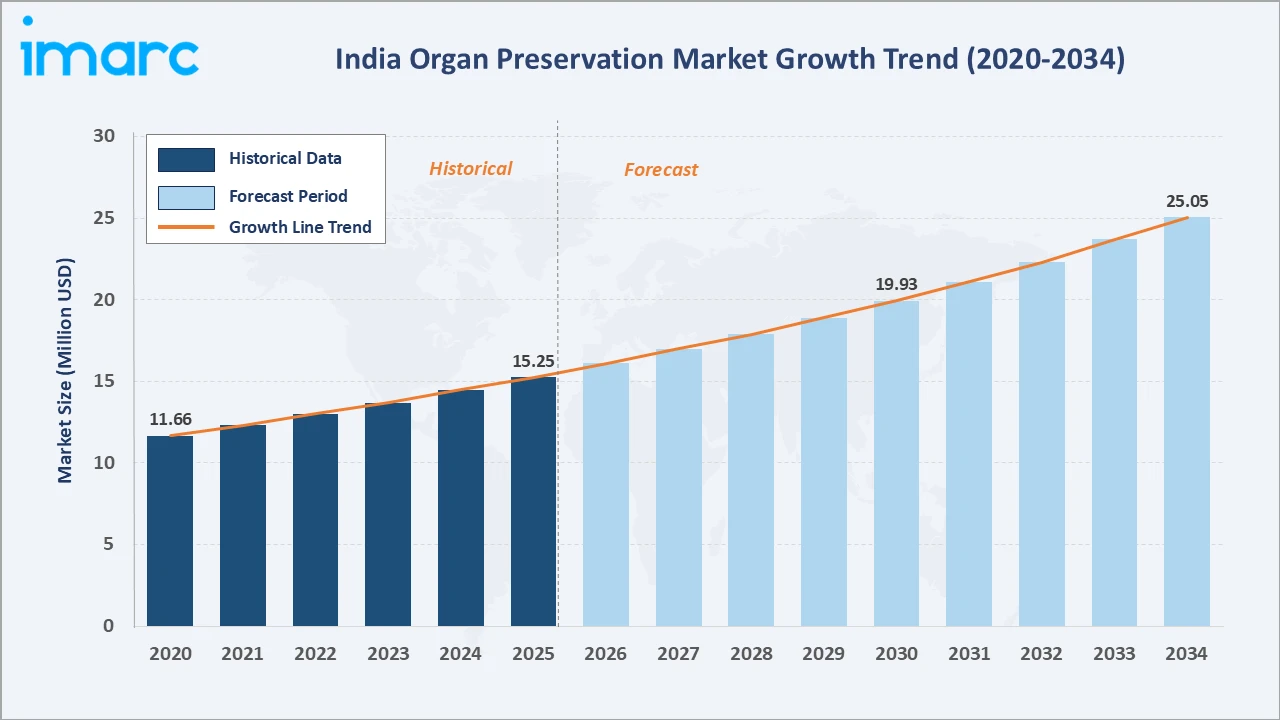
The India organ preservation market grew from USD 15.25 Million in 2025 to USD 16.32 Million in 2026 and is projected to reach USD 25.05 Million by 2034, expanding at a CAGR of 5.50% during 2026-2034. Growing occurrences of organ failures due to rising prevalence of chronic diseases, coupled with increasing healthcare expenditure across India, and Government of India initiatives promoting organ donation, are the primary growth catalysts.
Market Snapshot
|
Metric |
Value |
|
Base Year Market Size (2025) |
USD 15.25 Million |
|
Market Size (2026) |
USD 16.32 Million |
|
Forecast Market Size (2034) |
USD 25.05 Million |
|
CAGR (2026-2034) |
5.50% |
|
Base Year |
2025 |
|
Historical Period |
2020-2025 |
|
Forecast Period |
2026-2034 |
South India leads the national organ preservation landscape, holding a 38.4% share in 2025, anchored by the region's concentration of transplant centers and organ donation infrastructure. UW Solution commands the largest share of the preservation solution segment at 43.6%, reflecting sustained demand for established, clinically validated preservation formulations across the domestic transplant ecosystem.
To get more information on this market, Request Sample
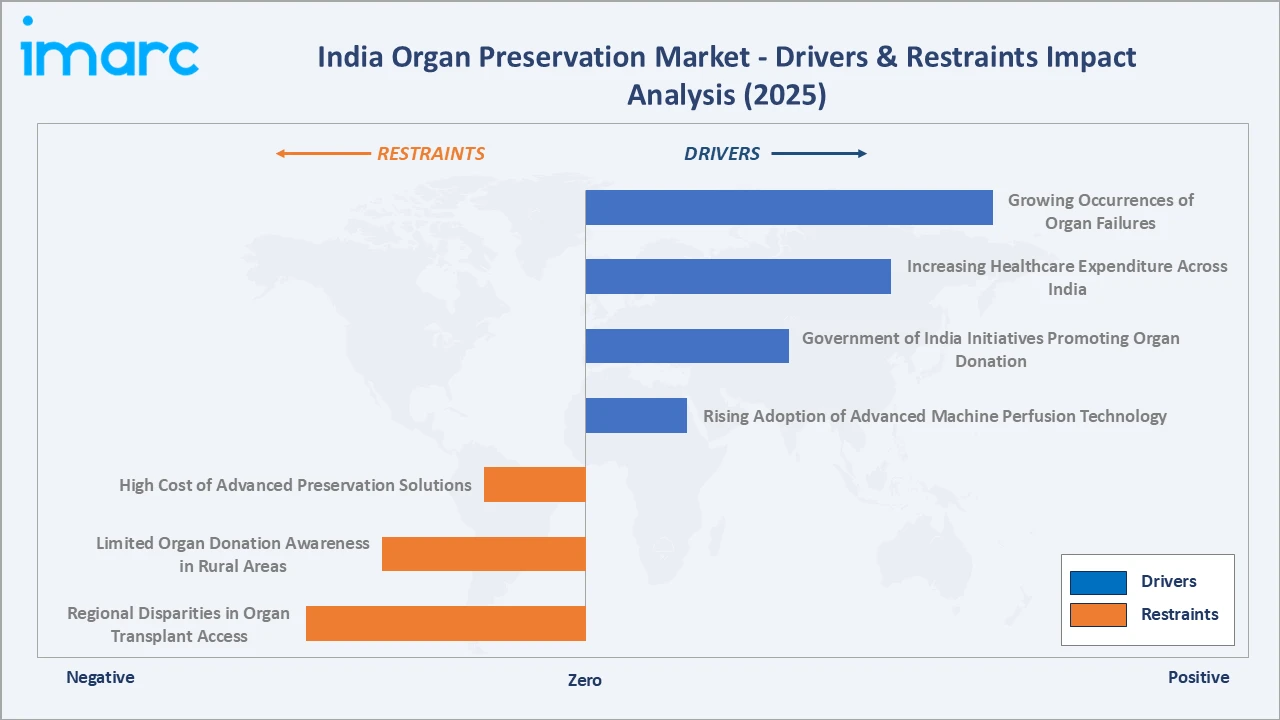
The India organ preservation market is underpinned by three structural forces: growing occurrences of organ failures due to rising prevalence of chronic diseases, increasing healthcare expenditure across India, and Government of India initiatives promoting organ donation. Each force independently reinforces category growth, sustaining steady CAGR expansion through 2034 despite the high cost of advanced preservation solutions.
Executive Summary
The India organ preservation market is experiencing steady expansion, driven by rising organ failure incidence, growing healthcare expenditure, and increasing government support for organ donation programs. The market expanded from USD 15.25 Million in 2025 to an estimated USD 16.32 Million in 2026 and projected to reach USD 25.05 Million by 2034, growing at a CAGR of 5.50%.
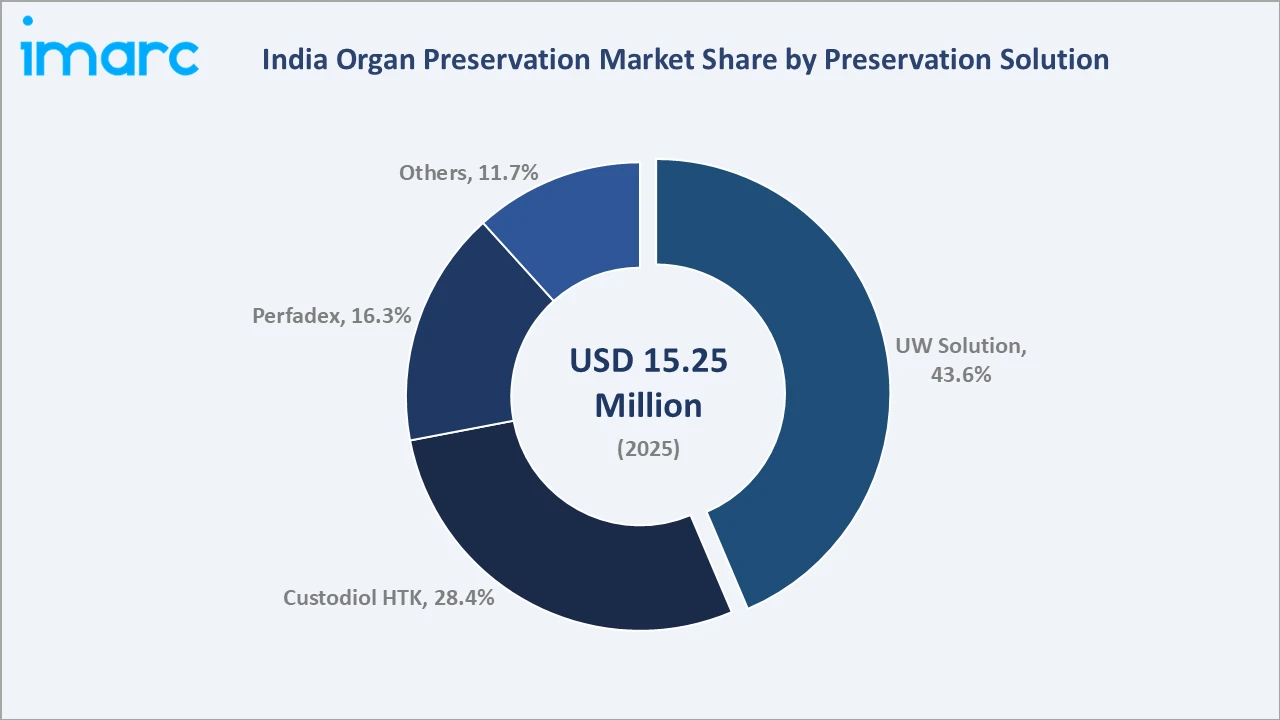
UW Solution dominates the preservation solution segment with a 43.6% share in 2025, encompassing established, clinically validated preservation formulations, while custodiol HTK accounts for 28.4%, perfadex for 16.3%, and others for 11.7%, reflecting the market's broad application diversity across organ-specific preservation requirements.
Deceased organ donation leads the donation type segment at 58.2% share, supported by expanding government-led donation awareness programs, while living organ donation accounts for 41.8%. South India leads regionally at 38.4%, anchored by the region's concentration of transplant centers and organ donation infrastructure.
Key Market Insights
|
Insight |
Data |
|
Largest Solution Segment |
UW Solution – 43.6% share (2025) |
|
Fastest Growing Solution Segment |
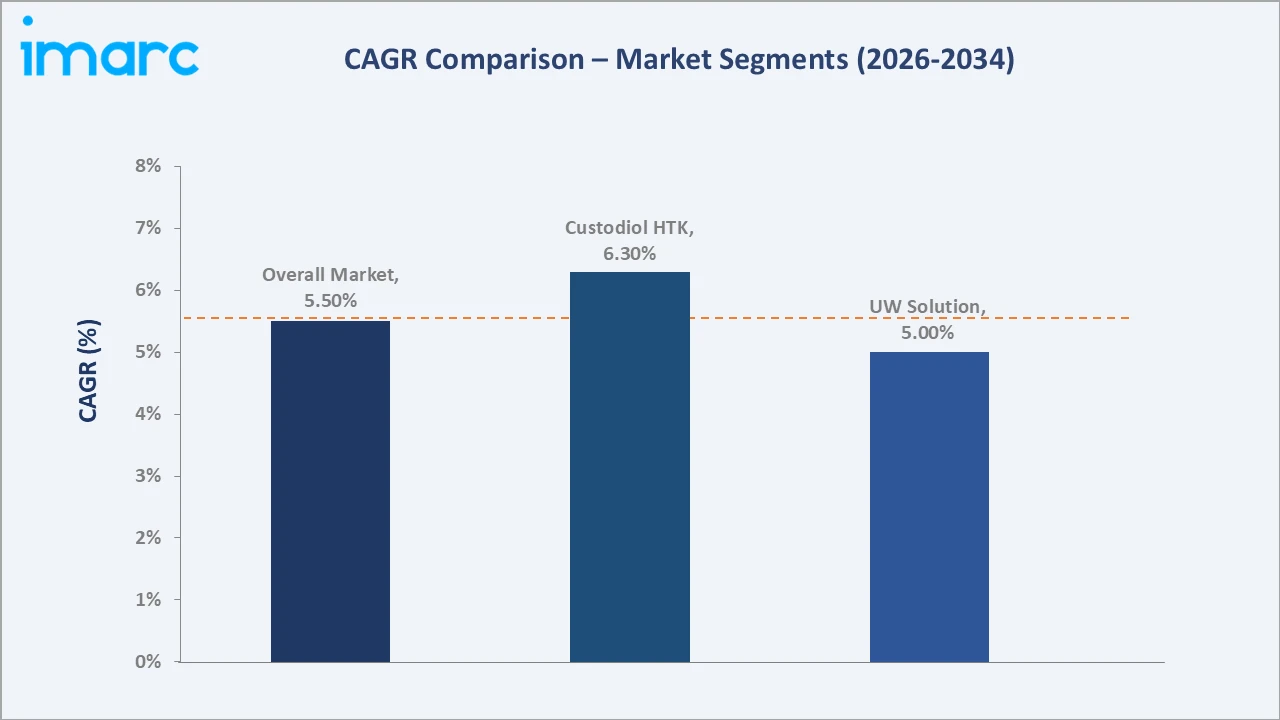
Custodiol HTK – ~6.3% CAGR (2026–2034) |
|
Largest Donation Type Segment |
Deceased Organ Donation – 58.2% share (2025) |
|
Leading Region |
South India – 38.4% share (2025) |
|
Top Companies |
XVIVO Perfusion AB, TransMedics Group, Inc., Getinge AB, Bridge to Life Ltd., Dr. Franz Köhler Chemie GmbH |
Key Analytical Observations Supporting the Above Data:
- UW Solution accounts for 43.6% of the India organ preservation market in 2025. This dominance reflects sustained demand for established, clinically validated preservation formulations across the domestic transplant ecosystem.
- Deceased organ donation remains the leading donation type at a 58.2% share (2025), supported by expanding government-led donation awareness programs across the country.
- Custodiol HTK is expanding steadily at a 28.4% share (2025), as growing demand for extended organ preservation duration continues to drive category growth.
- South India's 38.4% share (2025) reflects its concentration of transplant centers and organ donation infrastructure.
- Rising convergence of organ preservation with machine perfusion technology and government donation policy is broadening the addressable market across kidney, liver, lung, and heart transplant applications.
India Organ Preservation Market Overview
The India organ preservation market encompasses UW solution, custodiol HTK, perfadex, and other preservation solution categories delivered across deceased and living organ donation types, offering critical preservation solutions for a wide range of organ transplant applications. The organ preservation ecosystem spans raw material sourcing providers, solution formulation and manufacturing facilities, and an expanding network of distribution and hospital partnership providers.
India has surpassed five lakh Aadhaar-verified organ donation pledges since the launch of the national digital pledge portal in 2023, reflecting growing public participation in organ donation. The country’s annual organ transplant volume increased from 4,990 procedures in 2013 to a record 20,138 transplants in 2025, highlighting significant progress in transplant infrastructure and awareness initiatives.
Market Dynamics
To evaluate market opportunities, Request Sample
Market Drivers
- Growing Occurrences of Organ Failures: Increasing incidence of obesity, cardiovascular diseases, and gastrointestinal ailments is driving sustained demand for organ transplantation and preservation solutions. A study published in The Lancet estimates that around 449 million Indians, nearly one-third of the country’s population, could be living with obesity by 2050.
- Increasing Healthcare Expenditure Across India: The Union Health Ministry’s budget allocation increased from INR 74,602 crore in FY 2021–22 to INR 1.06 lakh crore in FY 2026–27. Rising national healthcare spending is accelerating investment in transplant infrastructure and advanced organ preservation technology.
- Government of India Initiatives Promoting Organ Donation: Growing government-led awareness campaigns and policy support are broadening the addressable market for organ preservation applications. For instance, programs such as the Aadhaar-verified digital organ donation pledge portal, National Organ Donation Day campaigns, and SOTTO (State Organ and Tissue Transplant Organisations) are supporting better coordination and increasing transplant accessibility across India.
- Rising Adoption of Advanced Machine Perfusion Technology: Growing adoption of hypothermic and normothermic machine perfusion technology is improving organ viability and preservation duration. The adoption of Normothermic Liver Perfusion (NLP) technology has improved donor liver utilization rates by nearly 30%, enabling better assessment and preservation of marginal donor organs.
Market Restraints
- High Cost of Advanced Preservation Solutions: Significant cost associated with advanced preservation solutions and machine perfusion technology can constrain smaller hospitals and limit adoption rates.
- Limited Organ Donation Awareness in Rural Areas: Insufficient awareness of organ donation benefits in rural regions can constrain donor pool expansion and limit market growth.
- Regional Disparities in Organ Transplant Access: Organ transplant procedures in India remain highly concentrated in a few regions, with Maharashtra, Tamil Nadu, Delhi-NCR, Kerala, and Telangana accounting for nearly 80–96% of transplant activity despite representing only around 29% of the country’s population. This uneven distribution highlights significant geographic disparities in access to organ replacement therapies.
Market Opportunities
- Digital Transformation in Organ Transplant Coordination: In August 2026, National Organ and Tissue Transplant Organisation (NOTTO) launched the e-Pratyaropan Portal along with the NOTTO mobile application to digitize and streamline the organ transplant process by enabling online registration, donor-recipient matching, and transparent monitoring of transplantation activities across India.
- Machine Perfusion Technology Adoption: Rising demand for improved organ viability offers opportunities for suppliers investing in advanced hypothermic and normothermic machine perfusion technology.
- Preservation Solution Portfolio Expansion: Growing demand for organ-specific preservation solutions creates opportunities for suppliers expanding product application diversity.
Market Challenges
- Balancing Cost and Technology Adoption: Suppliers must balance advanced technology investment with the need to maintain cost-competitive product offerings for hospitals and transplant centers.
- Addressing Nationwide Distribution Consistency: Ensuring consistent, geographically comprehensive preservation solution distribution requires ongoing logistics network investment and regional infrastructure development.
Emerging Market Trends
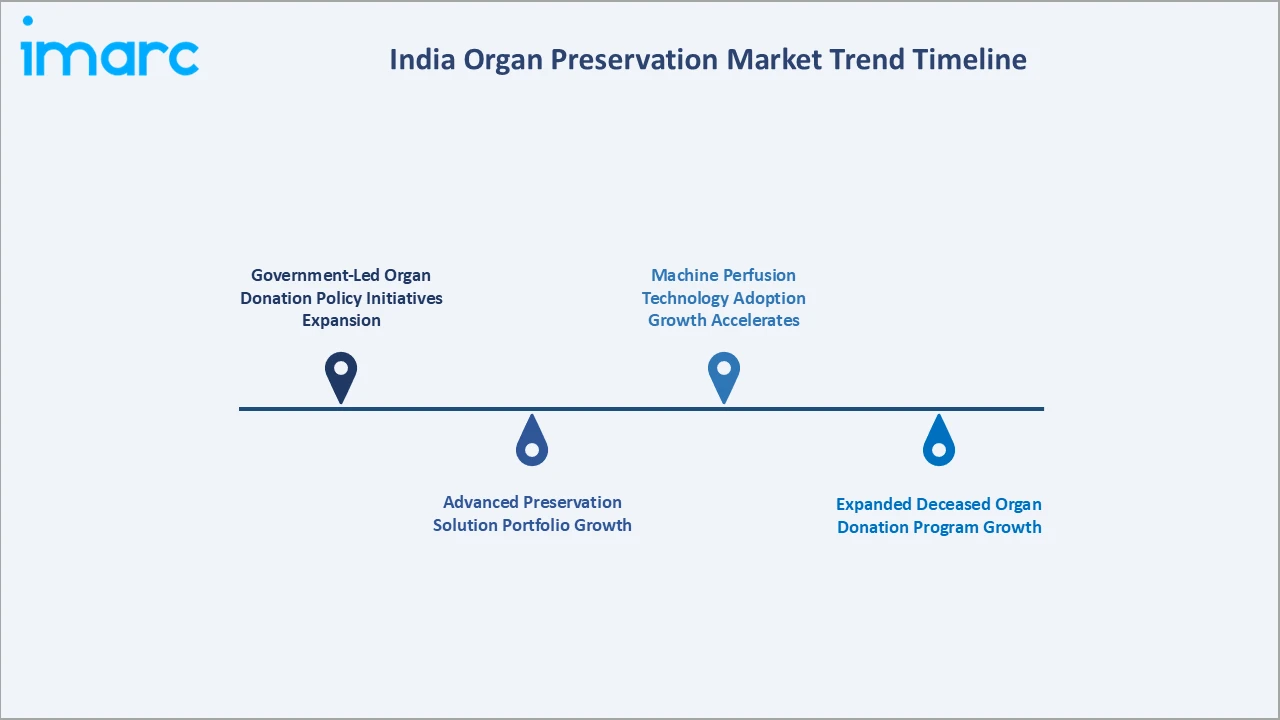
1. Government-Led Organ Donation Policy Initiatives Expansion
The Government of India is strengthening the organ donation ecosystem through initiatives such as the National Organ Transplant Programme (NOTP), National Organ and Tissue Transplant Organisation (NOTTO), and the “Angdaan Mahotsav” campaign to improve awareness, donor registration, and transplant coordination. Furthermore, policy measures, including the Aadhaar-enabled organ donation pledge platform, deceased donor promotion programs, and expansion of State Organ and Tissue Transplant Organisations (SOTTOs), aim to increase organ availability and improve access to transplantation services nationwide.
2. Advanced Preservation Solution Portfolio Growth
Growing investment in advanced preservation solution portfolios is expanding organ-specific formulation capacity and driving increased application across kidney, liver, lung, and heart transplants. For instance, Bridge to Life Ltd. offers the Belzer UW cold storage solution, a widely adopted preservation medium that helps maintain organ quality during transplantation, supporting preservation of livers for up to 24 hours, kidneys for up to 72 hours, and pancreases for up to 24 hours under optimal conditions.
3. Machine Perfusion Technology Adoption Growth Accelerates
Rising adoption of hypothermic and normothermic machine perfusion technology is accelerating organ viability preservation and expanding transplant success rates across major transplant centers. Bridge to Life’s Vitasmart Hypothermic Oxygenated Perfusion (HOPE) technology demonstrated potential to expand the use of marginal donor livers by preserving mitochondrial function and enabling real-time assessment of organ viability before transplantation.
4. Expanded Deceased Organ Donation Program Growth
Growing deceased organ donation program activity is driving expansion of organ availability and preservation solution demand across the domestic transplant healthcare ecosystem. Increasing government support, improved donor registration initiatives, and advancements in organ retrieval and cold preservation infrastructure are further strengthening India’s organ preservation landscape.
Industry Value Chain Analysis
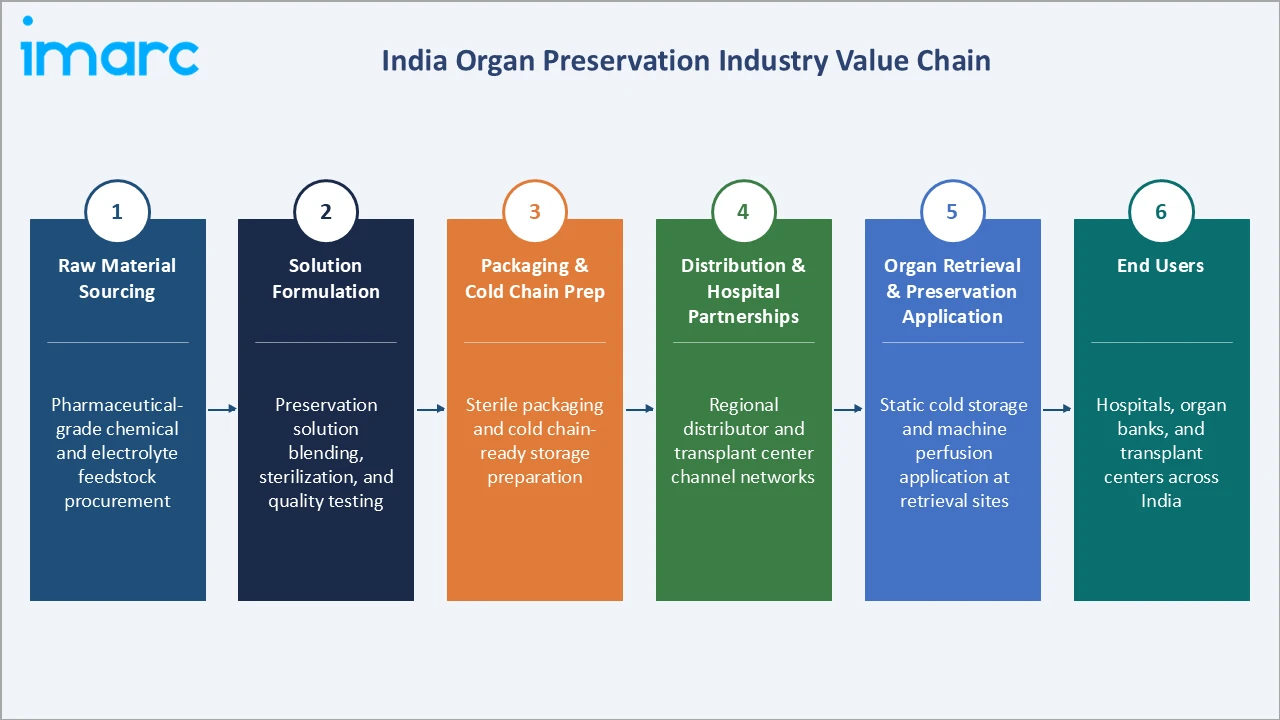
The India organ preservation value chain spans raw material sourcing through end-user delivery, with each stage occupied by specialized formulation providers, packaging and cold chain preparation facilities, and distribution and hospital partnership providers whose performance directly influences organ viability, preservation duration, and cost-effectiveness.
|
Stage |
Key Activities |
|
Raw Material Sourcing |
Pharmaceutical-grade chemical and electrolyte feedstock procurement |
|
Solution Formulation |
Preservation solution blending, sterilization, and quality testing |
|
Packaging & Cold Chain Prep |
Sterile packaging and cold chain-ready storage preparation |
|
Distribution & Hospital Partnerships |
Regional distributor and transplant center channel networks |
|
Organ Retrieval & Preservation Application |
Static cold storage and machine perfusion application at retrieval sites |
|
End Users |
Hospitals, organ banks, and transplant centers across India |
Technology Landscape in the India Organ Preservation Industry
Advanced Machine Perfusion Technology
Suppliers are advancing hypothermic and normothermic machine perfusion technology to improve organ viability and recovery accuracy, supporting broader adoption among kidney and liver transplant applications. Growing use of real-time viability assessment sensors is further enabling clinicians to make more informed transplant-suitability decisions.
Preservation Solution Formulation Development
Growing investment in preservation solution formulation technology is expanding organ-specific application capacity, addressing rising demand for reliable, extended-duration organ preservation. Enhanced antioxidant and electrolyte-balanced formulations are further reducing cellular damage during extended cold ischemia periods.
Cold Chain Logistics Innovation
Suppliers are engineering advanced cold chain logistics solutions to extend preservation reliability across demanding transplant retrieval and transportation applications. Increasing use of GPS-enabled, temperature-monitored transport containers is further improving traceability and reducing organ transit risk across India's diverse geography.
Transplant Center Ecosystem Integration
Expanding investment in transplant center ecosystem integration is strengthening organ preservation value chain reliability, supporting premium positioning across leading national transplant programs. Deeper coordination with national organ-sharing networks is further improving allocation efficiency and reducing time-to-transplant.
Market Segmentation Analysis
The report covers the following segments:
|
Segment Category |
Leading Segment |
Market Share |
Year |
|
Preservation Solution |
UW Solution |
43.6% |
2025 |
|
Organ Donation Type |
Deceased Organ Donation |
58.2% |
2025 |
|
Technique |
Static Cold Storage Technique |
🔒 |
2025 |
|
Organ Type |
Kidney |
🔒 |
2025 |
|
End-User |
Organ Banks |
🔒 |
2025 |
|
Region |
South India |
38.4% |
2025 |

By Preservation Solution
UW Solution dominates with a 43.6% share in 2025. This segment encompasses established, clinically validated preservation formulations, supported by sustained demand across the national transplant ecosystem.
To access detailed market analysis, Request Sample
Custodiol HTK represents 28.4% of the market (2025), followed by perfadex at 16.3%, and others at 11.7%, reflecting the market's broad application diversity across organ-specific preservation requirements.
By Organ Donation Type
Deceased organ donation leads the donation type segment at a 58.2% share (2025), supported by expanding government-led donation awareness programs across the country.
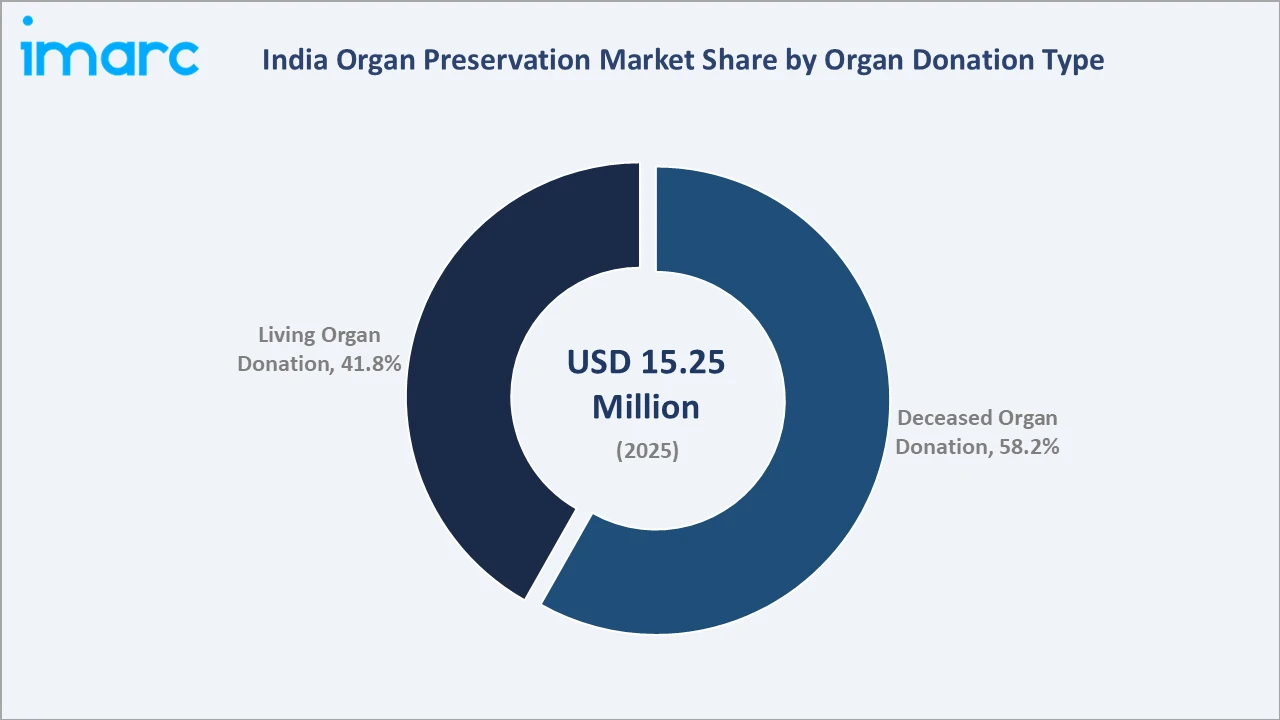
Living organ donation accounts for 41.8% of the market (2025), continuing to broaden the market's donation diversity as demand for kidney and partial liver transplants persists.
Regional Market Insights
South India's market leadership (38.4%, 2025) reflects the region's concentration of transplant centers and organ donation infrastructure. Growing government-led organ donation policy initiatives and expanding advanced preservation solution portfolio investment combine to sustain its dominant position through 2034.
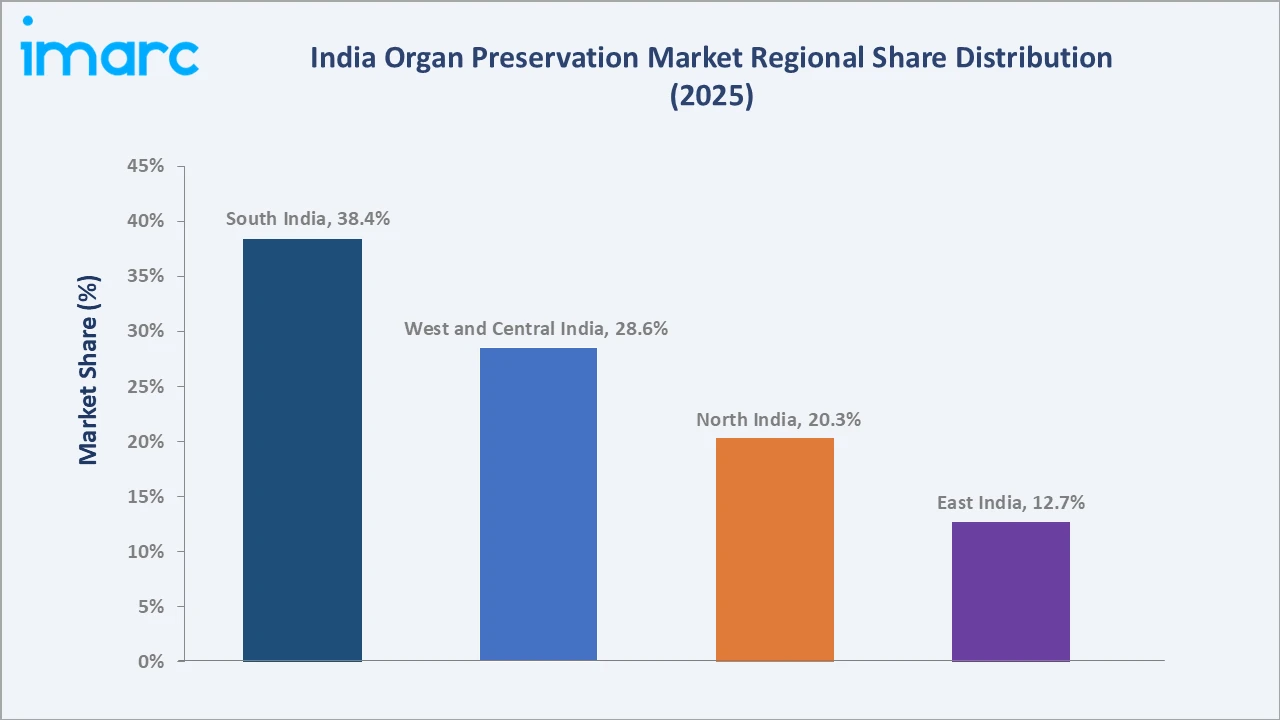
West and Central India at 28.6% (2025) represents the second-largest India organ preservation market regionally. Growing healthcare investment and expanding hospital transplant capacity are sustaining steady growth, positioning the region as a key contributor alongside South India through the forecast period.
|
Region |
Share (2025) |
Key Growth Drivers |
|
South India |
38.4% |
Concentration of transplant centers and organ donation infrastructure |
|
West and Central India |
28.6% |
Growing healthcare investment and expanding hospital transplant capacity |
|
North India |
20.3% |
Established medical infrastructure and rising organ donation awareness |
|
East India |
12.7% |
Emerging transplant program development and gradual healthcare infrastructure expansion |
Competitive Landscape
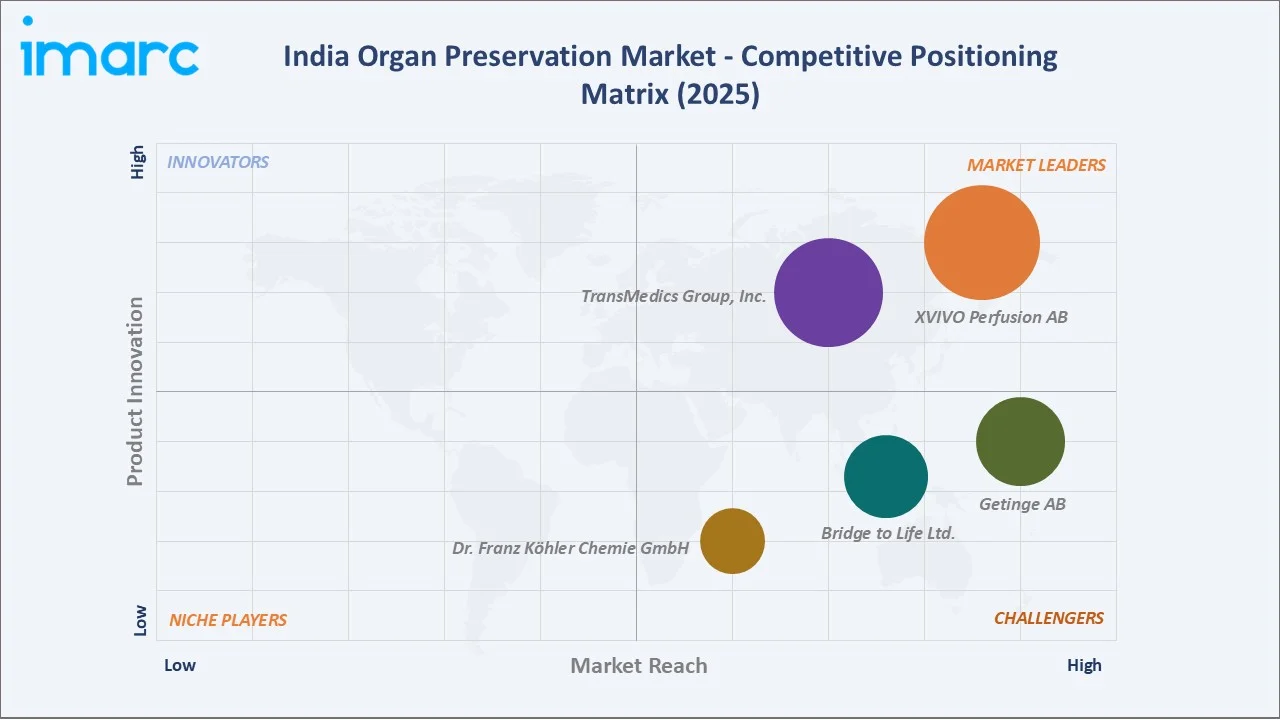
The India organ preservation market exhibits moderate concentration, with leading suppliers collectively holding a significant share of market revenue in 2025, reflecting sustained investment in product innovation and supply chain reach.
|
Company Name |
Brand/Sub-Brand Name |
Market Position |
Core Strength |
|
XVIVO Perfusion AB |
PERFADEX Plus, XVIVO |
Market Leader |
One of the leading global organ preservation manufacturers with extensive machine perfusion solution integration |
|
TransMedics Group, Inc. |
TransMedics OCS |
Market Leader |
Global organ care technology manufacturer with broad international transplant center distribution reach |
|
Getinge AB |
Paragonix SherpaPak, Paragonix LIVERguard, Paragonix BAROguard, Paragonix KidneyVault |
Strong Challenger |
Established organ transport and preservation specialist with long-standing hospital relationships |
|
Bridge to Life Ltd. |
VitaSmart, Belzer UW, Belzer MPS, EasiSlush |
Strong Challenger |
Diversified organ preservation solution manufacturer with global distribution capabilities |
|
Dr. Franz Köhler Chemie GmbH |
Köhler Chemie |
Challenger |
German preservation solution manufacturer with advanced formulation portfolio |
XVIVO Perfusion AB and TransMedics Group, Inc. dominate through comprehensive product portfolios and extensive global distribution reach, supported by continuous investment. Getinge AB, Bridge to Life Ltd., and Dr. Franz Köhler Chemie GmbH compete through targeted hospital relationship heritage, diversified solution integration, and specialized perfusion technology differentiation, respectively.
Key Company Profiles
XVIVO Perfusion AB
XVIVO Perfusion AB is one of the leading global organ preservation manufacturers with extensive machine perfusion solution integration serving transplant centers across international markets.
- Product Portfolio: Preservation solutions, perfusion systems, and specialty organ care products under the PERFADEX Plus and XVIVO brands.
- Recent Developments: In March 2026, XVIVO Perfusion AB received approval for expanded patient enrollment in the US PRESERVE Continued Access Protocol (CAP) study for its XVIVO Heart Assist Transport device. It supports India’s organ preservation market by highlighting the growing adoption of advanced perfusion systems that can improve donor organ utilization and transplant outcomes.
- Strategic Focus: Strengthening global distribution reach; expanding advanced perfusion technology across emerging application segments.
TransMedics Group, Inc.
TransMedics Group, Inc. is one of the leading global organ care technology manufacturers with broad international transplant center distribution reach across diverse healthcare markets.
- Product Portfolio: Organ care system technology and specialty preservation products under the TransMedics OCS brand.
- Recent Developments: In February 2026, TransMedics Group, Inc. received full and unconditional FDA Investigational Device Exemption (IDE) approval for its OCS ENHANCE Heart trial, evaluating advanced heart perfusion technology to extend preservation time and expand donor heart utilization for transplantation. The development supports India’s organ preservation market by improving organ viability assessment, reducing preservation limitations, and increasing transplant opportunities.
- Strategic Focus: Scaling global distribution reach; deepening transplant center partnership development.
Market Concentration Analysis
The India organ preservation market exhibits moderate concentration, with XVIVO Perfusion AB, TransMedics Group, Inc., and Getinge AB collectively accounting for a significant share of total category revenue in 2025, reflecting sustained product investment, supply chain loyalty, and extensive application reach across the industry.
Consolidation pressure remains limited as leading suppliers maintain distinct strategic positioning: XVIVO Perfusion AB and TransMedics Group, Inc. through comprehensive product and distribution portfolios, Getinge AB and Bridge to Life Ltd. through hospital relationship heritage and solution integration scale positioning, and Dr. Franz Köhler Chemie GmbH through diversified specialized formulation and perfusion technology differentiation, rather than pursuing direct M&A consolidation.
Investment & Growth Opportunities
Fastest Growing Segments
Custodiol HTK (~6.3% CAGR) represents the highest-growth investment vector through 2034, driven by expanding demand for extended organ preservation duration and continuous innovation across advanced formulation technologies. This subcategory addresses a rapidly expanding addressable market within the India organ preservation ecosystem.
Emerging Market Expansion
The North India and East India regional markets collectively represent an incremental growth opportunity beyond South India and West and Central India by 2034, as rising healthcare infrastructure investment and expanding transplant program development accelerate category penetration in these emerging markets.
Venture and Institutional Investment Trends
- Supplier investment toward machine perfusion technology infrastructure and preservation solution portfolio development is creating opportunities for technology vendors serving the organ preservation sector.
- Growing government-led organ donation demand is sustaining institutional interest in specialty formulation and processing facility providers.
- Technology-led transplant innovation, led by major suppliers, is opening opportunities for technology and formulation vendors serving the India organ preservation industry.
Future Market Outlook (2026-2034)
The India organ preservation market is positioned for steady, policy-driven expansion through 2034. From a base of USD 15.25 Million in 2025 to USD 16.32 Million in 2026, the market is projected to reach USD 25.05 Million by 2034, representing substantial incremental value creation at a CAGR of 5.50%. This growth is underpinned by growing occurrences of organ failures due to rising chronic disease prevalence, increasing healthcare expenditure across India, and Government of India initiatives promoting organ donation.
The solution and donation type segment will continue evolving through 2034, with custodiol HTK gaining further share as extended preservation duration demand and advanced formulation technology innovation accelerate. This shift creates opportunities for suppliers investing in machine perfusion technology infrastructure, government-led donation ecosystem expansion, and advanced preservation solution capabilities to capture the next phase of the India organ preservation market growth.
Research Methodology
Primary Research
Primary research comprised structured interviews with industry participants across 2024-2025, including organ preservation supplier executives, transplant center procurement specialists, healthcare policy advisors, and organ donation program experts across major Indian regions. Expert input validated market sizing, segmentation trends, and regional consumption patterns.
Secondary Research
Secondary research encompassed supplier annual reports, transplant healthcare association publications, and trade press covering product innovation, regulatory trends, and regional market dynamics across India.
Forecasting Models
Market size estimations were derived using top-down and bottom-up forecasting, incorporating solution and donation type segment transitions and supplier production capacity disclosures. A base-case CAGR of 5.50% reflects consensus estimates validated against announced healthcare investment timelines and supplier strategic development plans.
Report Coverage:
| Report Features | Details |
|---|---|
| Base Year of the Analysis | 2025 |
| Historical Period | 2020-2025 |
| Forecast Period | 2026-2034 |
| Units | Million USD |
| Scope of the Report | Exploration of Historical Trends and Market Outlook, Industry Catalysts and Challenges, Segment-Wise Historical and Future Market Assessment:
|
| Preservation Solutions Covered | UW Solution, Custodiol HTK, Perfadex, Others |
| Organ Donation Types Covered | Living Organ Donation, Deceased Organ Donation |
| Techniques Covered | Static Cold Storage Technique, Hypothermic Machine Perfusion, Normothermic Machine Perfusion, Others |
| Organ Types Covered | Kidney, Liver, Lung, Heart, Others |
| End-Users Covered | Hospitals and Clinics, Organ Banks, Others |
| Region Covered | North India, West and Central India, South India, East India |
| Companies Covered | XVIVO Perfusion AB, TransMedics Group, Inc., Getinge AB, Bridge to Life Ltd., Dr. Franz Köhler Chemie GmbH, etc. |
| Customization Scope | 10% Free Customization |
| Post-Sale Analyst Support | 10-12 Weeks |
| Delivery Format | PDF and Excel through Email (We can also provide the editable version of the report in PPT/Word format on special request) |
Frequently Asked Questions About the India Organ Preservation Market Report
The India organ preservation market size is estimated at USD 16.32 Million in 2026 and is projected to reach USD 25.05 Million by 2034.
The market is expected to grow at a CAGR of 5.50% during 2026-2034, driven by growing occurrences of organ failures and increasing healthcare expenditure.
South India leads with a 38.4% share in 2025, anchored by the region's concentration of transplant centers and organ donation infrastructure.
UW solution dominates with a 43.6% share in 2025, driven by sustained demand for established, clinically validated preservation formulations.
Deceased organ donation leads with a 58.2% share in 2025, supported by expanding government-led donation awareness programs.
Some of the key players include XVIVO Perfusion AB, TransMedics Group, Inc., Getinge AB, Bridge to Life Ltd., and Dr. Franz Köhler Chemie GmbH.
Custodiol HTK is growing fastest at an estimated 6.3% CAGR as demand for extended organ preservation duration accelerates.
Key challenges include the high cost of advanced preservation solutions, limited organ donation awareness in rural areas, and regional disparities in organ transplant access.
Government-led organ donation policy expansion, machine perfusion technology adoption, and preservation solution portfolio expansion represent leading investment opportunities.
Living organ donation, at 41.8% share, continues to reflect demand for kidney and partial liver transplants, complementing deceased organ donation demand.
Need more help?
- Speak to our experienced analysts for insights on the current market scenarios.
- Include additional segments and countries to customize the report as per your requirement.
- Gain an unparalleled competitive advantage in your domain by understanding how to utilize the report and positively impacting your operations and revenue.
- For further assistance, please connect with our analysts.
 Request Customization
 Speak to an Analyst
 Request Brochure
 Inquire Before Buying
Benefits of Customization
- Personalize this research
- Triangulate with your data
- Get data as per your format and definition
- Gain a deeper dive into a specific application, geography, customer, or competitor
- Any level of personalization
Get in Touch With Us
UNITED STATES
Phone: +1-201-971-6302
INDIA
Phone: +91-120-433-0800
UNITED KINGDOM
Phone: +44-753-714-6104
Email: [email protected]
Client Testimonials




.webp)




.webp)













Related Reports

Choose your plan
*Please note that the prices mentioned below are starting prices for each bundle type. Kindly contact our team for further details.*
Single User License
- 1 User License, Access on 2 Devices
- PDF Report + Excel Dataset (Password Protected)
- Lifetime Access
- No Printing Rights
- 10% Free Report Customization
- 10–12 Weeks of Analyst Support
Five User License
- Access for 5 Users, 2 Devices per User
- PDF Report + Excel Dataset (Password Protected)
- Lifetime Access
- Dedicated Account Manager
- 12–14 Weeks of Analyst Support
- No Printing Rights
- 15% Free Report Customization
- 25% Discount on Your Next Purchase
Corporate User License
- Unlimited User Access (Within Your Organization)
- PDF Report + Excel Dataset
- Lifetime Access
- Dedicated Account Manager
- 14–20 Weeks of Analyst Support
- No Printing Rights
- 20% Free Report Customization
- 30% Discount on Your Next Purchase
Essential Insights
What's included:
3 reports
- Lifetime Access
- PDF Reports
- Excel Datasets
- 2 Weeks of Free Analyst Support
- 2 User Licenses
- Access on 2 Devices
- Printing Rights
- Complimentary PowerPoint (PPT) Version
- Complimentary License Upgrade
Professional Access
What's included:
5 reports
- Lifetime Access
- PDF Reports
- Excel Datasets
- 8 Weeks of Free Analyst Support
- 2 User Licenses
- Access on 2 Devices
- Printing Rights
- Complimentary PowerPoint (PPT) Version
- Complimentary License Upgrade
Business Advantage
What's included:
8 reports
- Lifetime Access
- PDF Reports
- Excel Datasets
- 14 Weeks of Free Analyst Support
- 2 User Licenses
- Access on 2 Devices
- Printing Rights
- Complimentary PowerPoint (PPT) Version
- Complimentary License Upgrade
Enterprise Intelligence
What's included:
10 reports
- Lifetime Access
- PDF Reports
- Excel Datasets
- 20 Weeks of Free Analyst Support
- 2 User Licenses
- Access on 2 Devices
- Printing Rights
- Complimentary PowerPoint (PPT) Version
- Complimentary License Upgrade