
GCC Calcium Chloride Market Size, Share, Trends and Forecast by Application, Product Type, Raw Material, Grade, and Country, 2026-2034
GCC Calcium Chloride Market Size, Share, Trends & Forecast (2026-2034)
The GCC calcium chloride market reached USD 39.80 Million in 2025 and is projected to reach USD 52.53 Million by 2034, growing at a CAGR of 3.04% during 2026-2034. The market is driven by rising demand from oil and gas operations, where it is widely used in drilling fluids and well completion. Saudi Arabia’s calcium chloride exports remained modest in 2024, valued at $242k, placing the country as the 51st largest global exporter. The product ranked 2,151st among Saudi Arabia’s exported goods, with key destinations including Australia, Kuwait, the United Arab Emirates, Syria, and Bahrain. This supports market growth by strengthening cross-border trade, improving regional supply availability, and reinforcing Saudi Arabia’s role as a small but relevant supplier within the GCC calcium chloride market. Hydrated solid leads the product type at 44.2%. Industrial grade leads at 86.8%. Saudi Arabia leads regionally at 37.9%.
Market Snapshot
|
Metric |
Value |
|
Market Size (2025) |
USD 39.80 Million |
|
Forecast Market Size (2034) |
USD 52.53 Million |
|
CAGR (2026-2034) |
3.04% |
|
Base Year |
2025 |
|
Historical Period |
2020-2025 |
|
Forecast Period |
2026-2034 |
|
Dominant Product Type |
Hydrated Solid (44.2%, 2025) |
|
Dominant Grade |
Industrial Grade (86.8%, 2025) |
|
Leading Country |
Saudi Arabia (37.9%, 2025) |
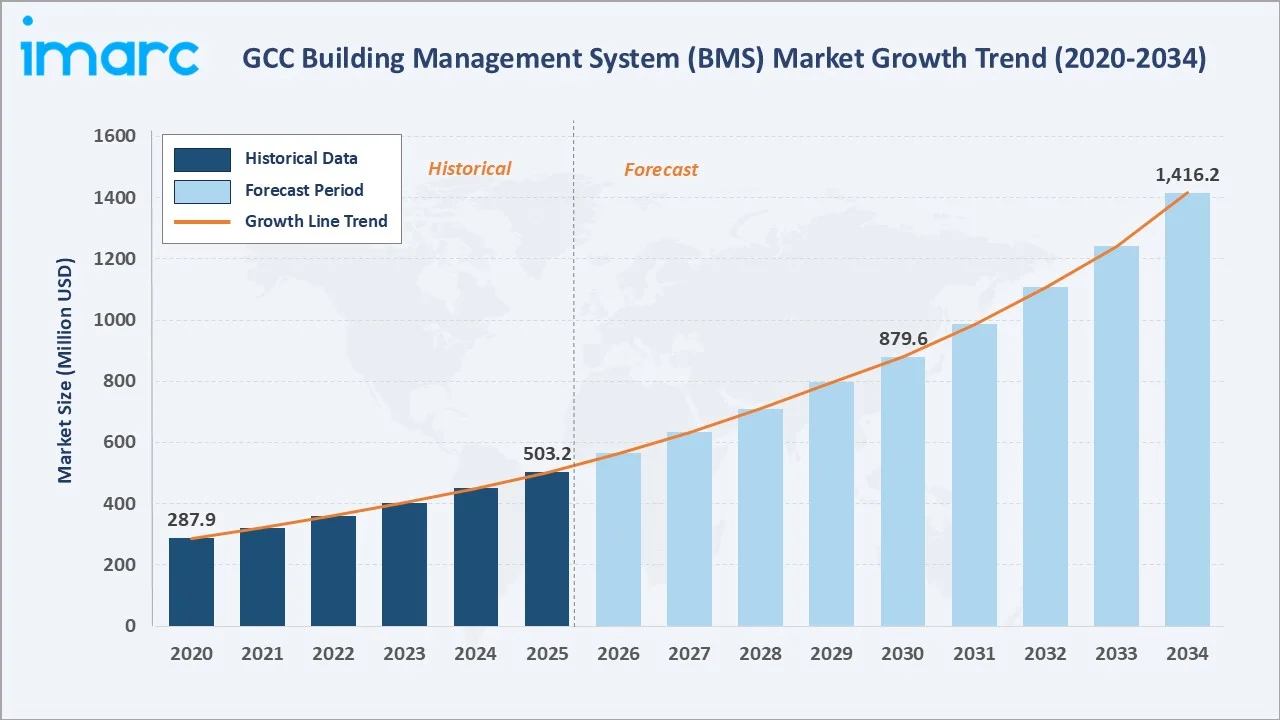
The GCC calcium chloride market grew steadily from USD 34.26 Million in 2020 to USD 39.80 Million in 2025, supported by sustained demand from oil and gas, construction, and industrial applications. The market is expected to reach USD 46.22 Million by 2030 as drilling fluid usage, dust control, and water treatment applications expand. By 2034, it is forecast to attain USD 52.53 Million, reflecting moderate but consistent growth. Rising infrastructure development and petrochemical activity across GCC economies will continue to support long-term demand.
To get more information on this market, Request Sample
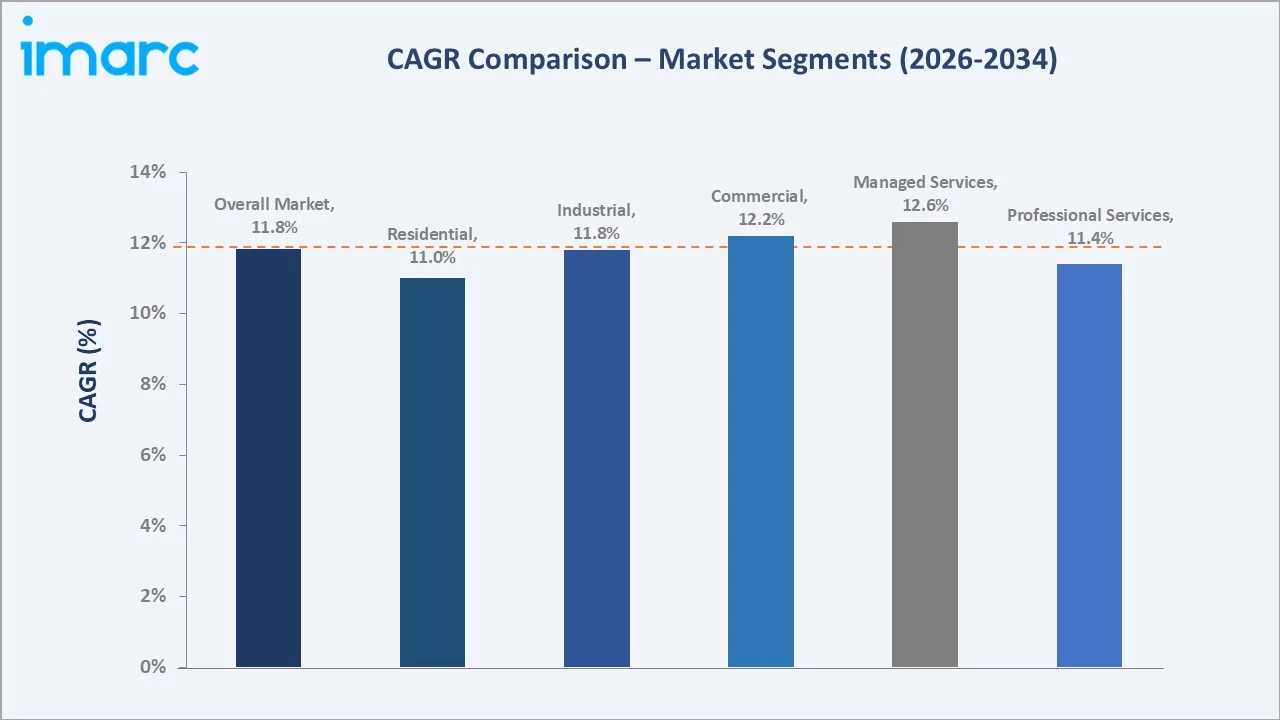
Food grade grows fastest at ~3.8% CAGR, driven by GCC food processing, halal-certified cheese, and canning. Liquid CaCl2 grows at ~3.2% CAGR through oilfield completion fluid brine and road dust suppression spray application. Hydrated solid grows at ~3.1% CAGR through construction dust, oilfield, and desiccant flake.
Executive Summary
The GCC calcium chloride market is witnessing steady growth, supported by strong demand from oil and gas, construction, water treatment, and industrial processing sectors. Saudi Arabia remains a key demand center, with high import dependence reflecting robust domestic consumption and limited local supply. Expanding drilling activities, infrastructure projects, and dust-control applications are strengthening product uptake across the region. Intra-GCC trade with markets such as Kuwait, the UAE, and Bahrain further supports regional distribution. The market outlook remains positive, driven by industrial diversification, urban development, and continued investment in energy and utility infrastructure. Hydrated solid at 44.2% leads through oilfield flake and food pellet. Industrial grade at 86.8% leads in the oilfield and construction. Saudi Arabia leads regionally at 37.9%.
Key Market Insights
|
Insight |
Data |
|
Dominant Product Type |
Hydrated Solid - 44.2% share (2025) |
|
Dominant Grade |
Industrial Grade - 86.8% market share (2025) |
|
Leading Country |
Saudi Arabia - 37.9% share (2025) |
|
Market Opportunity |
NEOM road dust suppression; GCC food-grade halal certification; municipal water treatment; concrete accelerator construction; desiccant industrial dehumidification |
Key Analytical Observations Supporting The Above Data:
- Hydrated Solid at 44.2%: Hydrated solid calcium chloride dominates the market due to its ease of handling, storage stability, and wide use in construction, dust control, and industrial drying applications. Its cost-effectiveness and suitability for bulk transportation further strengthen its preference across GCC end-use industries.
- Industrial Grade at 86.8%: Industrial grade calcium chloride dominates due to its broad use in oil and gas, construction, dust control, and industrial processing applications. Its lower cost and suitability for bulk-volume consumption make it the preferred grade across GCC industries.
- Saudi Arabia at 37.9%: Saudi Arabia dominates regionally due to strong demand from oil and gas drilling, construction, water treatment, and industrial applications. Its large import volumes and expanding infrastructure base further reinforce its leading position in regional consumption.
GCC Calcium Chloride Market Overview
The GCC calcium chloride market encompasses hydrated solid and liquid forms used across oil and gas, construction, water treatment, dust control, and industrial processing applications. Demand is largely supported by drilling fluids, concrete acceleration, moisture control, and brine preparation. Industrial grade remains the key category due to bulk consumption across energy and infrastructure sectors. Saudi Arabia leads regional demand, followed by the UAE, Kuwait, Qatar, Oman, and Bahrain. The market also includes import-led supply chains, regional distribution networks, and niche export flows within GCC economies. Macroeconomic factors include sustained investments in oil and gas production, large-scale infrastructure development, and industrial diversification under national economic transformation programs. Rising construction activity, expanding water treatment capacity, and increasing government spending on utilities further strengthen long-term market demand.
Market Dynamics
To evaluate market opportunities, Request Sample
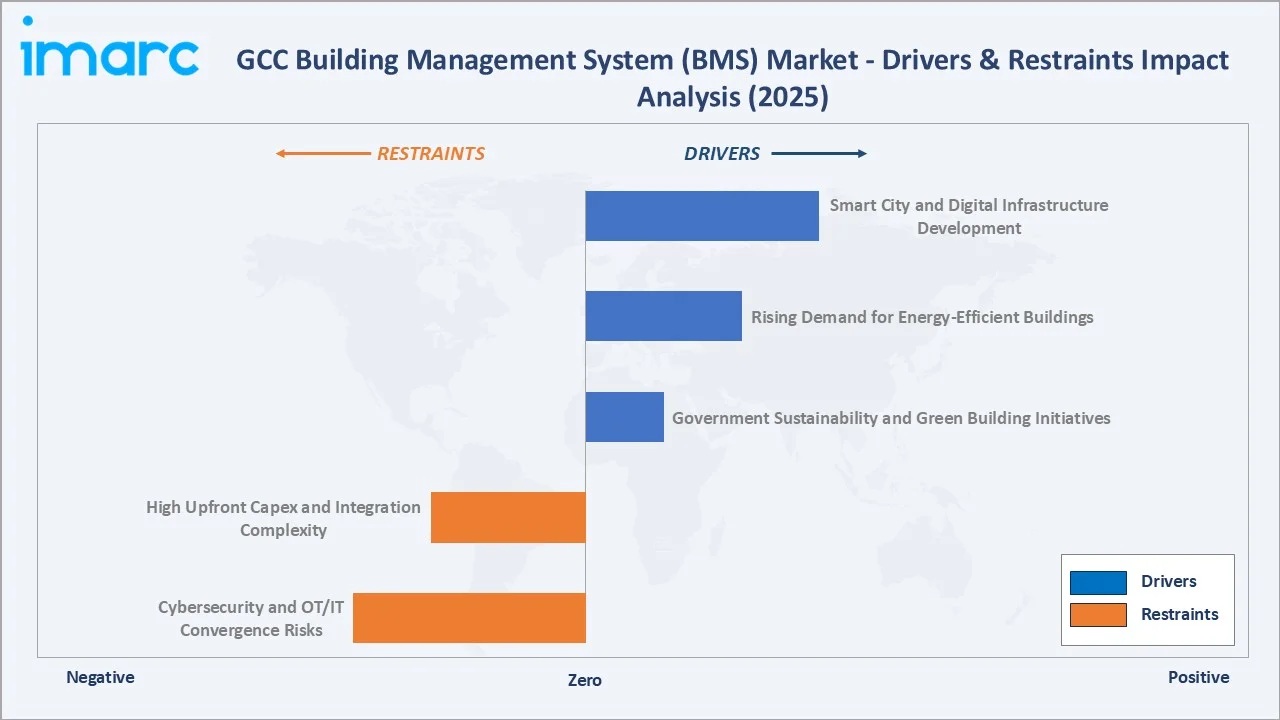
Market Drivers
- Rising Oil & Gas and Well Completion Activities: Saudi Arabia’s vast hydrocarbon reserves and sustained production levels highlight the scale of upstream oil and gas operations across the GCC, directly supporting demand for calcium chloride. Saudi Arabia holds around 17% of the world’s proven petroleum reserves and remains the largest net exporter of petroleum globally. As of December 31, 2024, Aramco’s reserves under its Concession agreement stood at 250 billion barrels of oil equivalent, comprising 190.2 billion barrels of crude oil and condensate, 26.1 billion barrels of NGL, and 209.8 trillion standard cubic feet of natural gas. In 2024, the company recorded total hydrocarbon production of 12.4 million barrels of oil equivalent per day, including 10.3 million barrels per day of liquids, mainly crude oil. Continuous drilling, well completion, and workover activities require large volumes of calcium chloride-based drilling and completion fluids. As exploration, production optimization, and enhanced recovery projects continue across the region, calcium chloride consumption is expected to remain strong.
- Expanding Infrastructure and Construction Projects: Expanding infrastructure and construction projects are driving the market due to their use as a concrete accelerator, dust-control agent, and moisture-control chemical. Large-scale road, industrial, logistics, and urban development projects increase demand for construction chemicals that improve curing speed and site efficiency. Calcium chloride also supports soil stabilization and dust suppression in arid GCC environments. Ongoing investments in smart cities, transport networks, and industrial zones are expected to sustain steady consumption.
- Growing Demand for Water Treatment: The GCC countries have an estimated annual renewable surface water availability of 4.14 billion m³, desalination capacity of 26.4 billion m³, and wastewater treatment capacity of 10.07 billion m³. These large-scale facilities require a continuous supply of treatment chemicals to maintain operational efficiency and water quality. Calcium chloride is used in various industrial water treatment processes, including brine preparation and hardness adjustment, supporting reliable plant performance. As GCC countries continue expanding desalination and wastewater treatment capacity to address water scarcity, demand for calcium chloride is expected to increase steadily.
Market Restraints
- Volatility in Raw Material and Logistics Costs: Volatility in raw material and logistics costs is increasing procurement and distribution expenses. Since several GCC countries rely on imports, fluctuations in freight rates, fuel prices, and supply chain availability can raise landed costs. This affects pricing stability for end users in the oil and gas, construction, and water treatment sectors. Higher input and transport costs may also pressure supplier margins and delay bulk purchasing decisions.
- Availability of Substitute De-Icing and Desiccant Chemicals: The availability of substitute de-icing and desiccant chemicals is limiting their use in certain price-sensitive applications. Alternatives such as magnesium chloride, sodium chloride, silica gel, and molecular sieves may be preferred depending on cost, performance, and application requirements. This creates competitive pressure on calcium chloride suppliers, especially in moisture-control and industrial drying uses. As end users compare product efficiency, handling safety, and procurement costs, calcium chloride demand may face substitution risks.
Market Opportunities
- Rising Demand from Food Processing and Refrigeration Applications: Rising demand from food processing and refrigeration applications creates opportunities in brine cooling, moisture control, and temperature management systems. It is used in refrigeration brines due to its low freezing point and efficient heat-transfer properties. Expanding cold chain infrastructure, food storage, and processed food production across the GCC can increase calcium chloride consumption. Growth in logistics, supermarkets, and food exports further supports its use in industrial cooling and preservation systems.
- Growing Mining and Quarrying Activities Requiring Dust Control Solutions: Saudi Arabia granted 80 new mining licenses in March 2026, more than twice the number issued in February, reflecting the Kingdom’s accelerating push to develop its mining sector. The approvals comprised 49 exploration licenses, 20 building materials quarry licenses, eight small-scale mining exploitation licenses, two reconnaissance licenses, and one surplus mineral ore license. As mining, aggregates, cement, and construction material extraction expand, demand for effective dust-control chemicals is likely to rise. This supports higher calcium chloride consumption across industrial and infrastructure-linked operations.
Market Challenges
- Maintaining Consistent Product Quality and Purity Standards: Maintaining consistent product quality and purity standards is challenging as end users require reliable performance across oil and gas, water treatment, food, and refrigeration applications. Variations in moisture content, concentration, or impurities can affect product efficiency and limit suitability for high-specification uses. Import-based sourcing also increases the risk of quality differences between suppliers. As a result, companies must invest in testing, certification, and strict supply chain control.
- Supply Chain Disruptions Affecting Imports and Distribution: Supply chain disruptions pose a challenge as several countries depend on imported volumes to meet domestic demand. Port delays, freight rate fluctuations, container shortages, and geopolitical risks can affect timely product availability. These disruptions may increase landed costs and create pricing uncertainty for end users. Delayed imports can also impact oil and gas, construction, and water treatment operations that require a steady chemical supply.
Emerging Market Trends
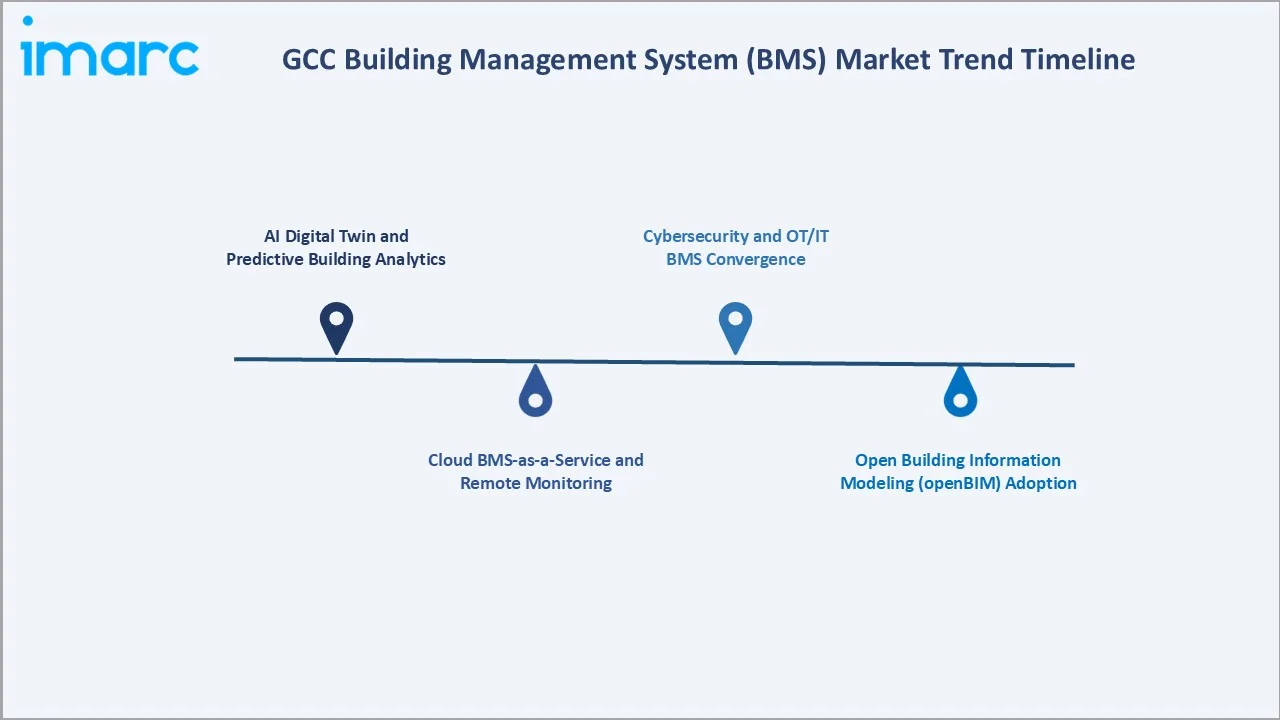
1. Expanding Use in Concrete Acceleration and Construction Chemicals
Expanding use in concrete acceleration and construction chemicals is emerging as GCC countries continue large-scale infrastructure, industrial, and urban development projects. Calcium chloride helps speed up concrete setting and curing, improving construction efficiency in time-sensitive projects. Its use in construction chemicals also supports better workability and early strength development. Rising investments in roads, logistics hubs, housing, and mega projects are therefore creating new demand opportunities for calcium chloride.
2. Growth in Food Processing, Cold Chain, and Refrigeration Applications
Growth in food processing, cold chain, and refrigeration applications is emerging as GCC countries expand food storage, logistics, and temperature-controlled distribution networks. Calcium chloride is used in refrigeration brines and cooling systems due to its low freezing point and efficient heat-transfer properties. Rising demand for processed foods, supermarkets, and import-dependent food supply chains increases the need for reliable cold chain infrastructure. This creates new consumption opportunities for calcium chloride beyond traditional oilfield and construction uses.
3. Industrial Desiccant and Container Moisture Control
Industrial desiccant and container moisture control is emerging as GCC trade, warehousing, and export logistics continue to expand. Calcium chloride is widely used in moisture absorbers due to its strong hygroscopic properties, helping prevent cargo damage, corrosion, mold, and product caking during storage and sea transport. Rising movement of chemicals, food products, electronics, and industrial goods across humid port environments is increasing demand for efficient desiccant solutions. This supports new opportunities for calcium chloride in packaging, logistics, and industrial storage applications.
4. Domestic Calcium Chloride Manufacturing Capacity Expansion
Domestic calcium chloride manufacturing capacity expansion is emerging as GCC producers move to reduce reliance on imports and strengthen local supply security. In November 2023, Sahara International Petrochemical Co. (Sipchem) initiated the world’s largest calcium chloride operation at its factory. Located in Saudi Arabia, Khair Inorganic Chemical Industries Co. (InoChem) will operate the greenfield soda ash and calcium chloride complex across more than 800,000 square meters in Ras Al-Khair. Sipchem, which holds a 30% stake in InoChem, will continue the trial run until equipment testing is completed and plant efficiency is verified. Local capacity can improve cost competitiveness, shorten delivery timelines, and support bulk demand from oil and gas, construction, and water treatment sectors. It also positions the GCC as a stronger regional supplier for industrial chemicals.
Industry Value Chain Analysis
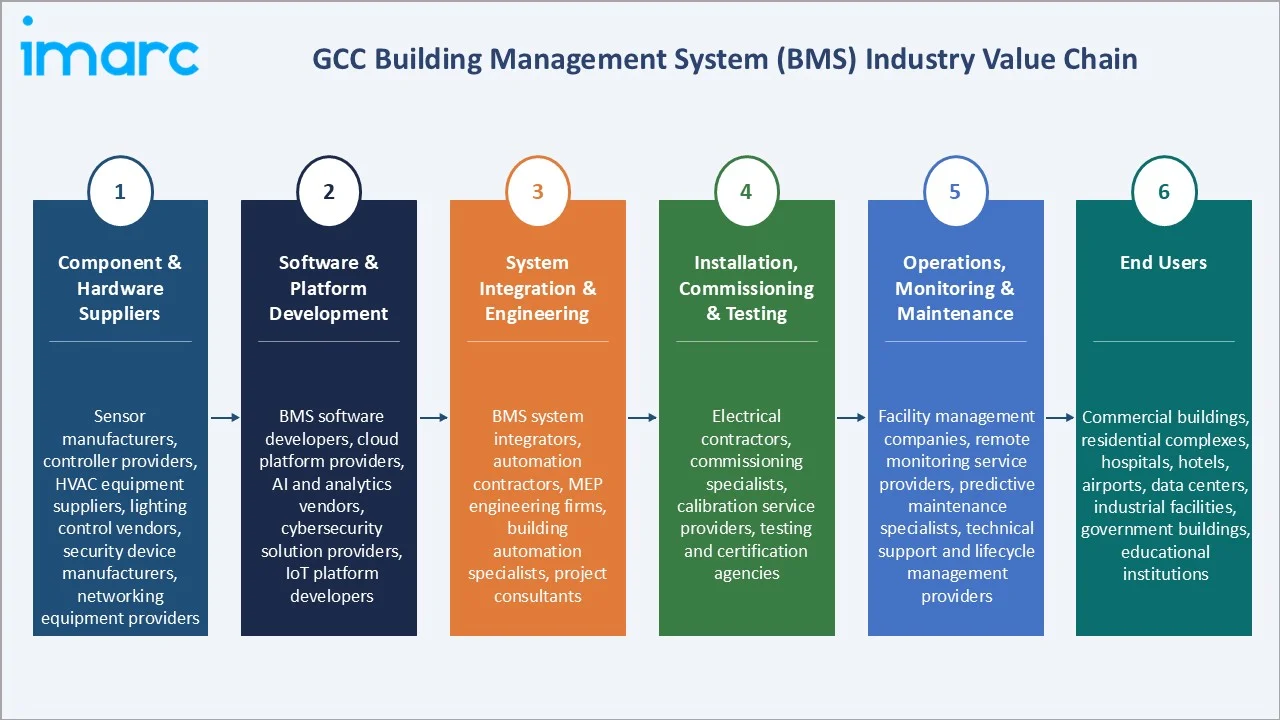
The GCC calcium chloride value chain integrates raw material procurement, chemical manufacturing, processing & quality assurance, packaging & storage, distribution & logistics, and end-use industries
|
Stage |
Key Participants |
|
Raw Material Procurement |
Limestone suppliers, hydrochloric acid producers, brine suppliers, soda ash manufacturers, industrial chemical feedstock providers |
|
Chemical Manufacturing |
Calcium chloride manufacturers, inorganic chemical producers, integrated chemical companies, and contract manufacturing facilities |
|
Processing & Quality Assurance |
Drying, flaking, pelletizing, solution preparation, laboratory testing, quality control and certification service providers |
|
Packaging & Storage |
Industrial packaging companies, bag and drum manufacturers, bulk storage terminals, and warehouse operators |
|
Distribution & Logistics |
Chemical distributors, importers, exporters, freight forwarders, shipping companies, and regional chemical traders |
|
End-Use Industries |
Oil & gas companies, construction contractors, water and wastewater treatment plants, mining and quarrying companies, food processing & refrigeration companies, industrial manufacturers |
Chemical manufacturing is the most value-added stage in the GCC calcium chloride value chain, as it involves chemical synthesis, purification, concentration, drying, and conversion into flakes, pellets, powders, or liquid solutions tailored to end-user requirements. This stage determines product quality, application performance, regulatory compliance, and overall market value, making it the primary source of profit generation.
Technology Landscape in the GCC Calcium Chloride Industry
Brine Concentration and Purification Technology
Brine concentration and purification technology enable the production of higher-purity calcium chloride with consistent chemical composition. Advanced evaporation, filtration, and impurity removal systems improve process efficiency while reducing energy consumption and product losses. These technologies help manufacturers meet the stringent quality requirements of oil and gas, water treatment, food, and industrial applications. As local production capacity expands, investment in efficient brine processing technologies is becoming a key competitive differentiator.
Chemical Plant Commissioning Technology
Chemical plant commissioning technology ensures new production facilities achieve safe, efficient, and reliable commercial operations. Advanced commissioning practices, including automated system testing, process validation, and performance optimization, reduce start-up time and improve plant productivity. In November 2025, Nuberg EPC secured an EPC contract from Al Ghaith Chemical Industries LLC to develop a 120-tpd chlor-alkali expansion and an 80-tpd calcium chloride plant at Sur Industrial City, Oman. The project forms the second phase of Al Ghaith’s integrated chemical complex and supports Oman’s move toward stronger chemical manufacturing self-reliance. Executed on an LSTK basis, the scope includes design, engineering, procurement, fabrication, construction, commissioning, and handover. As new calcium chloride projects are commissioned across the GCC, efficient plant start-up capabilities are becoming a key technological differentiator.
Flaking, Pelletizing, and Granulation Technology
Flaking, pelletizing, and granulation technology produce uniform, free-flowing products with improved handling, storage, and transportation characteristics. These technologies reduce dust generation, improve moisture resistance, and ensure consistent particle size for industrial applications. They also enable manufacturers to supply application-specific product forms for oil and gas, construction, water treatment, and food processing sectors. As demand for high-quality and easy-to-handle calcium chloride increases, advanced product finishing technologies are becoming a key focus across regional production facilities.
Market Segmentation Analysis
The report covers the following segments:
|
Segment Category |
Leading Segment |
Market Share |
Year |
|
Application |
De-Icing |
🔒 |
2025 |
|
Product Type |
Hydrated Solid |
44.2% |
2025 |
|
Raw Material |
Natural Brine |
🔒 |
2025 |
|
Grade |
Industrial Grade |
86.8% |
2025 |
|
Country |
Saudi Arabia |
37.9% |
2025 |

By Product Type
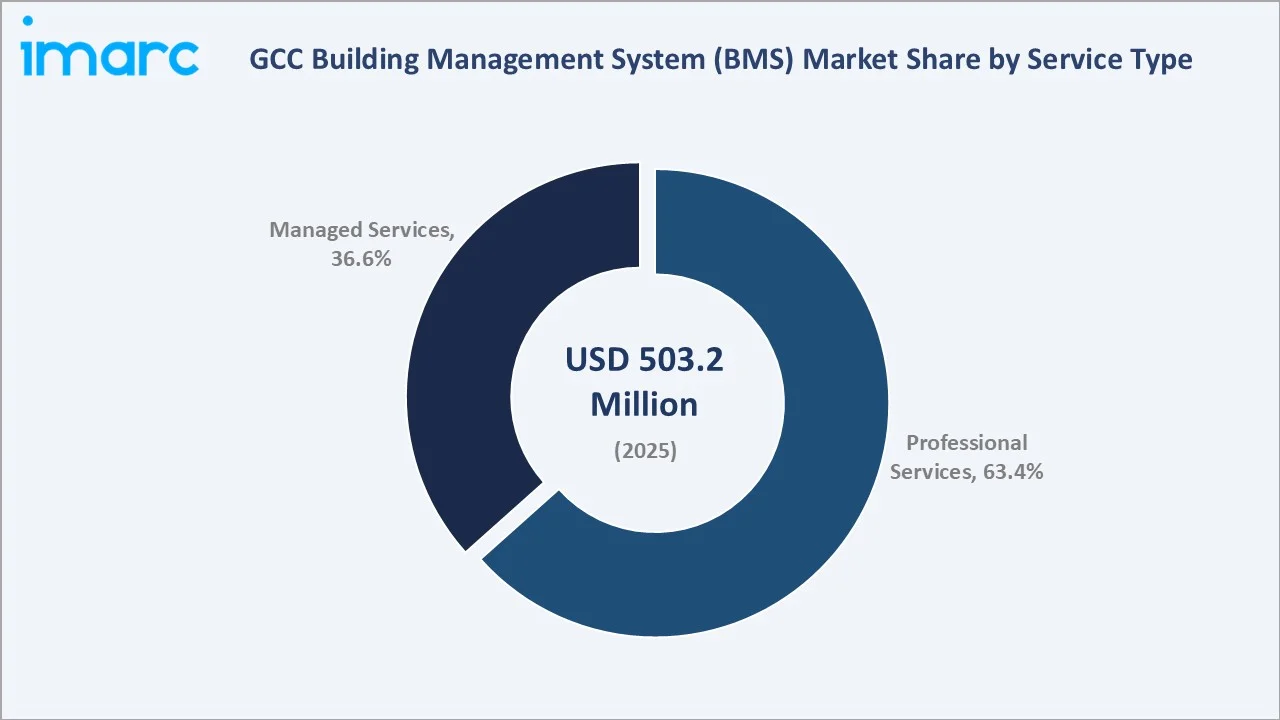
Hydrated solid leads at 44.2% (2025) due to their superior storage stability, ease of transportation, and longer shelf life compared to liquid forms. Its widespread use in construction, dust control, industrial processing, and oil and gas applications, coupled with lower handling and logistics costs, makes it the preferred product type across the region.
To access detailed market analysis, Request Sample
Liquid at 33.5% reflects CaCl2 30-35% aqueous solution for oilfield completion brine, road dust suppression liquid spray, and water treatment liquid. Anhydrous solid at 22.3% reflects above-94% purity high-temperature CaCl2 for HPHT oilfield completion, industrial desiccant dehumidification, and refrigeration brine.
By Grade
Industrial grade leads at 86.8% (2025), through oilfield completion fluid and clear brine, road and construction dust suppression, industrial desiccant and dehumidification, concrete set accelerator, and LNG gas dehydration desiccant.
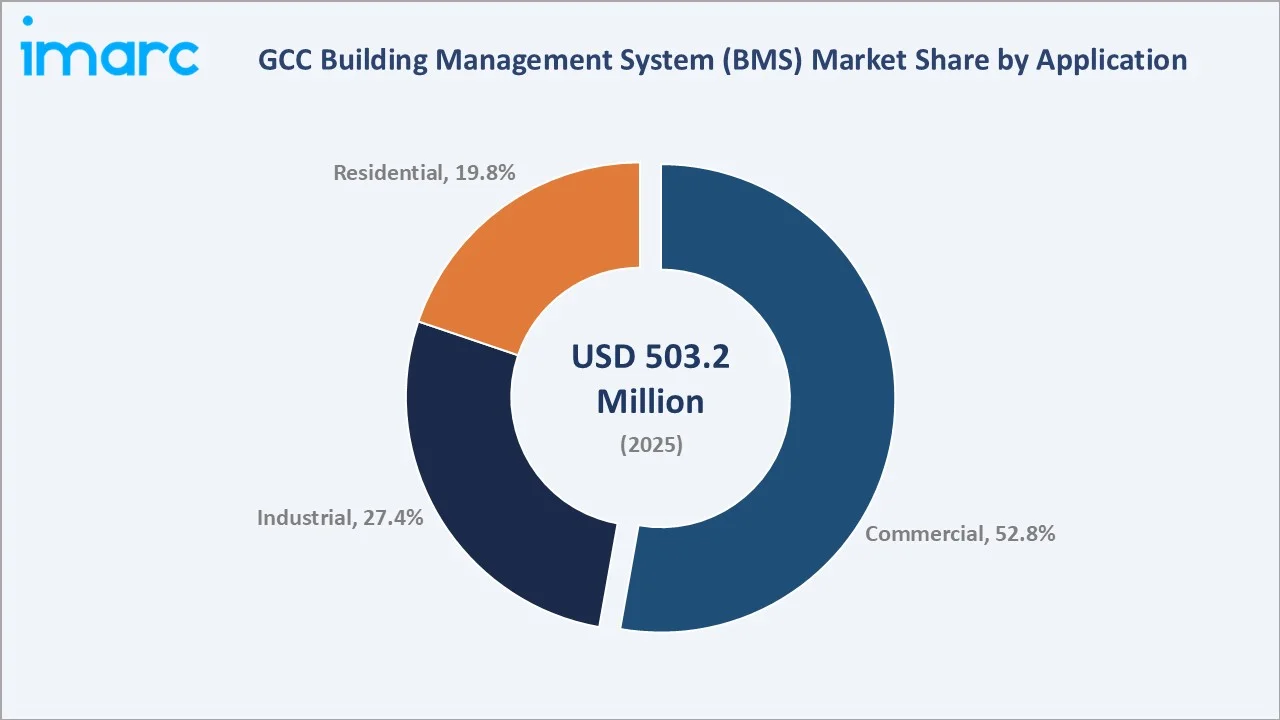
Food grade at 13.2% grows fastest at ~3.8% CAGR through halal-certified food additive CaCl2 for GCC cheese coagulant, canning and pickling firming agent, and mineral supplement beverage.
Regional Market Insights
|
Country |
Share (2025) |
Key GCC Calcium Chloride Market Drivers & Characteristics |
|
Saudi Arabia |
37.9% |
Reflecting its large oil and gas sector, expanding construction activities, strong industrial base, and growing investments in local chemical manufacturing. |
|
UAE |
24.1% |
Reflecting high demand from construction, desalination, water treatment, logistics, and industrial processing, supported by diversified economic growth. |
|
Qatar |
11.8% |
Reflecting continued hydrocarbon production, infrastructure expansion, and increasing demand for drilling fluids and industrial chemicals. |
|
Oman |
9.5% |
Reflecting investments in chemical manufacturing, mining activities, industrial diversification, and expanding oil and gas operations. |
|
Kuwait |
9.0% |
Reflecting demand from upstream petroleum operations, construction projects, and municipal water treatment applications. |
|
Bahrain |
7.7% |
Reflecting steady consumption from industrial manufacturing, infrastructure maintenance, and regional chemical trade activities. |
Saudi Arabia's 37.9% dominance is supported by its extensive oil and gas industry, expanding chemical manufacturing base, and strong infrastructure investments. UAE's 24.1% is driven by diversified industrial activities, construction projects, and growing demand from desalination and water treatment sectors.
.webp)
Qatar's 11.8% and Oman's 9.5% benefit from ongoing hydrocarbon development, mining activities, and industrial diversification initiatives that support steady calcium chloride consumption. Kuwait's 9.0% maintains stable demand through upstream petroleum operations and municipal infrastructure projects. Bahrain's 7.7% contributes through industrial manufacturing and regional chemical trade.
Competitive Landscape
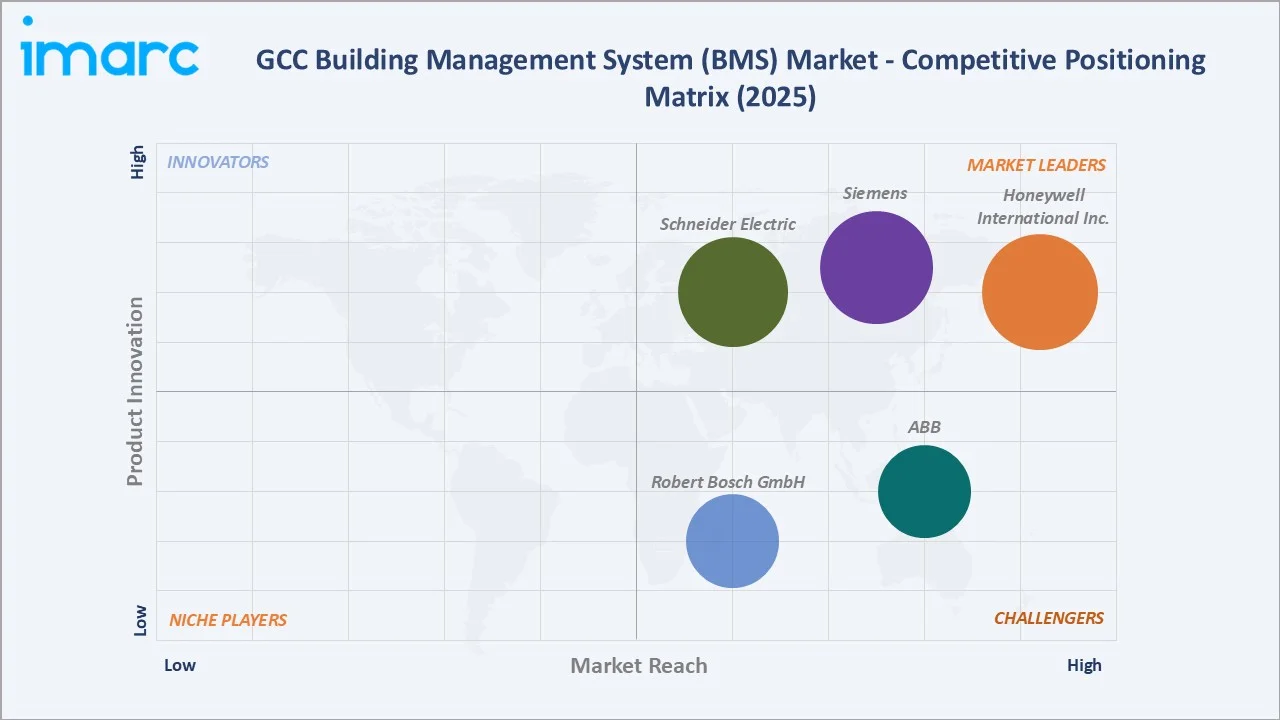
The GCC calcium chloride market is moderately consolidated, with competition driven by product quality, production capacity, pricing, and supply reliability. Regional manufacturers are expanding domestic production to reduce import dependence, while global chemical companies maintain a strong presence through imports and distributor partnerships. Companies are investing in capacity expansions, integrated chemical complexes, and process optimization technologies to strengthen their competitive position.
|
Company |
Key Products |
Market Position |
Core Strength |
|
Solvay |
CASO TECHNICAL FLAKES, CASO Food Flakes |
Market Leader |
Solvay holds a prominent position in the calcium chloride market, actively supplying high-quality, synthetic mineral-grade and specialized formulations to the GCC region. Rather than primary extraction, the company produces calcium chloride as a value-added, eco-friendly by-product of its soda-ash manufacturing. |
|
TETRA Technologies, Inc. |
Calcium Chloride Flakes, Liquid Calcium Chloride |
Market Leader |
TETRA Technologies, Inc. acts as a major vertically integrated producer and supplier in the GCC calcium chloride market. Their role centers on serving the regional oil & gas sector with Completion Fluids and providing high-purity, industrial-grade salts for construction, agriculture, and water treatment. |
|
Nedmag B.V. |
Calcium chloride liquid, Calcium chloride prills |
Strong Challenger |
Nedmag B.V. serves as a premium, niche-focused supplier in the GCC calcium chloride market, operating alongside major regional manufacturers like UAE's Al Ghaith Industries. |
|
InoChem |
Calcium Chloride Flakes, Calcium Chloride Granules |
Established Player |
InoChem positioned itself as the largest Calcium Chloride manufacturer in the world. Through its massive industrial complex in Saudi Arabia, the company provides a crucial domestic supply of the chemical to vital regional industries like oil and gas exploration. |
Strategic collaborations, long-term supply agreements with oil and gas and industrial customers, and broader regional distribution networks remain key competitive strategies. Continuous focus on high-purity grades, operational efficiency, and localized manufacturing is expected to intensify competition across the GCC market.
Key Company Profiles
Solvay
Solvay is a specialty chemicals company with a strong presence in the calcium chloride market through its high-purity products used in oil and gas, construction, water treatment, food processing, refrigeration, and industrial applications. The company leverages advanced chemical manufacturing technologies and an extensive global distribution network to serve customers across the GCC region. Solvay's calcium chloride portfolio includes both solid and liquid grades designed for demanding industrial applications requiring consistent quality and performance.
- Key Products: CASO TECHNICAL FLAKES, CASO Food Flakes.
- Strategic Focus: Focuses on supplying high-purity calcium chloride solutions for oil and gas, construction, water treatment, food processing, and refrigeration applications across the GCC. The company emphasizes product quality, application-specific formulations, and reliable supply through its global manufacturing and regional distribution network.
TETRA Technologies, Inc.
TETRA Technologies, Inc. is an energy services and industrial chemicals company with a strong portfolio of calcium chloride products primarily serving the oil and gas industry. The company supplies high-purity calcium chloride in both liquid and solid forms for drilling fluids, completion fluids, workover operations, and industrial applications. In the GCC, TETRA supports customers through its global manufacturing capabilities, technical expertise, and established distribution network, catering to the region's extensive upstream oil and gas activities.
- Key Products: Calcium Chloride Flakes, Liquid Calcium Chloride.
- Strategic Focus: Focuses on strengthening its position in the GCC by supplying high-performance calcium chloride products for drilling, completion, and workover fluid applications in the oil and gas sector. The company emphasizes advanced fluid technologies, application-specific chemical solutions, and technical support to improve well performance and operational efficiency.
Market Concentration Analysis
The GCC calcium chloride market exhibits a moderately concentrated competitive structure, with a mix of regional manufacturers and established international chemical companies competing for market share. Regional producers are expanding domestic production capacity through integrated chemical complexes to reduce reliance on imports, while global suppliers leverage extensive distribution networks and technical expertise. Competition is primarily based on product quality, purity, pricing, supply reliability, and application-specific solutions. Long-term supply agreements with oil and gas operators, construction companies, and water treatment providers are key differentiators. Increasing investments in production technology, operational efficiency, and localized manufacturing are expected to further shape the competitive landscape over the forecast period.
Investment & Growth Opportunities
Highest Growth Segments
Food grade halal E509 (~3.8% CAGR), liquid oilfield brine (~3.2% CAGR), NEOM and Vision 2030 road dust suppression (~3.5% CAGR from mega-project), industrial desiccant container (~3.1% CAGR), Qatar LNG desiccant (~3.0% CAGR), and water treatment municipal (~2.8% CAGR) represent GCC calcium chloride highest-growth investment vectors through 2034.
Investment Themes
- Oilfield HPHT completion brine premium: Rising investment in high-pressure, high-temperature (HPHT) oil and gas developments is increasing demand for premium-grade calcium chloride completion brines that enhance wellbore stability, reservoir protection, and drilling efficiency.
- NEOM and Vision 2030 road dust suppression liquid CaCl2: Mega infrastructure projects such as NEOM and broader Vision 2030 developments are driving demand for liquid calcium chloride as an effective dust suppressant for roads, construction sites, mining operations, and logistics corridors in arid environments.
Future Market Outlook (2026-2034)
The GCC calcium chloride market is projected to grow from USD 39.80 Million in 2025 to USD 52.53 Million by 2034, delivering a 3.04% CAGR over the forecast period through Saudi Aramco oilfield completion brine structural demand, NEOM and Vision 2030 road dust suppression scale, GCC halal-certified food grade CaCl2 growing, industrial desiccant container growing, and Qatar LNG gas dehydration desiccant. The market's anchor value of USD 46.22 Million in 2030 represents GCC CaCl2 at food grade mainstream and NEOM construction dust peak inflection.
Three structural forces define GCC CaCl₂ growth through 2034: sustained oilfield drilling and completion demand, large-scale infrastructure construction, and expanding water treatment capacity. Import dependence is also encouraging local production investments and integrated chemical complexes. Rising dust suppression needs across roads, mining, and mega projects further support consumption. Together, these forces position calcium chloride as a critical industrial chemical for energy, infrastructure, and utility development.
Research Methodology
Primary Research
Primary research comprised interviews with calcium chloride manufacturers, raw material suppliers, distributors, EPC contractors, and procurement managers across the GCC. Discussions with oil and gas operators, construction companies, and water treatment utilities provided insights into demand patterns, pricing trends, procurement practices, and technology adoption. These findings were used to validate market estimates, competitive positioning, and future growth opportunities.
Secondary Research
Secondary research encompassed company reports, trade databases, government publications, industry journals, press releases, and regulatory documents. It also included analysis of GCC oil and gas activity, construction investments, water treatment capacity, import-export trends, and chemical production projects. These sources helped benchmark market sizing, validate growth drivers, and assess competitive and technology trends.
Forecasting Models
Forecasting models combined historical market performance with demand indicators from the oil and gas, construction, mining, and water treatment sectors across the GCC. The analysis incorporated macroeconomic trends, infrastructure investments, production capacity expansions, and trade flows to project future demand. Scenario-based modeling and data triangulation were applied to generate reliable market forecasts through 2034.
GCC Calcium Chloride Market Report Coverage:
| Report Features | Details |
|---|---|
| Base Year of the Analysis | 2025 |
| Historical Period | 2020-2025 |
| Forecast Period | 2026-2034 |
| Units | Million USD |
| Scope of the Report | Exploration of Historical and Forecast Trends, Industry Catalysts and Challenges, Segment-Wise Historical and Predictive Market Assessment:
|
| Applications Covered | De-Icing, Dust Control and Road Stabilization, Drilling Fluids, Construction, Industrial Processing, Others |
| Product Types Covered | Liquid, Hydrated Solid, Anhydrous Solid |
| Raw Materials Covered | Natural Brine, Solvay Process (by-Product), Limestone and HCL, Others |
| Grades Covered | Food Grade, Industrial Grade |
| Countries Covered | Saudi Arabia, UAE, Qatar, Oman, Kuwait, Bahrain |
| Companies Covered | Solvay, TETRA Technologies, Inc., Nedmag B.V., InoChem, etc. |
| Customization Scope | 10% Free Customization |
| Post-Sale Analyst Support | 10-12 Weeks |
| Delivery Format | PDF and Excel through Email (We can also provide the editable version of the report in PPT/Word format on special request) |
Frequently Asked Questions About the GCC Calcium Chloride Market Report
The GCC calcium chloride market reached USD 39.80 Million in 2025, driven by strong demand from oil and gas drilling, well completion fluids, construction chemicals, and dust suppression applications. Expanding desalination, wastewater treatment, mining, and cold chain infrastructure further supports steady consumption across the region.
The GCC calcium chloride market grows at 3.04% CAGR during 2026-2034, reaching USD 52.53 Million by 2034. The CAGR reflects Saudi Aramco oilfield completion, NEOM road dust suppression, GCC food processing halal CaCl2, and industrial desiccant structural demand.
Hydrated solid leads at 44.2% due to their ease of storage, transportation, and handling, along with their longer shelf life compared to liquid forms. Its widespread use in oil and gas, construction, dust suppression, and industrial applications makes it the preferred product type across the region.
Industrial grade leads at 86.8% due to their large-scale use in oil and gas, construction, dust control, and industrial processing. Its cost-effectiveness and suitability for bulk applications make it the preferred grade across the GCC.
Saudi Arabia leads at 37.9% due to its large oil and gas industry, expanding construction activity, and strong demand from water treatment and industrial sectors. High import volumes and new domestic production investments further strengthen its leading regional position.
Leading companies include Solvay, TETRA Technologies, Inc., Nedmag B.V., and InoChem, among others.
The market is projected to reach approximately USD 46.22 Million by 2030, supported by steady demand from oil and gas, construction, water treatment, and industrial applications. Growth will also be reinforced by rising domestic production capacity and regional infrastructure investments.
Three priority investment opportunities in the GCC calcium chloride market include expanding domestic production capacity to reduce import dependence, developing premium-grade calcium chloride for high-pressure, high-temperature oilfield completion fluids, and increasing production of liquid calcium chloride for dust suppression in mega infrastructure projects under Vision 2030. Investments in advanced processing technologies and integrated chemical complexes also offer significant long-term growth potential.
Need more help?
- Speak to our experienced analysts for insights on the current market scenarios.
- Include additional segments and countries to customize the report as per your requirement.
- Gain an unparalleled competitive advantage in your domain by understanding how to utilize the report and positively impacting your operations and revenue.
- For further assistance, please connect with our analysts.
 Request Customization
 Speak to an Analyst
 Request Brochure
 Inquire Before Buying
Benefits of Customization
- Personalize this research
- Triangulate with your data
- Get data as per your format and definition
- Gain a deeper dive into a specific application, geography, customer, or competitor
- Any level of personalization
Get in Touch With Us
UNITED STATES
Phone: +1-201-971-6302
INDIA
Phone: +91-120-433-0800
UNITED KINGDOM
Phone: +44-753-714-6104
Email: [email protected]
Client Testimonials




.webp)




.webp)













Related Reports

Choose your plan
*Please note that the prices mentioned below are starting prices for each bundle type. Kindly contact our team for further details.*
Single User License
- 1 User License, Access on 2 Devices
- PDF Report + Excel Dataset (Password Protected)
- Lifetime Access
- No Printing Rights
- 10% Free Report Customization
- 10–12 Weeks of Analyst Support
Five User License
- Access for 5 Users, 2 Devices per User
- PDF Report + Excel Dataset (Password Protected)
- Lifetime Access
- Dedicated Account Manager
- 12–14 Weeks of Analyst Support
- No Printing Rights
- 15% Free Report Customization
- 25% Discount on Your Next Purchase
Corporate User License
- Unlimited User Access (Within Your Organization)
- PDF Report + Excel Dataset
- Lifetime Access
- Dedicated Account Manager
- 14–20 Weeks of Analyst Support
- No Printing Rights
- 20% Free Report Customization
- 30% Discount on Your Next Purchase
Essential Insights
What's included:
3 reports
- Lifetime Access
- PDF Reports
- Excel Datasets
- 2 Weeks of Free Analyst Support
- 2 User Licenses
- Access on 2 Devices
- Printing Rights
- Complimentary PowerPoint (PPT) Version
- Complimentary License Upgrade
Professional Access
What's included:
5 reports
- Lifetime Access
- PDF Reports
- Excel Datasets
- 8 Weeks of Free Analyst Support
- 2 User Licenses
- Access on 2 Devices
- Printing Rights
- Complimentary PowerPoint (PPT) Version
- Complimentary License Upgrade
Business Advantage
What's included:
8 reports
- Lifetime Access
- PDF Reports
- Excel Datasets
- 14 Weeks of Free Analyst Support
- 2 User Licenses
- Access on 2 Devices
- Printing Rights
- Complimentary PowerPoint (PPT) Version
- Complimentary License Upgrade
Enterprise Intelligence
What's included:
10 reports
- Lifetime Access
- PDF Reports
- Excel Datasets
- 20 Weeks of Free Analyst Support
- 2 User Licenses
- Access on 2 Devices
- Printing Rights
- Complimentary PowerPoint (PPT) Version
- Complimentary License Upgrade