
India Clinical Nutrition Market Size, Share, Trends and Forecast by Product, Route of Administration, Application, End User, and Region, 2026-2034
India Clinical Nutrition Market Size, Share, Trends & Forecast (2026-2034)
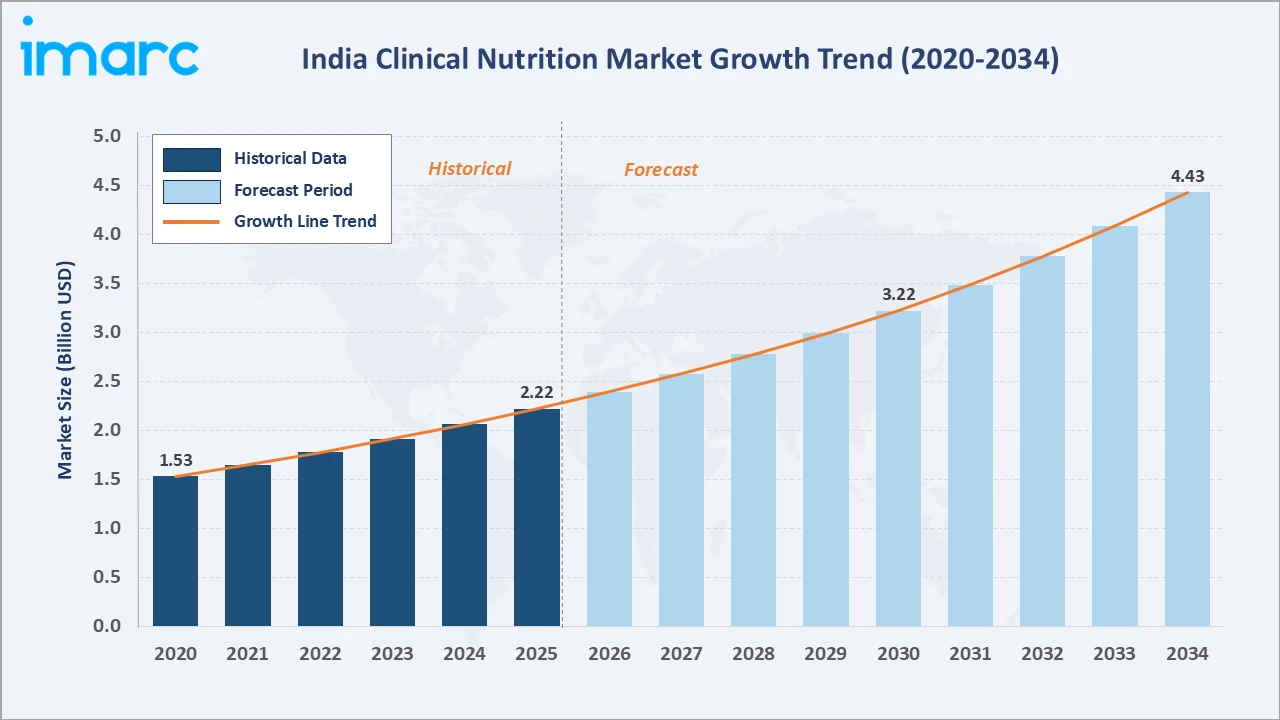
The India clinical nutrition market grew from USD 2.22 Billion in 2025 to USD 2.39 Billion in 2026 and is projected to reach USD 4.43 Billion by 2034, growing at a CAGR of 7.73% during 2026-2034. Market growth is driven by the rising burden of chronic and metabolic diseases, high rates of pediatric and maternal malnutrition, an expanding geriatric population, and the continued expansion of private healthcare infrastructure across the country.
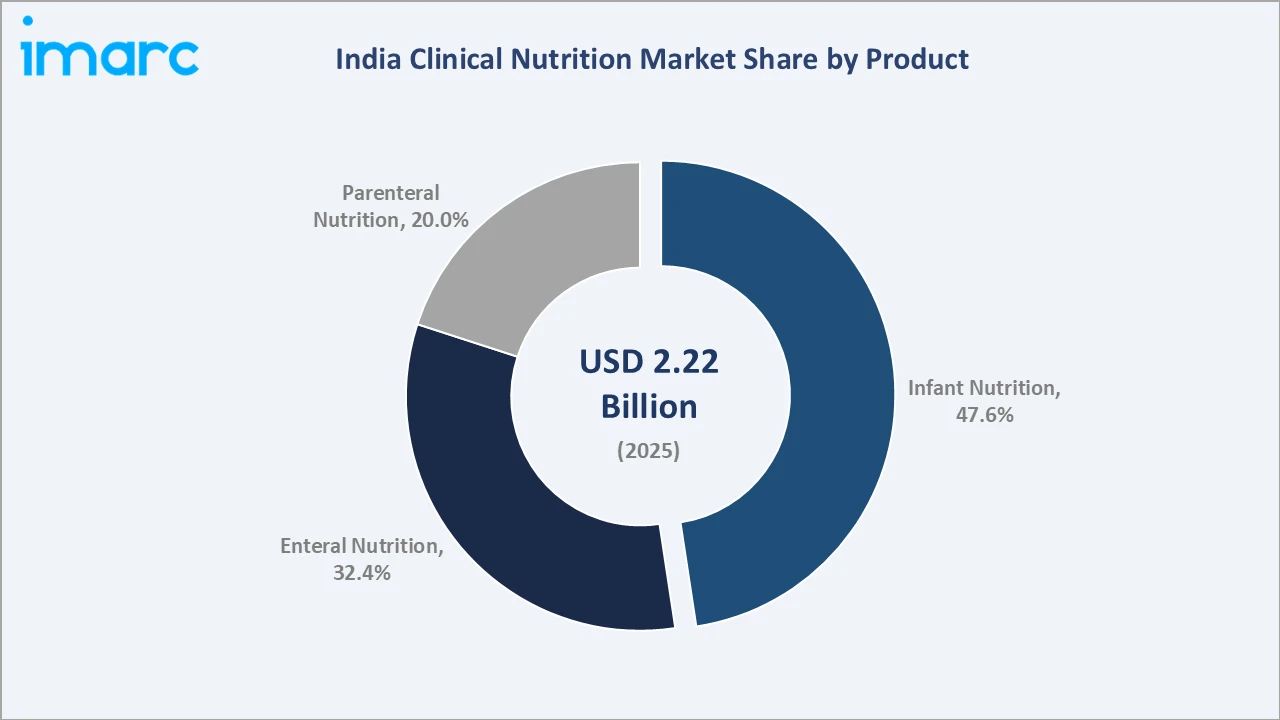
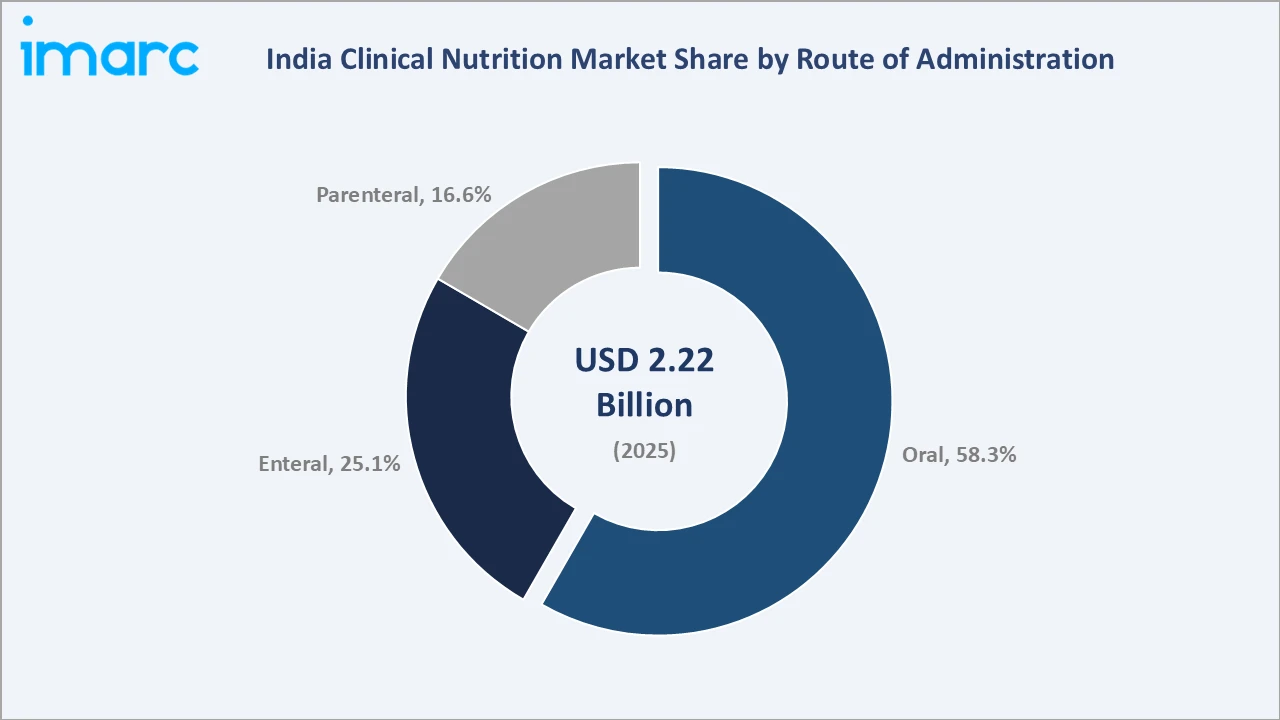
Infant nutrition dominates the product landscape at 47.6% of the market in 2025, reflecting India's persistent childhood nutrition gap and strong pediatrician-led recommendation channels. Oral nutrition leads by route of administration at 58.3%, favored for its ease of use, affordability, and suitability across hospital, homecare, and outpatient settings. West and Central India lead regionally at 32.7% of the market, supported by dense private hospital networks and strong pharmaceutical distribution infrastructure across Maharashtra and Gujarat.
Market Snapshot
|
Metric |
Value |
|
Base Year Market Size (2025) |
USD 2.22 Billion |
|
Market Size (2026) |
USD 2.39 Billion |
|
Forecast Market Size (2034) |
USD 4.43 Billion |
|
CAGR (2026-2034) |
7.73% |
|
Base Year |
2025 |
|
Historical Period |
2020-2025 |
|
Forecast Period |
2026-2034 |
|
Dominant Product |
Infant Nutrition (47.6%, 2025) |
|
Dominant Route of Administration |
Oral (58.3%, 2025) |
|
Leading Region |
West and Central India (32.7%, 2025) |
The market expanded from USD 1.53 Billion in 2020 to USD 2.22 Billion in 2025 and an estimated USD 2.39 Billion in 2026 - growing by nearly 45% in five years - anchored at USD 3.22 Billion in 2030 and forecast to reach USD 4.43 Billion by 2034. Growth held steady through the historical period as private hospital expansion and rising chronic disease diagnosis rates sustained consistent demand for medical nutrition therapy across India.
To get more information on this market, Request Sample
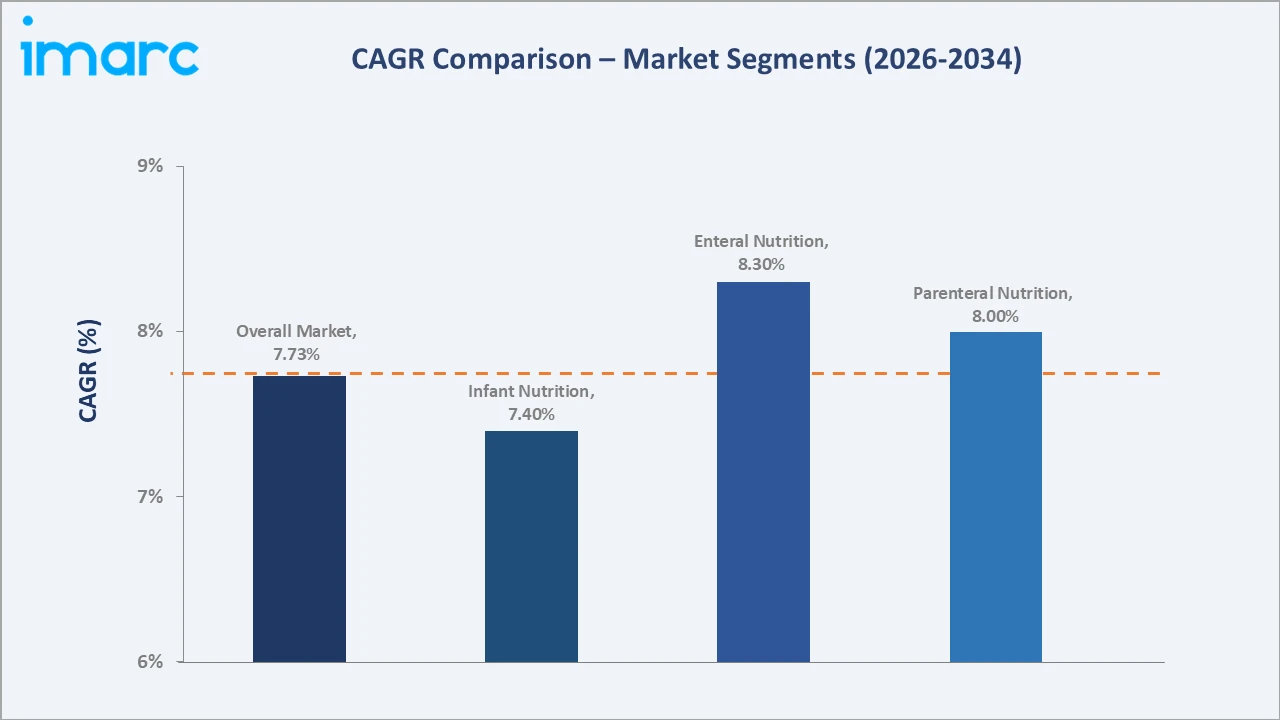
Enteral nutrition grows fastest among product segments at ~8.3% CAGR as hospital ICU capacity expands and post-surgical home enteral feeding gains adoption. Parenteral nutrition follows at ~8.0% CAGR, driven by critical care and gastrointestinal failure case volumes, while infant nutrition grows steadily at ~7.4% CAGR on its already-large base.
Executive Summary
The India clinical nutrition market, which increased from USD 2.22 Billion in 2025 to an estimated USD 2.39 Billion in 2026, reflecting the healthcare system's growing reliance on medical nutrition therapy to manage chronic disease, malnutrition, and post-operative recovery. Clinical nutrition products, delivered orally, enterally, or parenterally, are increasingly prescribed alongside conventional treatment to improve patient outcomes across pediatric, adult, and geriatric populations. The market is projected to nearly double to USD 4.43 Billion by 2034, growing at a CAGR of 7.73% during 2026-2034.
Infant nutrition leads the product landscape at 47.6% share, driven by India's continued burden of childhood undernutrition and rising pediatric supplementation. Oral nutrition leads by route of administration at 58.3%, reflecting its accessibility across care settings. West and Central India lead regionally at 32.7%, underpinned by concentrated private healthcare and pharmaceutical distribution infrastructure.
Key Market Insights
|
Insight |
Data |
|
Dominant Product |
Infant Nutrition - 47.6% market share (2025) |
|
Dominant Route of Administration |
Oral - 58.3% market share (2025) |
|
Leading Region |
West and Central India - 32.7% market share (2025) |
|
Market Opportunity |
Home healthcare nutrition services; domestic manufacturing scale-up; geriatric and oncology nutrition |
Key Analytical Observations Supporting the Above Data:
- Infant Nutrition at 47.6%: Infant nutrition dominates at 47.6% share due to India's persistent childhood malnutrition burden, pediatrician-recommended supplementation, and strong brand recall among urban and semi-urban households, sustaining consistent volume demand across the country.
- Oral Route at 58.3%: Oral nutrition leads at 58.3% share as it offers the most accessible, cost-effective, and easy-to-administer route across hospital, homecare, and outpatient settings, making it the preferred first-line therapeutic nutrition format for most patients.
- West and Central India at 32.7%: West and Central India leads at 32.7% share, supported by Maharashtra and Gujarat's dense private hospital networks, established pharmaceutical distribution infrastructure, and high per-capita healthcare spending relative to other Indian regions.
India Clinical Nutrition Market Overview
The India clinical nutrition market encompasses specialized nutritional formulations, delivered orally, enterally, or parenterally, that are used to manage disease, prevent malnutrition, and support recovery across pediatric, adult, and geriatric patient groups. The market spans infant nutrition, enteral nutrition, and parenteral nutrition products supplied through hospitals, retail pharmacies, and increasingly through home healthcare channels.
The ecosystem integrates multinational and domestic nutrition manufacturers, hospital and ICU nutrition procurement, retail and e-pharmacy distribution networks, home healthcare providers, and regulatory bodies including the Central Drugs Standard Control Organization (CDSCO) and the Food Safety and Standards Authority of India (FSSAI). Rising chronic disease prevalence, an aging population, and expanding private healthcare infrastructure are the key macroeconomic factors shaping the market's growth trajectory.
Market Dynamics
To evaluate market opportunities, Request Sample
Market Drivers
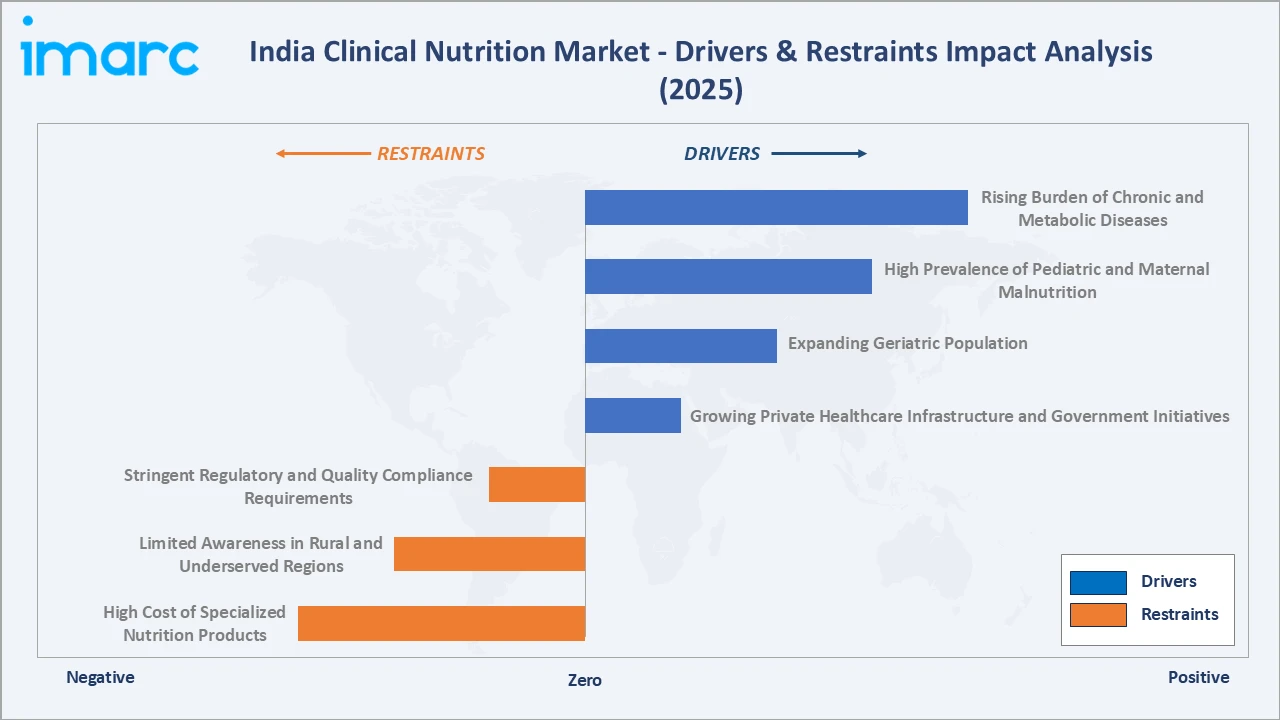
- Rising Burden of Chronic and Metabolic Diseases: Growing prevalence of diabetes, cancer, renal, and gastrointestinal disorders across India is increasing demand for condition-specific medical nutrition therapies that support disease management, faster recovery, and improved patient outcomes across hospital and homecare settings. Hospitals are increasingly embedding clinical nutrition protocols into standard treatment pathways for chronic disease patients, reinforcing physician-led prescription volumes. This integration is expected to deepen further as more tertiary care centers adopt structured nutrition-screening programs at admission.
- High Prevalence of Pediatric and Maternal Malnutrition: India's continued burden of childhood undernutrition and micronutrient deficiencies is driving demand for specialized infant and pediatric nutrition products, supported by pediatrician-recommended supplementation and expanding awareness among urban and semi-urban households. National health surveys continue to report high rates of underweight and stunted children under five, keeping pediatric nutrition intervention a policy and clinical priority. Government-backed nutrition missions are further reinforcing demand for fortified and therapeutic infant formulations.
- Expanding Geriatric Population: India's aging population is increasingly prone to age-related nutritional deficiencies, swallowing difficulties, and chronic illness, fueling demand for enteral and oral nutrition supplements formulated for geriatric care in hospitals, nursing homes, and home settings. As life expectancy rises and multi-morbidity becomes more common among older adults, demand for easy-to-digest, nutrient-dense formulations tailored to geriatric metabolic needs is expected to expand steadily through the forecast period.
- Growing Private Healthcare Infrastructure and Government Initiatives: Expansion of private hospitals, ICUs, and nutrition-focused government health programs is improving access to clinical nutrition products, while rising healthcare expenditure supports greater adoption of therapeutic and preventive nutrition interventions nationwide. Growing insurance penetration and corporate health benefit coverage are also making clinical nutrition products more accessible to a wider base of patients across metro and non-metro cities alike.
Market Restraints
- High Cost of Specialized Nutrition Products: Premium pricing of imported and specialized clinical nutrition formulations limits affordability for price-sensitive patients, particularly in rural and lower-income households, restricting broader adoption despite rising clinical need across the country. Limited insurance reimbursement for outpatient nutrition therapy further increases the out-of-pocket burden on patients, often leading to inconsistent product usage or premature discontinuation of prescribed regimens.
- Limited Awareness in Rural and Underserved Regions: Low awareness of clinical nutrition therapies among patients and caregivers in rural India, combined with limited access to trained dietitians and specialists, continues to restrict market penetration outside major urban healthcare centers. The shortage of qualified clinical nutritionists in smaller towns and district hospitals further slows the translation of physician recommendations into consistent patient adherence.
- Stringent Regulatory and Quality Compliance Requirements: Clinical nutrition products face rigorous approval, labelling, and quality oversight from CDSCO and FSSAI, increasing compliance costs and time-to-market for manufacturers, particularly smaller domestic players introducing new specialized formulations. Frequent updates to labelling and safety documentation requirements can further delay product launches, creating a competitive disadvantage for companies with limited regulatory affairs capacity.
Market Opportunities
- Expansion of Home Healthcare Nutrition Services: Rising adoption of home-based post-surgical and chronic disease care is creating new demand for portable enteral and oral nutrition solutions, opening growth avenues for manufacturers targeting India's expanding homecare services sector. Partnerships between nutrition manufacturers and homecare service providers are emerging as an effective channel to reach patients transitioning from hospital to home, particularly in metro and tier-1 cities.
- Domestic Manufacturing and Import Substitution: Growing domestic production capacity for clinical nutrition formulations is reducing import dependence and costs, creating opportunities for local and multinational manufacturers to scale affordable, India-specific therapeutic nutrition products. Government incentives supporting local pharmaceutical and nutraceutical manufacturing are expected to accelerate this shift, improving supply chain resilience and pricing competitiveness over the forecast period.
Market Challenges
- Fragmented Distribution and Supply Chain Complexity: The India clinical nutrition market's fragmented distribution across tier-2 and tier-3 cities makes consistent cold-chain and inventory management difficult, occasionally limiting product availability and increasing operating costs for manufacturers and distributors. Seasonal demand fluctuations and last-mile logistics gaps in smaller towns can further disrupt consistent product supply, affecting patient adherence to prescribed nutrition regimens.
- Competition from Unregulated Supplement Alternatives: Widespread availability of unregulated nutritional supplements and low-cost alternatives creates pricing pressure and consumer confusion, making it harder for clinically validated products to differentiate on efficacy and safety alone. Aggressive marketing of non-clinical wellness products through retail and online channels further blurs the distinction for consumers between therapeutic clinical nutrition and general dietary supplements.
Emerging Market Trends
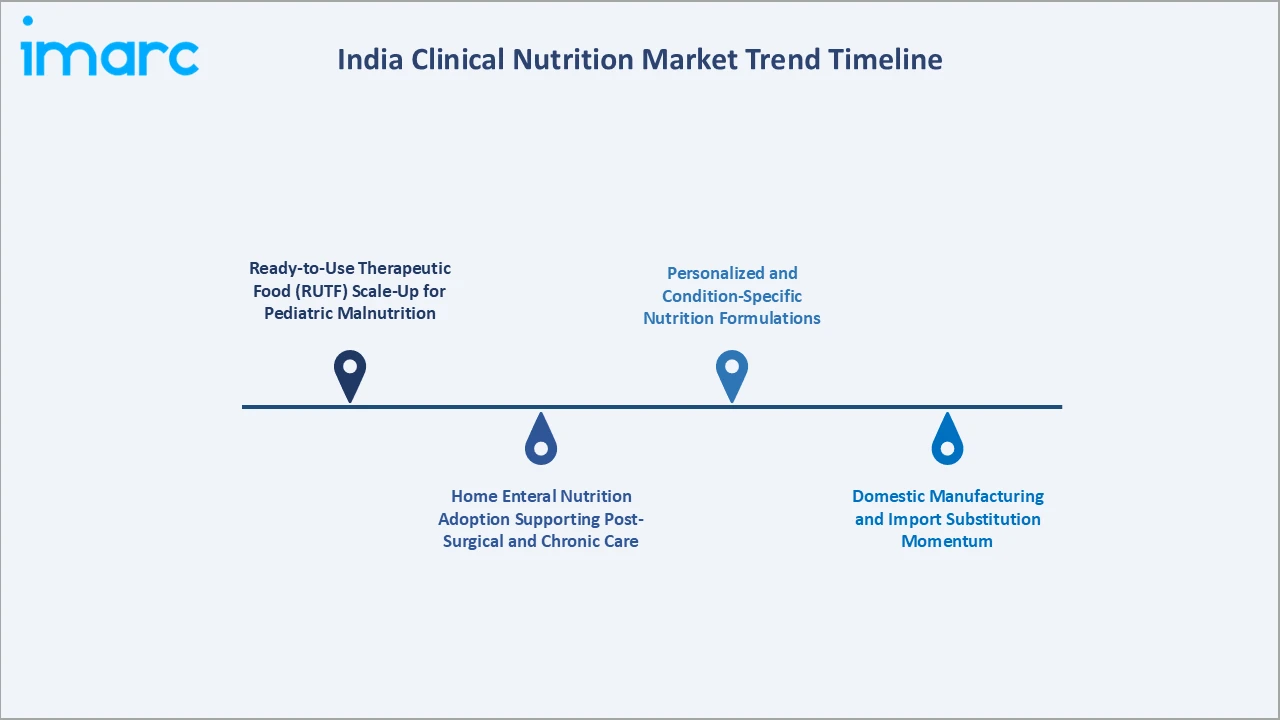
1. Ready-to-Use Therapeutic Food (RUTF) Scale-Up for Pediatric Malnutrition
Ready-to-use therapeutic food adoption is scaling up across government and private nutrition programs targeting severe acute malnutrition in children. These shelf-stable, energy-dense formulations require no refrigeration or preparation, making them well-suited for rural and low-resource settings. Expanding domestic RUTF manufacturing is improving affordability and access across India's malnutrition-affected regions.
2. Home Enteral Nutrition Adoption Supporting Post-Surgical and Chronic Care
Home enteral nutrition is gaining adoption as patients increasingly recover from surgery and manage chronic illness outside hospital settings. This shift reduces hospital stay costs and improves patient comfort, driving demand for portable feeding systems, trained homecare nursing support, and enteral formulations designed for long-term home use.
3. Personalized and Condition-Specific Nutrition Formulations
Manufacturers are increasingly developing condition-specific formulations tailored to diabetes, chronic kidney disease, oncology, and liver disorders. This personalization trend reflects growing physician preference for targeted nutrition therapy over generic supplementation, supporting premiumization and differentiation across the competitive landscape.
4. Domestic Manufacturing and Import Substitution Momentum
Indian and multinational manufacturers are expanding domestic production capacity for clinical nutrition formulations, reducing reliance on imported products. This trend is improving cost competitiveness, supply chain resilience, and regulatory alignment, while supporting government initiatives promoting local pharmaceutical and nutrition manufacturing.
Industry Value Chain Analysis
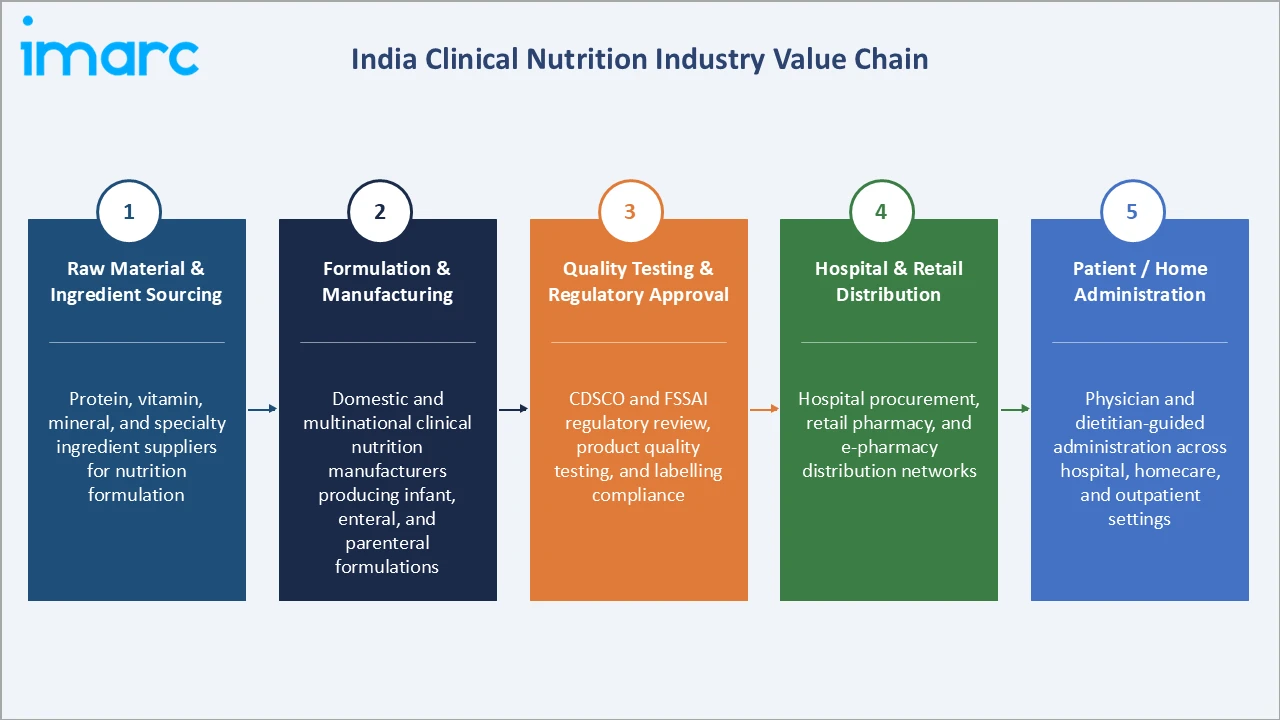
The India clinical nutrition value chain integrates raw material and ingredient sourcing, formulation and manufacturing, quality testing and regulatory approval, hospital and retail distribution, and patient or home administration. The value chain is increasingly shaped by growing home healthcare integration and expanding domestic manufacturing capacity.
|
Stage |
Key Participants |
|
Raw Material & Ingredient Sourcing |
Protein, vitamin, mineral, and specialty ingredient suppliers for nutrition formulation |
|
Formulation & Manufacturing |
Domestic and multinational clinical nutrition manufacturers producing infant, enteral, and parenteral formulations |
|
Quality Testing & Regulatory Approval |
CDSCO and FSSAI regulatory review, product quality testing, and labelling compliance |
|
Hospital & Retail Distribution |
Hospital procurement, retail pharmacy, and e-pharmacy distribution networks |
|
Patient / Home Administration |
Physician and dietitian-guided administration across hospital, homecare, and outpatient settings |
The formulation and manufacturing stage is the value chain's most commercially critical tier, where product differentiation through condition-specific formulation drives competitive advantage. Hospital and retail distribution is undergoing steady transformation as e-pharmacy and home healthcare channels expand alongside traditional hospital procurement.
Technology Landscape in the India Clinical Nutrition Industry
Ready-to-Use Therapeutic Food (RUTF) Technology
Ready-to-use therapeutic food technology enables shelf-stable, energy-dense nutrition delivery without refrigeration or preparation, making it well-suited for large-scale pediatric malnutrition programs across rural and low-resource areas of India. Expanding domestic production is improving affordability and program-level accessibility.
Personalized Nutrition and Nutrigenomics
Personalized nutrition technology is beginning to link genetic and metabolic profiling with tailored dietary and clinical nutrition recommendations. While still emerging in India, this approach is gaining interest among premium hospital networks seeking to improve treatment precision for chronic disease and oncology nutrition management.
Aseptic Processing and Extended Shelf-Life Packaging
Aseptic processing and extended shelf-life packaging technologies are improving the safety, portability, and distribution reach of liquid clinical nutrition formulations. These technologies support wider access across India's diverse hospital and home healthcare distribution network, particularly in regions with limited cold-chain infrastructure.
Market Segmentation Analysis
The report covers the following segments:
|
Segment Category |
Leading Segment |
Market Share |
Year |
|
Product |
Infant Nutrition |
47.6% |
2025 |
|
Route of Administration |
Oral |
58.3% |
2025 |
|
Application |
🔒 |
🔒 |
2025 |
|
End User |
🔒 |
🔒 |
2025 |
|
Region |
West and Central India |
32.7% |
2025 |

By Product
Infant nutrition leads the product segment at 47.6% share in 2025, reflecting India's high birth rate combined with persistent childhood malnutrition and strong pediatrician-driven recommendation. Enteral nutrition follows at 32.4%, used extensively across hospital ICUs and post-surgical recovery, while parenteral nutrition accounts for 20.0%, concentrated in critical care and gastrointestinal failure cases where oral or enteral feeding is not feasible.
To access detailed market analysis, Request Sample
By Route of Administration
Oral nutrition leads by route of administration at 58.3% share, favored for its accessibility, affordability, and ease of self-administration across hospital, outpatient, and home settings. Enteral administration accounts for 25.1%, primarily used for patients with functioning gastrointestinal tracts who cannot consume adequate nutrition orally, while parenteral administration holds 16.6%, reserved for critically ill patients requiring intravenous nutrient delivery.
Regional Market Insights
|
Region |
Share (2025) |
Key Market Characteristics |
|
West and Central India |
32.7% |
Driven by Maharashtra and Gujarat's dense private hospital networks, strong pharmaceutical distribution infrastructure, and high per-capita healthcare spending |
|
North India |
28.4% |
Supported by Delhi-NCR's concentration of tertiary care hospitals, growing ICU capacity, and rising urban chronic disease prevalence |
|
South India |
24.6% |
Reflects strong medical tourism, advanced hospital infrastructure in Tamil Nadu, Karnataka, and Telangana, and high clinical nutrition adoption in tertiary care |
|
East and Northeast India |
14.3% |
An emerging market supported by expanding healthcare access, government nutrition programs, and improving hospital infrastructure in West Bengal and surrounding states |
West and Central India, at 32.7%, leads through Maharashtra and Gujarat's dense private healthcare networks and strong pharmaceutical distribution reach. North India, at 28.4%, benefits from Delhi-NCR's concentration of tertiary care hospitals and expanding ICU capacity.
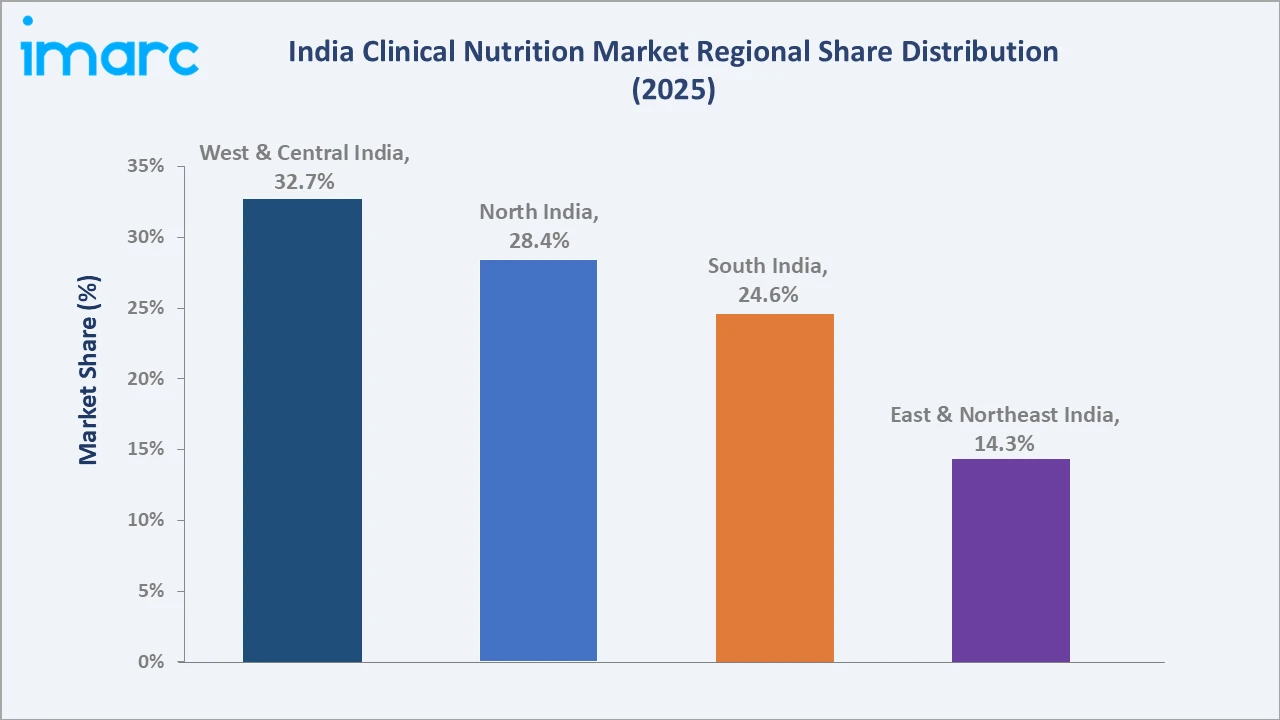
South India, at 24.6%, reflects strong hospital infrastructure and medical tourism across Tamil Nadu, Karnataka, and Telangana. East and Northeast India, at 14.3%, remains an emerging market supported by expanding healthcare access and government nutrition initiatives.
Competitive Landscape
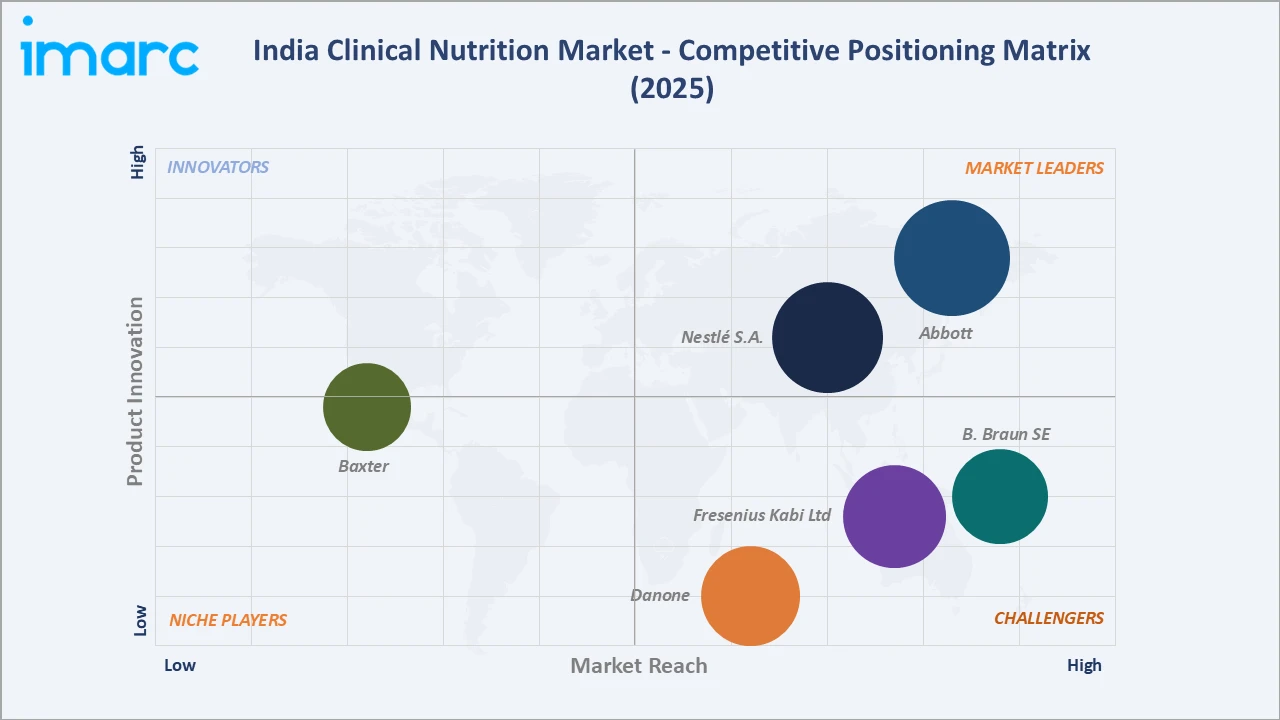
The India clinical nutrition market's competitive landscape is moderately consolidated, led by multinational nutrition and pharmaceutical majors alongside established domestic manufacturers competing on portfolio breadth, hospital partnerships, and distribution reach.
|
Company Name |
Key Products |
Market Position |
Core Strength |
|
Abbott |
Ensure, PediaSure, Similac, Ensure MedPlus |
Market Leader |
Broad consumer and clinical nutrition portfolio with strong pediatric and adult brand recall across India |
|
Nestlé S.A. |
Resource, Peptamen, Nutren |
Market Leader |
Integrated medical nutrition portfolio strengthened through expansion of its India nutrition healthcare business |
|
Danone |
Nutridrink, Neocate, Flocare Infinity III, Nutilis Complete, Nutrini, Respifor |
Strong Challenger |
Specialized immunonutrition and pediatric allergy nutrition focus with growing India presence |
|
Fresenius Kabi Ltd |
Kabiven, SMOFlipid, Freka enteral systems |
Strong Challenger |
Deep hospital-focused parenteral and enteral nutrition specialization |
|
B. Braun SE |
Nutriflex, Aminoplasmal |
Strong Challenger |
Established hospital infusion and parenteral nutrition systems expertise |
|
Baxter |
Clinimix and related parenteral nutrition systems |
Established Player |
Global parenteral nutrition and infusion therapy expertise supporting India hospital networks |
Key players include Abbott, Nestlé S.A., Danone, Fresenius Kabi Ltd, B. Braun SE, Baxter, and others.
Key Company Profiles
Abbott
Abbott is a US-based healthcare company with a leading presence in the India clinical nutrition market through its Ensure, PediaSure, and Similac brands, spanning pediatric, adult, and condition-specific nutrition.
- Key Products: Ensure, PediaSure, Similac, Ensure MedPlus.
- Recent Developments: In May 2026, Abbott introduced Ensure Strength Pro in India, a new adult nutrition supplement formulated to support healthy ageing and overall well-being. The product contains 31 essential nutrients and is designed to support seven key areas of health, including muscles, bones, heart, blood cells, immune function, metabolism, and the nervous system.
- Strategic Focus: Strengthening its condition-specific and pediatric nutrition portfolio while expanding physician and dietitian engagement programs across India.
Nestlé S.A.
Nestle Health Science, a division of Nestlé S.A., holds a leading position in the India clinical nutrition market through its Resource and Peptamen ranges, supported by an expanded medical nutrition portfolio in the country.
- Key Products: Resource, Peptamen, Nutren.
- Strategic Focus: Expanding its integrated medical nutrition portfolio and deepening hospital and specialist distribution across India.
Fresenius Kabi Ltd
Fresenius Kabi is a Germany-based healthcare company with a strong presence in the India clinical nutrition market through its parenteral and enteral nutrition systems used extensively across hospital critical care settings.
- Key Products: Kabiven, SMOFlipid, Freka enteral feeding systems.
- Strategic Focus: Strengthening its hospital-focused parenteral and enteral nutrition portfolio and expanding critical care partnerships across Indian hospital networks.
Market Concentration Analysis
The India clinical nutrition market is moderately concentrated, with Abbott and Nestle together commanding a leading share through their extensive pediatric and adult nutrition portfolios. Fresenius Kabi AG, B. Braun, and Baxter maintain strong positions in hospital-focused parenteral and enteral nutrition, while domestic manufacturers are gradually expanding share through cost-competitive formulations and wider distribution reach across tier-2 and tier-3 cities.
Investment & Growth Opportunities
Highest Growth Segments
Enteral nutrition (~8.3% CAGR), parenteral nutrition (~8.0% CAGR), home healthcare nutrition services, and domestic manufacturing capacity expansion represent the highest-growth investment vectors through 2034, supported by expanding hospital ICU capacity and rising home-based chronic disease management.
Emerging Investment Opportunities
Home healthcare nutrition services represent the India clinical nutrition market's fastest-emerging investment opportunity, as portable enteral and oral nutrition solutions gain adoption among patients recovering from surgery or managing chronic illness outside hospital settings, creating a structurally growing demand pool through 2034.
Investment Themes
- Domestic Manufacturing Capacity Expansion: Domestic clinical nutrition manufacturing scale-up represents a significant investment opportunity as India reduces import dependence and builds cost-competitive, India-specific therapeutic nutrition production capacity across infant, enteral, and parenteral categories.
- Home Healthcare Nutrition Infrastructure: Investment in home healthcare nutrition infrastructure, including trained homecare nursing and portable feeding systems, positions companies to capture India's fastest-growing post-surgical and chronic disease care delivery channel.
Future Market Outlook (2026-2034)
The India clinical nutrition market is projected to grow from USD 2.22 Billion in 2025 to USD 2.39 Billion in 2026, reaching USD 4.43 Billion by 2034, registering a 7.73% CAGR over the forecast period. The market's anchor value of USD 3.22 Billion in 2030 represents an important commercial milestone as hospital ICU capacity, home healthcare adoption, and domestic manufacturing scale converge to widen access to therapeutic nutrition across India.
Three structural forces define market growth through 2034 with strong confidence. Rising chronic and metabolic disease prevalence creates sustained demand for condition-specific nutrition therapy. Continued private healthcare infrastructure expansion widens hospital and homecare access to clinical nutrition products. Growing domestic manufacturing capacity improves affordability and supply resilience, supporting broader adoption across urban, semi-urban, and increasingly rural India.
Research Methodology
Primary Research
Primary research comprised structured interviews with hospital nutrition specialists, dietitians, pediatricians, procurement heads at private hospital chains, and senior executives at leading clinical nutrition manufacturers operating in India.
Secondary Research
Secondary research encompassed company annual reports, CDSCO and FSSAI regulatory filings, National Family Health Survey data, hospital association publications, and industry association reports covering India's healthcare and nutrition sectors.
Forecasting Models
Market revenue forecasts were developed using a demand-based bottom-up model incorporating: (i) hospital and homecare patient volume estimates by product category; (ii) average nutrition spend per patient by product and route of administration; (iii) regional healthcare infrastructure penetration; and (iv) historical growth-rate extrapolation adjusted for domestic manufacturing and import-substitution trends.
India Clinical Nutrition Market Report Coverage:
| Report Features | Details |
|---|---|
| Base Year of the Analysis | 2025 |
| Historical Period | 2020-2025 |
| Forecast Period | 2026-2034 |
| Units | Billion USD |
| Scope of the Report | Exploration of Historical Trends and Market Outlook, Industry Catalysts and Challenges, Segment-Wise Historical and Future Market Assessment:
|
| Products Covered | Infant Nutrition, Parental Nutrition, Enteral Nutrition |
| Routes of Administration Covered | Oral, Enteral, Parenteral |
| Applications Covered | Cancer, Malnutrition, Metabolic Disorders, Gastrointestinal Disorders, Neurological Disorders, Others |
| End Users Covered | Pediatric, Adults, Geriatric |
| Regions Covered | North India, West and Central India, South India, East and Northeast India |
| Companies Covered | Abbott, Nestlé S.A., Danone, Fresenius Kabi Ltd, B. Braun SE, Baxter, etc. |
| Customization Scope | 10% Free Customization |
| Post-Sale Analyst Support | 10-12 Weeks |
| Delivery Format | PDF and Excel through Email (We can also provide the editable version of the report in PPT/Word format on special request) |
Key Benefits for Stakeholders:
- IMARC’s industry report offers a comprehensive quantitative analysis of various market segments, historical and current market trends, market forecasts, and dynamics of the India clinical nutrition market from 2020-2034.
- The research report provides the latest information on the market drivers, challenges, and opportunities in the India clinical nutrition market.
- Porter's five forces analysis assist stakeholders in assessing the impact of new entrants, competitive rivalry, supplier power, buyer power, and the threat of substitution. It helps stakeholders to analyze the level of competition within the India clinical nutrition industry and its attractiveness.
- Competitive landscape allows stakeholders to understand their competitive environment and provides an insight into the current positions of key players in the market.
Frequently Asked Questions About the India Clinical Nutrition Market Report
The India clinical nutrition market size is estimated at USD 2.39 Billion in 2026, driven by infant nutrition's dominant 47.6% share, oral administration leading at 58.3%, and West and Central India commanding the largest regional share at 32.7%.
The market is projected to grow at a CAGR of 7.73% during 2026-2034, reaching USD 4.43 Billion by 2034, driven by rising chronic disease prevalence, pediatric malnutrition, and an expanding geriatric population.
Infant nutrition leads at 47.6% share in 2025, reflecting India's continued childhood malnutrition burden and strong pediatrician-recommended supplementation across urban and semi-urban households.
Oral nutrition leads at 58.3% share due to its accessibility, affordability, and ease of administration across hospital, homecare, and outpatient settings.
West and Central India lead at 32.7% share, supported by Maharashtra and Gujarat's dense private hospital networks and strong pharmaceutical distribution infrastructure.
Leading companies include Abbott, Nestlé S.A., Danone, Fresenius Kabi Ltd, B. Braun SE, Baxter, and others.
The market is projected to reach approximately USD 3.22 Billion by 2030, supported by expanding hospital ICU capacity, home healthcare growth, and rising therapeutic nutrition adoption.
Key opportunities include expansion of home healthcare nutrition services, domestic manufacturing scale-up to reduce import dependence, and growing demand for geriatric and oncology-focused nutrition products.
Need more help?
- Speak to our experienced analysts for insights on the current market scenarios.
- Include additional segments and countries to customize the report as per your requirement.
- Gain an unparalleled competitive advantage in your domain by understanding how to utilize the report and positively impacting your operations and revenue.
- For further assistance, please connect with our analysts.
 Request Customization
 Speak to an Analyst
 Request Brochure
 Inquire Before Buying
Benefits of Customization
- Personalize this research
- Triangulate with your data
- Get data as per your format and definition
- Gain a deeper dive into a specific application, geography, customer, or competitor
- Any level of personalization
Get in Touch With Us
UNITED STATES
Phone: +1-201-971-6302
INDIA
Phone: +91-120-433-0800
UNITED KINGDOM
Phone: +44-753-714-6104
Email: [email protected]
Client Testimonials




.webp)




.webp)













Related Reports

Choose your plan
*Please note that the prices mentioned below are starting prices for each bundle type. Kindly contact our team for further details.*
Single User License
- 1 User License, Access on 2 Devices
- PDF Report + Excel Dataset (Password Protected)
- Lifetime Access
- No Printing Rights
- 10% Free Report Customization
- 10–12 Weeks of Analyst Support
Five User License
- Access for 5 Users, 2 Devices per User
- PDF Report + Excel Dataset (Password Protected)
- Lifetime Access
- Dedicated Account Manager
- 12–14 Weeks of Analyst Support
- No Printing Rights
- 15% Free Report Customization
- 25% Discount on Your Next Purchase
Corporate User License
- Unlimited User Access (Within Your Organization)
- PDF Report + Excel Dataset
- Lifetime Access
- Dedicated Account Manager
- 14–20 Weeks of Analyst Support
- No Printing Rights
- 20% Free Report Customization
- 30% Discount on Your Next Purchase
Essential Insights
What's included:
3 reports
- Lifetime Access
- PDF Reports
- Excel Datasets
- 2 Weeks of Free Analyst Support
- 2 User Licenses
- Access on 2 Devices
- Printing Rights
- Complimentary PowerPoint (PPT) Version
- Complimentary License Upgrade
Professional Access
What's included:
5 reports
- Lifetime Access
- PDF Reports
- Excel Datasets
- 8 Weeks of Free Analyst Support
- 2 User Licenses
- Access on 2 Devices
- Printing Rights
- Complimentary PowerPoint (PPT) Version
- Complimentary License Upgrade
Business Advantage
What's included:
8 reports
- Lifetime Access
- PDF Reports
- Excel Datasets
- 14 Weeks of Free Analyst Support
- 2 User Licenses
- Access on 2 Devices
- Printing Rights
- Complimentary PowerPoint (PPT) Version
- Complimentary License Upgrade
Enterprise Intelligence
What's included:
10 reports
- Lifetime Access
- PDF Reports
- Excel Datasets
- 20 Weeks of Free Analyst Support
- 2 User Licenses
- Access on 2 Devices
- Printing Rights
- Complimentary PowerPoint (PPT) Version
- Complimentary License Upgrade