
India Corn Market Size, Share, Trends and Forecast by Type, End User, and Region, 2026-2034
India Corn Market Size, Share, Trends & Forecast (2026-2034)
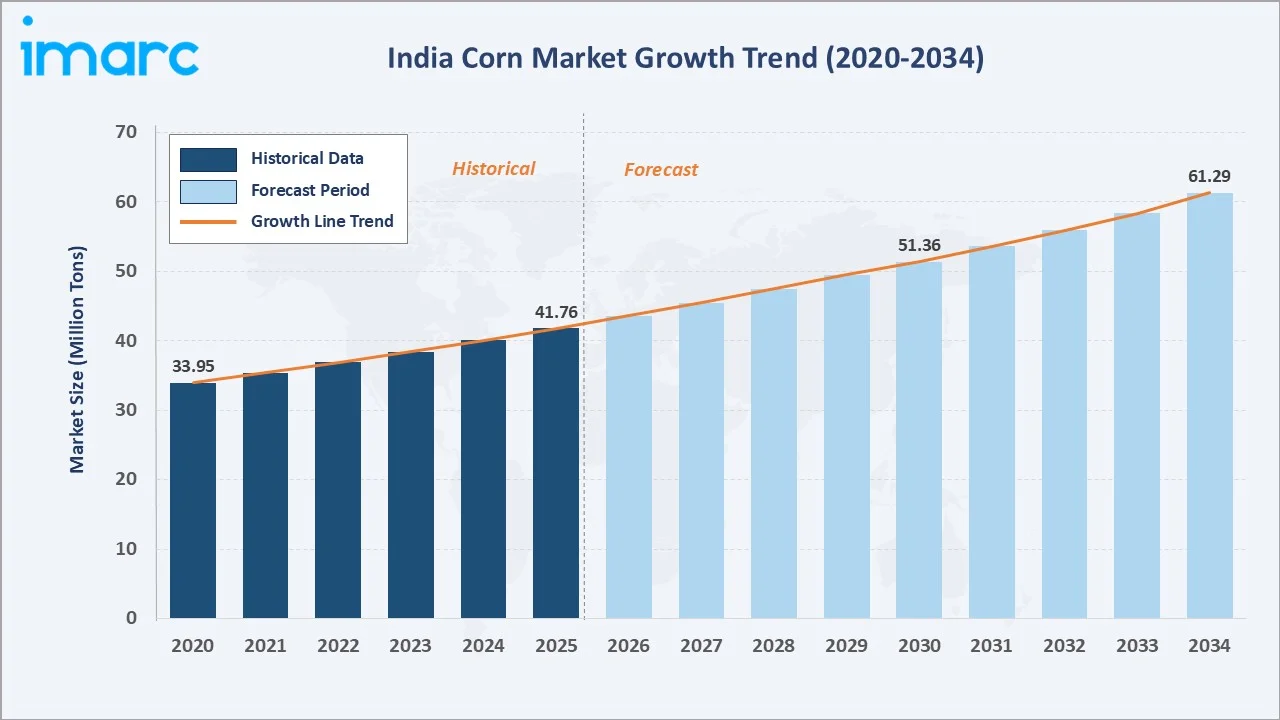
The India corn market grew from 41.76 Million Tons in 2025 to 43.52 Million Tons in 2026 and is projected to reach 61.29 Million Tons by 2034, growing at a CAGR of 4.23% during 2026-2034. The corn market in India is driven by robust demand from the poultry and livestock feed sector, expanding starch and processed food industries. India was the world’s fifth-largest maize producer in 2024, producing approximately 40.23 million metric tonnes (MT) and contributing 3.30% of global maize production, reflecting the crop's strategic importance across food, feed, and fuel supply chains. Flint corn leads at 30.0% by type, poultry and cattle feed dominate at 55.0% by end user, and South India commands the largest regional share at 30.0% in 2025.
Market Snapshot
|
Metric |
Value |
|
Base Year Market Size (2025) |
41.76 Million Tons |
|
Market Size (2026) |
43.52 Million Tons |
|
Forecast Market Size (2034) |
61.29 Million Tons |
|
CAGR (2026-2034) |
4.23% |
|
Base Year |
2025 |
|
Historical Period |
2020-2025 |
|
Forecast Period |
2026-2034 |
|
Dominant Type |
Flint Corn (30.0%, 2025) |
|
Dominant End User |
Poultry and Cattle Feed (55.0%, 2025) |
|
Leading Region |
South India (30.0%, 2025) |
The corn market size in India grew from 33.95 Million Tons in 2020 to 41.76 Million Tons in 2025, and further to 43.52 Million Tons in 2026, reflecting sustained growth across poultry feed, starch processing, and direct consumption channels. The market is projected to reach 51.36 Million Tons by 2030 before reaching 61.29 Million Tons by 2034.
To get more information on this market, Request Sample
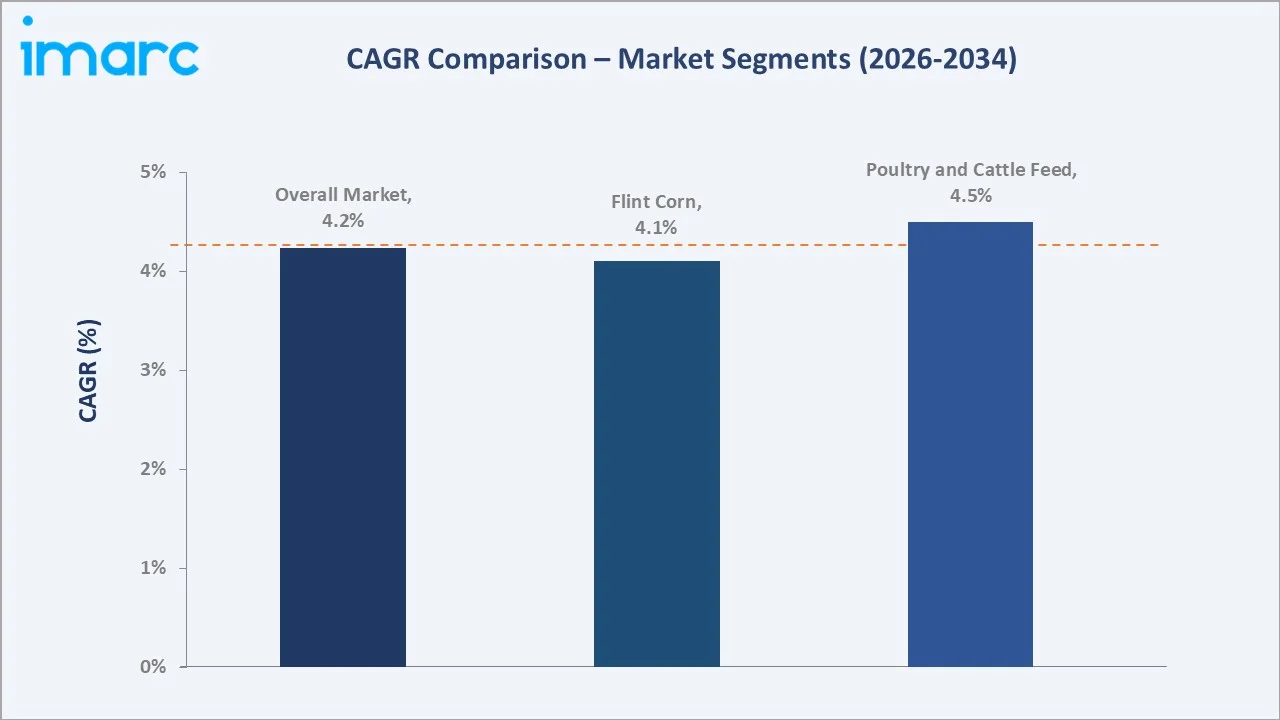
Poultry and cattle feed is projected to grow at 4.5% CAGR as India broiler and dairy production continues to expand. Flint corn at 4.1% CAGR reflects stable demand from industrial starch and animal feed end markets. The overall market CAGR of 4.23% reflects India structural shift toward protein-rich diets and the growing industrial utilization of corn across ethanol and food processing.
Executive Summary
The India corn market is on a sustained growth trajectory, underpinned by the rapid expansion of the poultry and livestock feed industry, growing industrial corn processing for starch and ethanol, and increasing consumer demand for processed corn-based food products. The market has expanded consistently, supported by growing kharif maize cultivation acreage, the adoption of high-yield hybrid seed varieties, and favorable government policies.
Flint corn at 30.0% constitutes the largest type, supplying both domestic feed compounders and export markets. Poultry and cattle feed at 55.0% dominates end-user demand, reflecting the direct correlation between India fast-growing poultry industry and corn consumption as the primary energy ingredient in compound feed formulations. South India leads regionally at 30.0%, driven by intensive maize cultivation and the concentration of poultry and aquaculture feed mills in the region.
Key Market Insights
|
Insight |
Data |
|
Dominant Type |
Flint Corn - 30.0% share (2025) |
|
Dominant End User |
Poultry and Cattle Feed - 55.0% share (2025) |
|
Leading Region |
South India - 30.0% (2025) |
|
Key Market Opportunity |
Starch industry expansion creating sustained volume demand for corn beyond traditional food and feed applications. |
Key Analytical Observations Supporting the Above Data:
- Flint Corn at 30.0%: Flint corn holds an important position in India’s corn market due to its hard, dense kernels and suitability for milling, food processing, and industrial applications. Its demand is supported by growing use in cornmeal, flour, snacks, and processed food products, particularly in regions where traditional maize varieties are widely cultivated.
- Poultry and Cattle Feed at 55.0%: The feed sector dominates because corn constitutes most of compound poultry feed formulations by weight, making it the single largest ingredient in India poultry feed compounding industry. India broiler meat production growth and dairy cattle growth translate directly into large and growing corn procurement by feed mills concentrated in South and North India.
- South India at 30.0%: South India leads because Karnataka, Andhra Pradesh, and Telangana together provide the crop base that supports a dense ecosystem of local feed mills, wet millers, and starch processors. The region also hosts India largest poultry integration clusters that generate concentrated local corn demand.
India Corn Market Overview
The India corn market encompasses the cultivation, procurement, processing, and consumption of all corn varieties across food, feed, industrial, and export applications. Key corn-producing states include Karnataka, Madhya Pradesh, Maharashtra, Bihar, Rajasthan, Uttar Pradesh, Telangana, and Andhra Pradesh, with cultivation spread across both irrigated and rainfed agricultural systems. The crop serves four primary demand channels: poultry and livestock feed, starch and wet milling for industrial and food applications, direct human consumption, and the growing ethanol blending program.
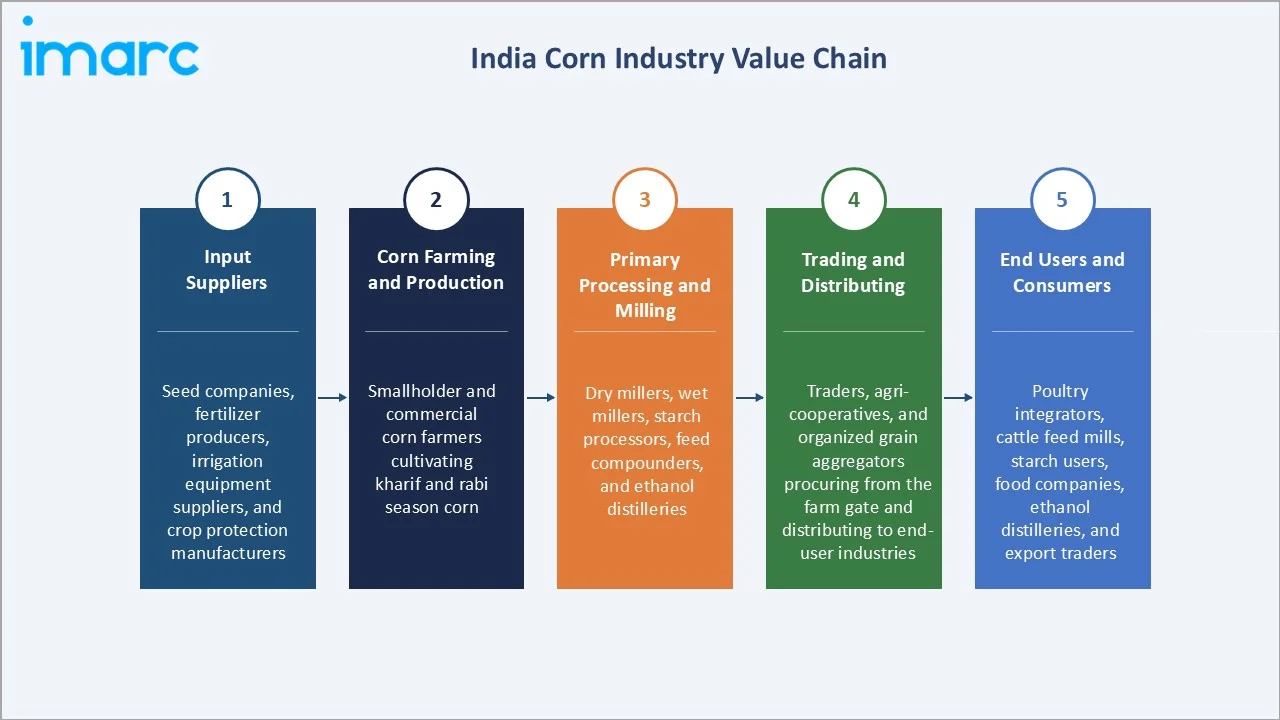
The market ecosystem spans input suppliers providing hybrid seeds, millions of smallholders and medium-scale corn farmers, primary grain traders, starch millers, wet millers, and feed compounders processing corn into finished industrial and food ingredients, national distributors and agri-cooperatives, and diverse end-user industries consuming corn as a primary raw material.
Market Dynamics
To evaluate market opportunities, Request Sample
Market Drivers
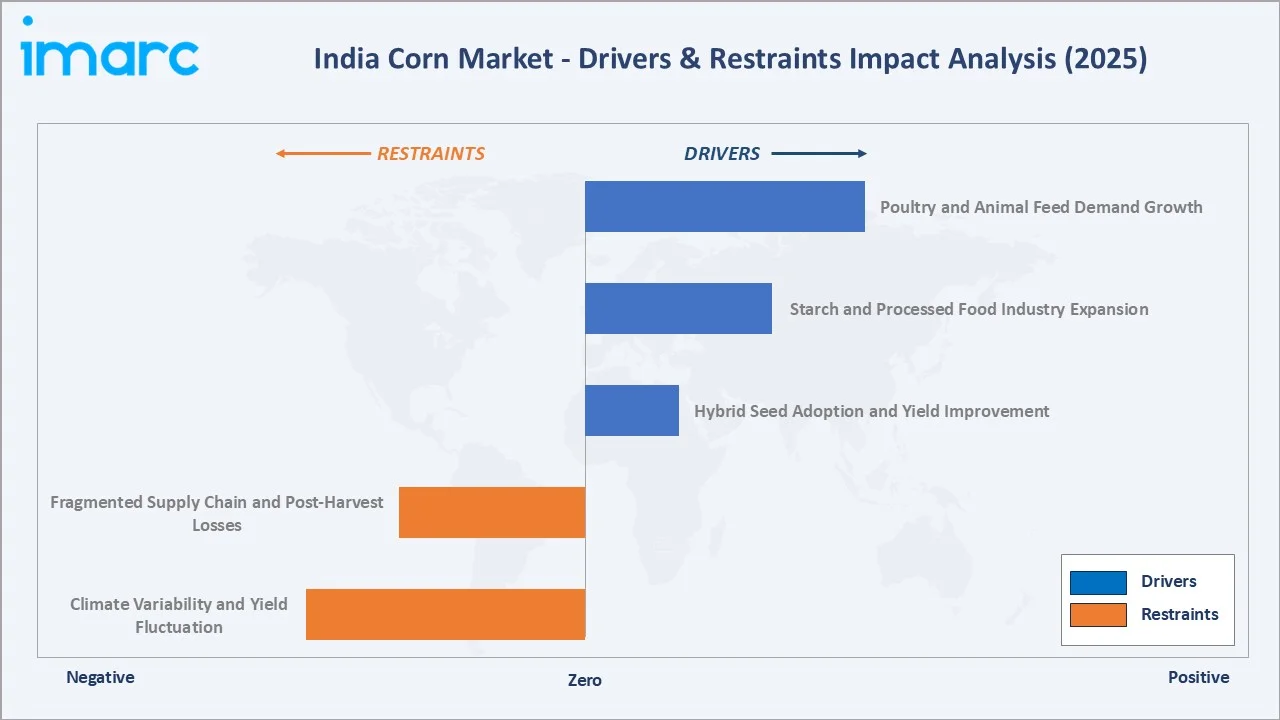
- Poultry and Animal Feed Demand Growth: India is the world’s largest milk producer, accounting for around 25% of global milk production. The country also ranks second in egg production and fourth in meat production worldwide. India poultry industry growth is creating sustained incremental corn demand, as corn constitutes most of compound poultry feed. India dairy sector and growing aquaculture production are additional feed corn demand drivers, with total compound feed production in India generating consistent large-volume corn procurement by organized feed mills.
- Starch and Processed Food Industry Expansion: In March 2025, Cargill inaugurated a new corn milling facility in Gwalior, Madhya Pradesh, in collaboration with Saatvik Agro Processors, with an initial capacity of 500 tons per day expandable to 1,000 tons per day, targeting starch derivatives for confectionery, infant formula, dairy, and processed food applications. This investment reflects the structural growth of India starch derivatives market as food processing and consumer goods industries expand.
- Hybrid Seed Adoption and Yield Improvement: Growing adoption of high-yield hybrid corn varieties is progressively increasing India corn yields per hectare, improving farm economics and encouraging area expansion. Kharif maize sowing reflects farmer confidence in corn profitability supported by strong market prices and MSP support.
Market Restraints
- Climate Variability and Yield Fluctuation: Corn cultivation in India is significantly exposed to monsoon timing, rainfall variability, and drought risk, with the majority of cultivation still rainfed. Climate-driven yield shortfalls create price volatility that disrupts supply chains for feed millers and starch processors who require consistent volumes and can result in import requirements that increase input costs for downstream processors.
- Fragmented Supply Chain and Post-Harvest Losses: India corn supply chain suffers from fragmented smallholder production, inadequate cold chain and storage infrastructure, and inefficient APMC mandi-based procurement that limits direct farmer-processor linkages. Post-harvest losses add cost to the supply chain and reduce effective availability for end-user industries, particularly in years of adequate production.
Market Opportunities
- Corn-Based Ethanol and Biofuel Expansion: In December 2024, Godavari Biorefineries Limited (GBL) announced an investment of approximately ₹130 crore in a new 200 KLPD corn/grain-based ethanol distillery. The investment will expand its ethanol production capacity and provide greater operational flexibility through a dual-feedstock production system. Multiple distilleries across ethanol-producing states are installing corn processing capability, providing long-term contracted demand visibility that is encouraging both corn area expansion and distillery capacity investment.
- Precision Agriculture and Drip Irrigation for Corn: Climate-resilient agriculture programs and crop diversification incentives are encouraging farmers in water-stressed regions to shift from paddy to maize, supported by drip irrigation subsidies and precision agriculture advisory services that improve water use efficiency and reduce climate exposure, progressively stabilizing corn supply and yield reliability for downstream processing industries.
Market Challenges
- Competition from Imported Corn in Price-Sensitive Years: In years of domestic production shortfall, India corn market faces pressure from imported corn primarily from Brazil and Argentina, which can undercut domestic prices and disrupt MSP-based procurement mechanisms, creating uncertainty for farmers who invested in corn cultivation expecting stable price support.
- Quality Standardization Across Smallholder Production: The predominantly smallholder structure of India corn production creates quality inconsistencies in moisture content, foreign material, and aflatoxin contamination that require additional drying, cleaning, and quality management investment by processors, adding cost and complexity to the procurement supply chain.
Emerging Market Trends
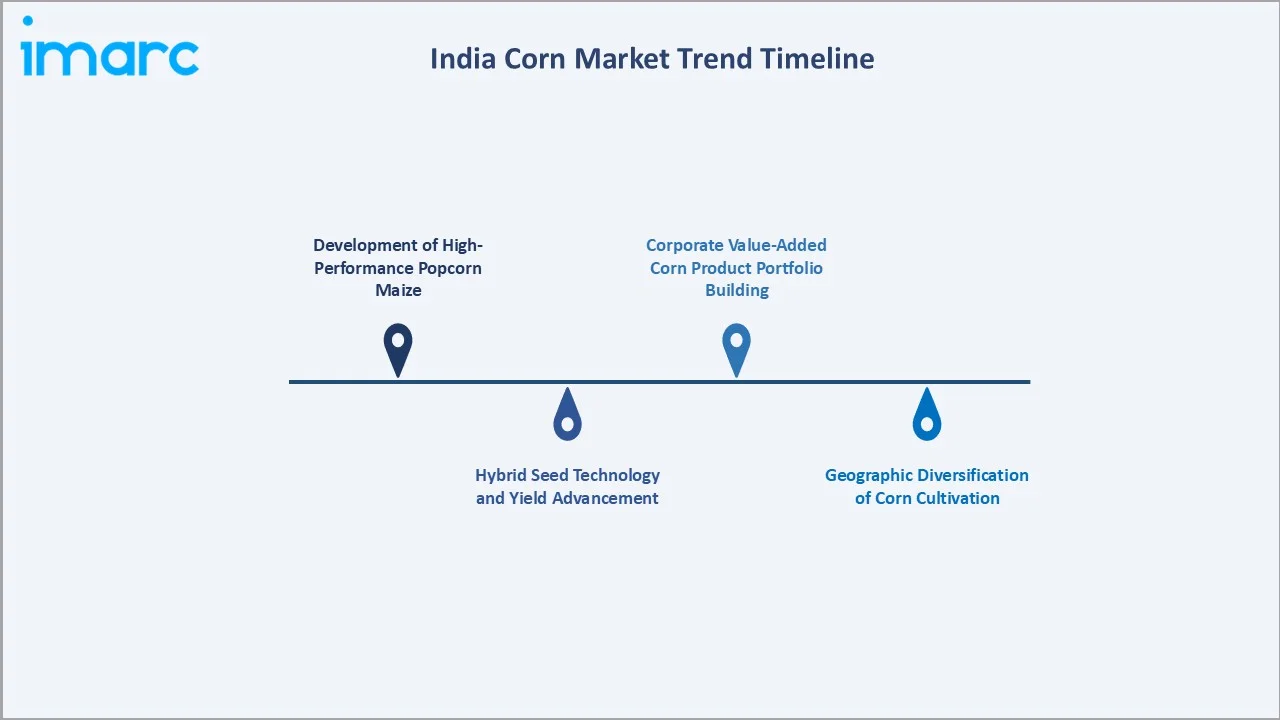
1. Development of High-Performance Popcorn Maize
In August 2026, C. P. Radhakrishnan launched India’s first non-GMO, high-expansion popcorn maize hybrid seed at Musunuru, Eluru district, Andhra Pradesh. The launch was highlighted as a step toward self-reliance in agriculture, with recognition given to leading farmers and partners associated with Gourmet Popcornica. The launch highlights a growing trend toward specialized, high-yield maize hybrids designed for specific food applications such as popcorn. The development of non-GMO, high-expansion varieties can support domestic popcorn production, improve farmer productivity, and reduce reliance on specialized imported seeds.
2. Hybrid Seed Technology and Yield Advancement
Hybrid seed technology and yield advancement refer to the development of improved seed varieties by combining desirable traits from different parent plants. These hybrids are designed to deliver higher yields, better crop uniformity, improved resistance to pests and diseases, and greater tolerance to environmental stresses. In maize and other crops, hybrid seed technology can enhance farm productivity and resource efficiency. It also supports the development of specialized varieties suited to specific food, feed, and industrial applications.
3. Corporate Value-Added Corn Product Portfolio Building
In September 2025, Kellanova, formerly known as Kellogg’s, introduced Kellogg’s Multigrain + Corn Flakes exclusively for the Indian market. The category-first product reimagines the iconic Kellogg’s Corn Flakes by combining five grains, including ragi, wheat, barley, rice, and corn, into a multigrain offering. This transaction reflects the growing corporate strategy of building branded corn product portfolios that capture higher-margin retail and institutional food service channels compared to bulk commodity corn trading, driving investment in corn processing capacity and brand development.
4. Geographic Diversification of Corn Cultivation
Geographic diversification of corn cultivation involves expanding maize production across different regions to increase supply and reduce dependence on specific growing areas. It helps utilize varied soil and climatic conditions while supporting year-round availability of corn. The trend is also encouraged by growing demand from food processing, animal feed, ethanol, and industrial applications.
Industry Value Chain Analysis
The India corn value chain spans five integrated stages from input supply through end-user consumption. The primary processing and milling stage captures the highest value addition in the chain, as wet millers and starch processors convert commodity corn grain into differentiated food-grade and industrial-grade starch derivatives, corn oil, corn syrup, and specialty ingredients that command premium pricing relative to raw grain.
|
Stage |
Key Participants |
|
Input Suppliers |
Seed companies, fertilizer producers, irrigation equipment suppliers, and crop protection manufacturers. |
|
Corn Farming and Production |
Smallholder and commercial corn farmers cultivating kharif and rabi season corn. |
|
Primary Processing and Milling |
Dry millers, wet millers, starch processors, feed compounders, and ethanol distilleries. |
|
Trading and Distributing |
Traders, agri-cooperatives, and organized grain aggregators procuring from the farm gate and distributing to end-user industries. |
|
End Users and Consumers |
Poultry integrators, cattle feed mills, starch users, food companies, ethanol distilleries, and export traders. |
The primary processing and milling stage is the highest value-added stage in the corn value chain. Wet millers and starch processors transform commodity corn grain into food-grade starch, corn syrup, dextrose, and corn oil, creating durable brand and quality differentiation advantages over commodity grain traders.
Technology Landscape in the India Corn Industry
Hybrid Seed Technology and Trait Development
Advanced hybrid corn seed development is delivering yield improvements over conventional varieties through traits including drought tolerance, Bt pest resistance, improved nitrogen use efficiency, and disease resistance. Region-specific hybrid development for India diverse agro-climatic zones is enabling sustainable productivity growth that expands effective corn supply without proportional area increases.
Wet Milling and Starch Processing Technology
Modern wet milling technology deployed at facilities enables the fractionation of corn into starch, protein, fiber, and germ components that are individually processed into food-grade and industrial-grade derivatives. Continuous steeping, centrifugal separation, and enzymatic hydrolysis technologies enable high extraction efficiencies and product quality that meet international food safety standards, supporting India participation in export markets for starch derivatives.
Precision Agriculture and Digital Farming for Corn
Precision agriculture technologies, including soil health cards, satellite crop monitoring, mobile advisory platforms, and drip irrigation scheduling, are being adopted by progressive corn farmers to optimize input application and improve yield predictability. Government digital agriculture initiatives and agritech company platforms are aggregating corn farmer data to enable yield forecasting, price advisory, and direct market linkage services that improve farmer income and supply chain efficiency.
Market Segmentation Analysis
The report covers the following segments:
|
Segment Category |
Leading Segment |
Market Share |
Year |
|
Type |
Flint Corn |
30.0% |
2025 |
|
End User |
Direct Consumption |
15.0% |
2025 |
|
Region |
North India |
23.0% |
2025 |

By Type
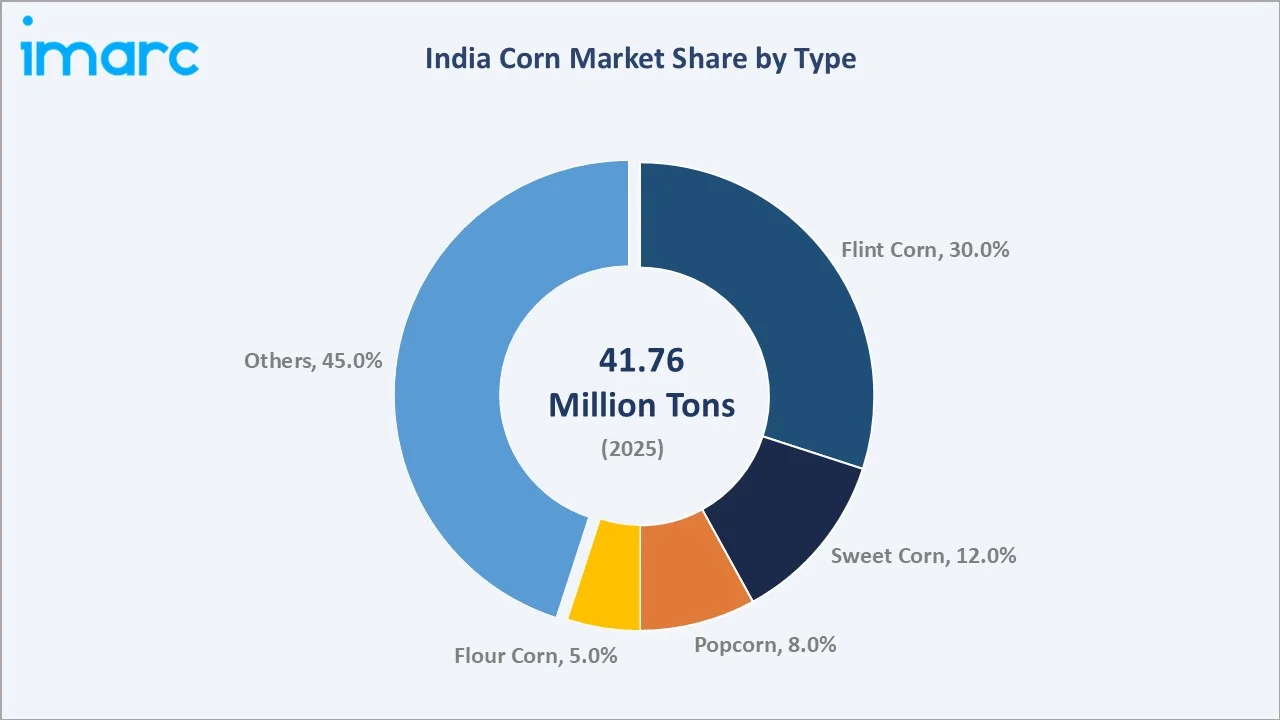
Flint corn at 30.0% represents the largest type, supplying both domestic feed compounders and traditional human consumption markets in regions where corn is a staple food. Sweet corn at 12.0% serves the growing processed food and fresh vegetable market, with frozen and canned sweet corn gaining popularity in urban retail and food service channels.
To access detailed market analysis, Request Sample
Popcorn at 8.0% benefits from the rapid expansion of India’s organized cinema and snack food sectors. Flour corn at 5.0% serves traditional corn flour milling for direct consumption applications. Others at 45.0% in 2025, representing the broad base of yellow dent corn and field corn varieties grown primarily for compound feed, industrial starch, and ethanol applications.
By End User
Poultry and cattle feed dominate at 55.0% in 2025, reflecting the direct and large-scale dependency of India feed compounding industry on corn as the primary energy ingredient.
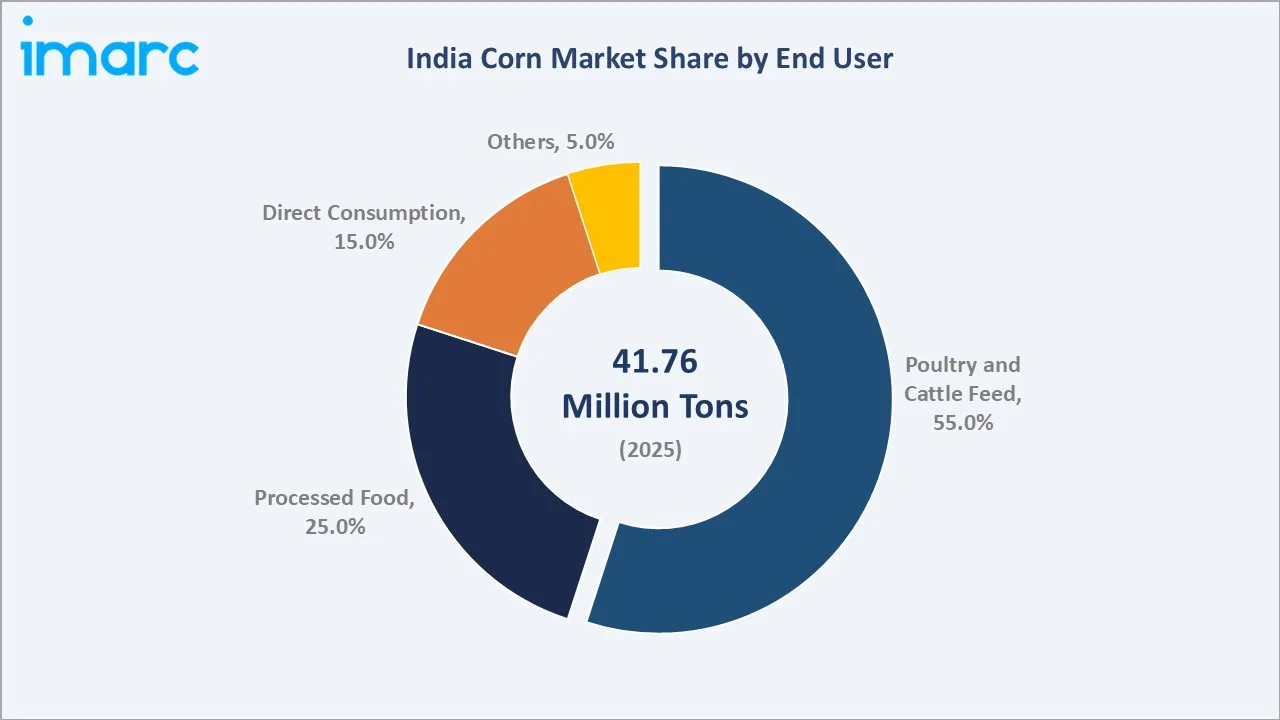
Processed food at 25.0% encompasses starch, corn syrup, dextrose, corn oil, corn flakes, and other food-grade ingredients derived from wet and dry milling of corn. This segment is the fastest-growing end-user category driven by the rapid expansion of India packaged food, beverage, and confectionery industries. Direct consumption at 15.0% includes fresh corn, corn on the cob, and corn flour for direct human consumption. Others at 5.0% include seed corn, export, and emerging industrial applications.
Regional Market Insights
|
Region |
Share (2025) |
Key India Corn Market Drivers & Characteristics |
|
South India |
30.0% |
Supported by dense poultry integration clusters, major feed mill concentrations, and growing starch processing capacity that collectively generate India's highest regional corn consumption density. |
|
East India |
25.0% |
Reflecting a growing maize belt, strong kharif corn cultivation supported by government crop diversification programs and growing organized feed sector demand as poultry and aquaculture industries expand in eastern states. |
|
North India |
23.0% |
Reflecting significant corn cultivation, the concentration of ethanol distilleries pivoting to corn feedstock, and organized feed milling activity that collectively generate substantial corn procurement and consumption volumes. |
|
West India |
22.0% |
Reflecting corn cultivation alongside industrial starch processing, organized feed milling, and the concentration of branded corn food product manufacturers in major urban centers that drive demand across multiple end-user categories. |
South India regional leadership at 30.0% reflects the dual advantage of high production density and the concentration of the largest feed milling and poultry integration operations that generate the highest per-square-kilometer corn consumption of any Indian region.
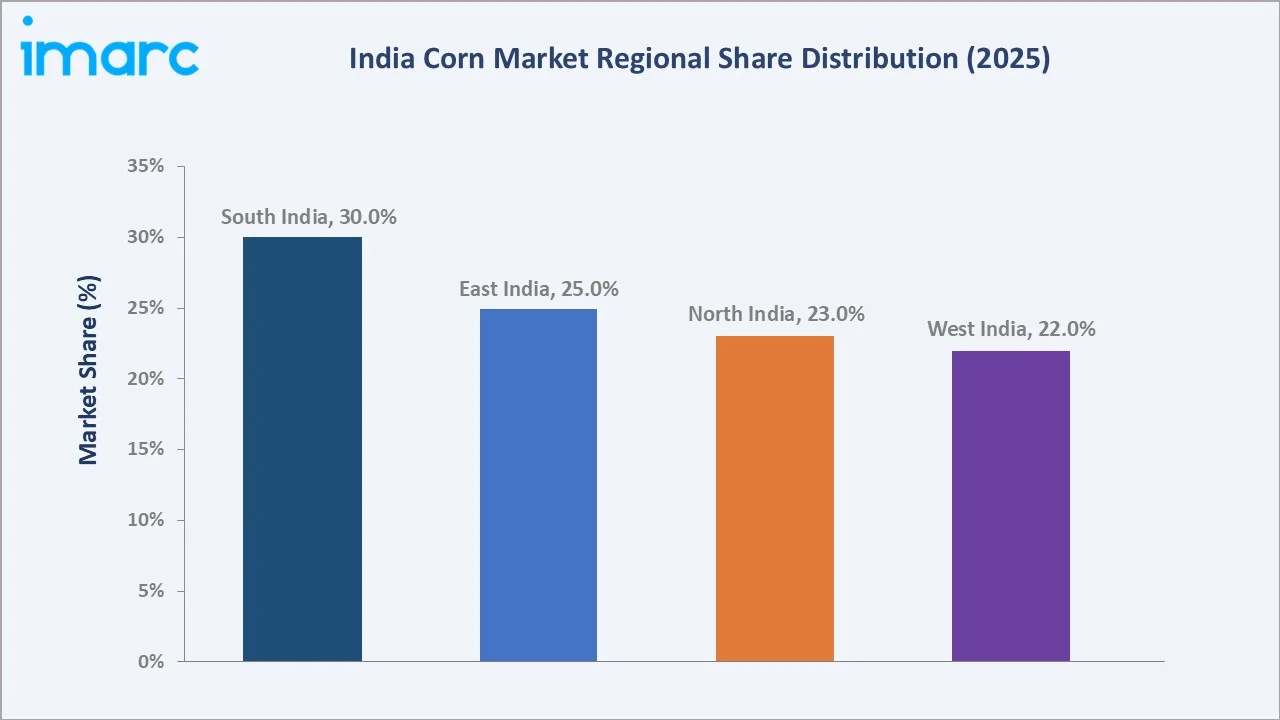
East India at 25.0% is experiencing the fastest regional growth momentum as corn cultivation expands under government crop diversification support, and new organized feed and processing facilities establish operations to serve eastern India growing protein consumption. North India at 23.0% is gaining strategic importance as Madhya Pradesh and UP become key corn-to-ethanol production zones. West India at 22.0% completes the regional picture through Maharashtra cultivation and industrial processing capacity.
Competitive Landscape
The India corn market features a competitive landscape spanning global agricultural trading and processing majors, diversified Indian FMCG and agribusiness conglomerates, seed technology companies, and organized cooperatives.
|
Company |
Key Offerings |
Market Position |
Core Strength |
|
Cargill, Incorporated |
Corn Grains, Corn Starch |
Market Leader |
Cargill, Incorporated plays a major role in India's corn sector through large-scale processing, infrastructure investments, farmer training, and supply chain management. |
|
Wilmar International Ltd |
Corn Starch, High Fructose Corn Syrup (HFCS) |
Market Leader |
Wilmar International operates in India primarily through AWL Agri Business Limited (formerly known as Adani Wilmar Limited). |
|
Bayer AG |
DEKALB Corn Seed, Channel Corn Seed |
Established Player |
Bayer AG, through its Indian subsidiary Bayer CropScience Limited, is one of the major market players in India’s corn sector. |
|
Corteva |
Pioneer Corn Seeds |
Established Player |
Corteva utilizes its prominent seed brand, Pioneer, to deliver advanced corn hybrids designed to maximize productivity, improve stress tolerance, and increase overall yields for Indian farmers. |
|
Kaveri Seeds |
Kaveri Drona KMH 2589, Kaveri Bumper KMH 25K45, Kaveri 25K55, Kaveri 2288 (Ekka) |
Innovator |
Kaveri Seeds is a leading agricultural company in India that plays a major role in the country's corn (maize) hybrid seed sector. |
The competitive landscape reflects the dual nature of the corn value chain: global commodity traders and processors compete in large-volume grain procurement and processing, while seed technology companies compete on hybrid genetics and agronomic performance that determines farm-level production economics.
Key Company Profiles
Cargill, Incorporated
Cargill, Incorporated is a global company engaged in agriculture, food, and nutrition-related businesses. Its operations include grain sourcing, commodity trading, food ingredients, animal nutrition, and supply-chain services. In India, Cargill participates across agricultural value chains, including the sourcing, processing, and distribution of grains and related products. Its presence supports the development of corn supply networks serving food, feed, and industrial applications.
- Key Offerings: Corn Grains, Corn Starch.
- Strategic Focus: Strengthening corn sourcing, processing, and supply-chain capabilities to serve India’s growing food, feed, and industrial sectors. Its strategy emphasizes supply-chain efficiency, product quality, and value-added agricultural solutions to meet evolving market demand.
Bayer AG
Bayer AG is a global company operating across life sciences, with major businesses in agriculture, pharmaceuticals, and consumer health. Its Crop Science division provides seeds, crop protection products, and digital farming solutions for modern agriculture. In India, Bayer supports farmers through crop-focused technologies and agricultural solutions, including products relevant to maize cultivation. Its portfolio contributes to improving crop productivity, protection, and farm efficiency.
- Key Offerings: DEKALB Corn Seed, Channel Corn Seed.
- Strategic Focus: Focuses on developing improved seeds, crop protection products, and digital agricultural solutions to enhance crop productivity and resilience. In India’s corn market, its strategy emphasizes innovation in maize seeds, sustainable farming practices, and solutions that support farmers in improving yield and resource efficiency.
Market Concentration Analysis
The India corn market is highly fragmented at the production level, with millions of smallholder farmers cultivating corn across numerous states. No single producer controls a meaningful share of total production, and the market is predominantly organized through decentralized APMC mandi trading networks that aggregate supply from individual farmers through local commission agents and wholesale traders. At the processing level, the market is moderately concentrated in wet milling and starch processing. Feed compounding is served by a large number of organized and unorganized feed mill operators, with the top integrated poultry companies captively procuring corn for their own feed mills.
Market concentration is expected to increase gradually in starch and food-grade corn processing as new investments like the Cargill Gwalior facility demonstrate commercial viability and attract further capital, while the informal small-scale processing segment faces competitive pressure from organized processors with superior quality control and supply consistency credentials.
Investment & Growth Opportunities
Highest Growth Segments
Starch derivatives for food processing represent the highest value-per-ton growth opportunity as India packaged food, confectionery, and dairy sectors expand. Branded corn food products represent the highest margin growth opportunity as consumer brand premiums emerge across corn flakes, sweet corn, and corn-based snack categories.
Investment Themes
- Wet Milling and Starch Derivatives Capacity Expansion: Cargill Gwalior plant demonstrates the commercial attractiveness of modern corn wet milling for India food ingredient market. The combination of growing domestic food processing demand and export potential for competitively priced corn starch derivatives creates a favorable investment environment for wet milling capacity additions in proximity to major corn production zones.
- Branded Corn Food Product Development: Adani Wilmar GD Foods acquisition illustrates the value of branded corn product portfolios that leverage established distribution networks. Investment in corn flake, sweet corn, corn snack, and functional corn ingredient brands that reach urban and semi-urban consumers through organized retail and e-commerce channels represents a high-margin growth opportunity within the broader corn market.
Future Market Outlook (2026-2034)
The India corn market stood at 41.76 Million Tons in 2025 and is projected to grow from 43.52 Million Tons in 2026 to 61.29 Million Tons by 2034, exhibiting a CAGR of 4.23% during the forecast period. The market is expected to reach an intermediate milestone of approximately 51.36 Million Tons by 2030, as the starch processing capacity additions reach full utilization and the compound feed industry continues its steady volume growth aligned with India's protein consumption expansion.
Three structural forces will define India's corn market through 2034. First, the Ethanol Blending Program mandate represents the single largest new demand driver for corn since the crop first emerged as a strategic feed ingredient. Second, India's poultry and dairy sector growth will systematically expand compound feed production requirements, with corn as the primary energy ingredient absorbing the majority of incremental feed raw material demand. Third, the maturation of India's starch derivatives market will progressively shift an increasing volume of corn through high-value wet milling processing that delivers superior economics for both processors and farmers compared to unprocessed grain commodity trading.
Research Methodology
Primary Research
Primary research comprised structured consultations with corn grain traders and aggregators, feed mill procurement managers, starch and wet milling plant operators, seed company agronomists and distribution teams, agricultural cooperative executives, government agricultural officials, and large-scale corn farmers. These discussions validated market sizing, assessed demand dynamics by end-user, identified policy impacts on production and processing decisions, and provided competitive intelligence on sourcing strategies.
Secondary Research
Secondary research drew on IMARC Group market data, Ministry of Agriculture crop production estimates, export statistics, India maize reports, sweet corn data, company annual reports and investor presentations, and agricultural commodities trade publications covering Indian and global corn markets. Historical data spanning 2020 through 2025 was cross-validated across government statistics and trade data sources.
Forecasting Models
Market forecasts incorporated historical production growth trend analysis, poultry and livestock feed demand modeling based on protein consumption growth scenarios, ethanol blending program volume projections, starch processing capacity expansion forecasts, population and income growth-driven food processing demand projections, and macroeconomic indicators including India's agricultural GDP growth and food inflation trends through 2034.
India Corn Market Report Coverage:
| Report Features | Details |
|---|---|
| Base Year of the Analysis | 2025 |
| Historical Period | 2020-2025 |
| Forecast Period | 2026-2034 |
| Units | Million Tons |
| Scope of the Report |
Exploration of Historical Trends and Market Outlook, Industry Catalysts and Challenges, Segment-Wise Historical and Future Market Assessment:
|
| Types Covered | Flint Corn, Popcorn, Sweet Corn, Flour Corn, Others |
| End Users Covered | Direct Consumption, Poultry and Cattle Feed, Processed Food, Others |
| Regions Covered | North India, South India, East India, West India |
| Companies Covered | Cargill, Incorporated, Wilmar International Ltd, Bayer AG, Corteva, Kaveri Seeds, etc. |
| Customization Scope | 10% Free Customization |
| Post-Sale Analyst Support | 10-12 Weeks |
| Delivery Format | PDF and Excel through Email (We can also provide the editable version of the report in PPT/Word format on special request) |
Key Benefits for Stakeholders:
- IMARC’s industry report offers a comprehensive quantitative analysis of various market segments, historical and current market trends, market forecasts, and dynamics of the India corn market from 2020-2034.
- The research report provides the latest information on the market drivers, challenges, and opportunities in the India corn market.
- Porter's five forces analysis assist stakeholders in assessing the impact of new entrants, competitive rivalry, supplier power, buyer power, and the threat of substitution. It helps stakeholders to analyze the level of competition within the India corn industry and its attractiveness.
- Competitive landscape allows stakeholders to understand their competitive environment and provides an insight into the current positions of key players in the market.
Frequently Asked Questions About the India Corn Market Report
The India corn market reached 43.52 Million Tons in 2026, driven by strong poultry and cattle feed demand, expanding starch processing, direct consumption growth, and the new corn-based ethanol demand channel opened by the EBP policy unlock.
The market is projected to grow at a CAGR of 4.23% during 2026-2034, supported by growing feed compound demand, starch industry capacity expansion, and branded corn food product market development.
The market is projected to reach approximately 51.36 Million Tons by 2030, as starch processing capacity additions reach full utilization and compound feed production continues growing aligned with India protein consumption expansion.
Flint corn leads with a 30.0% share in 2025, supplying both domestic feed compounders and traditional human consumption markets in regions where corn is a staple food.
Poultry and cattle feed lead with a 55.0% share in 2025, reflecting the large-scale dependency of India's feed compounding industry on corn as the primary energy ingredient and the direct correlation with India's fast-growing poultry and livestock sectors.
South India leads with a 30.0% share in 2025, driven by Karnataka and Andhra Pradesh's position as India's largest maize-producing states and the concentration of poultry integration clusters and feed mills that generate India's highest regional corn consumption density.
Key players include Cargill, Incorporated, Wilmar International Ltd, Bayer AG, Corteva, and Kaveri Seeds, among others.
The market is projected to reach 61.29 Million Tons by 2034, driven by ethanol blending at commercial scale, compound feed industry sustained volume growth, starch processing capacity expansion, and branded corn food product market development.
Need more help?
- Speak to our experienced analysts for insights on the current market scenarios.
- Include additional segments and countries to customize the report as per your requirement.
- Gain an unparalleled competitive advantage in your domain by understanding how to utilize the report and positively impacting your operations and revenue.
- For further assistance, please connect with our analysts.
 Request Customization
 Speak to an Analyst
 Request Brochure
 Inquire Before Buying
Benefits of Customization
- Personalize this research
- Triangulate with your data
- Get data as per your format and definition
- Gain a deeper dive into a specific application, geography, customer, or competitor
- Any level of personalization
Get in Touch With Us
UNITED STATES
Phone: +1-201-971-6302
INDIA
Phone: +91-120-433-0800
UNITED KINGDOM
Phone: +44-753-714-6104
Email: [email protected]
Client Testimonials






















Related Reports

Choose your plan
*Please note that the prices mentioned below are starting prices for each bundle type. Kindly contact our team for further details.*
Single User License
- 1 User License, Access on 2 Devices
- PDF Report + Excel Dataset (Password Protected)
- Lifetime Access
- No Printing Rights
- 10% Free Report Customization
- 10–12 Weeks of Analyst Support
Five User License
- Access for 5 Users, 2 Devices per User
- PDF Report + Excel Dataset (Password Protected)
- Lifetime Access
- Dedicated Account Manager
- 12–14 Weeks of Analyst Support
- No Printing Rights
- 15% Free Report Customization
- 25% Discount on Your Next Purchase
Corporate User License
- Unlimited User Access (Within Your Organization)
- PDF Report + Excel Dataset
- Lifetime Access
- Dedicated Account Manager
- 14–20 Weeks of Analyst Support
- No Printing Rights
- 20% Free Report Customization
- 30% Discount on Your Next Purchase
Essential Insights
What's included:
3 reports
- Lifetime Access
- PDF Reports
- Excel Datasets
- 2 Weeks of Free Analyst Support
- 2 User Licenses
- Access on 2 Devices
- Printing Rights
- Complimentary PowerPoint (PPT) Version
- Complimentary License Upgrade
Professional Access
What's included:
5 reports
- Lifetime Access
- PDF Reports
- Excel Datasets
- 8 Weeks of Free Analyst Support
- 2 User Licenses
- Access on 2 Devices
- Printing Rights
- Complimentary PowerPoint (PPT) Version
- Complimentary License Upgrade
Business Advantage
What's included:
8 reports
- Lifetime Access
- PDF Reports
- Excel Datasets
- 14 Weeks of Free Analyst Support
- 2 User Licenses
- Access on 2 Devices
- Printing Rights
- Complimentary PowerPoint (PPT) Version
- Complimentary License Upgrade
Enterprise Intelligence
What's included:
10 reports
- Lifetime Access
- PDF Reports
- Excel Datasets
- 20 Weeks of Free Analyst Support
- 2 User Licenses
- Access on 2 Devices
- Printing Rights
- Complimentary PowerPoint (PPT) Version
- Complimentary License Upgrade