
India Food Safety Testing Market Size, Share, Trends and Forecast by Type, Food Tested, Technology, and Region, 2026-2034
India Food Safety Testing Market Size, Share, Trends & Forecast (2026-2034)
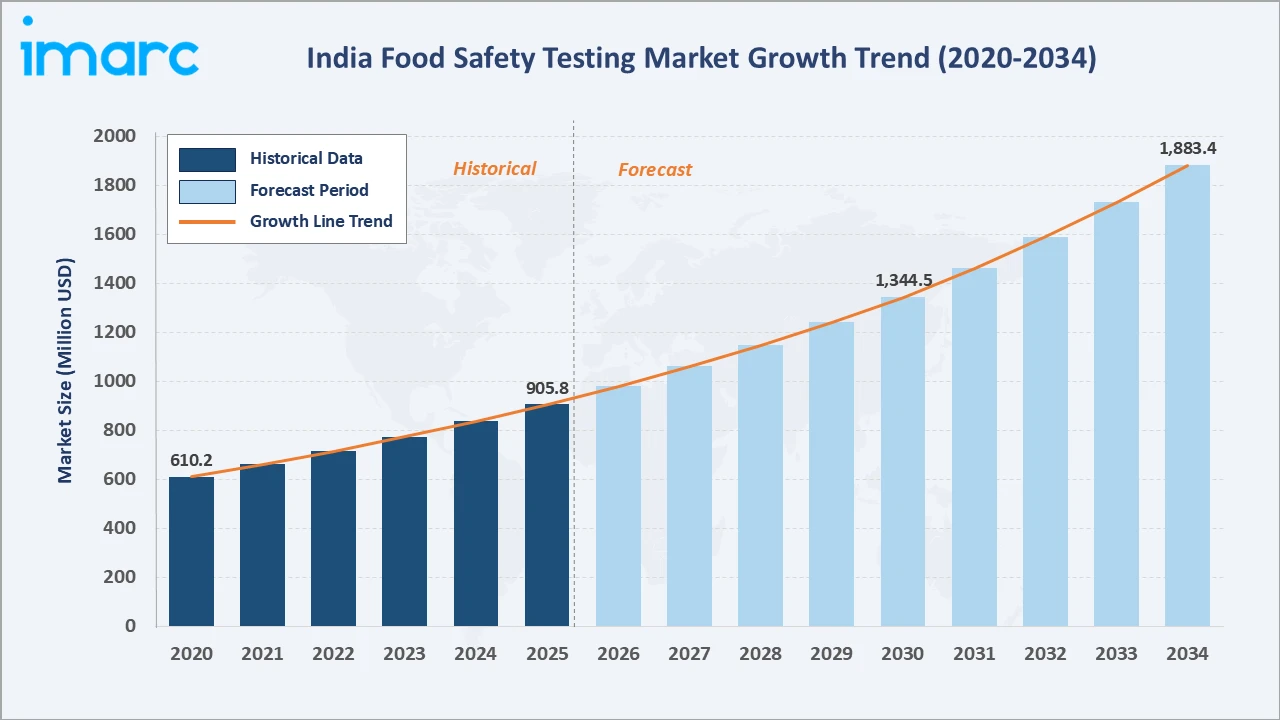
The India food safety testing market grew from USD 905.8 Million in 2025 to USD 980.2 Million in 2026 and is projected to reach USD 1,883.4 Million by 2034, growing at a CAGR of 8.22% during 2026-2034. Stricter regulations, rising food exports, and growing consumer awareness of foodborne illnesses are driving strong growth. In September 2026, FSSAI added four more food testing laboratories in Maharashtra, Kerala, and West Bengal to its notified list, expanding the national testing network.
Growth in packaged and processed food, stronger enforcement, and wider adoption of rapid testing methods continue to broaden demand. Pathogen testing dominates at 42.6%. Meat and meat products lead food tested at 28.4%. North India commands 31.6% of national market share.
Market Snapshot
|
Metric |
Value |
|
Base Year Market Size (2025) |
USD 905.8 Million |
|
Market Size (2026) |
USD 980.2 Million |
|
Forecast Market Size (2034) |
USD 1,883.4 Million |
|
CAGR (2026-2034) |
8.22% |
|
Base Year |
2025 |
|
Historical Period |
2020-2025 |
|
Forecast Period |
2026-2034 |
|
Dominant Type |
Pathogen (42.6%, 2025) |
|
Dominant Food Tested |
Meat and Meat Products (28.4%, 2025) |
|
Leading Region |
North India (31.6%, 2025) |
The India food safety testing market size increased from USD 610.2 Million in 2020 to USD 905.8 Million in 2025 and is estimated to reach USD 980.2 Million in 2026. The market is further expected to grow to USD 1,344.5 Million by 2030 and USD 1,883.4 Million by 2034. Growth reflects stricter regulatory oversight and rapid expansion of accredited laboratories.
To get more information on this market, Request Sample
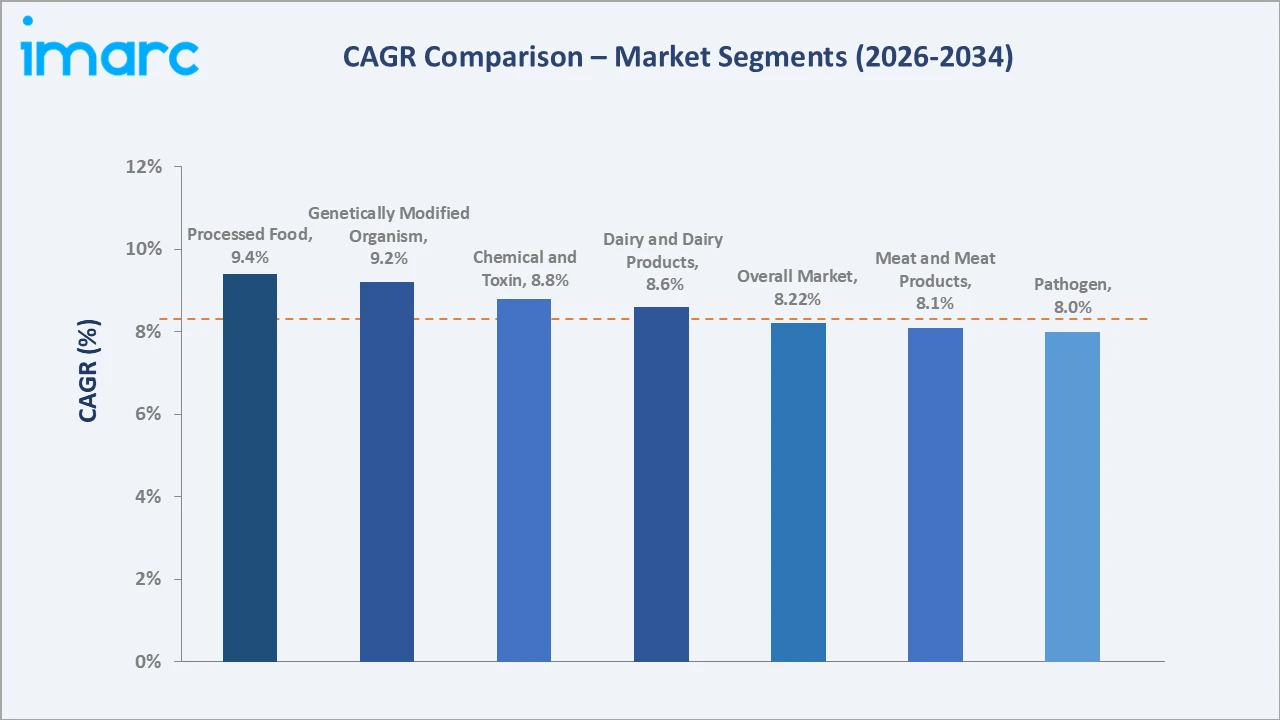
Processed food is expected to grow fastest at ~9.4% CAGR, supported by rising packaged food consumption and labeling requirements. Genetically modified organism testing follows at ~9.2% CAGR as exporters and importers face stricter GMO documentation rules.
Executive Summary
The India food safety testing market expanded from USD 905.8 Million in 2025 to an estimated USD 980.2 Million in 2026. Food businesses, exporters, and regulators are increasing testing for pathogens, chemical residues, toxins, and adulterants as food supply chains grow more complex. Third-party laboratories are expanding capacity and adopting faster, more sensitive technologies. The market is projected to reach USD 1,883.4 Million by 2034. Pathogen testing at 42.6% leads as microbial contamination remains the main food safety risk. Meat and meat products at 28.4% lead food tested. North India leads regionally at 31.6%.
Key Market Insights
|
Insight |
Data |
|
Dominant Type |
Pathogen - 42.6% share (2025) |
|
Dominant Food Tested |
Meat and Meat Products - 28.4% market share (2025) |
|
Leading Region |
North India - 31.6% share (2025) |
|
Market Opportunity |
Rapid and on-site testing kits; mobile testing labs; export compliance testing; laboratory expansion in tier-2 cities and the Northeast |
Key Analytical Observations Supporting the Above Data:
- Pathogen at 42.6%: Pathogen testing dominates because bacteria such as Salmonella, E. coli, and Listeria are the most common causes of foodborne illness. Regulators and food businesses prioritize microbial testing across meat, dairy, ready-to-eat, and processed foods.
- Meat and Meat Products at 28.4%: Meat and meat products lead because they are highly perishable and prone to contamination, and India’s large meat export industry must meet strict international safety standards.
- North India at 31.6%: North India leads regionally due to its large food processing base, dairy clusters in Punjab, Haryana, and Uttar Pradesh, and concentration of accredited laboratories in Delhi NCR.
India Food Safety Testing Market Overview
Food safety testing involves analyzing food samples for pathogens, chemical residues, toxins, allergens, adulterants, and genetically modified organisms to ensure products are safe and comply with regulations. Testing is carried out by government laboratories, private third-party labs, and in-house quality teams. Testing supports regulatory compliance, export certification, product development, and brand protection across the food industry.
The industry ecosystem links instrument and test kit suppliers, testing laboratories, food businesses, exporters, accreditation bodies, regulators, and retailers. Macroeconomic factors include food production, processed food consumption, export volumes, regulatory enforcement, and public health priorities, all of which shape demand. Public health campaigns promoting safe and healthy food also contribute to rising awareness among consumers and businesses. Growth in organized food retail and food service further increases the number of businesses requiring regular testing.
Market Dynamics
To evaluate market opportunities, Request Sample
Market Drivers
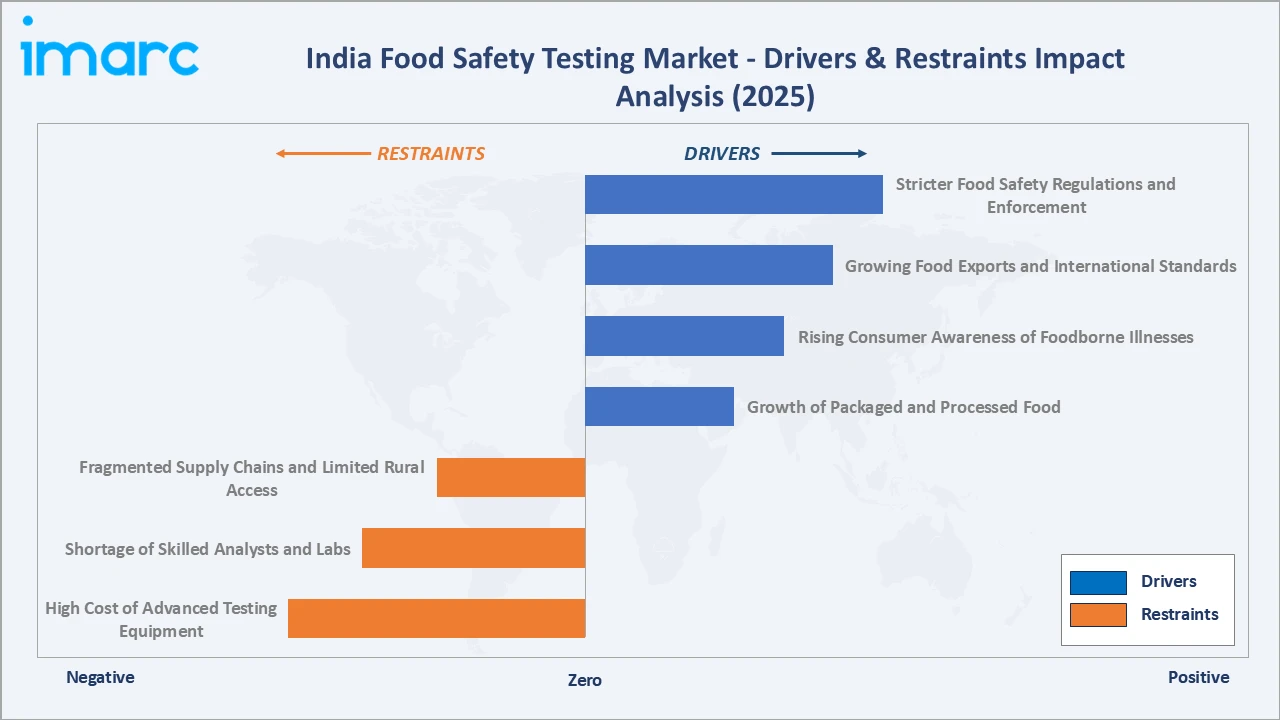
- Stricter Food Safety Regulations and Enforcement: Regulators are tightening food safety standards, increasing surveillance sampling, and expanding the list of notified laboratories. Food businesses must regularly test raw materials and finished products to comply with limits on contaminants, residues, and microbial counts, creating steady demand for testing services. Regular surveillance drives, special campaigns during festive seasons, and stricter licensing conditions are increasing the frequency of sampling across states. Updated standards for residues, contaminants, and additives require laboratories to expand their testing scope, while penalties for non-compliance encourage food businesses to test proactively rather than wait for official inspections. The expansion of food safety licensing to more small businesses is also bringing new customers into the testing market. State food safety departments are also strengthening their own laboratories, increasing the overall volume of official testing. Digital licensing and registration systems are also making it easier for regulators to track compliance and schedule inspections across food businesses.
- Growing Food Exports and International Standards: India’s exports of rice, spices, seafood, meat, dairy, and processed foods must meet strict safety requirements in importing countries. Rejections due to residues or contamination push exporters to invest in pre-shipment testing and certification from accredited laboratories. Export councils and inspection agencies require test reports for many shipments, and buyers in Europe, the Middle East, and Southeast Asia increasingly demand documentation for pesticide residues, heavy metals, and microbial safety. Government programs promoting agri-food exports are further increasing the volume of export-related testing. Rejections and alerts in export markets have made testing a strategic priority for exporters seeking to protect market access. Importing countries are also tightening maximum residue limits, requiring laboratories to adopt more sensitive methods.
- Rising Consumer Awareness of Foodborne Illnesses: Consumers are increasingly aware of food adulteration, contamination, and their health effects. Media coverage of food safety incidents and greater access to information encourage brands, retailers, and restaurants to invest in testing to protect reputation and build trust. Social media can quickly amplify food safety complaints, making brands more cautious and more willing to invest in regular testing. Quick-service restaurants, cloud kitchens, and online grocery platforms are also adopting supplier testing programs to manage risk. Consumer interest in organic, natural, and clean-label foods is also encouraging brands to verify claims through testing. Awareness campaigns by regulators are also encouraging consumers to check food quality and report concerns.
- Growth of Packaged and Processed Food: Rising consumption of packaged, ready-to-eat, and processed foods increases the number of products requiring testing for safety, nutrition labeling, shelf life, and quality. Longer and more complex supply chains also create more points where contamination can occur. Nutrition labeling, shelf-life validation, and claims such as organic or preservative-free also require testing, adding to the workload of laboratories serving food manufacturers. The growth of modern retail and private label brands is also increasing supplier testing requirements. Online food delivery growth is also prompting platforms to monitor hygiene and quality across partner restaurants.
Market Restraints
- High Cost of Advanced Testing Equipment: Instruments such as chromatography-mass spectrometry systems and PCR analyzers require large investments, skilled operators, and regular maintenance. High costs limit testing capacity in smaller laboratories and make testing expensive for small food businesses. Consumables, reference standards, and accreditation costs add to operating expenses, which can make it difficult for new laboratories to compete on price. Long payback periods for advanced instruments can discourage smaller laboratories from upgrading equipment. Import dependence for many instruments and consumables also exposes laboratories to currency fluctuations. Smaller food businesses are often reluctant to pay for comprehensive testing panels, limiting demand for higher-value services in some segments.
- Shortage of Skilled Analysts and Labs: Food testing requires trained microbiologists, chemists, and quality professionals. Shortages of skilled staff and accredited laboratories in some states slow turnaround times and limit access to testing. Retaining experienced staff is also a challenge, as large laboratories and multinational companies compete for the same talent pool. Training programs and collaborations with universities are needed to build a larger pool of skilled analysts. Accreditation requirements also demand continuous training and documentation, adding to operational workloads.
- Fragmented Supply Chains and Limited Rural Access: A large share of India’s food is produced and sold by small farmers, processors, and vendors who have limited access to testing facilities. Fragmented supply chains make systematic sampling and testing difficult. Many small food businesses also lack awareness of testing requirements or view testing as a cost rather than a safeguard. Limited cold chain infrastructure can also affect sample integrity during transport to distant laboratories.
Market Opportunities
- Rapid and On-Site Testing Solutions: Rapid test kits, portable analyzers, and mobile food testing vans enable quick screening at farms, markets, and processing units, expanding testing beyond central laboratories. These solutions are particularly useful for screening milk, edible oils, spices, and fresh produce for common adulterants and contaminants. Rapid kits can also help food businesses conduct routine internal checks between laboratory tests. Demand for such solutions is also rising among regulators conducting surveillance in local markets.
- Laboratory Expansion in Tier-2 Cities and the Northeast: Setting up accredited laboratories in underserved regions can shorten turnaround times and support local food businesses, exporters, and regulators. Public-private partnerships and government support for laboratory infrastructure can accelerate this expansion. Laboratories serving these regions can benefit from growing food processing investments and export activities. Mobile collection centers linked to regional hubs can further improve access for small food businesses in remote, hilly districts.
Market Challenges
- Standardization and Method Harmonization: Variations in testing methods, sampling practices, and reporting formats across laboratories can lead to inconsistent results, affecting trust and regulatory decisions. Proficiency testing programs and harmonized standard methods are important to improve consistency across the laboratory network. Clear national guidelines on sampling and testing can further strengthen confidence in results.
- Price Competition among Laboratories: Intense competition among private laboratories puts pressure on testing prices, making it harder to invest in new equipment, training, and accreditation. Laboratories that compete only on price risk compromising quality, which can damage confidence in testing results. Differentiation through specialized testing and faster service is becoming more important for laboratories. Long-term contracts with large food companies can help laboratories maintain stable volumes and invest in growth.
Emerging Market Trends
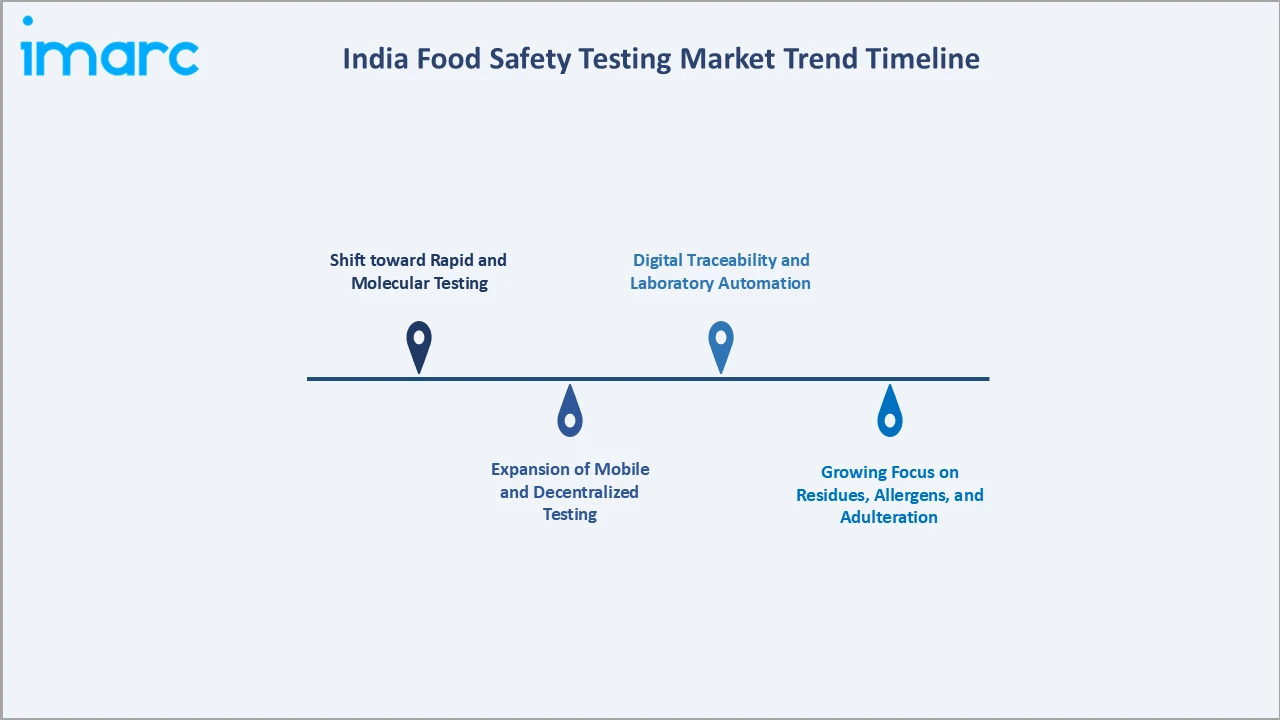
1. Shift toward Rapid and Molecular Testing
Laboratories are adopting PCR-based methods, immunoassays, and rapid microbial detection systems that deliver results in hours rather than days. Faster testing helps food businesses release products quickly and respond to contamination risks sooner. Molecular methods also allow detection of specific strains and species, supporting authenticity testing and outbreak investigations. Automated microbiology platforms are also improving throughput in high-volume laboratories.
2. Expansion of Mobile and Decentralized Testing
Mobile food testing laboratories and portable test kits are bringing testing closer to farms, markets, and consumers. These solutions support surveillance campaigns, awareness programs, and quick screening in remote areas. Government initiatives have deployed mobile food testing labs in many districts to improve awareness and access. Portable devices for milk, oil, and spice adulteration are increasingly used in consumer awareness campaigns.
3. Digital Traceability and Laboratory Automation
Laboratory information management systems, automated sample handling, and digital reporting are improving efficiency and data reliability. Integration with traceability platforms helps food businesses track products from farm to retail. Digital reporting also helps regulators monitor compliance trends and target inspections more effectively. Blockchain and digital certificates are emerging tools for verifying test results across supply chains.
4. Growing Focus on Residues, Allergens, and Adulteration
Testing is expanding beyond microbes to cover pesticide residues, veterinary drug residues, heavy metals, mycotoxins, allergens, and adulterants. Exporters and premium brands are investing in broader testing panels to meet stricter standards. Allergen labeling and testing are also gaining importance as consumers become more aware of food allergies. Heavy metal and microplastic testing is also attracting more attention as scientific understanding of these risks grows.
Industry Value Chain Analysis
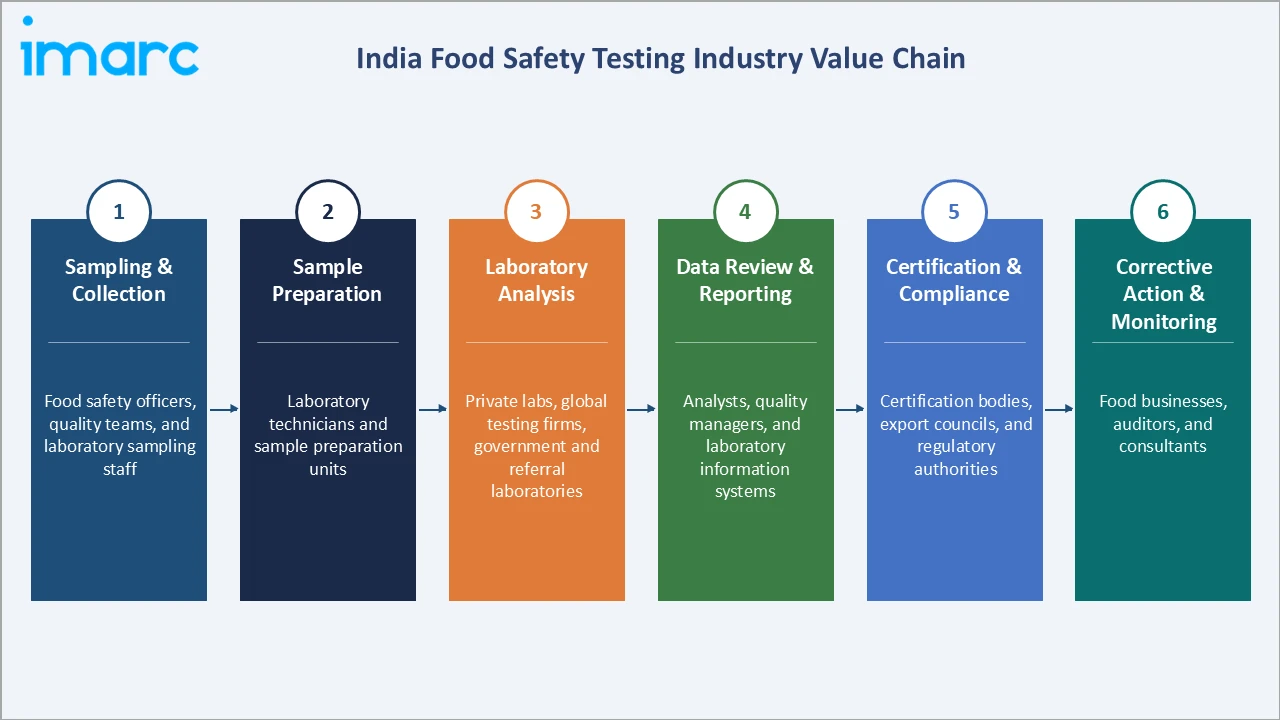
The India food safety testing value chain spans sampling and collection, sample preparation, laboratory analysis, data review and reporting, certification and compliance, and corrective action and monitoring. Value is concentrated in accredited laboratories with advanced instruments and skilled analysts.
|
Stage |
Key Participants |
|
Sampling & Collection |
Food safety officers, quality teams, and laboratory sampling staff |
|
Sample Preparation |
Laboratory technicians and sample preparation units |
|
Laboratory Analysis |
Private labs, global testing firms, government and referral laboratories |
|
Data Review & Reporting |
Analysts, quality managers, and laboratory information systems |
|
Certification & Compliance |
Certification bodies, export councils, and regulatory authorities |
|
Corrective Action & Monitoring |
Food businesses, auditors, and consultants |
Laboratory analysis is the most consequential stage of the chain. The accuracy, speed, and scope of analysis determine whether products can be released, exported, or must be recalled, making accredited, well-equipped laboratories critical to food safety. Sampling practices are equally important, as poor sampling can lead to misleading results regardless of laboratory capability. Certification and reporting stages are gaining importance as buyers require verifiable digital records.
Technology Landscape in the India Food Safety Testing Industry
Chromatography and Mass Spectrometry
Liquid and gas chromatography combined with mass spectrometry allow laboratories to detect hundreds of pesticide residues, veterinary drugs, toxins, and contaminants at very low levels in a single analysis, supporting both regulatory and export testing. High-resolution instruments also support non-targeted screening for unknown contaminants and adulterants. Inductively coupled plasma mass spectrometry is widely used for heavy metal and mineral testing.
Molecular and Rapid Microbial Methods
PCR, real-time PCR, and immunoassay-based methods detect pathogens and GMOs quickly and accurately. Rapid microbial detection systems reduce testing time compared with traditional culture methods. Whole genome sequencing is beginning to support outbreak investigations and source tracking. Rapid allergen detection kits are also becoming more widely available for food manufacturers.
Portable Testing and Digital Laboratory Systems
Portable analyzers and test strips enable on-site screening for adulterants and contaminants. Laboratory information management systems automate sample tracking, results reporting, and compliance documentation. Cloud-based reporting platforms allow clients to access results quickly and maintain digital compliance records. Artificial intelligence is beginning to support data review and anomaly detection in laboratory workflows.
Market Segmentation Analysis
The report covers the following segments:
| Segment Category | Leading Segment | Market Share | Year |
|---|---|---|---|
| Type | Pathogen | 42.6% | 2025 |
| Technology | 🔒 | 🔒 | 2025 |
| Food Tested | Meat and Meat Products | 28.4% | 2025 |
| Region | North India | 31.6% | 2025 |

By Type
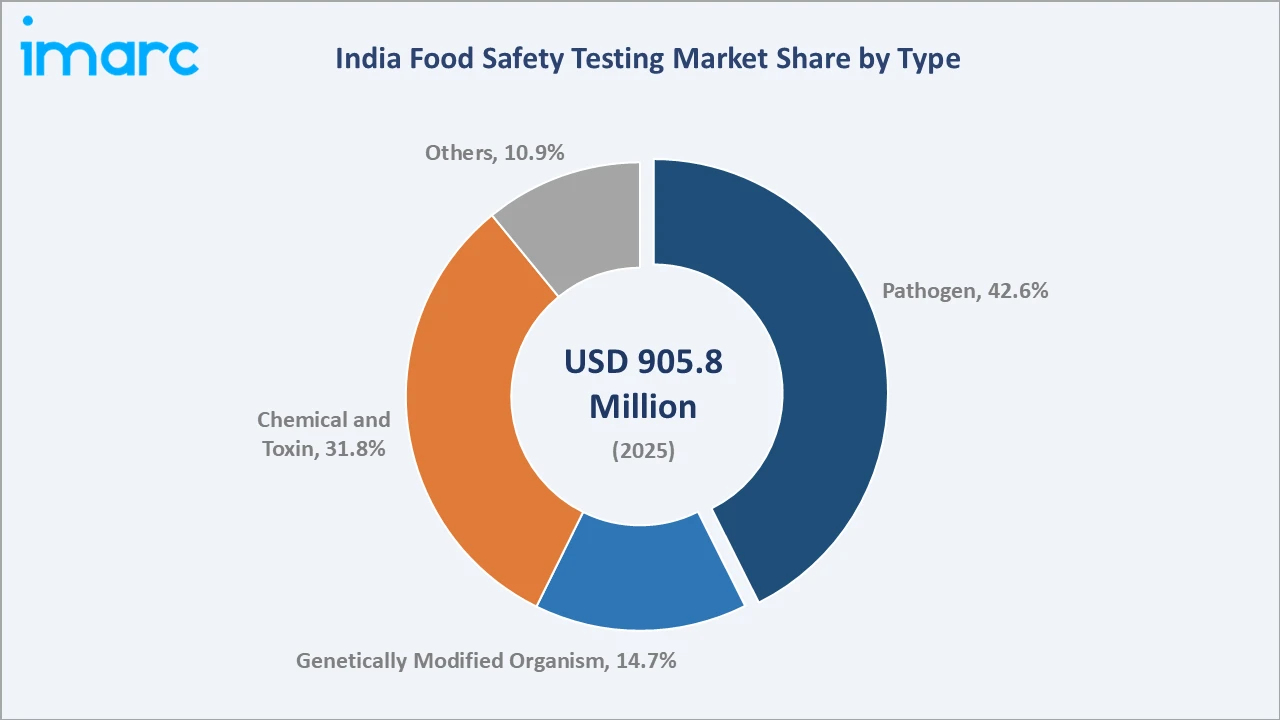
Pathogen testing leads at 42.6% (2025). Bacteria such as Salmonella, E. coli, and Listeria are the leading causes of foodborne illness, making microbial testing essential across meat, dairy, and ready-to-eat foods. Regular microbial testing is also required for water used in food processing and for environmental monitoring in plants. Ready-to-eat and street food segments are also attracting more microbial surveillance from regulators.
To access detailed market analysis, Request Sample
Chemical and toxin testing at 31.8% is growing at ~8.8% CAGR, driven by residue and mycotoxin limits. Genetically modified organism testing at 14.7% is growing at ~9.2%, and others at 10.9% are growing at ~8.4%. Others include allergen, nutritional, and physical contaminant testing, which are gaining importance in packaged foods.
By Food Tested
Meat and meat products lead at 28.4% (2025). High perishability, contamination risk, and strict export requirements make meat one of the most frequently tested food categories. Seafood and poultry exporters, in particular, must comply with strict microbial and residue limits.
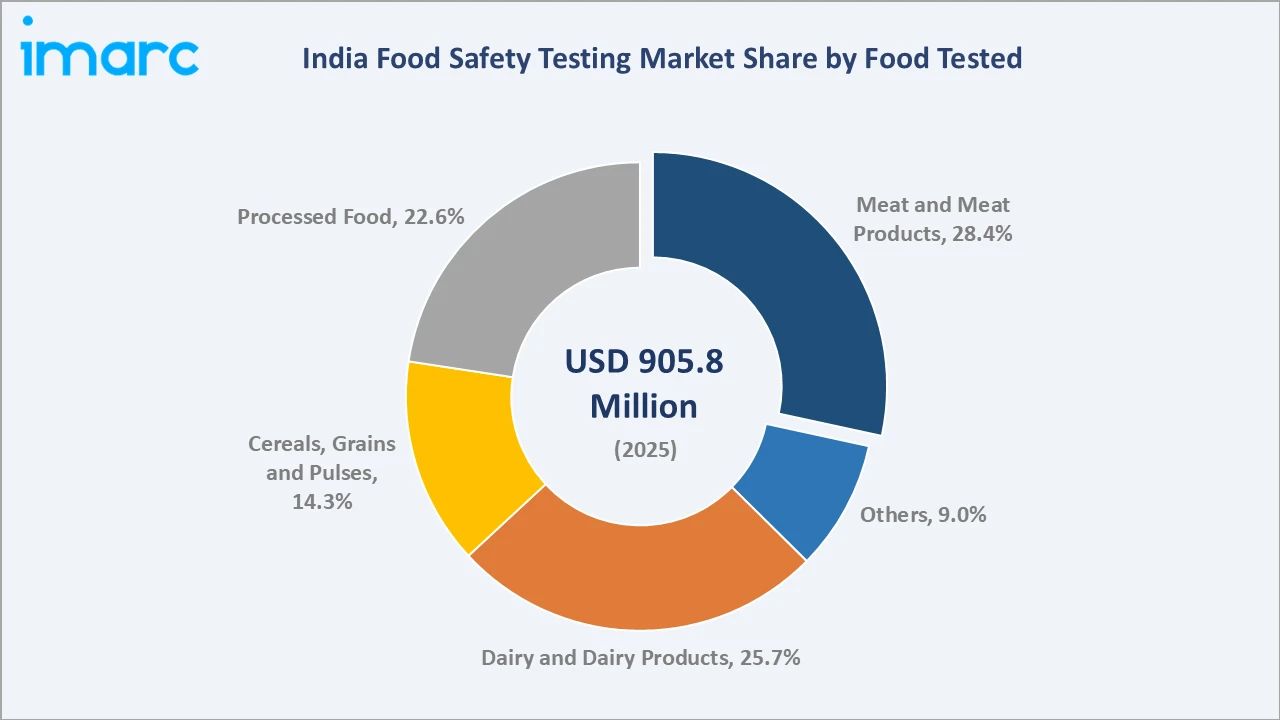
Dairy and dairy products at 25.7% grow at ~8.6% CAGR, processed food at 22.6% grows fastest at ~9.4%, cereals, grains and pulses at 14.3% grow at ~8.2%, and others at 9.0% grow at ~7.8%. Dairy testing is supported by large-scale milk procurement and frequent checks for adulteration and contaminants. Cereals, grains, and pulses testing focuses on pesticide residues, mycotoxins, and quality parameters for domestic and export markets.
Regional Market Insights
|
Region |
Share (2025) |
Key India Food Safety Testing Market Drivers & Characteristics |
|
North India |
31.6% |
Large food processing and dairy base, and concentration of accredited labs in Delhi NCR. |
|
West and Central India |
28.3% |
Export hubs in Maharashtra and Gujarat and strong processed food manufacturing. |
|
South India |
24.7% |
Seafood, spice, and rice exports and a strong network of testing laboratories. |
|
East and Northeast India |
15.4% |
Growing laboratory network and expanding food processing in the region. |
North India's 31.6% market leadership reflects its large food processing base, dairy clusters, and concentration of accredited laboratories. West and Central India's 28.3% reflects export hubs in Maharashtra and Gujarat and strong processed food production.
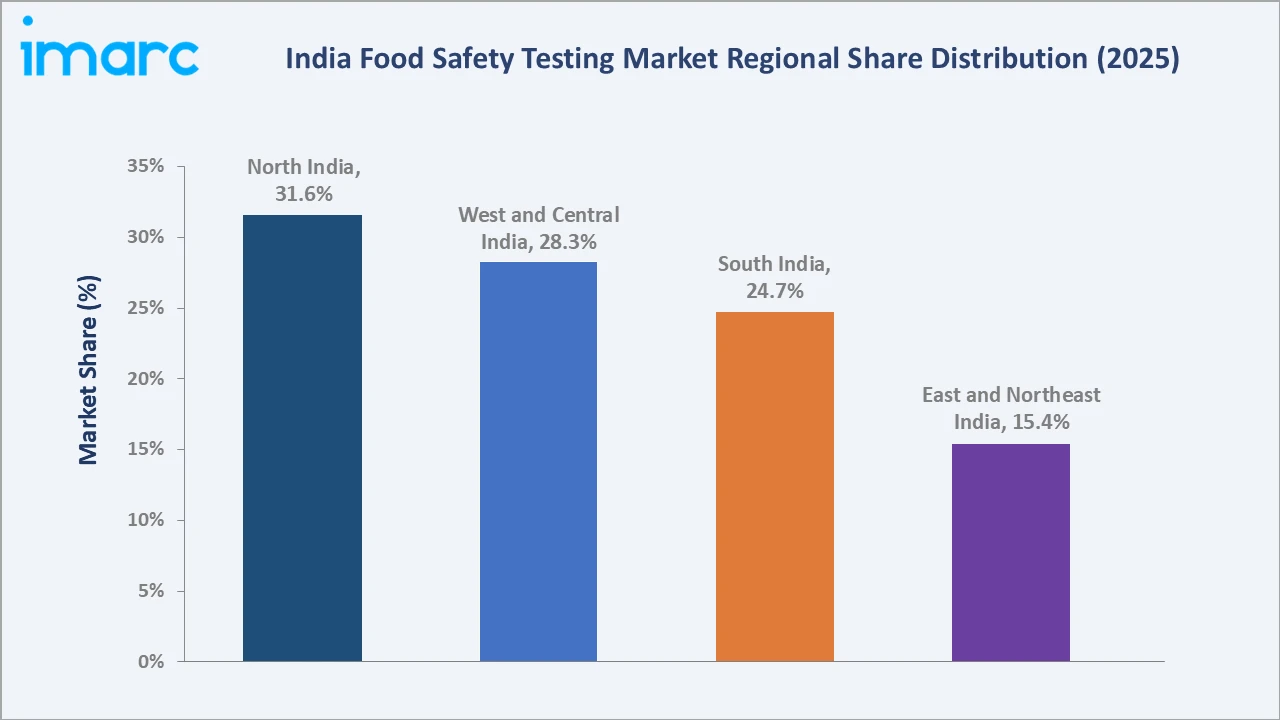
South India's 24.7% reflects strong seafood, spice, and rice exports. East and Northeast India's 15.4% is the smallest share, but new laboratories and food processing investment support steady growth. Food parks and processing clusters in the region are expected to increase local testing demand over the forecast period.
Competitive Landscape
The India food safety testing market includes global testing, inspection, and certification companies, large domestic laboratories, research institutes, and many regional labs. Competition centers on accreditation, testing scope, turnaround time, pricing, and geographic reach. Many laboratories also offer auditing, training, and consulting services alongside testing to provide integrated solutions to clients.
| Company | Key Brands | Market Position | Core Strength |
|---|---|---|---|
| Eurofins | Allergen Testing Services, Authenticity Testing Services, Contaminants and Residue Testing Services | Market Leader | Global food testing network with labs in Bangalore, Gurgaon, and Mumbai. |
| SGS Société Générale de Surveillance SA | Food Allergens, Food Contaminants, Integrity and Authenticity | Market Leader | Global testing and certification with multi-lab presence. |
| Mérieux NutriSciences | Microbiology Food Testing, Composition & Nutritional Analysis | Innovator | Food safety specialist expanding through acquisitions. |
| Vimta Labs | Antibiotic Testing, Beverages Testing | Strong Challenger | Domestic multi-lab network with FSSAI recognition. |
| Equinox Labs Private Limited | Food Safety Testing, Microbiological Testing, Hand Swab Analysis | Innovator | Food testing, auditing, and FoSTaC training. |
| EFRAC | EFRAC Food Testing | Niche Player | Advanced instrumentation for food and drug testing. |
| Shriram Institute for Industrial Research | Shriram Food Testing | Innovator | Long-established research and testing institute. |
The most important competitive dynamic is the expansion of accredited capacity across regions. Laboratories with broad testing scopes, fast turnaround, and wide networks are best placed to serve food businesses, exporters, and regulators.
Key Company Profiles
Mérieux NutriSciences
Mérieux NutriSciences is a global food safety, quality, and sustainability company offering laboratory testing, consulting, and training services to the food industry.
- Key Brands: Microbiology Food Testing, Composition & Nutritional Analysis.
- Recent Developments: In September 2025, Mérieux NutriSciences completed its worldwide acquisition of Bureau Veritas’ food testing activities, welcoming nearly 2,000 colleagues into its organization.
- Strategic Focus: Integrating the acquired laboratories across Africa, Asia-Pacific, and Latin America into its global network.
Vimta Labs
Vimta Labs, founded in 1984 and headquartered in Hyderabad, is a contract research and testing organization offering food, agri, pharmaceutical, and environmental testing services.
- Key Brands: Antibiotic Testing, Beverages Testing.
- Recent Developments: In 2026, Vimta Labs integrated its environment testing division with its food testing division to improve operational efficiency.
- Strategic Focus: Expanding its food testing network, including the set-up of nine new food testing labs across India.
SGS Société Générale de Surveillance SA
SGS Société Générale de Surveillance SA is a global testing, inspection, and certification company with food testing laboratories in India.
- Key Brands: Food Allergens, Food Contaminants, Integrity and Authenticity.
- Recent Developments: In September 2026, FSSAI added food analysts from SGS India Private Limited, Chennai, to its notified list of food analysts.
- Strategic Focus: Expanding food testing capabilities and accredited services for domestic and export customers.
Market Concentration Analysis
The India food safety testing market is fragmented. Global testing companies and large domestic laboratories hold strong positions in export and premium testing, while many regional laboratories serve local food businesses and regulators.
Market concentration is evolving through two opposing forces: acquisitions and network expansion by leading players, and the continued entry of new accredited regional laboratories. Partnerships between laboratories and food businesses are also becoming more common for long-term testing programs.
Investment & Growth Opportunities
Highest Growth Segments
Processed food (~9.4% CAGR through packaged food growth), genetically modified organism testing (~9.2% CAGR through export rules), chemical and toxin testing (~8.8% CAGR through residue limits), and South India (~8.9% CAGR through exports) represent the highest-growth investment areas through 2034.
Emerging Investment Opportunities
Rapid testing kits and mobile laboratories are among the most promising opportunities, expanding testing access in markets, farms, and remote regions. Investments in automation and digital reporting can also improve laboratory efficiency and service quality.
Investment Themes
- Accredited labs in underserved regions: New labs in tier-2 cities and the Northeast can meet unmet demand.
- Export compliance testing: Residue and contaminant testing supports India’s growing food exports.
Future Market Outlook (2026-2034)
The India food safety testing market is projected to grow from USD 905.8 Million in 2025 to USD 980.2 Million in 2026, reaching USD 1,883.4 Million by 2034, registering a CAGR of 8.22% during 2026-2034. The anchor value of USD 1,344.5 Million in 2030 marks a point at which rapid and digital testing should be widely adopted. By then, accredited laboratory coverage should also be significantly wider across smaller cities and rural regions.
Three structural forces define India food safety testing market growth through 2034 stricter regulation and enforcement; growing food exports; and rising consumption of packaged and processed foods. Together, these forces support strong growth across test types, food categories, and regions over the forecast period.
Research Methodology
Primary Research
Primary research comprised structured interviews with industry stakeholders, including laboratory heads, food safety officers, quality managers, exporters, and test kit suppliers, along with inputs from all regions of India.
Secondary Research
Secondary research covered regulatory notifications, company websites, trade data, and industry reports. Over 50 credible secondary sources were reviewed, compared, and cross-checked for accuracy and consistency across datasets, including FSSAI laboratory notifications.
Forecasting Models
Market revenue forecasts were developed using a demand-based model: sample volumes by food category and region multiplied by average testing prices for each test type, with segment results aggregated to total market value. Assumptions were validated through detailed discussions with experienced industry experts, laboratory heads, and food safety officials across all major regions of India, ensuring that the estimates reflect actual sample volumes, testing practices, and pricing trends observed in the Indian market today.
India Food Safety Testing Market Report Coverage:
| Report Features | Details |
|---|---|
| Base Year of the Analysis | 2025 |
| Historical Period | 2020-2025 |
| Forecast Period | 2026-2034 |
| Units | Million USD |
| Scope of the Report |
Exploration of Historical Trends and Market Outlook, Industry Catalysts and Challenges, Segment-Wise Historical and Future Market Assessment:
|
| Types Covered | Pathogen, Genetically Modified Organism, Chemical and Toxin, Others |
| Food Tested Covered | Meat and Meat Products, Dairy and Dairy Products, Cereals, Grains and Pulses, Processed Food, Others |
| Technologies Covered | Agar Culturing, PCR-based Assay, Immunoassay-based, Others |
| Regions Covered | North India, West and Central India, South India, East and Northeast India |
| Companies Covered | Eurofins, SGS Société Générale de Surveillance SA, Mérieux NutriSciences, Vimta Labs, Equinox Labs Private Limited,EFRAC, Shriram Institute for Industrial Research, etc. |
| Customization Scope | 10% Free Customization |
| Post-Sale Analyst Support | 10-12 Weeks |
| Delivery Format | PDF and Excel through Email (We can also provide the editable version of the report in PPT/Word format on special request) |
Key Benefits for Stakeholders:
- IMARC’s industry report offers a comprehensive quantitative analysis of various market segments, historical and current market trends, market forecasts, and dynamics of the India food safety testing market from 2020-2034.
- The research report provides the latest information on the market drivers, challenges, and opportunities in the India food safety testing market.
- Porter's five forces analysis assist stakeholders in assessing the impact of new entrants, competitive rivalry, supplier power, buyer power, and the threat of substitution. It helps stakeholders to analyze the level of competition within the India food safety testing industry and its attractiveness.
- Competitive landscape allows stakeholders to understand their competitive environment and provides an insight into the current positions of key players in the market.
Frequently Asked Questions About the India Food Safety Testing Market Report
The India food safety testing market size is estimated at USD 980.2 Million in 2026, supported by stricter regulations and rising food exports.
The market grows at 8.22% CAGR during 2026-2034, reaching USD 1,883.4 Million by 2034.
Pathogen testing leads at 42.6%, as microbial contamination is the main food safety risk.
Meat and meat products lead at 28.4%, owing to high perishability and export requirements.
North India leads at 31.6%, driven by its food processing base and laboratory network.
Leading companies include Eurofins, SGS Société Générale de Surveillance SA, Mérieux NutriSciences, Vimta Labs, Equinox Labs Private Limited, EFRAC, and Shriram Institute for Industrial Research, among others.
The market is projected to reach approximately USD 1,344.5 Million by 2030.
Key trends include rapid and molecular testing, mobile labs, digital traceability, and broader residue and adulteration testing.
Need more help?
- Speak to our experienced analysts for insights on the current market scenarios.
- Include additional segments and countries to customize the report as per your requirement.
- Gain an unparalleled competitive advantage in your domain by understanding how to utilize the report and positively impacting your operations and revenue.
- For further assistance, please connect with our analysts.
 Request Customization
 Speak to an Analyst
 Request Brochure
 Inquire Before Buying
Benefits of Customization
- Personalize this research
- Triangulate with your data
- Get data as per your format and definition
- Gain a deeper dive into a specific application, geography, customer, or competitor
- Any level of personalization
Get in Touch With Us
UNITED STATES
Phone: +1-201-971-6302
INDIA
Phone: +91-120-433-0800
UNITED KINGDOM
Phone: +44-753-714-6104
Email: [email protected]
Client Testimonials
















Related Reports

Choose your plan
*Please note that the prices mentioned below are starting prices for each bundle type. Kindly contact our team for further details.*
Single User License
- 1 User License, Access on 2 Devices
- PDF Report + Excel Dataset (Password Protected)
- Lifetime Access
- No Printing Rights
- 10% Free Report Customization
- 10–12 Weeks of Analyst Support
Five User License
- Access for 5 Users, 2 Devices per User
- PDF Report + Excel Dataset (Password Protected)
- Lifetime Access
- Dedicated Account Manager
- 12–14 Weeks of Analyst Support
- No Printing Rights
- 15% Free Report Customization
- 25% Discount on Your Next Purchase
Corporate User License
- Unlimited User Access (Within Your Organization)
- PDF Report + Excel Dataset
- Lifetime Access
- Dedicated Account Manager
- 14–20 Weeks of Analyst Support
- No Printing Rights
- 20% Free Report Customization
- 30% Discount on Your Next Purchase
Essential Insights
What's included:
3 reports
- Lifetime Access
- PDF Reports
- Excel Datasets
- 2 Weeks of Free Analyst Support
- 2 User Licenses
- Access on 2 Devices
- Printing Rights
- Complimentary PowerPoint (PPT) Version
- Complimentary License Upgrade
Professional Access
What's included:
5 reports
- Lifetime Access
- PDF Reports
- Excel Datasets
- 8 Weeks of Free Analyst Support
- 2 User Licenses
- Access on 2 Devices
- Printing Rights
- Complimentary PowerPoint (PPT) Version
- Complimentary License Upgrade
Business Advantage
What's included:
8 reports
- Lifetime Access
- PDF Reports
- Excel Datasets
- 14 Weeks of Free Analyst Support
- 2 User Licenses
- Access on 2 Devices
- Printing Rights
- Complimentary PowerPoint (PPT) Version
- Complimentary License Upgrade
Enterprise Intelligence
What's included:
10 reports
- Lifetime Access
- PDF Reports
- Excel Datasets
- 20 Weeks of Free Analyst Support
- 2 User Licenses
- Access on 2 Devices
- Printing Rights
- Complimentary PowerPoint (PPT) Version
- Complimentary License Upgrade