
Japan Smart Factory Market Size, Share, Trends and Forecast by Field Devices, Technology, End Use Industry, and Region, 2026-2034
Japan Smart Factory Market Size, Share, Trends & Forecast (2026-2034)
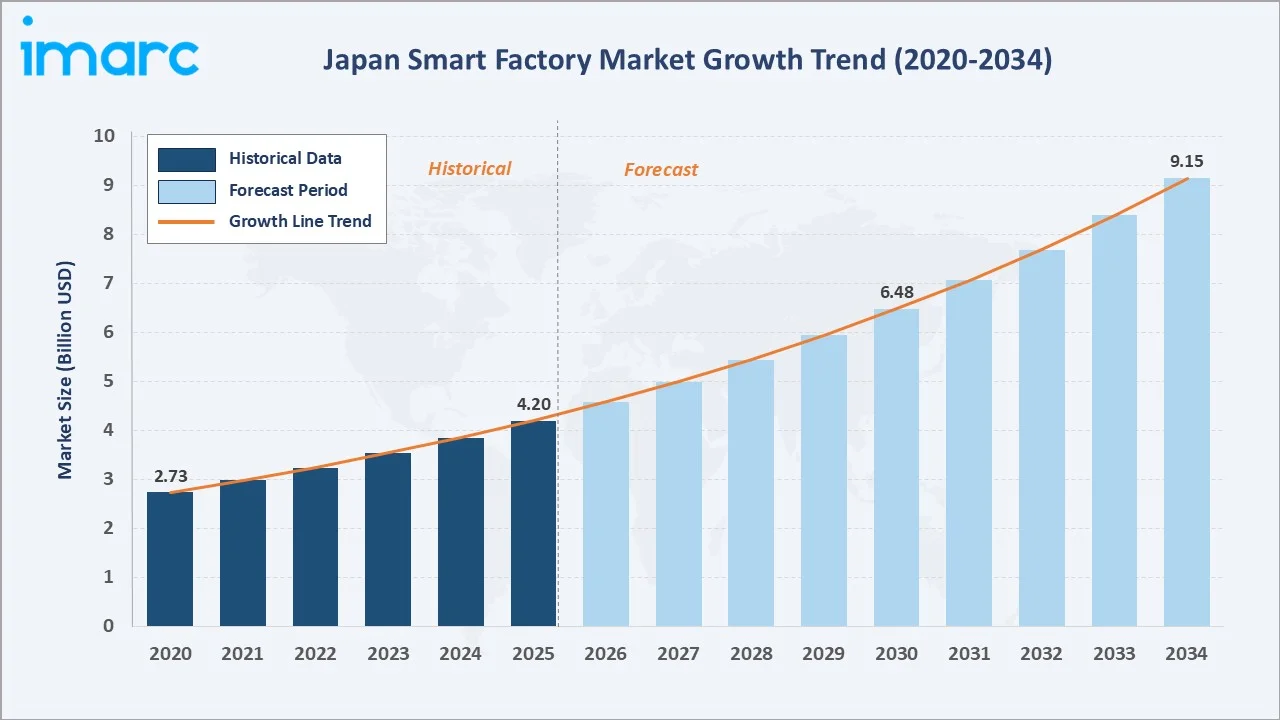
The Japan smart factory market reached USD 4.20 Billion in 2025 and is projected to reach USD 9.15 Billion by 2034, exhibiting a CAGR of 9.03% during 2026-2034. Japan's acute labor shortage and stimulating smart facility investment are the primary growth catalysts. Japan’s foreign workforce reached a record 2.57 million at the end of October 2025, representing an 11.7% year-on-year increase, as businesses increasingly rely on overseas workers to address severe labor shortages caused by the country’s declining and aging population. This persistent workforce gap is also accelerating the adoption of smart factory technologies, including industrial robots, automated production lines, AI-based quality inspection, and autonomous material-handling systems. Industrial robots lead field devices at 31.6%, automotive and transportation dominate the end use industry at 27.8%, and the Kanto region accounts for the largest regional share at 29.4%.
Market Snapshot
|
Metric |
Value |
|
Market Size (2025) |
USD 4.20 Billion |
|
Forecast Market Size (2034) |
USD 9.15 Billion |
|
CAGR (2026-2034) |
9.03% |
|
Base Year |
2025 |
|
Historical Period |
2020-2025 |
|
Forecast Period |
2026-2034 |
|
Dominant Field Devices |
Industrial Robots (31.6%, 2025) |
|
Dominant End Use Industry |
Automotive and Transportation (27.8%, 2025) |
|
Leading Region |
Kanto Region (29.4%, 2025) |
The Japan smart factory market demonstrated strong growth, rising from USD 2.73 Billion in 2020 to USD 4.20 Billion in 2025, driven by COVID-19-accelerated digital manufacturing adoption, Japan's government-backed Society 5.0 strategy integrating cyber-physical systems, and landmark semiconductor investments generating new smart facility demand. The market is projected to reach USD 6.48 Billion by 2030 and USD 9.15 Billion by 2034.
To get more information on this market, Request Sample
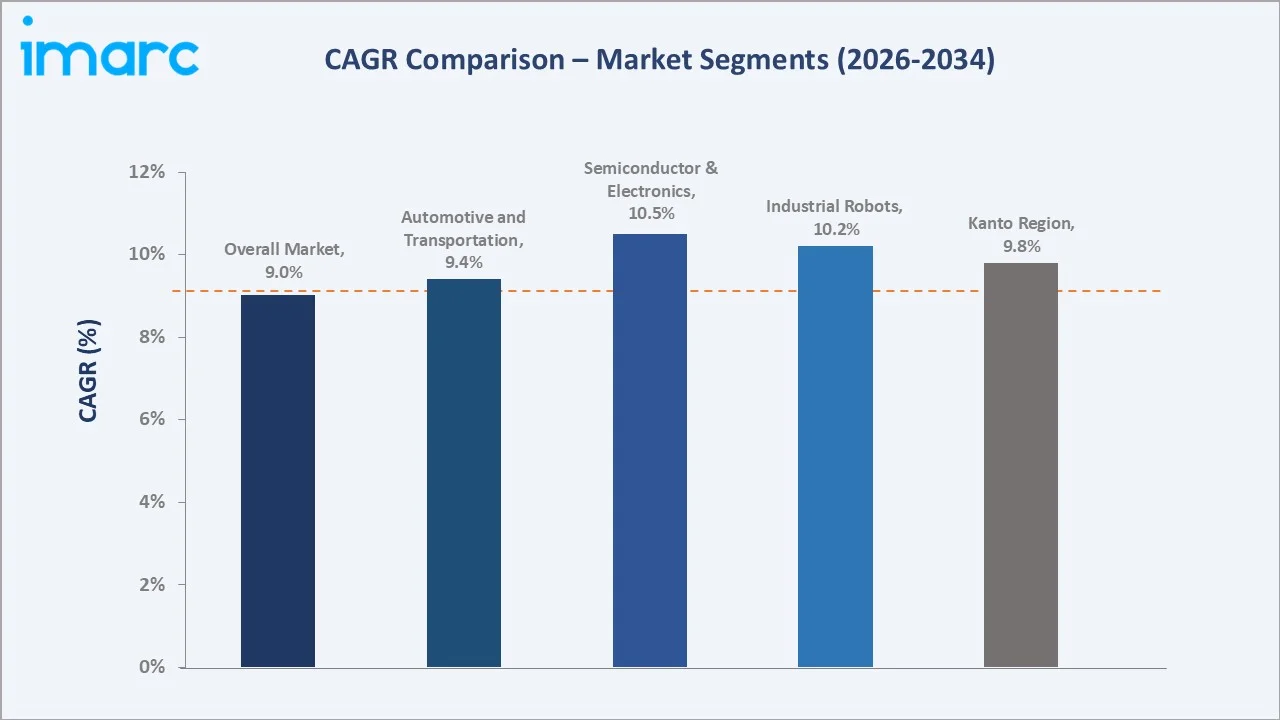
Industrial robots grow at ~10.2% CAGR as collaborative robots and deployments accelerate across automotive and semiconductor manufacturing. Semiconductor and electronics end use grows at ~10.5% CAGR, the fastest segment, driven by smart facility requirements. Kanto region leads at ~9.8% CAGR, supported by the IIoT data schemas across Tokyo and Yokohama industrial clusters.
Executive Summary
The Japan smart factory market is expanding at high single-digit rates, driven by the confluence of Japan's structural manufacturing challenges, such as an acute and worsening labor shortage, rising wages, and intensifying global quality competition, with a highly enabling government policy environment and a one of the world-leading industrial automation technology bases. Market value stood at USD 4.20 Billion in 2025 and is forecast to reach USD 9.15 Billion by 2034. Japan maintains one of the largest installed bases of industrial robots per manufacturing worker and leads globally in the development of collaborative robots, machine vision systems, and industrial sensor technology.
Industrial robots lead field devices at 31.6% (2025), anchored by CNC and collaborative robot platforms. Automotive and transportation commands 27.8% of the end use industry (2025), reflecting Japan's status as one of the world's top automotive producers and the rapid EV transition requiring smart assembly line upgrades. The Kanto region leads at 29.4% (2025), driven by Tokyo's manufacturing technology ecosystem and the digital manufacturing data standardization.
Key Market Insights
|
Insight |
Data |
|
Dominant Field Devices |
Industrial Robots – 31.6% share (2025) |
|
Dominant End Use Industry |
Automotive and Transportation – 27.8% share (2025) |
|
Leading Region |
Kanto Region – 29.4% share (2025) |
|
Market Opportunity |
Semiconductor fabs; EV assembly smart upgrade; IIoT standardization; SME automation |
Key Analytical Observations:
- Industrial Robots at 31.6% (2025): Japan operates the world's highest density of industrial robots per manufacturing worker, with approximately 450,530 robots in operation in 2024. Industrial robots lead the market due to their extensive use in automotive, electronics, and precision manufacturing for assembly, welding, material handling, and quality inspection. Their ability to address labor shortages, improve productivity, and deliver consistent precision is accelerating adoption across Japanese factories.
- Automotive and Transportation at 27.8% (2025): Japan's automotive sector is undergoing its most significant manufacturing technology transformation in decades as EV model launches require new welding, battery assembly, and quality inspection smart systems.
- Kanto Region at 29.4% (2025): The Kanto region leads due to its dense concentration of automotive, electronics, machinery, and technology companies across Tokyo, Kanagawa, Saitama, and Chiba. Strong digital infrastructure, high R&D investment, and widespread adoption of robotics, IoT, and AI-based manufacturing systems further support regional market growth.
Japan Smart Factory Market Overview
The Japan smart factory market encompasses the hardware, software, connectivity, and services that enable manufacturing facilities to achieve Industry 4.0-aligned cyber-physical integration. Key technology categories include industrial robots, industrial sensors, machine vision systems, industrial networks, industrial 3D printers, and software platforms. Japan's smart factory ecosystem is globally unique in its combination of world-leading domestic automation technology providers, the highest global industrial robot density, and a government policy framework that creates exceptional investment certainty for smart manufacturing capital expenditure. Macroeconomic factors include persistent labor shortages, an aging population, rising manufacturing costs, and the need to improve industrial productivity.
Market Dynamics
To evaluate market opportunities, Request Sample
Market Drivers
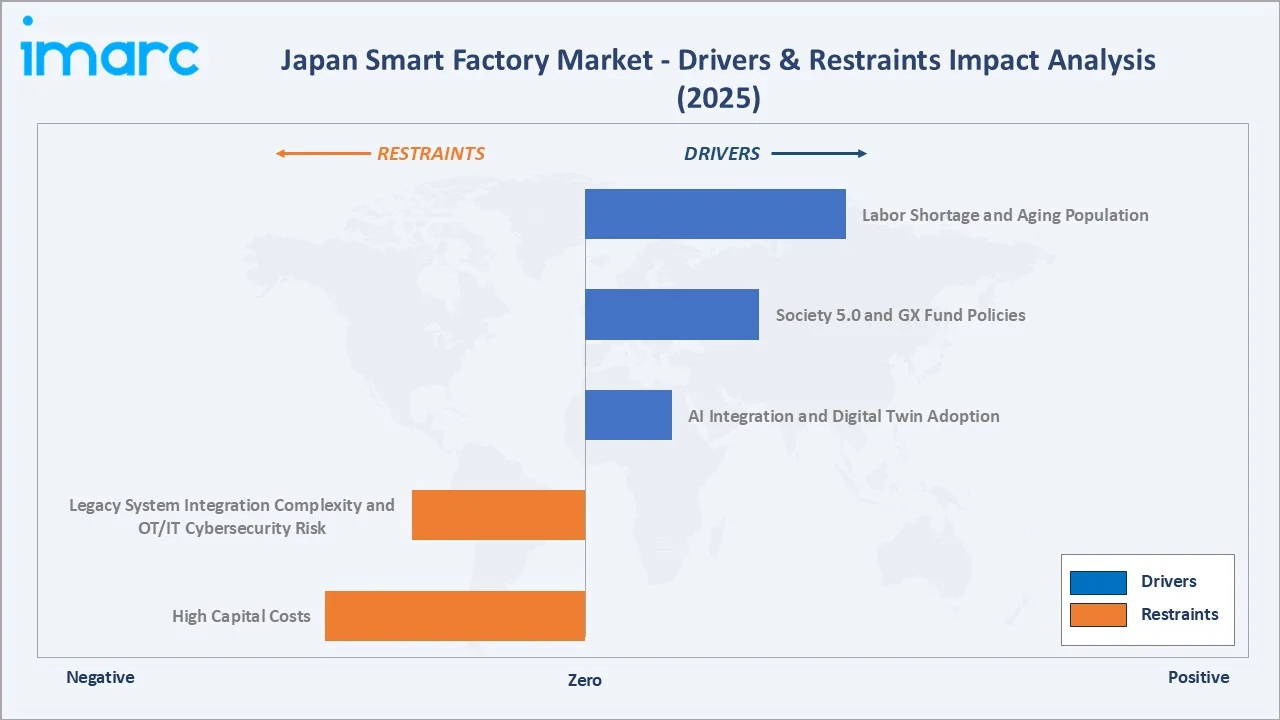
- Labor Shortage and Aging Population: Japan's working-age population has declined steadily for three decades, with Japan's total population projected to fall below 100 million to 99.65 million in 2056 and to 87 million in 2070. Manufacturing labor shortages have compressed smart factory ROI timelines to under 24 months in high-volume manufacturing environments.
- Society 5.0 and GX Fund Policies: Government incentives are driving investments in AI, industrial IoT, robotics, digital twins, and energy-efficient production systems. These initiatives help factories improve productivity, optimize energy consumption, and strengthen supply chain resilience, supporting sustained growth of the Japan smart factory market. Japan's Green Transformation (GX) policy, backed by JPY 20 trillion in government support over 10 years, provides direct subsidies for energy-efficient smart manufacturing equipment through the GX-Fund-subsidized automation projects.
- AI Integration and Digital Twin Adoption: AI integration and digital twin adoption enable manufacturers to monitor, simulate, and optimize production processes in real time. AI supports predictive maintenance, automated quality inspection, demand forecasting, and intelligent process control, reducing downtime and operational costs. Digital twins allow companies to test production changes virtually before implementation, improving efficiency and minimizing risks. Together, these technologies enhance flexibility, product quality, and resource utilization across Japanese manufacturing facilities.
Market Restraints
- High Capital Costs: High capital costs are hampering the market as implementing industrial robots, IoT sensors, AI platforms, digital twins, and advanced control systems requires substantial upfront investment. Additional expenses for system integration, cybersecurity, workforce training, and legacy equipment upgrades further increase the financial burden. These costs are particularly challenging for small and medium-sized manufacturers with limited budgets and uncertain returns. As a result, many firms delay large-scale automation or adopt smart manufacturing technologies gradually.
- Legacy System Integration Complexity and OT/IT Cybersecurity Risk: Legacy system integration complexity hampers the market as many manufacturers still rely on aging machinery, proprietary protocols, and disconnected production systems. Connecting these assets with modern IoT, cloud, AI, and analytics platforms can require costly customization and may disrupt ongoing operations. Greater convergence between operational technology and information technology also expands the attack surface for ransomware, data theft, and production sabotage.
Market Opportunities
- SME Automation via METI Regional Revitalization: METI-led regional revitalization programs help small and medium-sized manufacturers adopt automation, robotics, IoT, and digital production tools. Subsidies, advisory support, and regional innovation hubs can reduce the financial and technical barriers faced by SMEs. This enables smaller firms to address labor shortages, improve productivity, and modernize aging production facilities. Wider SME participation also expands smart manufacturing adoption beyond major industrial groups and metropolitan regions.
- EV Transition Requiring Smart Assembly Line Overhaul: Battery electric vehicle sales in Japan reached approximately 61,000 units in 2025, rising by 1.67% from around 60,000 units in 2024. The continued shift toward EV production creates an opportunity, as automakers must redesign assembly lines for battery packs, electric drivetrains, power electronics, and high-voltage safety systems. This transition encourages investment in flexible robotics, automated inspection, digital twins, traceability platforms, and AI-based production control. Smart manufacturing solutions can help manufacturers improve precision, manage model diversity, and scale EV output efficiently.
Market Challenges
- Shortage of OT-IT Convergence Engineers: Japan faces a significant shortage of engineers capable of bridging operational technology (OT) manufacturing systems expertise with information technology (IT) software and connectivity knowledge. Smart factory implementation requires multi-disciplinary teams combining PLC programming, industrial network design, data science, and cybersecurity capability, a profile that is rare in Japan's workforce and commands premium compensation. This talent scarcity limits smart factory deployment velocity and increases project costs for manufacturers.
- Geopolitical Supply Chain Risk for Semiconductor Components: Japan's smart factory hardware ecosystem is exposed to semiconductor supply chain concentration risk, with critical microcontrollers, sensor ASICs, and motion control chips sourced from Taiwan and South Korea. Supply disruptions can cascade through the smart factory hardware supply chain, delaying projects and compressing system integrator margins.
Emerging Market Trends
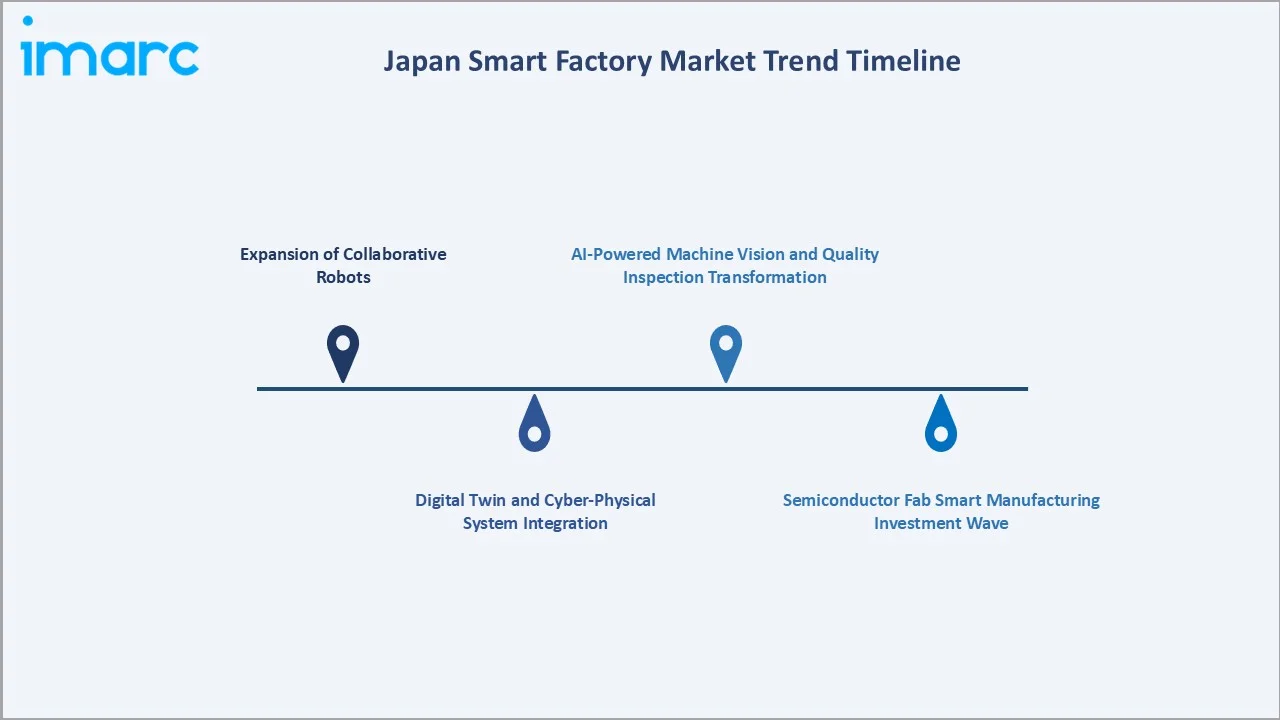
1. Expansion of Collaborative Robots
The expansion of collaborative robots is emerging as manufacturers seek flexible automation that can operate safely alongside human workers. Newer cobots offer higher payload capacities, longer reach, easier programming, and faster deployment across assembly, packaging, material handling, and inspection tasks. In May 2026, Yaskawa Electric Corporation launched the MOTOMAN-HC35, a new collaborative robot developed to manage heavier loads and cover a broader working area as manufacturers increasingly adopt automation to ease labor shortages. Replacing the MOTOMAN-HC20DTP, the new model offers a 35-kilogram payload capacity and a maximum reach of 2,030 millimeters, compared with 20 kilograms and 1,900 millimeters for its predecessor. Their relatively compact design makes them suitable for space-constrained factories and small and medium-sized enterprises.
2. AI-Powered Machine Vision and Quality Inspection Transformation
AI-powered machine vision enables faster, more accurate, and automated quality inspection. These systems can detect surface defects, dimensional errors, assembly faults, and product inconsistencies that may be difficult for conventional rule-based cameras to identify. Continuous learning improves inspection performance across changing products and production conditions. This reduces scrap, rework, and dependence on manual inspectors while supporting real-time process optimization and traceability.
3. Digital Twin and Cyber-Physical System Integration
Digital twin and cyber-physical system integration links physical equipment with real-time virtual models. Manufacturers can simulate production changes, monitor asset performance, and identify bottlenecks before they disrupt operations. Integration with IoT sensors, AI, and advanced analytics also supports predictive maintenance and autonomous process control. This improves production flexibility, reduces downtime, and enables faster optimization of complex manufacturing systems.
4. Semiconductor Fab Smart Manufacturing Investment Wave
Semiconductor production requires highly automated cleanrooms, precision robotics, AI-based process control, machine vision, and real-time equipment monitoring. Manufacturers are also adopting digital twins and predictive maintenance to improve yields and reduce costly downtime. These investments are accelerating demand for advanced smart manufacturing solutions across Japan’s semiconductor ecosystem.
Industry Value Chain Analysis
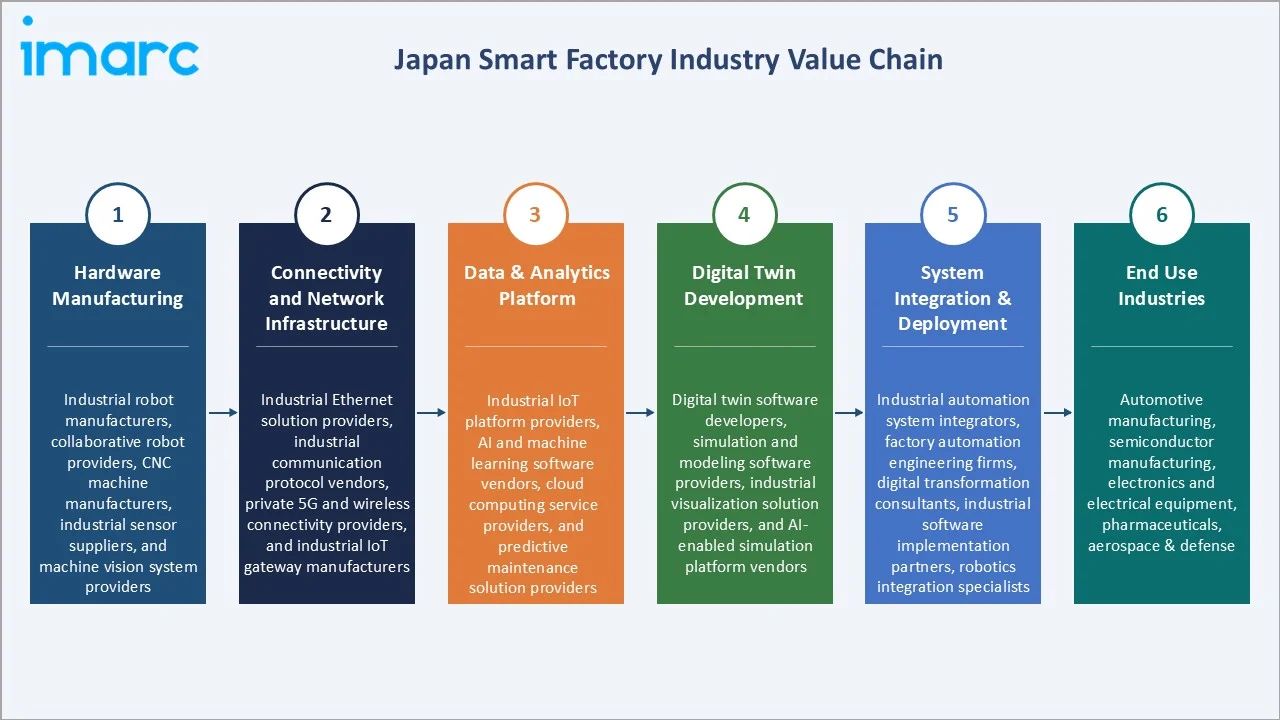
The Japan smart factory value chain integrates hardware manufacturing, connectivity and network infrastructure, data and analytics platform, digital twin development, system integration and deployment, and end use industry smart factory operations.
|
Stage |
Key Participants |
|
Hardware Manufacturing |
Industrial robot manufacturers, collaborative robot providers, CNC machine manufacturers, industrial sensor suppliers, and machine vision system providers. |
|
Connectivity and Network Infrastructure |
Industrial Ethernet solution providers, industrial communication protocol vendors, private 5G and wireless connectivity providers, and industrial IoT gateway manufacturers. |
|
Data & Analytics Platform |
Industrial IoT platform providers, AI and machine learning software vendors, cloud computing service providers, and predictive maintenance solution providers. |
|
Digital Twin Development |
Digital twin software developers, simulation and modeling software providers, industrial visualization solution providers, and AI-enabled simulation platform vendors. |
|
System Integration & Deployment |
Industrial automation system integrators, factory automation engineering firms, digital transformation consultants, industrial software implementation partners, robotics integration specialists. |
|
End Use Industries |
Automotive manufacturing, semiconductor manufacturing, electronics and electrical equipment, pharmaceuticals, aerospace & defense. |
Digital twin platforms are the highest-growth and highest-margin layer in Japan's smart factory value chain. While hardware components command premium pricing through technological leadership, the recurring revenue, high switching costs, and AI-driven differentiation of software platforms are progressively shifting value creation toward the data analytics and digital twin layers.
Technology Landscape in the Japan Smart Factory Industry
Industrial Robot and Cobot Technology
Industrial robot and cobot technology automates assembly, welding, material handling, packaging, and inspection processes. Advanced sensors, AI-based vision, force control, and safety systems allow robots to perform precise tasks and collaborate safely with human workers. Cobots provide flexible, easily programmable automation for high-mix, low-volume production and smaller factories. In July 2026, Mitsubishi Motors partnered with University of Tokyo-origin startup Highlanders to develop and mass-produce humanoid robots. Designed to work alongside people and learn by imitating human movements, the robots will initially be deployed in Mitsubishi’s factories and later offered to other businesses. Their adoption helps manufacturers address labor shortages, improve productivity, and support rapid production-line reconfiguration.
Machine Vision and AI-Based Quality Inspection
Machine vision and AI-based quality inspection enable real-time, automated defect detection with greater accuracy than traditional inspection methods. AI algorithms continuously learn from production data to identify complex defects, reduce false rejections, and improve product consistency. Integration with robotics, IoT sensors, and edge computing supports closed-loop quality control and predictive process optimization. These technologies help manufacturers minimize waste, reduce rework, and achieve higher production efficiency across advanced manufacturing facilities.
Industrial Network and 5G Connectivity
Industrial networks and 5G connectivity enable high-speed, low-latency communication among machines, robots, sensors, and control platforms. Japan’s 5G rollout contributed to a 35% rise in mobile internet usage, as users benefit from faster connectivity, lower latency, and more reliable online experiences. Private 5G supports flexible wireless production lines, autonomous mobile robots, real-time video inspection, and remote equipment monitoring. Industrial Ethernet and edge computing ensure reliable data exchange and rapid operational decision-making. Together, these technologies improve factory scalability, responsiveness, and integration while reducing dependence on fixed cabling.
Market Segmentation Analysis
The report covers the following segments:
|
Segment Category |
Leading Segment |
Market Share |
Year |
|
Field Devices |
Industrial Robots |
31.6% |
2025 |
|
Technology |
🔒 |
🔒 |
2025 |
|
End Use Industry |
Automotive and Transportation |
27.8% |
2025 |
|
Region |
Kanto Region |
29.4% |
2025 |

By Field Devices
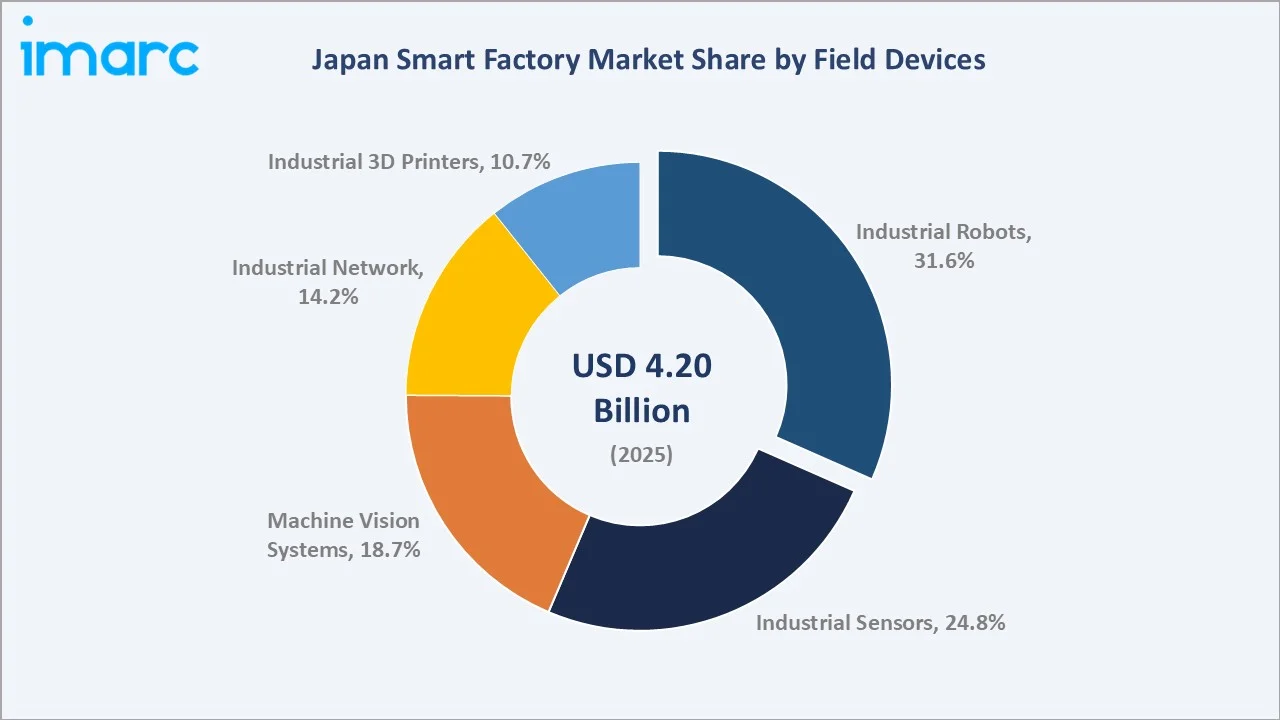
Industrial robots lead at 31.6% (2025), reflecting Japan's industrial robot density and the accelerating transition toward collaborative robot platforms that serve both large automotive/electronics manufacturers and Japan's SME manufacturing sector. Industrial robots are projected to grow at ~10.2% CAGR through 2034, driven by EV manufacturing transitions, semiconductor fab automation, and cobot expansion into new applications.
To access detailed market analysis, Request Sample
Industrial sensors at 24.8% (2025) encompass the broad range of process, proximity, optical, and environmental sensors that form the data acquisition layer of smart factory systems. Machine vision systems at 18.7% (2025) are the fastest-evolving field device category, driven by AI-powered defect detection adoption across semiconductors, electronics, and pharmaceutical manufacturing. Industrial network at 14.2% reflects the connectivity investment required to link distributed smart factory devices, industrial 3D printers at 10.7% represent the additive manufacturing layer for tooling, jigs, and increasingly production-grade components.
By End Use Industry
Automotive and transportation dominate at 27.8% (2025), reflecting Japan's position as one of the world's top automotive producers and the acute smart factory investment pressure from the EV manufacturing transition. Semiconductor and electronics at 23.6% (2025) are the fastest-growing end use segment at ~10.5% CAGR, energized by a broader semiconductor localization investment wave backed by METI subsidies.
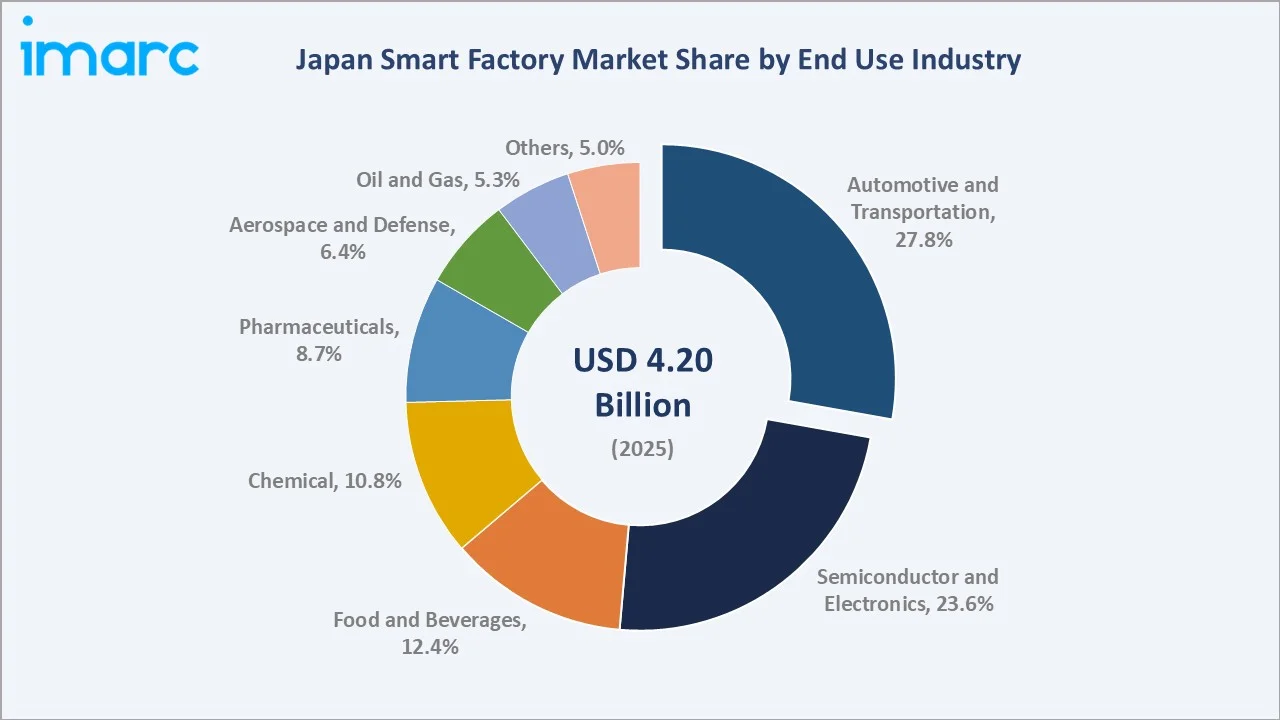
Food and beverages at 12.4% (2025) reflect Japan's world-class food safety requirements and the sector's adoption of vision-based quality inspection, collaborative robot food handling, and traceability automation. Chemical at 10.8% (2025) utilizes process automation platforms. Pharmaceuticals at 8.7%, aerospace and defense at 6.4%, and oil and gas at 5.3% represent specialized high-value applications requiring advanced smart factory systems with strict regulatory compliance, precision control, and safety integrity requirements.
Regional Market Insights
|
Region |
Share (2025) |
Key Japan Smart Factory Market Drivers & Characteristics |
|
Kanto Region |
29.4% |
Leads the market due to its dense concentration of automotive, electronics, machinery, and technology companies. |
|
Kansai/Kinki Region |
19.6% |
Benefits from a strong base of electronics, industrial machinery, chemicals, and pharmaceutical manufacturers. |
|
Central/Chubu Region |
17.8% |
Supported by a large automotive and auto-component manufacturing ecosystem. |
|
Kyushu-Okinawa Region |
10.5% |
Growth is driven by semiconductor fabrication, electronics production, and expanding investment in advanced manufacturing facilities. |
|
Chugoku Region |
7.1% |
Characterized by automotive, shipbuilding, steel, chemicals, and heavy manufacturing activities. |
|
Tohoku Region |
6.4% |
Supported by electronics, precision machinery, semiconductor components, and automotive parts manufacturing. |
|
Hokkaido Region |
5.2% |
Smart factory adoption is developing across food processing, agriculture-related manufacturing, machinery, and renewable energy equipment production. |
|
Shikoku Region |
4.0% |
Growth is supported by chemicals, paper and pulp, food processing, machinery, and pharmaceutical production. |
The Kanto region's 29.4% dominance is supported by its concentration of automotive, electronics, machinery, and advanced technology companies, along with strong investments in AI, robotics, and industrial IoT. Kansai/Kinki region’s 19.6% follows as a major manufacturing hub with extensive adoption of factory automation across electronics, pharmaceuticals, and industrial equipment industries. The Central/Chubu region’s 17.8% remains a key growth center due to its large automotive manufacturing base and increasing deployment of smart assembly lines and digital production systems.
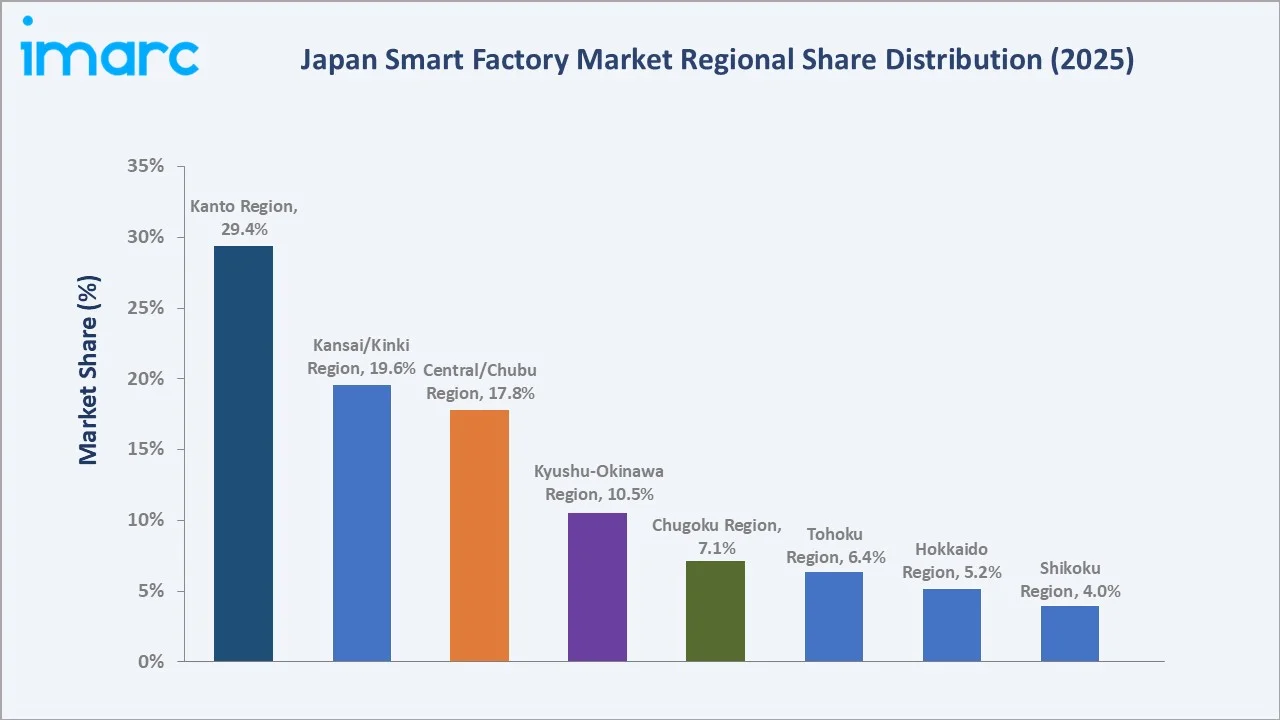
Kyushu-Okinawa region’s 10.5% is witnessing rapid growth driven by expanding semiconductor fabrication facilities and investments in highly automated cleanroom manufacturing. Chugoku region’s 7.1% benefits from the modernization of heavy industries, including steel, shipbuilding, and chemicals, through robotics and predictive maintenance solutions. Tohoku region’s 6.4% is steadily advancing with automation investments in electronics, precision machinery, and automotive component manufacturing, supported by regional revitalization initiatives. Hokkaido region’s 5.2% is gradually adopting smart factory technologies across food processing, agricultural equipment, and renewable energy manufacturing. Meanwhile, Shikoku region’s 4.0% is experiencing increasing digitalization in the chemicals, paper, pharmaceutical, and food processing industries, contributing to the broader expansion of smart manufacturing across Japan.
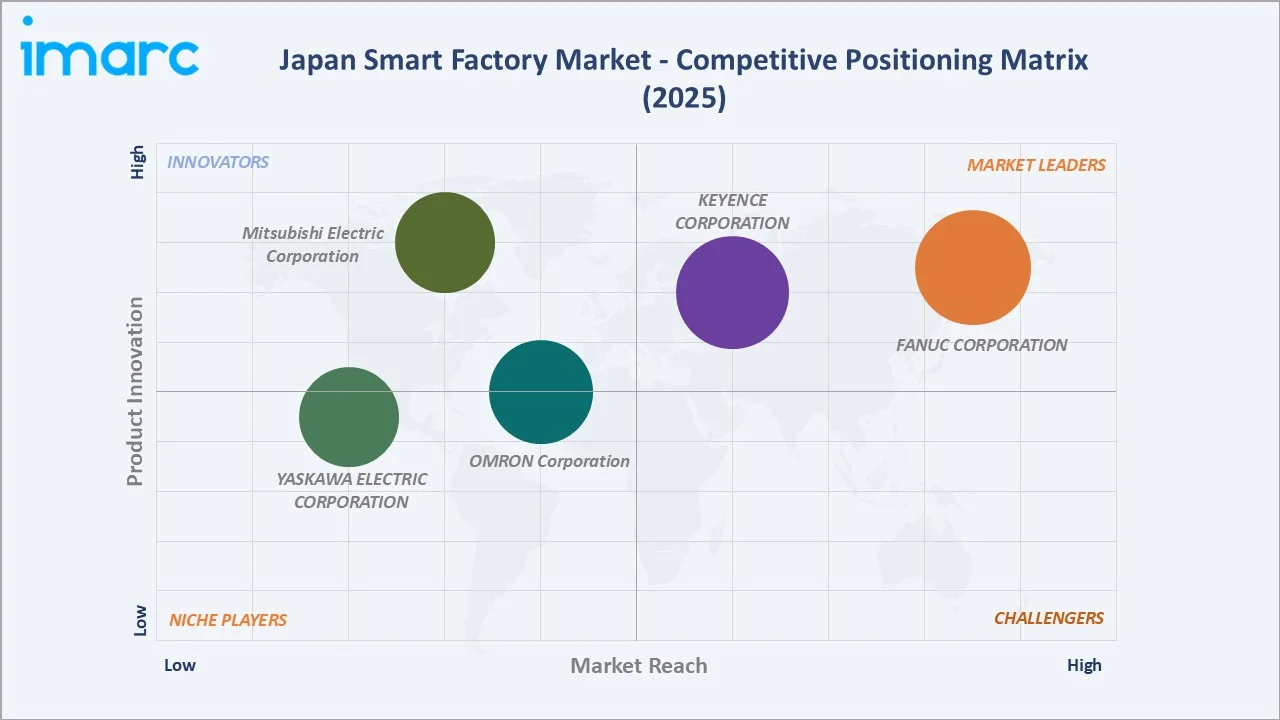
Competitive Landscape
The Japan smart factory market features a distinctive competitive structure with Japan's domestic automation champions competing with global automation leaders. Japan's domestic leaders compete primarily on the depth of their product-to-platform ecosystems, certified system integrator networks, and proprietary industrial network standards. Competition is intensifying at the software and AI platform layer, where global players challenge domestic incumbents, whose traditional strength has been hardware-led automation.
|
Company |
Key Products |
Market Position |
Core Strength |
|
FANUC CORPORATION |
Collaborative Robot CRX series, Collaborative Robot CR, SCARA Robot, Delta Robot, Arc Welding Robot, Large Size Robot, Large-size Palletizing Robot, Paint Robot |
Market Leader |
FANUC CORPORATION is a cornerstone of Japan's smart factory market, pioneering "lights-out" manufacturing and providing the fundamental building blocks, such as CNCs, servo motors, and industrial robots, that drive Industry 4.0. |
|
KEYENCE CORPORATION |
Industrial sensors, measurement instruments, barcode scanners |
Market Leader |
KEYENCE CORPORATION is a premier enabler of Japan's smart factory sector. Operating as a fabless developer, it drives industry-wide quality control, process optimization, and traceability through its high-margin sensors, machine vision systems, and automated measurement instruments. |
|
Mitsubishi Electric Corporation |
MELFA series, Collaborative Robot ASSISTA, Vertical articulated robot, Horizontal articulated robot, MELFA FR PLUS |
Innovator |
Mitsubishi Electric Corporation acts as a premier pillar in Japan's smart factory market, spearheading the integration of Factory Automation (FA) and Information Technology (IT). |
|
OMRON Corporation |
Parallel Robots, SCARA Robots, Articulated Robots, Robot Controllers |
Established Player |
OMRON Corporation drives the Japanese smart factory market by tackling critical social issues like severe labor shortages and an aging workforce. |
|
YASKAWA ELECTRIC CORPORATION |
Arc welding robot, Spot welding robot, Handling/Assembling robot, Collaborative robot, Biomedical robot, Palletizing robot, Press handling robot, Sealing/Cutting/Laser machining robot, Deburring robot, Painting robot |
Established Player |
Yaskawa Electric Corporation is a foundational pillar of Japan’s smart factory and industrial automation market, specializing in servos, motion controllers, AC drives, and industrial robots. |
Companies are intensifying investment in AI-powered digital twin platforms, cloud-based SaaS, and semiconductor manufacturing smart systems as the competitive landscape shifts from hardware leadership toward software-defined factory intelligence.
Key Company Profiles
FANUC CORPORATION
FANUC CORPORATION is one of Japan’s leading industrial automation companies and a global provider of factory automation solutions. The company specializes in industrial robots, collaborative robots, CNC systems, servo motors, machine tools, and factory automation software. FANUC serves a wide range of industries, including automotive, electronics, semiconductors, metalworking, food and beverage, medical devices, and logistics. Its smart manufacturing portfolio integrates robotics, AI-enabled vision systems, IoT connectivity, predictive maintenance, and digital manufacturing technologies to improve production efficiency, quality, and operational flexibility.
- Key Products: Collaborative Robot CRX series, Collaborative Robot CR, SCARA Robot, Delta Robot, Arc Welding Robot, Large Size Robot, Large-size Palletizing Robot, Paint Robot.
- Strategic Focus: Centers on expanding integrated automation through its CNC systems, servo technologies, industrial robots, collaborative robots, and intelligent machine tools. The company is strengthening digital manufacturing capabilities by incorporating IoT, digital twins, AI-enabled process optimization, and predictive maintenance into its factory automation portfolio.
Mitsubishi Electric Corporation
Mitsubishi Electric Corporation is a major Japanese electrical and automation technology company with a strong presence in the country’s smart factory ecosystem. Its factory automation portfolio includes programmable logic controllers, industrial robots, servo motors, inverters, CNC systems, human-machine interfaces, industrial networks, motion controllers, and processing machines. The company’s e-F@ctory concept integrates factory-floor equipment, edge computing, and IT systems to support real-time data collection, predictive maintenance, traceability, quality improvement, and production optimization.
- Key Products: MELFA series, Collaborative Robot ASSISTA, Vertical articulated robot, Horizontal articulated robot, MELFA FR PLUS.
- Strategic Focus: Centered on delivering integrated smart manufacturing solutions through its e-F@ctory concept, which connects factory equipment, edge computing, and enterprise IT systems. The company is expanding the use of AI, industrial IoT, digital twins, robotics, and real-time analytics to improve productivity, quality, traceability, and predictive maintenance.
Market Concentration Analysis
The Japan smart factory market is moderately concentrated, with Japan's top five domestic players, FANUC CORPORATION, KEYENCE CORPORATION, Mitsubishi Electric Corporation, OMRON Corporation, and YASKAWA ELECTRIC CORPORATION, holding approximately 48% combined market share in 2024. The hardware layer is the most concentrated segment, accounting for over 50% of domestic industrial robot installations. The software and platform layer is more competitive, with domestic players competing with global platforms. Market concentration is expected to decrease modestly through 2034 as standardization reduces proprietary protocol moats, enabling SME-accessible smart factory solutions from a broader vendor base.
Investment & Growth Opportunities
Highest Growth Segments
Semiconductor and electronics end use (~10.5% CAGR), industrial robots field device (~10.2% CAGR), AI-powered machine vision (~11% CAGR niche), collaborative robots segment (~12% CAGR cobot subset), and digital twin platform software (~14% CAGR niche) represent Japan smart factory market's highest-growth investment vectors through 2034.
Investment Themes
- Semiconductor fab smart factory ecosystem: Japan's growing investments in semiconductor fabrication plants are creating strong demand for advanced automation, AI-driven process control, robotics, machine vision, and digital twin technologies. This is encouraging investments in integrated smart factory solutions that improve wafer yields, precision, and operational efficiency.
- EV manufacturing smart factory transition investment: The transition to electric vehicle production is driving investments in flexible smart factories equipped with robotic assembly, AI-powered quality inspection, battery production automation, and digital manufacturing platforms. Automakers are modernizing production lines to support efficient, scalable, and high-precision EV manufacturing.
Future Market Outlook (2026-2034)
The Japan smart factory market is projected to grow from USD 4.20 Billion in 2025 to USD 9.15 Billion by 2034, delivering a 9.03% CAGR over the forecast period, placing Japan among one of the fastest-growing advanced manufacturing technology markets despite its mature industrial base. The market's anchor value of USD 6.48 Billion in 2030 represents a critical milestone at which Japan's smart factory market is expected to have completed the first major EV manufacturing transition investment cycle and be entering the semiconductor smart factory scaling phase.
Three structural forces will define Japan's smart factory market trajectory through 2034. First, the convergence of Japan's structural labor shortage with accelerating wage inflation is fundamentally altering the automation ROI calculation for Japanese manufacturers at all scales. Second, Japan's semiconductor manufacturing renaissance is creating the most significant new end market for smart factory technology in Japan in three decades. Semiconductor fabrication requires the highest-spec smart manufacturing systems across robotics, process control, machine vision, cleanroom automation, and digital twin management. Third, the maturation of Japan's digital twin, AI inference, and data standardization platform layers will transform smart factory economics for Japan's vast SME manufacturing base.
Research Methodology
Primary Research
Primary research comprised in-depth interviews with smart factory technology vendor executives, manufacturing company automation and DX managers, system integrator project leaders, and independent manufacturing technology analysts. These discussions validated market size estimates, assessed technology adoption timelines, evaluated competitive dynamics, and provided insights into regional investment patterns, government subsidy program effectiveness, and emerging technology adoption across Japan's manufacturing sectors.
Secondary Research
Secondary research encompassed manufacturing statistics and smart factory program documentation, electronics manufacturing reports, robot shipment data, white papers, manufacturing data standardization publications, company annual reports and investor presentations, and credible market intelligence sources.
Forecasting Models
Forecasting models were developed using historical Japan smart factory market data, industrial robot shipment trends, semiconductor fab investment schedules, government smart manufacturing subsidy program budgets, EV manufacturing transition timelines, and macroeconomic manufacturing output indicators. Both top-down and bottom-up approaches were validated through primary research.
Japan Smart Factory Market Report Coverage:
| Report Features | Details |
|---|---|
| Base Year of the Analysis | 2025 |
| Historical Period | 2020-2025 |
| Forecast Period | 2026-2034 |
| Units | Billion USD |
| Scope of the Report |
Exploration of Historical Trends and Market Outlook, Industry Catalysts and Challenges, Segment-Wise Historical and Future Market Assessment:
|
| Field Devices Covered | Industrial Sensors, Industrial Robots, Industrial Network, Industrial 3D Printers, Machine Vision Systems |
| Technologies Covered | Product Lifecycle Management (PLM), Human Machine Interface (HMI), Enterprise Resource Planning (ERP), Manufacturing Execution Systems (MES), Distributed Control Systems (DCS), Industrial Control System, Others |
| End Use Industries Covered | Pharmaceuticals, Food and Beverages, Chemical, Oil and Gas, Automotive and Transportation, Semiconductor and Electronics, Aerospace and Defense, Others |
| Regions Covered | Kanto Region, Kansai/Kinki Region, Central/ Chubu Region, Kyushu-Okinawa Region, Tohoku Region, Chugoku Region, Hokkaido Region, Shikoku Region |
| Companies Covered | FANUC CORPORATION, KEYENCE CORPORATION, Mitsubishi Electric Corporation, OMRON Corporation, YASKAWA ELECTRIC CORPORATION, etc. |
| Customization Scope | 10% Free Customization |
| Post-Sale Analyst Support | 10-12 Weeks |
| Delivery Format | PDF and Excel through Email (We can also provide the editable version of the report in PPT/Word format on special request) |
Key Benefits for Stakeholders:
- IMARC’s industry report offers a comprehensive quantitative analysis of various market segments, historical and current market trends, market forecasts, and dynamics of the Japan smart factory market from 2020-2034.
- The research report provides the latest information on the market drivers, challenges, and opportunities in the Japan smart factory market.
- Porter's five forces analysis assist stakeholders in assessing the impact of new entrants, competitive rivalry, supplier power, buyer power, and the threat of substitution. It helps stakeholders to analyze the level of competition within the Japan smart factory industry and its attractiveness.
- Competitive landscape allows stakeholders to understand their competitive environment and provides an insight into the current positions of key players in the market.
Frequently Asked Questions About the Japan Smart Factory Market Report
The Japan smart factory market reached USD 4.20 Billion in 2025, driven by Japan's structural labor shortage accelerating industrial robot adoption, the Society 5.0 and GX Fund policy frameworks, and robotics plant expansion.
The market grows at 9.03% CAGR during 2026-2034, reaching USD 9.15 Billion by 2034. The CAGR reflects semiconductor fab smart manufacturing investment, EV assembly line upgrade demand, and IIoT standardization reducing SME adoption barriers.
Industrial robots lead at 31.6% (2025), supported by Japan's highest robot density, cobot adoption in SME environments, and EV plant deployment under GX-Fund subsidy.
Automotive and transportation dominate at 27.8% (2025), driven by EV manufacturing transition, smart upgrade programs, and GX-Fund-subsidized robotic assembly investments across Japan's automotive manufacturing corridor.
Kanto region leads at 29.4% (2025), anchored by Tokyo's concentration of smart factory technology vendors, the METI Connected Industries policy center, and the highest concentration of electronics and general manufacturing smart factory deployments.
Leading companies include FANUC CORPORATION, KEYENCE CORPORATION, Mitsubishi Electric Corporation, OMRON Corporation, and YASKAWA ELECTRIC CORPORATION, among others.
The market is projected to reach approximately USD 6.48 Billion by 2030, driven by EV assembly line smart upgrade cycle completion, full deployment across Japan's major manufacturers, and SME automation wave enabled by government subsidies.
Top opportunities include semiconductor fab smart manufacturing systems, EV assembly line collaborative robots and AI vision deployments, AI-powered machine vision for pharmaceutical and food manufacturing quality inspection, and digital twin development for automotive and electronics manufacturing.
Need more help?
- Speak to our experienced analysts for insights on the current market scenarios.
- Include additional segments and countries to customize the report as per your requirement.
- Gain an unparalleled competitive advantage in your domain by understanding how to utilize the report and positively impacting your operations and revenue.
- For further assistance, please connect with our analysts.
 Request Customization
 Speak to an Analyst
 Request Brochure
 Inquire Before Buying
Benefits of Customization
- Personalize this research
- Triangulate with your data
- Get data as per your format and definition
- Gain a deeper dive into a specific application, geography, customer, or competitor
- Any level of personalization
Get in Touch With Us
UNITED STATES
Phone: +1-201-971-6302
INDIA
Phone: +91-120-433-0800
UNITED KINGDOM
Phone: +44-753-714-6104
Email: [email protected]
Client Testimonials




.webp)




.webp)













Related Reports

Choose your plan
*Please note that the prices mentioned below are starting prices for each bundle type. Kindly contact our team for further details.*
Single User License
- 1 User License, Access on 2 Devices
- PDF Report + Excel Dataset (Password Protected)
- Lifetime Access
- No Printing Rights
- 10% Free Report Customization
- 10–12 Weeks of Analyst Support
Five User License
- Access for 5 Users, 2 Devices per User
- PDF Report + Excel Dataset (Password Protected)
- Lifetime Access
- Dedicated Account Manager
- 12–14 Weeks of Analyst Support
- No Printing Rights
- 15% Free Report Customization
- 25% Discount on Your Next Purchase
Corporate User License
- Unlimited User Access (Within Your Organization)
- PDF Report + Excel Dataset
- Lifetime Access
- Dedicated Account Manager
- 14–20 Weeks of Analyst Support
- No Printing Rights
- 20% Free Report Customization
- 30% Discount on Your Next Purchase
Essential Insights
What's included:
3 reports
- Lifetime Access
- PDF Reports
- Excel Datasets
- 2 Weeks of Free Analyst Support
- 2 User Licenses
- Access on 2 Devices
- Printing Rights
- Complimentary PowerPoint (PPT) Version
- Complimentary License Upgrade
Professional Access
What's included:
5 reports
- Lifetime Access
- PDF Reports
- Excel Datasets
- 8 Weeks of Free Analyst Support
- 2 User Licenses
- Access on 2 Devices
- Printing Rights
- Complimentary PowerPoint (PPT) Version
- Complimentary License Upgrade
Business Advantage
What's included:
8 reports
- Lifetime Access
- PDF Reports
- Excel Datasets
- 14 Weeks of Free Analyst Support
- 2 User Licenses
- Access on 2 Devices
- Printing Rights
- Complimentary PowerPoint (PPT) Version
- Complimentary License Upgrade
Enterprise Intelligence
What's included:
10 reports
- Lifetime Access
- PDF Reports
- Excel Datasets
- 20 Weeks of Free Analyst Support
- 2 User Licenses
- Access on 2 Devices
- Printing Rights
- Complimentary PowerPoint (PPT) Version
- Complimentary License Upgrade