
Mexico In-Vitro Diagnostics Market Size, Share, Trends and Forecast by Test Type, Product, Usability, Application, End User, and Region 2026-2034
Mexico In-Vitro Diagnostics Market Size, Share, Trends & Forecast (2026-2034)
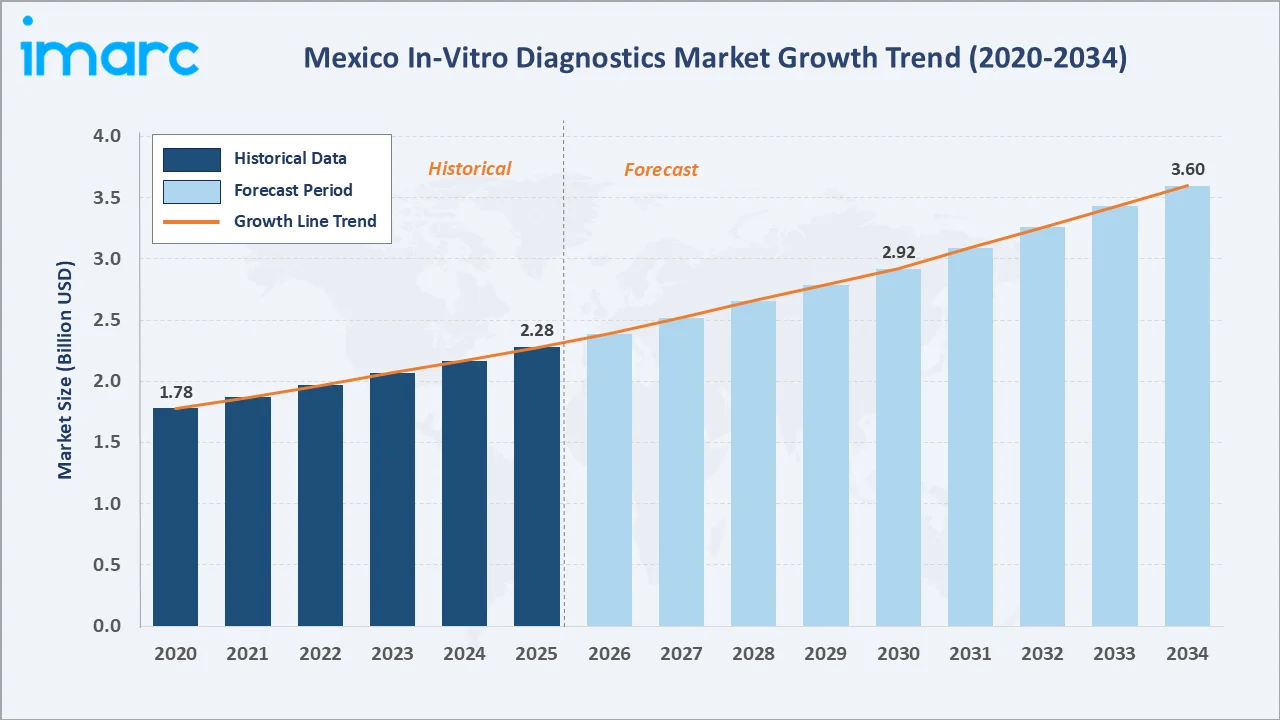
The Mexico in-vitro diagnostics market grew from USD 2.28 Billion in 2025 to USD 2.39 Billion in 2026 and is projected to reach USD 3.60 Billion by 2034, exhibiting a CAGR of 5.07% during 2026-2034. Rising prevalence of chronic and infectious diseases, increased government spending on public health infrastructure, and surging adoption of point-of-care testing devices are the primary drivers shaping market growth.
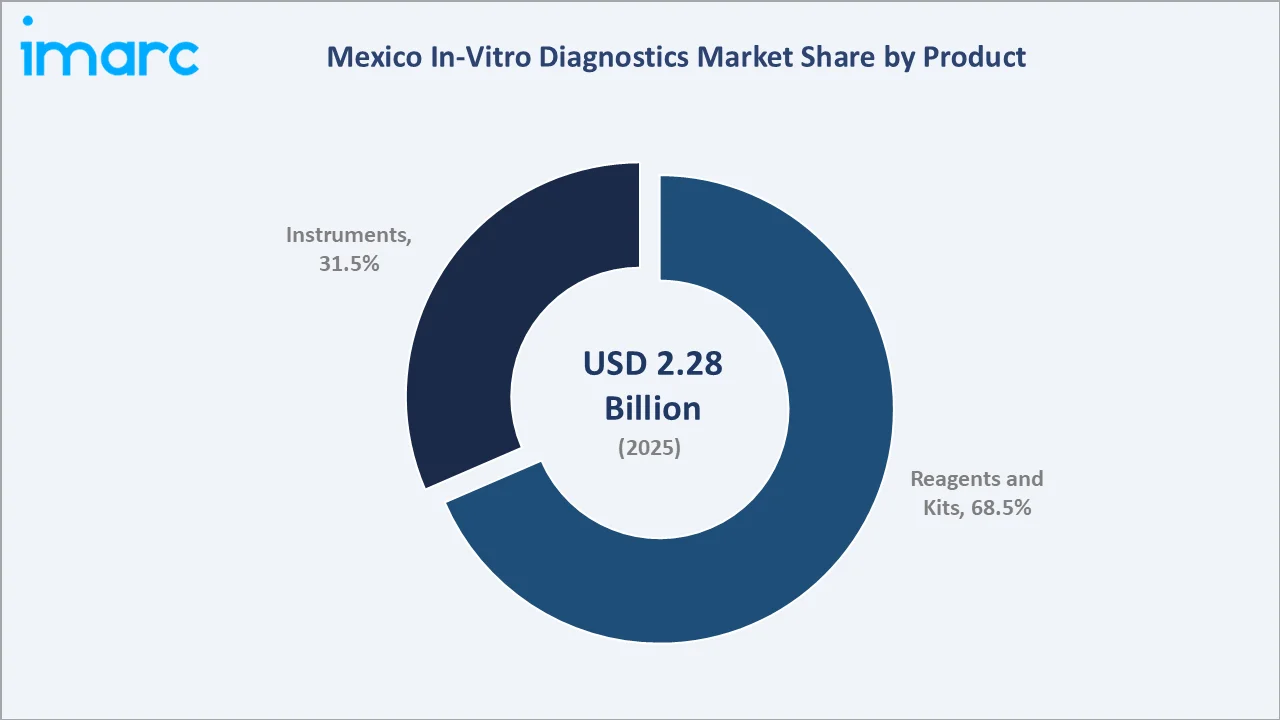
Reagents and kits lead the product segment at 68.5%, disposable IVD devices dominate the usability segment at 72.4%, and Central States command 45.8% regional share.
Market Snapshot
|
Metric |
Value |
|
Base Year Market Size (2025) |
USD 2.28 Billion |
|
Market Size (2026) |
USD 2.39 Billion |
|
Forecast Market Size (2034) |
USD 3.60 Billion |
|
CAGR (2026-2034) |
5.07% |
|
Base Year |
2025 |
|
Historical Period |
2020-2025 |
|
Forecast Period |
2026-2034 |
|
Largest Region |
Central States (45.8%, 2025) |
|
Second Largest Region |
Northern States (32.6%, 2025) |
|
Leading Product |
Reagents and Kits (68.5%, 2025) |
|
Leading Usability |
Disposable IVD Devices (72.4%, 2025) |
The Mexico in-vitro diagnostics market expanded from USD 1.78 Billion in 2020 to USD 2.28 Billion in 2025 and is estimated to reach USD 2.39 Billion in 2026. The market is further expected to grow to USD 2.92 Billion by 2030 and USD 3.60 Billion by 2034, supported by expanding laboratory infrastructure, rising adoption of molecular diagnostics, and increased government investment in preventive healthcare.
To get more information on this market, Request Sample
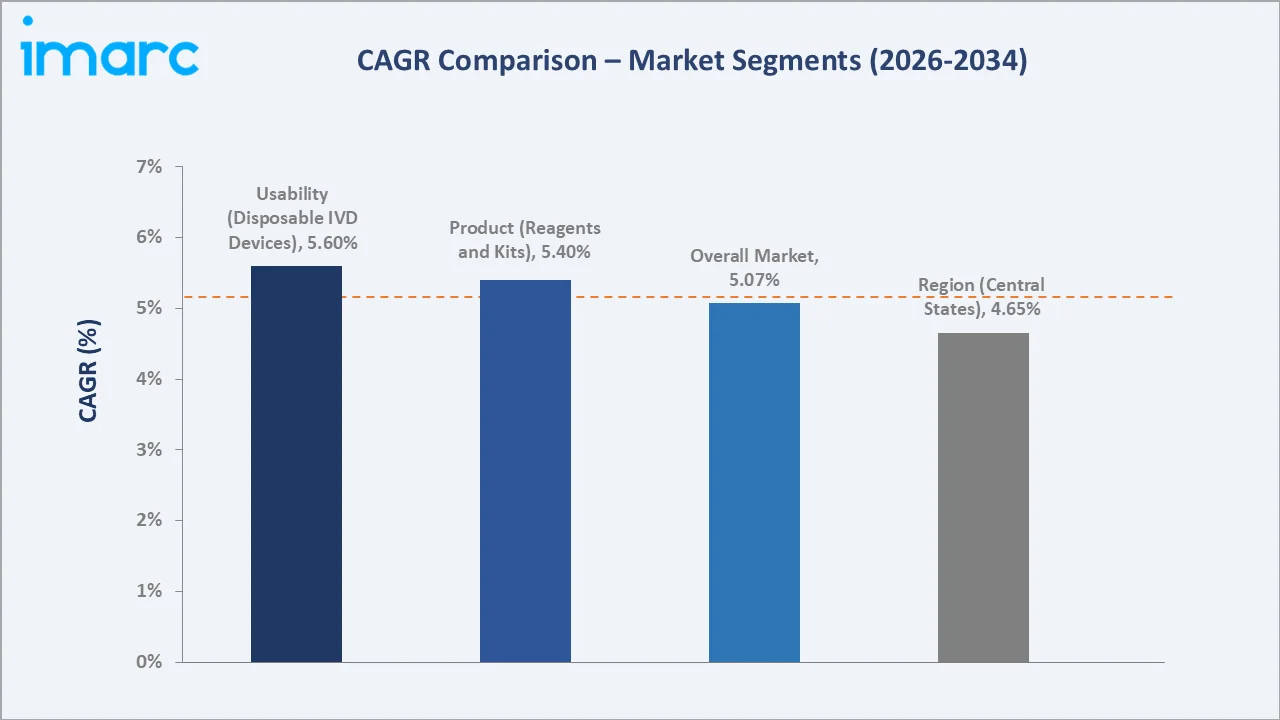
CAGR trajectories across product, usability, and regional sub-segments reveal that reagents and kits and disposable IVD devices are expanding faster than the overall 5.07% market CAGR, driven by rising test volumes in clinical laboratories, growing diagnostics outsourcing, and increasing adoption of single-use cartridge-based platforms.
Executive Summary
The Mexico in-vitro diagnostics market expanded from USD 2.28 Billion in 2025 to an estimated USD 2.39 Billion in 2026, positioning it among the largest national in-vitro diagnostics markets in Latin America by value. The industry has evolved from basic laboratory testing to a diversified ecosystem spanning immunoassay, molecular diagnostics, point-of-care, and self-testing platforms.
Reagents and kits command 68.5% of the product segment in 2025, reflecting high consumable demand in high-throughput clinical laboratories. Disposable IVD devices lead the usability segment at 72.4%, driven by infection control protocols and the preference for single-use diagnostic platforms. Central States command 45.8% of regional share, underpinned by Mexico City's concentration of tertiary hospitals, specialty clinics, and reference laboratories.
Key Market Insights
|
Insight |
Data |
|
Leading Product |
Reagents and Kits - 68.5% share (2025) |
|
Second Largest Product |
Instruments - 31.5% share (2025) |
|
Leading Usability |
Disposable IVD Devices - 72.4% share (2025) |
|
Second Largest Usability |
Reusable IVD Devices - 27.6% share (2025) |
|
Leading Region |
Central States - 45.8% share (2025) |
|
Second Largest Region |
Northern States - 32.6% share (2025) |
|
Top Companies |
Roche Holding AG, Abbott Laboratories, Siemens Healthineers AG, Danaher Corporation |
Key Analytical Observations Expanding on the Data Above:
- Reagents and kits dominance at 68.5% is driven by high consumable demand in clinical chemistry, immunoassay, and molecular diagnostic laboratories, where test volumes generate recurring reagent consumption.
- Instruments share at 31.5% reflects ongoing capital investment in automated analyzers and immunoassay systems across hospital and reference laboratory settings.
- Disposable IVD devices at 72.4% are preferred for single-use lateral flow tests, point-of-care cartridges, and self-diagnostic kits that reduce cross-contamination risk and eliminate reprocessing requirements.
- Reusable IVD devices at 27.6% remain essential in high-throughput automated laboratory systems where instrument uptime and test volume efficiency justify capital investment over consumable-heavy single-use models.
- Central States at 45.8% lead regional share, anchored by Mexico City's role as the country's primary hub for tertiary hospitals, specialty clinics, and reference laboratory infrastructure.
Mexico In-Vitro Diagnostics Market Overview
In-vitro diagnostics refers to tests performed on biological samples such as blood, urine, and tissue outside the human body to detect diseases, monitor health conditions, and support clinical decision-making. IVD products include reagents and kits and instruments used across clinical chemistry, immunoassay, hematology, microbiology, molecular diagnostics, and point-of-care testing applications.
The Mexico in-vitro diagnostics ecosystem integrates multinational and domestic reagent and instrument manufacturers, regulatory authorities, public and private hospital networks, independent diagnostic laboratory chains, medical device distributors, and end users spanning clinicians, pathologists, and patients. Together, these stakeholders support a growing diagnostic testing infrastructure across urban and semi-urban healthcare settings.
Market Dynamics
To evaluate market opportunities, Request Sample
Market Drivers
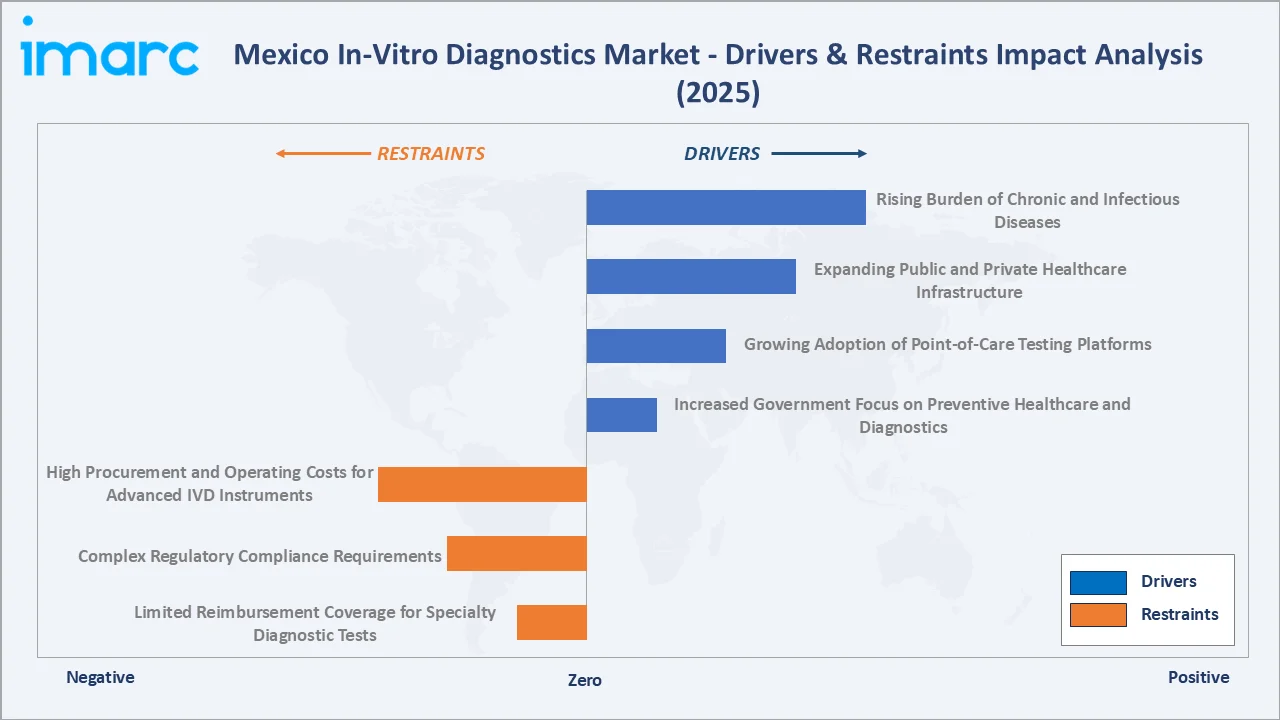
- Rising Burden of Chronic and Infectious Diseases: Mexico's growing prevalence of diabetes, cardiovascular disease, obesity, and infectious conditions such as tuberculosis and dengue is generating sustained demand for laboratory testing and early diagnostic screening across public and private health systems. As per International Diabetes Federation, in 2024, Mexico had a total adult population of 85,855,300, with a 16.4% prevalence of diabetes among adults, corresponding to 13,587,400 total cases of diabetes in adults.
- Expanding Public and Private Healthcare Infrastructure: Continued investment in hospital construction, laboratory capacity upgrades, and primary care network expansion under national health programs is broadening the institutional base for IVD adoption across both urban and peri-urban areas.
- Growing Adoption of Point-of-Care Testing Platforms: Demand for rapid, decentralized diagnostic testing at outpatient clinics, pharmacies, and primary care centers is accelerating uptake of lateral flow, cartridge-based, and handheld diagnostic devices that deliver results at the bedside or pharmacy level.
- Increased Government Focus on Preventive Healthcare and Diagnostics: Mexico's national health policy has increasingly prioritized preventive screening programs for diabetes, hypertension, and cancer, driving systematic demand for IVD tests across public sector healthcare delivery channels.
Market Restraints
- High Procurement and Operating Costs for Advanced IVD Instruments: Capital investment requirements for automated analyzers, molecular platforms, and immunoassay systems remain a barrier for smaller public health facilities and private laboratories with constrained infrastructure budgets.
- Complex Regulatory Compliance Requirements: Mexico's device registration and post-market surveillance obligations impose compliance burdens on both domestic distributors and international manufacturers seeking to expand or maintain market access.
- Limited Reimbursement Coverage for Specialty Diagnostic Tests: Inadequate coverage of advanced molecular and genomic diagnostic tests under public health insurance schemes constrains adoption of premium IVD products, particularly in under-resourced public healthcare settings.
Market Opportunities
- Expansion of Molecular Diagnostics and Genomic Testing: Growing clinical interest in precision medicine, infectious disease typing, and oncology biomarker testing is creating new demand for molecular IVD platforms in reference laboratories and academic medical centers.
- Untapped Diagnostic Demand in Peri-Urban and Semi-Urban Markets: Significant unmet diagnostic need in Mexico's tier-2 and tier-3 cities presents growth opportunities for providers able to offer affordable, portable, and easy-to-operate IVD solutions through expanded distribution networks.
Market Challenges
- Healthcare Access Disparities Between Urban and Rural Populations: Unequal distribution of laboratory infrastructure and skilled technical personnel between metropolitan areas and rural regions continues to limit the penetration of modern IVD technologies outside major urban centers.
- Dependence on Imported IVD Products and Exchange Rate Volatility: Mexico's reliance on imported reagents and instruments exposes laboratory operators and distributors to currency fluctuation risk, affecting pricing stability and procurement planning for end users.
Emerging Market Trends
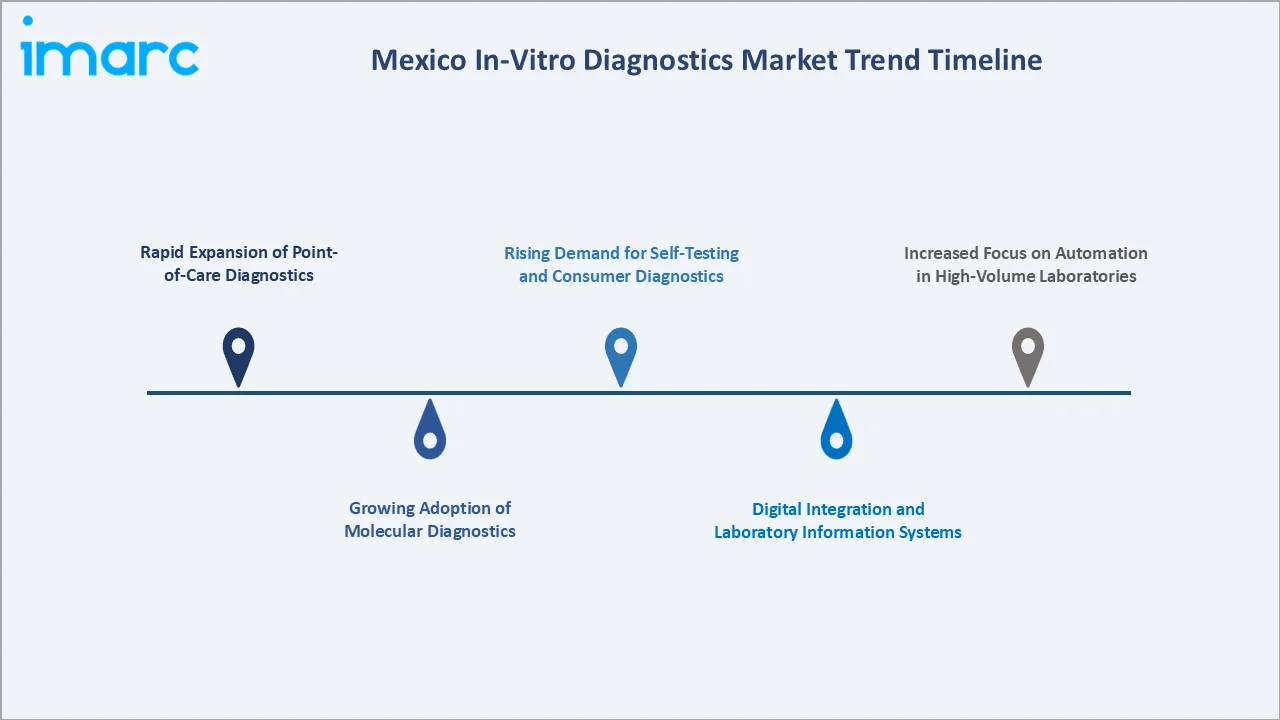
1. Rapid Expansion of Point-of-Care Diagnostics
Demand for decentralized, near-patient diagnostic testing is reshaping the in-vitro diagnostics landscape in Mexico. Pharmacy-based testing, primary care centers, and outpatient clinics are increasingly adopting lateral flow assays and portable analyzers for glucose, lipid, and infectious disease testing.
2. Growing Adoption of Molecular Diagnostics
Molecular diagnostic platforms, including PCR and isothermal amplification-based systems, are gaining traction in Mexican hospital and reference laboratory settings for infectious disease, respiratory pathogen, and oncology applications. Increasing demand for rapid, sensitive, and specific testing is encouraging laboratories to upgrade molecular testing capabilities and expand their diagnostic portfolios.
3. Digital Integration and Laboratory Information Systems
IVD manufacturers and laboratory operators are integrating connected diagnostic platforms with laboratory information management systems and electronic health records to improve result turnaround times, traceability, and clinical workflow efficiency. This trend is most pronounced in multi-site laboratory chains and large hospital networks in Mexico's urban centers.
4. Rising Demand for Self-Testing and Consumer Diagnostics
Consumer interest in home-based and self-administered diagnostic tests for conditions including pregnancy, diabetes, and infectious disease is generating demand for regulatory-approved self-testing IVD products distributed through pharmacy and e-commerce channels across Mexico.
5. Increased Focus on Automation in High-Volume Laboratories
Reference laboratories and hospital core labs are investing in total laboratory automation systems that integrate pre-analytical, analytical, and post-analytical workflows to improve throughput, reduce manual errors, and lower per-test operating costs across high-volume diagnostic settings.
Industry Value Chain Analysis
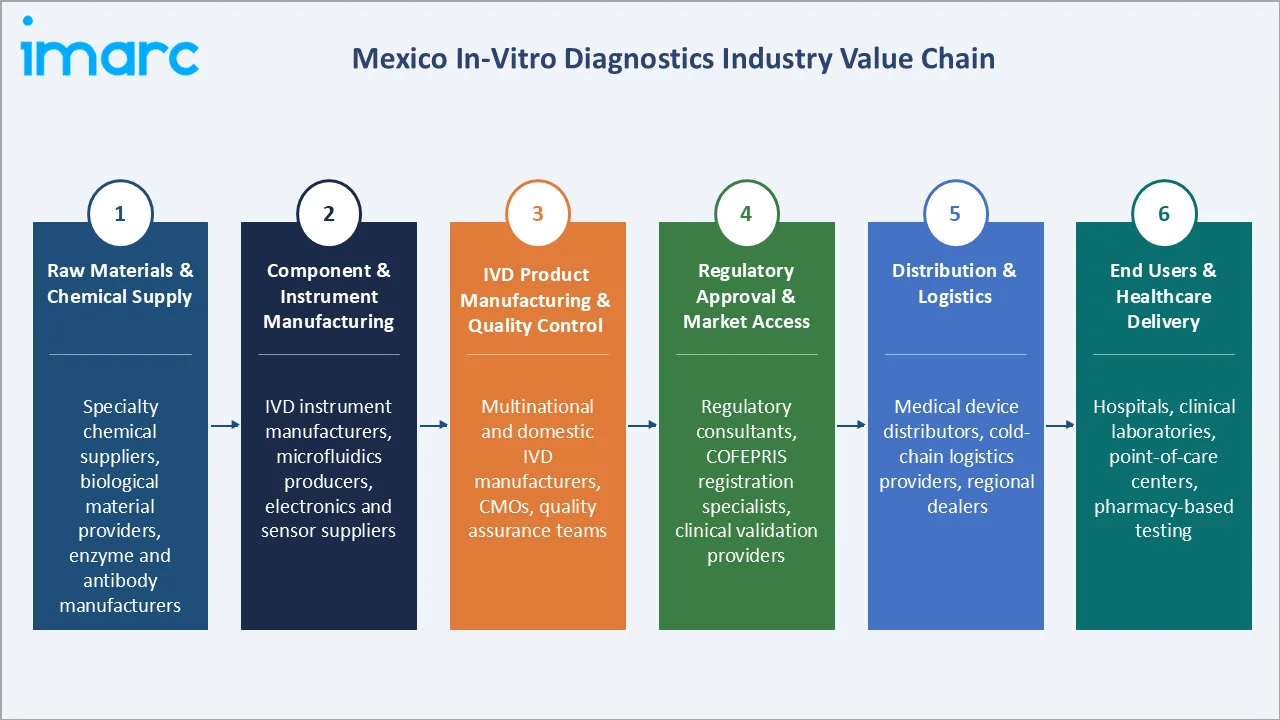
The Mexico in-vitro diagnostics value chain spans six stages, from raw material and component supply through end-user testing and result delivery. Reagent manufacturing and clinical laboratory testing capture the highest value-add, while distribution efficiency and regulatory compliance capabilities increasingly determine competitive position across the market.
|
Stage |
Key Players / Examples |
|
Raw Materials & Chemical Supply |
Specialty chemical suppliers, biological material providers, enzyme and antibody manufacturers supporting reagent formulation |
|
Component & Instrument Manufacturing |
IVD instrument manufacturers, microfluidics and consumable component producers, electronics and sensor suppliers |
|
IVD Product Manufacturing & Quality Control |
Multinational and domestic IVD manufacturers, contract manufacturing organizations, quality assurance and regulatory compliance teams |
|
Regulatory Approval & Market Access |
Regulatory consultants, COFEPRIS registration specialists, clinical validation and post-market surveillance service providers |
|
Distribution & Logistics |
Medical device distributors, cold-chain logistics providers, regional dealers and hospital supply companies |
|
End Users & Healthcare Delivery |
Hospitals, clinical laboratories, point-of-care centers, pharmacy-based testing facilities, and patients |
In Mexico, diagnostic companies with integrated capabilities across assay development, instrument manufacturing, reagent supply, and laboratory services are positioned to capture greater value by offering end-to-end in-vitro diagnostic solutions and reducing reliance on third-party platforms.
Technology Landscape in the Mexico In-Vitro Diagnostics Industry
Immunoassay and Clinical Chemistry Platforms
Automated immunoassay and clinical chemistry analyzers form the backbone of hospital and reference laboratory testing in Mexico. Platforms supporting high-throughput hormonal, metabolic, and infectious disease panel testing are widely deployed across large hospital networks and centralized diagnostic laboratories.
Point-of-Care and Rapid Diagnostic Technologies
Lateral flow assay platforms, portable analyzers, and cartridge-based point-of-care systems are increasingly adopted at primary care, pharmacy, and outpatient settings, enabling rapid diagnostic results without centralized laboratory infrastructure. These technologies are critical for expanding diagnostic access in peri-urban and rural areas.
Digital Connectivity and Data Management
Connected IVD platforms with built-in wireless data transmission, remote monitoring, and integration with laboratory information systems are enabling real-time result delivery, quality control monitoring, and multi-site laboratory management across diagnostic networks in Mexico.
Market Segmentation Analysis
The report covers the following segments:
|
Segment Category |
Leading Segment |
Market Share |
Year |
|
Test Type |
🔒 |
🔒 |
2025 |
|
Product |
Reagents and Kits |
68.5% |
2025 |
|
Usability |
Disposable IVD Devices |
72.4% |
2025 |
|
Application |
🔒 |
🔒 |
2025 |
|
End User |
🔒 |
🔒 |
2025 |
|
Region |
Central States |
45.8% |
2025 |

By Product
Reagents and kits command a 68.5% majority share in 2025, driven by recurring consumable demand in clinical chemistry, immunoassay, hematology, and molecular testing workflows. The segment benefits from high test volumes, broad application coverage, and the preference for vendor-matched reagent-instrument systems that ensure quality-controlled results.
To access detailed market analysis, Request Sample
Instruments at 31.5% in 2025 represent ongoing capital investment in automated analyzers, PCR systems, and immunoassay platforms deployed across hospital laboratories and independent diagnostic chains. Instrument placements create long-term reagent pull-through demand, making them a strategic segment for IVD manufacturers seeking recurring revenue streams.
By Usability
Disposable IVD devices lead with 72.4% share in 2025, reflecting the dominant role of single-use lateral flow tests, point-of-care cartridges, and self-diagnostic kits in clinical and consumer settings. Single-use formats eliminate reprocessing requirements, support infection control, and enable distribution through pharmacy and e-commerce channels.
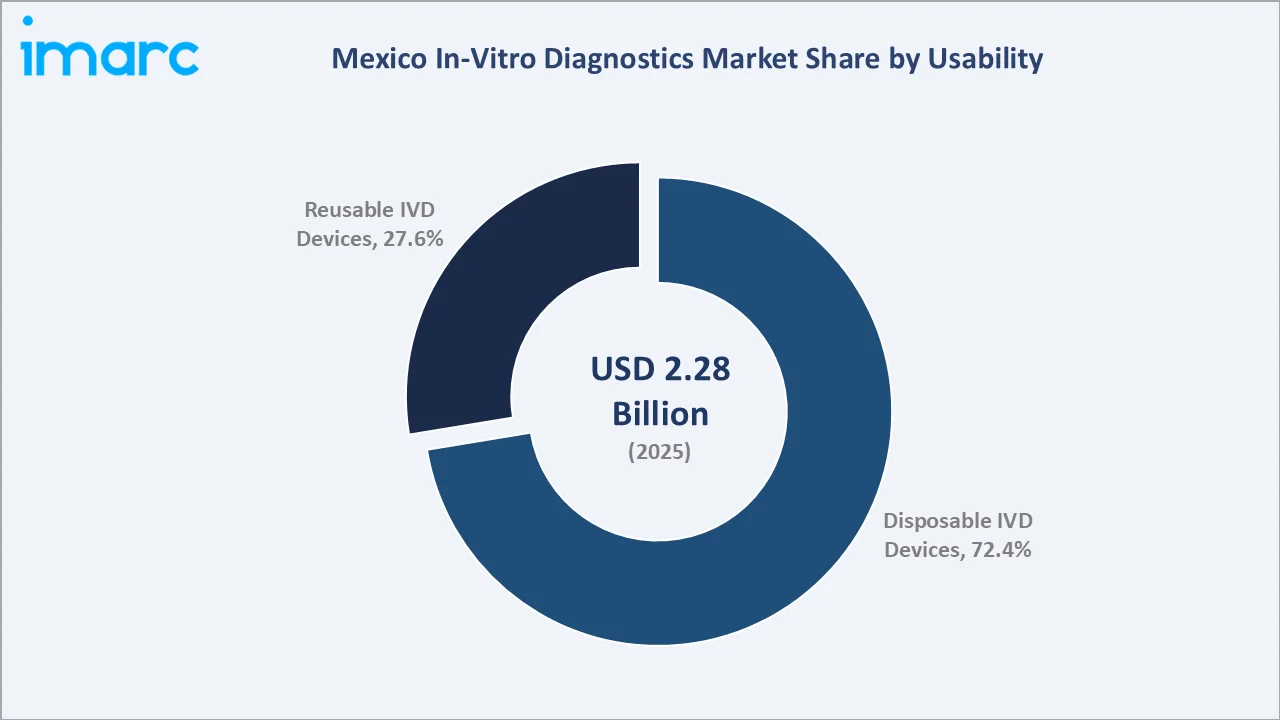
Reusable IVD devices at 27.6% remain significant in high-throughput automated laboratory systems. These include benchtop analyzers, modular immunoassay platforms, and laboratory automation systems that offer cost efficiency per test at high volume through reusable instrument infrastructure supported by consumable reagent streams.
Regional Market Insights
|
Region |
Share (2025) |
Key Growth Drivers |
|
Central States |
45.8% |
Large concentration of tertiary hospitals, specialty clinics, and reference laboratories; high diagnostic testing demand and established distribution networks |
|
Northern States |
32.6% |
Proximity to the United States market supporting cross-border healthcare access, strong manufacturing base, and growing private healthcare investment |
|
Southern States |
21.6% |
Expanding public health programs, government investment in rural diagnostic infrastructure, and rising demand for affordable point-of-care testing |
Central States at 45.8% in 2025 lead the regional landscape, anchored by Mexico City's position as the country's primary healthcare hub and home to the largest concentration of tertiary hospitals, clinical laboratories, medical schools, and specialty diagnostic centers. A mature distribution ecosystem and high clinical testing demand support sustained regional leadership.
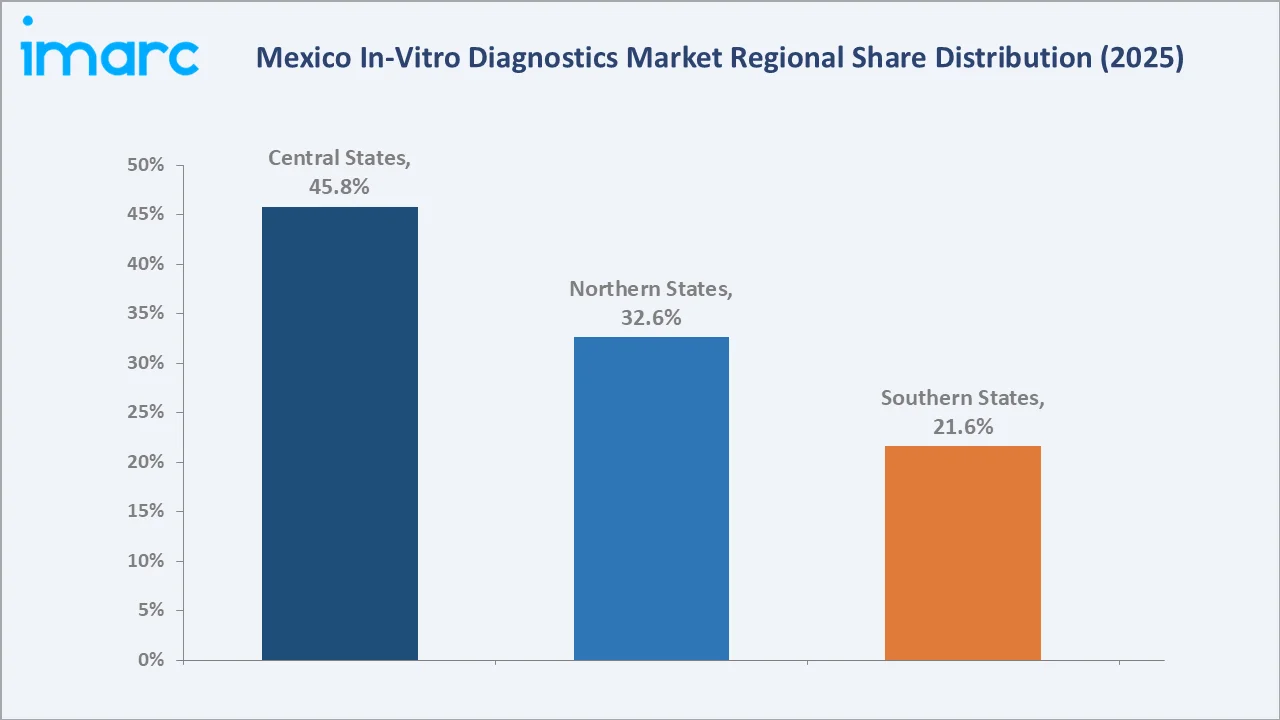
Southern States, while currently the smallest regional contributor at 21.6%, are expanding as public health infrastructure investment and government-sponsored diagnostic programs extend testing access to underserved populations, creating long-term growth potential through 2034.
Competitive Landscape
The Mexico in-vitro diagnostics market is moderately concentrated, with multinational in-vitro diagnostics corporations holding significant share through established brand recognition, broad product portfolios, and strong distributor relationships. Competitive differentiation is driven by diagnostic platform breadth, reagent quality, technical service capabilities, and regulatory compliance readiness.
|
Company Name |
Brand / Key Product |
Position |
Strategic Focus |
|
Roche Holding AG |
cobas / Elecsys |
Leader |
Expanding diagnostic platform capabilities and strengthening distribution across public and private healthcare networks |
|
Abbott Laboratories |
Alinity / ARCHITECT |
Leader |
Growing point-of-care and molecular diagnostics portfolio to address expanding demand across hospital and ambulatory settings |
|
Siemens Healthineers AG |
Atellica Solution |
Leader |
Advancing laboratory automation and integrated diagnostics solutions for high-volume reference laboratories |
|
Danaher Corporation |
Cepheid / Beckman Coulter |
Challenger |
Growing rapid molecular diagnostics and hematology portfolio through platform innovation and strategic acquisitions |
Key players include Roche Holding AG, Abbott Laboratories, Siemens Healthineers AG, and Danaher Corporation, among others.
Key Company Profiles
Roche Holding AG
Roche Holding AG is a Swiss multinational healthcare company and a global leader in in-vitro diagnostics, offering a broad portfolio of reagents, instruments, and digital diagnostics solutions deployed across hospital, reference laboratory, and point-of-care settings in Mexico and globally.
- Product Portfolio: Clinical chemistry, immunoassay, molecular diagnostics, point-of-care, hematology, and tissue diagnostics products under the cobas and Elecsys platforms.
- Recent Developments: Roche Holding AG continues to invest in new diagnostic product development and platform enhancements, expanding its laboratory solutions portfolio to address evolving clinical and healthcare needs across international markets.
- Strategic Focus: Broadening its diagnostics platform reach and deepening distribution partnerships across hospital networks and laboratory settings to serve diverse clinical needs.
Abbott Laboratories
Abbott Laboratories is a United States-based global medical device and diagnostics company offering a broad range of in-vitro diagnostics products for clinical chemistry, immunoassay, point-of-care, and molecular testing applications in hospital and outpatient settings across Mexico.
- Product Portfolio: Immunoassay, clinical chemistry, hematology, point-of-care, and molecular diagnostic systems under the Alinity and ARCHITECT product lines.
- Recent Developments: Abbott Laboratories continues to invest in diagnostics innovation, advancing its product pipeline across laboratory and near-patient testing categories to address growing demand in established and emerging healthcare markets.
- Strategic Focus: Strengthening its portfolio of rapid and laboratory-based diagnostic solutions and extending its presence across hospital, outpatient, and community healthcare settings.
Siemens Healthineers AG
Siemens Healthineers AG is a German medical technology company offering a comprehensive range of laboratory diagnostics, imaging, and digital health solutions to hospital and reference laboratory customers in Mexico and across Latin America.
- Product Portfolio: Clinical chemistry, immunoassay, hematology, urinalysis, and laboratory automation solutions under the Atellica Solution platform.
- Recent Developments: Siemens Healthineers AG continues to advance its product and technology capabilities, with ongoing investment in laboratory diagnostics innovation and digital solutions designed to improve efficiency and clinical performance across healthcare settings.
- Strategic Focus: Driving the integration of automated laboratory workflows and diagnostic intelligence tools to enhance throughput and precision across high-volume clinical laboratory environments.
Market Concentration Analysis
The Mexico in-vitro diagnostics market is moderately concentrated, with the top multinational companies accounting for a significant combined share of total market revenue, reflecting the scale, regulatory expertise, and distribution infrastructure required to serve hospital and laboratory customers effectively across the country.
Barriers to entry include the capital requirements for product registration under COFEPRIS, cold-chain distribution infrastructure for reagent products, the need for technical service and applications support networks, and the competitive advantages held by established players through long-term hospital and laboratory supply agreements.
Consolidation is gradually increasing as larger in-vitro diagnostics corporations acquire specialty diagnostics companies and regional distributors to broaden their product portfolios and distribution reach. Strategic partnerships between multinational manufacturers and domestic distributors are further shaping competitive positioning across the market.
Investment & Growth Opportunities
Fastest-Growing Segments
Disposable IVD devices are expanding fastest within the usability segment, driven by rising point-of-care testing adoption at pharmacy, outpatient, and primary care settings. Increasing demand for convenient, rapid, and low-complexity diagnostic testing is further supporting adoption across decentralized healthcare settings in Mexico.
Emerging Markets
Southern States, while currently the smallest regional contributor, represent the strongest long-term growth opportunity as government health programs extend diagnostic access to underserved populations in tier-2 and tier-3 cities. Northern States are also expanding rapidly, supported by growing cross-border healthcare access and private sector investment in diagnostic infrastructure.
Venture & Investment Trends
Investment activity in the Mexico in-vitro diagnostics market is concentrated in point-of-care diagnostic platform development, molecular testing infrastructure, and digital laboratory integration technology. Multinational In-vitro diagnostics companies are increasing local distribution investment, and private equity interest in diagnostic laboratory chains is supporting consolidation of independent laboratory networks across major urban centers.
Future Market Outlook (2026-2034)
The Mexico in-vitro diagnostics market is projected to grow from USD 2.28 Billion in 2025 to USD 2.39 Billion in 2026, reaching USD 3.60 Billion by 2034, registering a CAGR of 5.07% during 2026-2034. The market's anchor value of USD 2.92 Billion in 2030 represents a structural inflection point for the Mexico in-vitro diagnostics industry.
Four forces will shape the market through 2034: continued expansion of point-of-care and molecular diagnostic platforms across clinical and retail settings; deeper integration of digital laboratory technologies and connected diagnostics; growing government investment in preventive screening and public health laboratory infrastructure; and rising consumer demand for self-testing and home-based diagnostic products.
By 2034, the Mexico in-vitro diagnostics market is expected to be defined by a broader product mix spanning reagents, digital diagnostic platforms, and integrated laboratory automation, with molecular and point-of-care testing accounting for a growing share of overall diagnostic volume.
Research Methodology
Primary Research
Primary research included structured interviews with diagnostic laboratory directors, hospital procurement managers, IVD product specialists, regulatory consultants, and medical device distributors operating in Mexico, validating market sizing, segment mix, competitive landscape, and demand trends.
Secondary Research
Secondary sources included COFEPRIS regulatory publications, Ministry of Health of Mexico data, Pan American Health Organization reports, publicly available company annual reports and investor presentations, and industry association publications from the Mexican Association of Medical Equipment Manufacturers and Distributors.
Forecasting Models
Market forecasts used top-down and bottom-up models combining diagnostic test volume data, product category adoption rates, healthcare expenditure trends, and macroeconomic variables. Scenario analysis addressed regulatory developments, technology adoption pace, and public health investment trends.
Mexico In-Vitro Diagnostics Market Report Coverage:
| Report Features | Details |
|---|---|
| Base Year of the Analysis | 2025 |
| Historical Period | 2020-2025 |
| Forecast Period | 2026-2034 |
| Units | Billion USD |
| Scope of the Report | Exploration of Historical Trends and Market Outlook, Industry Catalysts and Challenges, Segment-Wise Historical and Future Market Assessment:
|
| Test Types Covered | Clinical Chemistry, Molecular Diagnostics, Immunodiagnostics, Hematology, Others |
| Products Covered | Reagents and Kits, Instruments |
| Usabilities Covered | Disposable IVD Devices, Reusable IVD Devices |
| Applications Covered | Infectious Disease, Diabetes, Cancer/Oncology, Cardiology, Autoimmune Disease, Nephrology, Others |
| End Users Covered | Hospitals Laboratories, Clinical Laboratories, Point-of-care Testing Centers, Academic Institutes, Patients, Others |
| Regions Covered | Northern States, Central States, Southern States |
| Companies Covered | Roche Holding AG, Abbott Laboratories, Siemens Healthineers AG, Danaher Corporation, etc. |
| Customization Scope | 10% Free Customization |
| Post-Sale Analyst Support | 10-12 Weeks |
| Delivery Format | PDF and Excel through Email (We can also provide the editable version of the report in PPT/Word format on special request) |
Key Benefits for Stakeholders:
- IMARC’s industry report offers a comprehensive quantitative analysis of various market segments, historical and current market trends, market forecasts, and dynamics of the Mexico in-vitro diagnostics market from 2020-2034.
- The research report provides the latest information on the market drivers, challenges, and opportunities in the Mexico in-vitro diagnostics market.
- Porter's five forces analysis assist stakeholders in assessing the impact of new entrants, competitive rivalry, supplier power, buyer power, and the threat of substitution. It helps stakeholders to analyze the level of competition within the Mexico in-vitro diagnostics industry and its attractiveness.
- Competitive landscape allows stakeholders to understand their competitive environment and provides an insight into the current positions of key players in the market.
Frequently Asked Questions About the Mexico In-Vitro Diagnostics Market Report
The Mexico in-vitro diagnostics market size is estimated at USD 2.39 Billion in 2026, driven by rising diagnostic demand, chronic disease burden, and expanding healthcare infrastructure across public and private settings.
The market is projected to grow at a CAGR of 5.07% from 2026 to 2034, reaching USD 3.60 Billion, supported by expanding point-of-care and molecular diagnostic adoption.
Reagents and kits lead the product segment at 68.5% in 2025, driven by recurring consumable demand across clinical chemistry, immunoassay, and molecular diagnostic applications.
Disposable IVD devices dominate usability at 72.4% in 2025, reflecting preference for single-use lateral flow, point-of-care cartridge, and self-diagnostic formats across clinical and consumer settings.
Central States command 45.8% share in 2025, led by Mexico City's concentration of tertiary hospitals, reference laboratories, and specialty diagnostic centers.
Leading players include Roche Holding AG, Abbott Laboratories, Siemens Healthineers AG, and Danaher Corporation, among others.
Point-of-care testing is driving demand for portable and rapid diagnostic devices at pharmacies and primary care centers, expanding diagnostic access beyond traditional laboratory settings.
Key opportunities include point-of-care diagnostic platforms, molecular testing infrastructure, digital laboratory integration, and expansion of diagnostic laboratory chains in underserved peri-urban regions.
Need more help?
- Speak to our experienced analysts for insights on the current market scenarios.
- Include additional segments and countries to customize the report as per your requirement.
- Gain an unparalleled competitive advantage in your domain by understanding how to utilize the report and positively impacting your operations and revenue.
- For further assistance, please connect with our analysts.
 Request Customization
 Speak to an Analyst
 Request Brochure
 Inquire Before Buying
Benefits of Customization
- Personalize this research
- Triangulate with your data
- Get data as per your format and definition
- Gain a deeper dive into a specific application, geography, customer, or competitor
- Any level of personalization
Get in Touch With Us
UNITED STATES
Phone: +1-201-971-6302
INDIA
Phone: +91-120-433-0800
UNITED KINGDOM
Phone: +44-753-714-6104
Email: [email protected]
Client Testimonials




.webp)




.webp)













Related Reports

Choose your plan
*Please note that the prices mentioned below are starting prices for each bundle type. Kindly contact our team for further details.*
Single User License
- 1 User License, Access on 2 Devices
- PDF Report + Excel Dataset (Password Protected)
- Lifetime Access
- No Printing Rights
- 10% Free Report Customization
- 10–12 Weeks of Analyst Support
Five User License
- Access for 5 Users, 2 Devices per User
- PDF Report + Excel Dataset (Password Protected)
- Lifetime Access
- Dedicated Account Manager
- 12–14 Weeks of Analyst Support
- No Printing Rights
- 15% Free Report Customization
- 25% Discount on Your Next Purchase
Corporate User License
- Unlimited User Access (Within Your Organization)
- PDF Report + Excel Dataset
- Lifetime Access
- Dedicated Account Manager
- 14–20 Weeks of Analyst Support
- No Printing Rights
- 20% Free Report Customization
- 30% Discount on Your Next Purchase
Essential Insights
What's included:
3 reports
- Lifetime Access
- PDF Reports
- Excel Datasets
- 2 Weeks of Free Analyst Support
- 2 User Licenses
- Access on 2 Devices
- Printing Rights
- Complimentary PowerPoint (PPT) Version
- Complimentary License Upgrade
Professional Access
What's included:
5 reports
- Lifetime Access
- PDF Reports
- Excel Datasets
- 8 Weeks of Free Analyst Support
- 2 User Licenses
- Access on 2 Devices
- Printing Rights
- Complimentary PowerPoint (PPT) Version
- Complimentary License Upgrade
Business Advantage
What's included:
8 reports
- Lifetime Access
- PDF Reports
- Excel Datasets
- 14 Weeks of Free Analyst Support
- 2 User Licenses
- Access on 2 Devices
- Printing Rights
- Complimentary PowerPoint (PPT) Version
- Complimentary License Upgrade
Enterprise Intelligence
What's included:
10 reports
- Lifetime Access
- PDF Reports
- Excel Datasets
- 20 Weeks of Free Analyst Support
- 2 User Licenses
- Access on 2 Devices
- Printing Rights
- Complimentary PowerPoint (PPT) Version
- Complimentary License Upgrade