USA Iron Ore Prices Hold at USD 104/MT Amid Stable Industrial Demand
12-Feb-2026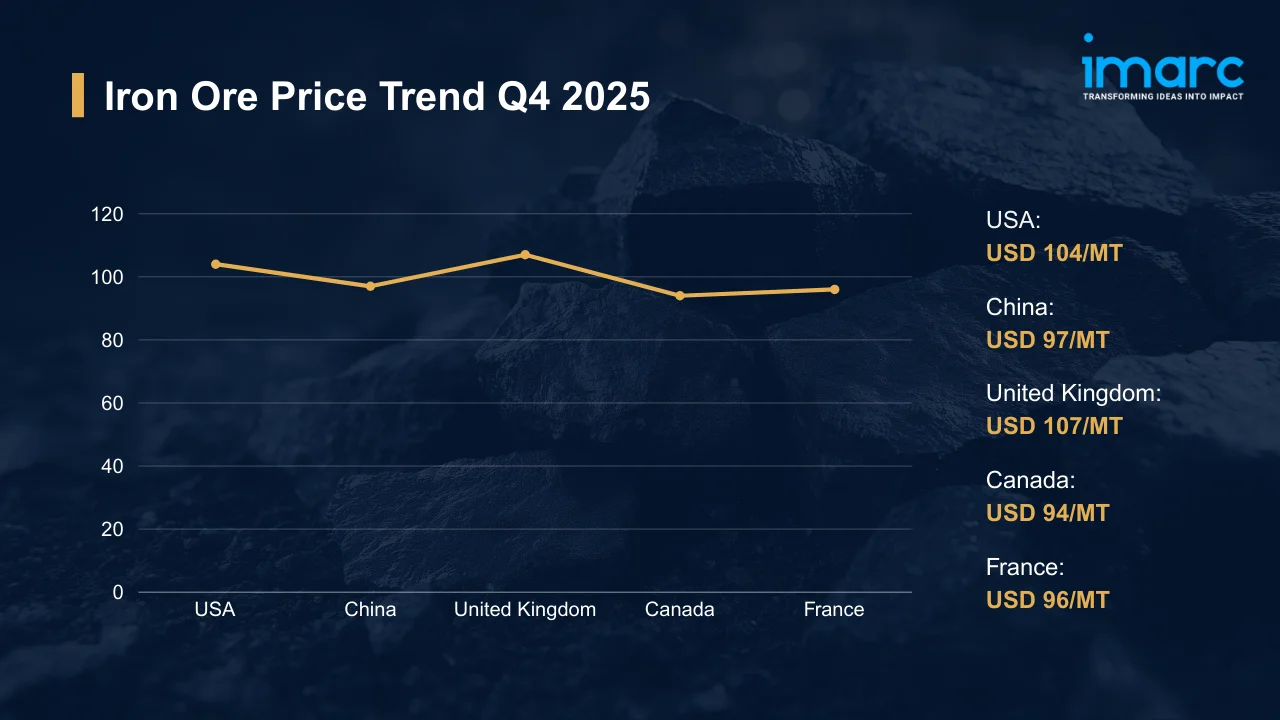
Iron ore is a naturally occurring mineral resource, predominantly comprising iron oxides, serving as the foundational raw material for global steel manufacturing. The most widely extracted variants include hematite and magnetite, both prized for their elevated iron concentrations. After extraction, the ore undergoes crushing, beneficiation, and pelletization to improve its metallic content before shipment to steelmaking facilities. Given its indispensable role across the construction, automotive, infrastructure, energy, and heavy manufacturing sectors, iron ore pricing remains acutely responsive to shifts in steel production volumes, infrastructure investment cycles, freight dynamics, and raw material supply conditions.
Global Market Overview:
Globally, the iron ore industry was valued at USD 327.60 Billion in 2025. Market projections indicate steady growth, with the industry expected to reach USD 418.03 Billion by 2034, with a compound annual growth rate (CAGR) of 2.75% during 2026-2034. The market continues to expand on the back of rising infrastructure investment in both developed and emerging economies, robust growth in global steel production capacity, and increasing adoption of mining automation technologies that lower extraction costs. Furthermore, tightening supply conditions from major exporting nations have contributed to upward pressure on raw-material pricing, while sustained urbanization trends across Asia-Pacific and heightened government spending on transportation networks and green energy infrastructure continue to underpin long-term demand fundamentals for iron ore worldwide.
Iron Ore Price Trend Q4 2025:
Regional prices (USD per MT) and QoQ changes vs Q3 2025:
| Region | Price (USD/MT) | QoQ Change | Direction |
|---|---|---|---|
| USA | 104 | -0.95% | ↓ |
| China | 97 | -2.02% | ↓ |
| United Kingdom | 107 | -0.93% | ↓ |
| Canada | 94 | -1.05% | ↓ |
| France | 96 | -1.03% | ↓ |
To access real-time prices Request Sample
What Moved Prices:
- USA: The USA's iron ore prices fell to USD 104/MT in Q4 2025, as domestic steel makers reduced their procurement levels due to dwindling downstream demand. Because purchasers chose to deplete their current stockpiles rather than place new orders, the need for spot market transactions decreased as stockpile levels throughout distribution routes increased. The quarter saw a normalization of logistical conditions, with steady freight availability eliminating cost pressures that had previously served as a price floor. Prices continued to decline during this period due to the lack of activity in the industrial and construction sectors.
- China: In Q4 2025, iron ore prices in China fell to USD 97/MT, as steelmakers operated under restrained production strategies, driven by tepid construction sector performance. Authorities kept enforcing strict environmental compliance guidelines, which limited the use of blast furnaces and, as a result, decreased the amount of raw materials purchased. There was less need for vigorous replenishment because port stockpiles at important receiving terminals had ample inventory. Market players maintained the unfavorable pricing environment throughout the quarter by maintaining a cautious attitude and making procurement decisions mostly based on urgent production requirements rather than speculative buying.
- United Kingdom: In the fourth quarter of 2025, iron ore prices in the United Kingdom eased to USD 107/MT amid constrained demand from the domestic steel manufacturing sector. Slower execution timelines on infrastructure projects translated into reduced consumption of steel products and, by extension, lower raw material requirements. Buyers concentrated on optimizing existing inventory holdings instead of committing to new acquisitions, which weighed on transactional activity. Supply chains functioned without significant disruption during the quarter, eliminating any cost premiums associated with delivery delays. Moreover, competitive import offerings from diverse source countries placed additional pressure on domestic pricing benchmarks.
- Canada: During Q4 2025, iron ore prices in Canada softened to USD 94/MT, as mining production maintained a steady pace while domestic consumption exhibited limited expansion. Steel producers adopted measured raw material sourcing approaches, choosing to prioritize the utilization of pre-existing stockpiles over new procurement commitments. Export-oriented demand also remained suppressed, providing little upward impetus to pricing. Improvements in transportation efficiency across rail and port infrastructure lowered delivered costs for end users, enabling suppliers to present more competitive price offerings. The convergence of stable supply conditions and restrained demand created a persistently subdued pricing environment.
- France: In Q4 2025, iron ore prices in France retreated to USD 96/MT, as steel production activity contracted and procurement behavior turned markedly cautious. Industrial demand weakened as key manufacturing sectors operated at levels below their optimal capacity, reducing the throughput of raw materials. Adequate supply availability, coupled with consistent import flows from established trading partners, alleviated concerns regarding material scarcity. Buyers elected to postpone purchasing decisions, anticipating that prices would continue their downward correction, which reinforced the prevailing bearish sentiment and kept transactional volumes well below typical seasonal averages throughout the quarter.
Drivers Influencing the Market:
Several factors continue to shape iron ore pricing and market behavior:
- Steel Production Volumes and Capacity Utilization: Global steel output levels directly govern iron ore consumption patterns. Adjustments in blast furnace utilization rates, whether driven by market conditions or policy mandates, alter the volume of ore required by mills. Periods of reduced steelmaking activity compress raw material demand, exerting downward pressure on iron ore pricing across major trading hubs.
- Infrastructure Investment and Construction Activity: Government-led capital expenditure on transportation networks, urban development, and public infrastructure projects generates substantial steel demand. When construction activity accelerates, it lifts iron ore consumption proportionally. Conversely, slowdowns in project execution or budgetary constraints in major economies diminish the derived demand for steelmaking raw materials.
- Port Inventory Levels and Restocking Cycles: Stockpile positions at major receiving ports serve as a barometer of near-term demand urgency. Elevated portside inventories reduce the impetus for spot market procurement, weighing on prices. Conversely, declining stock levels signal tighter supply conditions and prompt restocking activity, which supports upward price movements across regional markets.
- Environmental Regulations and Emission Controls: Regulatory directives targeting industrial emissions compel steelmakers to curtail production during compliance periods. Such measures reduce blast furnace operating rates, directly decreasing iron ore intake. Stringent enforcement of environmental standards in major steel-producing nations continues to constrain raw material demand and introduces periodic volatility into iron ore pricing.
- Freight Rates and Logistics Costs: Shipping expenses along key maritime trade routes influence the landed cost of imported iron ore at destination ports. Fluctuations in bulk carrier availability, bunker fuel prices, and port congestion levels alter transportation expenditures. Higher freight costs elevate delivered prices for buyers, while improved logistical efficiency reduces cost pressures and narrows regional price differentials.
- Supply Concentration and Export Dynamics: The global iron ore supply landscape remains concentrated among a limited number of major exporting nations. Production disruptions, policy changes affecting export quotas, or weather-related interruptions in key mining regions tighten available supply. Such concentration amplifies the price impact of supply-side disturbances and contributes to heightened market sensitivity in importing economies.
Recent Highlights & Strategic Developments:
Recent strategic moves within the industry further illustrate evolving dynamics:
- In June 2025, Roy Hill and Atlas Ore declared a merger to create Hancock Iron Ore, combining the companies' expertise and assets. Roy Hill ranked among Australia's largest iron ore producers, exporting more than 64 Million Tons of iron ore annually to nearby Asian steel manufacturing markets.
- In June 2025, Rio Tinto inaugurated Western Range, its latest iron ore mine located in Pilbara. The Western Range had the capability to produce as much as 25 Million Tons of iron ore annually, which could sustain the Paraburdoo mining center for as long as 20 years.
Outlook & Strategic Takeaways:
Looking ahead, the iron ore market is expected to navigate a period of measured price adjustments as steel production activity responds to evolving infrastructure spending patterns, environmental policy enforcement, and shifting trade dynamics across key consuming regions.
To navigate this complex landscape, stakeholders should:
- Evaluate Steel Sector Demand Indicators: Observe blast furnace capacity utilization rates and downstream order books for early signals of demand shifts. Align procurement schedules with anticipated changes in steelmaker raw material requirements.
- Diversify Supply Sources Geographically: Establish relationships with multiple iron ore suppliers across different exporting regions to mitigate concentration risk. Reduce vulnerability to single-source disruptions by maintaining active contracts with alternative producers.
- Optimize Inventory Management Practices: Calibrate stock levels based on prevailing market sentiment and portside inventory data from key import terminals. Avoid excessive stockpiling during periods of anticipated price decline to preserve working capital.
- Track Freight and Logistics Cost Movements: Scrutinize bulk carrier charter rates and bunker fuel price trajectories that influence delivered iron ore costs. Negotiate freight contracts during favorable market windows to secure competitive transportation rates.
- Leverage Hedging and Risk Management Tools: Utilize futures contracts, options, and long-term pricing agreements to manage exposure to iron ore price volatility, especially during periods of uncertain demand outlook and fluctuating global macroeconomic conditions.
- Strengthen Market Intelligence and Forecasting Capabilities: Invest in real-time data tracking, port congestion monitoring, and predictive analytics to enhance demand-supply visibility, enabling faster strategic responses to sudden shifts in trade flows and pricing dynamics.
Subscription Plans & Customization:
IMARC offers flexible subscription models to suit varying needs:
- Monthly Updates — 12 deliverables/year
- Quarterly Updates — 4 deliverables/year
- Biannual Updates — 2 deliverables/year
Each includes detailed datasets (Excel + PDF) and post-report analyst support.

Get in Touch With Us
UNITED STATES
Phone: +1-201-971-6302
INDIA
Phone: +91-120-433-0800
UNITED KINGDOM
Phone: +44-753-714-6104
Email: [email protected]
Client Testimonials




.webp)




.webp)












