Tantalum Prices Enter a New Phase in 2026 as Global Supply and Demand Dynamics Shift
27-Aug-2026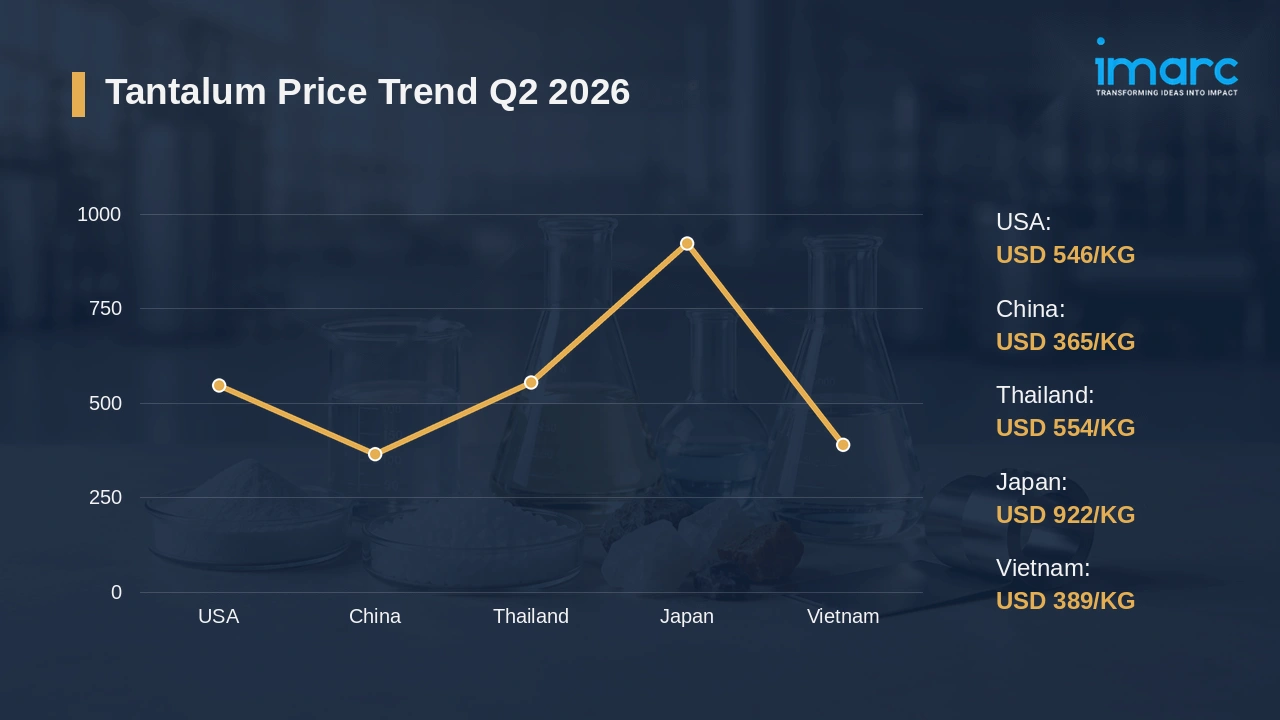
Tantalum is a rare, blue-gray metal known for its excellent corrosion resistance and high melting point. It is primarily extracted from coltan ores and processed through smelting and refining procedures. Tantalum is essential in the electronics, aerospace, medical devices, and chemical processing industries. Tantalum prices are influenced by feedstock supply, energy costs, transportation logistics, and evolving demand patterns in consumer electronics and defense sectors.
Global Market Overview:
Globally, the tantalum industry reached a volume of 2,576.28 Tons in 2025. Market projections indicate consistent growth, with the industry expected to reach a volume of 3,462.43 Tons by 2034, with a compound annual growth rate (CAGR) of 3.34% during 2026-2034. Sustained consumption from electronics, medical devices, and aerospace markets underscores the tantalum price trend. Technological advancements and infrastructure developments continue to drive market demand on a global scale.
Tantalum Price Trend Q2 2026:
Regional prices (USD per Kg) and QoQ changes Q2 2026 vs Q1 2026:
| Region | Price (USD/Kg) | QoQ Change | Direction |
|---|---|---|---|
| USA | 546 | +3.21% | ↑ |
| China | 365 | +4.31% | ↑ |
| Thailand | 554 | +4.09% | ↑ |
| Japan | 922 | +3.31% | ↑ |
| Vietnam | 389 | +4.21% | ↑ |
To access real-time prices Request Sample
What Moved Prices:
USA:
- In Q2 2026, tantalum prices in the USA rose to USD 546/Kg as robust demand from the aerospace and electronics sectors fueled procurement. Strong downstream demand coupled with limited feedstock availability lifted domestic transaction prices, leading to a positive pricing climate throughout the quarter.
- Producer efforts to meet burgeoning electronic component demand ensured a steady flow of material. Market tightness elevated spot prices while strategic purchasing added complexity to the supply chain. The tantalum price chart highlighted an upward movement as buyers adjusted to secure material in a constrained market.
China:
- During Q2 2026, tantalum prices in China increased to USD 365/Kg driven by intense demand from consumer electronics manufacturing and resilient industrial growth. Local production supported substantial consumption levels, sustaining buying interest across the region.
- Producers maintained high output levels to meet sector needs, ensuring ample supply and alleviating potential price spikes. Nevertheless, competition among buyers for limited high-grade material kept pricing buoyant. Export dynamics and strong domestic demand reinforced the upward trend in assessed prices.
Thailand:
- In the second quarter of 2026, tantalum prices in Thailand rose to USD 554/Kg as demand from medical device producers and electronic assemblies remained consistent. Strategic stockpiling by manufacturers supported stable procurement throughout the period.
- Continued production efficiency enabled consistent inventories, which eased abrupt supply shocks but kept price upward due to sector needs. With burgeoning regional demand, pricing structures benefited from heightened buying interest, resulting in sustained price increases.
Japan:
- During Q2 2026, tantalum prices in Japan climbed to USD 922/Kg alongside heightened demand from advanced electronics and aerospace applications. Manufacturers retained proactive purchasing strategies, influencing price stability amid persistent sector growth.
- Robust industrial utilization of tantalum ensured steady demand flows, compelling suppliers to optimize output schedules and ensure timely deliveries. Strong procurement dynamics continuously pressed value landscapes upward, illustrating a firm pricing trajectory.
Vietnam:
- In Q2 2026, tantalum prices in Vietnam increased to USD 389/Kg as electronics and consumer goods sectors prioritized secure supply chains. Domestic manufacturing capabilities aligned with stable demand, shaping consistent transactional activity.
- Manufacturers maintained thorough inventory strategies, which softened potential procurement urgency. However, elevated regional consumption rates upheld competitive pricing trends. Supply chain efficiencies supported delivery schedules and ensured market balance, resulting in persistent price increments.
Drivers Influencing the Market:
Several factors continue to shape tantalum pricing and market behavior:
- Electronics and Semiconductor Sector Demand: Demand spans capacitor production, consumer device assembly, and semiconductor equipment fabrication. According to the Semiconductor Industry Association, global semiconductor sales reached USD 791.7 Billion in 2025, marking a 25.6% year-on-year increase that underscores the scale of tantalum end-use absorption. Rising device complexity amplifies procurement as tantalum intensity in miniaturized components and chip packaging continues to increase.
- Upstream Feedstock Costs: Tantalum production depends heavily on the cost of raw materials like coltan and tin slag, as these feedstocks influence market supply. Insights into quarterly pricing trends reveal variations driven by changes in mining outputs, affecting the overall tantalum price index.
- Energy Expenditure in Production: Tantalum processing relies mainly on electricity and natural gas consumption. Energy expenditures are crucial in metal refining processes, contributing considerably to production costs.
- Ocean Freight and Logistics Economics: Tracking ocean freight dynamics on routes from Central African mining origins to Asian processing hubs, CIF landed costs for tantalum buyers move with container rate cycles. Rate swings filter directly into quarterly pricing. In late March 2026, Drewry's World Container Index reached USD 2,279 per 40ft container, a 5% advance as capacity tightened across major East-West lanes. Buyers without fixed-rate contracts face elevated landed cost exposure.
- Environmental and Regulatory Compliance: Mining and processing tantalum involve compliance with extensive environmental regulations, raising production costs. Monitoring emissions and securing necessary permits continue to shape the tantalum price landscape.
- Trade Policy and Currency Dynamics: Import tariffs and global trade policies significantly impact tantalum's international market dynamics. Foreign currency fluctuations against the US dollar affect the competitiveness of tantalum pricing in different regions.
Recent Highlights & Strategic Developments:
Recent strategic moves within the industry further illustrate evolving dynamics:
- In July 2025, Power Metals Corp reported that metallurgical testing at its Case Lake project verified high-grade tantalum (up to 12,508 ppm Ta in a 1.25% Ta concentrate) in conjunction with lithium, highlighting tantalum's developing importance from the deposit as a valuable by-product. The company focused on assessing alternatives to incorporate tantalum recovery into its comprehensive development strategy.
Outlook & Strategic Takeaways:
Looking ahead, the tantalum market is projected to grow steadily from 2026 to 2034. This expansion is fueled by increasing demand in electronics, aerospace, and superalloys. Key factors in the tantalum price forecast are driven by feedstock availability and energy costs shaping global supplier strategies.
To navigate this evolving market, stakeholders should:
- Monitor Regional Price Differentials: Track quarterly pricing disparities across the USA, Japan, China, Thailand, and Vietnam to identify cost-optimized procurement windows. Compare landed costs against prevailing contract benchmarks to guide sourcing decisions and improve procurement efficiency.
- Assess Freight Market Developments: Analyze changes in container rate trends for key shipping routes, anticipating shifts in landed costs. It's crucial to negotiate logistics contracts considering potential market rate fluctuations.
- Evaluate Downstream Demand Indicators: Monitor electronics and aerospace manufacturing trends to adjust inventory levels according to market demand signals and prevent supply surplus during forecasted demand dips.
- Review Feedstock and Energy Cost Trends: Closely track coltan, tin slag, and energy prices influencing tantalum production economics. Consider timing for procurement to benefit from volatile input cost trends shaping supplier offers.
- Strengthen Currency Exposure Management: Implement hedging strategies to cope with currency fluctuations impacting international costs, especially for regions handling tantalum procurement in foreign currencies.
- Explore Emerging Application Segments: Investigate growth potential in quantum computing components, next-generation battery technology, and 6G telecommunications hardware as emerging tantalum end-use segments. Benchmark tantalum price per Kg against projected value-in-use metrics to assess commercial viability and guide procurement and investment commitments.
Subscription Plans & Customization:
IMARC offers flexible subscription models to suit varying needs:
- Monthly Updates: 12 deliverables/year
- Quarterly Updates: 4 deliverables/year
- Biannual Updates: 2 deliverables/year
Each includes detailed datasets (Excel + PDF) and post-report analyst support.

Get in Touch With Us
UNITED STATES
Phone: +1-201-971-6302
INDIA
Phone: +91-120-433-0800
UNITED KINGDOM
Phone: +44-753-714-6104
Email: [email protected]
Client Testimonials




.webp)




.webp)












